
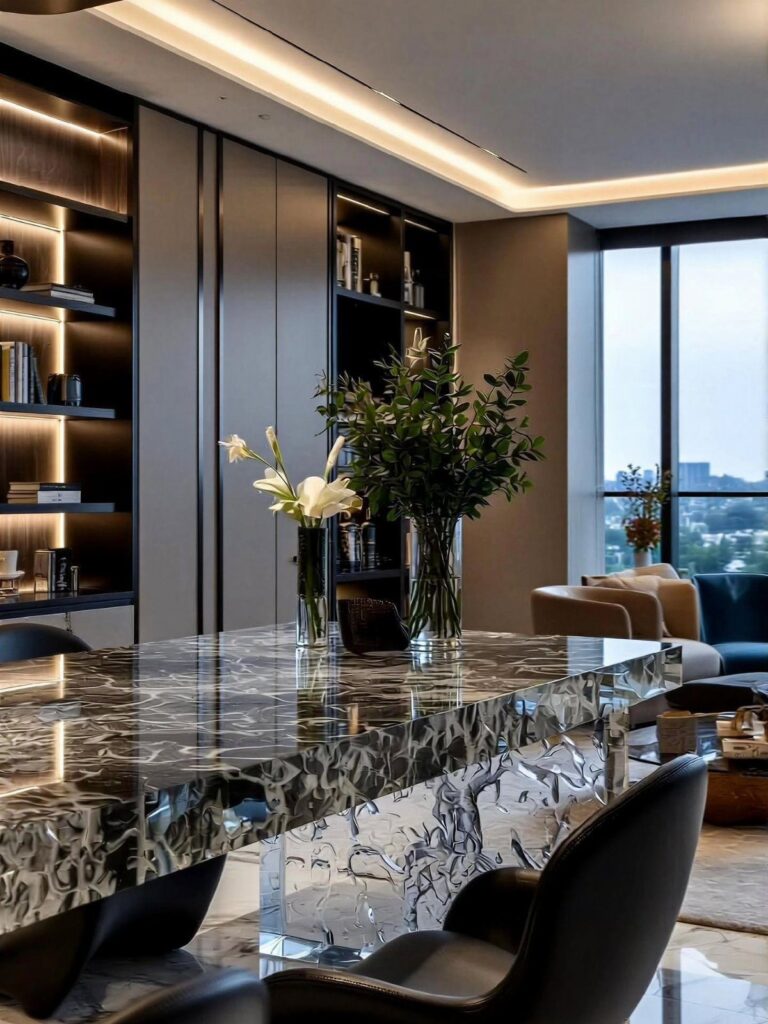
These rooms range from Scandinavian neutrals to moody dark paneling, with marble showing up in white oval tables, black veined finishes and green stone paired with cane seating.
The fixture overhead decides whether the room feels approachable or formal: a sculptural branch chandelier or multi-pendant gold cluster commands attention, while a single globe pendant keeps the focus on the table.
1. Scandinavian Minimalism
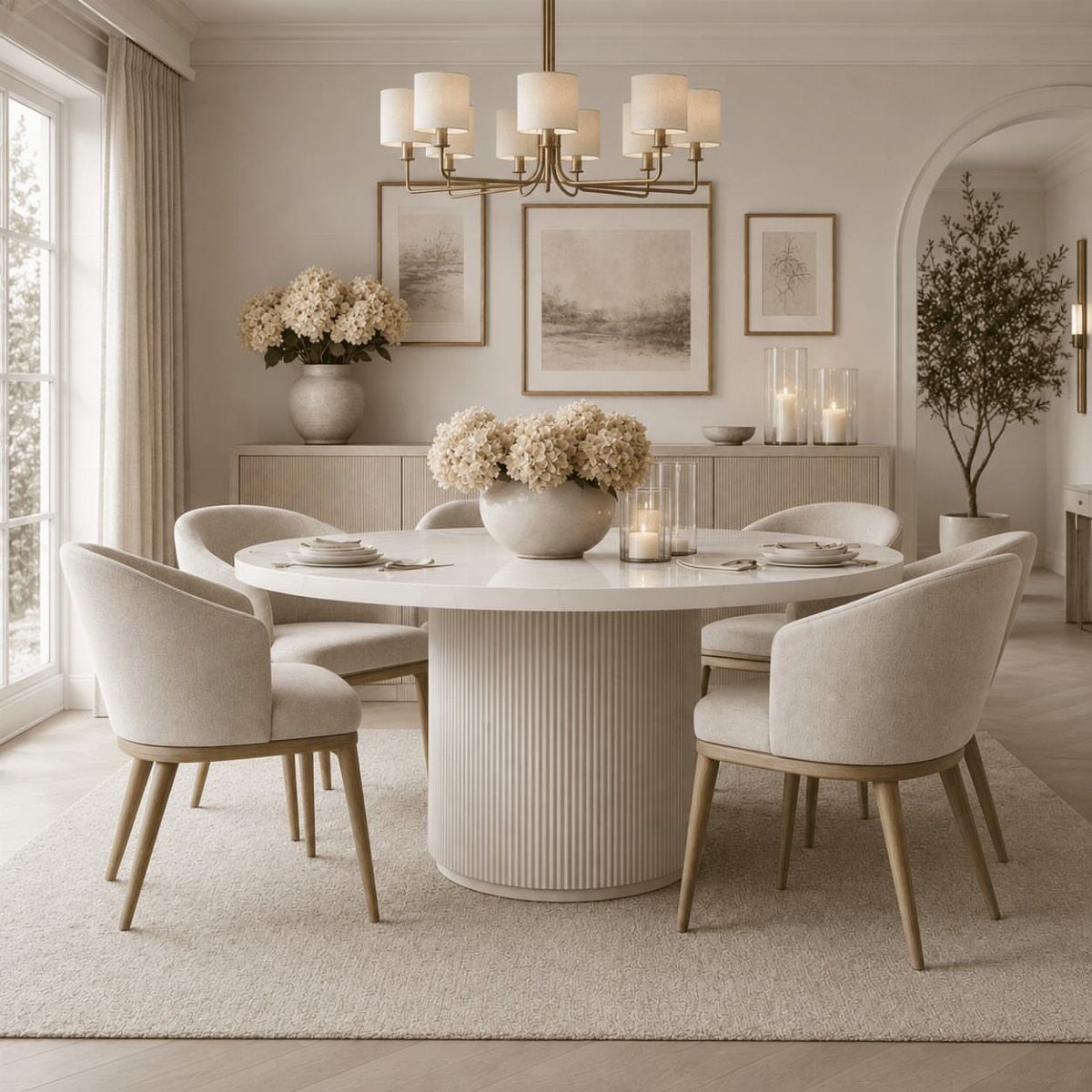
A fluted white table brings texture to a room built on calm. Beige upholstered chairs keep the palette neutral, and a gold chandelier adds warmth without competing for attention.
The approach works when you want a room that feels finished but never fussy. Every piece does its job and nothing more.
If you go this direction, choose furniture with simple lines and skip anything that asks to be noticed on its own. The room stays open and the light moves easily.
2. Modern Glamour
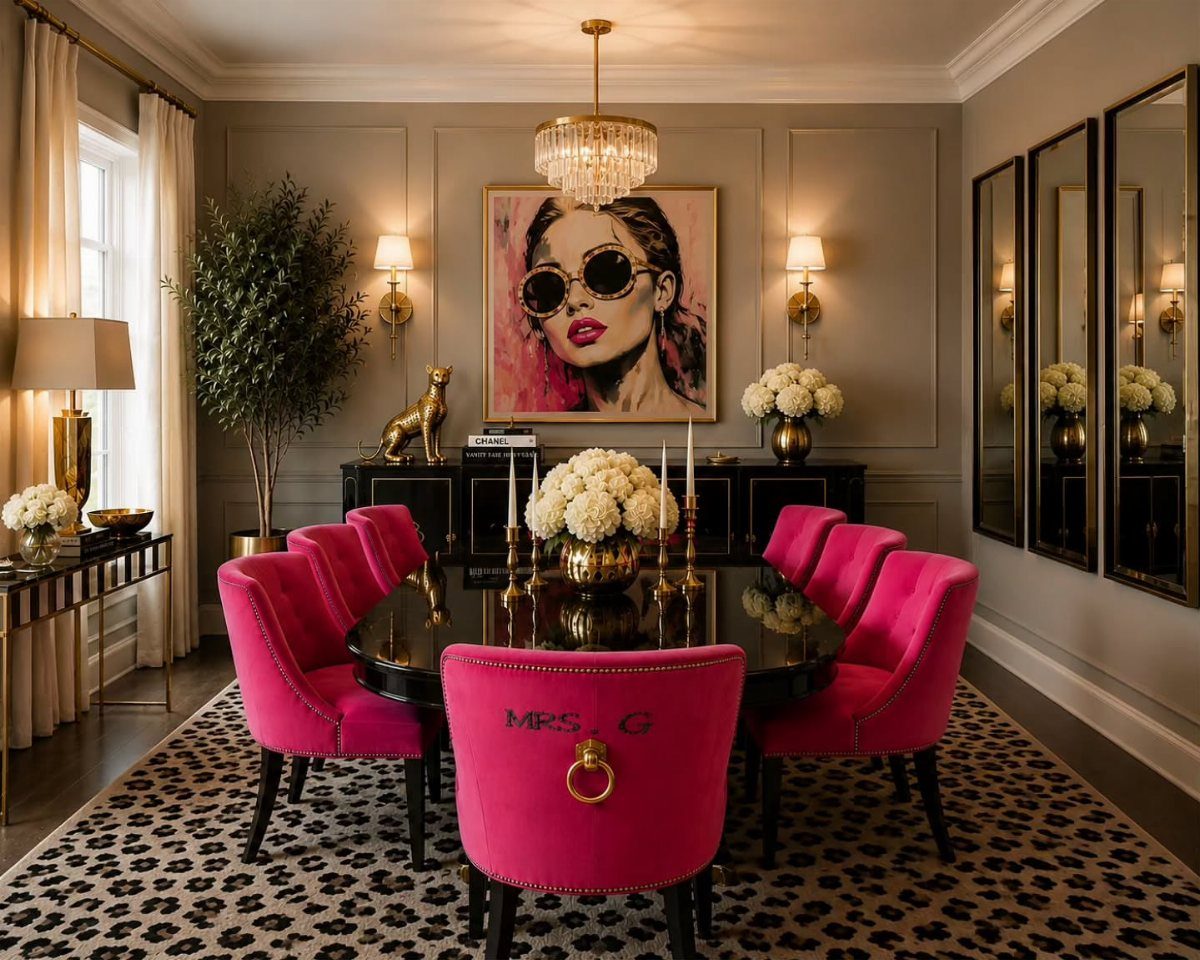
Hot pink velvet chairs against a black table and leopard print rug make the room impossible to ignore. A large portrait and crystal chandelier keep the drama going, and the black sideboard holds the floor.
This works when you want a space that reads formal but refuses to be boring. The silhouettes stay clean, so the color and pattern do all the talking.
Velvet holds up well in a dining room because it doesn’t see the same wear as living room seating. If pink feels like too much, a jewel tone in emerald or sapphire gives you the same punch.
3. Sculptural Decor
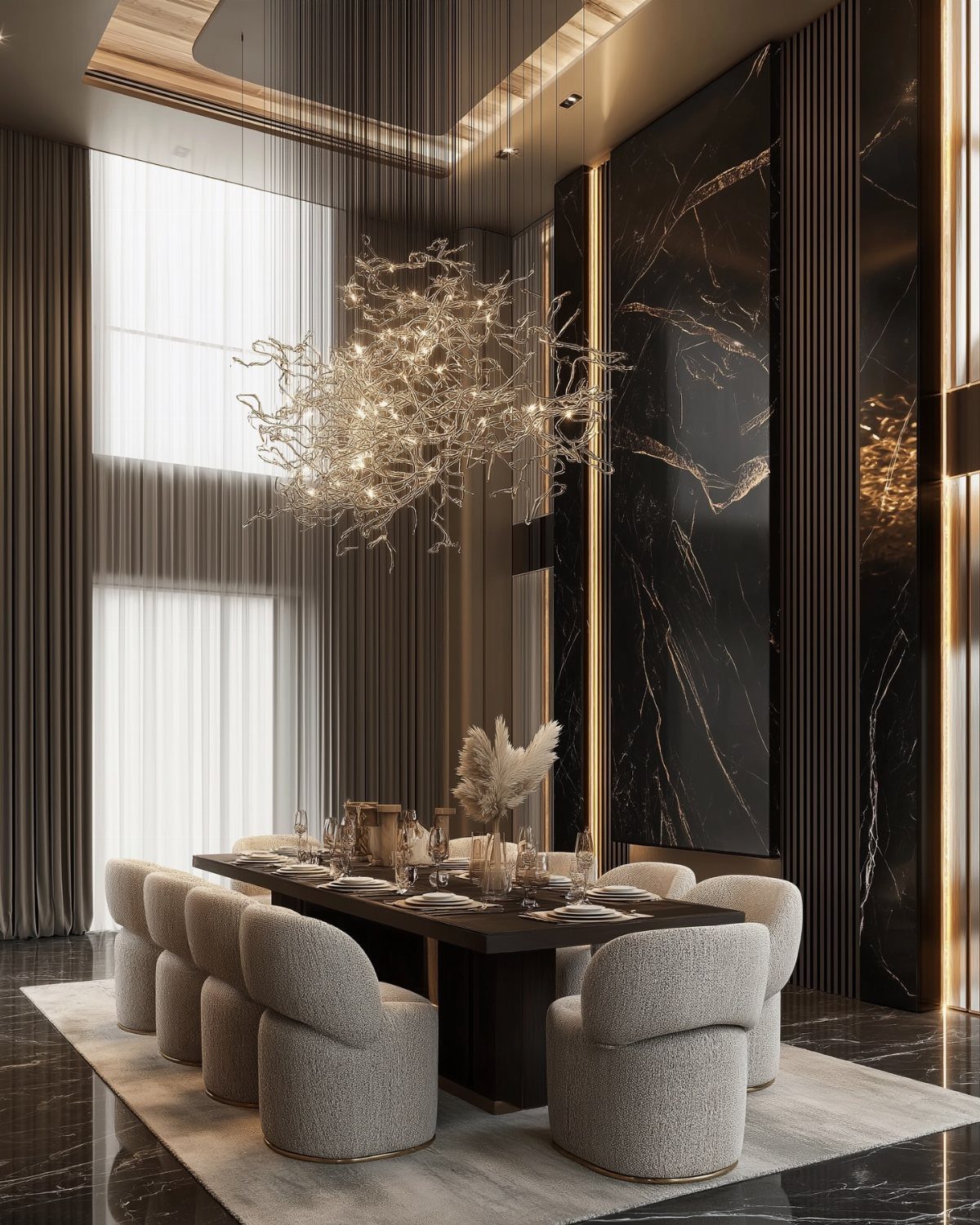
A branch chandelier that spans the table turns the ceiling into something worth looking at. Curved bouclé chairs soften the hard edges of black marble walls, and the contrast prevents the space from feeling too severe.
This approach suits a space where you want one piece to carry the whole room. The chandelier becomes the focal point, so everything else can stay quiet.
Look for sculptural lighting that has scale but doesn’t block sightlines across the table. If the piece is large enough, you can skip art on the walls.
4. High-Gloss Materials
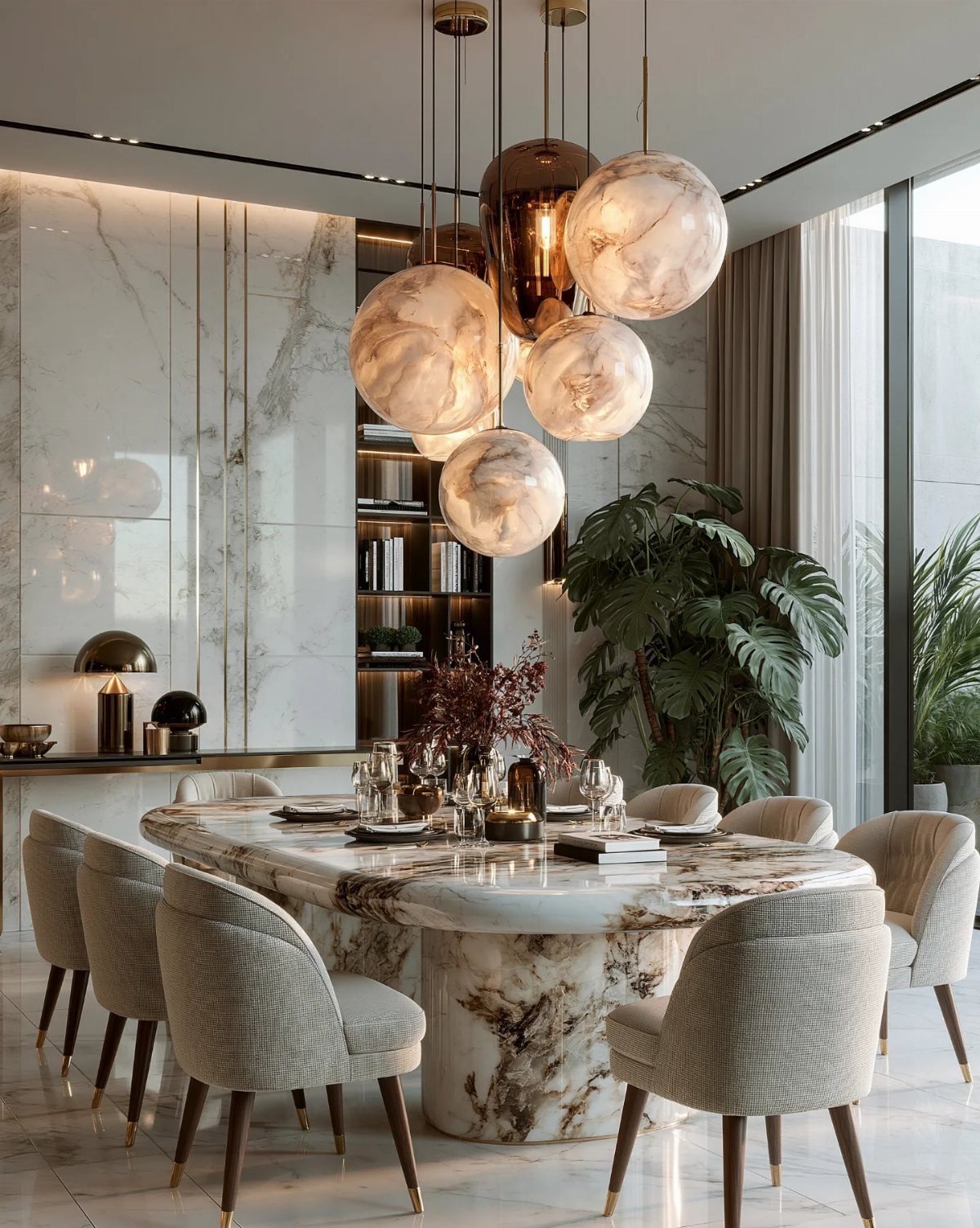
Polished marble reflects light and makes a dining table feel substantial. The veining runs through the surface and gives you pattern without bringing in anything extra.
Pair it with upholstered chairs in a textured fabric so the room doesn’t feel cold. Globe pendants in a cluster drop within a few feet of the table surface to light the place settings without requiring a full chandelier.
Marble needs sealing, especially in a dining room where spills happen. Wipe it down after meals and reseal it once a year to keep the surface from staining.
5. Classic Sophistication
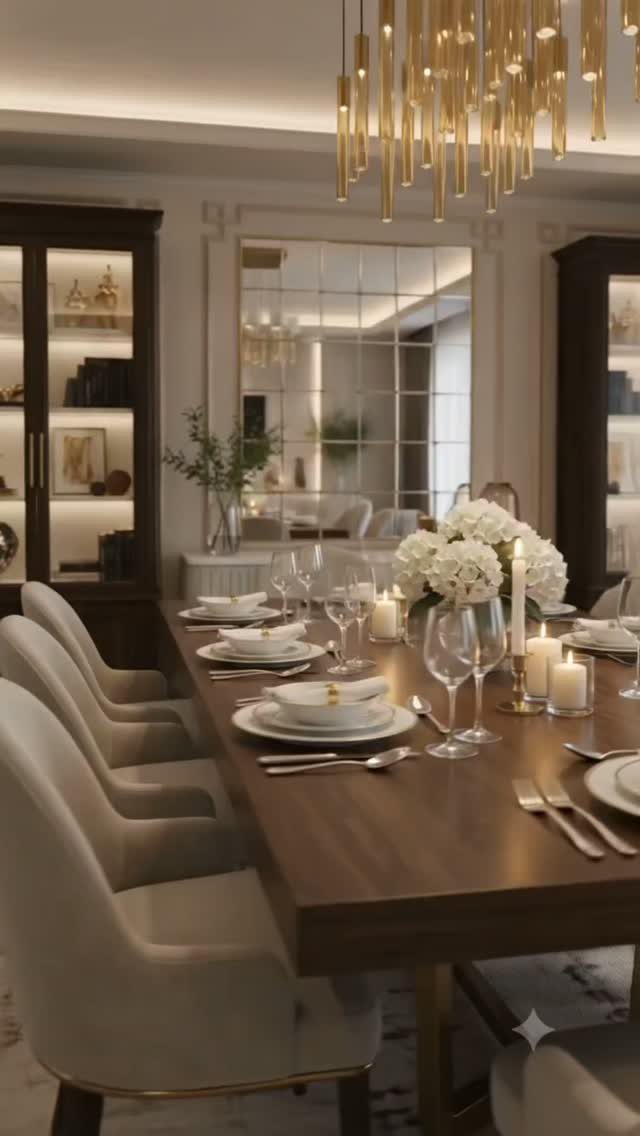
A long dark wood table with beige upholstered chairs and a gold chandelier anchors the space in tradition. White florals and a large mirror add brightness without pulling away from the formal tone.
This approach works when you want a room that feels dressy but never stuffy. The palette stays neutral, and the chandelier gives you enough detail that the rest can be simple.
Choose a table with a straight edge if you seat a full group regularly. Beige linen or velvet on the chairs hides minor stains better than white.
6. Bold Chandeliers
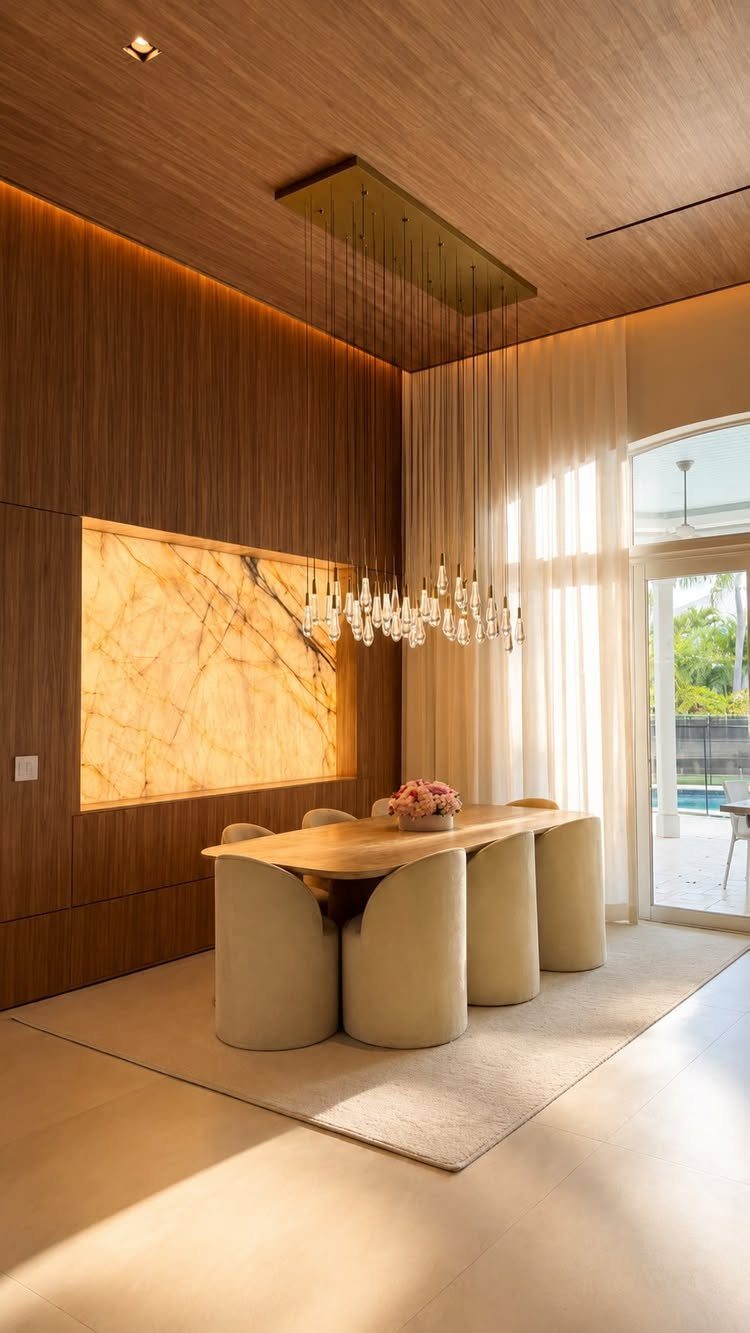
A multi-pendant gold chandelier clusters over the table and gives you enough light to skip recessed cans.
This works when you want the lighting to do more than fill a ceiling void.
Install a dimmer so you can bring the light down for dinner. If your ceiling is on the lower side, choose a chandelier with shorter drops so it doesn’t hang into sightlines.
7. Eclectic Modern Dining Room
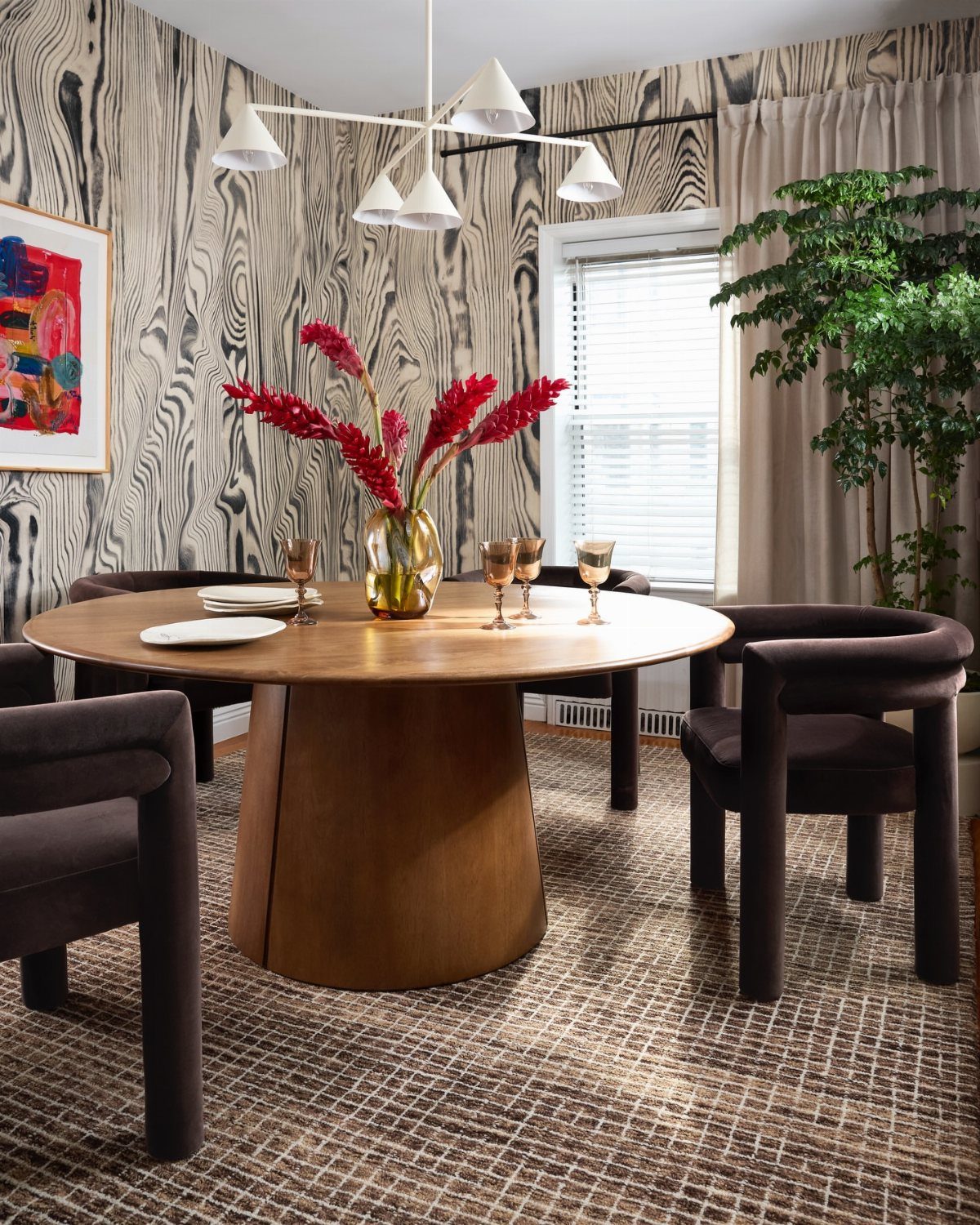
A round table pulls chairs closer together than a rectangular one, and curved backs on dark chairs soften the geometry.
This works when you want a room that feels collected rather than coordinated. The pieces come from different places but share a tone, so nothing clashes.
If you add patterned wallpaper, keep the furniture and lighting minimal. The wallpaper does the work, and too many competing details turn layering into clutter.
8. Open-Plan Dining and Living Area
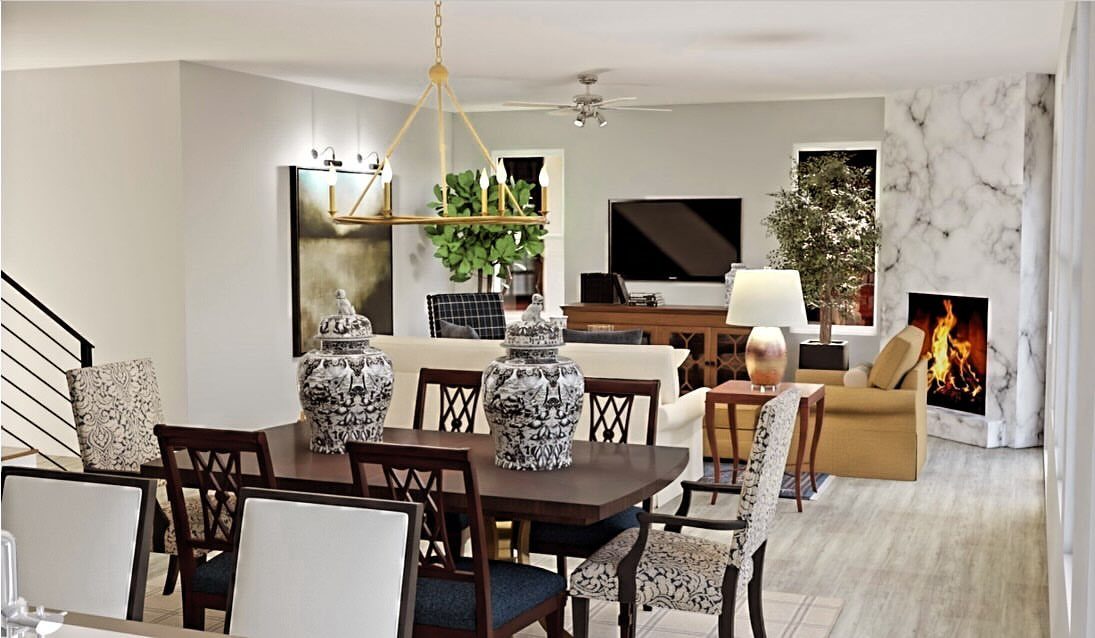
A dining table positioned between the kitchen and living area lets the room do 2 things without a divider.
The gold chandelier marks the dining zone, and matching the wood finish on the table to other furniture in the space ties it together visually.
This layout works when you want the dining space to feel like part of the conversation, not a separate room. Sightlines stay open and the space reads larger than it measures.
Choose chairs with low backs or open frames so they don’t block sightlines between spaces. If the dining area sits near the sofa, keep the finishes consistent so the transition feels intentional.
9. Mid-Century Modern
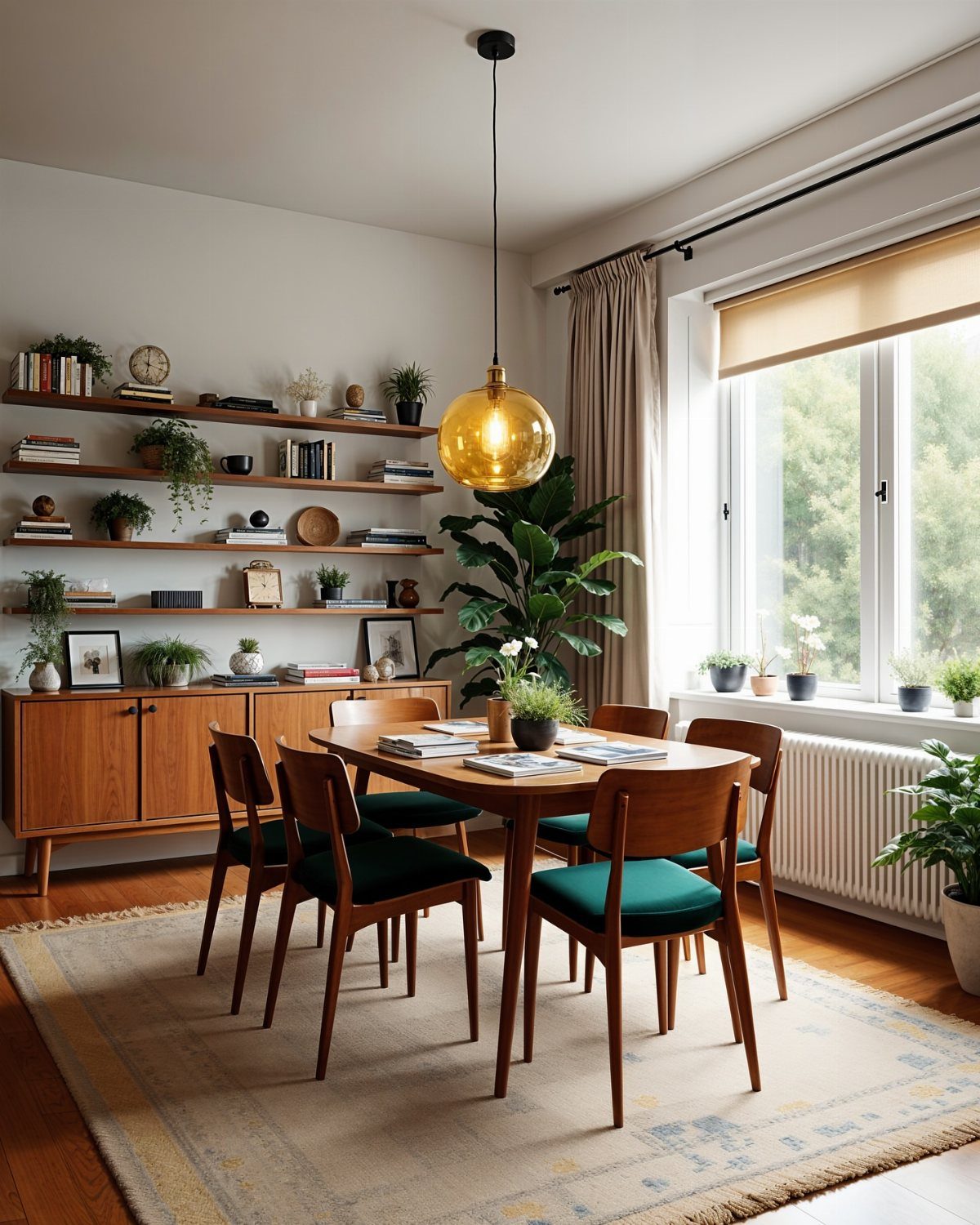
Tapered wood legs and green velvet upholstery place this squarely in mid-century territory. The sideboard and open shelving keep storage visible, and a single pendant light centers over the table without taking up visual space.
This style works when you want a room that looks deliberate but still gets used. The wood tones warm the space, and the velvet adds texture without requiring pattern.
Look for chairs with angled legs and minimal arms.
If green feels too bold, mustard or rust velvet keeps the period feel. Open shelving works best when you edit what goes on it; too many items make it look cluttered instead of intentional.
10. Warm Ambient Dining Room
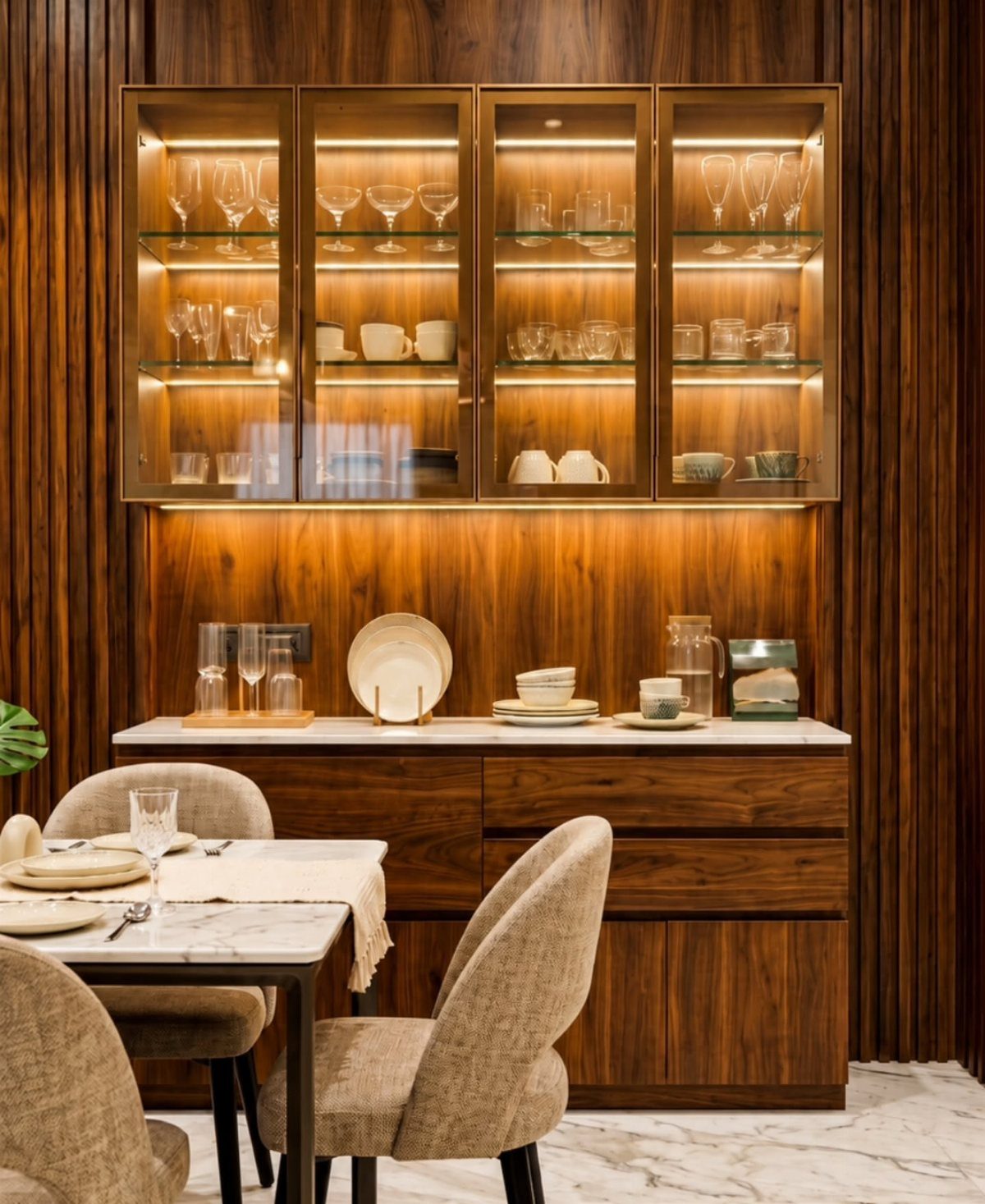
Wood paneling wraps the walls and gives the room warmth that paint can’t match. The illuminated glass cabinet turns storage into a display, and the lighting inside highlights glassware without needing overhead fixtures.
This approach works when you want a dining room that feels intimate rather than formal. The wood absorbs light instead of reflecting it, so the room stays cozy even with high ceilings.
If you add a lit cabinet, install LED strips inside so the bulbs don’t generate heat near the glassware. Keep the shelves edited; the lighting draws attention, so everything inside should be worth showing.
11. Industrial and Airy Dining Room
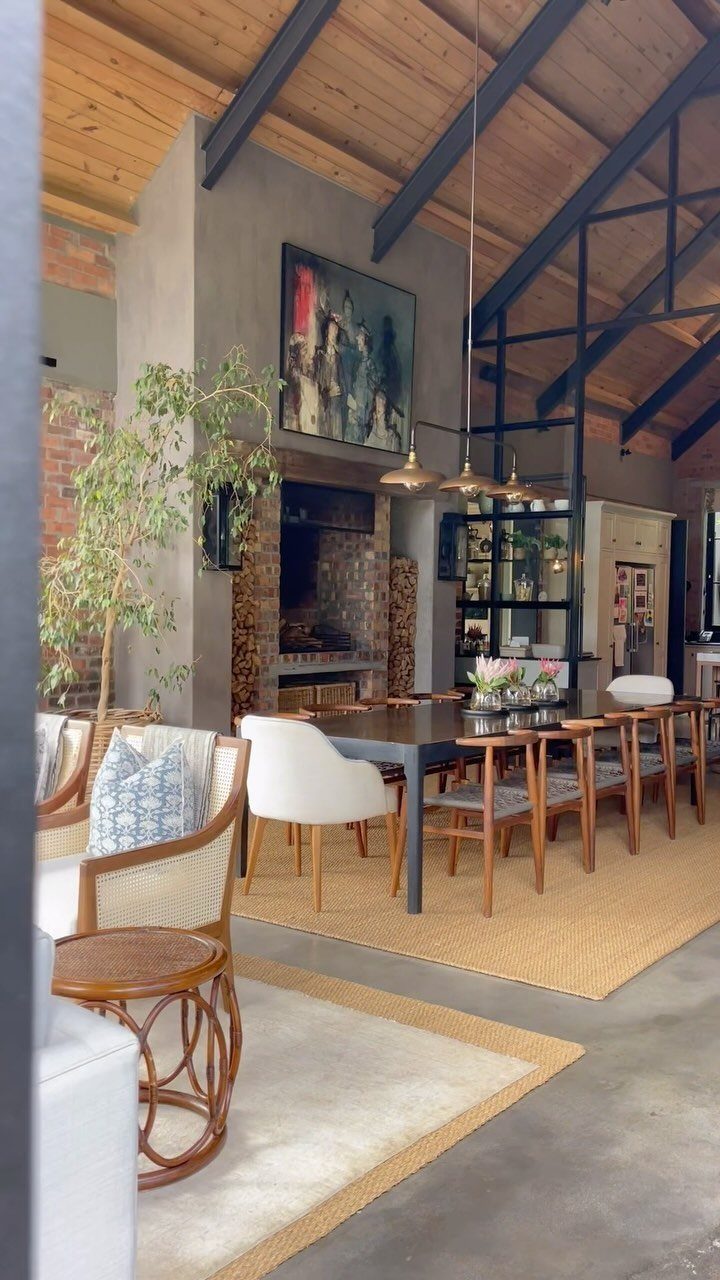
Black steel beams and light wood planks overhead give the room industrial bones without feeling unfinished. The long dark table seats a crowd, and mixing white upholstered chairs with wooden ones keeps the formality in check.
This works in a space with height to spare. The beams draw the eye up, and the contrast between dark steel and pale wood keeps the ceiling from disappearing.
If you go this route, balance the hard materials with soft seating.
The steel and wood read cold on their own, so upholstered chairs and a large piece of art add warmth. A fireplace helps when the ceilings run this high.
12. Comfortable Dining Chairs
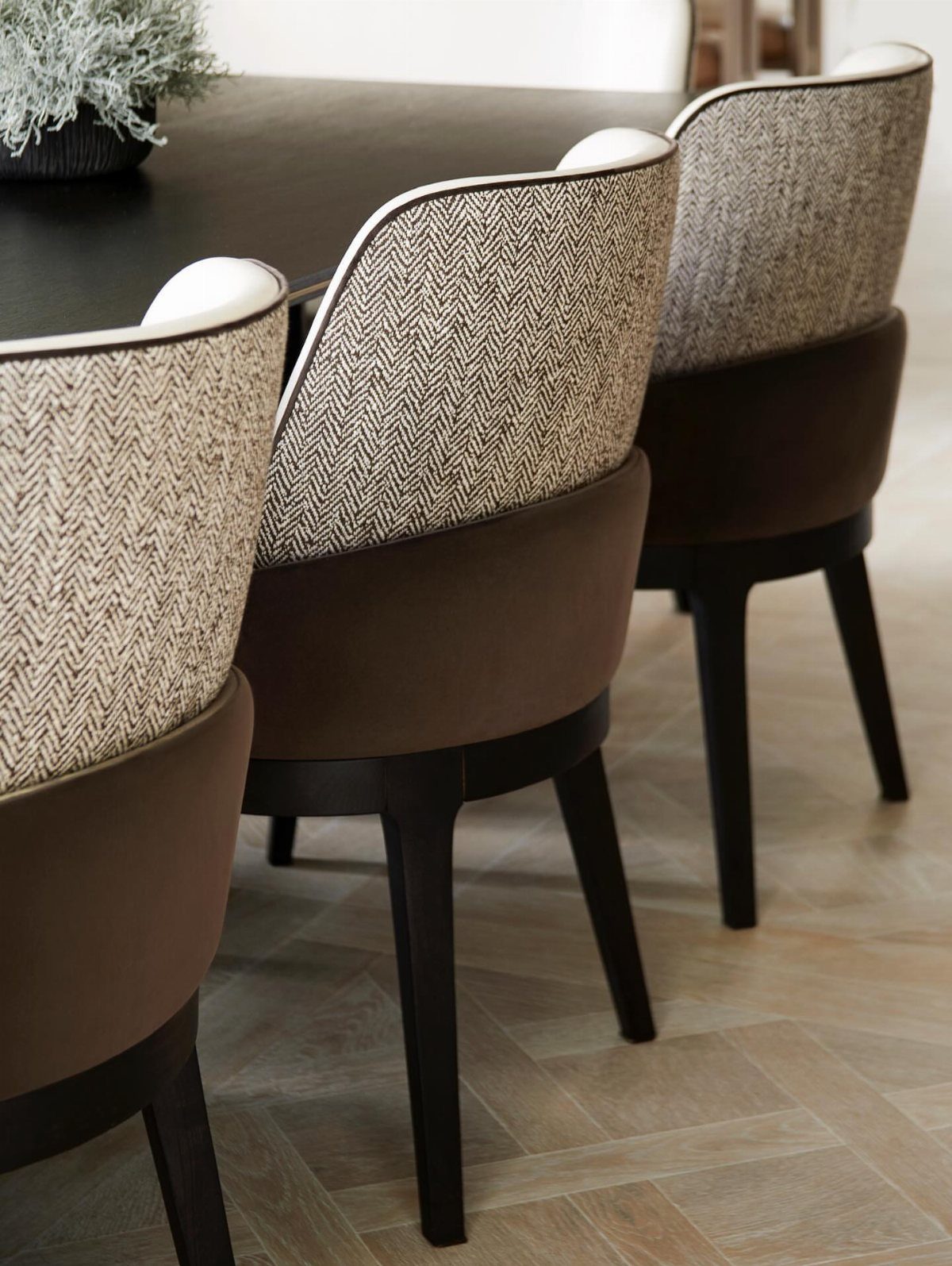
Upholstered seats with herringbone fabric and brown leather bases give you enough padding to sit through a long meal. The pattern adds texture without reading as busy, and the leather on the base hides scuffs better than fabric would.
This works when you want dining chairs that feel finished but don’t require constant maintenance. The herringbone holds up well to regular use, and the two-tone finish breaks up the shape visually.
Look for chairs with a slight tilt to the backrest.
Straight-backed dining chairs look clean but get uncomfortable once you settle in for a meal. If you’re buying a set, sit in one first; the difference between comfortable and tolerable shows up after the second course.
13. Banquette Seating
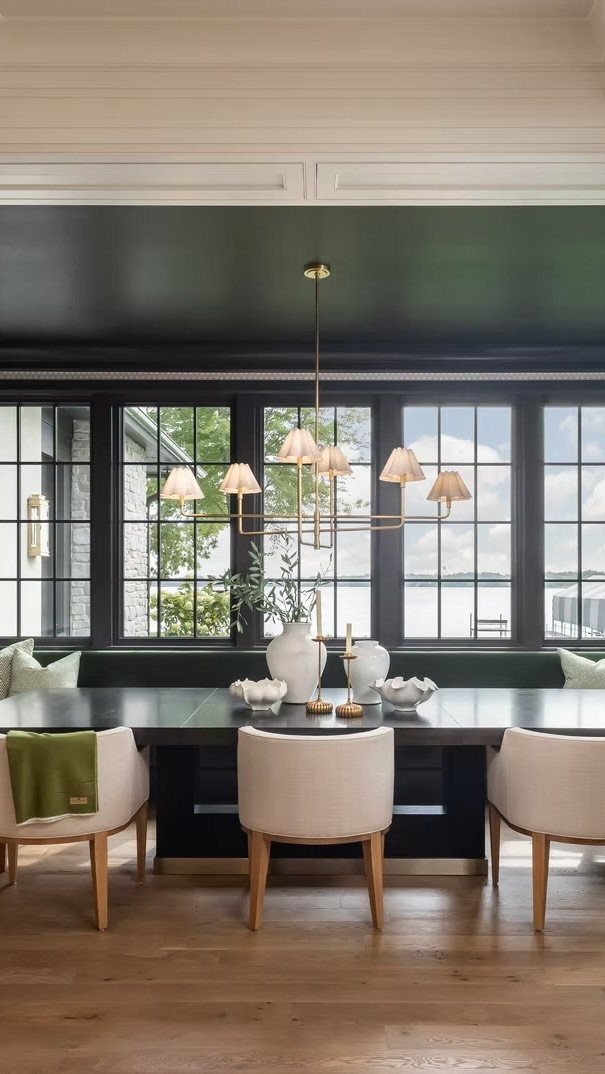
A built-in banquette against the window locks seating in place and frees up floor space. The dark green velvet reads formal enough for a dining room, and the fixed position means chairs only go on the opposite side.
You gain seating capacity without blocking walkways, and the upholstered back makes long dinners more comfortable than a wooden chair.
Build the banquette to match standard dining chair dimensions so guests sit at a comfortable height. If you skip the custom route, a bench with a back works the same way.
14. Patterned Wallpaper
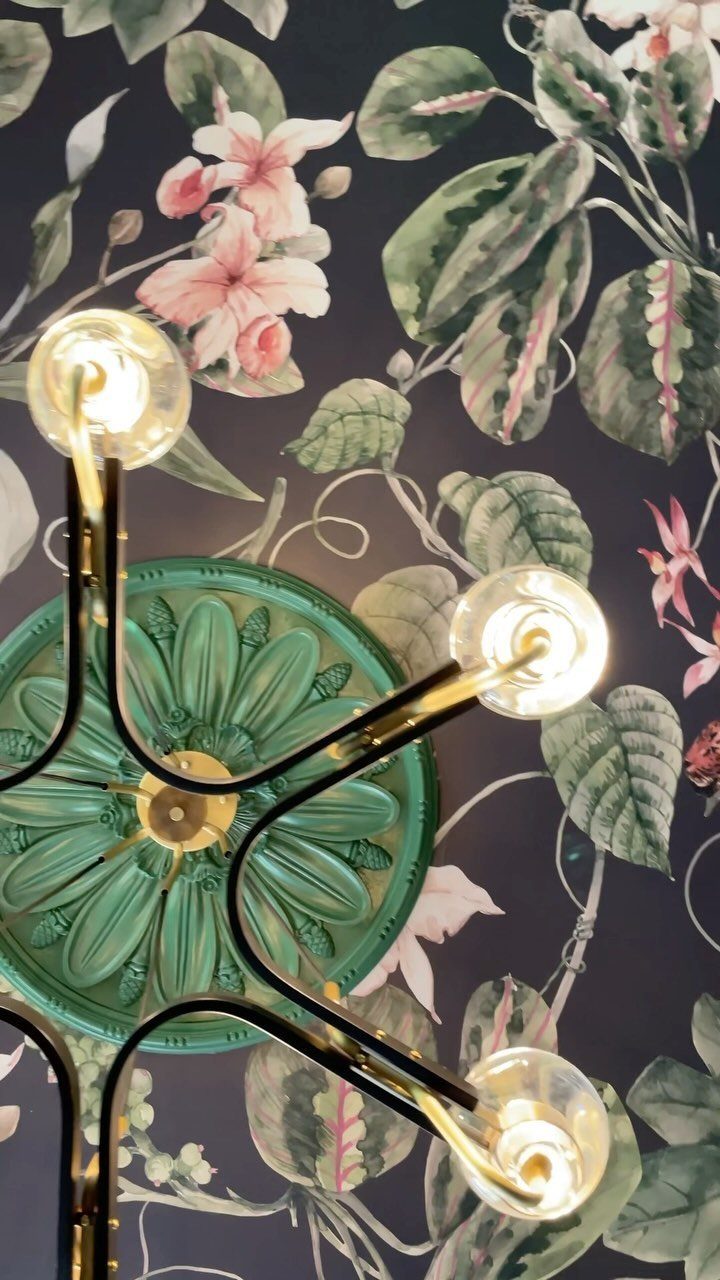
Large-scale botanical wallpaper turns the walls into the focal point. The pattern fills the space without needing art, and the scale keeps it from reading as busy.
This works when you want a room that feels layered but don’t want to hang multiple pieces. The wallpaper does all the work, so the furniture can stay simple.
Stick with one pattern wall if the room is small. Wrapping the walls in a bold print makes the space feel smaller unless the ceilings run high.
15. White Marble Oval Table
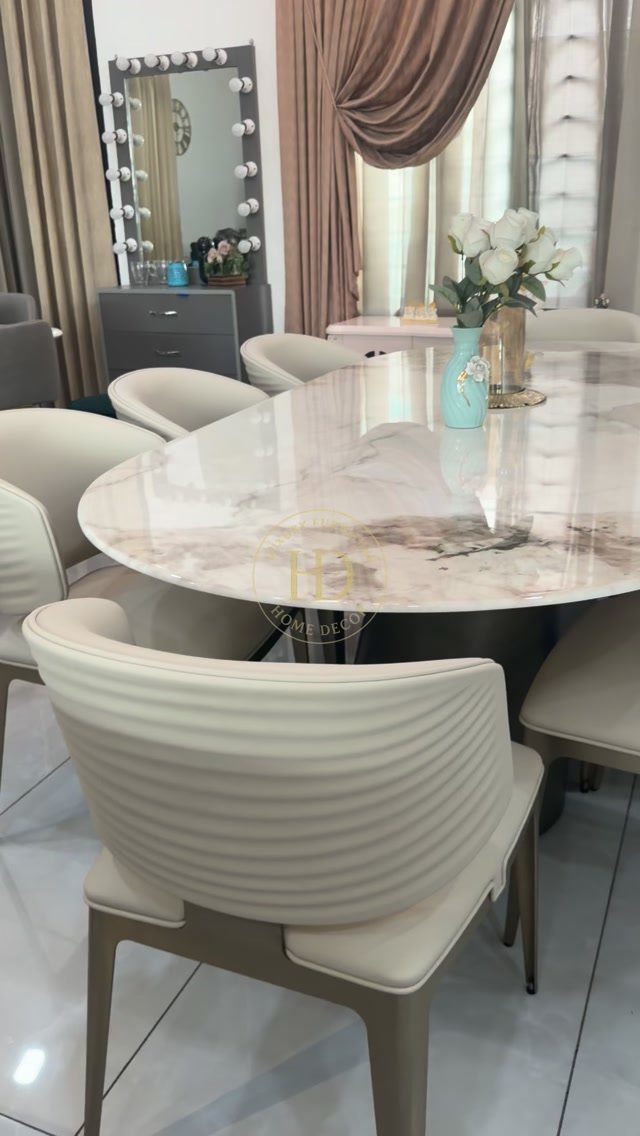
An oval table softens the lines of a room filled with straight edges. The white marble brings in veining that moves across the surface, and the curved shape lets you slide chairs in without catching corners.
Ribbed cream chairs add texture without pattern. The vertical lines on the upholstery break up the solid color, and the soft tone keeps the marble from feeling cold.
Oval tables seat more people than a square table of similar length because the rounded ends make room for extra chairs. Marble tops need coasters and quick cleanup to avoid water rings.
16. Carved Mirror Wall Display
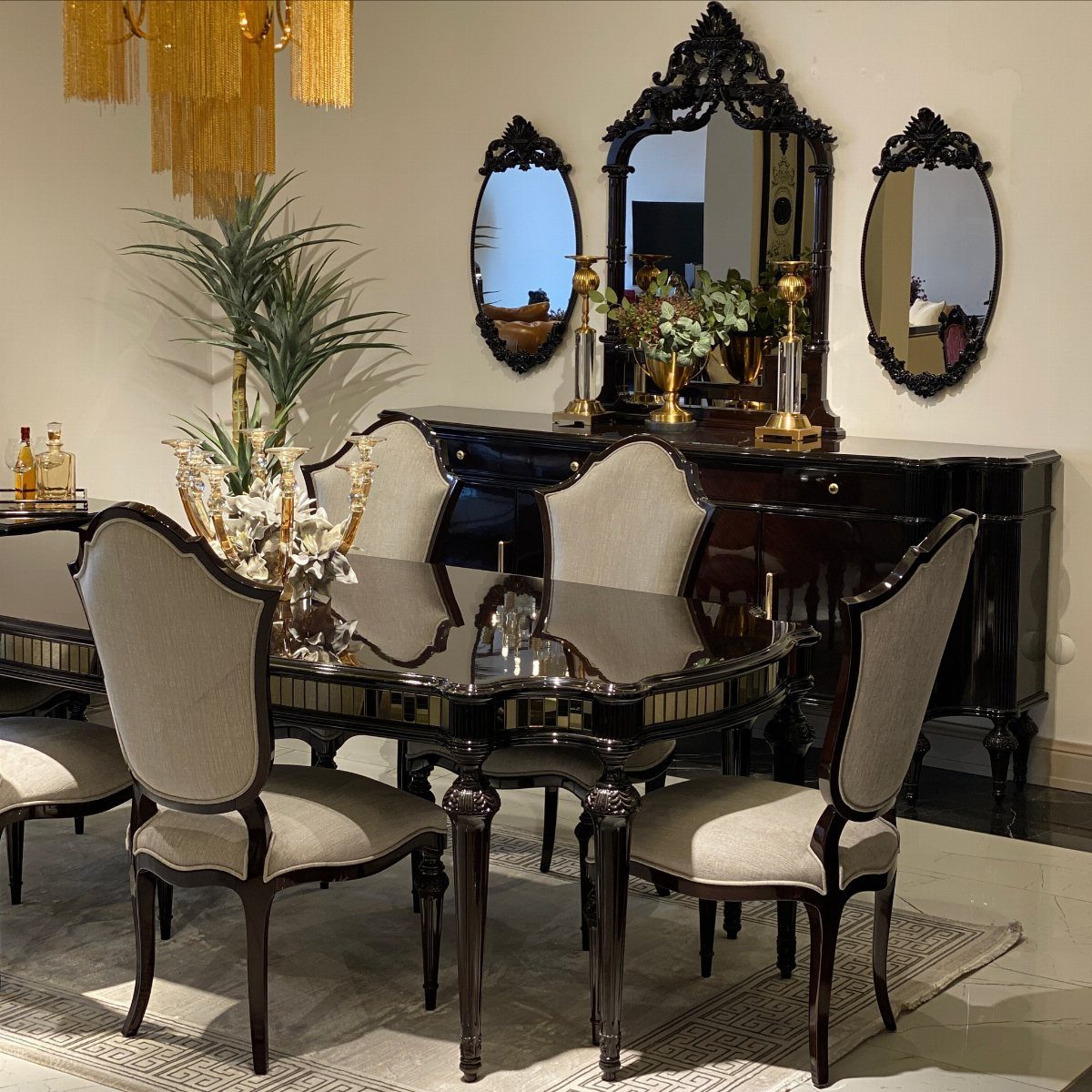
Three carved mirrors mounted side by side fill a wall without requiring one oversized piece. The black frames match the table finish, and the ornate carving adds detail the flat surfaces in the room don’t provide.
This fills a long wall without the scattered look of multiple unrelated pieces. The mirrors reflect light back into the space and make the room feel larger.
Mount them at the same height with equal spacing between frames. If the mirrors have different widths, center the grouping on the wall rather than spacing them evenly.
17. Moody Dark Paneled Walls
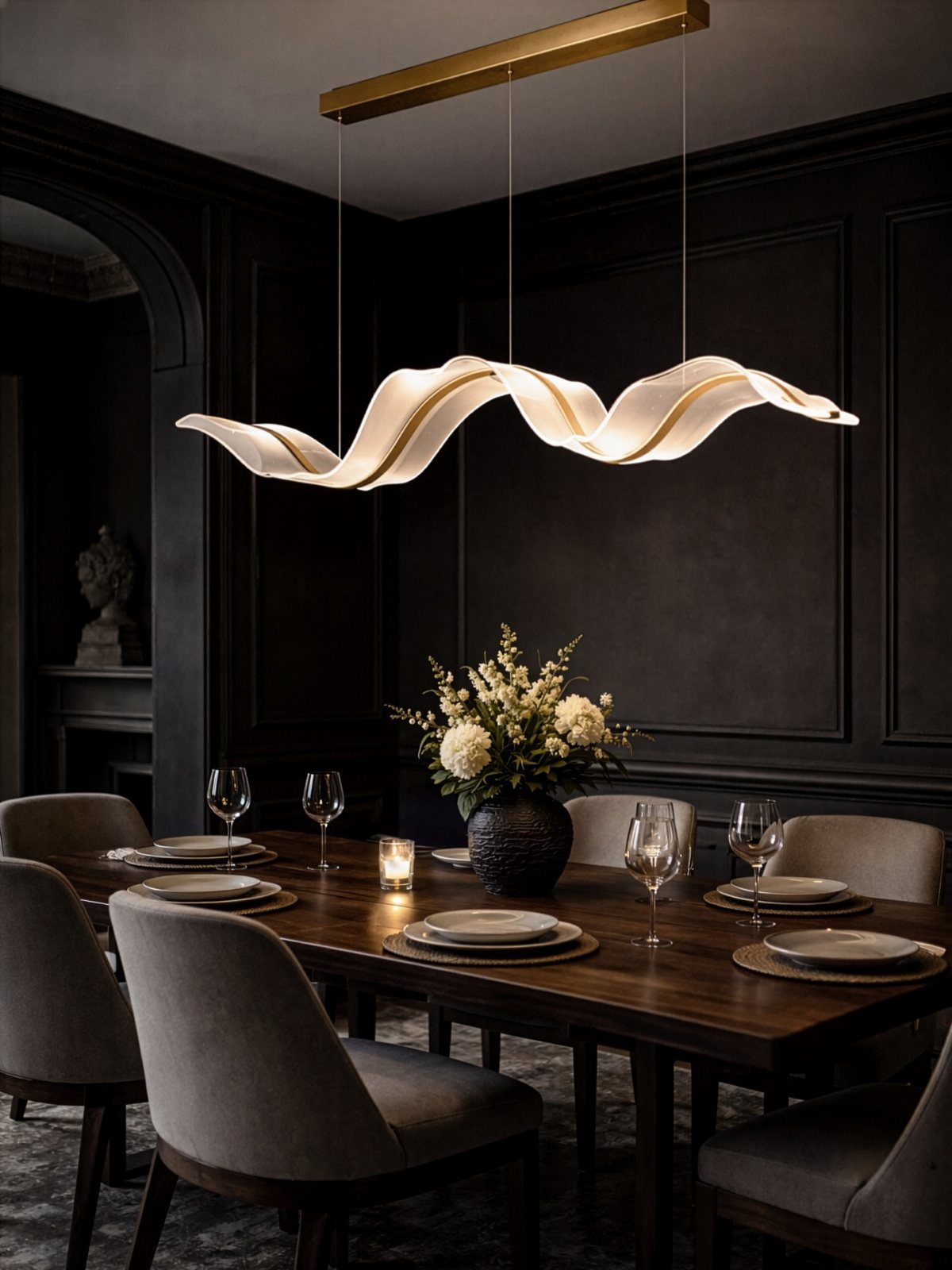
Black paneling absorbs light and makes the room feel smaller in a way that reads intentional rather than closed off. The long table and grey chairs keep the palette cool, and the wavy white chandelier provides contrast without introducing color.
This works when you want a dining room that feels moody but not dark. The black walls set the tone, so the rest of the room can stay neutral.
Paint the ceiling white or a lighter shade to keep the space from feeling like a box. If the room lacks natural light, add recessed lighting or wall sconces so the black doesn’t swallow the details.
18. Stacked Stone Accent Wall
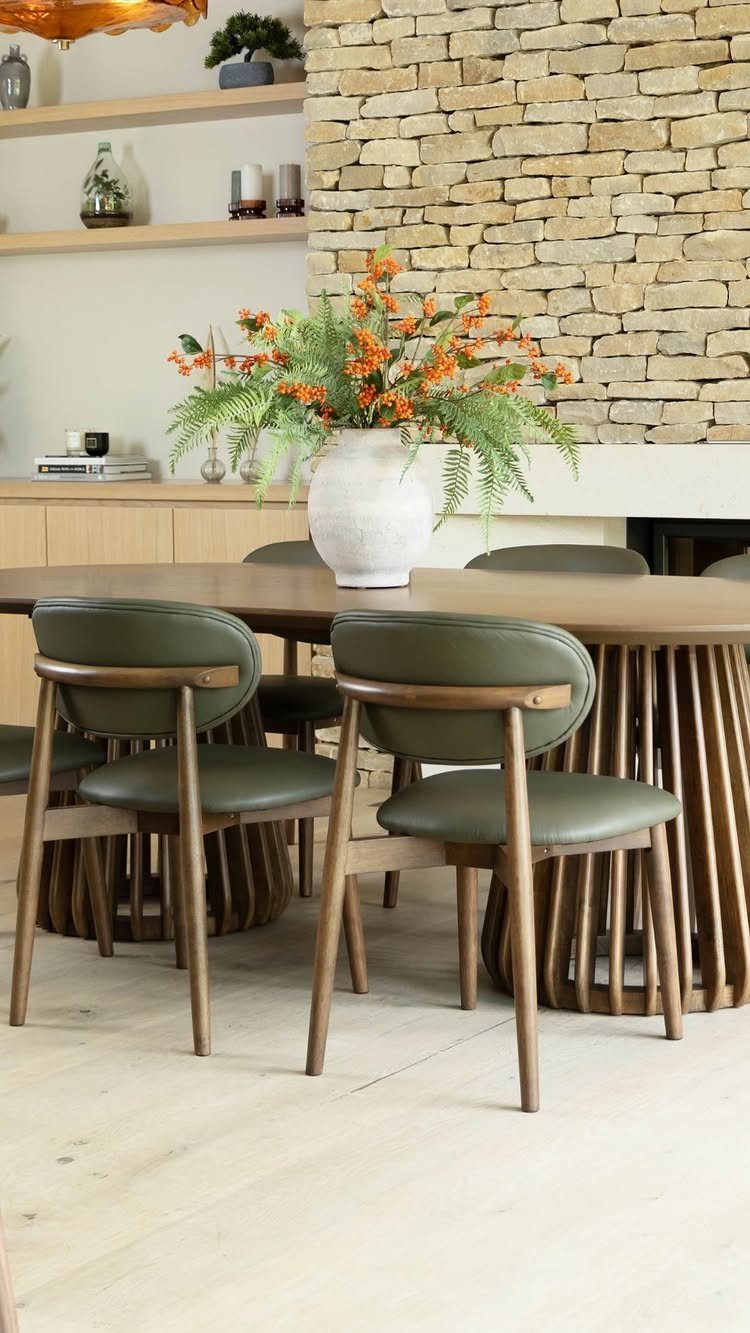
Stacked stone brings texture to a flat wall and adds weight to a space that might otherwise feel too light.
The natural variation in the stone gives you pattern without introducing color, and the rough surface contrasts with the smooth leather chairs.
Olive green leather on the chairs keeps the palette grounded. The color ties into the natural stone without matching it exactly, and leather holds up better in a dining room than fabric.
Real stone is heavy and requires structural support. Stone veneer panels install faster and weigh less, and from a few feet away the difference doesn’t show.
19. Black Veined Marble Table
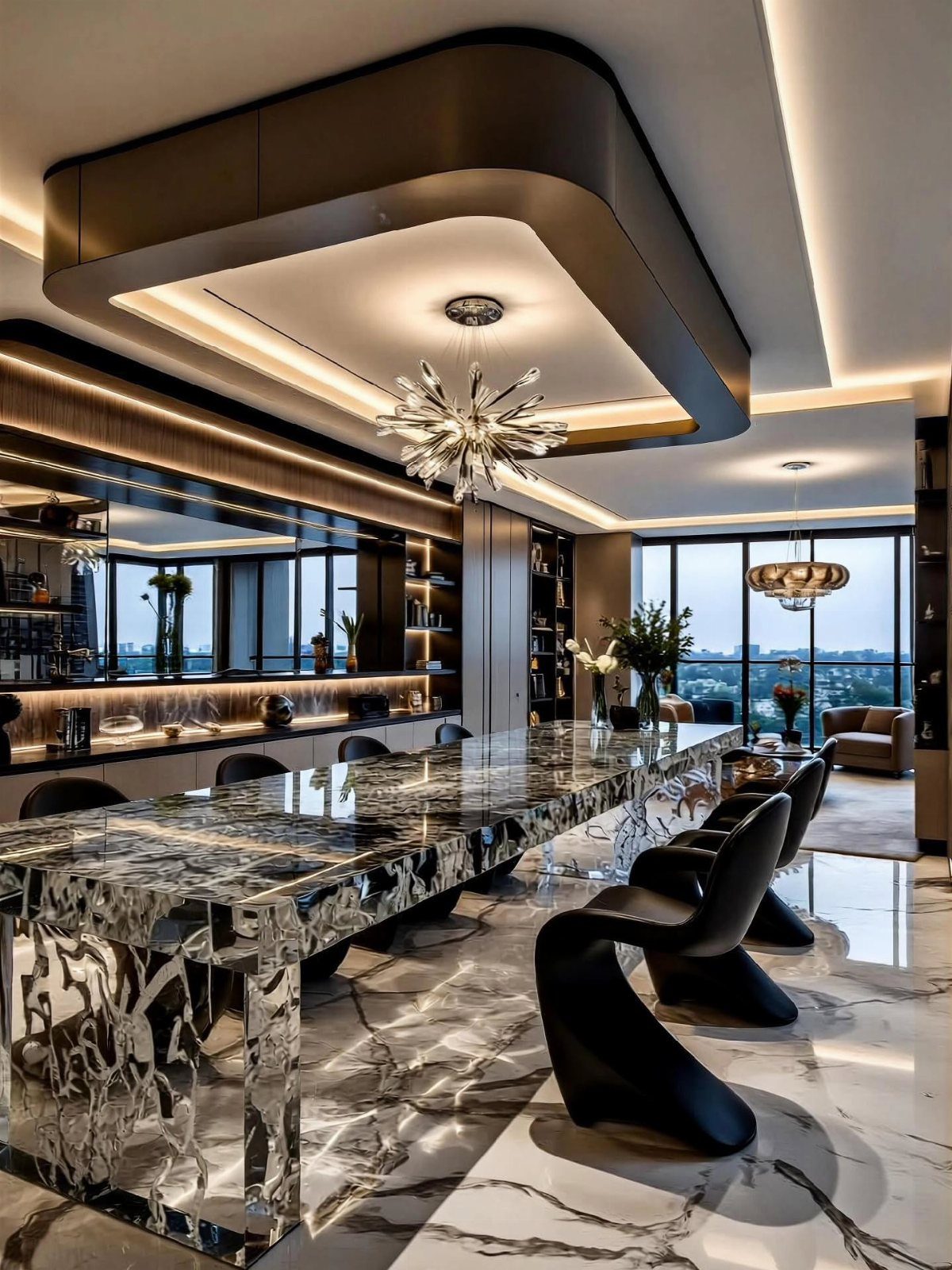
Black marble veined with white or grey brings weight to a room with views. The stone stands up to bright natural light, and chairs in the same dark finish let the marble take center stage.
A starburst chandelier provides light without competing with the skyline.
Black marble shows fingerprints and water spots more than lighter stone.
20. Illuminated Lava-Style Table
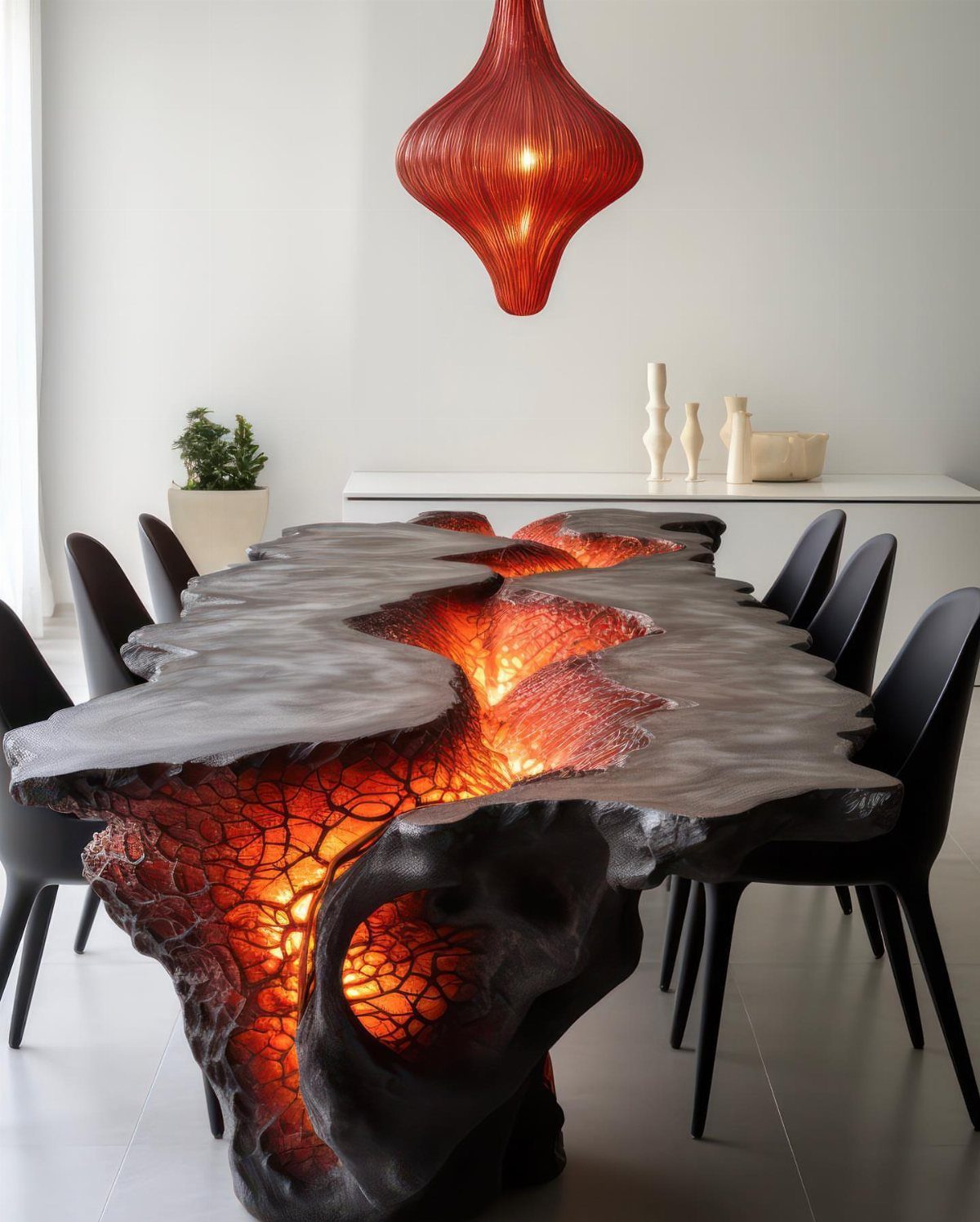
A table with glowing orange fissures running through black resin turns the dining surface into the room’s focal point.
The light comes from LED strips embedded in the channels, and the effect works best in a minimal space where nothing else competes for attention.
This suits a room where the table can be the one dramatic piece. Pair it with simple chairs and keep the walls plain so the glow reads clearly.
The resin surface wipes clean easily, but heat from plates can cloud it over time. Use trivets under hot dishes.
21. Built-In Arched Bar Hutch
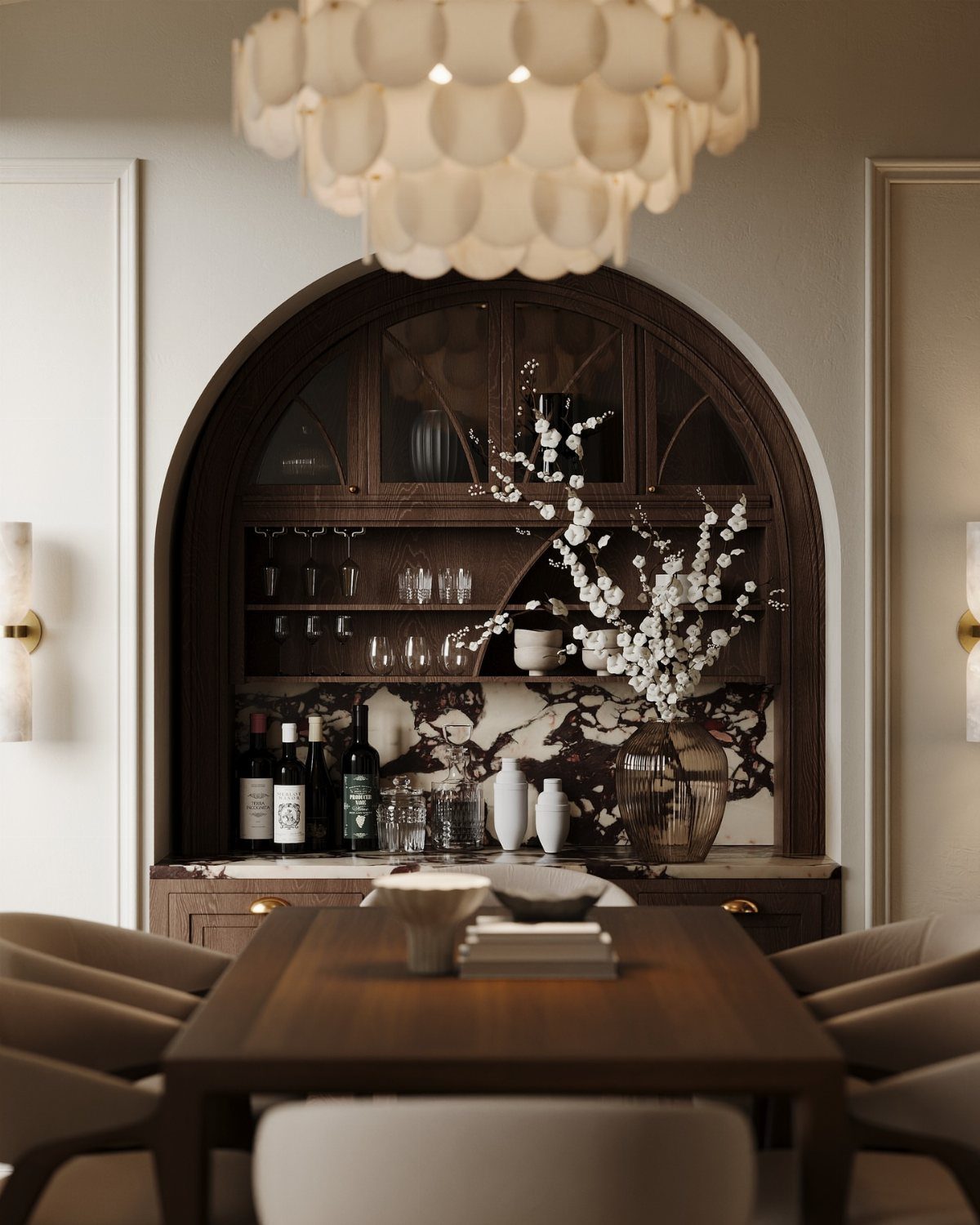
An arched hutch built into the wall stores bottles and glassware without requiring floor space. The marble shelves inside match high-end bar setups, and the open design keeps everything visible.
This works when you want storage that feels like part of the architecture. The arch softens the lines of a rectangular room, and the lit interior highlights glass without needing picture lights.
If you’re building one in, wire it for lighting before drywall goes up. Adjustable shelves let you fit taller bottles on the lower levels.
22. Green Marble and Cane Seating
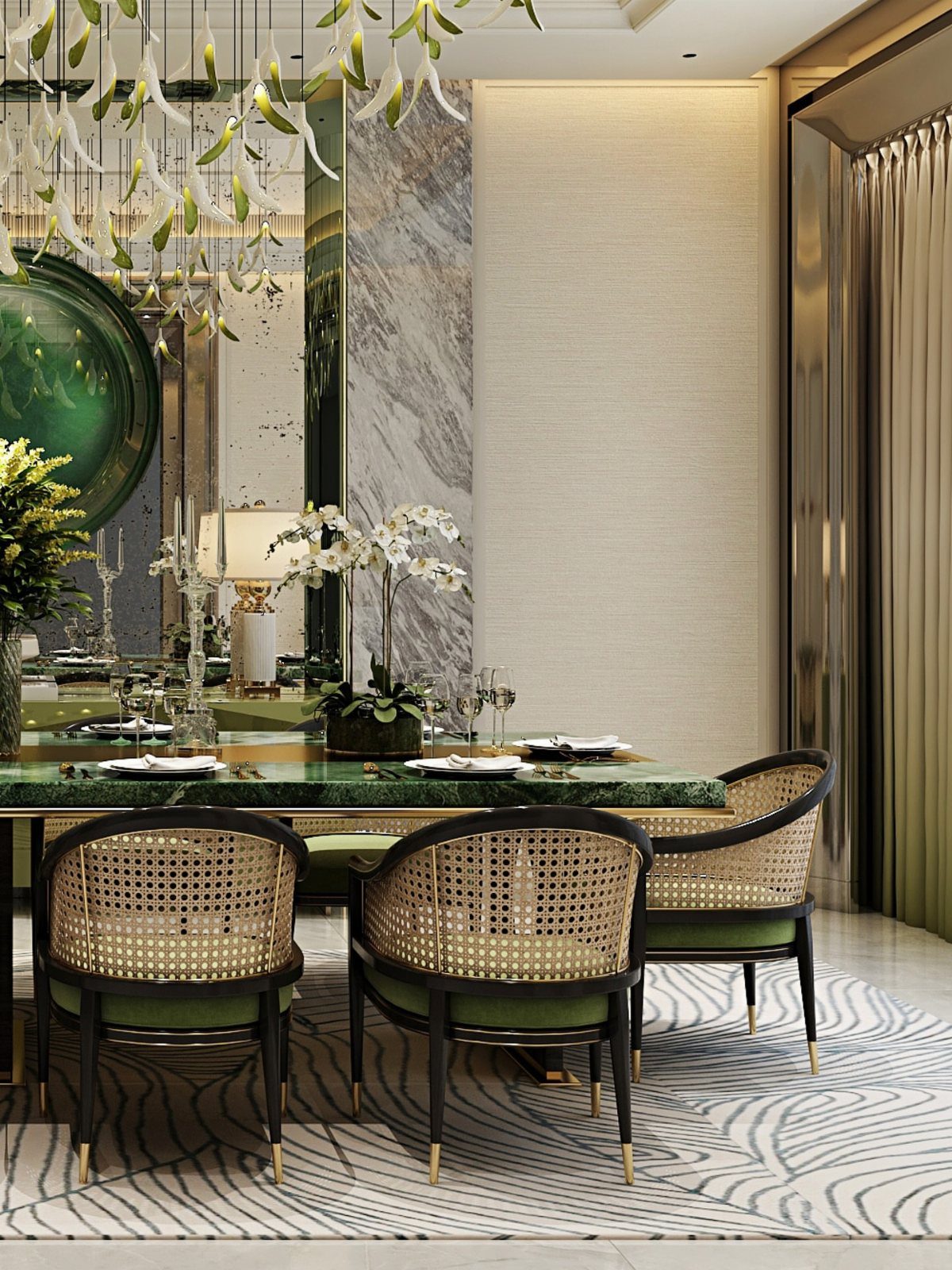
Green marble tables bring color into a neutral room without requiring paint. The cane backs on black chairs lighten the visual weight, and the contrast between polished stone and woven texture keeps the space from reading too formal.
Marble wall panels extend the material beyond the table and make the green feel intentional rather than accidental. A floral chandelier adds softness without pulling away from the stone.
Green marble ranges from pale sage to deep emerald. Look at a full slab before committing; the color shifts depending on the cut.
23. Scenic Mural Accent Wall
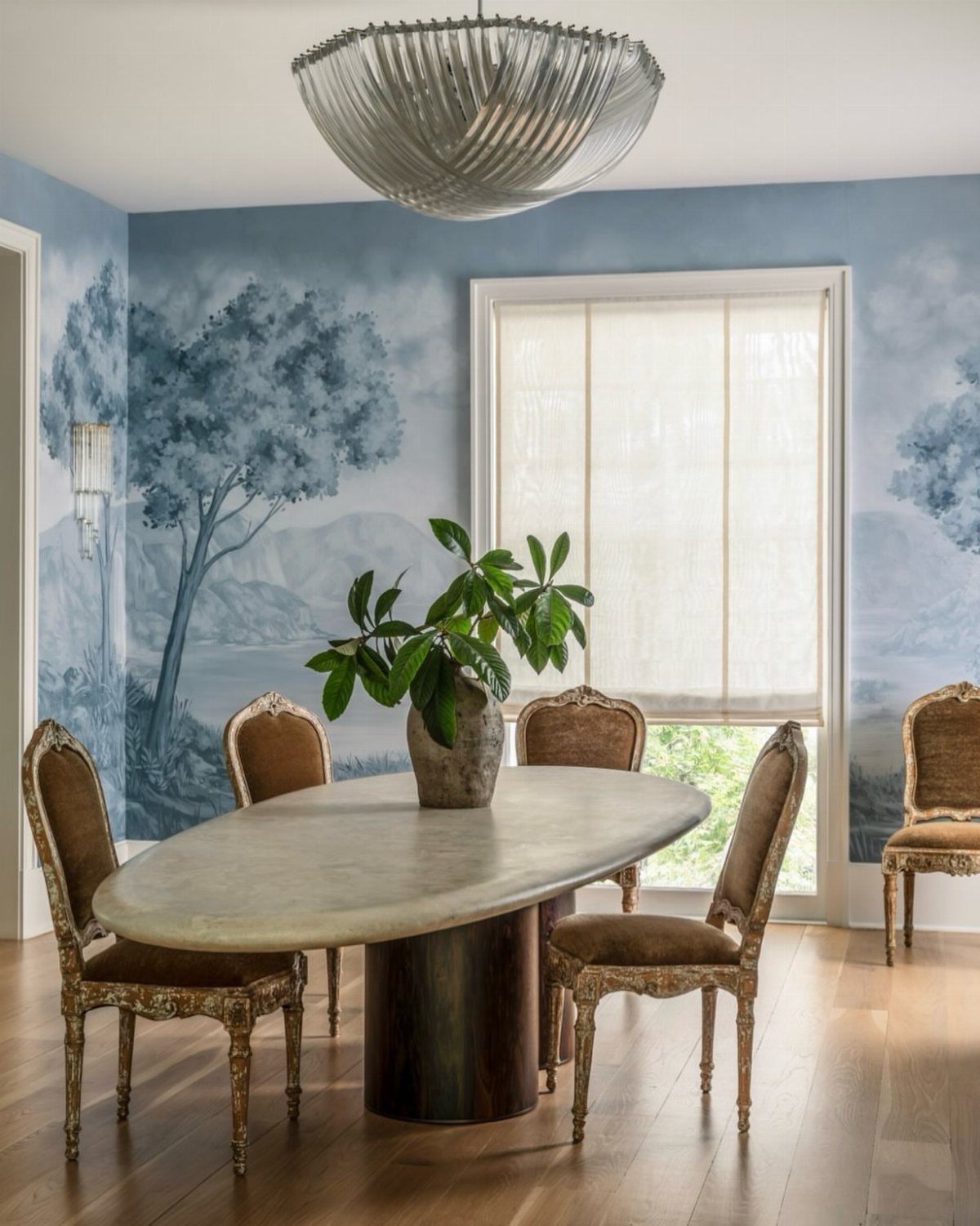
Scenic murals wrap the walls and give the room a backdrop that shifts the mood without blocking sightlines.
Gold-framed chairs bring formality to the seating, and the ornate legs balance the softness of the painted scene. An oval stone table grounds the setup without hard corners.
Murals work best on smooth walls. If your walls have texture, skim coat them first so the image sits flat.
Current Dining Room Trends
Dining rooms are being used for more than meals. The table now handles homework, work calls, and small meetings, so the surface itself has become a design feature instead of something you cover up.
Clients are treating the dining room like a powder room: a contained space every guest sees, so it gets the bold ideas.
Mismatched chairs, an antique sideboard with a modern table, and saturated color on the walls all work here because the room has boundaries.
Window treatments can be more dramatic in a dining room than in a living space. The room doesn’t need blackout function, so you can layer pattern or texture without worrying about light control.
If you’re hesitant about color elsewhere, start here. The walls can take it.
Now, clients are embracing the idea of the dining room as a destination again. They’re taking more risks with wallpaper, statement lighting, and bold fabrics, creating rooms that feel layered, intentional, and worthy of gathering.
Creating a Welcoming Atmosphere
Personal items make a dining room feel lived in rather than staged. Photographs, small objects you’ve collected, and a few pieces that mean something to you fill the space between meals without adding clutter.
Bespoke furniture fits the room exactly, but small details matter just as much. Monogrammed linens or hand-selected tableware turn a standard table into something that reflects how you actually use the space.
A sideboard or cabinet gives you a place to put those items where they stay visible but organized.
If the room feels bare with just a table and chairs, a few deliberate pieces on a shelf or surface solve it without requiring art on every wall.
Importance of Lighting
The right fixture handles most of the room’s presence before you add anything else. If the chandelier or pendant has enough presence, the walls can stay plain and the room still feels finished.
Combine ambient light with task lighting over the table.
Recessed cans or wall sconces fill the room, and a pendant or chandelier lights the surface where people are actually sitting. A dimmer on the main fixture lets you adjust the mood without installing multiple circuits.
If the dining table extends, make sure the fixture is centered on the table in its most-used position, not just the room itself.






