
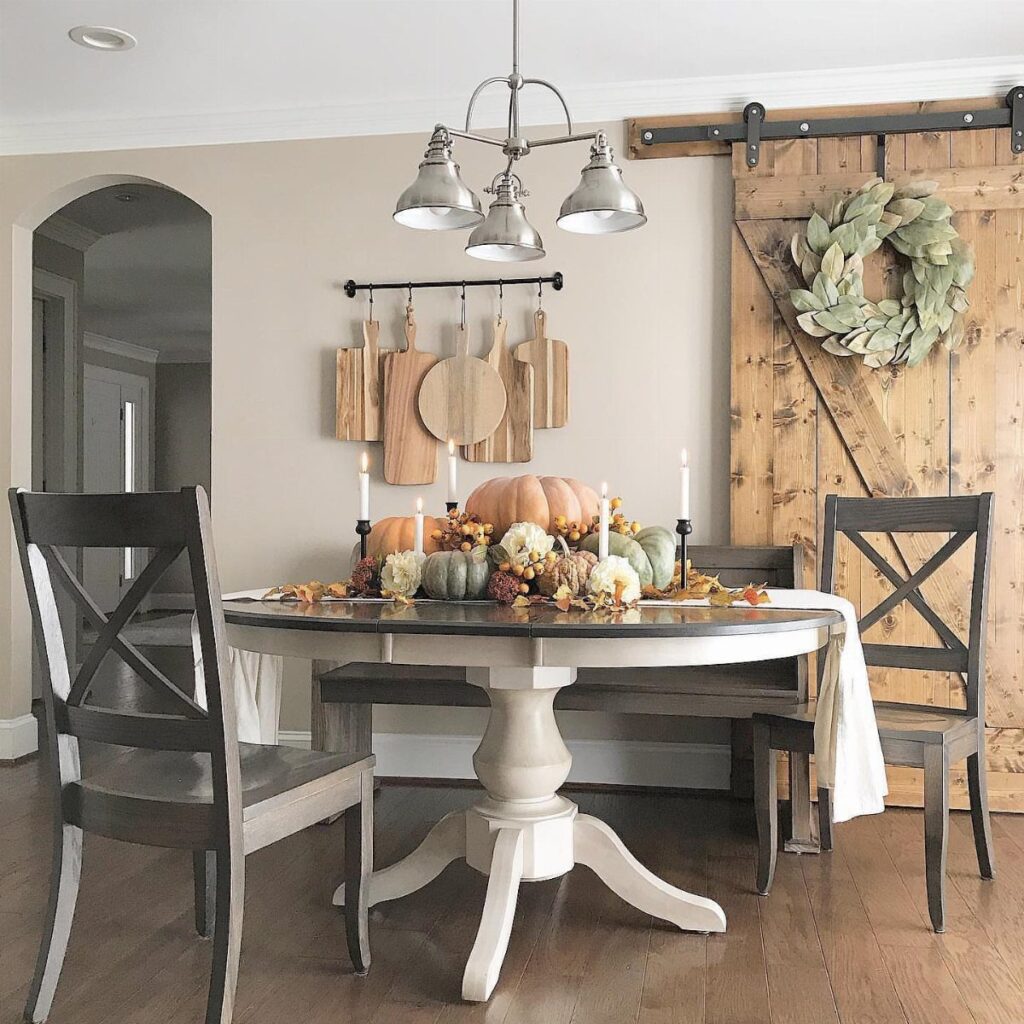
The setup ranges from single candles and dried flowers to layered arrangements that mix stoneware, fabric, and centerpieces across the whole surface.
Your table width and how often you need to clear it decide how much you can add: narrow tables suit low vases and scattered elements, while wider surfaces hold dough bowls and grouped pumpkins without crowding plates.
A 3 to 5 color palette keeps the look cohesive when you’re mixing wood elements, stoneware, plaid, and seasonal fruit in one setting.
1. Fall Table Centerpiece
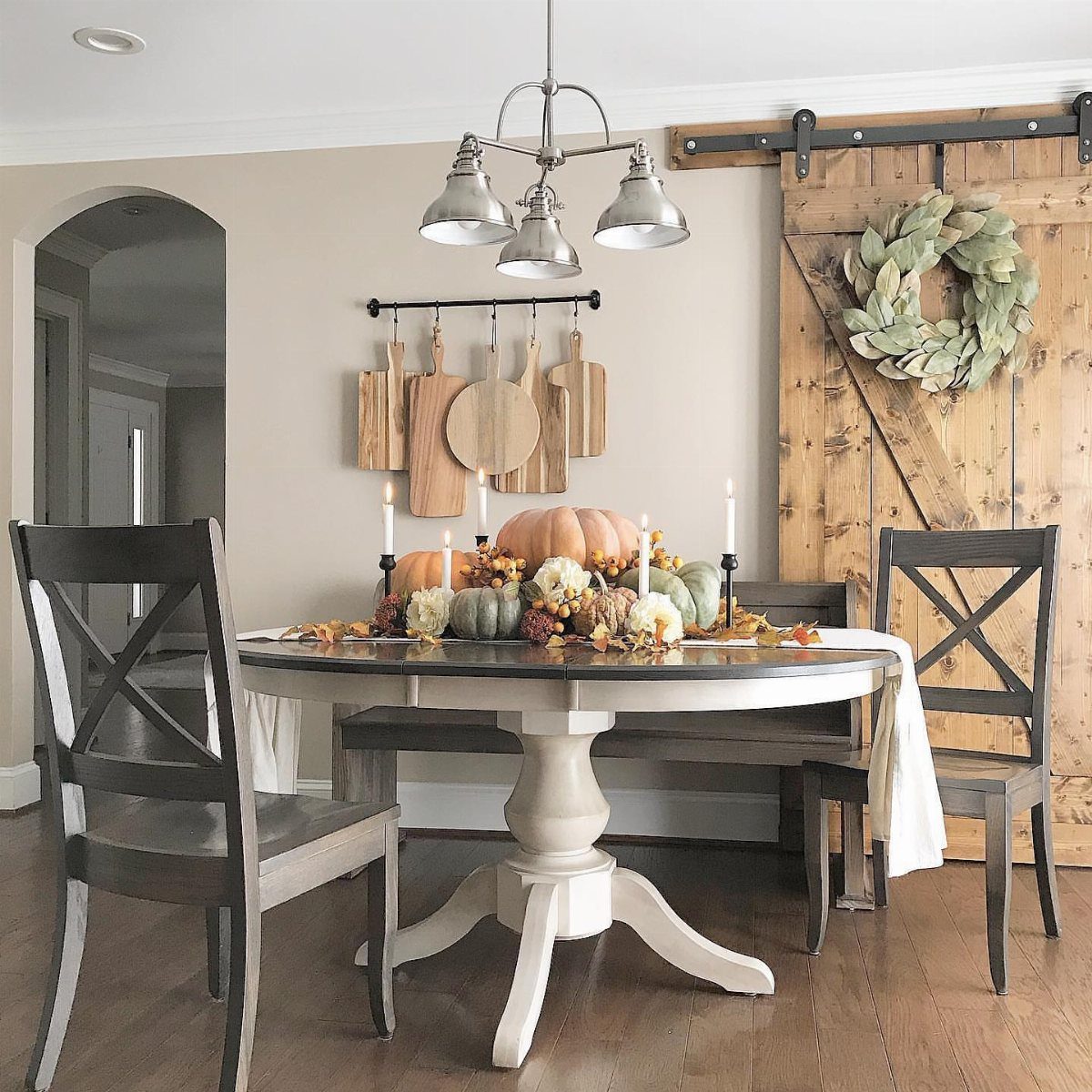
A fall table centerpiece pulls the season into focus in one piece. Work off pumpkins and foliage in warm colors, with candles for soft light at dinner.
For a similar look, I fill a low bowl or tray with small pumpkins, add stems of oak or eucalyptus, and tuck in taper candles.
The arrangement stays low so guests can see across the table, and swapping out foliage or adding dried grasses shifts the look without starting over.
2. Seasonal Fruit Centerpieces
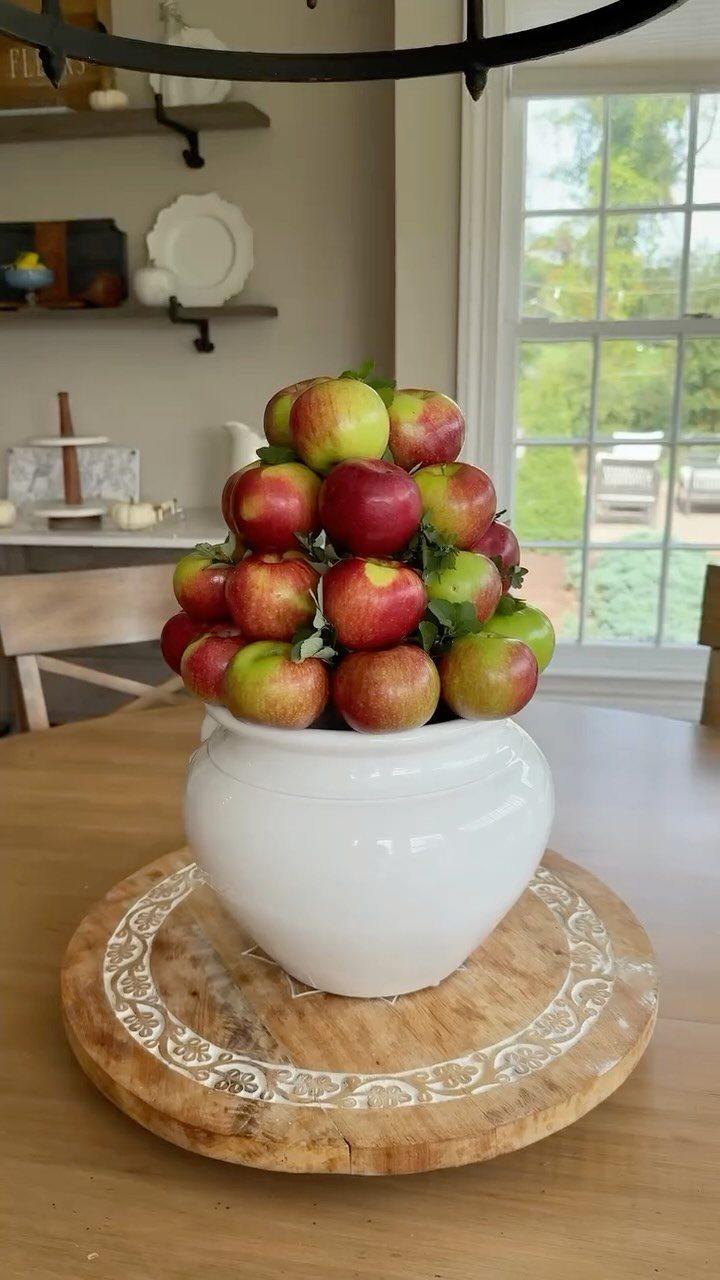
Apples in a bowl make a centerpiece that looks good and gets eaten. The fruit brings color without needing florals, and you can use what’s already in the fridge.
I pile apples in a shallow ceramic or wooden bowl, mixing reds and greens for contrast. The fruit holds up for a week on the table, and when apples start to soften, they move to the kitchen for cooking.
3. Using Seasonal Wreaths
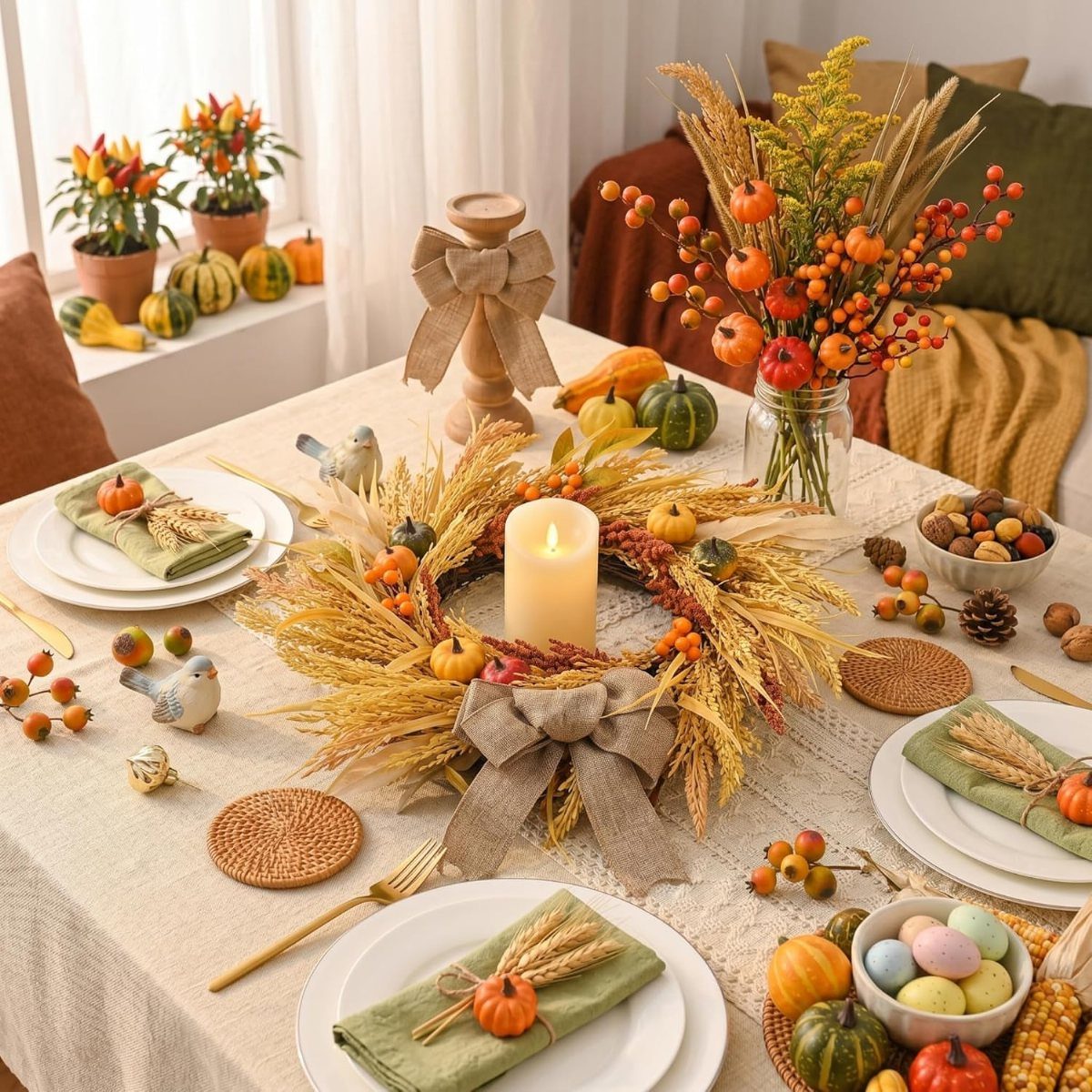
A wreath laid flat on the table turns into a centerpiece frame. Wheat, dried grasses, or grapevine wreaths work well because they sit low and leave room in the center for a candle or small pumpkins.
I set the wreath in the middle of the table, drop a pillar candle or taper holder in the opening, and scatter a few small pumpkins or figs around the base.
The wreath holds the arrangement together without blocking sight lines, and it stores flat after the season ends.
4. Using Seasonal Tableware
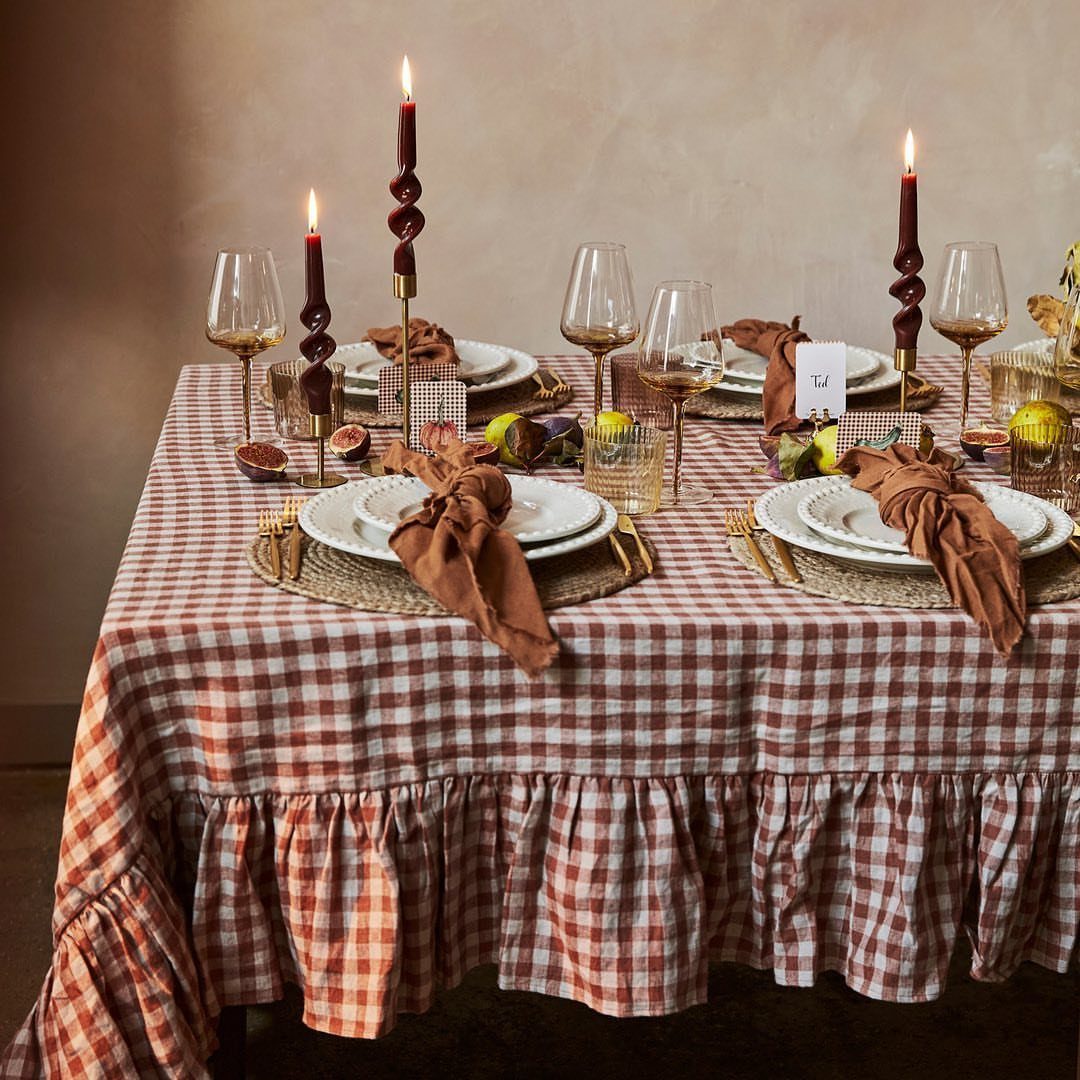
Tableware in fall colors sets the tone before food hits the table. Plates, napkins, and linens in rust, burgundy, or ochre bring the season in without adding objects to the center.
Red checkered tablecloths and brown linen napkins are a quick shift from summer setups.
I pair white plates with colored napkins and candles in the same palette, keeping the look cohesive. Seasonal tableware can layer with what you already own, so you’re buying napkins or a runner instead of a full set.
5. Candle Lighting
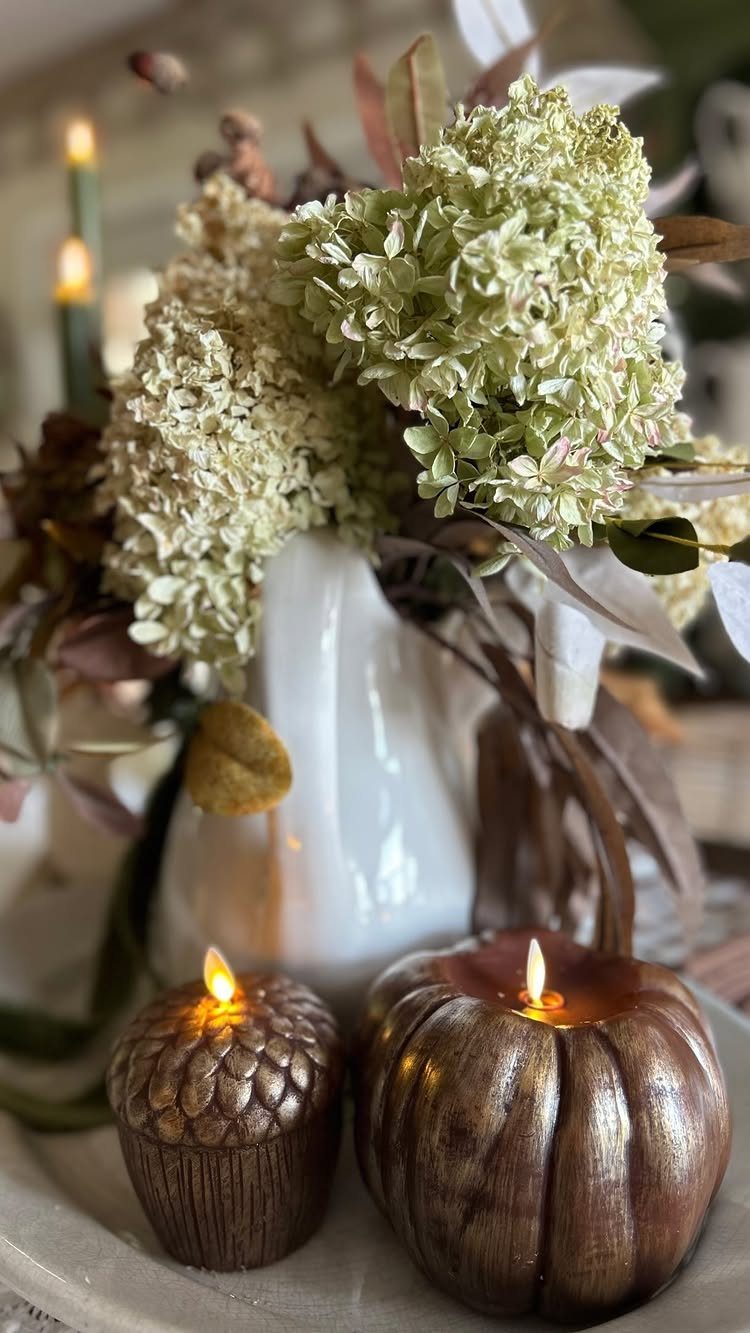
Candles in fall shapes add warmth and keep the light low for dinner. Pumpkin-shaped candles bring the season in without covering the whole table, and they work on their own or grouped with other fall pieces.
I set a pair of pumpkin candles on a tray with dried flowers or greenery, leaving space around them so the flame stays clear.
Unscented candles work better at the table than scented ones, which can compete with food. A lighter candle color shows the shape, and darker wax reads moody when paired with black or burgundy linens.
6. Mixing Dinnerware Styles
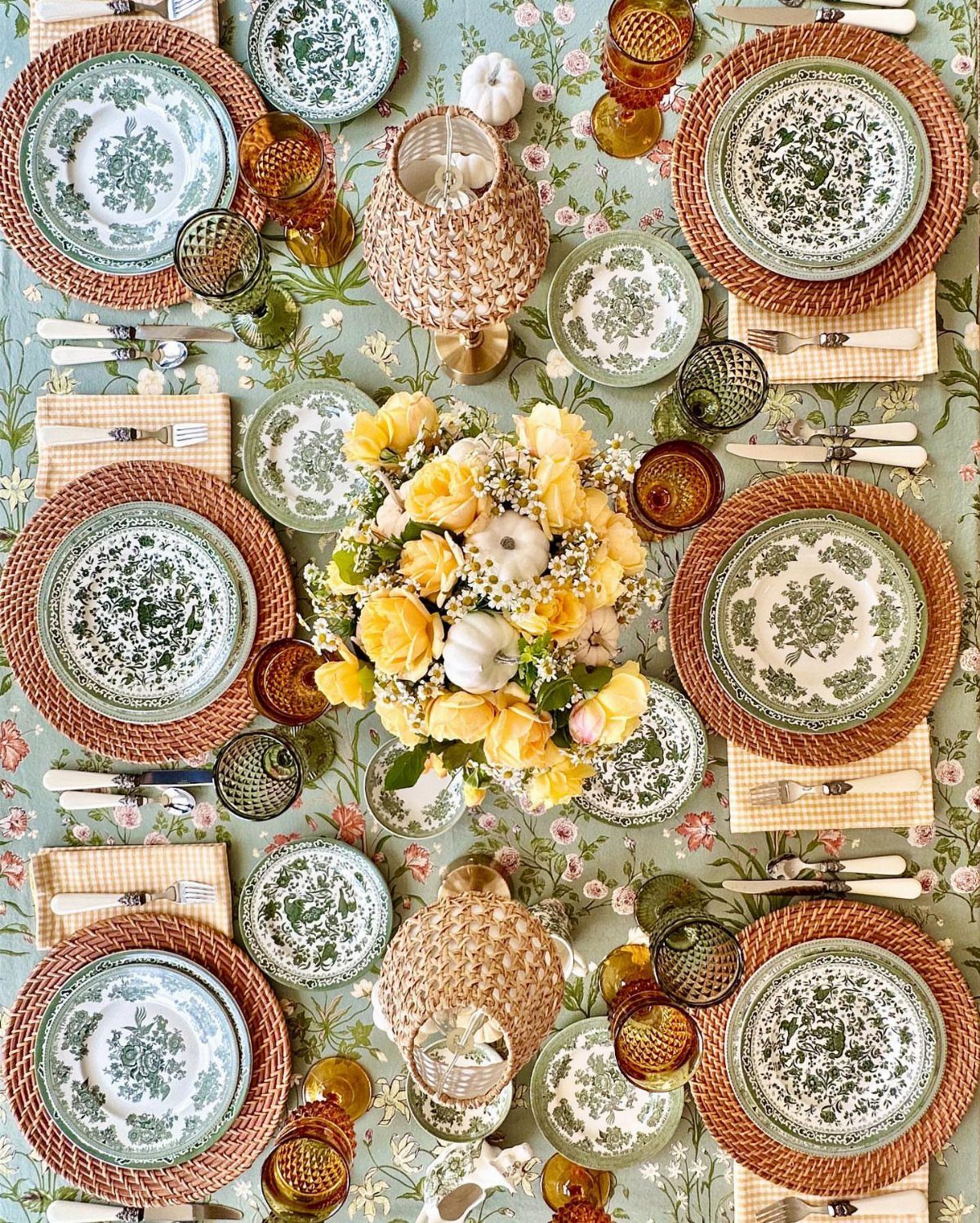
Mixing dinnerware patterns gives the table a collected look instead of a matched set. Different plates layered together add visual interest, and you can use what you already have rather than buying a full fall set.
I start with a neutral charger or woven placemat, then layer a patterned salad plate over a solid dinner plate.
Green, amber, and cream tones read fall without being literal, and florals mix well with stripes or solid colors. Glassware in amber or green ties the place settings together when the plates vary.
7. Use of Dried Flowers
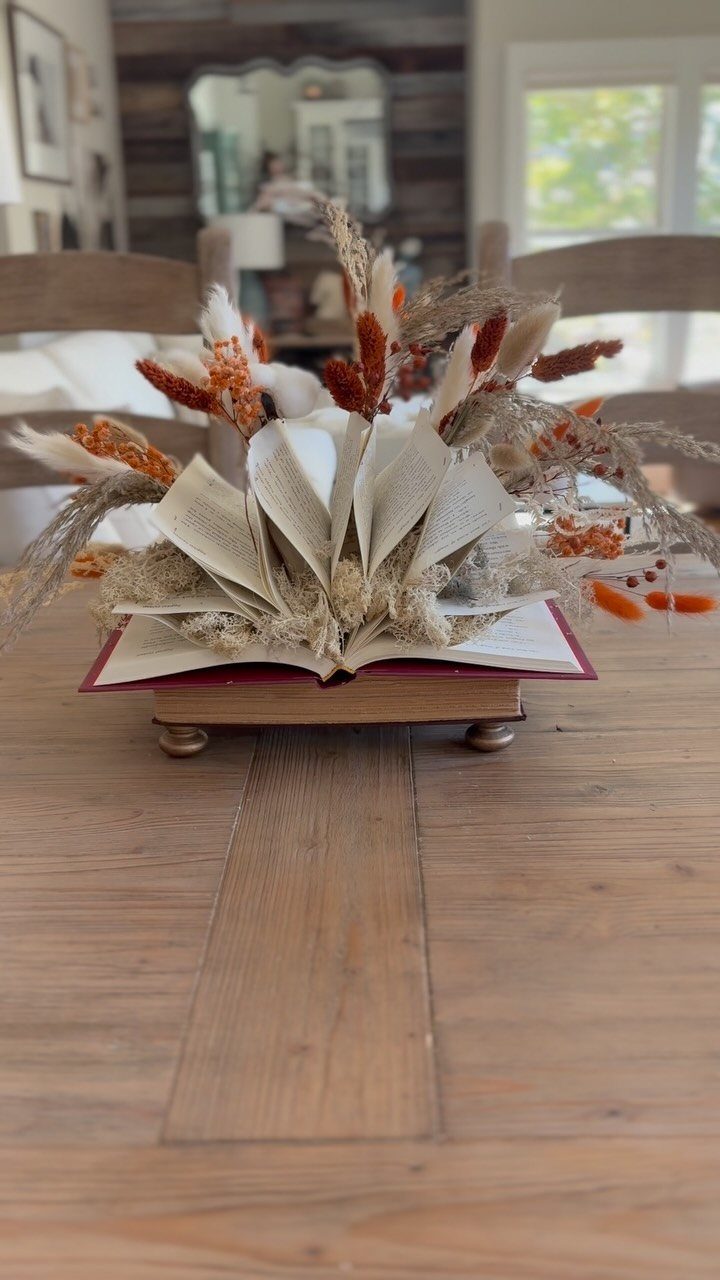
Dried flowers hold their shape for weeks without water, which means the arrangement stays put through multiple dinners. Grasses, wheat, and faded florals read fall without relying on pumpkins.
I group stems in a low vase or tuck them into a bowl with small gourds.
Dried arrangements work on narrow tables where fresh flowers would need daily water changes, and they store flat in a box when the season ends.
8. Using Soft Fabrics
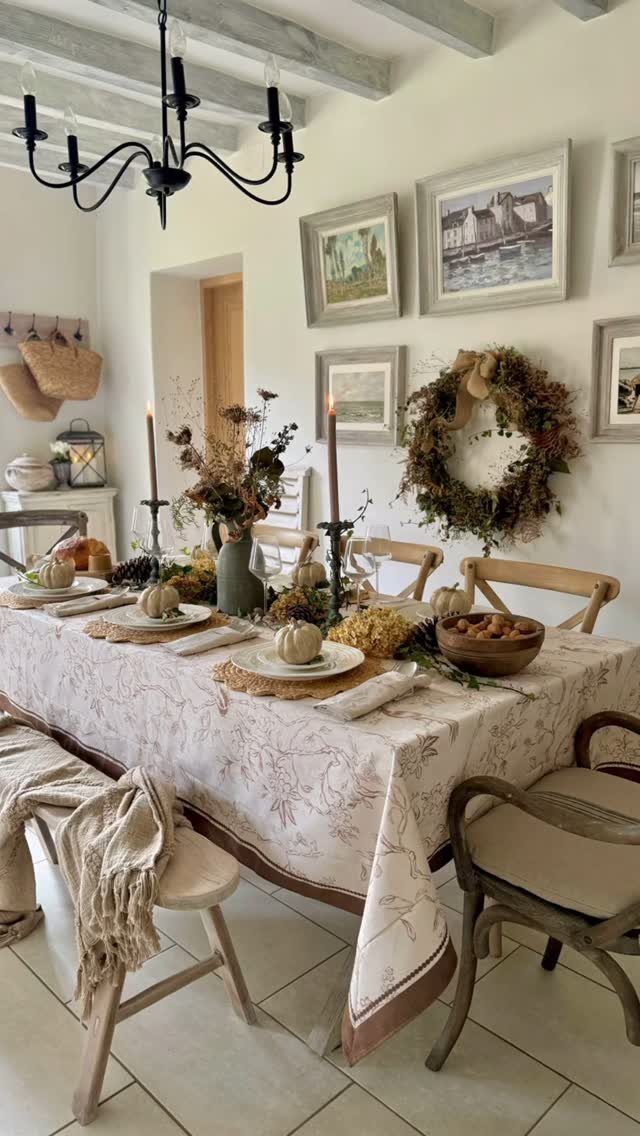
A throw or extra fabric softens the look of wooden chairs and benches. Linen, cotton, or knit blankets in cream or rust tones bring warmth without adding pattern, and they make seating more comfortable for longer meals.
I drape a blanket over the back of a bench or fold one on the seat of a side chair.
The fabric picks up candle light and balances harder materials like wood and metal, and it can move to the couch after dinner.
9. Using Velvet Accents
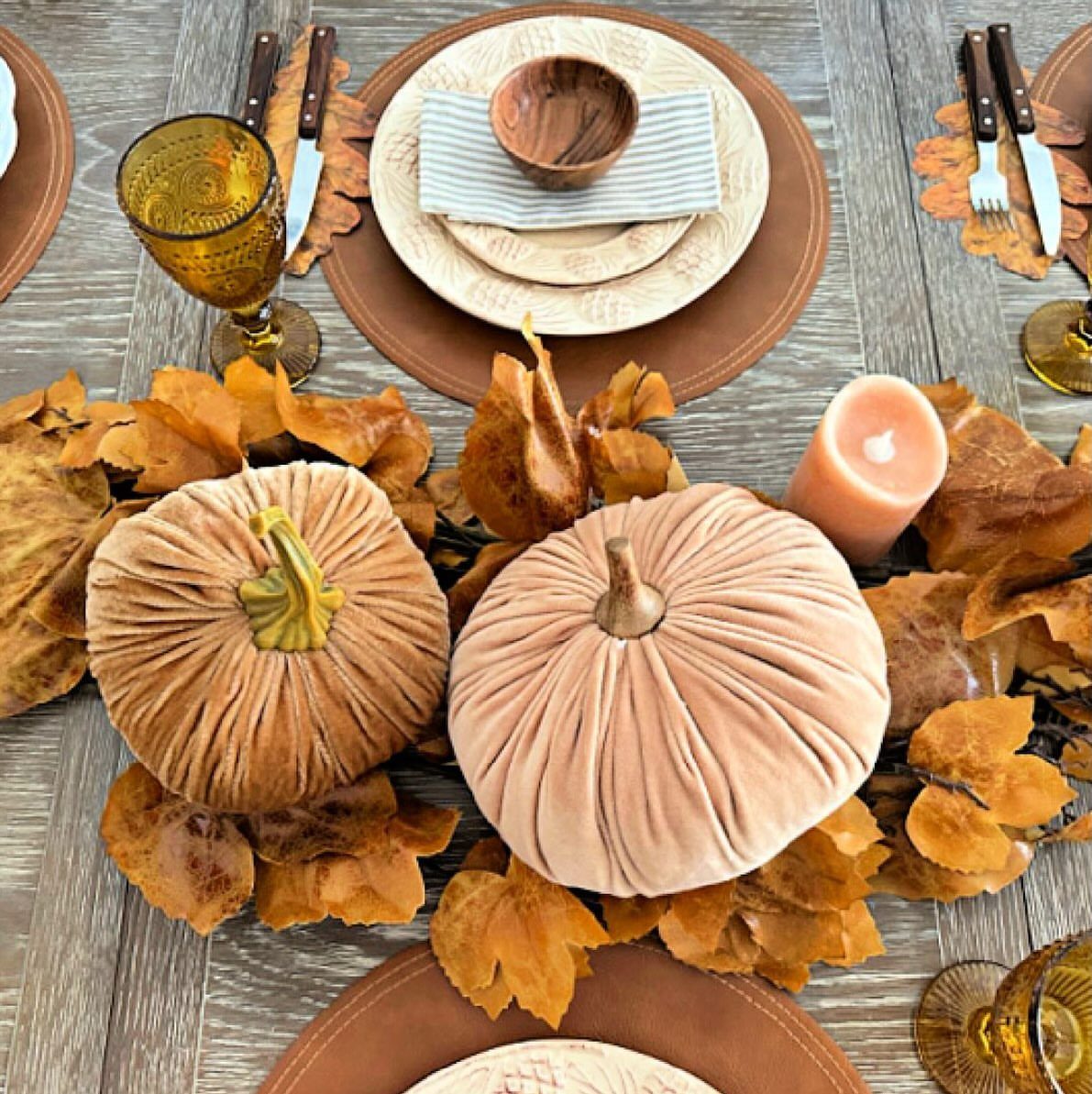
Velvet catches light differently than matte fabric, which adds richness to the table without metallic finishes. Velvet pumpkins, napkins, or ribbon bring texture in, and they layer well with linen and wood.
I set a pair of velvet pumpkins near candles or scatter them along a runner.
The fabric reads formal but works on casual tables when paired with natural elements like leaves or acorns. Velvet holds up better than real pumpkins, and you can pull it back out every fall.
10. Place Settings for a Beautiful Fall Table
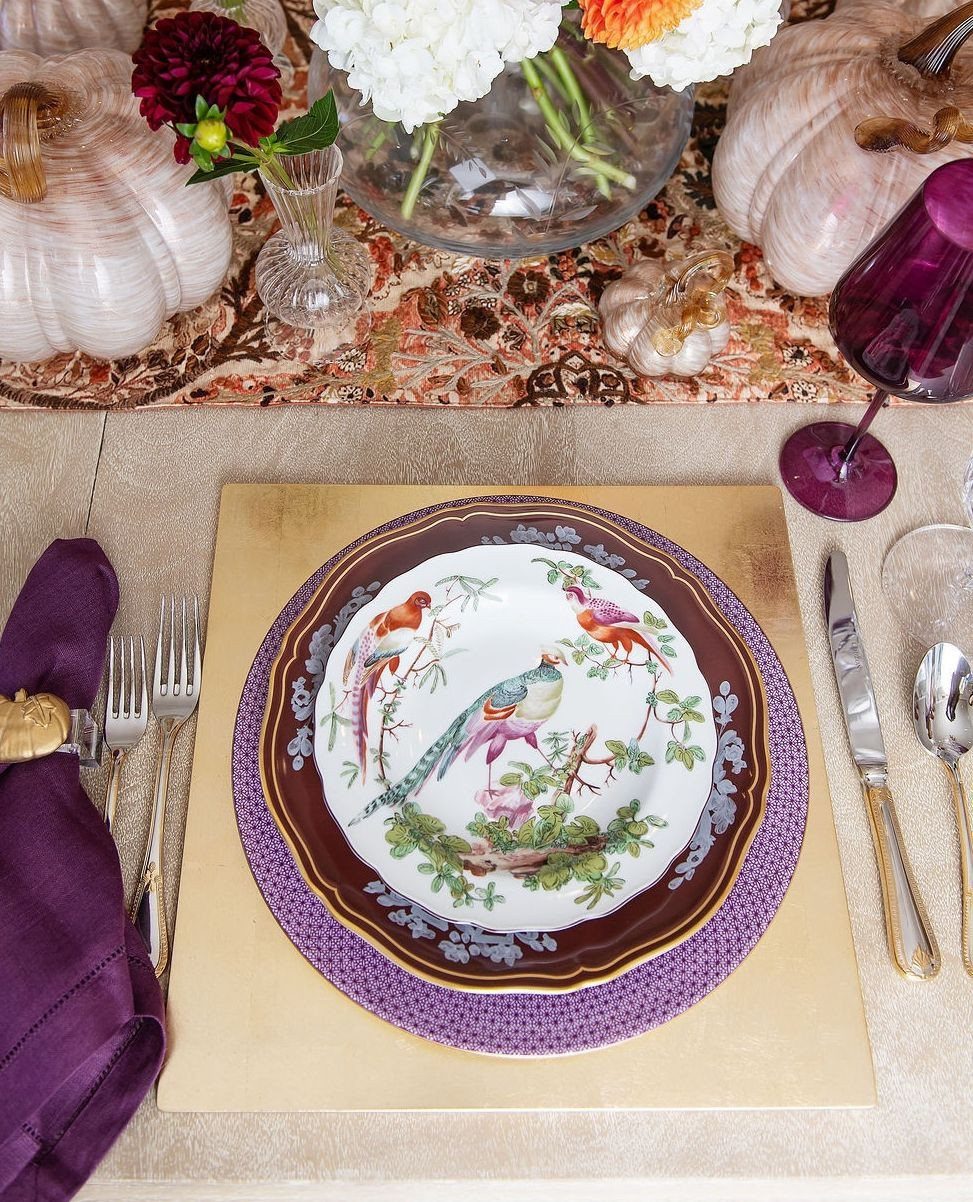
Layering under the plate lifts the setting and gives you a place to bring in fall colors without changing your everyday dishes. A charger or placemat anchors the place setting and adds one more texture to the table.
The layers create depth, and you can swap just the bottom layer to shift the look. Patterned plates work over solid chargers, and neutrals mix with jewel tones like plum or amber.
11. Cluster Small Bud Vases
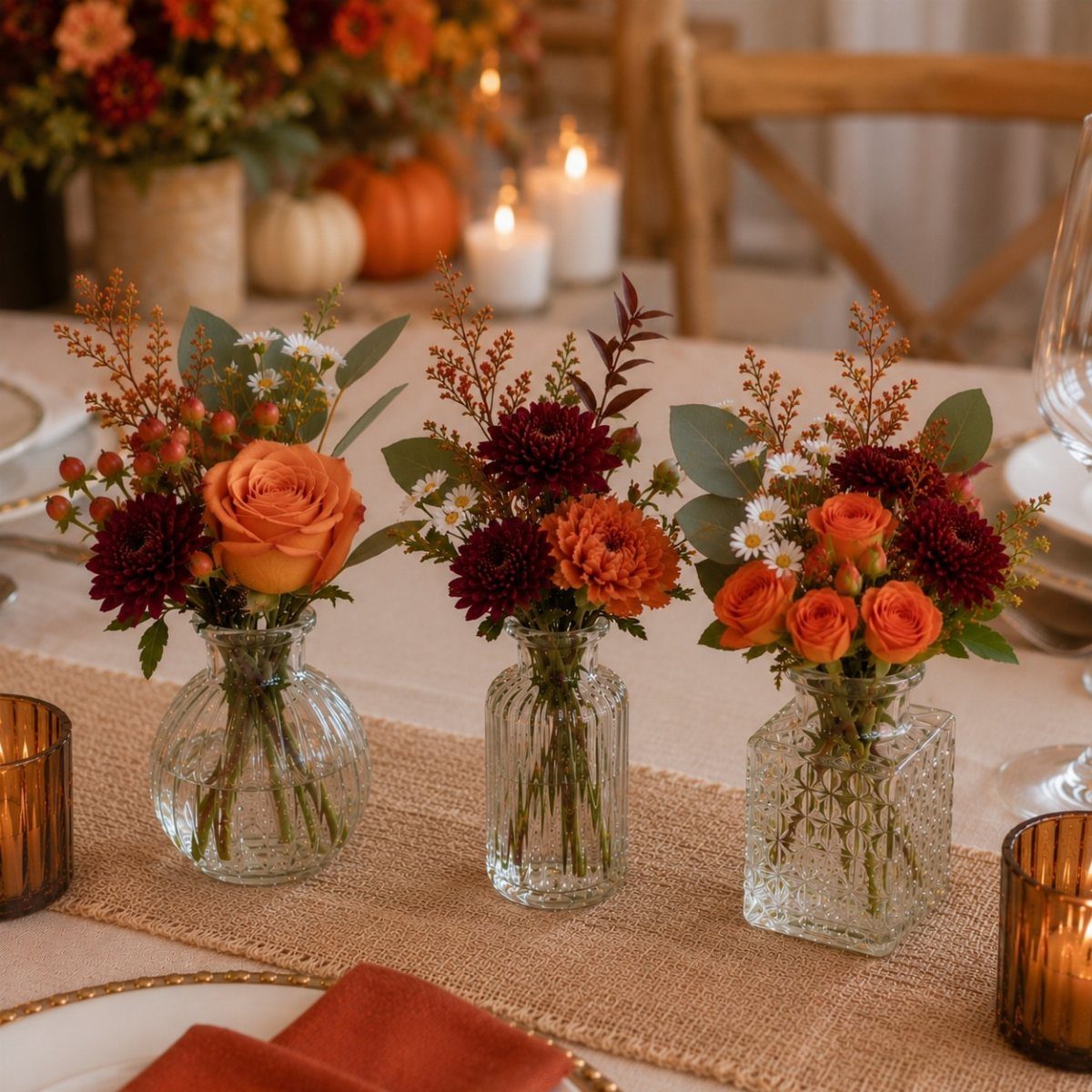
Grouping bud vases gives you the look of a larger arrangement without the cost or the bulk. Small vases with single stems or short branches sit low on the table and leave room for serving dishes.
I line them down the center on a runner or cluster them at one end.
Each vase holds one or two stems, so the whole arrangement uses less than a full bouquet. Glass or ceramic vases in different heights add interest, and you can rearrange them when the table needs more space.
12. Try a Moody Fall Tablescape
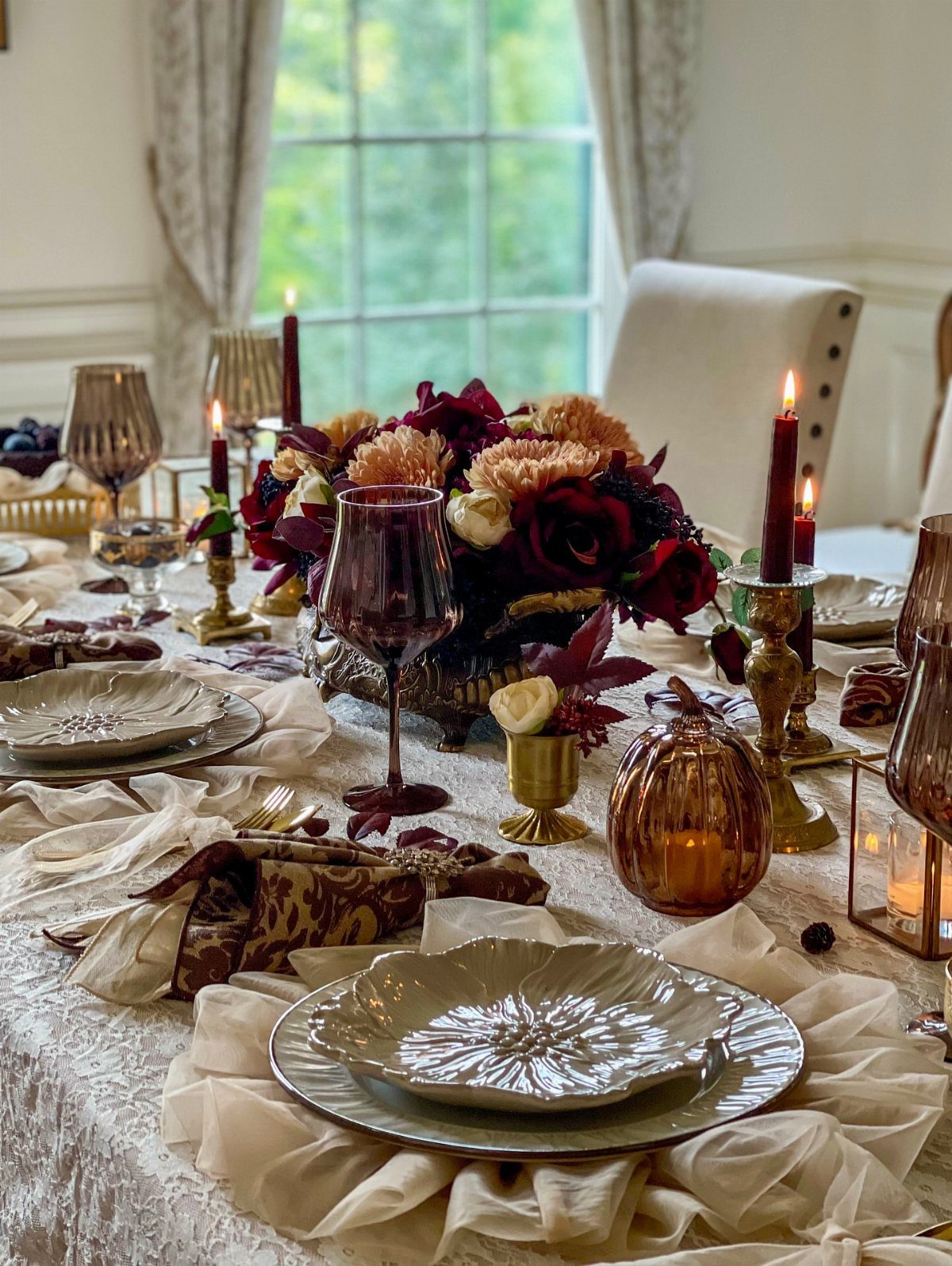
A restrained palette in deep tones gives fall decor a moodier look than the usual orange and yellow. Burgundy, plum, and charcoal read as fall without bright color, and the table feels more formal.
I build the palette around one or two dark shades, adding cream or white to keep it from going too heavy.
Dark florals, taper candles in burgundy or black, and glassware in amber or smoke finish the look. The moodier palette suits evening dinners and pairs well with dim lighting.
13. Layered Textures
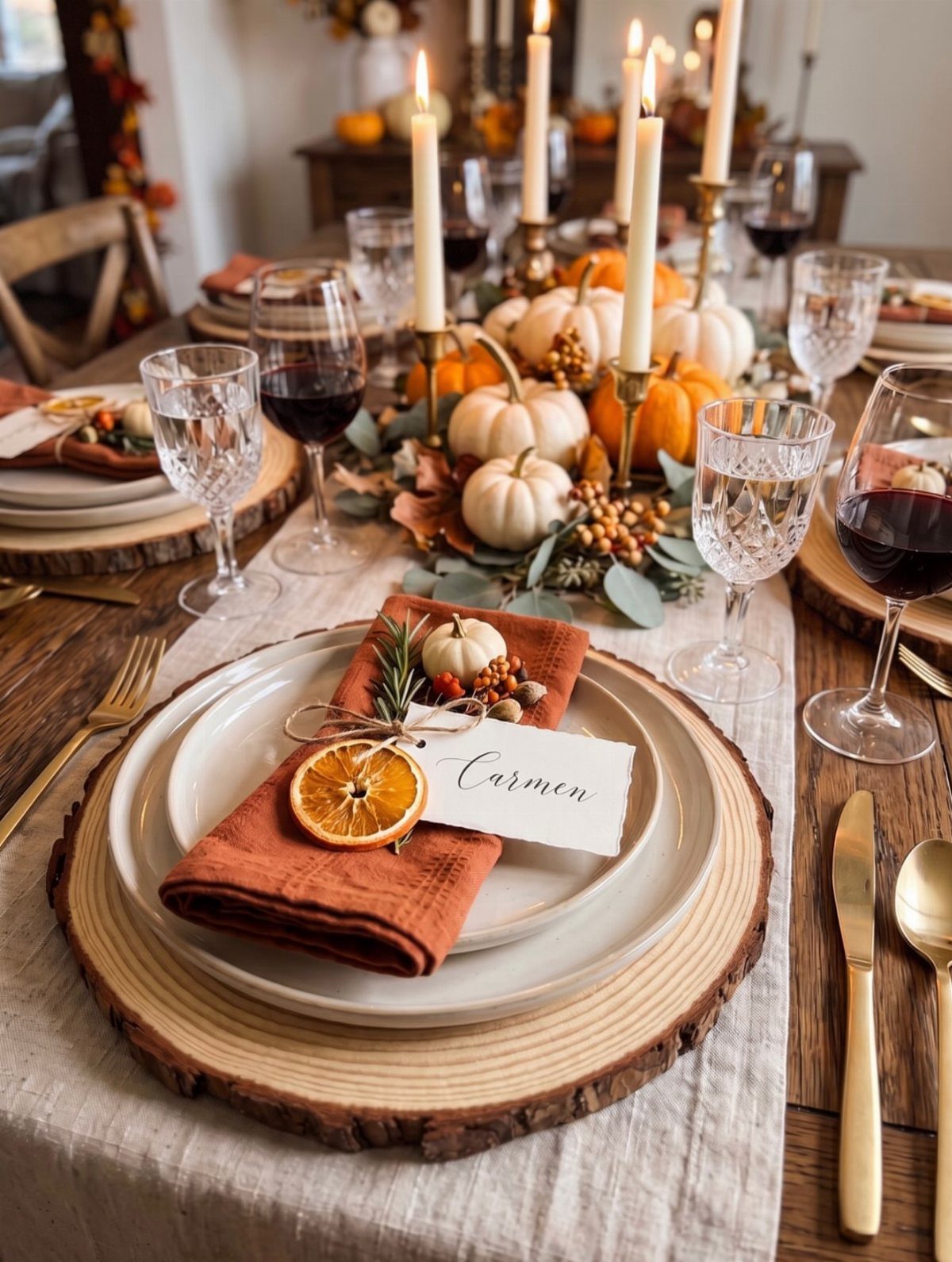
Mixing wood, linen, and ceramic on the table adds depth without pattern. Each material catches light differently, and the contrast makes the table feel warmer.
Wood slice chargers under white plates bring in texture at the base, and a linen runner softens the middle.
I add ceramic pumpkins or stoneware bowls for weight, and taper candles in metal or glass holders. The materials layer well together because they share a neutral palette, and the look holds up whether the table is set or cleared.
14. Natural Elements
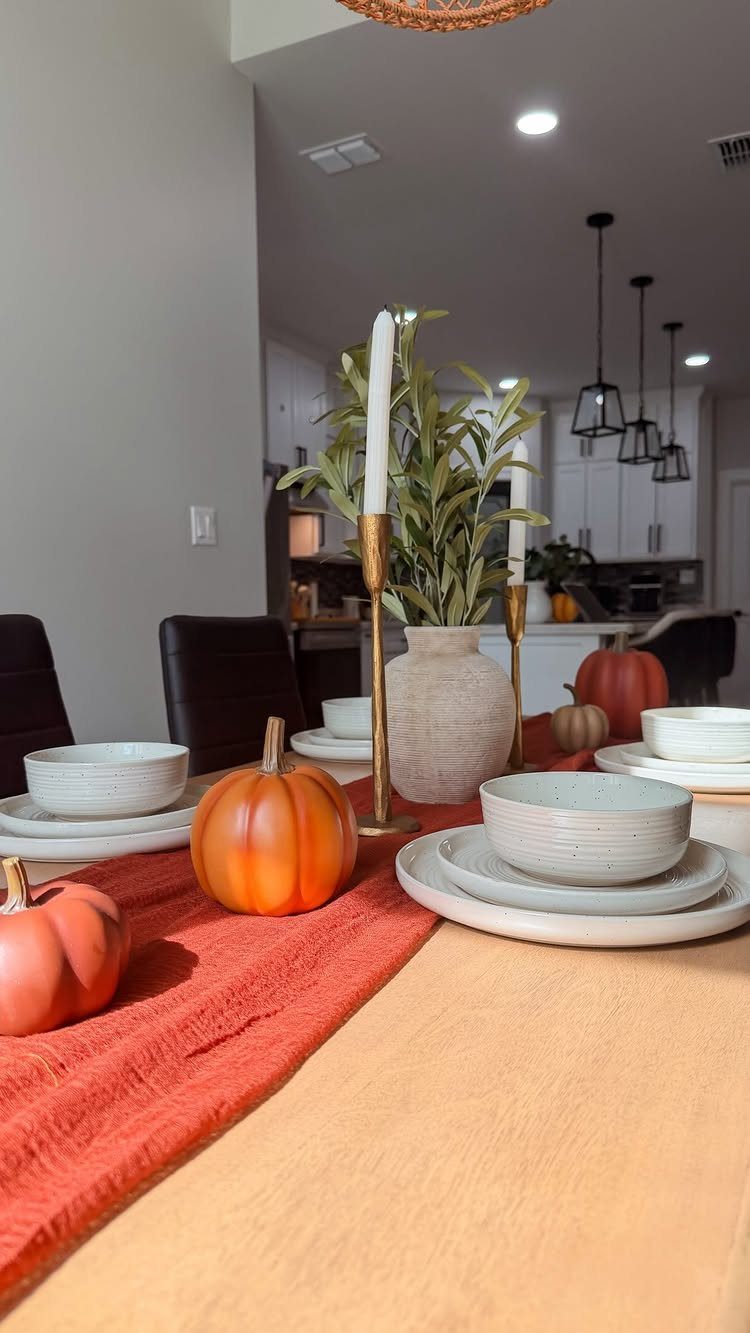
Branches, leaves, and pumpkins pulled from outside make a centerpiece that costs nothing. Fresh greenery brings color and shape to the table, and it changes as the season moves.
I clip branches from the yard, set them in a vase or pitcher, and add pumpkins around the base.
Oak, maple, or even pine stems hold up on the table for days, and the greenery stays flexible enough to bend into shape.
Real elements fade and dry out after a week or two, but they can be swapped as often as needed.
15. Minimal Decor
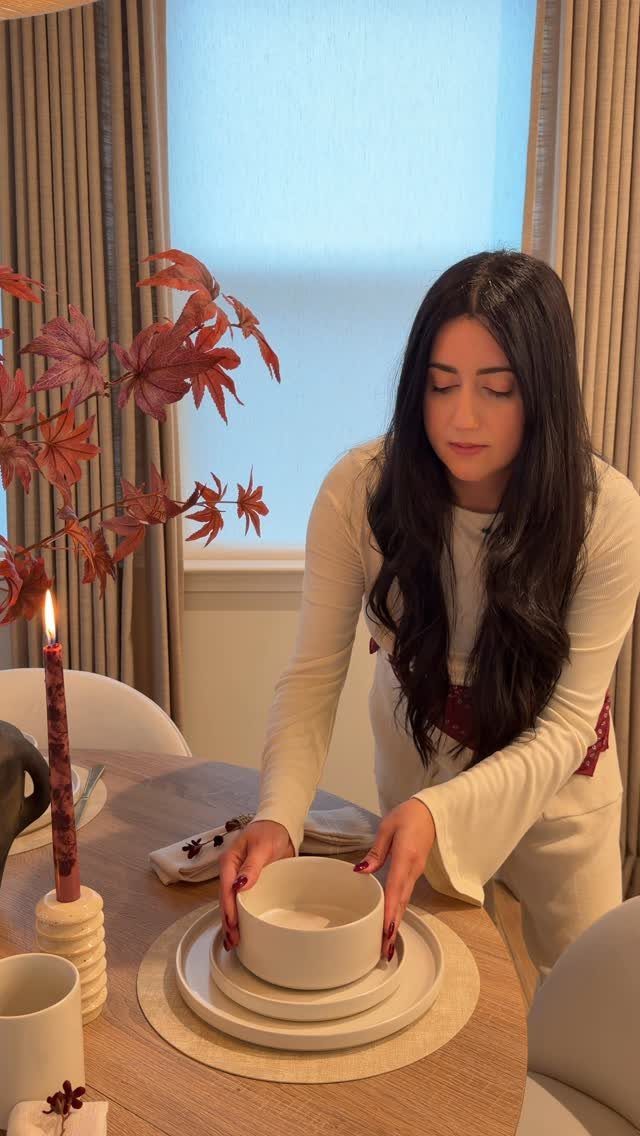
One candle and a few stems keep the table clear for everyday meals. Less decor means less to move when you need the surface, and the look stays seasonal without taking over.
A single taper or pillar candle with a branch of fall leaves covers the basics.
White dishes and neutral linens let the small seasonal pieces stand out, and the table resets in seconds. Minimal setups work better on small tables where a full centerpiece crowds the plates.
16. Use of Acorns and Pinecones
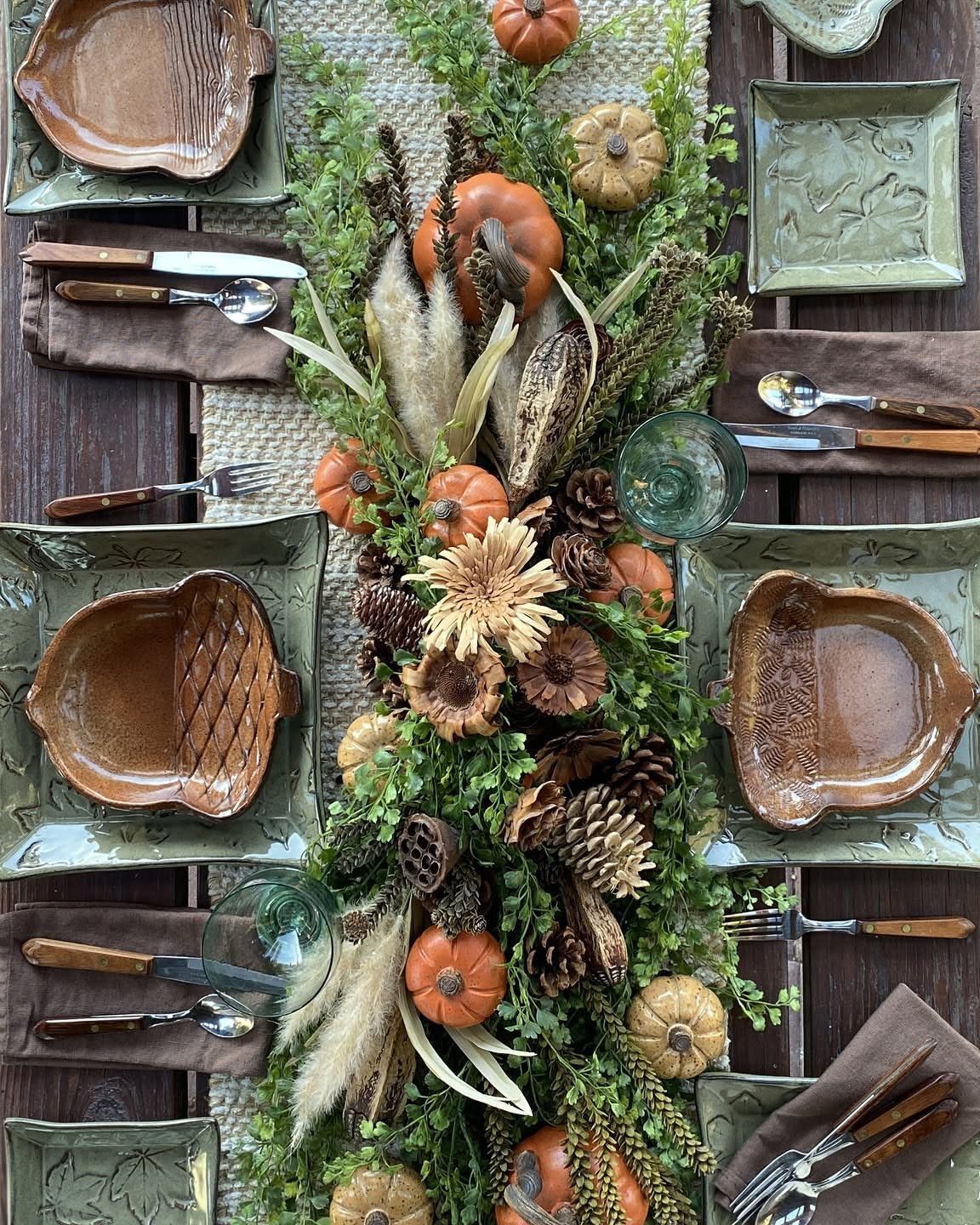
Acorns and pinecones scattered on the table bring fall in without buying anything. They sit flat, so they fit between plates and candles, and they store for next year.
I gather them outside, rinse off any dirt, and let them dry before setting them on the table.
Pinecones work along a garland or runner, and acorns fill small bowls or sit loose near place settings. Real pieces carry texture that fake versions miss, and they read as fall without leaning on pumpkins.
17. Using Colorful Placemats
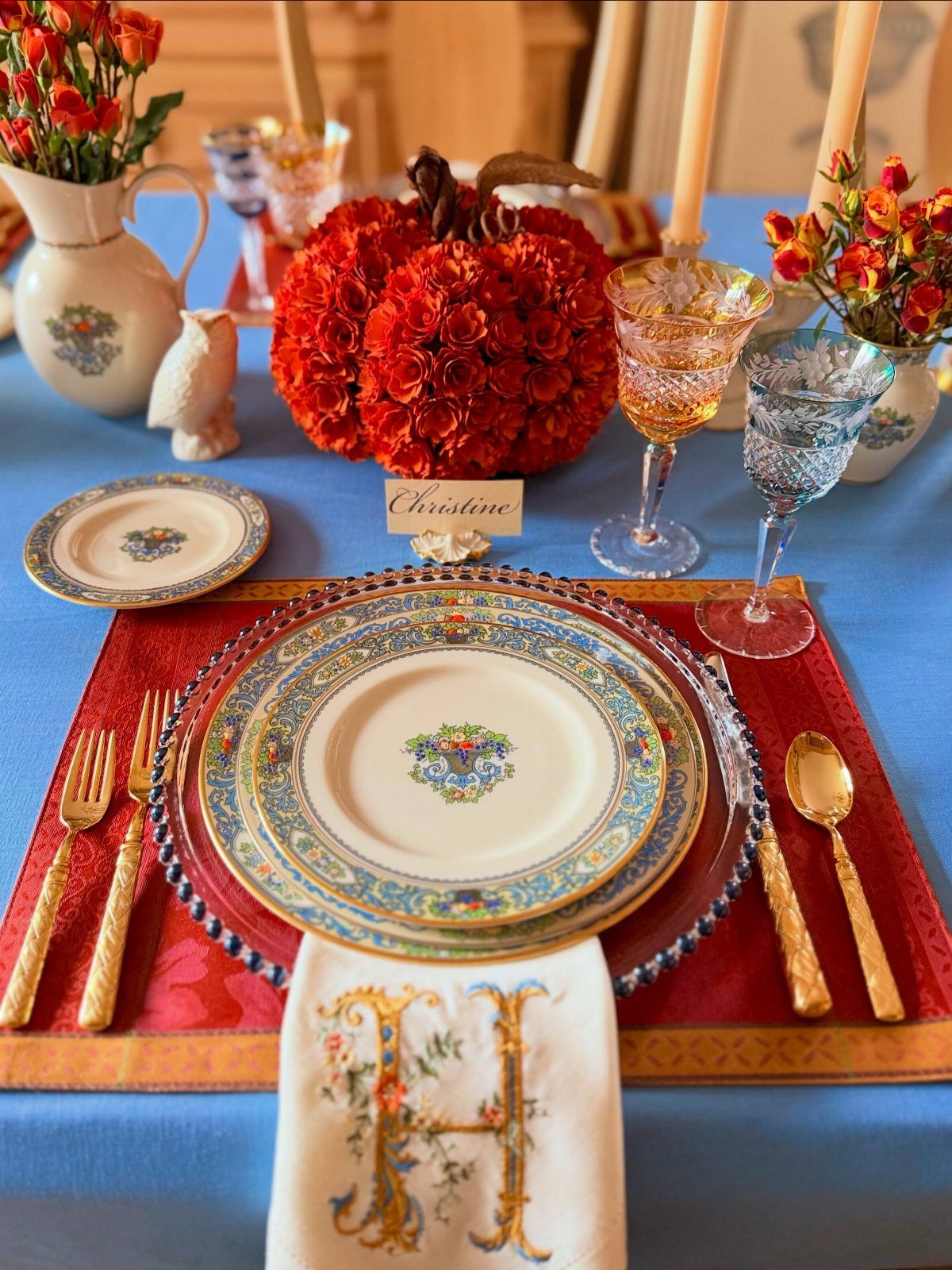
Placemats in warm colors shift the table without changing the dishes. Red, rust, or burnt orange anchors each place setting, and the color shows under white or patterned plates.
Solid placemats work under mixed dinnerware, and they clean up faster than a full tablecloth.
I pair them with neutral napkins or go tonal with linens in the same family. Placemats take up less storage than runners, and swapping them out changes the season in minutes.
18. Fill a Wooden Dough Bowl
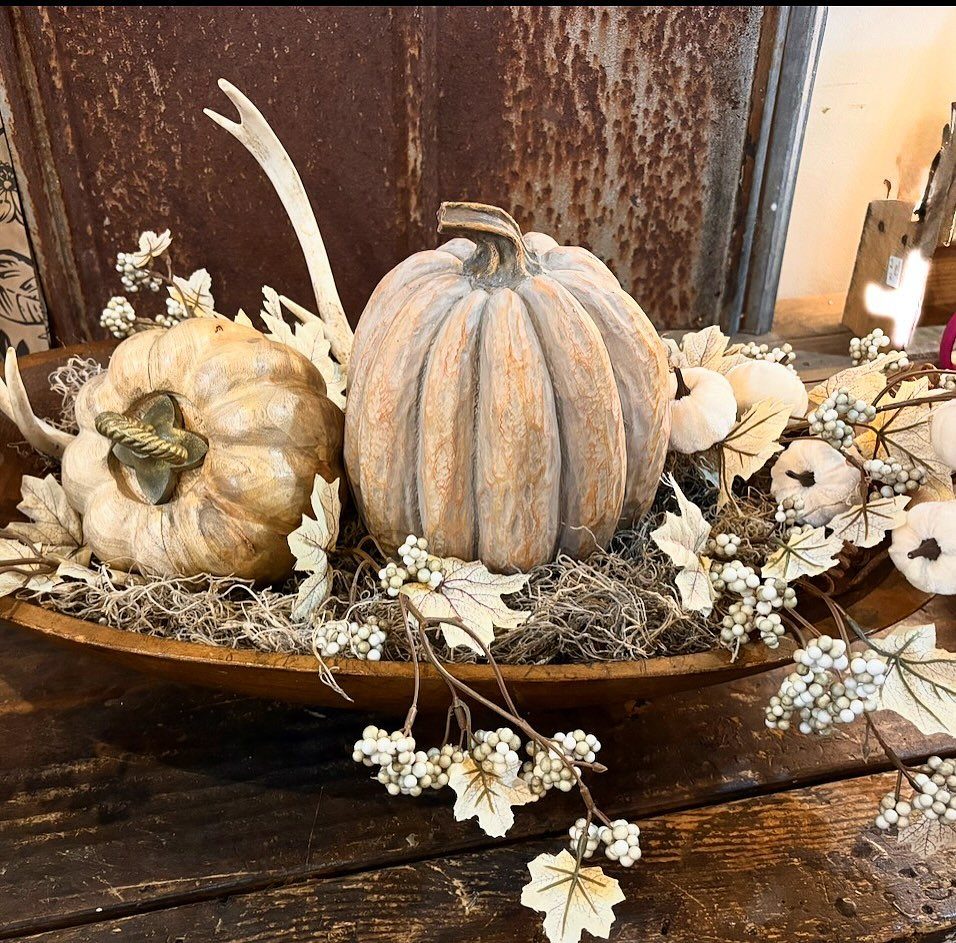
A dough bowl corrals fall pieces into one long centerpiece that runs down the table. The bowl keeps everything in place, and the low sides let you see what’s inside from across the table.
I fill it with small pumpkins, dried moss, and foraged pieces like branches or berries.
The bowl works on narrow tables because it stays contained, and it holds enough to fill the space without spilling over. Real wood adds warmth, and the same bowl stores kitchen items the rest of the year.
19. Decorate with Earthy Stoneware
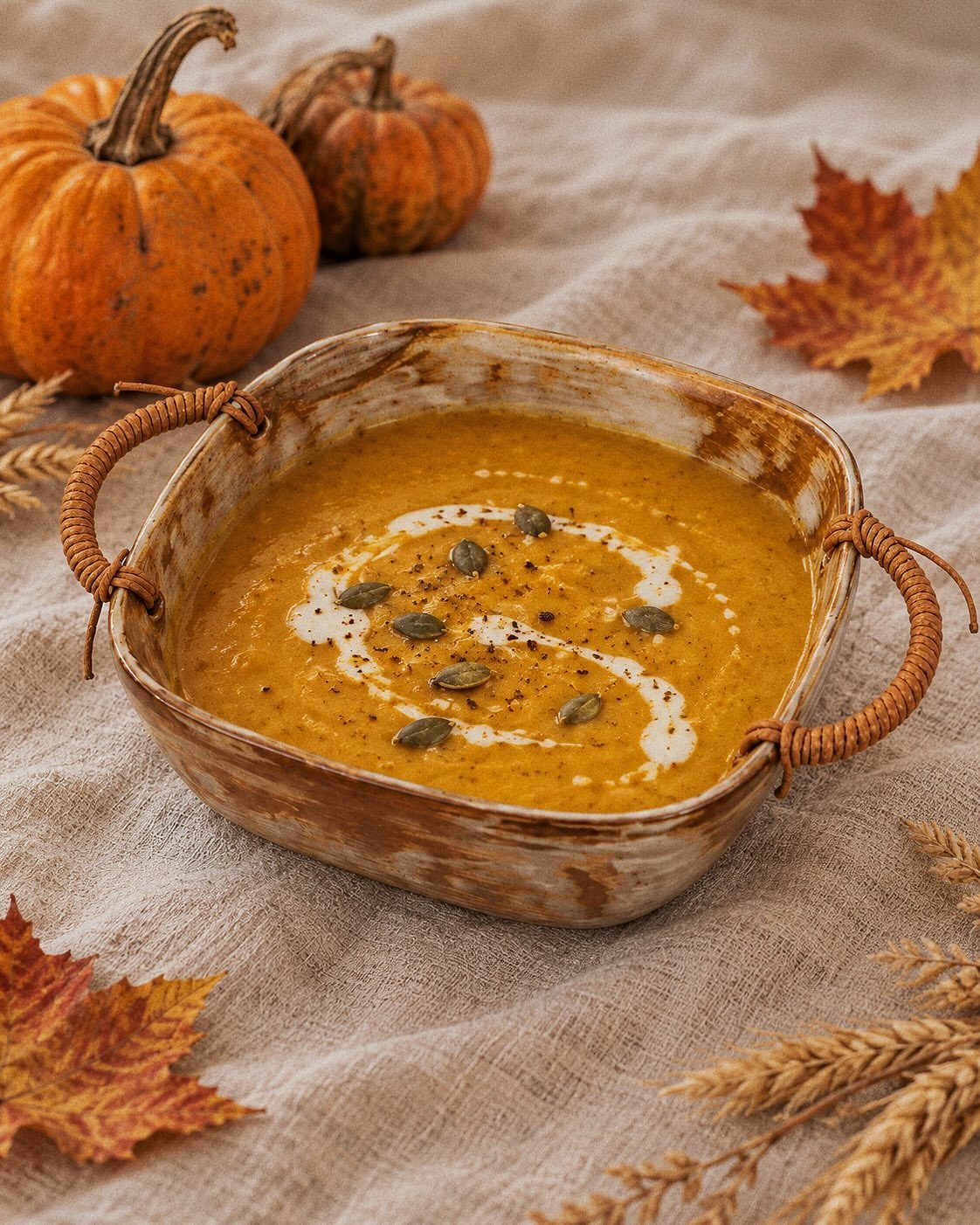
Stoneware in brown, cream, or speckled finishes brings weight and warmth to place settings without pattern. The heavier ceramic reads handmade, and the matte glaze softens the table.
I set stoneware bowls or mugs at each place, mixing them with white plates or pairing them with linen in the same tone.
The earthy finish works for soup, coffee, or serving dishes, and the pieces layer well with wood and metal. Stoneware holds heat longer than porcelain, which suits fall meals that start hot.
20. Pumpkin Arrangements
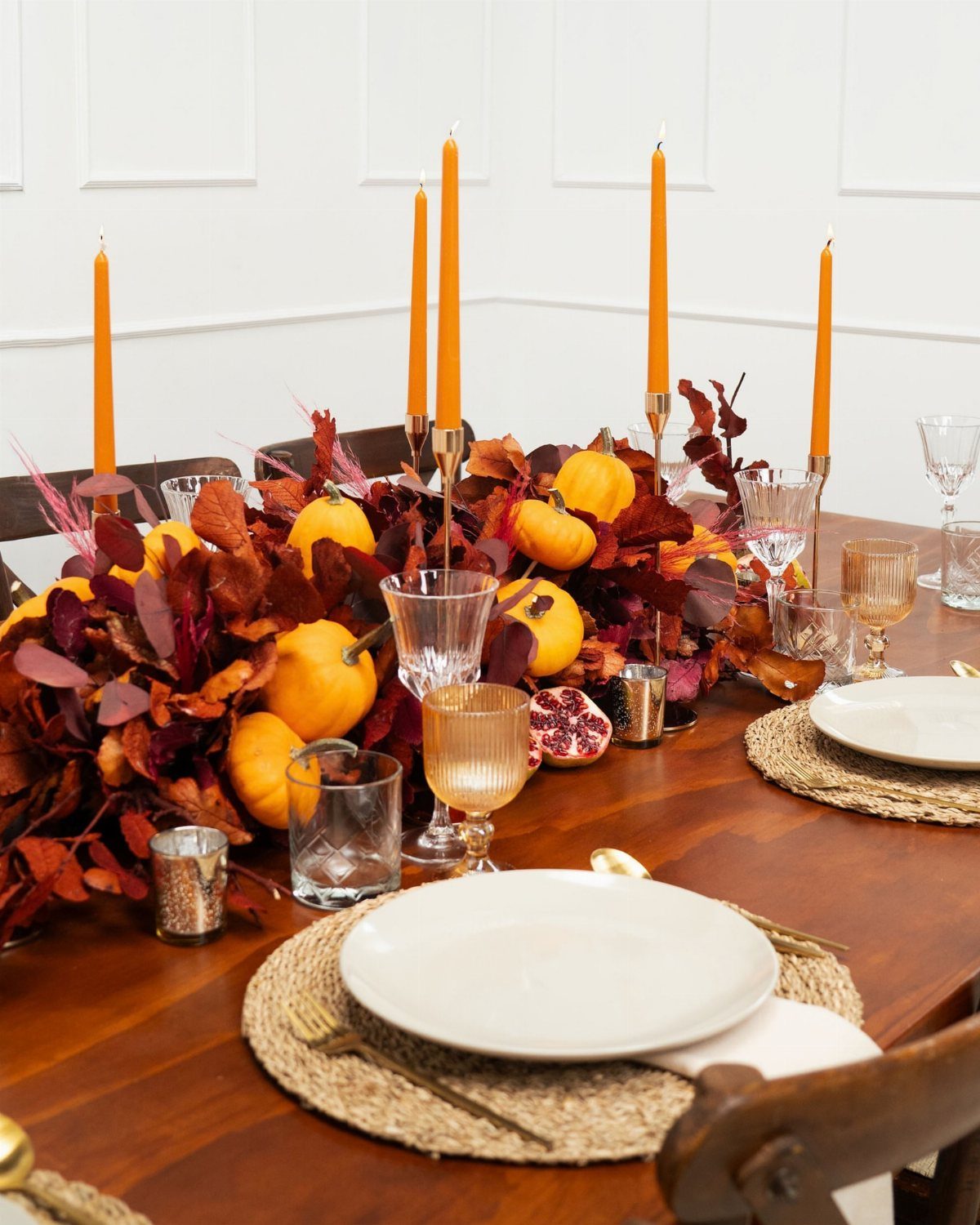
Mini pumpkins grouped in the center fill space without height. The small size lets you scatter them along a runner or pile them in a bowl, and they hold up for weeks on the table.
I mix colors, white and orange together, or keep them tonal in all greens.
The pumpkins sit flat enough to fit between plates, and they work on their own or paired with candles and branches. Real pumpkins last longer indoors than carved ones, and they move to the porch when the table needs clearing.
21. Use of Wooden Elements
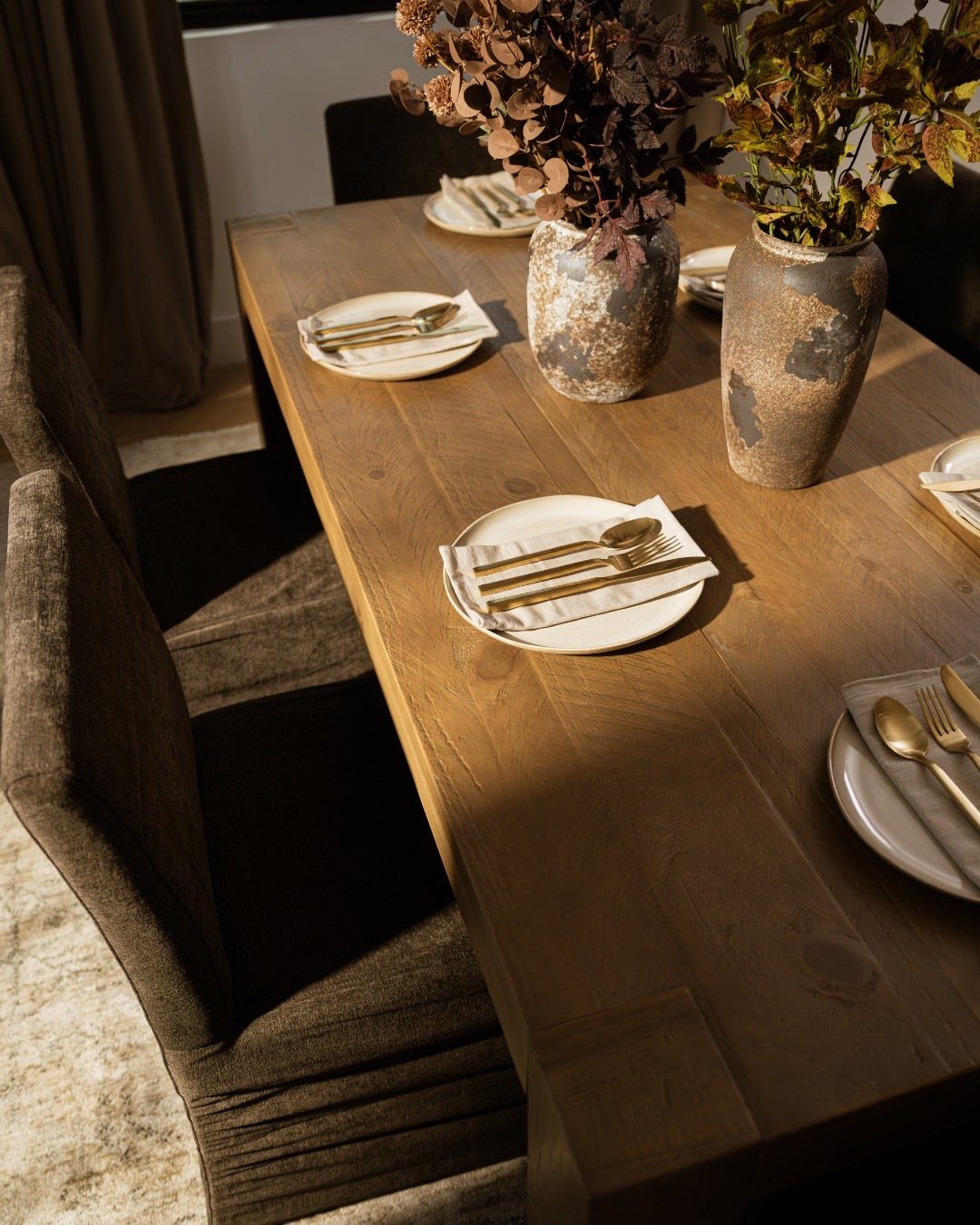
Wood chargers, cutting boards, or slices under plates anchor the setting and add texture at the base. The natural grain shows through clear dishes, and the warmth balances white or metal.
A wooden board under a vase or candle brings the material in without resetting the table.
I pair wood with linen and ceramic, keeping the palette neutral so the grain reads as texture instead of color. Wood holds up through the season, and it stores flat when fall ends.
22. Using Plaid Patterns
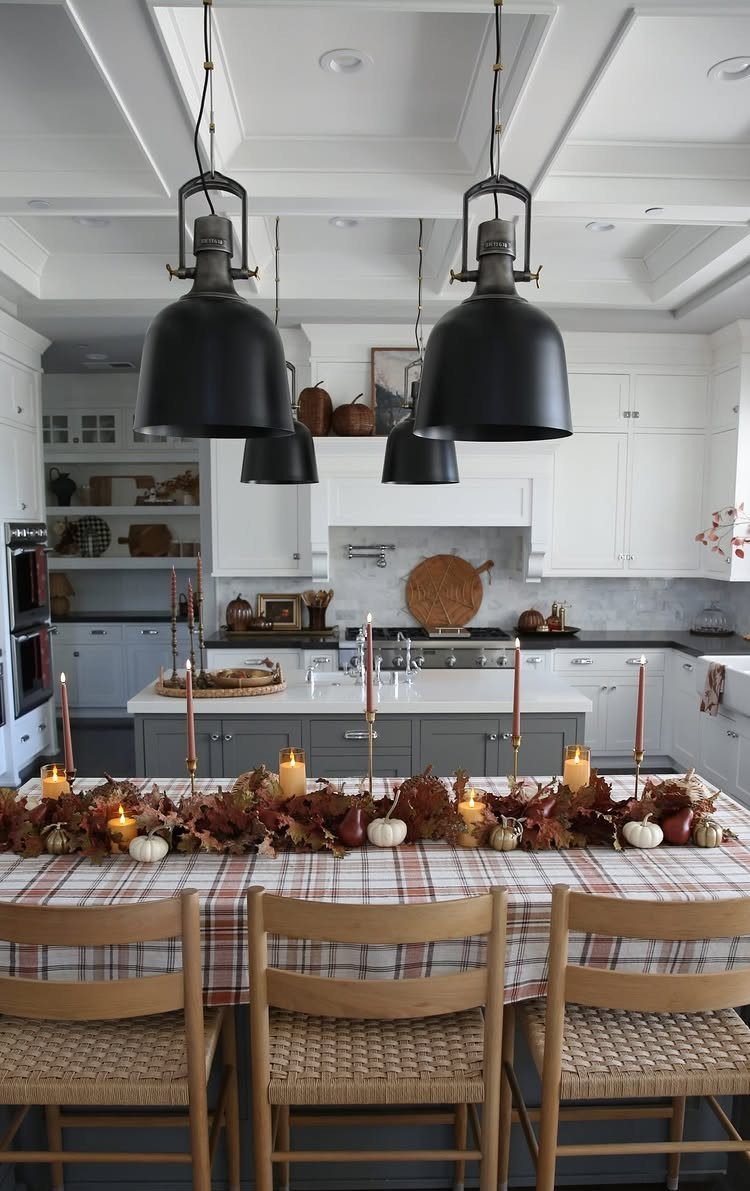
Plaid in rust, burgundy, or cream brings pattern without florals. A plaid tablecloth or runner sets the fall tone before anything else lands on the table, and it pairs well with solid dishes.
I use plaid as the base layer, then keep the rest of the table simple with white plates and taper candles.
The pattern works for casual dinners, and it reads fall without leaning on pumpkins. Plaid napkins bring the pattern in smaller doses when a full cloth feels too heavy.
23. Using Rustic Elements
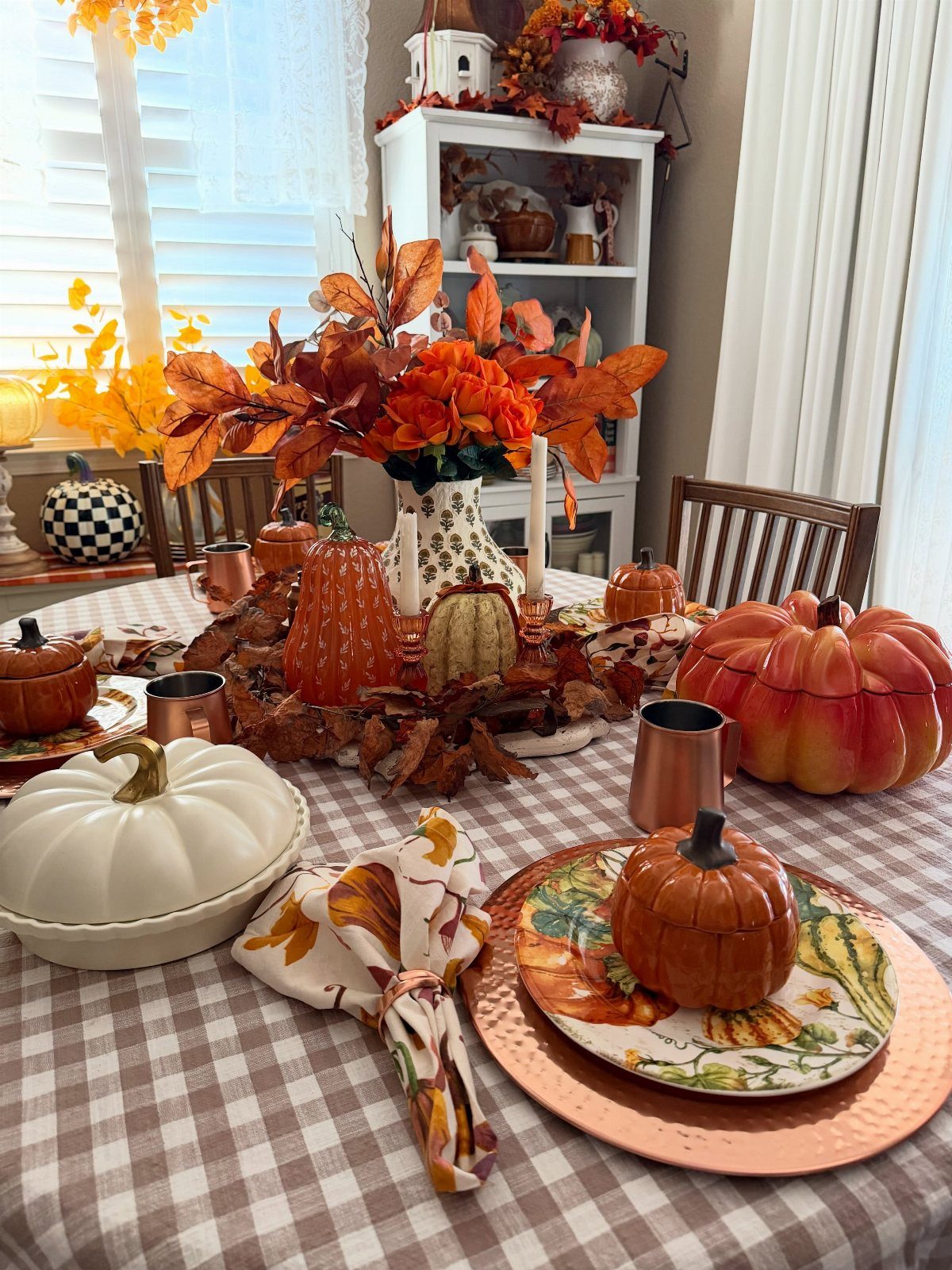
Copper mugs, worn wood, and checkered linens give the table a lived-in look that suits casual fall meals. The patina on copper catches candlelight, and checkered fabric balances polished finishes.
I mix copper drinkware with stoneware plates and a checkered cloth, keeping the palette warm with rust and cream.
The rustic pieces work for weeknight dinners and hold up when the table sees daily use. Copper tarnishes over time, which adds to the look rather than working against it.
Choosing a Color Scheme
Pick 3 to 5 colors and stick with them through the whole table. More than that and the setting starts to look scattered instead of seasonal.
Traditional fall leans on orange, brown, red, and yellow, but those don’t have to be your only options. If orange feels too literal or clashes with your dining room, rust and olive green read as fall without the bright contrast.
Pair muted rust napkins with soft olive foliage, cream dishes, and natural wood accents for a palette that stays calm.
Brass candle holders tie rust and green together and add warmth without introducing another color. The metal picks up candlelight and bridges the gap between cooler greens and warmer rust tones.
Match the palette to what’s already in the room rather than forcing a theme that fights your walls or furniture.
Creating a Cozy Atmosphere
Candlelight makes the table feel warmer than overhead lighting. I use wood, ceramic, or antique brass holders and stagger the heights so the arrangement looks less uniform.
Cream keeps things neutral; rust, moss green, or burgundy pull in fall’s deeper tones. A looser arrangement feels more natural and leaves room for serving dishes and small vases.
Battery-operated tapers give you the same look if you’d rather skip the open flame around kids.
A handful of pumpkins, a few branches, some linen, and candles shift the mood without needing much setup.
Practicality in Decor
Keep enough clear space for plates and serving dishes to land. A centerpiece that covers the middle of the table looks good in photos but blocks access when food needs to land.
Tall vases and stacked elements force people to lean around them, which interrupts conversation. Anything taller than a taper candle should sit at the ends or off to one side.
If the table sees daily use, choose decor that moves quickly. A single tray or bowl that holds the whole arrangement clears in one lift, and individual pieces scattered across the surface take longer to reset.
Frequently Asked Questions
How to decorate an entryway table for fall?
Start with one seasonal focal point like pumpkins or branches, then layer in warmth with candles and natural materials.
A soft base like linen or a runner anchors the setup, and keeping the arrangement low leaves room for keys and bags. Stick to 3 to 5 colors from your palette so the table feels cohesive instead of scattered.
What is the proper way to set a table?
Build the place setting in layers, starting with a charger or placemat at the base, then the dinner plate, and a salad plate on top.
Forks sit on the left, knives and spoons on the right, and the napkin can go under the fork or on the plate.






