
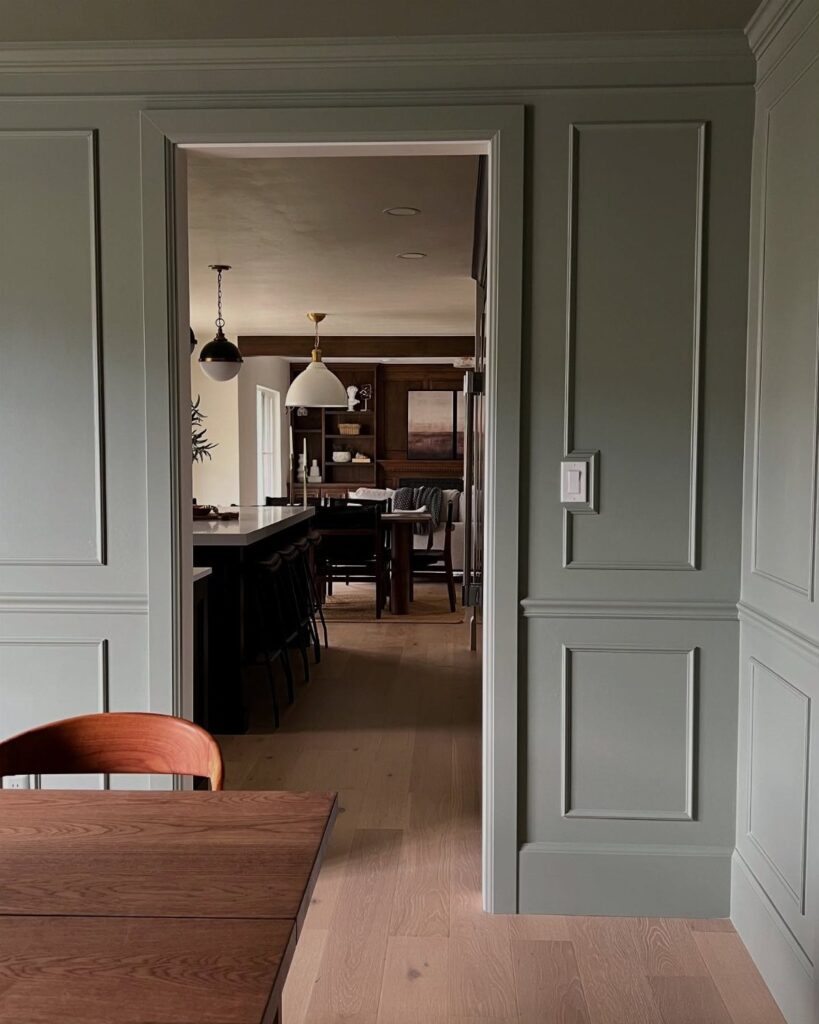
Chair rail molding runs at the height where chair backs hit the wall, which in most dining rooms sits between 32 and 36 inches depending on your ceiling height.
Wainscoting adds architectural texture below the rail, while painted panels keep the line cleaner and the look simpler. Navy and black lower sections hide scuffs, and wallpaper above the rail brings in pattern without covering the whole wall.
1. Chair Rails with Wainscoting
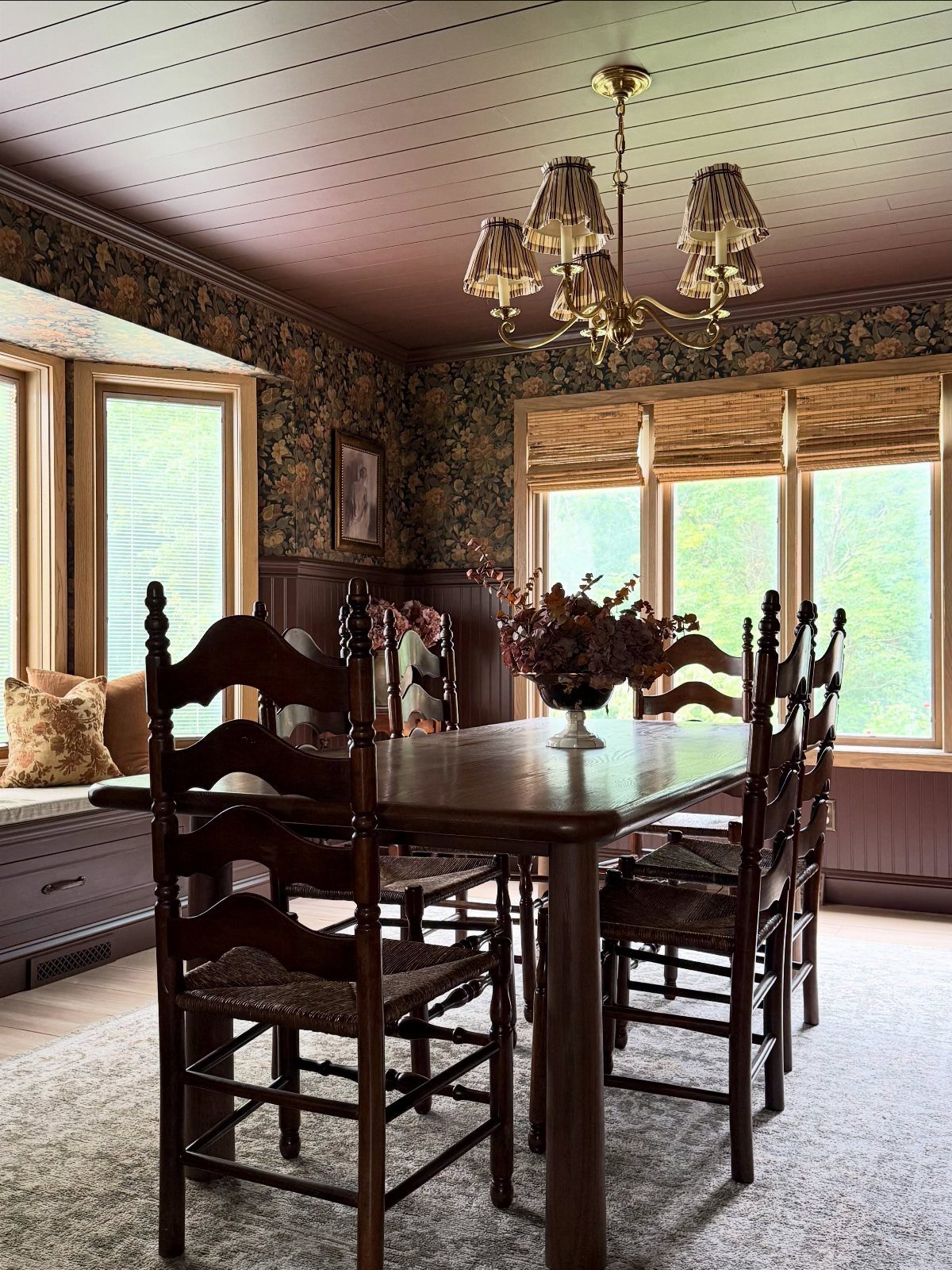
Pairing a chair rail with wainscoting below gives you a classic dining room look that holds up to daily wear.
The paneling takes the hit from chair backs and scuffs, which helps in a room where you’re sliding chairs in and out.
I prefer darker wood for the wainscoting in a dining room because it hides marks better than painted versions. The chair rail sits at the top of the paneling, and the exact height depends on your ceiling.
If your dining room sees heavy use, this setup makes sense. The wainscoting takes the beating, and you can repaint or refinish just that section without redoing the whole wall.
2. Deep Navy Blue Panels
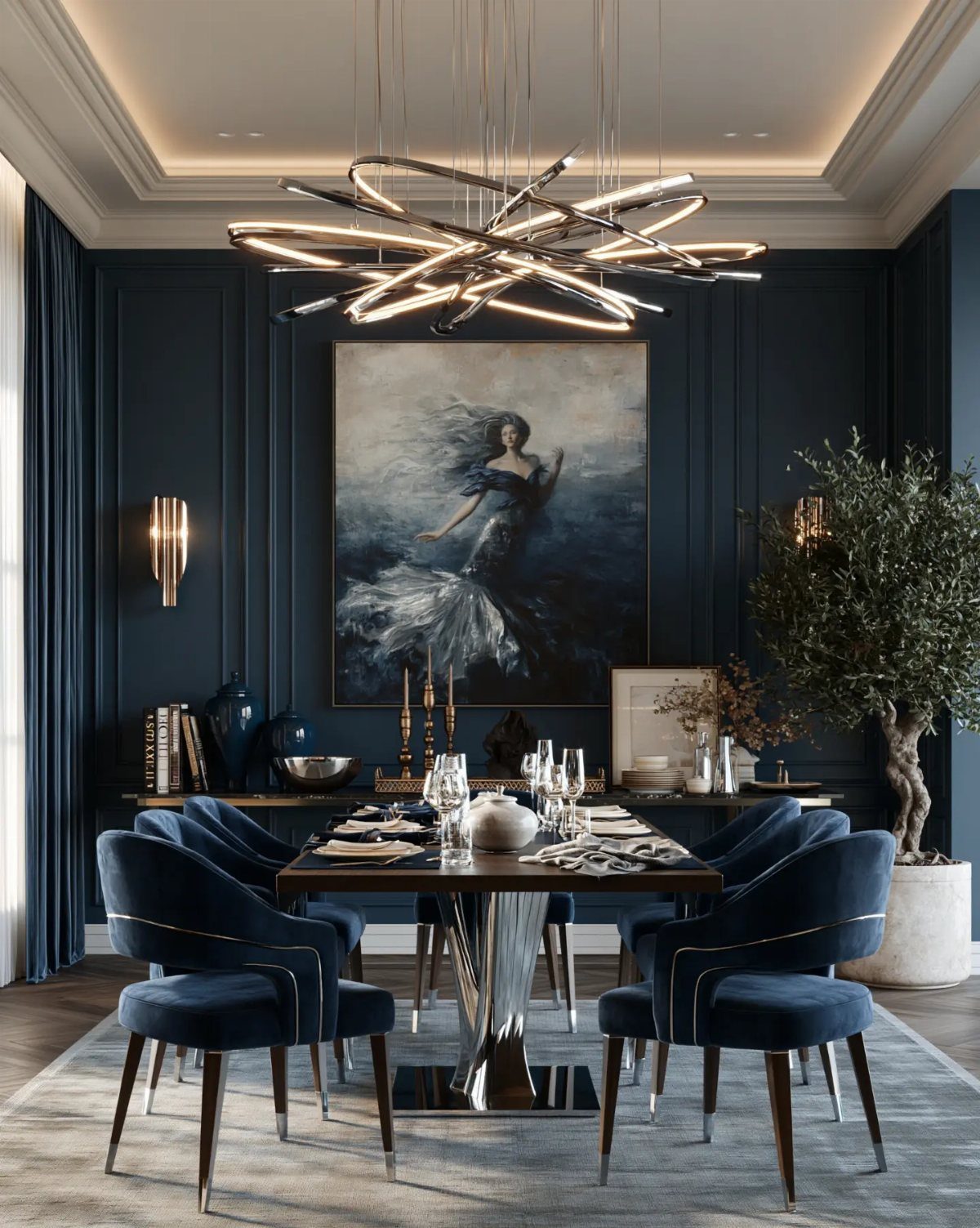
Painting the lower half of your dining room in deep navy creates a grounded, intimate feel that works especially well in rooms with high ceilings. The dark panels pull your eye downward and shrink the vertical scale of the room.
Navy hides scuffs and fingerprints better than lighter colors, which is practical in a dining room where chairs slide in and out.
I like how the color reads almost black in low light but shows its blue tone during the day.
For the chair rail itself, a trim that contrasts with the paneling gives you a crisp dividing line. Keep the upper wall in a neutral or softer shade so the navy doesn’t overwhelm the room.
3. Classic Picture Frame Combinations
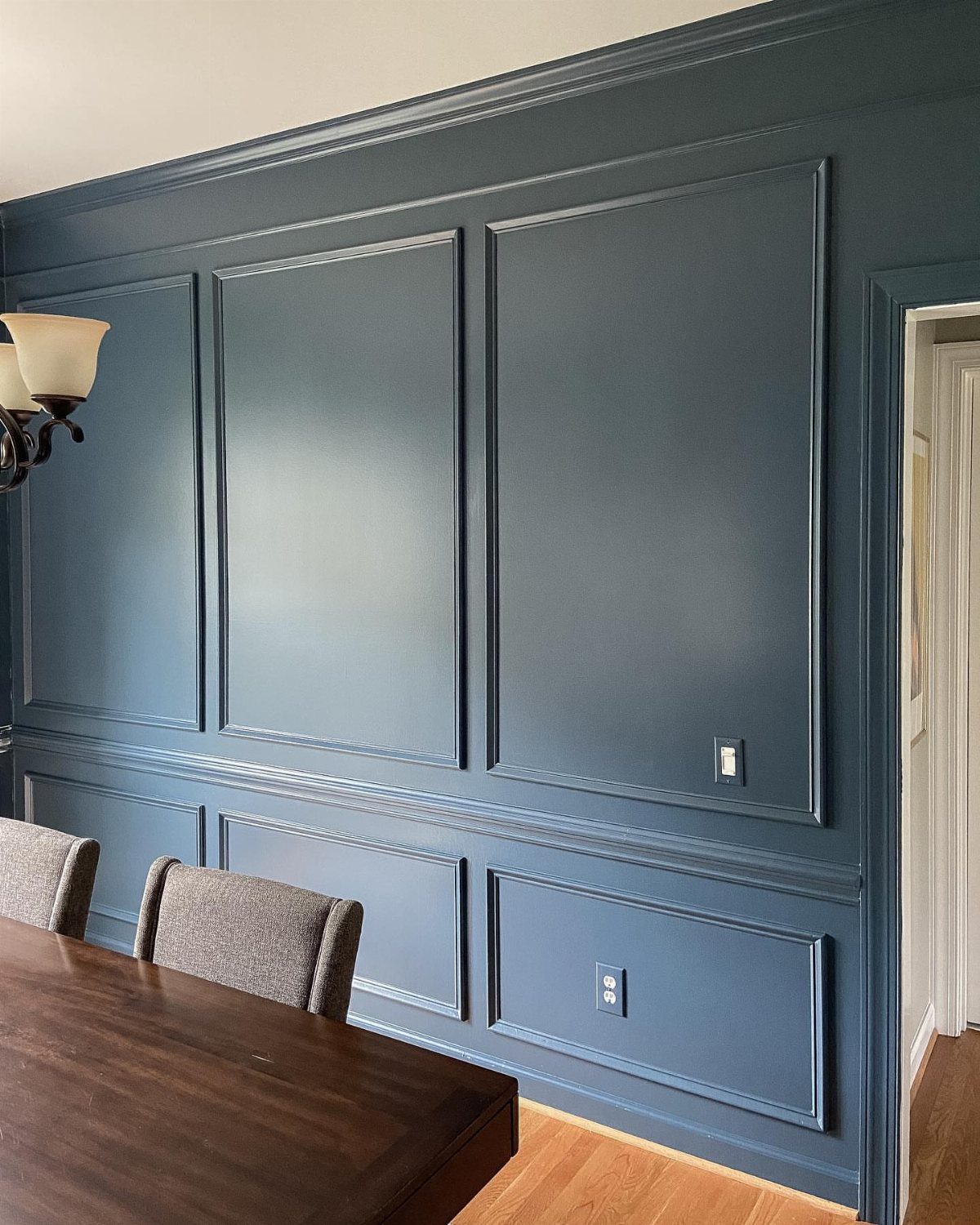
Picture frame molding laid out in symmetrical panels above and below a chair rail adds architectural detail without the weight of full wainscoting. The molding creates raised rectangles on the wall, spaced evenly for a formal look.
The chair rail runs through the middle, dividing the pattern into 2 bands.
Lower ceilings can make the stacked panels feel crowded. Paint the whole thing one color for a subtle effect, or use two tones to emphasize the division.
4. Dramatic Black Bottom Half
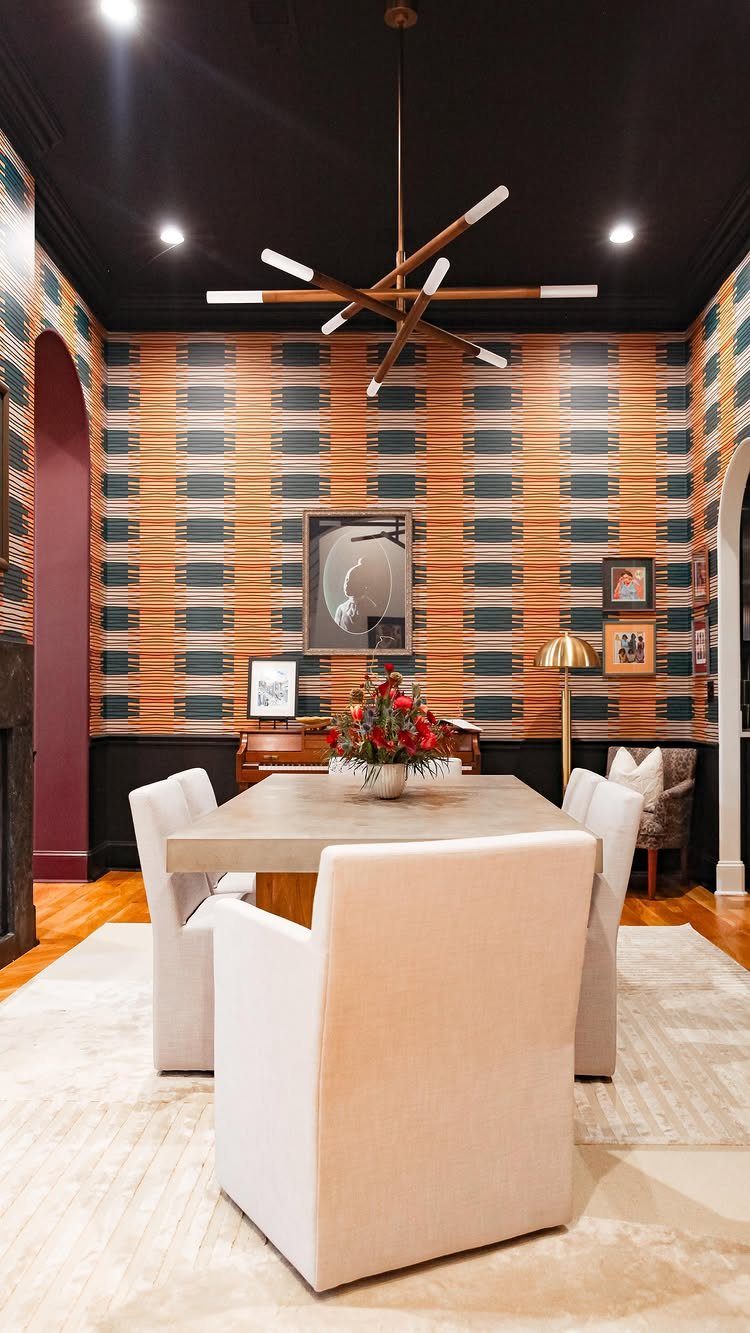
Painting the lower half black and leaving the upper section lighter gives you a sharp line that reads modern instead of traditional.
The dark base anchors the room and lets you use busier wallpaper or bold colors above the rail without the space feeling chaotic.
Black hides wear better than any other color.
In a dining room, that matters where chair backs hit the wall. I’d go with a matte or eggshell finish rather than gloss, which shows every smudge.
Keep the chair rail molding white or leave it in a natural wood tone so the transition between the 2 halves stays clean.
5. Floral Wallpaper Above Chair Rail
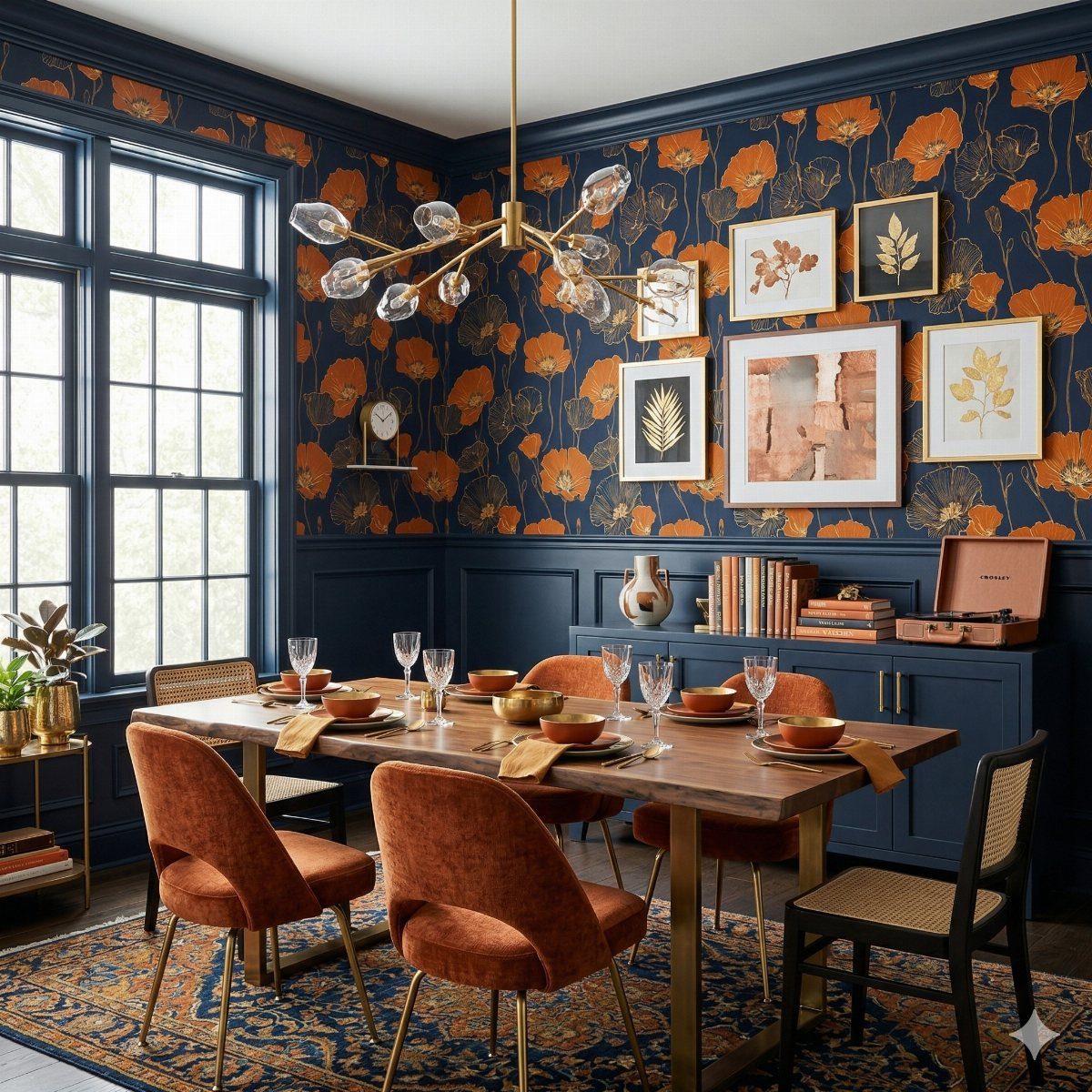
Running floral wallpaper above the chair rail and painting the lower wall solid gives you pattern without covering the entire room in it.
The rail gives the wallpaper a hard stop, so it looks like a choice instead of something that got away from you.
I prefer a bolder print for the wallpaper since it’s contained to the upper section.
The painted lower half should pull a color from the wallpaper to tie the two together. Navy, dark green, or charcoal work well as base colors.
This setup also makes repainting easier down the line. You can change the lower wall color without touching the wallpaper.
6. Scenic Landscape Wallpaper Pairing
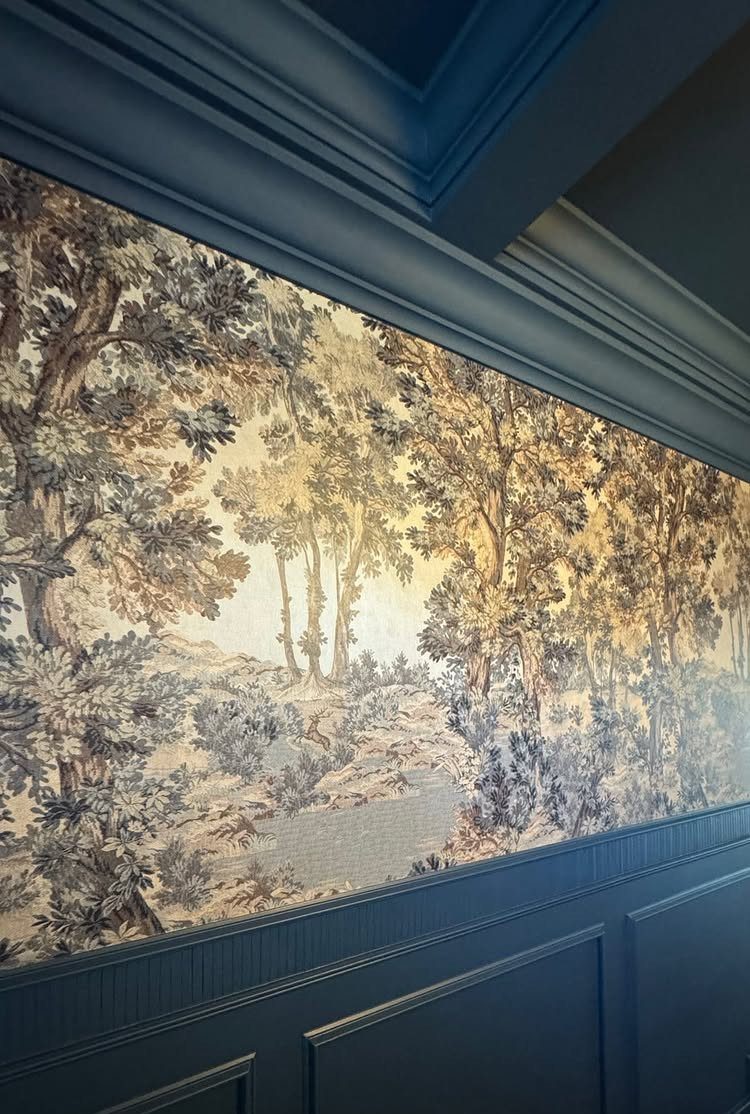
Pairing scenic wallpaper with a painted chair rail and wainscoting lets you bring in landscape imagery without it feeling like a mural.
The rail breaks up the pattern, so the wallpaper reads as a deliberate design choice rather than trying to extend the room.
The bright blue wainscoting here anchors the forest scene and keeps it from floating on the wall. I’d match the chair rail to the wainscoting color so the transition feels cohesive.
This works best in a room where you want the walls to be the focal point. Keep the furniture simple so the wallpaper doesn’t compete.
Chair Rail History and Purpose
Chair rails started as a practical fix, protecting walls from chair backs knocking into them.
The molding ran around the room at the height where a chair would hit, and it saved homeowners from repairing wallpaper or repainting every time furniture moved.
That function still holds. In a dining room, chairs slide in and out constantly, and the rail takes the impact instead of the wall surface.
The molding also creates a natural break that lets you divide the wall into 2 sections, which adds structure to the room.
Lower ceilings call for a lower rail, while taller rooms can handle the rail higher up without the proportions looking off.
Modern Chair Rail Trends
Chair rail molding is back after years of being stripped out during renovations.
The trim adds architectural detail that contemporary interiors often lack, and pairing it with contrasting wall treatments above and below gives you a modern take on the original Victorian setup.
Wainscoting below the rail is one common approach, but painted two-tone walls work just as well.
The rail gives you a clean dividing line, so you can run darker paint on the lower section and lighter tones above, or reverse it depending on the room.
Modern chair rail profiles in both sleek flat designs and subtle geometric shapes fit current interiors as long as your other trim matches the style.
Chair railing is still in style! Trim molding is seeing a major resurgence today.
Frequently Asked Questions
Is chair railing still in style?
Chair railing is back after years of being removed during renovations.
The trim brings back architectural weight that flat drywall rooms miss, and setting it against two-tone paint or different wall finishes makes the traditional profile read as deliberate instead of dated.
Painting the rail and walls in matching tones or using bold colors on both sides of the divide makes it feel current.
How high should a chair rail be in a dining room?
The right height changes with your ceiling. Shorter ceilings need a lower rail, and taller rooms give you space to run it higher without throwing off the proportions.
What can I use instead of a chair rail?
Paint alone can create a visual break where the rail would go.
A horizontal line dividing 2 wall colors gives you the same structure without adding molding. Wallpaper or wainscoting also adds interest to the lower section of the wall without needing a chair rail on top.






