
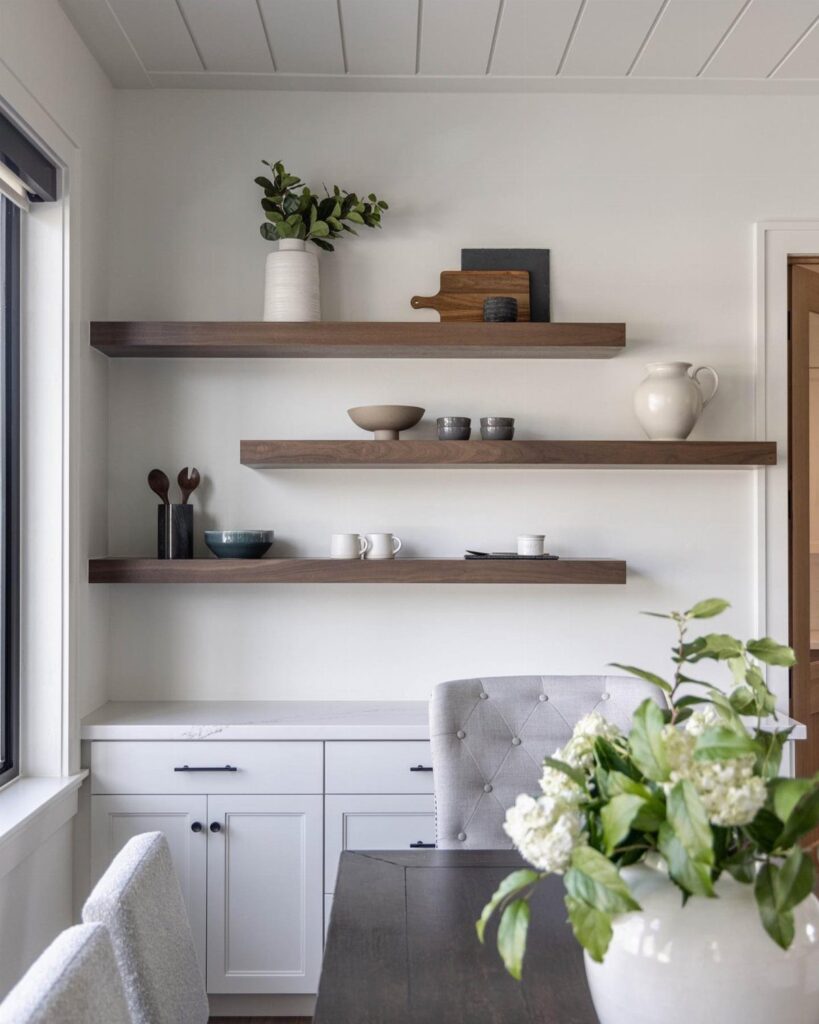
Dining room shelves range from a single floating line above a bench to floor-to-ceiling units and built-in niches that claim vertical space where wider furniture would crowd the table.
The choice hinges on whether you need open floating shelves for frames and seasonal decor, thick timber that can carry serving ware and heavy dishes, or a glass-front cabinet that keeps display pieces visible but protected.
Thick timber shelves 2.5–3 inches thick, braced with steel rod inside, carry the weight of platters and mixing bowls without bowing, while slim built-in units 12–18 inches deep fit tight layouts where a deeper shelf would push into the walkway around the table.
1. Floating Shelves Above Sideboard
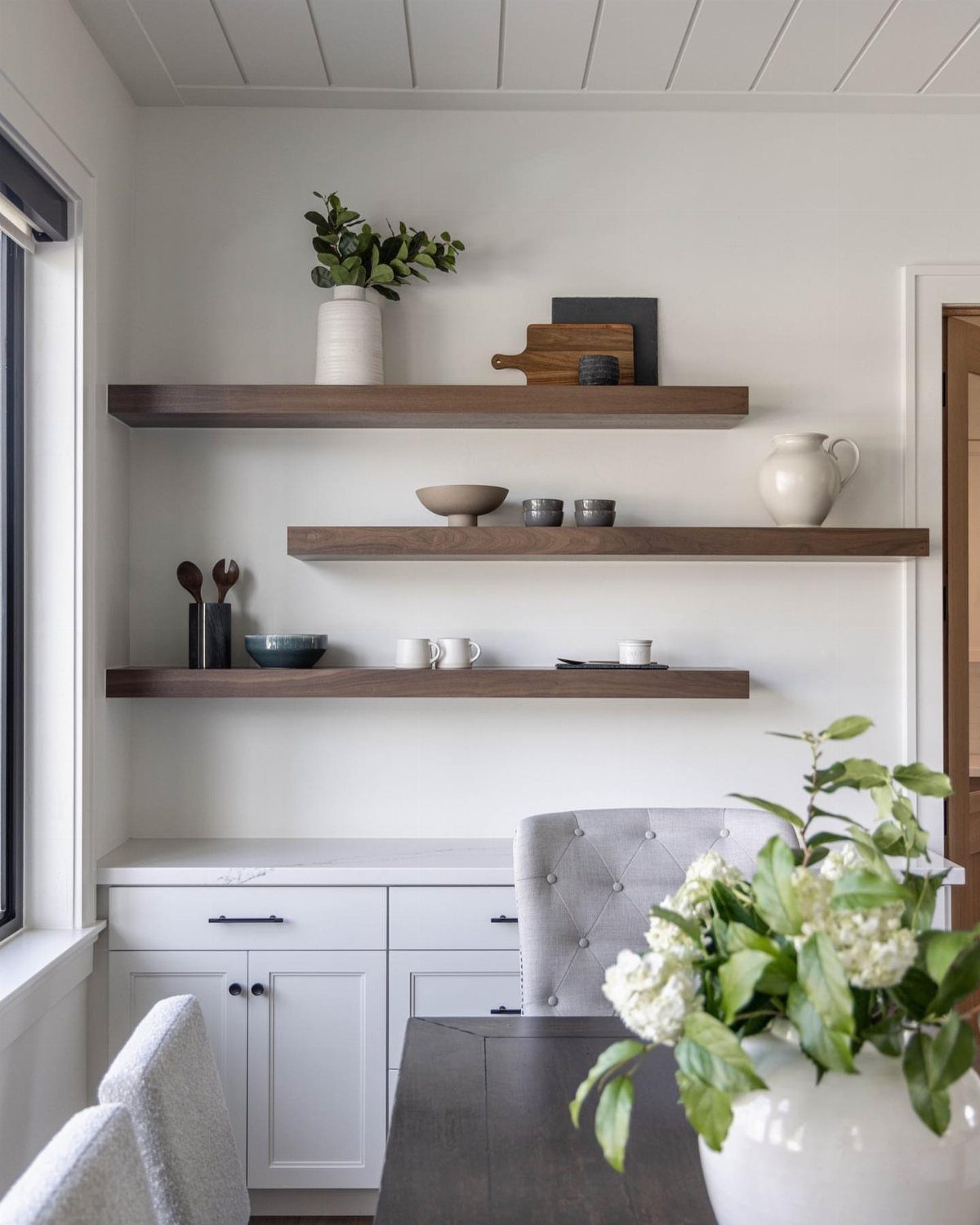
Floating shelves mounted above a sideboard give you horizontal display space without eating into floor area. The length matches the furniture below, so the whole arrangement feels anchored rather than floating loose.
This setup works when you already have a sideboard and want more room for seasonal decor or serving pieces. The shelf sits high enough that you can still use the sideboard surface underneath.
Install the shelf above the sideboard top, leaving enough clearance to display items without crowding the surface. That gap lets you reach items on both surfaces without knocking anything over.
2. Gallery-style Display
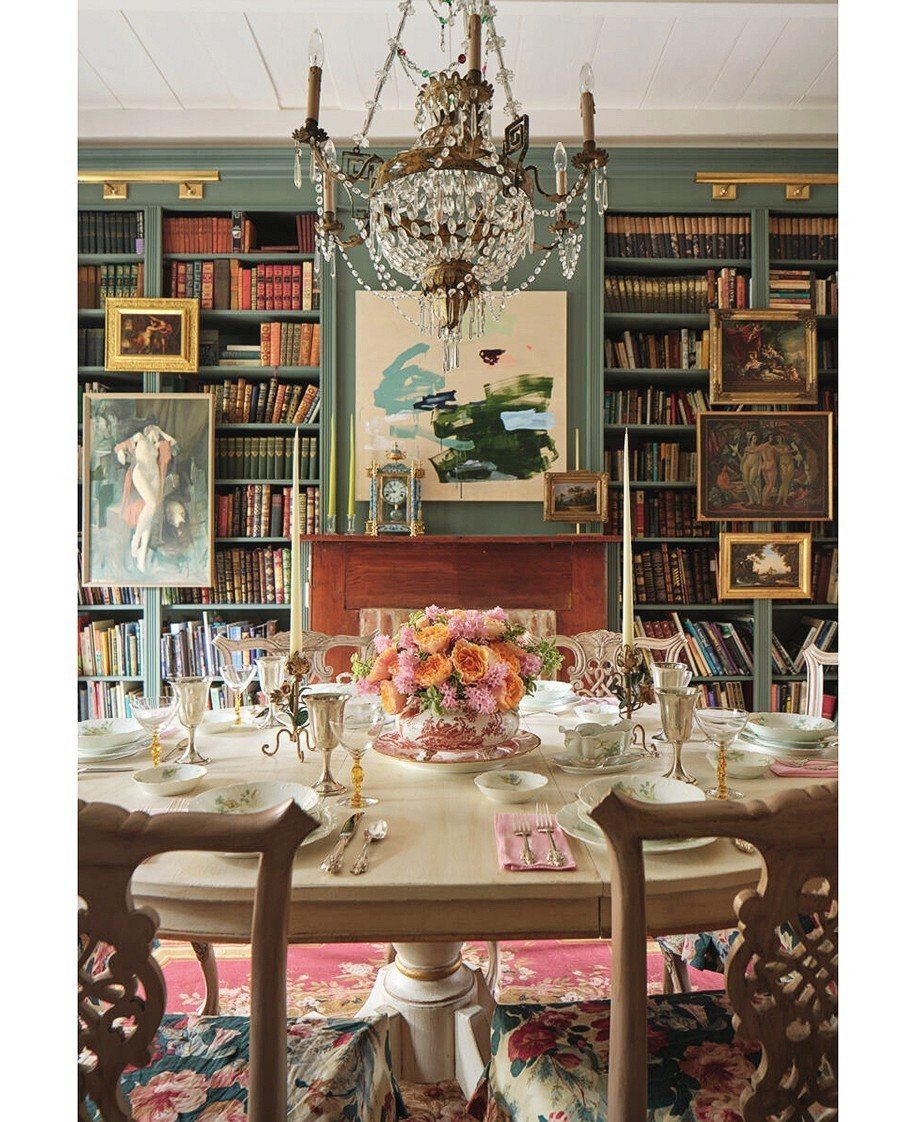
Shelves installed at different heights let you prop frames and artwork at eye level rather than hanging everything on nails. The staggered arrangement keeps the display from reading as a grid.
This approach suits a formal dining room where books and art are part of the space. Each shelf can hold a few pieces, so you rotate what is on view without rearranging the whole wall.
Built-in shelves work best here because they carry the weight of framed art without sagging. Brackets under floating shelves would interrupt the gallery look.
3. Shelves with Layered Vintage Decor
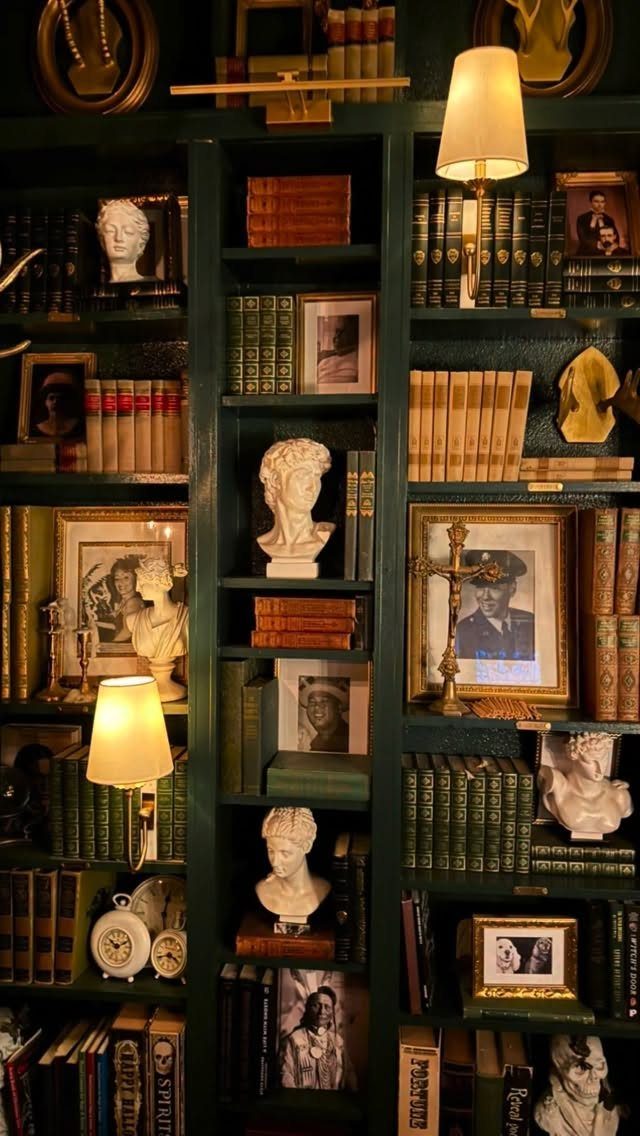
Antique books, portrait frames, and classical busts layer well on built-in shelves because their shapes break up the horizontal lines. The mix of spines, framed images, and dimensional objects gives the shelves texture without needing much styling effort.
Most of the pieces in this setup came from secondhand shops and estate sales, which keeps the cost reasonable if you are patient about sourcing.
Look for hardcover books with decorative spines and small-scale sculptures that fit between the shelves without crowding.
Dark green paint on the shelves makes the display feel intentional rather than cluttered.
4. Slim Shelving from Floor to Ceiling
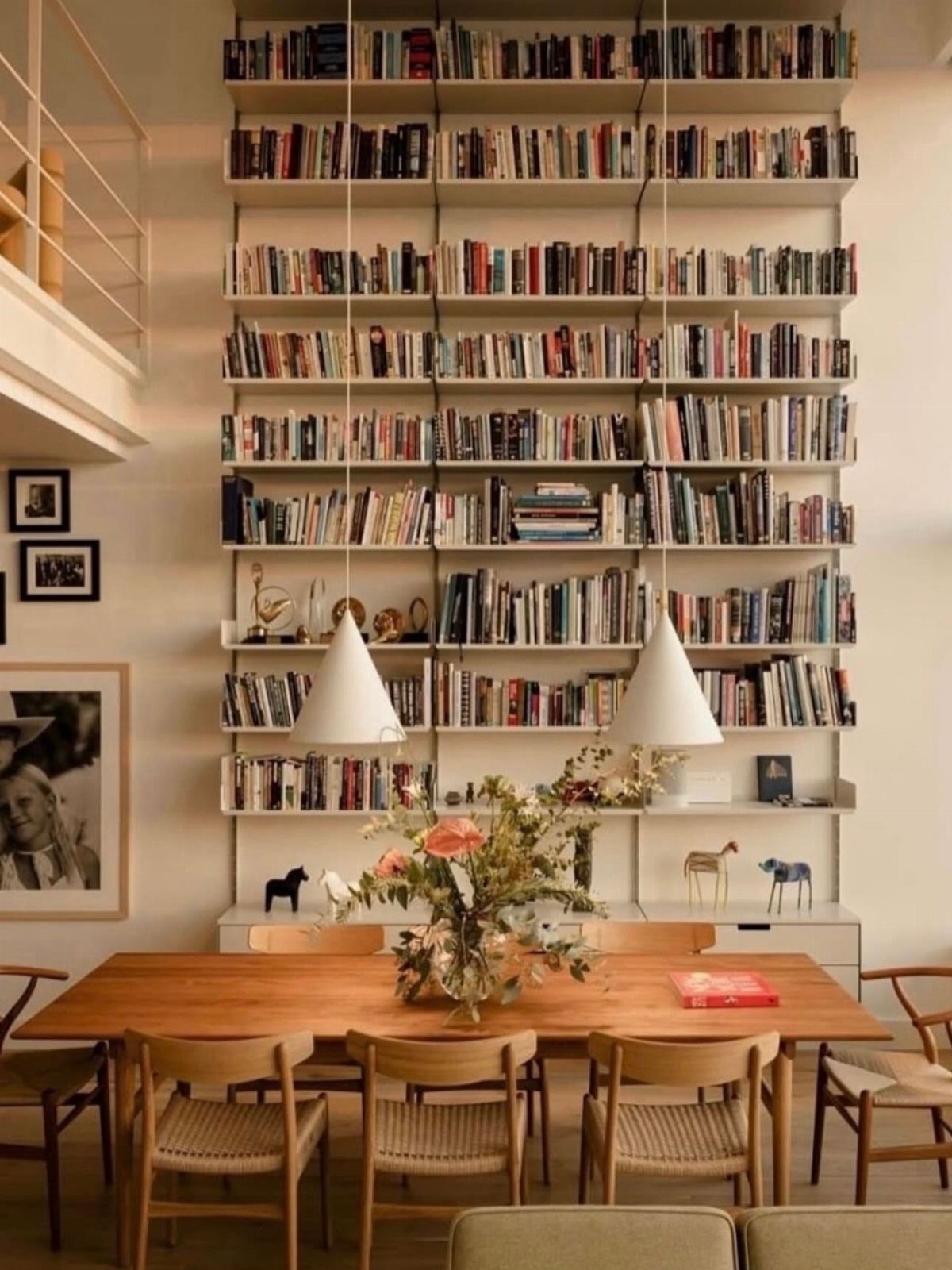
A slim floor-to-ceiling bookshelf uses vertical space where a wider unit would block the room. The narrow profile keeps the shelves from dominating the room, so the table stays the focus.
This setup suits a small dining room where storage is tight. The height gives you enough shelf space to hold books and decor while claiming very little floor space.
Look for units 12–18 inches deep. Anything deeper pushes into the room and makes the table feel cramped.
5. Thick Timber Shelves
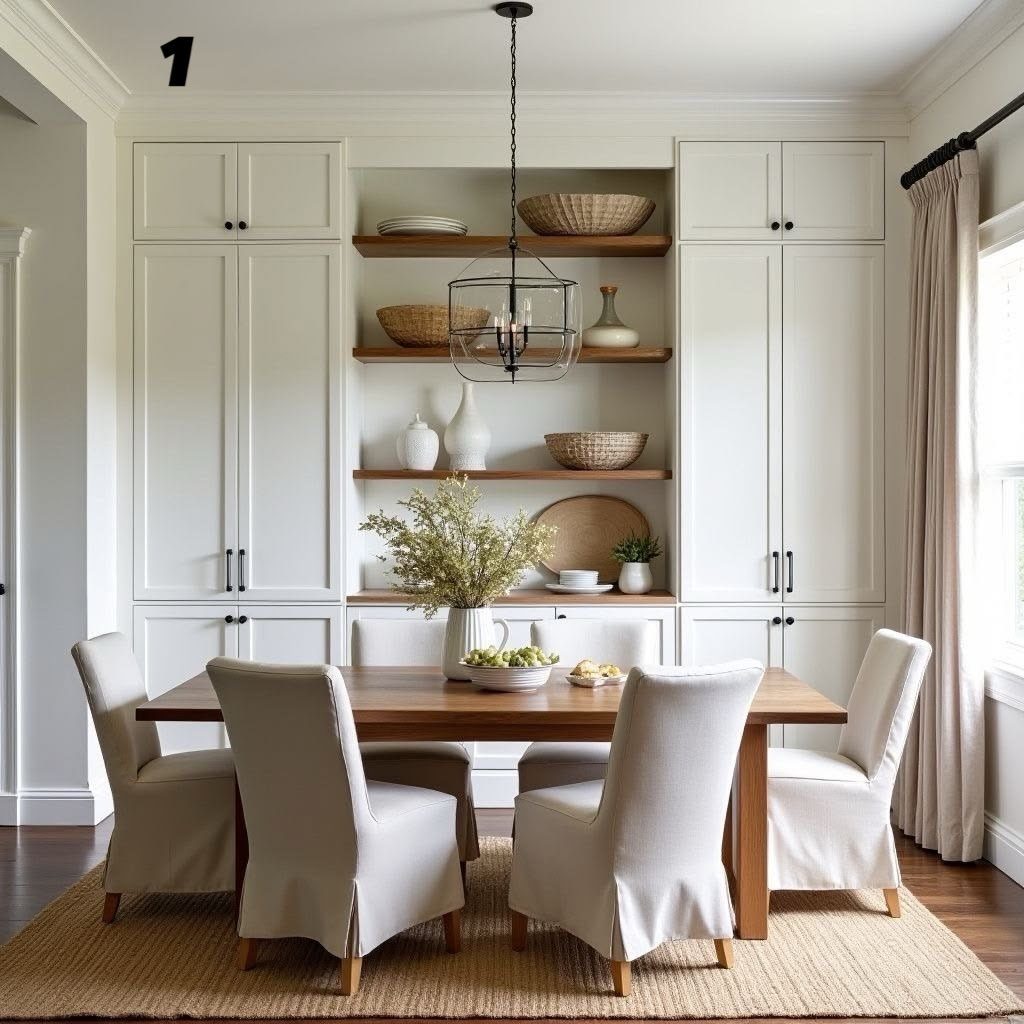
Thick timber shelves support heavy ceramics, serving platters, and cookware without bowing. The solid wood reads as structural rather than decorative, so the shelves feel like part of the wall.
This works when you store items you actually use, not just display pieces. The weight capacity lets you stack mixing bowls, stoneware, and cast iron without worrying about the shelf giving way.
Mount each shelf with heavy-duty brackets spaced to support the weight along the span. The timber is heavy on its own, and the brackets need to carry both the shelf and everything on it.
6. Built-in Arched Shelving Niches
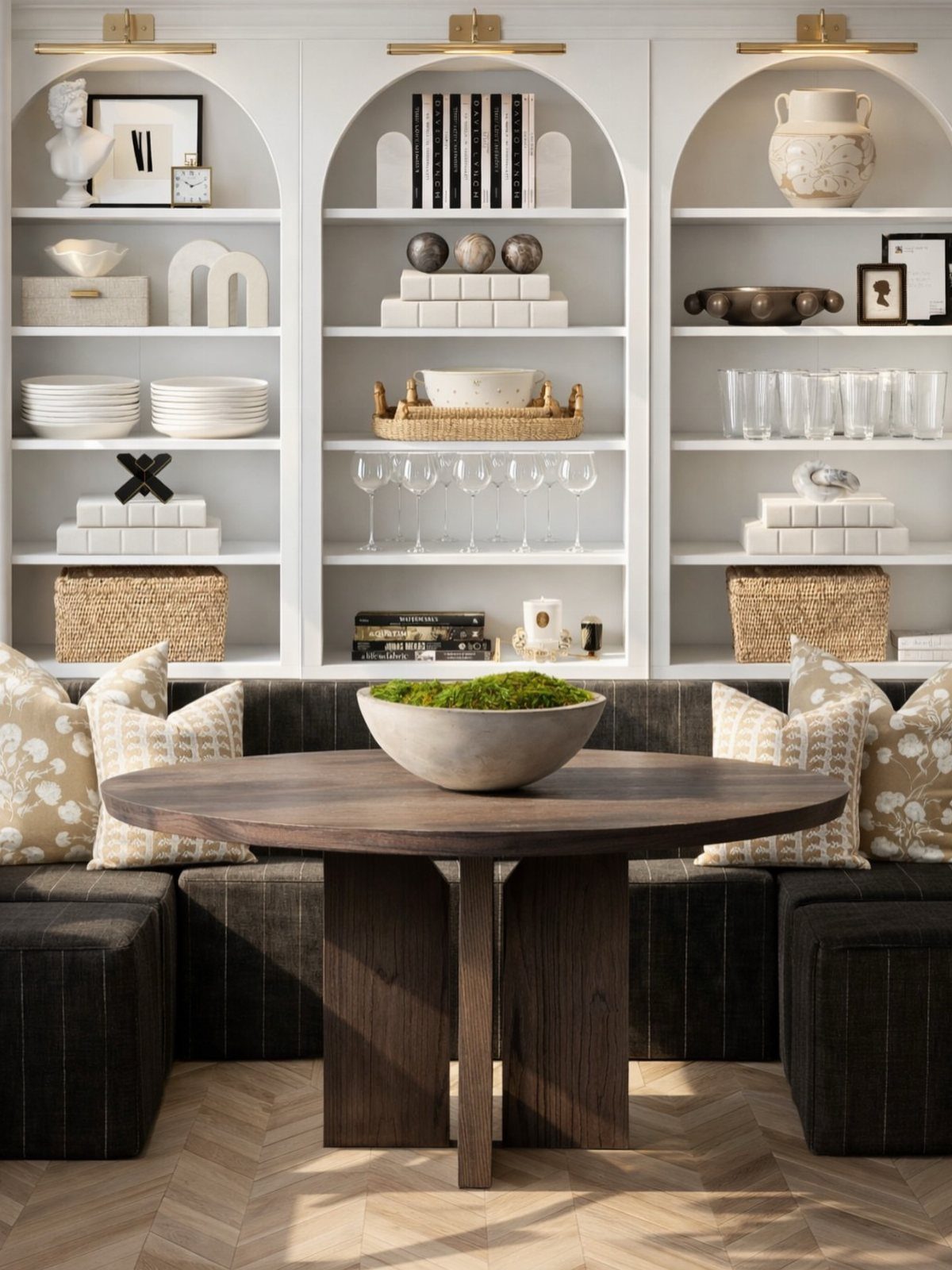
Built-in arched niches give you shelf space without adding furniture into the room. The alcoves sit flush with the wall, so they hold decor and books behind the seating without pushing the table forward.
This setup requires construction or a remodel, since the niches are framed into the wall itself. The arched tops soften the look compared to rectangular cubbies.
Each niche holds a small stack of books or a few ceramic pieces. The shallow depth keeps items visible from the table, so nothing gets lost in the back.
7. Built-in Unit with Recessed Shelves
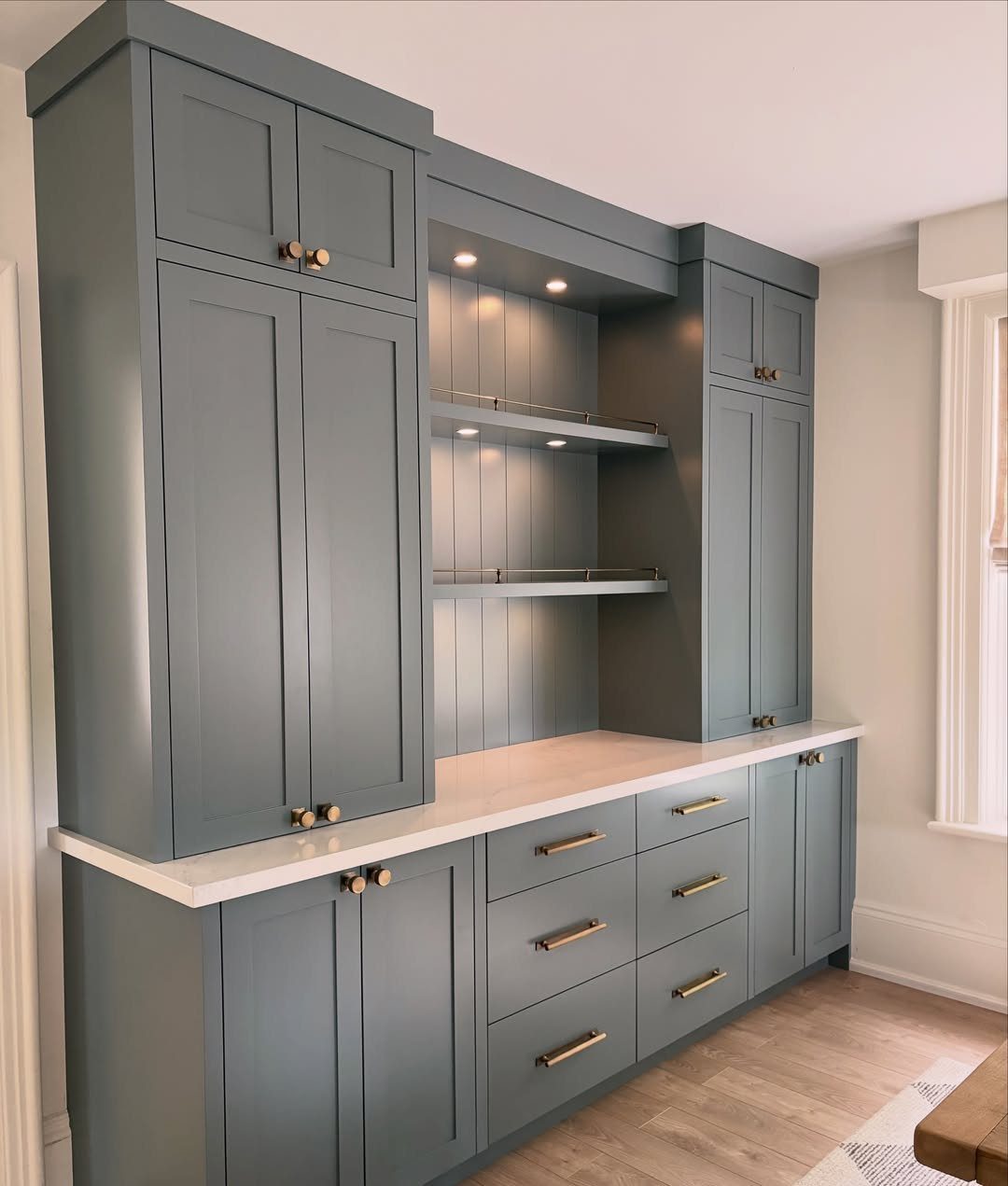
Recessed shelves set into a built-in unit give you open display space between closed storage. The flanking cabinets hide clutter while the center shelves keep your best dishes or decor visible.
This setup needs wall space where a full built-in can sit, so it suits a dining room with an empty wall rather than one already lined with furniture. The drawers below hold linens and flatware within reach of the table.
Paint the whole unit one color so the recessed shelves read as part of the design, not an afterthought. The open center breaks up the solid mass of cabinets without losing storage.
8. Arched Glass Display Cabinet
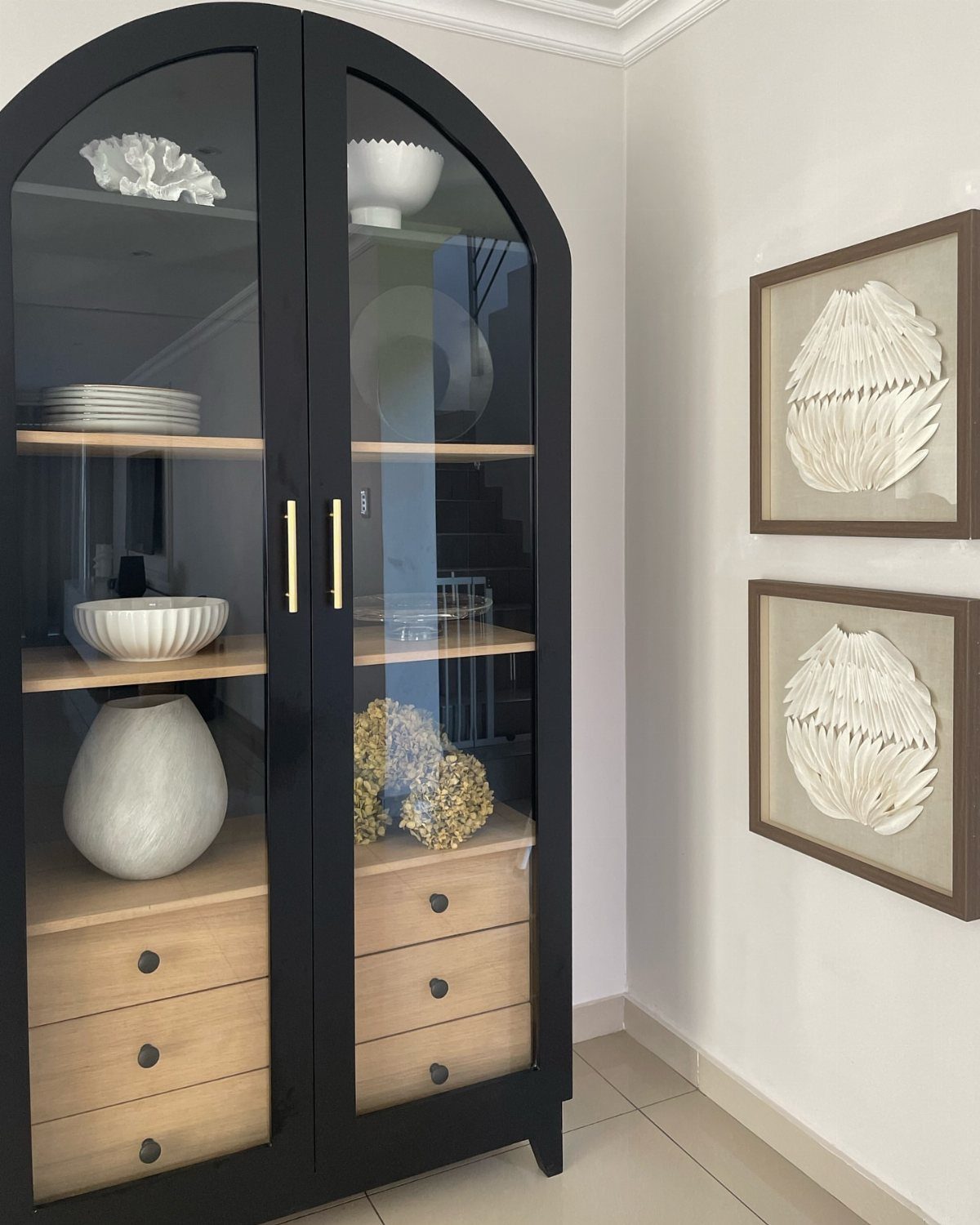
Glass doors on an arched cabinet let you see what is inside while keeping dust off the dishes.
The enclosed shelves protect ceramics and glassware better than open shelving, so this works when you store pieces you use occasionally rather than every day.
Dark frames make the cabinet feel more substantial than a light wood finish, especially against a white wall.
Look for a cabinet with interior shelves you can adjust, so you can fit tall pitchers or stack dinner plates without wasted vertical space. The lower drawers hold serving pieces flat.
9. Single Floating Shelf Over Bench
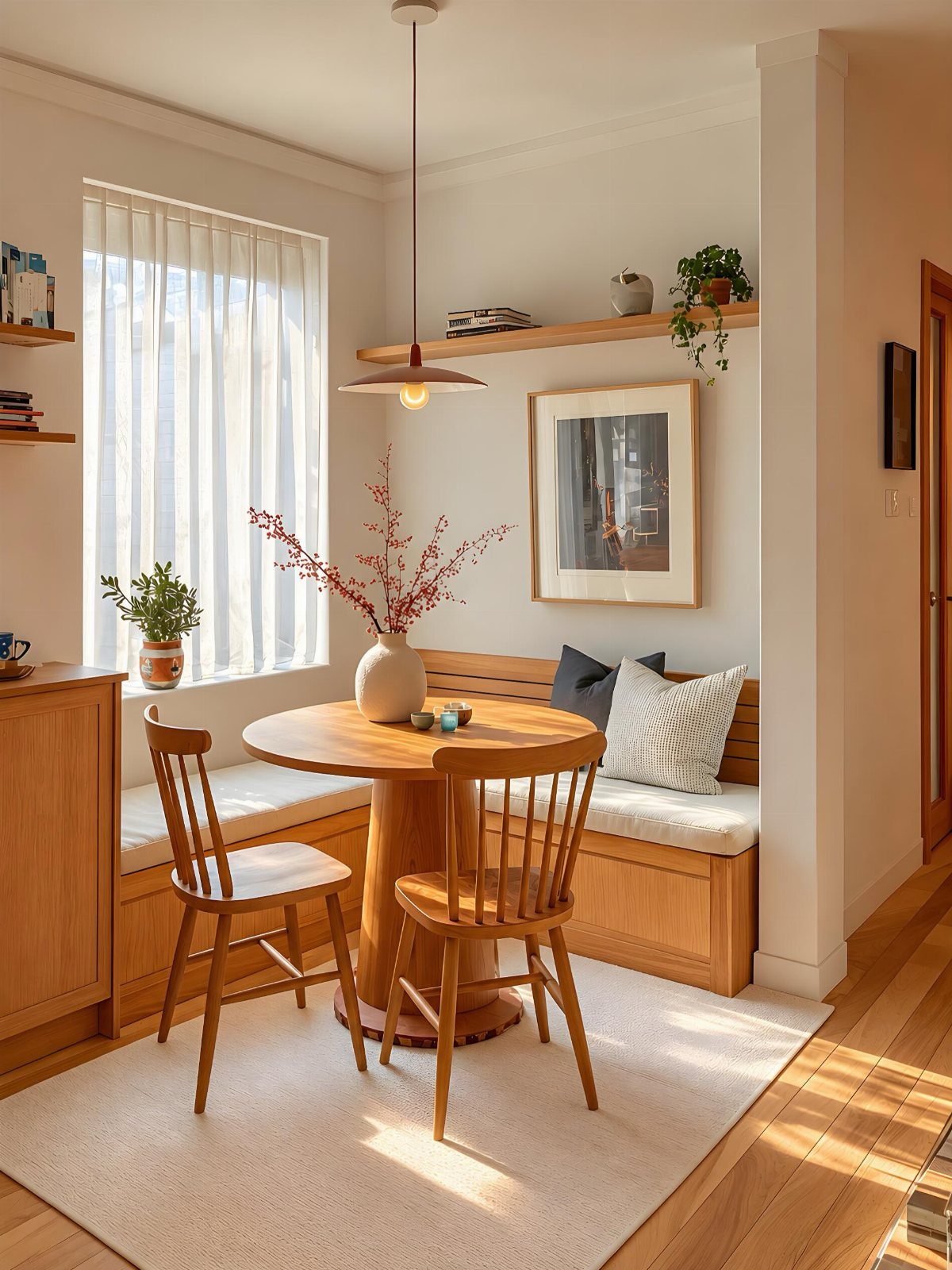
One shelf above a built-in bench adds display space without competing with the table. The single line keeps the wall clean, so the nook stays open and bright.
This suits a breakfast nook or banquette setup where the seating is already fixed. The shelf sits above head height when seated, so you can lean back without bumping anything.
Match the shelf material to the table or bench for a cohesive look. The shallow depth means small framed art or a few books, not deep storage.
Height and Placement Guidelines
Shelves installed near walkways need to sit at least 68 inches above the floor to clear someone standing up from the table. That height accounts for a person’s head plus a margin when they push back a chair and rise quickly.
Above a sideboard or bench where you are not walking underneath, 60–64 inches works because the furniture itself keeps people from standing directly below the shelf. The lower height keeps items within reach without making the wall feel crowded.
Depth matters for movement. Shelves 12–18 inches deep hold plates and glassware without extending so far into the room that someone bumps them while passing the table.
Styling Tips for Shelves
Staggering the heights and lengths stops the wall from reading like a grid.
Because the shelves are not functional storage, you can place the lowest one higher than you would for items you grab often, as long as it clears 68 inches near walkways.
Mix heights and shapes on each shelf. A tall vase next to a stack of books next to a small frame breaks up the horizontal line and keeps the display from feeling flat.
Materials and Durability
Most floating shelves land at 1.5 inches thick, and that dimension flexes under the weight of platters and heavy dishes.
A shelf between 2.5 and 3 inches thick, braced inside with steel rod, holds serving ware flat without the bracket tipping forward or the span bowing.
Solid wood or high-quality plywood both work, but the brackets matter more than the shelf material. Heavy platters and mixing bowls add up quickly.
For staggered shelves holding lighter items like frames and plants, weight limits still apply. Heavier ceramics need brackets spaced closer together to prevent the span from bowing between supports.
Frequently Asked Questions
What are some creative shelving ideas for a dining room?
Arched niches carved into the wall give you display space without bringing in another piece of furniture, and solid wood shelves 2 inches thick or more support stacks of plates and bowls without sagging.
Staggered shelf heights let you lean art against the wall instead of nailing through it, and one narrow floating shelf over a console doubles your display surface without taking any floor space.
Each approach suits different needs: built-ins for walls you can open up, timber for heavy items, staggered shelves for art, and single floaters for smaller walls.
What height should floating shelves be in a dining room?
Keep shelves 68 inches or higher near paths people walk so no one stands up and clips the edge with their head.
When a sideboard or bench sits below the shelf and blocks anyone from walking under it, 60–64 inches from the floor gives you easier reach.
That shorter clearance puts glassware and serving bowls in arm’s reach and prevents the arrangement from climbing too high on the wall.
What can I use instead of a shelf?
A built-in with open shelving between closed cabinet doors lets you display favorite pieces while tucking away the extras you don’t want to see.
A cabinet with glass panes and an arched top keeps dust off your ceramics and stemware while letting light through, and drawers below hold platters and linens flat without stacking.
Both options hold as much as open shelving but keep items cleaner and the room less visually busy.






