
A single tray loaded with candles clears the table in one move when you need the space, while a low bowl of greenery stays put through dinner without blocking faces across the table.
Tables that host homework and mail need centerpieces that move in one trip, not four.
Taper candles slot into most holders, faux eucalyptus lasts months without water, and a wooden tray corrals smaller pieces so the whole setup lifts off as one unit.
1. Candlesticks
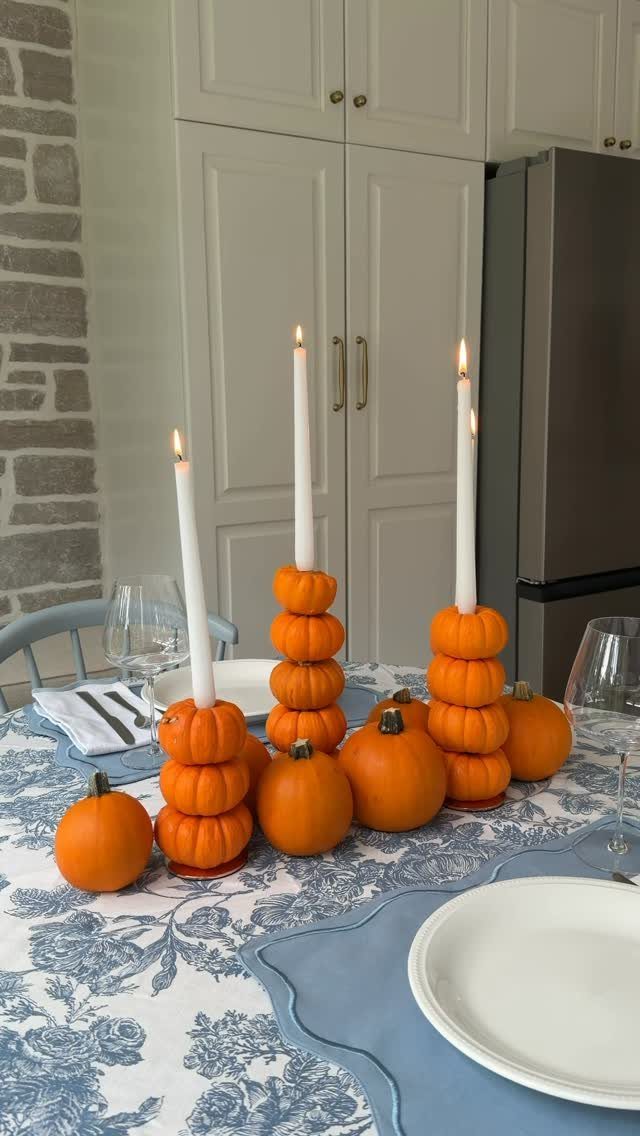
Candlesticks bring height and soft light to the table without taking up much real estate. A mix of heights works better than matching sticks, and grouping them in odd numbers keeps the eye moving.
Taper candles slot right into most holders, but if you’re working with something shorter, a stack of small pumpkins or books can lift the candle to where you want it.
For everyday use, unscented candles keep the table open to whatever you’re serving.
2. Floral Arrangement
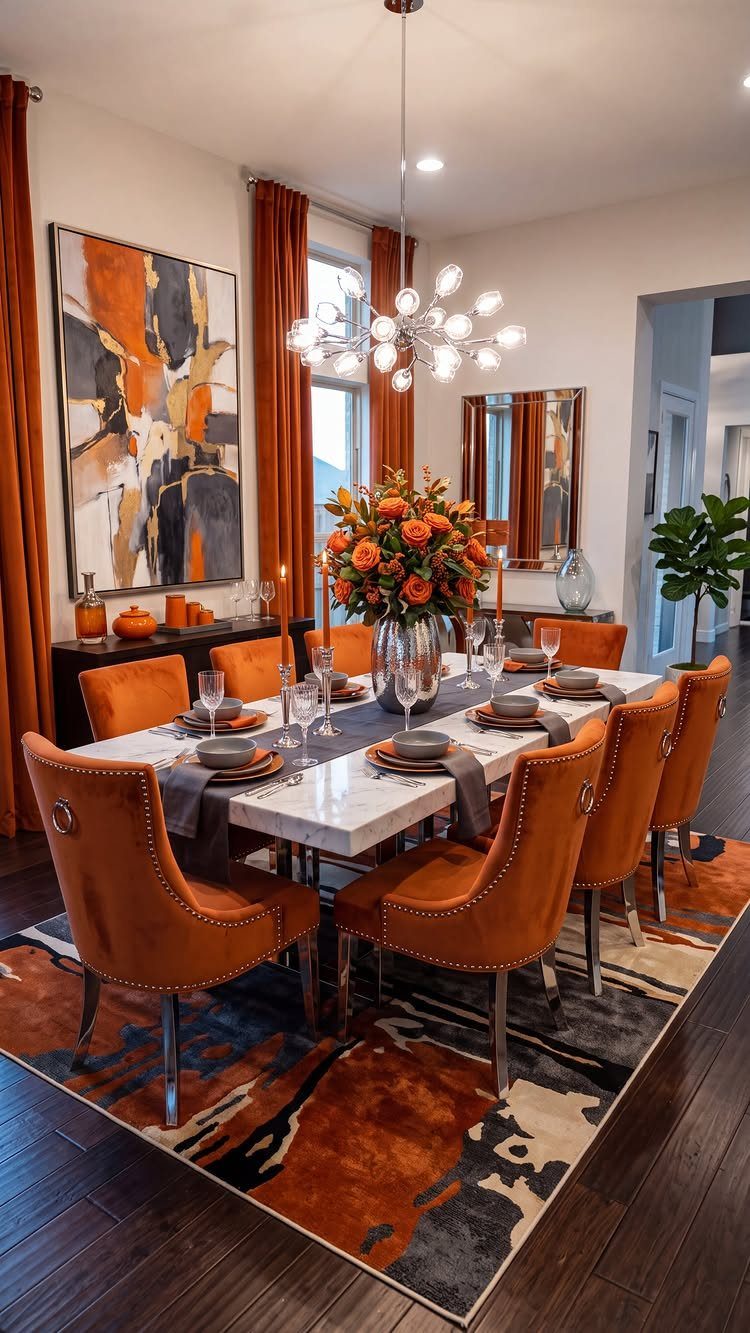
A large vase of flowers anchors the table and gives you room to play with color and scale. Fresh blooms last about a week if you change the water every couple of days, and faux arrangements stay put for months.
I go for a vase that’s wide enough to hold volume but still leaves elbow room when people sit down. If the arrangement blocks sightlines across the table, keep it low or move it to one end during meals.
3. Greenery Centerpiece
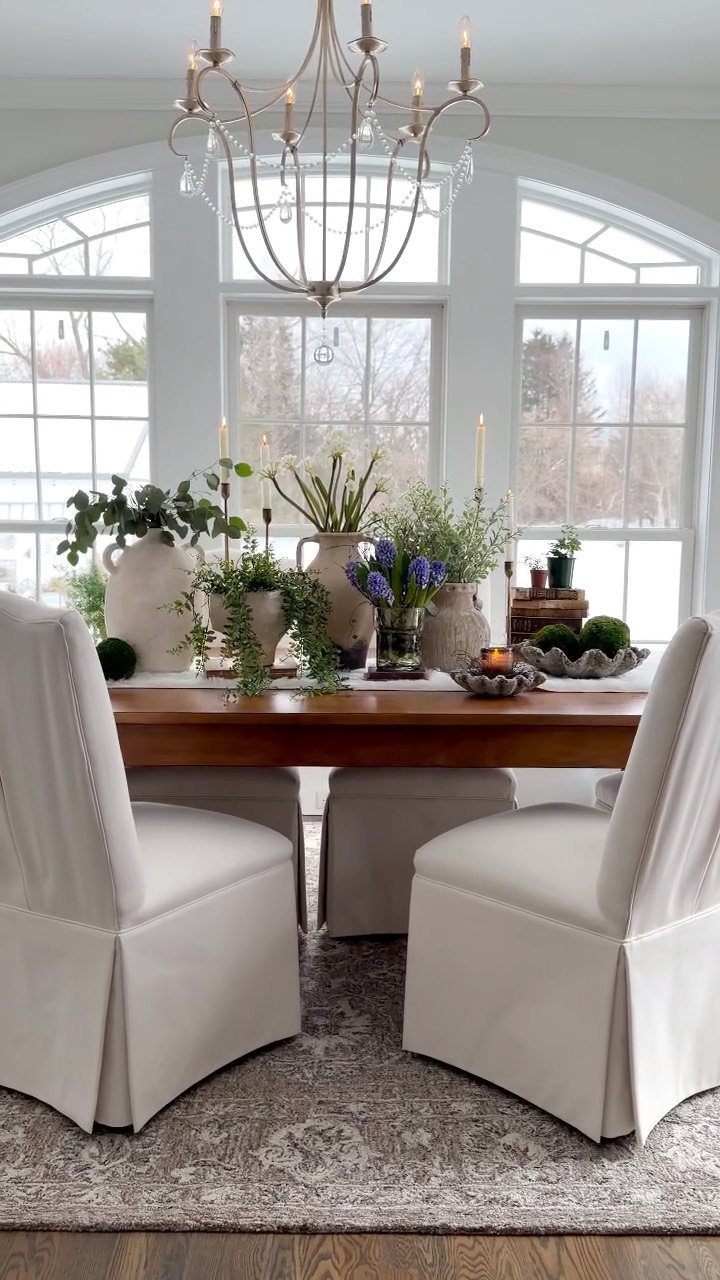
Greenery holds the table without competing for attention, and mixing vases of different heights gives the arrangement shape. Fresh eucalyptus and ferns last longer than most flowers, and faux stems work just as well if you want something permanent.
The maker here mixed old books and vases from flea markets with store-bought pieces, layering faux greenery with fresh flowers and real moss balls.
That kind of gathering works because the green ties it together, even when the containers don’t match.
4. Minimalist Centerpiece
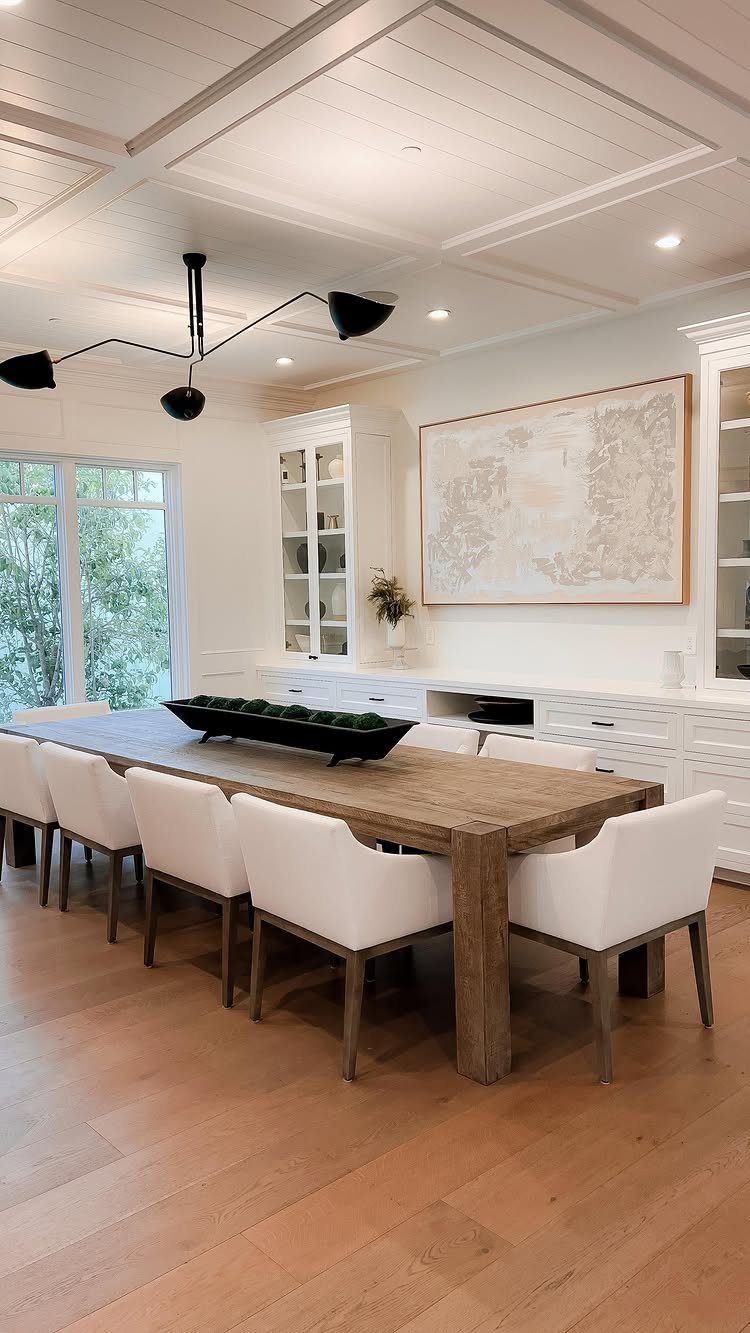
A single long vessel filled with one material keeps the table clean and grounded.
This approach suits a table where you want the wood or the dishes to do the talking. It’s easy to move when you need the space, and it doesn’t ask for weekly upkeep the way fresh flowers do.
5. Seasonal Centerpieces
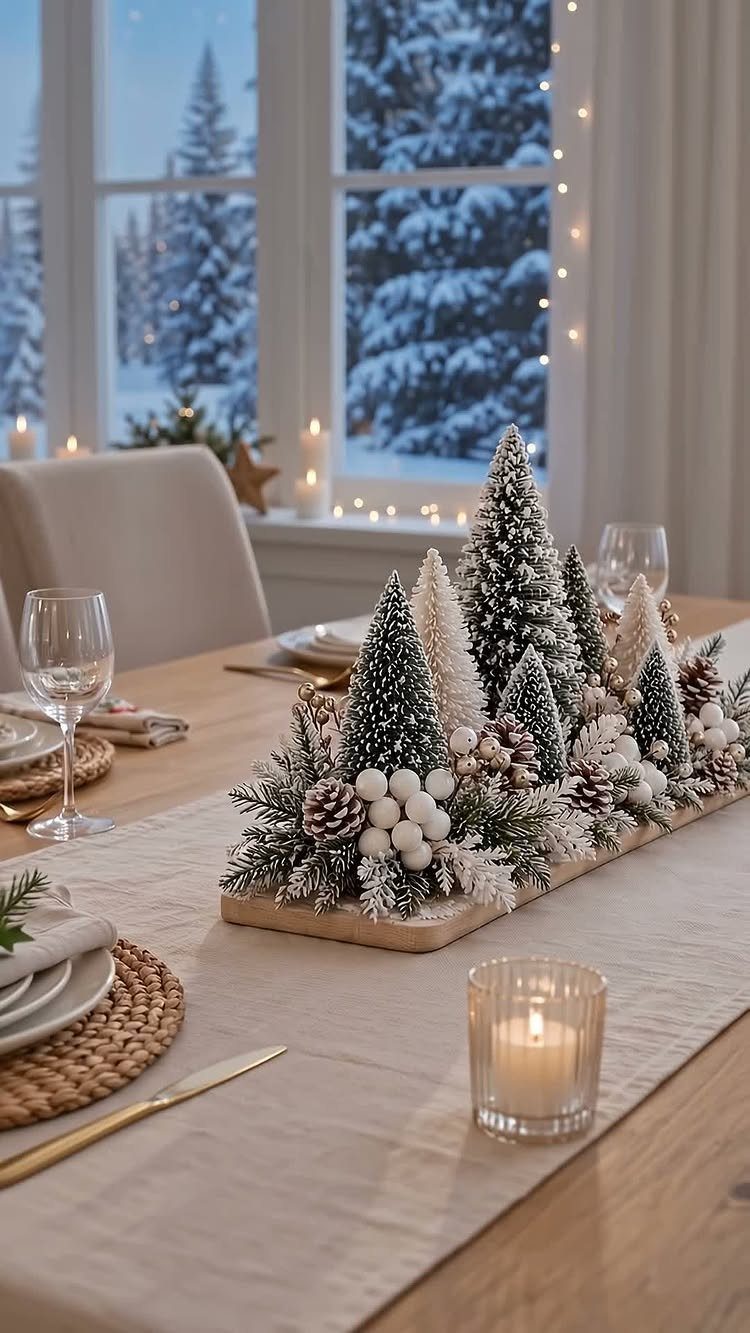
Swapping decor with the seasons keeps the table feeling current without a full reset. Miniature frosted trees and berries work for winter, dried wheat or gourds for fall, and fresh citrus or shells for summer.
A wooden base or low tray corrals the pieces and makes it easy to clear the table in one move. Seasonal setups also give you a reason to pull things out of storage and rotate what’s on display.
6. Vintage Inspired Candlesticks
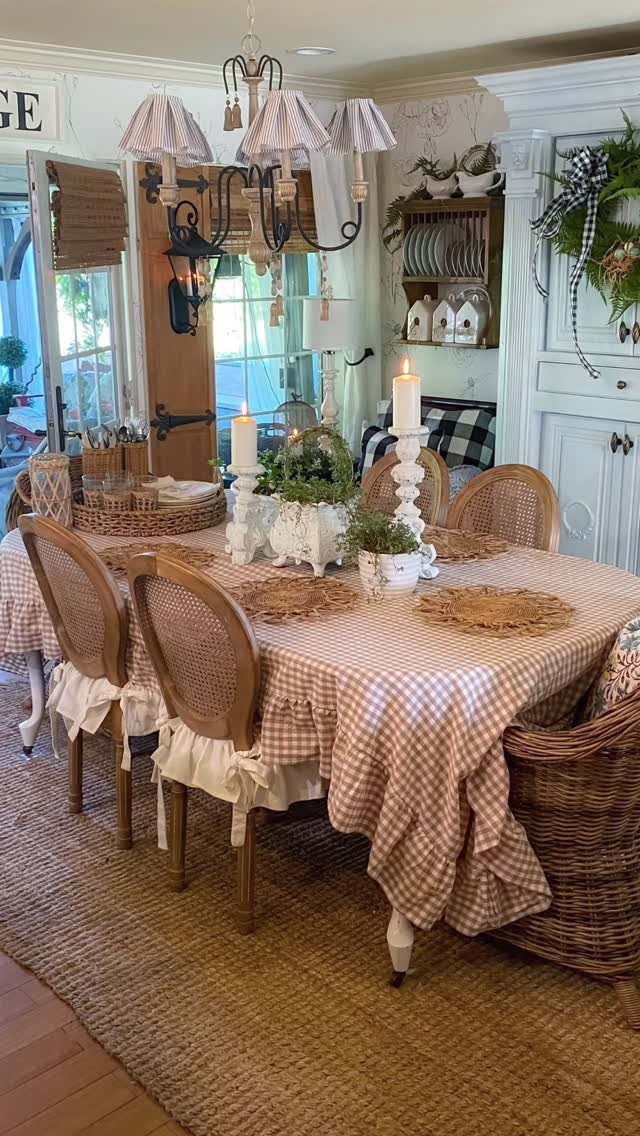
Vintage candlesticks add texture and history to the table, and mismatched holders grouped together look intentional rather than random. Flea markets and estate sales are reliable sources, and most holders take standard taper candles without modification.
Pairing the candlesticks with greenery softens the metal or ceramic and fills out the centerpiece. If the sticks have tarnish or chipped paint, that’s part of the look; polishing them clean can strip away what makes them interesting.
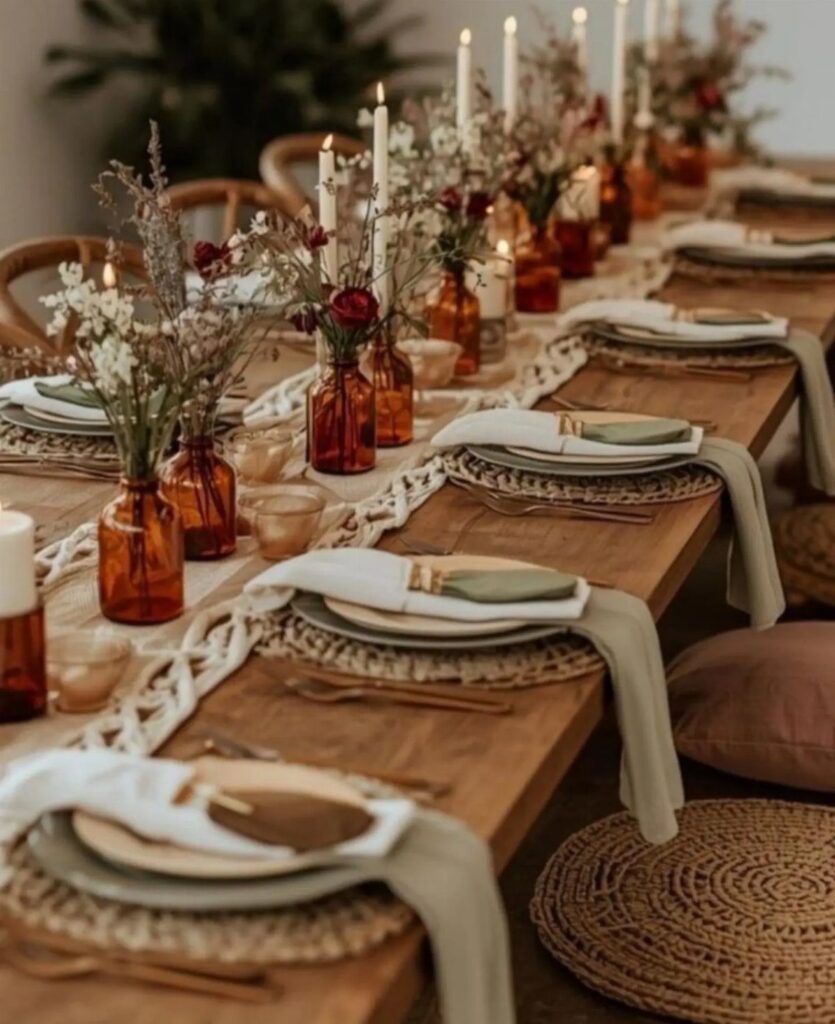
7. Boho Woven Centerpiece
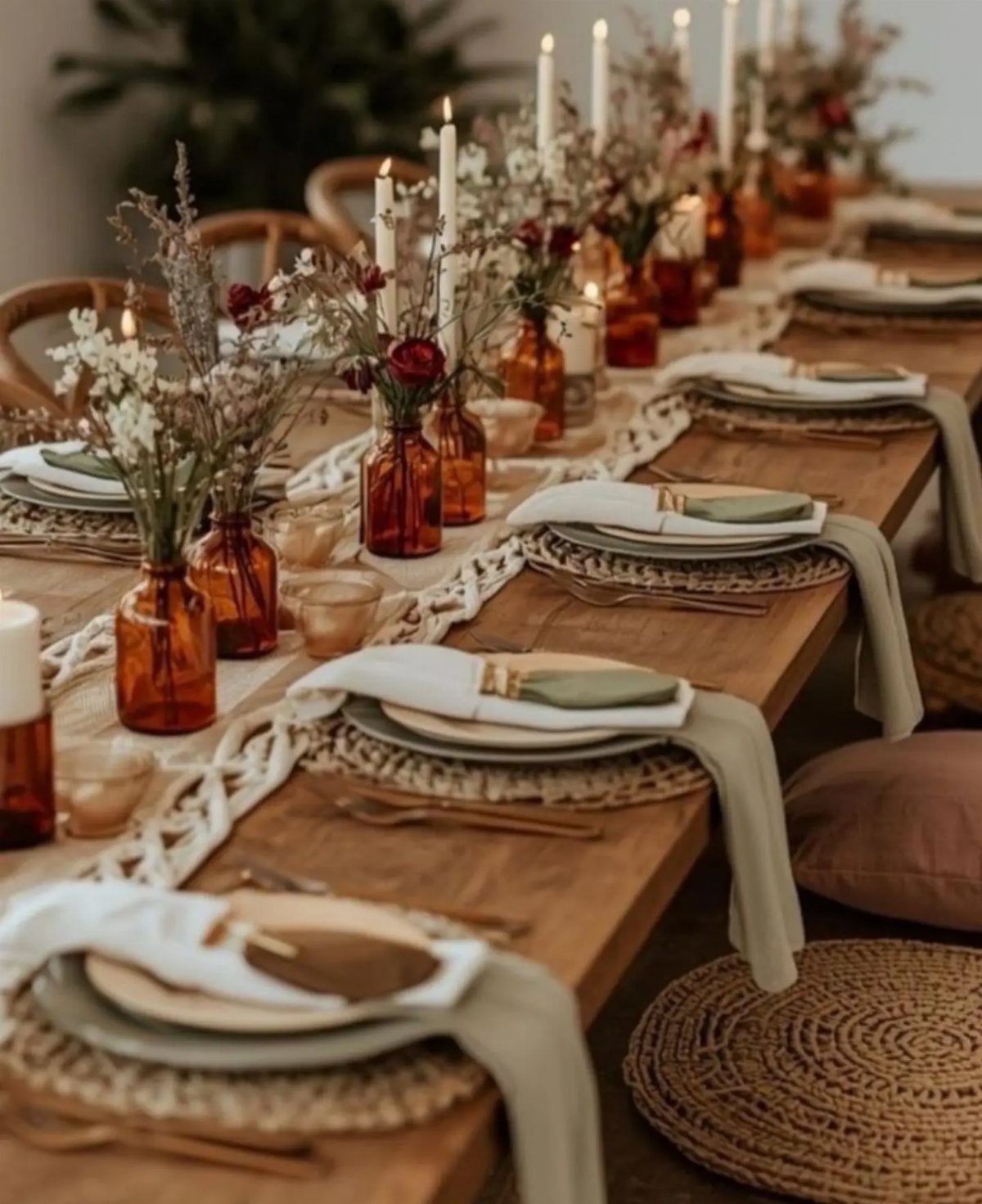
Woven textiles layered down the center of the table bring warmth without permanent commitment.
A macrame runner or a strip of rattan matting anchors dishes and candles, and you can roll it up or swap it out when you’re ready for something else.
Pairing woven pieces with ceramic or glass keeps the table from feeling too uniform.
Dried stems in amber vases or a few white candles balanced on the weave give you color and light where you need it, and the whole setup lifts off in seconds when you want the table clear.
8. Wooden Tray Centerpiece
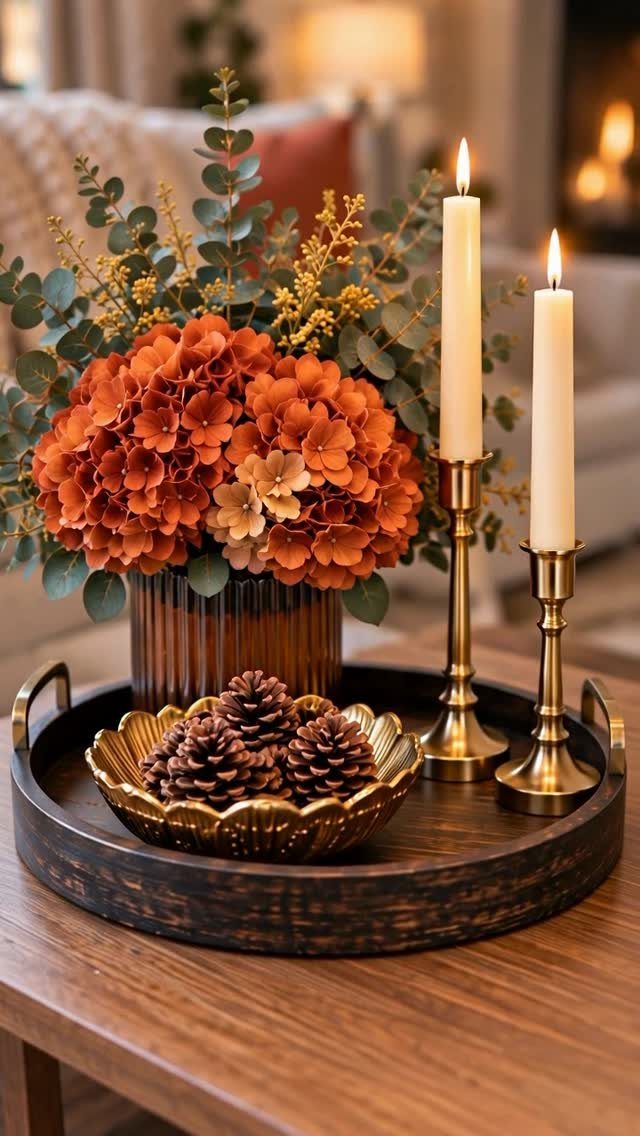
A tray corrals smaller pieces so the centerpiece moves as one unit. You can load it with candles, a bowl of seasonal filler, and a vase, then slide the whole thing to one end when you need serving room.
Wood trays pick up whatever’s already on the table, whether that’s turned legs or a painted base.
Round trays soften the edges; rectangular ones run the length of the table if you want more coverage. Brass or ceramic pieces on top of the wood add contrast without clashing.
Practicality of Centerpieces
If your table does double duty for meals, homework, and game night, the centerpiece needs to get out of the way without a project.
A single tray or a cluster you can lift with one hand clears the space in seconds. Anything that breaks into 4 pieces takes 4 trips, and most nights you won’t bother.
Height matters across the table.
If you can’t see faces when everyone sits down, the arrangement moves to the end or the sideboard during dinner. A low bowl or a set of votives keeps sightlines open without asking you to rearrange every time.
Durability counts too.
If the centerpiece sits where kids reach or elbows land, skip anything that tips easily or chips when it hits the floor. Glass and ceramic hold up fine; thin stems in narrow vases do not.
Seasonal Decor Changes
Spring flowers reset the palette after months of darker tones.
Small shifts register without a full teardown. The base stays the same; the accents do the work.
Natural materials track the season better than manufactured decor, and most of what you need grows outside or shows up at the grocery store.
Cohesive Home Decor
The centerpiece pulls from the same palette and materials already in the room, so the table reads as part of the space rather than a separate idea.
If the room runs on wood and linen, glass and metal on the table will feel dropped in. If the walls are white and the furniture is painted, a centerpiece built on raw wood and terra cotta won’t tie in.
Texture and finish matter as much as color. A polished brass candlestick suits a room with other metal accents; a rough ceramic bowl works where the space already leans casual.
When the centerpiece matches the room’s material language, it looks like it belongs there, not like something staged for a photo.
Frequently Asked Questions
What are some ideas for centerpieces?
Candlesticks in mixed heights, floral arrangements in wide vases, greenery with layered containers, and seasonal decor all work as dining table centerpieces.
The choice depends on how much maintenance you want and whether the table needs to clear quickly for meals.
What can I put in the middle of my dining room table?
A wooden tray loaded with candles and a small vase moves as one piece when you need the table clear.
Single vessels with greenery, a cluster of candlesticks, or a low bowl of seasonal filler all hold the center without blocking sightlines.






