
A reclaimed wood table runs anywhere from a few hundred for salvaged lumber you mill yourself to several thousand for a finished slab with a live edge.
Whites and grays open up smaller rooms, while black chairs against light wood add modern contrast without leaning too farmhouse.
1. Reclaimed Wood Table
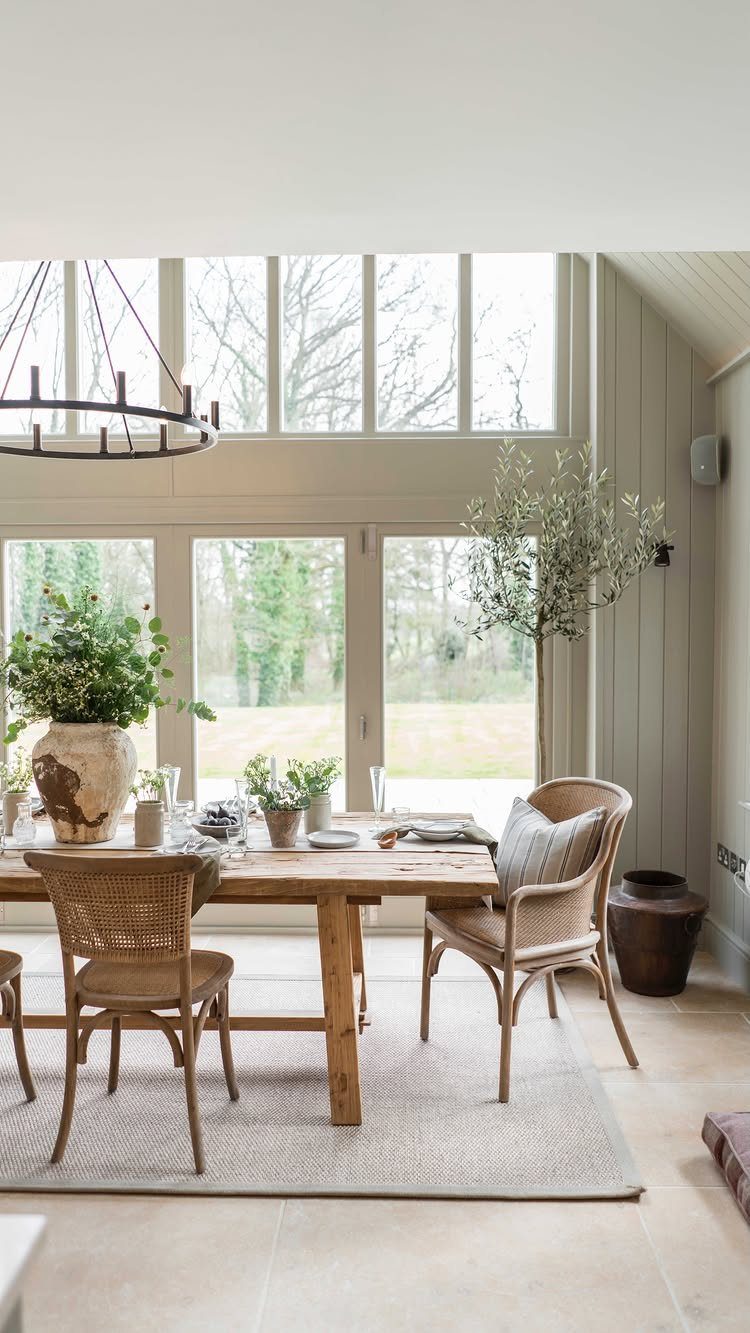
A reclaimed wood table brings warmth and history to a dining room without the gloss of something brand new. The grain and wear show through, and that texture holds the room in a way smooth finishes don’t.
Look for tables made from salvaged barn wood or old floor joists. If you’re comfortable with a saw and some finish work, buying reclaimed lumber and building your own cuts the cost roughly in half.
Pairing rustic wood with something airy prevents the table from feeling too heavy.
2. Banquette Seating
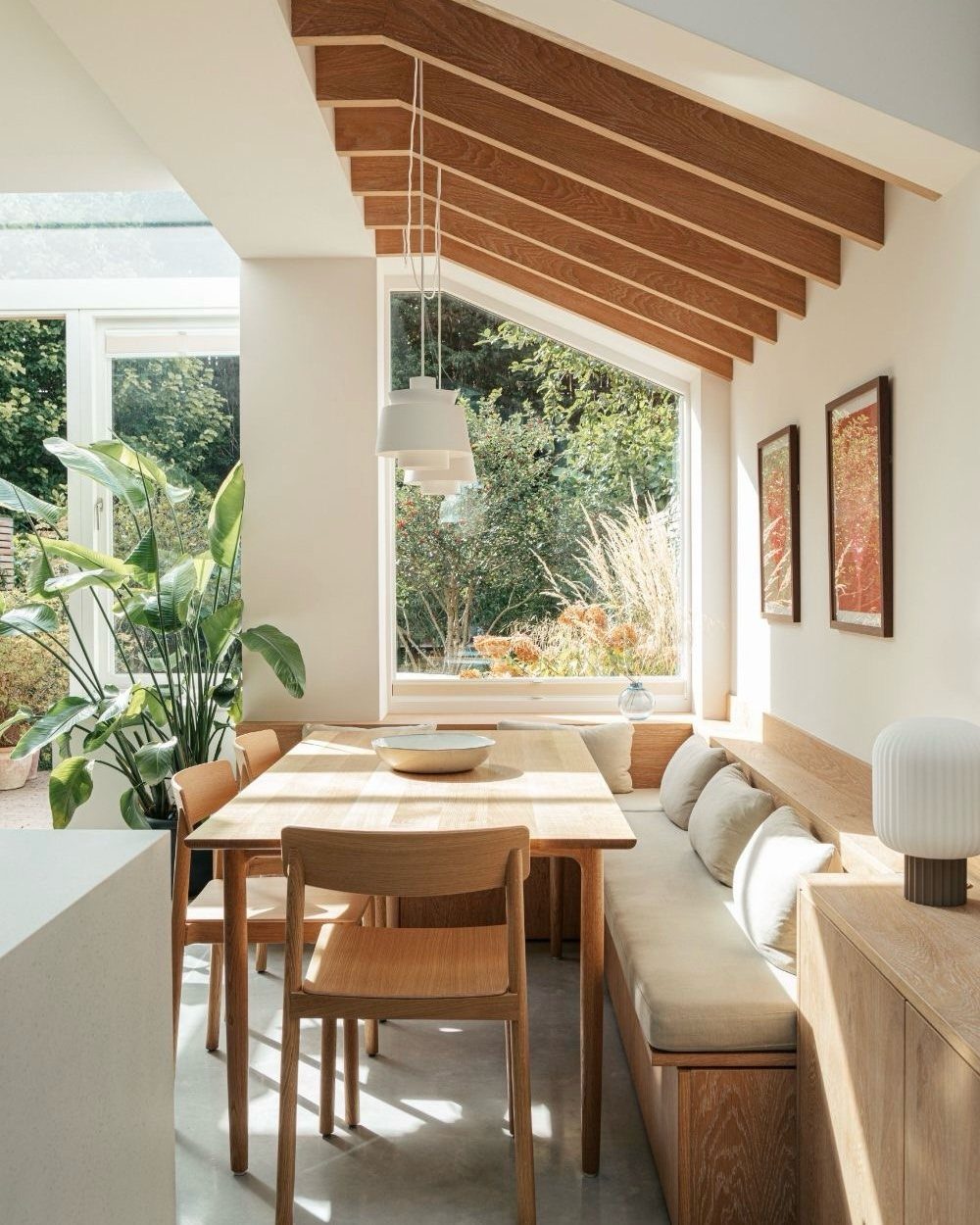
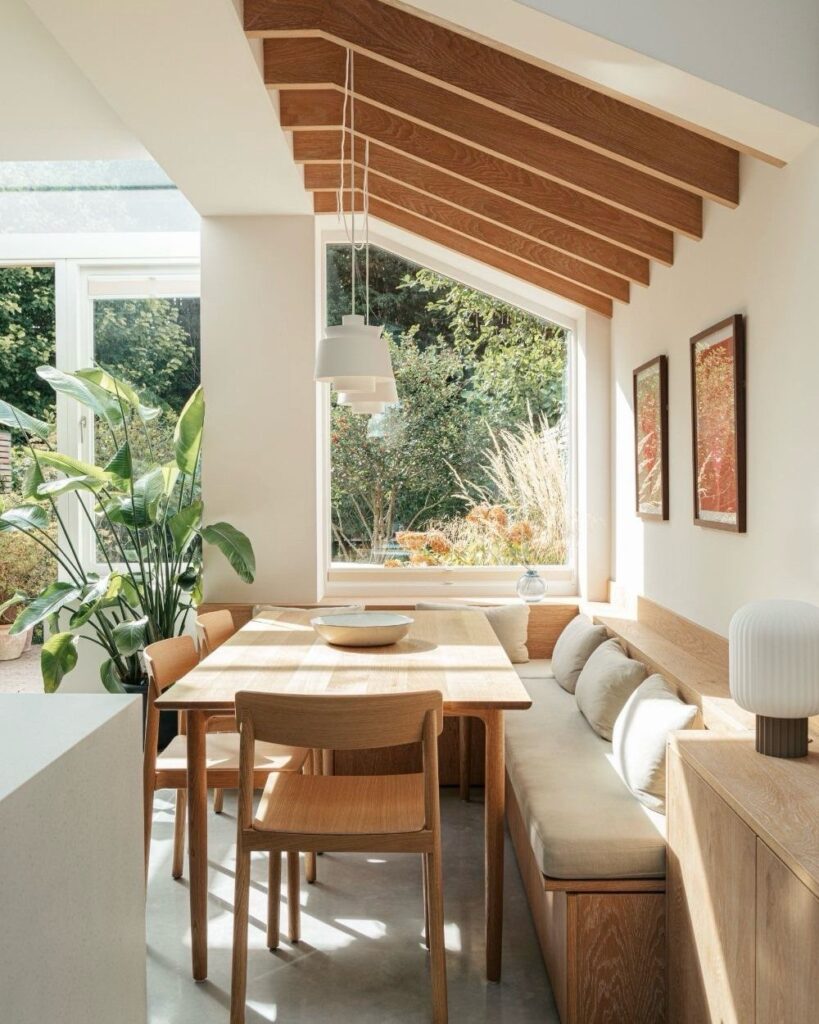
Built-in seating along one side of the table saves floor space and fits more people in a smaller footprint than chairs alone.
A banquette tucks into the wall, so you can push the table closer and still have room to sit.
If you’re building one, frame it with 2x4s and add a plywood top, then cover it with foam and fabric.
For a quicker version, line up a bench or a low bookshelf along the wall and add a cushion cut to size.
Mixing the banquette with traditional chairs on the other side keeps the setup flexible. You can pull chairs out when you need to, but the built-in stays put.
3. Whites, Creams, and Grays
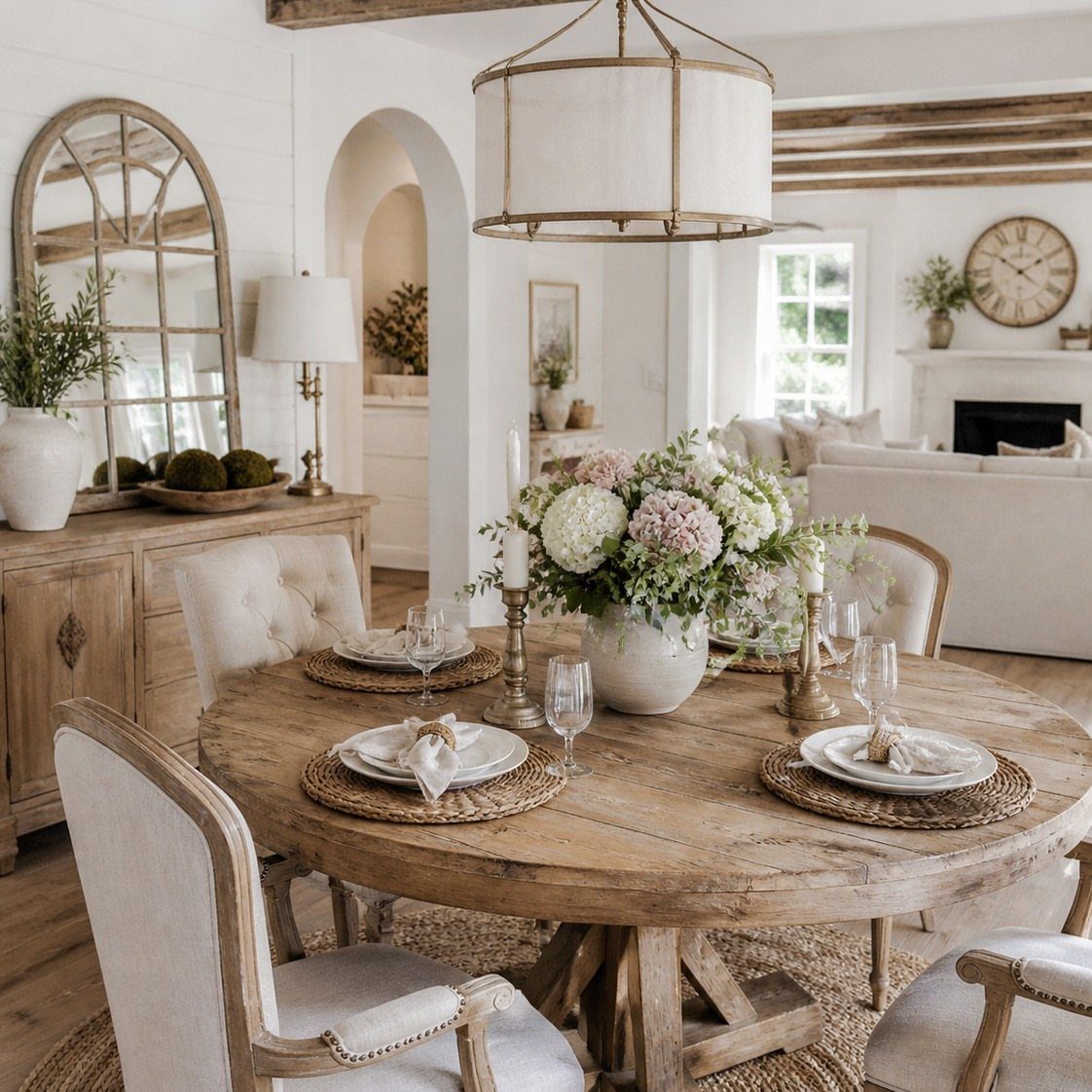
Keeping the palette to whites, creams, and grays lets the wood and texture do the work. Color doesn’t compete, so the grain of the table and the weave of the chairs stay front.
This works especially well in smaller dining rooms where too much contrast can feel busy. A neutral base also means you can swap in seasonal decor or a runner without rethinking the whole room.
If your dining room is tight, a round table seats people comfortably and gives you more clearance to walk around it.
4. Exposed Beams
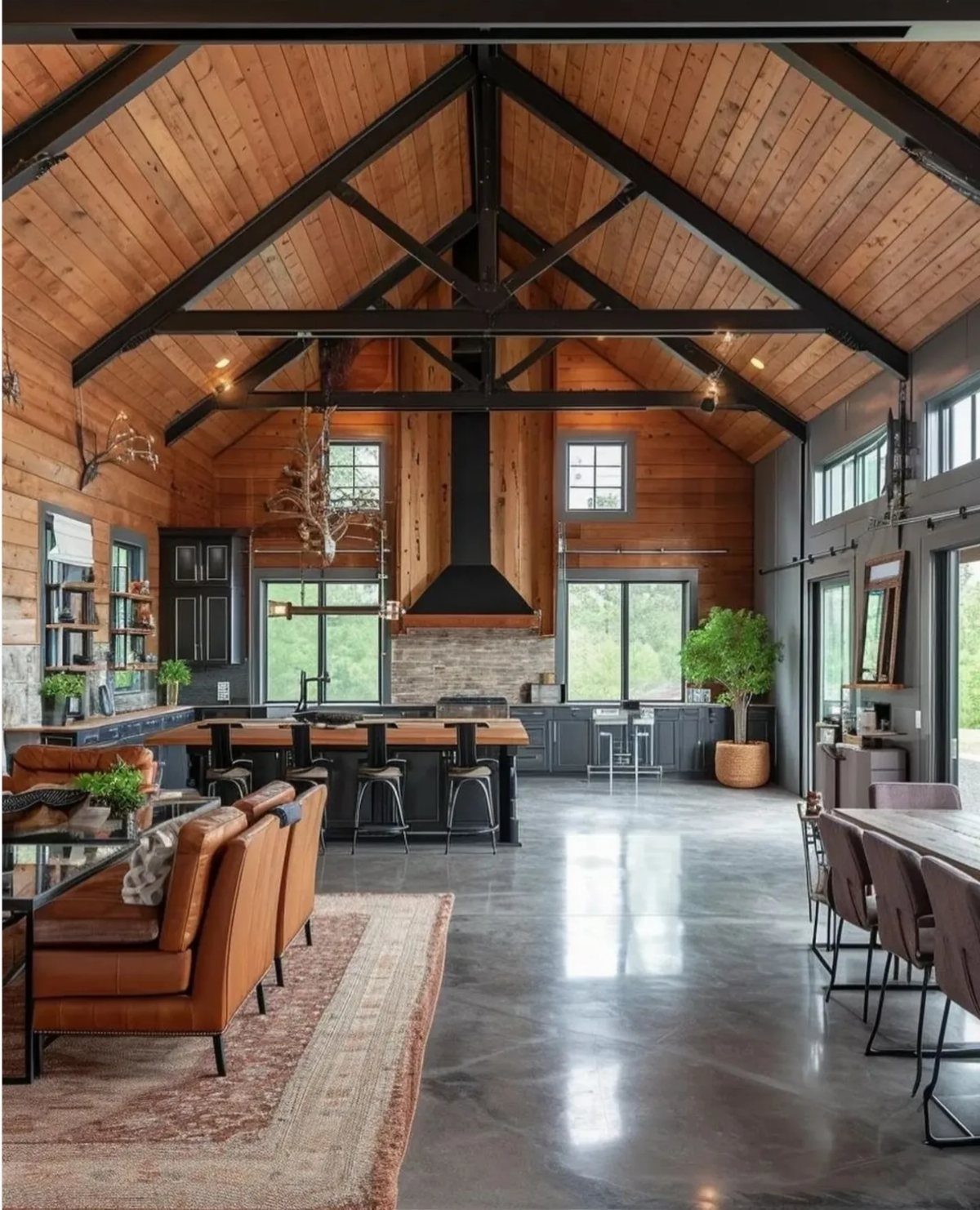
Exposed beams draw the eye up and give the room a sense of scale. In a vaulted space like this one, dark beams against lighter wood or white paneling create contrast without adding color.
If you’re working with an existing ceiling, uncovering structural beams is an option when they’re there.
In newer construction or flat ceilings, faux beams made from hollow wood boxes or foam wrapped in stain-grade pine give the same effect for a fraction of the weight and cost.
The black finish here reads modern. Leaving beams natural or going with a weathered gray keeps things closer to traditional farmhouse.
5. Different Chair Styles
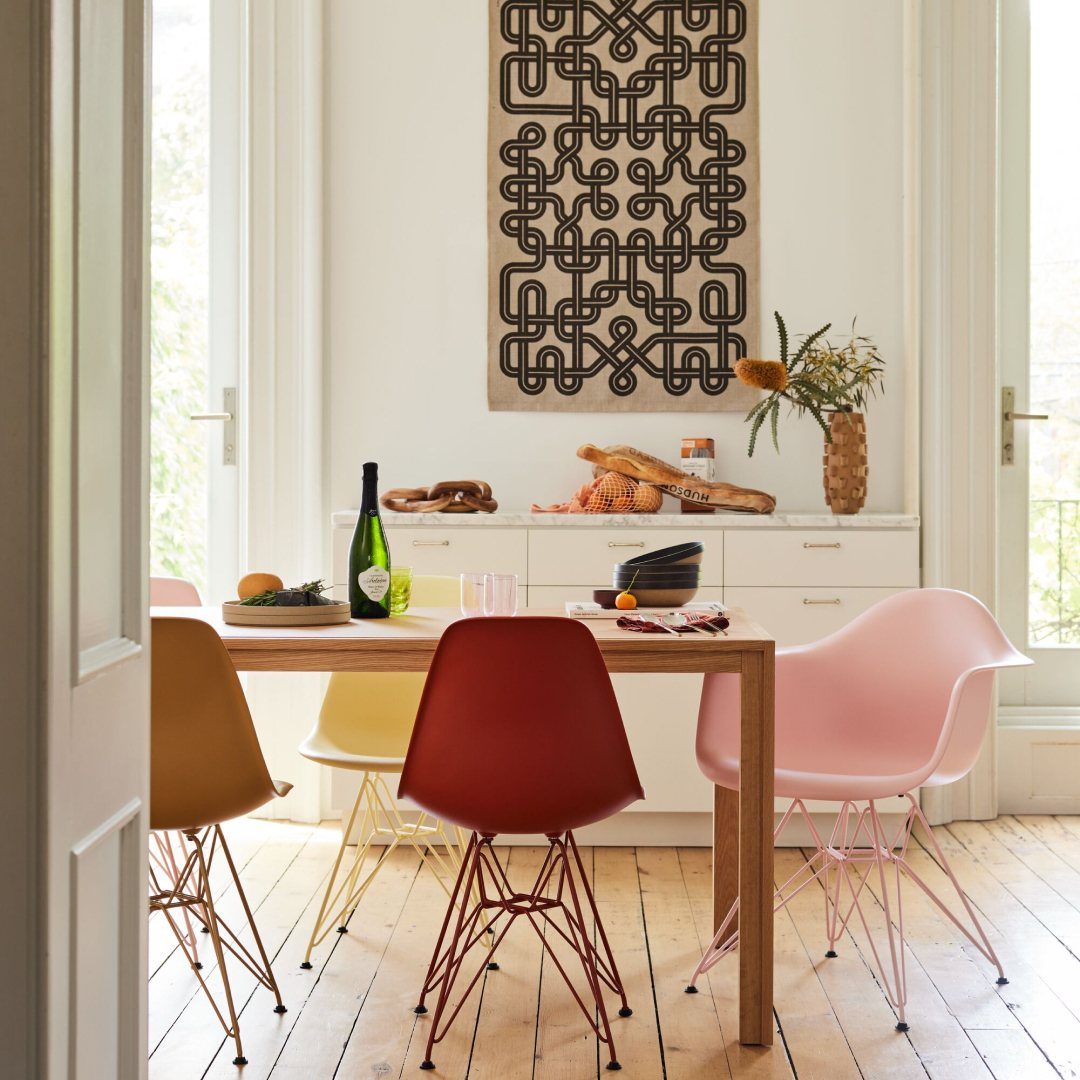
Mixing chair styles in different colors or shapes breaks up the formality of a matched set. It’s a practical choice when you’re buying secondhand or adding chairs over time, and it stops the dining room from looking too staged.
If you’re working with vintage wood chairs, try painting each one a different shade in the same finish, or leave one wood and paint the rest.
Mismatched chairs work best when they share either height or seat depth, so everyone sits at the same level.
This look skews modern. For something closer to farmhouse, stick with wood or metal frames and vary the back style instead.
6. Hutches
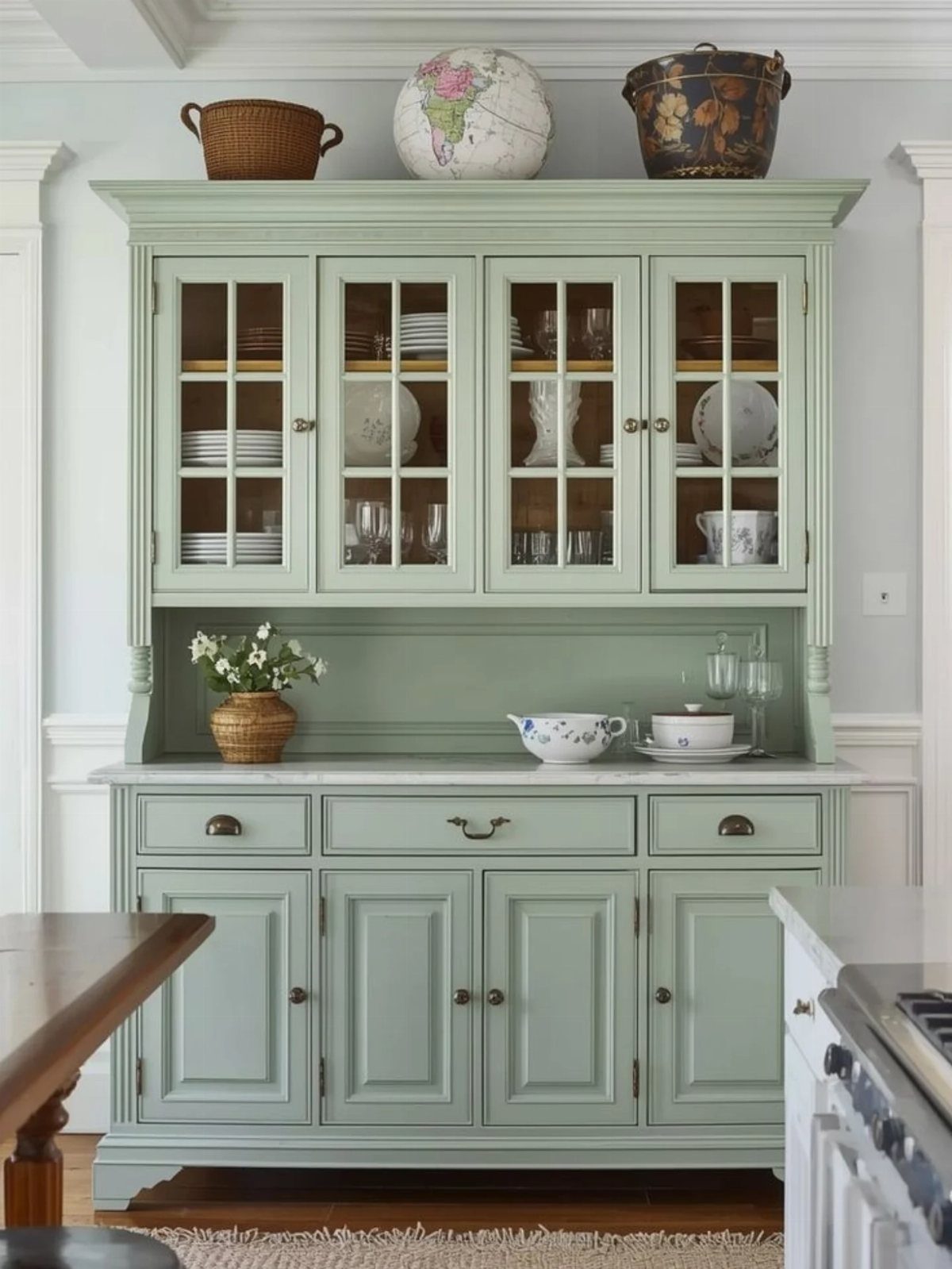
A hutch gives you closed storage at the bottom and open shelves or glass-front cabinets up top. It’s a practical piece for holding dishes, linens, and serving pieces, and it anchors one wall without blocking light.
If you’re painting an old hutch, a matte or chalky finish reads more modern farmhouse than gloss. Sand lightly between coats and use a bonding primer if the original finish is slick.
Look for solid wood construction and dovetailed drawers. A loose door or missing hardware is easy to fix, but warped shelves or a damaged back panel usually aren’t worth the time.
7. Live-Edge Dining Table
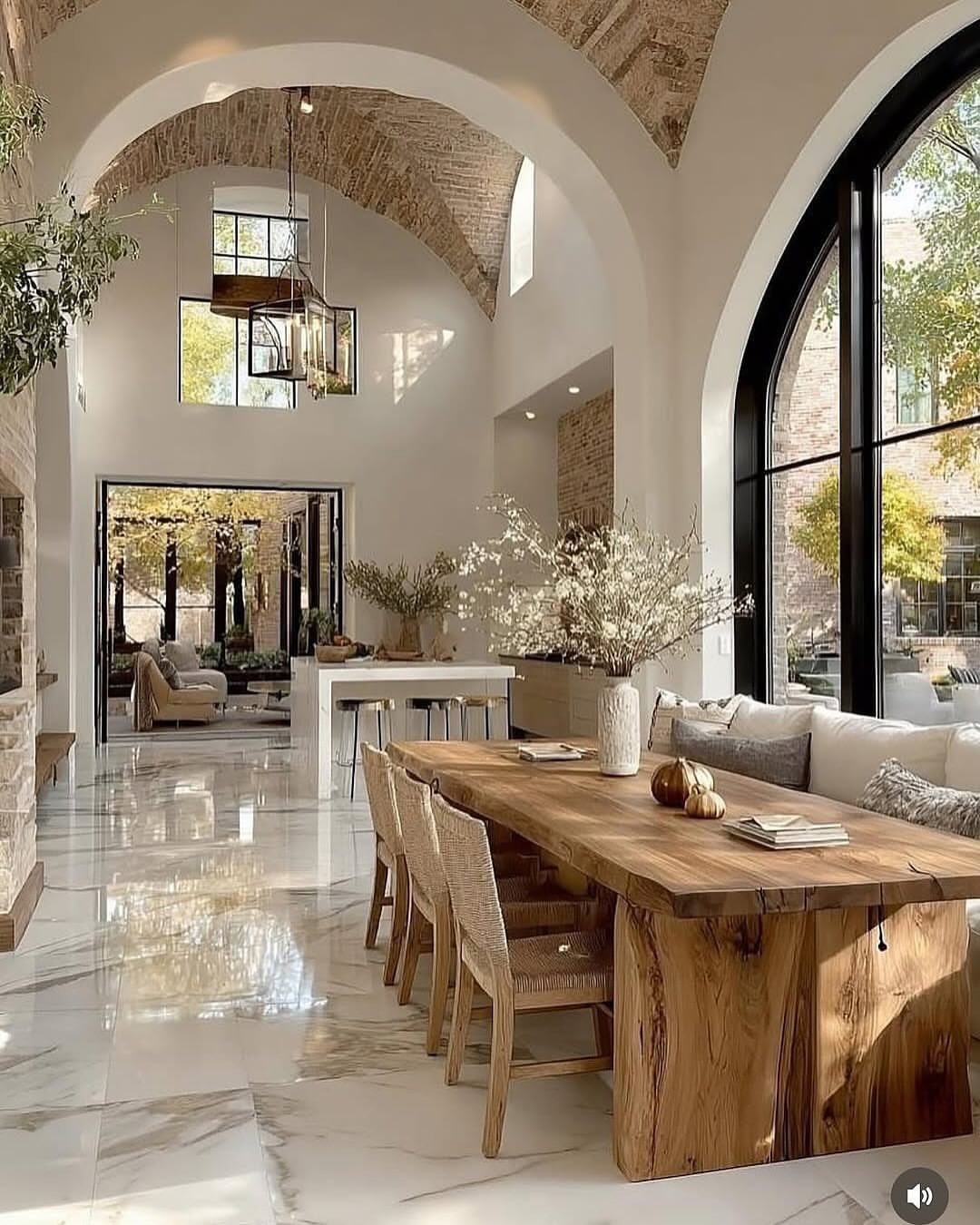
A live-edge table keeps one or both edges of the slab uncut, so the natural curve and bark line stay visible.
That irregular edge softens the geometry of a rectangular room and gives you a centerpiece that doesn’t need much around it.
Slabs wide enough for a dining table usually come from walnut, oak, or maple. Expect to pay more than you would for milled lumber, but the single piece means no seams.
Woven or cane chairs pair well here. The texture balances the mass of the wood without adding visual weight.
8. Pop of Blue Chairs
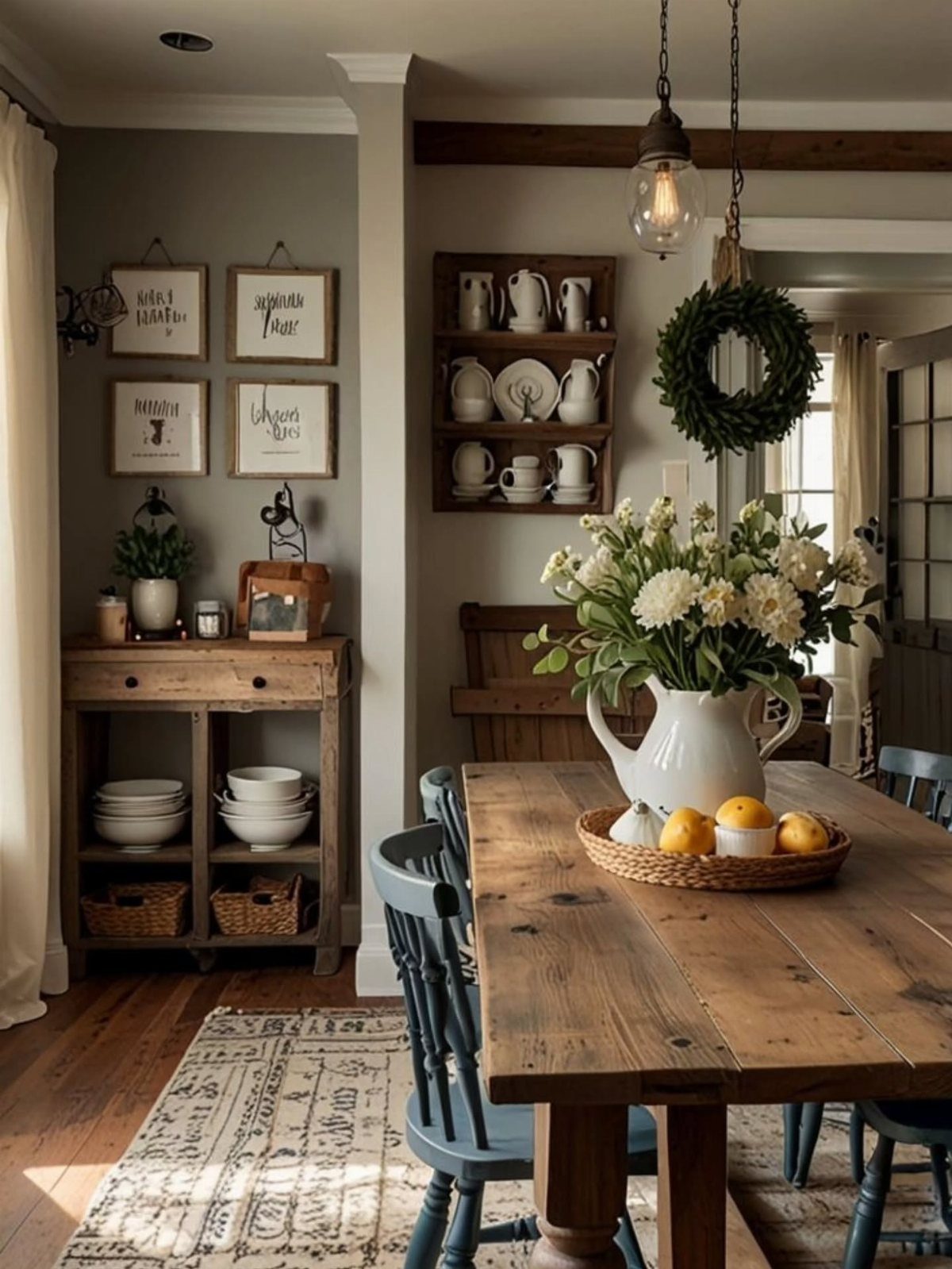
Blue chairs against a wood table and neutral walls give you color in the room without committing a full wall to it. If the shade doesn’t work in a year, you repaint the chairs instead of repainting the room.
I’d go with something in the dusty or slate range rather than bright primary.
If you’re buying chairs secondhand, look for solid wood frames. A loose joint is fixable, but cracked legs usually aren’t.
9. Upholstered Dining Chairs
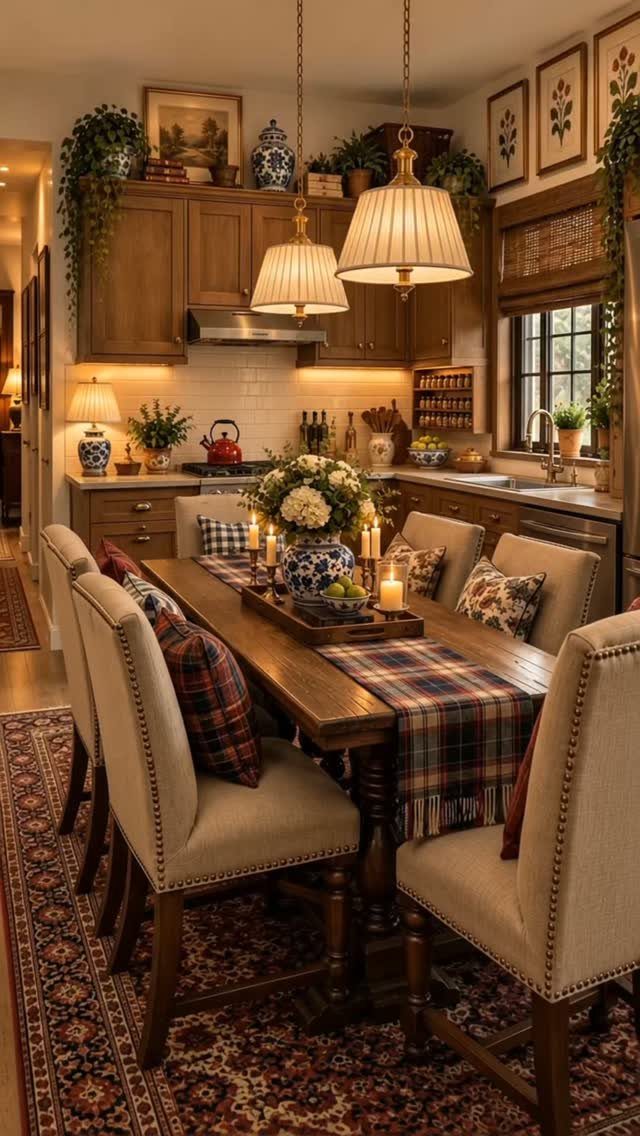
Upholstered chairs add softness to a wood table and make long dinners more comfortable. Nailhead trim grounds the upholstery so it stops short of formal.
Linen and cotton hold up better than velvet in a dining room. If you’re covering the chairs yourself, use a staple gun and pull the fabric tight across the seat before you secure it.
Beige or oatmeal works in most spaces, but darker upholstery hides stains better if you’re using the chairs daily.
10. Contrasting Black Dining Chairs
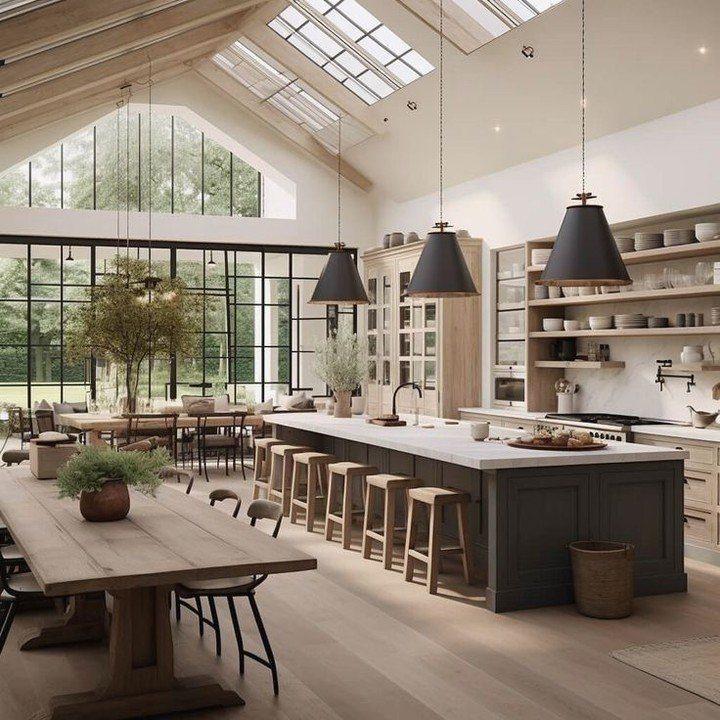
Black chairs against a light wood table create contrast without adding color. The pairing reads modern and pushes back against anything too soft or too country.
Metal or painted wood frames work better than upholstered options here. The black holds the line of the chair and keeps the silhouette clean.
If you’re painting wood chairs black, use a satin or matte finish. Gloss shows every fingerprint and scratch.
11. Dining Table by Arched Windows
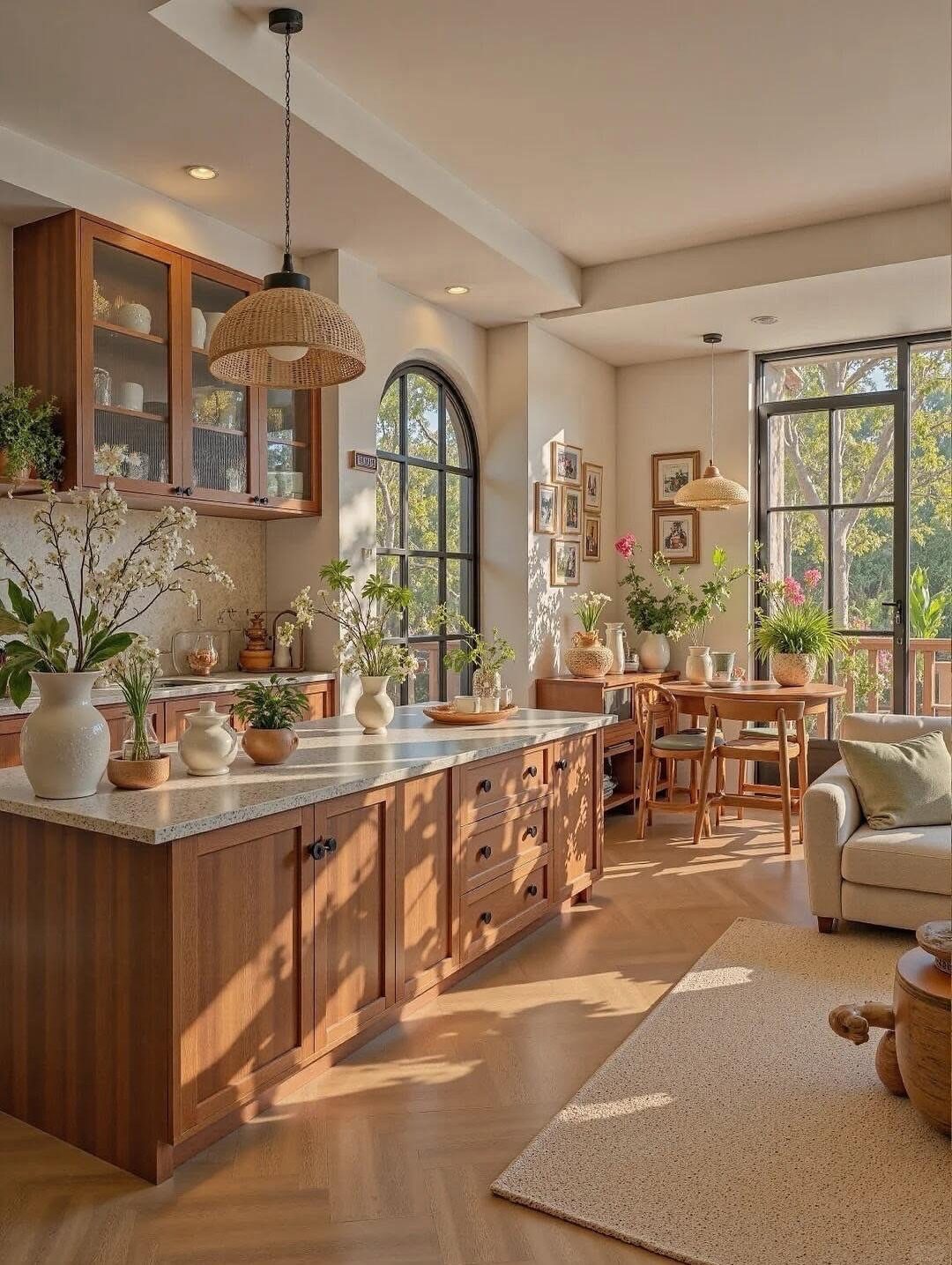
Placing the table beside tall windows brings in natural light and gives you a view while you eat. Arched windows add height and soften the angles of a rectangular table.
If you’re positioning furniture near windows, leave enough clearance to open them fully. You’ll want access for cleaning and for airflow in warmer months.
This layout works best when the windows face something worth looking at. If the view is a fence or a wall, the table sits better in the center of the room.
Creating a Cozy Atmosphere
Layering texture stops the space from feeling flat. If you have a banquette, throw a blanket over one end for warmth without adding a pattern.
Mixing materials works better than sticking to one.
Pair solid wood with metal, or set a stone vase on a fabric runner. The contrast between smooth and rough, hard and soft, gives the eye something to move across.
Keep clutter off the table and the surfaces around it.
Every piece should have a reason to be there. An open room with a few deliberate choices feels more inviting than a crowded one.
Choosing the Right Furniture
Look for handcrafted furniture built to hold up over time. Walnut and oak bring warmth and weight, and a simple design outlasts anything trendy.
X-back or ladder-back chairs in a distressed finish suit a farmhouse table, and upholstered seats make long meals more comfortable.
Backless benches work well for families and give you flexibility when you need to fit extra people. The varied back heights and materials keep the setup from looking too formal.
Choose pieces strong enough for daily use. A sturdy frame matters more than a perfect finish.
For a modern farmhouse dining room, she says: ‘Think bare whitewashed walls, stone floors, jute and seagrass rugs, chalky white linens, lots of baskets for storage, and of course, a beautiful wooden dining table.’
Color Palette Selection
A neutral base of whites, beiges, and soft grays holds the space calm and lets the furniture take focus. Greige works well when you want something warmer than gray but lighter than beige.
Pops of color should stay muted.
Light blues, yellows, and greens add interest without overwhelming the space. Avoid bold or saturated tones, which can make the room feel smaller and less open.
Blending hues that complement each other creates a cohesive look. Pair gray walls with beige upholstery, or use white trim with soft blue accents.
The palette should feel harmonious, not loud. When every color works with the next, the room stays inviting.






