
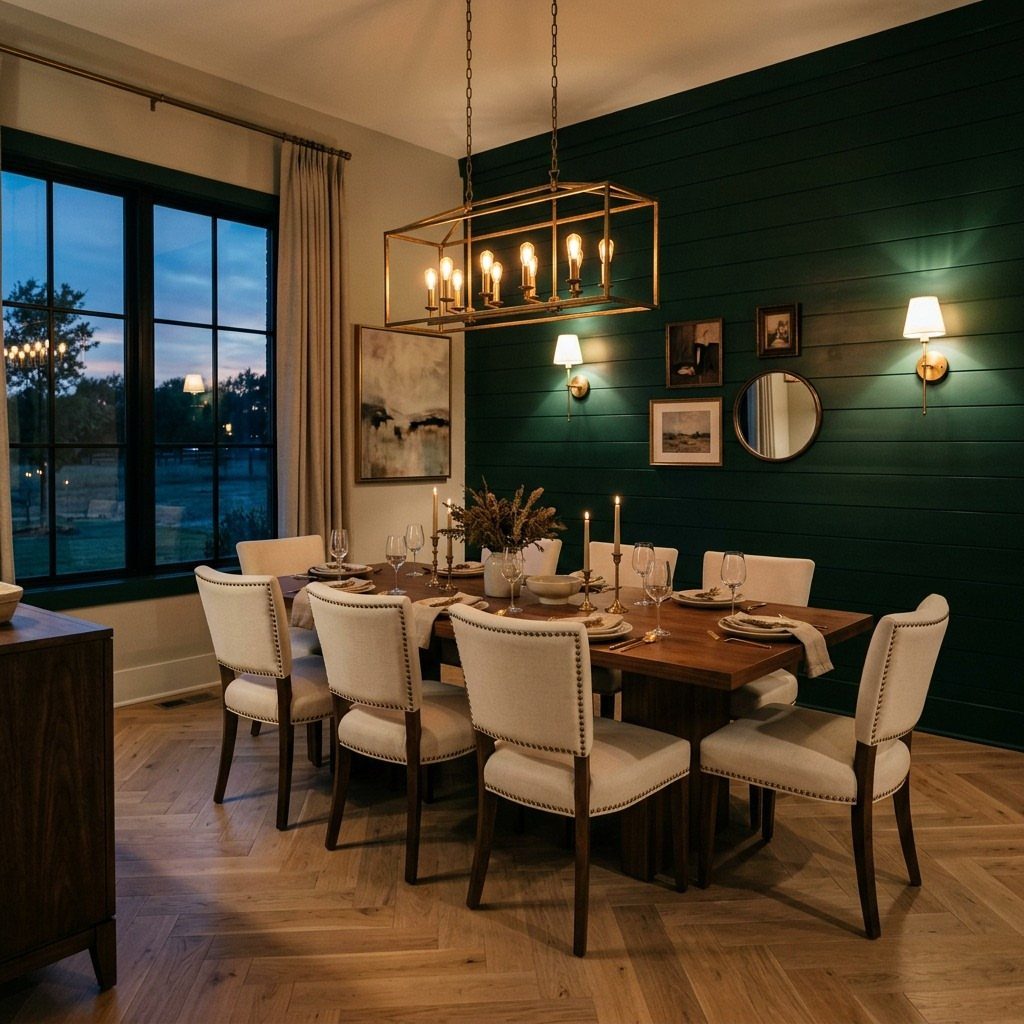
Green walls in a dining room range from full dark green paneling that pulls the room inward to wainscoting at chair rail height, gold chandeliers that catch the light, or botanical art that reinforces the color without committing every surface.
The choice comes down to how much natural light you have, whether you want full walls or wainscoting, and what other surfaces pick up the green.
1. Dark Green Walls
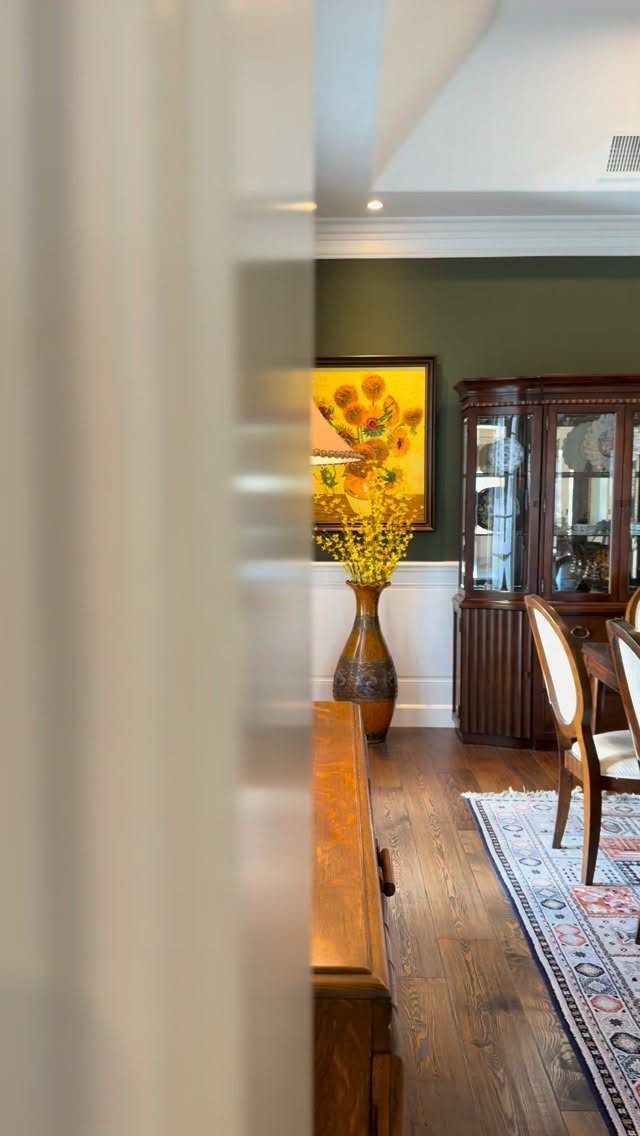
Dark green pulls a dining room inward, giving it weight and a sense of occasion without feeling heavy if you balance it with lighter trim.
White wainscoting or baseboards cut the color at chair height and keep the space from closing in, and natural wood furniture warms it up where pure white and green might read too crisp.
The color reads formal enough for a dedicated dining room but grounds itself with wood tones instead of leaning entirely into polish. If your trim is already white, this is one of the easiest color shifts to make work.
2. Olive Green Walls
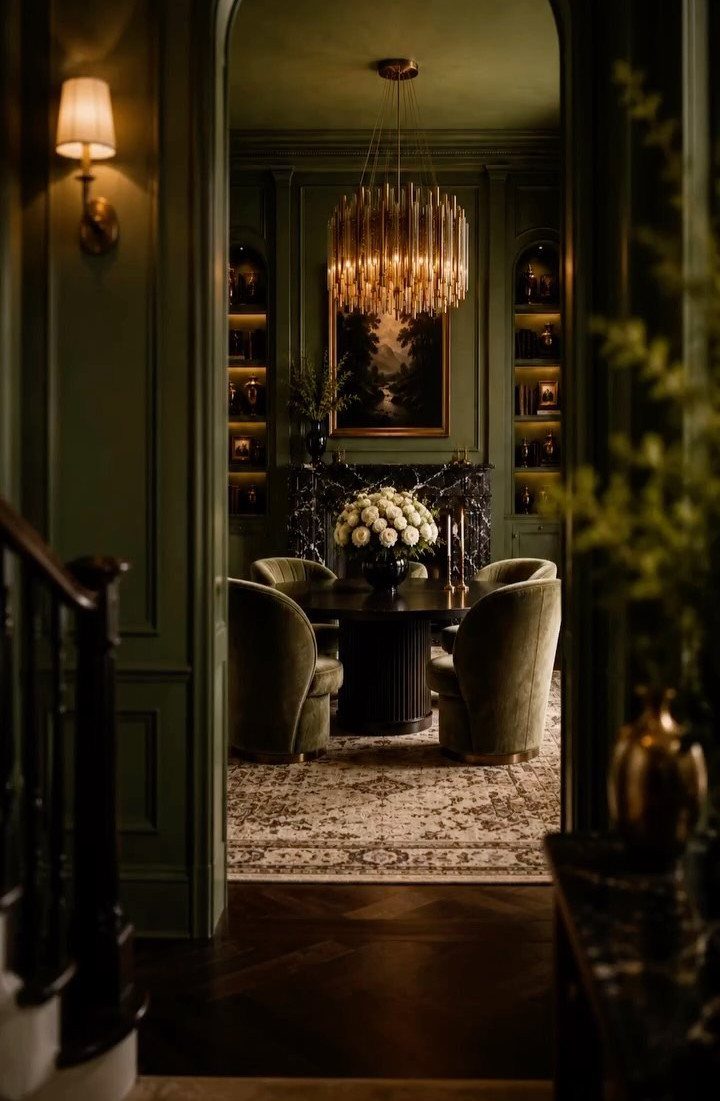
Olive sits warmer than most greens, leaning into yellow enough that it reads earthy rather than jewel-toned.
Paneling adds dimension without pattern, and the vertical or horizontal lines give the color structure so it doesn’t flatten out across a large wall.
This shade works well with brass, gold or warm wood, and it’s forgiving with both daylight and incandescent light.
If your dining room gets limited natural light, olive holds up better than darker greens that can go muddy in low light. Velvet chairs or textured fabrics pick up the warmth without competing with the walls.
3. Sage Green Walls
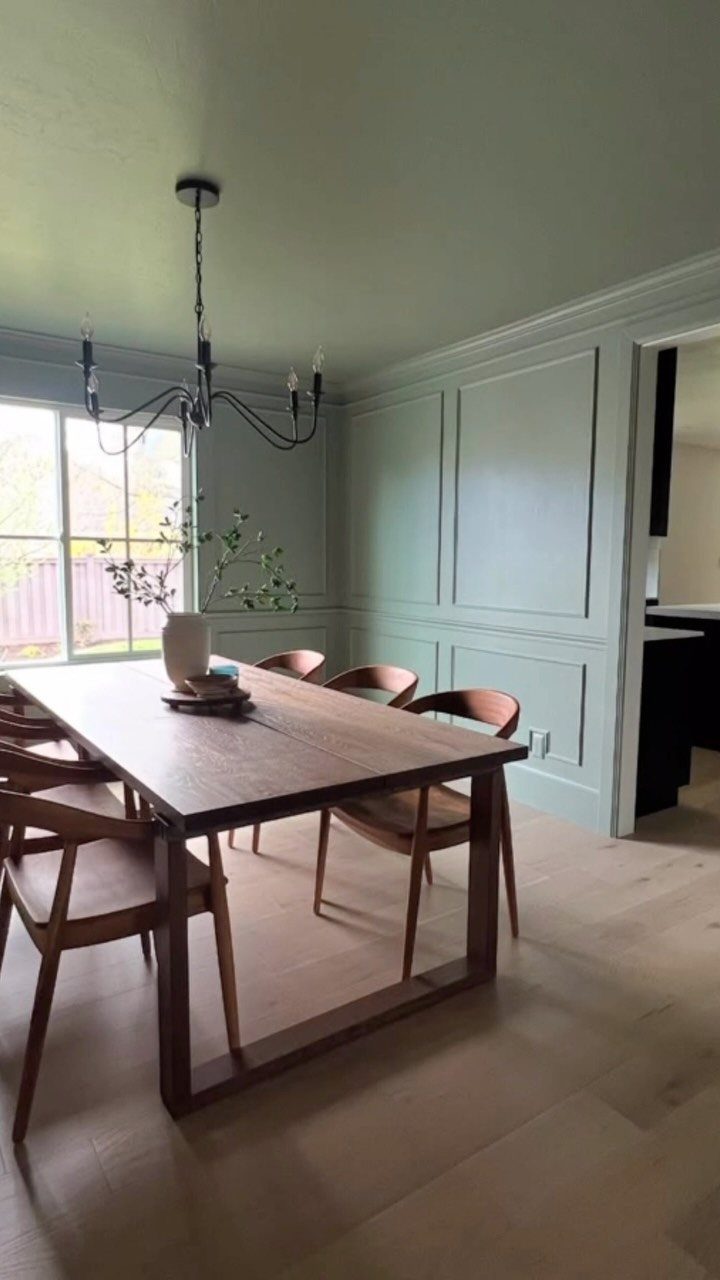
Sage leans gray enough to stay neutral but keeps enough green to feel intentional. Paneling or board-and-batten wainscoting gives the color dimension and breaks up the flatness that can happen with pale shades on large walls.
Mid-century chairs and black metal light fixtures keep the look grounded rather than cottage-soft, which is where sage can drift if you pair it with too much white or pastel.
The color works well in rooms that get good natural light, where it reads clean and calm without going flat.
4. Green Wainscoting
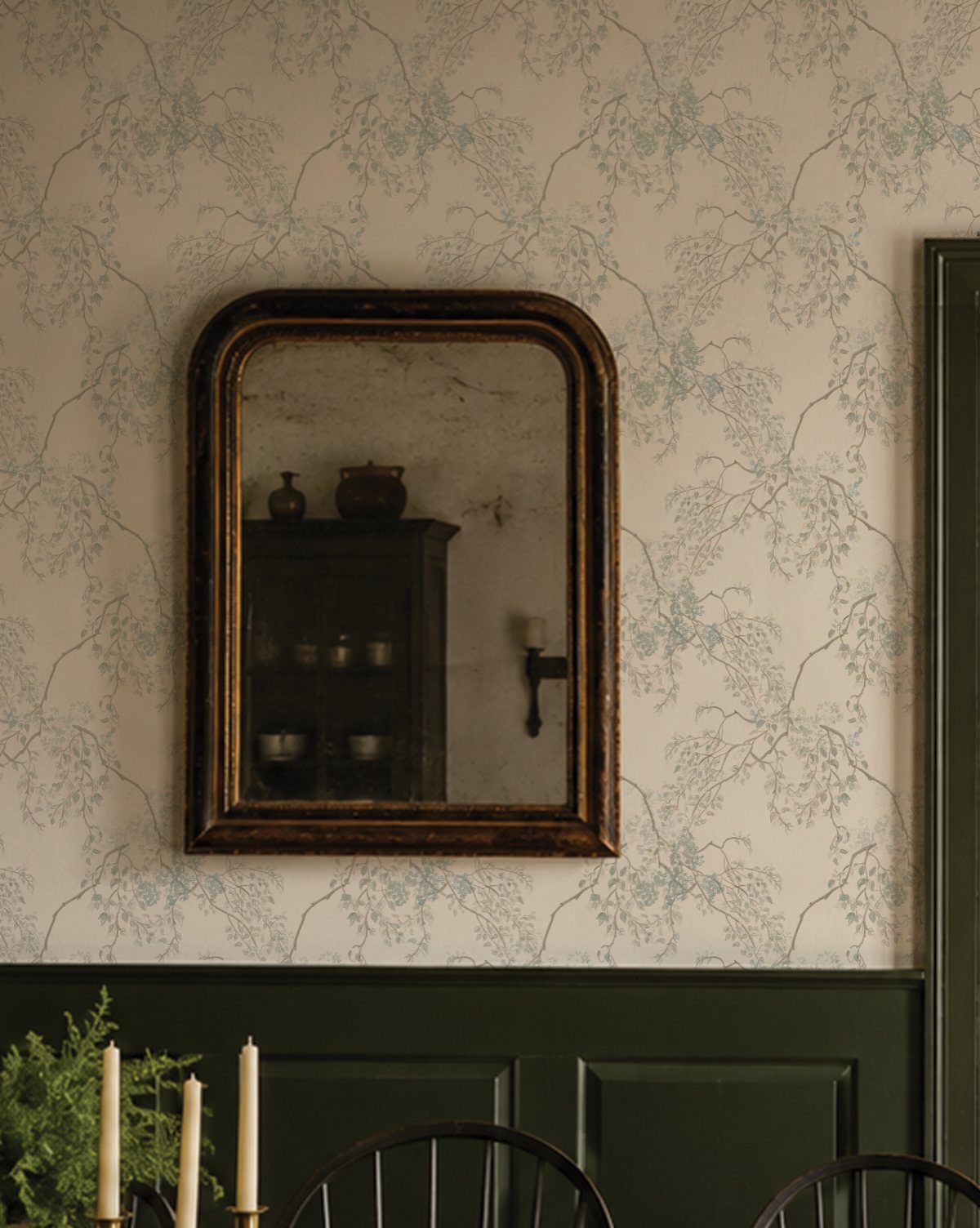
Wainscoting in dark green anchors a room without committing the full wall to color, and it holds up better to scuffs and chair backs than paint alone.
The two-tone split lets you bring in pattern above, wallpaper or a lighter paint, without the room feeling busy.
Run the wainscoting to chair rail height, so the break sits naturally where furniture and the wall meet.
Dark green works with both warm wood tones and cooler metals, and the lower placement keeps the color from overtaking the room while still giving it presence.
5. Indoor Plants with Green Walls
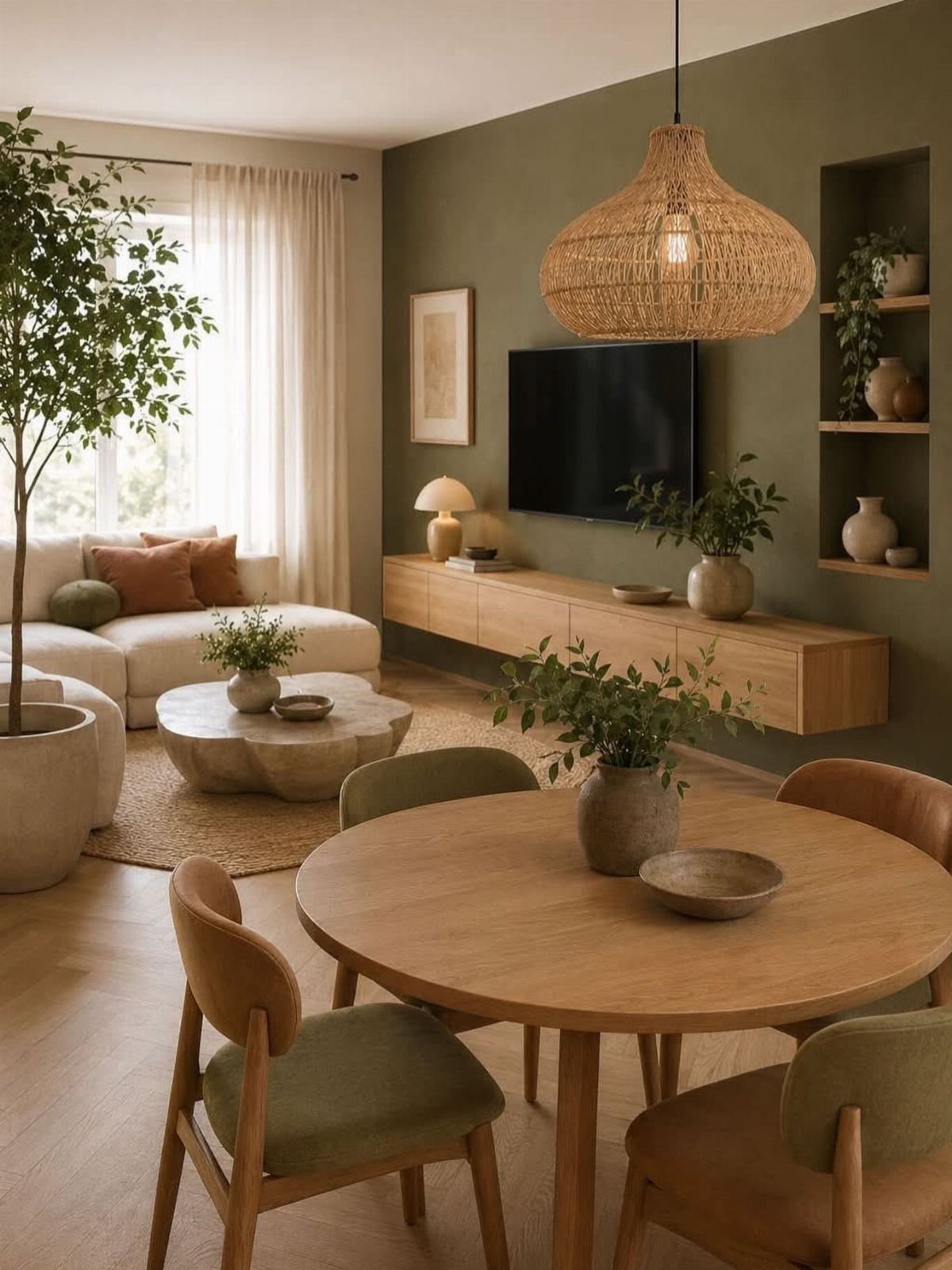
Olive or sage walls pull plant leaves forward rather than blending into them, giving you contrast without the stark division of white.
The green backdrop makes the shapes of the plants register more than their color alone, and it reads cohesive without feeling overly coordinated.
This works well in open-plan spaces where your dining room flows into a living room, because the plants tie the zones together without needing a physical divider.
Keep the furniture in natural wood or neutral tones so the plants stay the focal point rather than competing with too many colors at once.
6. Botanical Art Above a Green Wall
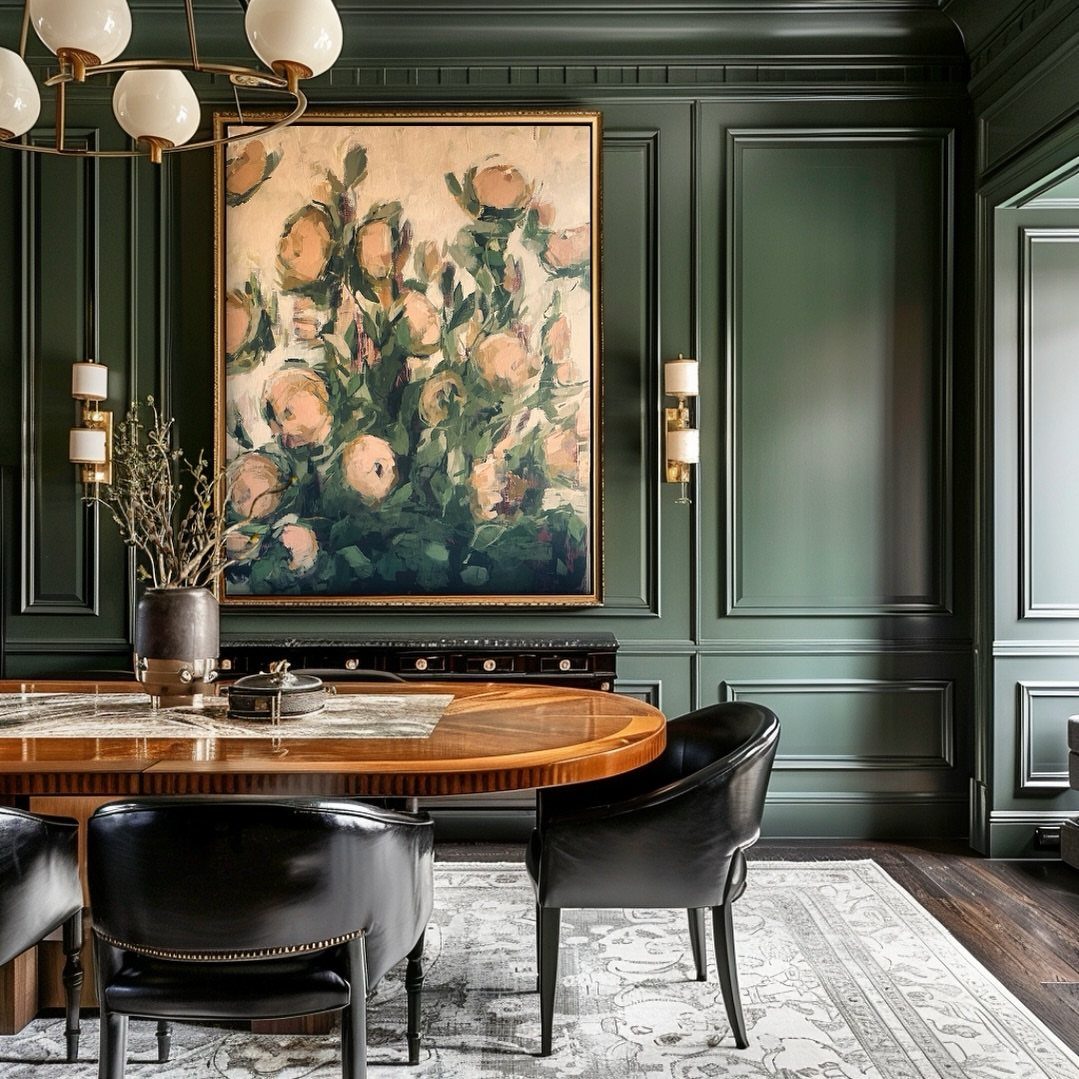
A large botanical print on dark green paneling gives you layered green without flattening out, because the contrast inside the artwork, its lighter leaves and background, reads against the wall rather than melting into it.
A gold or brass frame picks up any warm undertones in the paint and adds a finished edge without overpowering the piece.
Scale the art large enough that it holds its own against the paneling, so the detail stays readable from across the table.
This approach works well when you want green walls but don’t want to fill the room with live plants or lighter decor to break up the color.
7. Green Dining Chairs
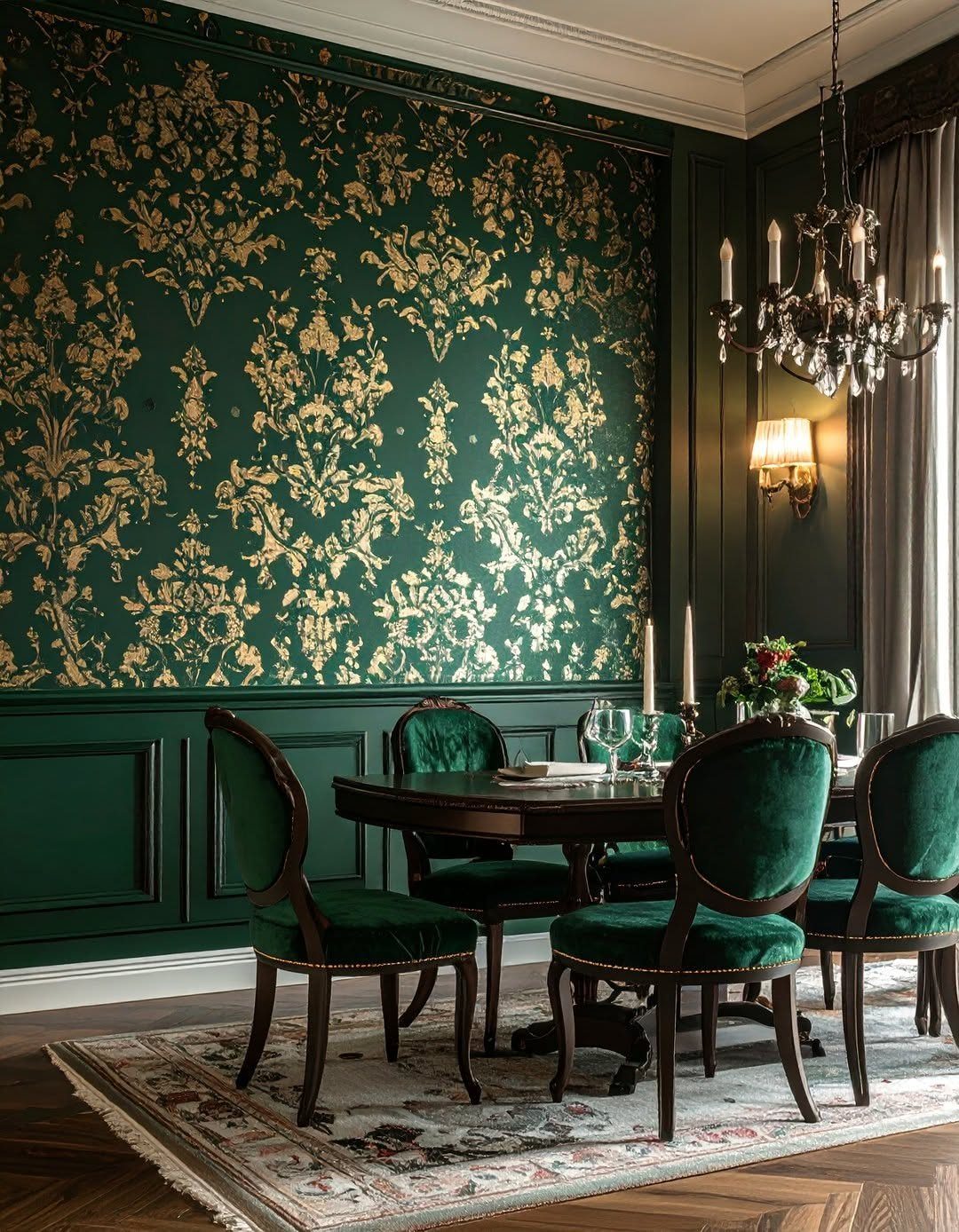
Green velvet chairs echo green walls without disappearing into them, because the texture catches light differently than flat paint and the seats sit low enough to break up the plane of color.
This works better than neutral chairs when you want the room to feel intentional rather than just painted, and velvet holds its color depth under warm light where linen or cotton can wash out.
Pair this with dark wood or a table stain that leans warm, so the green stays grounded. If your walls are already green, matching the chairs commits to the color instead of fighting it.
8. Gold Chandeliers with Green Walls
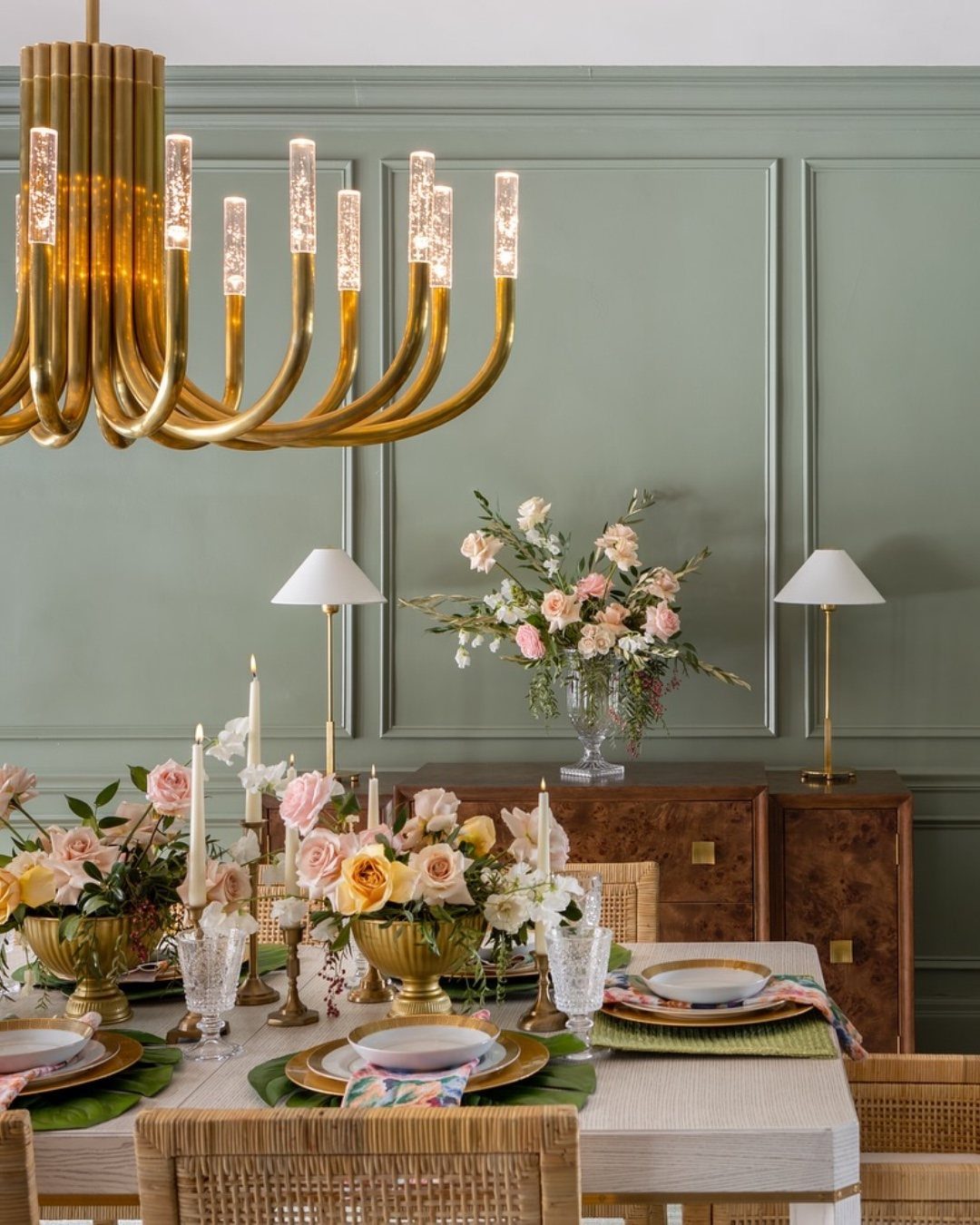
Gold finishes warm up sage and olive greens where chrome or nickel would pull them cooler, and a chandelier puts the metal at eye level when you’re seated, so it registers without needing a lot of it elsewhere in the room.
The contrast works because green absorbs light and gold reflects it, giving you balance without adding another color.
Scale the fixture to your table: a chandelier that’s too small reads lost against paneled walls. If your ceiling height allows it, hang it low enough to light the surface without cutting sightlines across the table.
9. Natural Wood Tables with Green Walls
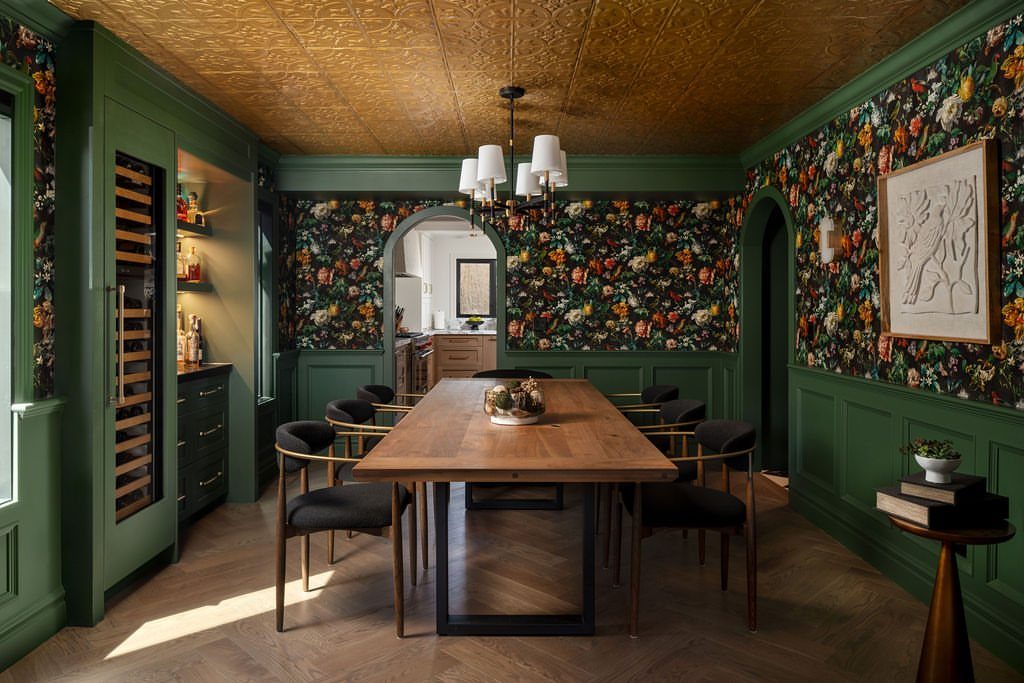
A natural wood table keeps green walls from feeling too decorated, because the grain and unstained finish bring in variation without adding color.
This works particularly well with dark green wainscoting, where the wood tone sits at table height and the eye moves between the 2 materials instead of landing only on the paint.
Oak, walnut or maple all hold up, and an unfinished or lightly finished top stays practical for daily use.
If you’re choosing chairs, black metal or painted wood keeps the focus on the table and the walls rather than introducing a third competing material.
Best Green Wall Colors
White trim or lighter furniture breaks up the color at the edges. This is the choice when you want the walls to anchor the room rather than fade into the background.
Complementary Colors for Green
Chandeliers, candlesticks or hardware in gold or brass pick up any yellow undertone in olive or sage and give you contrast without adding another color to the palette.
The contrast works because it breaks up the plane of color without competing with it, and it’s a straightforward pairing if your baseboards and molding are already painted.
Tables, chairs or paneling in oak, walnut or maple sit comfortably against green and keep the room from feeling over-decorated. Neutral upholstered chairs in linen or cotton let the wood and the walls do the work.
Dressing Up Dining Room Walls
Vertical or horizontal boards work, and the shadow lines between them catch light differently than flat paint.
Geometric molding breaks up a solid wall without pattern, and the raised design gives you texture where paint alone reads smooth.






