
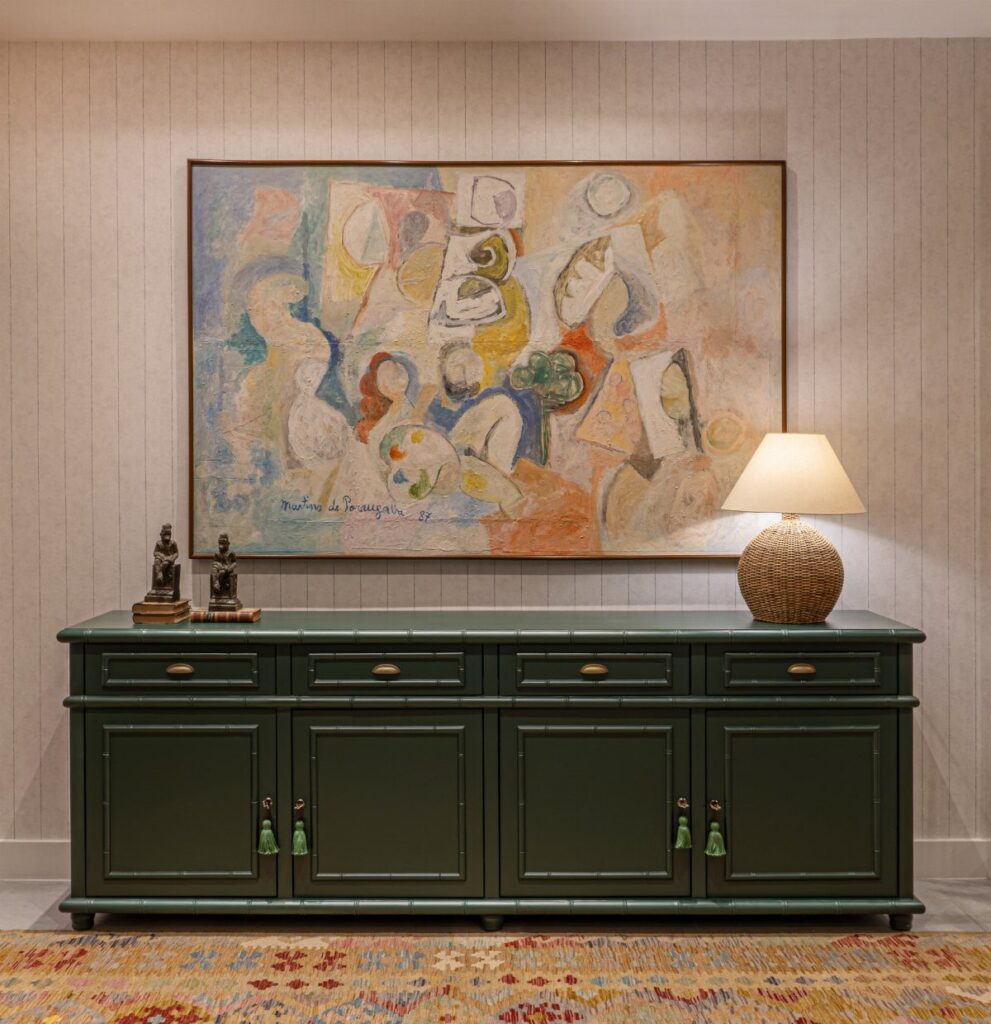
A formal dining room covers everything from a statement chandelier sized to your table length in inches to a low-pile rug that extends at least 2 feet past the table edge so chairs stay on it when pulled out.
Upholstered seating brings soft texture to the table, and open shelving puts glassware and serving pieces where you can see them.
Upholstered chairs and wallpaper set the formal tone, while storage pieces like a buffet or sideboard keep serving pieces within reach.
1. Upholstered Dining Chairs
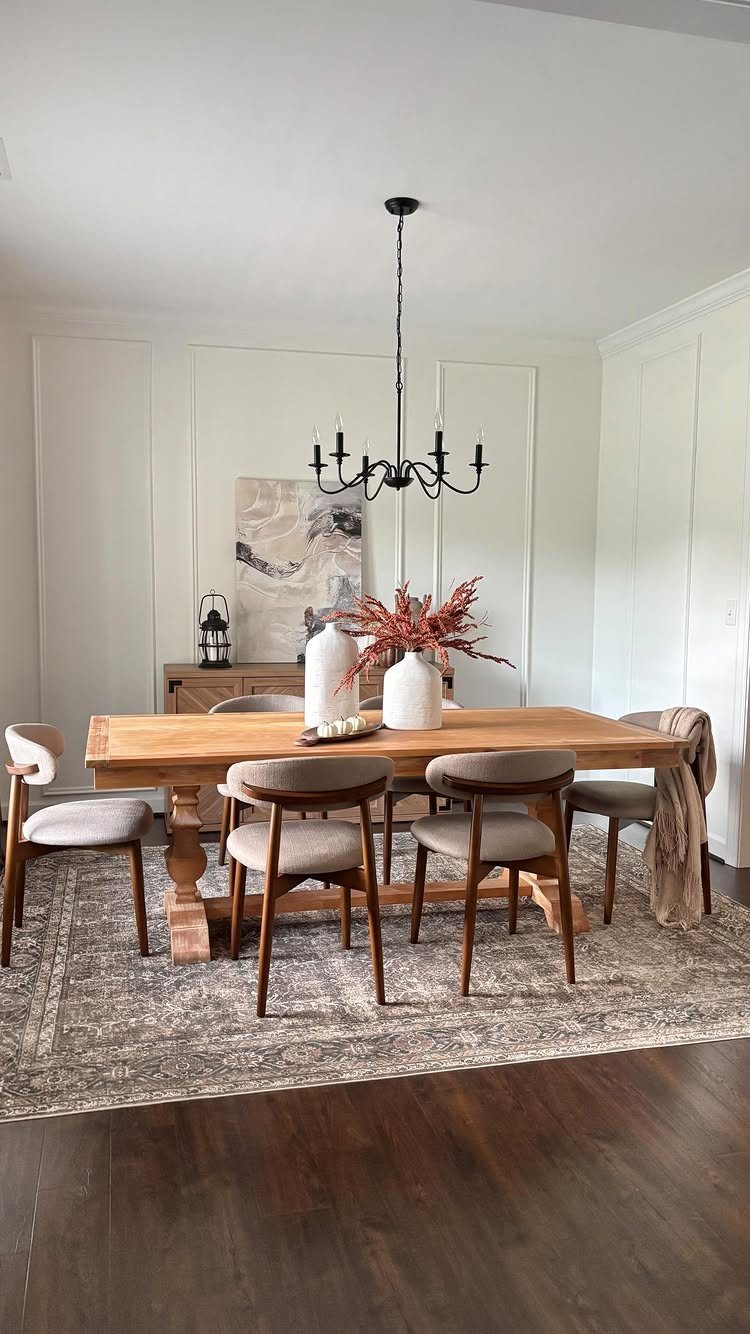
Upholstered chairs bring a layer of comfort that wood or metal seating can’t match, and they soften the look of a formal dining room without losing the polished feel.
The fabric you choose sets the tone. Linen and cotton blends hold up well to regular use and clean easily, while velvet adds texture and catches light in a way that feels special.
Neutral tones like gray, beige, or cream work with most tables and rugs, but a deeper color can anchor the room if your walls and floors are light.
If you’re buying new, look for chairs with removable seat covers or performance fabric. Both make spills less stressful.
2. Incorporate Storage with a Buffet or Sideboard
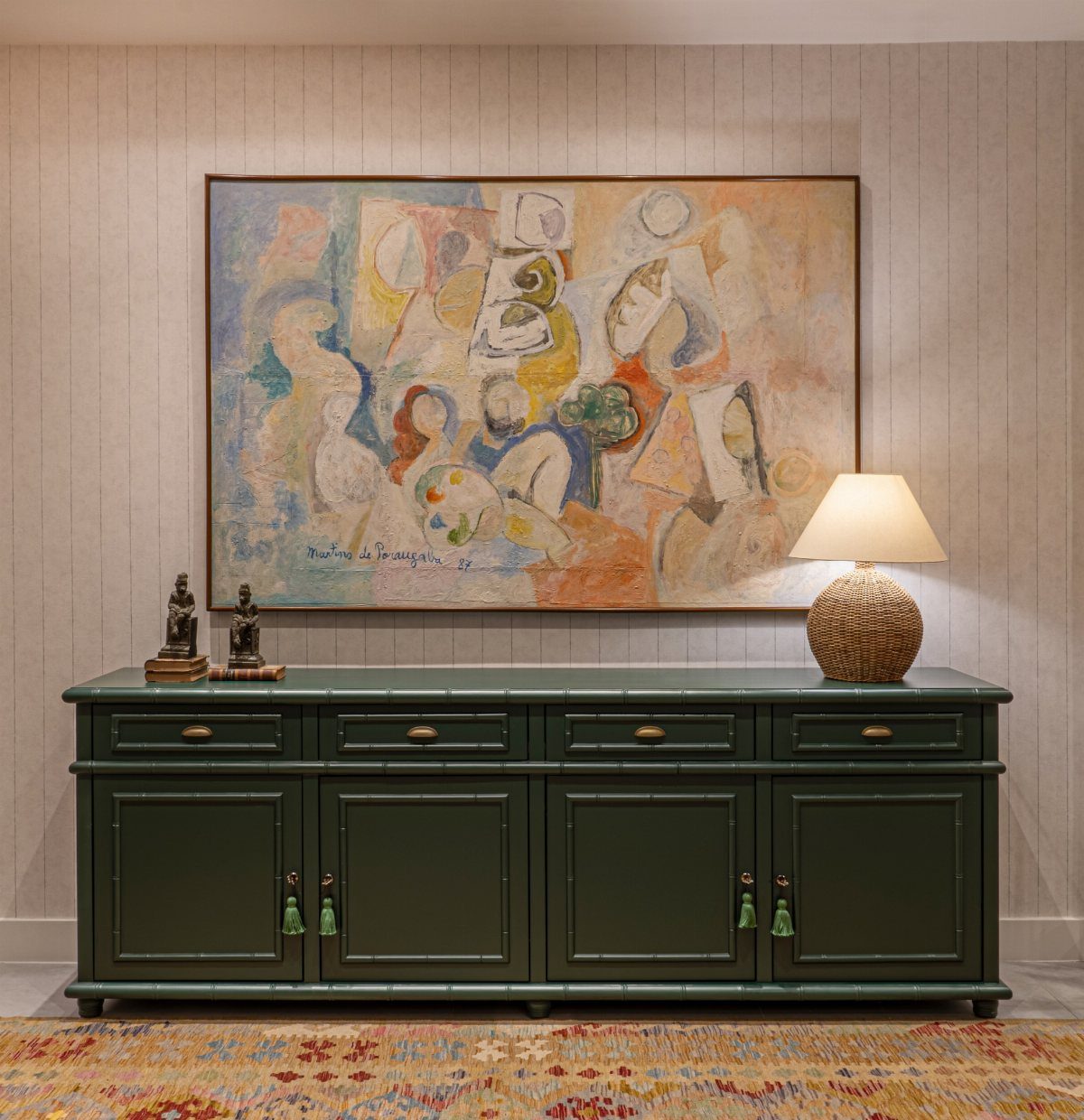
A buffet or sideboard gives you somewhere to put serving dishes during a meal and store table linens, glassware, and flatware the rest of the time.
It also fills the wall space in a way that feels balanced and leaves the room open.
If you’re working with wood paneling or a busy rug, a solid finish in a single color keeps the storage functional without competing for attention.
The top becomes a place to set a lamp, a tray for barware, or a few pieces you want on display.
3. Formal Dining Table
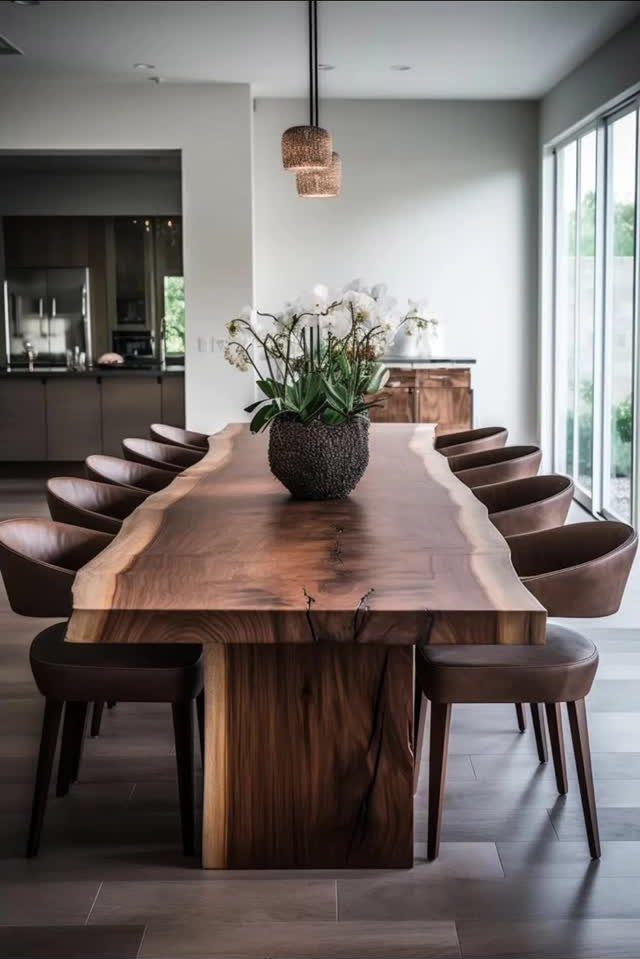
The table anchors the room, so its size and shape need to match how you actually use the space.
A rectangular table seats more people and fits most dining room layouts, while a round table makes conversation easier in a smaller room.
If you go with wood, pay attention to the finish. A matte or satin topcoat hides fingerprints and water rings better than high-gloss lacquer.
Leave enough clearance between the table edge and the wall so chairs can pull out freely.
Designer Holly Hunt of House of Hunt in Chicago says, “Formal dining rooms are becoming less popular, as people are craving more casual spaces. An open floor plan can be just as elegant, but offers more of a communal feel.”
4. Statement Chandelier
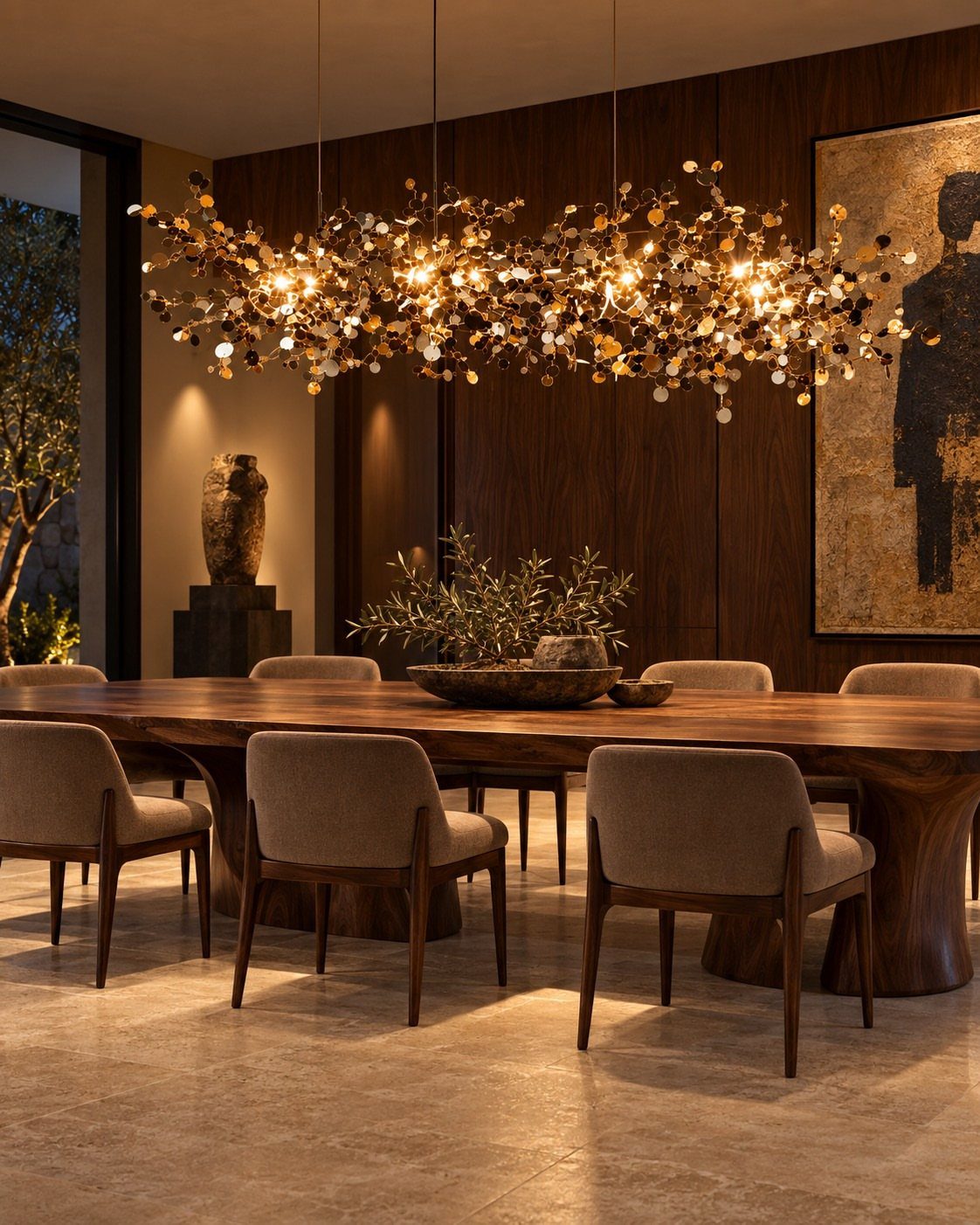
A chandelier that reads as sculpture rather than just lighting changes the mood of a formal dining room.
Size matters here. Size the chandelier to roughly half or two-thirds the width of your table so the fixture feels proportional to what sits below it.
Hang the fixture at a height where it lights the table well but doesn’t get in the way when people sit down.
Finish and material should tie into other metals or textures already in the room.
5. Fine China and Glassware Tableware
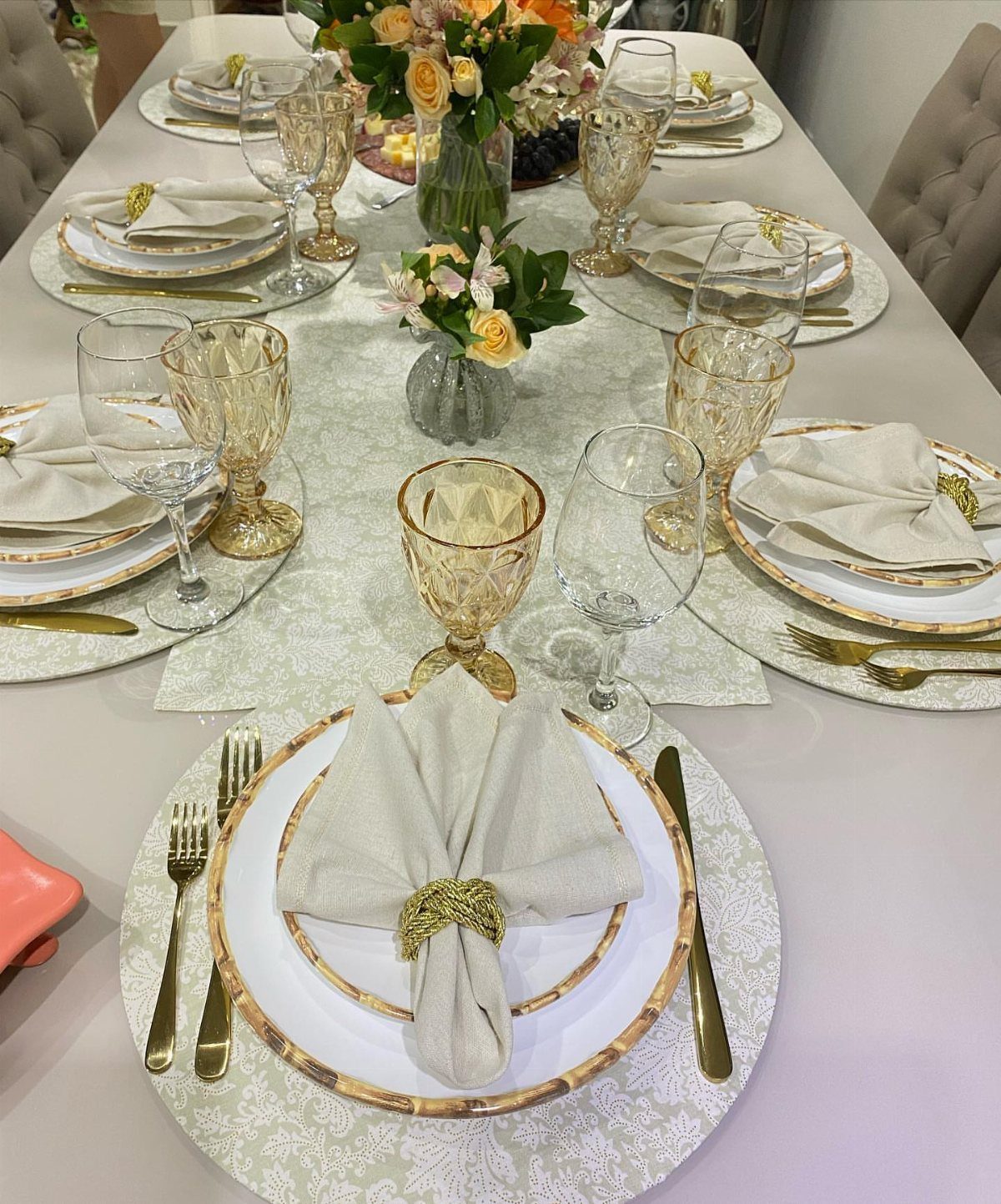
The table setting in a formal dining room does more than hold food. It signals the occasion and gives you a chance to layer texture, color, and finish in a way that feels intentional.
Gold-rimmed china and crystal glassware add formality without requiring a full matching set.
You can mix white plates with a patterned charger or salad plate and still keep the look cohesive. Linen napkins folded simply and held with a ring feel more finished than paper, and they’re reusable.
If you’re starting from scratch, buy pieces you can use separately. White dinner plates work for everyday meals, and crystal glasses hold water just as well as wine.
6. Use Wallpaper in a Dining Room
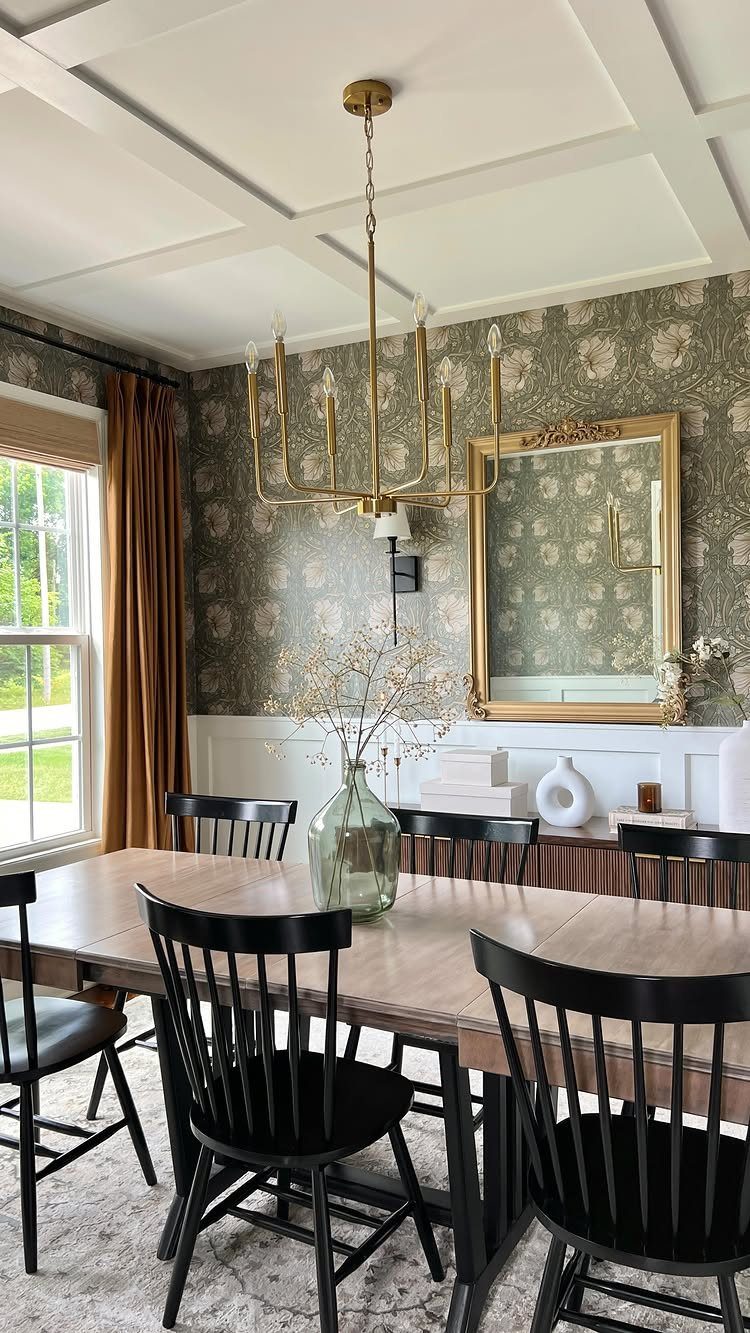
Wallpaper changes the character of a dining room faster than paint and gives you pattern, depth, and detail that a flat color can’t.
If your dining room is small or has low ceilings, stick with a design that has a white or pale background and a medium-scale repeat. Large prints can close in a tight space, and dark backgrounds make walls feel closer.
Peel-and-stick wallpaper is a good choice for renters or anyone testing a pattern. It installs without paste and removes cleanly.
7. Bay Window Banquette
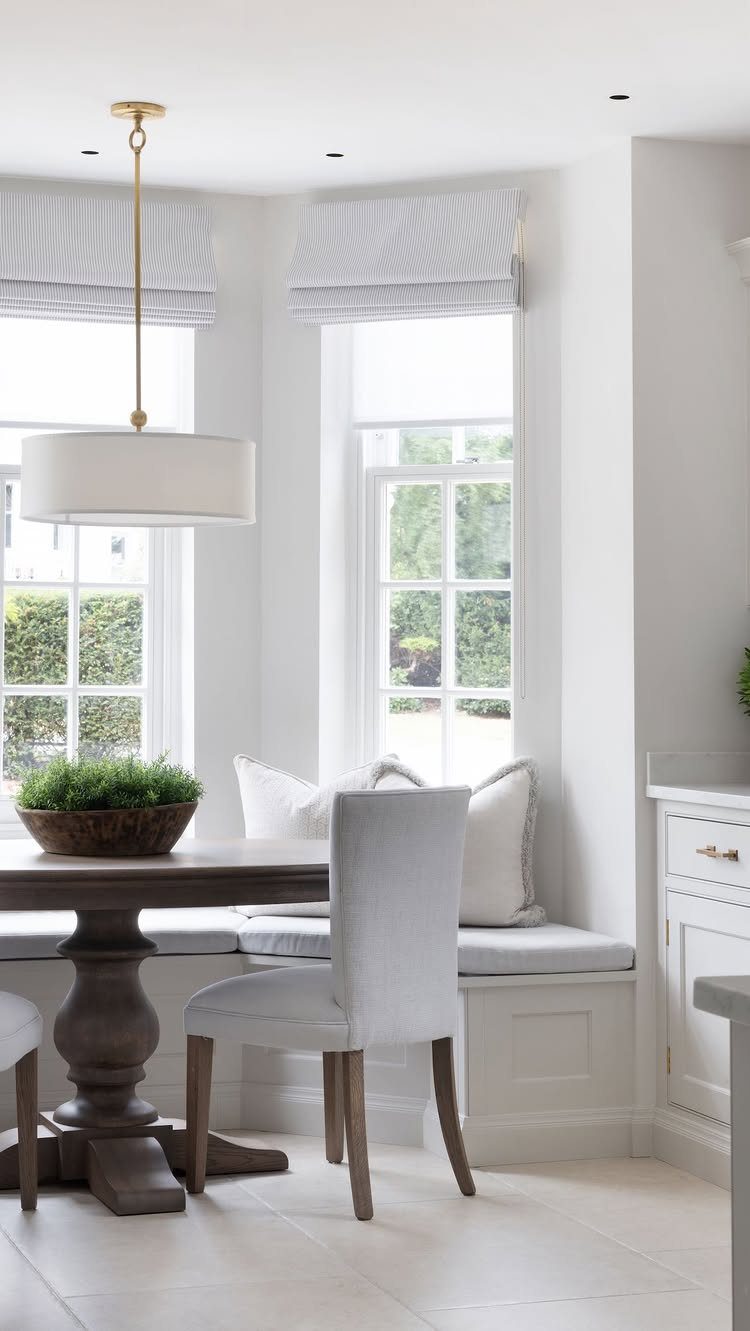
A built-in bench fitted into a bay window makes use of space that chairs can’t fill as neatly and adds seating without blocking light.
If your bay window has odd angles or a shallow depth, custom cushions cut to fit the curve give you a clean line and full coverage.
Fabric choice follows the same rules as upholstered chairs: performance fabric or removable covers make spills manageable.
The bench works best when paired with a round or oval table that lets people slide in and out without moving furniture.
8. Gallery Wall
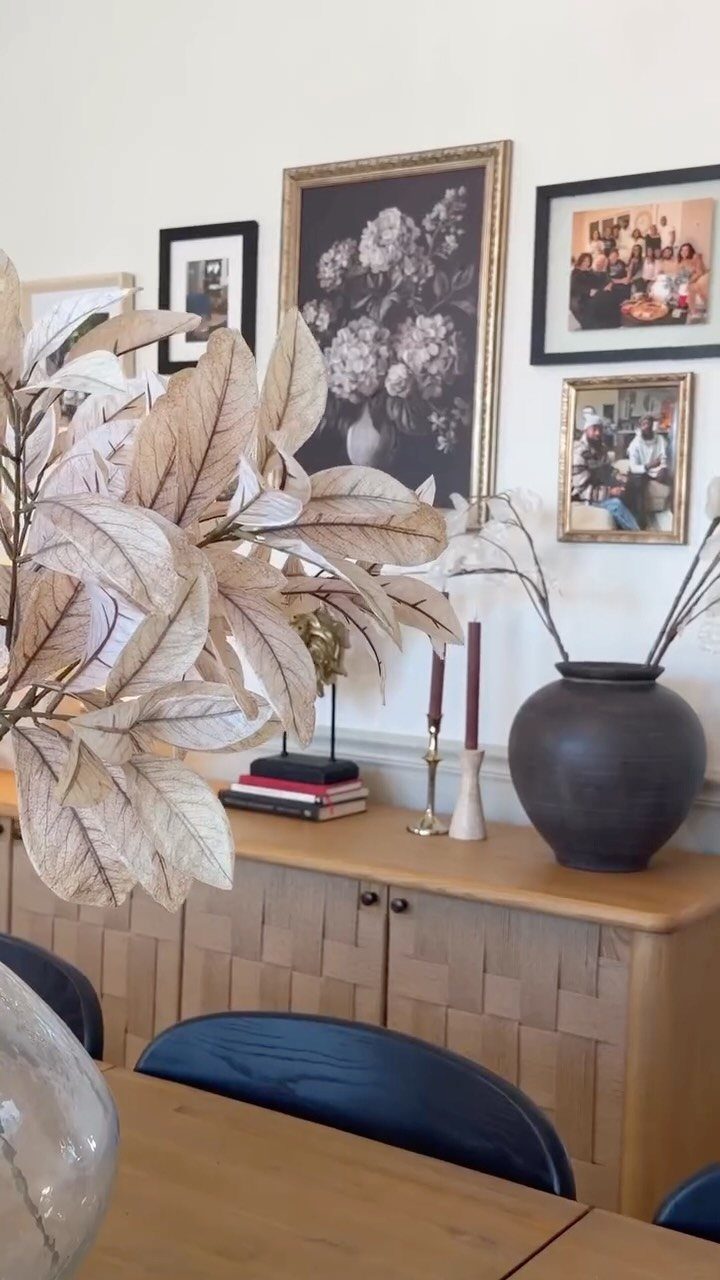
A gallery wall fills vertical space above a sideboard or along a blank wall and lets you bring in color, pattern, or personal history without committing to wallpaper or paint.
Mix frame sizes and orientations, but keep the frames themselves in one finish or a narrow range so the arrangement reads as cohesive rather than random.
Lay the whole thing out on the floor first to test spacing and balance before you start hanging.
Keep the frames close together and center the grouping over the furniture below it.
9. Luxurious Low-Pile Rug
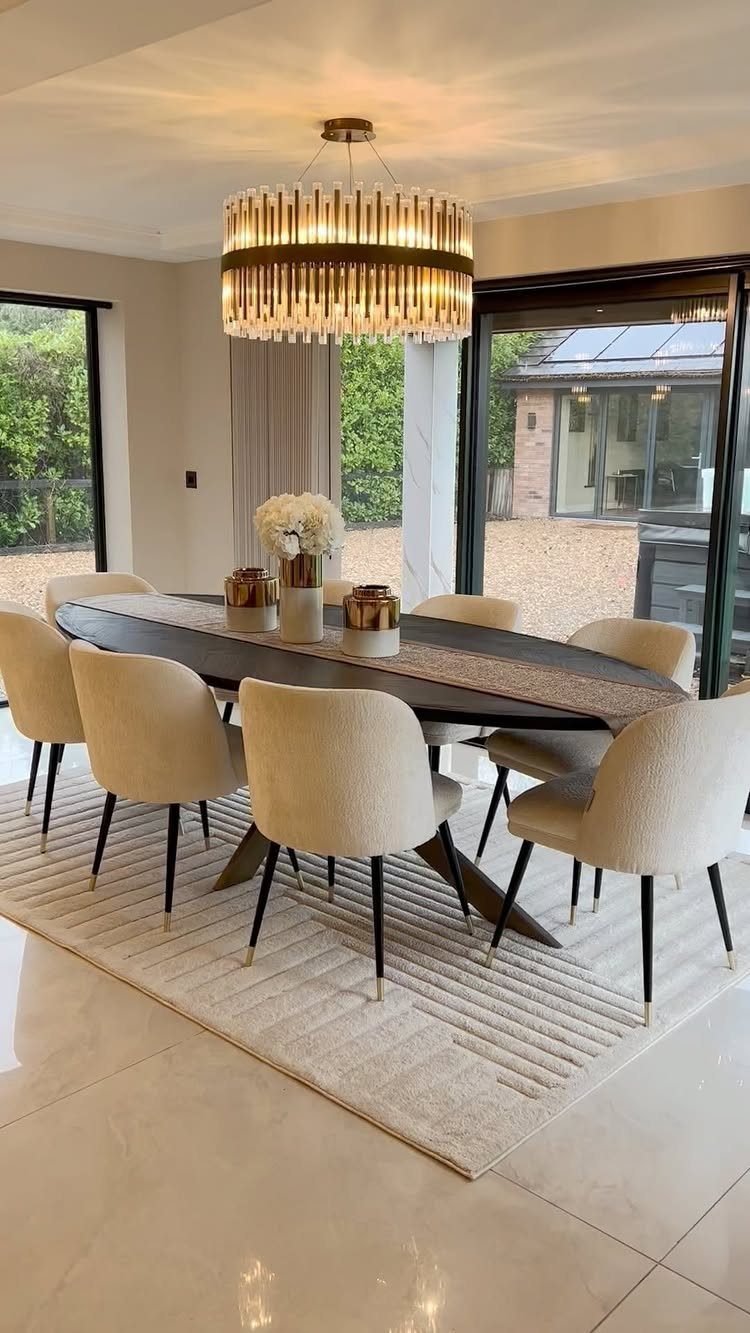
A low-pile rug sits flat under dining chairs and makes it easier to push seating in and out without catching on fibers. It also holds up better to foot traffic and spills than a plush weave.
Size the rug so the chairs stay on it when pulled out. I add at least 2 feet past the table edge on each side.
Materials like wool, jute, or polypropylene clean easily and resist staining. Avoid high-pile or shag styles in a dining room where chairs move often.
10. Create Balance with Symmetry
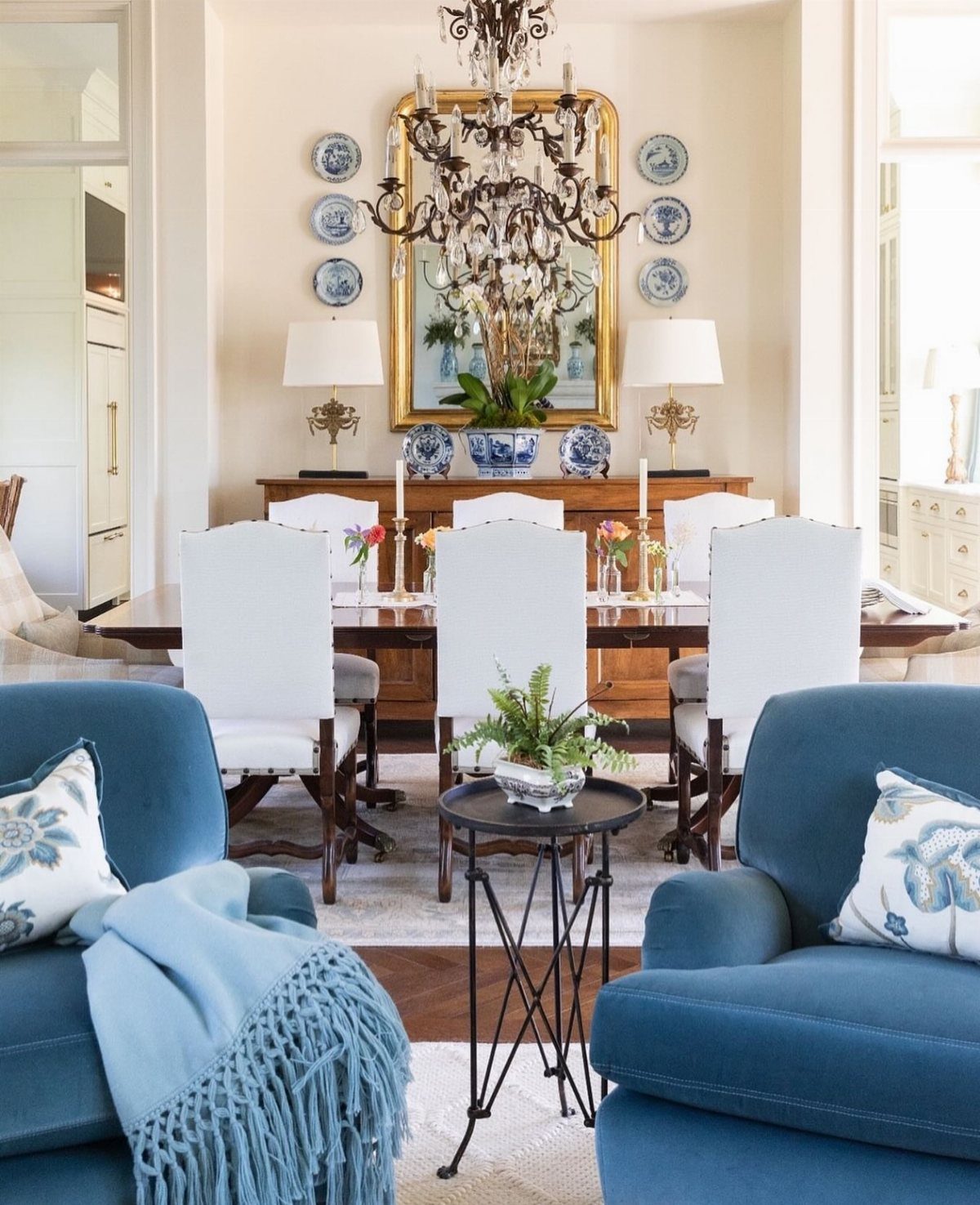
Matching pairs of chairs, sconces, or art on opposite sides of the table create a sense of order that feels calm and intentional.
Symmetry works best when the room itself is balanced: a centered doorway, a window on one wall, or a sideboard placed directly across from the table.
If your layout is off-center or awkward, forcing symmetry can make the imbalance more obvious.
Symmetry works without mirroring everything. One large piece on a focal wall with matching sconces on either side is often enough.
11. Deep Navy Color Palette
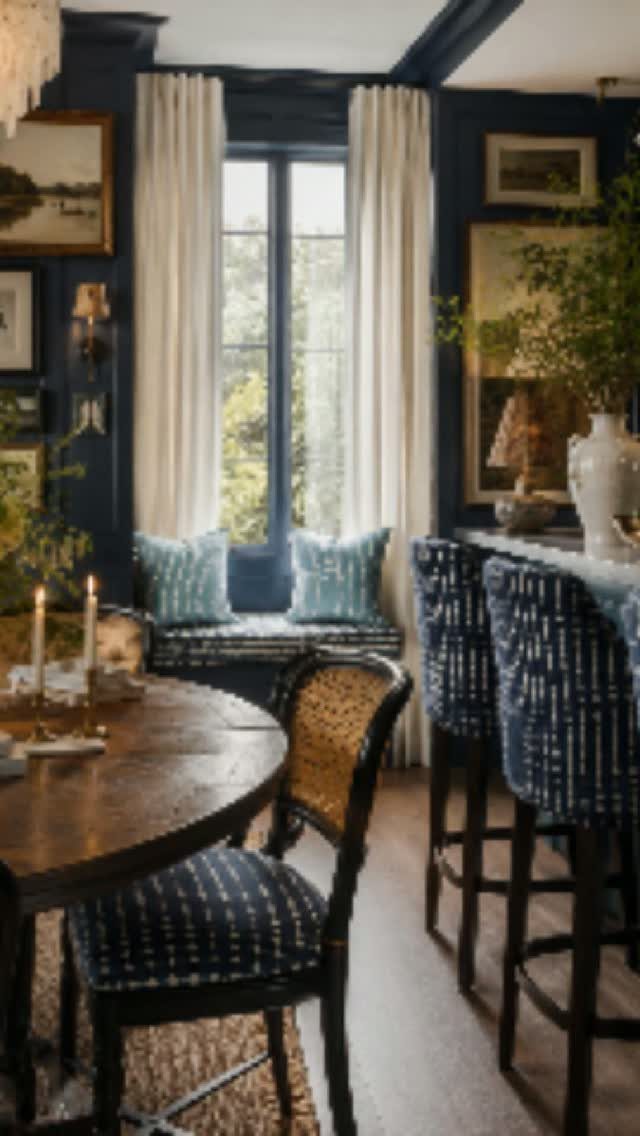
Navy reads as formal without the starkness of black and pairs well with warm wood tones, brass hardware, and white trim.
If you’re painting the room, test the color in your actual light first.
Navy can look muddy in a north-facing room or overly dark if your ceilings are low. In those cases, limit it to one accent wall or use it below a chair rail with a lighter color above.
Navy upholstery or drapery brings the color in without the commitment of paint.
12. Open Shelving
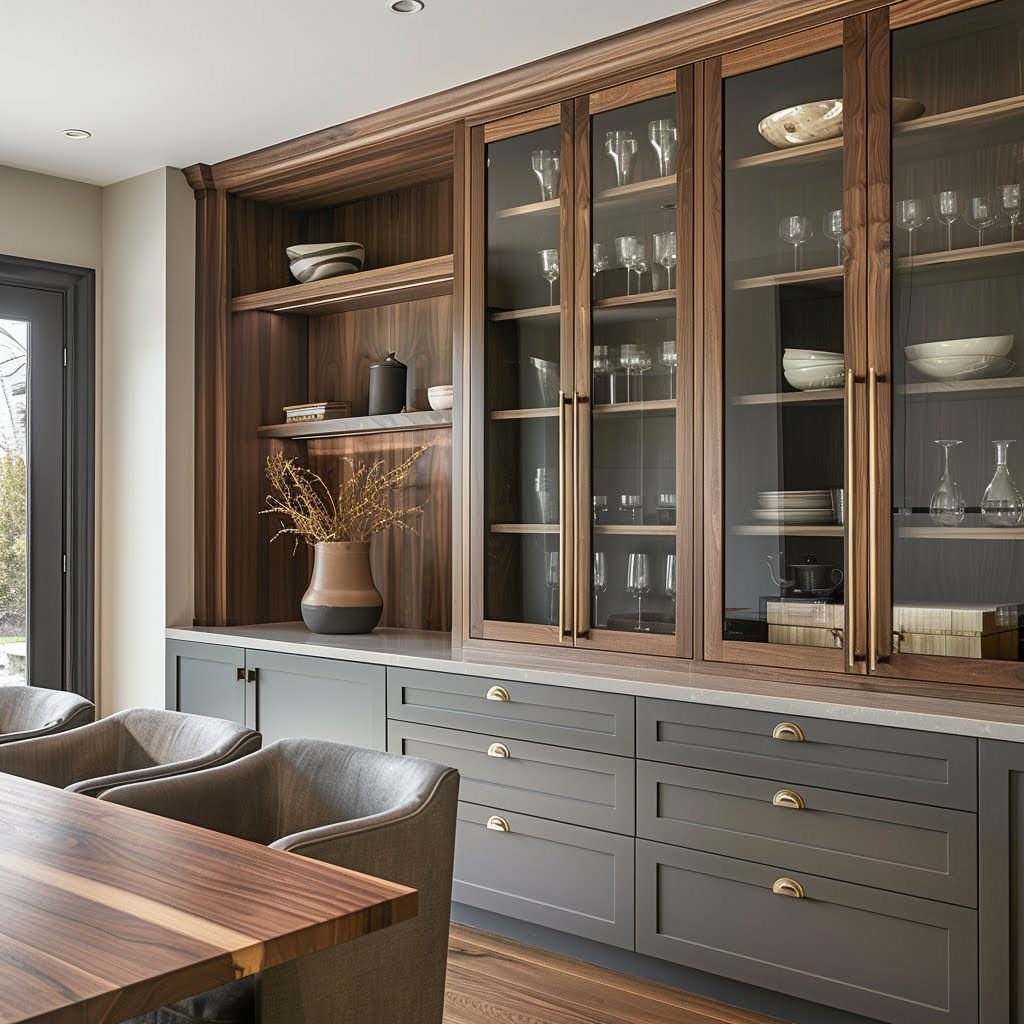
Open shelving puts glassware, serving pieces, and dishware on display and makes everything easier to reach than items stored behind cabinet doors.
Keep what you show edited.
A mix of white plates, a few colored pieces, and one or two serving bowls or pitchers looks intentional. Too many items or mismatched finishes start to read as clutter.
If dust is a concern in your kitchen or dining area, reserve the open shelves for pieces you use regularly rather than special-occasion china.
13. Keep Flow and Connection in Mind
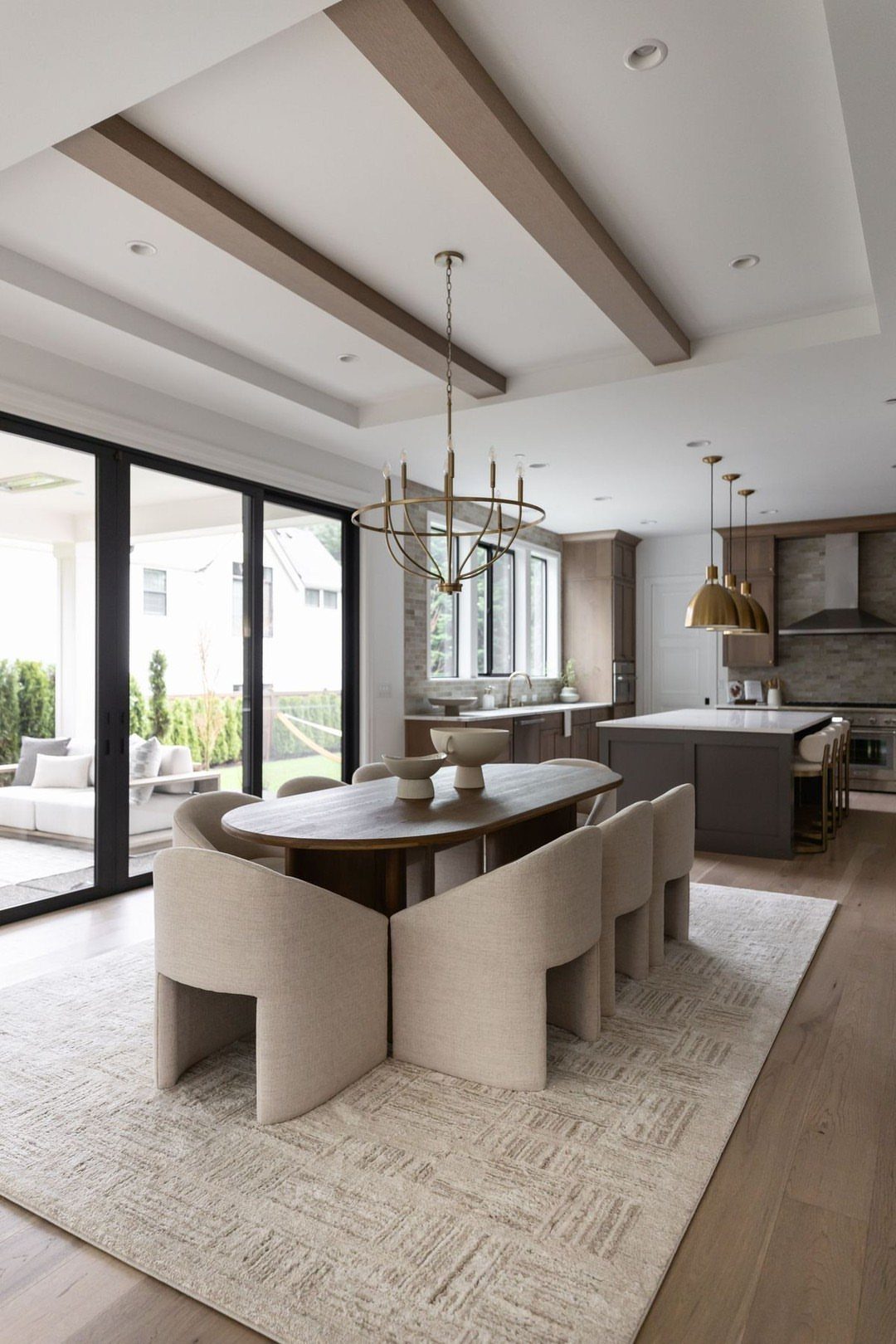
A formal dining room that opens to other spaces feels less closed off and easier to move through, especially when you’re carrying food or drinks from the kitchen.
If your dining room sits between 2 areas, keep the paths clear and leave enough walkway so someone can pass through while people are seated.
Avoid blocking doorways or sliding doors with furniture, and position the table so its long side runs parallel to the main traffic route.
When the dining room shares a wall or sightline with the kitchen or living room, repeat one finish or color across both spaces to tie them together.
Frequently Asked Questions
What are the names of dining room furniture?
The main pieces are the dining table, dining chairs, and a buffet or sideboard for storage.
Overhead, you’ll find a chandelier or pendant light, and underneath, a rug that pulls the seating zone together. Some rooms add open shelving or a built-in banquette for extra seating.
What are the dining room trends in 2026?
Formal dining rooms are coming back with updated functionality, used for meals, work, and homework rather than special occasions only.
Statement lighting like sculptural chandeliers and bold wallpaper patterns are the design focus, and tables are treated as visible centerpieces instead of surfaces to cover.
What can I use instead of a dining table?
A kitchen island with stools works for casual meals, or you can repurpose a library table, entry table, or reclaimed door as a dining surface.
Stone-topped tables with striking patterns or tables made from reclaimed beams add character while serving the same purpose.
How do you build a perfect dining room?
Start by figuring out how you’ll use the space: weeknight dinners, entertaining, or both. Then pick a table size and shape that fits the room and leaves at least 2 feet of clearance around it so chairs can pull out.
Add comfortable seating, a light fixture sized to the table, and storage that balances the layout without blocking traffic.






