
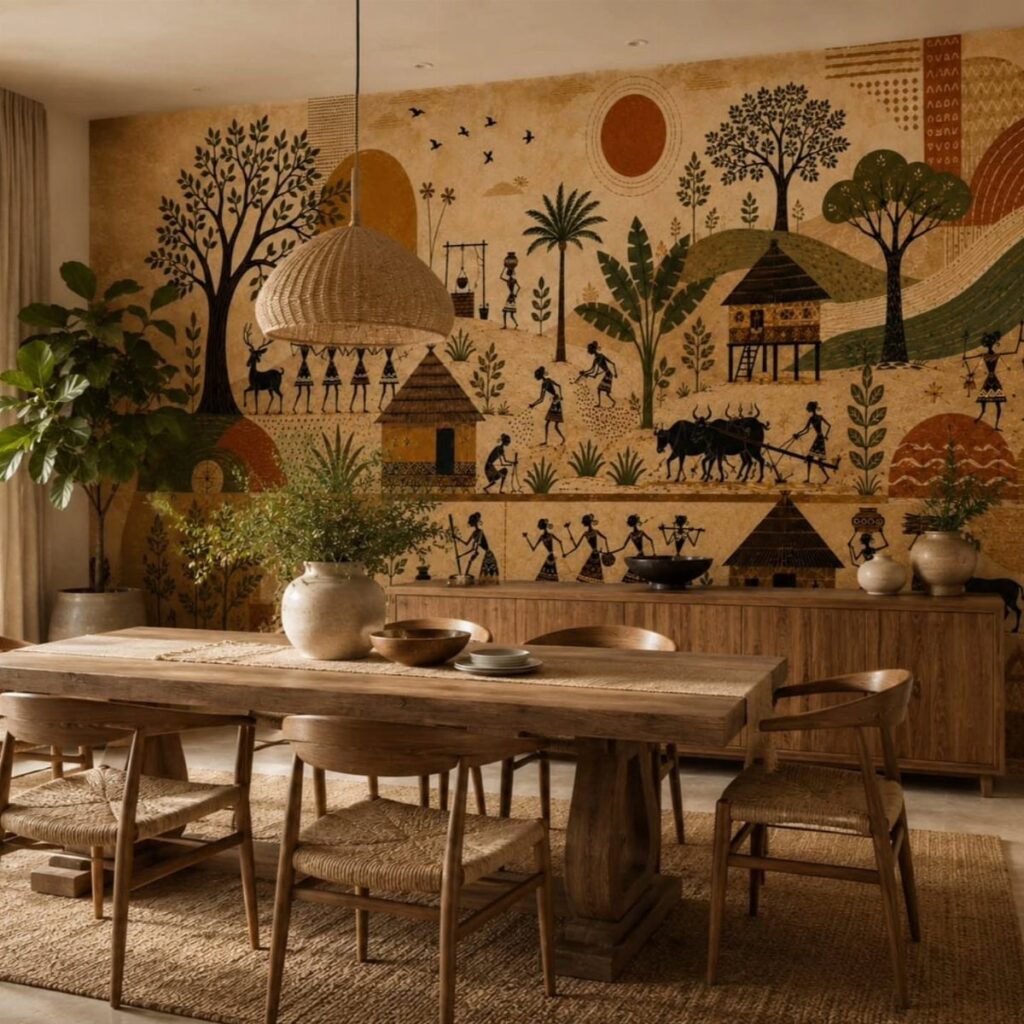
Traditional dining room art runs from a single centered portrait to a full gallery wall, a framed botanical set, a scenic landscape, or hand-painted wall covering.
If the room already has patterned wallpaper or detailed molding, a single large piece or a symmetrical grid usually reads cleaner than a mixed gallery wall.
1. Traditional Art for a Formal Dining Room
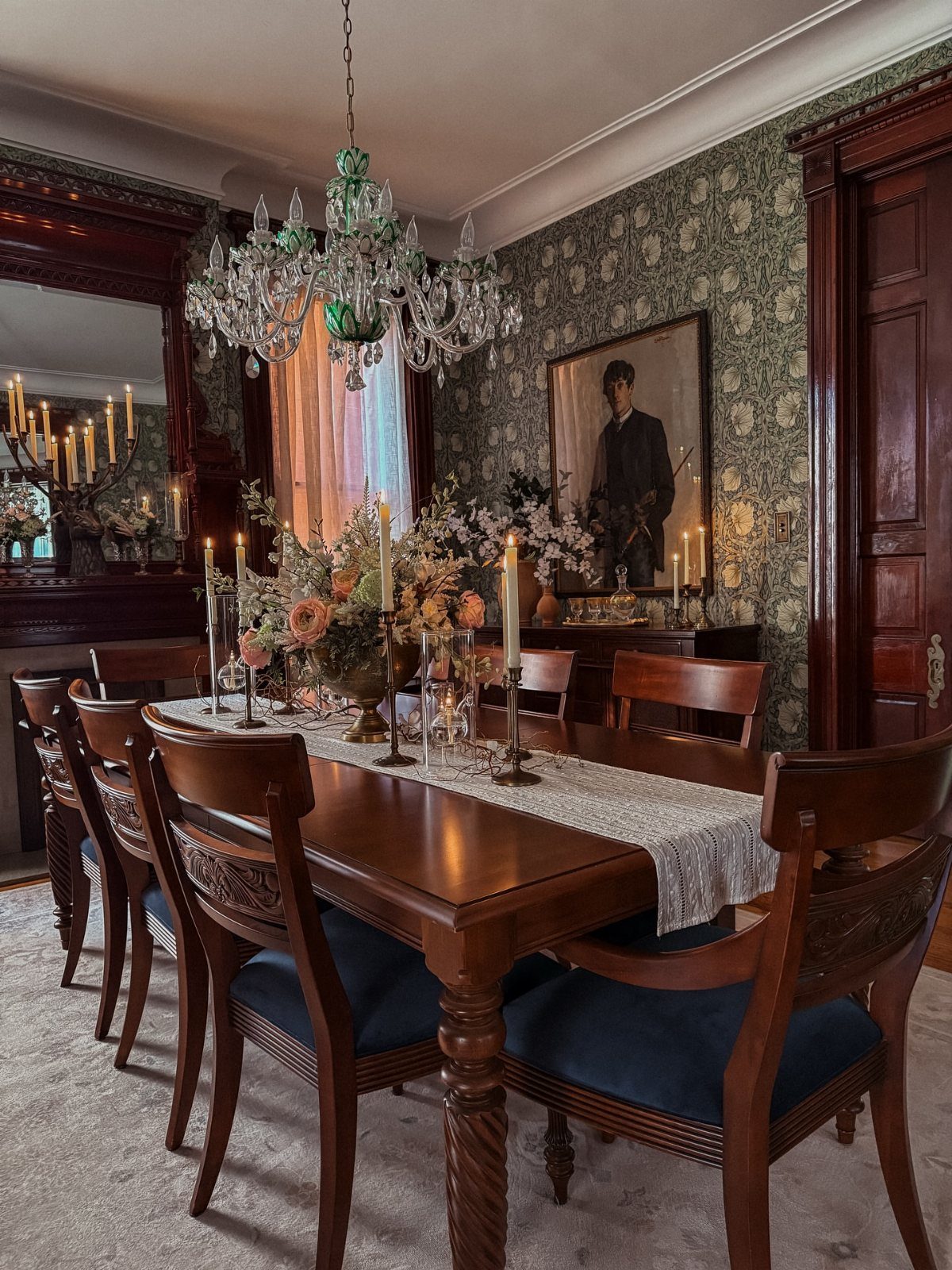
A single framed portrait or classic painting centers the wall, matching the formality of the space.
This works best when the scale is generous: a piece roughly two-thirds the width of the table keeps the proportion balanced without crowding the wall.
I look for art with traditional subjects like portraits, still lifes, or historical scenes, and frames with enough presence to hold their own against a crystal chandelier or detailed wallpaper.
Gilded or dark wood frames suit formal rooms better than simple black or natural wood.
If the dining room has patterned wallpaper, choose a frame that picks up one of the accent colors.
2. A Collected Gallery Wall
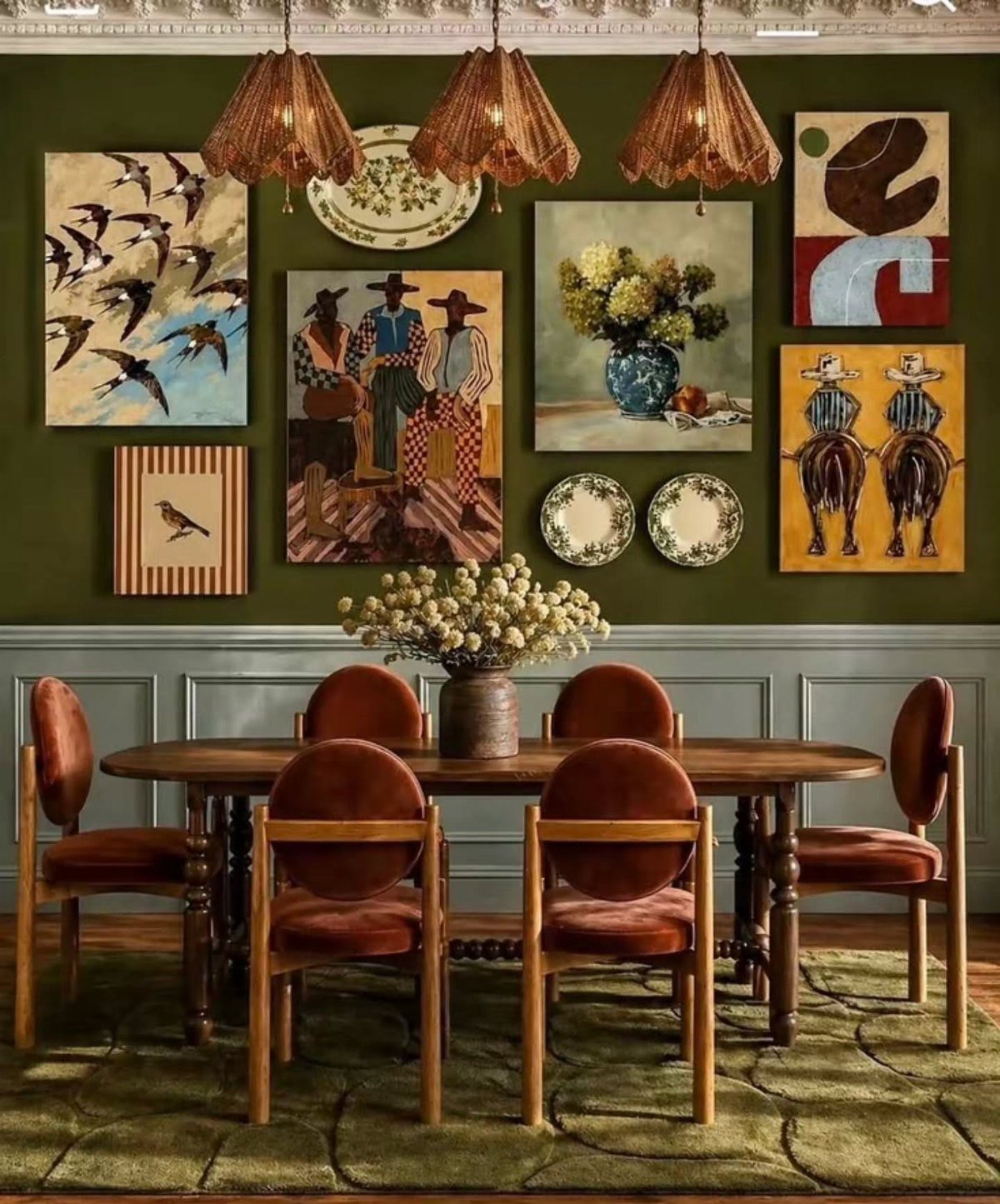
A gallery wall pulls together paintings, framed prints, and decorative plates in different sizes and frames, filling a section of wall without symmetry.
The effect feels personal rather than formal, since each piece can come from a different place or time.
Lay the whole arrangement on the floor before you commit to the wall, then hang the center piece at eye level and work outward from there.
Mix frame finishes but keep the style consistent: all traditional or all ornate, not a blend of farmhouse and gilded.
Plates break up the rectangular frames and add dimension when hung at different intervals across the wall.
3. Botanical or Bird Print Set
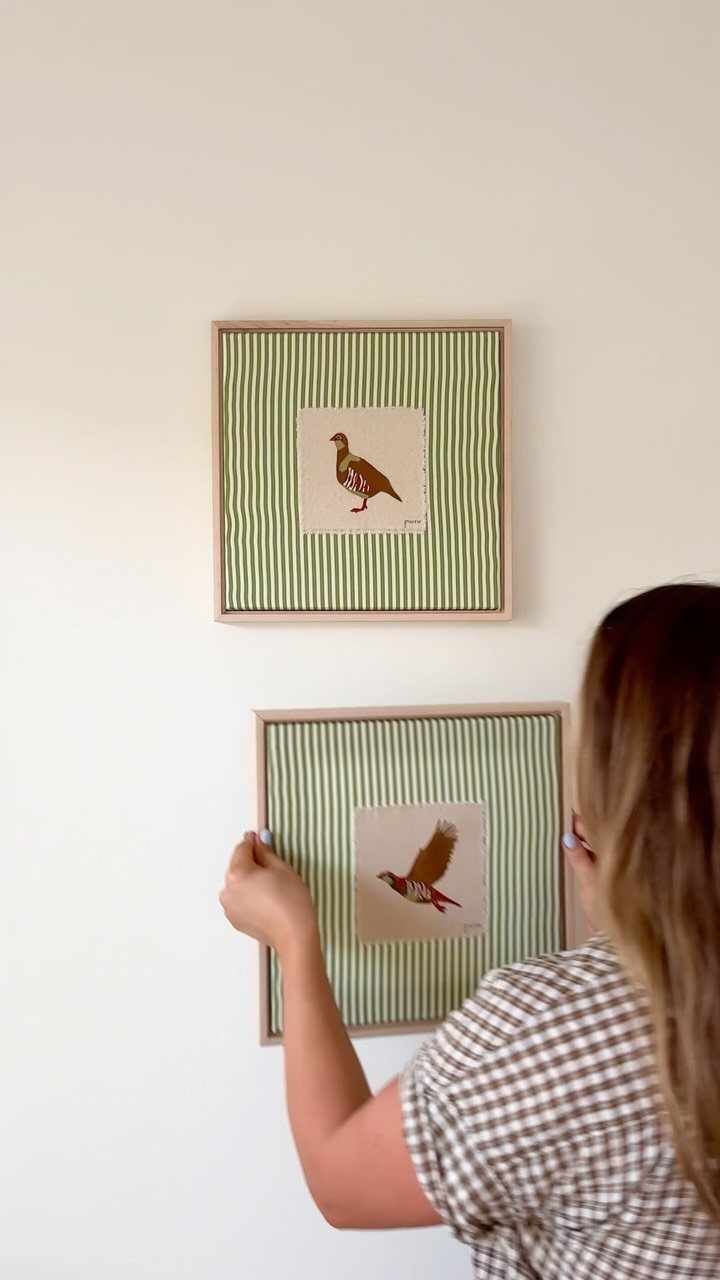
Matching bird or botanical prints in square frames bring symmetry without taking over the wall.
The creator here paired custom red-legged partridges with striped mats that echo some existing mallards the client already had, and that repetition of the mat pattern ties separate pieces together.
Look for prints with classic illustrations rather than photographs, and choose frames in wood tones that match the dining table or trim. Striped or solid mats in a color from the room keep the prints from floating.
Hang pairs at eye level, spaced 4–6 inches apart, or stagger them slightly if the wall is narrow.
4. Traditional Scenic Landscape Painting
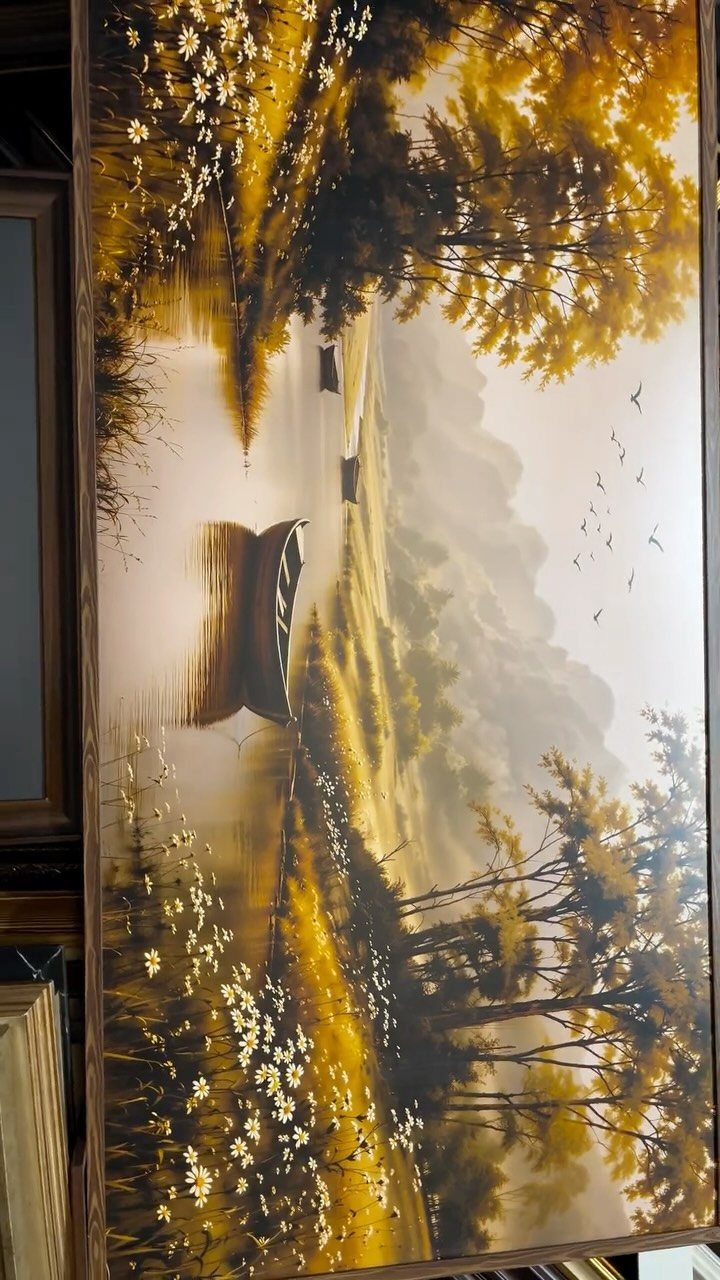
A single vertical landscape painting fills the wall without needing a grid or a gallery arrangement. Traditional landscape subjects like rivers, autumn trees, or misty skies suit dining rooms that lean formal but not overly decorated.
The vertical format works especially well on narrow walls or between windows, where a horizontal piece would look cramped.
Look for paintings with a soft, layered palette rather than bright contrasts, so the art doesn’t compete with the table setting or the light fixtures.
A simple frame in gold or dark wood keeps the focus on the painting itself.
5. Framed Landscape Grid
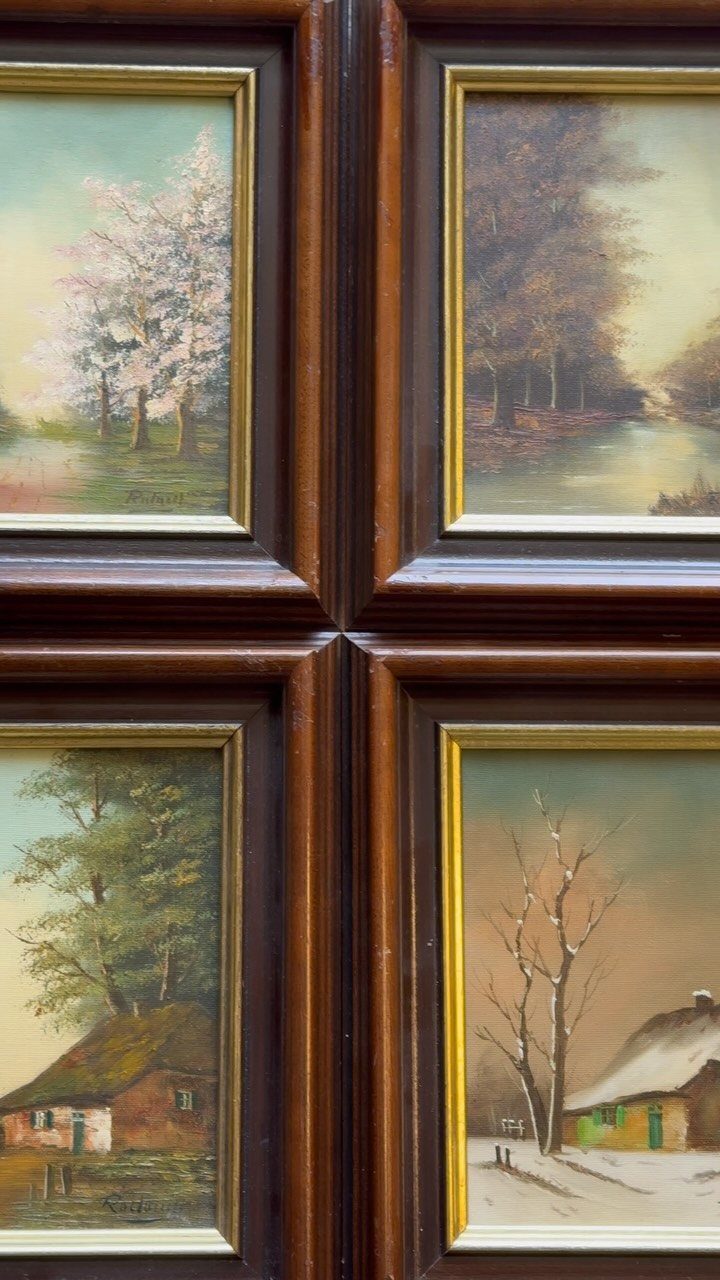
Four small landscape paintings in matching frames hang in a grid, filling a section of dark paneled wall without covering the whole surface.
The grid keeps the arrangement orderly, and the matching subjects, like rivers, trees, or cottages in snow, make the pieces feel like a set even if they were collected separately.
Frames in a mix of gold and wood tones work well on dark walls, where a single finish can disappear. Space the frames 2–3 inches apart so the grid reads as one unit rather than four separate pieces.
This layout works best on a wall with enough paneling or trim detail that the negative space feels intentional.
6. Scenic Landscape Wall Mural
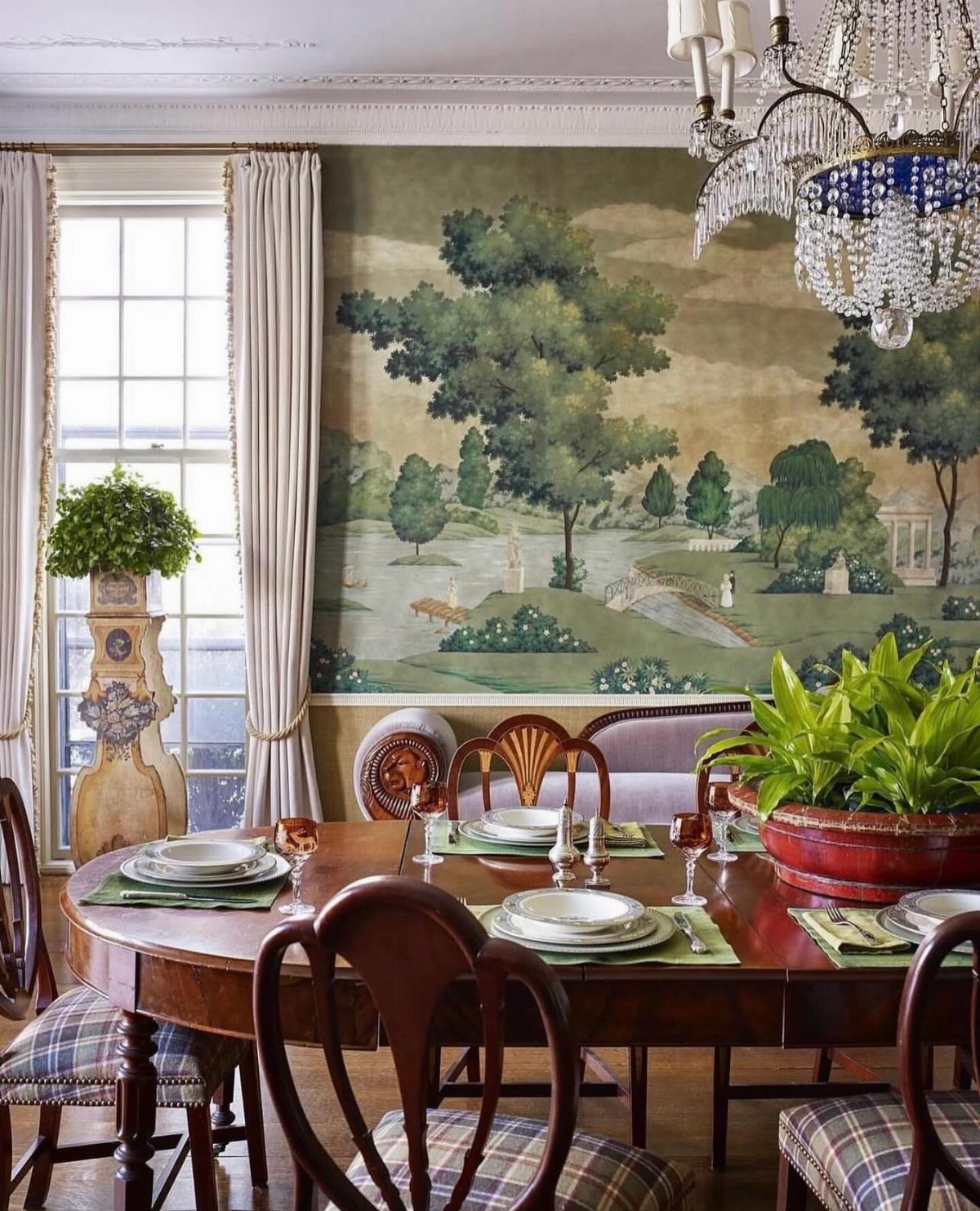
A full-wall scenic landscape mural turns the dining room into a backdrop, replacing framed art entirely. Traditional murals feature rolling hills, classical architecture, or pastoral scenes, and the scale makes the room feel larger without adding furniture or accessories.
Murals come as peel-and-stick panels or as paintable designs, and installation typically takes a few hours with a helper. The peel-and-stick versions remove cleanly, which matters in rentals or homes where the dining room might change use later.
This works best on a single accent wall behind the table, so the mural stays visible when people are seated.
7. Traditional Folk Art Mural
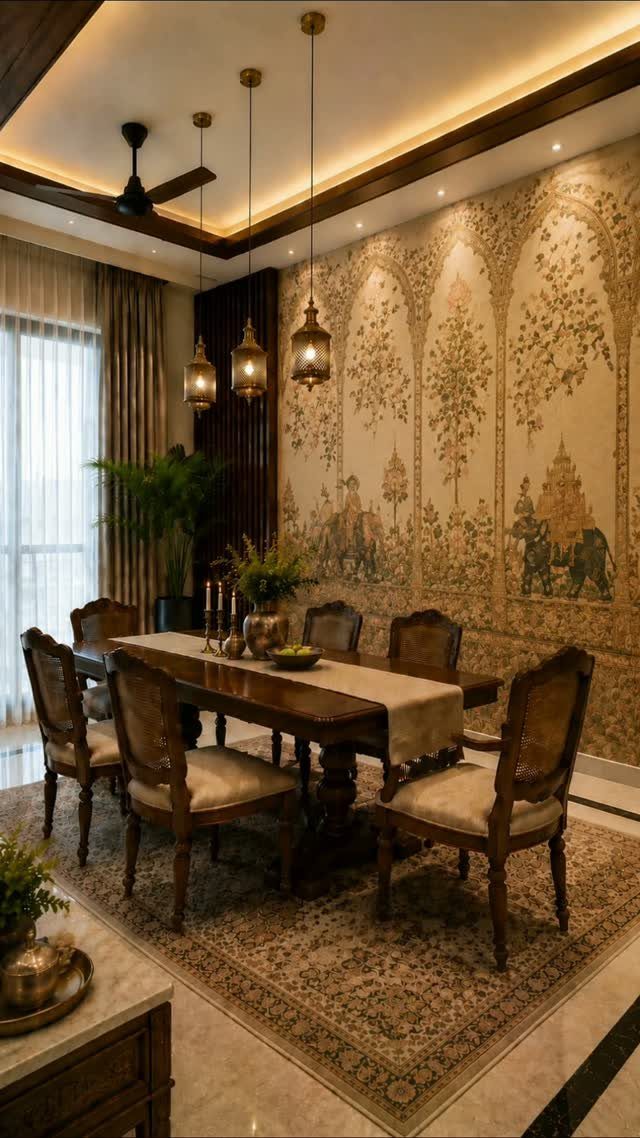
A hand-painted mural in traditional Indian folk style covers the wall floor to ceiling, filling the space with color and pattern instead of framed pieces.
The mural wraps the room in one continuous scene, so the wall itself becomes the art rather than a backdrop for it.
This approach works best when the dining furniture is simple and carved wood, so the mural stays the focus. The carved table and chairs here balance the detail on the wall without competing for attention.
Murals like this are typically commissioned and painted on site, which takes several days and costs more than wallpaper, but the result is a one-of-a-kind piece that can’t be replicated with prints.
8. Chinoiserie Wall Covering
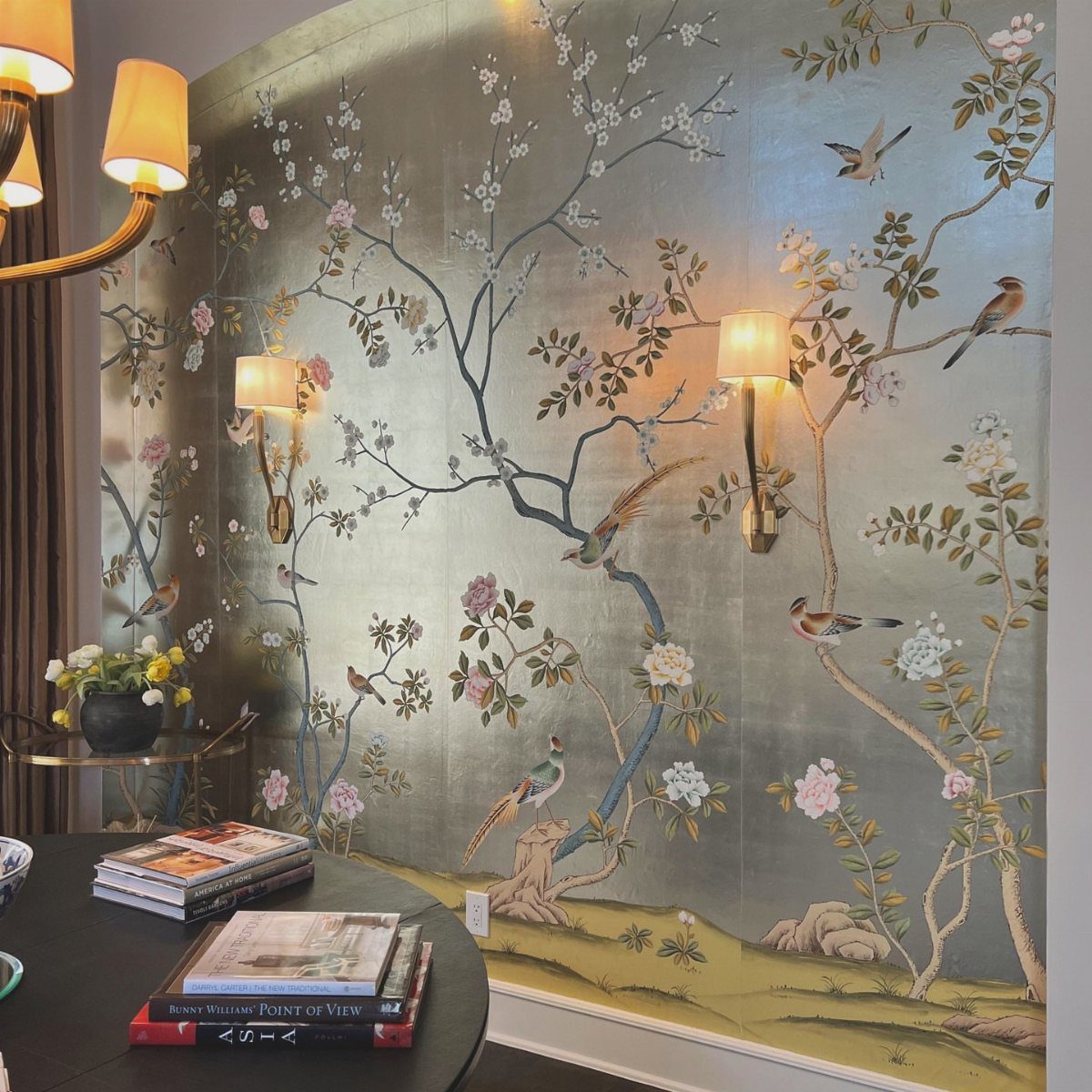
Chinoiserie wallpaper in metallic silver brings pattern and traditional imagery to the wall without hanging anything. The birds and flowering branches sit directly on the surface, and the metallic finish catches light from sconces or candles during dinner.
Silver reads cooler and more formal than gold Chinoiserie, and it pairs well with dark wood furniture or black accents. The pattern covers the whole wall, so the room needs fewer accessories to feel finished.
Wall sconces mounted over the wallpaper add functional light and break up the pattern without covering it. Choose sconces in a finish that matches the wallpaper’s metallic tone so they read as part of the same layer.
9. Gilded Mirror and Dark Artwork
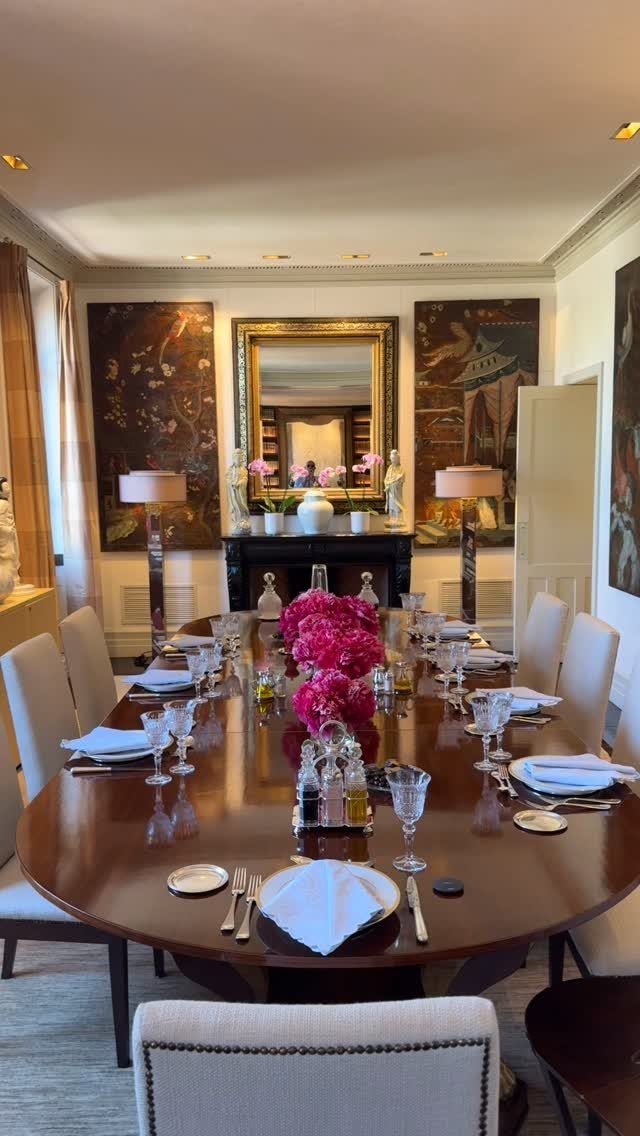
An ornate gilded mirror sits centered over the fireplace mantel, flanked by dark oil paintings hung symmetrically on either side.
The mirror reflects light and opens up the wall, while the dark paintings ground the arrangement and match the formality of the furniture.
This layout works when the fireplace is the natural focal point of the room and the table is positioned to face it.
The symmetry keeps the arrangement traditional, and the contrast between the bright mirror and the dark frames adds depth without needing multiple finishes.
10. Framed Abstract in Gold
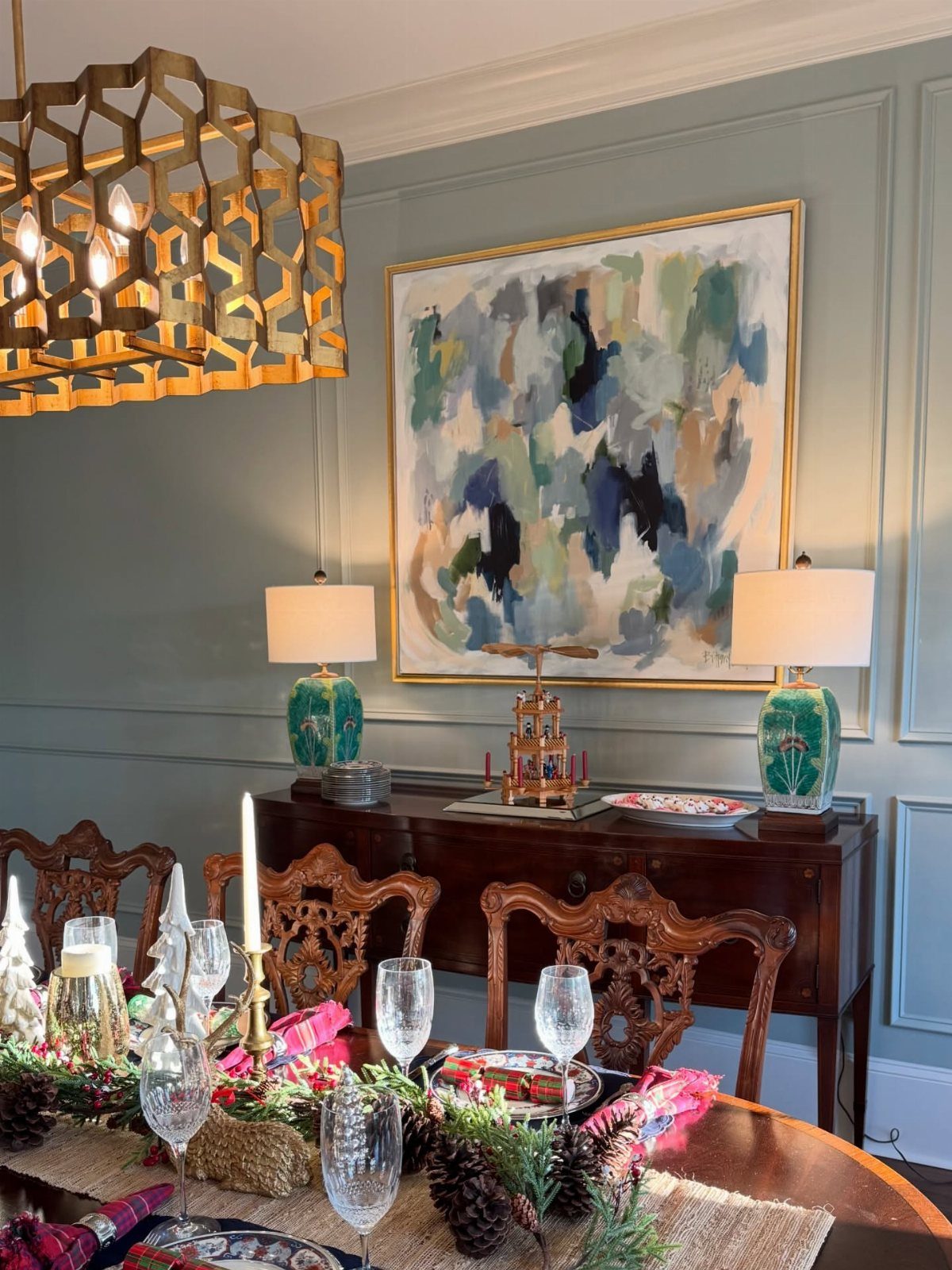
A large abstract painting in an ornate gold frame sits over a sideboard on paneled grey walls, mixing traditional framing with contemporary art. The abstract subject lightens the formality, and the heavy gold frame holds it in traditional territory.
This works when the dining room has traditional architecture, like raised paneling or crown molding, but the furniture skews simpler or more modern. The gold frame acts as a bridge between the 2 styles.
Scale the painting so it takes up roughly two-thirds of the sideboard’s width. Smaller abstracts can look lost against detailed paneling.
Sizing and Placement Rules
Hang the center of the piece at 57–60 inches from the floor, which is eye level for most people and the standard museums use.
That height holds no matter how tall the ceiling is; moving art up to fill vertical space usually backfires.
A piece that’s too small gets lost, especially on a wall with paneling or trim detail.
Use painter’s tape to mark the placement before you hang anything. I use painter’s tape to mark the layout before I drill, because patching a badly placed hole takes longer than planning it right.
Framing Basics
A 2–3 inch mat creates space between the art and the frame, and it makes inexpensive prints look more finished. The mat keeps the image from sitting right against the glass, which can flatten the whole piece visually.
All black frames or all natural wood holds the arrangement together.
Mixing metals and woods in frames takes planning, but when the rest of the room supports it or you’re working with dark walls that swallow a single finish, the contrast can hold the composition together.
Framebridge is a middle option when you want quality without custom framing costs. They run sales often enough that I wait for one if the piece isn’t urgent.
Pairs need identical frames, identical mat widths, and artwork that belongs to the same series or shares a palette.
Color Coordination
If the dining chairs are navy, look for a piece with navy plus other colors. In a neutral room, the art is often the first place color shows up.
The art doesn’t have to match the wall, but it shouldn’t clash with it. Red on red reads flat because there’s no contrast to pull the piece forward.
Frequently Asked Questions
How to decorate a dining room wall?
A single large piece around two-thirds the table’s width anchors the wall cleanly, or you can layer frames and plates into a gallery wall when you want something more collected.
Traditional rooms pair well with formal portraits or landscapes in gilded frames, and hand-painted murals or Chinoiserie wallpaper work when you want to cover the wall entirely.
What are some good paintings to put on my wall?
Traditional portraits, still lifes, and historical scenes suit formal dining rooms, while soft landscape paintings with rivers or autumn trees work well in spaces that lean formal without heavy decoration.
Botanical or bird prints in matching frames add symmetry, and abstract paintings in ornate gold frames bridge traditional architecture with simpler furniture. Pick subjects and frames that match the room’s formality and the finish of the dining table or trim.
What are some creative ideas for wall decor?
Mix framed prints, decorative plates, and paintings in a gallery wall layout for a collected, personal feel, or hang an ornate gilded mirror over the fireplace flanked by dark oil paintings for symmetry.
Chinoiserie wallpaper in metallic silver covers the wall with pattern and needs no additional hanging, while wall sconces mounted over it add functional light. A full-wall scenic mural replaces framed art entirely and opens up the space.






