
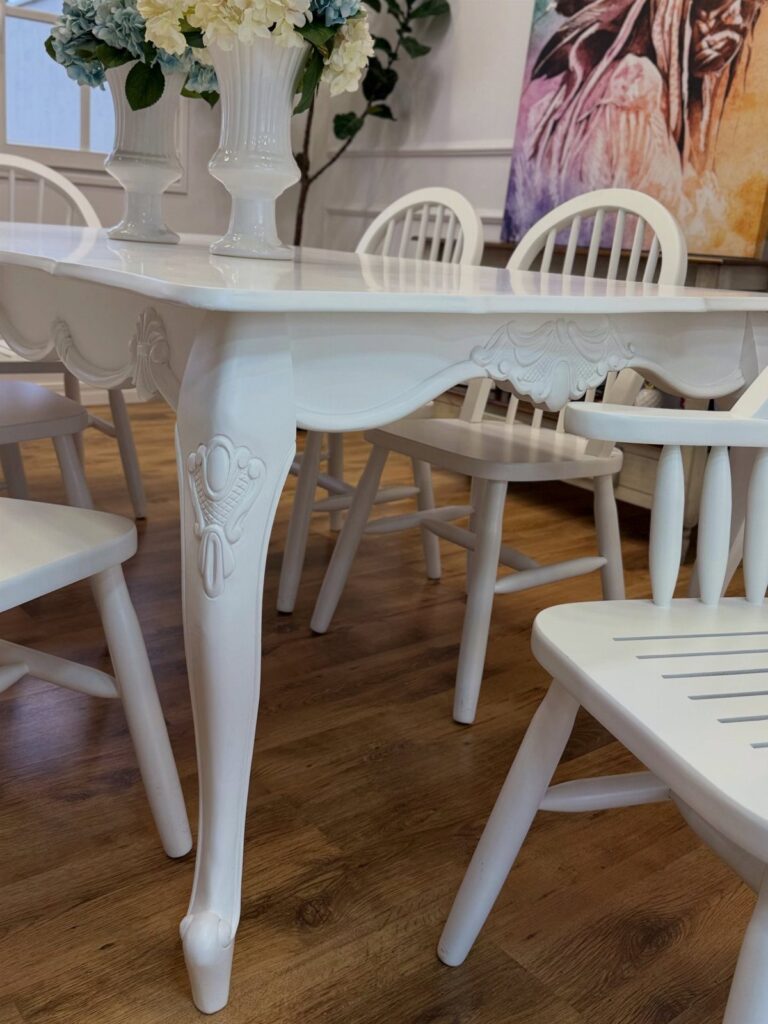
A painted dining table can run from a simple single-color finish you knock out in an afternoon to a stenciled pattern or an abstract design that takes multiple coats and days of drying time.
The choice comes down to color, how much of the wood grain you keep visible, and what kind of prep and topcoat the finish needs.
Acrylic pouring medium thins paint enough to flow across the surface without separating, while water-based polycrylic dries clear in about 2 hours between coats.
1. White Painted Dining Room Table
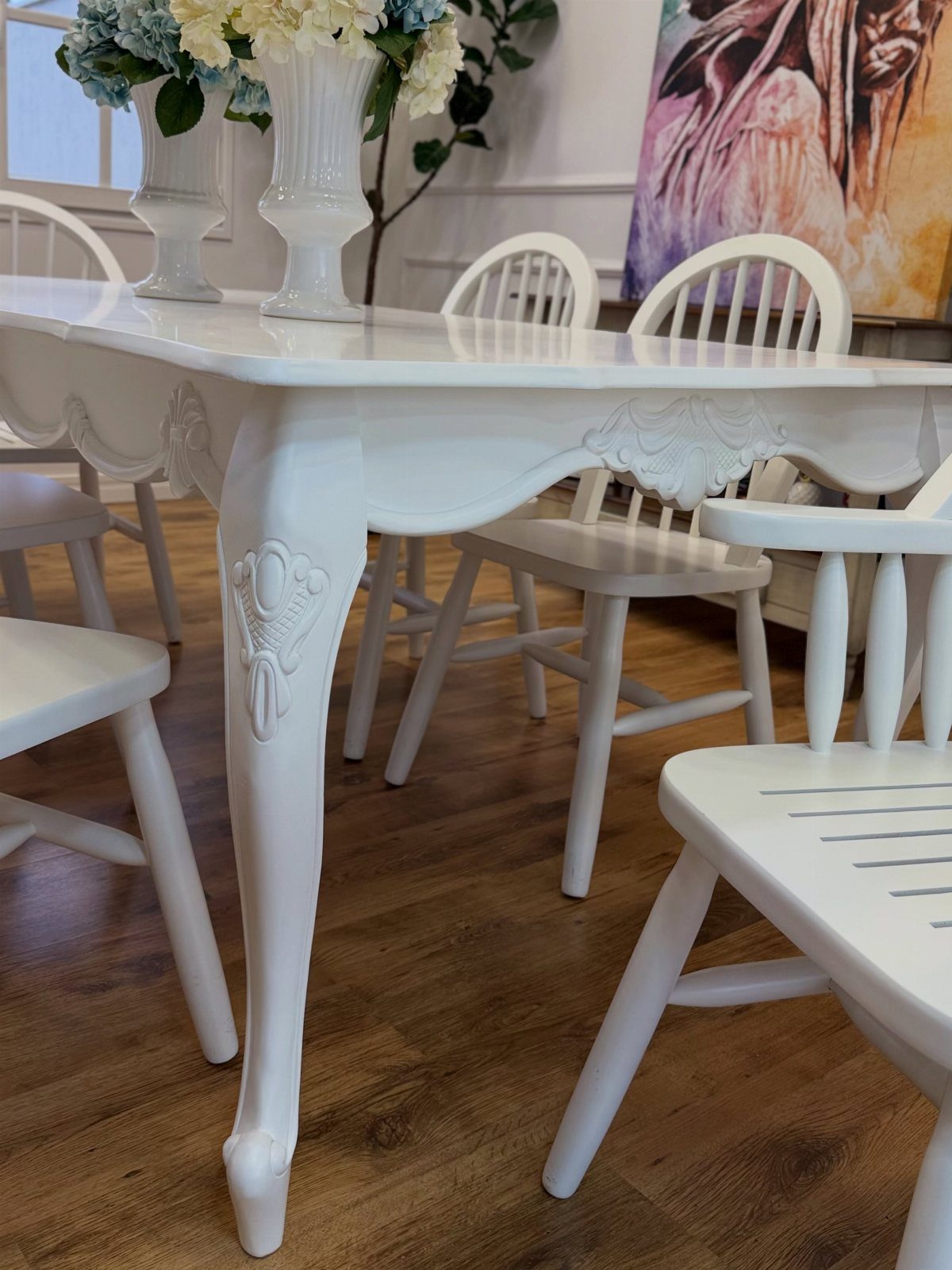
A glossy white finish turns carved wood furniture into something that reads formal without feeling heavy.
The paint smooths out mismatched grain and covers old stain, so this works well on secondhand finds or inherited pieces that never quite fit the room.
Chalk paint goes on without priming and dries fast enough to finish in a day.
Sand lightly between coats if you want a smooth result, or leave the brushstrokes visible for texture. A clear wax or polyurethane topcoat adds durability where plates and glasses sit.
Pair white painted wood with natural fiber rugs and linen to keep the look warm.
2. Sage Green Painted Dining Table
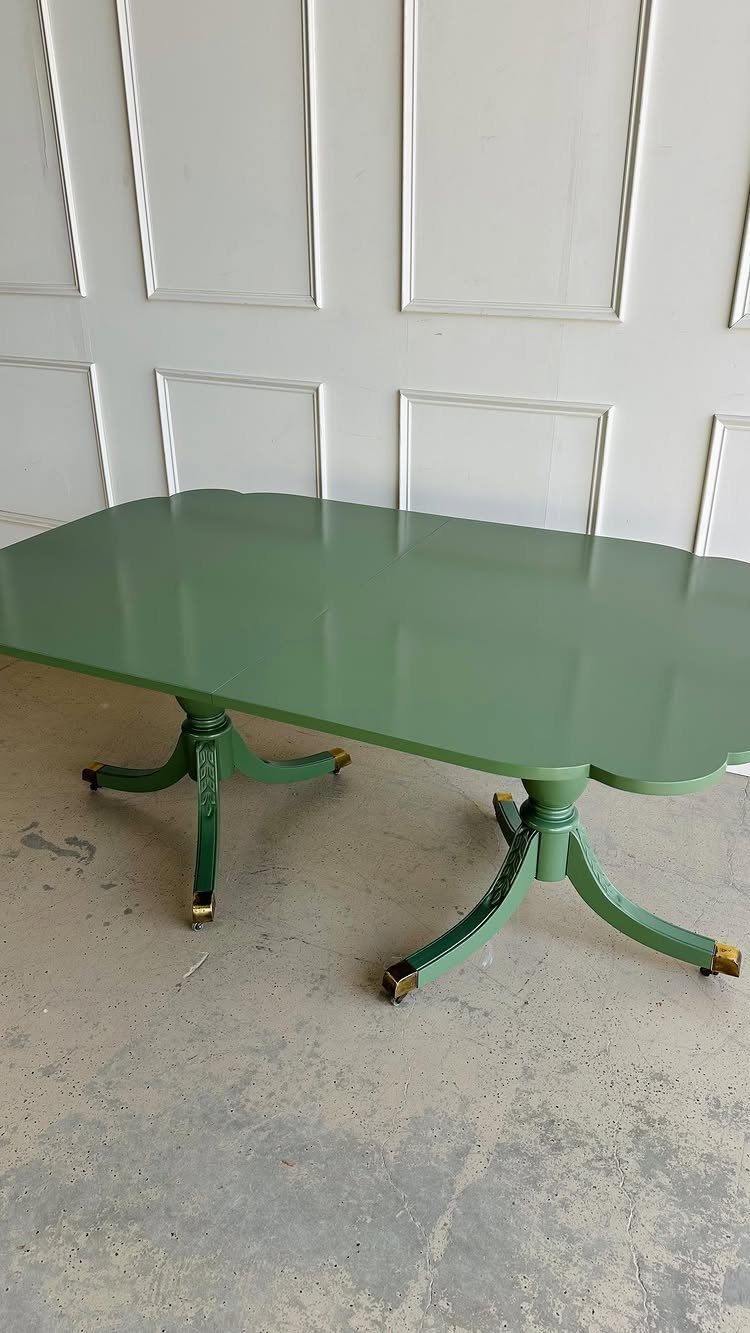
Sage green in a high-gloss finish gives a table presence without requiring ornate details. The sheen catches light and makes the color shift through the day, so even a simple silhouette holds attention.
High-gloss enamel or oil-based paint delivers that glassy surface, but it shows every drip and streak during application.
Thin coats with light sanding between each one prevent buildup. A foam roller leaves fewer marks than a brush.
Curved legs and gold-tipped feet add formality, though the green works just as well on straight-legged farmhouse tables if you want something more relaxed.
3. Natural Top with Painted Base
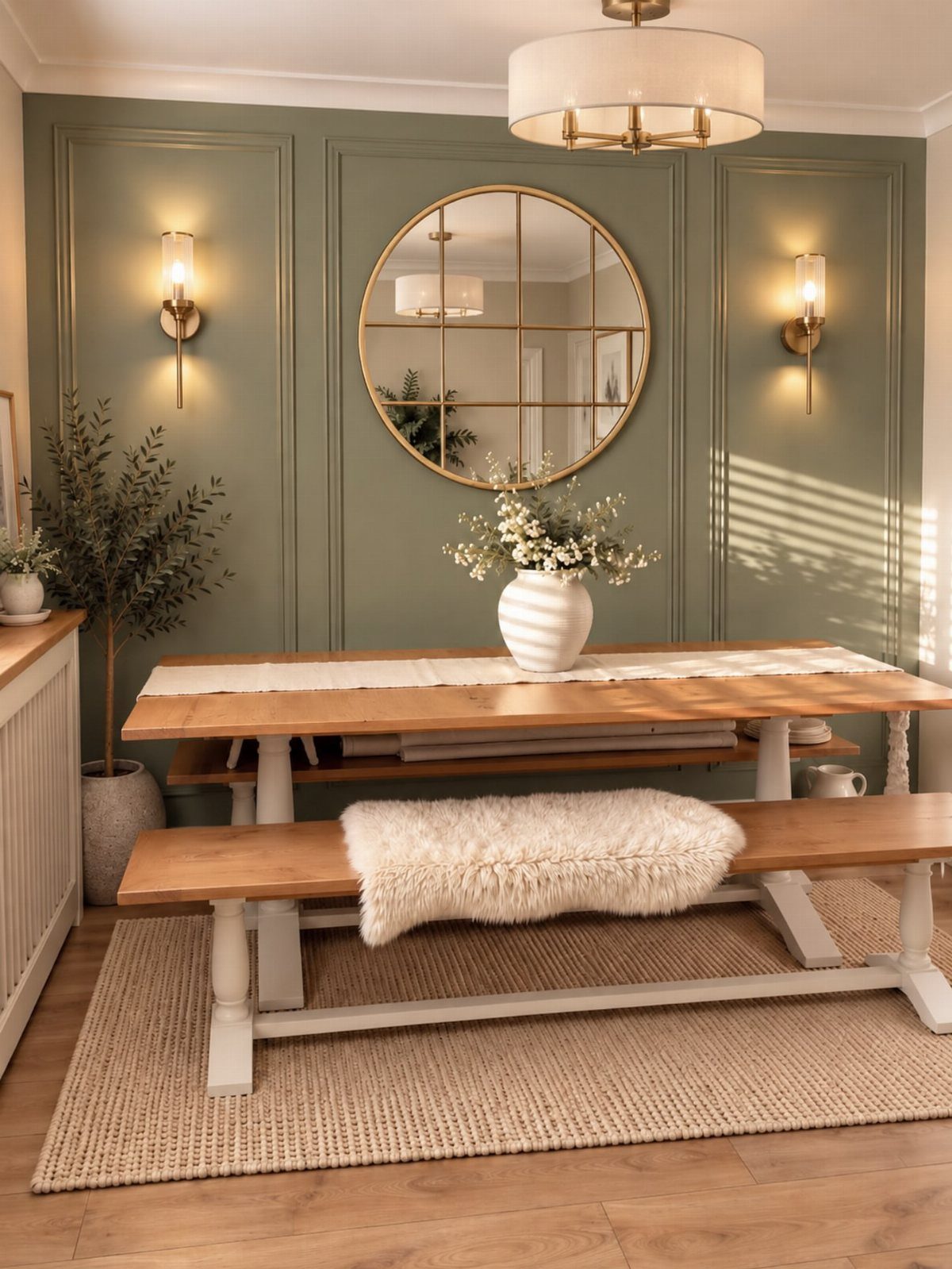
Leaving the tabletop bare and painting only the base splits the difference between rustic and refined. The natural wood shows grain and age, while the painted legs clean up the silhouette and tie the piece into the room’s palette.
White is the safe choice because it goes everywhere, but deeper colors like charcoal or navy anchor the table and let the wood tone shine.
Scuff-prone paint on table legs benefits from a hard topcoat, especially oil-based polyurethane or water-based polycrylic.
This approach saves time since you skip sanding and finishing the top, and any existing finish can stay if it still protects the wood.
4. Stenciled Painted Dining Table
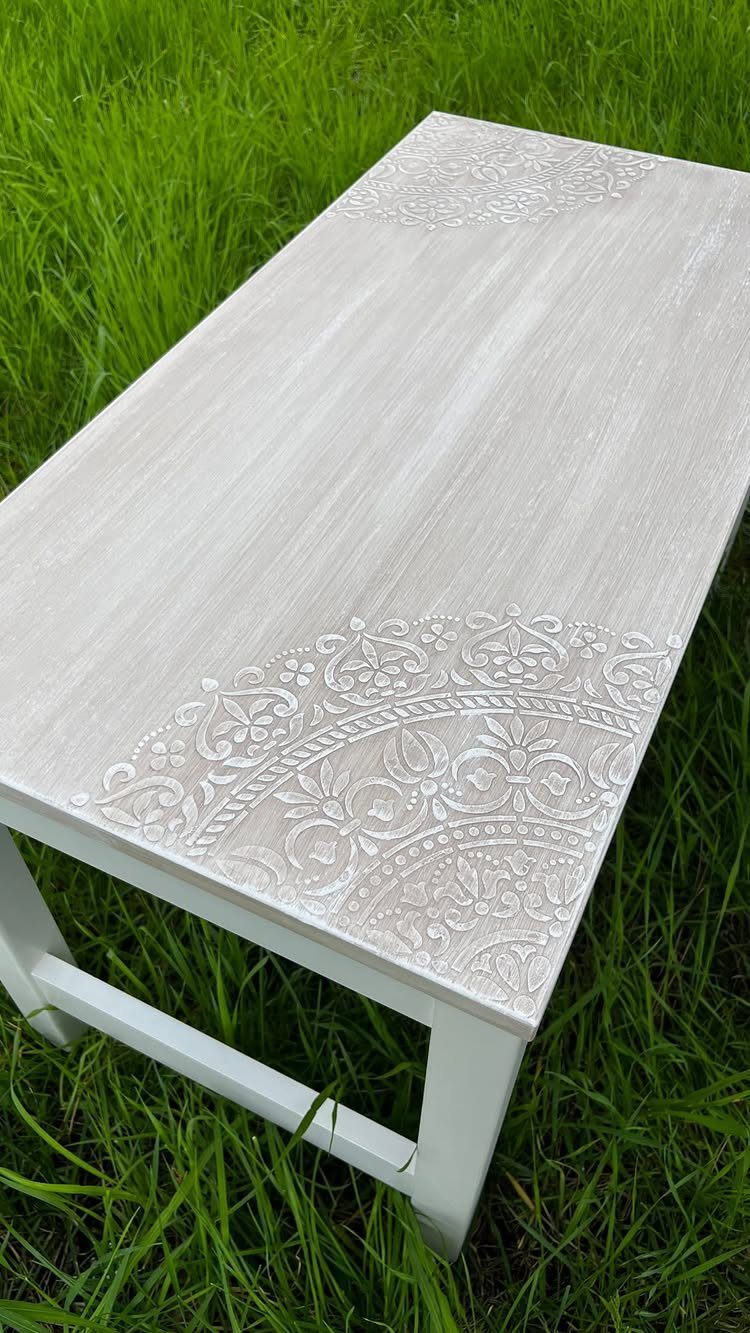
Stenciled patterns along the edges or corners of a painted table add detail without covering the whole surface.
The base coat goes on first, then the stencil sits flat and held down with painter’s tape while you dab paint through the openings with a foam pouncerbrush.
Ornate motifs like damask or tile patterns suit traditional furniture, while geometric or botanical stencils work on simpler shapes. Contrast matters more than color: dark stencils on a light base or the reverse both read clearly from across the room.
Seal the finished piece with polyurethane or wax to protect the stencil work from scraping when dishes slide across.
5. Colorful Abstract Painted Dining Table
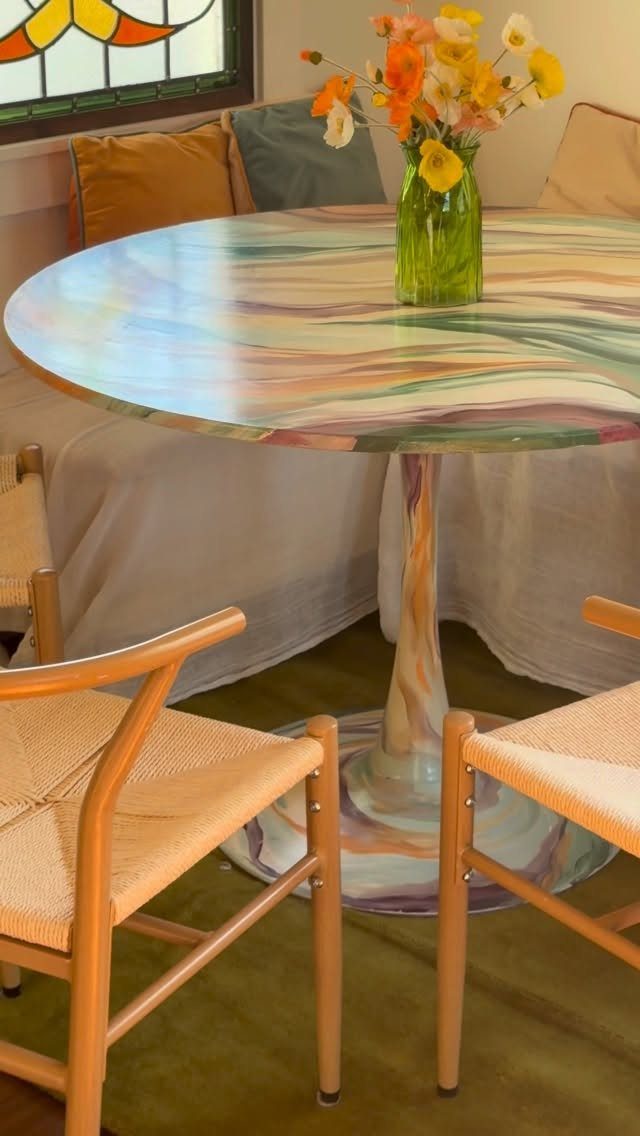
A swirling multicolor finish turns a table into the room’s focal point, so the surrounding walls and decor can stay simple. Pouring and marbling techniques layer paint in wet stages, letting colors blend where they meet without fully mixing.
Acrylic pouring medium thins the paint enough to flow but keeps it from separating.
Pour each color in overlapping puddles, then tilt the table to move the paint across the surface. A torch or heat gun pops air bubbles and pulls colors into finer detail.
This finish hides scratches and wear better than solid paint because the pattern is already busy.
Choosing Paint Types
Acrylic and latex paints hold up well on dining tables because they flex slightly as wood expands and contracts with humidity.
Both dry hard enough to resist everyday wear, and you can find them in any sheen from flat to high-gloss.
The matte surface it leaves works best on tables that see light use, since the finish is softer than acrylic or latex. A topcoat fixes that.
Better paint costs more per can but covers in fewer coats, so you use less overall. Thin, even layers prevent drips and give a smoother result than one thick coat.
Protective Finishes
Water-based polycrylic dries clear and fast, usually within 2 hours between coats. Oil-based polyurethane adds an amber tint that warms white and light colors but can muddy greens and grays.
Wax buffs to a soft sheen and feels smooth under your hand, though it needs reapplication every few months on high-traffic surfaces. Polyurethane lasts longer without maintenance.
Apply topcoats in thin layers with a foam brush or lint-free cloth. Thick applications trap bubbles and take days to fully cure.
Preparation Steps
Clean the table with a degreaser or TSP substitute to remove oils, food residue, and any wax from old furniture polish. Residue left on the surface keeps paint from bonding, and you will see it lift within weeks.
Light sanding with 120-grit paper scuffs glossy finishes enough for paint to grip. Sand in the direction of the grain to avoid visible scratches, then wipe away dust with a damp cloth.
Primer is not required over most existing finishes if you use chalk paint, but bare wood or stained surfaces benefit from a coat of bonding primer. It seals tannins that can bleed through light colors.
Frequently Asked Questions
Can a dining table be painted?
Yes, any dining table can be painted as long as you clean and lightly sand the surface first.
Paint bonds to wood, existing finishes, and even old stain once you remove grease and scuff the surface with 120-grit paper. A topcoat like polyurethane or wax protects the finish from plates and spills.
How to make a dining table look expensive?
A high-gloss finish in sage green or glossy white makes a simple table look polished and deliberate.
The sheen catches light and draws attention to the silhouette, so even straight legs and plain shapes read as formal. Gold-tipped feet or curved details add formality if the table has them.
What colors are available for kitchen tables?
White, sage green, charcoal, and navy all work on dining tables, depending on how much contrast you want with your chairs and walls. Multicolor abstract finishes turn the table into a focal point.
What paint should I use for a durable finish on my kitchen table?
Acrylic and latex paints flex with humidity changes and dry hard enough to handle plates and daily use. Chalk paint skips the priming step and dries fast, though it needs a topcoat for durability.






