
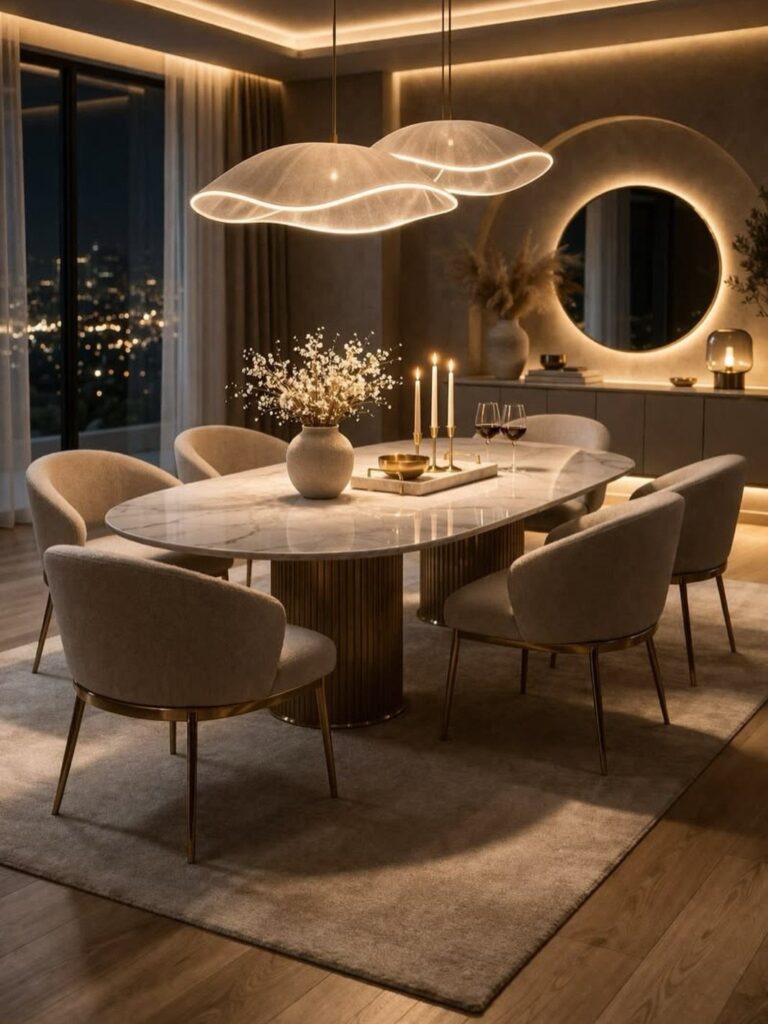
A dining room sideboard works as both storage and a surface you can style with lamps, vases, framed art, and mirrors.
If the sideboard is narrow and you need extra display space, a marble ledge mounted above adds a second surface for layered frames.
If you want the wall itself to become the display, backlit integrated shelving holds objects at eye level and keeps the surface below clear for serving.
The most common mistake is covering the entire surface with small objects until nothing stands out: start with one anchor piece, add one or two supporting objects, and stop.
1. Use Trays for Organization
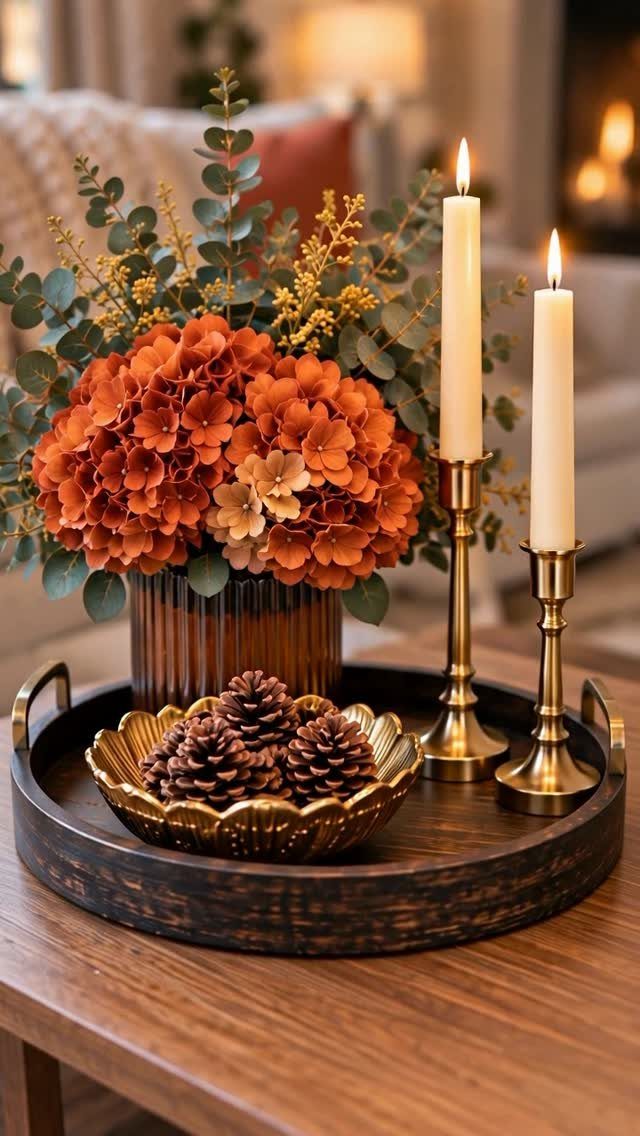
A tray corrals small objects so they read as one arrangement instead of scattered clutter.
I use a wooden or metal tray with a low edge, wide enough to hold a vase, a pair of candlesticks, and a small bowl without crowding them.
The tray itself becomes the frame, and you can lift the whole group in one move when you need to clear the surface.
Keep the items inside to a few pieces; any more and the tray loses its organizing function and starts to look busy.
2. Large Mirror
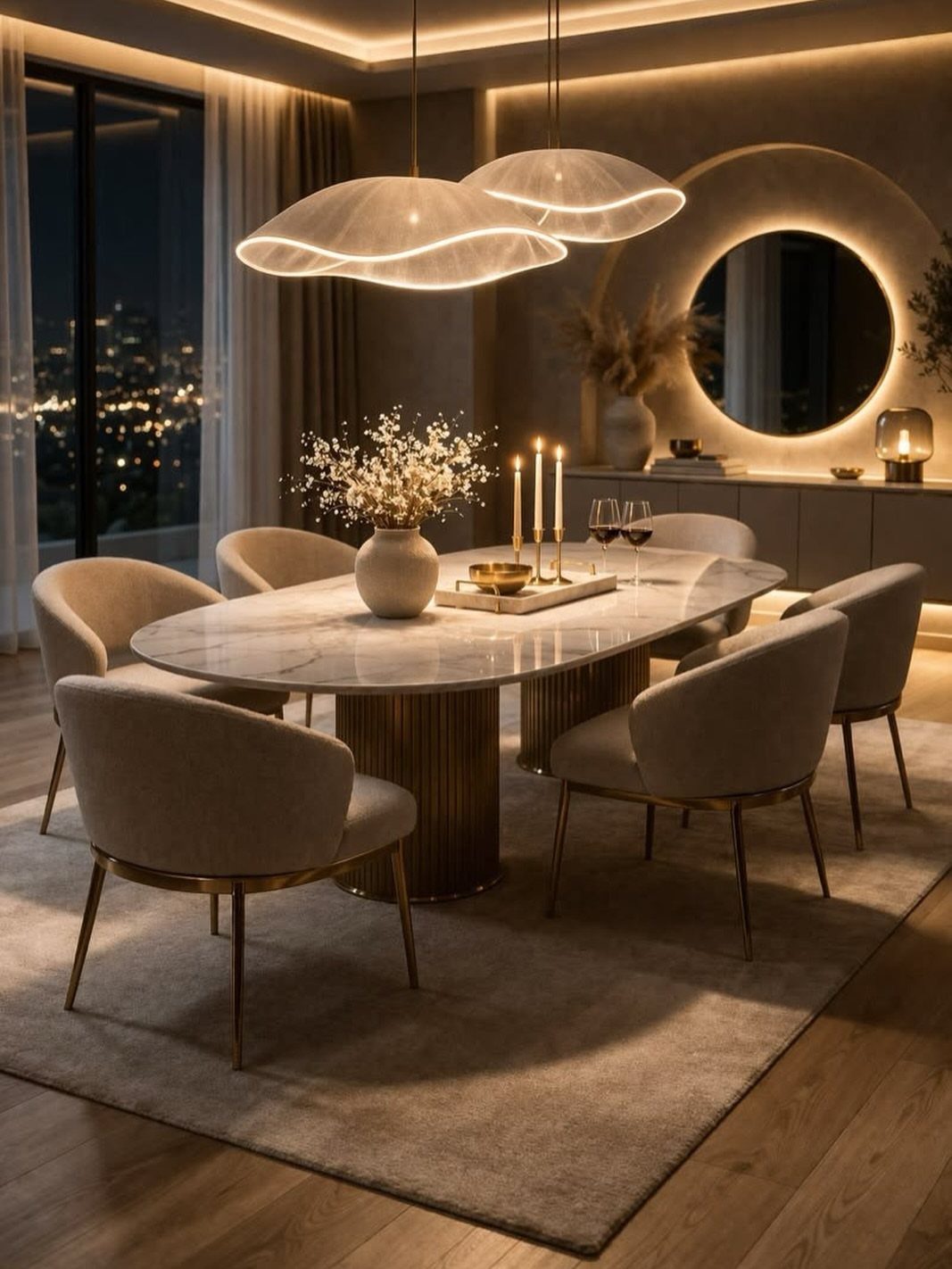
A large circular mirror fills vertical space and reflects light across the room, which makes a small dining room feel more open.
I lean one against the wall or hang it centered above the sideboard, leaving room below for a lamp or a low bowl.
The frame can be minimal metal or carved wood depending on what else is in the room. A mirror this size becomes the focal point, so keep what sits in front of it simple: one or two objects at most.
3. Taller Items at the Back
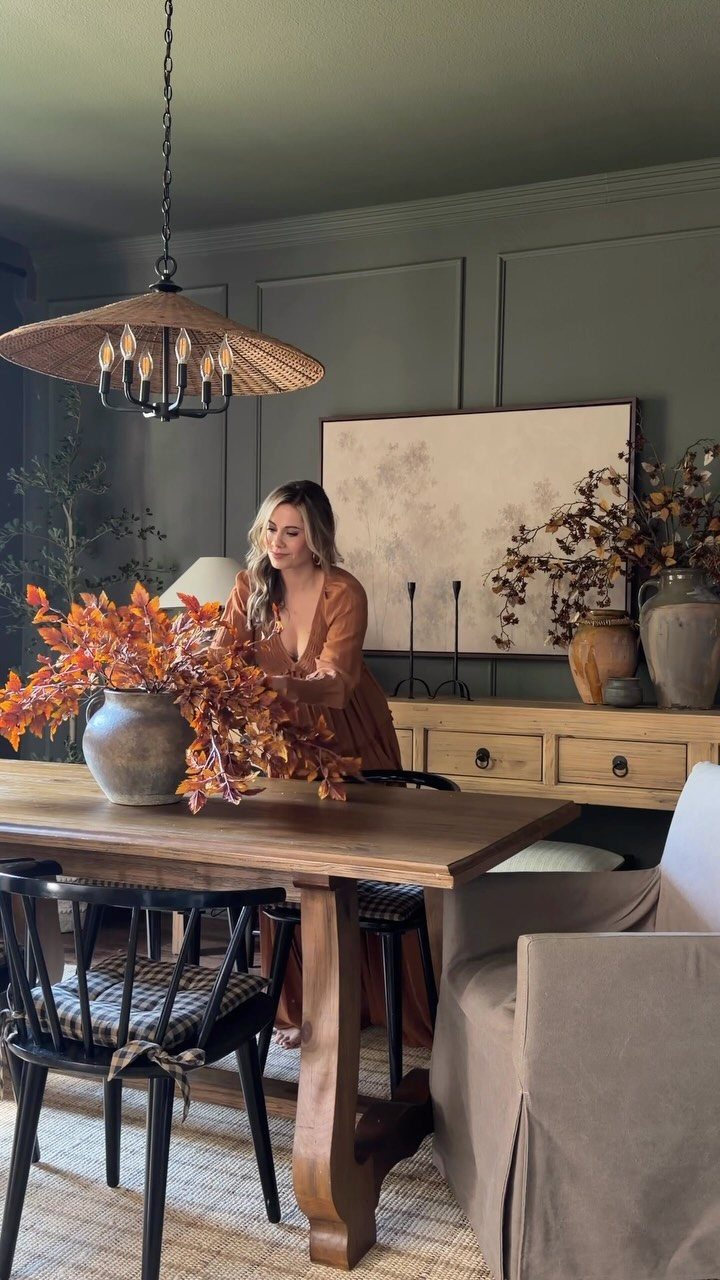
Layering objects by height gives you visible depth instead of a flat line of items at the same level.
I place the tallest piece, a painting or a tall vase, at the back, then step down to medium items in the middle and low objects at the front edge.
This arrangement works best when there is a clear difference in height between each layer. It also lets you see every piece instead of hiding shorter items behind taller ones.
4. Matching Items on Either Side
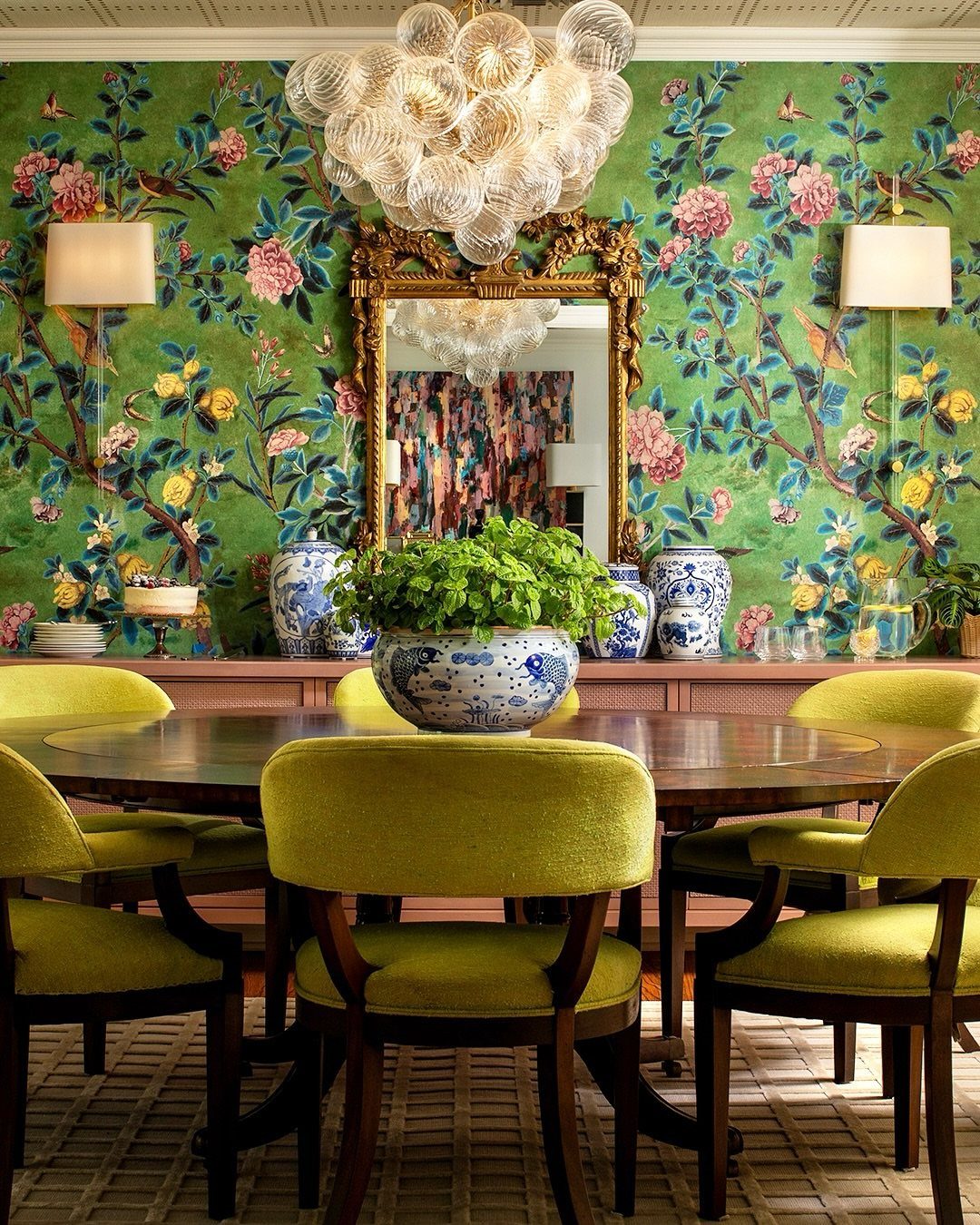
Matching pairs of objects on either side of the sideboard create symmetry, which looks intentional and settled.
I use identical lamps, vases, or framed pieces spaced evenly from the center, then add one contrasting item in the middle if the surface is wide enough.
This approach suits formal dining rooms and keeps the sideboard from feeling chaotic when there are multiple objects on display.
If exact matches are hard to find, 2 items in the same color and similar height will give you the same effect.
5. Closed Cabinetry
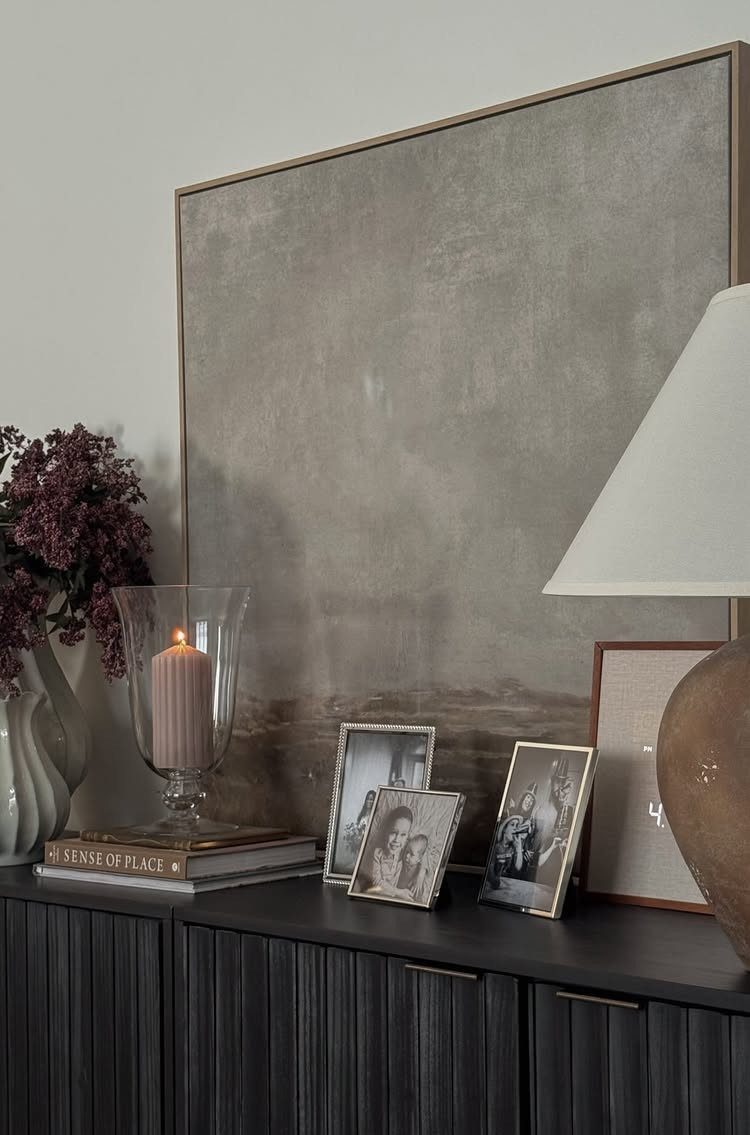
Closed cabinetry hides storage while leaving the top surface free for decor.
I use a sideboard with doors or drawers to stash serving dishes, linens, and flatware, then style the top with a few deliberate pieces: a framed print, a lamp, and a small stack of books.
This setup works best in small dining rooms where open shelving would add visual weight. The closed front holds the room calm, and you can change what sits on top without reorganizing what is inside.
6. Lamp and Record Player
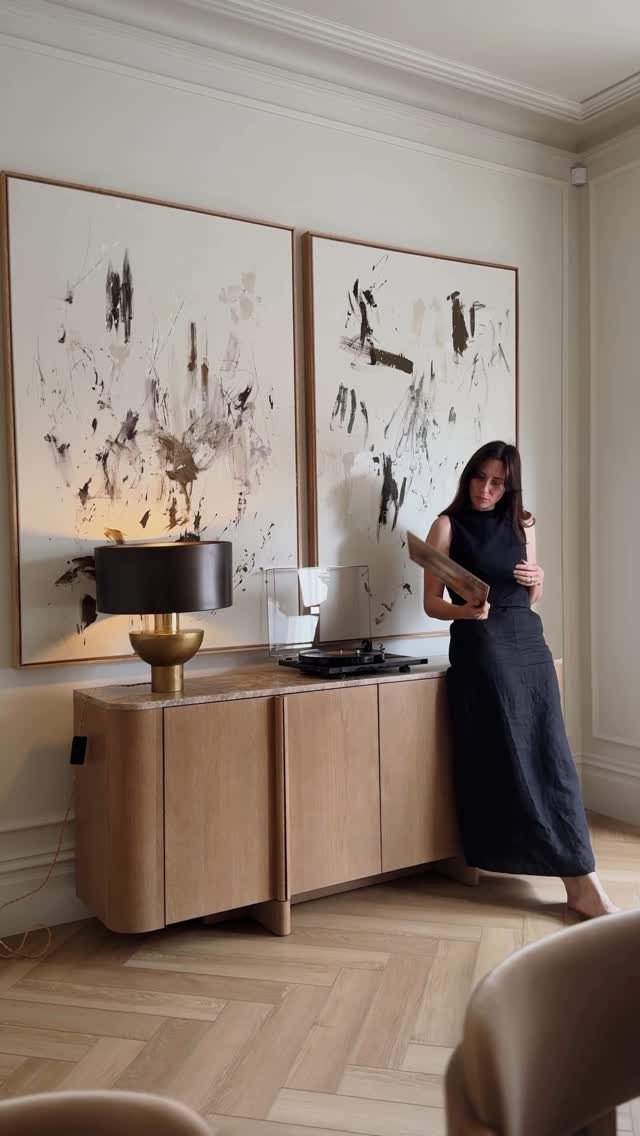
A lamp and a record player turn a sideboard into a functional surface, not just display.
I place a table lamp at the left for ambient light during dinner and set a record player at the other end where it is easy to reach.
This arrangement works if the sideboard sits near an outlet and you have clearance for the turntable.
Above, hang large abstract art to fill the wall and let the objects below hold their own ground. This setup suits open-plan spaces where the dining room doubles as a lounge.
7. Vase of Branches with Books
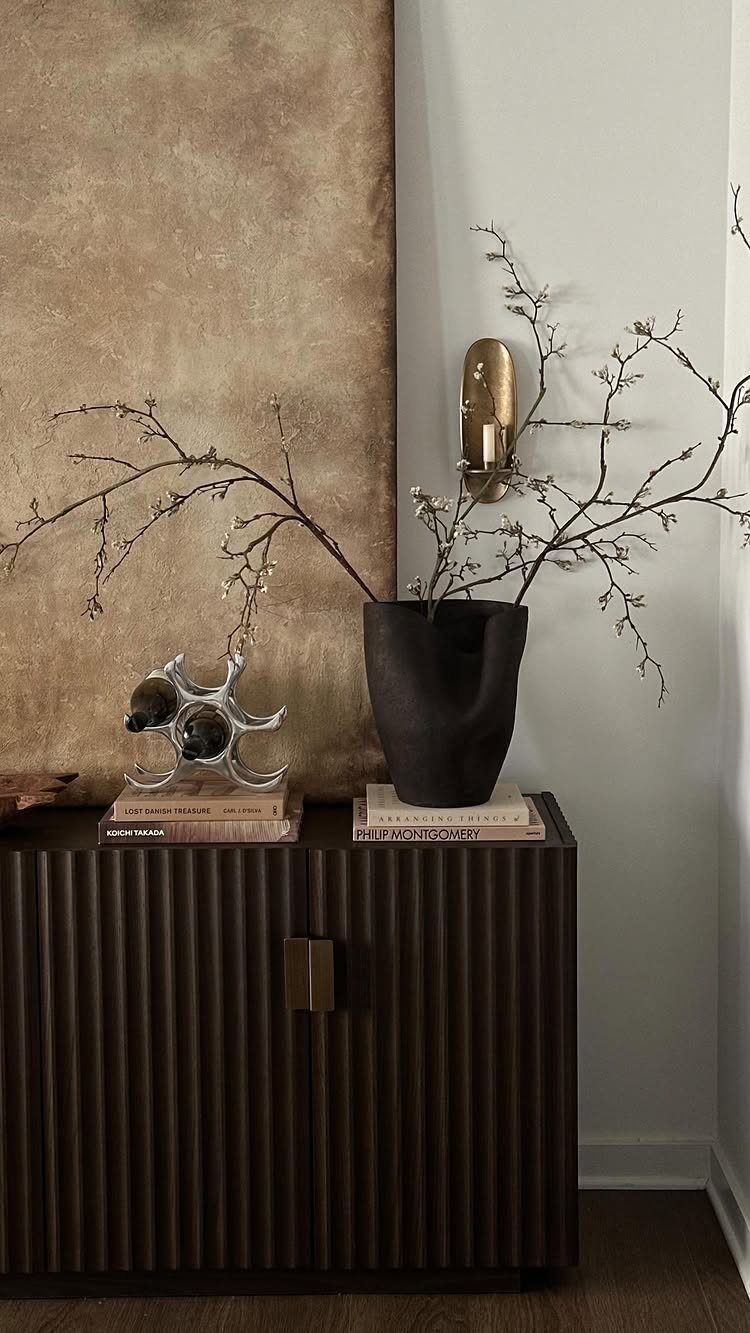
Branches in a tall vase add height and natural form without the upkeep of fresh flowers.
I use bare branches or dried stems in a narrow black or ceramic vase, placing it at one end of the sideboard and stacking 2 or 3 books beside it.
The vertical lines of the branches draw the eye up, which works well on a low sideboard.
A small metallic object, a sculpture or a candle holder, fills the space between the vase and the books. This setup stays minimal and holds up over weeks without any arranging.
8. Large Painting Above Styled Sideboard
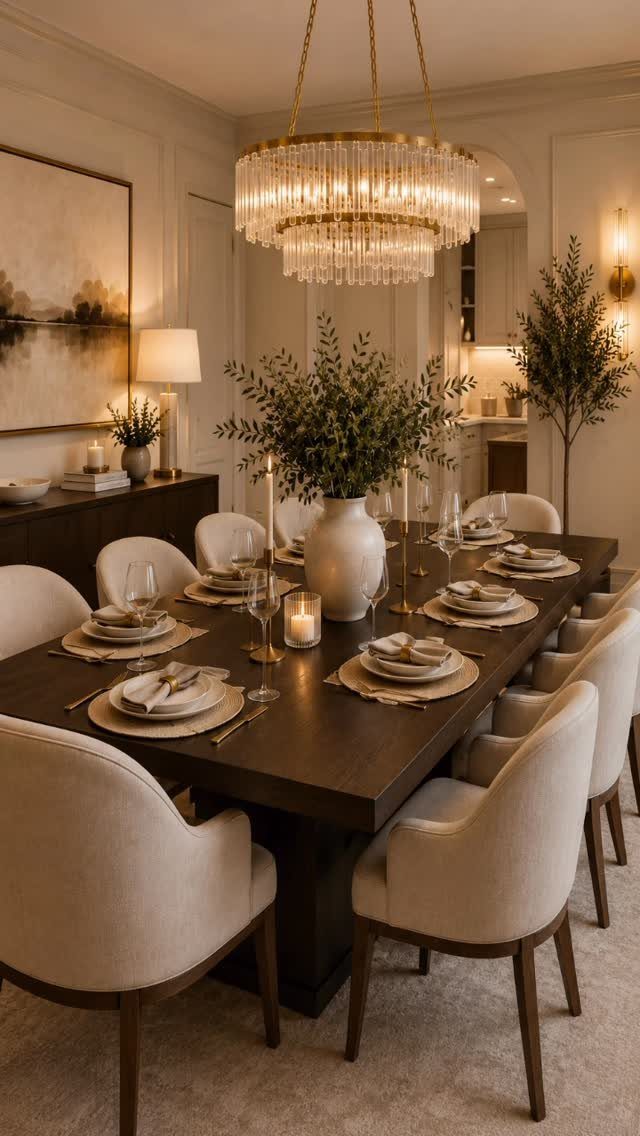
A large piece of art hung above the sideboard anchors the wall and lets you keep the surface itself simple.
I center the painting so its lower edge floats just above the sideboard, then add a table lamp at one side, a small plant, and a few books.
The lamp provides task light, and the plant softens the harder lines of the furniture.
This arrangement works when the sideboard sits against a long wall and you want one strong focal point instead of multiple small objects competing for attention.
9. Marble Ledge with Layered Art
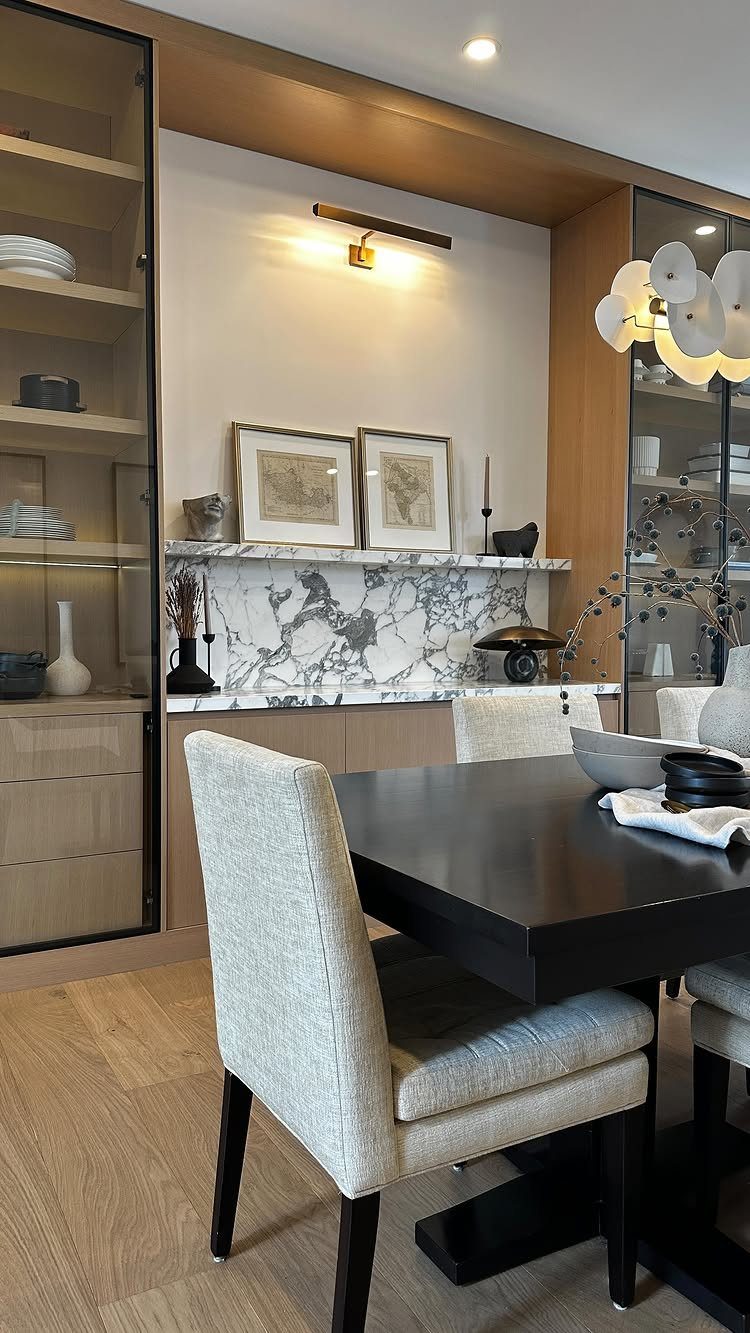
A marble ledge mounted above the sideboard gives you a second display surface for framed prints and small objects.
I layer 2 or 3 frames against the wall, overlapping their edges slightly, then place a vase or a bowl in front. The marble reflects light and adds material contrast to a wood sideboard.
A wall sconce above the ledge lights the arrangement at night. The marble ledge is the right call when the sideboard is narrow and you need extra display space without adding depth.
10. Backlit Integrated Wall Shelving
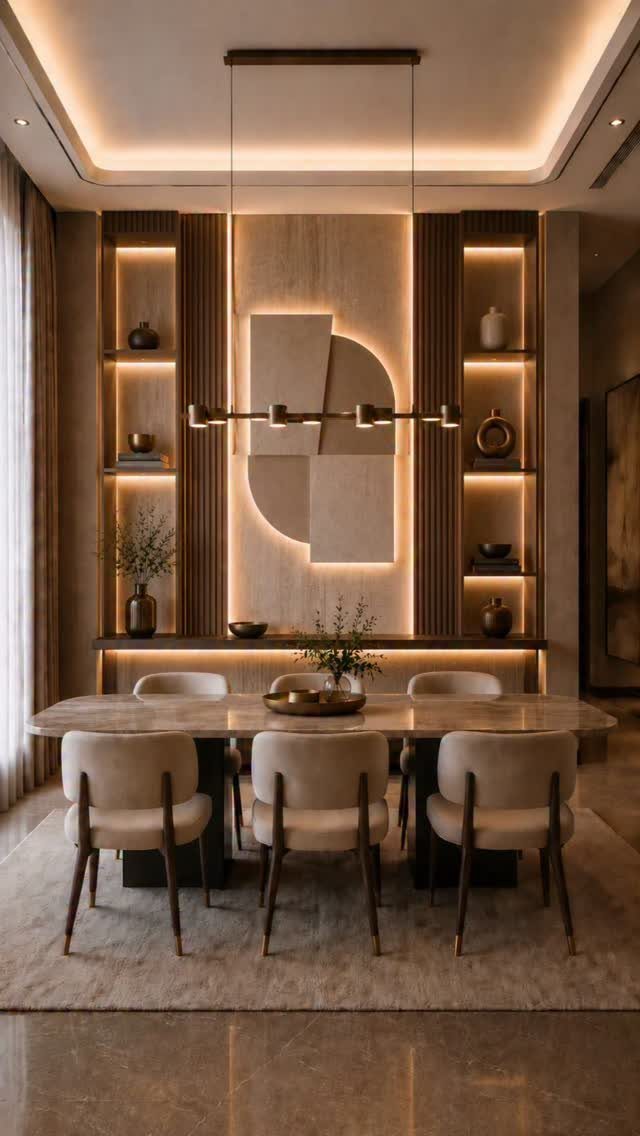
Integrated shelving above the sideboard holds decorative objects at eye level and keeps the surface below uncluttered.
I use backlit shelves to highlight vases, bowls, and small sculptures, running the shelving the full width of the wall. The lighting comes from LED strips mounted behind the shelves, which cast a soft glow without visible bulbs.
Below, the sideboard stays functional for serving. This approach suits modern dining rooms where the wall itself becomes the display and you want a built-in look instead of freestanding furniture.
Importance of a Sideboard
A dining room sideboard holds dinnerware, glassware, linens, and serving pieces inside, which keeps counters and tables clear during and between meals.
The top becomes a place to set a lamp, a vase, or a framed print, and because the piece sits at waist height with clear floor space around it, it draws attention without blocking sightlines across the room.
That makes it both functional storage and a natural spot to arrange decorative objects that give the room character.
A sideboard works in dining rooms, entryways, and living rooms. In any of those spaces, it offers the same 2 things: closed storage that keeps clutter out of view and a surface that lets you put something deliberate on display.
Common Mistakes to Avoid
The most common mistake is covering the entire surface with small objects until nothing stands out and the sideboard reads as cluttered instead of styled.
Start with one anchor piece, a mirror, a lamp, or a large framed print, then add one or two supporting objects and stop.
If the arrangement does not feel finished, the instinct is to add more, but pulling one piece off usually works better.
Mail, keys, charging cables, and the other things that land there every day belong in a drawer or a bin with a lid, not out where they compete with what you arranged.
A tray holds a few specific objects in one group, but it is not a catch-all for everything that lands on the sideboard during the week.
Leave part of the surface empty.
A sideboard that is fully covered loses its function as a place to set a serving dish or a pitcher when you need it, and the decor becomes an obstacle instead of an arrangement you can work around.
Frequently Asked Questions
How to decorate a kitchen buffet table?
The rules are the same for a kitchen buffet: one tall anchor, a second piece for balance, and nothing more.
A tray pulls scattered small objects into a single visual unit instead of letting them read as clutter. Keep a quarter of the surface bare so you have room to set down a platter or pitcher when you’re using it.
Are credenza and sideboard the same?
A credenza and a sideboard are similar pieces but differ in form and use.
Sideboards run wider and offer more enclosed storage; credenzas sit lower and stretch longer. The name matters less than the dimensions and what you need it to hold.
Should a dining room have a sideboard?
Closed storage keeps plates, glasses, and table linens off your counters and out of sight.
The top surface becomes a natural spot to arrange a lamp, a vase, or framed art that gives the room character. It offers both function and a deliberate display without blocking sightlines.






