
Grey walls in a dining room shift with the light throughout the day, reading fresh in morning sun and warmer and more intimate under evening fixtures.
The shade you choose depends on how much natural light the room gets: lighter greys with a warm undertone work in rooms used during the day, while darker greys create the right mood in spaces lit mostly by pendant lights and candles at night.
Pairing grey walls with white trim and a pale ceiling keeps the color from absorbing too much brightness, and a mirror opposite a window doubles the natural light you have.
1. Hang a Biophilic Botanical Wallpaper
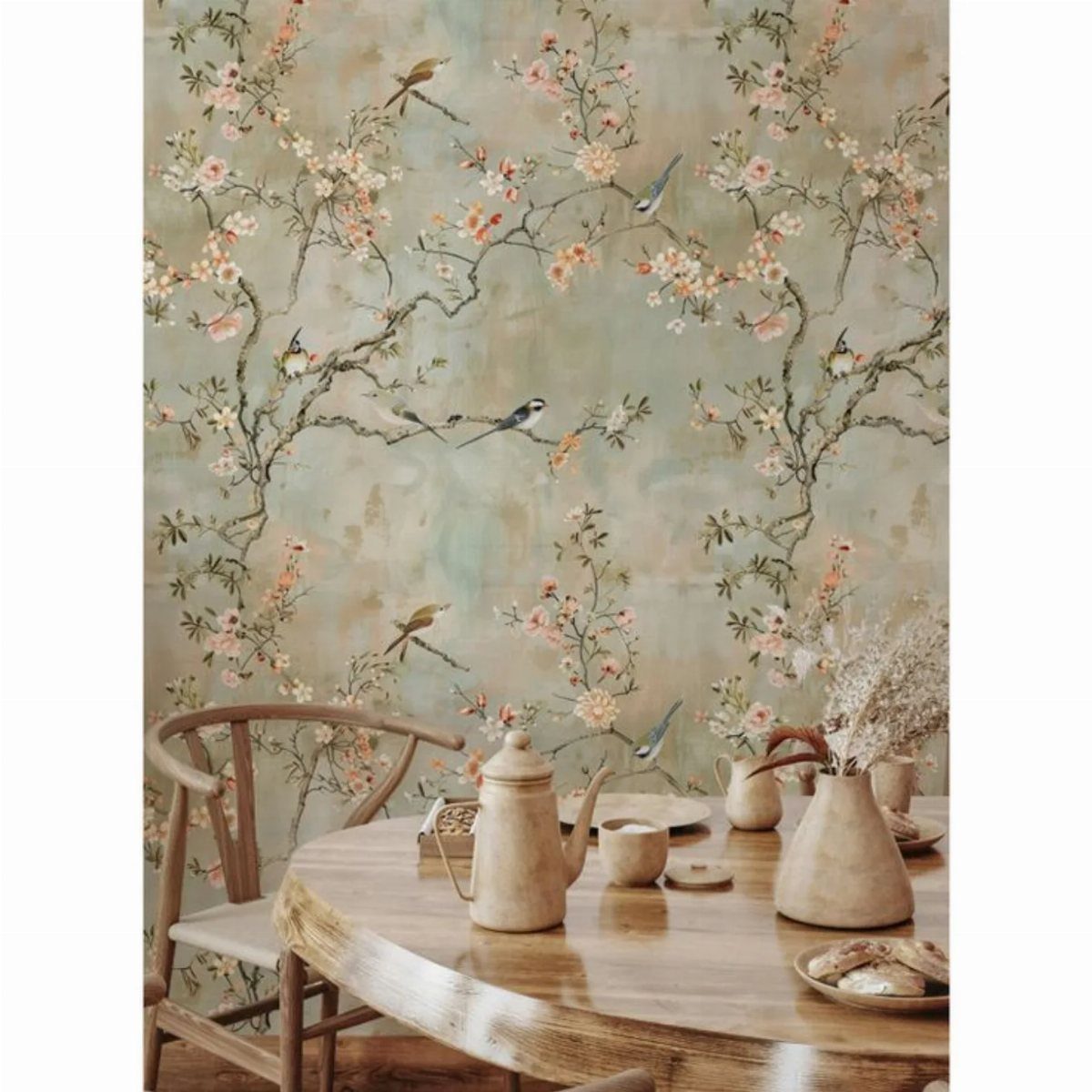
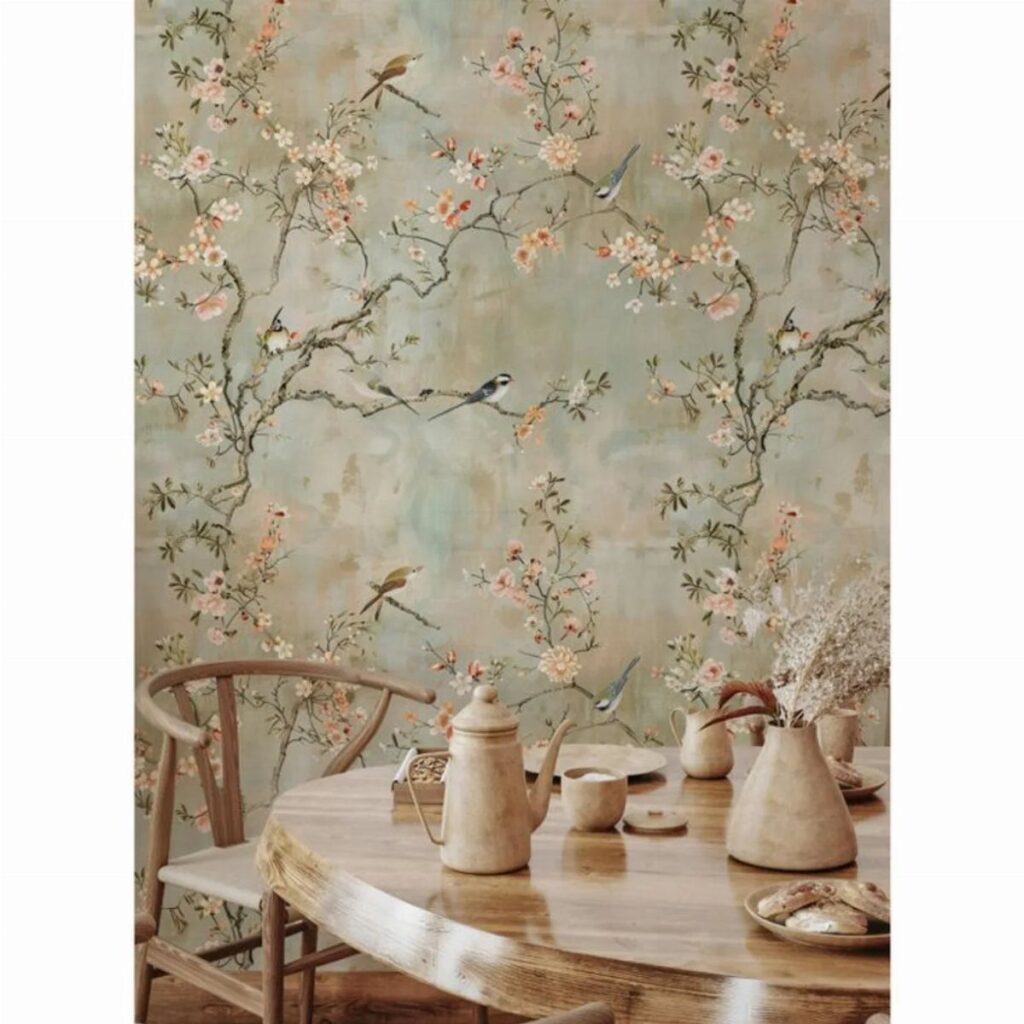
Botanical wallpaper brings pattern and life to grey walls without needing to paint or hang frames.
A design with flowering branches and birds gives the room a sense of depth, especially when the wallpaper wraps a single accent wall behind the table.
Pair it with wood furniture to keep the look grounded. The warmth of the table and chairs balances the cool grey tones in the rest of the room, and the botanical print feels intentional rather than busy.
This works especially well in smaller dining rooms where you want visual interest but don’t have space for large art or shelving.
2. Dark Grey Walls and Jute Rug
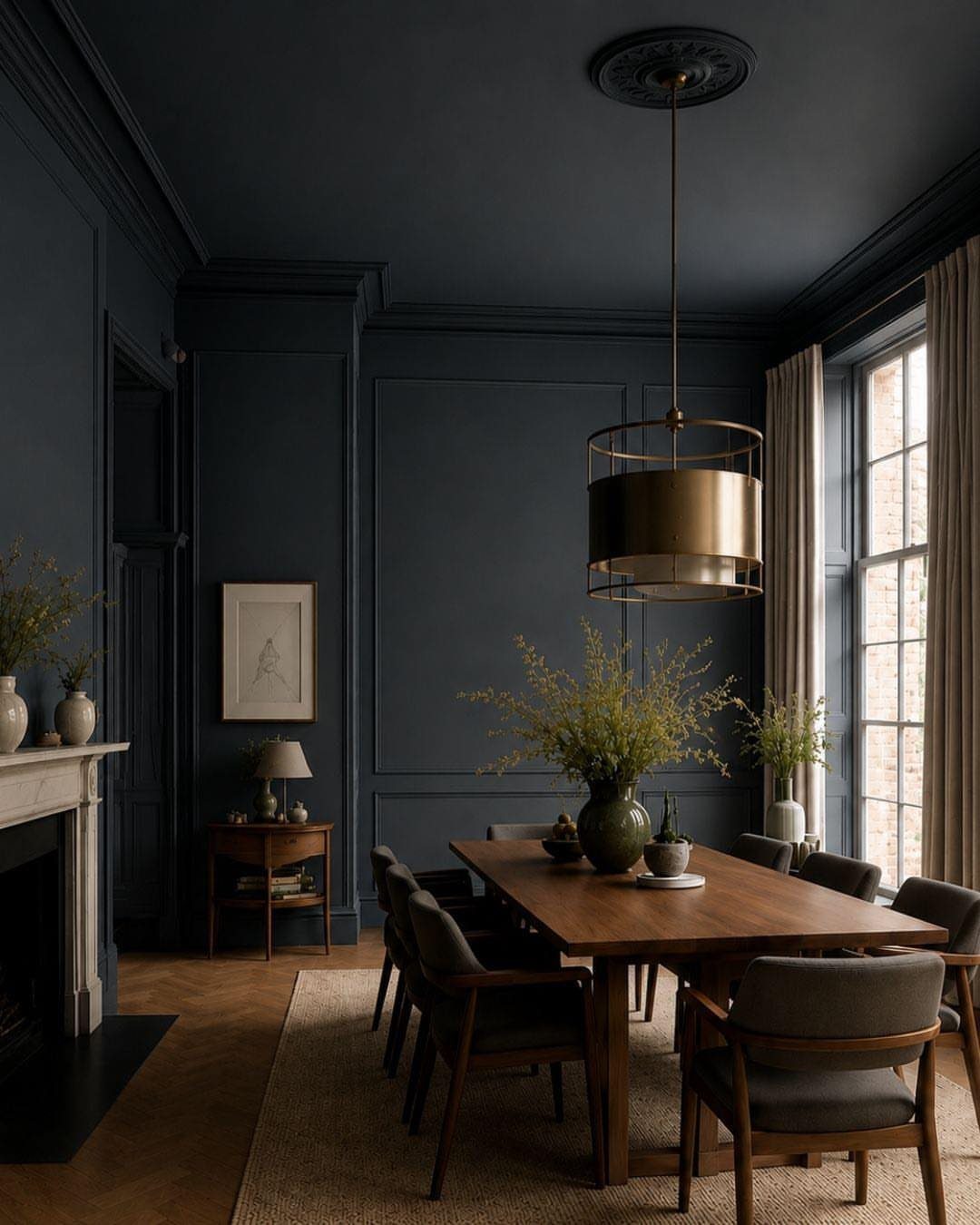
Dark grey walls create intimacy in a dining room, especially when paired with warm textures like jute and wood.
The contrast between the cool wall color and the natural fiber rug softens the space and keeps it from feeling too moody.
A jute rug works here because it adds warmth underfoot without competing with the walls. It also holds up well under a dining table, where spills are less frequent than in a kitchen.
Add a brass or gold pendant light to bring warmth overhead. The metal finish catches light and balances the darker palette, making the room feel finished rather than just dim.
3. Grey Walls with Marble and Brass
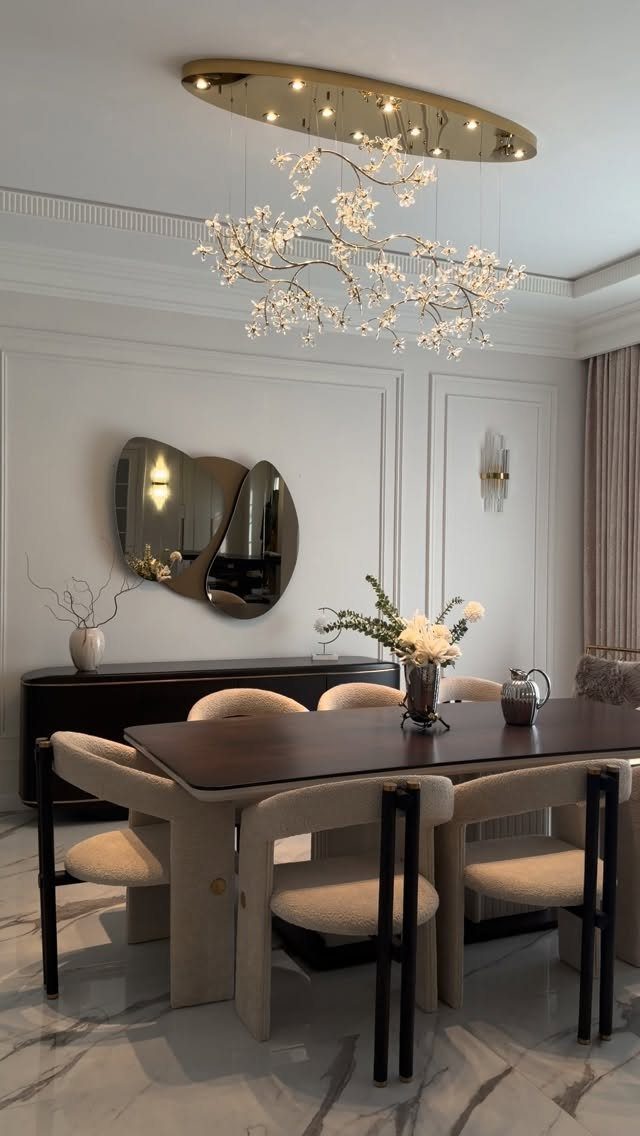
Marble flooring and brass light fixtures lift grey walls into something more formal. The veining in the marble adds movement to the floor, and the brass ceiling fixture reflects light without feeling too traditional.
Bouclé chairs soften the harder surfaces. The texture contrasts with both the marble and the smooth grey walls, making the seating feel inviting rather than rigid.
An organic-shaped mirror on the wall breaks up the straight lines of the table and the geometry of the marble. Grey walls work as a neutral backdrop here, letting the materials do the talking.
4. Grey Wall Paneling
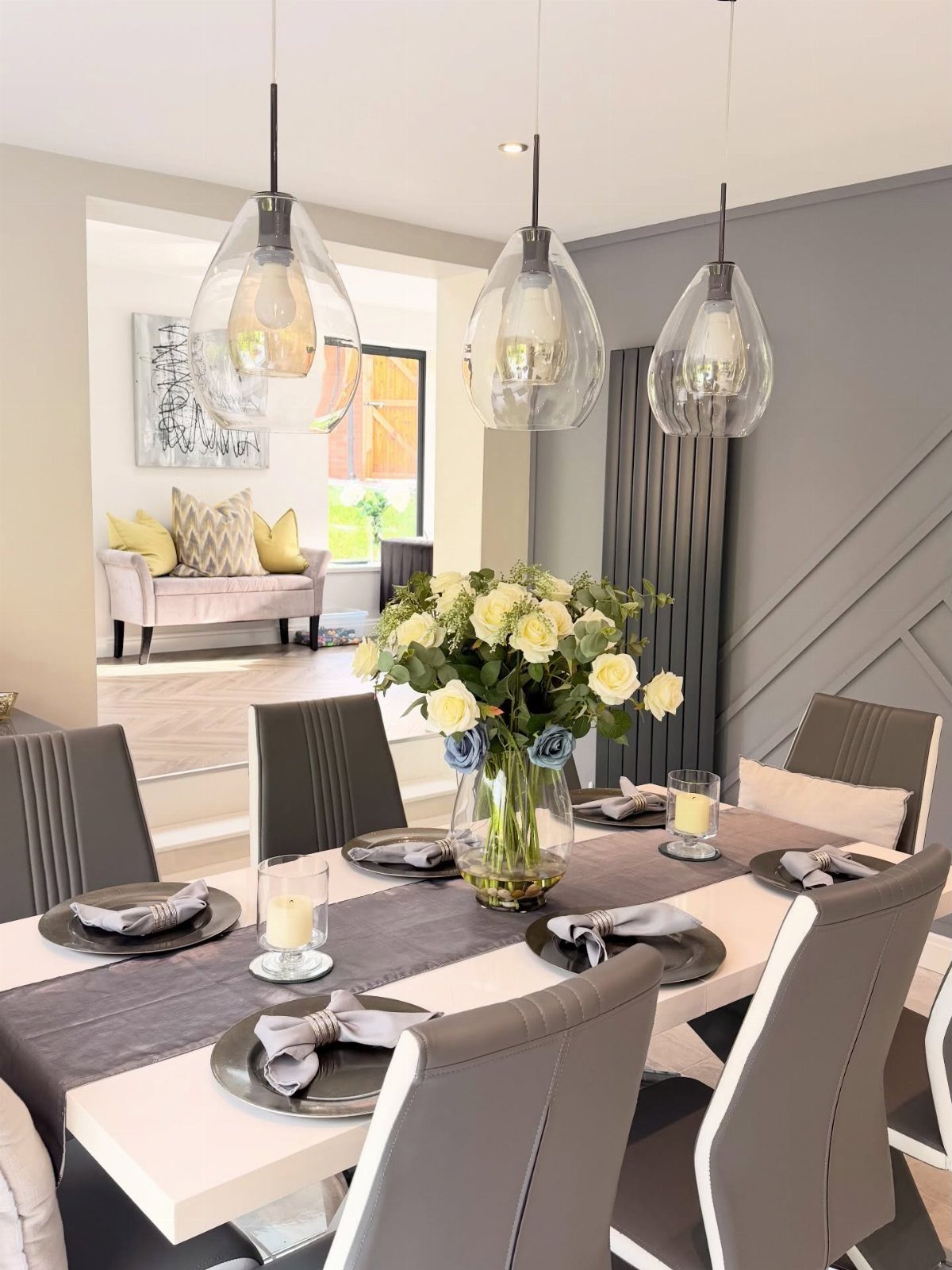
Wall paneling in grey gives a dining room a formal feel without needing crown molding or wainscoting in another color. Geometric panels add depth to flat walls, and painting them the same grey keeps the look modern rather than traditional.
A white table against the panels keeps the room from feeling too dark. The contrast keeps the grey from feeling heavy, and glass pendant lights overhead add another layer of transparency.
This setup works in both rentals and owned homes.
Paneling can be installed with adhesive strips or lightweight trim, so it doesn’t require major construction. Keep the chairs simple so the wall stays the focus.
5. Grey Walls with Colorful Artwork
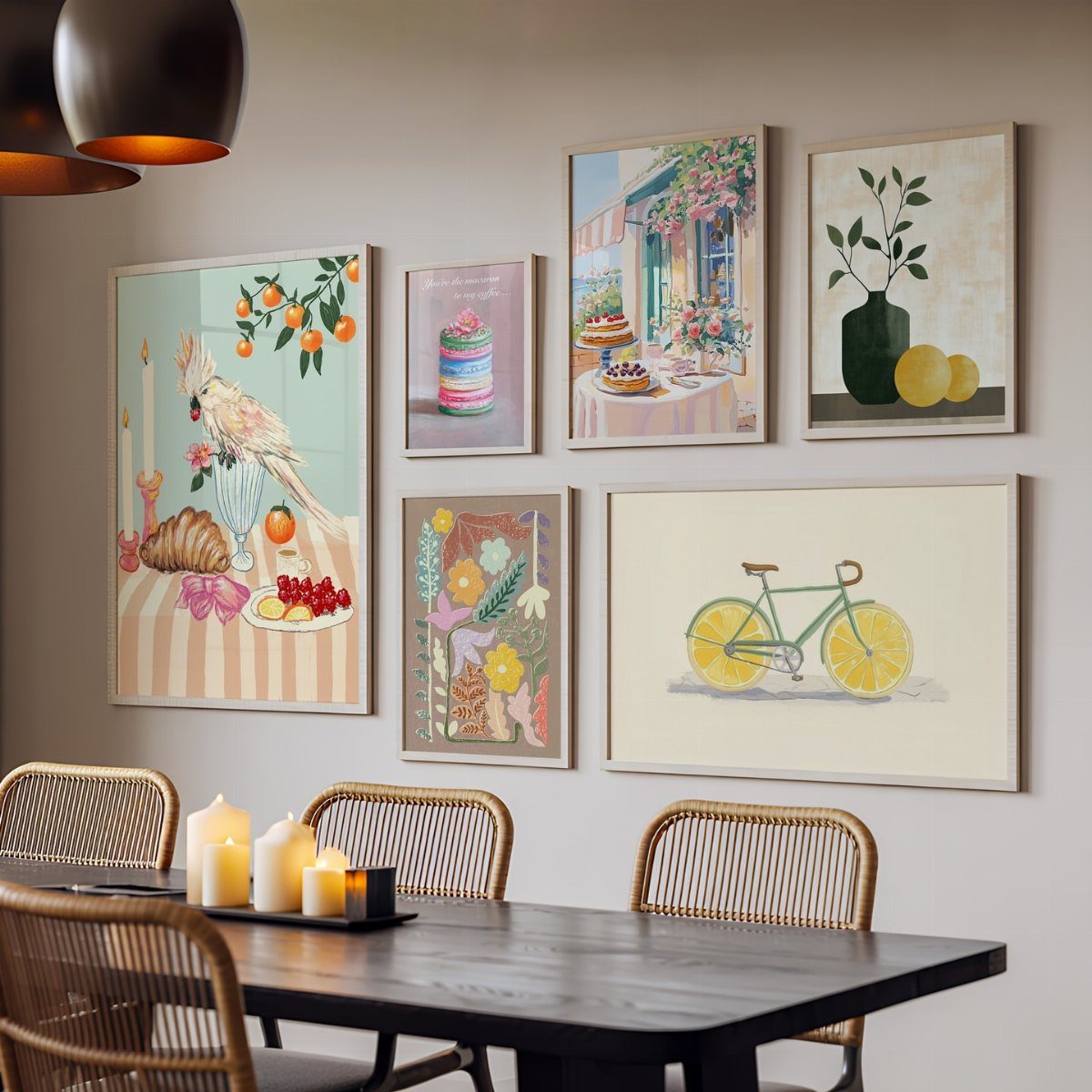
Colorful artwork stands out cleanly on grey walls, which act as a neutral backdrop without the starkness of white. A gallery wall of prints in different hues brings energy to the room without needing to repaint or add patterned wallpaper.
Frame the art in matching frames to keep the focus on the colors themselves. Black frames work well with black furniture, tying the pieces together without adding more competing tones.
Rattan chairs lighten the look. Their open weave contrasts with the solid black table and keeps the room from feeling too heavy, even with darker furniture and walls.
6. Monochromatic Light Grey Palette
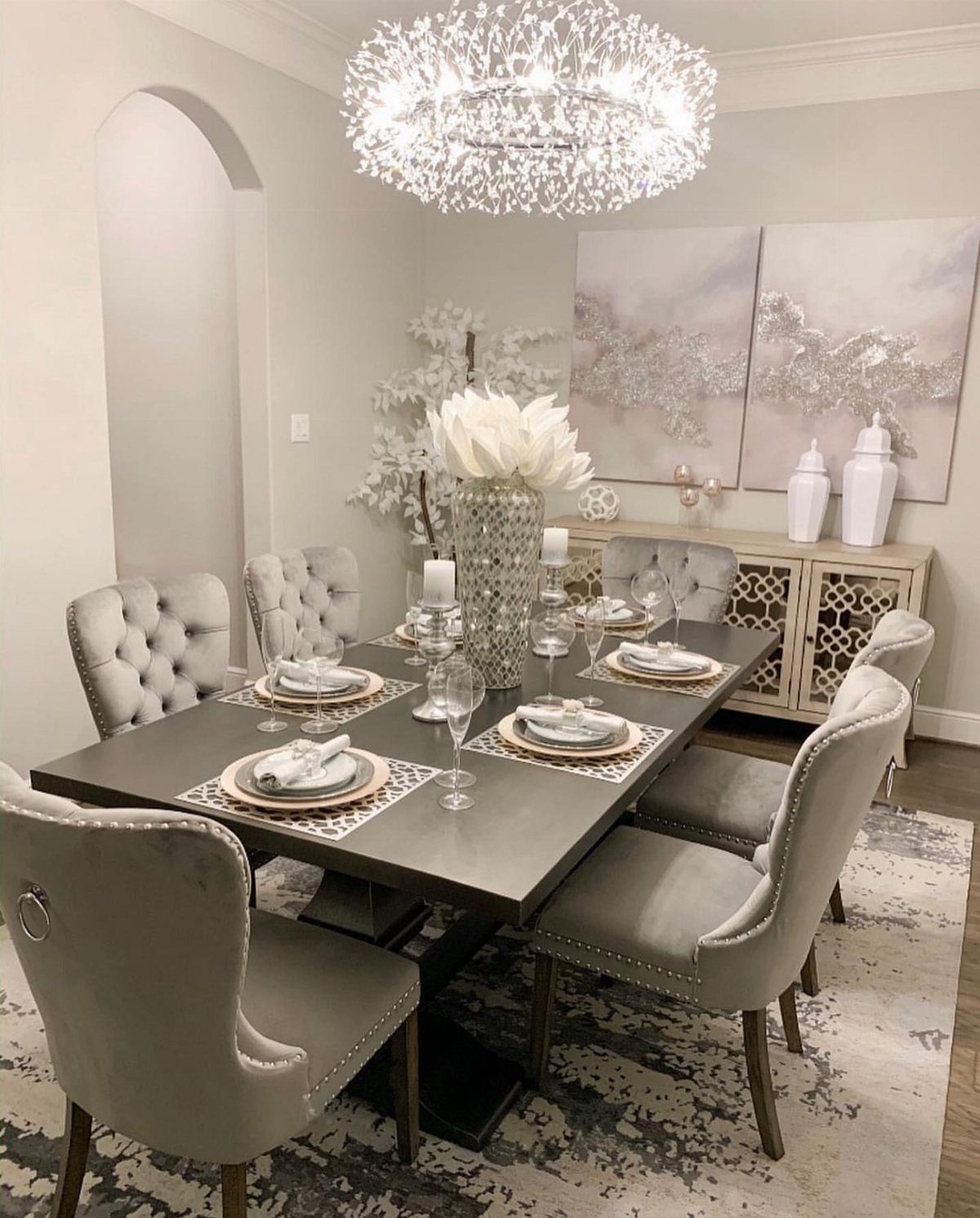
A monochromatic grey palette keeps a dining room calm and cohesive, especially when you layer different shades and textures. Light grey walls paired with a darker grey table and tufted velvet chairs create contrast without introducing new colors.
The velvet on the chairs adds softness and depth. It reflects light differently than painted walls or a wood table, so the room reads as layered rather than flat.
A crystal chandelier brings sparkle overhead.
The facets catch light and break it up, which keeps an all-grey room from feeling too muted. This look works best in rooms with good natural light, where the different greys stay distinct.
7. Light Grey Walls with Contrasting Black Furniture
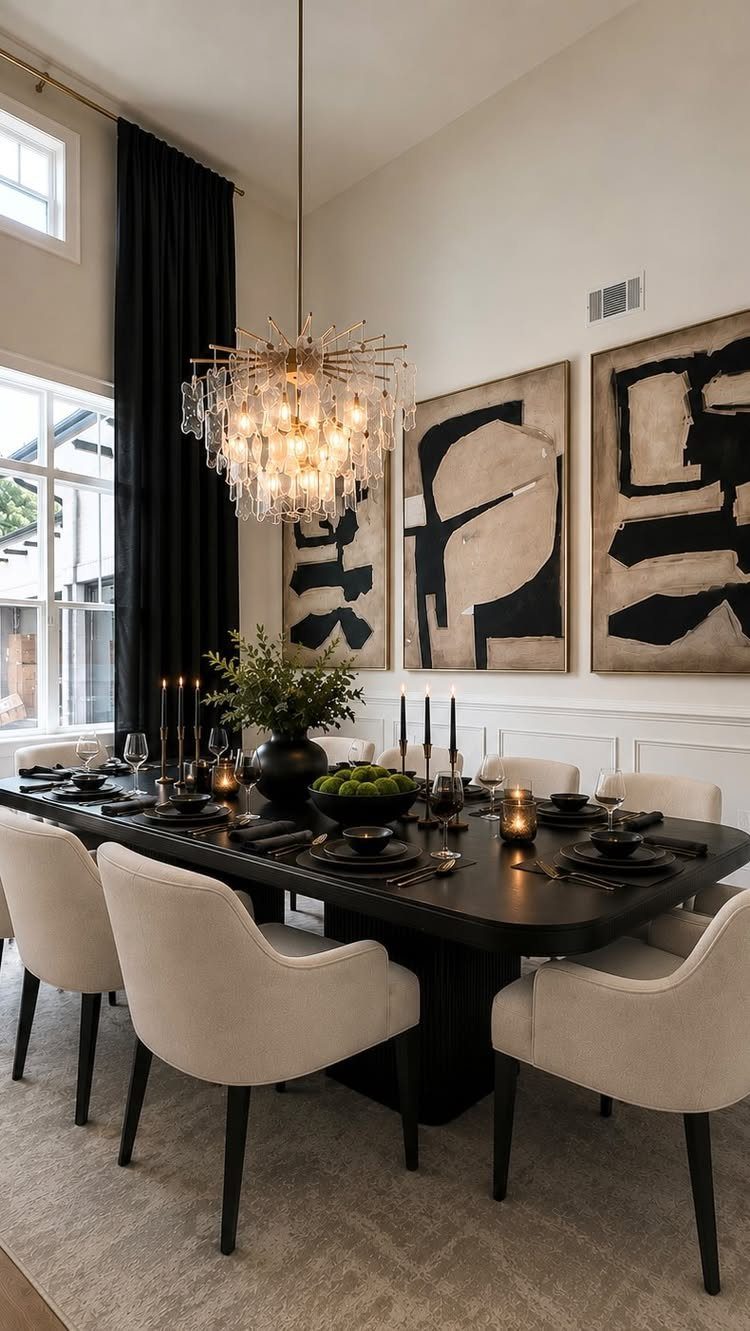
Black furniture anchors light grey walls without making the room feel heavy. A black table paired with white upholstered chairs creates contrast that stays crisp, and the light walls keep the darker furniture from overwhelming the space.
The facets break up the solid blocks of black and grey, so the room feels layered rather than flat.
Abstract art in muted tones ties the palette together. Keep the frames simple so the artwork reads as part of the walls, not as another competing element.
8. Grey Walls with Crystal Chandelier
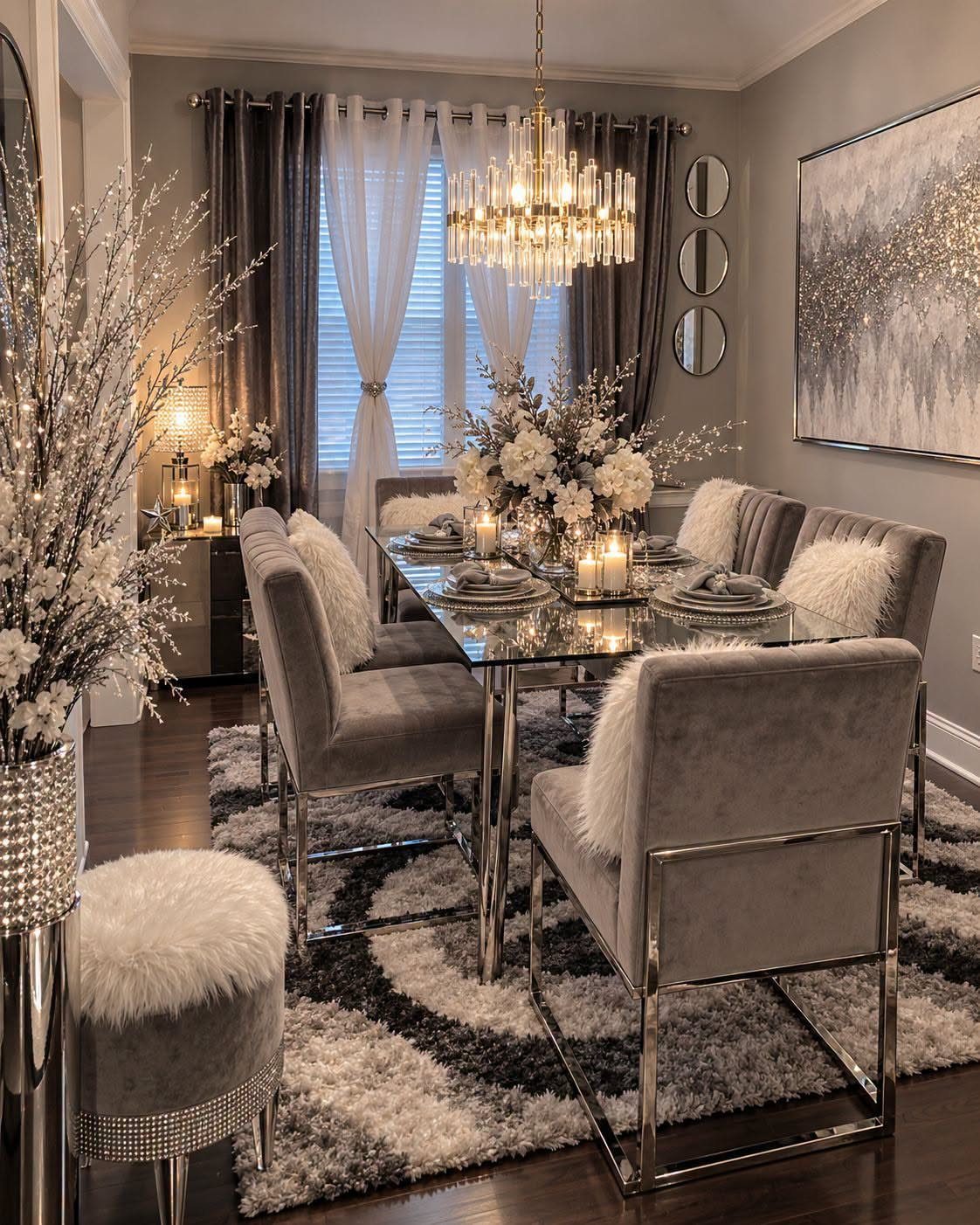
A glass table disappears visually, which lets grey velvet chairs and a crystal chandelier take center stage. The transparency keeps the room from feeling crowded, even when the chandelier is ornate and the chairs are upholstered.
Faux fur throws on the chairs add texture without color. They soften the hard surfaces of the glass and the walls, and they’re easy to swap out seasonally.
A grey shag rug continues the monochromatic palette underfoot. The pile adds another layer of texture, which keeps an all-grey room from reading as cold or sterile.
9. Patterned Grey and Gold Wallpaper
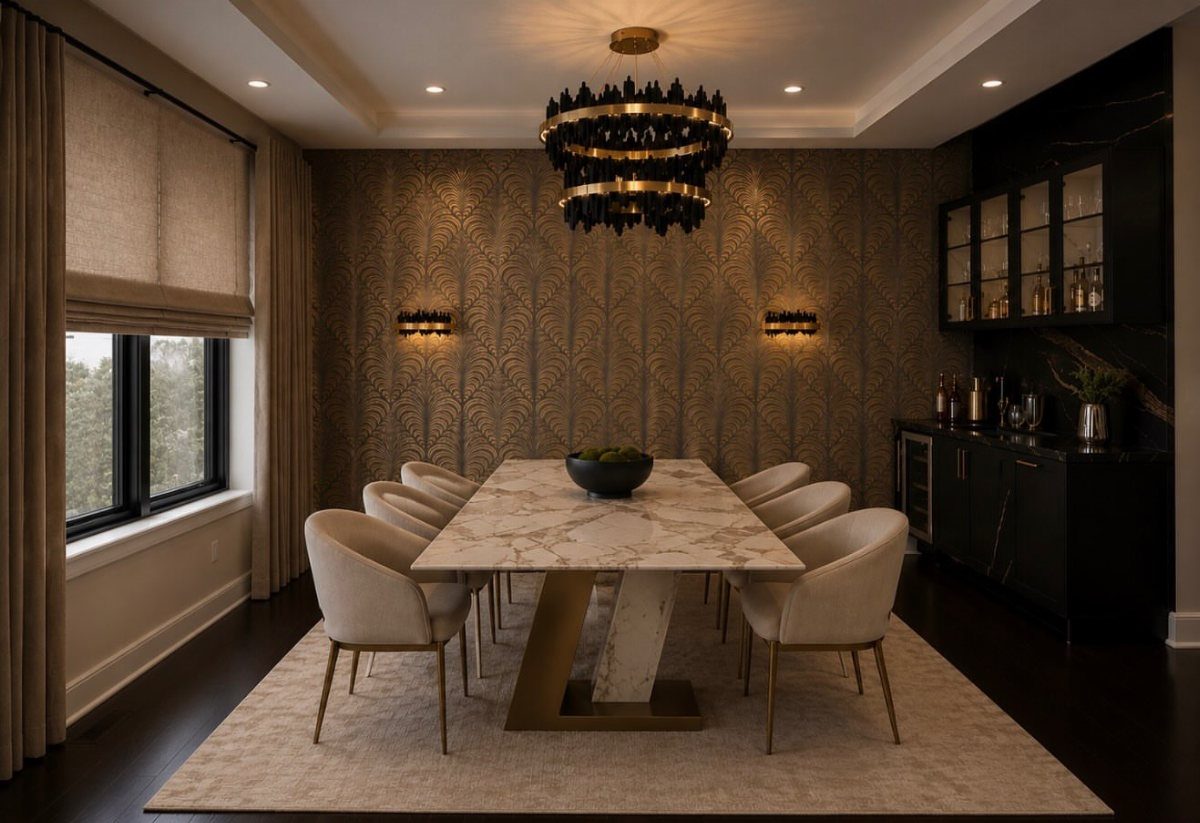
Patterned wallpaper in grey and gold brings warmth to grey walls without introducing bright color. A subtle damask or geometric pattern adds visual interest on a single accent wall, and the gold keeps the room from feeling too cool.
A marble table reflects the wallpaper’s formality. The veining in the marble picks up movement from the pattern, and beige chairs bridge the grey walls and the gold in the wallpaper.
A black chandelier with gold accents ties the metallics together. The black grounds the room and keeps the gold from feeling too ornate or traditional.
10. Sculptural Wall Art on Grey Walls
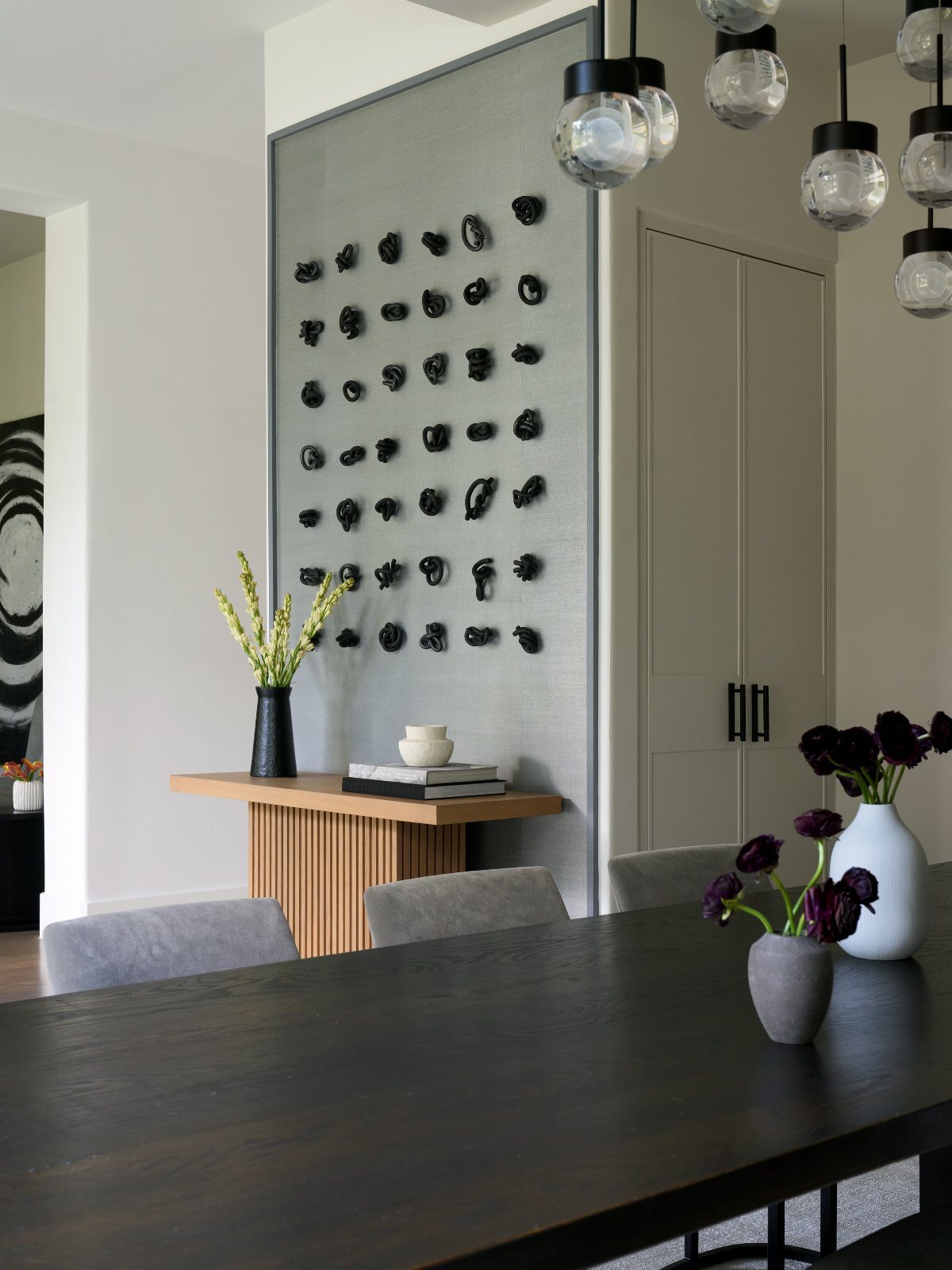
Sculptural art in a grid arrangement turns a grey accent wall into a focal point without needing a large single piece. Black wall sculptures create shadows and depth, especially when arranged in matching rows.
A dark wood table grounds the room. The wood finish adds warmth against the grey wall, and grey chairs keep the palette cohesive without repeating the black of the sculptures.
Keep the sculptures uniform in size and spacing. A grid reads as intentional, while a scattered arrangement can look unfinished.
How to Brighten a Grey Dining Room
Start with the ceiling and trim.
White or off-white on both reflects light back into the room, which keeps grey walls from absorbing too much brightness. If the ceiling is already grey, repainting it is the single biggest change you can make.
Choose a grey with a slight yellow undertone rather than a blue-grey. The warmth makes the color feel lighter even at the same value, and it reads as softer in both daylight and lamplight.
Hang a mirror opposite a window. It doubles the natural light in the room and makes the space feel larger, especially in narrow dining rooms where one wall gets most of the daylight.
Keep window treatments light in color. Heavy or dark curtains block light even when open, and pale linen or cotton panels let more brightness through while still providing privacy.
Add warm-toned wood or brass accents to balance the cool grey. A wood console or brass sconces bring warmth without adding bright color.
Is Gray a Good Color for a Dining Room?
Grey adapts to the light in the room, which makes it work for both daytime and evening dining.
A lighter grey reads fresh in daylight and shifts warmer and more enveloping under evening lighting, so the same color changes with how the room is used.
For rooms used during the day, a warmer grey keeps the space from feeling dim or cold.
Lighting matters more in a grey dining room than in a white one.
A low pendant over the table, sconces, or table lamps mixed with candles let you adjust the mood and prevent the grey from going flat under one ceiling fixture.
Yes, grey is a good color for a dining room – partly because it is a chameleon-like shade that can change with the light to really reflect the mood of the hour.
Does Grey Flooring Go with Grey Walls?
Grey flooring and grey walls work together when the shades are different enough to stay distinct. A lighter grey wall with darker grey flooring, or the reverse, keeps the room from reading as flat or one-dimensional.
Texture is what separates the surfaces. A smooth painted wall next to textured tile or wood-grain flooring creates contrast even when the colors are close, so the floor and walls don’t blend together.
Mixing materials also helps. Grey wood floors read differently than grey tile or concrete, so even if the wall color is similar, the finishes keep the room from feeling too uniform.
Frequently Asked Questions
How to decorate a gray room?
Layer different textures and materials to keep grey walls from feeling flat.
Pair smooth painted surfaces with textured rugs, upholstered chairs, or sculptural art to add depth. Wood furniture in walnut or oak tones, or lighting in aged brass, pulls grey walls away from feeling stark.
How to style a grey dining table?
Keep the chairs simple in shape and color so the table stays the focus, or choose upholstered seating in velvet or linen to soften the hard surface of the table.
Overhead lighting in warm brass or faceted crystal reflects light and softens the grey below. A textured rug in jute or wool grounds the table without pulling focus from it.
How can I make gray look less ‘cold’ in a dining area?
Grey paint with a warm, slightly beige base reads softer than blue-grey, even when the lightness is the same. Furniture in medium wood tones or fixtures in brass warm up grey without adding color to the walls.
Sheer or linen window treatments let daylight reach further into the room, and a mirror across from the window sends it back again.






