A vintage dining table can run a few hundred at an estate sale or several thousand refinished, while picture frame molding costs mainly time if the tools are already on hand.
An 8×10 or 9×12 rug keeps chairs on the surface when pulled out, low-pile rugs clean easier under the table, and slipcovered chairs let you throw the fabric in the wash between dinners that stretch past an hour.
1. Vintage Dining Tables
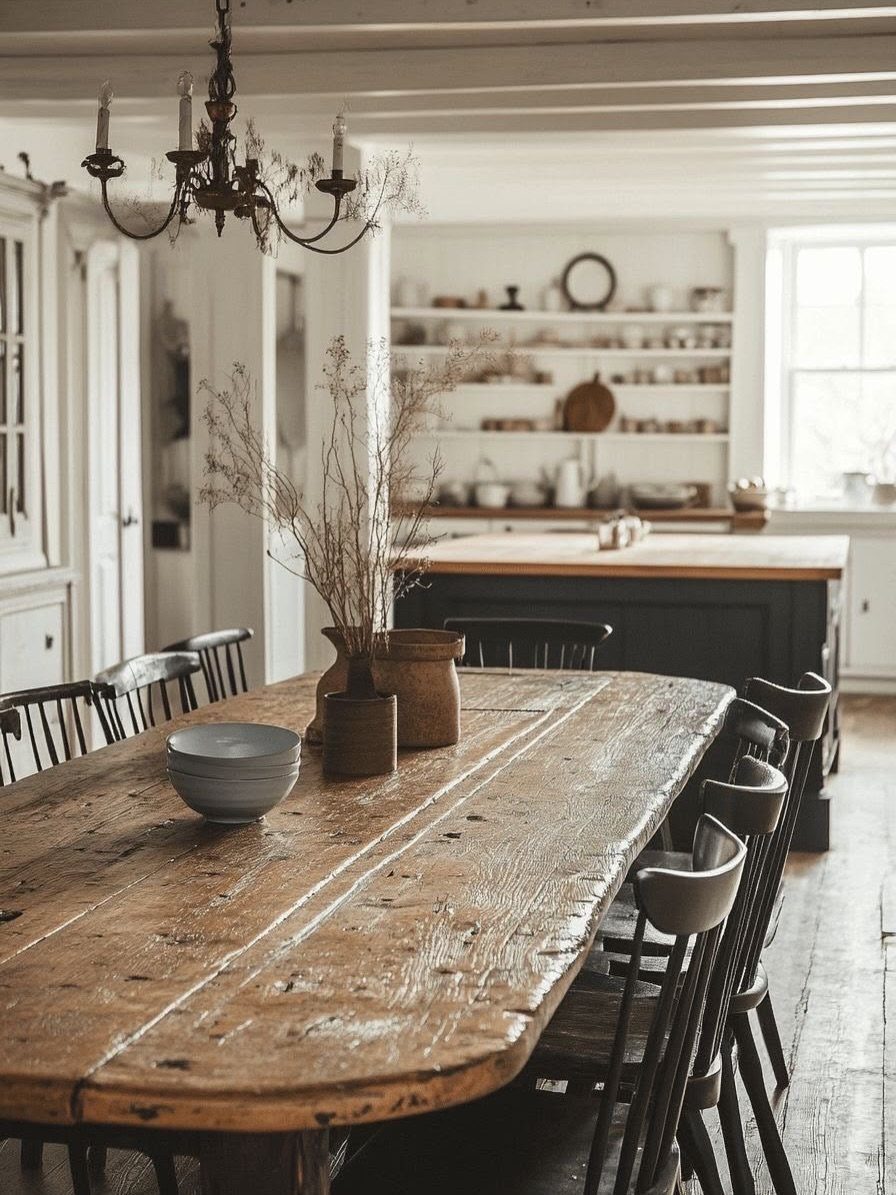
A vintage dining table brings worn wood and visible age into a space that might otherwise feel too polished. The appeal is in the patina: scratches, uneven stain, variations in the grain that new pieces smooth away.
Sourcing one takes patience. Estate sales and antique shops turn up solid candidates, though you will pay more for anything refinished.
I look for structurally sound pieces that can go straight into use, because stripping and restoring an old table adds time and cost to the project.
Pair it with modern chairs or lighting to keep the room from reading like a period reproduction.
2. Upholstered Chairs
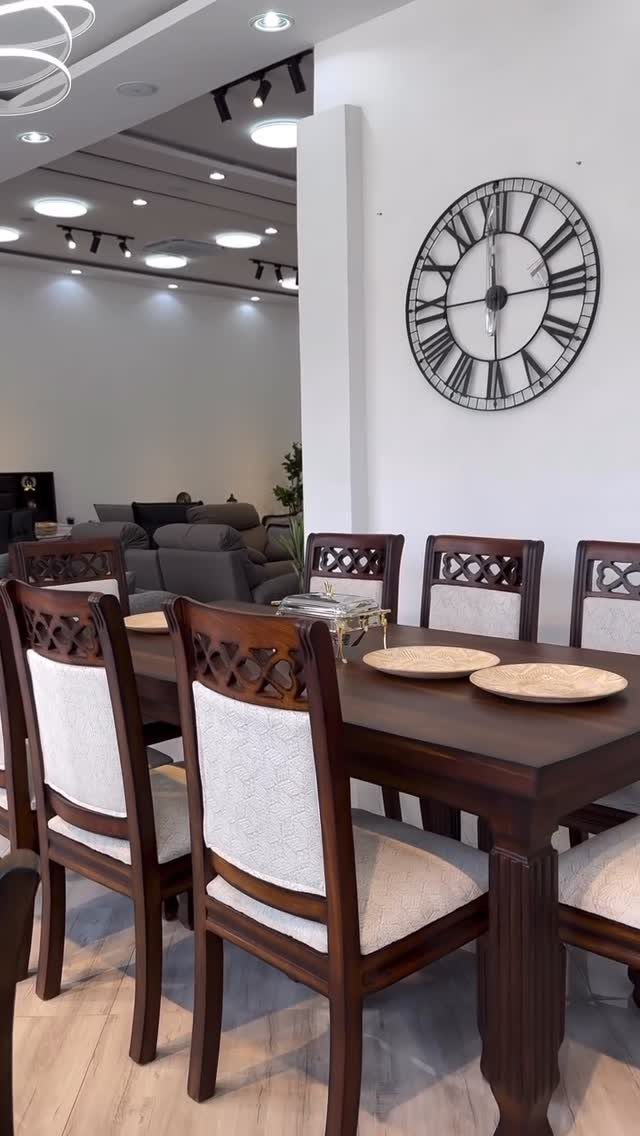
Upholstered chairs soften a dining room in a way wood and metal cannot. Fabric adds texture, and the padding makes longer meals more comfortable.
Performance fabric is worth considering if you have kids or pets.
It resists stains better than untreated linen or cotton, though it costs more per yard. Slipcovers are another option, especially if you want to change colors seasonally or throw them in the wash.
The mix of dark wood and light upholstery in this setup keeps the room from feeling too heavy. That contrast is one of the simplest ways to balance traditional and modern.
3. Different Wood Tones
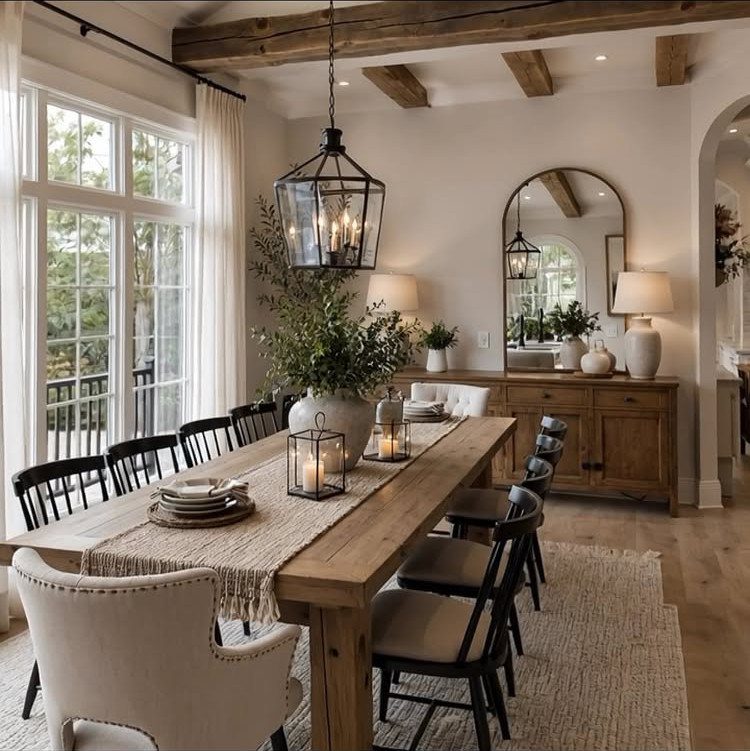
Layering different wood tones adds depth to a dining room without requiring much planning. A darker table paired with lighter ceiling beams or a medium-toned sideboard creates visual interest that a single wood finish cannot.
Separate the tones enough that they read as intentional rather than mismatched. A honey oak table with walnut beams works; two nearly identical mid-tones next to each other look like you tried to match and missed.
Stain and finish matter as much as species. A glossy piece next to matte wood will stand out even if the colors are close.
4. Dining Room Rug
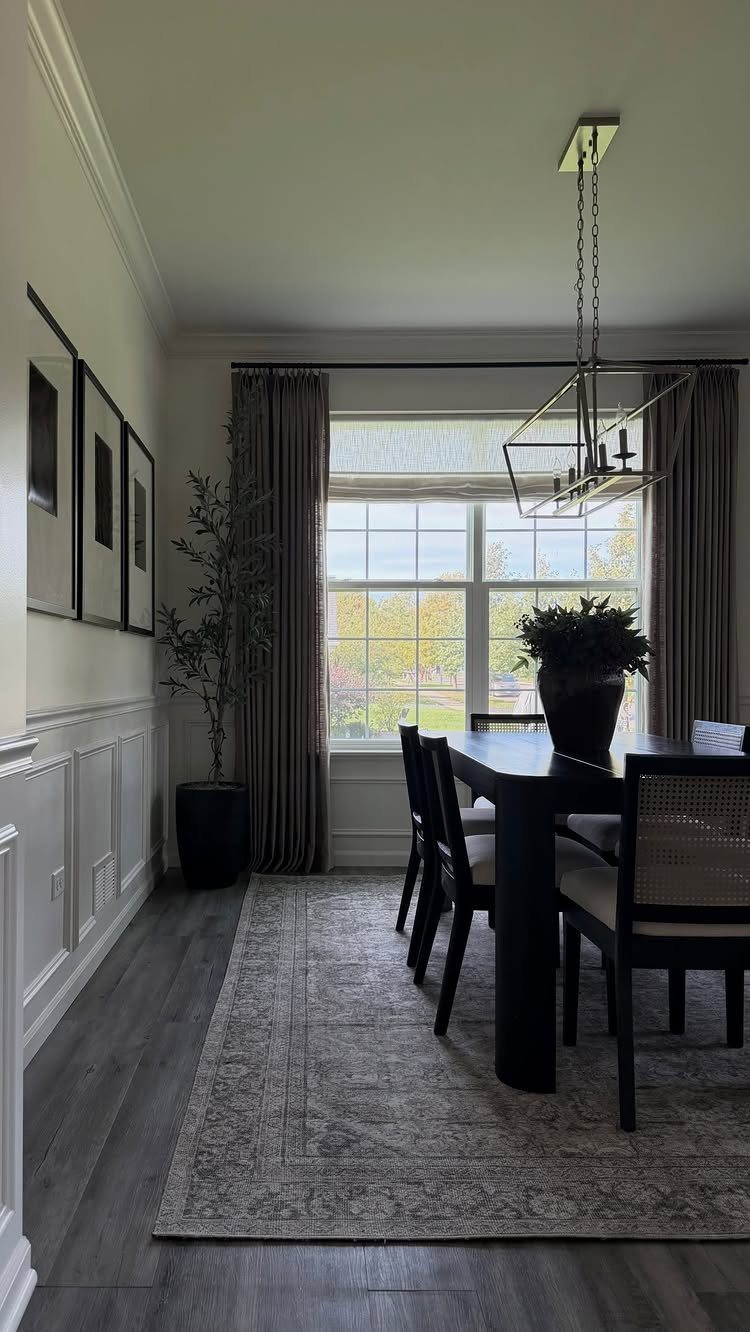
A rug defines the dining space and anchors the table, especially in an open floor plan where the space bleeds into the kitchen or living room. Pattern adds traditional detail without committing to it on the walls or furniture.
Size matters more than most people plan for.
The rug should extend well beyond the table on all sides so chairs stay on the rug when pulled out. For a standard rectangular table, that usually means an 8×10 or 9×12 rug.
Low-pile rugs are easier to clean under a dining table. Crumbs and spills sit on the surface instead of sinking into deep fibers.
5. Picture Frame Molding
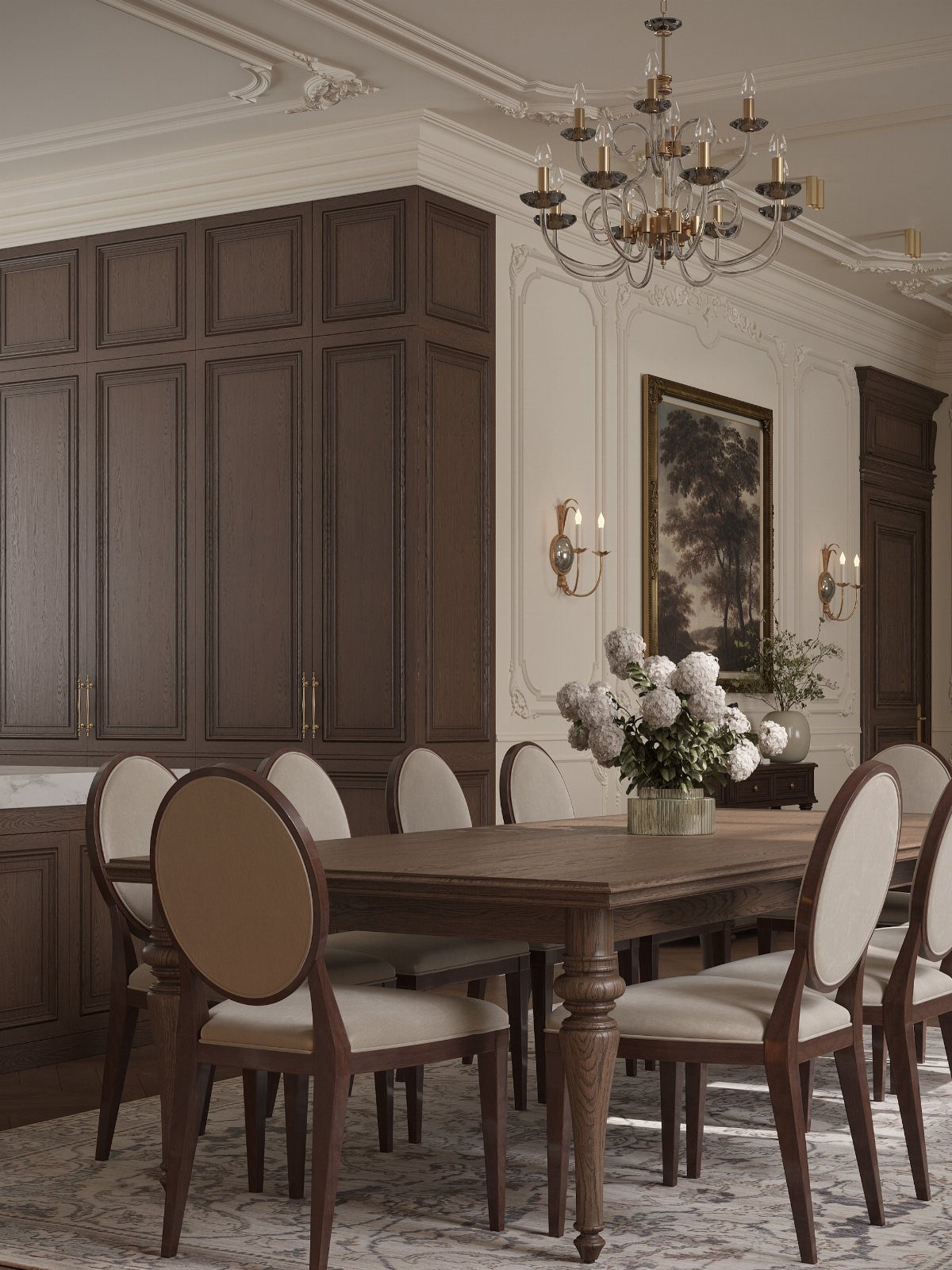
Picture frame molding adds architectural detail to flat walls without the bulk of wainscoting or the permanence of paneling.
It reads traditional but stays clean enough to work in a modern space, especially when painted the same color as the wall.
Installation is straightforward if you have a miter saw and a nail gun.
Cut 1×2 or 1×3 boards to form rectangles, space them evenly across the wall, and attach them with finishing nails. Caulk the seams, then paint.
The size and spacing of the frames change how formal the room feels. Taller, wider frames lean traditional; smaller, tighter grids feel more contemporary.
6. Black Accents
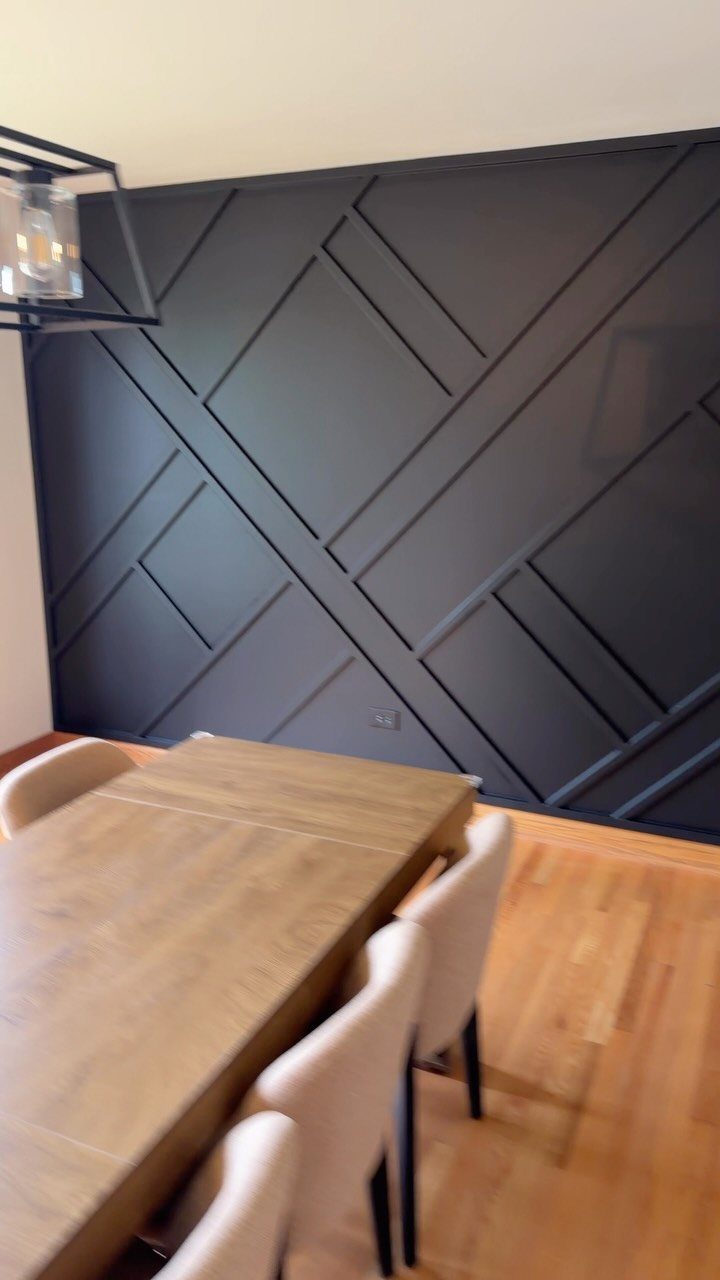
Black accents ground a dining room and give weight to a space that might otherwise feel too light or neutral.
The geometric paneling in this setup adds texture and traditional detail, while the dark color keeps it from reading too ornate.
Black paint is forgiving in ways lighter colors are not. Small imperfections in the wall or trim disappear, and the color holds up better in high-traffic areas where scuffs and fingerprints show up on white.
Balance matters. Too much black and the room feels heavy; a single accent wall or a few black chairs can be enough to anchor the palette without overwhelming it.
7. Statement Chandelier
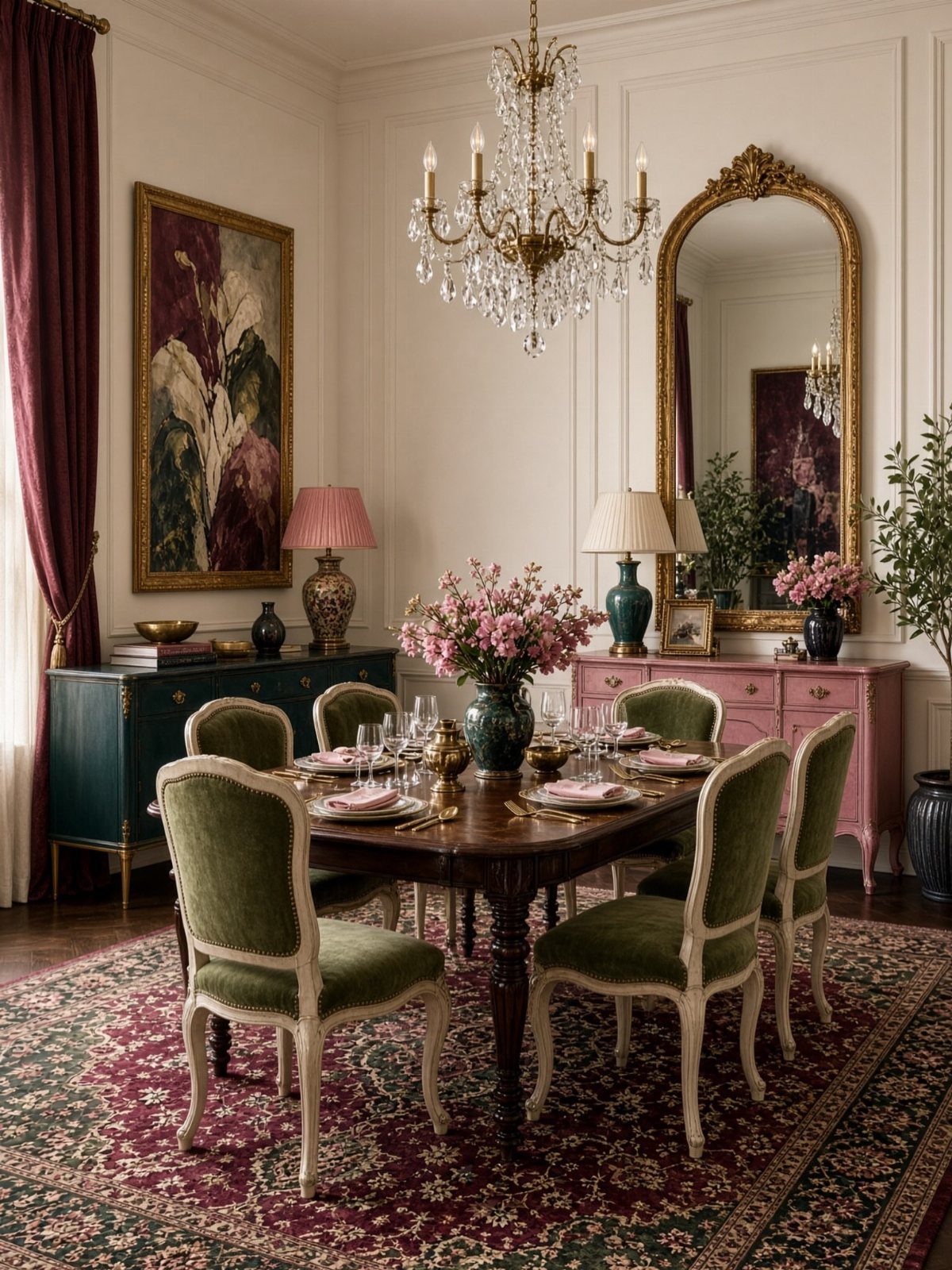
An ornate chandelier commands attention in a way recessed lighting or a simple pendant cannot. Crystal or detailed metalwork reads traditional, but the scale and placement keep it from feeling too formal.
Ceiling height matters.
A fixture this size needs enough ceiling height to hang properly. For standard 8-foot ceilings, a lower-profile flush mount or semi-flush fixture gives similar traditional detail without the drop.
Wire the fixture to a dimmer switch if you plan to use the room for both everyday meals and occasions that call for softer light.
8. Potted Plants
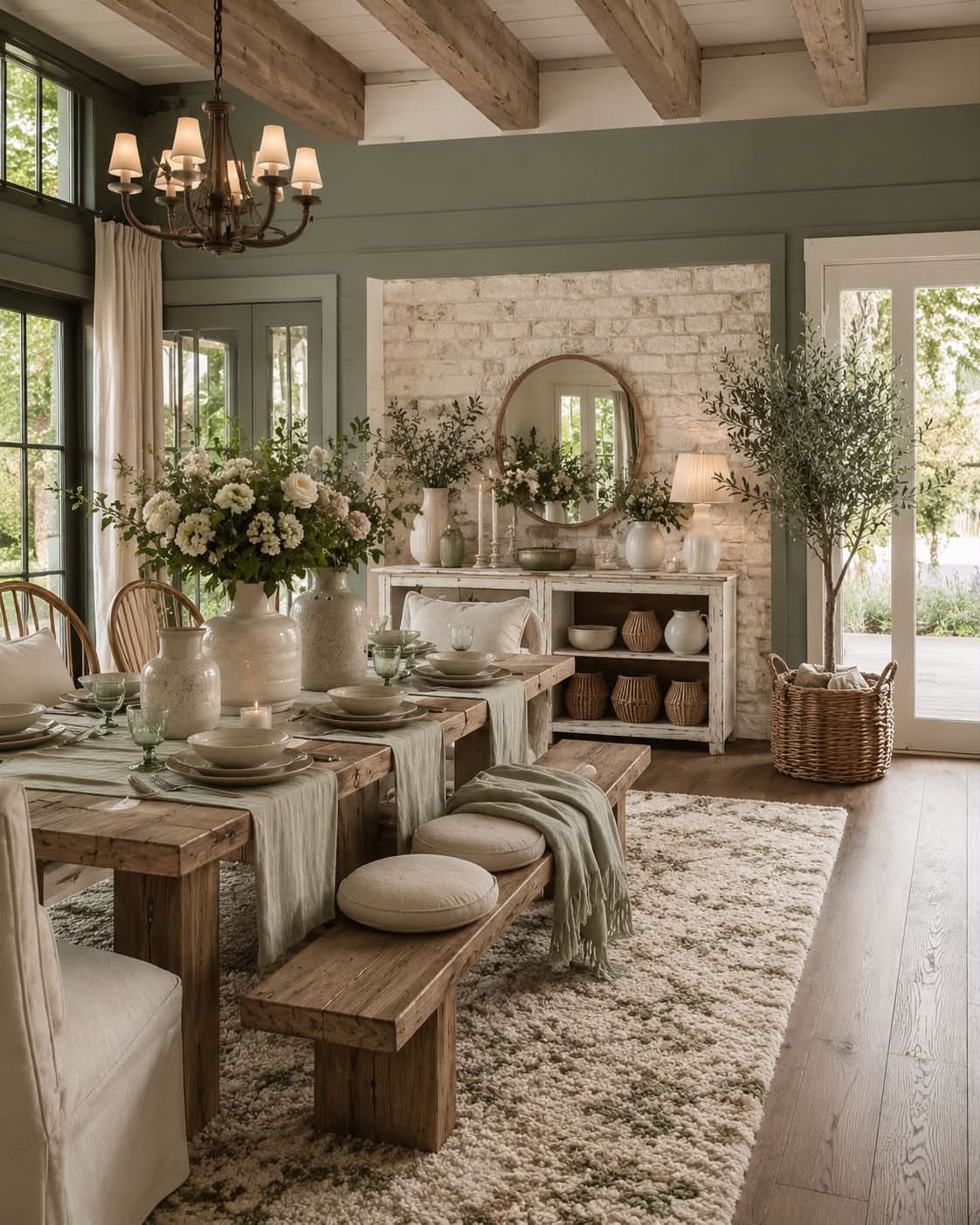
Potted plants bring texture and color that shifts with the season. A mix of heights and leaf shapes fills a room better than one large plant alone.
Group plants on surfaces that can handle water, like a sideboard or the center of the table. Terracotta and ceramic pots absorb moisture, so use saucers underneath to protect wood finishes.
Low-maintenance varieties like pothos, snake plants, or succulents work if you forget to water. Flowering plants add color but need more attention and better light.
9. Fabrics, Woods, and Metals
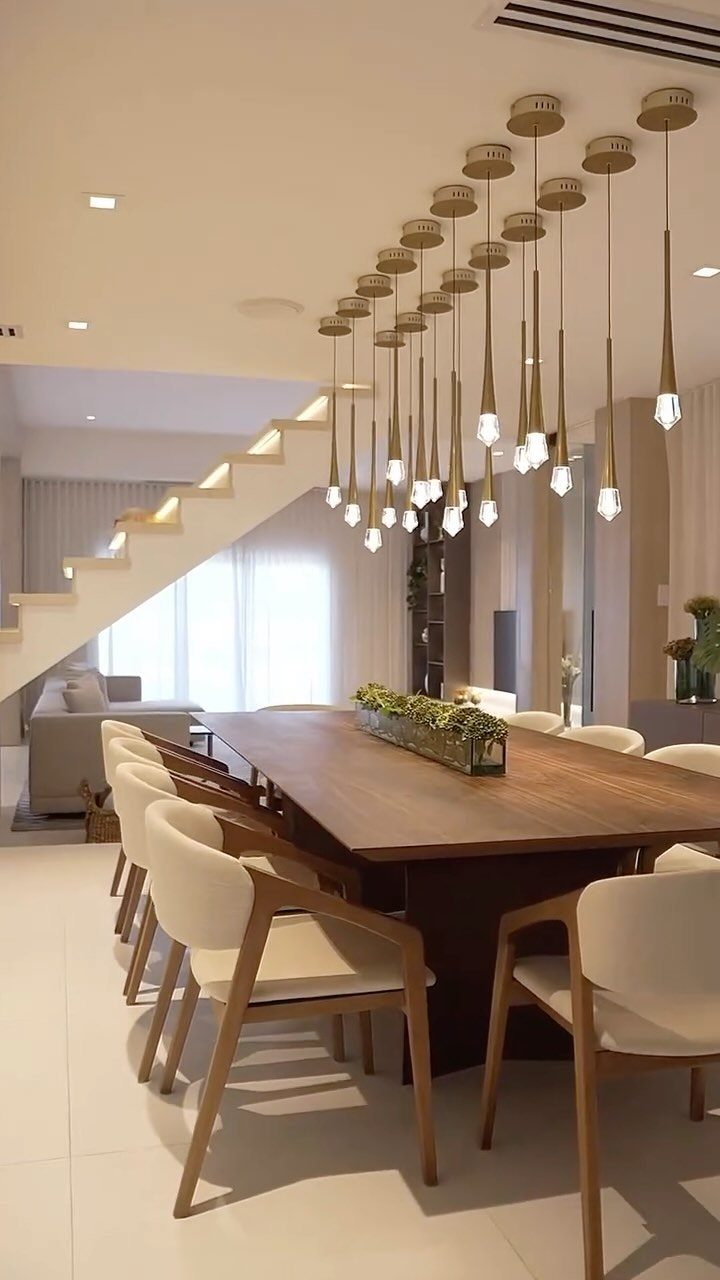
Mixing materials gives a room depth that a single finish cannot. Wood adds warmth, fabric softens the hard surfaces, and metal brings polish without weight.
The balance matters more than the specific pieces.
A wood table with upholstered chairs and a metal light fixture covers all three. Too much of any one material and the room tips in that direction.
Finish affects how modern or traditional the mix reads. Matte or brushed metal leans contemporary; polished brass or bronze pulls traditional.
10. Bold Wallpaper
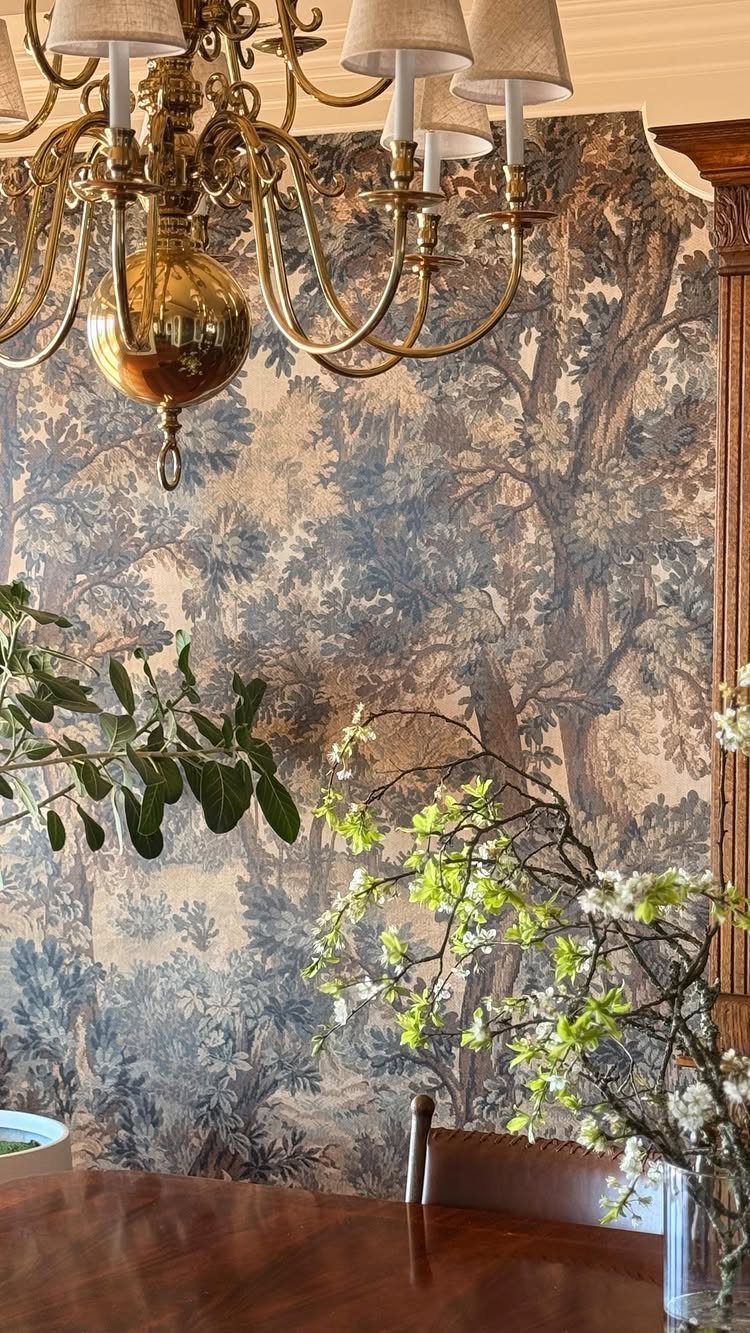
Bold wallpaper adds pattern and color while leaving floor space clear. A detailed landscape or botanical print brings traditional detail into a room that might otherwise read too spare.
Application takes time if you have not done it before.
Matching seams on a patterned paper matters more than on a solid, and trimming around outlets and molding slows the process. Budget a full day for an average dining room.
Accent one wall if you are unsure about committing to the pattern on all four. The wall behind a sideboard or buffet is a common choice.
11. Geometric Patterns in Furniture and Decor
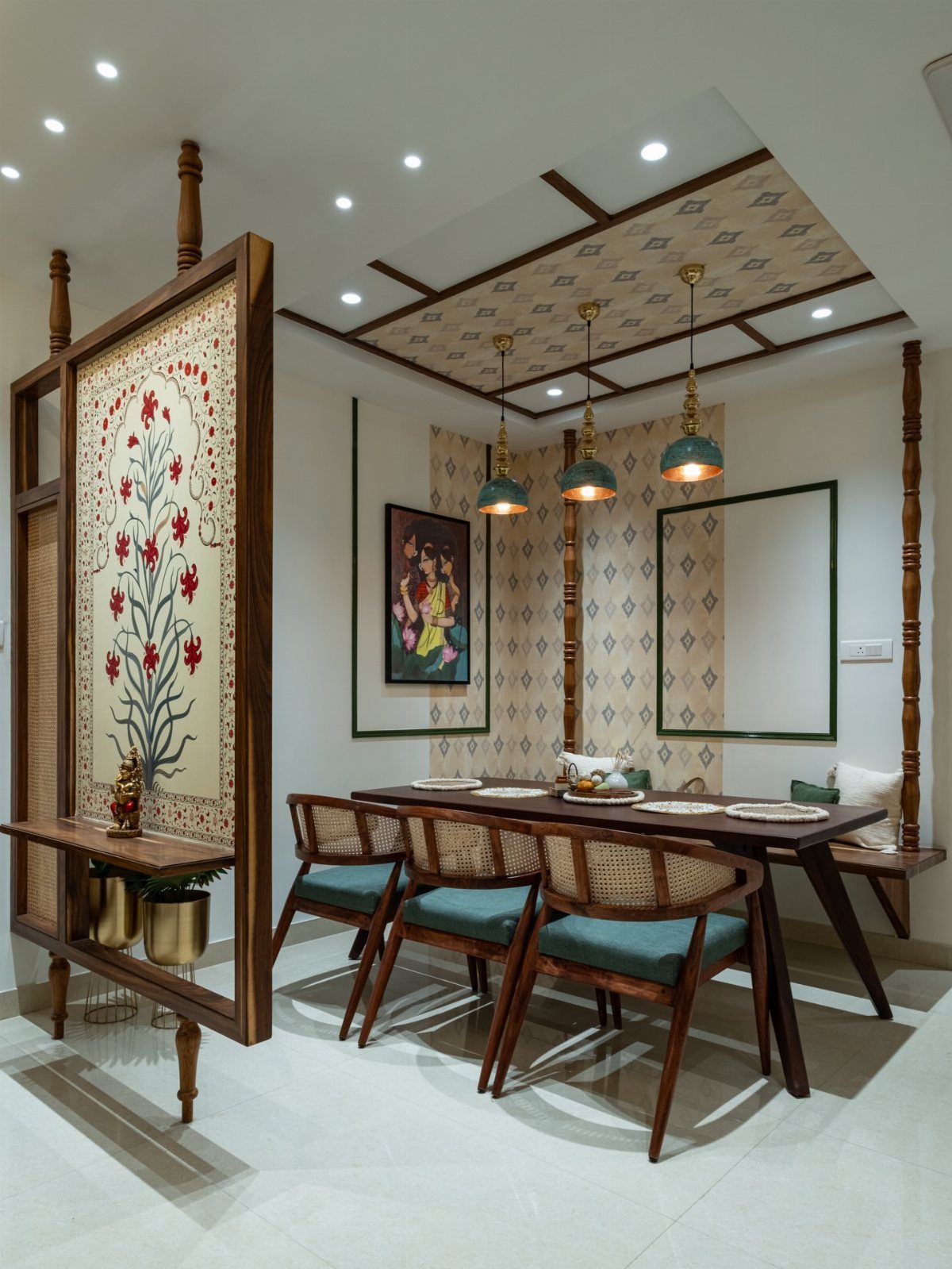
Geometric patterns add visual interest without relying on color. The pattern in this ceiling draws the eye up, and the repetition keeps it from feeling random.
Cane-back chairs bring in another layer of geometry with a traditional material that stays light enough for a modern space. The open weave adds texture without the bulk of fully upholstered pieces.
Limit geometric patterns to one or two surfaces to avoid competing shapes. A patterned ceiling pairs well with simple furniture; a geometric rug works under plain chairs.
12. Neutral Walls and Furniture
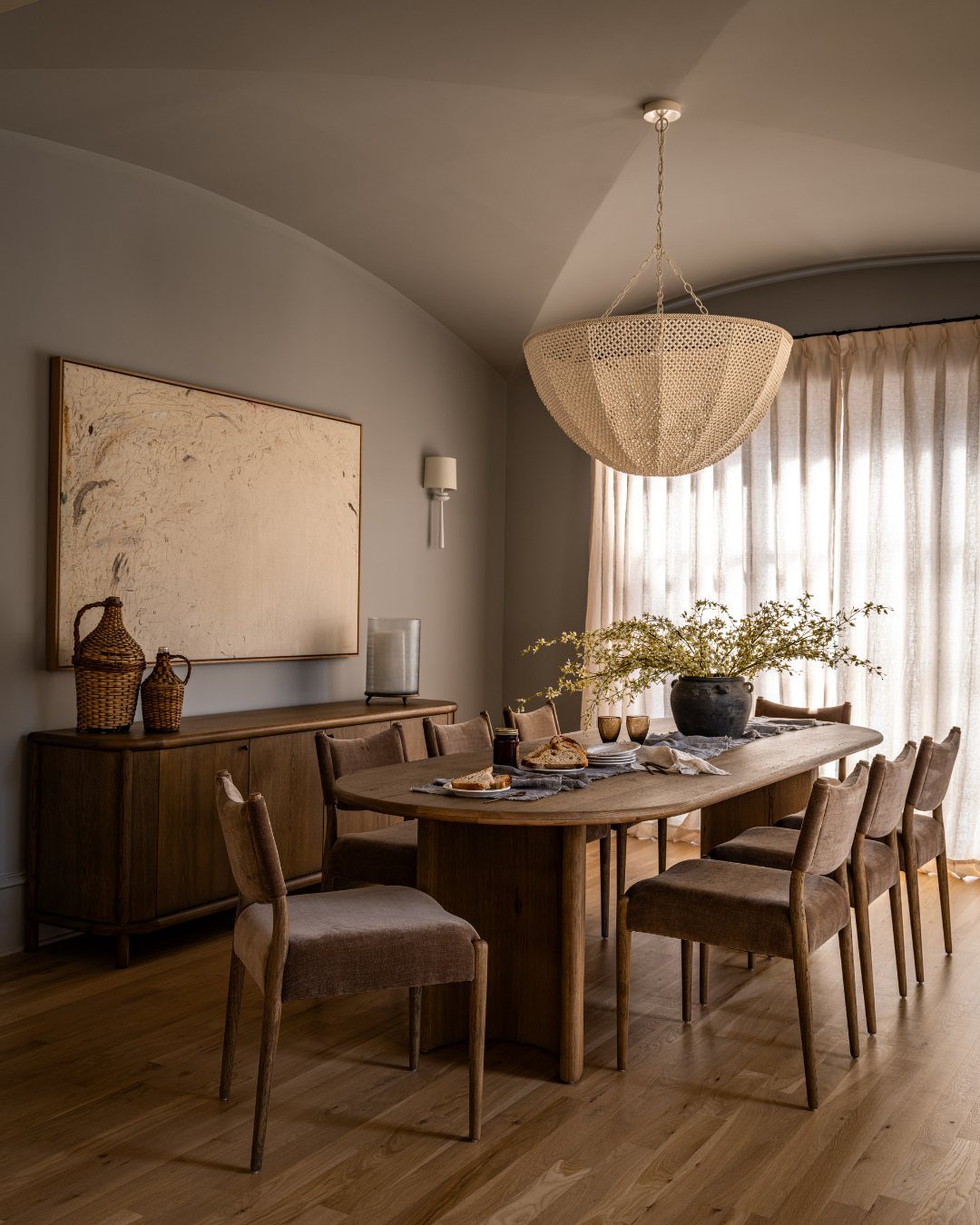
Neutral walls and furniture let you shift the mood with smaller changes. Swap artwork, textiles, or tableware and the room reads differently without repainting or replacing large pieces.
Grey, beige, and cream work as base colors that pair with nearly any accent. The large woven pendant in this setup adds texture and warmth that keeps the neutrals from feeling flat.
Natural materials like wood, linen, and jute bring variation into a neutral palette without introducing strong color. The grain and weave add enough detail that the space does not need bold patterns to feel finished.
13. Standout Piece
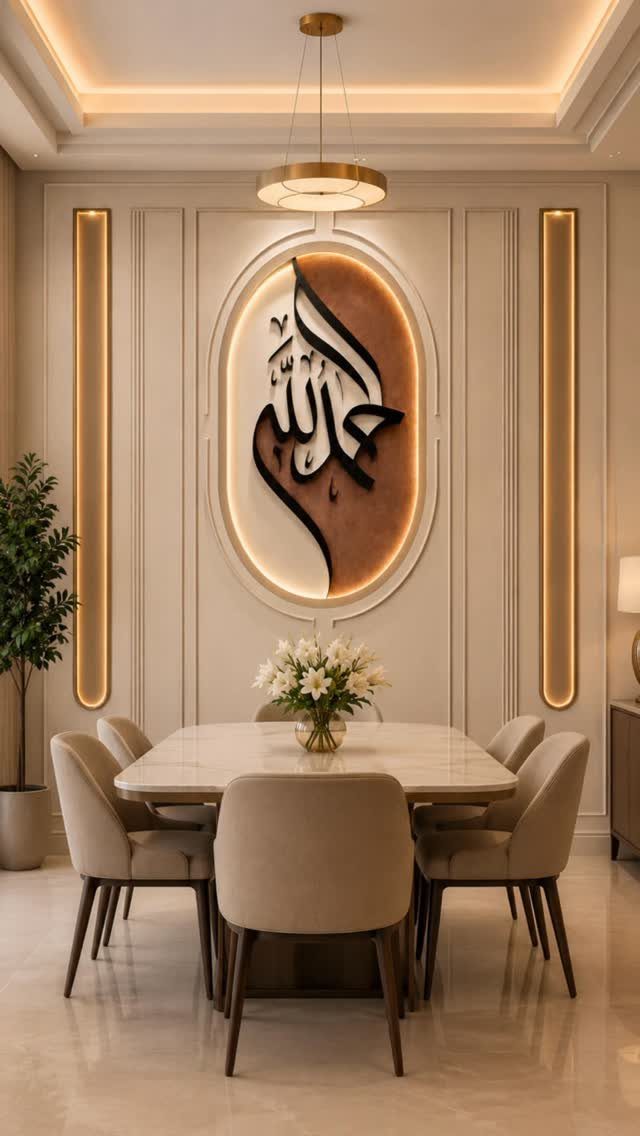
A single large piece pulls focus and sets the tone for the rest of the room. The circular calligraphy art in this setup does that work without requiring a full wall of pattern or color.
Scale matters.
A piece this size needs enough wall space to breathe. Crowding it with smaller frames or decor on either side dilutes the effect.
The vertical light strips flanking the art add symmetry and highlight the piece after dark. That pairing keeps the wall from feeling sparse while maintaining the clean lines of the rest of the space.
14. Statement Dining Table
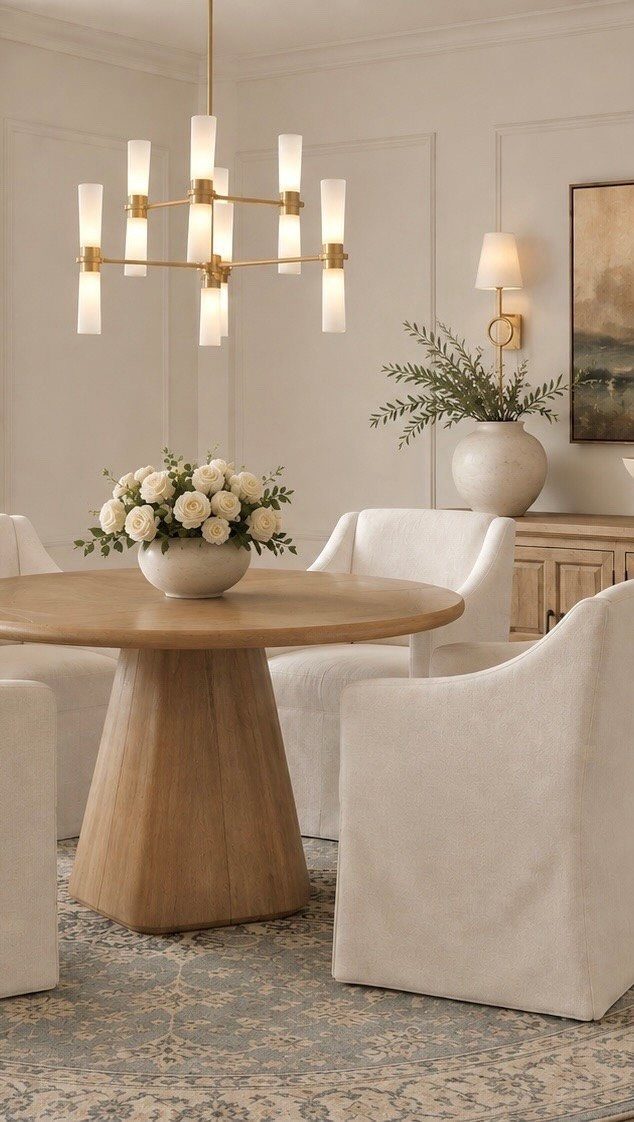
A table with an unusual shape or finish becomes the room’s focal point. A round pedestal base takes up less visual space than a table with legs at each corner, and light wood keeps the mass from feeling heavy.
Round tables seat more people in less floor space than rectangular ones of similar width. They also make conversation easier since no one sits at a head or foot.
Pair a statement table with simpler chairs.
15. Decorative Cabinets
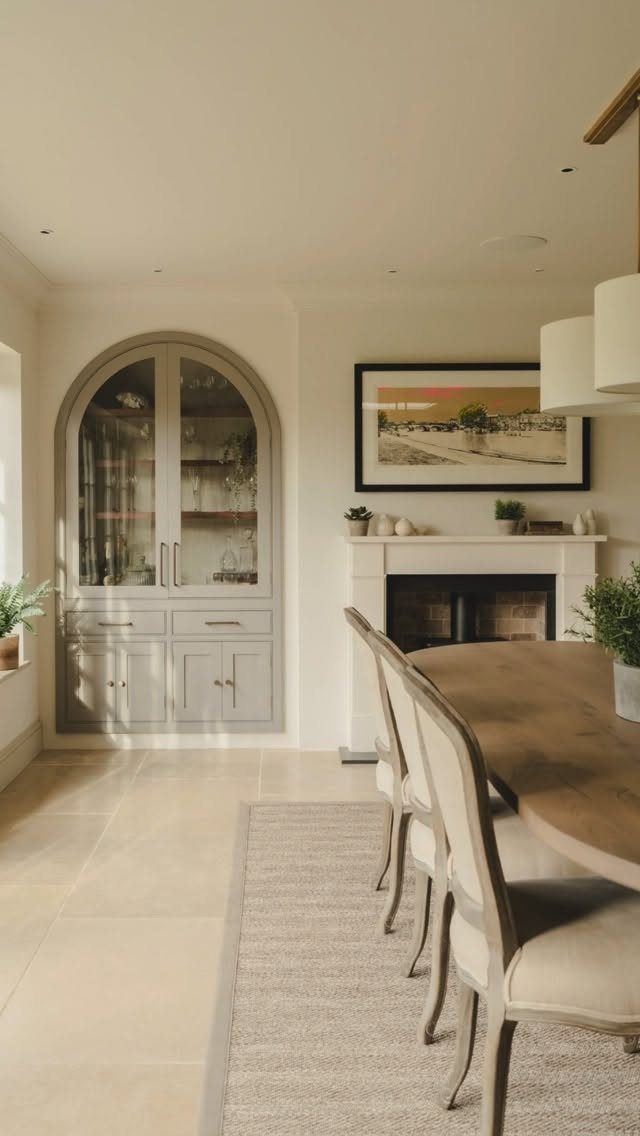
Built-in cabinets with glass doors add storage and traditional detail in one piece. The arched top in this setup brings in architectural interest that a standard rectangular cabinet cannot.
Glass doors display what you store, so the contents matter. Stacked dishes, glassware, or serving pieces look intentional; clutter does not.
Paint the interior a different color than the exterior to add depth. A darker back panel makes displayed items stand out, especially white or light-colored dishware.
16. Dining Room Fireplace Mantel
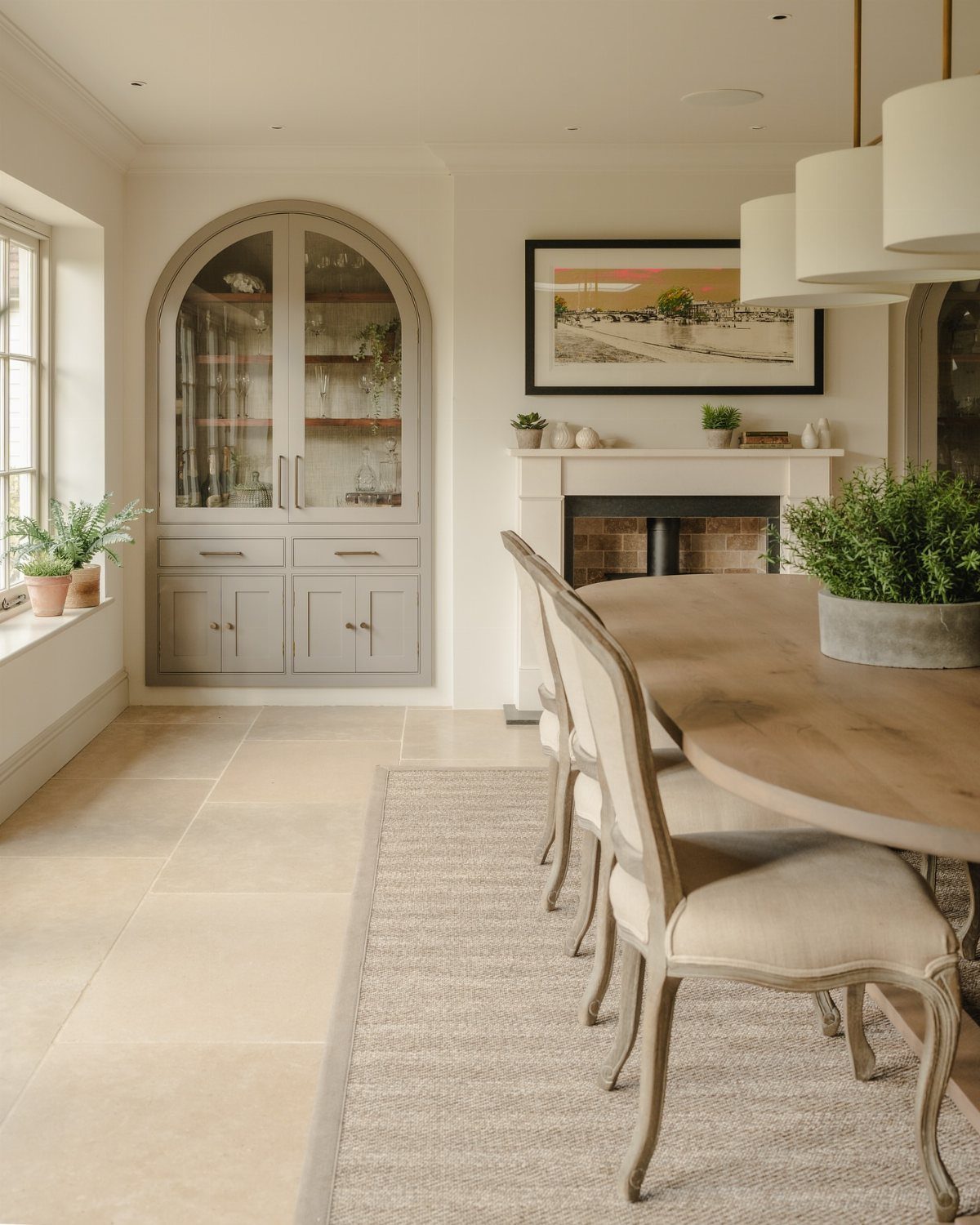
A fireplace mantel adds traditional architecture and gives you a surface to layer artwork and objects. The white mantel here keeps the detail light, and the landscape art above it brings in color without pattern.
Non-working fireplaces still serve as focal points. If the firebox is not in use, fill it with candles, stacked wood, or a decorative screen.
Keep the mantel styling simple if the rest of the room has strong patterns or colors. A few pieces at varied heights work better than a crowded arrangement.
17. Slipcovered Dining Chairs
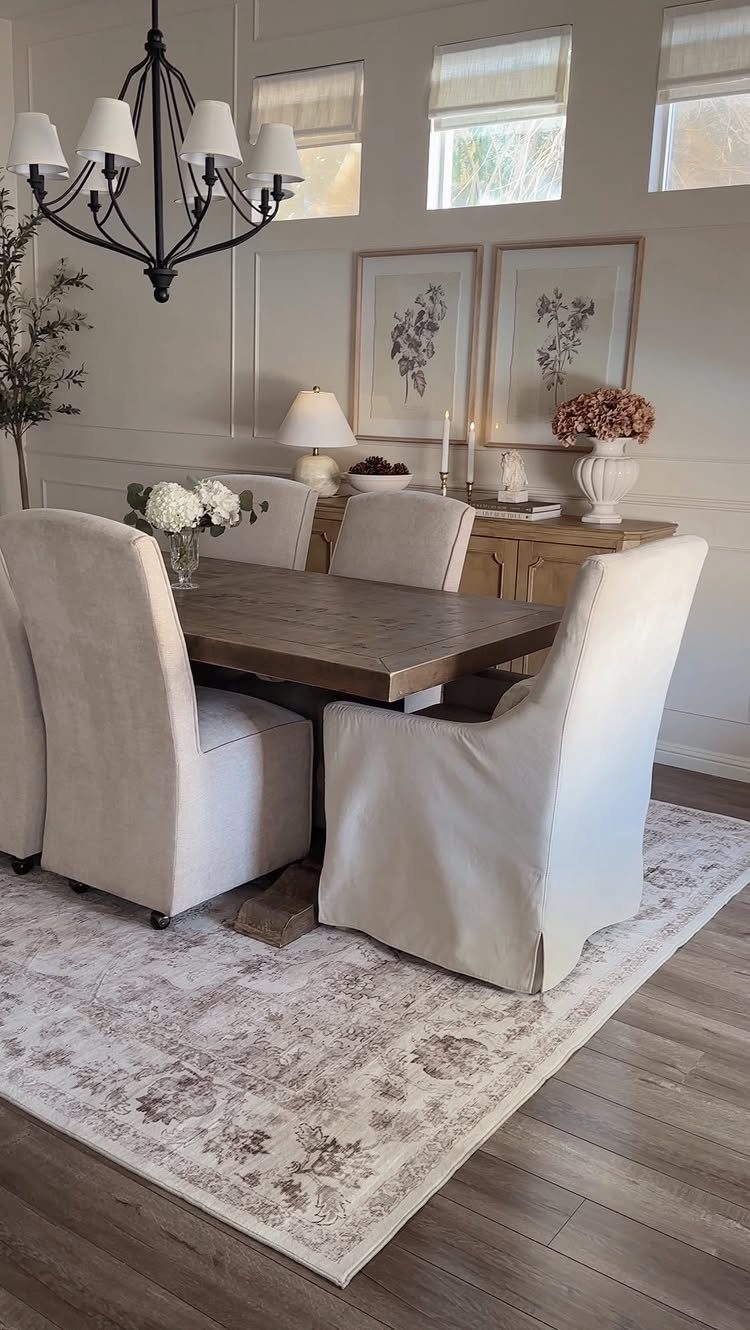
Slipcovered chairs soften a dining room and give you the option to throw the covers in the wash. Cream or natural linen reads traditional, and the loose fit adds texture that tight upholstery does not.
Slipcovers wear better on chairs with simple lines. Arms, carved details, and curves make fitting harder and increase bunching.
Order an extra set of covers if you use the chairs daily. One set can be in the wash while the other is on the chairs.
18. Dining Bench Seating
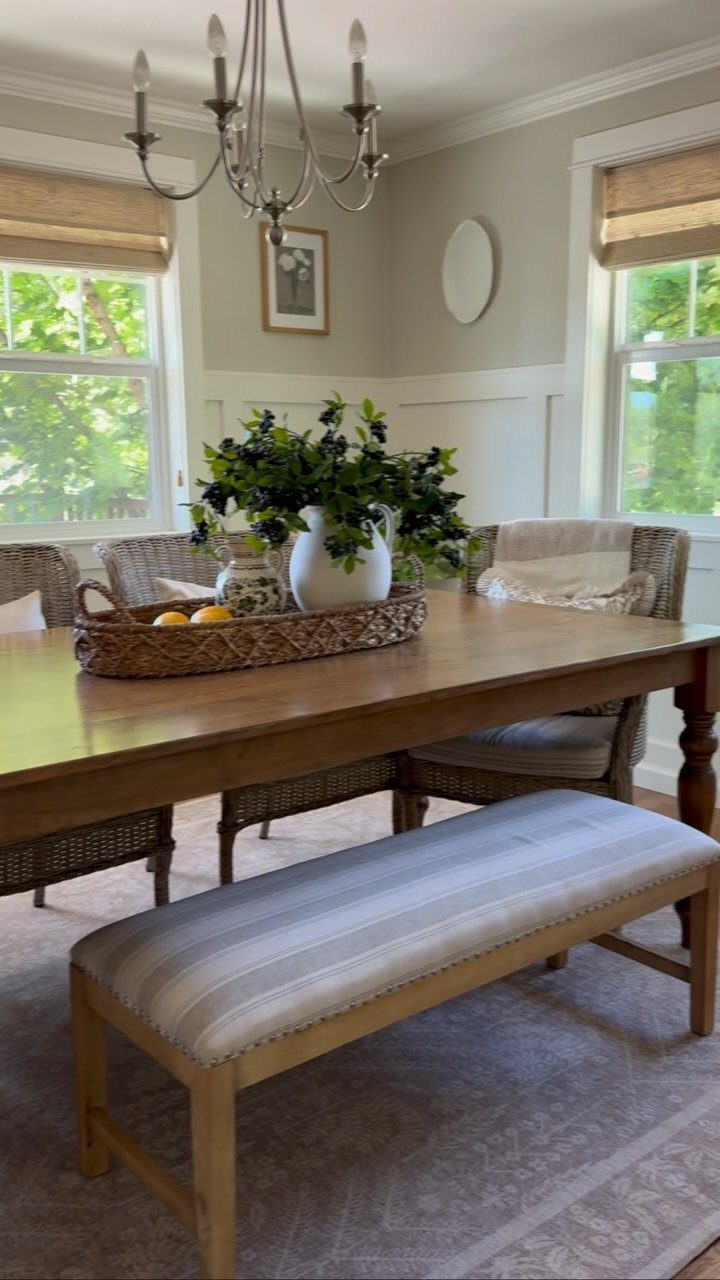
A bench on one side of the table seats more people in the same linear space as individual chairs. The upholstered top adds comfort, and the striped fabric brings in pattern that stays grounded with the wainscoting and wicker chairs.
Benches work best on the wall side of the table, where you do not need to pull them out. The open side gets chairs that slide in and out easily.
Match the bench length to the table or go slightly shorter. An overhanging bench looks unfinished.
19. Wishbone Chairs
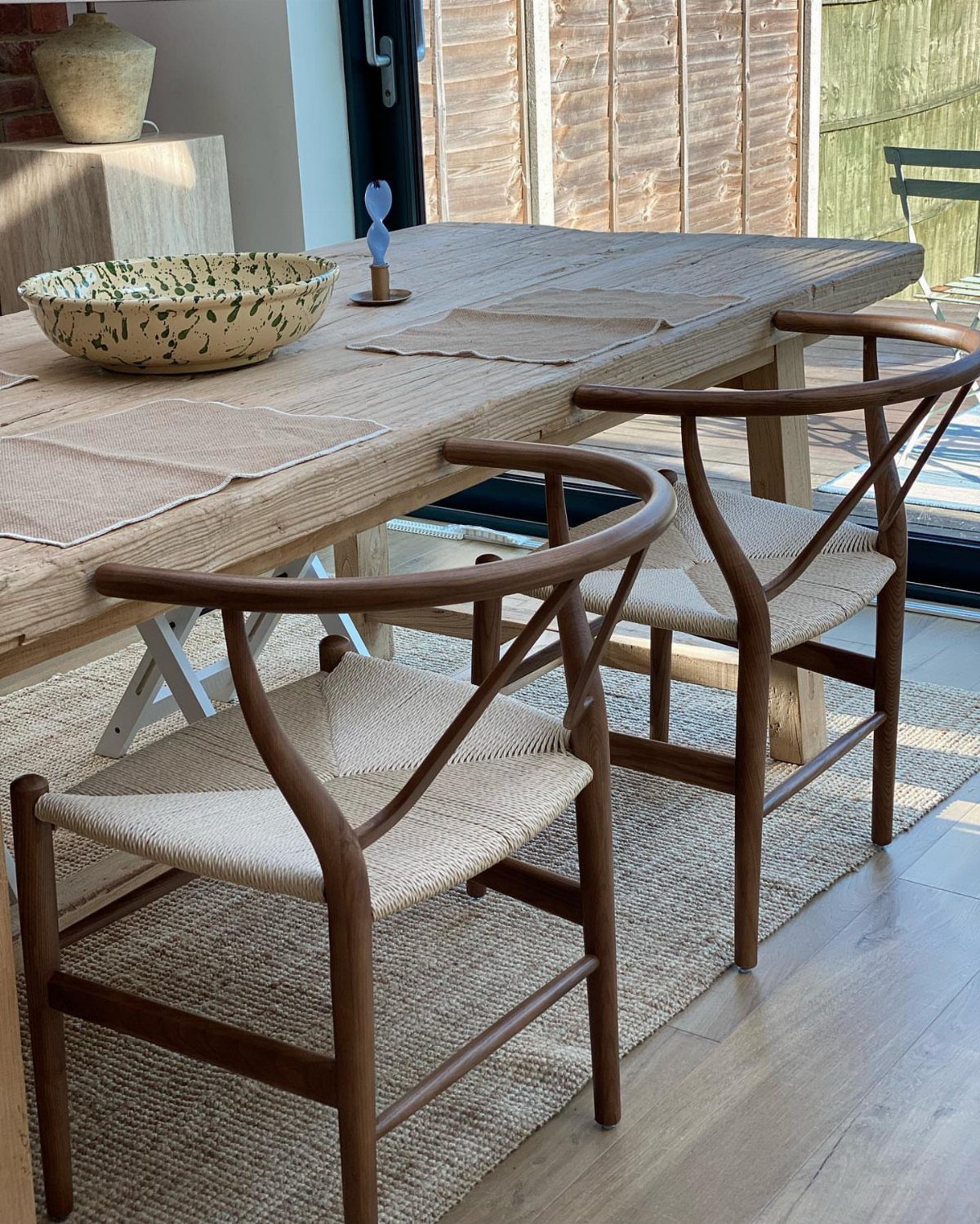
Wishbone chairs bring sculptural detail without the visual weight of fully upholstered dining chairs. The Y-shaped back and woven paper cord seat read mid-century, which lands somewhere between traditional and modern depending on what else is in the room.
The paper cord seat is more durable than it looks but less forgiving than upholstery. Sitting directly on woven cord for long meals gets uncomfortable without a cushion.
Light wood finishes keep the chairs from feeling too heavy. Darker stains pull the look more traditional.
20. Dark Paneled Accent Walls
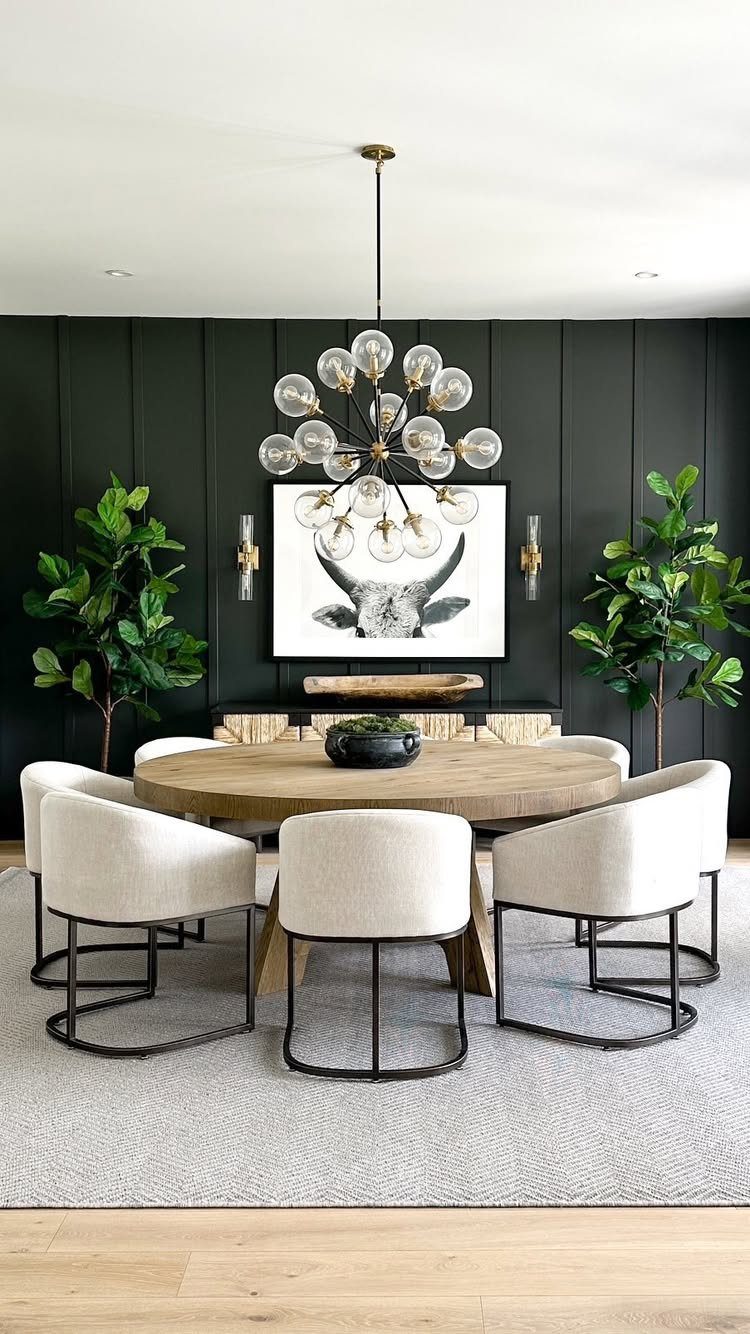
Dark paneling on one wall adds depth and makes lighter furniture stand out.
Green reads traditional in dining rooms, especially when paired with wood trim or molding, but the color holds its own in a modern space if the rest of the room stays simple.
Paint the paneling or buy premade panels and install them over drywall. Premade options go up faster and give you clean seams without custom millwork.
Balance the dark wall with lighter furniture and plenty of natural light. A round table and pale chairs keep the room from feeling closed in.
Trust the Design Process
A designer who gets what you want can save you from false starts and mismatched pieces. The value shows up in the choices you avoid as much as the ones you make.
Look for someone whose portfolio includes rooms that feel like where you are headed, not just technically competent work. Traditional modern is a specific balance, and not every designer works in that range comfortably.
Expect to explain your budget and timeline up front.
A designer who pushes you toward finishes or furniture you cannot afford or do not want is not listening. The best ones ask what you own and what stays.
Flat-fee design services cost less than hourly billing if the scope is clear. Hourly makes sense when the project is open-ended or you are not sure how much help you need yet.
Importance of Lighting
Lighting shifts how a room feels more than most single changes you can make.
A dining room used during the day needs enough natural light or bright overhead fixtures to feel open. The same room at night benefits from softer, layered sources that make long meals comfortable.
Pendant fixtures and chandeliers add style while lighting the table directly. Hang them low enough to light the surface without glaring into seated eyes.
For an 8-foot ceiling, that usually puts the bottom of the fixture somewhere between your seated eye level and the chandelier itself, close enough to light the table without blocking sightlines across it.
High ceilings give you room for larger fixtures, but they also mean you need more light to fill the space.
A single overhead fixture may not be enough. Add sconces or a floor lamp in the corner to fill the gaps.
Light-colored walls and ceilings bounce more light around the room. Deeper tones absorb it, which makes the space feel smaller but can also make it feel more intimate after dark.
Emphasize Comfort
Comfortable seating matters more the longer people sit. Upholstered seats and backs make a difference during meals that stretch past an hour.
Structured support keeps you from slouching without feeling stiff. Spoon-back chairs with padded seats give you both, and the shaped back supports your lower spine better than a flat panel.
An extendable table lets you seat 6 to 8 when you need the space and shrink back down for daily use. Most models add a leaf in the center, so the shape stays balanced.
Soft lighting and warm materials like oak or linen make a dining room feel less formal without losing polish. A room that feels too stiff discourages the kind of long, unrushed meals that make the space worth having.
When planning your traditional dining room idea, both comfort and style need to go hand in hand. Because there’s nothing worse than trying to enjoy a lovely meal that you’ve spent hours preparing and cooking, only to get a numb butt mid-way through courses.
Frequently Asked Questions
What does a modern dining room look like?
A modern dining room balances clean lines with warm materials, using light walls and simple furniture to maintain an open feel.
Pendant lights or chandeliers add polish, while mixing materials like wood and metal brings texture without clutter. A rug under the table defines the zone, and the overall look stays functional rather than overly decorated.
How to mix modern with traditional furniture?
Pair a traditional table with contemporary chairs to create contrast without competing styles. Mix different wood tones, metals, and textures across the room rather than matching everything.
What are the current trends in dining room furniture?
Light contemporary chairs paired with traditional tables create an eclectic look that works in most dining rooms. Upholstered seating adds comfort for longer meals, while mixed materials like wood, metal, and fabric bring warmth and texture.