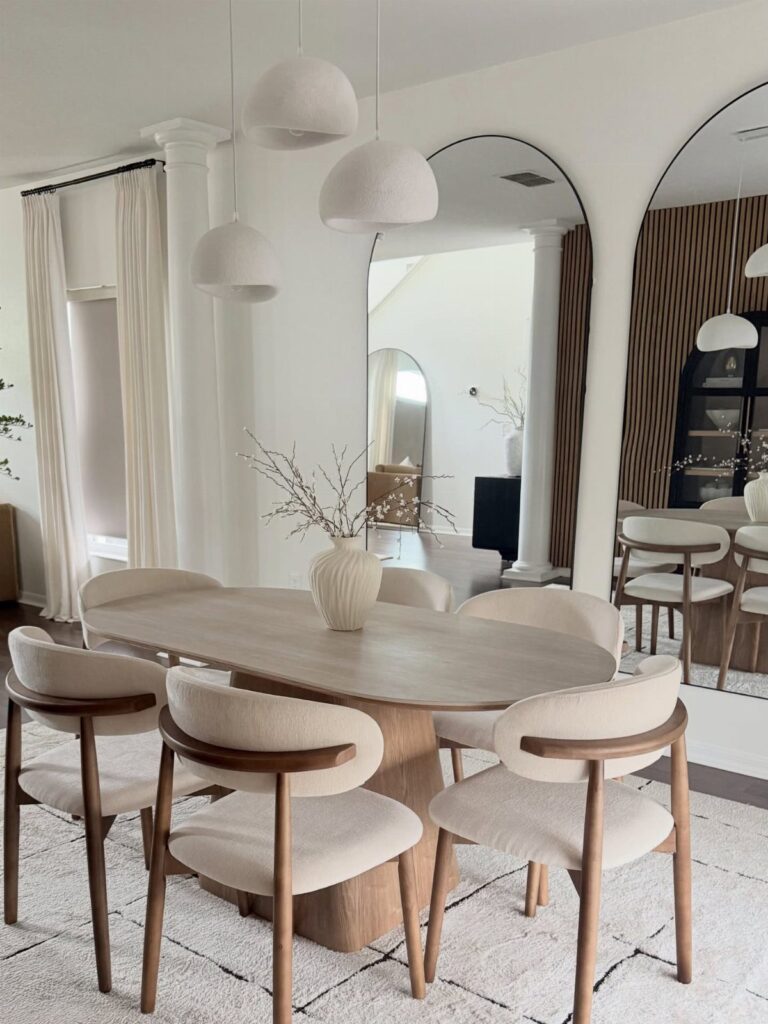
Natural wood tables anchor the style right now, with light grain finishes keeping the room from feeling heavy and earth-tone palettes pulling from white, cream, beige, gray, or black.
How open your floor plan is decides whether you need a rug to mark the dining zone or art and shelving to give the space its own character.
If your ceiling is high, a bold pendant or chandelier fills the vertical gap and becomes the focal point before anyone sits down; if it’s low, a flush mount keeps the fixture from blocking sightlines across the table.
1. Dining Table Near a Window
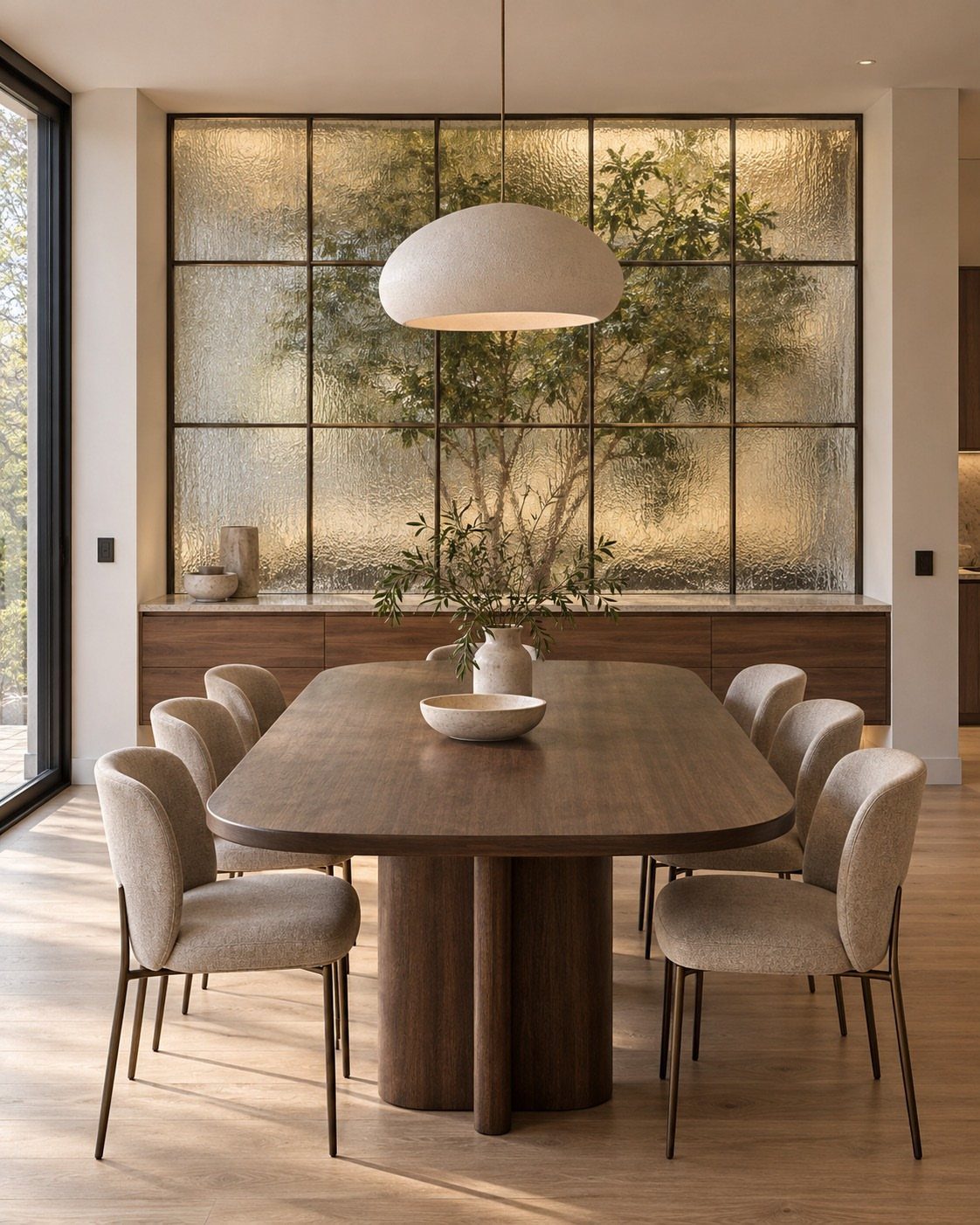
Placing your table near a window lets you use natural light during the day instead of relying entirely on overhead fixtures.
The view becomes part of the room, which matters more if you face a garden or anything worth looking at.
For balance, position the table so the light source is to the side rather than directly behind anyone sitting down. That way backlit silhouettes don’t make eye contact difficult across the table during meals.
2. Dining Room Rugs
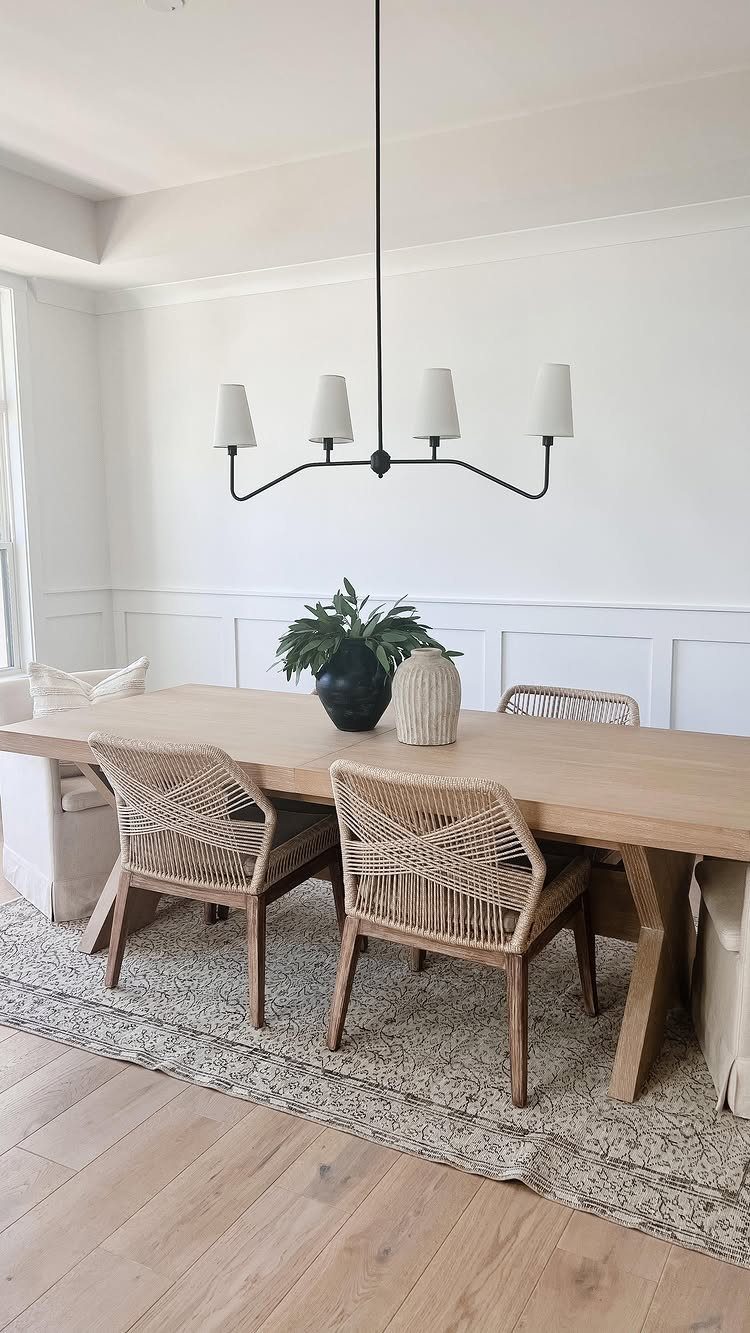
A rug marks the boundary of the table and chairs when your floor plan is open or the room flows into the living space without a clear break.
It also absorbs sound, which makes a difference when chairs scrape or conversations overlap.
Size the rug so chair legs stay on the surface even when pulled out. The pattern here is low-contrast, which hides crumbs and scuff marks better than a solid color.
3. Mismatched Seating
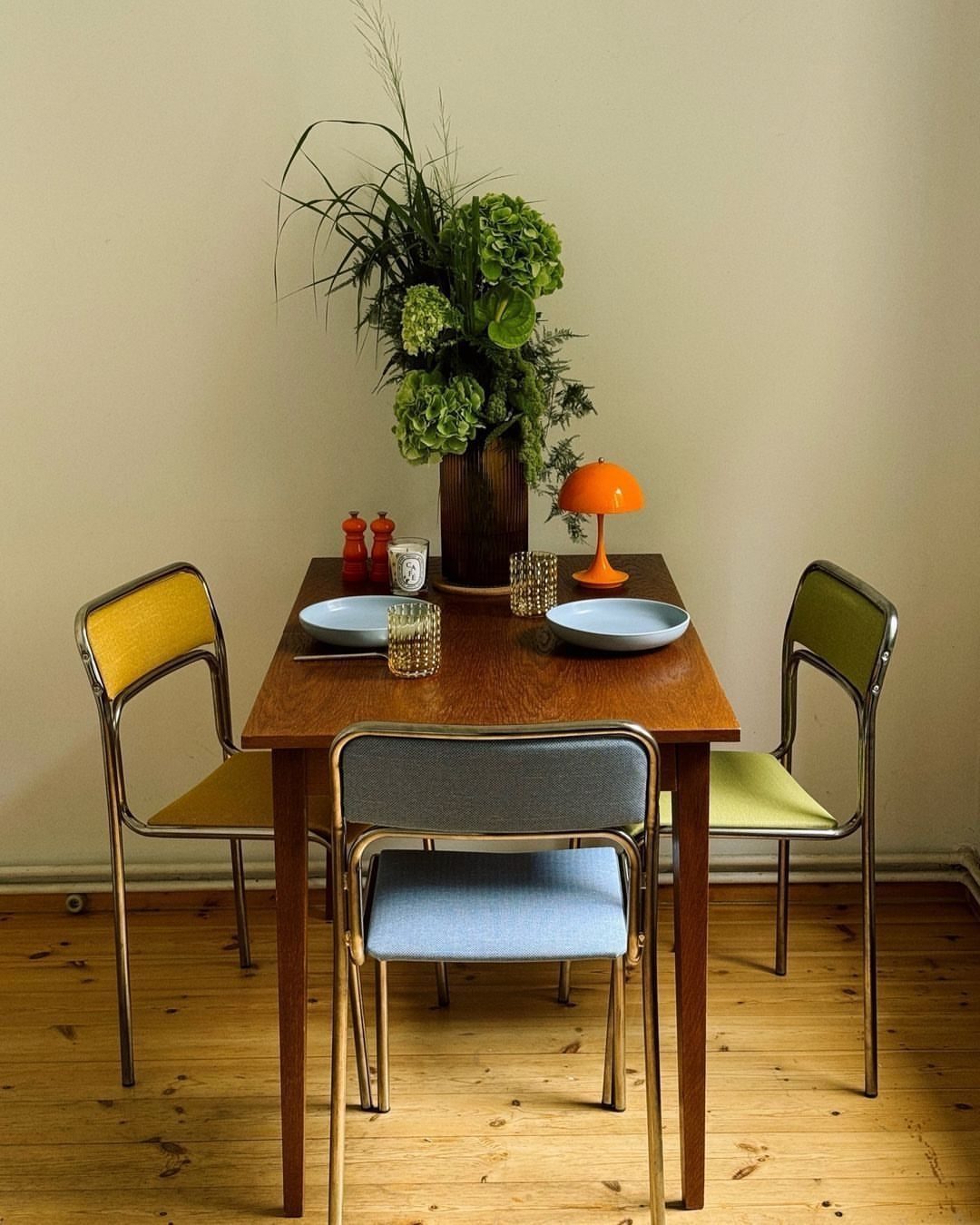
Mixing chair styles lets you combine what you already own with secondhand finds instead of buying a matched set. The look reads intentional when you repeat one element across all the seats: wood tone, seat height, or general scale.
Seat height should stay consistent so everyone sits at the same level relative to the table.
Standard dining chairs land between 17 and 19 inches from floor to seat. If one chair is an inch off, add a thin cushion to level it out.
4. Bold Light Fixtures
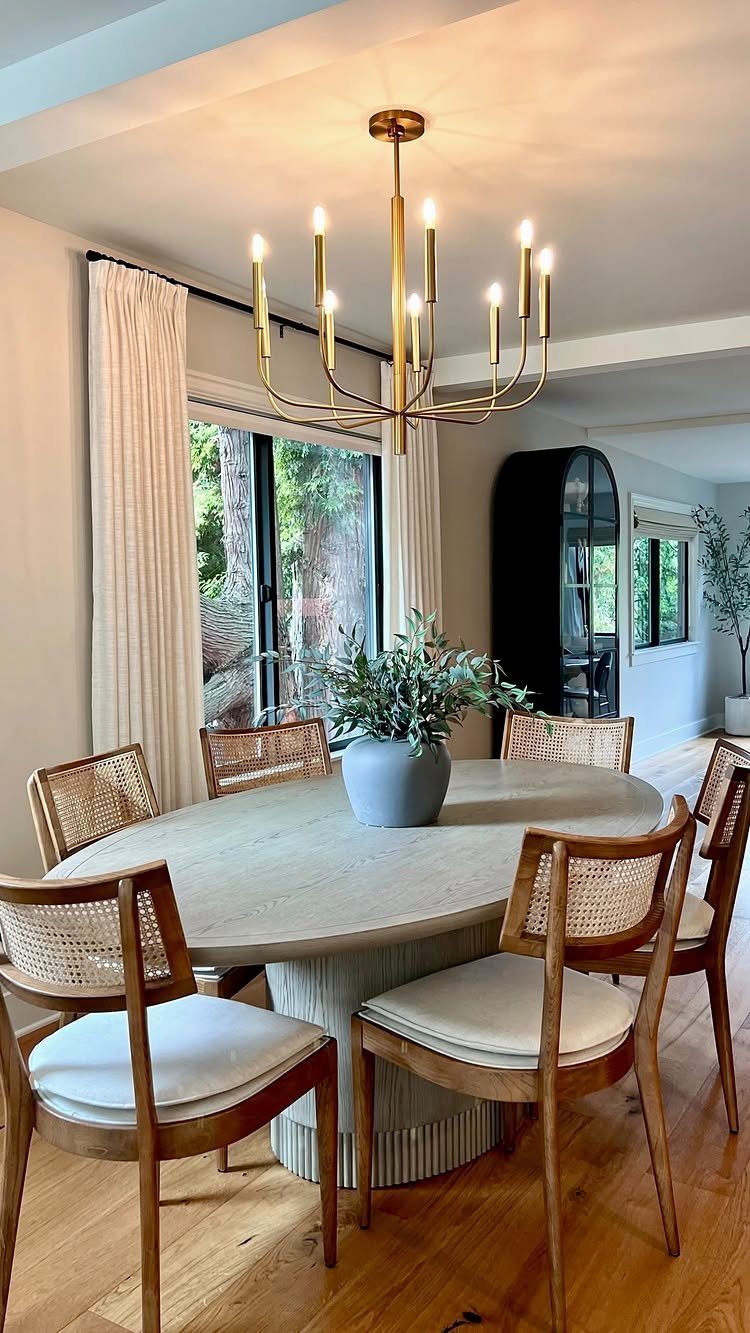
A chandelier or pendant that draws attention pulls the eye upward and fills the vertical space, which matters in rooms with high ceilings where the table alone can look too low.
The fixture becomes the focal point even before anyone sits down.
Hang the bottom of the shade so it clears heads and serving dishes but keeps the bulb out of sight when you sit down.
Any higher and the light spills too wide; any lower and it blocks sightlines across the table. If your ceiling is low, go with a flush or semi-flush mount instead of a hanging fixture.
5. Statement Centerpieces
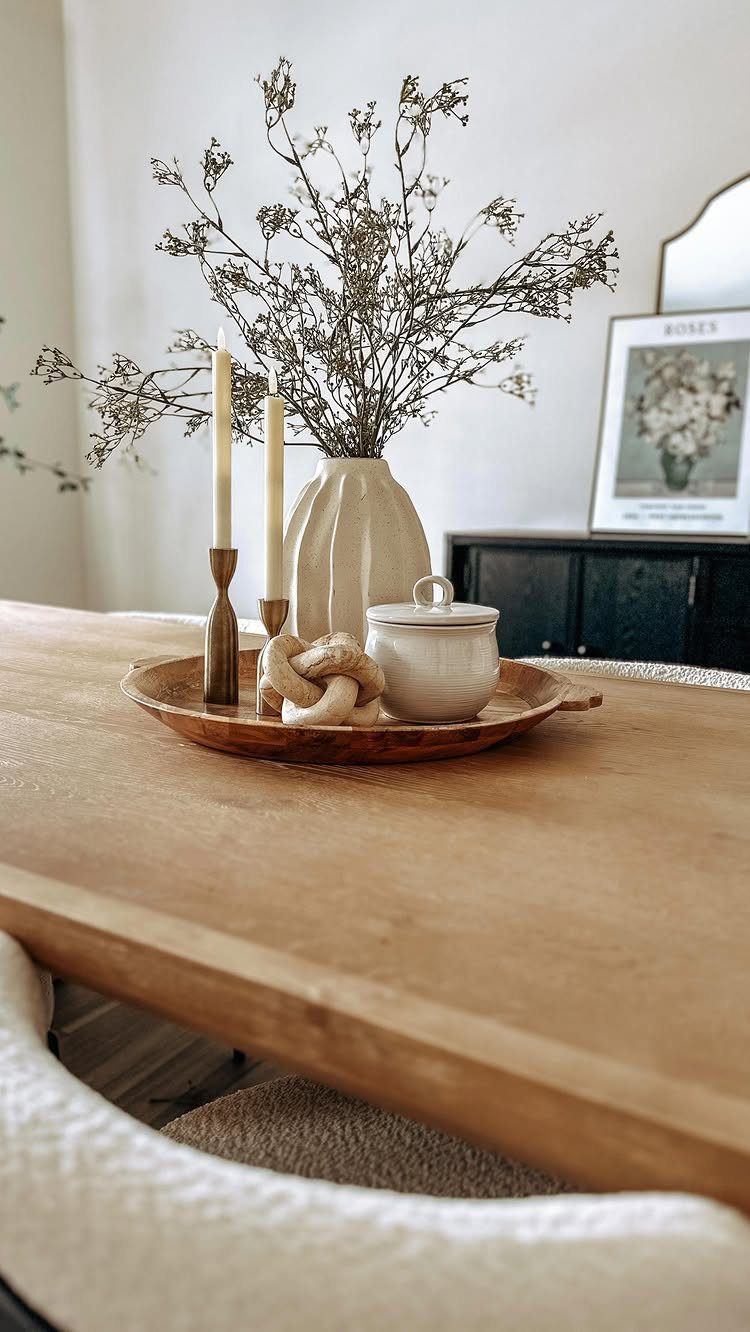
A tray corrals smaller items so the arrangement stays compact and easy to move when you need the full table for a meal.
Dried stems last indefinitely and cost less than fresh flowers, which makes them practical if you want something permanent.
Vary the heights within the grouping so the eye moves through it rather than landing on one flat plane. Candles add warmth in the evening, and unscented versions won’t compete with food when you sit down to eat.
6. Statement Wall Art
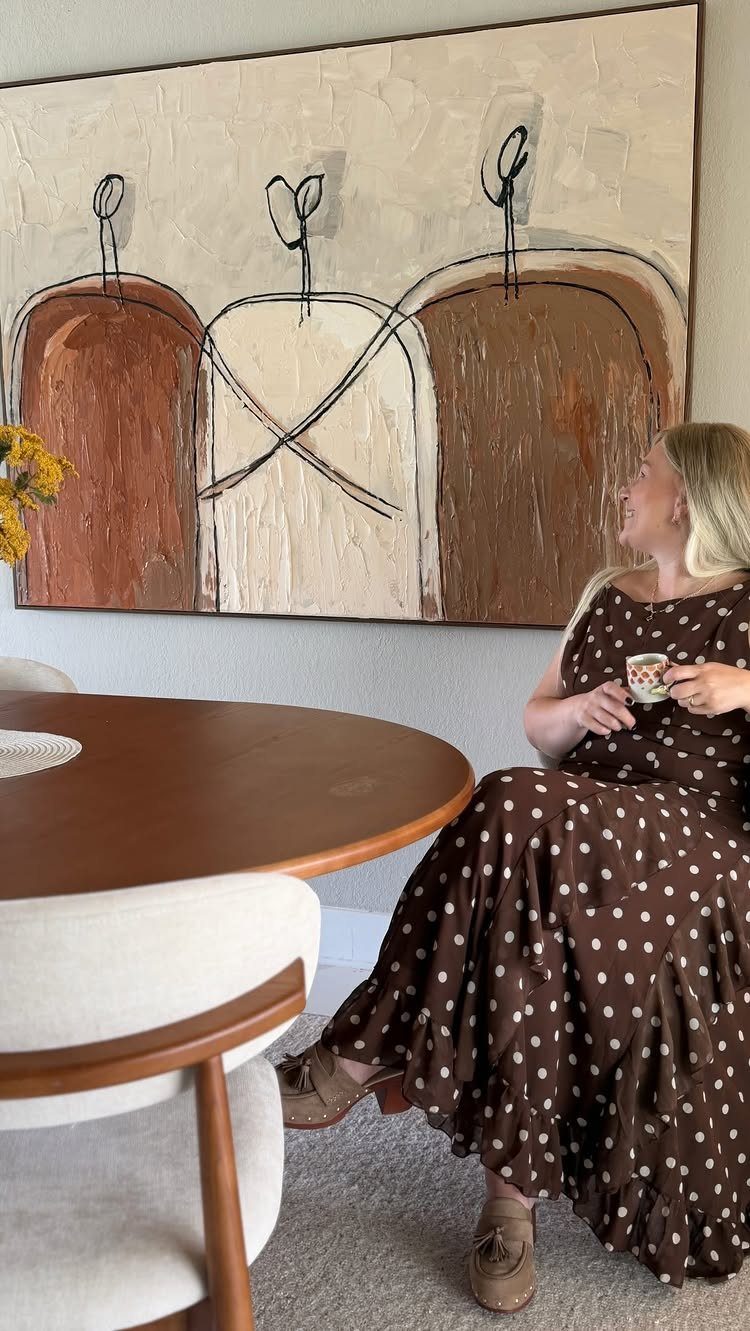
A single large piece makes a bigger impression than several small frames and takes less effort to hang. It also anchors the room visually, which helps when the walls feel blank or the furniture doesn’t fill the space.
Scale matters: for a piece above a sideboard or console, aim for at least two-thirds the width of the furniture below it.
On an open wall, go larger than you think you need. Abstract shapes and neutral palettes fit most interiors without locking you into one color scheme.
7. Modern Dining Tables
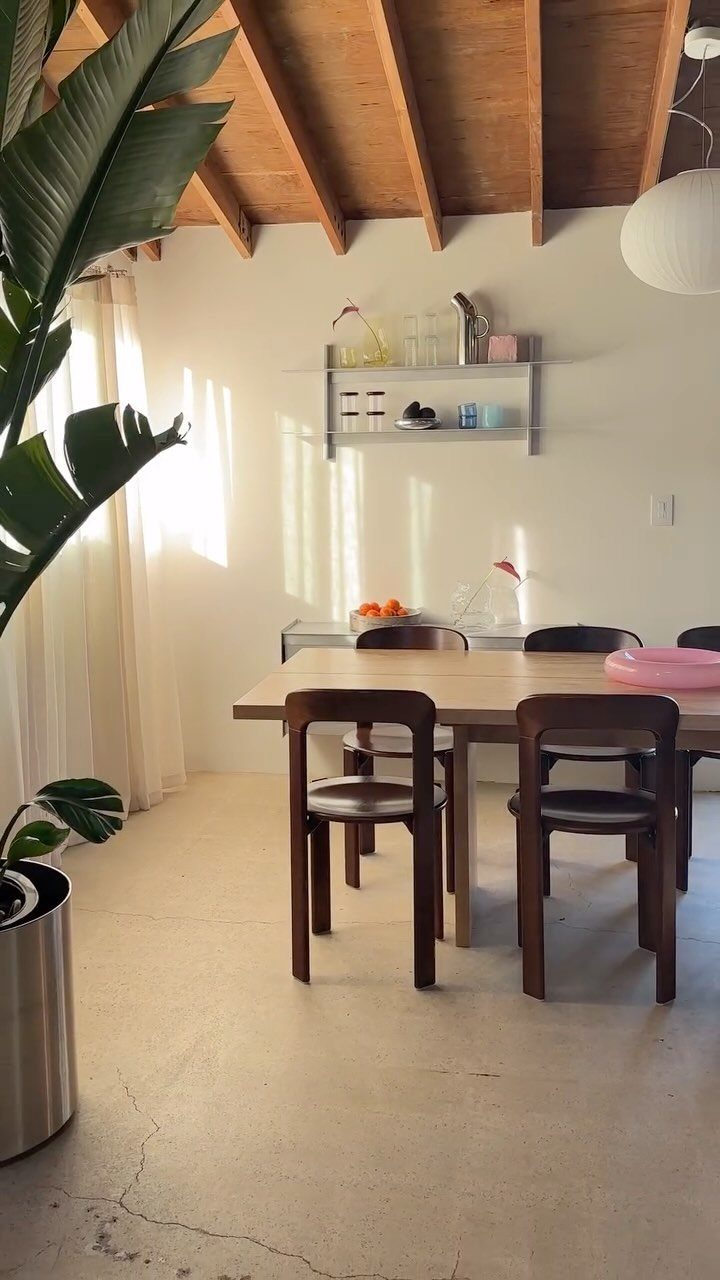
A table in light wood with clean lines and minimal detailing keeps the room from feeling too heavy, which matters when you have dark flooring or a lot of furniture competing for attention.
The grain shows through without stain, so you get texture without adding color.
Pair it with chairs in a contrasting finish to define the seating area. The difference in tone makes each piece readable on its own instead of blending into one mass.
8. Painted or Wallpapered Ceiling
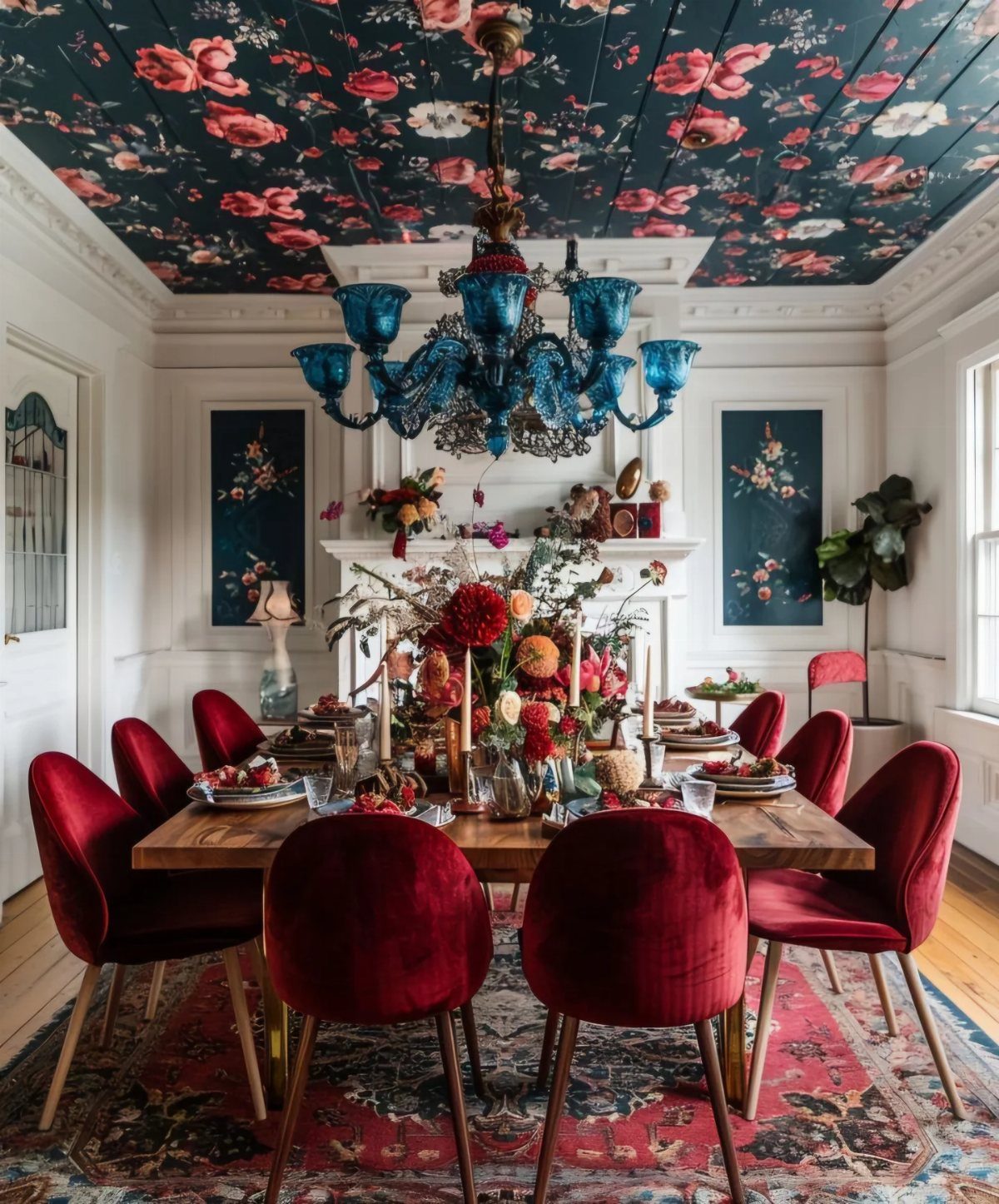
Treating the ceiling like a fifth wall gives you another surface to add pattern or color, and it stays clear of eye level where the room can start to feel busy.
Wallpaper works when you want detail that repeats, paint when you want a solid wash of tone.
Most people leave ceilings white, so any departure registers immediately when someone walks in. If the walls already carry a lot of pattern, keep the ceiling treatment simpler or the room will read too busy.
9. Gallery Wall
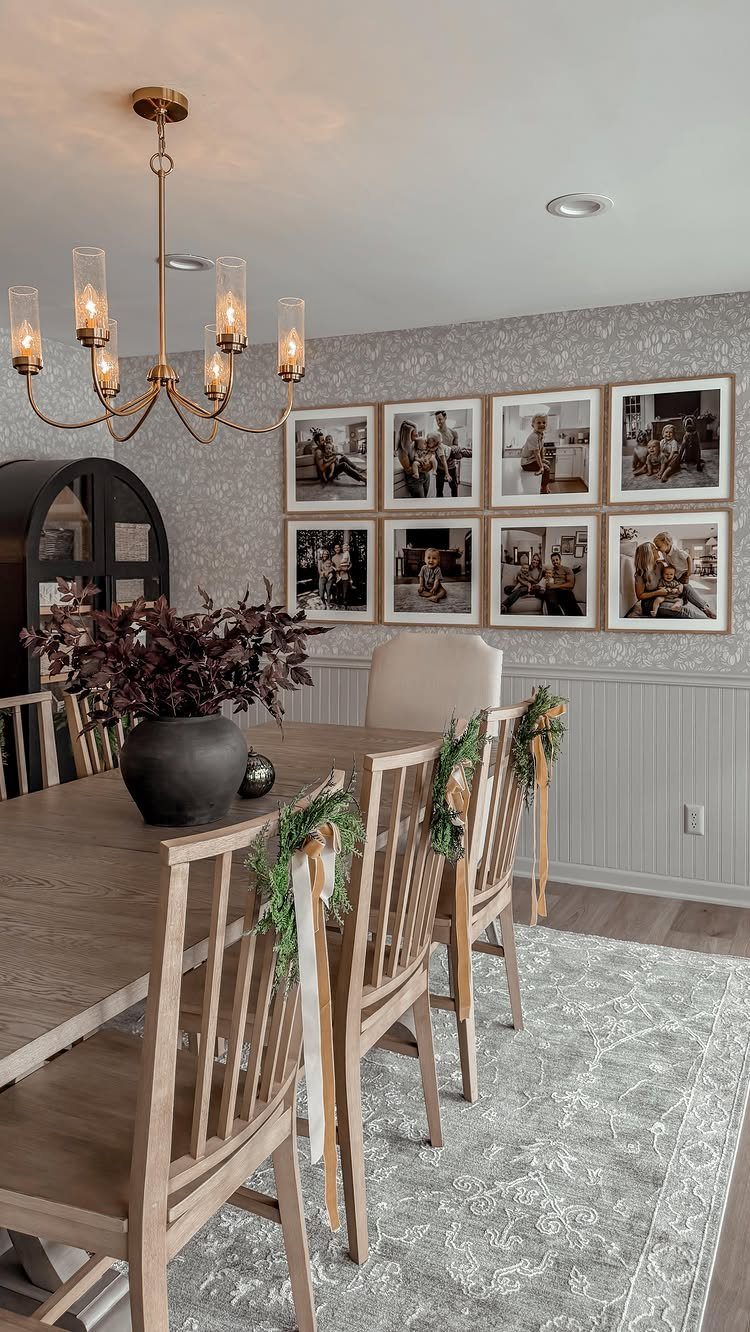
Grouping frames on one wall fills vertical space and gives you a place to rotate pieces in and out as you collect them.
Black and white photos read as a set even when the subjects differ, which makes the arrangement feel cohesive without requiring identical frames.
Lay the frames on the floor first to find a configuration that balances the wall without perfect symmetry. Once you settle on the spacing, measure from the center of each frame and mark the wall before you hang anything.
10. Floating Shelves
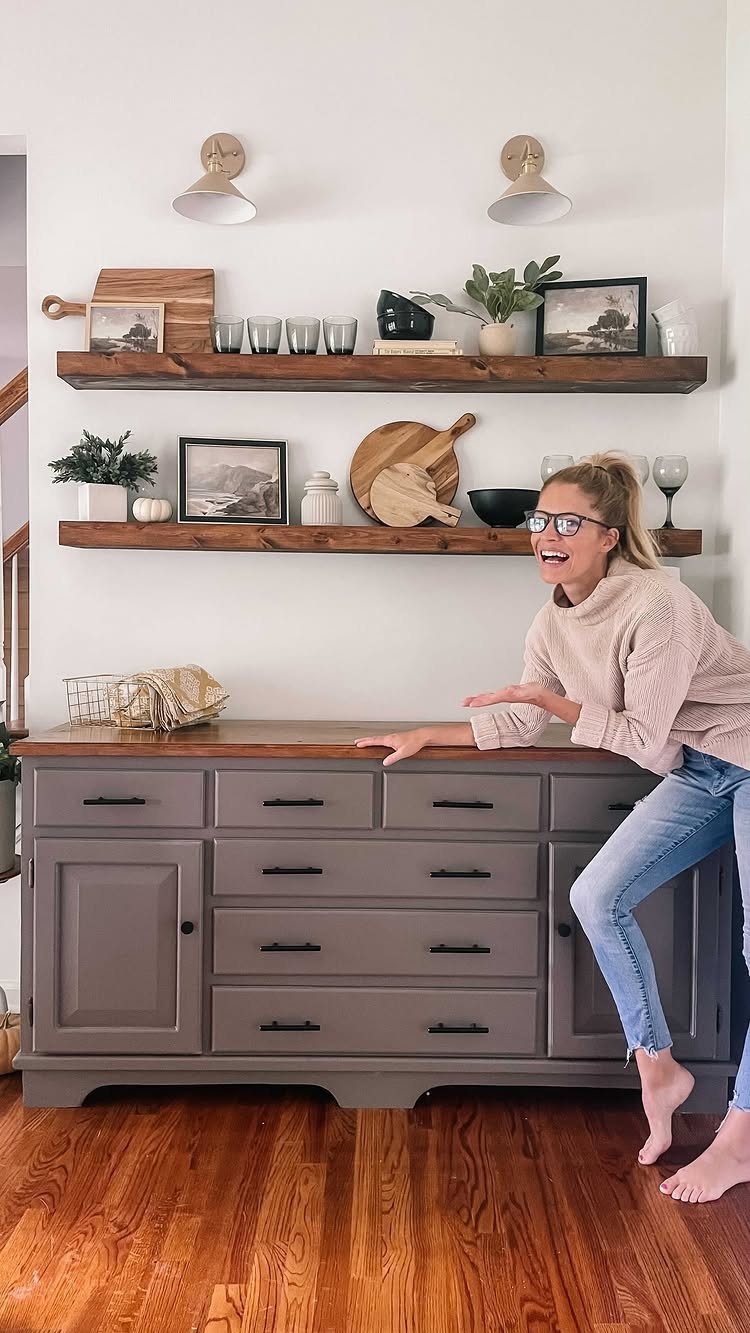
Shelves without visible brackets keep the wall clean and let you layer objects at different depths without the hardware cutting through the composition.
2 shelves give you enough room to vary the height of what you display without stacking items on top of each other.
Anchor them into studs if you plan to load them with anything heavier than a few books and lightweight ceramics. Drywall anchors alone won’t hold much weight, and sagging shelves ruin the look you’re after.
11. Modern Sideboard or Credenza
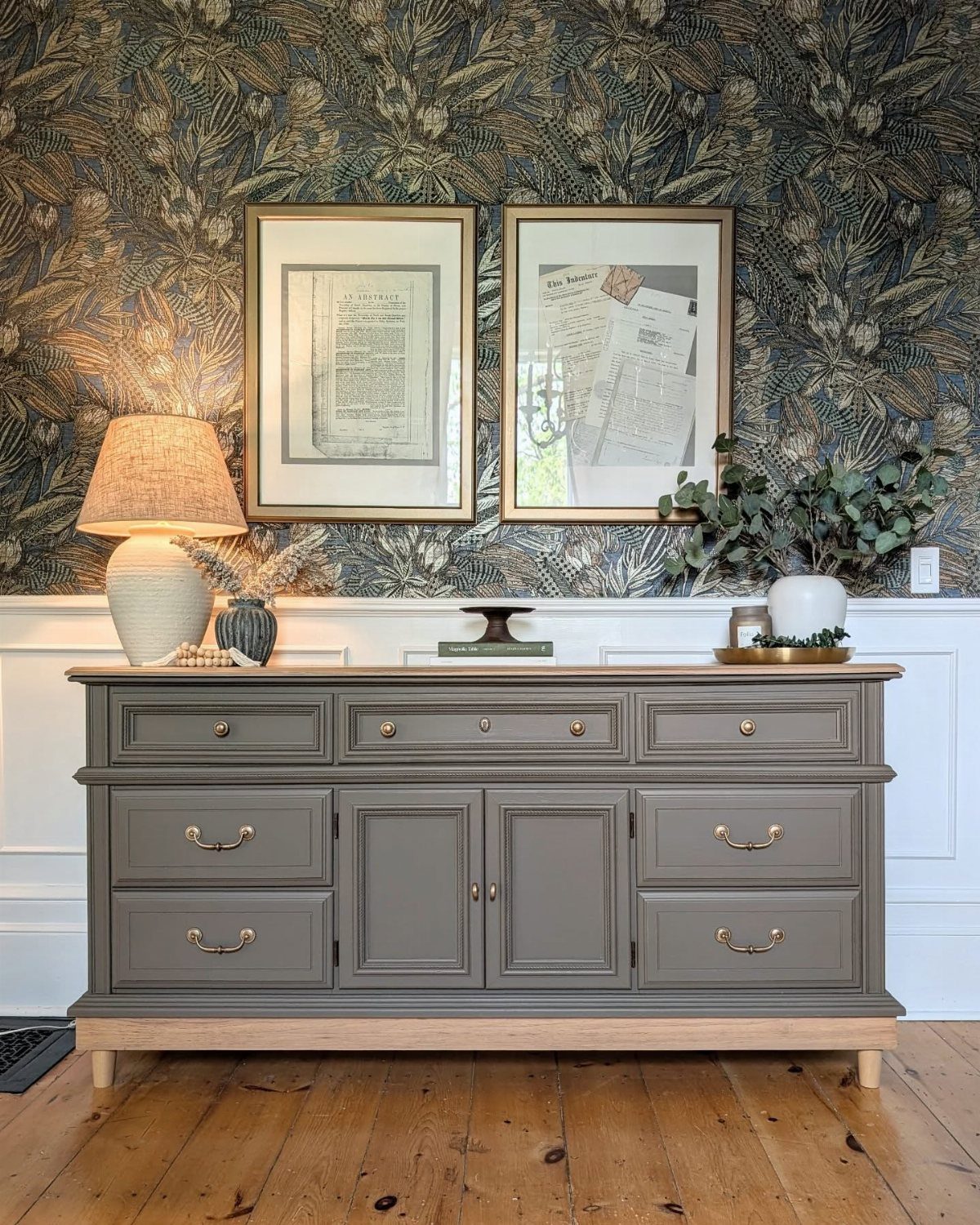
A low cabinet along the wall holds serving dishes, linens, and glassware in less square footage than a hutch needs.
The top surface gives you a landing spot for drinks or platters during a meal and a place to stage decor when the table isn’t in use.
Choose one with doors or drawers if you want to hide clutter. Open shelving looks lighter but requires you to keep what’s inside looking intentional, which takes more effort than closing a cabinet door.
12. Mirrors in Dining Rooms
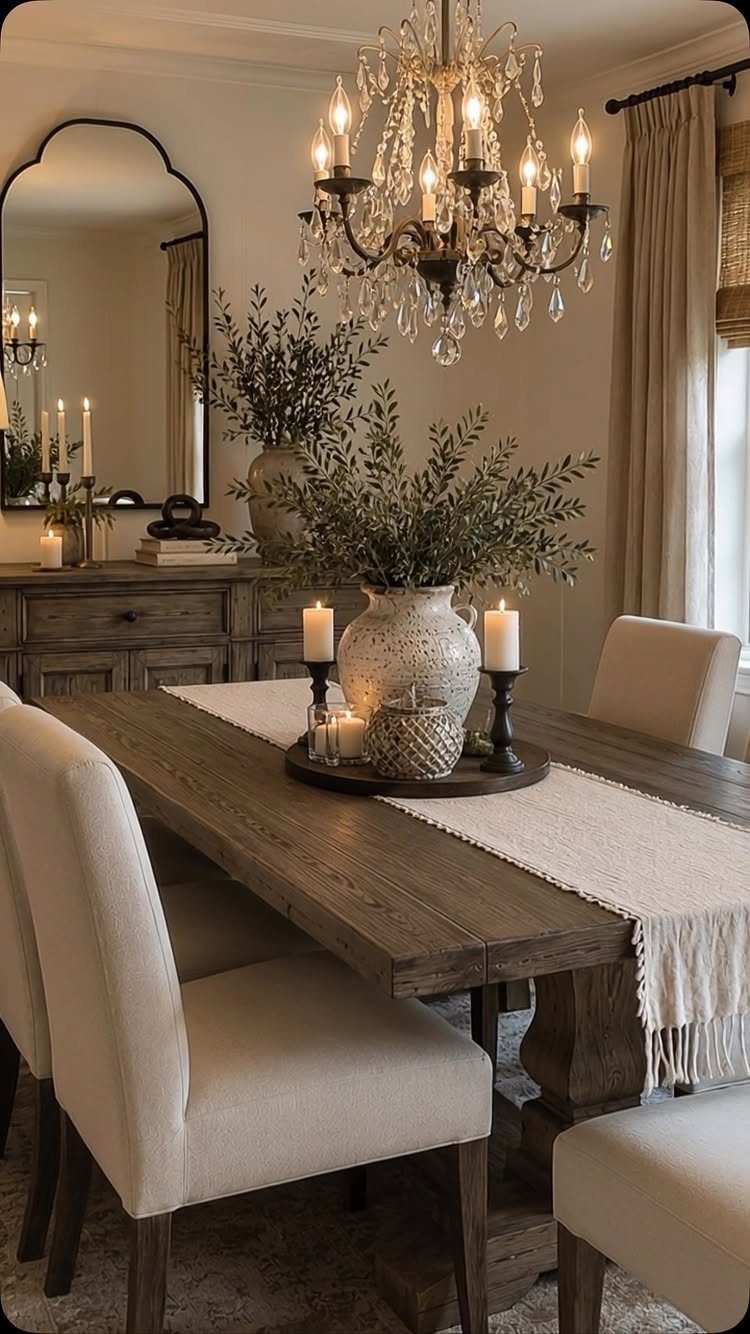
A mirror doubles the light in the room by reflecting whatever is across from it, which helps when you have only one window or the fixture overhead isn’t bright enough on its own.
Placing it opposite the light source makes the biggest difference.
An arched frame adds shape without breaking up the wall into too many straight lines, especially if your table, chairs, and doorways are all rectangular.
Lean it against the wall if you don’t want to mount it, just make sure the base is stable enough that it won’t tip forward.
13. Wall Murals
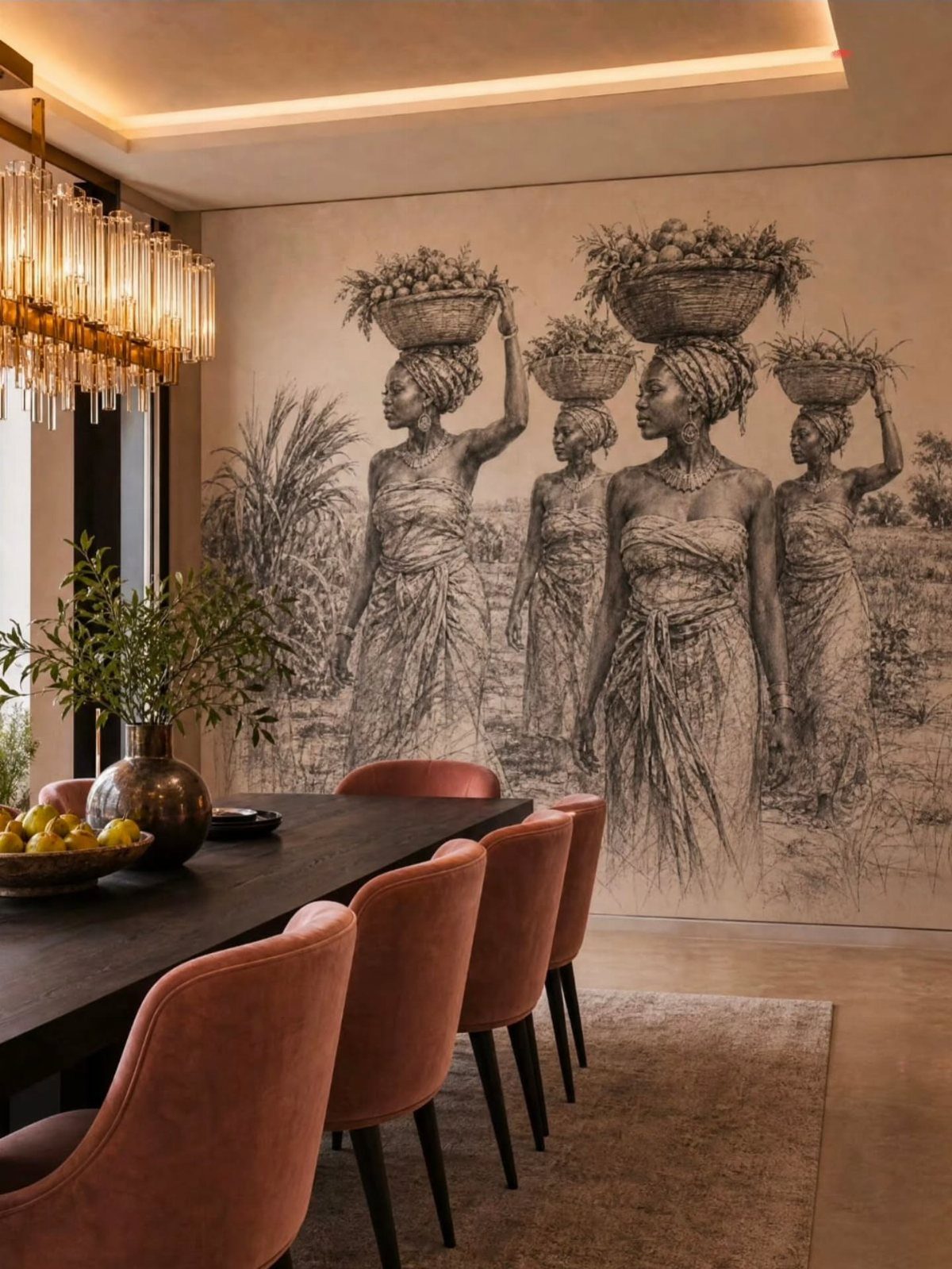
A mural that covers the wall behind the table makes the room feel finished without needing to hang multiple pieces or arrange shelves.
Choose a subject and palette that matches the rest of the room so the mural integrates rather than clashes. Peel-and-stick versions let you remove or replace the image if you move or want a different look later.
14. Dining Room Benches
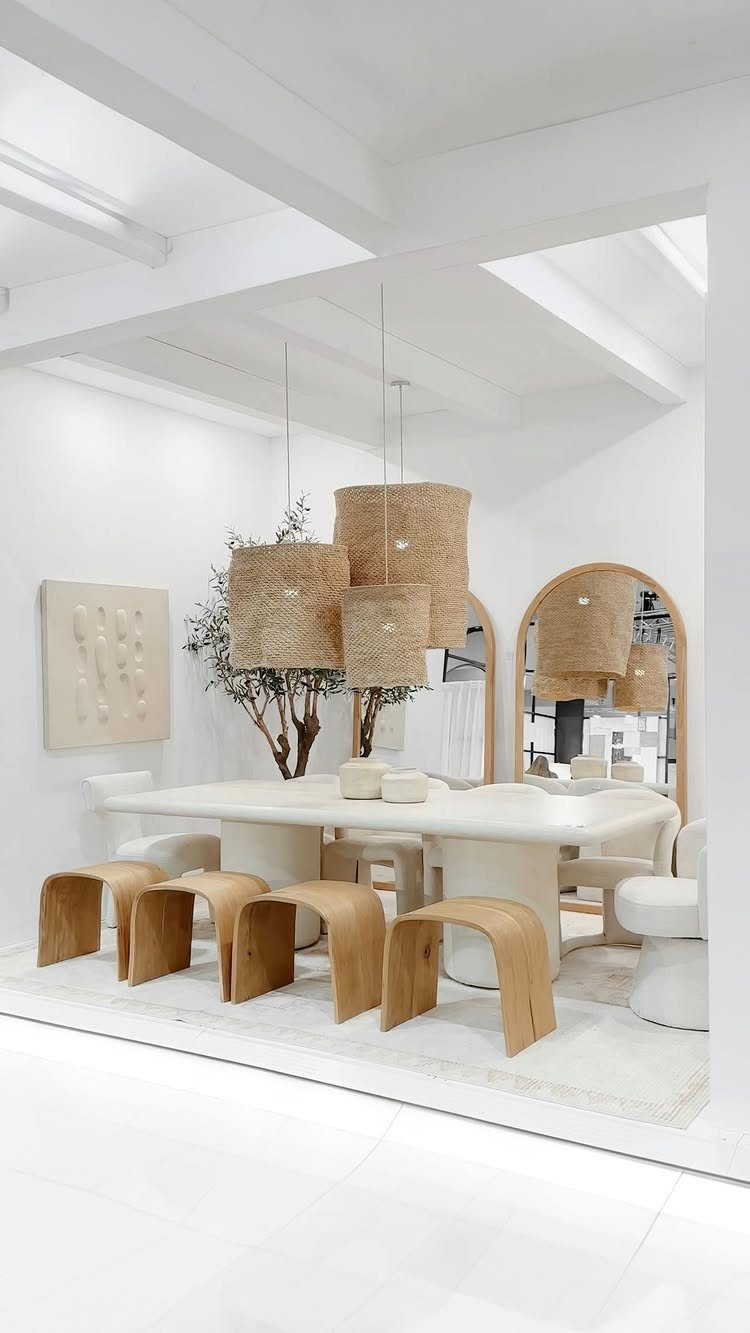
Benches fit more people along one side of the table than individual chairs do, which helps when you need to squeeze in an extra guest.
They also tuck under the table completely when not in use, freeing up floor space in smaller rooms.
The curved shape here softens the look and keeps the bench from reading as strictly utilitarian. Pair benches with chairs on the opposite side so everyone has a backrest option.
15. Woven Dining Chairs
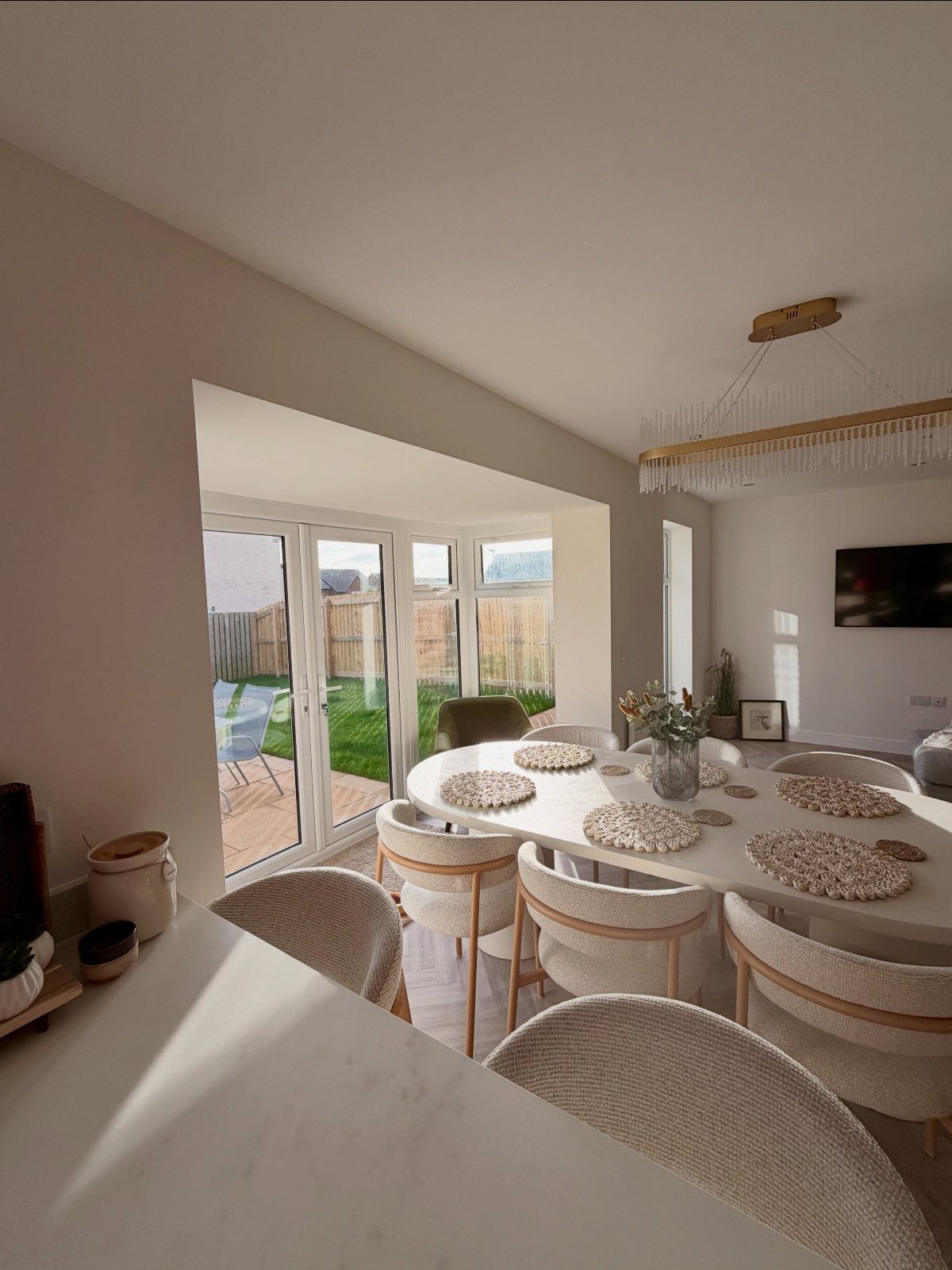
Woven seats add texture without pattern, which keeps the room feeling layered rather than flat while still working with a neutral palette.
The curved backs follow the shape of the table and make the chairs feel less boxy than straight-lined wood frames.
Woven materials show dirt and spills more than solid upholstery or wood, so they suit spaces where meals stay relatively tidy. If you have young children or frequently host messy dinners, save these for a room that sees lighter use.
Current Dining Room Trends
Earth tones anchor most modern dining rooms right now, with natural wood tables setting the palette and walls pulling from white, cream, beige, gray, or black.
The look feels organic rather than sterile, and the neutral base lets you add color through smaller pieces without committing to one scheme long-term.
Functionality sits alongside appearance in current interiors. High ceilings and light wall colors make rooms feel more open, while layering wood with metal brings warmth without softening the lines.
Warmth and color sit comfortably inside a modern room when you want them. Just keep the larger surfaces neutral so the room doesn’t lock you into one look.
Creating a Cohesive Look
Repeat one color or material across the room so individual pieces feel connected rather than randomly assembled.
If your table is light wood, pull that tone into the shelving or sideboard. If you use black frames on one wall, carry black through the chair legs or hardware on the credenza.
Where the kitchen opens into the dining area, a formal table and its own set of chairs draw the line between the two.
The furniture itself defines the zone, especially when the seating and table form a clear set that reads separately from the kitchen island or counters nearby.
For small spaces, built-in storage or a sideboard with closed cabinets keeps the room from looking cluttered, which helps the eye move smoothly across the space instead of catching on stacks of mismatched items.
Choosing Dining Room Furniture
Start with the table, then choose chairs that fit the frame and seat height it sets.
In tight spaces, prioritize storage and pick furniture with clean craftsmanship so every piece earns its footprint.
Comfort matters as much as appearance. Sit in the chairs before you buy them if you can, and make sure the seat depth and back angle suit how long your meals typically run.
Small dining rooms present both a challenge and an opportunity. On the one hand, you’re working with limited space that’s just one ill-sized dining chair or bar cart away from feeling overwhelmed and cluttered.