
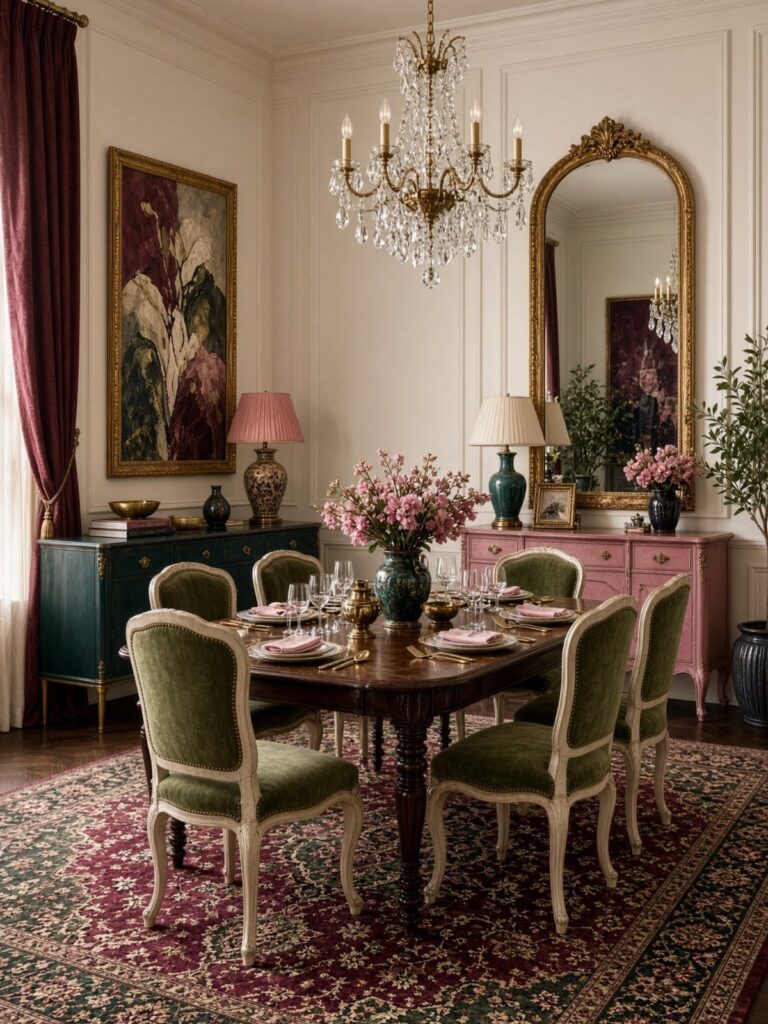
Old money dining rooms layer velvet upholstery against painted walls in the same color family, keep bar carts mobile on wheels, and choose furniture that ages visibly rather than fighting wear.
The right approach depends on whether you’re working with existing architecture or building the look from scratch: paneled walls take patterned wallpaper well, while open layouts benefit from layered design to keep the room from reading stiff.
1. Layer Your Design
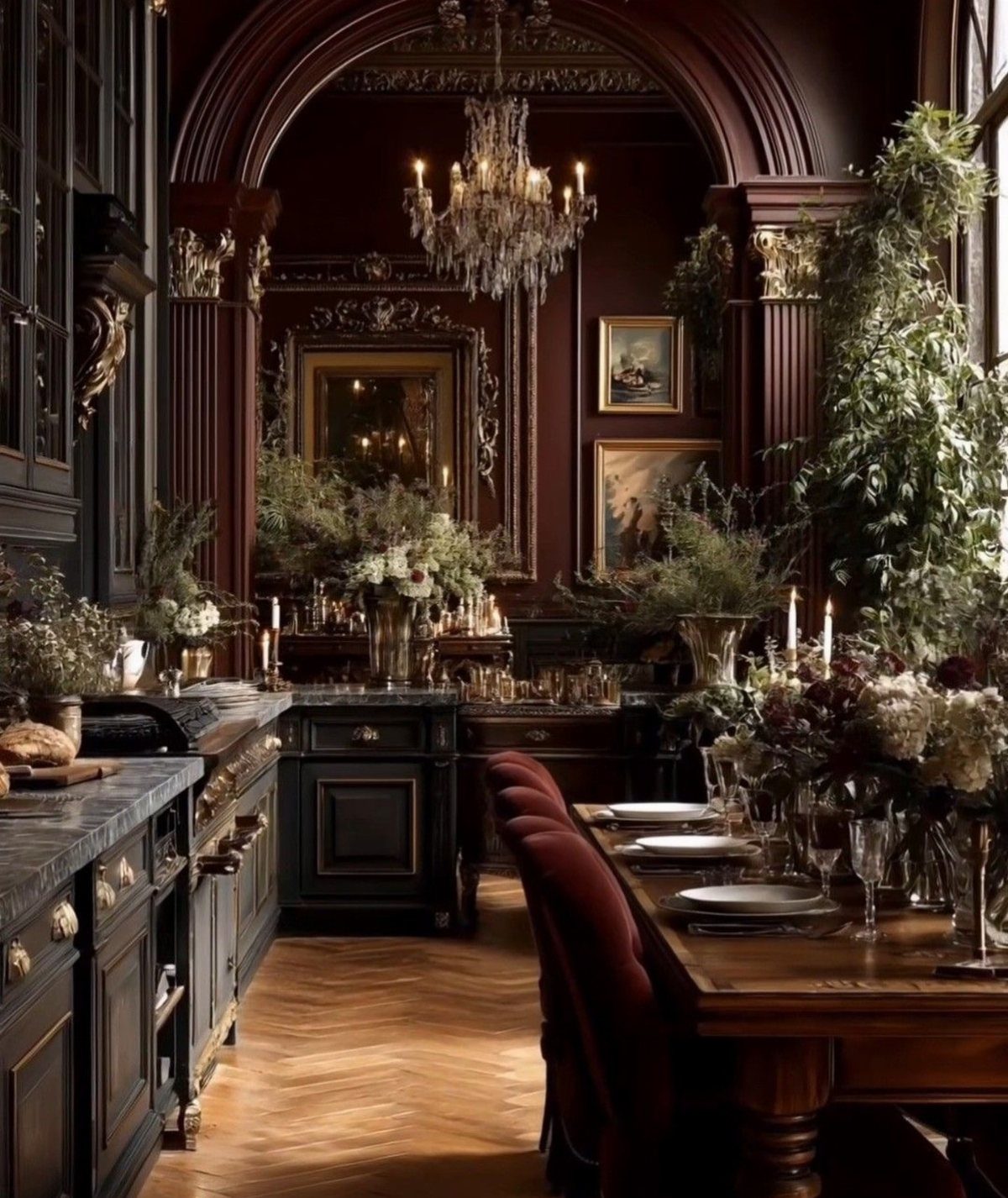
Old money spaces stack pattern on pattern without apology. The red velvet upholstery here sits against red walls, with gold accents on both the chandelier and the smaller decorative pieces.
Crystal and wood meet at different scales, and fresh flowers fill the table in clusters rather than a single arrangement.
The strategy is straightforward: choose a base color that can handle repetition, then vary the finish.
Velvet, paint, metal, and glass all carry the same red differently. Add one contrasting material, wood or brass, and keep it consistent across the largest pieces so the room holds together.
2. Oversized Art Above the Dining Table
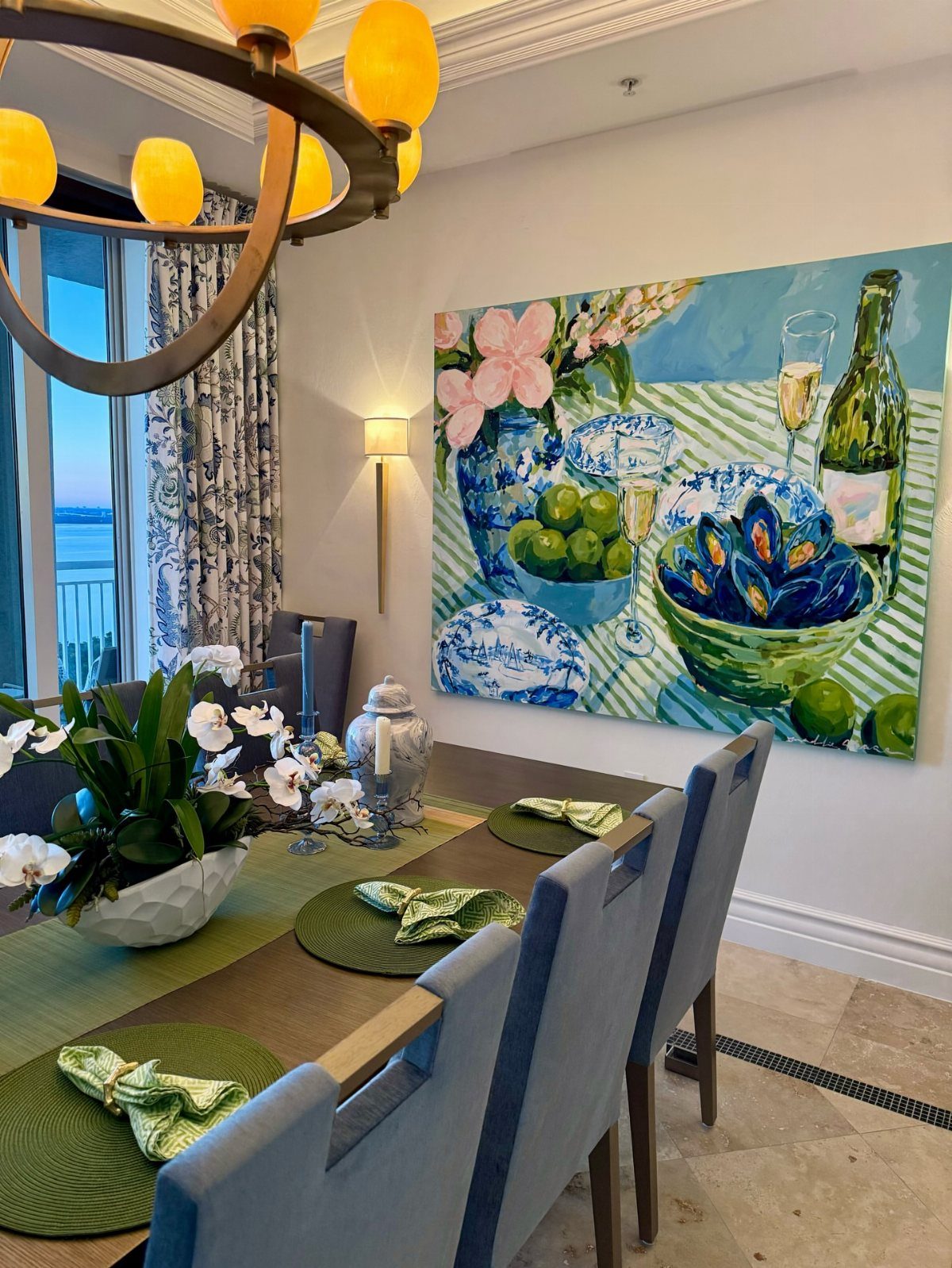
A single large painting over the table does more than a gallery wall.
This still life spans most of the wall width, pulling focus while leaving the meal as the center of attention. The blue chairs pick up the cooler tones in the painting, which keeps the room from reading as accidentally matched.
Scale matters more than subject. I look for art that measures at least two-thirds the width of the table, hung so the center sits at eye level when standing.
The frame can be ornate or plain, but the piece itself should be large enough to anchor the wall on its own.
3. Comfortable Dining Chairs
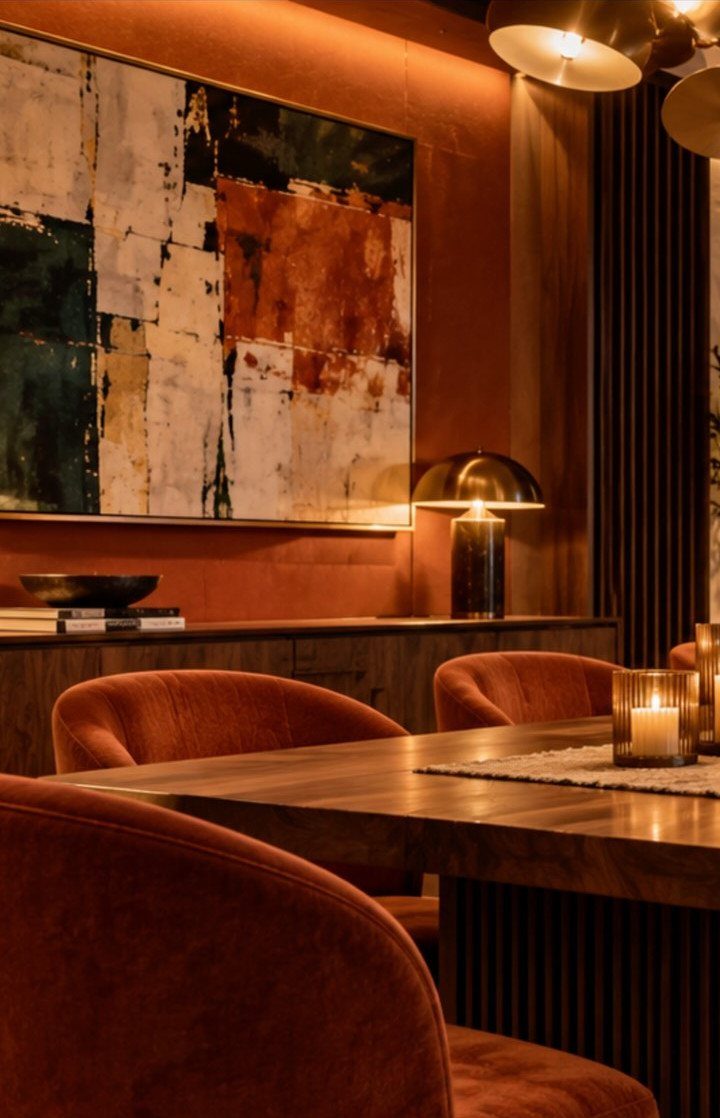
Guests remember uncomfortable seating long after they forget the meal.
Old money dining chairs tend toward rounded backs, padded seats, and arm rests on at least the head chairs.
Velvet or leather upholstery ages visibly, which suits the aesthetic better than performance fabric. The wood finish here is dark and matte, not glossy, which keeps the chairs from reading formal in a stiff way.
4. Create Soft Lighting
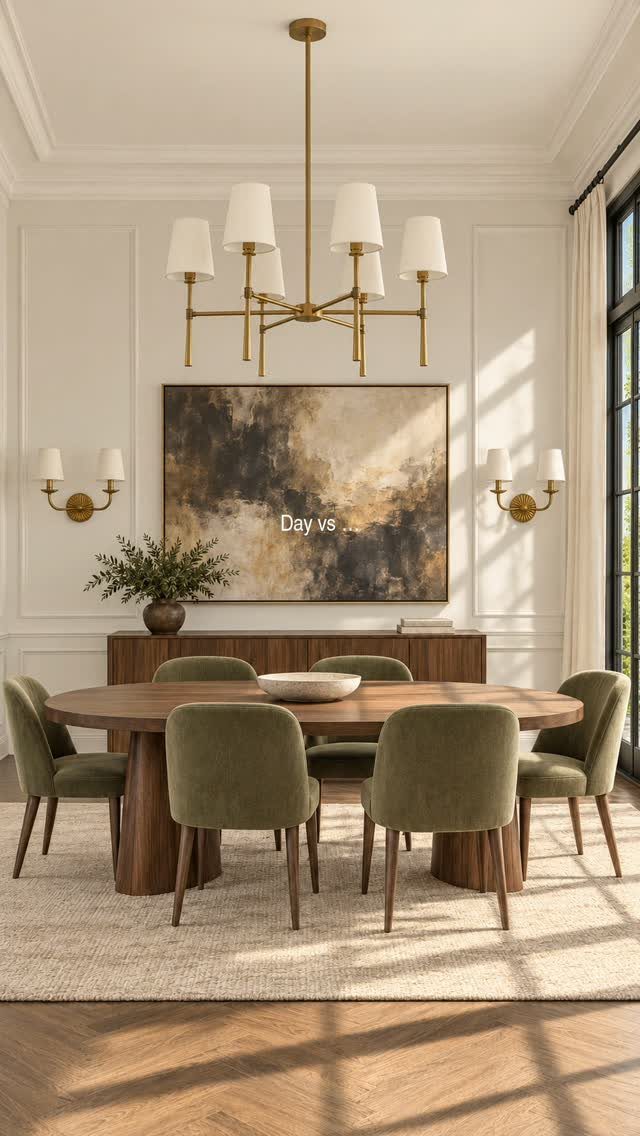
Multiple light sources at different heights give a dining room the flexibility formal spaces need.
This room runs a chandelier centered over the table with sconces flanking the artwork, so the light spreads across the room instead of pooling in one spot.
Chandeliers in old money rooms tend toward metal, glass, or crystal rather than fabric shades.
I hang the fixture so the bottom sits well above the tabletop, which keeps it out of sightlines but close enough to light faces rather than just the table surface.
Add sconces or a table lamp on the sideboard, wired to a dimmer, and the room works for both dinner and conversation after.
“There are three factors to create a great dining room: comfortable seating, design devices to create a union or a core, and adjustable lighting,” he says.
5. Bar Cart with Wheels
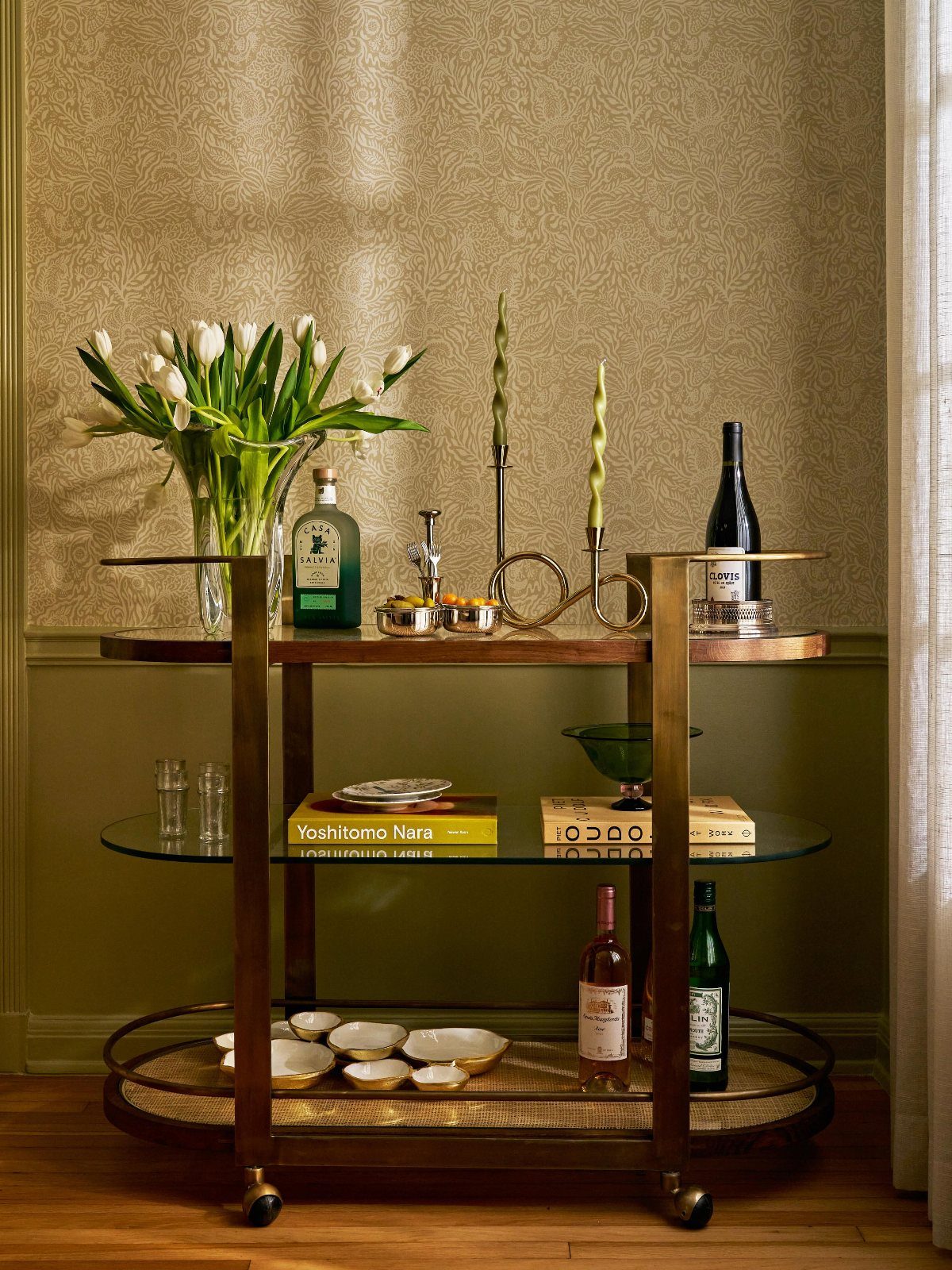
A wheeled bar cart moves between the dining room and wherever bottles are actually stored, and it holds the current rotation without turning the dining room into a permanent bar.
This brass cart is styled with wine, spirits, and a vase of tulips, and the wheels let it disappear when the room needs to shift for another use.
Look for a cart with at least 2 shelves and a frame that will not tip when fully loaded. Brass and gold finishes read more old money than chrome or black metal.
The top shelf holds what is open or in regular use, the bottom shelf holds backups and mixers, and a small vase or stack of cocktail napkins keeps it from looking purely functional.
6. Style a Sideboard
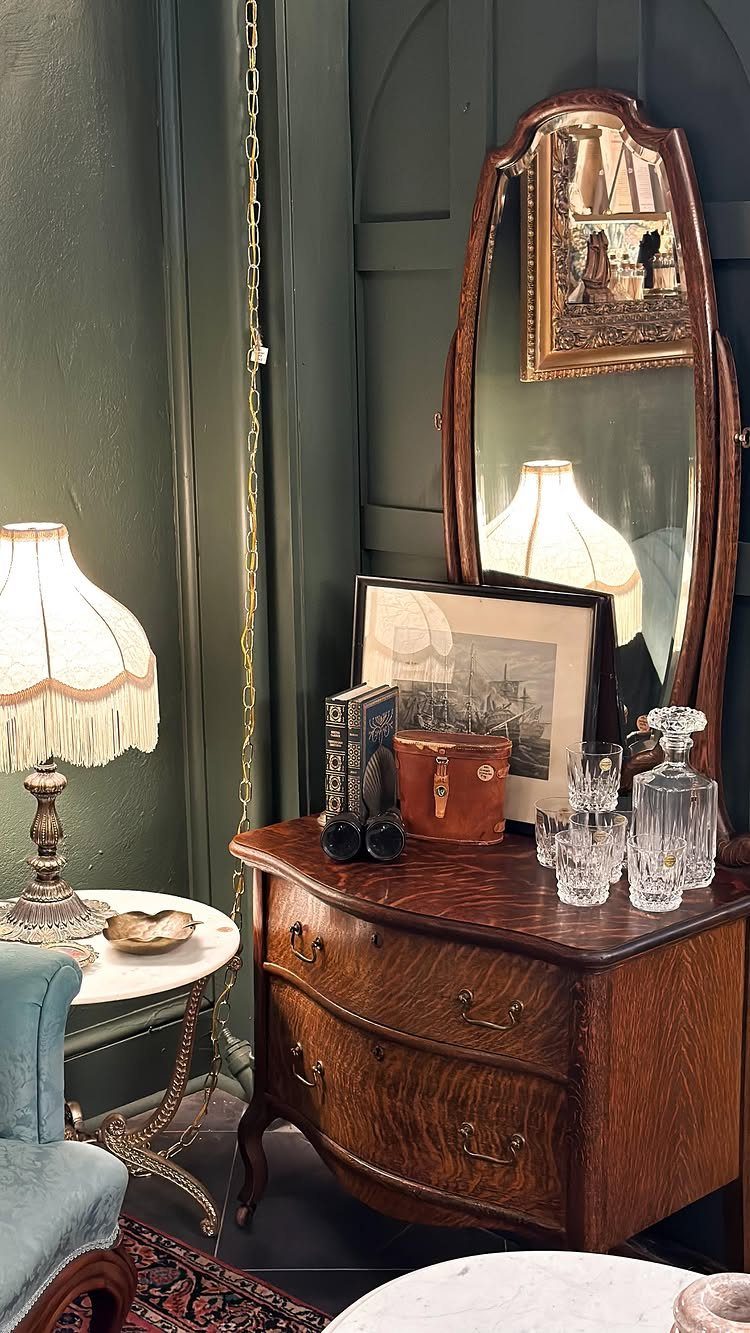
A sideboard stores what a dining room uses regularly and gives the room a horizontal anchor that is not the table. This one holds glassware, books, and a leather case on top, with drawers below for linens or flatware.
I prefer sideboards with a mix of open display and closed storage, so the surface does not have to stay clear.
Wood finishes in walnut or mahogany suit old money rooms better than painted pieces, and the height should stay below window sills and artwork.
Style the top in odd-numbered groups, with at least one functional piece like a decanter or serving tray.
7. Play with Wallpaper Patterns
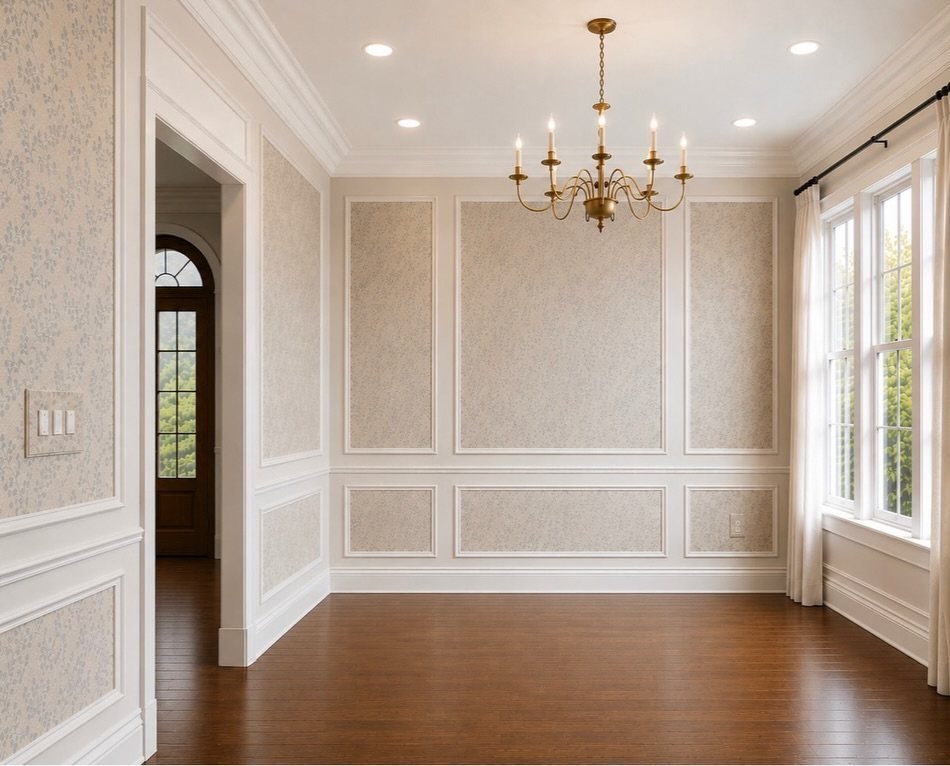
Wallpaper inside paneled frames gives the walls architecture without new trim. The floral pattern here fills the space between molding lines, and the white frames contain it so the pattern stays decorative rather than overwhelming.
Choose a paper with visible texture or an embossed surface, which catches light differently than flat prints. Install it in the sections between existing molding, or add picture frame molding first if the walls are plain.
The pattern can be bold as long as the frames keep it sectioned, and a single roll often covers what a dining room needs.
8. Navy Blue and Hunter Green
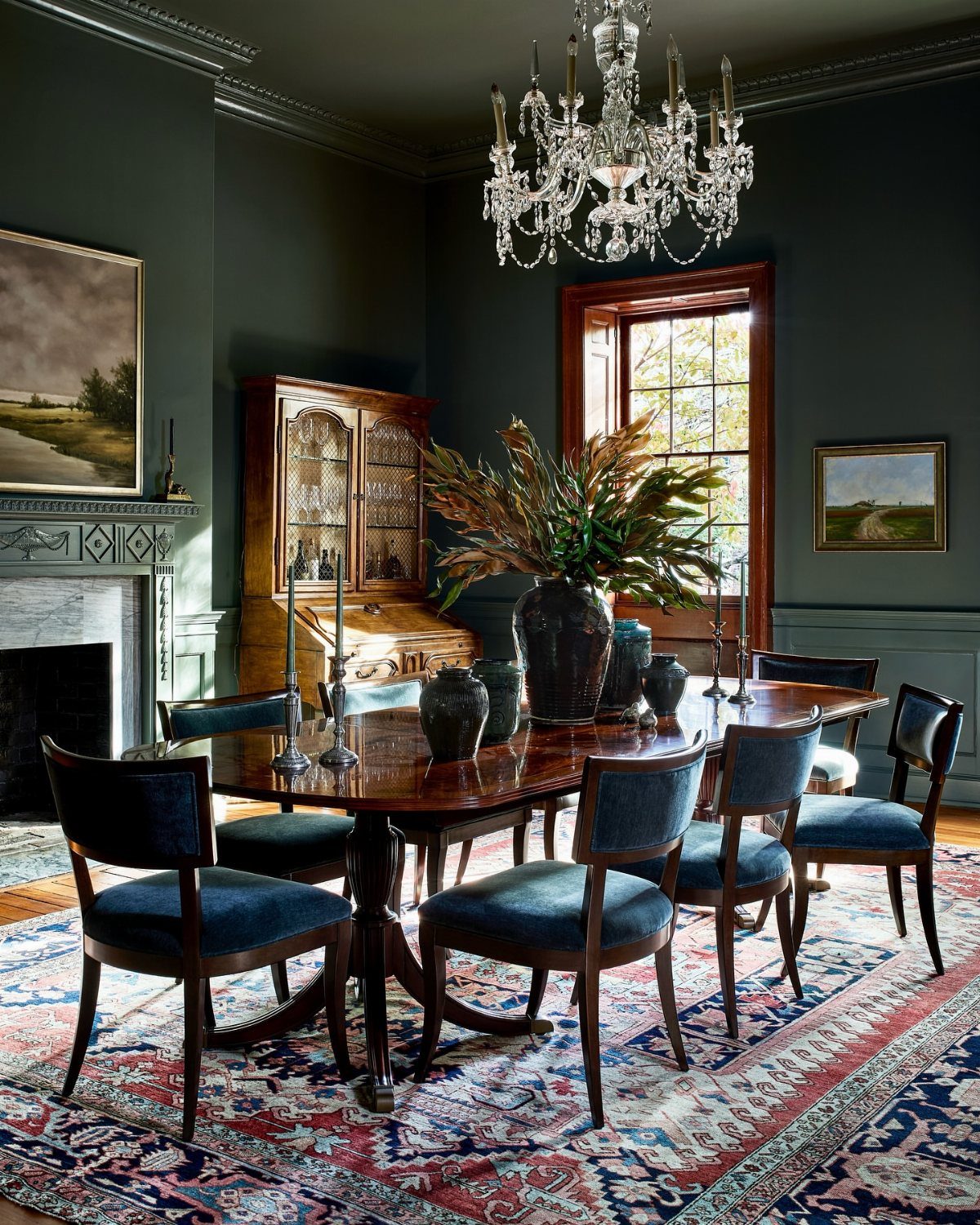
Navy and hunter green share enough depth that they sit together without fighting for attention. A patterned rug brings both colors back in at a smaller scale, which ties the room together without repeating the pairing on every surface.
Pair the darker of the 2 colors with the larger surface, walls or upholstery, and use the other for seating or drapery. Both colors suit velvet, leather, and matte paint better than high-gloss finishes.
9. Mix Old Money with Other Styles
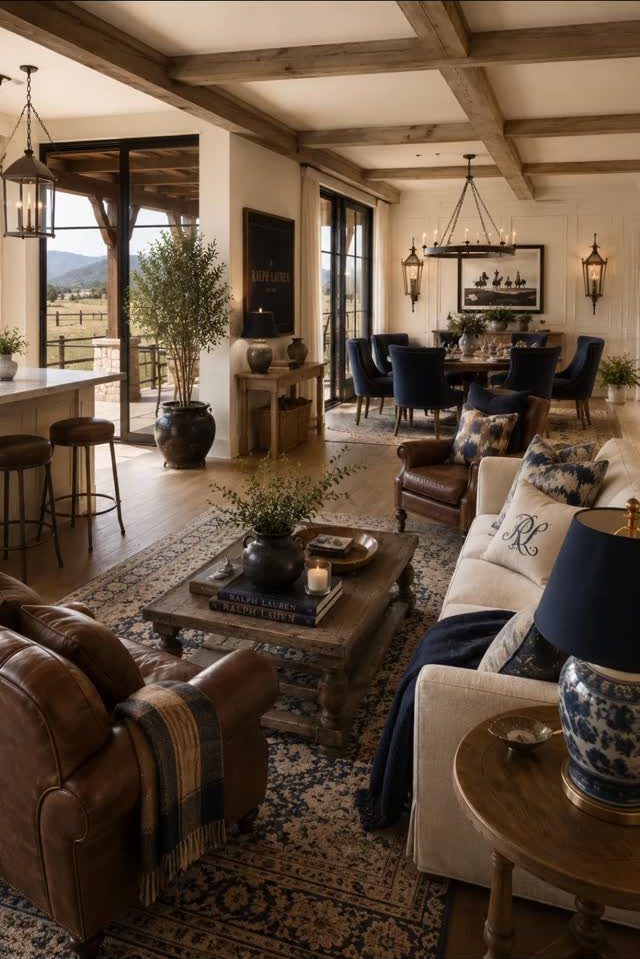
Old money furnishings read less rigid when they share a room with rough or contemporary materials. The blue velvet chairs here sit at a farmhouse-style dining table, and exposed wood beams overhead break up what could otherwise feel too formal.
The leather sofas and brass details still carry the traditional side, but the open layout and casual coffee table books keep the space from reading like a period room.
Pick one or 2 old money anchor pieces, upholstered dining chairs or a sideboard, and pair them with something simpler in finish or form. The contrast needs different materials, not just different styles.
Old Money Dining Room Characteristics
Velvet and leather upholstery develop patina with use, wood furniture darkens or lightens depending on the species, and brass hardware tarnishes unless polished regularly. The aesthetic assumes visible wear, which means the room improves with time rather than fighting it.
Antiques and vintage pieces carry more weight in this style than new reproductions, but the mix matters more than provenance.
A single inherited sideboard or a set of chairs from an estate sale anchors the room, and the rest can be new as long as the materials and proportions match.
Look for solid wood over veneer, natural fibers over synthetics, and joinery that shows some hand work.
The style adapts to contemporary, traditional, and transitional layouts without losing coherence. Pair formal upholstered seating with a simpler table, or run modern lighting over classic furniture, and the room stays flexible.
Budget Considerations
Old money dining rooms cost as much or as little as the furniture you choose.
A vintage sideboard from an estate sale costs a fraction of what a new reproduction in comparable wood runs, and condition matters more than age when you’re shopping secondhand.
Upholstered dining chairs follow the same pattern: used chairs in good frames cost far less than new ones if you’re willing to reupholster or live with wear.
Brass bar carts and chandeliers are easier to find secondhand than wood furniture, and the aged finish suits the aesthetic better than new lacquer.
Thrift stores and online marketplaces turn them up regularly, and most only need rewiring to work again.
Wallpaper and paint deliver the most visible change for the least money. A single roll of textured or embossed wallpaper covers enough area to fill picture frame molding in most dining rooms.
Maintenance Tips
Velvet and leather upholstery need vacuuming every 2 weeks to prevent dust from settling into the fibers.
A soft brush attachment lifts surface dirt without abrading the fabric. For velvet, brush lightly in the direction of the nap after vacuuming to restore the texture.
Leather dining chairs benefit from conditioning twice a year with a product formulated for upholstery leather, not car or shoe treatments.
Apply a thin layer with a soft cloth, let it absorb for 10 minutes, then buff off the excess. Skip the conditioner on aniline or suede finishes, which absorb too readily and can darken or stain.
Wood furniture holds up better with regular dusting and occasional waxing. Use a soft cloth for dusting, a paste wax twice a year for protection, and avoid spray polishes that leave residue.
Brass fixtures tarnish naturally and can be left as is or polished with a brass cleaner and a microfiber cloth when the finish dulls too far.






