
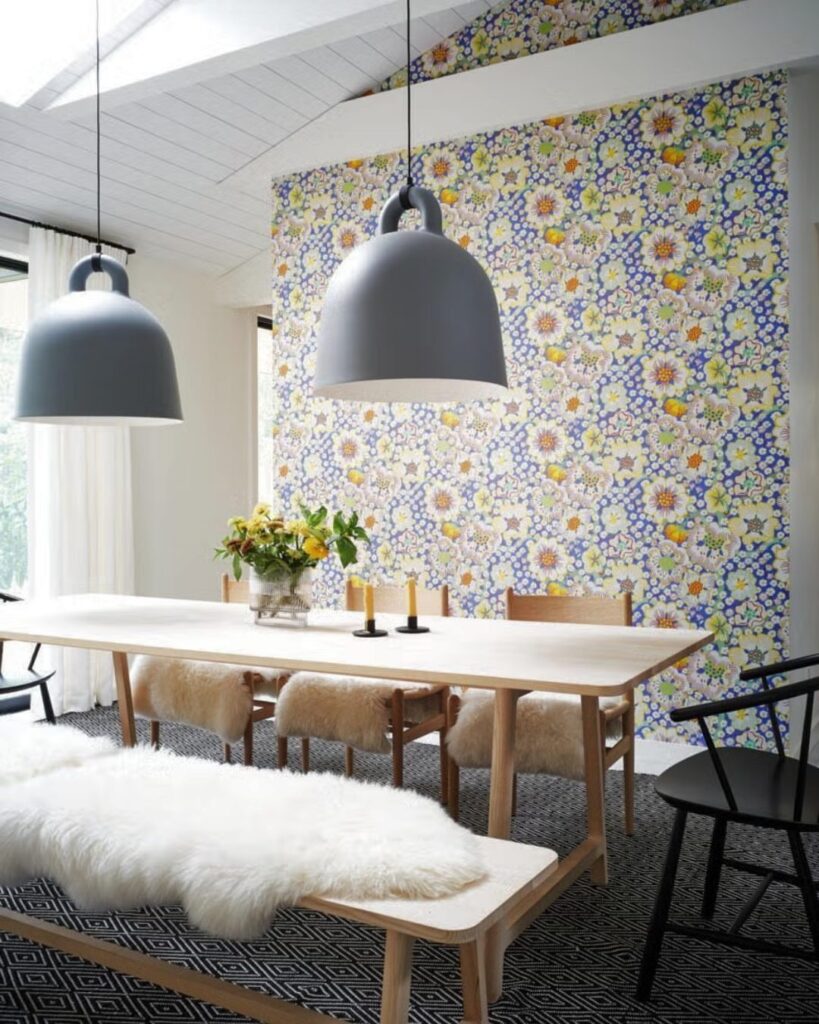
Mismatched dining chairs let you spend more where it counts and less where it doesn’t, whether that means upholstered armchairs at the head with slat-back chairs down the sides or stools on one side that slide away completely.
The setup that works depends on how you use the space: a built-in banquette anchors a corner and frees up floor area, while a mix of standalone chairs keeps an open floor plan flexible.
1. Head Chairs Contrasting with Side Chairs
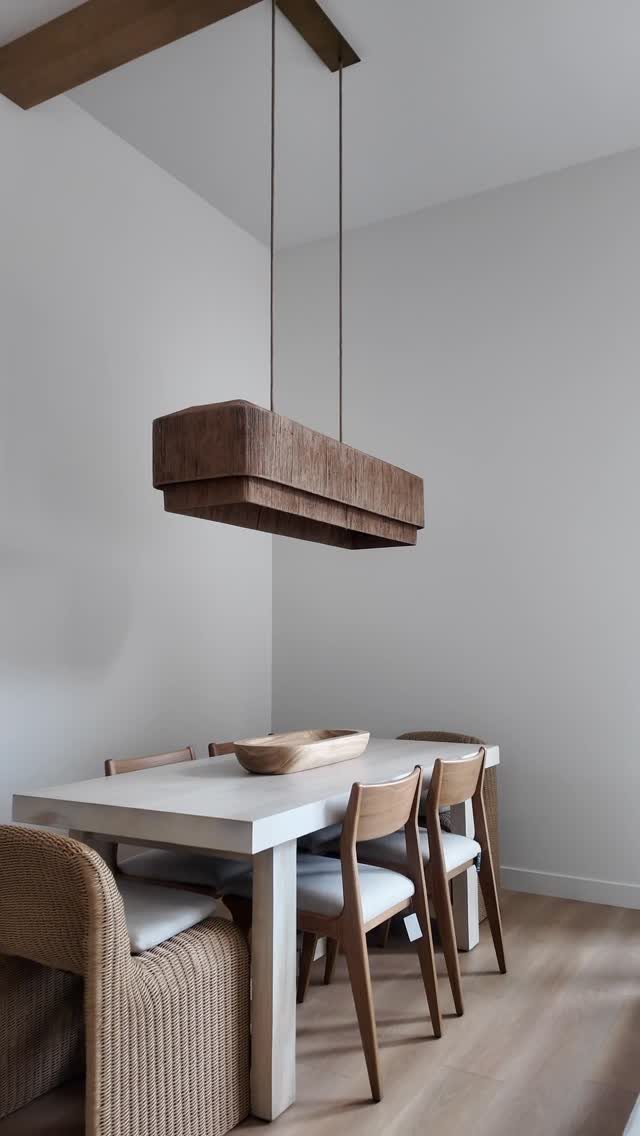
Set a bolder chair at each end and line the sides with something quieter. The contrast draws attention to those anchor positions without overwhelming the rest of the arrangement.
Woven or upholstered armchairs work well at the ends, where they frame the table and provide extra comfort for the seats that get the most use.
Wooden or metal side chairs keep the cost down and leave more visual breathing room along the length of the table, especially when space is tight.
The mix reads as intentional when the side chairs share one material or finish and the head chairs share another.
2. Mix and Match Chairs
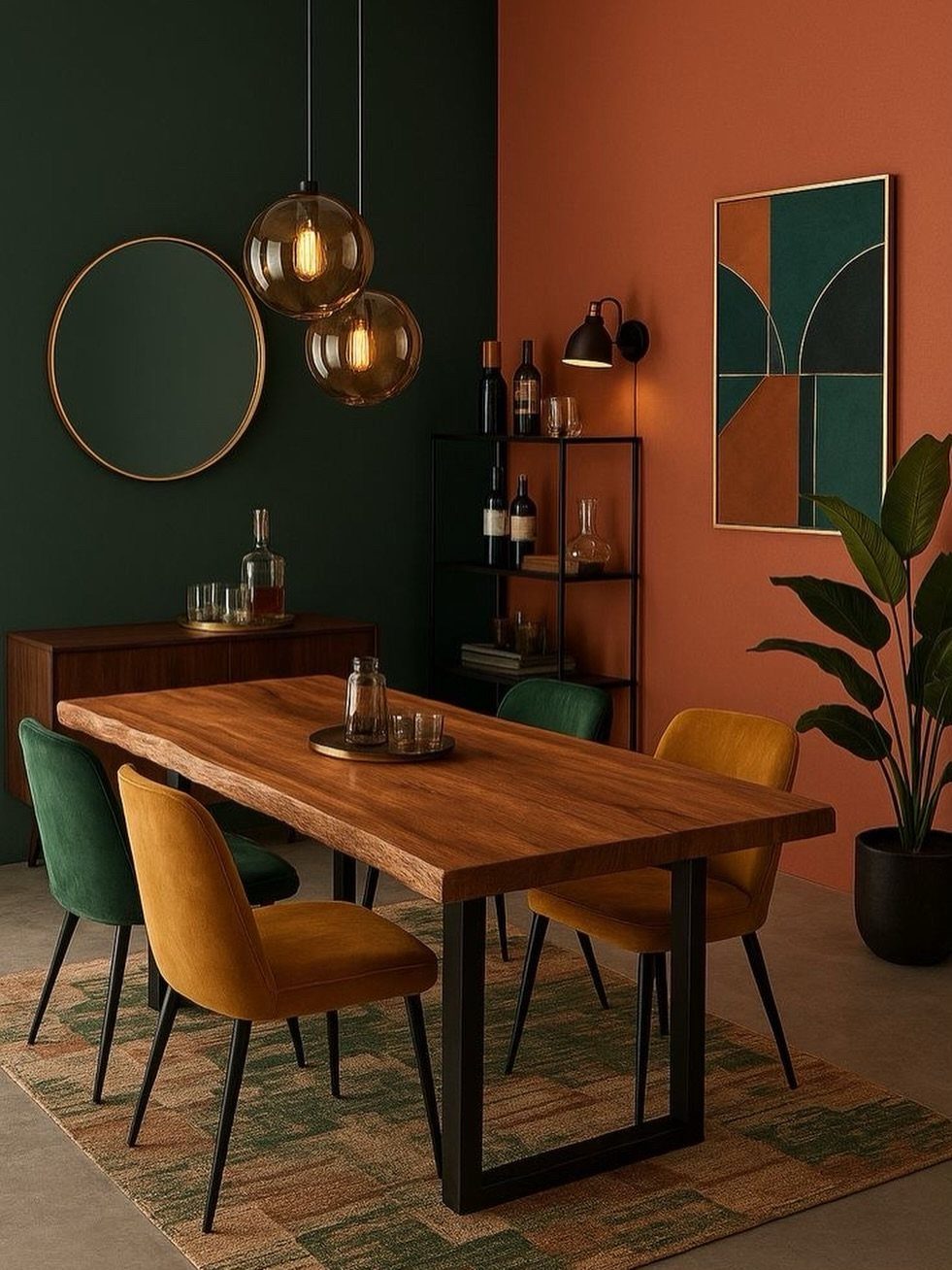
Pairing chairs in different styles but related colors ties the set together without matching everything exactly. Velvet in 2 colors ties different chair shapes together without making them match.
This works best when you commit to the difference.
Two of one color and two of another, or three and one, reads more deliberate than a cautious half-step. The chairs can vary in back height, leg style, or silhouette as long as the color palette stays tight.
Buying chairs in pairs instead of full sets gives you more to choose from and usually brings the cost down.
3. Smooth Materials with Textured Fabrics
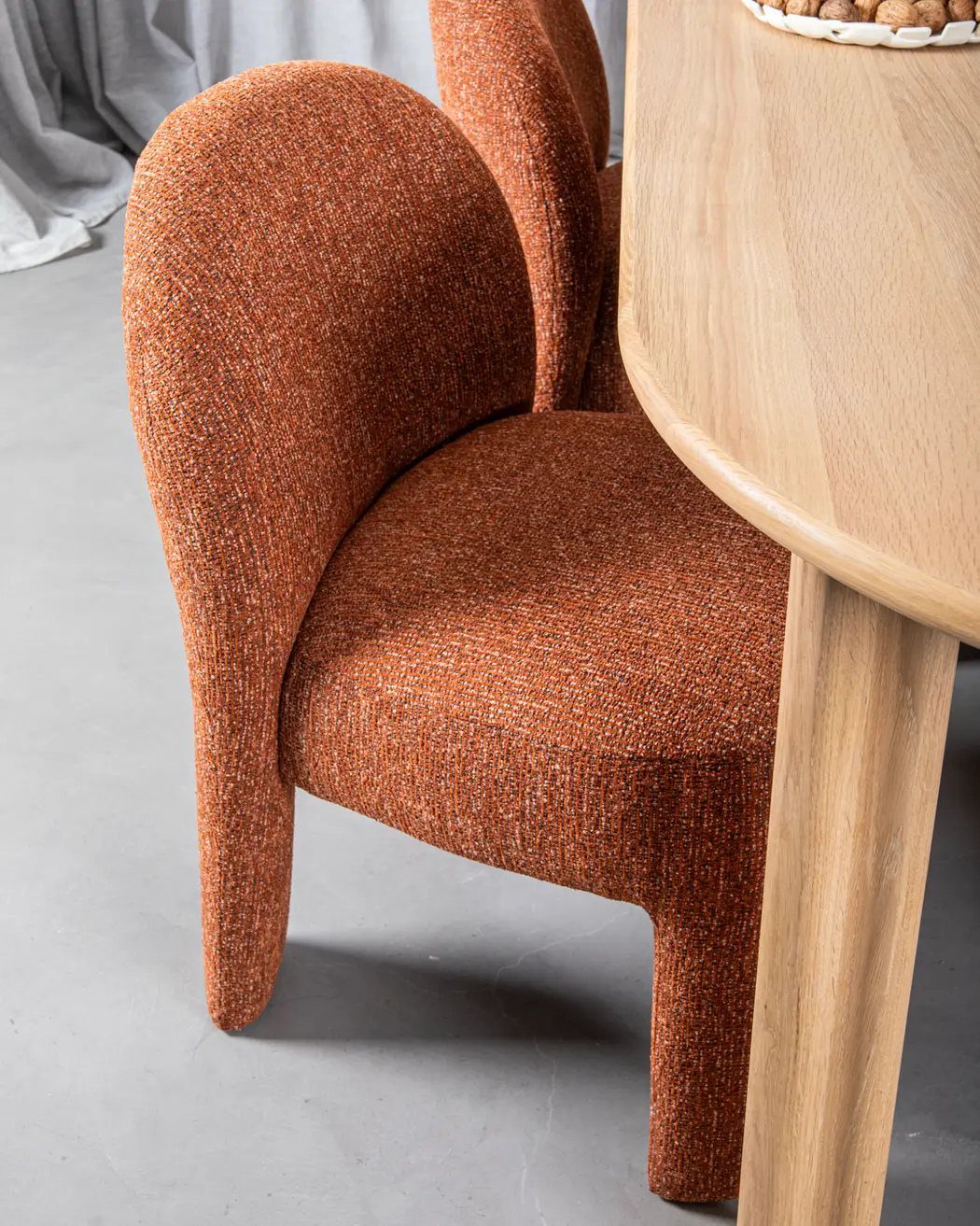
Combining a textured fabric chair with a smooth wood table gives each material more presence. The contrast makes both surfaces more noticeable than they would be on their own.
Bouclé, linen weave, or corduroy upholstery adds tactile weight without requiring pattern or bold color.
The table stays clean and simple, and the chair does the visual work. This pairing also softens the look of a dining space that skews hard and minimal, especially if the table and floor are both wood or stone.
When the table finish is light, a warm fabric tone keeps the room from reading too cool.
4. Built-in Banquette with Mismatched Chairs
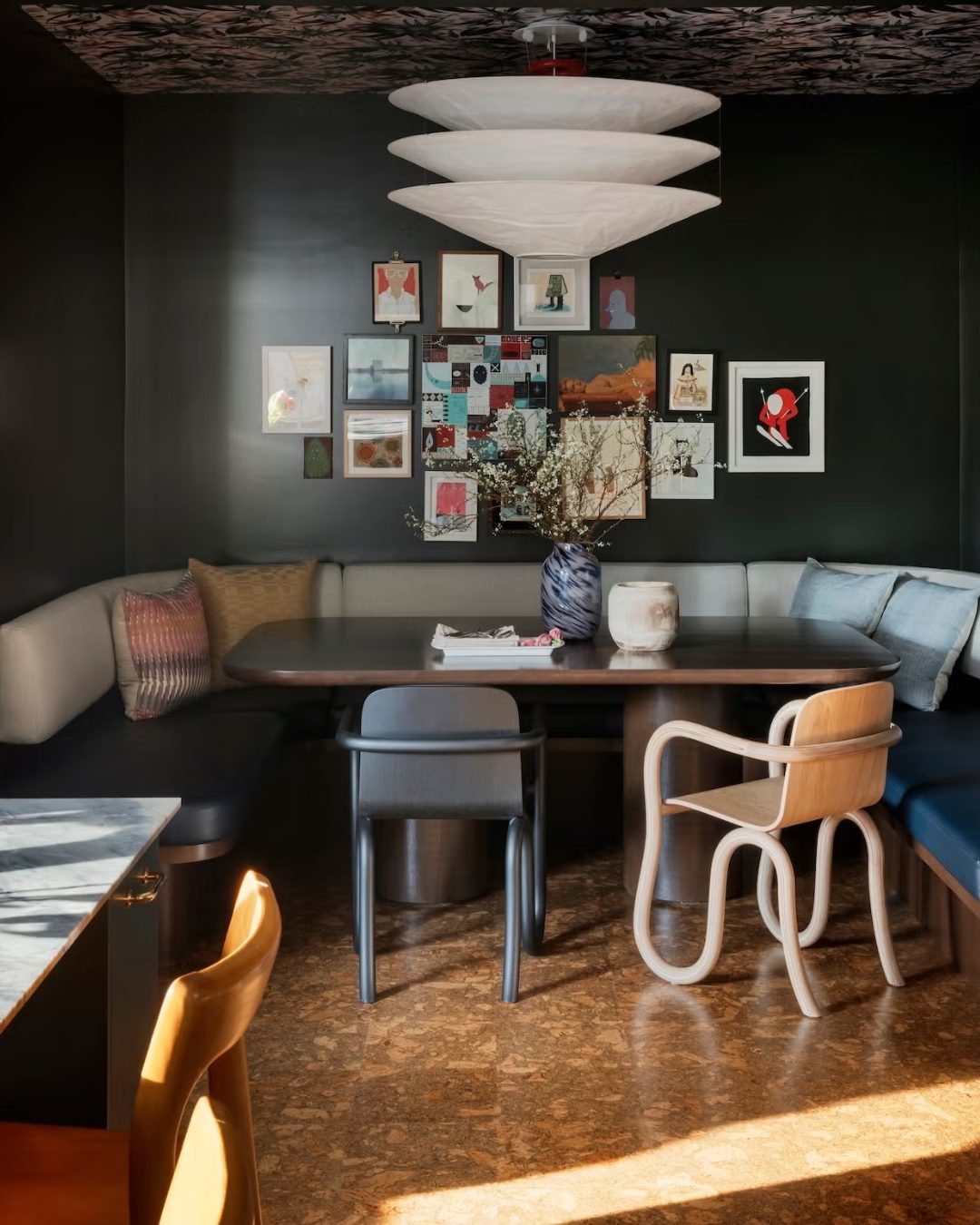
A built-in banquette on one side of the table frees up floor space and lets you seat more people without adding extra chairs. The opposite side stays flexible with standalone seating that can be pulled out or swapped.
Mismatched chairs across from the banquette keep the setup from feeling too fitted or formal. The banquette anchors the layout, and the variety of chair styles balances that permanence with something more casual.
This setup works best in a corner or against a wall where the banquette can tuck in tight.
The chairs you choose can be different from each other or just different from the banquette, as long as seat heights stay within an inch or two for comfort.
5. Mismatched Pastel Colored Chairs
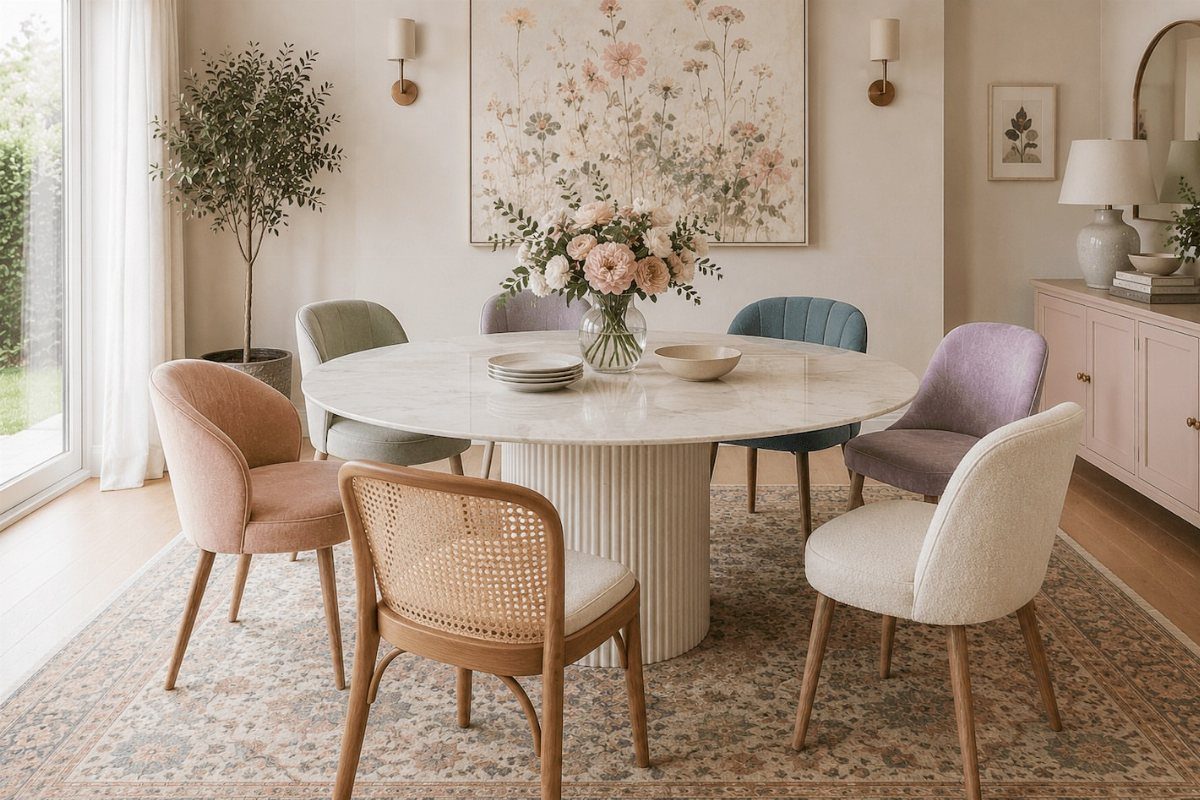
A round table with mismatched pastel chairs turns the dining area into a color study without committing to one hue. Each chair brings its own shade, and the round shape keeps the arrangement feeling balanced rather than chaotic.
Pastels work here because they share a similar saturation level, even when the colors themselves are unrelated.
Blush, mint, lavender, and butter yellow can all sit next to each other without clashing as long as they are equally soft in tone.
This approach is easier to pull off with upholstered chairs, where fabric makes the color change feel intentional. Painted wood chairs in pastels can read more cottage or country unless the shapes are modern.
6. Stools Paired with Dining Chairs
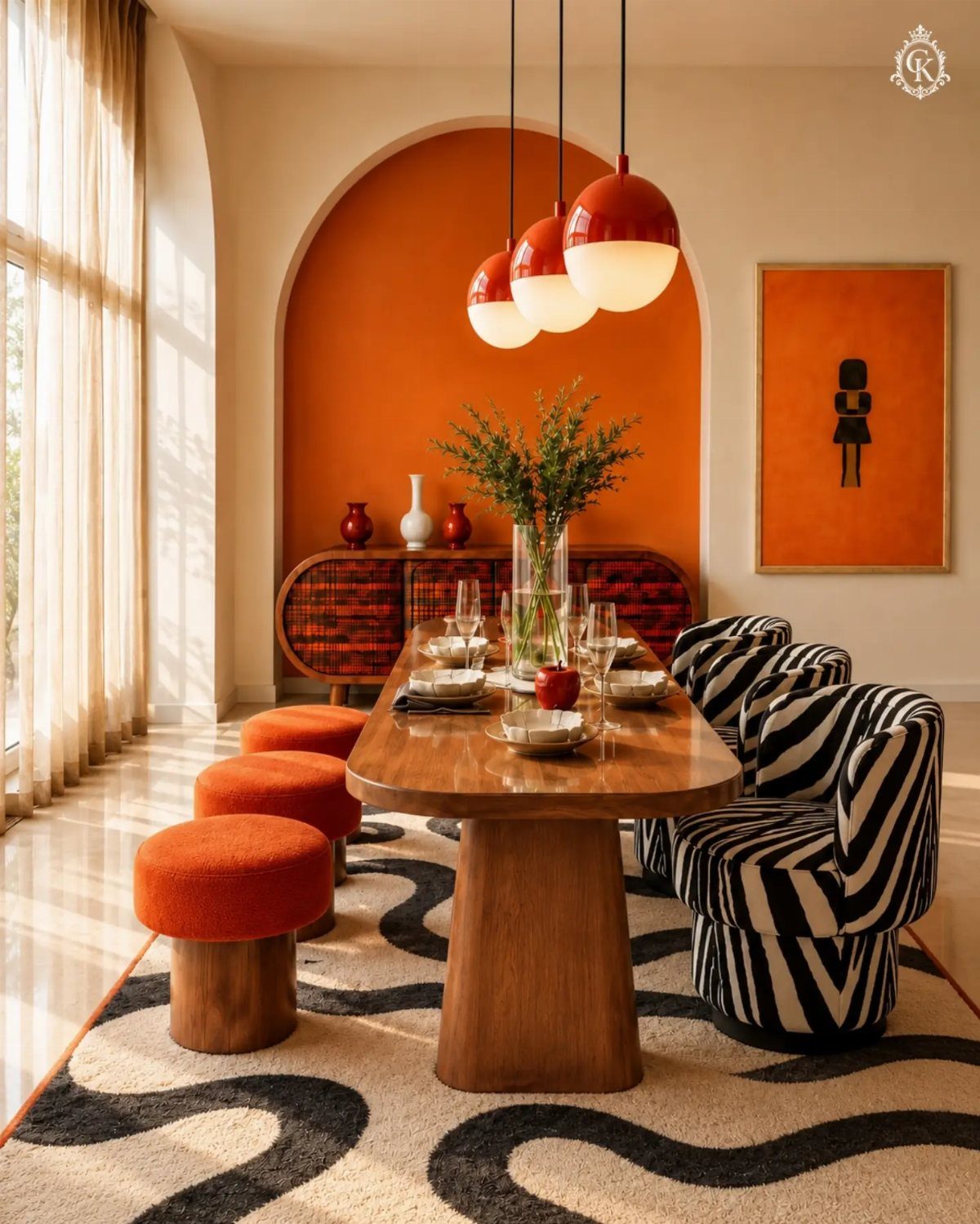
Backless stools on one side and upholstered chairs on the other create a height difference that makes the table feel less uniform.
The stools tuck completely under the table when not in use, which opens up the floor and makes the room feel larger.
Stools work well for short meals or spaces where people rotate in and out, but they are less comfortable for long dinners.
Pairing them with full chairs gives you flexibility: the stool side for quick seating and the chair side for guests who will stay a while.
Cylinder or drum-shaped stools in a bold color add sculptural interest without taking up much visual weight. The upholstered chairs can be patterned or neutral depending on how much contrast you want.
7. Wicker Armchairs with Slat-back Chairs
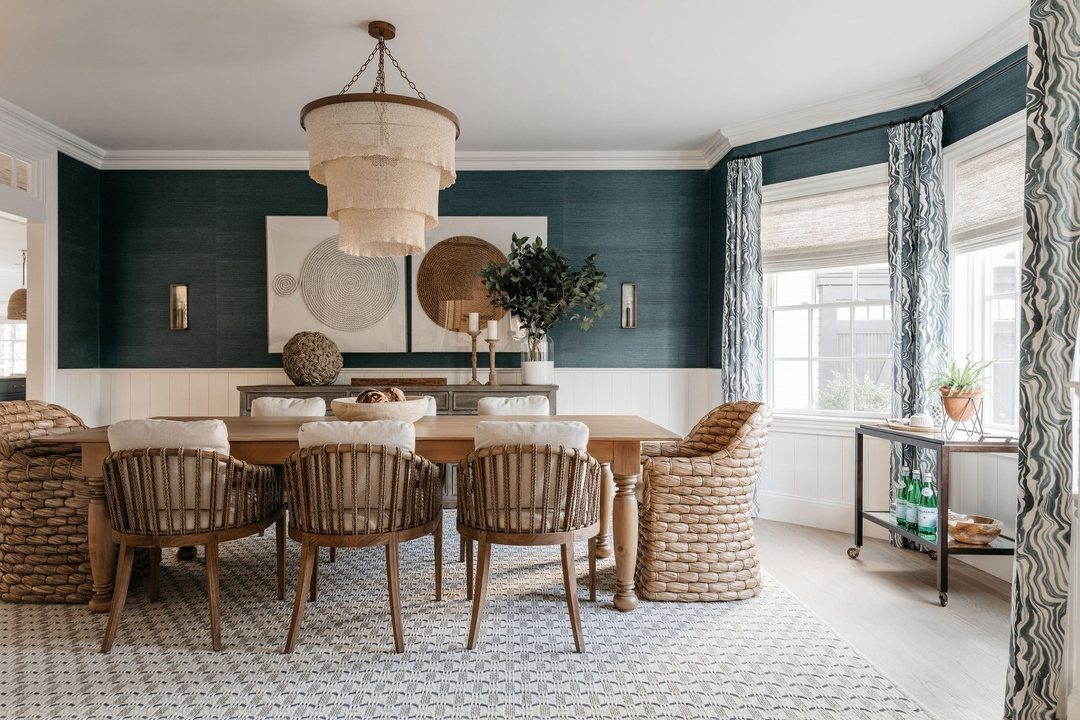
Wicker armchairs at the ends and slat-back chairs along the sides balance structure with texture. The wicker brings a softer, more relaxed material to the head seats, while the wooden slats keep the sides clean and consistent.
This combination works when both chair types share a similar scale.
Oversized wicker armchairs can overwhelm smaller slat-back chairs, so look for armchairs with slim frames or low-profile arms. The curved back on a slat chair echoes the organic feel of wicker without copying it exactly.
Wicker reads casual, so this setup suits dining rooms that lean cottage or coastal rather than formal.
Creating Zones in Open Spaces
In an open floor plan, mixed dining chairs can mark off the eating area without a physical divider.
The variety in chair style creates a visual boundary that separates the dining zone from the kitchen or living space while keeping sightlines open.
A console table along one wall can strengthen that boundary. It gives you a place to set serving dishes or hold decor, and it anchors the dining area in a room that might otherwise read as one continuous stretch.
The chairs themselves do the heavier work. A set that varies in color or material draws the eye inward and signals that the space has a different function, even when the floor and ceiling stay the same throughout.
This approach keeps the layout flexible and avoids the cost and footprint of a partition or a rug large enough to define the whole zone.
Personal Expression
Mixing chairs lets you shape a dining space that reflects how you actually use it and what you care about.
A matched set commits you to one look and one price point, while a mix lets you spend more on the chairs that matter most and save on the rest.
The result feels less staged. A room where every piece matches can read as catalog-perfect but impersonal, while a thoughtful mix suggests that each chair was chosen for a reason.
You can swap one or two chairs over time without replacing the whole set, which makes it easier to update the room as your taste shifts or your budget allows.
Different chair styles also let you adjust comfort for different users.
When a gathering of chairs in all varieties—from minimal to mid-century modern—graces the table, it introduces a fresh conversation to the room. That said, mixing and matching isn’t as straightforward as compiling a wild amalgamation of your favorite seats.
— Domino
Frequently Asked Questions
Can I mix and match the dining table and chairs?
Yes, mixing dining chairs creates a more personal space and gives you flexibility in cost and comfort.
Pairing different styles works when you keep scale consistent and tie the set together with color, material, or finish. The result feels less staged than a matched set and lets you update individual chairs over time without replacing everything.
Do dining chairs have to match the table color?
No, your chairs and table don’t need to match in color. Contrasting a light table with warm fabric tones or pairing smooth wood with textured upholstery often makes both materials stand out more than matching them would.
A tight color palette across the chairs themselves holds the look together even when the table color differs.
Should chairs be lighter or darker than the table?
Chairs at the same tone or darker than the table usually create a more cohesive look, with the table holding its place as the centerpiece.
Lighter chairs draw more attention to themselves, which can work when you want the seating to carry the visual weight. Warm upholstery balances a light wood finish and stops the palette from skewing cold.
What’s the difference between a side chair and a dining chair?
A side chair is a dining chair without arms, designed to sit along the sides of the table where space is tighter.
Place them at the head and foot of the table, where they frame the setting and add comfort for longer meals.
Side chairs cost less and take up less visual space, which makes them a good pairing with bolder end chairs.
What dining chairs are in style in 2026?
Mixing different chair styles at the same table is a current approach, especially pairing bold armchairs at the ends with simpler side chairs or combining textured upholstery with smooth wood tables.
Sculptural shapes like drum stools, wicker armchairs, and slat-back chairs appear in varied arrangements that prioritize personal choice over matched sets.






