Mismatched chairs, floor cushions and fringed upholstery cover seating options from 4 pieces to a full set, while woven chandeliers, open shelving and arched wall niches address lighting, storage and display.
The choice depends on whether you are working with what you already own or starting fresh: layering color, plants and textiles onto existing furniture requires less effort than built-in changes like cutting niches into drywall or adding shelving.
Rattan and jute show up in multiple forms here, from pendant lights to baskets to table runners, because the materials age visibly and add texture without pattern.
1. Indoor Plants
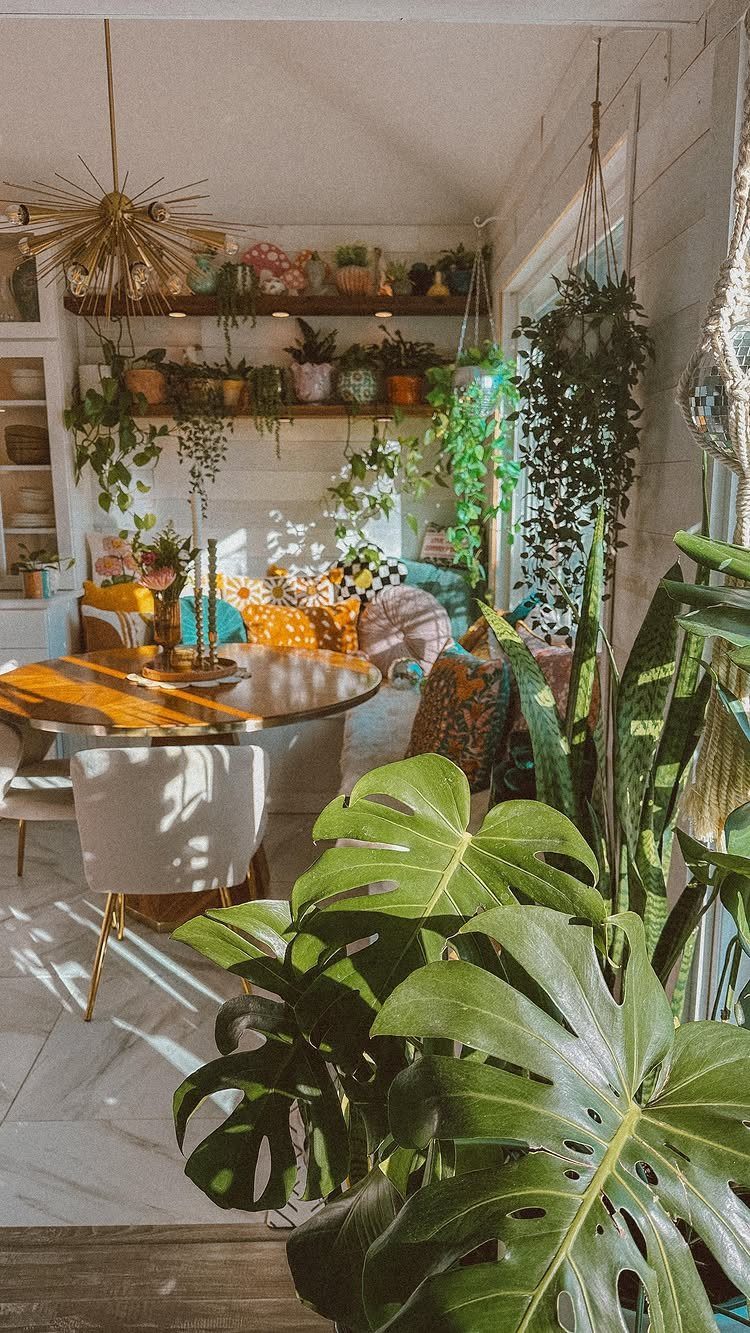
Indoor plants bring life and texture into the dining room without adding furniture or changing the layout. Pothos, philodendrons and spider plants work well because they tolerate lower light and need water only once a week.
Hanging plants from the ceiling or placing them on shelves keeps the table surface clear. I like clustering several small pots on floating shelves or a windowsill for more visual weight than one large plant alone.
The green softens hard edges and fills vertical space in a way that feels organic rather than arranged.
2. Mismatched Dining Chairs
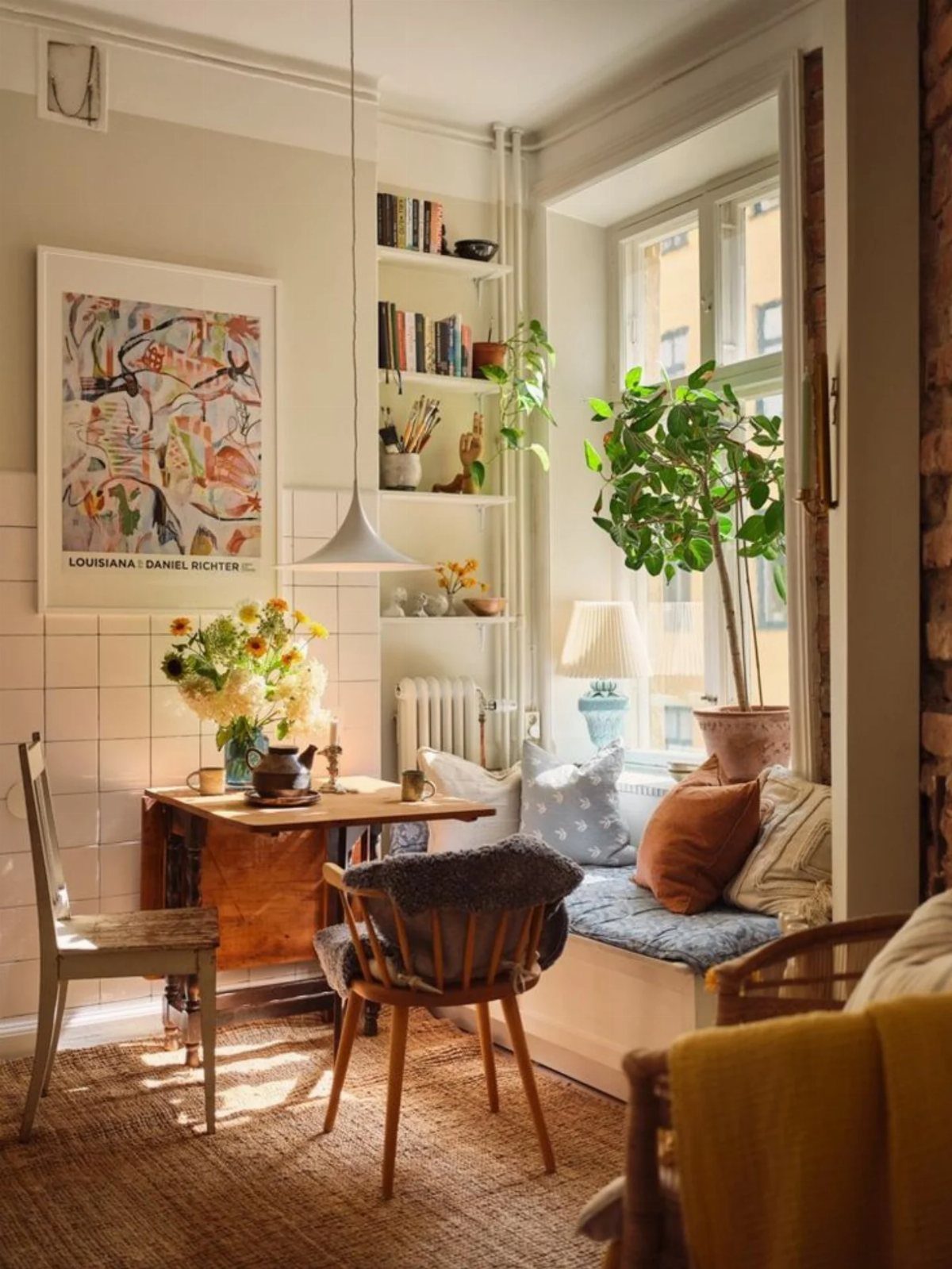
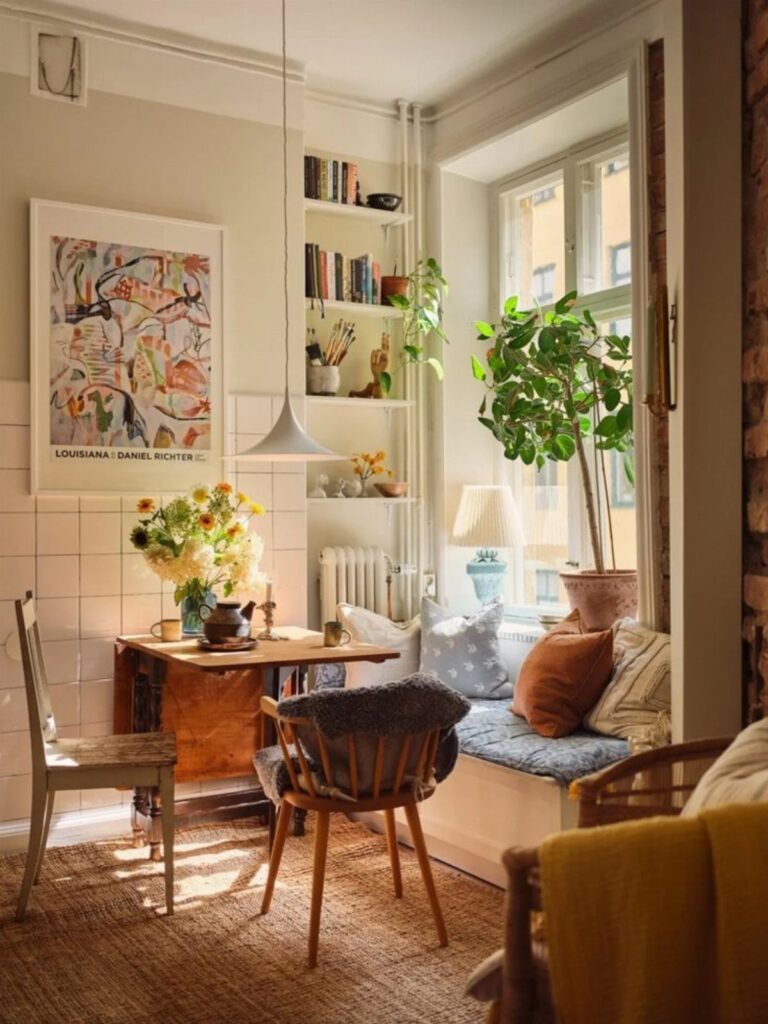
Mismatched chairs let you build a dining set over time instead of buying everything at once.
Pairing a bench or window seat with individual chairs, or mixing wood finishes and chair styles, gives the room a collected look rather than a matched-set appearance.
I look for chairs that share one element, like seat height or leg style, so they still feel intentional. Keeping the table simple helps tie different seating together.
This approach works especially well in small spaces where you can only fit 2 or 3 chairs and a bench.
3. Natural Materials
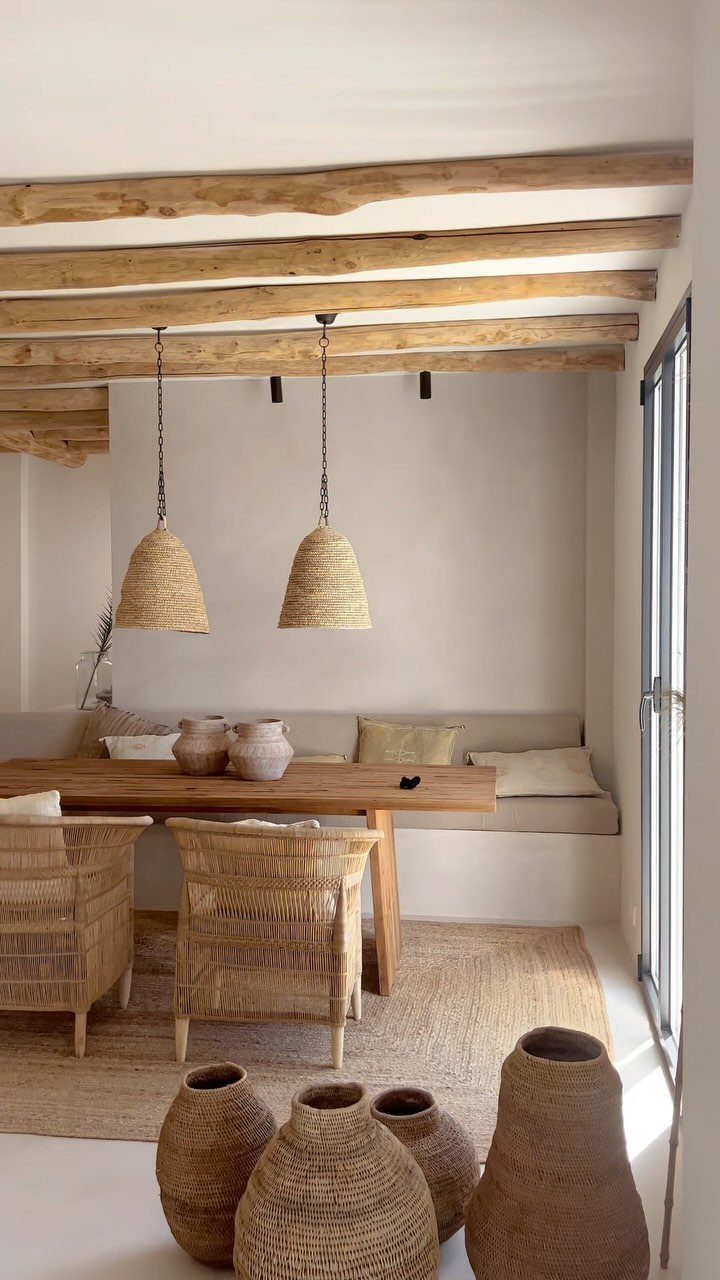
Natural materials like rattan, jute and unfinished wood give the room a grounded, tactile quality. Wicker chairs, a jute rug and woven pendant lights layer texture without adding pattern or competing for attention.
Wood furniture in lighter finishes maintains an open, airy feeling, and exposed beams or ceiling details add architectural interest when the room has them. The materials age visibly, which suits the relaxed bohemian aesthetic better than lacquered or painted finishes.
Rattan cleans easily with a damp cloth, making it practical for everyday use.
4. Table Runners
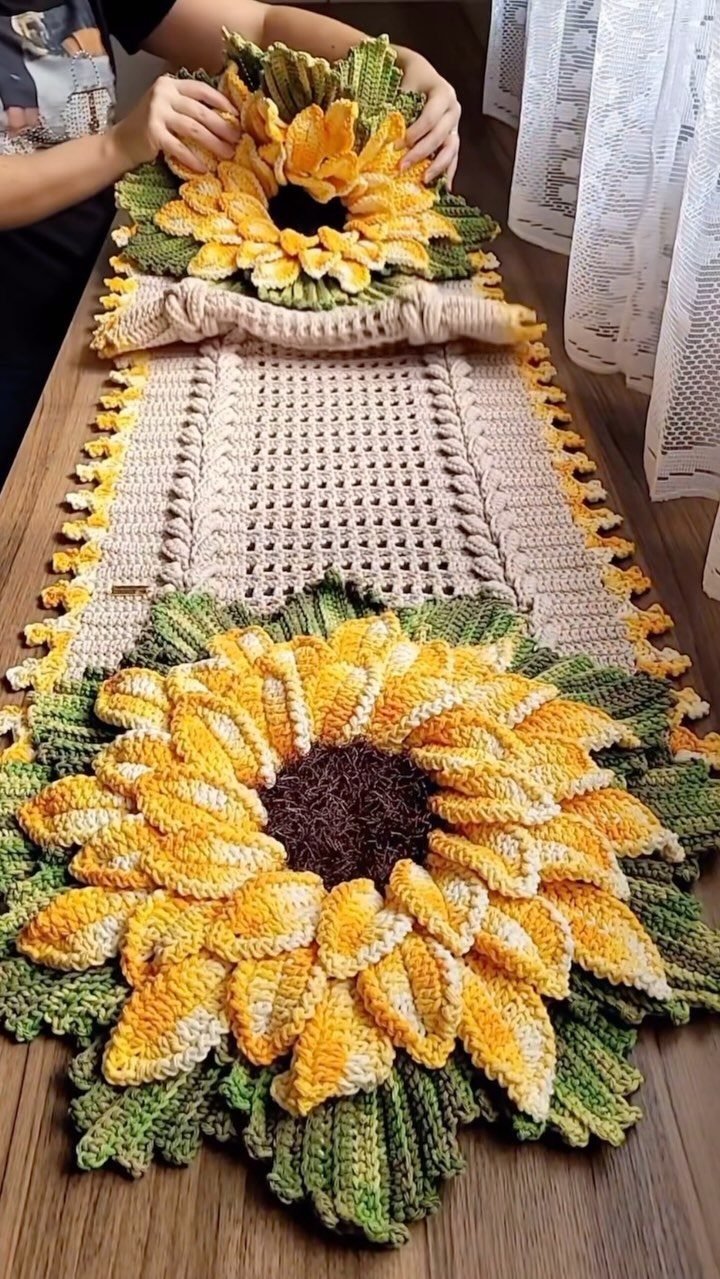
A crocheted or woven runner brings texture to the center of the table while leaving most of the wood visible. Neutrals like beige, cream or tan let the runner sit alongside patterned dishes and colorful table settings.
I like runners that hang visibly past the table edge without getting in the way when people sit down. Crocheted runners with dimensional details, like sunflower motifs, double as both decor and a point of interest at the table.
Cotton and linen runners go in the washing machine, which matters if you use the table daily.
5. Woven Chandeliers
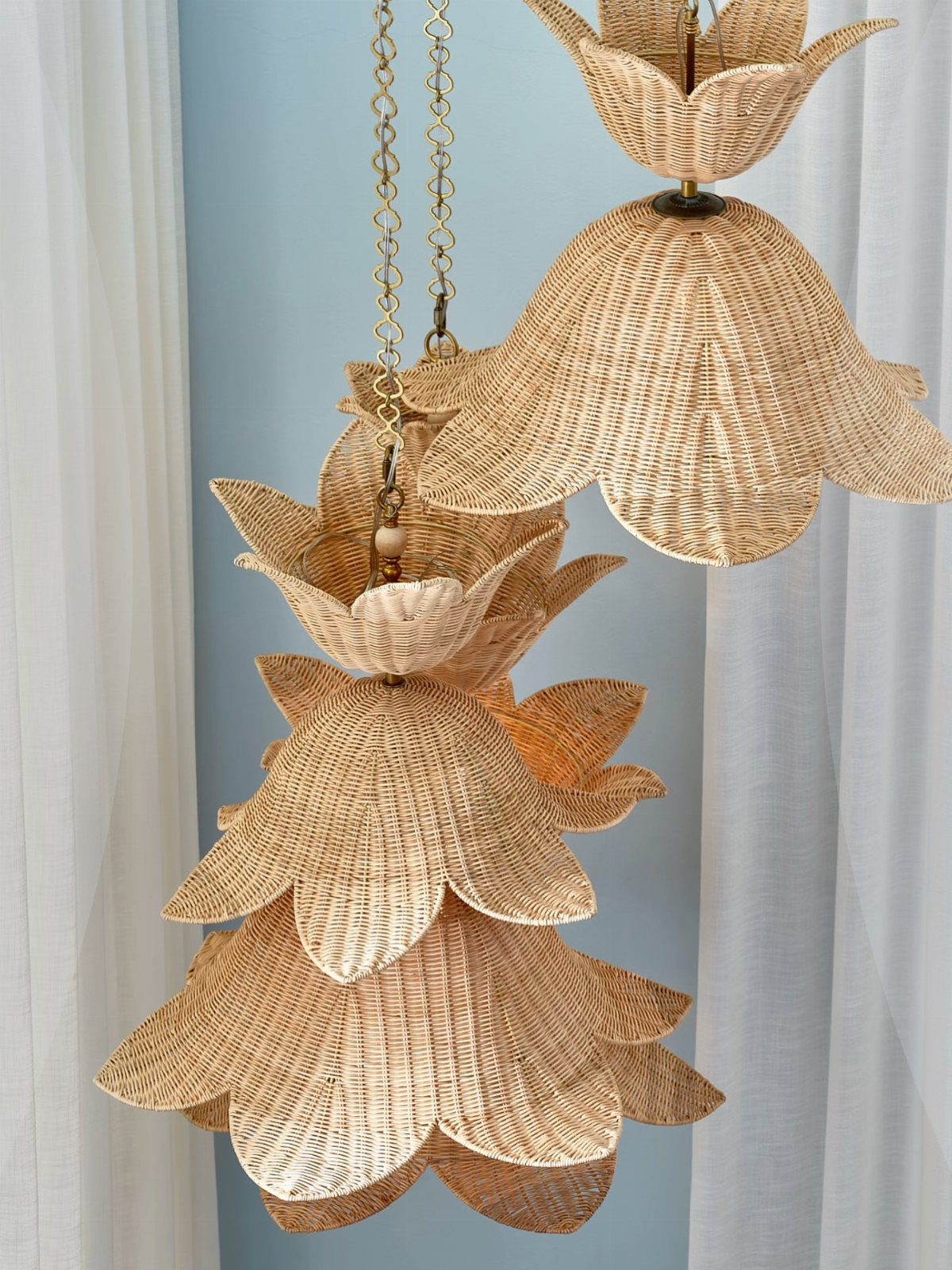
Woven chandeliers in natural rattan or wicker soften overhead lighting and add volume to the ceiling without feeling heavy. The tiered or layered shapes here create interesting shadows when the light is on.
Hanging them from a chain lets you adjust the height to suit the table, and the woven material diffuses light more gently than metal or glass fixtures.
I prefer fixtures sized so they’re roughly half to two-thirds the width of the table.
Rattan holds up well in dry indoor spaces but can warp if the room stays humid.
6. Playful and Eclectic Mix of Colors
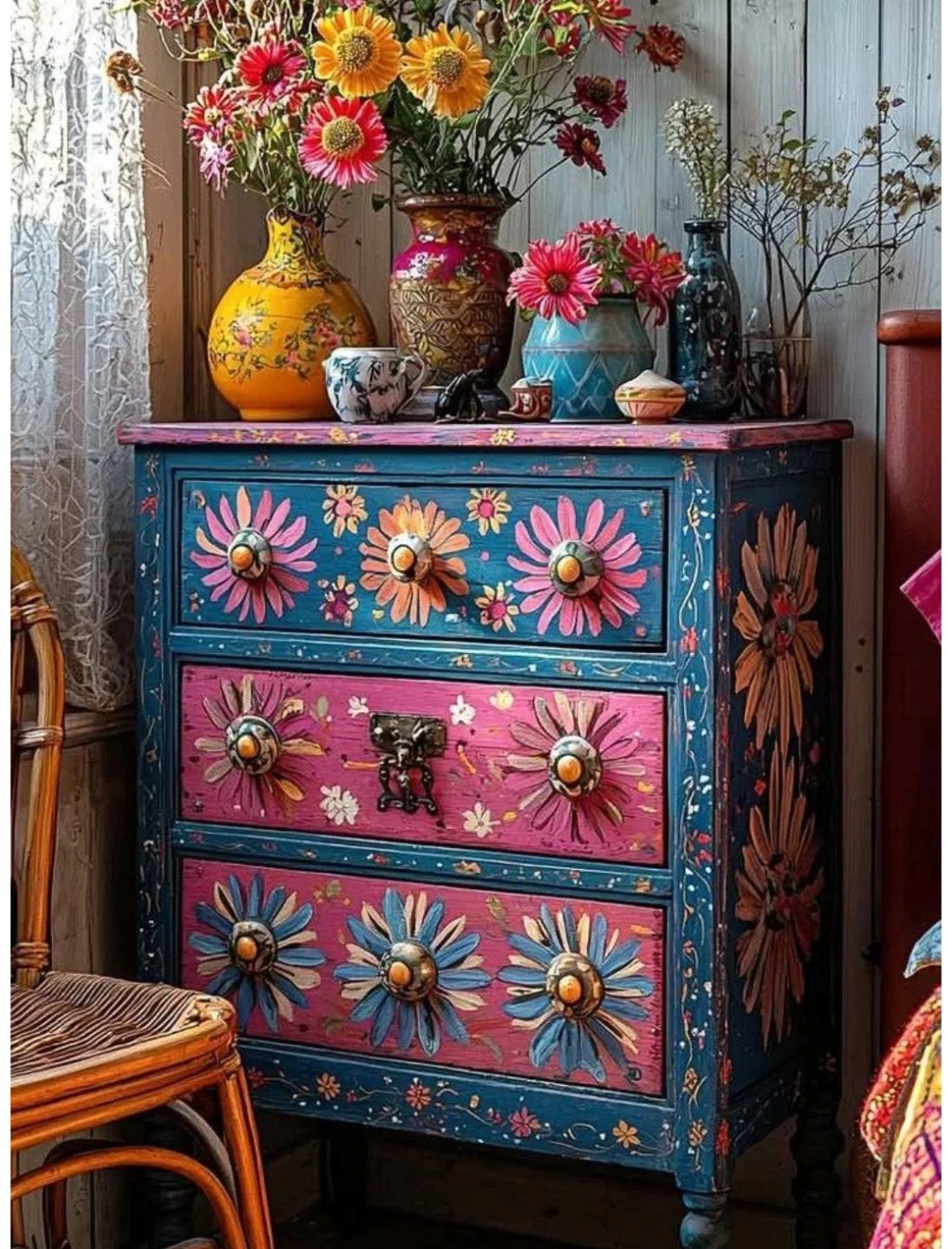
Bright, unmatched colors layered together give the room energy and make it feel personal rather than styled from a catalog. Painted furniture brings pattern and color into the room without the commitment of wallpaper or large-scale changes.
I use one bold piece as the anchor and then add smaller colorful items, like vases, textiles or artwork, that pull from the same palette. Mixing floral patterns with solid colors prevents the room from looking too busy.
This approach works best when the walls and larger furniture stay neutral so the color reads as intentional.
Color, pattern, folk art, Mexican-inspired motifs, and religious iconography fill the rest of this globally-inspired space, bringing bohemian flair in the truest sense of the word.
— Hunker
7. Macrame Wall Hangings
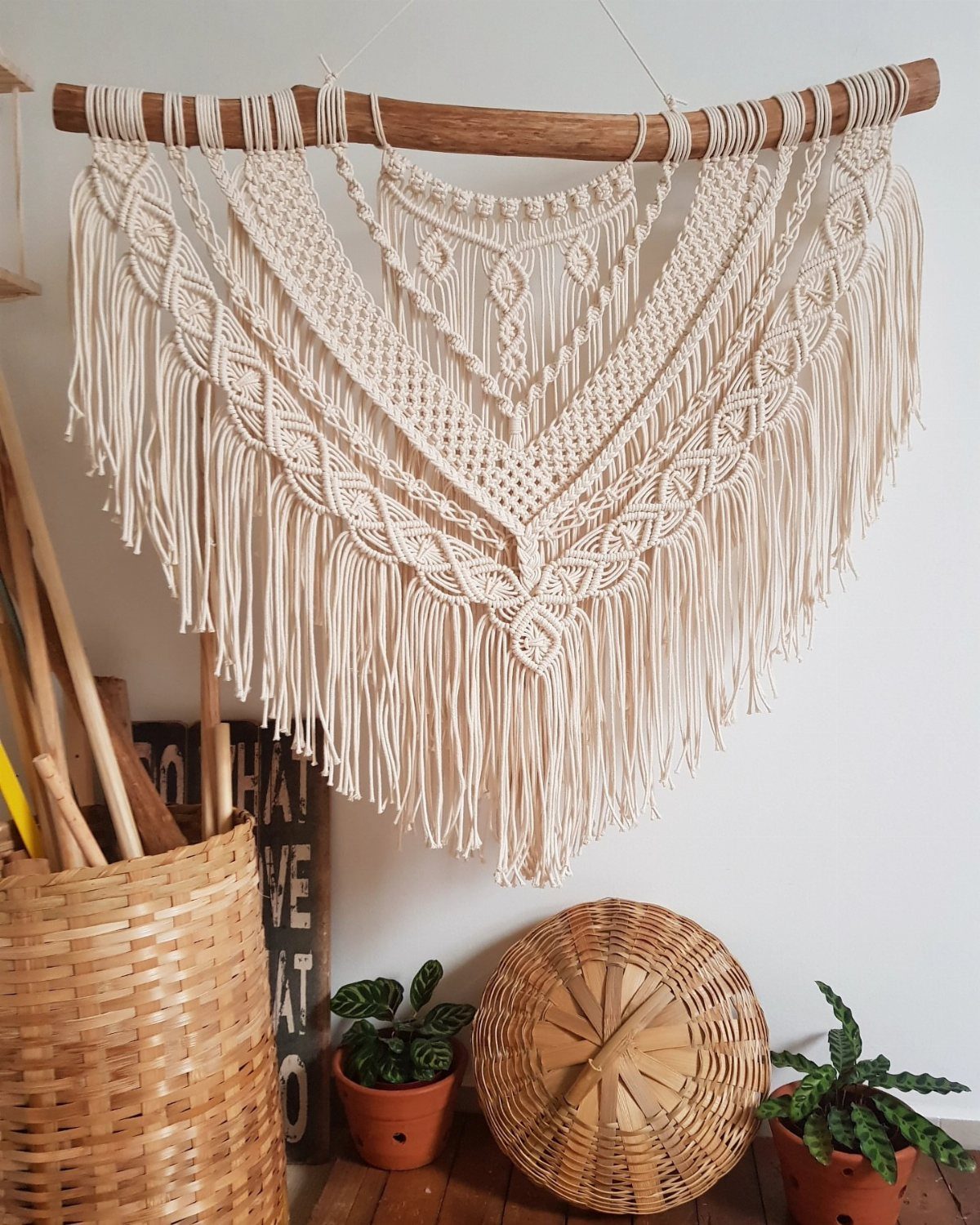
Macrame wall hangings add vertical texture without permanent hardware or paint. The knotted cotton or jute creates depth through raised patterns rather than flat prints.
Hanging one from a branch or dowel rod centers it with a single point of contact, and the neutral tones let it sit alongside colorful art or patterned textiles.
I prefer pieces that hang down to anchor a sideboard or buffet rather than floating high on empty wall.
The cotton fibers collect dust over time, but a quick shake outside clears most of it.
8. Open Shelving
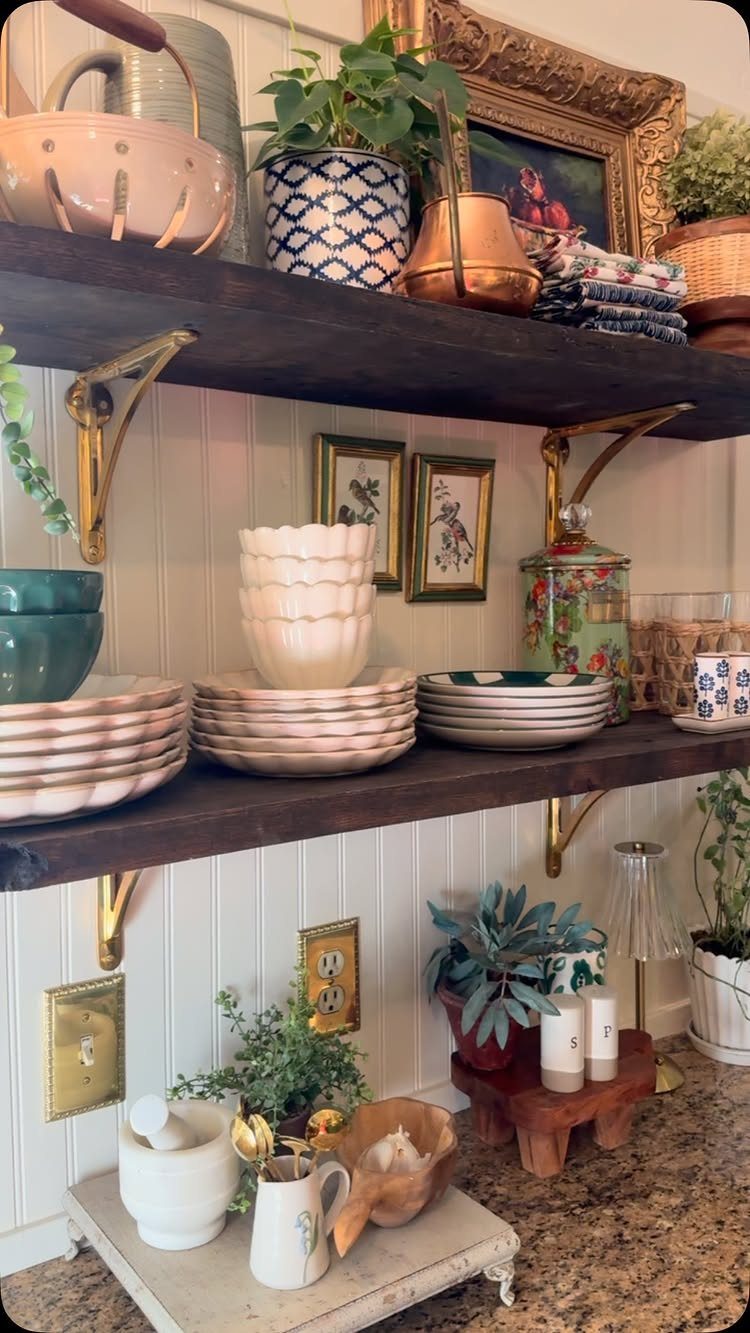
Open shelves turn everyday dishes into visible storage and decoration at once.
Wood shelves with visible brackets add material warmth, and keeping a few items on each shelf prevents them from looking cluttered or too staged.
I group dishes by type so the shelves stay functional when you need to grab something mid-meal.
The look holds up when you actually use what sits on the shelves rather than buying decor pieces.
9. Floor Cushions
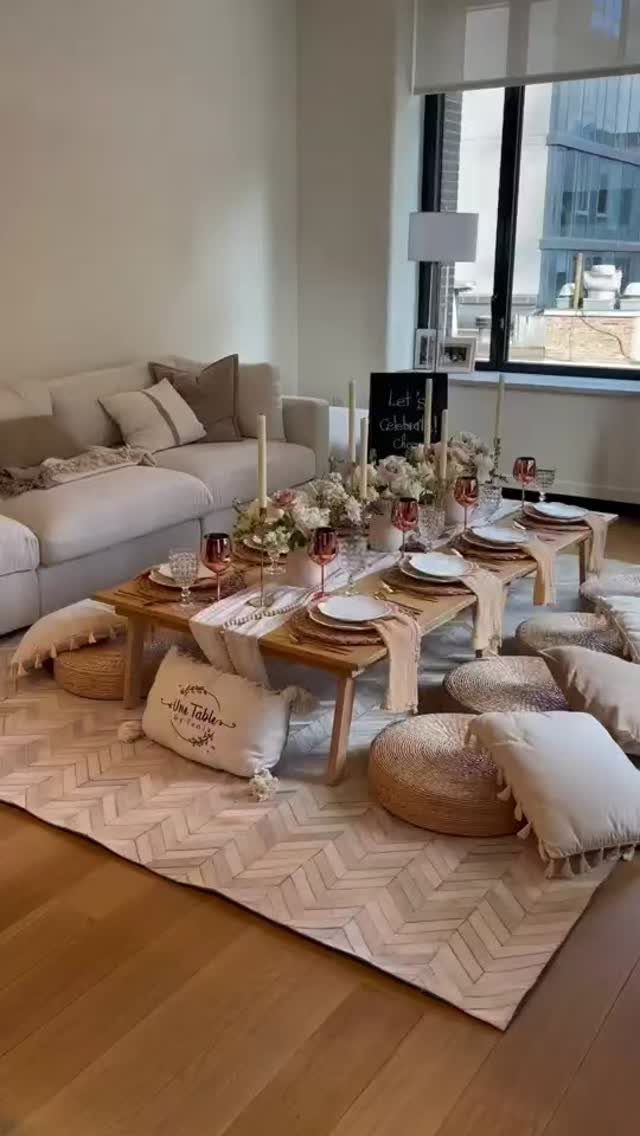
Floor cushions let you seat more people without permanent chairs taking up space when the table isn’t in use. Woven poufs or flat cushions with backs work better than throw pillows because they hold their shape under weight.
Pairing them with a low table keeps proportions balanced, and a rug underneath defines the dining zone even when the cushions move around. I like mixing pouf styles rather than matching them all.
This setup suits casual meals but gets uncomfortable for anyone who has trouble sitting cross-legged or getting up from the floor.
10. Woven Basket Wall Gallery
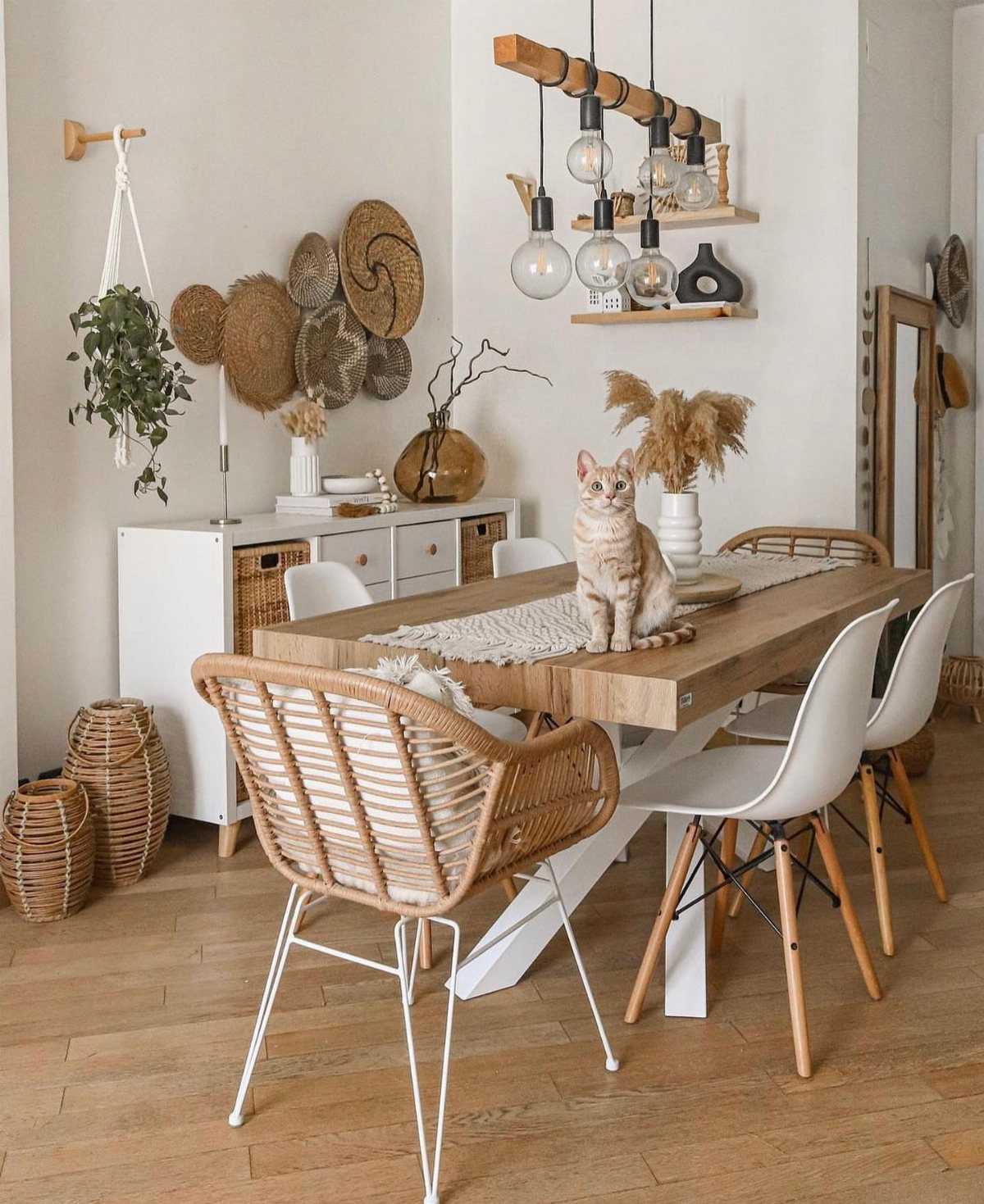
Grouping woven baskets on one wall creates a textured gallery without picture frames or prints. Different sizes and weave patterns add dimension, and the natural tones let the arrangement sit alongside wood furniture without competing.
I hang them in an irregular cluster rather than a grid so the layout feels collected over time. Mounting them with small nails or adhesive hooks keeps the wall damage minimal.
The baskets stay lightweight, which matters if you’re renting and need to take them down later.
11. Arched Wall Display Niches
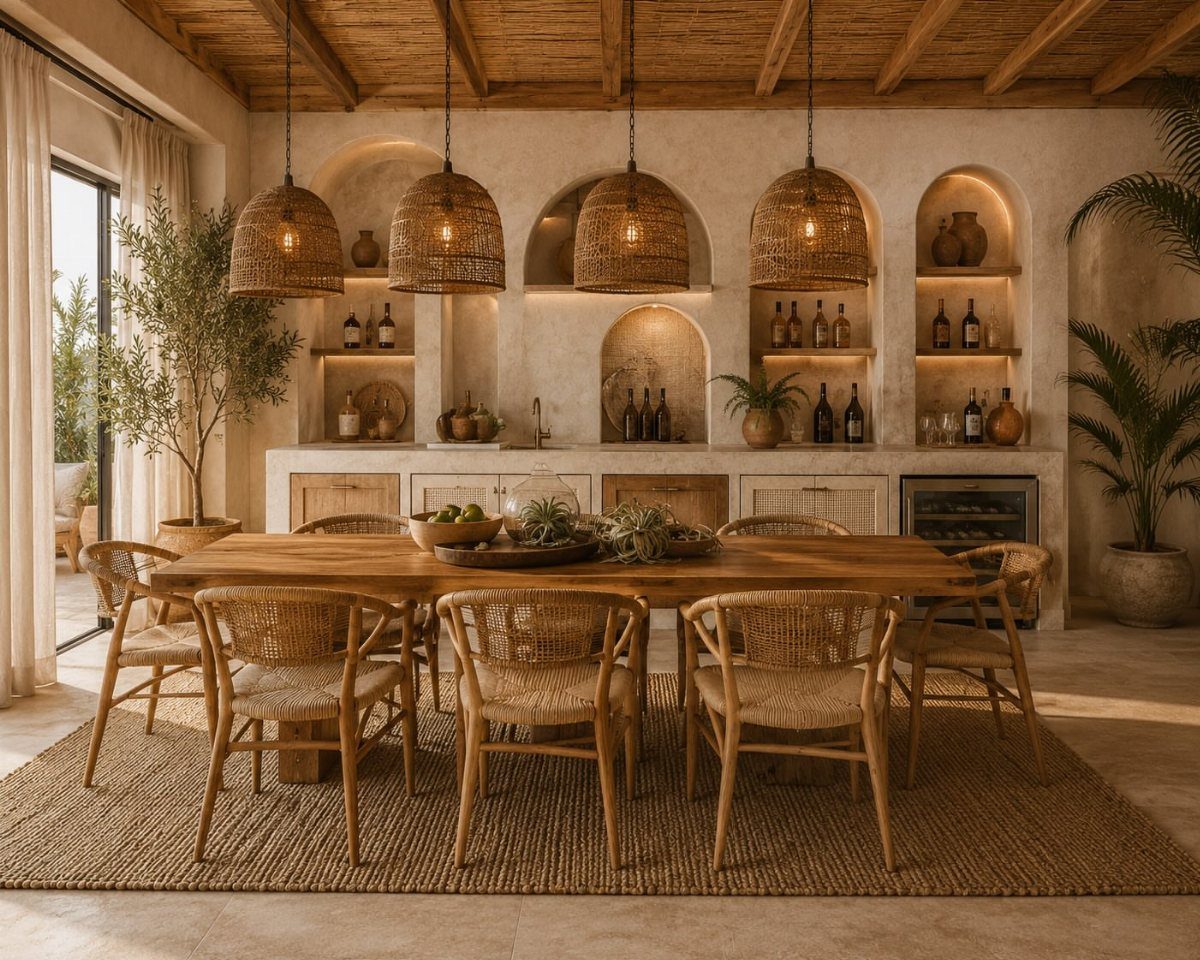
Arched niches carved into the wall give you built-in display space without adding furniture or shelves. Lighting each one individually highlights pottery, bottles or plants and creates ambient light during meals.
This setup requires cutting into drywall and framing each opening, so it suits a permanent space where you’re comfortable making structural changes. I like filling them with items in varying heights rather than centering one piece in each niche.
The arched shape softens the geometry and reads more organic than rectangular shelves.
12. Fringed Upholstered Dining Seating
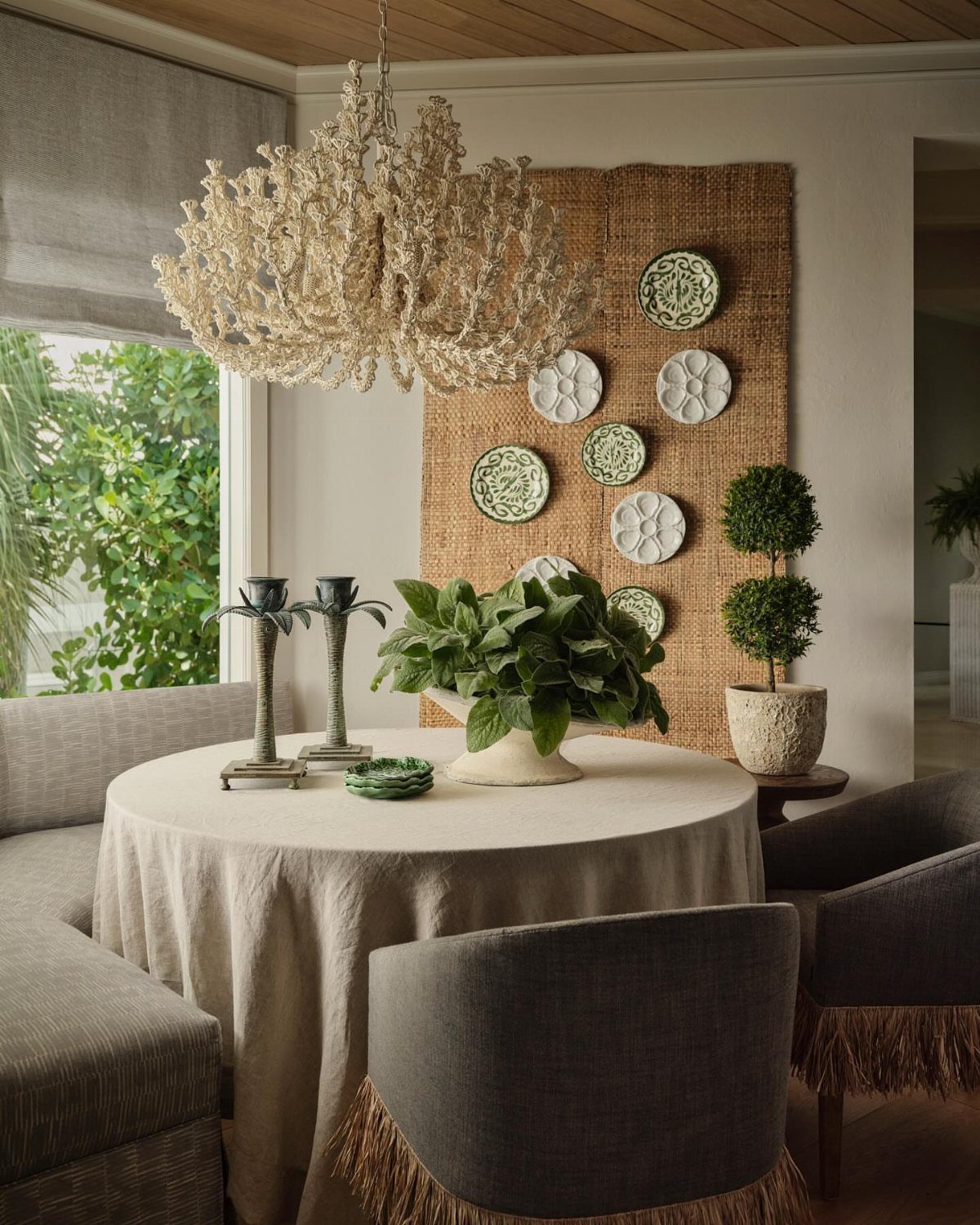
Fringe trim along the base of upholstered chairs adds movement and a softer silhouette than plain fabric. The trim hangs just above the floor and shifts visibly when someone sits down or pushes the chair back.
Grey or neutral upholstery keeps the fringe from looking overly decorative, and pairing fringed chairs with a simple table balances the detail.
I look for chairs with fringe sewn directly onto the upholstery rather than glued, since glued trim loosens faster.
The fringe collects dust and pet hair, so it needs vacuuming more often than smooth fabric.
Embrace Eclectic Colors and Patterns
Layering bold colors with earthy tones prevents the room from feeling chaotic.
Jewel tones like deep teal or burgundy anchor a palette when paired with terracotta, rust or warm brown, and the saturation stays high without the colors fighting each other.
I bring pattern in through textiles first: a zigzag rug under the table, graphic-print curtains or patterned napkins.
Mixing prints works when they share a color or scale, so a geometric rug can sit alongside floral cushions if both pull from the same palette.
Reclaimed wood and terracotta floor tiles ground the brighter colors and add material warmth.
The wood grain and clay tones read as neutral even when other pieces in the room lean colorful, and both age visibly in a way that suits the aesthetic.
Set the Mood with Lighting
A chandelier overhead anchors the lighting, and adding sconces or wall-mounted fixtures fills in the ambient layer without relying on one bright center source.
The multiple sources let you light the room evenly or turn off the overhead and keep the perimeter lit for a softer mood.
Dimmers give you control over brightness without changing bulbs or fixtures. I install them on every fixture in the dining room so the light level can shift between dinner and after-hours use.
Candles add warmth that electric light alone does not match. Grouping several pillar candles on the table or sideboard creates enough glow to read faces across the table, and the flame movement adds a tactile quality that static light lacks.
Incorporate Personal Artifacts
Travel souvenirs and heritage pieces give the room a collected feel when they sit alongside everyday dining items. Pottery, carved wood or woven textiles from different places layer history and craftsmanship into the space without requiring explanation.
I group smaller items on open shelves or in an arched niche so they read as a deliberate display rather than scattered clutter.
The items you choose reflect where you have been or what matters to you, and that personal thread makes the room feel lived-in rather than staged from a catalog.
Frequently Asked Questions
What is bohemian decorating style?
Bohemian style layers unmatched colors, patterns and textures for a relaxed, personal look rather than a coordinated set. The mix feels intentional when items share a color or material thread even as finishes and styles vary.
What are the must-haves for boho style?
Natural materials like rattan, jute and unfinished wood form the base, then plants and colorful textiles layer in texture and pattern.
Mixing furniture styles and finishes gives the room a collected feel, and the palette stays grounded with earthy tones even when jewel colors and bold prints come in. The setup builds gradually rather than arriving all at once.