
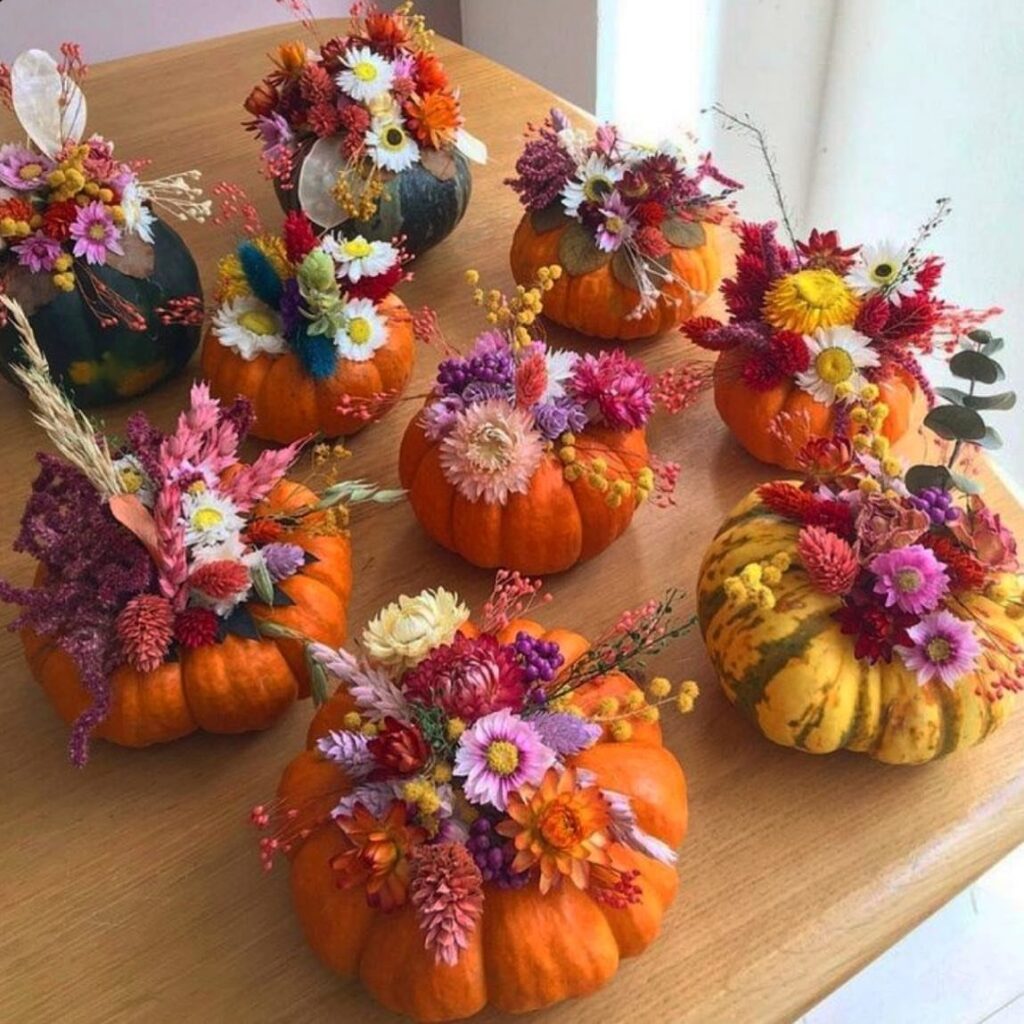
Seasonal fruits or a wooden dough bowl can anchor the table when the room already reads neutral, but a dining space with bare walls or lighter wood needs colored tableware or warm napkins to hold the look together.
Choose based on how much weight the rest of the room carries: colorful tableware and warm linen napkins work better in spaces that need the help, while textured fabric and vintage glassware suit rooms where too much color would compete with what’s already there.
The right centerpiece sits low enough that you can still see faces when everyone is seated.
1. Use Seasonal Fruits
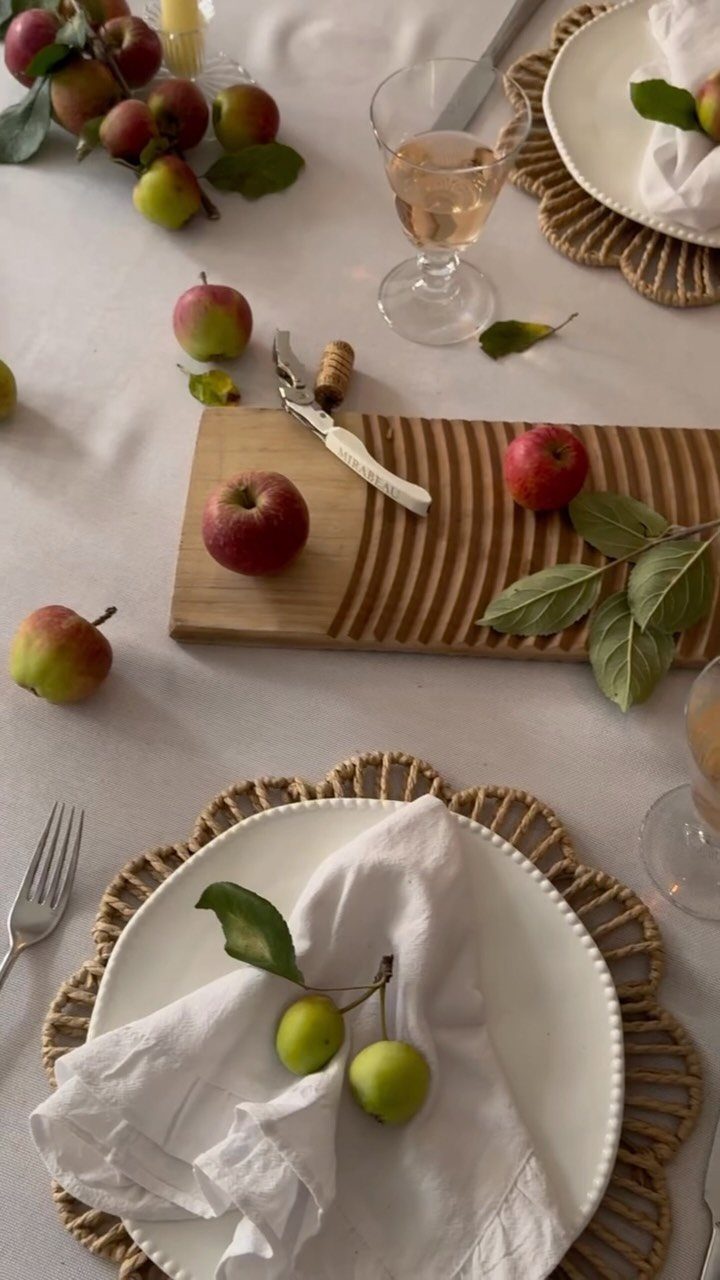
Apples and pears work better than you might expect as a centerpiece, especially when you let a few roll loose on the table instead of corralling them all into a bowl.
The shape and color hold up through the whole season, and unlike flowers they won’t need water or wilt halfway through dinner.
Pick fruit with stems still attached if you can, and mix reds and greens or add a few Bosc pears for contrast. A wooden cutting board gives the arrangement a little structure without looking too formal.
2. Mini Pumpkins Centerpiece
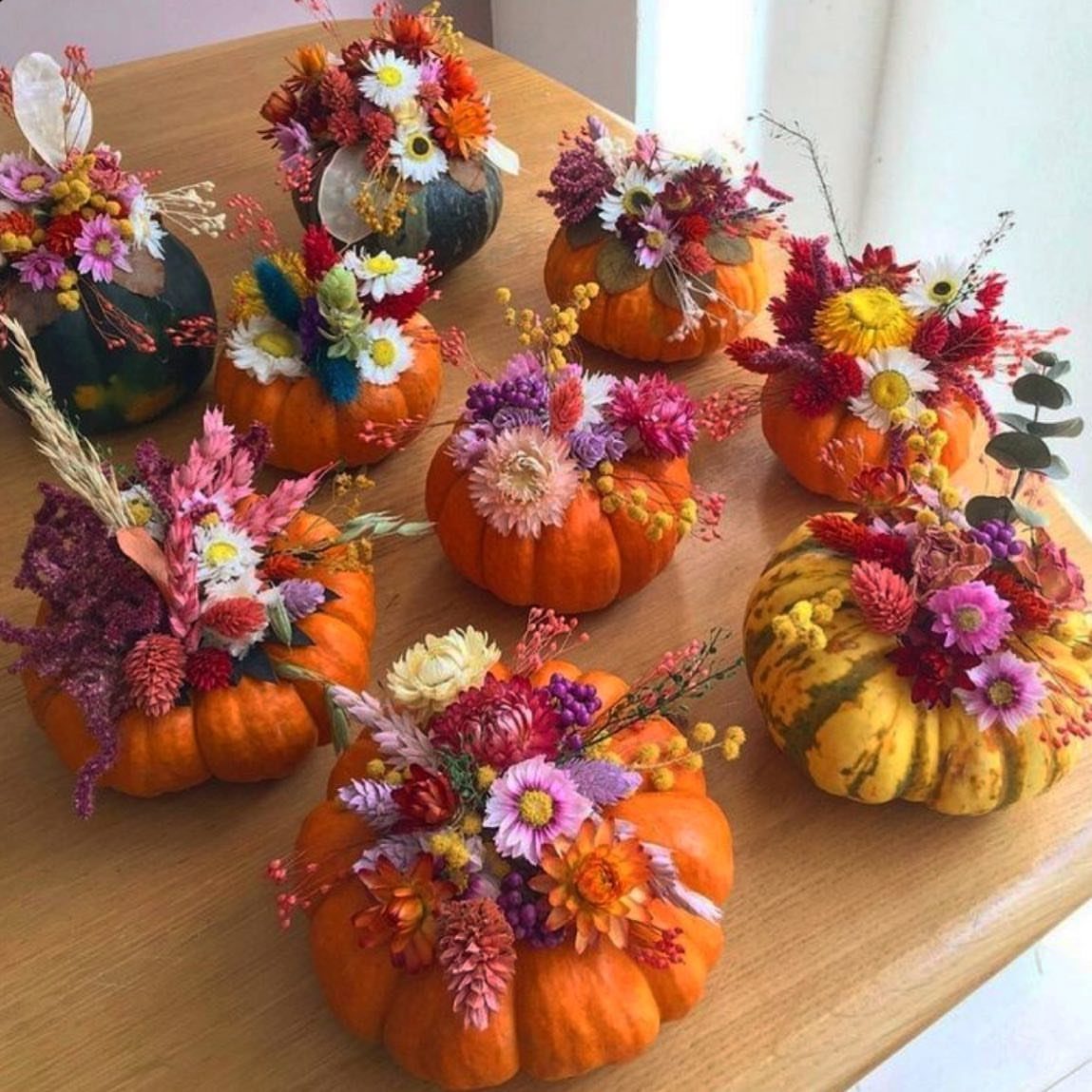
Hollow out small pumpkins and drop flowers inside for a centerpiece that sits low enough to talk across. The pumpkins work as vases, so you skip the cost of buying new containers and get something that already feels like fall.
Choose pumpkins that fit comfortably in your hand, cut the tops off cleanly, and scoop out the insides.
Line each one with a small cup or jar to hold water if you’re using fresh flowers, or skip the liner if you’re going with dried stems.
Spacing them down the center of the table in a loose line looks better than clustering them all in one spot.
3. Use Warm Linen Napkins
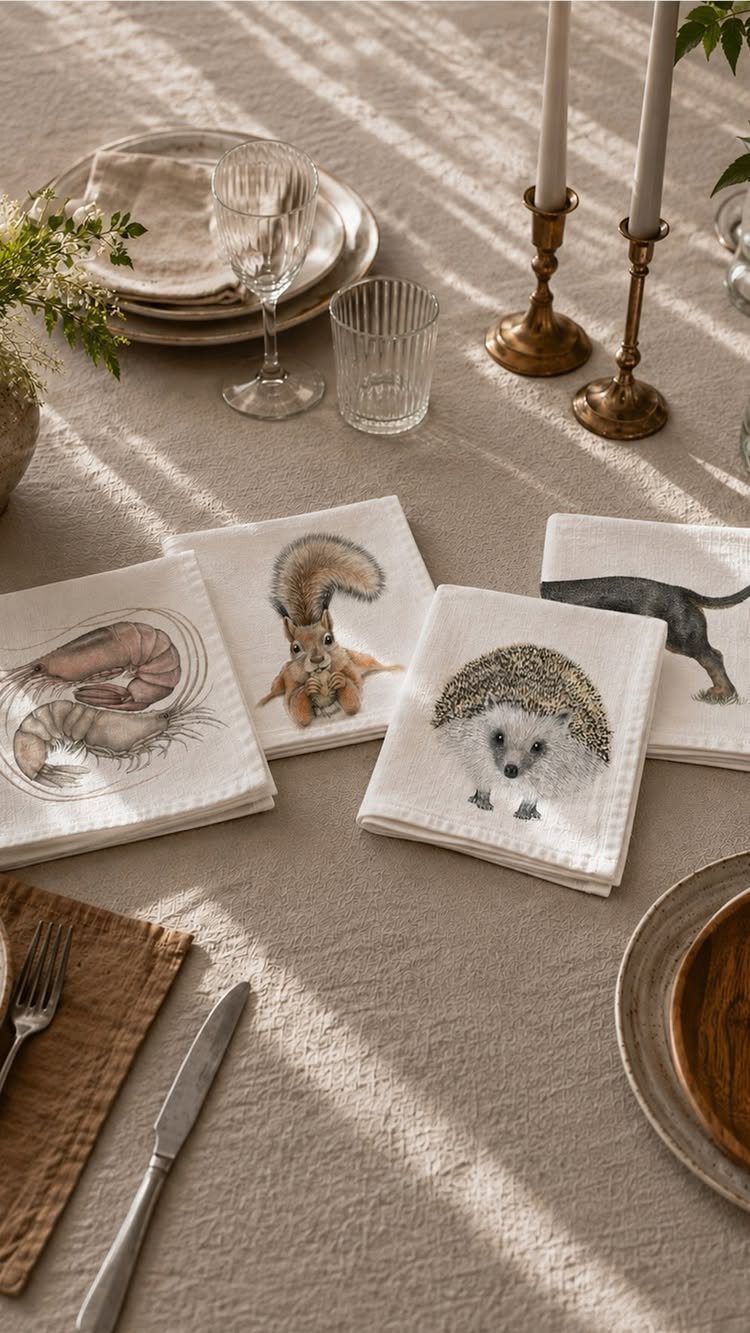
Swap your napkins out for linen in rust, mustard, or olive and the whole table shifts toward fall without touching anything else. Linen softens as it ages, so even budget versions improve over time instead of looking cheaper.
Prints add more personality than solids, and small animal illustrations give the table a seasonal touch without leaning into full harvest motifs. Fold them loosely or tie them with twine if you want a little more texture.
4. Incorporate Plaid Patterns
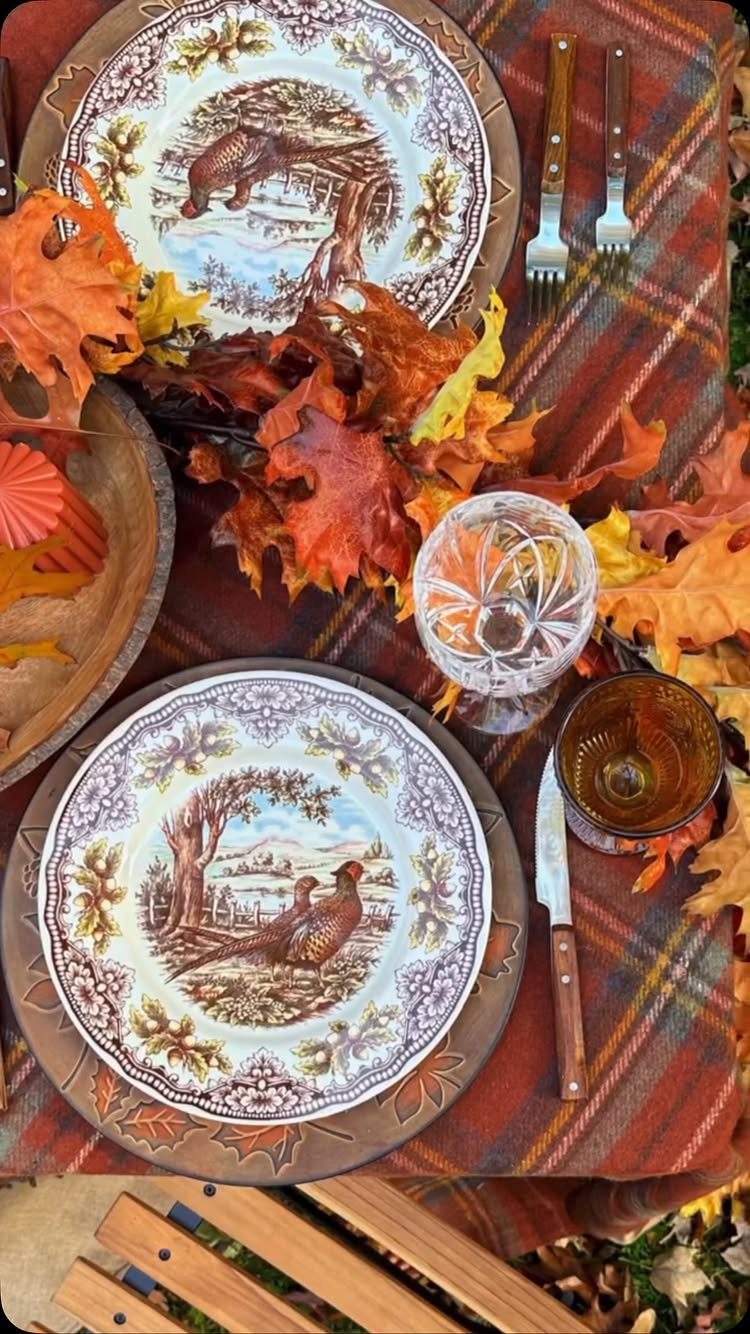
Plaid reads as fall instantly, and a tablecloth in brown, rust, or olive tones anchors the table without competing with your dishes.
The pattern hides stains better than solid linen, which matters if you’re setting up before guests arrive and dinner runs late.
Buffalo check works if you want something bolder, but smaller plaids in muted colors give you more flexibility with the rest of the table.
Layer it under a plain runner if the pattern feels too strong on its own, or let it show through by keeping your centerpiece simple.
5. Candlelight for Atmosphere
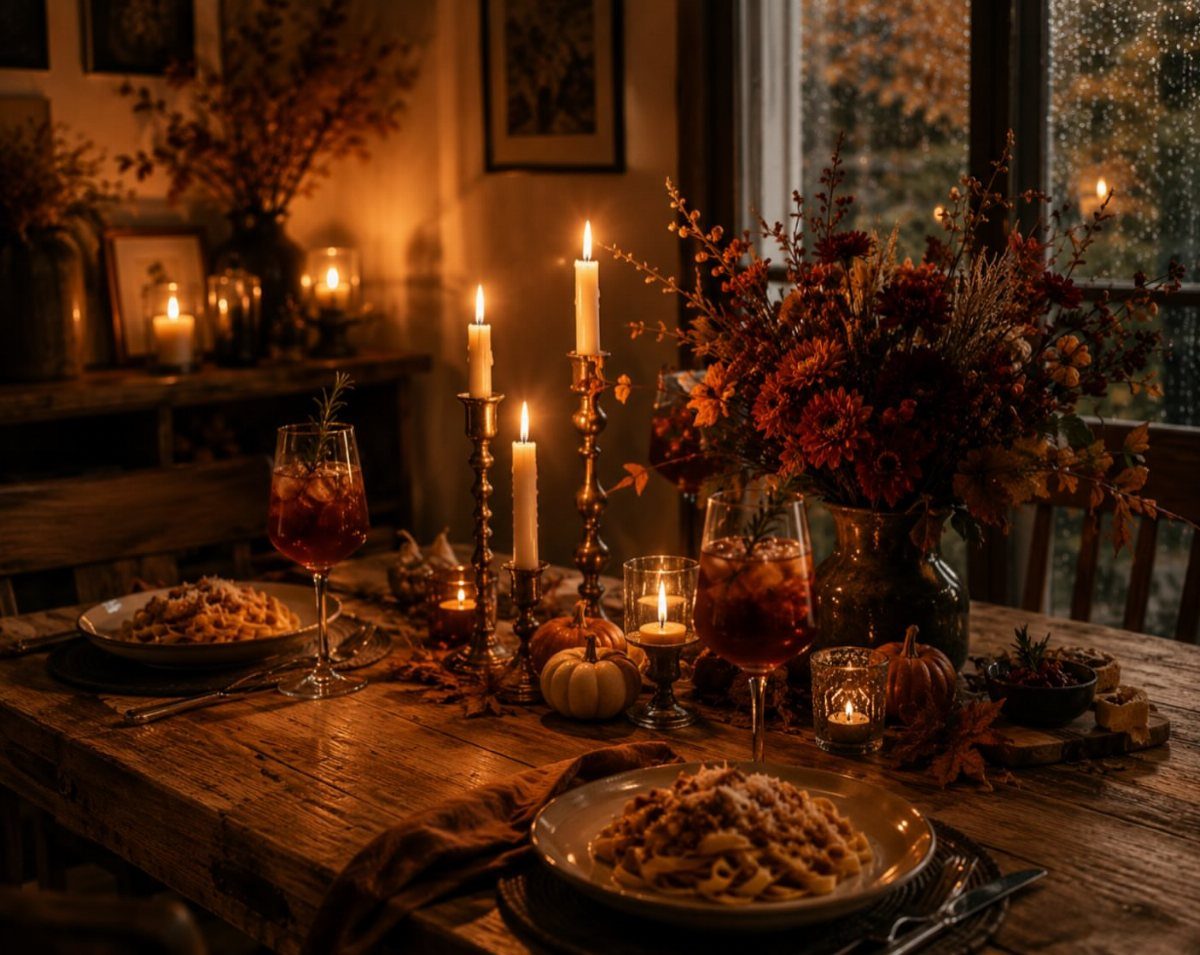
Candles lower the light just enough to make a weeknight dinner feel like something special, and in fall that warmer glow suits the season better than overhead fixtures.
Taper candles in brass or iron holders give you height without blocking sightlines, and grouping several together fills the center of the table.
Unscented candles are safer if you’re serving food with strong flavors, since fragrance can clash with what’s on the plate.
If you’re mixing heights, keep the tallest candles toward the center and shorter votives or pillars at the edges so the table doesn’t tip visually to one side.
6. Wooden Dough Bowl
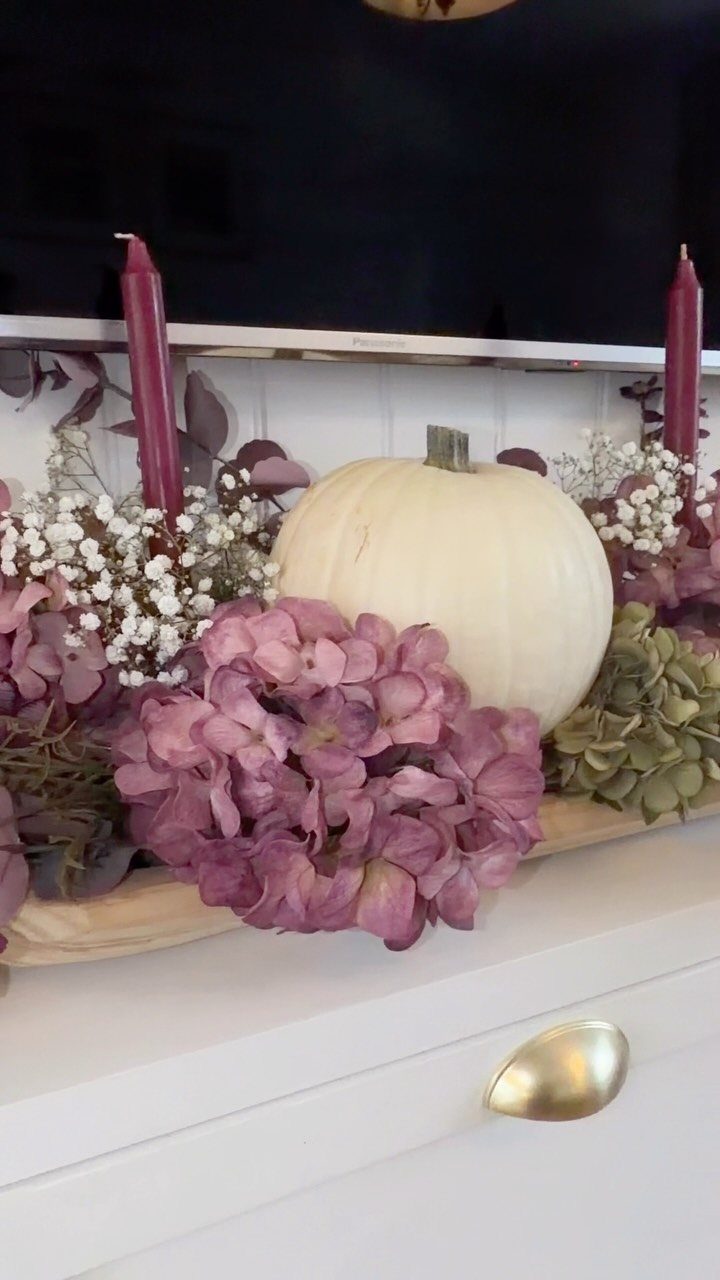
A wooden dough bowl gives you a long, low container that works as a centerpiece without taking over the table.
The aged wood and worn finish already look like fall, so you can keep the contents simple and still get a centerpiece that feels intentional.
Fill it with a mix of small pumpkins, flowers, and greenery that sits directly inside the bowl.
White pumpkins and purple flowers keep the palette from skewing too orange, which gives you more room to layer in other autumn colors around the table.
7. Rustic Table Settings
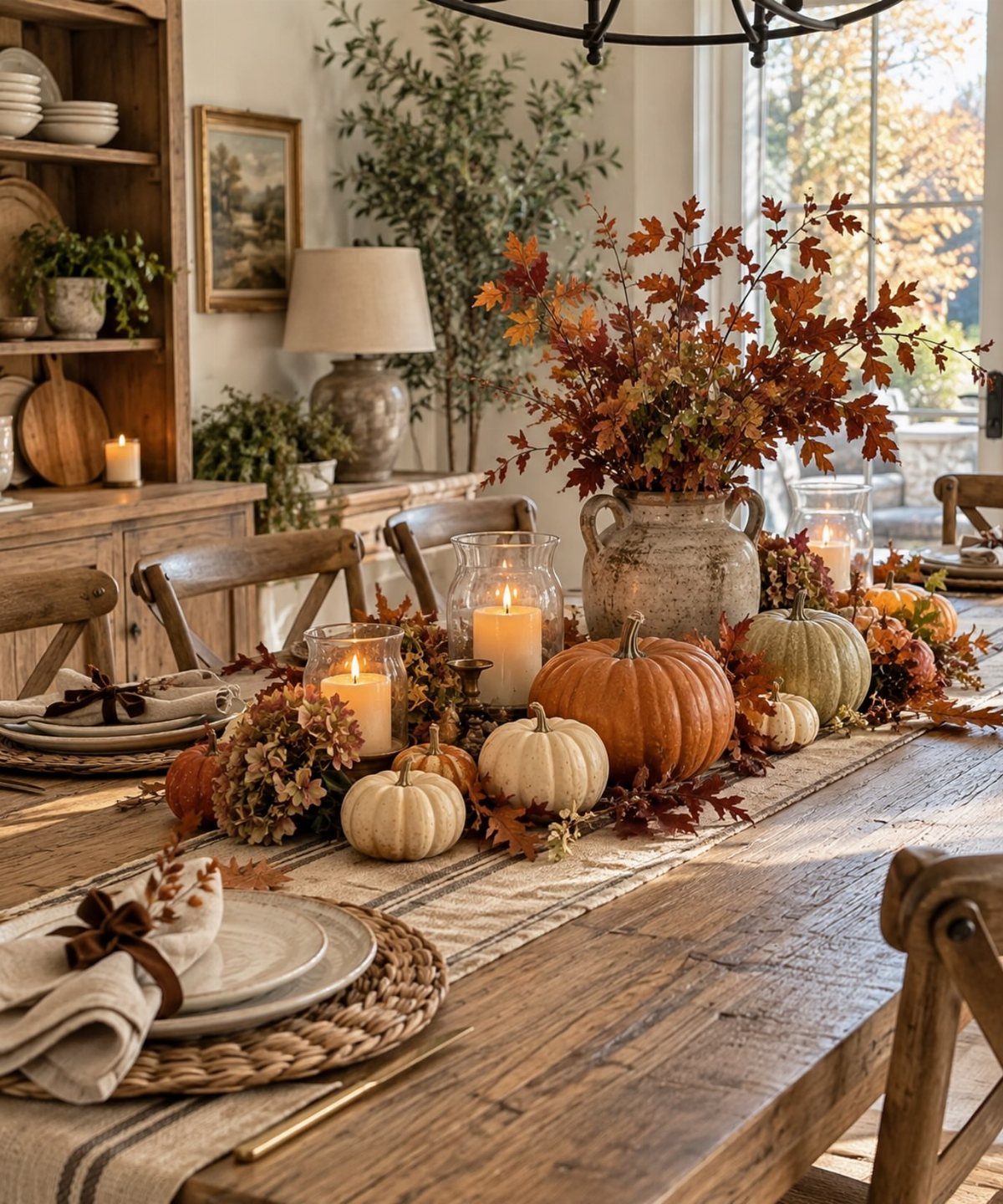
Natural wood and raw finishes give a dining table the worn-in feel fall calls for, and mixing pieces makes it feel more collected than coordinated.
A wooden table, mismatched chairs, and a few pumpkins scattered between candles already get you most of the way there.
Layer in foliage from the yard if you have it, or buy a single bunch of preserved leaves and spread them down the table instead of bunching them in a vase.
The look holds together because the materials themselves carry the same weight, not because everything coordinates.
8. Layered Table Settings
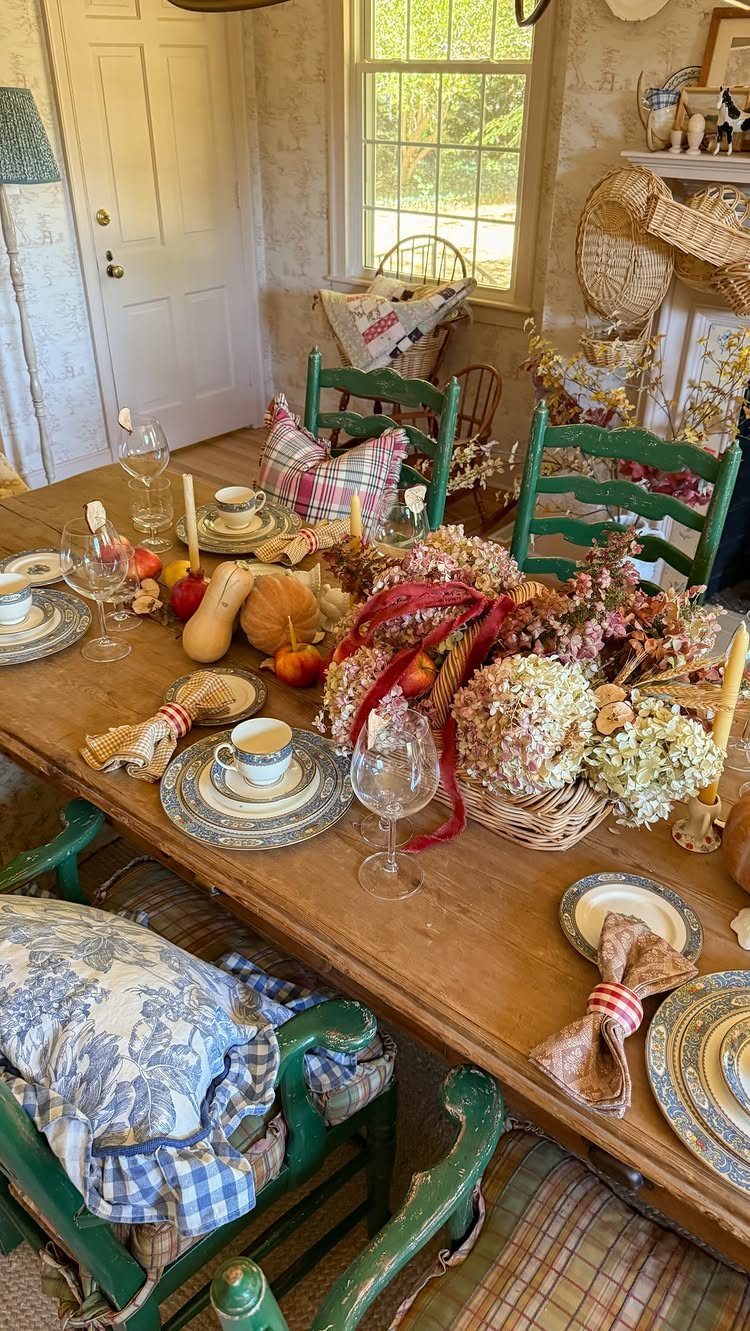
Stacking plates in different sizes and finishes adds depth without requiring new dinnerware, and it makes even a simple meal look more intentional.
Start with a larger plate or charger on the bottom, add your dinner plate, and top it with a salad plate or bowl in a contrasting color.
Mixing materials helps too: a wooden charger under white ceramic, or a metal-rimmed plate under stoneware, gives each place setting more visual interest than matching pieces straight from the set.
Keep napkins folded loosely on top or tuck them to the side so the layers show through.
9. Use Vintage Glassware
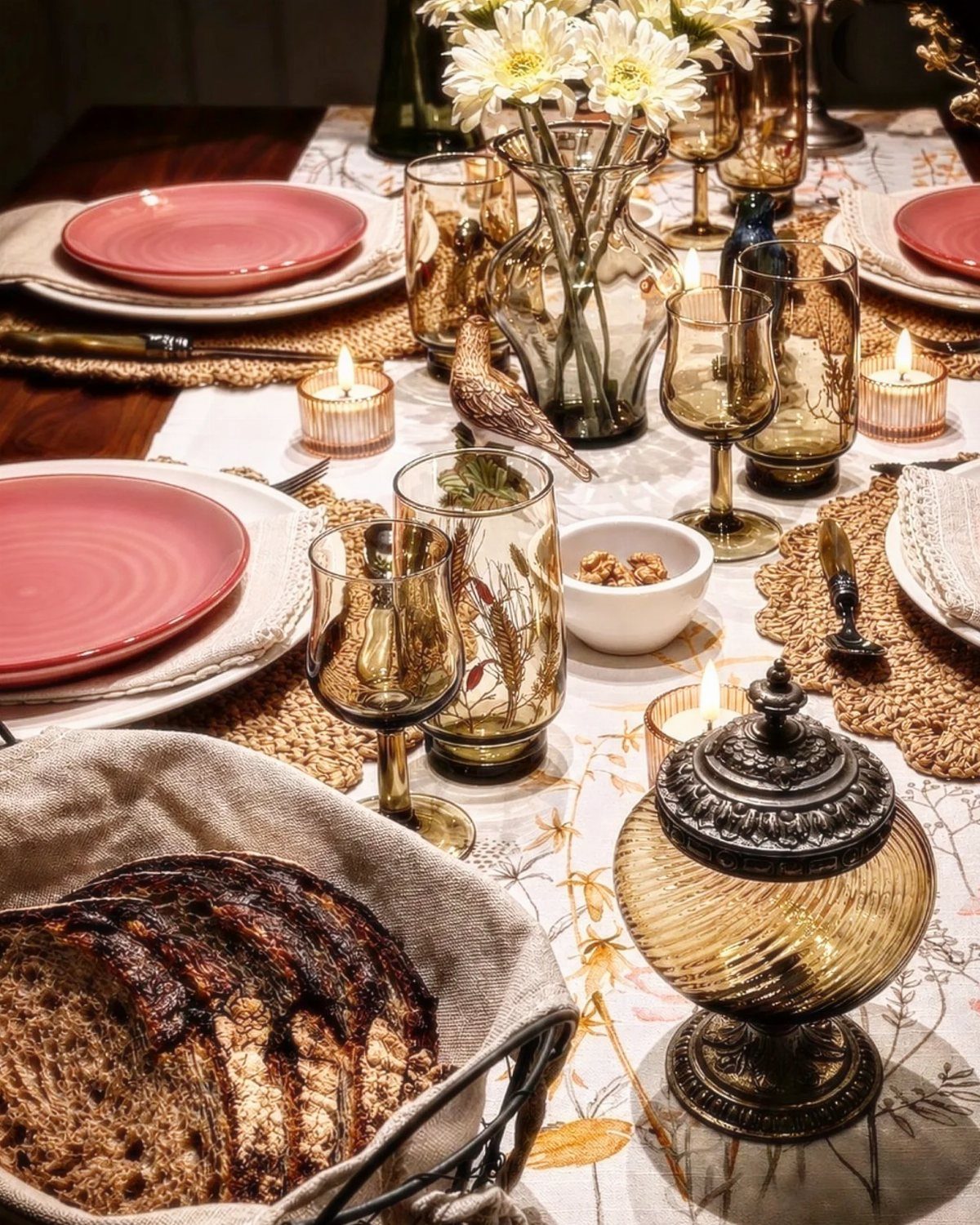
Amber and smoke-tinted glassware shifts the table toward fall without adding more pumpkins, and older pieces often have slight variations in color that make each glass look less mass-produced.
Thrift stores and estate sales are the best places to find these, and because they’re not matching sets the price per glass usually stays under a few dollars.
Mix heights if you’re using them for water and wine, or keep them all the same size and let the tint do the work.
The color warms up candlelight, so even a plain table feels more intentional once you pour the drinks.
10. Use Dried Grasses
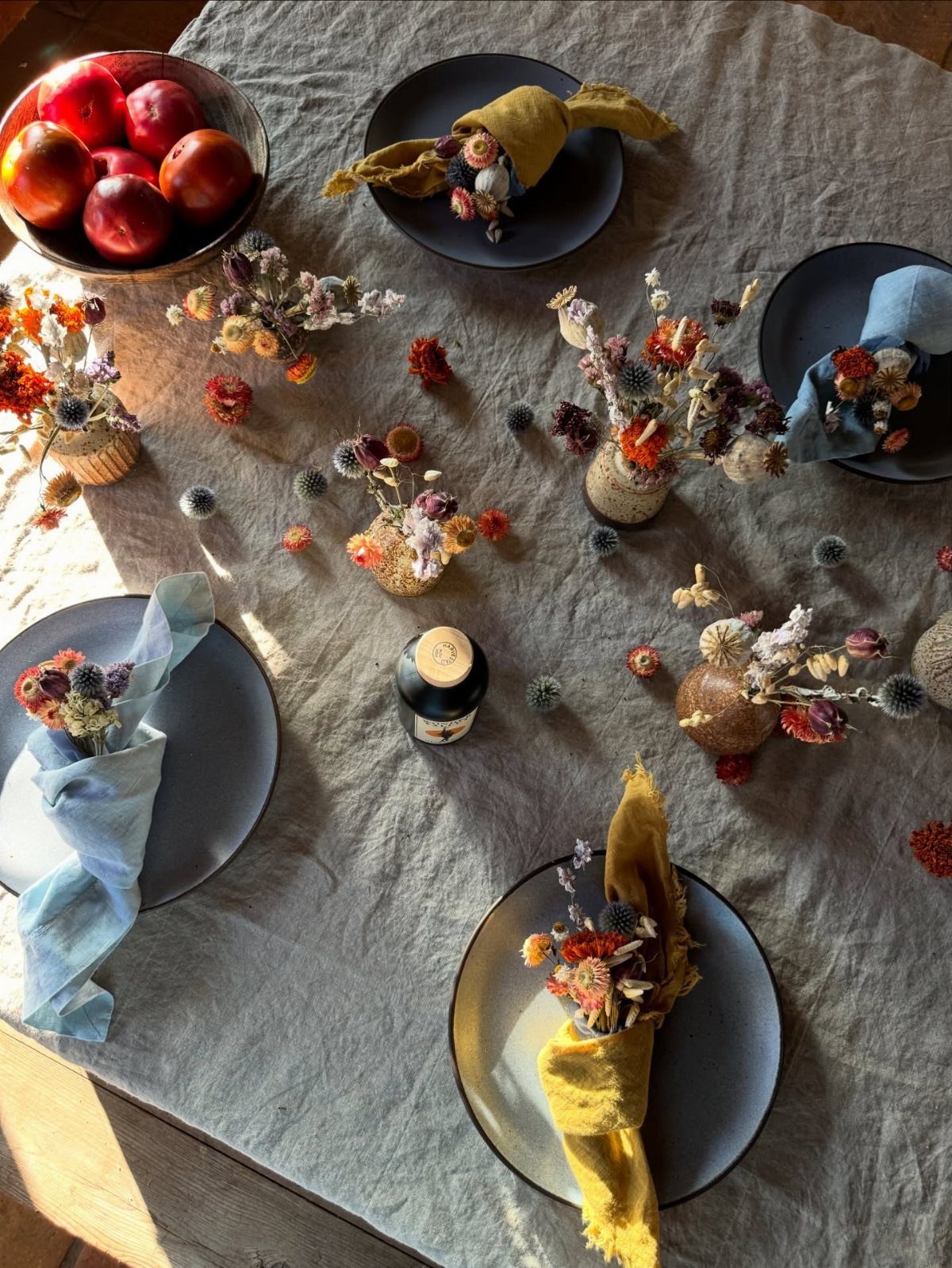
Dried grasses last through the whole season without water, and the neutral tones let you layer in other colors without the table feeling too busy.
Pampas, wheat, and bunny tails are the easiest to find, and a few stems in a small vase or laid flat on the table add texture without height.
Scatter several small arrangements down the length of the table instead of building one large centerpiece, so each person has something to look at without reaching over it.
Tie a few stems together with twine if you want a little more structure, or leave them loose for a more casual look.
11. Create a Cozy Nook
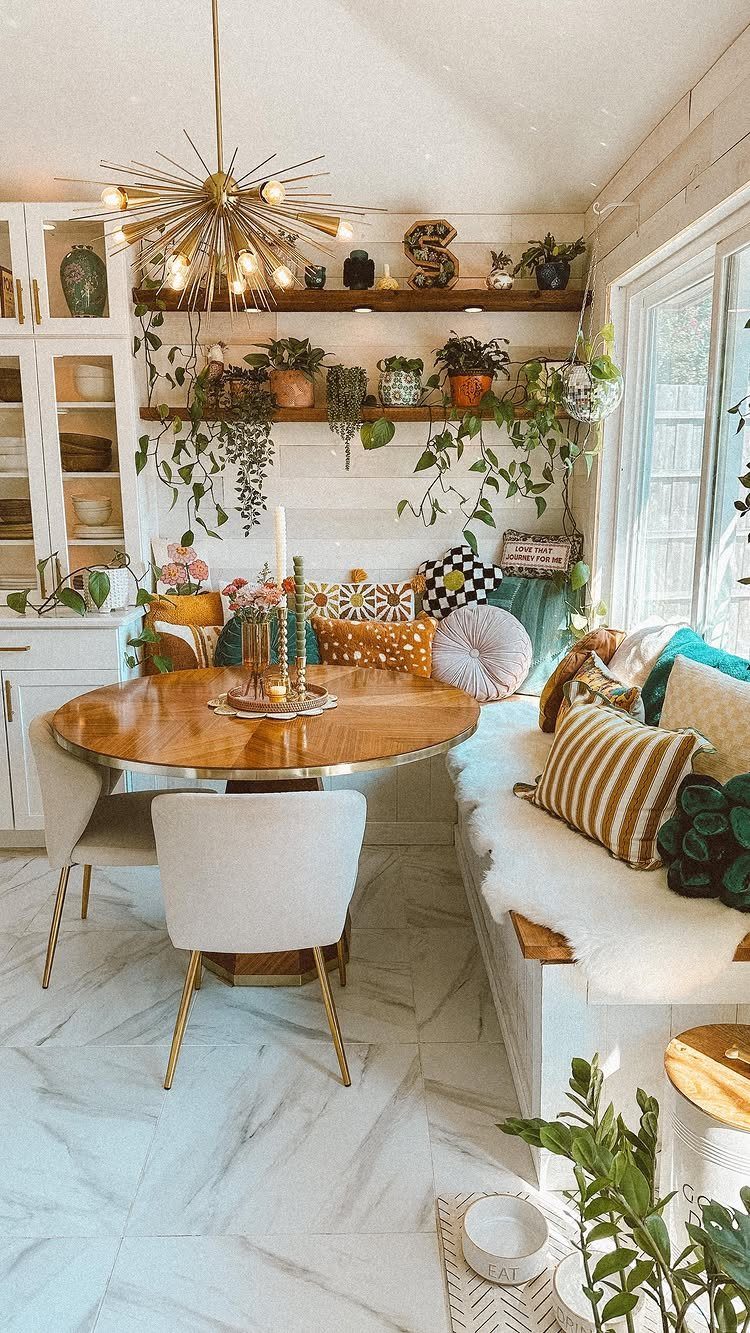
A bench with pillows and a throw turns one side of the table into a spot people actually want to sit, and it makes the whole room feel less formal.
Built-in seating works if you have it, but a freestanding bench against the wall does the same thing and can move if you need the space.
Layer a few pillows in fall colors and add a faux fur throw for texture.
The nook idea works best in smaller dining rooms where the table already sits close to a wall, since it gives you extra seating without cramming in more chairs.
12. Incorporate Textured Fabrics
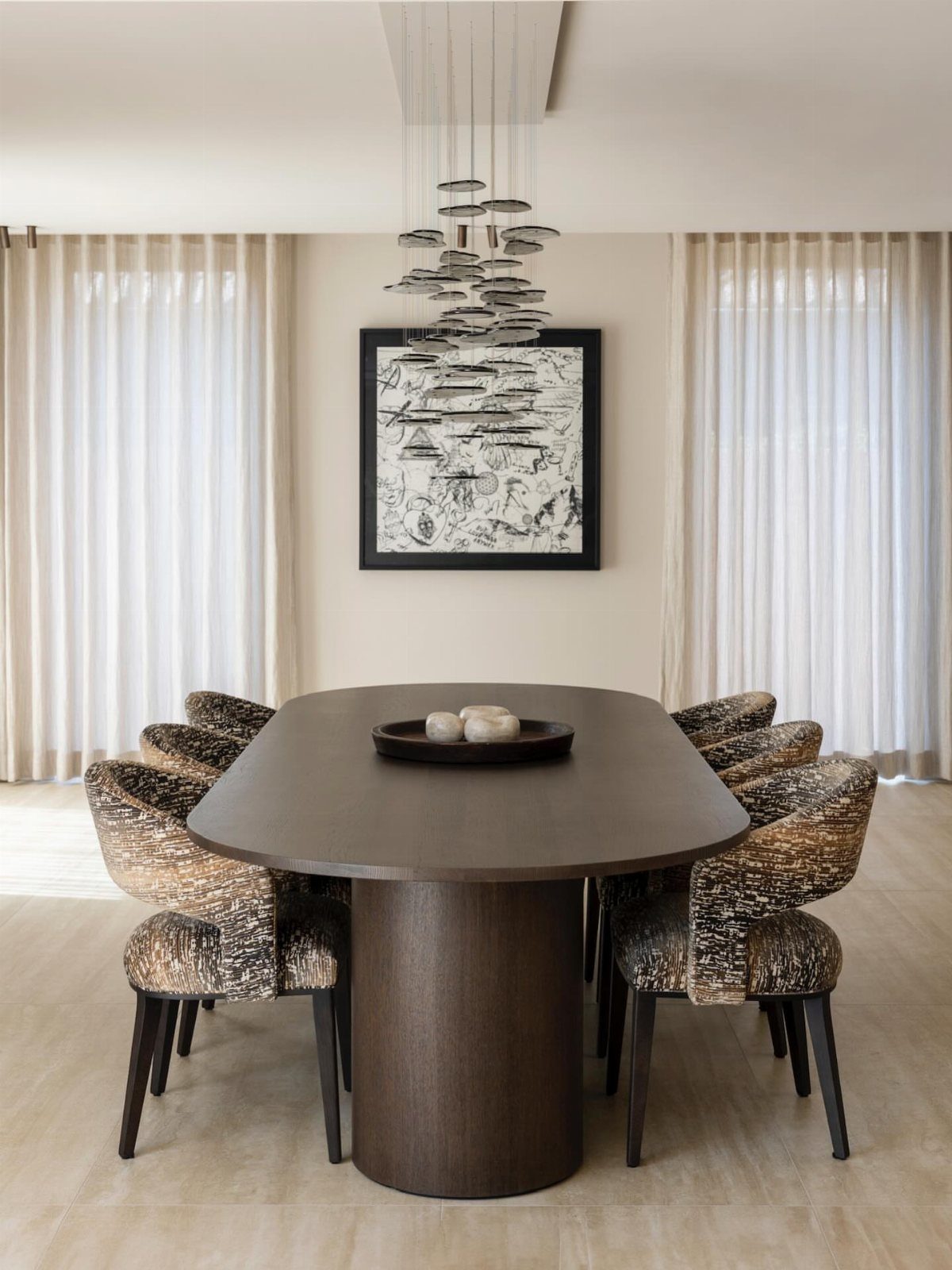
Upholstered chairs in velvet, bouclé, or linen with visible texture make the dining room feel warmer without changing the table itself.
The fabric catches light differently than smooth surfaces, so even neutral tones like taupe or cream add depth to the space.
If you’re not ready to replace chairs, slip covers in textured fabric work for the season and come off when you want a different look.
Choose a fabric tight enough to stay in place but loose enough to pull on without fighting every corner, and pick a color that works with what’s already on the table.
13. Use Colorful Tableware
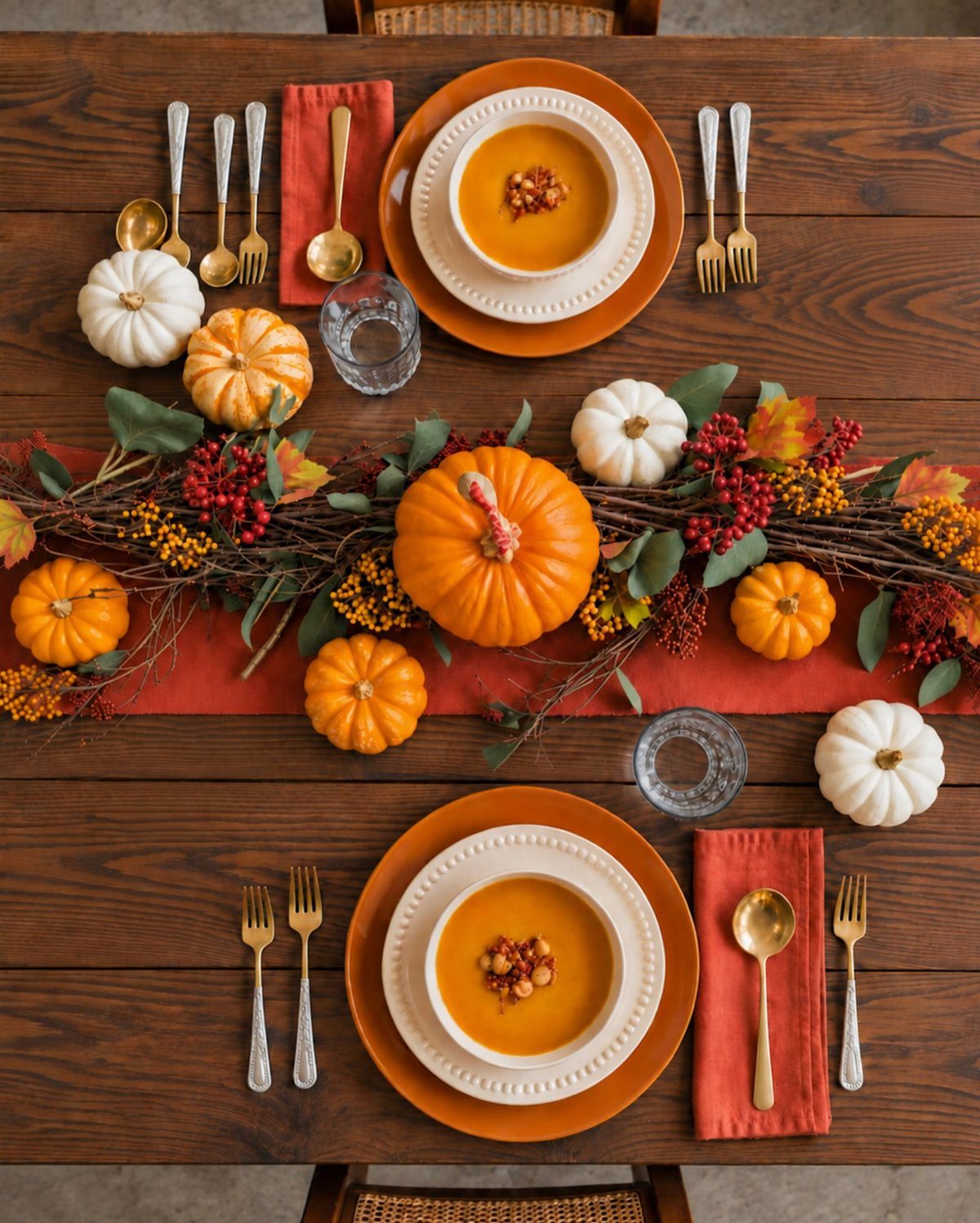
Orange plates against a neutral table bring fall color straight to the place setting, and the saturated tone does more work than pale pumpkin dinnerware.
Pairing them with gold flatware adds warmth without making the table feel too matchy, since the metal shifts the look away from strictly seasonal.
Scatter a few small pumpkins and berries between the plates to tie the color through the centerpiece, or leave the table plain and let the dishes carry the palette on their own.
14. Fall Color Bud Vases (Set of 3)
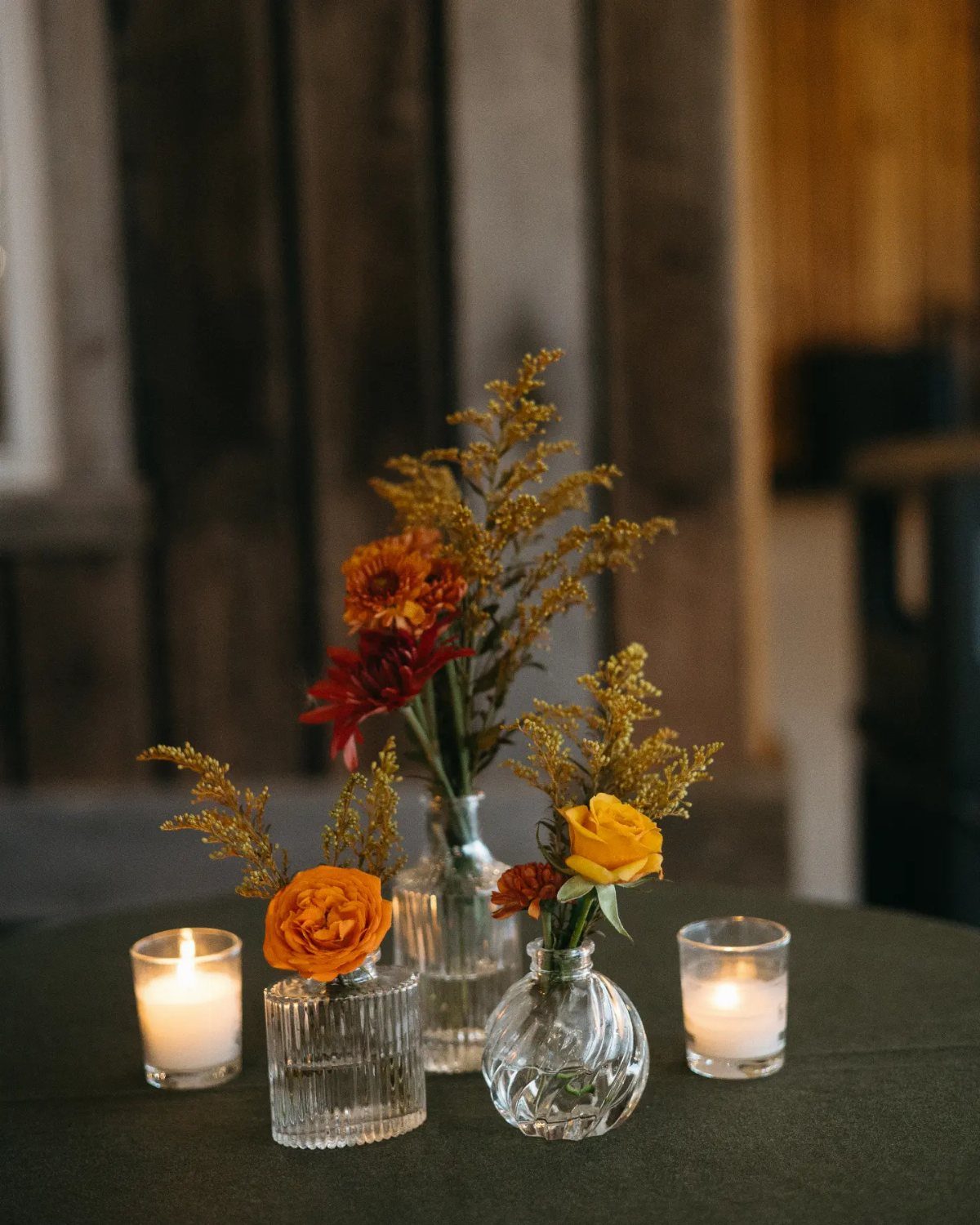
Three small vases spaced down the table give you a centerpiece that breaks up into separate moments instead of anchoring everything to one spot.
Bitters bottles work well for this since the narrow necks hold a single stem upright, and the glass tint already leans amber or brown.
Drop one flower or a few dried stems in each bottle and group them loosely near candles if you want more light. The low profile keeps conversation clear, and refilling them between dinners is quick work.
15. Seasonal Floral Arrangements
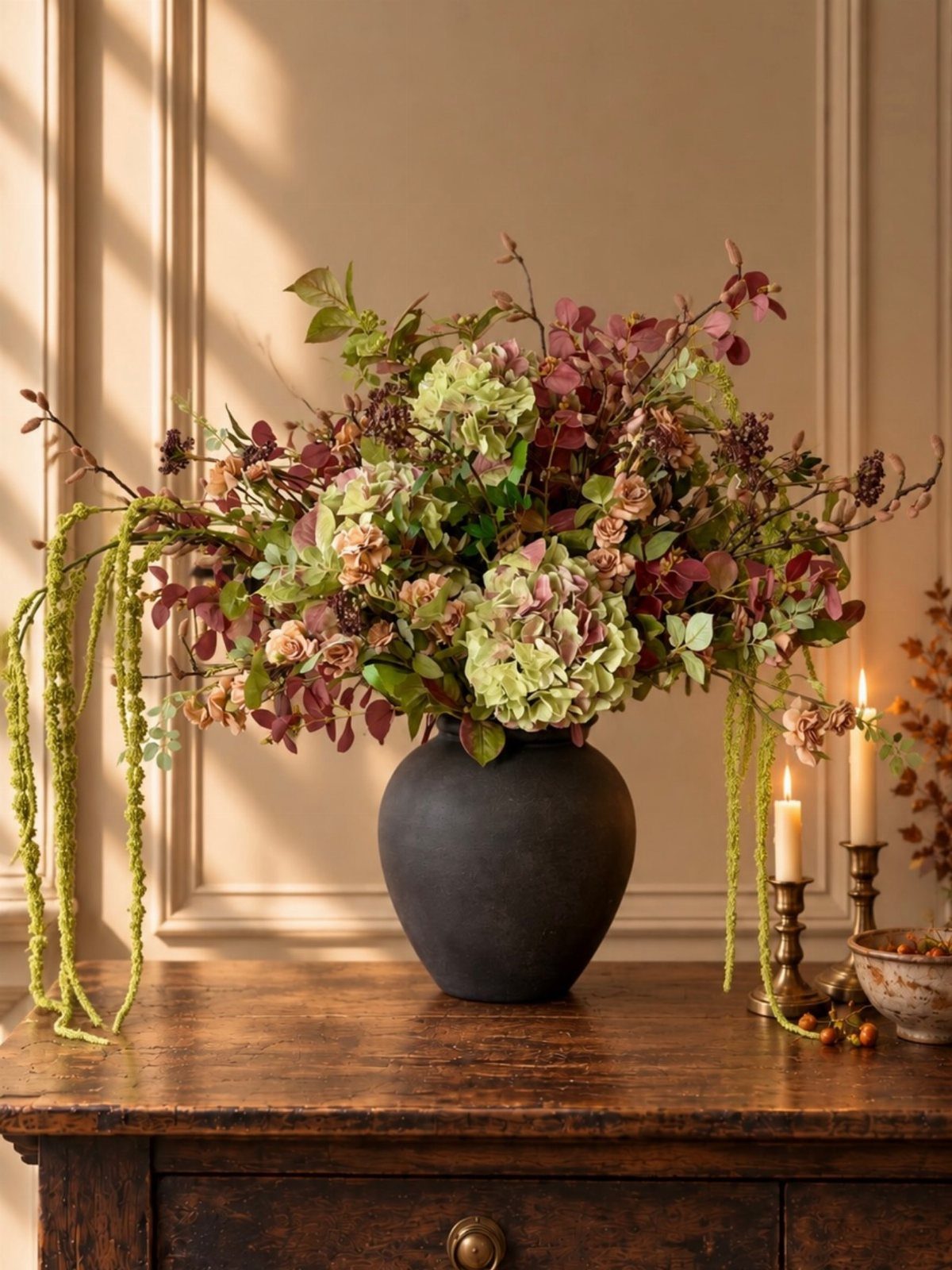
Hydrangeas hold their shape longer than most flowers, and the burgundy and rust tones fit fall better than summer pastels.
A single large arrangement on a sideboard or at one end of the table anchors the room without cluttering the surface where people eat.
Choose a dark vase so the stems disappear and the focus stays on the blooms.
Adding a few branches with berries or leaves fills out the arrangement without needing more flowers, and both dry well if you want to keep them past the season.
16. Use Brass Accents
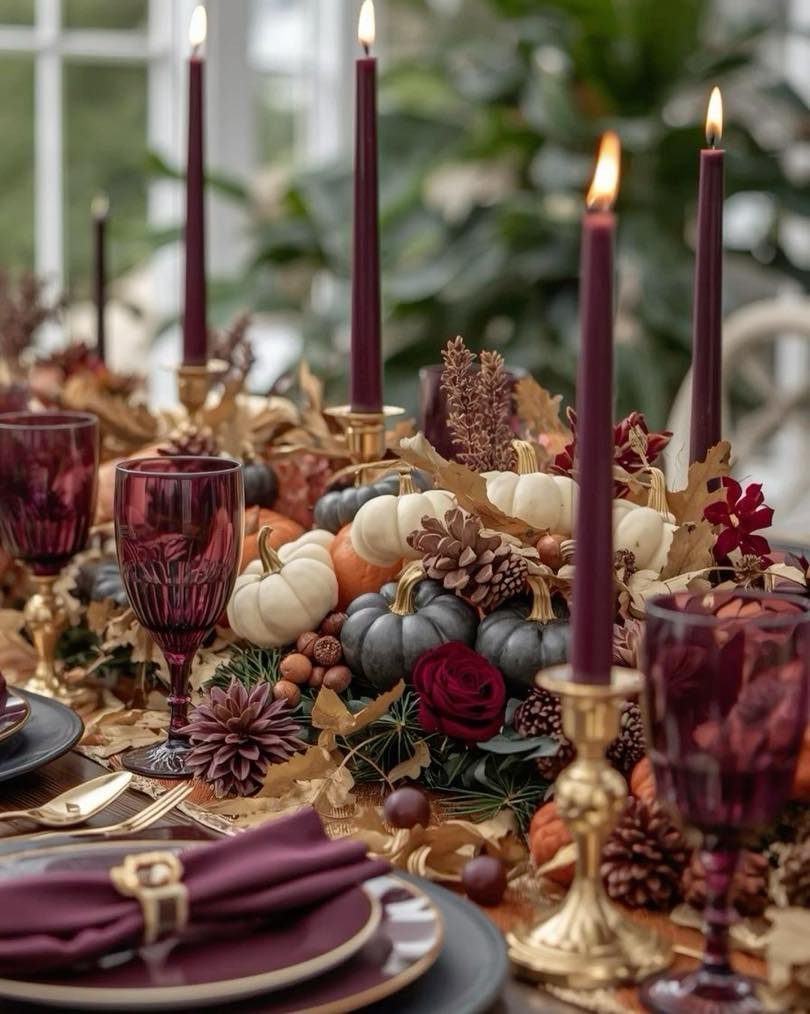
Brass candlesticks catch light in a way that feels warmer than silver, and the metal ages into a deeper tone that suits fall better than anything polished.
Grouping several down the center of the table gives you height and glow without blocking sightlines, and the patina improves instead of looking tarnished.
Purple glassware or napkins next to brass adds contrast without fighting the warm metal tones. The combination reads formal enough for a dinner party but works just as well on a weeknight if you’re already lighting candles.
17. Create a Harvest Table
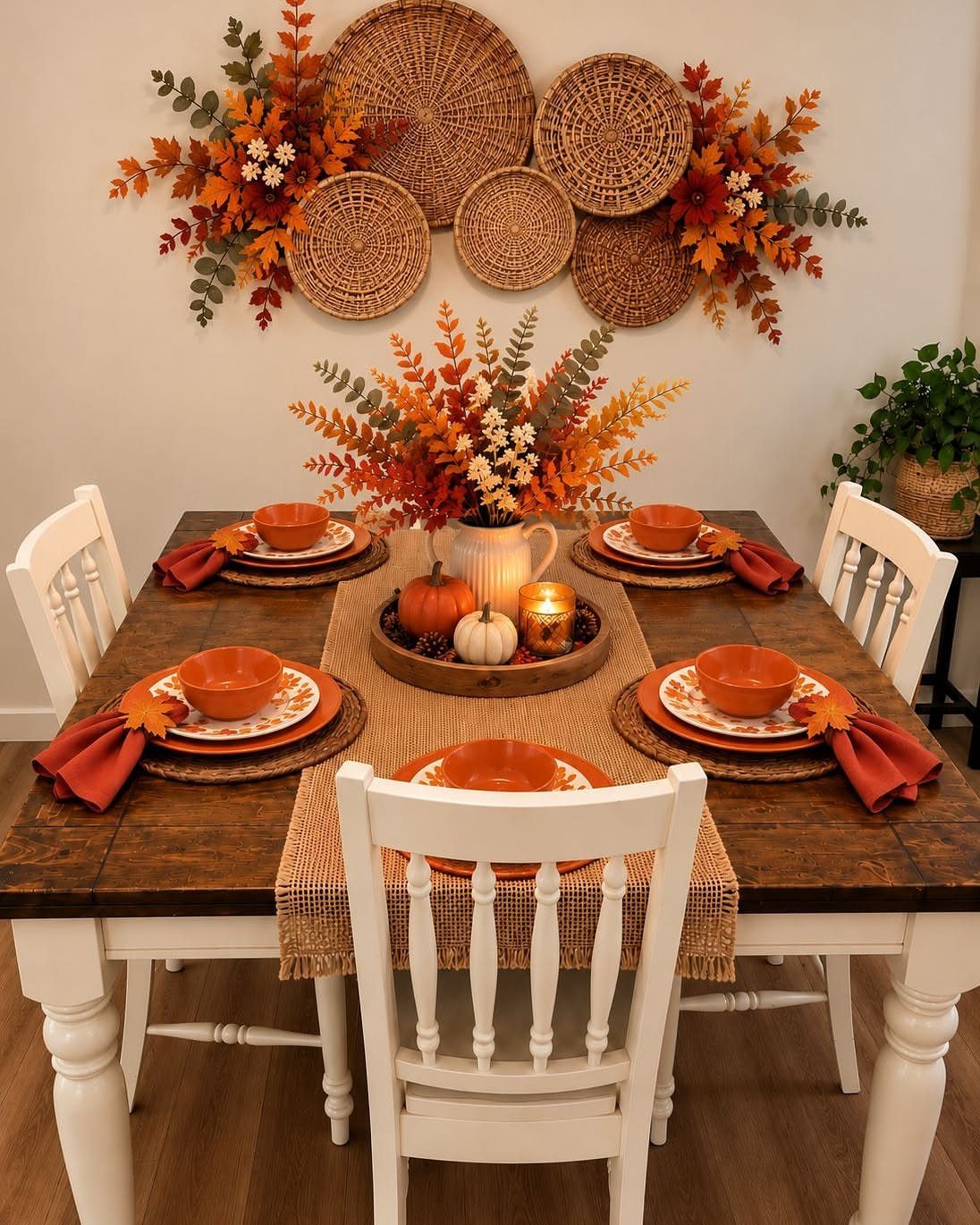
A burlap runner and orange bowls make the table feel like a harvest celebration without needing a centerpiece that sprawls.
The rough texture of the burlap contrasts with smooth ceramic, and the neutral base keeps the orange from overwhelming the table.
Add a single pumpkin or a small bunch of foliage in the center if you want something to anchor the runner, but the place settings already carry enough color to hold the look together.
White chairs keep the room from feeling too heavy.
18. Autumn Sideboard Display
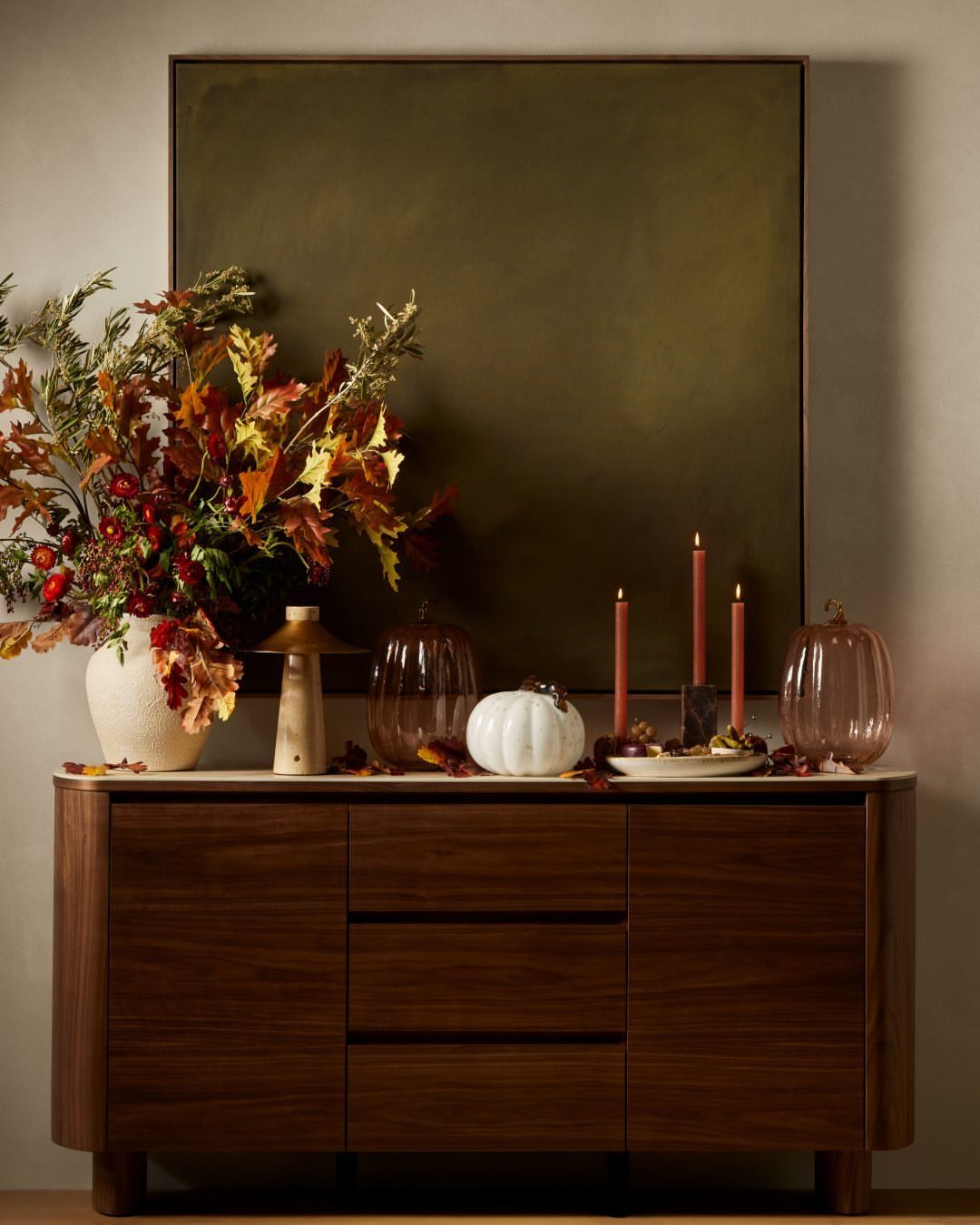
Move some of the fall decor off the table and onto a sideboard or console so the dining surface stays clear for serving dishes.
A low vase of autumn leaves, a few pumpkins, and candles grouped together fill the sideboard without needing much setup, and you can rearrange the pieces between dinners if the look starts to feel stale.
A dark painting or wall color behind the display makes the warm tones stand out more than a white backdrop would. Keep the arrangement low enough that it doesn’t block art or mirrors hung above it.
Avoid Overcrowding the Table
Leave enough clear space down the center for serving dishes when you’re passing them family-style. A centerpiece that spreads too wide starts cutting into that room, so low arrangements that stretch lengthwise work better than tall ones that sprawl.
If you’re setting everything out before guests arrive, sit in a chair and check that you can see faces on the other side without leaning.
Anything that blocks eye level either moves to the side or gets swapped for something shorter.
A sideboard holds backup dishes and keeps the table surface from filling up before anyone sits down.
Mixing Styles
Modern plates with clean lines sit next to vintage brass candlesticks or an old ceramic pitcher without looking like they wandered in from different rooms.
The contrast makes the table feel collected instead of coordinated, and warm seasonal colors hold the mix together.
Mismatched glassware works the same way. An amber goblet next to a clear tumbler adds variety without clashing, especially when the tint pulls from the same warm range as the candles or napkins.
Keep the finishes consistent enough that nothing feels out of place, even when the pieces themselves don’t match.
Skip anything too precious if you’re mixing eras. A chipped vintage plate or tarnished brass reads as character, but something delicate next to everyday dinnerware just looks fragile.
Choosing a Color Scheme
Pick 3 to 5 colors and repeat them in place settings, linens and centerpieces instead of pulling from every fall tone at once.
Rust, mustard, and olive work together because they share the same muted warmth, and adding cream or white keeps the palette from feeling too heavy.
Once you have your colors, spread them between the napkins, centerpiece, and dinnerware so no single element carries all the work.
A rust napkin next to an olive runner and a few white pumpkins ties the look together without needing everything to match.
Limit patterns to one or two pieces. A plaid tablecloth and solid napkins give the table more structure than mixing prints, and it’s easier to swap one patterned piece out later if you want a different look.
Frequently Asked Questions
How do you decorate a dining room for fall?
Start with warm colors in your linens and centerpiece, add natural elements like dried grasses or fruit, and layer in candlelight to soften the room.
A rust or olive napkin, a few pumpkins down the center, and taper candles in brass holders cover the basics without needing a full redesign.
Pick 3 to 5 colors and repeat them in your centerpiece, napkins and sideboard so the look holds together instead of feeling scattered.
What are some good autumn decorations for my home?
Brass candlesticks, linen napkins in warm tones, dried grasses, small pumpkins, and vintage amber glassware all work as fall decor without requiring much setup.
Start with a burlap runner or plaid tablecloth, then add a sideboard display of autumn leaves and candles to keep seasonal pieces off the eating surface.






