
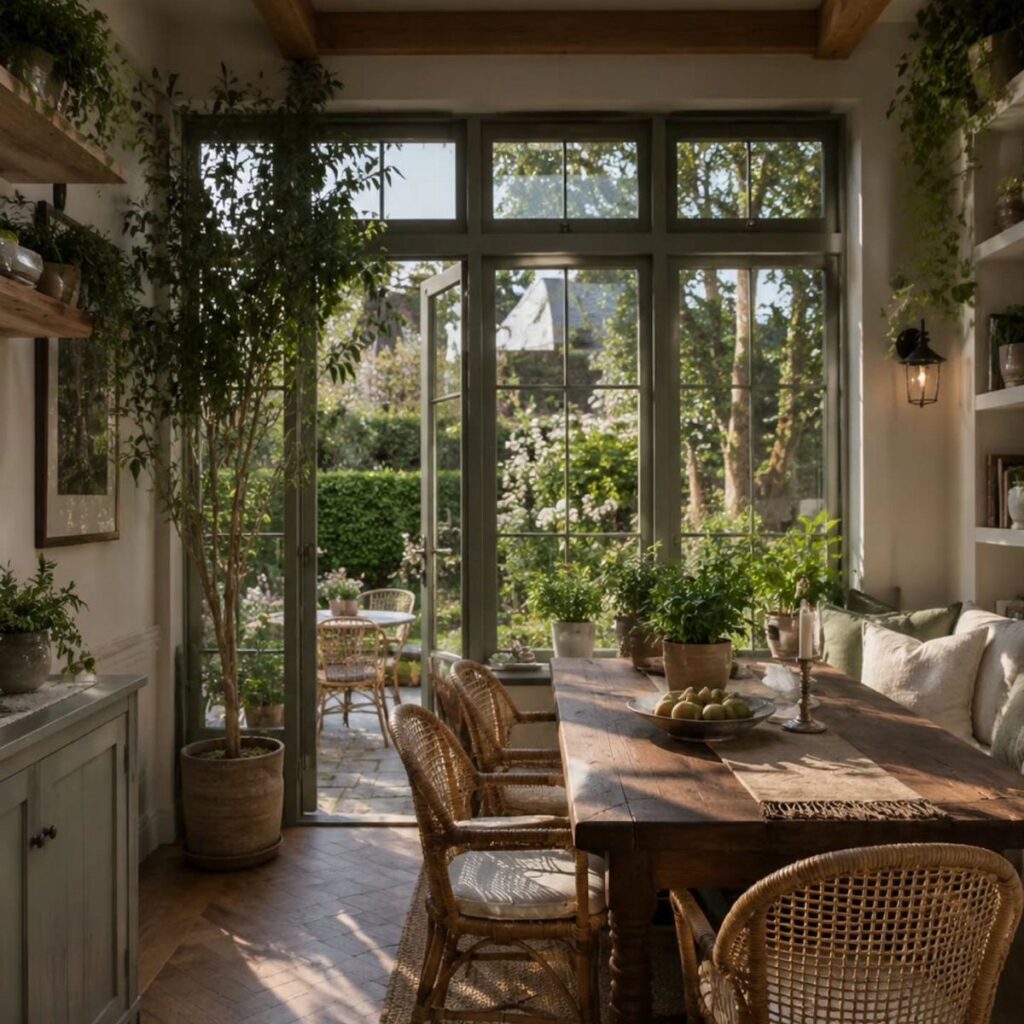
A live edge walnut table runs several thousand dollars while a white shiplap wall costs a few hundred, and the choice between them depends on whether you need a centerpiece or a backdrop.
The style lives where warm wood meets cold metal, glass, or painted surfaces in roughly equal measure: too much timber tips the room into cabin territory, too much black iron reads industrial, and the balance decides whether the look holds.
1. Statement Lighting
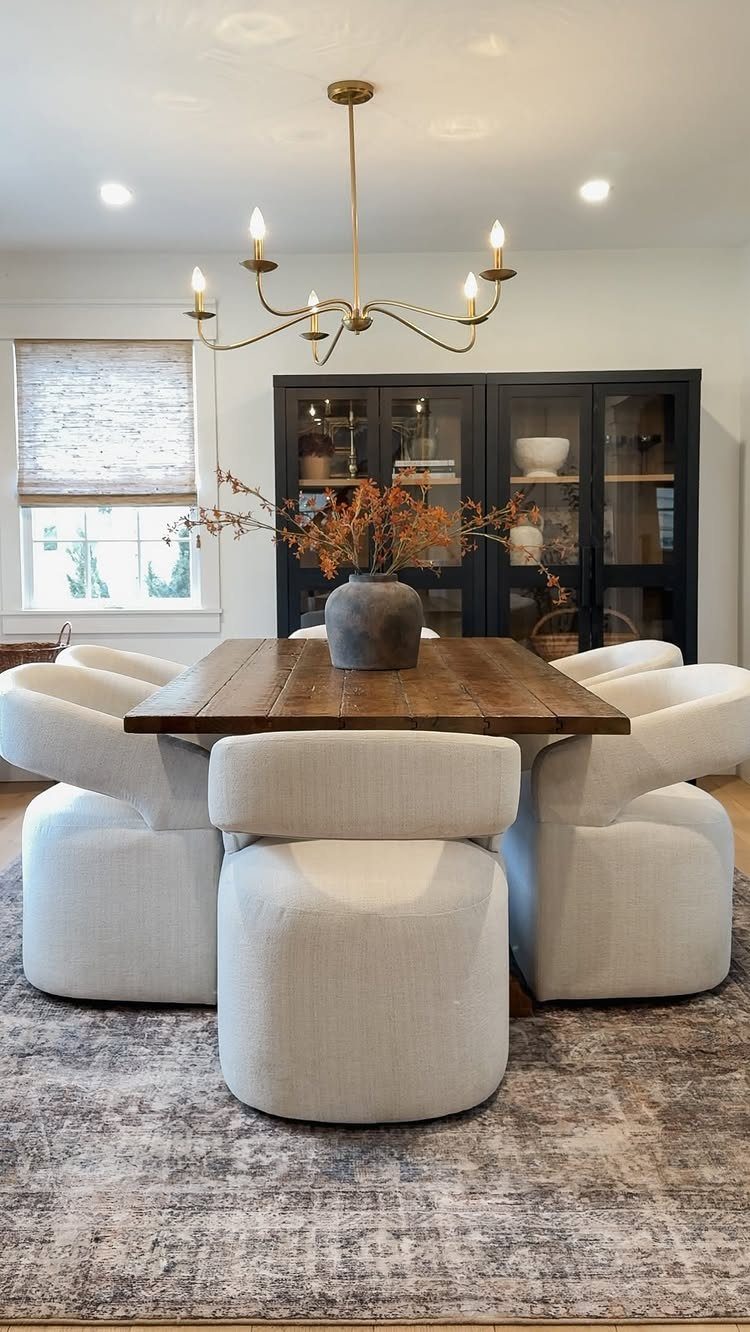
A fixture with visual weight pulls the room together when rustic pieces might otherwise feel scattered. A gold-finished chandelier brings warmth to a wood table and upholstered seating without overpowering either.
I look for a piece that hangs low enough to anchor the table but leaves clearance for conversation across it.
Hang the fixture low enough that it lights the table well but high enough that seated diners can see across it.
Metal finishes in brass, oil-rubbed bronze or black iron suit this style better than chrome or polished nickel.
2. Use of Greenery
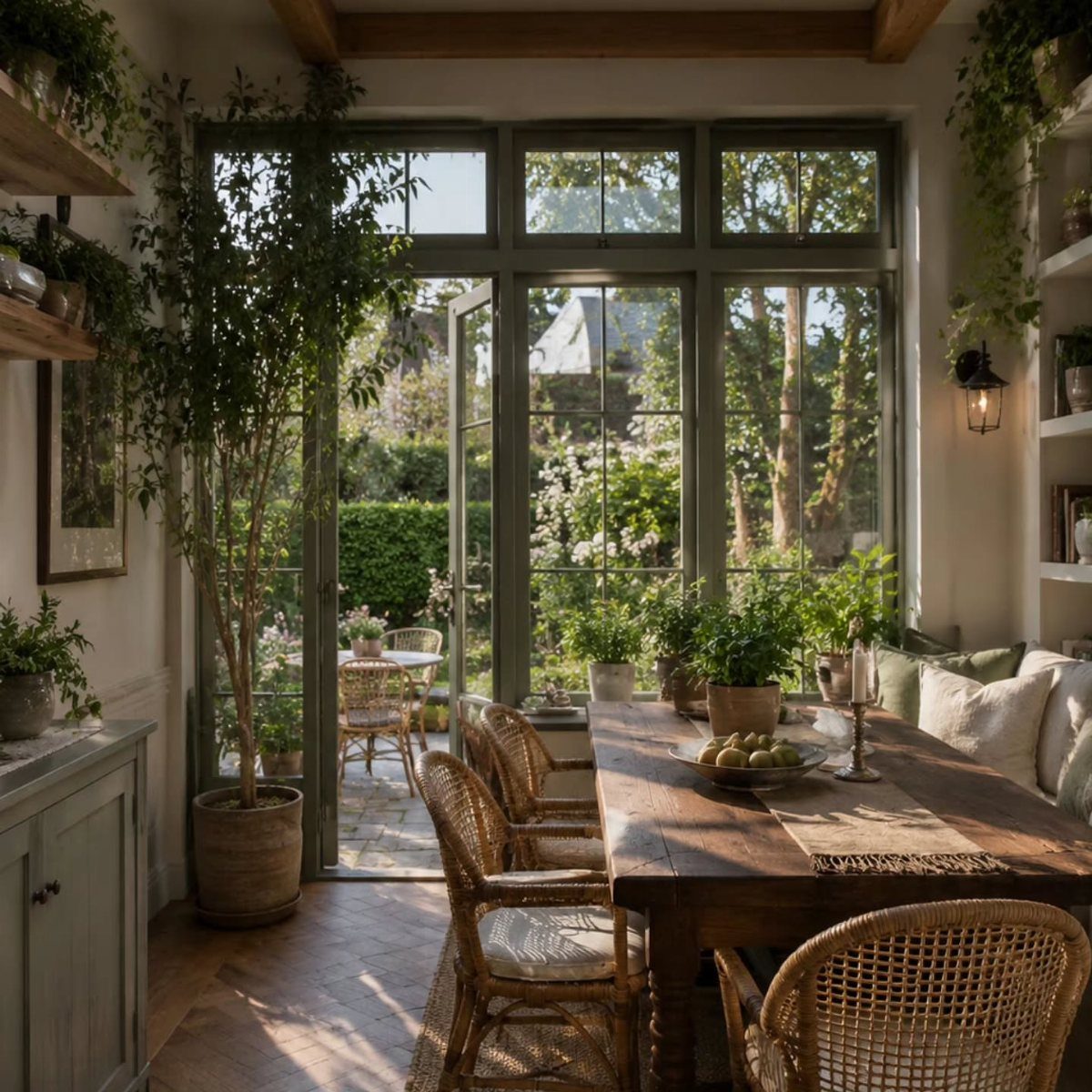
Potted plants scattered around the table and near the windows soften hard edges and tie the room to the view outside. The mix here, ferns and broad-leafed varieties in simple containers, keeps the rustic feeling without looking overly styled.
I place larger plants in corners or beside furniture and cluster smaller pots on surfaces where they won’t crowd the table setting. Natural fiber baskets or ceramic planters in neutral tones work better than brightly colored plastic.
This works best in rooms with good natural light. Low-light spaces need pothos, snake plants or ferns that tolerate shade.
3. Live Edge Tables
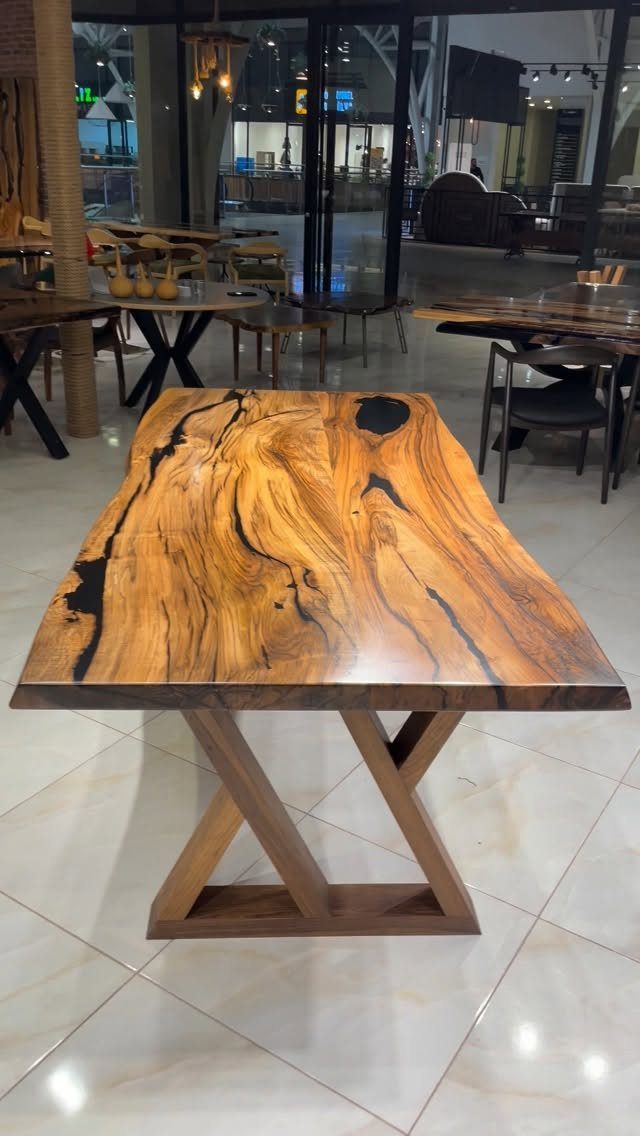
A live edge table keeps the natural contour of the tree along one or both sides, and the resin-filled cracks and voids add contrast. The geometric base here balances the organic top without losing the modern side of the style.
These tables run wide in price depending on the wood species and the amount of custom work. Walnut and maple cost more than oak or ash.
I check that the slab is fully dried and finished with a durable topcoat. Untreated edges and resin can scratch or stain if the finish isn’t sealed properly.
4. Open Shelving
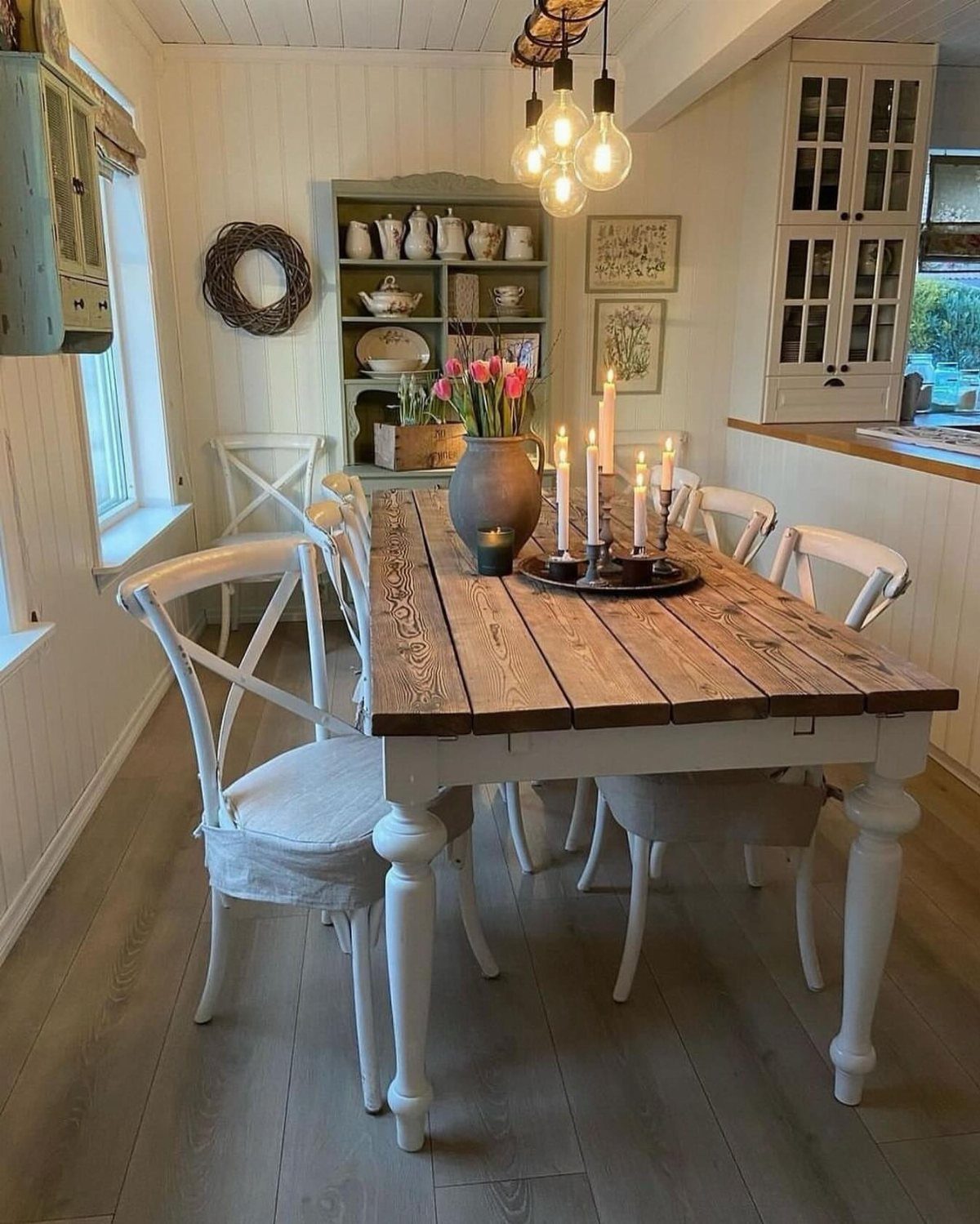
Open shelves on a hutch or wall unit give you space to display ceramics, glassware or serving pieces while keeping them within reach.
A blue hutch displays pottery and pitchers for color that does not take up surface space on the table.
I arrange heavier items on lower shelves and lighter or decorative pieces up top. Grouping items by color or material keeps the display from looking cluttered.
This works well in smaller dining rooms where a closed cabinet would feel heavy. Everything on open shelves stays visible, so they need occasional tidying.
5. Modern Rustic Dining Area
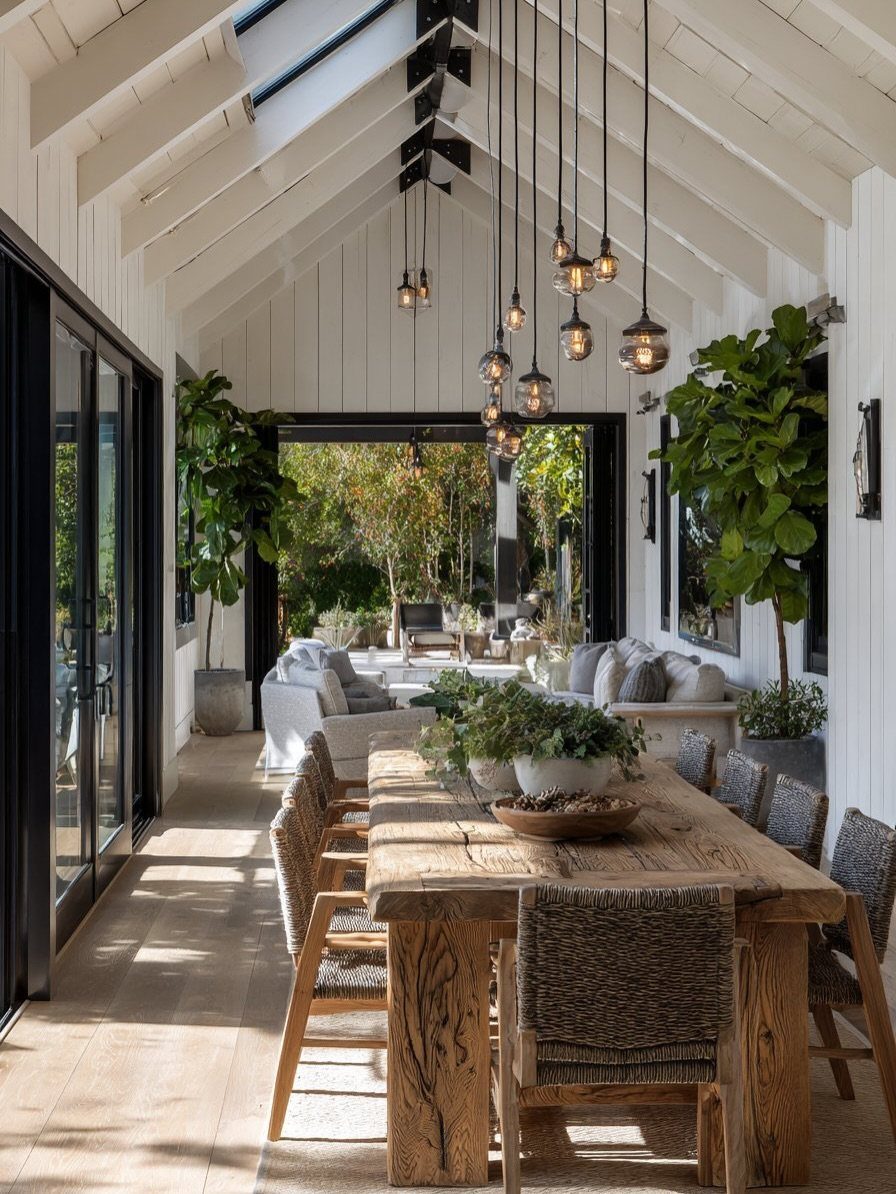
Heavy timber furniture paired with streamlined black fixtures gives you rustic warmth without sacrificing clean lines. White walls and a vaulted ceiling leave the room feeling open even with large wood furniture.
I lean toward simple pendant lights or linear fixtures in matte black to contrast with wood tones. Woven or natural fiber chairs add texture without bulk.
In smaller spaces, lighter wood finishes and fewer accessories keep the balance from tipping too rustic.
The key to creating a rustic dining room is to layer your textures – think raw reclaimed wood furniture, slubby linens, antique furnishings, distressed finishes, natural elements like picked branches from your backyard and accessories that have a hand-crafted quality.
6. Stone Accent Wall
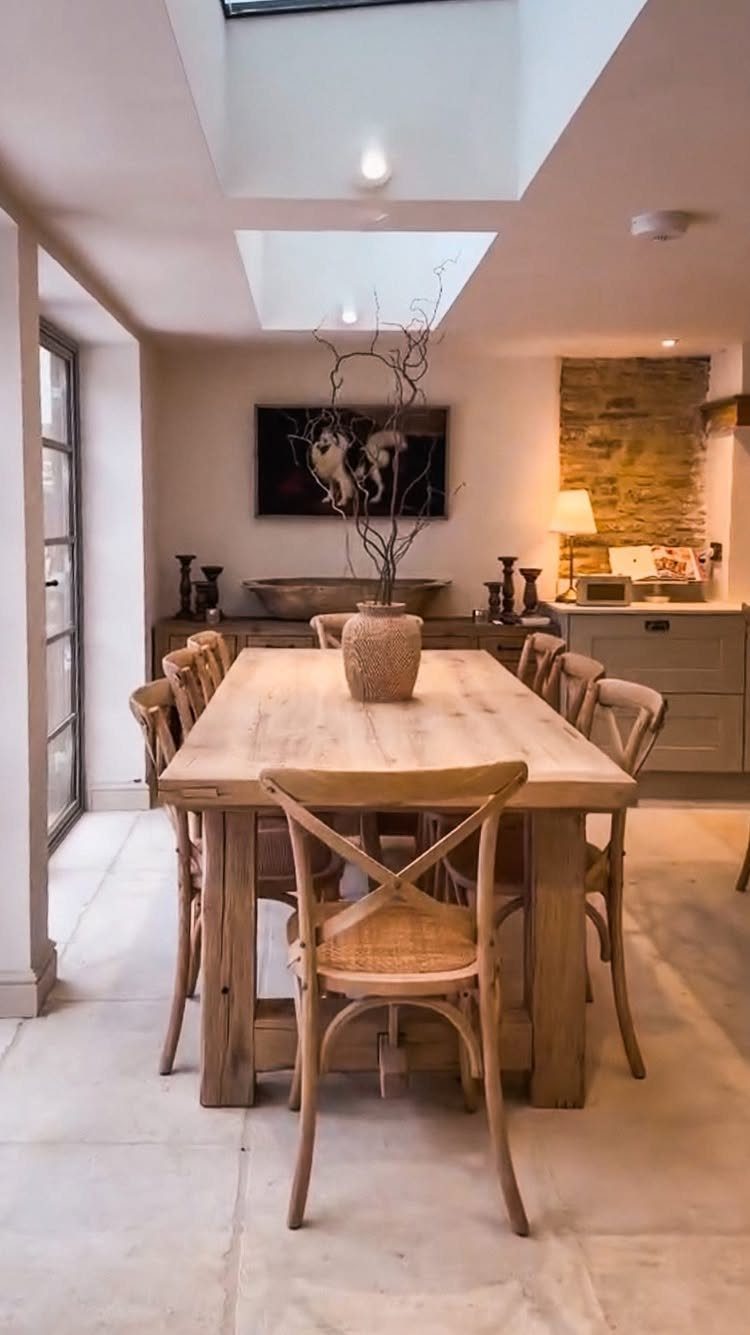
Stone cladding on one wall brings texture and mass that wood alone can’t match. The natural gray tones here sit quietly behind the lighter wood table and chairs, and the skylight overhead keeps the stone from darkening the room.
I use stone veneer instead of full stone when weight or cost is a concern. Veneer installs over cement backer board with mortar and costs less than full-depth stone.
This wall works best opposite or adjacent to windows where natural light hits it. In dim corners, stone can read as heavy or cold.
7. Exposed Wooden Ceiling Beams
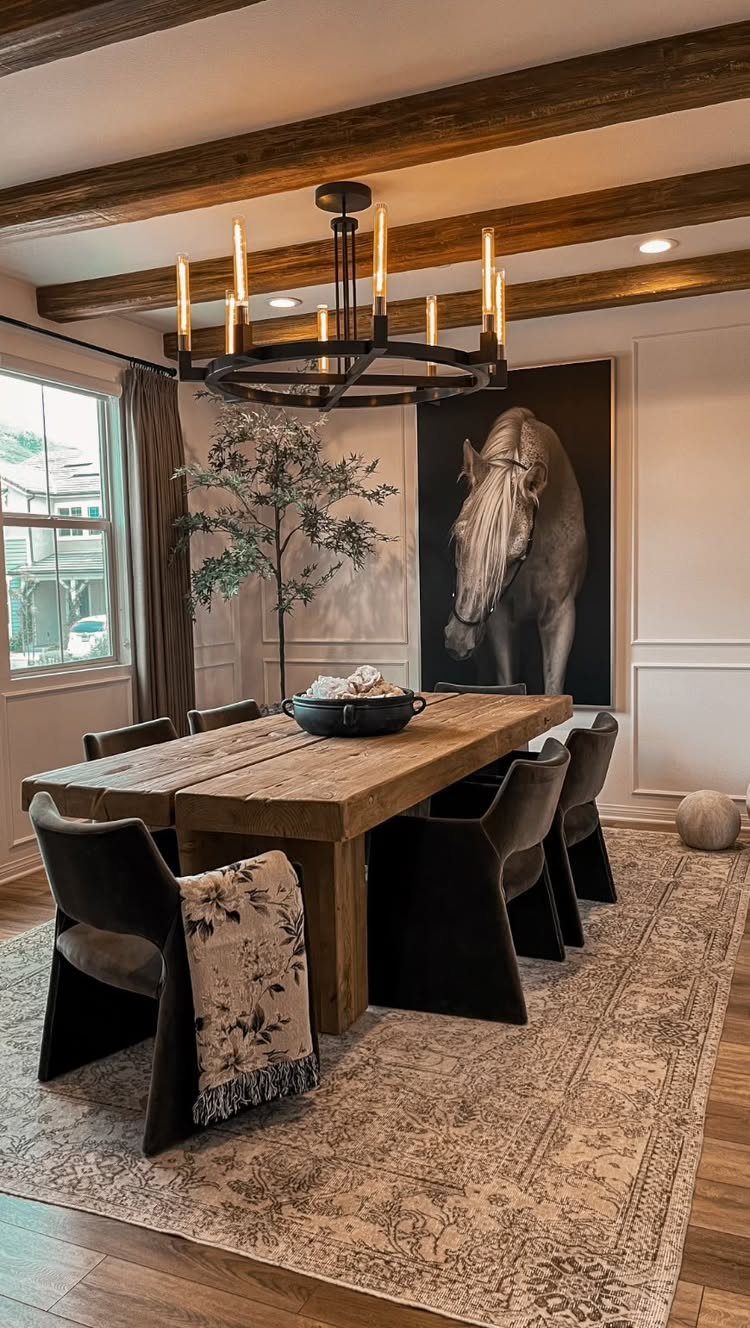
Exposed beams overhead pull attention up and make the ceiling part of the room instead of something you ignore. Dark wood beams against a lighter ceiling create contrast that suits both rustic and modern pieces below.
I look for beams that span the full width of the room rather than stopping short, which reads as unfinished. Real reclaimed timbers cost more than faux beams but carry visible age and texture.
In rooms with low ceilings, beams can make the space feel shorter. Painting them the same color as the ceiling helps, or skip them and use wood elsewhere.
8. Wood Table with Black Chairs
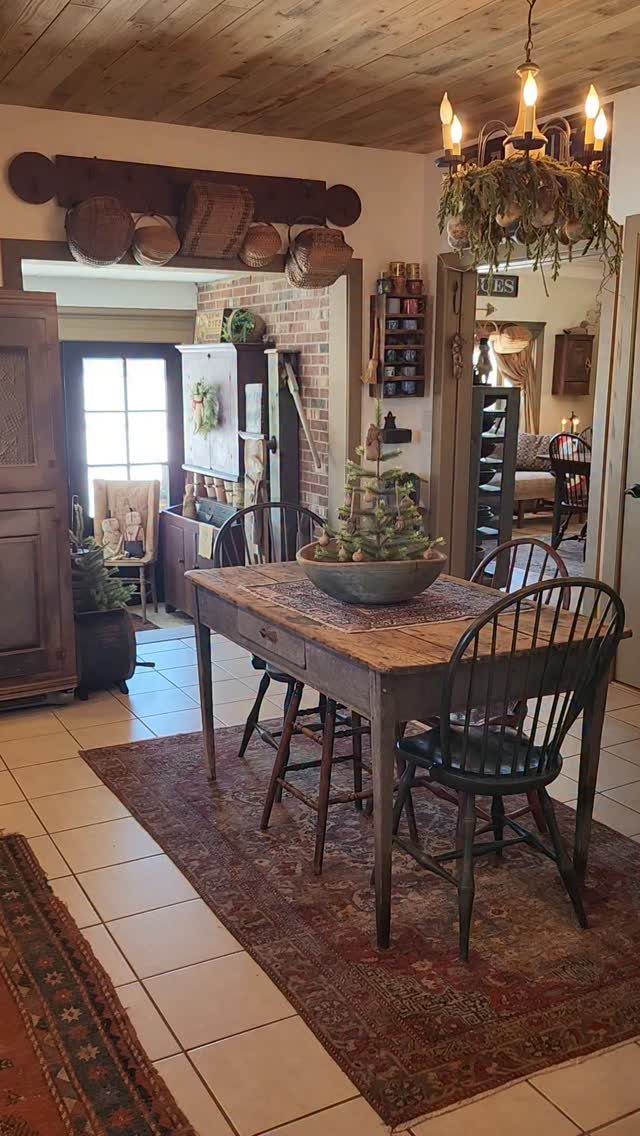
Black chairs against a wood table sharpen the contrast and keep the rustic side from feeling too soft. A red rug adds warmth without competing with the wood tones or the brick wall.
Metal or painted wood chairs hold up better than upholstered ones in high-traffic dining rooms. I choose chairs with a matte or satin finish rather than glossy black, which shows fingerprints and dust.
This pairing works in small spaces where too much wood can feel heavy. The black breaks up the visual weight and defines the seating without adding bulk.
9. Dining Table Bench Seating
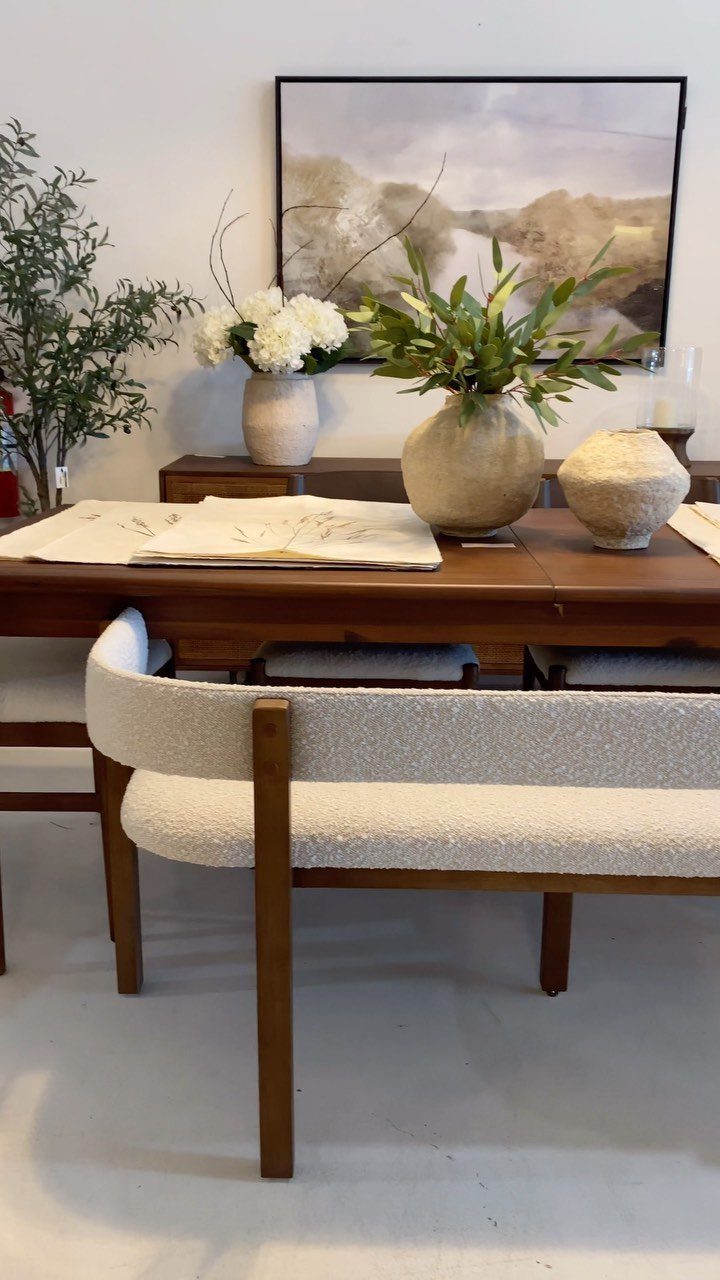
A bench on one side of the table seats more people in less floor space than individual chairs. The white bouclé fabric here softens the wood and adds texture that holds up better than smooth linen.
I place the bench against the wall or under a window where it won’t need to be pulled out for seating. Performance fabrics with stain resistance make more sense than untreated cotton or linen in a dining space.
Benches without backs work better for shorter meals. Longer dinners call for at least one side with backed chairs.
10. White Shiplap Walls
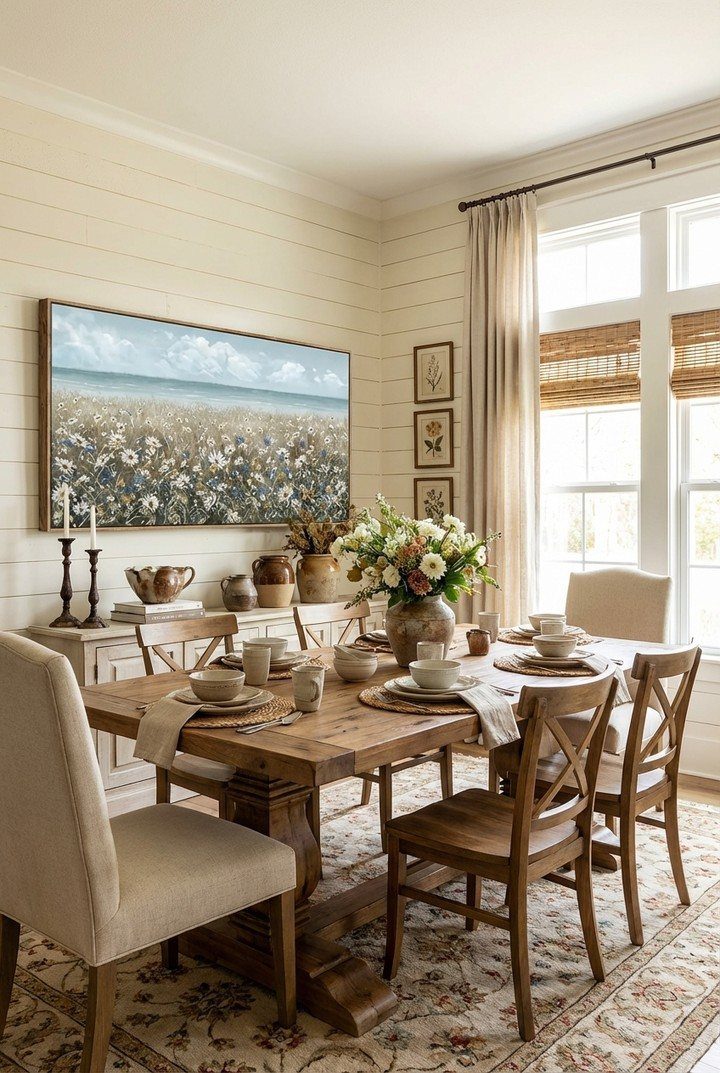
Shiplap offers texture without the visual weight of wood paneling or the coldness of flat drywall. White shiplap reflects light and keeps the focus on the wood table and chairs rather than the walls.
I install shiplap horizontally with a small reveal between boards. Primed MDF boards cost less than tongue-and-groove pine and paint more evenly.
This works well in rooms with strong wood tones where more wood on the walls would be too much. The white background lets you change decor and table settings without clashing.
11. Faux Fur Chair Styling
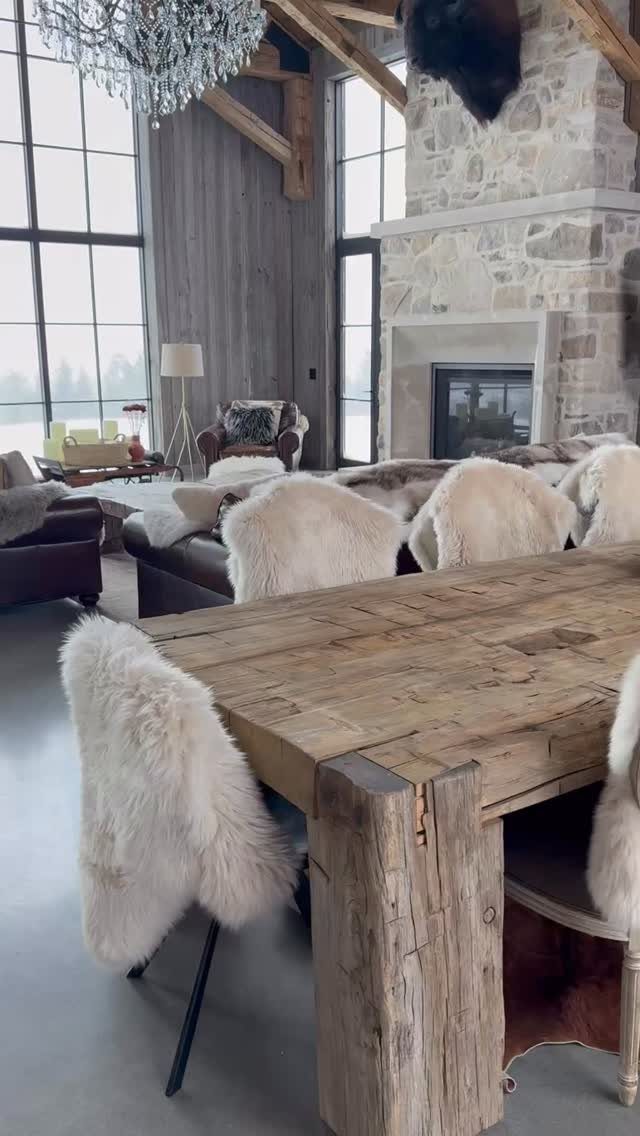
Faux fur draped over chairs softens heavy wood furniture and adds warmth to a room with stone or exposed beams. White fur contrasts with dark wood and keeps the look light even with large pieces.
I choose washable faux fur throws rather than real sheepskin. They cost less and clean easier after spills.
This styling reads formal, so it suits dining rooms used for entertaining more than everyday meals. Remove the throws for family dinners where spills are likely.
Creating a Cozy Atmosphere
Wood shows grain and age where smooth surfaces would feel cold, and layered textiles on chairs or benches add softness while keeping the floor open.
I choose fabrics with texture: linen, bouclé, knit throws, anything that catches light differently than flat cotton.
Pale earth tones on walls let wood furniture stand out, and small touches of bright color, a rug or pottery, keep the room from feeling too neutral.
I add those sparingly so they register as accents rather than competing for attention.
Glass and metal bring in industrial edges that suit both rustic and modern pieces.
A glass-top table or metal light fixture keeps the room from leaning too far into cabin territory, and bare wood floors or a log pile near a wood burner reinforces the texture without adding furniture.
Balancing Styles
Cold industrial features like black metal frames or tile floors need warm wood furnishings to keep the room from feeling stark. I pair a wood table with metal chairs, or vice versa, so neither material dominates.
Clean lines in modern furniture sit well next to rustic pieces as long as the scale matches. A slubby linen tablecloth or knitted blanket softens the geometry, and curvy tableware instead of angular pieces ties the 2 sides together.
Bright accent colors work when used sparingly against a backdrop of pale neutrals.
Too much warmth tips the balance rustic, too much metal or glass reads industrial, and the style lives in the middle where both are present in roughly equal measure.
Choosing the Right Decor
Old wooden cabinets repainted in white fit shabby chic settings, and antique pieces work across themes from vintage-modern to farmhouse.
I match the finish and lines of the dining table to the chairs or pendant light rather than expecting every piece to come from the same era.
Straight-lined tables pair well with chairs that add curve or texture, and a weathered wood finish on one piece balances polished or painted surfaces on another.
Pendant lights in modern shapes but warm finishes, brass or fabric shades, harmonize with rustic decor better than chrome or stark white fixtures. The shade color changes the room’s temperature more than the fixture shape does.
Frequently Asked Questions
What is the latest trend in dining room furniture?
Modern rustic styles are trending right now, blending contemporary lines with natural materials like wood and stone.
The look balances clean geometry and metal fixtures with warm wood tones and textured fabrics, so neither side dominates. It works across budgets and spaces as long as both rustic and modern elements appear in roughly equal measure.
What is a rustic decorating style?
Rustic style emphasizes natural materials, visible grain and age in wood, and a warm, lived-in feeling.
Rough-hewn beams, fieldstone, and finishes left unpolished or aged give a room warmth that painted drywall cannot. The style leans into imperfection and natural contours rather than polished or uniform surfaces.
Can you mix rustic with contemporary?
Yes, rustic and contemporary pair well when you match the scale and balance the materials. A wood table with metal chairs, or black fixtures against exposed beams, keeps either side from taking over.
Textured fabrics like linen or bouclé soften the geometry of modern furniture, and the 2 styles meet in the middle when both are present in equal measure.






