
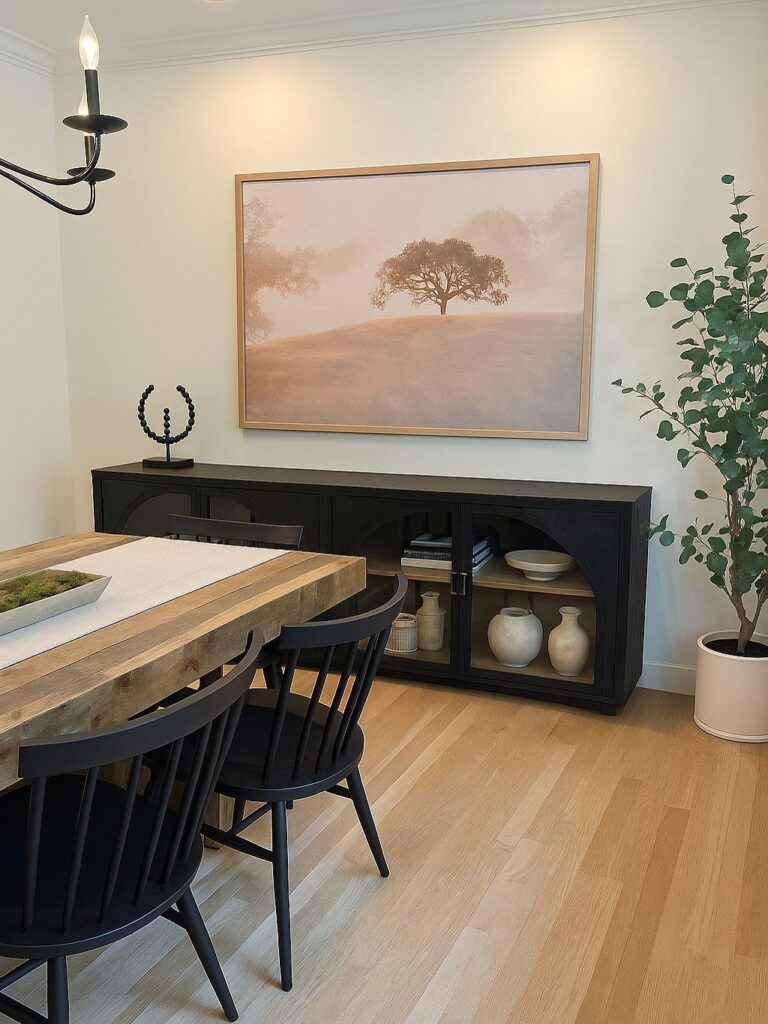
A buffet can hold a single large painting centered above it, a sculptural vase with enough presence to anchor the surface on its own, or a tray that corrals smaller objects into one cohesive group.
When the wall space and the buffet surface hold equal visual importance, I let plates and frames cross both levels.
Heights clustered at three levels give the arrangement depth instead of a static row, and I repeat 2 or 3 colors from the curtains, chairs or rug.
1. Large Piece of Artwork
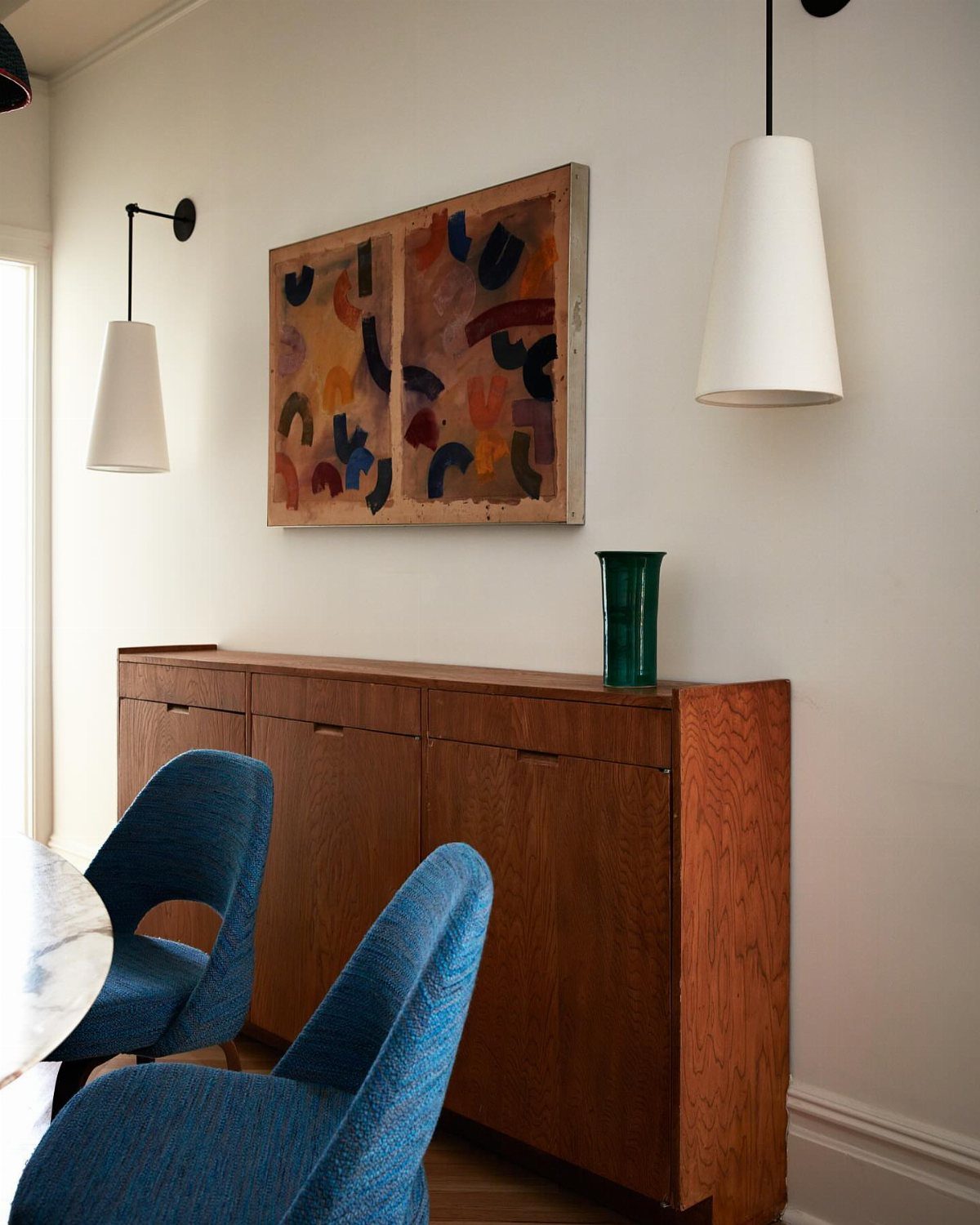
A single large painting above the buffet fills the space without needing much else on the surface below.
This works best when the buffet sits against a mostly empty wall.
If you already have a mirror or other art you like, hang it centered over the buffet and leave a few inches of clearance above the surface. Lean pieces instead of hanging them if you switch out art seasonally.
2. Sculptural Vase
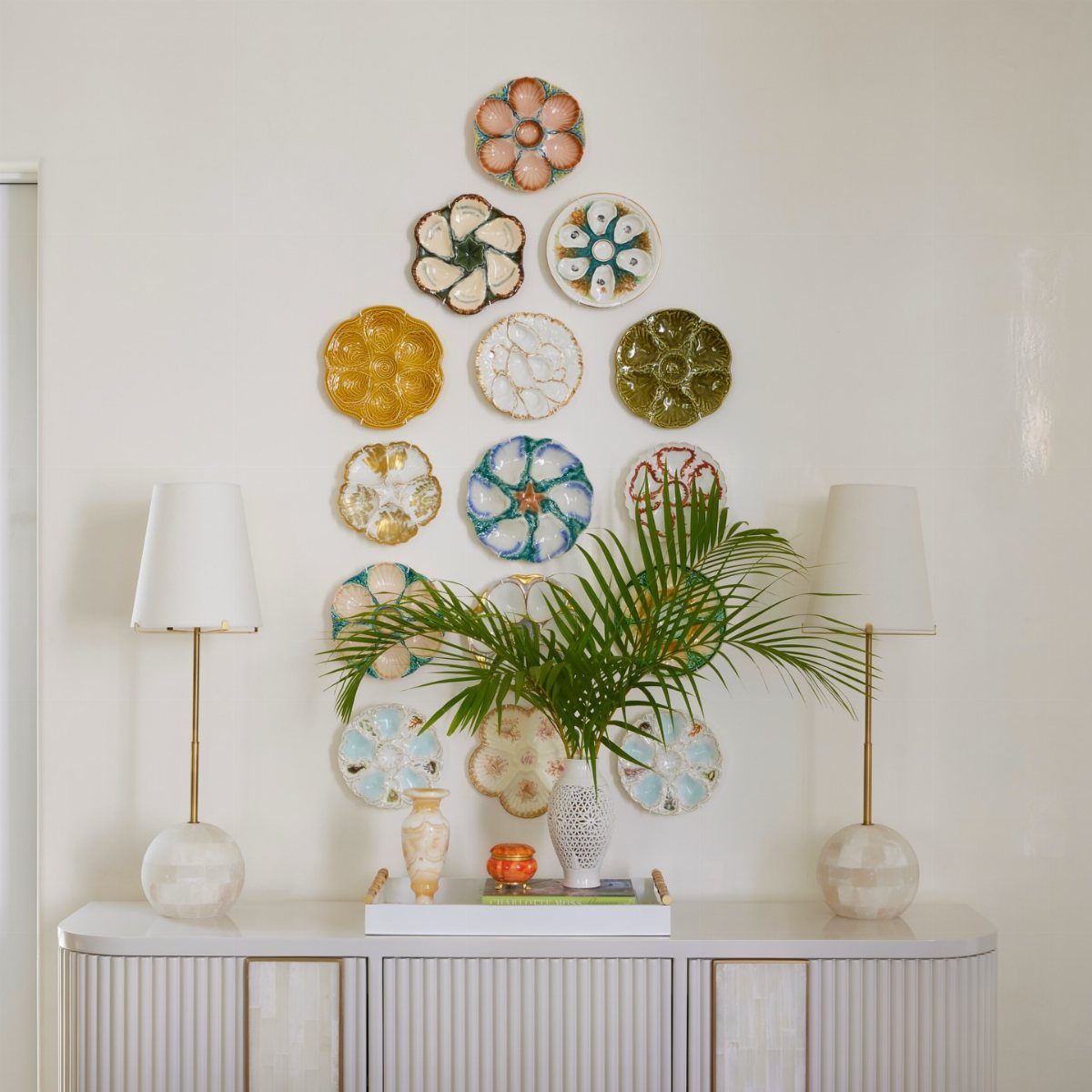
A sculptural vase with an asymmetric shape or textured surface becomes the focal point on its own. The white one here holds palm fronds, but the form itself does the work.
I look for vases with enough presence to stand alone.
Paired lamps on either side balance the arrangement, and smaller vases fill in without crowding. If your buffet is narrow, one tall vase near the center and a single lamp offset to one side keeps the proportions tighter.
3. Consider Wall Decor
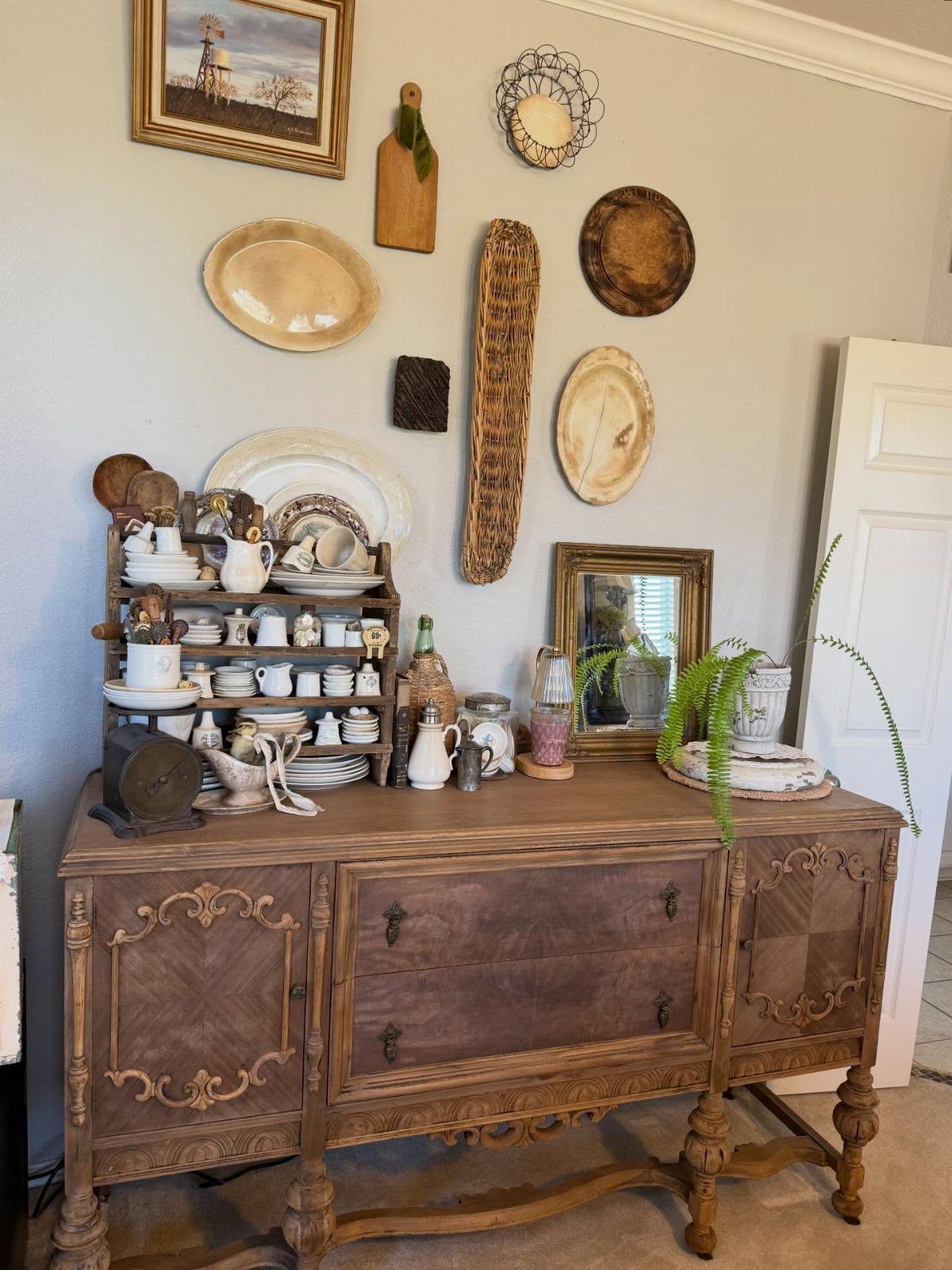
The wall above the buffet carries half the visual weight, so a mix of plates, framed art, and wood boards spreads interest across the surface.
The buffet itself holds a few white ceramics and a small mirror, keeping the styling light enough that the wall gets the attention.
I hang the largest piece first, roughly centered, then build out from there.
Plates need plate hangers unless they already have holes drilled for hanging. Spacing between pieces can run tight or loose depending on how dense you want the look.
4. Corral Smaller Items on a Tray
A tray gathers smaller objects so they read as one group instead of scattered clutter.
I use trays that contrast with the buffet finish: lighter wood or woven texture on dark wood, metal or lacquer on painted surfaces.
Corralling items on a tray also makes it faster to clear the buffet when you need the space for serving.
5. Add a Table Lamp
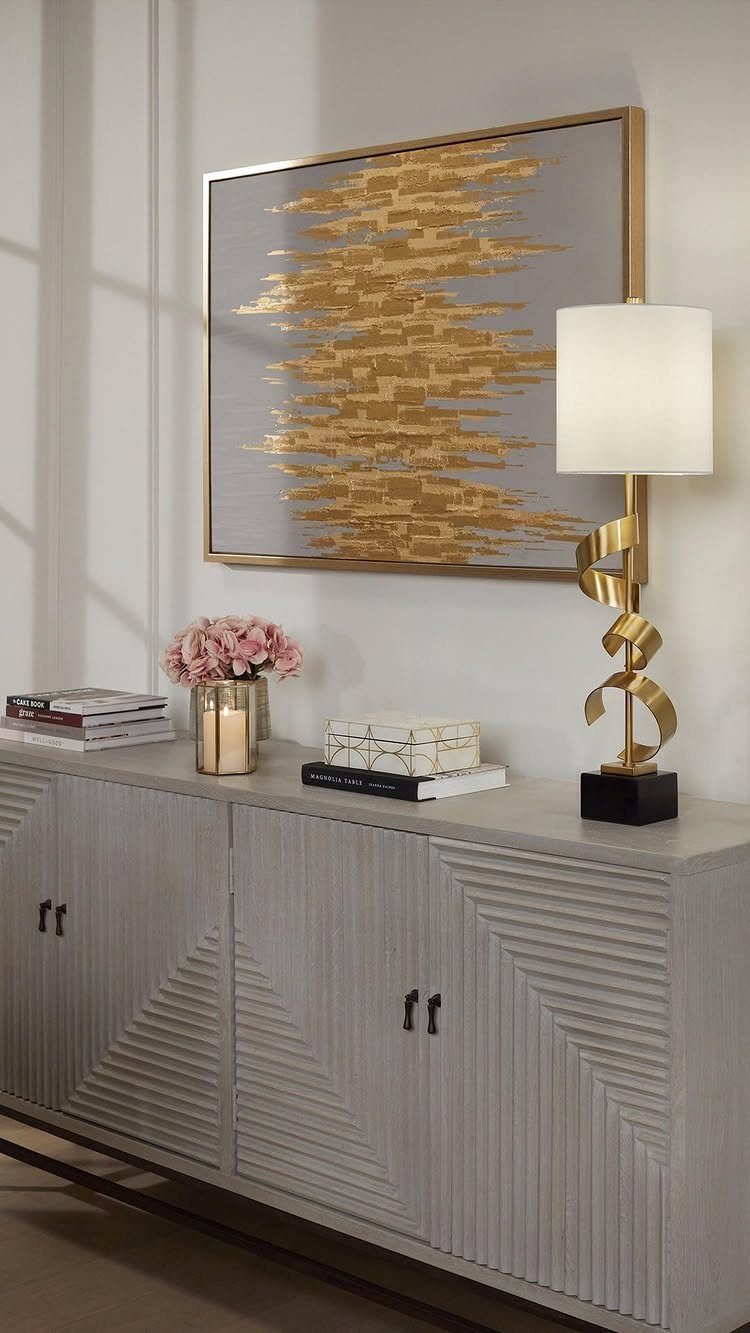
One sculptural lamp placed near the end of the sideboard anchors the arrangement without requiring a matched pair.
This asymmetric setup reads more relaxed than centered styling.
The lamp provides task light for the buffet and ambient light for the room. If your sideboard runs long, you can still go with one lamp; just pull the other objects closer to it so the grouping stays cohesive.
Sideboard decor ideas can really elevate your entertaining space. As well as offering useful storage space, the sideboard is the perfect spot to display treasures and trinkets, and creates a focal point for artwork and lighting.
6. Visual Triangles
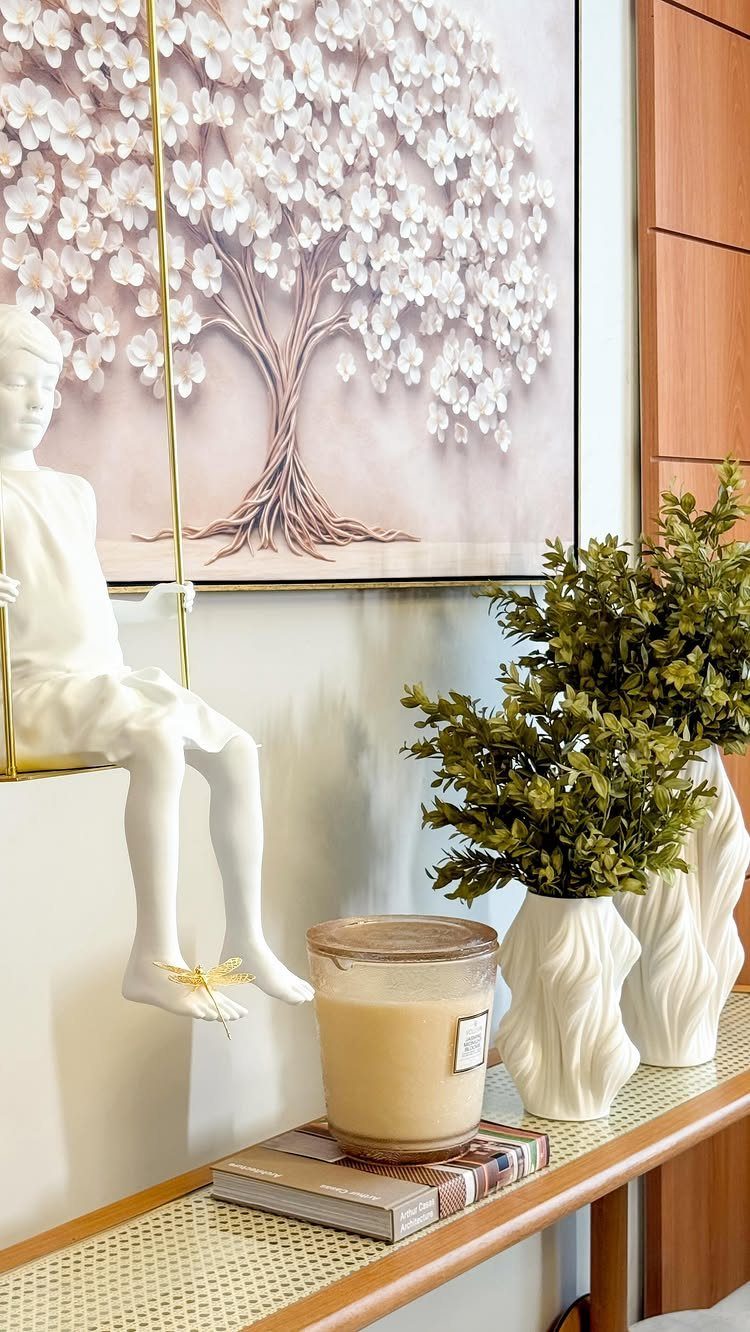
Arrange objects at 3 different heights so the eye moves in a triangle rather than a flat line.
The tallest piece usually sits toward one end or slightly off-center.
I aim for clear separation between each height tier so the levels stay distinct. If your buffet is shallow, keep the tallest objects narrow so they don’t tip forward.
7. Mix Textures
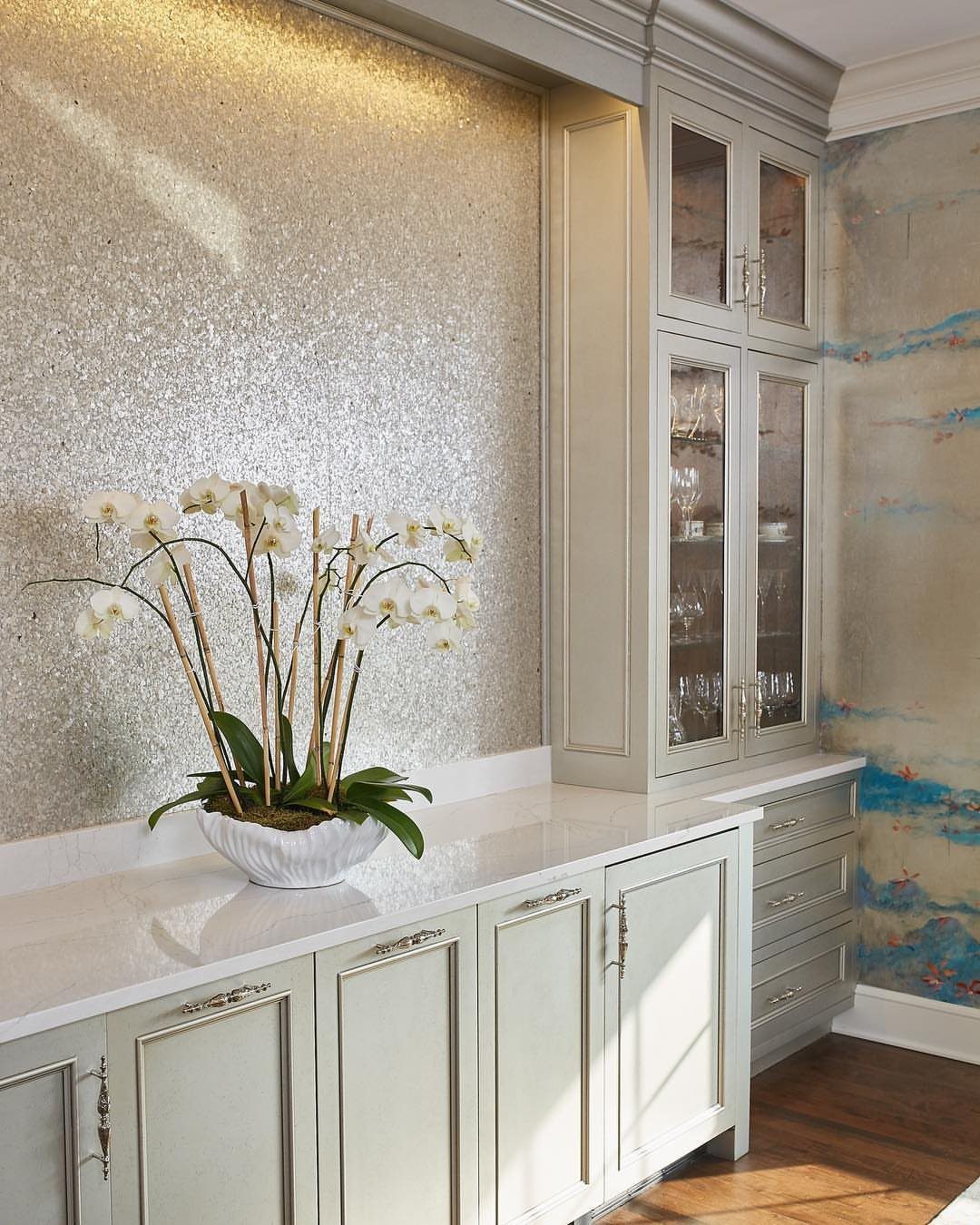
Smooth marble, rough ceramic, and reflective metal read as separate layers even when the colors stay neutral.
A matte bowl sits differently against polished marble than it does against textured wall panels, and that variation is what makes the arrangement feel finished.
I pick finishes that contrast in sheen or surface rather than trying to match them. Wood, glass, linen, and stone all work on the same buffet as long as each one has enough presence to register on its own.
8. Add Seasonal Decor
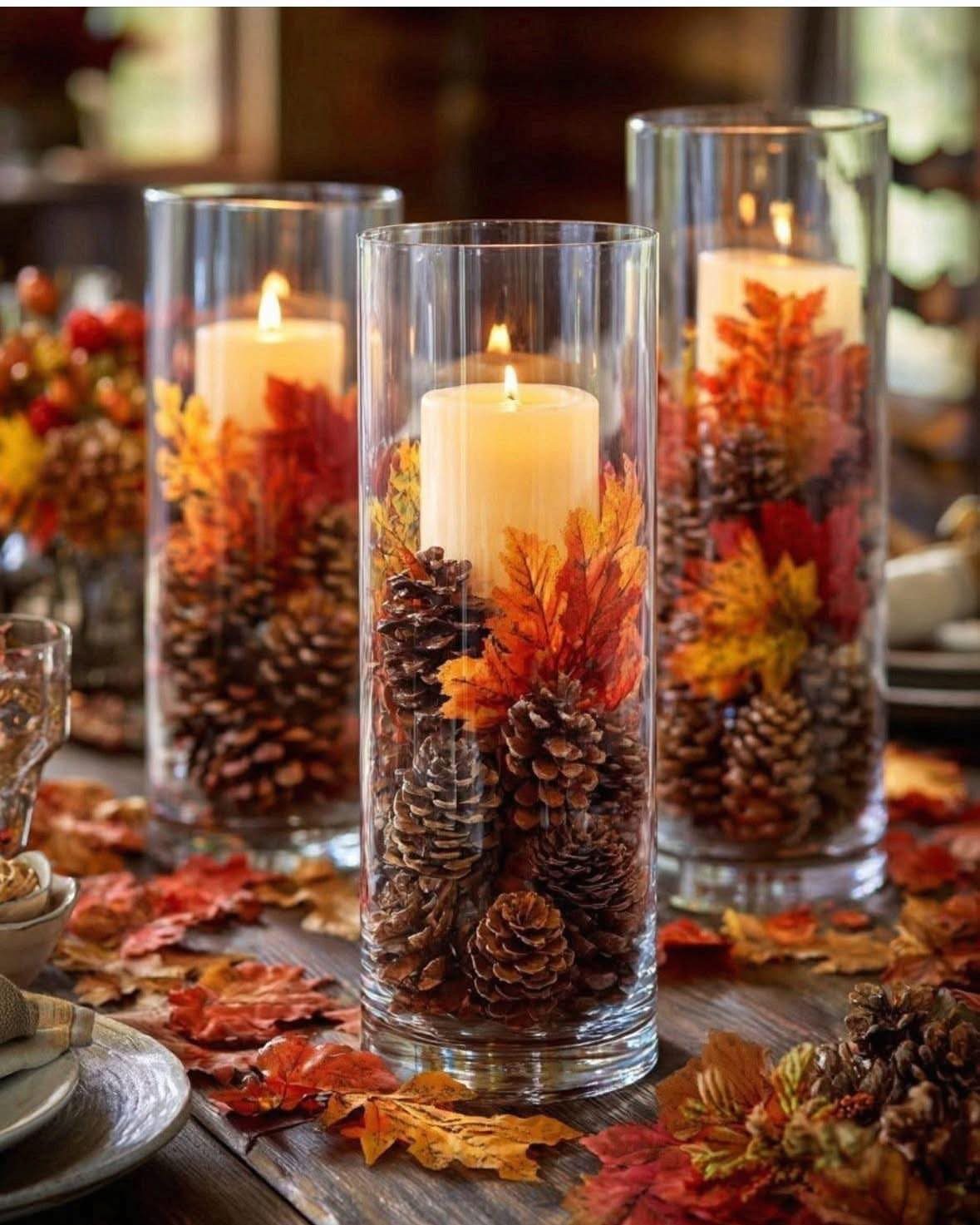
Swap in pinecones, dried leaves, and candles in the fall, then clear them out for winter branches or spring blooms.
Glass cylinders let you layer materials inside without looking cluttered. I fill the bottom third with natural elements like pinecones or branches and set unscented pillar candles on top, keeping them clear of anything flammable.
Battery-operated candles work if you want the look without watching the flame. Changing out seasonal items keeps the buffet from going stale, and most of what you need comes from outside or a grocery store floral section.
9. Decorative Plate on a Stand
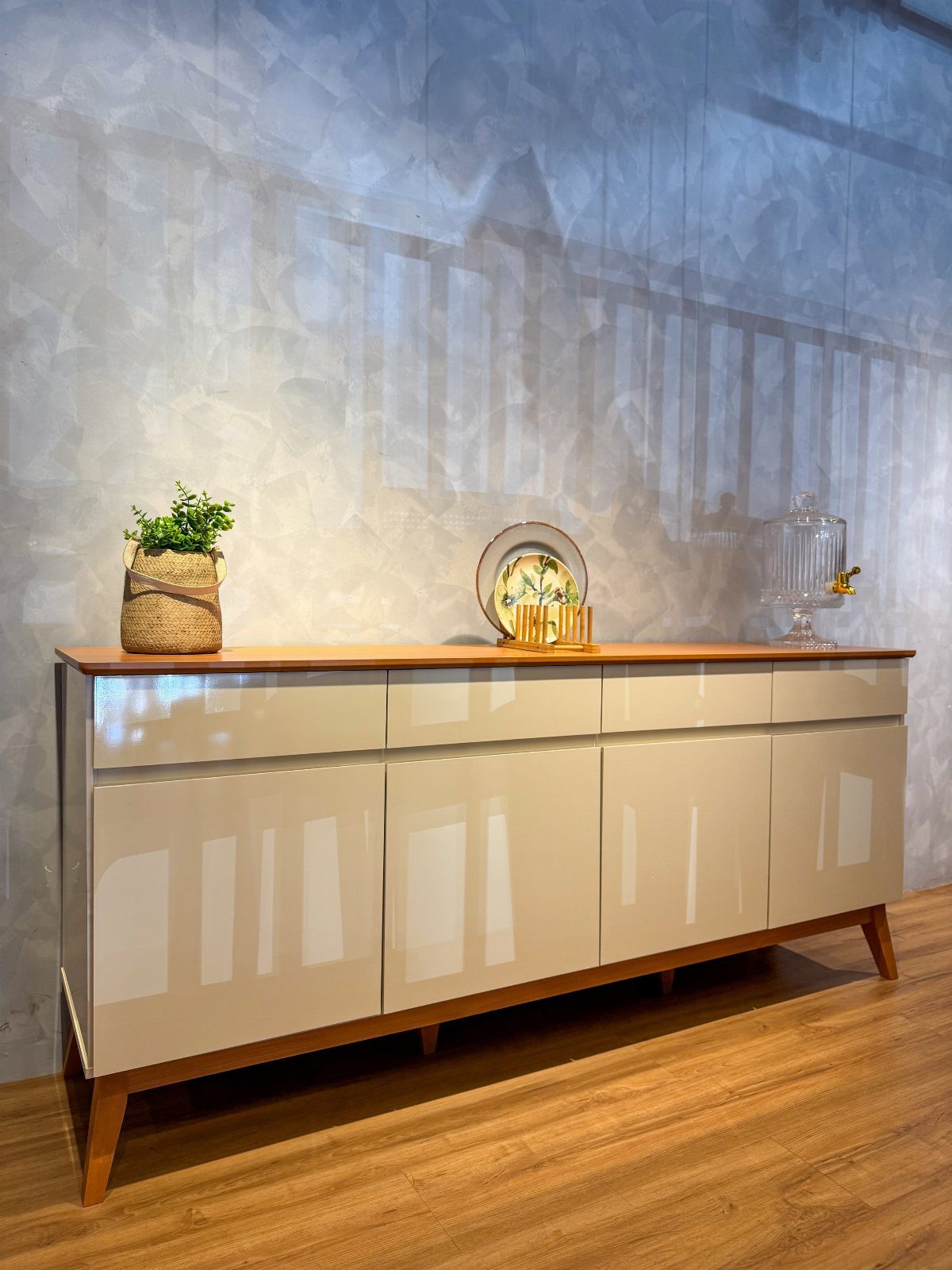
A plate on a stand leans upright and takes up less surface area than a vase while still giving the buffet height.
Decorative plates show pattern or color at eye level without needing water or fresh stems. I set the stand toward one end and group a small plant and a jar nearby to balance the composition.
Wood or metal stands work equally well; the plate itself does most of the styling. If the plate has a busy pattern, keep the other objects simple.
10. Built-In Glassware Display
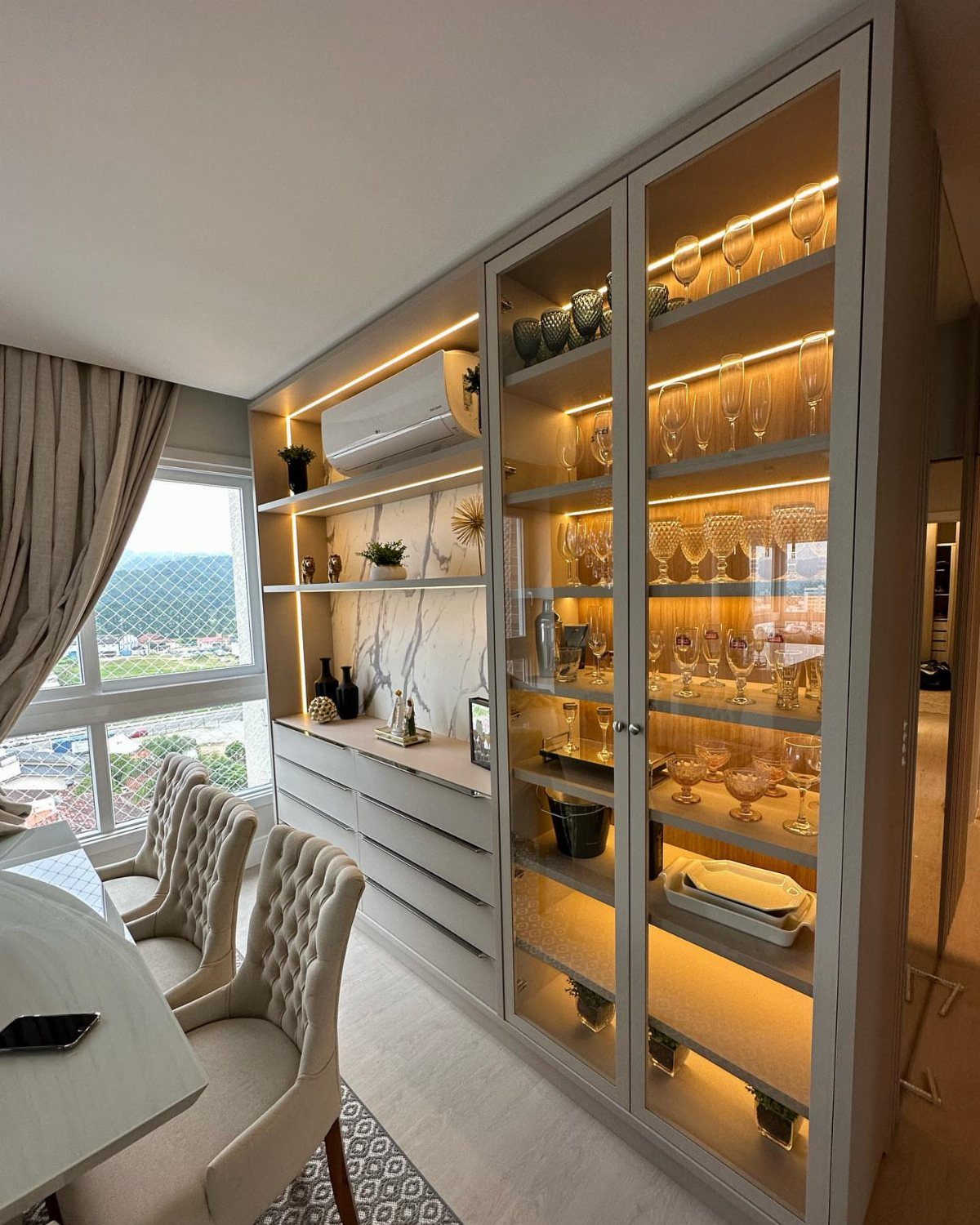
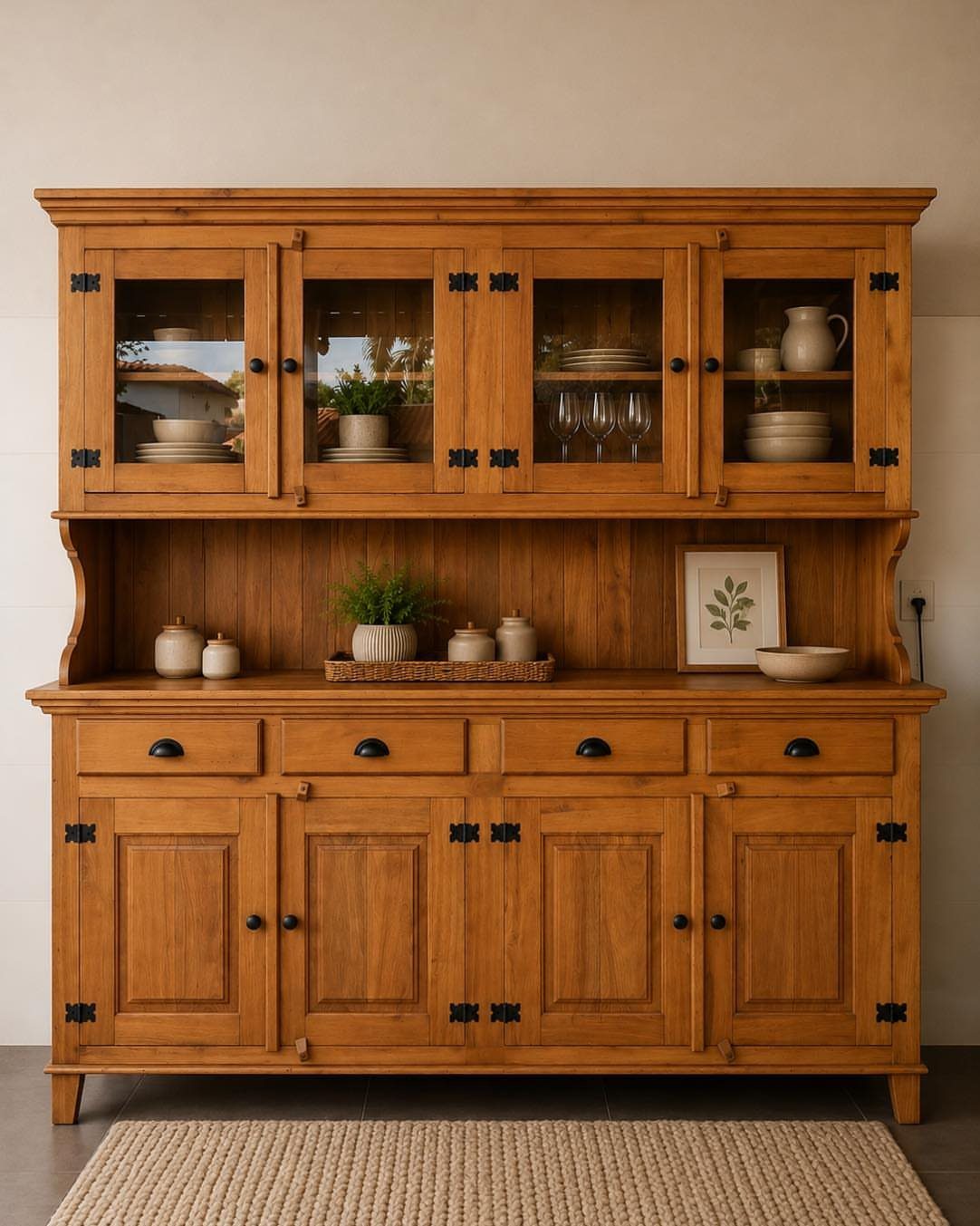
Glass-front cabinets built into the buffet let you store glassware where it stays visible and organized.
I arrange stemware by type and keep the most-used pieces at eye level.
If you are planning cabinetry from scratch, leave enough depth for wine glasses and taller pieces. Closed drawers below balance the open shelving and give you a place to tuck linens and serving pieces out of sight.
Importance of Functionality
A buffet works best when the display can shift quickly between styled and functional. I arrange pieces so the most-used items stay within reach but still look intentional as part of the composition.
Dinner plates, serving bowls, and glassware go back to the same spot after each meal, which means resetting the surface takes seconds instead of rethinking the whole arrangement.
A movable tray holds smaller objects that need to clear out when you are setting up for guests, and everything else stays put.
The buffet becomes part of how the room actually works when the display doesn’t need to be dismantled every time you host. Build around what you reach for most, and the styling holds up through regular use.
Choosing a Color Palette
A tight color palette keeps the buffet from looking like a collection of random objects. I pick 2 or 3 colors that already appear elsewhere in the room and repeat them across the surface in napkins, ceramics, or trays.
Staying within that range ties the buffet to the surrounding furniture and textiles without forcing a match.
Complementary tones give you enough contrast to keep the arrangement from going flat, and a third neutral like white, black, or natural wood holds the whole thing together.
Swapping in new accents from the same color family gives the look a reset without buying into a different scheme. Stick to the colors you chose, and even seasonal swaps stay cohesive.
Balancing Visual Weight
A buffet that tips visually to one side reads as unfinished, even when every object on it looks good individually. I mentally draw a centerline and check that the visual heft lands about evenly on both sides.
The pieces can be totally different, but the overall mass needs to read balanced left to right. If one side holds a single large piece, the other side needs enough smaller objects to match that presence.
Shift things around until both halves feel stable. When the scale stays level, the whole surface looks intentional.
Frequently Asked Questions
How to decorate a buffet in a dining room?
Start with 1 anchor piece at eye level on the wall, then build 3 layers of height on the surface so the arrangement pulls your gaze up and across instead of landing flat.
Choose 1 tall piece as your anchor, match the visual weight on both sides, and stay within the room’s existing palette so the buffet reads as part of the space instead of fighting it.
Keep 6–8 inches of clearance between groups so you can drop a serving platter or stack of plates without clearing the whole surface.
What are some good ideas for decorating a dining room sideboard?
1 sculptural lamp at either end gives you height without the symmetry of a matched pair, and a shallow tray groups candles or small bowls into a single unit that does not scatter visually.
Glass doors turn the sideboard into display storage where stemware and serving pieces stay dust-free but visible.
What is the number one rule when decorating a buffet table?
Build the buffet so the display can shift quickly between styled and functional, with the most-used items staying within reach but still looking intentional as part of the composition.
Give every serving dish and stack of plates a permanent home on the buffet so resetting after dinner is a 30-second task instead of a full rearrange.
A wood or metal tray corrals candles and small objects so you can lift the whole group off in one move when you need the full surface for serving.






