
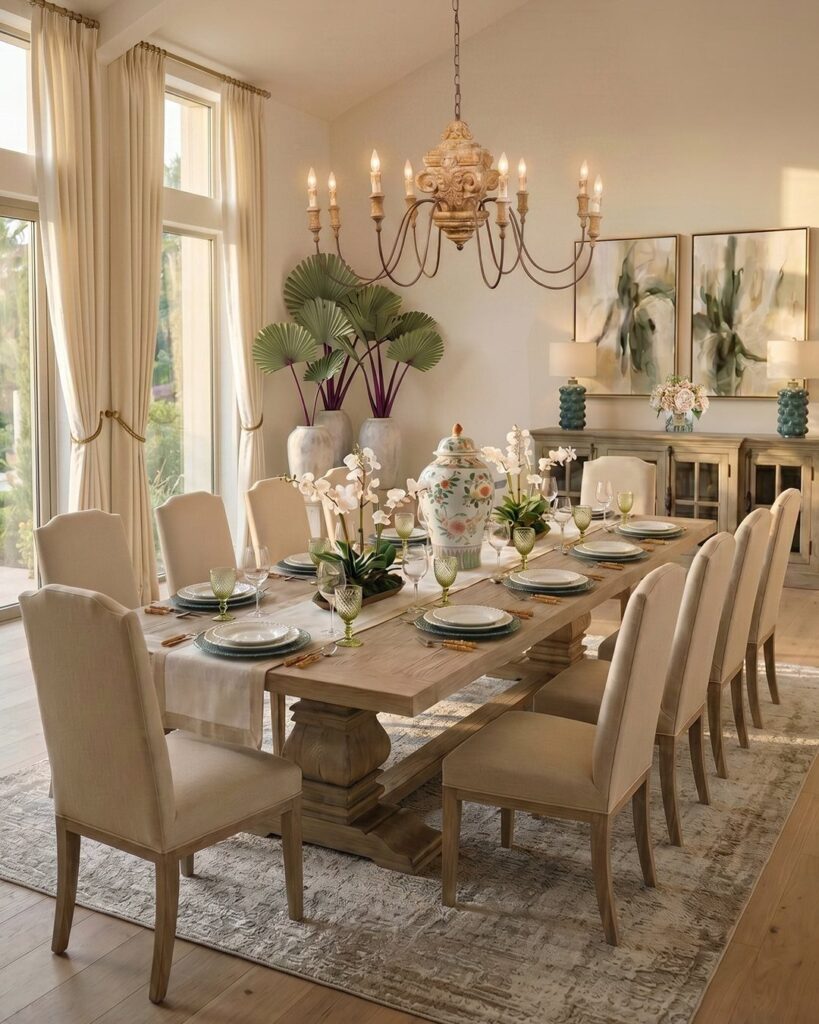
A buffet sized to your wall and what you store in it turns the space behind the chairs into working surface and display without pulling furniture into the center of the room.
Built-ins that span wall to wall cost more than freestanding pieces but fit the exact dimensions you’re working with, while a sideboard or console table moves with you and sits lower when ceiling height runs tight.
Fluted wood adds texture without pattern, an upper hutch keeps dust off china you want visible, and a grey finish cools down warm wood tones in the rest of the room.
1. Wall to Wall Built-in Buffet
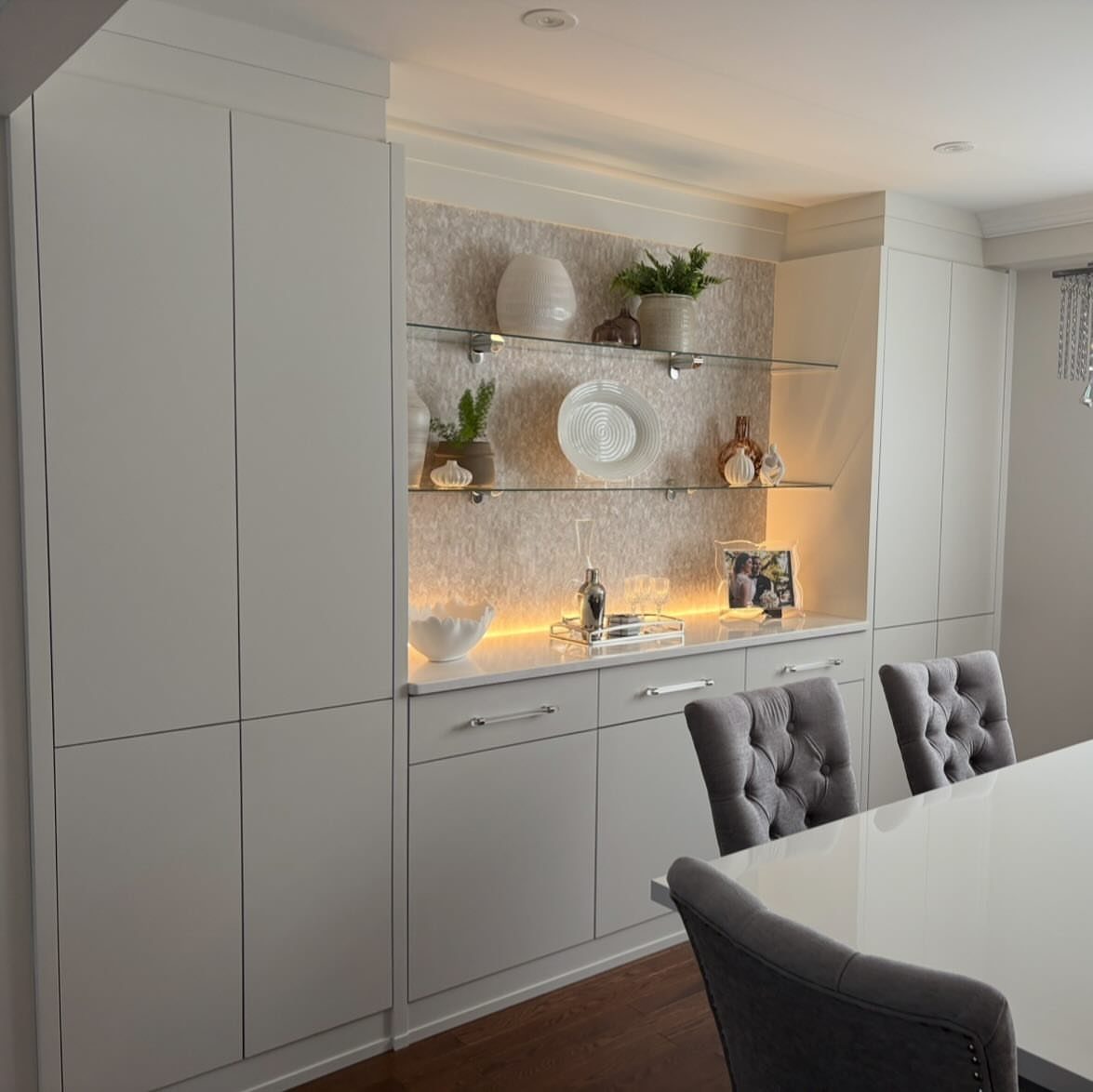
A built-in buffet that spans the full width of the wall turns storage into architecture.
The lower cabinets hold serving pieces and linens out of sight, while open glass shelves above let you display what you reach for most or what you want lit and visible.
This setup works best when you’re planning a renovation or have a wall that can take the framing and cabinetry.
The cost runs higher than a freestanding piece, but you get storage that fits the exact dimensions of the room and a look that reads as part of the house rather than furniture you moved in.
Buffets in dining rooms, whether built-in or freestanding, have been part of residential interior design for hundreds of years.
2. Sideboard for Decor and Crockery
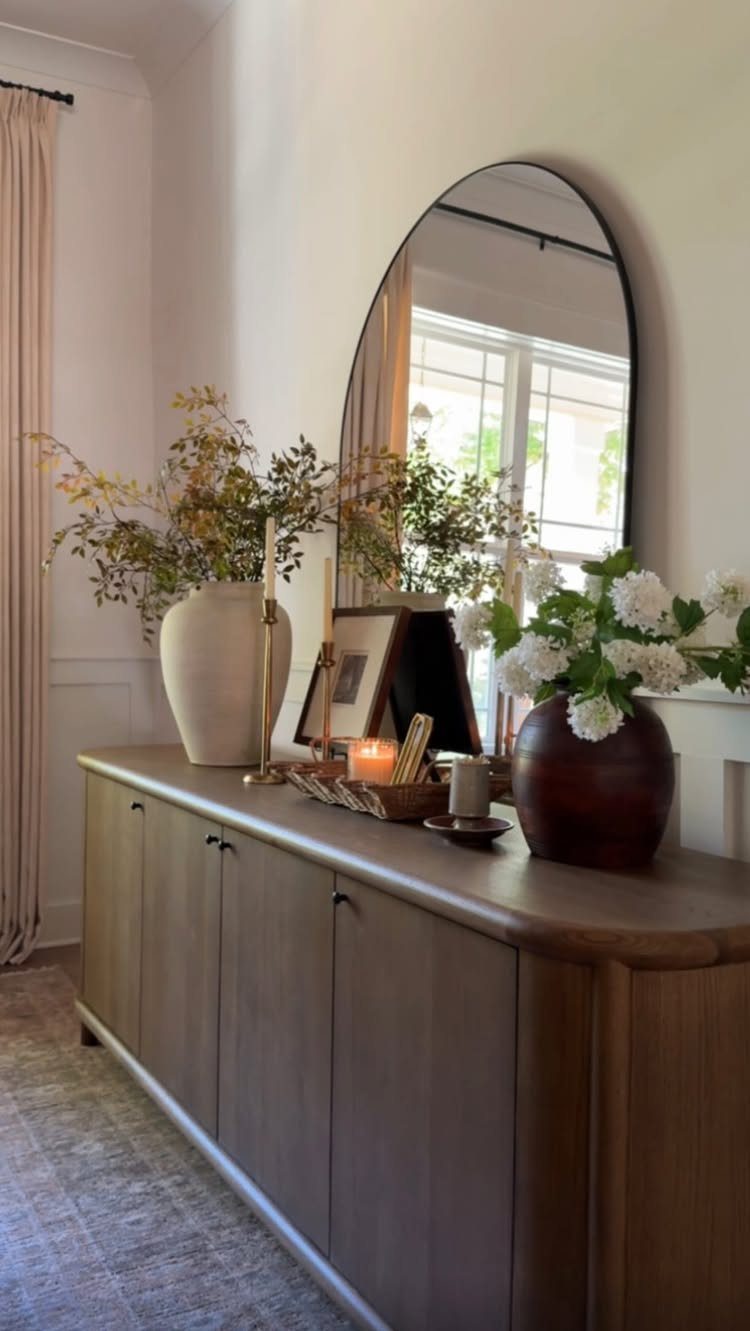
A sideboard gives you a surface for what changes with the season and storage below for what doesn’t.
The top holds flowers, candles, or serving dishes during a meal, and the cabinets keep flatware, napkins, and extra plates where you can reach them without opening a closet across the house.
Look for a piece that sits at a comfortable height for setting things down. Wood finishes hold up better than painted ones in a room where plates and glasses get moved around daily.
3. Spirits Cabinet as Sideboard
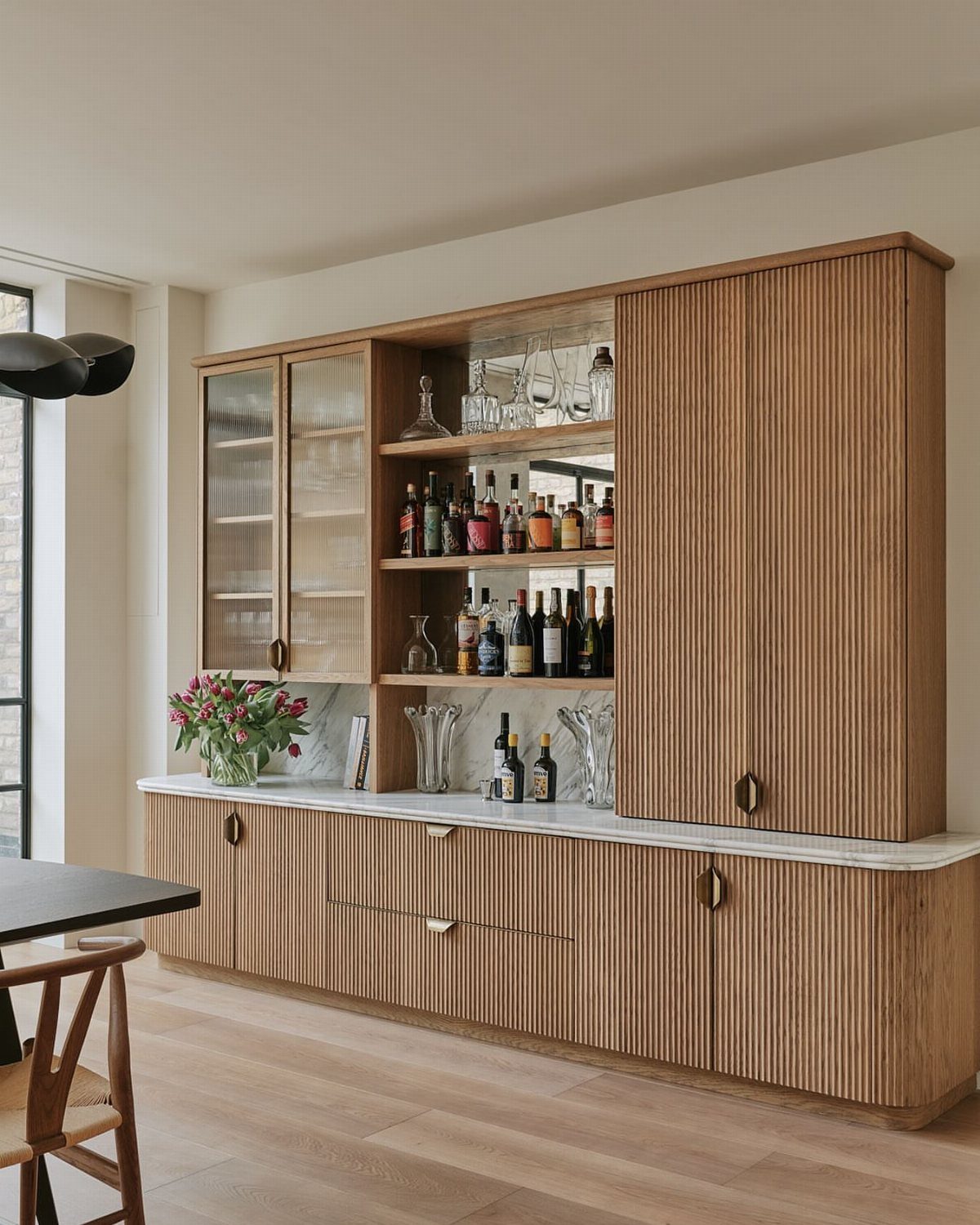
A sideboard with open shelving or glass doors turns liquor bottles and glassware into part of the room’s look instead of something you pull out for company.
The marble or solid wood top gives you a surface for mixing drinks or setting out ice, and the cabinets below hold backup bottles and bar tools.
Fluted wood keeps the piece from reading too heavy, and the vertical grooves catch light in a way flat panels don’t.
This setup makes the most sense if you entertain regularly and want the bar accessible without giving up a full corner to a bar cart.
4. Buffet for China and Decor
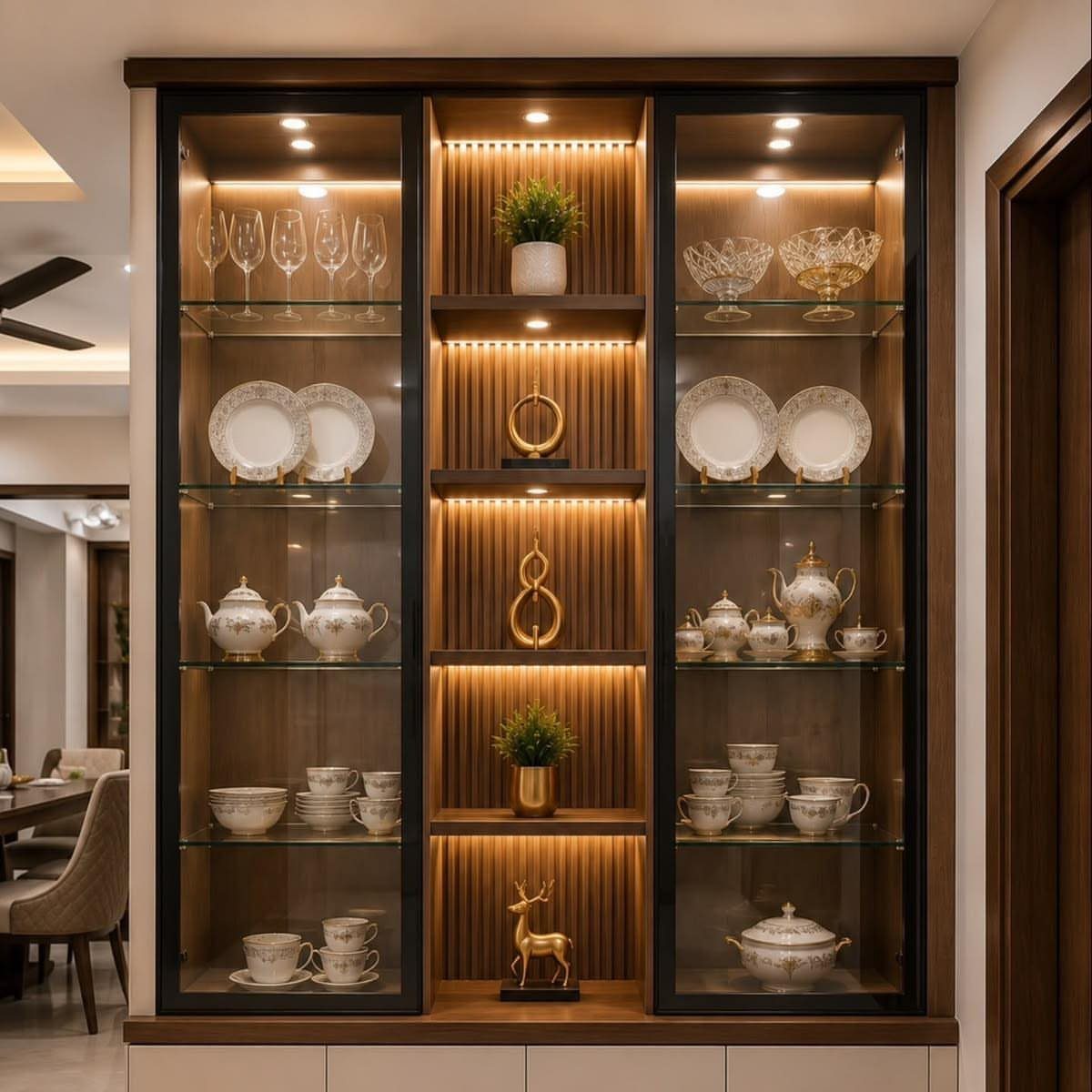
Glass cabinet doors let you see what’s inside without opening them, which makes everyday dishes easier to grab and turns a set of matching plates or teapots into something worth looking at between meals.
Interior lighting adds visibility and makes white or gold-trimmed china stand out against the back wall.
Built-in versions fit tighter to the wall and ceiling than freestanding hutches, and they let you size the shelves to match the height of your tallest serving pieces or pitchers.
5. Minimalist Buffet
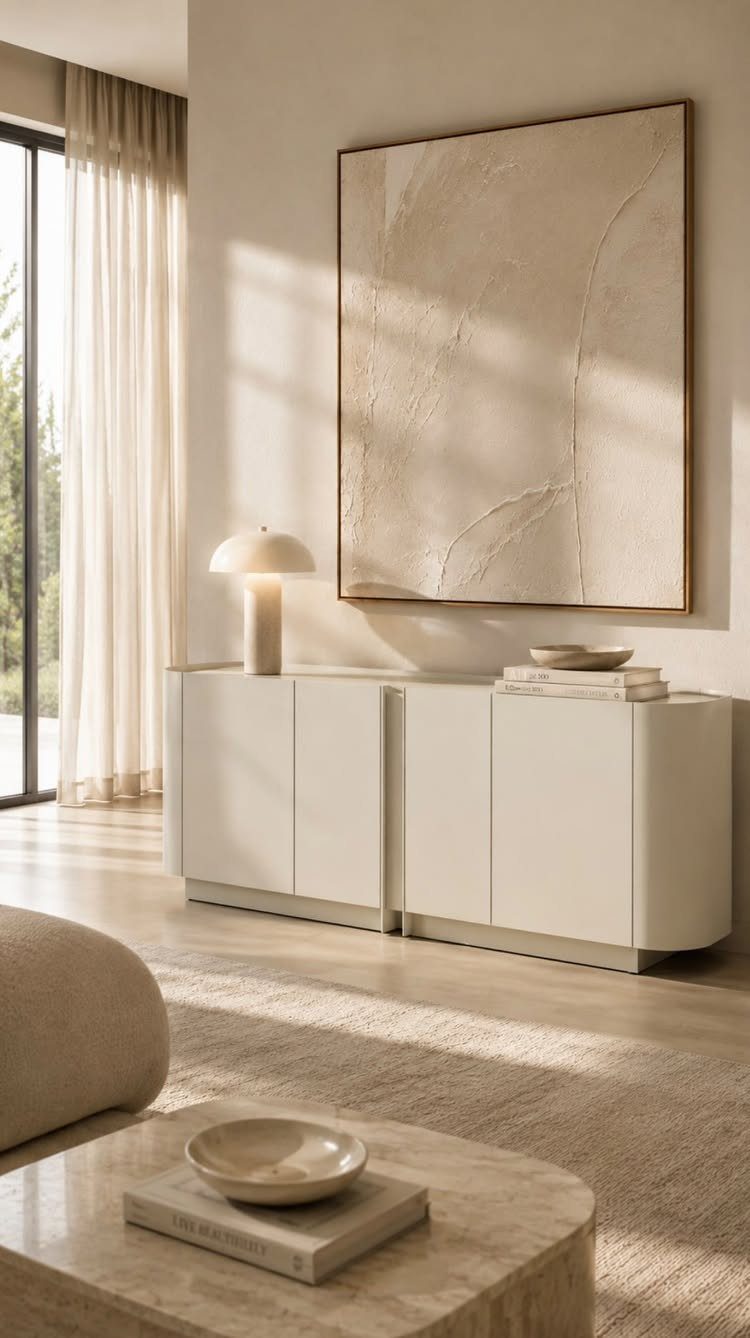
A buffet with clean lines and no visible hardware keeps the focus on what you put on top of it rather than on the furniture itself.
This style works in small dining rooms where ornate furniture would crowd the space, and it pairs well with artwork or a mirror hung above it.
The drawback is that plain cabinets show fingerprints and scuffs more readily than wood grain or textured finishes, so plan on wiping them down more often.
6. Fluted Wood Buffet
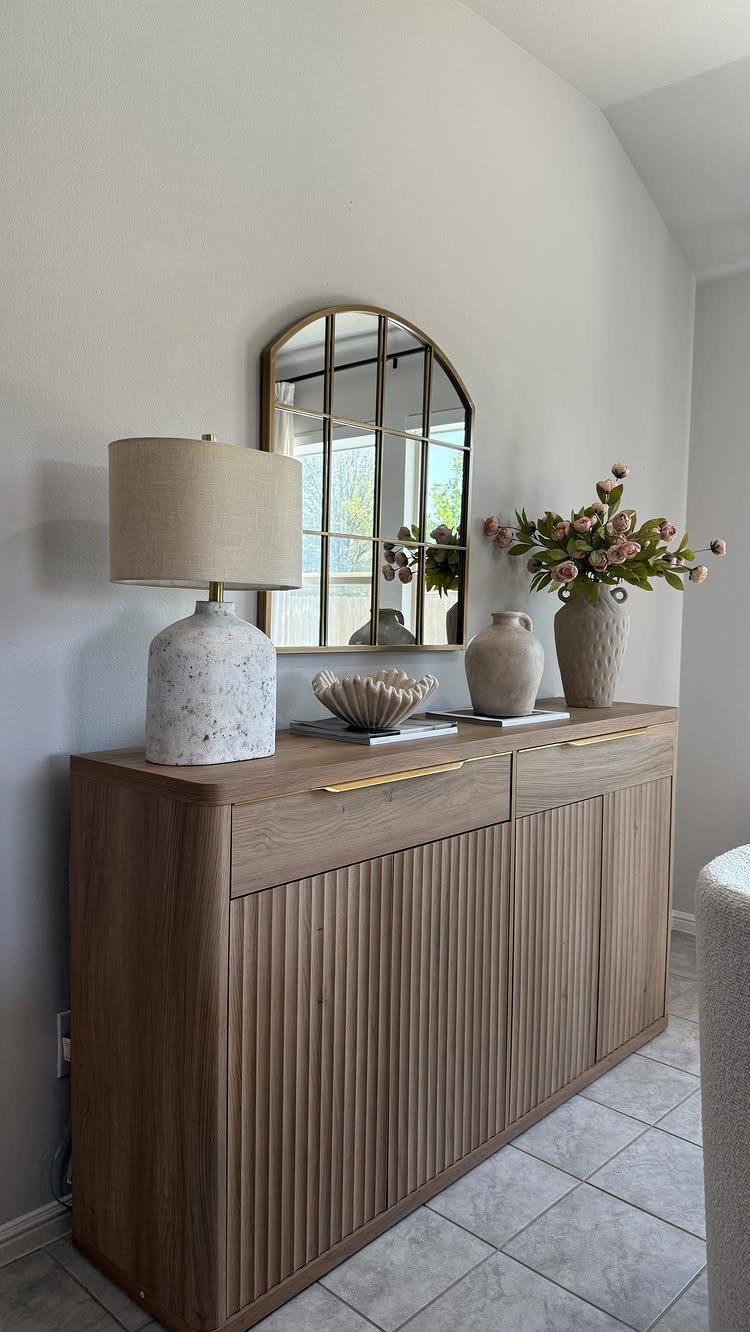
Fluted wood adds texture without color or pattern, which gives a sideboard some visual weight while keeping the rest of the room open to bolder choices in lighting or wall decor.
The vertical grooves run from top to bottom, and they work best on lighter finishes where the shadow lines stay subtle.
Style the top with a lamp on one side for asymmetry and a mirror or framed piece above to pull the eye up.
Vases or bowls in metal or ceramic finishes contrast with the wood grain and keep the surface from looking too flat.
7. Buffet with Upper Hutch
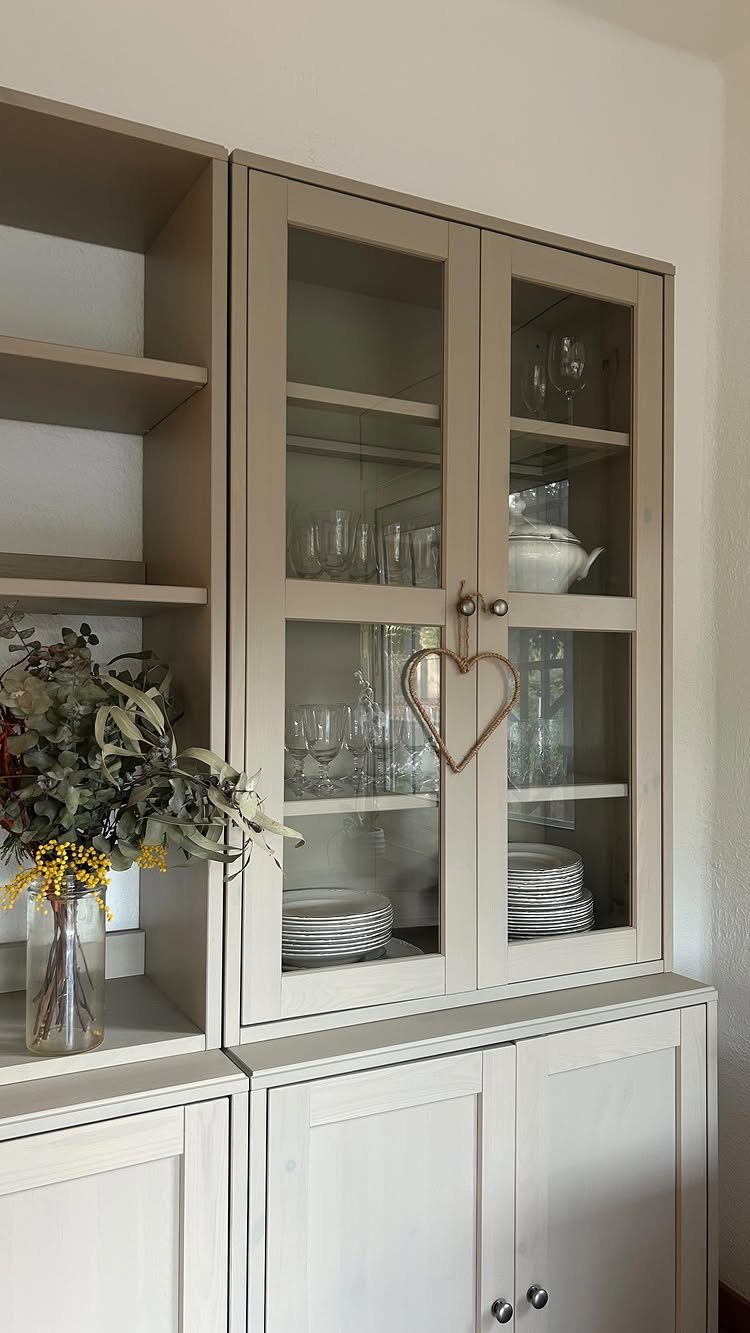
A two-piece buffet and hutch puts storage at counter height and display space above it, so plates and serving bowls stay within reach while glassware and decorative pieces sit behind glass where dust stays off them.
The hutch doors keep the contents visible without needing to open them every time you set the table, and the open shelves let you rotate seasonal pieces in and out.
This setup takes more vertical space than a sideboard alone, so it works best when you have clearance for the hutch without crowding the ceiling.
8. Modern Grey Buffet
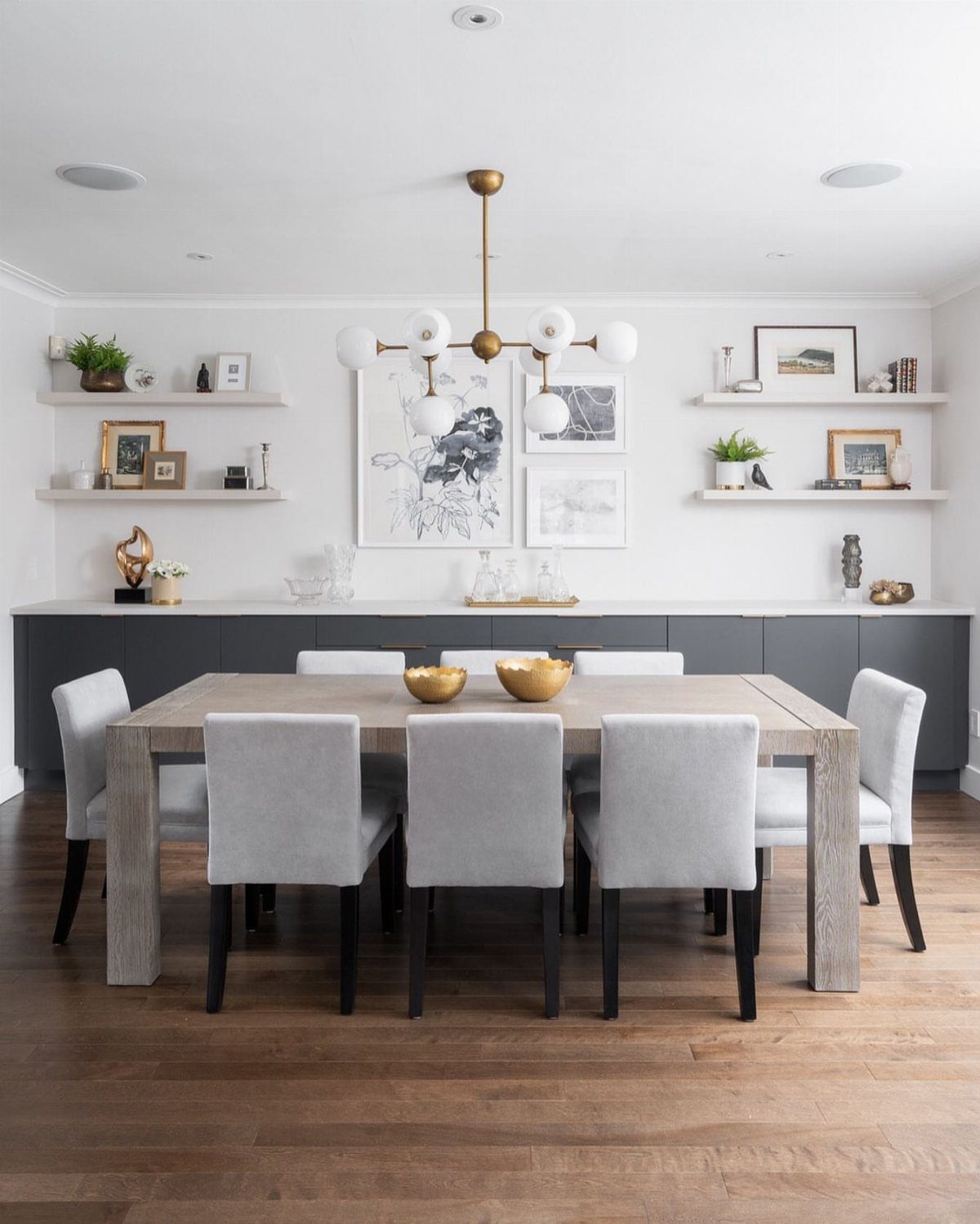
Grey finishes cool down a room with warm wood tones without going as stark as white or black.
Pair it with brass or gold hardware and light fixtures to add warmth back in, and keep the top clear except for one or two pieces so the length of the buffet reads as intentional rather than cluttered.
Buffet Versatility
A buffet holds what you need close to where you use it.
Serving dishes, flatware, and napkins stay within reach when you’re setting the table or plating food, and the surface gives you room to set out drinks or desserts when the table fills up.
The same piece works as display space between meals.
The top surface stays clear for rotating pieces in and out as the season or your menu changes.
Choosing the Right Buffet
Size the buffet to the wall it sits against and the clearance you need to walk behind the chairs.
A piece that’s too wide for the wall crowds the room, and one that’s too narrow leaves dead space on either side that doesn’t hold anything.
Look for dovetail joints in the drawers and full-extension glides if you’re storing anything heavy.
Storage needs decide the layout inside.
If you’re holding large serving platters or pitchers, adjustable shelves let you set the height to fit them. Fixed shelves work fine for flatware and linens, where the height doesn’t change.
Mixing Styles
The buffet can be a completely different style from your table and chairs.
Mixing finishes or styles keeps the space from looking like a showroom set, and it gives you flexibility to replace one piece later without needing to match the whole group again.
A console table from another part of the house can serve the same role if it’s the right height and depth.
The narrower profile fits tighter to the wall, and the lighter build keeps the room from feeling too furnished when you already have a large table in the center.
Pairing a modern buffet with traditional chairs or a wood table with metal legs adds contrast without requiring every piece to share the same era or finish.
Frequently Asked Questions
What is a dining room buffet used for?
A buffet serves food during meals, stores dining essentials like flatware and linens, and displays decorative pieces between uses.
The top surface gives you room to set out drinks or serving dishes when the table fills up, and the cabinets keep plates and napkins within reach without crossing the house.
Open shelves or glass doors turn everyday dishes or seasonal decor into part of the room’s look.
What does buffet dining mean?
Buffet dining means the food sits on a separate table or sideboard and guests fill their own plates instead of being served at their seats.
The term comes from the French sideboard where silverware was displayed, which later held food for self-service meals. Today the word also names the furniture piece itself, whether you’re using it for meals or storage.






