
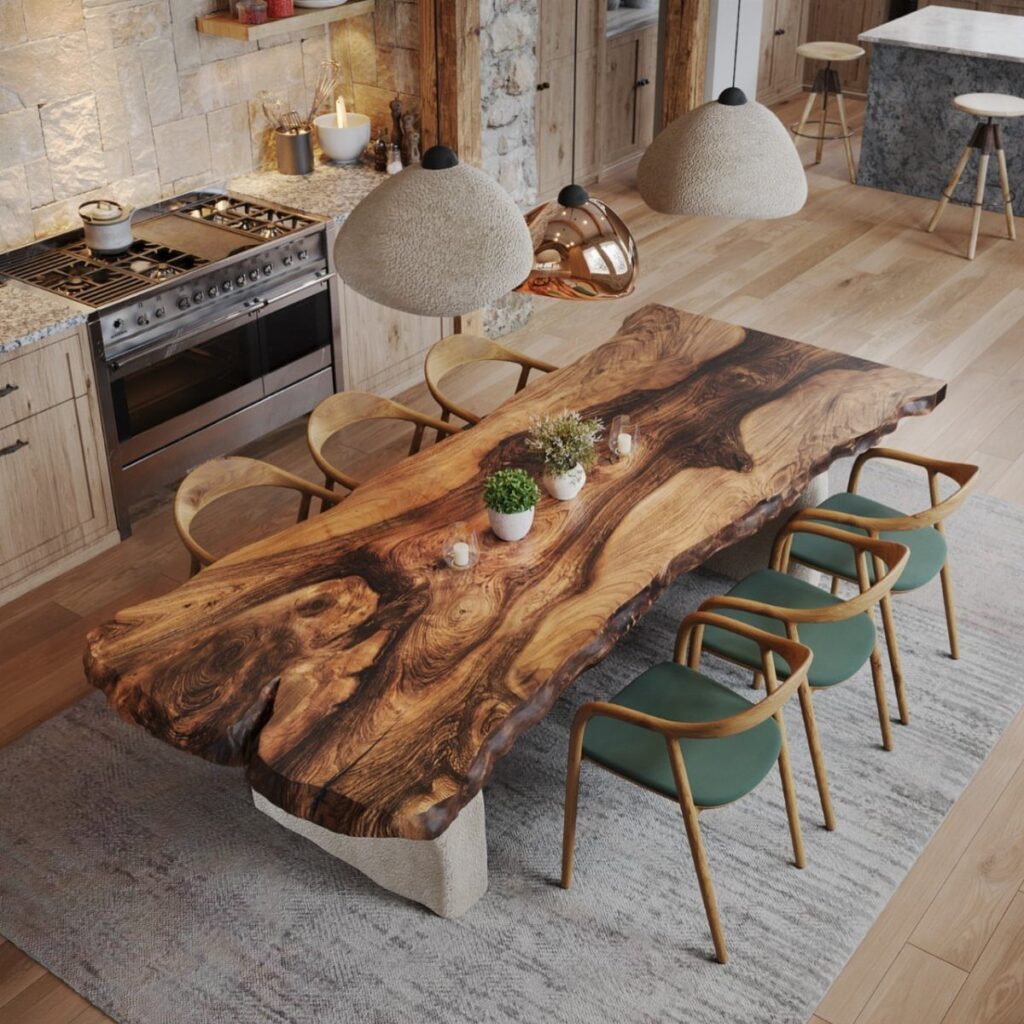
A dining room arranged around Feng Shui principles shifts energy by placing furniture where chi can circulate and choosing materials, shapes, and placements that ground the space instead of scattering it.
The decision between a round table and an oval one, or whether to position the table near a window or flank it with potted plants, comes down to the room’s shape, how much natural light it gets, and what kind of energy flow each arrangement creates.
1. Solid Wood Dining Table
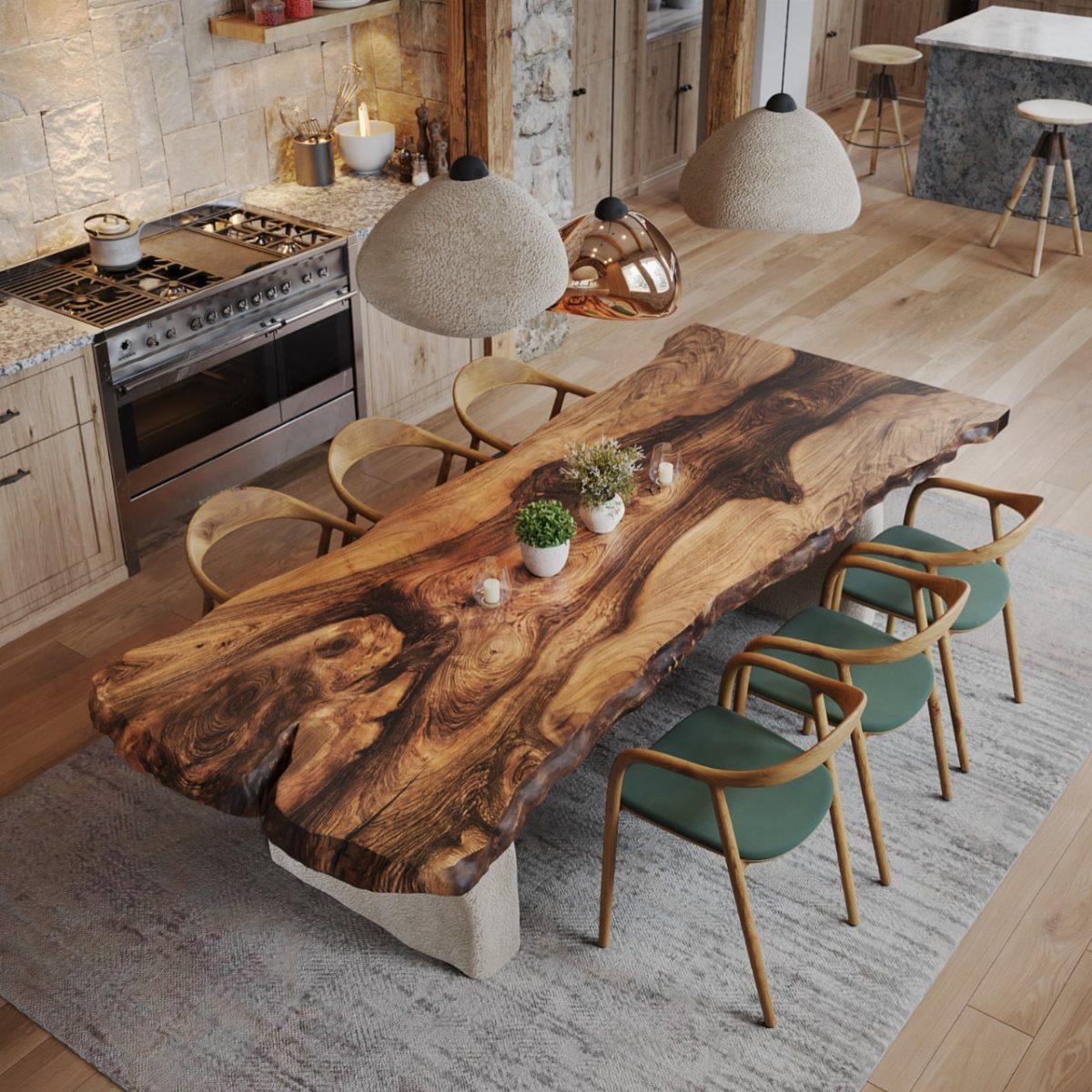
A solid wood table anchors the dining room with the weight and grain that Feng Shui associates with growth and stability. Wood brings the natural world indoors, and a live-edge slab keeps the organic line of the tree intact.
The green upholstered chairs visible here continue the wood element’s palette without adding metal or glass that might compete.
If you’re starting from scratch, look for tables cut from walnut, oak or reclaimed hardwood. The thicker the top, the more grounded the piece feels.
2. Choose a Round Dining Table
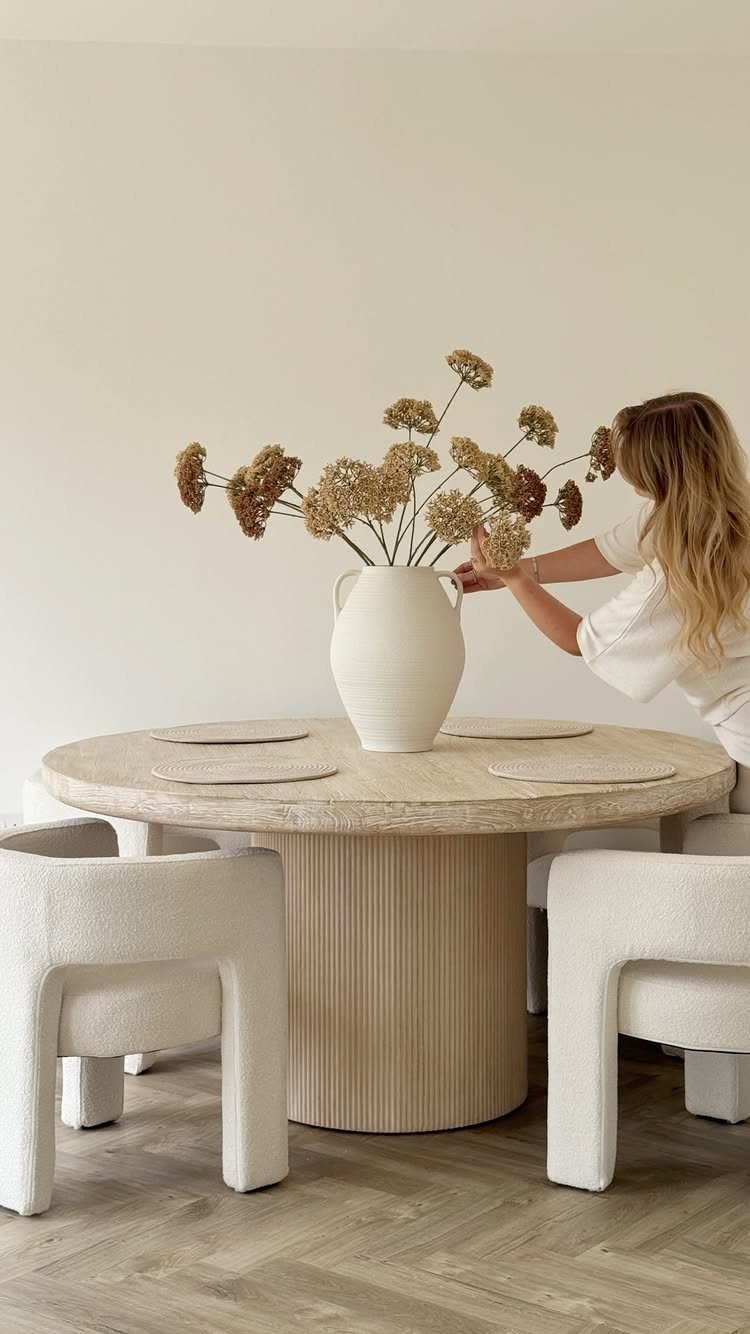
Round tables let energy circulate without catching on corners, and everyone seated has equal access to the conversation. The shape softens a square room and fits more chairs than you’d expect.
This one is pure wood, heavy enough that it won’t shift when someone leans on it.
If you’re replacing a rectangular table, measure the diameter you can fit and leave enough clearance between the table edge and the wall so chairs can pull out.
White or light wood works in a bright room; darker finishes suit spaces with less natural light.
3. Flank Table with Indoor Plants
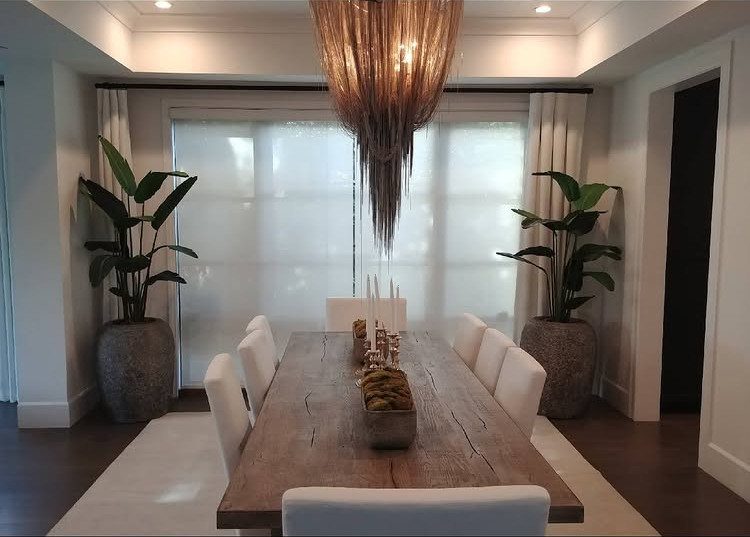
Placing a large potted plant on each side of the table frames the space and draws wood energy into the room. The symmetry balances the space, and the greenery softens hard surfaces like plaster and glass.
Fiddle-leaf figs, rubber plants and monstera all grow tall enough to flank a standard dining table. Use pots that match in size and style, and set them where they’ll get indirect light from the window.
If the floor plan won’t fit two plants, one at the end of the table still brings the effect and leaves room to move.
4. Balance with Gold and Marble
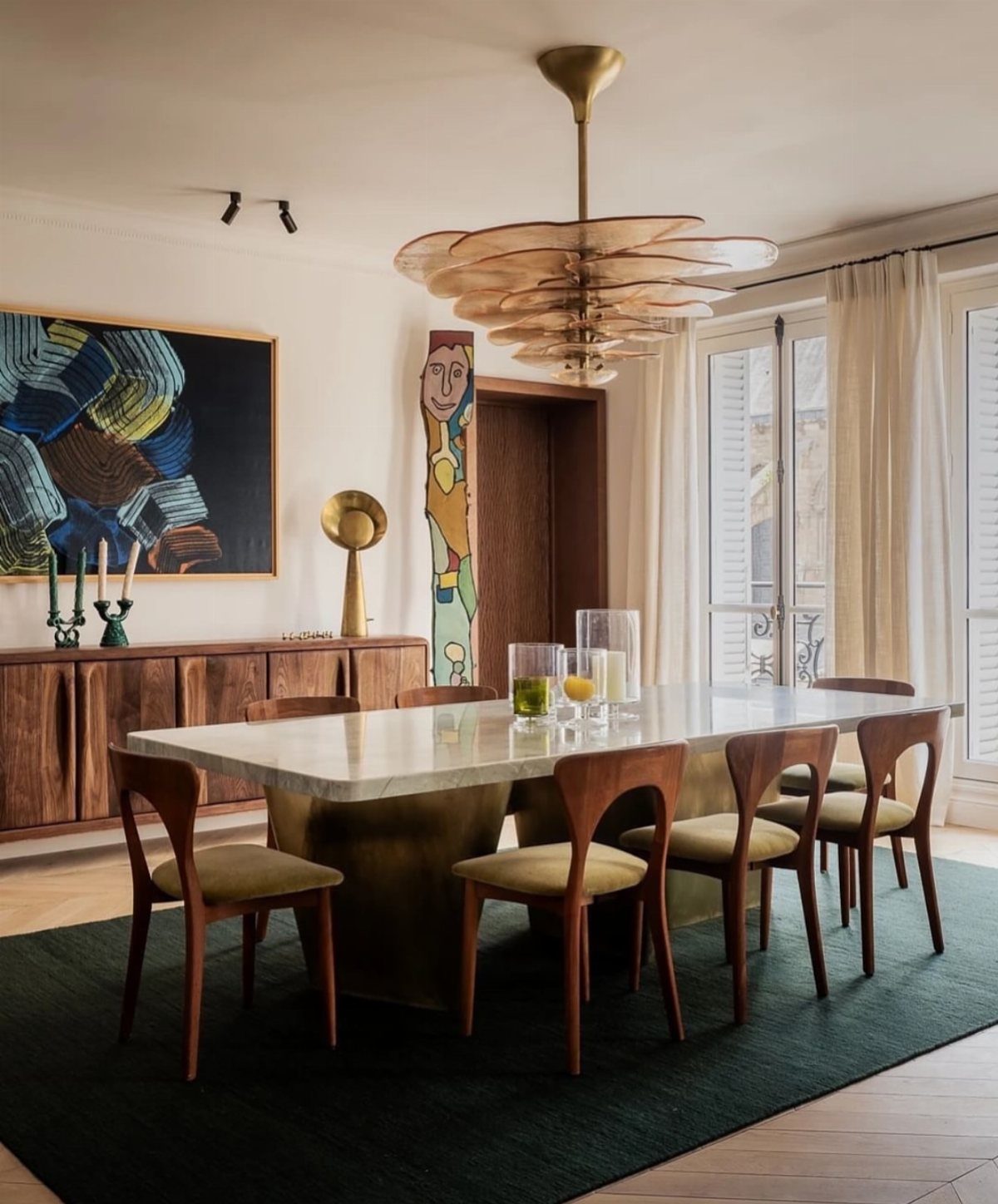
Gold and marble together bring metal and earth elements into balance, and the green upholstered chairs add wood energy while keeping the palette intact. Metal supports clarity and precision; earth grounds the space.
A marble tabletop with a brass or gold-finished base is the centerpiece here, and the chandelier repeats the metal finish overhead.
If a full marble table is out of budget, a marble lazy Susan or serving tray on a wood table adds the material in smaller doses. The abstract art pulls in color without introducing a competing element.
5. Nature View and Natural Light
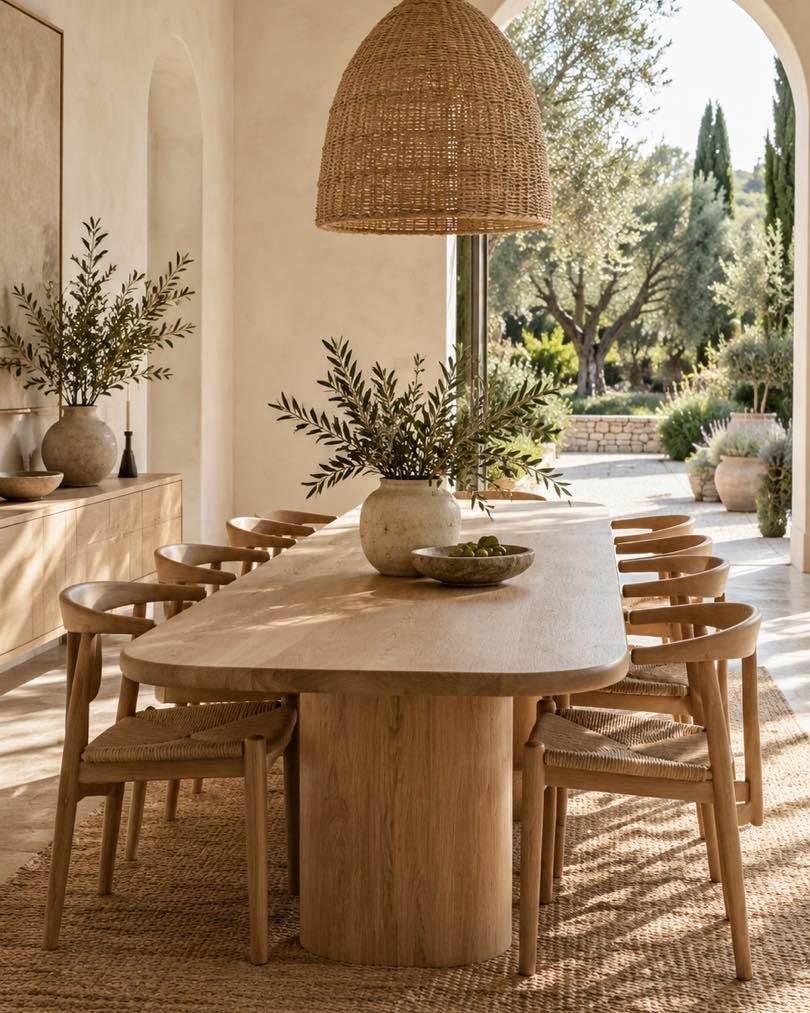
Positioning the dining table near an opening that looks onto a garden pulls natural light and outdoor energy into the room. The arched doorway frames the view, and the woven pendant lamp overhead keeps the connection to natural materials.
Light wood furniture reflects more light than dark finishes, which helps in a room that depends on one large window or door.
If your dining room doesn’t open directly to the outdoors, a large mirror on the wall opposite the window can reflect the light and double the sense of openness.
6. Bold Red Dining Room Accents
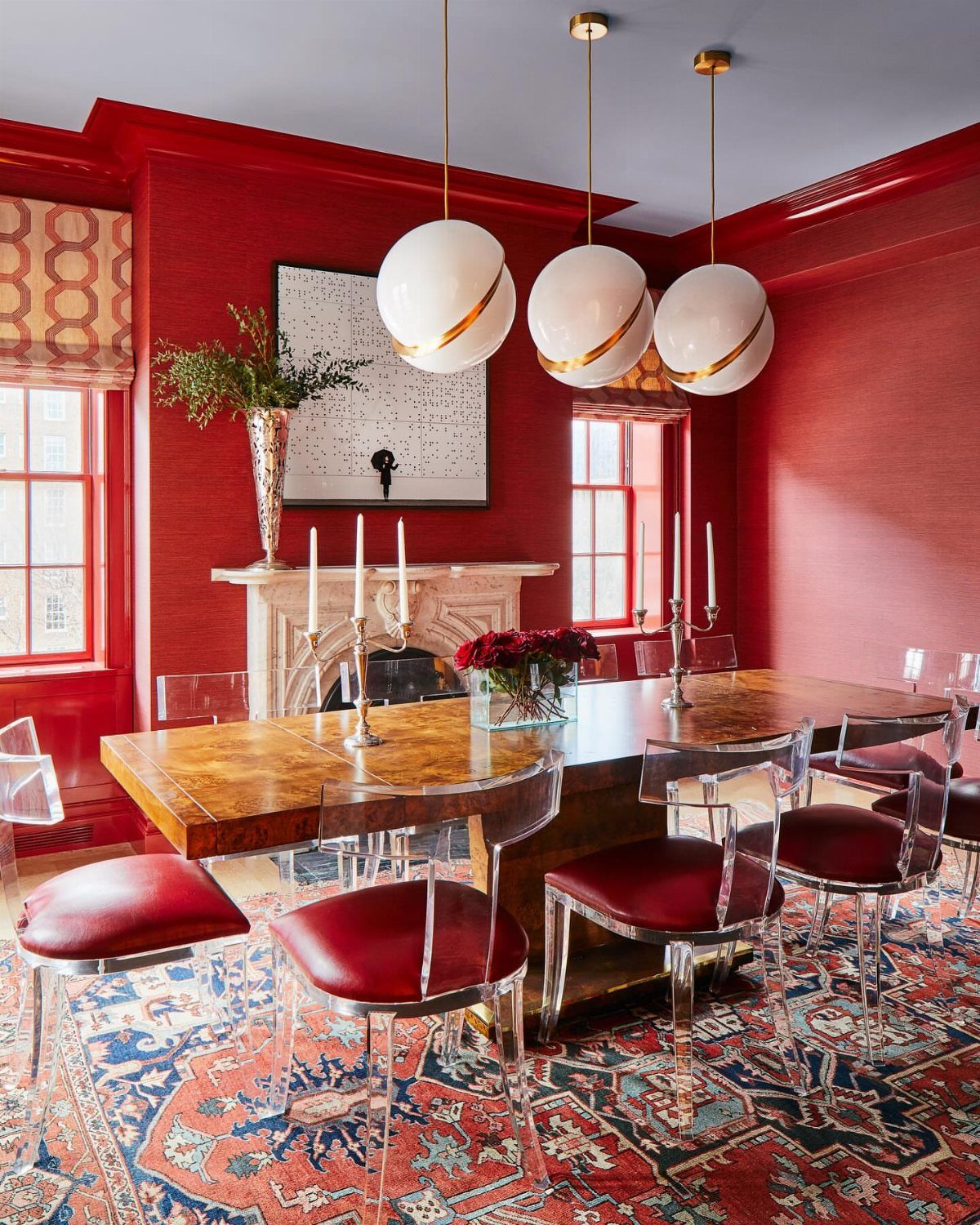
Red walls, a patterned red rug and upholstered cushions bring fire energy into the dining room, and Feng Shui tradition treats red as the color of celebration and good fortune.
The solid wood table grounds the intensity, and the clear acrylic chairs keep the room from feeling heavy.
If painting the whole room red feels like too much, try one accent wall or red curtains.
The spherical pendant lights here add soft illumination without competing with the bold color. Red works best in dining rooms used for gatherings rather than quiet meals, since the color raises energy instead of calming it.
7. Mirror to Reflect Dining Energy
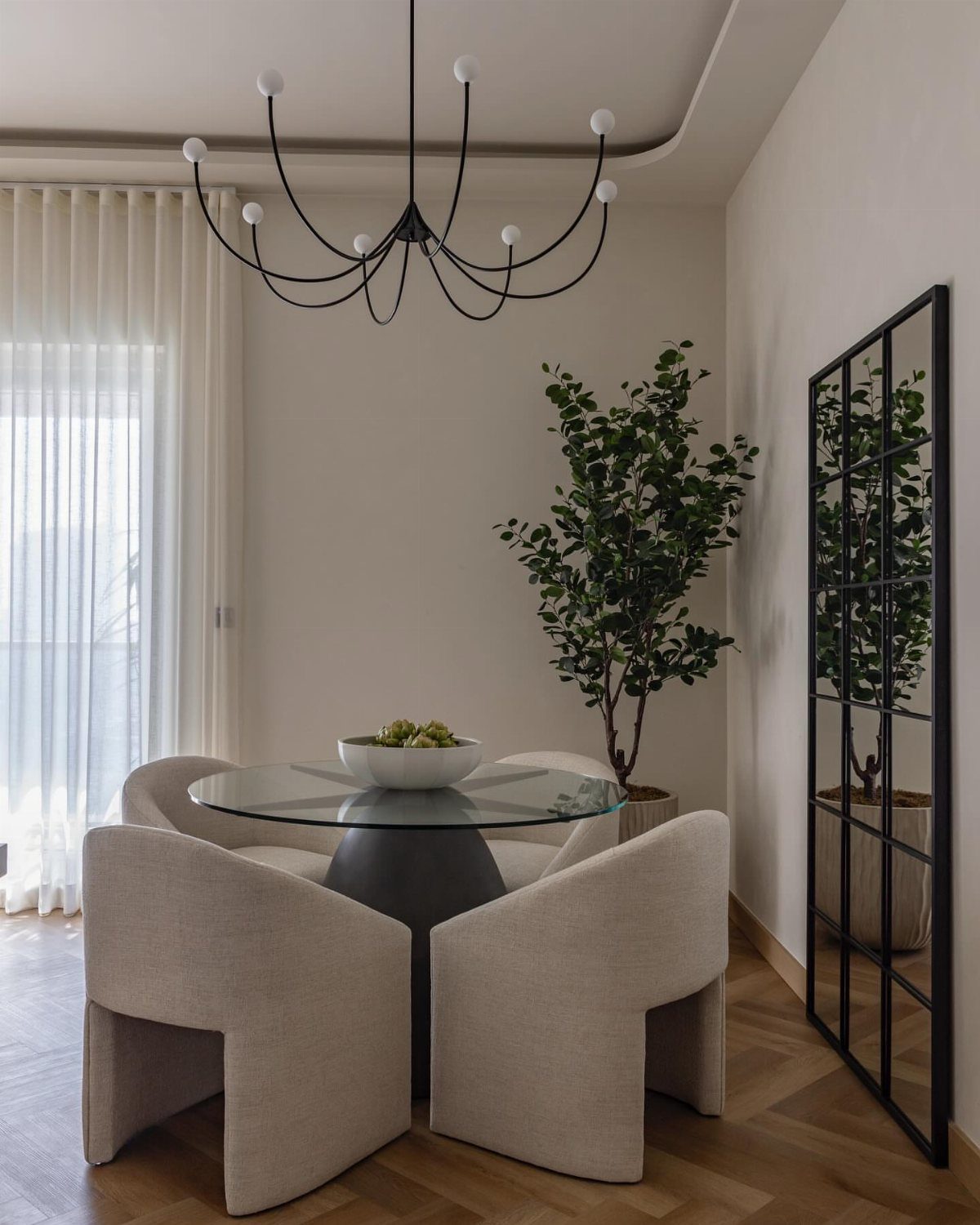
A large mirror on the wall behind or beside the table reflects the chandelier, the natural light from the window and the activity at the table itself. In Feng Shui, mirrors double abundance and expand the sense of space.
Leaning a tall mirror against the wall rather than mounting it makes repositioning easier if the reflection catches something you’d rather not amplify, like a bathroom door or clutter.
A black frame or thin metal edge keeps the mirror from dominating the room.
If wall space is tight, a smaller mirror opposite the window will still reflect light without requiring room behind the table.
8. Gentle Curved Oval Dining Table
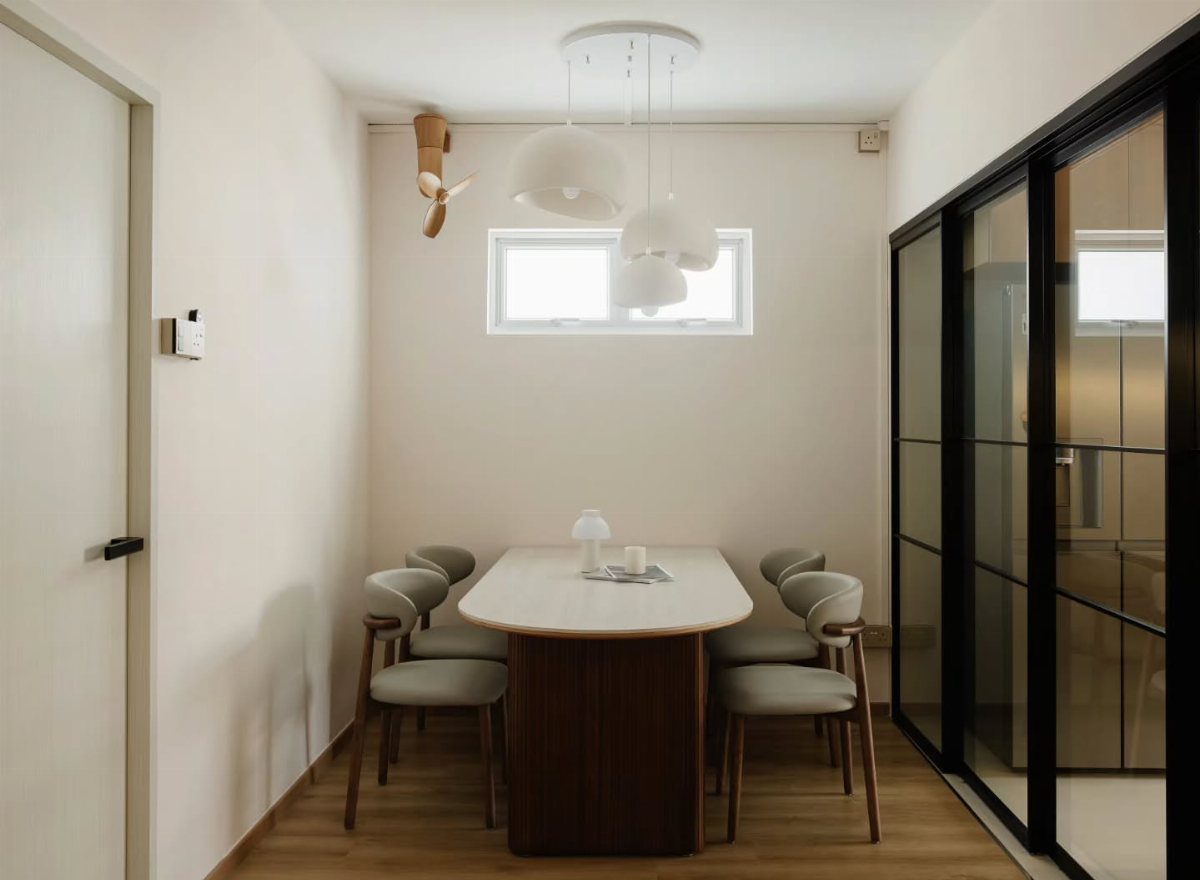
An oval table softens the rectangular room without losing the linear seating of a standard dining table.
The curved ends guide energy around the table instead of stopping it at sharp corners, and the white finish brightens a space with muted tones.
This setup pairs the oval with grey upholstered chairs and spherical pendant lights that repeat the soft geometry.
If you’re working with a small dining room, an oval in a light color reflects more light than dark wood and takes up less visual weight than a round table of the same seating capacity.
Importance of Feng Shui
Feng Shui treats energy flow as something you can shape by moving furniture and choosing where light lands.
A dining room arranged with attention to chi feels different when you sit down: calmer, more open, easier to settle into. That shift affects how meals go, whether it’s a quick dinner or a gathering that runs late.
The layout, the colors, the furniture weight and the lighting all contribute to the energy a room holds.
A round table instead of a rectangular one, soft light instead of a single overhead fixture, clear corners instead of clutter, these choices add up.
The room either supports connection or it doesn’t, and most of the time the difference comes down to a handful of decisions you can reverse if they don’t land right.
Role of the Dining Room
The dining room stands for abundance in Feng Shui because food on the table signals that the household has enough. That association is literal and old, and it extends beyond the meal itself to the people gathered around it.
This is also the room where family and friends sit long enough to talk through something that won’t fit into a hallway conversation. It swings between extremes: full and loud during dinner, silent and empty an hour later.
Balancing yin and yang energy matters more here than in most rooms because of that swing. Every decision about the table, the light and the layout traces back to making people feel safe enough to stay.
Balancing Energy
A dining room moves from lively to quiet in the span of an hour, and lighting that works for one moment can flatten the other.
Overhead fixtures alone disrupt the balance: too bright for lingering, too stark for the softer energy the room needs after the meal ends.
Table lamps on a sideboard or floating shelf fill in the soft layer that overhead fixtures miss. Matching chairs, a centered table and objects arranged in pairs all reinforce that sense of equilibrium at the table.
Simone Wilson, colour and trend expert at Voyage Maison, explains: ‘In dining rooms, lighting is often overlooked, with many relying solely on an overhead "big" light, which can disrupt the Feng Shui created by other elements.
Frequently Asked Questions
What shape of dining table is best for Feng Shui?
A round or oval table keeps chi flowing instead of catching on corners, and nobody sits in a power position since every seat has the same relation to the center.
The curve also makes better use of floor space in a rectangular room and lets you squeeze in one more chair without anyone straddling a corner.
Does a mirror in the dining room have any Feng Shui benefits?
When a mirror reflects your dining table, it visually multiplies the food and the gathering, which Feng Shui interprets as prosperity reflected back.
Set it where it can catch the table, the light fixture overhead, or the window light rather than a blank wall.
What are the best colors for a dining room according to Feng Shui?
Greens, earth tones and muted browns ground the space and connect to family energy, while red brings celebration and good fortune in smaller doses like an accent wall or rug.
White becomes neutral background once you add wood furniture and greenery, but all white on its own feels stark.






