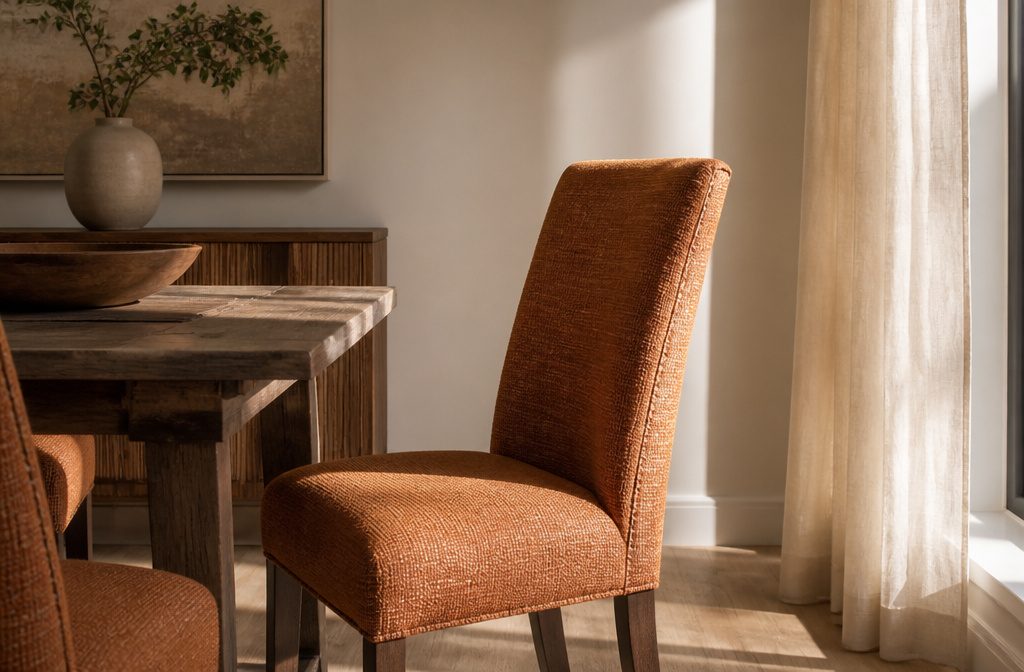
Dining chair fabrics range from practical wipes like faux leather to soft luxury materials like velvet, and the right one depends on how often you sit down to eat and who else is at the table.
Homes with kids or pets get the most out of performance fabrics like Crypton and Sunbrella, which resist stains and moisture by design rather than needing a spray-on treatment that wears off.
1. Velvet
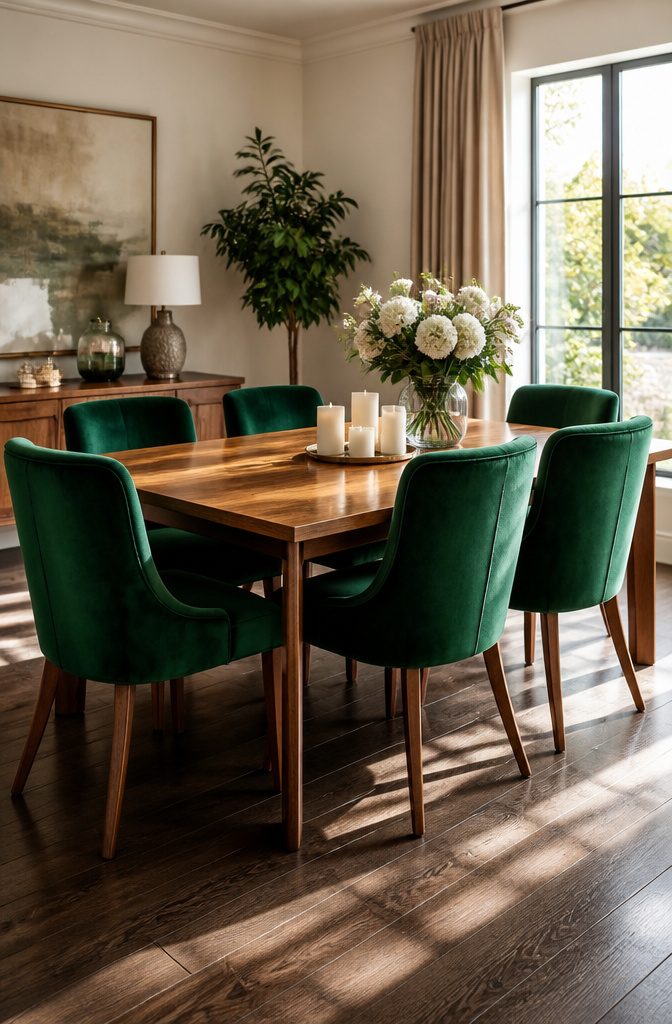
Velvet brings a soft, plush texture that reads instantly as luxury. The fabric catches light in a way flat weaves don’t, adding depth and a sense of warmth that makes even a plain room feel more intentional.
I’d reach for it in formal or traditional dining rooms where you want chairs to feel like an occasion, and the color range is wide enough to work: deep jewel tones for drama, soft pastels if you’re after something gentler.
It holds up better than you’d expect for daily use. Velvet is durable, stain-resistant, and easier to clean than its reputation suggests, though it does ask for regular maintenance to keep that plush look intact.
Keep the chairs out of direct sunlight and away from pets and dust if you can. If your dining room sees gentler use or you save it for company, velvet makes the space feel polished and special without much effort.
2. Linen
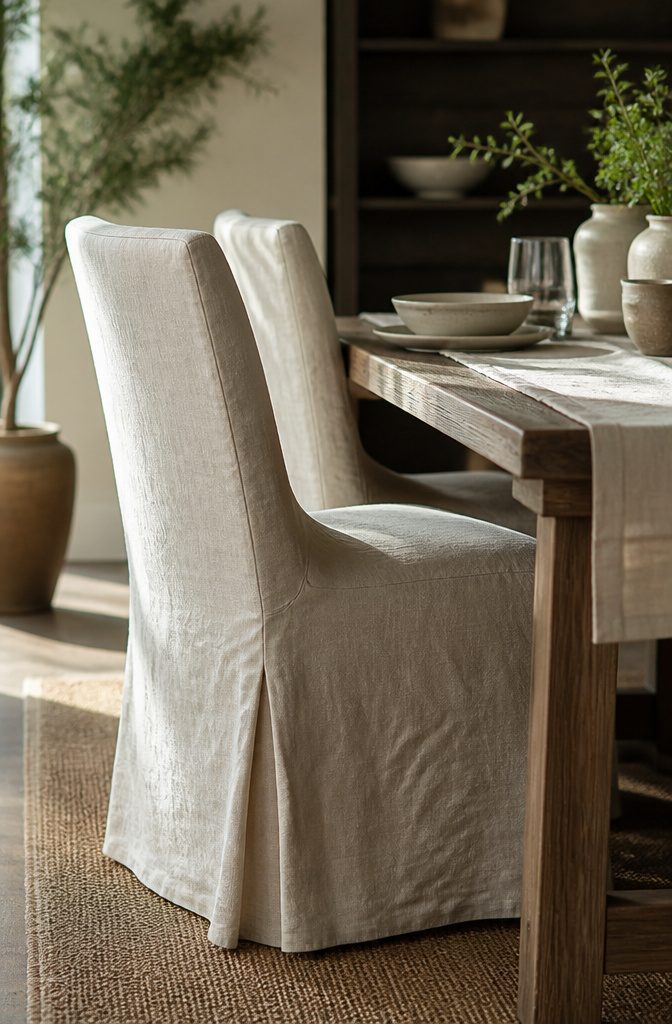
Linen brings breathable, natural texture to dining chairs, and it softens over time in a way that adds character rather than looking worn out.
The fabric lets air circulate, which matters when you’re sitting through a long meal, and it carries that relaxed, lived-in look that works beautifully in casual dining rooms.
Neutral tones blend with almost any table or decor style, and the material itself has a timeless feel that doesn’t date.
The wrinkles are real, though. Linen creases easily, and for some people that’s part of the charm.
If you like a crisp, pressed look, this fabric will frustrate you. It also needs gentle cleaning, so spills require more care than they would with performance fabrics.
But in a space where you want things to feel easy and unfussy, linen delivers that aesthetic better than most other options, and the wrinkles read as intentional rather than neglected.
3. Faux Leather
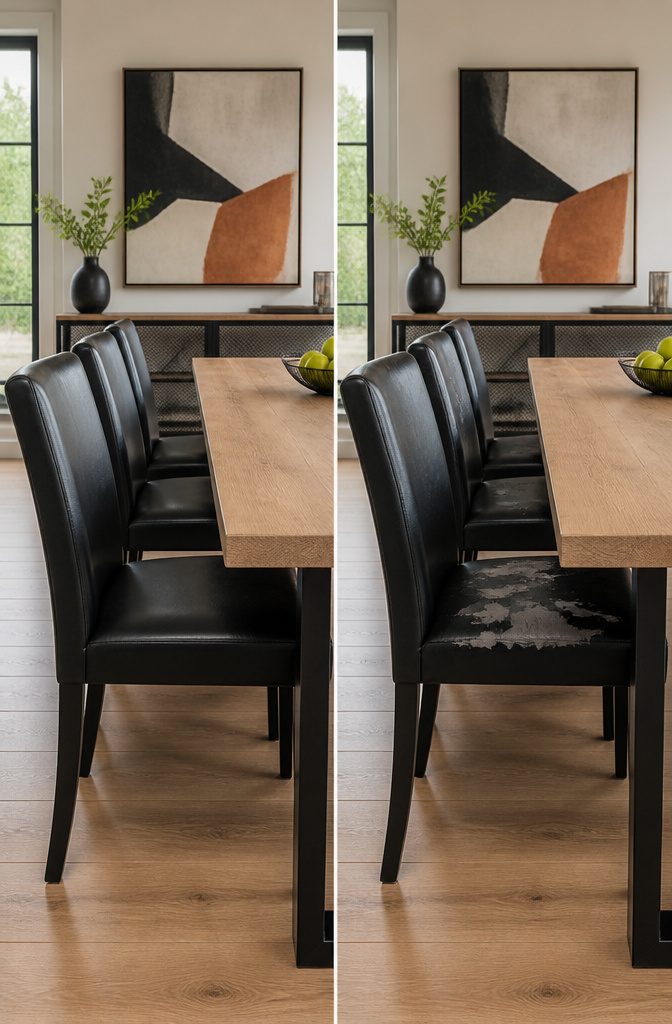
Faux leather gives you the look of genuine leather at a fraction of the cost.
It’s easier to maintain than real leather and handles spills with a quick wipe, which makes it one of the most practical options if you have kids or host dinners regularly.
Stains that would soak into fabric or require conditioning on real leather just sit on the surface here.
The material has improved enough that it now closely resembles the real thing, and it comes in finishes from matte to embossed. You can find it in classic black, warm neutrals, or nearly any color that works with your space.
It’s also more resistant to scratches and stains than genuine leather, so chairs in heavy rotation hold up without developing worn spots or needing special care products.
If you want style without the stress of high-maintenance upholstery, this is where the budget and the practicality line up.
4. Cotton Blends
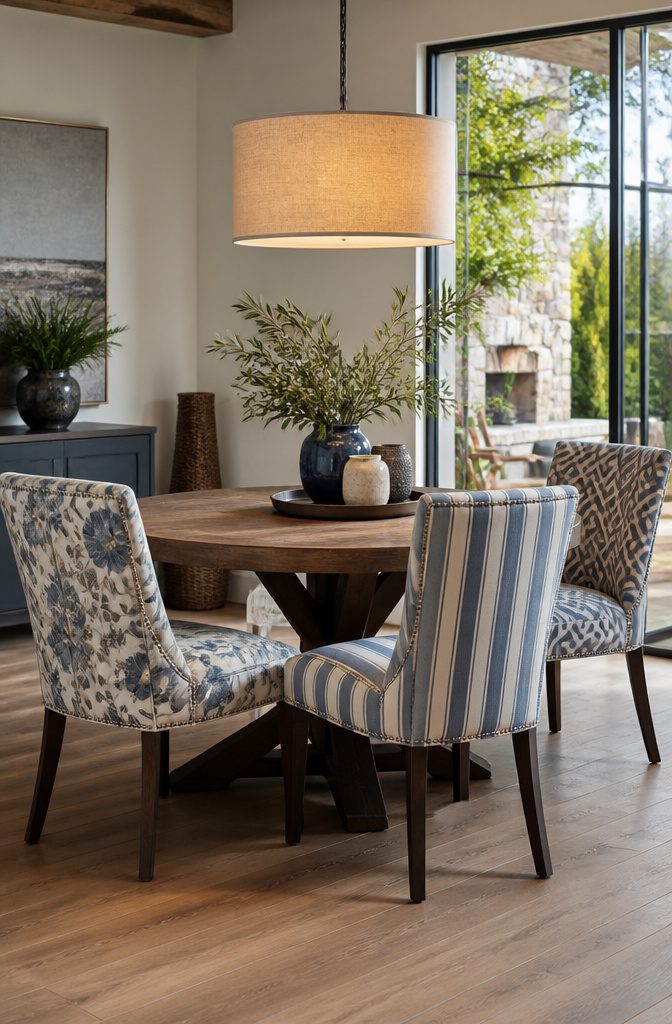
Cotton Blends
Cotton blends give you the softness of natural cotton with the durability of synthetic fibers like polyester. The blend resists fading, wrinkles, and abrasions better than pure cotton, which matters when chairs take daily use and the occasional spill.
You get fabric that breathes and feels comfortable against bare legs in summer, but stands up to years of sitting without pilling or wearing thin at the seat edge.
The range of patterns and colors available in cotton blends is wider than what you’ll find in performance synthetics.
If you want a Southwestern print or a specific shade that ties the room together, cotton blends make it easier to match your style without sacrificing longevity.
The fabric works whether you’re covering a set of midcentury chairs or something more traditional, and it holds up without the clinical look some high-performance options carry.
5. Performance Fabrics
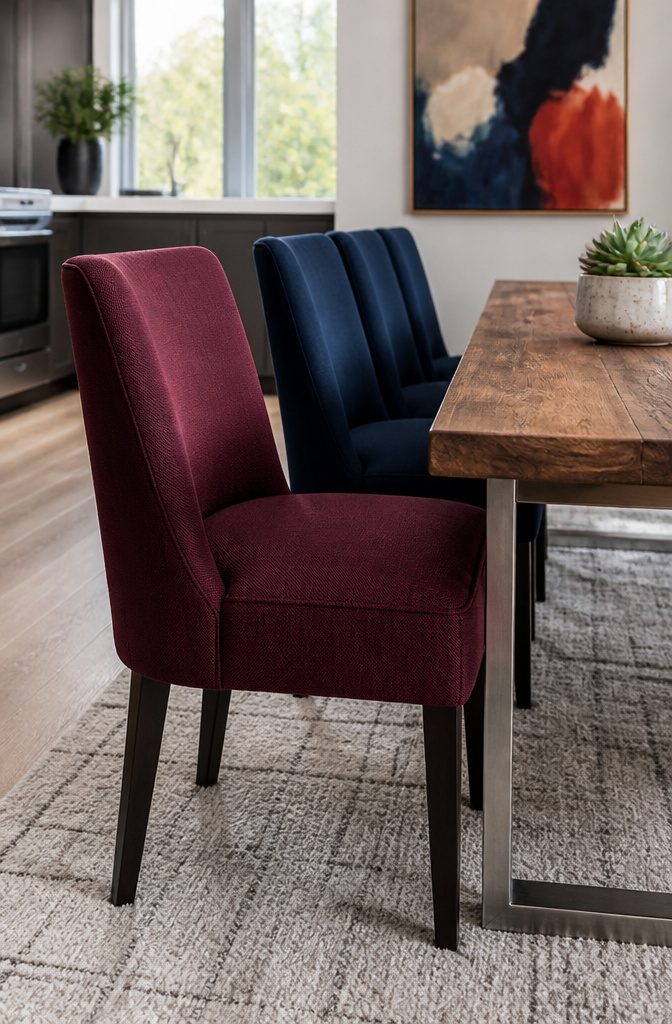
Performance Fabrics
Crypton and Sunbrella stand out when spills are routine. Both resist stains and moisture by design, so a knocked-over glass or a greasy plate doesn’t mean hours with a spot cleaner.
The protection is built into the fiber rather than sprayed on afterward, which is why performance fabrics hold up better than traditional upholstery in high-traffic dining rooms.
Homes with children or pets get the most out of them. A family with kids tracking in snacks or a dog that leans against chair legs will see the difference in a few months.
The fabric repels what would otherwise soak in, and cleaning usually means wiping down the surface rather than calling in a professional.
The upfront cost runs higher, but durability makes up for it. These materials resist abrasion and daily wear, so they look good longer than standard upholstery.
Perennials is another name in this category, alongside Crypton and Sunbrella. All three come in patterns and solids now, so the choice isn’t limited to plain utility colors.
6. Geometric Prints
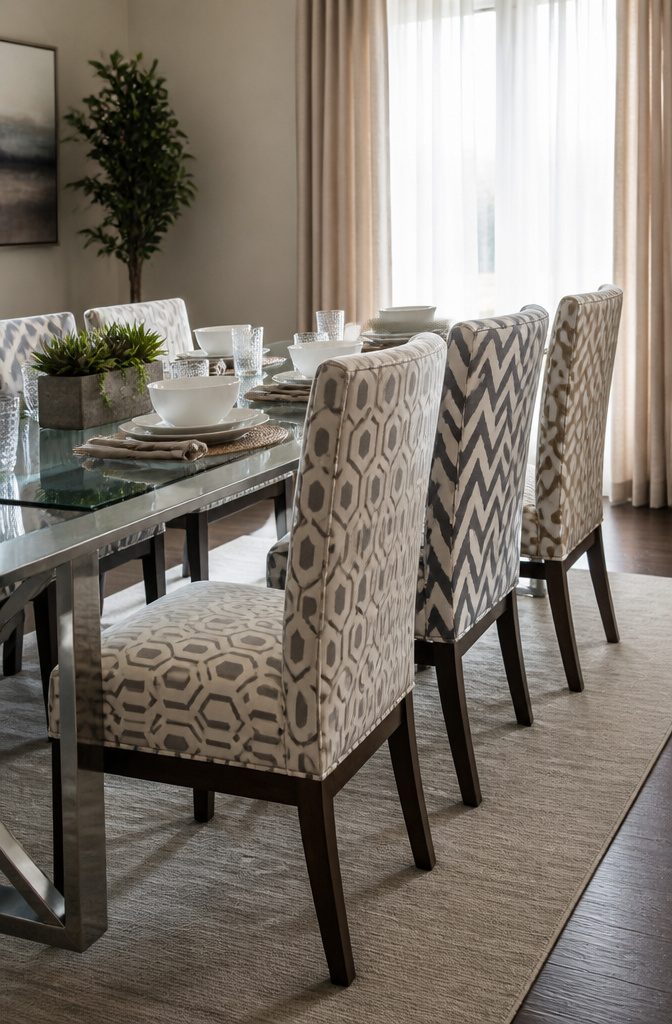
Geometric prints add personality and hide the evidence of a normal dinner.
Chevrons, hexagons and structured shapes bring a modern edge to dining chairs, and the busy pattern camouflages crumbs and small stains better than a solid color. Balance the scale of the pattern with the size of your room and chairs.
Bold geometric designs suit larger chairs and open dining areas. In a small space, the pattern can overwhelm, so I’d pair geometric seats with simpler wall decor or a plain tablecloth to keep the room from feeling chaotic.
Scale matters just as much as boldness: tight, small-scale repeats read as texture from a distance, while large motifs become focal points.
Color ties the whole choice together.
If you want the chairs to blend with your existing palette, pull a secondary color from your rug or curtains for the geometric print. Neutral base tones like beige, gray or taupe keep the pattern versatile.
For chairs that stand out as a statement, reach for deep blue, emerald green or rich burgundy in the geometric design, especially when the rest of the room leans neutral.
7. Botanical and Floral Prints
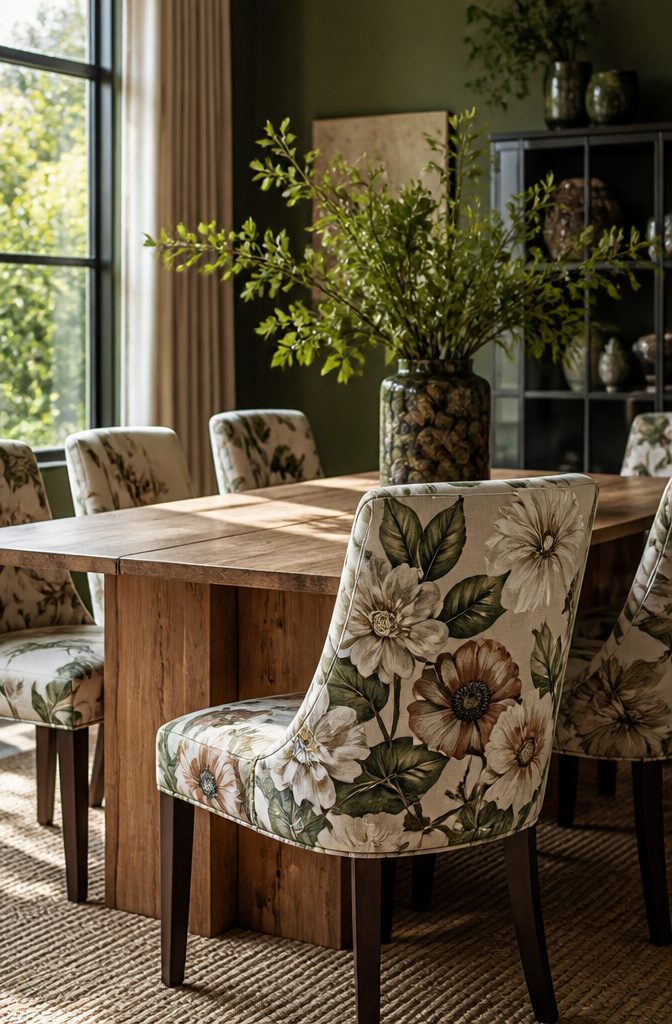
Botanical and floral prints pull greenery and blooms into the dining room without the upkeep.
The pattern can read modern or quaint depending on scale: large leaf motifs and bold graphic florals lean contemporary, while small scattered blooms skew cottage or traditional.
That range means you can fit the fabric to the room rather than working around it.
Choosing a print that aligns with your dining room starts with looking at what is already there. In a space with clean lines and minimal detail, go for oversized botanicals with plenty of negative space.
Traditional or eclectic rooms can handle denser patterns and softer florals. The fabric still needs to perform, though.
Darker prints hide spills better than pastels, and some botanical upholstery comes treated for stain resistance. When you find both the right look and the right durability, these prints add movement and personality that plain fabric cannot.
8. Quilted Upholstery
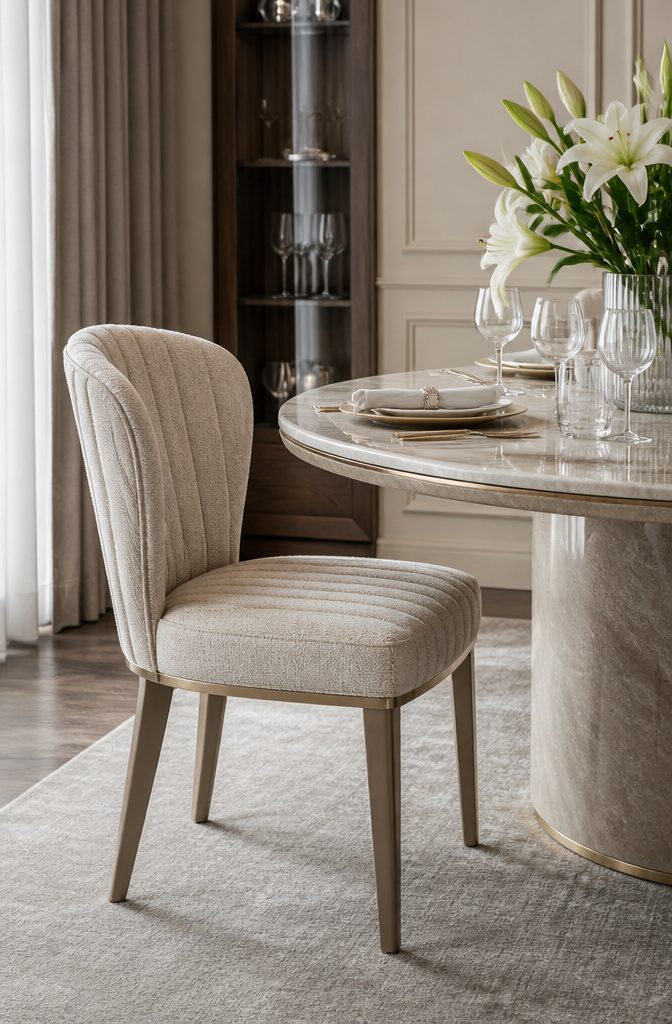
Quilted upholstery adds visible texture and extra cushioning that make long dinners more comfortable. The stitching pattern holds batting in place, so the fabric keeps its shape and the chairs stay inviting even when guests linger through multiple courses.
That textured surface catches light differently than flat upholstery, giving the chairs dimension you notice from across the room.
The quilting itself becomes a design detail.
A simple diamond or channel pattern reads clean and tailored. Tighter stitching works in formal spaces, while wider quilting feels more relaxed.
Some quilted fabrics incorporate subtle metallic threads for a touch of glamour without going full statement piece. The pattern can tie into other dining room details or stand alone as the one textured element in an otherwise smooth room.
9. Bouclé
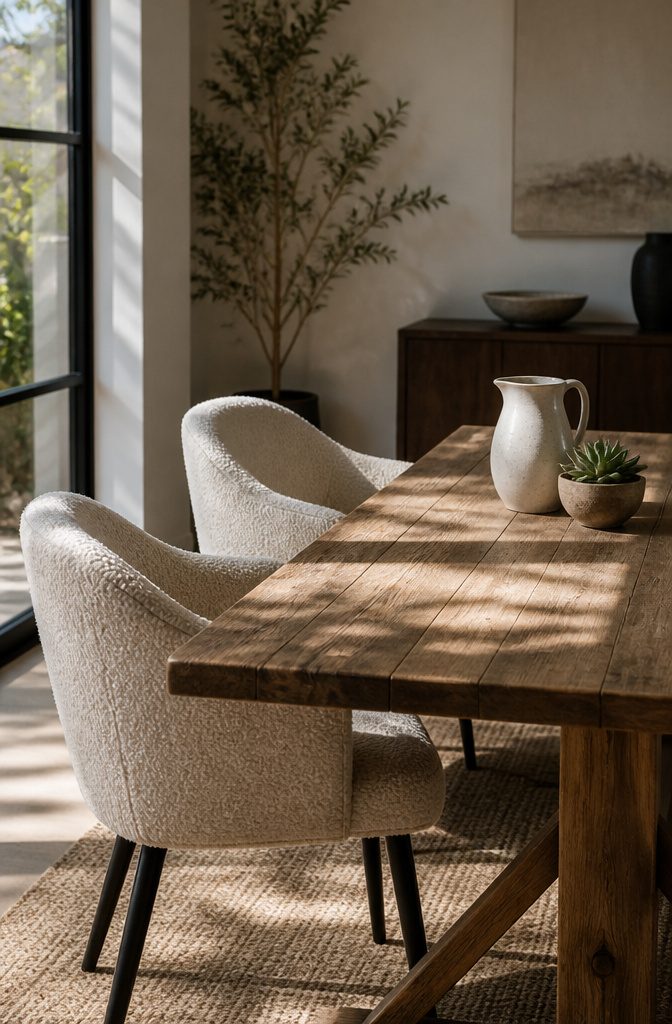
Bouclé brings soft, looped texture that catches light differently from every angle, adding depth even when you stick to neutrals like cream or charcoal.
The loops give it a tactile warmth that makes chairs feel more inviting, and the uneven surface hides minor wear and small stains better than smooth weaves.
A pilled spot or a light mark disappears into the texture rather than standing out the way it would on flat linen or cotton.
The fabric has had a surge in modern and minimalist interiors over the past few years, showing up on dining chairs that want some softness without pattern or bright color.
It fits well in rooms that lean contemporary but need a little more coziness than leather or metal alone can deliver.
Bouclé feels comfortable for long meals, and that combination of durability and texture makes it a practical choice for chairs that see regular use.
10. Outdoor Fabrics
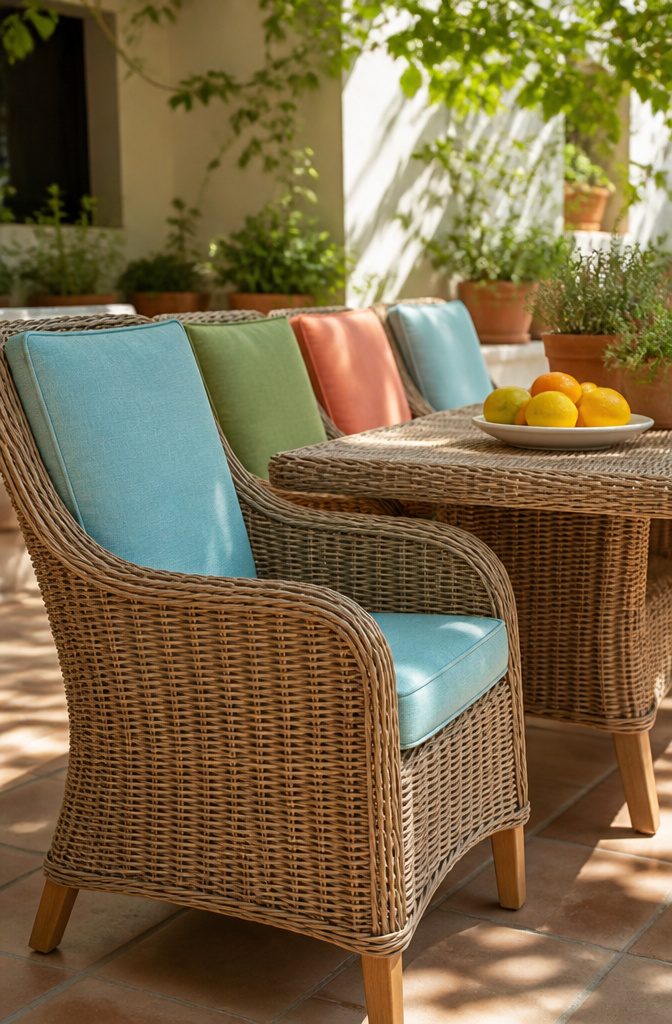
Outdoor fabrics win on durability because they were built to take weather, and that same toughness makes them an excellent choice for indoor dining chairs.
Originally designed to resist sun, moisture, and constant wear on patios and boat cushions, these fabrics hold up to spills and daily use better than most indoor upholstery.
The protective finish repels liquids, so cleaning becomes a matter of soap and water rather than panic and a steam cleaner.
Fade resistance is part of the design. Sunbrella’s Color to the Core™ technology, for example, saturates the fiber all the way through rather than coating the surface, so the color stays put even after years of regular cleaning and use.
Dining room chairs are easy targets for potential food and drink spills. Because of this, cleanability and durability should be your number one concern.
That durability means you skip the cycle of reupholstering every few years, which offsets the higher initial cost.
Outdoor fabrics also come in a wide range of colors and patterns now, so the practical choice no longer forces you into marine stripes or solid navy.
Match Fabric Durability to How You Use the Chairs
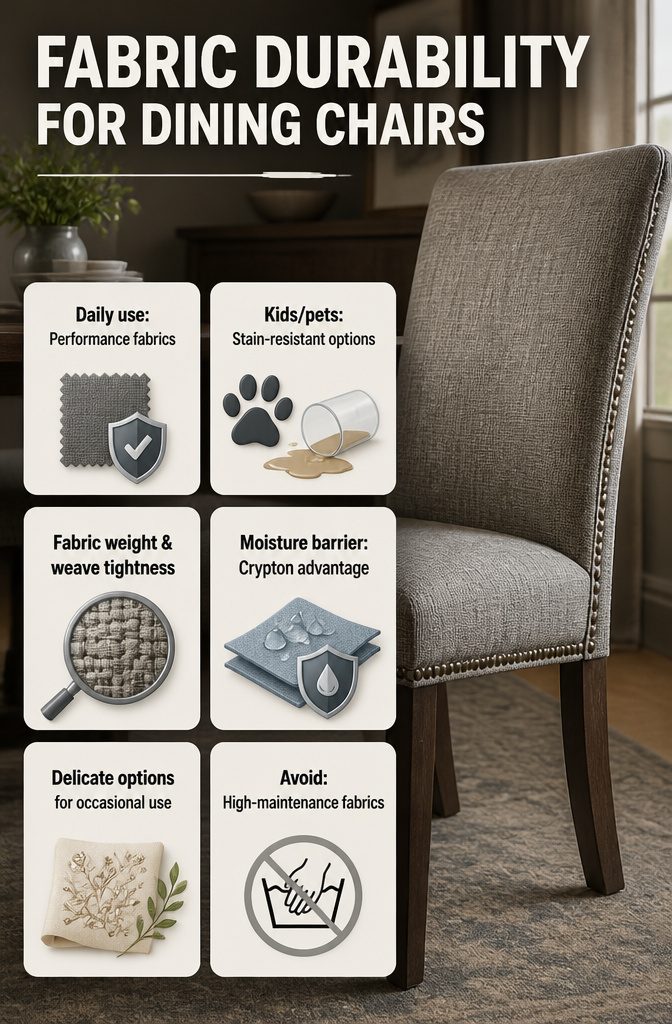
Start by figuring out how much abuse your chairs will actually take.
Daily breakfast spills with kids are not the same animal as chairs pulled out twice a week for dinner parties, and the fabric that survives one will be overkill or too fragile for the other.
Homes with children or pets need fabrics built to resist stains and moisture right in the fiber.
Performance fabrics, polyester, and microfiber all handle repeated spills without soaking through, and Crypton takes that a step further with moisture barriers woven in.
Fabric weight and weave tightness are the two durability indicators that matter. Tighter weaves resist snagging and hold up under friction.
Looser weaves look softer but pill faster and let spills soak deeper. If your dining room only sees use on holidays, you can get away with delicate options like embroidered fabric or lightweight linen.
For everyday use, I’d skip anything that needs careful maintenance and go straight to abrasion-resistant performance fabric on the seat, saving decorative options for the backrest where they won’t take the same beating.
How to Clean Each Fabric Type
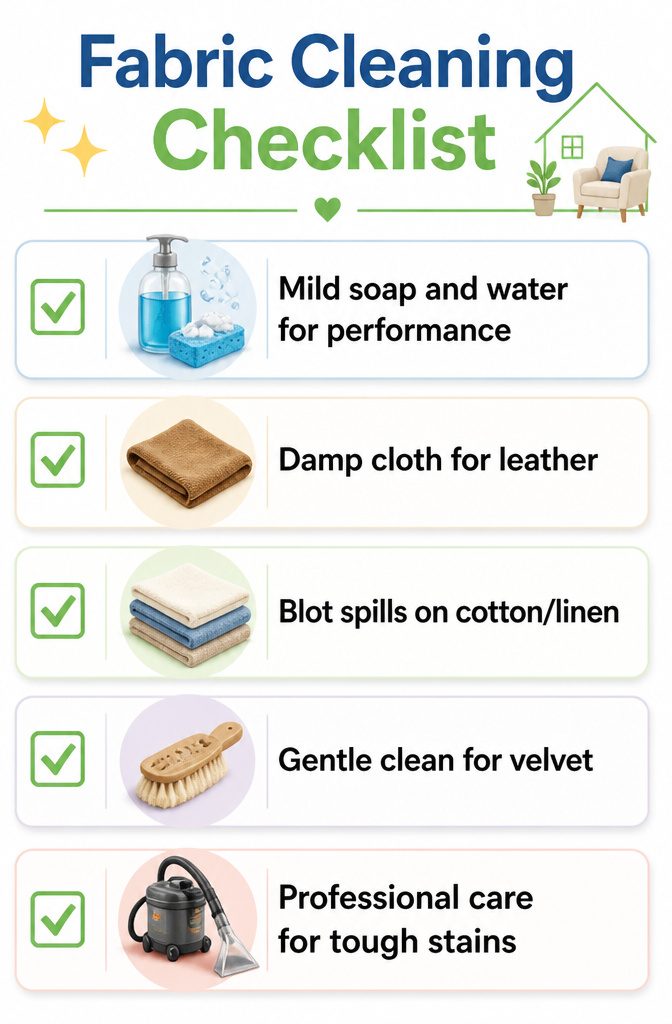
Each fabric has its own cleaning routine, and knowing the method before a spill happens saves you from setting a stain.
- Performance fabrics clean with mild soap and water, which keeps things simple when someone knocks over a glass. Blot the spill immediately, then wipe with a damp cloth and a drop of dish soap. These fabrics resist stains and water, so most messes lift without scrubbing or professional help.
- Leather and faux leather wipe clean with a barely damp cloth. For tougher marks, use a cleaner made for the material. Avoid soaking the surface, which can crack leather or peel faux finishes over time.
- Cotton and linen blends need faster action. Blot spills right away, then spot-clean with water and mild detergent. Tightly woven cotton handles this better than loose weaves, but both may need professional cleaning for oil-based stains.
- Velvet and bouclé require gentler handling. Blot spills without rubbing, which crushes pile or tangles loops. Most need professional cleaning for anything beyond surface dust, which you can lift with a soft brush or vacuum on low suction.
Choosing Color and Pattern for Your Room
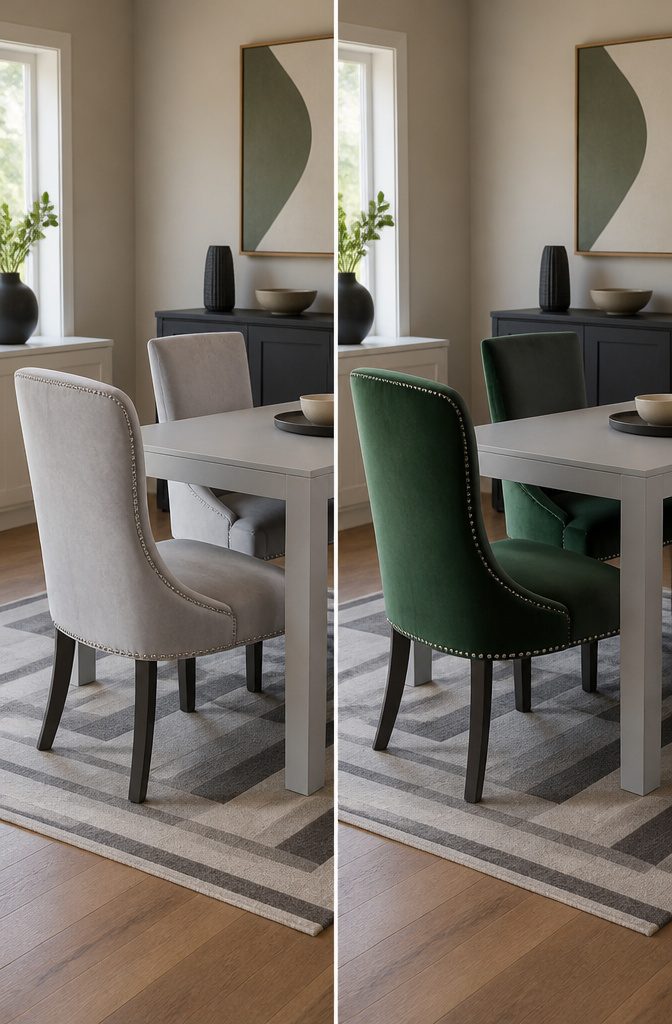
Color choice starts with a single decision: do you want the chairs to blend with the rest of the room, or to stand out as a focal point?
Neutral tones like beige, gray, or taupe work with almost any dining table style and create a calm, elegant atmosphere.
Bold colors like deep blue, emerald green, or rich burgundy add drama, especially when the rest of the room stays quiet.
Pattern scale changes how the room feels. Small-scale geometric patterns or florals keep things contained and let other elements carry weight.
Larger patterns with bold motifs make the chairs themselves the statement, which works when you want them noticed. Floral fabrics can read modern or quaint depending on the scale you pick, so matching that to your home’s existing look matters.
Texture keeps solid fabrics from feeling flat. A smooth linen feels completely different from velvet or chenille, and that tactile layer adds depth without visual clutter.
How Much Fabric You Need Per Chair
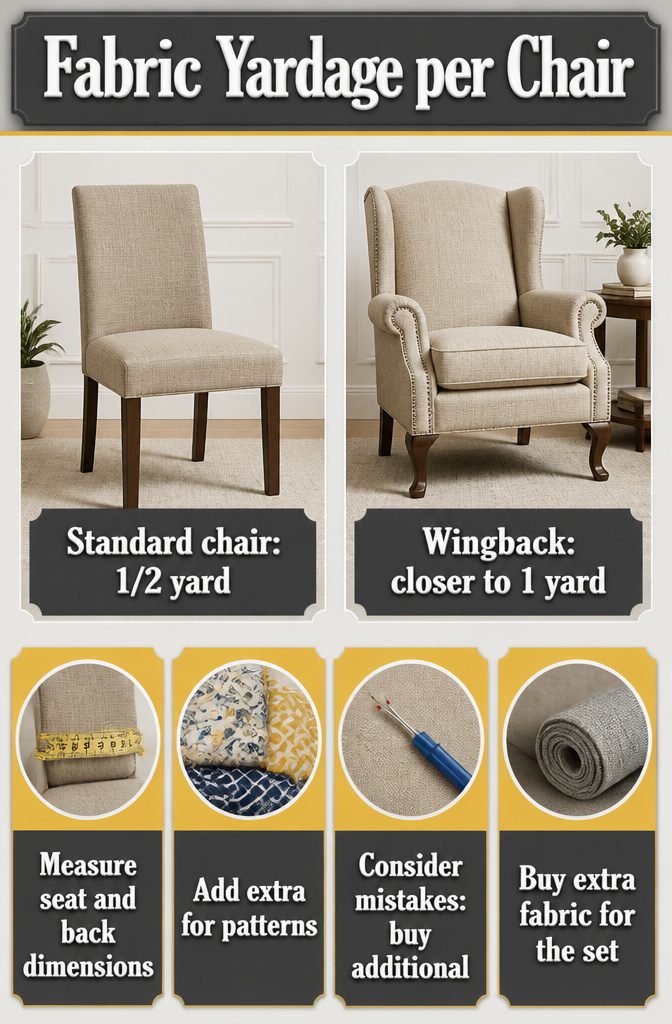
Each standard seat typically requires about 1/2 yard of fabric, but that baseline shifts depending on the chair you are working with.
A sleek parsons chair with a flat seat and straight back sits comfortably at that half-yard mark, while a wingback or a chair with a padded seat and separate back cushion can push you closer to a full yard or more.
I always measure the seat, the back, and any side panels before I buy, then add up those dimensions to confirm yardage rather than guessing from a category.
Buying extra matters more than most people expect.
If your fabric has a pattern that needs to match across multiple chairs, you will burn through yardage aligning repeats, and a bold geometric or large floral can add a quarter yard per chair to your total.
Mistakes happen too, especially if this is your first upholstery project, so I pick up an extra half yard for the set rather than risk running short mid-job and finding the dye lot sold out.
Frequently Asked Questions
What fabric is best for covering dining chairs?
Performance fabrics, polyester blends, leather, and tightly woven cotton are your best options for covering dining chairs. These materials resist stains and hold up to frequent use, which matters when chairs see daily spills and regular seating.
Performance fabrics like Crypton and Sunbrella have protection built into the fiber, so liquids don’t soak through the way they do with standard upholstery.
Should dining chairs be lighter or darker than a table?
Dining chairs can go either lighter or darker than the table, depending on the effect you want.
Lighter chairs create an airy, open feel that works well in modern spaces, while darker chairs add contrast and hide stains more effectively over time.
What is the longest-lasting upholstery fabric?
Leather, performance fabrics, and tightly woven synthetic blends last the longest on dining chairs.
Performance fabrics resist abrasion and daily wear better than traditional upholstery, while leather develops character as it ages without wearing thin. Both skip the cycle of reupholstering every few years, which makes up for the higher initial cost.
How much fabric do I need for dining chairs?
Each standard dining chair needs about 1/2 yard of fabric for the seat. A chair with a padded seat and separate back cushion, or a wingback style, can push that closer to a full yard or more.
Add an extra quarter yard per chair if your fabric has a pattern that needs to match across the set, and pick up an extra half yard for the full project to cover mistakes or alignment adjustments.