
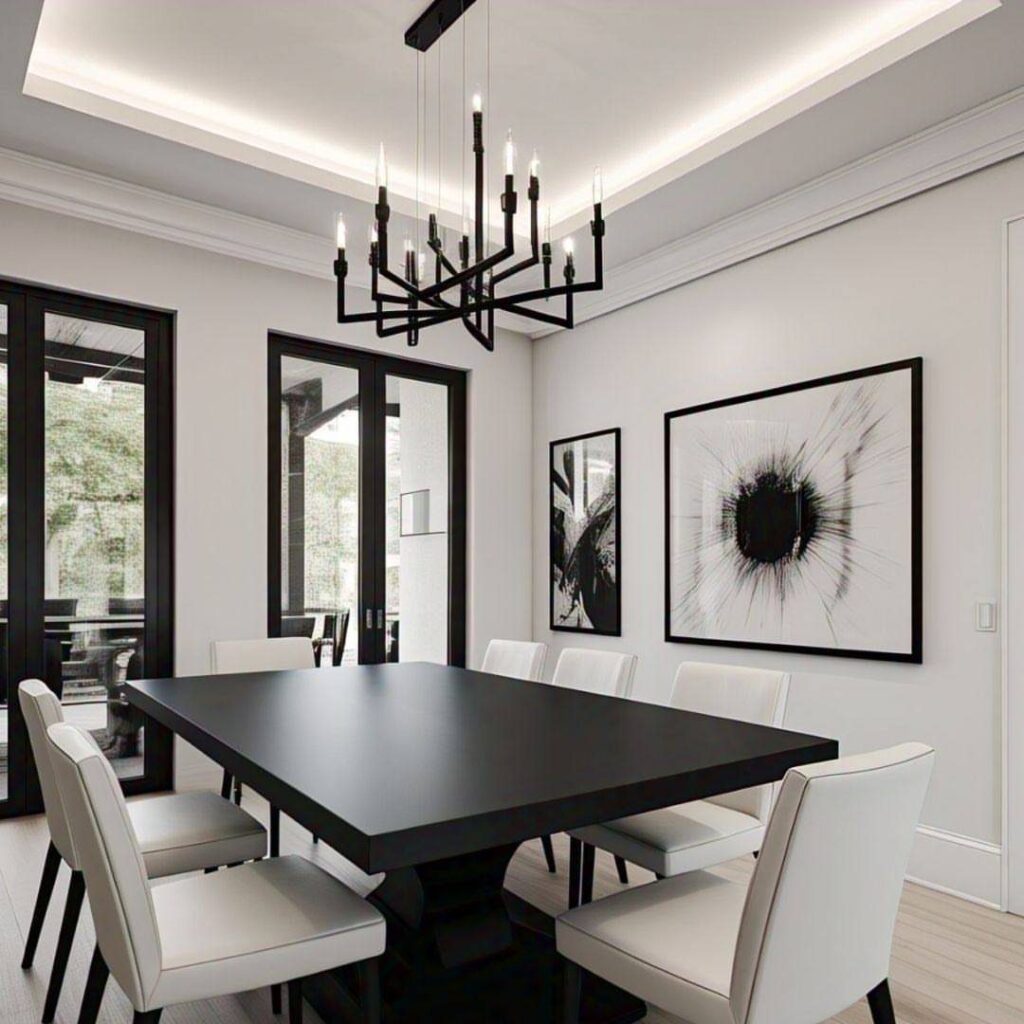
Monochrome palettes cost only paint while statement art and open-concept layouts require structural work or furniture decisions, and that range lets you land on contemporary style at whatever budget the project allows.
The single decision that picks your direction is whether you start with bold color and pattern or let the table shape and lighting carry the room.
A flatweave rug needs to extend far enough so chairs stay on it when pulled out, cove lighting demands a dropped ceiling or surface-mounted valance, and an oval table clears a narrow room better than a rectangle because the curved ends take less floor space.
1. Monochrome Palette
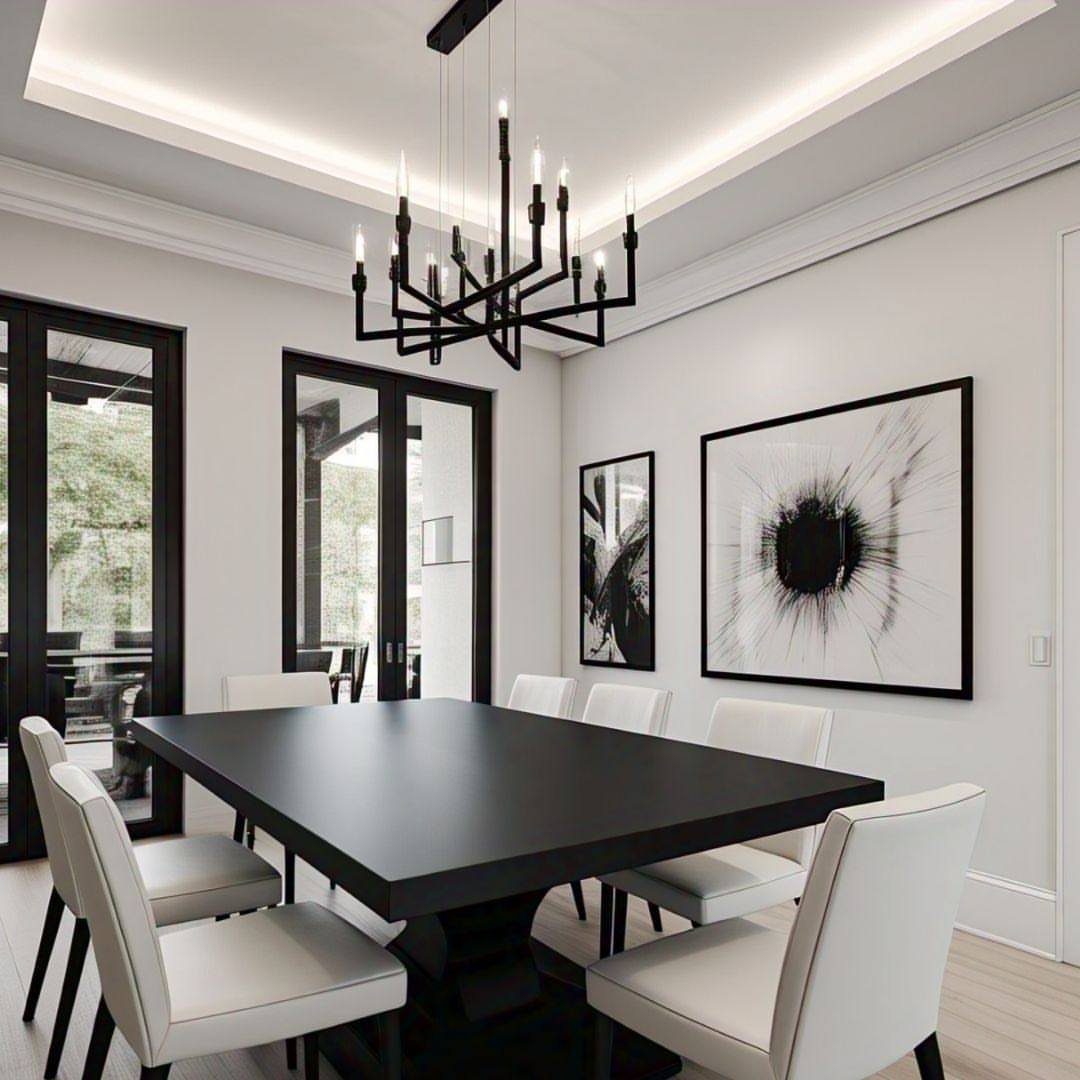
Black and white divides a room into geometry without pattern fighting for attention. The table and chandelier anchor the dark side, the chairs and walls hold the light, and the abstract art ties both together.
This approach works when the room itself has good bones but the budget sits with furniture over renovation. Paint costs little, and monochrome hides mismatched pieces by unifying them through contrast instead of color.
The balance matters more than the split.
When white takes up most of the room, black reads as accent rather than equal weight, and the space feels softer. A true monochrome palette runs closer to half.
2. Rich Jewel Tones and Striking Patterns
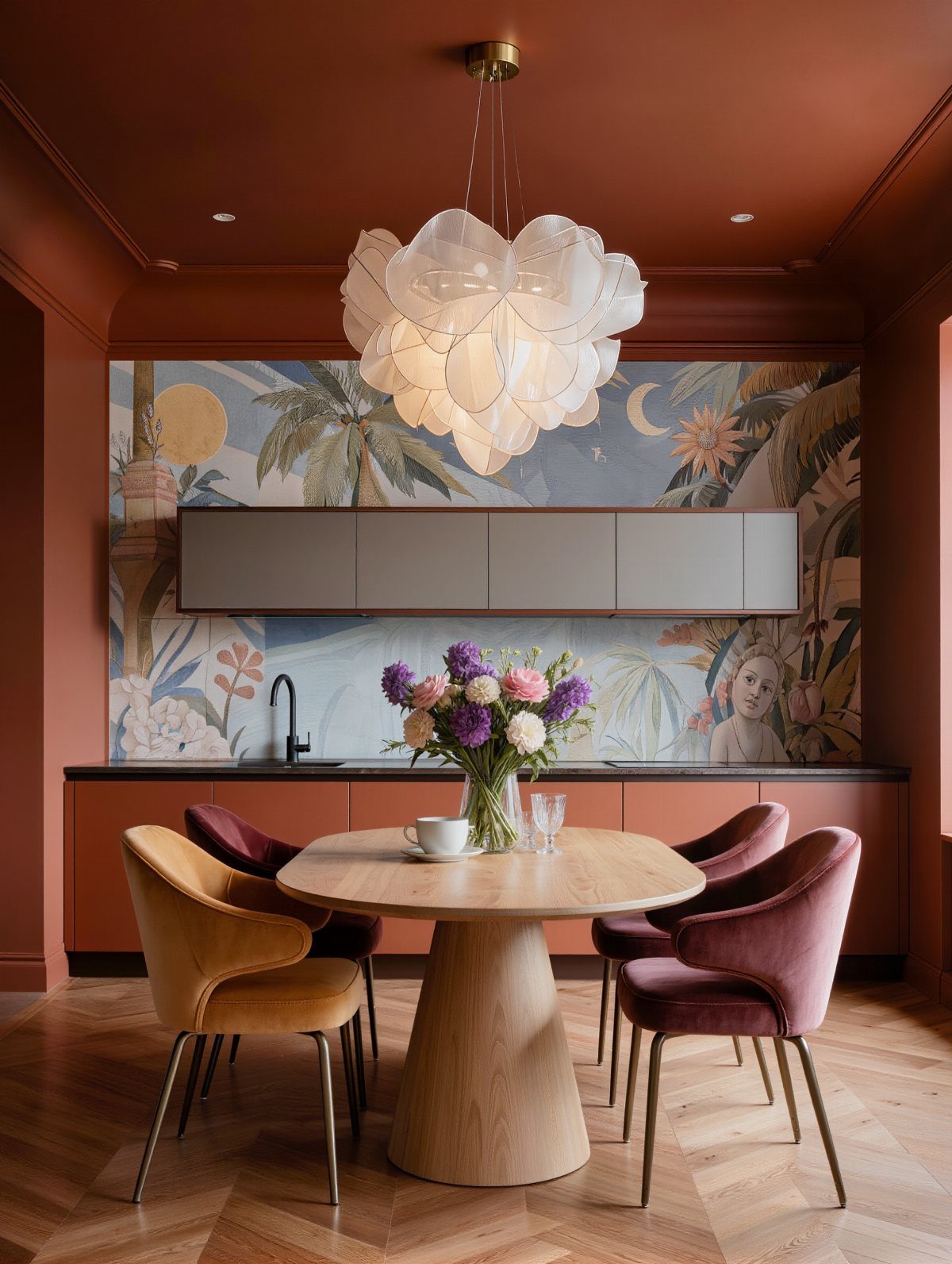
Velvet upholstery holds color better than linen and catches light differently depending on angle, so a single shade looks layered.
Start with one saturated color in the chairs or rug, then add pattern through art or wallpaper that echoes that color.
Trying to match jewel tones across fabrics from different dye lots rarely works, so pick one anchor piece and let the rest support it.
3. Ambient, Task, and Accent Lighting
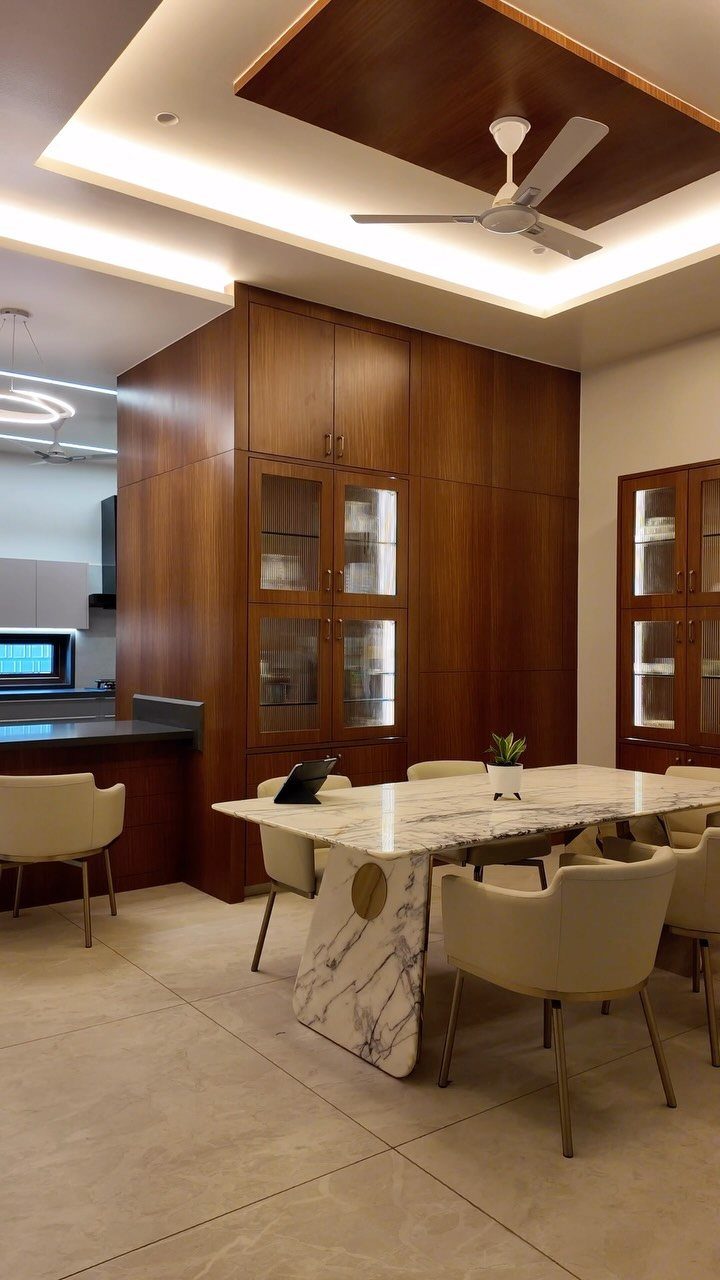
Ambient light fills the room, task light illuminates the table, and accent light highlights architecture or art.
Layering light types gives control over mood without replacing fixtures. Dimmable cove lighting on a separate switch lets the ceiling glow during conversation while the table stays bright for serving.
Recessed cove lighting like this requires a dropped ceiling or bulkhead, which adds framing and drywall work. Surface-mounted LED strips behind a floating valance give a similar effect on flat ceilings and cost less to install.
4. Statement Art
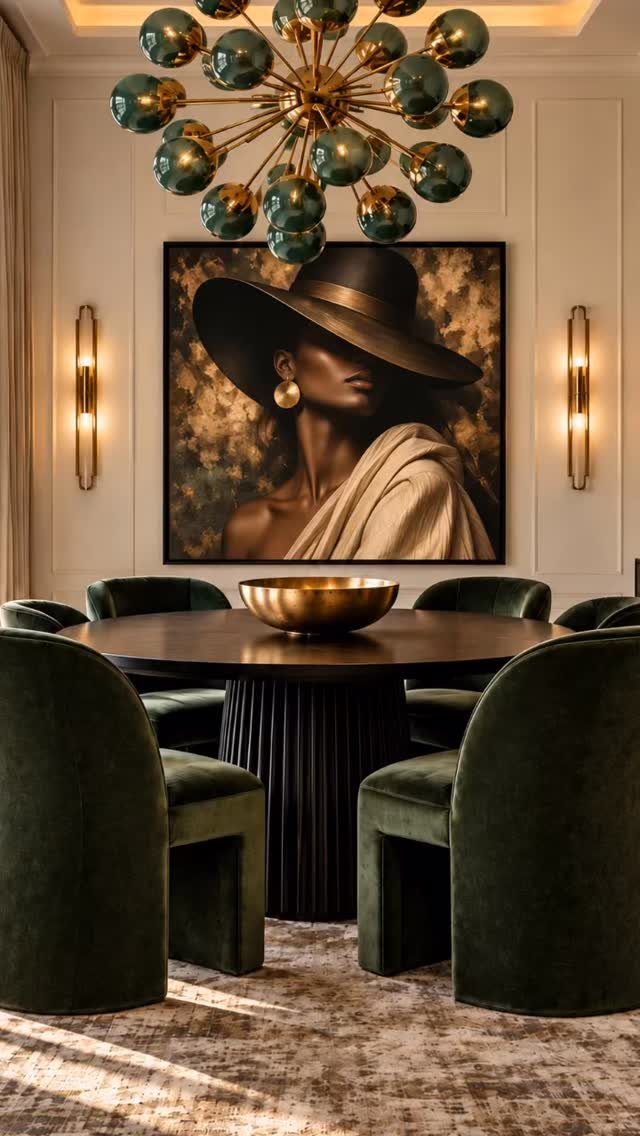
A large portrait pulls the room’s palette into one piece, and repeating its colors in the table setting makes both feel intentional.
Statement art lands better as the only large piece on that wall. Grouping smaller pieces around it dilutes the effect, and the eye splits between them instead of settling on the main image.
Scale matters more than subject. A portrait or abstract piece that holds a wall in a dining room needs to be large enough to balance the furniture below it, or it should sit in a gallery grouping.
5. Non-traditional Table Shapes
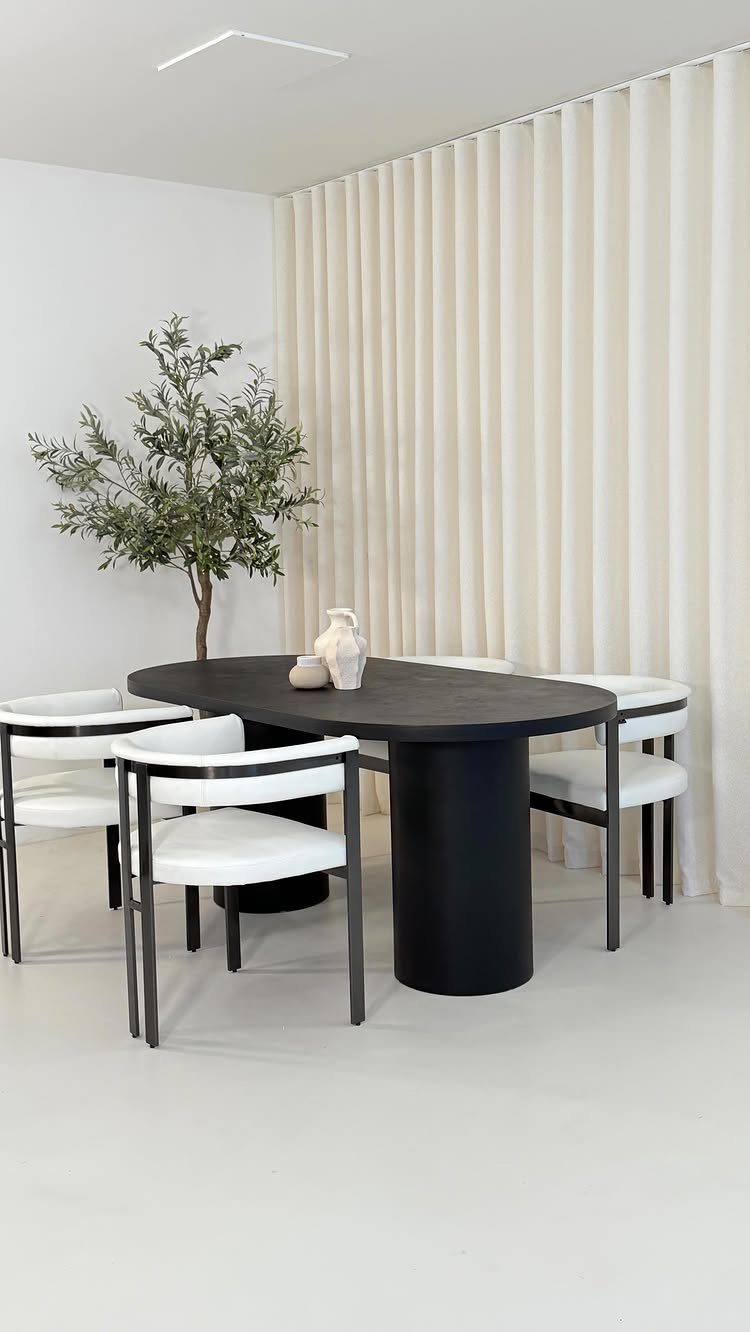
Oval tables fit more people into a narrow room than rectangles do because the curves clear the ends, and they soften a space dominated by straight walls and square windows.
The black oval here makes it easier to move around in tight quarters. An oval also pairs well with mixed chair styles because the curved edge feels less formal than a rectangle.
Round tables encourage conversation but take up more floor space relative to seating capacity. An oval gives the same social flow while fitting better in rooms where one dimension is longer than the other.
6. Dining Room Rug
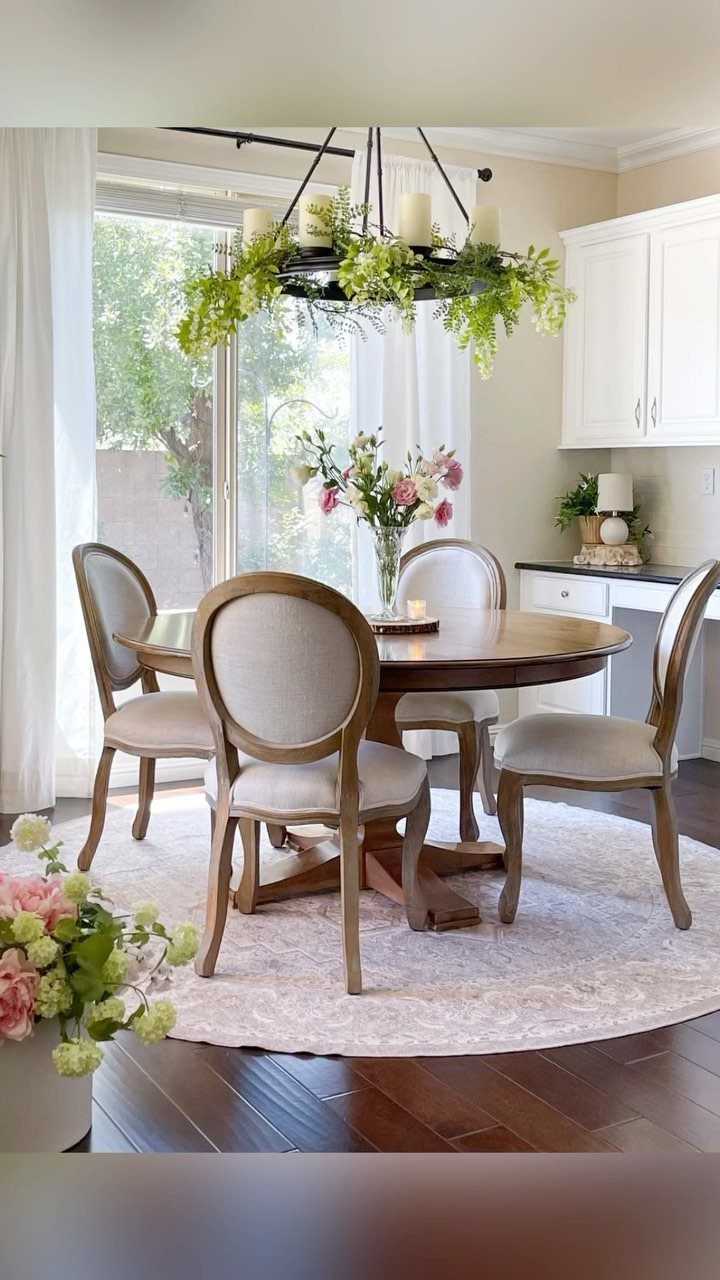
A rug defines the dining area in an open floor plan and protects the floor from chair scrapes.
The rug should extend far enough beyond the table on all sides so chairs stay on the rug when pulled out.
Flatweave rugs clean easier than high-pile options and sit low enough that chairs don’t catch on the edge. Wool and polypropylene both handle spills well, though wool costs more and needs professional cleaning.
7. Indoor-Outdoor Dining Integration
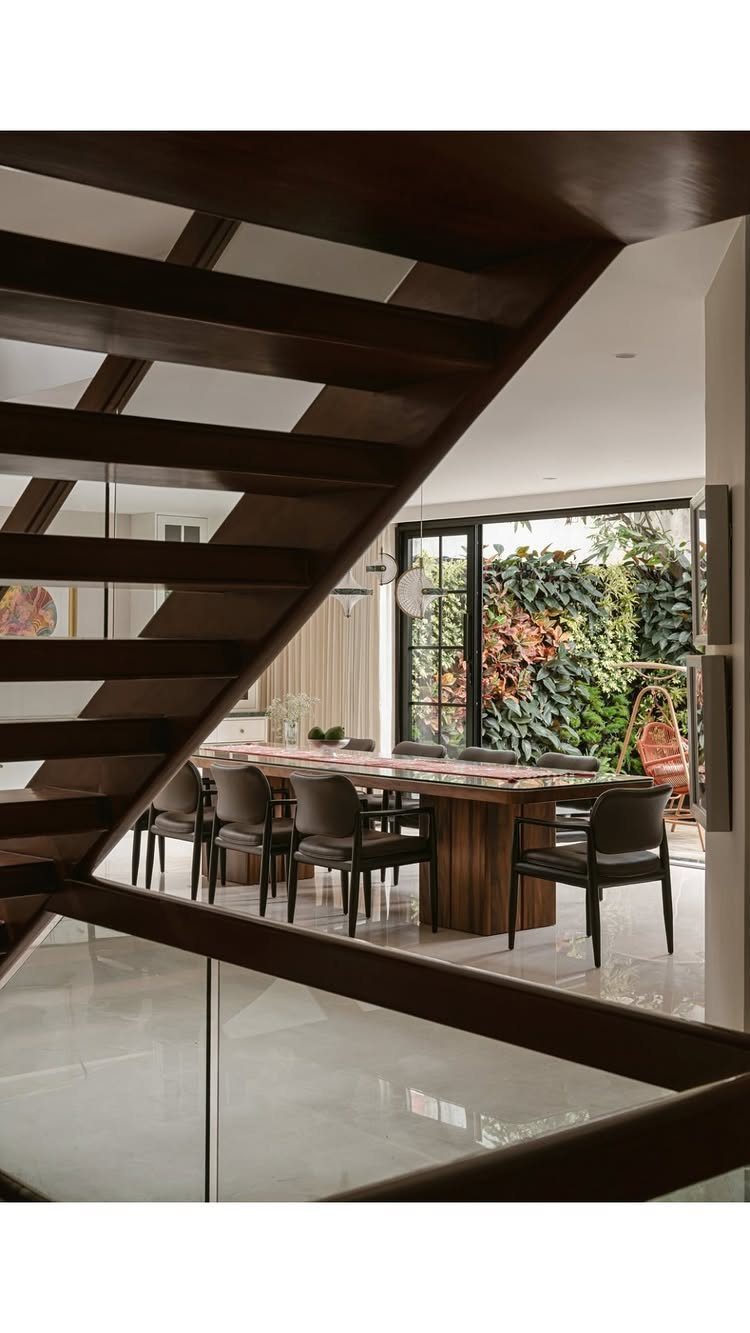
Glass doors that fold or slide fully open turn the dining room into part of the garden, and the vertical green wall here makes the boundary feel planted rather than built.
This approach demands either an already finished outdoor side or a budget that covers simultaneous work on both. Opening the room to an unfinished patio just frames what is not done yet.
The setup requires similar flooring on both sides so the transition reads as continuous. A step down or a material change breaks the effect.
8. Wood, Stone, and Leather
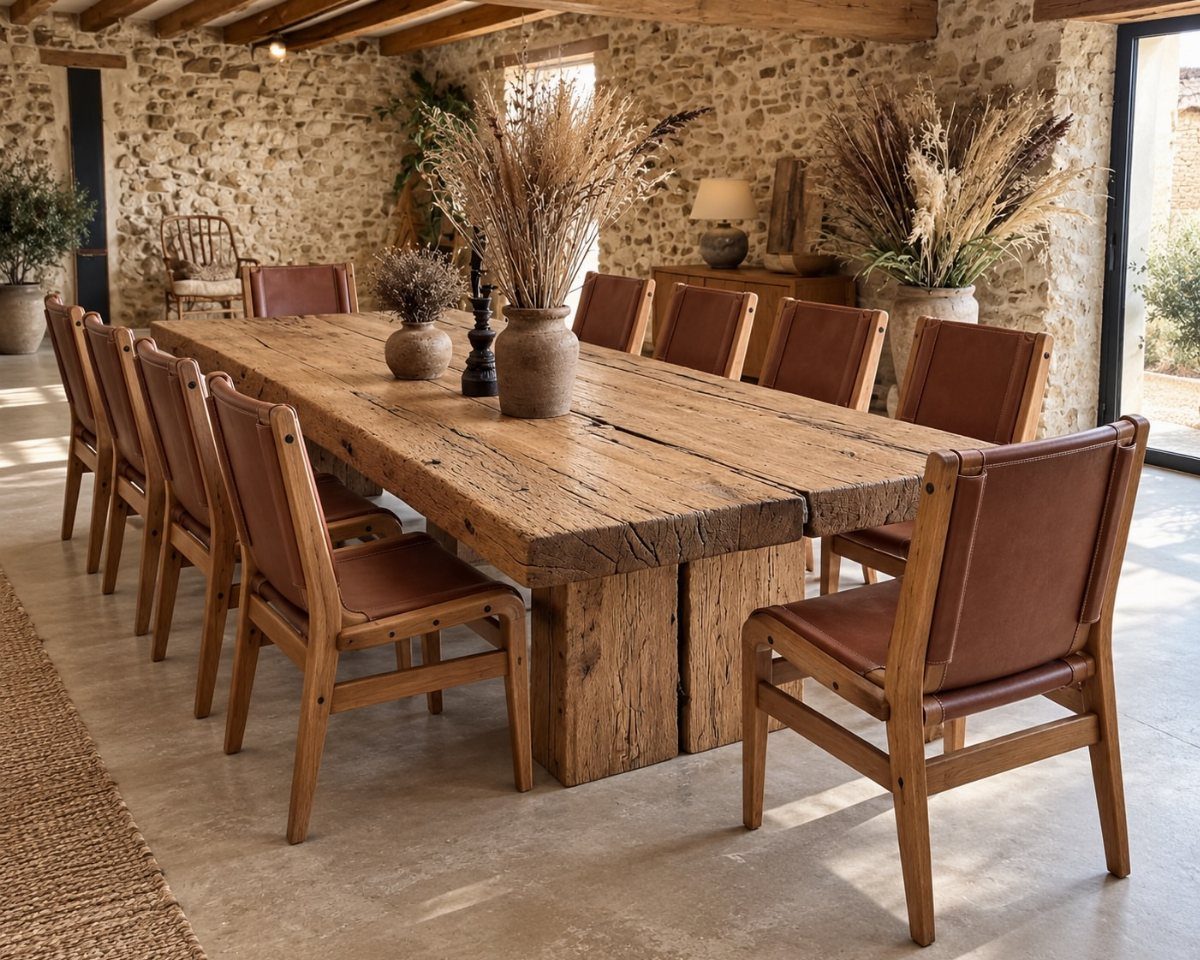
These 3 materials age visibly instead of trying to stay new, so scratches and patina read as character rather than damage.
The stone wall here does not need to be structural. Thin stone veneer adhered to drywall gives the same look at a fraction of the weight and cost, and most veneer installs as a weekend project.
Leather chairs develop a worn surface over time. If that bothers you, go with a tightly woven fabric instead.
9. Linen Tablecloth
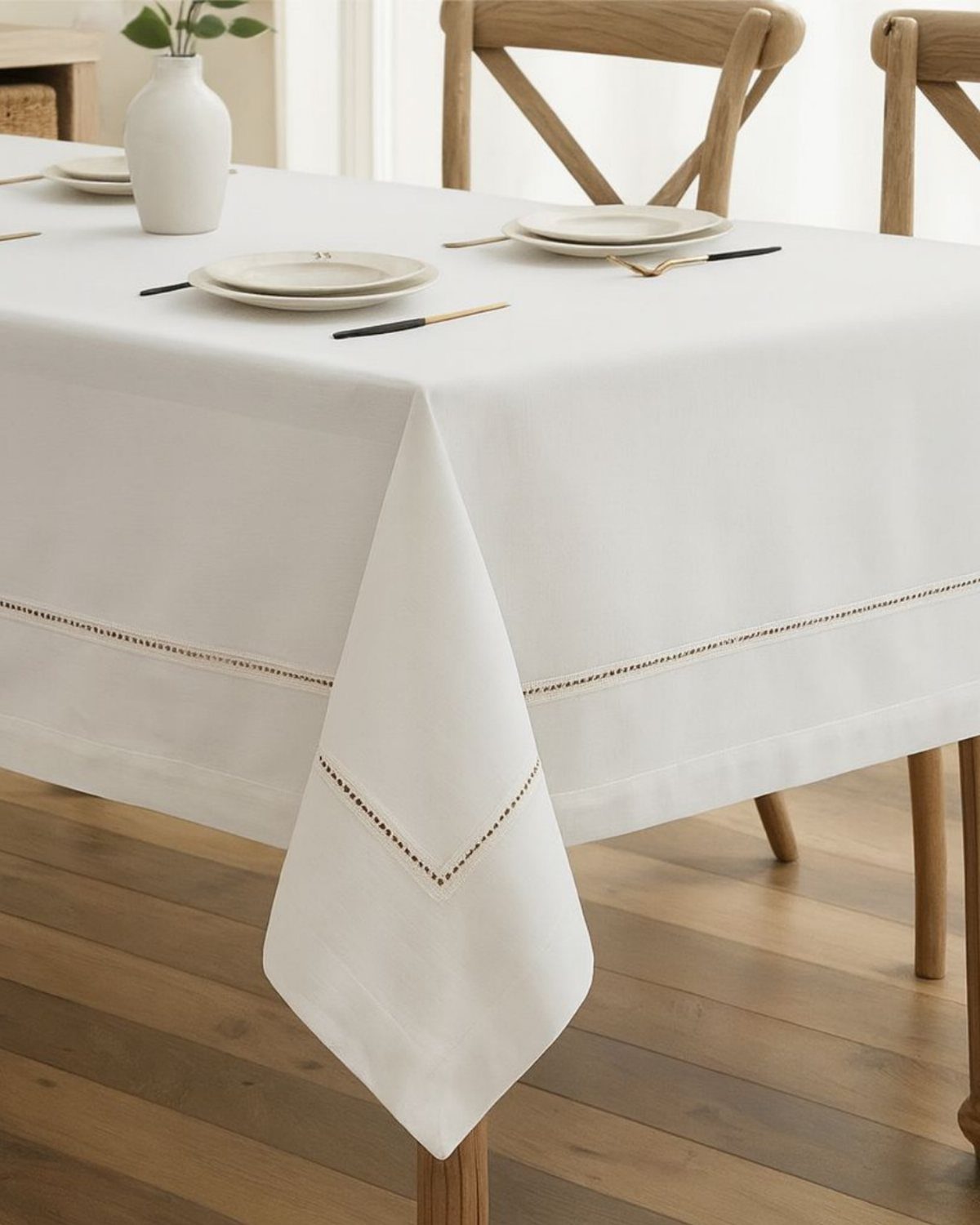
Linen softens a wooden table without covering its grain, and the fabric holds creases naturally so it never looks rumpled.
The border here adds formality, but plain linen works just as well and costs less. Washing linen hot shrinks it, so buy a size larger or wash cold.
Linen stains easily and shows spills immediately. Treating it with a fabric protector helps, though it changes the texture slightly.
10. Colorful Tableware
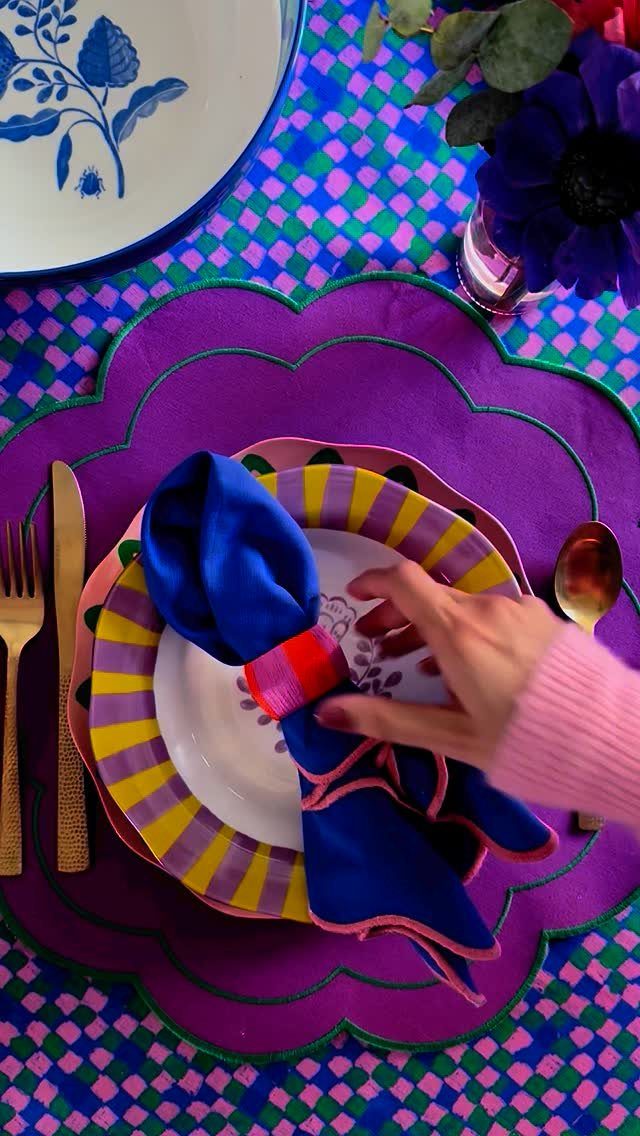
Mixing colors and patterns across plates, napkins, and placemats lets each meal feel different without buying new furniture.
Trying to match saturation across every item usually fails because dye lots vary.
Scalloped edges and irregular shapes break up the grid of a rectangular table. Solid rounds or squares work too, but the scallop adds texture that photographs well.
11. Potted Plants
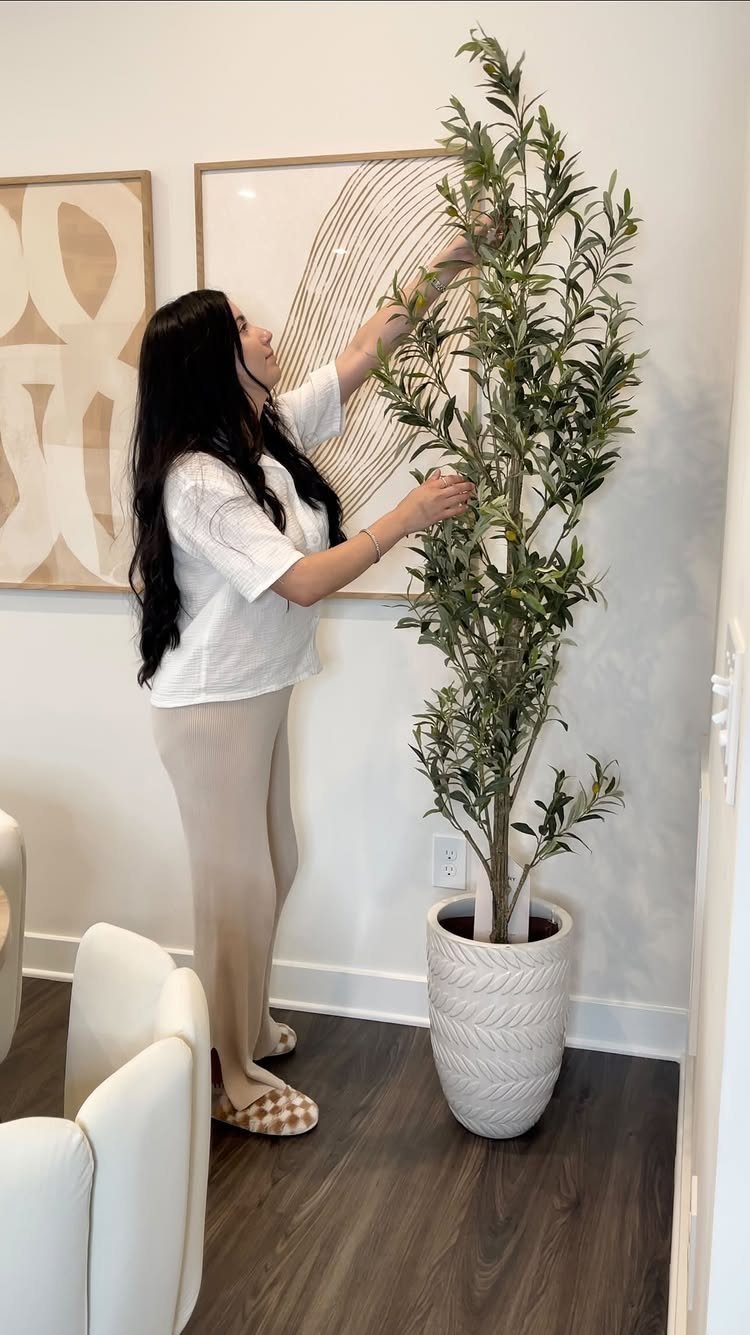
A tall potted plant fills vertical space while leaving the floor clear, which matters in rooms where the table already crowds the perimeter.
Olive trees and fiddle-leaf figs both grow several feet tall indoors and make a statement in any corner. They need consistent watering but not daily attention.
Glazed ceramic holds moisture better than terracotta, so the soil dries out slower and needs less frequent watering.
12. Open Concept Dining Spaces
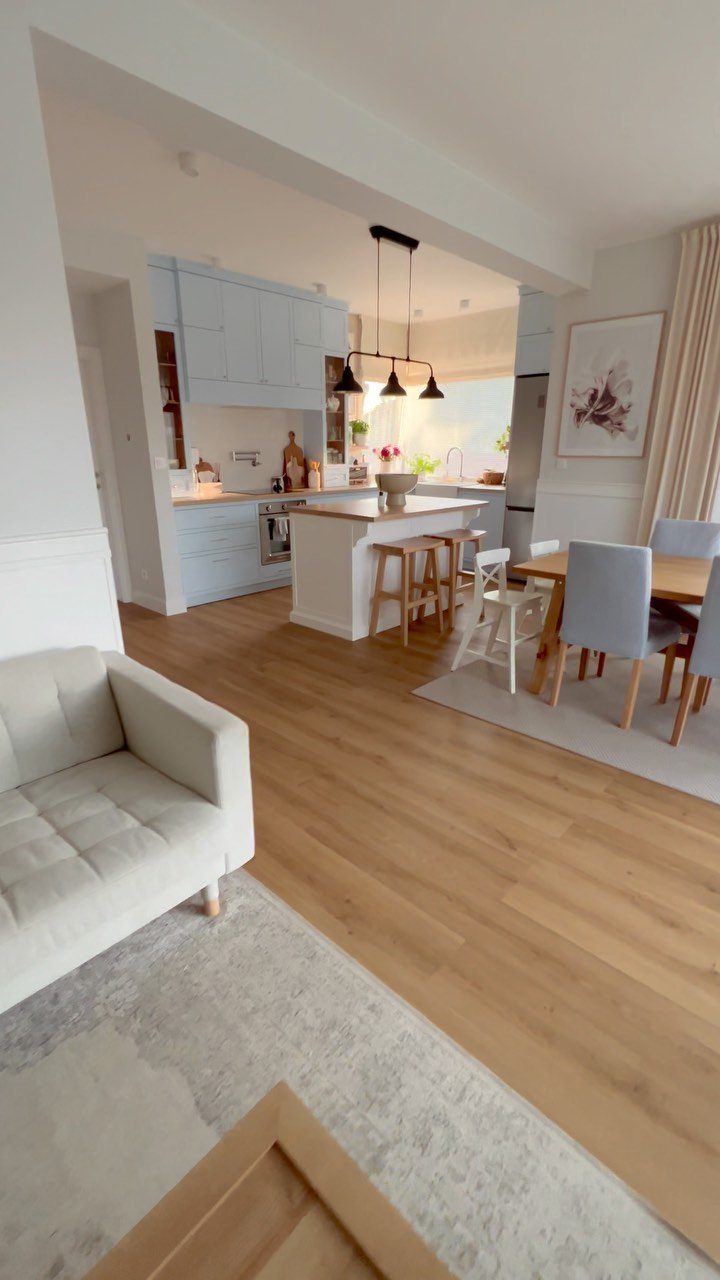
Removing the wall between dining and living areas makes both rooms feel larger, and sightlines stretch farther when furniture floats instead of lining up against barriers.
The layout here uses the dining table to separate the kitchen from the seating area without blocking movement. Rugs under each zone define their boundaries when walls do not.
Open plans carry sound farther, so conversations in one area reach the others. Adding a ceiling baffle or area rug absorbs some of that, but the space stays louder than separate rooms.
13. Dining Room Accessories
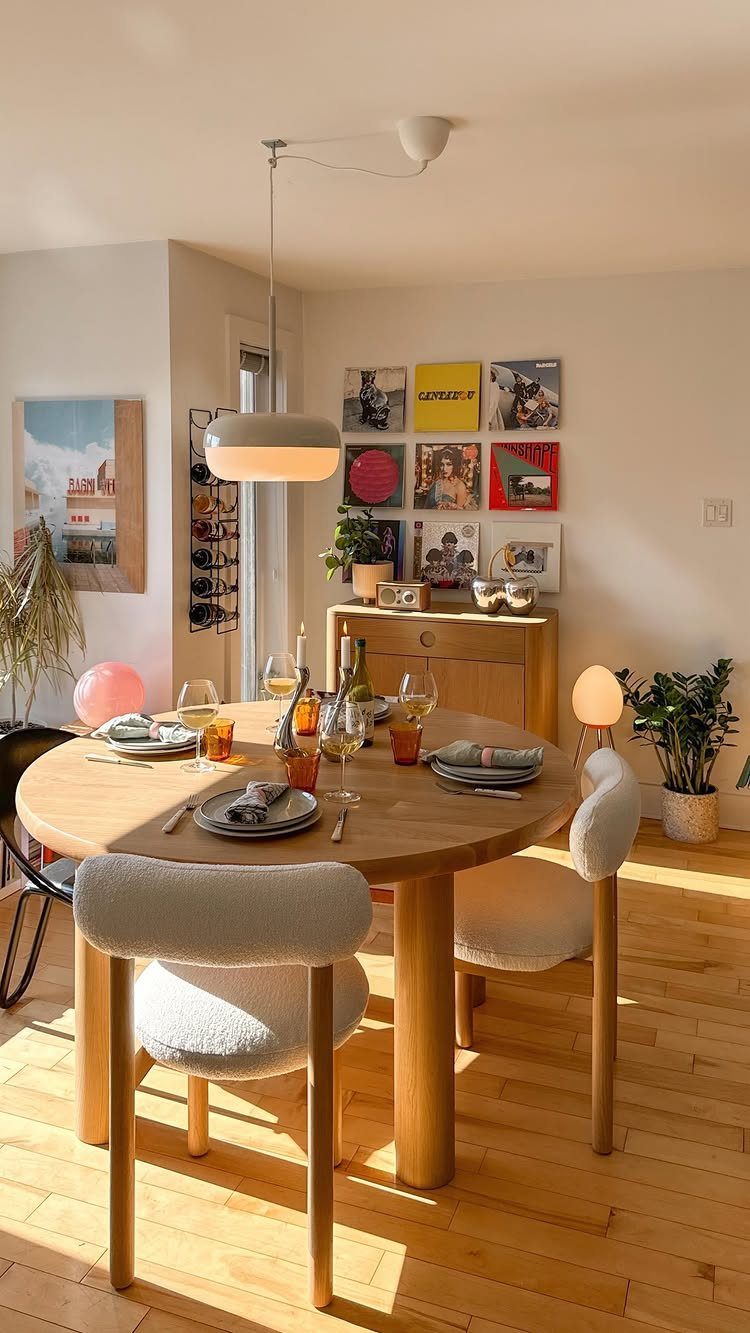
A sideboard holds serving dishes during meals and displays objects the rest of the time, so it earns its floor space twice.
Grouped accessories on one surface look intentional. Spreading them evenly reads as clutter.
A record player and framed albums turn a collection into decor, whether displayed on shelves or leaned against the wall. Swapping albums changes the look seasonally or when you tire of what is up.
Wall groupings work best in odd numbers and asymmetric arrangements. An odd grouping feels balanced without looking formulaic.
Creating a Stylish Dining Space
The table anchors the room, so it should suit how you actually use the space.
An extendable design handles dinner parties when you need them and stays compact the rest of the year, and a round table works in tight quarters where a rectangle would block the path.
Pair the table with seating that holds up to daily use. Leather upholstery and woven textures add depth without needing constant care, and metal accents in chair legs or sideboard hardware introduce contrast against wood.
A sideboard with tinted glass doors keeps serving pieces out of sight but visible enough to locate quickly.
Storage that sits flush to the wall leaves room to pull chairs out fully, which matters more than it seems until you try to seat six.
Pendant lights over the table or a chandelier scaled to the room complete the setup without crowding the ceiling plane.
Now, clients are embracing the idea of the dining room as a destination again. They’re taking more risks with wallpaper, statement lighting, and bold fabrics, creating rooms that feel layered, intentional, and worthy of gathering.
Choosing the Right Dining Table
The table’s shape changes how many people fit and how much floor space it claims.
Rectangular tables fit formal layouts and rooms where one dimension runs longer. An extendable version adds flexibility for occasions that need more seats without packing everyone shoulder to shoulder the rest of the time.
Material affects maintenance. Wood shows scratches but develops patina, while glass stays clean with regular wiping and reflects light back into the room.
Size the table so chairs pull out fully without hitting walls or other furniture. That means at least 36 inches of clearance on each side where people sit.
Importance of Lighting
A chandelier or glass pendant fixture draws the eye up and defines the dining area from the ceiling down.
Ambient ceiling lights fill the room, wall sconces add indirect glow, and dimmers on each circuit let you adjust intensity for different occasions.
Combining multiple sources instead of relying on one overhead fixture eliminates harsh shadows and makes the room feel larger.
Table lamps on a sideboard or credenza extend the layer without requiring new wiring, and they add warmth during meals when overhead lights dim.
Frequently Asked Questions
What are some modern decor ideas for a dining room?
Pick a table that does the work, then match chairs and a light fixture to the size of the room.
A cabinet with glass fronts keeps things visible without taking up visual space, and mixing wood with metal or leather gives the room some texture. Size the rug so chairs can slide out and stay on it.
What are the dining room decor trends for 2026?
Rich jewel tones in velvet upholstery, bold patterns through wallpaper or art, and layered lighting are defining contemporary dining rooms this year.
Sustainable materials like wood and stone that age visibly are replacing surfaces that try to stay new, and open-concept layouts are using furniture placement instead of walls to define zones.
Mixed seating styles and colorful tableware add personality without requiring major renovation.






