A round pedestal table fits square rooms and tight corners by putting all the seating at equal distances, while a rectangular table anchors open-plan spaces and seats more people along its length.
1. Striking Dining Table Centerpiece
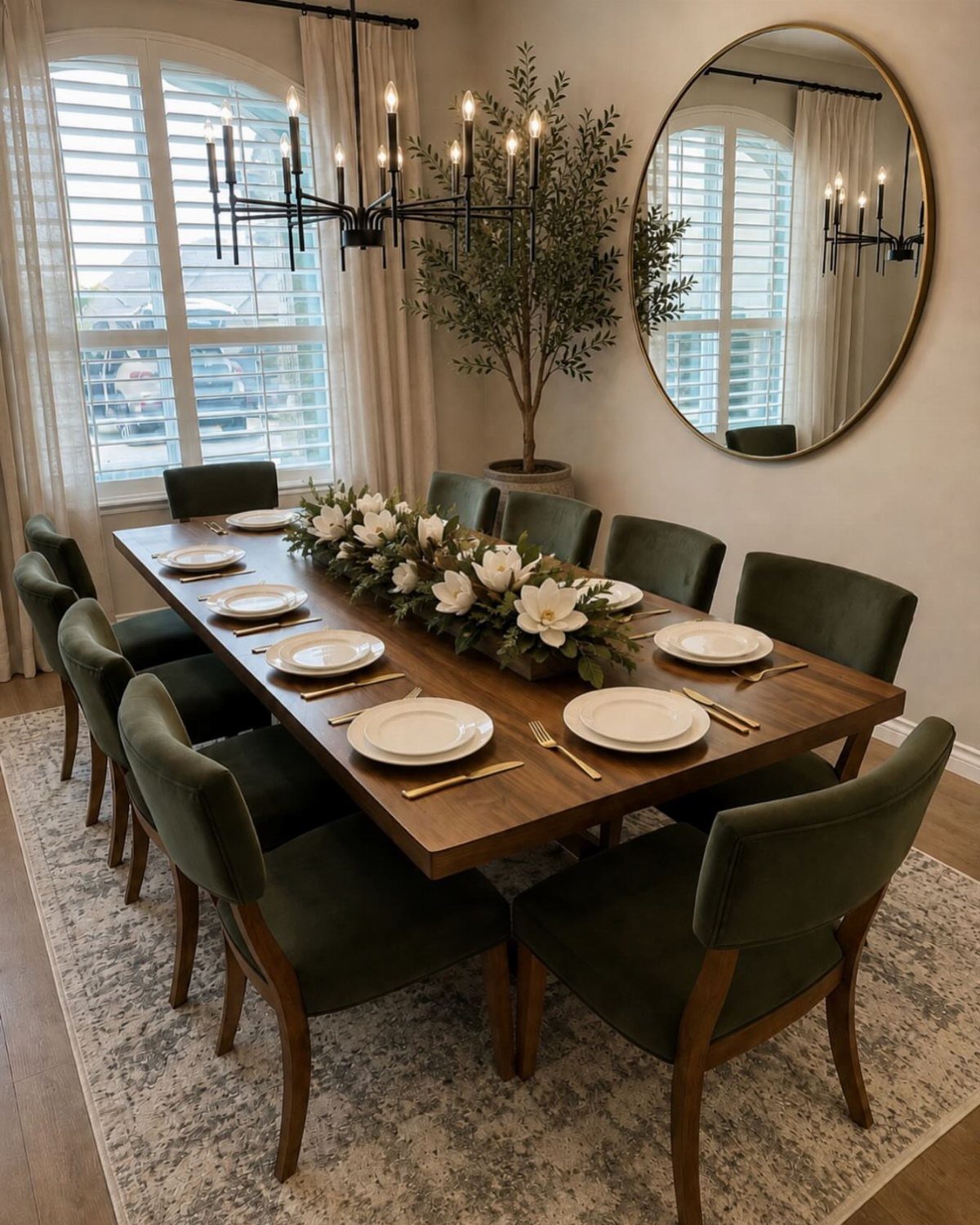
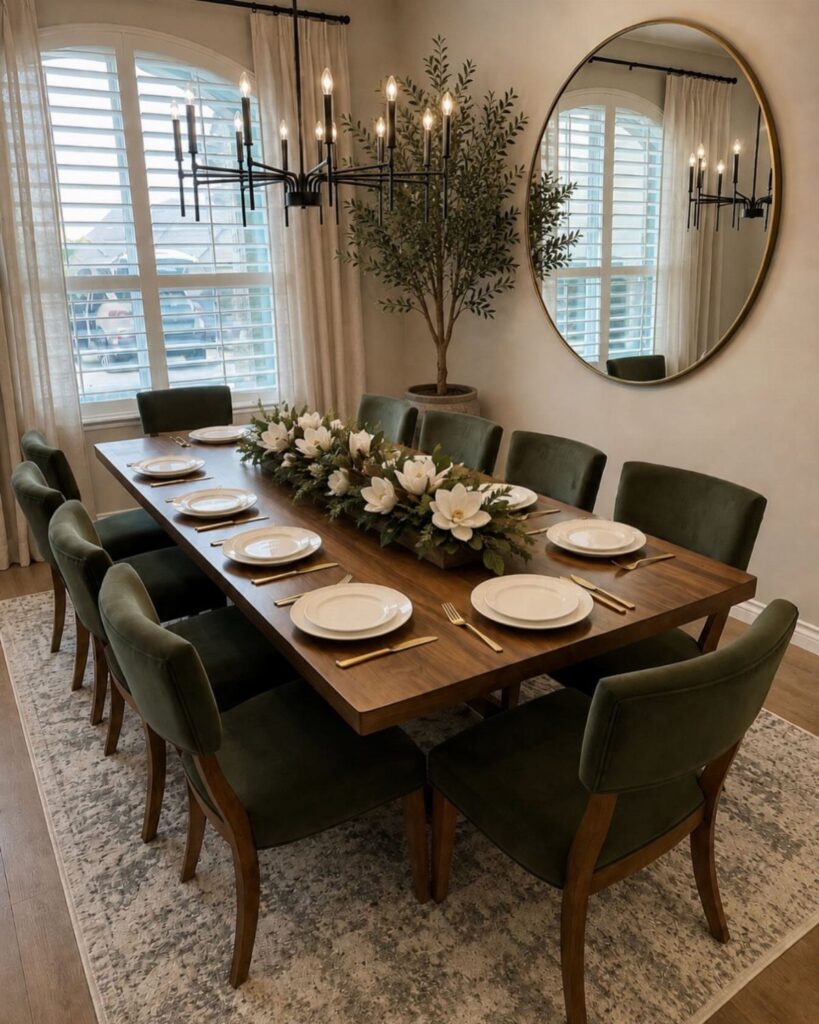
A long arrangement down the center of the table pulls the eye and makes the dining surface the focal point of the room.
Fresh flowers work well, but you can also layer candles, greenery, or a runner underneath to add texture without blocking sightlines across the table.
Keep the centerpiece low enough that people can see each other when they sit down.
I like arrangements that stay low enough to leave plenty of room for conversation across the table. If your table is narrow, scale the width back so guests have room for their plates and elbows.
2. Pendant Light Above the Dining Table
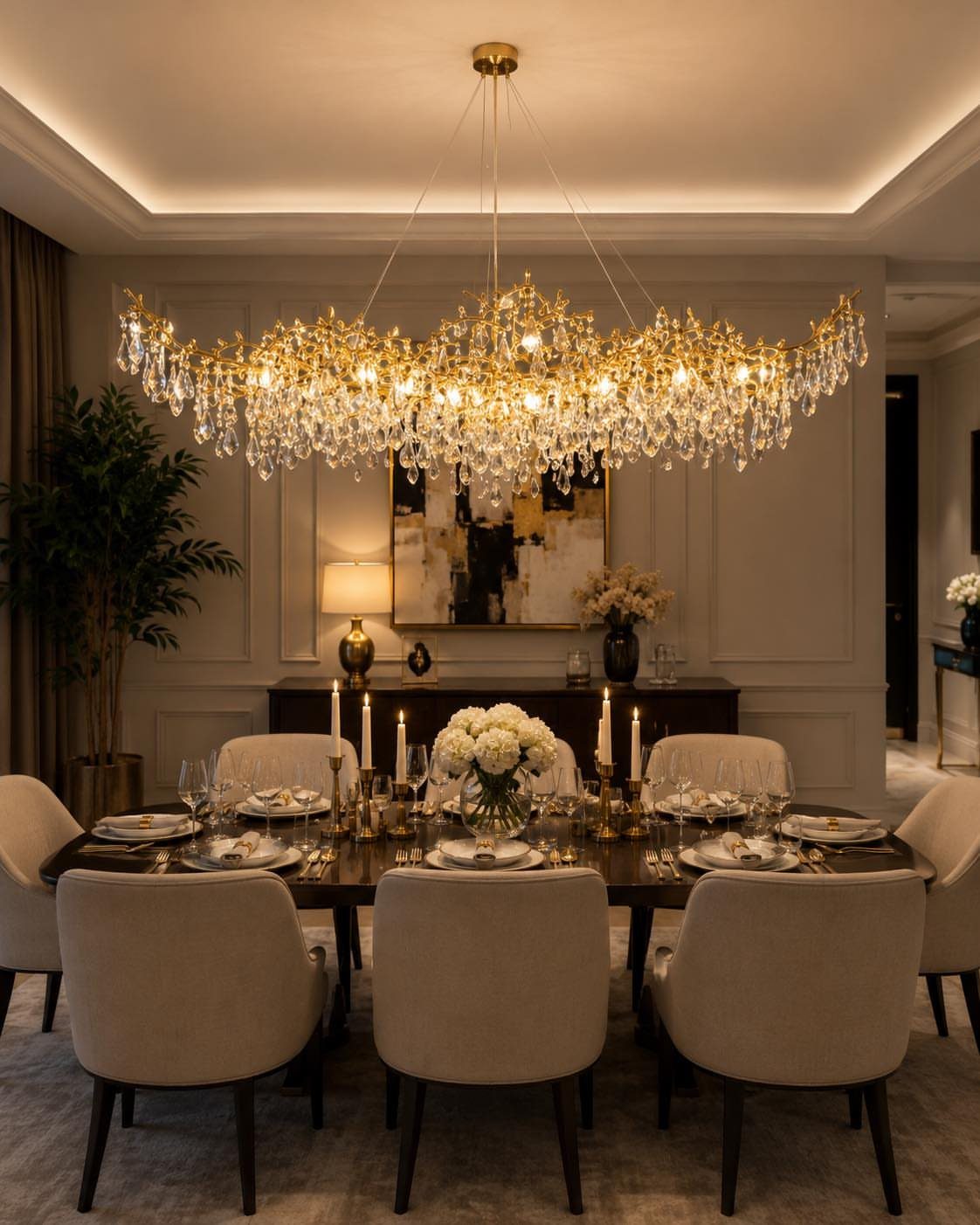
A pendant or chandelier hung directly over the table defines the dining area and adds task lighting where you need it most. Position the bottom of the fixture low enough to light the table without glaring into anyone’s eyes.
Choose a fixture that scales with your table: a chandelier about half to two-thirds the width of the table feels balanced. Dimmer switches let you adjust the mood from bright task lighting during meals to softer ambient light afterward.
3. Use a Round Pedestal Table
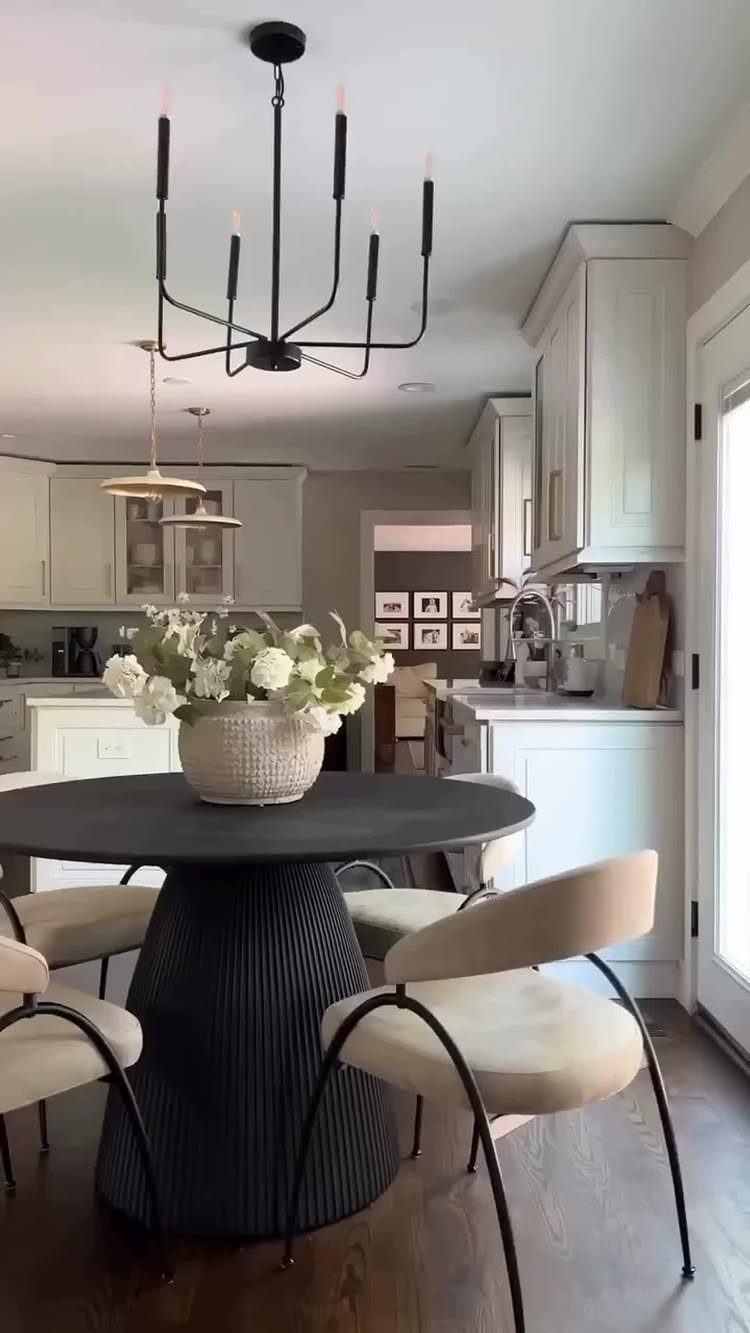
A round pedestal table fits tight corners and square rooms better than a rectangular one because it puts all the seating at equal distances and wastes less floor space.
The single central leg leaves room for chairs to slide in from any angle, which matters in small dining areas where a four-legged table would block access.
Look for a diameter that fits the number of people you seat regularly. Round tables make conversation easier since everyone faces inward, but they hold fewer place settings than a rectangle of the same length.
4. Rectangular Dining Table
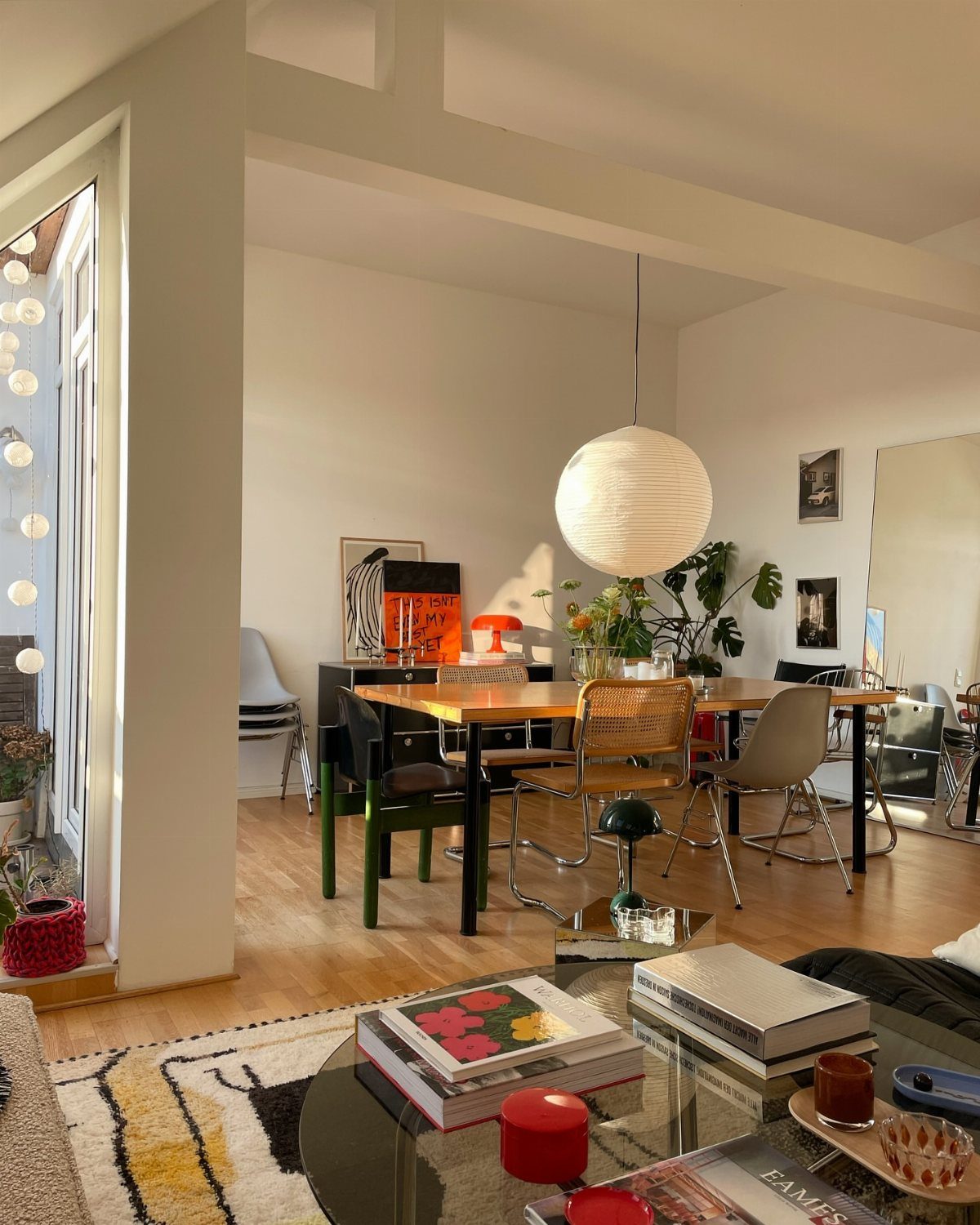
Rectangular tables anchor open-plan spaces by marking the dining zone without walls. The long axis creates a natural divider between the kitchen and living area, and guests seated along the sides define the room’s boundaries.
In a combined space, position the table so clearance remains on all sides for chairs and foot traffic.
Mixing chair styles, like the mismatched seating here, keeps the look casual and flexible if you need to pull in extra seats from other rooms.
5. Dining Table with Chairs and Benches
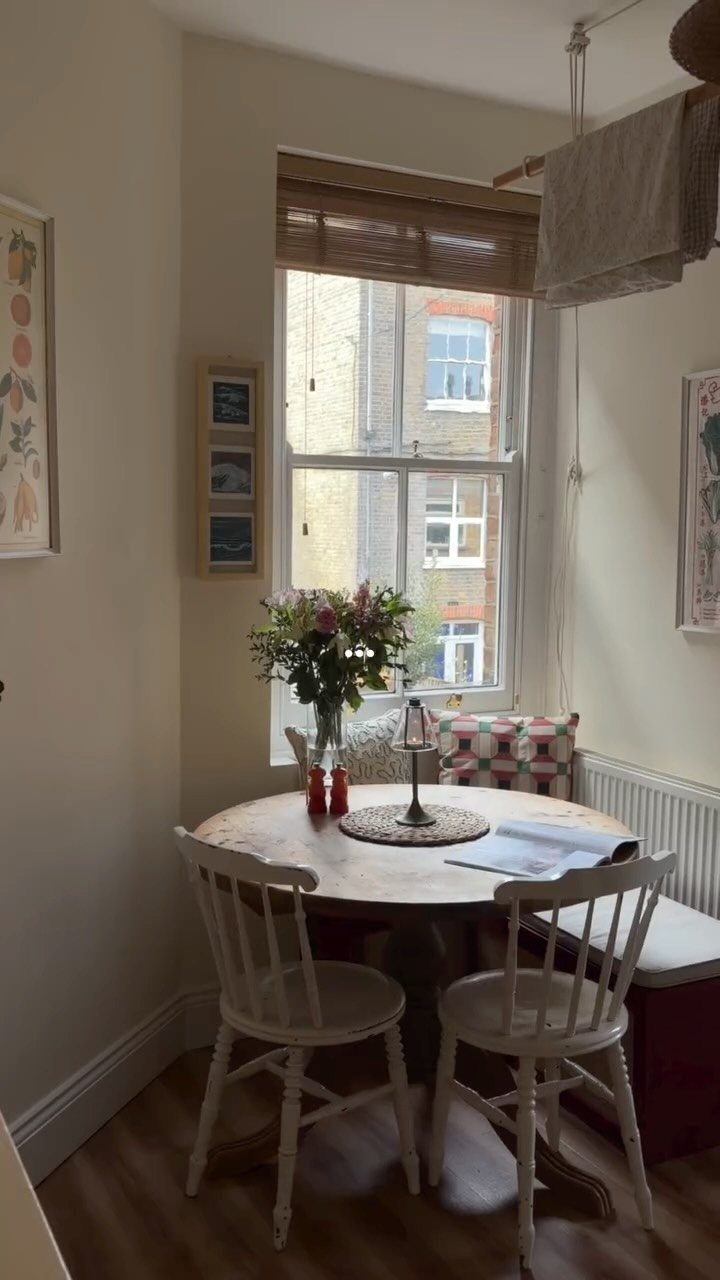
Pairing chairs with a bench gives you more seating in less floor space. A bench tucks completely under the table when not in use, and several people can squeeze onto it without needing individual chair backs to clear.
Benches work best along the wall side of the table, where you slide in from the end rather than stepping over.
Add a cushion if the bench seat is wood or metal, since you lose the padding and back support that chairs provide.
6. Oval Dining Table
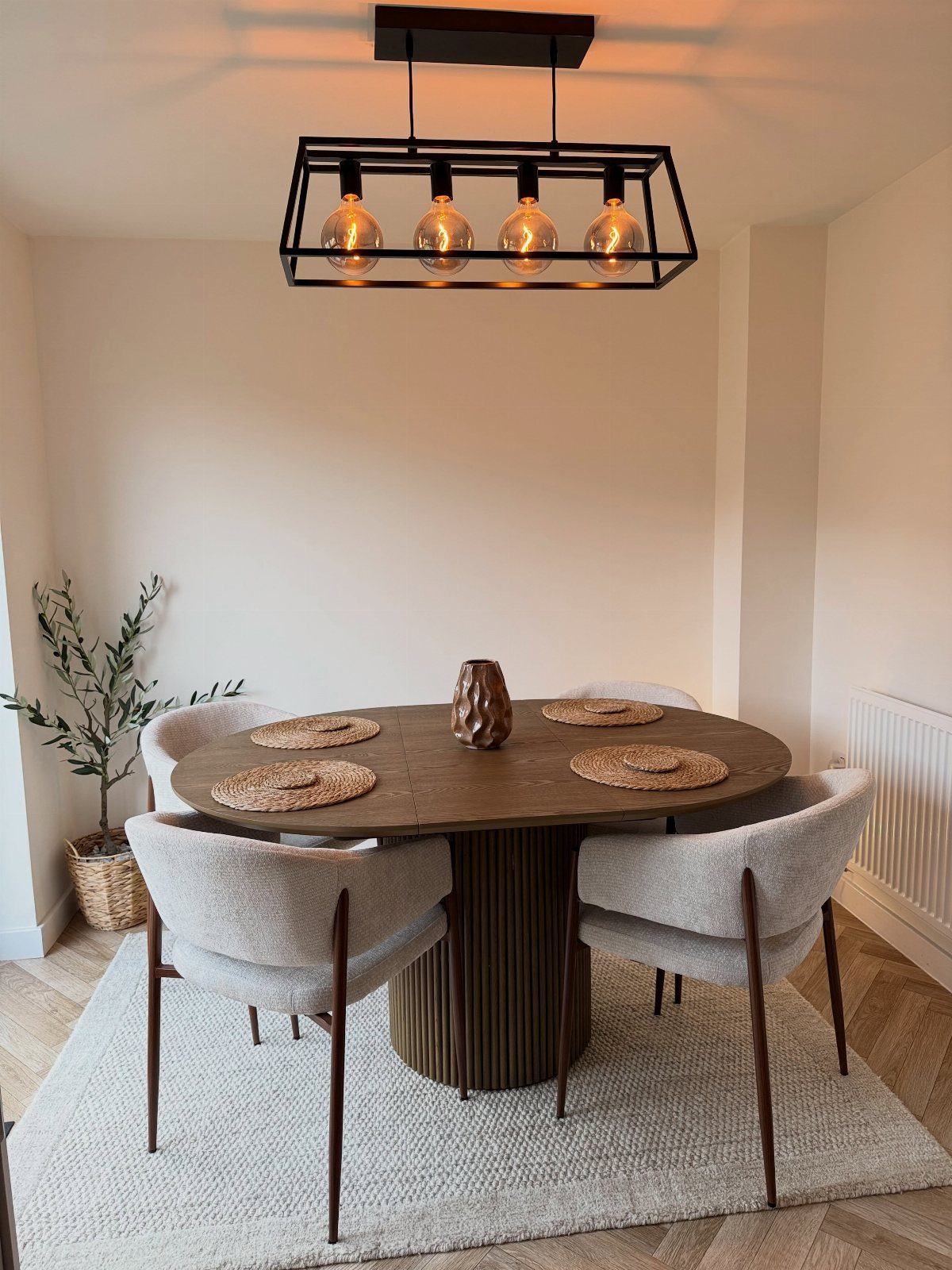
Oval tables offer the same soft edges and easy conversation as a round but fit more people along the length. The shape works in rectangular rooms where a round table feels too small and a full rectangle looks too formal.
An oval between 60 and 72 inches long seats 6 comfortably, and the lack of sharp corners makes it easier to move around in tight layouts.
Pair it with a linear pendant to echo the table’s longer axis and balance the fixture’s weight visually.
7. Neutral Wood Dining Table
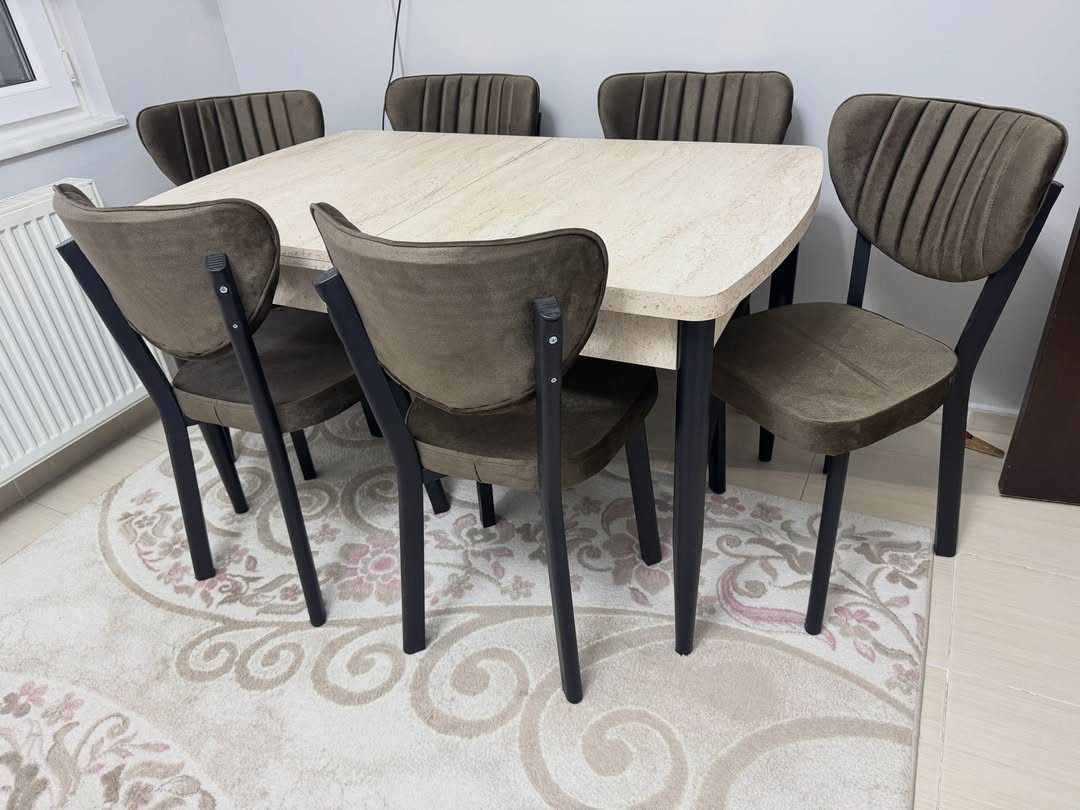
Light wood keeps the dining area feeling open and works in rooms that already carry darker furniture or bold wall colors.
Oak, ash, and maple all stay pale without staining, and the grain shows through clearly enough to read as real wood rather than laminate.
Pair neutral wood with upholstered chairs in a solid color so the table reads as the anchor piece.
Grey, olive, or cream seating lets the wood grain stand out without competing for attention, and a patterned rug underneath adds texture without overwhelming the simple palette.
Choosing the Right Table Size
Figure out how many people actually sit down to eat on a typical Tuesday, not how many chairs you need for Thanksgiving.
Leave about 36 inches between the table edge and walls or other furniture so people can pull out chairs and move around without squeezing past.
If someone uses the table for work, homework, or projects between meals, account for that spread when you measure.
An extendable table handles occasional hosting without taking up permanent floor space.
If you host a few times a year, a smaller table day-to-day gives you back space you can actually walk through, and if everyone eats together most nights, fit the people who show up and leave room to wipe down between homework and dinner.
Decorating Around the Table
A textured placemat or a loose linen runner brings in softness where you want it and leaves the rest of the surface open.
Low candles or a string of small lights set the mood without blocking sightlines, and neutral wood or warm tan keeps the room from feeling cold.
Framed prints and a bold centerpiece suit clean-lined rooms, and a sideboard stacked with old glass fits the farmhouse look.
A pair of lamps on a buffet or chest adds ambient light, and an area rug underfoot defines the dining zone. Sconces or small recessed lights over each end of the table supplement a chandelier.
Maintaining the Dining Area
Drawers built into the apron or a bench with a lift-up seat keep linens and flatware close by so the table stays clear between meals.
A sideboard, buffet, or floating shelves nearby holds plates, glassware, and linens so the table stays clear between meals.
In homes with kids or pets, choose finishes and fabrics that tolerate spills and scratches so the room resets quickly after everyday use.
Storage and whatever sits on the table should either make setting up faster or mark off the dining zone from the rest of the room.
A tidy area looks better and functions better, and the room should support its real job without needing constant upkeep.
Frequently Asked Questions
How do I organize my dining room?
Start with the lighting fixture centered over the table, then add a rug if it helps define the zone or makes cleanup easier.
Put storage last: a sideboard or buffet should hold serving pieces and linens without blocking chair movement or foot traffic around the table.
How to make a dining table look expensive?
If the frame and legs hold steady, replace just the top: stone, lacquered wood in a saturated color, or a sanded finish with hand-rubbed oil can shift the look completely.
Small changes like recovering seat cushions, swapping light fixtures, or adding a linen runner shift the mood without requiring a full redesign.
What types of dining room tables are available?
Rectangular tables anchor open spaces and seat the most people, while round and oval shapes fit tight corners and make conversation easier.
What materials should I consider for my dining table?
Pick based on everyday behavior: wood adds warmth but needs more care around water and heat, glass makes small rooms feel lighter but shows fingerprints, and hard surfaces like sintered stone wipe clean quickly after spills.
Pick a material that holds up to how you actually use the table, not one that asks you to change your habits.