
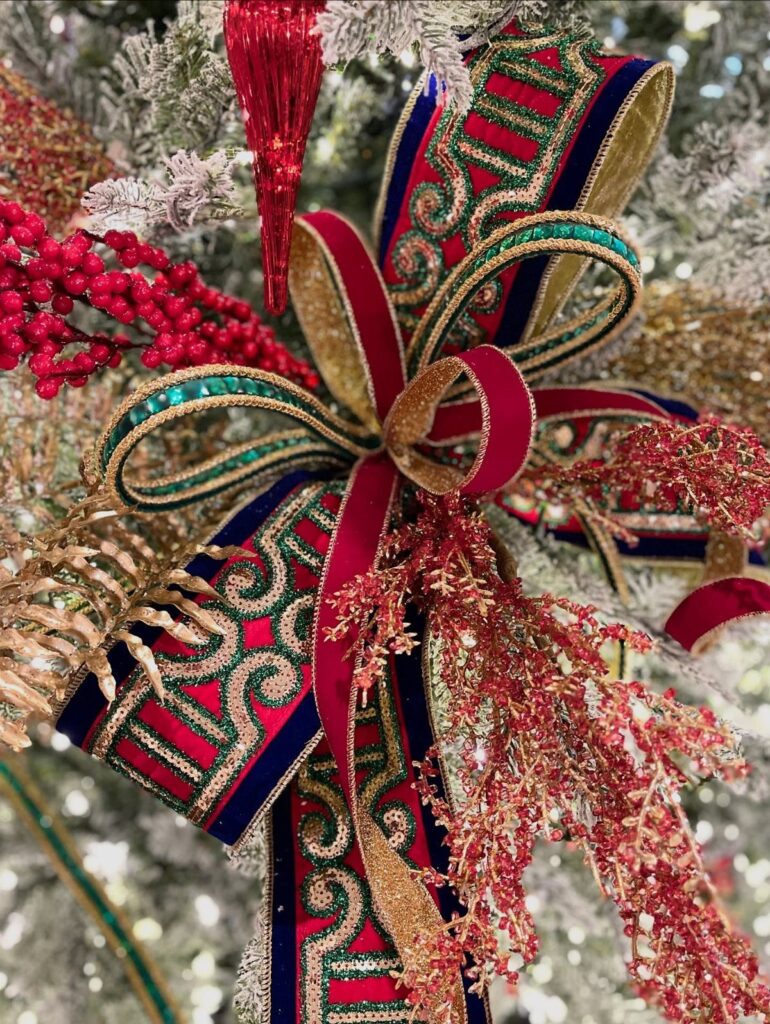
Ribbon options for Christmas trees range from single oversize bows at the top to layered spirals that use 20 yards or more, and the width you pick changes how the whole tree reads from across the room.
If your tree sits in a room where you view it from 6 feet or more, 4-inch ribbon reads better than narrow widths that disappear into the branches.
Wired edges hold the shape you bend them into instead of drooping, and tucking ribbon ends deep into the branches between the trunk and a branch keeps the attachment invisible.
1. Layer Different Ribbons
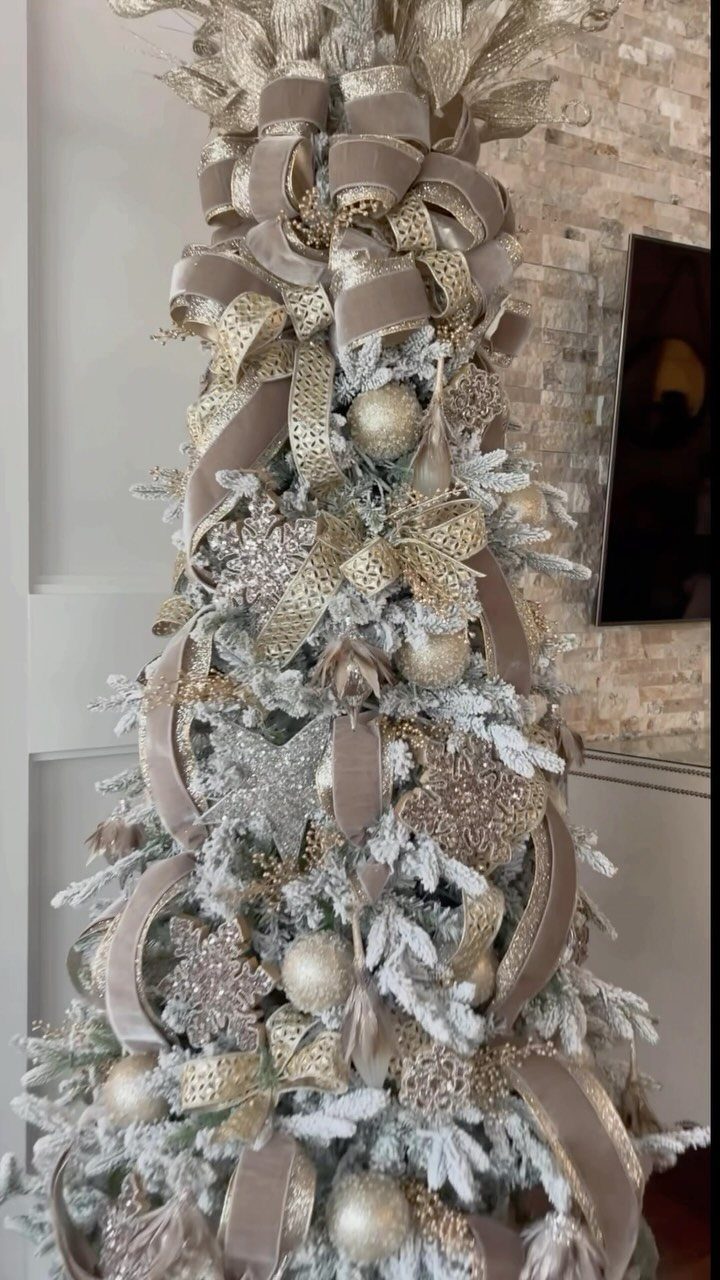
Combining ribbons in different textures and finishes adds depth without buying more ornaments. Pairing a matte velvet with a glittery metallic, both in the same color family, keeps the look coordinated rather than busy.
Start with 2 or 3 ribbons that share at least one color.
Weave them through the tree separately rather than stacking them flat on top of each other. That way each one catches the light on its own and the layers stay distinct all the way around the tree.
2. Wired Ribbon
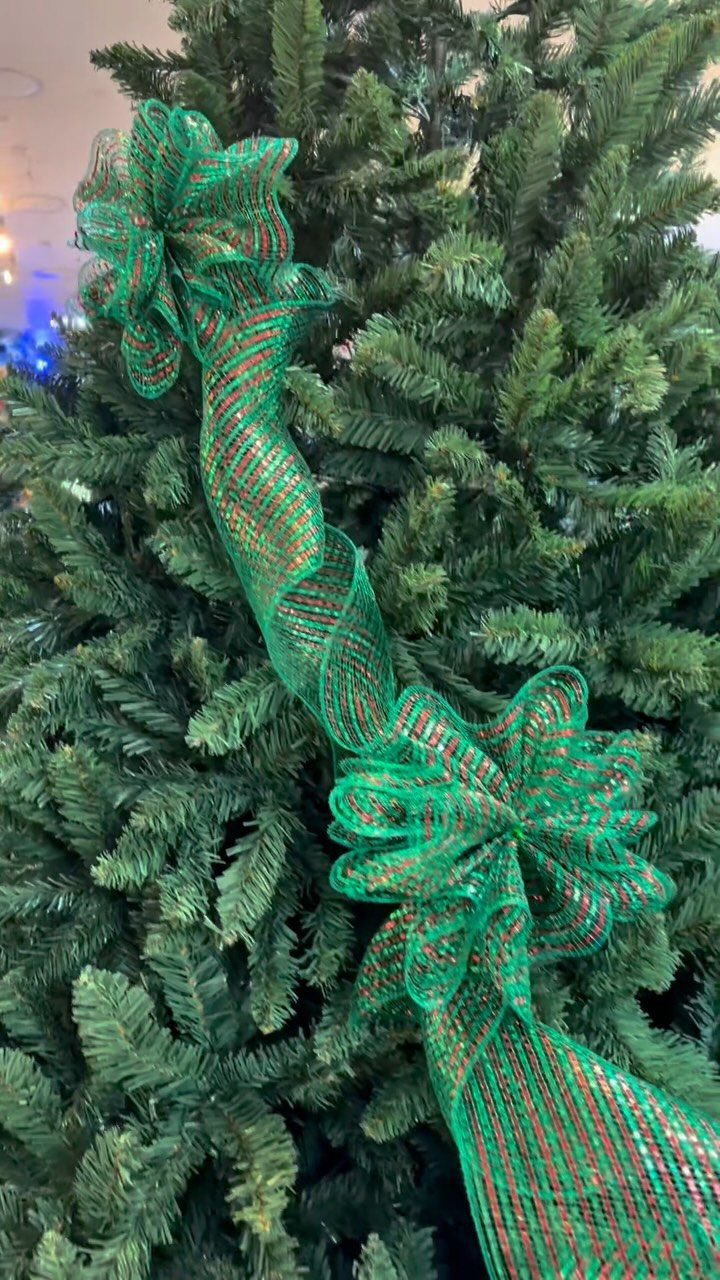
Wired edges let you shape the loops and tails exactly where you want them, and they stay there instead of drooping by Christmas morning.
The wire runs along both edges of the ribbon, hidden inside the fabric, so you can bend it into curves or crisp angles and it holds.
Thread the ribbon through the branches in a spiral, starting at the top and working down.
At the end, tie a bow and pull the loops open, bending the wire to fluff them out. The wire also keeps the bow from flattening against the tree when you lean in to hang ornaments.
3. Use Different Widths
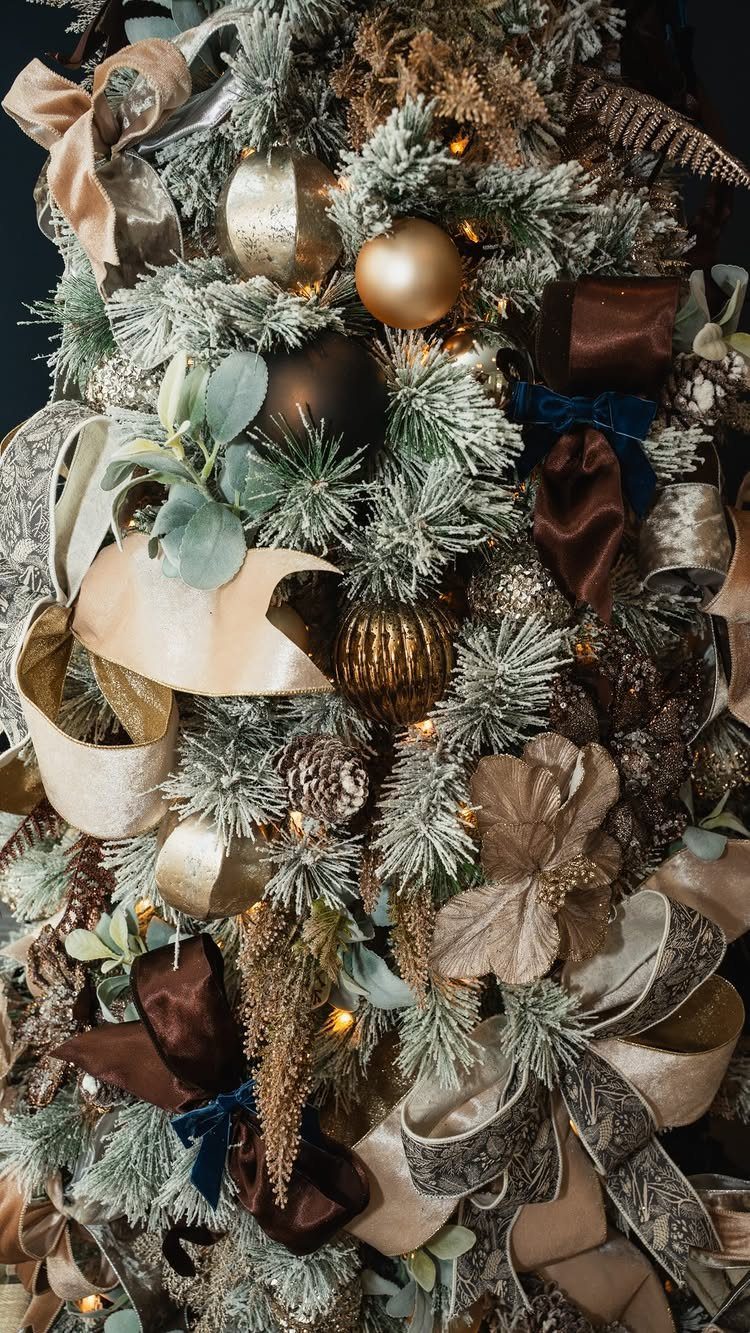
Mixing wide and narrow ribbons gives you more coverage from less yardage and keeps the tree from looking wrapped. One creator working with this approach uses 4-inch ribbon as the base layer and fills in with 1-inch widths around it.
She notes that 20 yards of good ribbon costs about the same as a set of decent ornaments, and it does more visual work.
Start with the widest ribbon first, weaving it vertically or spiraling it around the tree.
Then tuck the narrower ones in wherever you see gaps or want a little contrast. The wider ribbon anchors the whole look, and the narrow ones keep it from feeling too solid.
4. Oversize Christmas Tree Ribbon
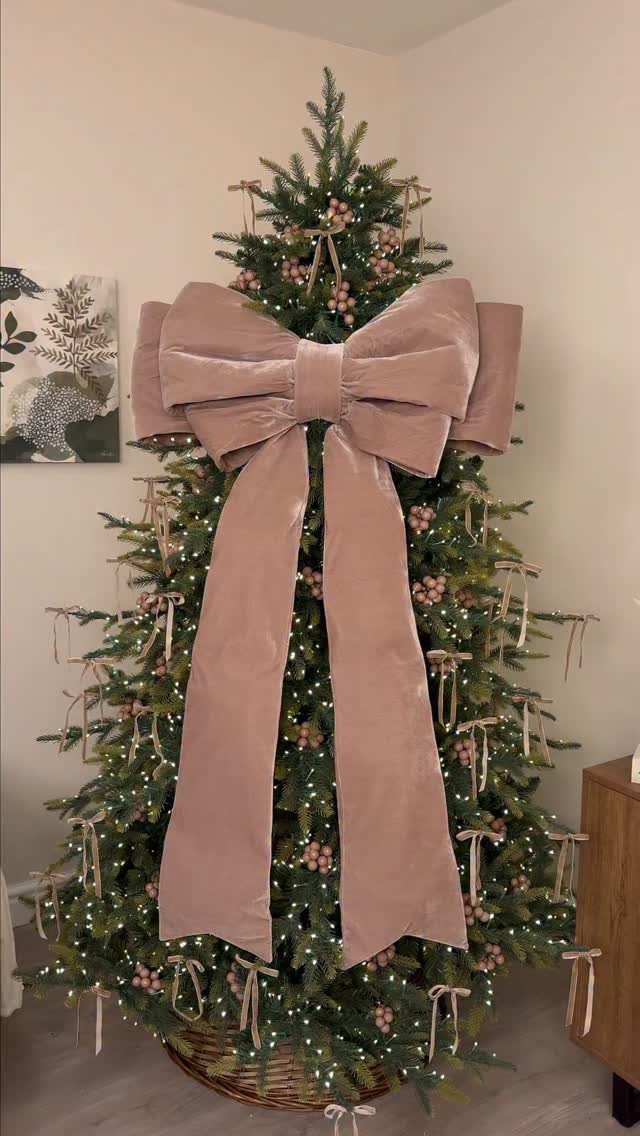
A single large bow at the top replaces the usual star or finial and pulls focus upward without adding clutter lower down.
Choose a ribbon wide enough so it reads from across the room.
Make the bow off the tree, wiring the center to hold the loops in place, and then wire or zip-tie it to the top branch. Let the tails fall naturally rather than trying to arrange them.
“Ribbon is the unassuming detail that can really upscale your tree,” says professional tree decorator and florist Julia Testa. “An oversize ribbon as a tree topper is not only a creative alternative to a traditional star or angel, but it gives wonderful height and drama.”
5. Use Seasonal Colors
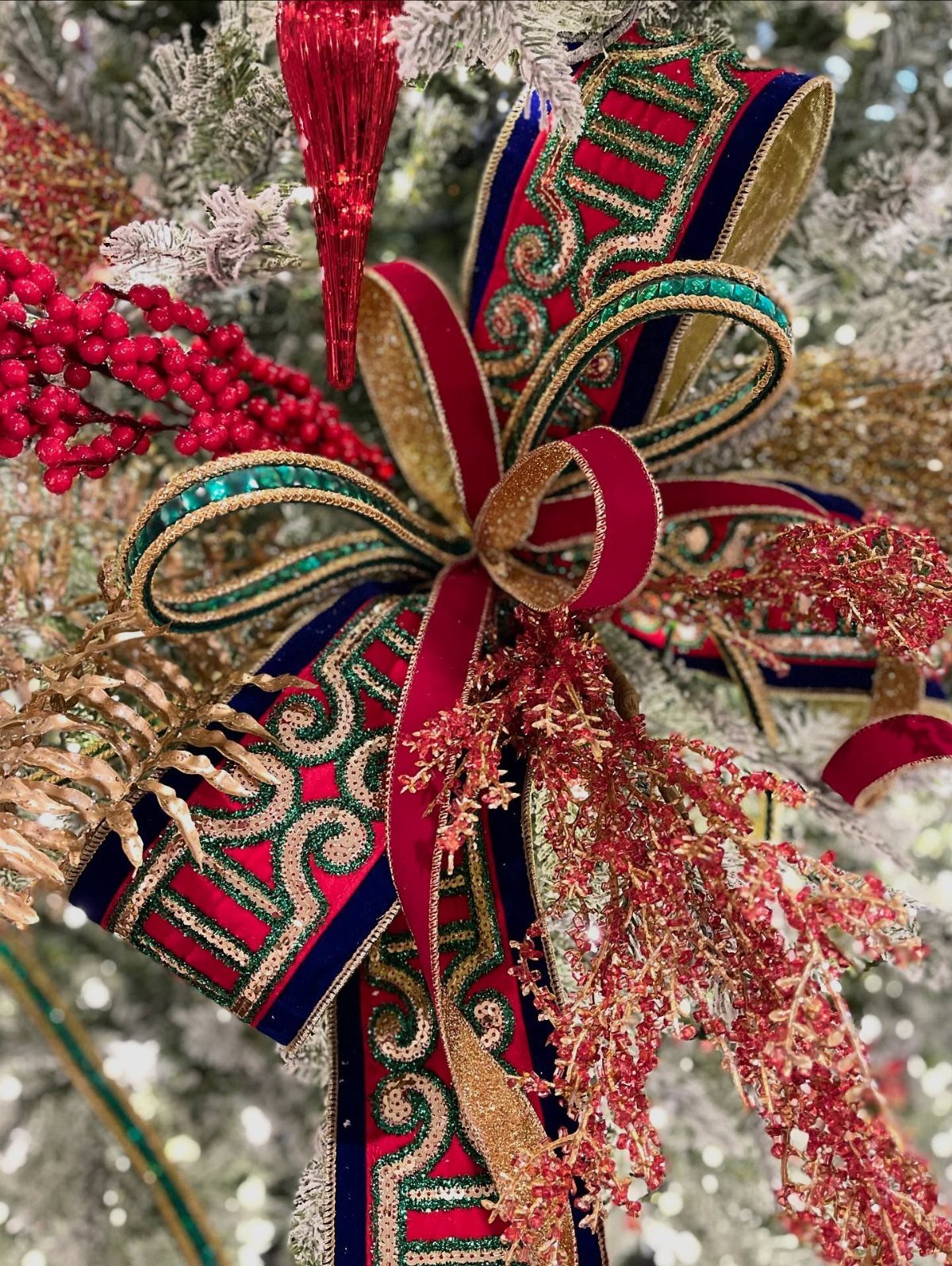
Picking ribbon colors that match your existing ornaments ties the whole tree together without needing a new theme every year. Red, gold and green are traditional, but the same idea works with any palette you have already committed to.
If your ornaments are mostly one color, add a ribbon in that shade plus one metallic. If you are working with 2 or 3 colors already, carry those into the ribbon so nothing sits on its own.
Seasonal colors feel familiar, but the approach works just as well with nontraditional palettes if that is what your ornaments call for.
6. How to Attach Ribbon
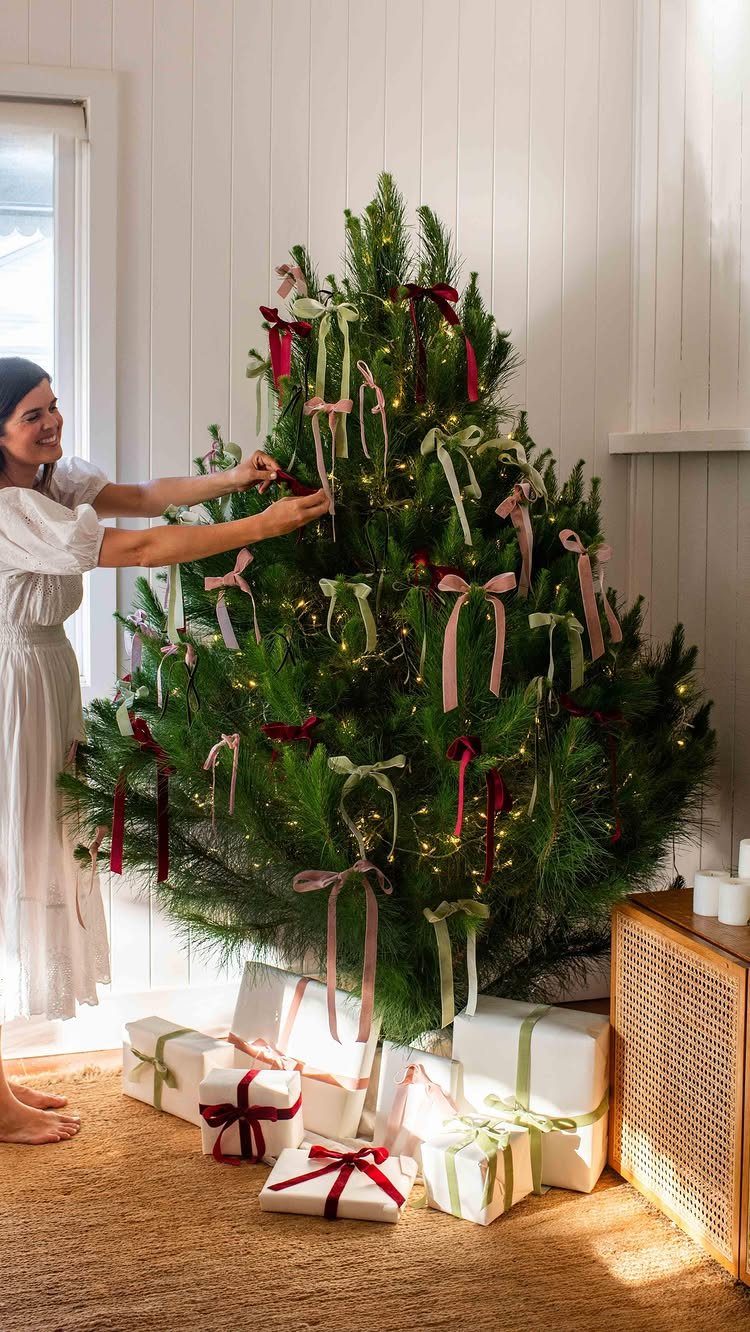
Tucking ribbon ends into the branches, rather than tying or wiring them, keeps the attachment invisible and lets you reposition things as you go.
Push the cut end deep into the tree, between a branch and the trunk, and the needles hold it in place.
This works best with vertical ribbons or cascading pieces. If you are making bows, you will still need to wire the center, but you can tuck the wire itself into the tree the same way.
The method also makes it easier to remove everything at the end of the season without untying knots or clipping ties.
7. Tied Ribbon Bow Accents
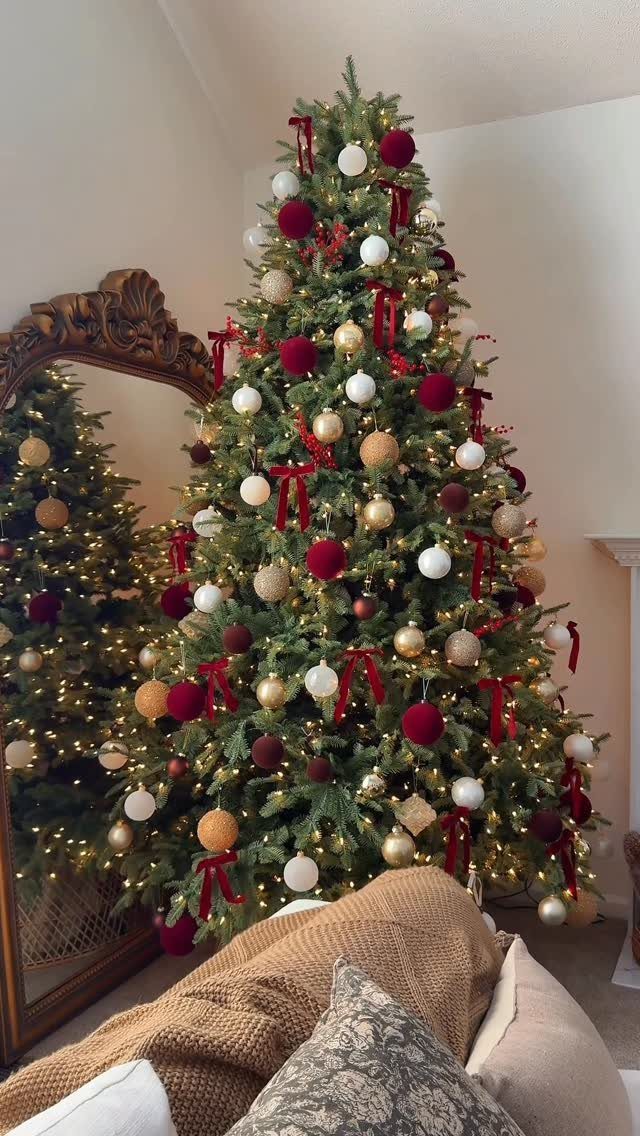
Tying ribbon into small bows and spacing them across the tree gives you the look of bows without wrapping the whole thing.
Each bow sits on its own branch, so you can place them where the tree needs color or where a gap shows between ornaments.
Cut lengths of ribbon, tie each into a bow, and loop the tails around a branch near the trunk.
The tails tuck back into the tree so only the bow shows. This uses less ribbon than garland and lets you control exactly where the red lands.
8. Plaid Ribbon Garland
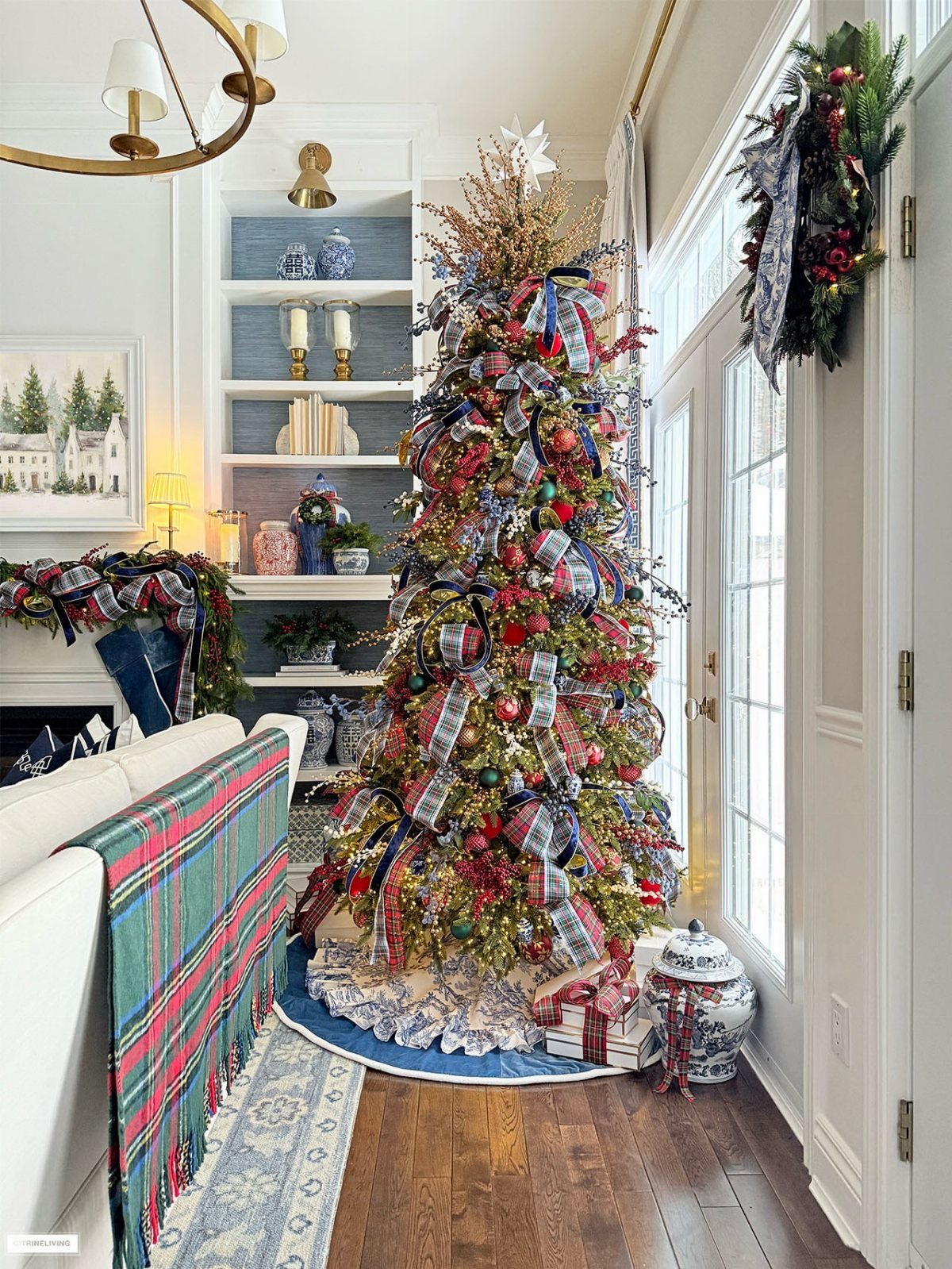
Plaid ribbon in a bold pattern like red and blue buffalo check reads as casual rather than formal, and it holds up to kids and pets better than delicate metallics.
The pattern also hides any creases that form when you store it.
Drape the ribbon in loose vertical sections, letting it fall naturally rather than pulling it tight.
The plaid needs ribbon wide enough so the pattern stays readable from a few feet back. If your ornaments are solid colors, the plaid adds texture without needing a second ribbon layer.
9. Cascading Vertical Ribbons
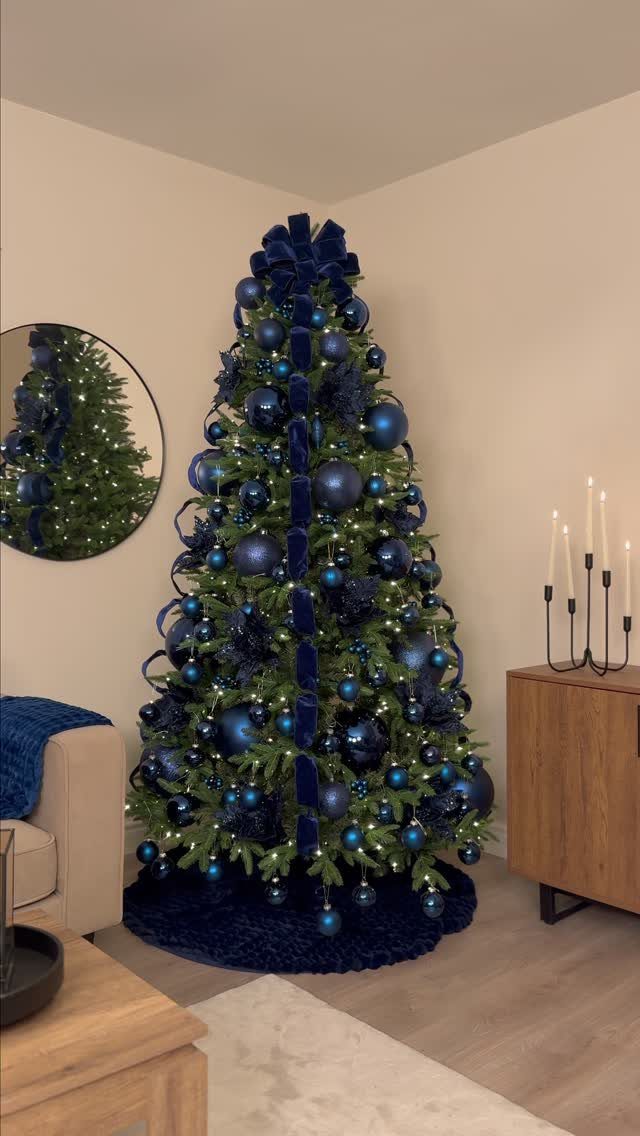
Running wide ribbon straight down from top to bottom stretches the tree visually and uses the full height. This works especially well on tall trees where horizontal garland can make the proportions feel squat.
Cut lengths of ribbon longer than the tree height. Tuck the top end near the peak and let the ribbon fall, guiding it so it drapes between branches rather than sitting flat against them.
Space the ribbons evenly around the tree, and let the bottom ends pool on the floor or tuck them under the skirt.
10. Striped Candy Cane Ribbon
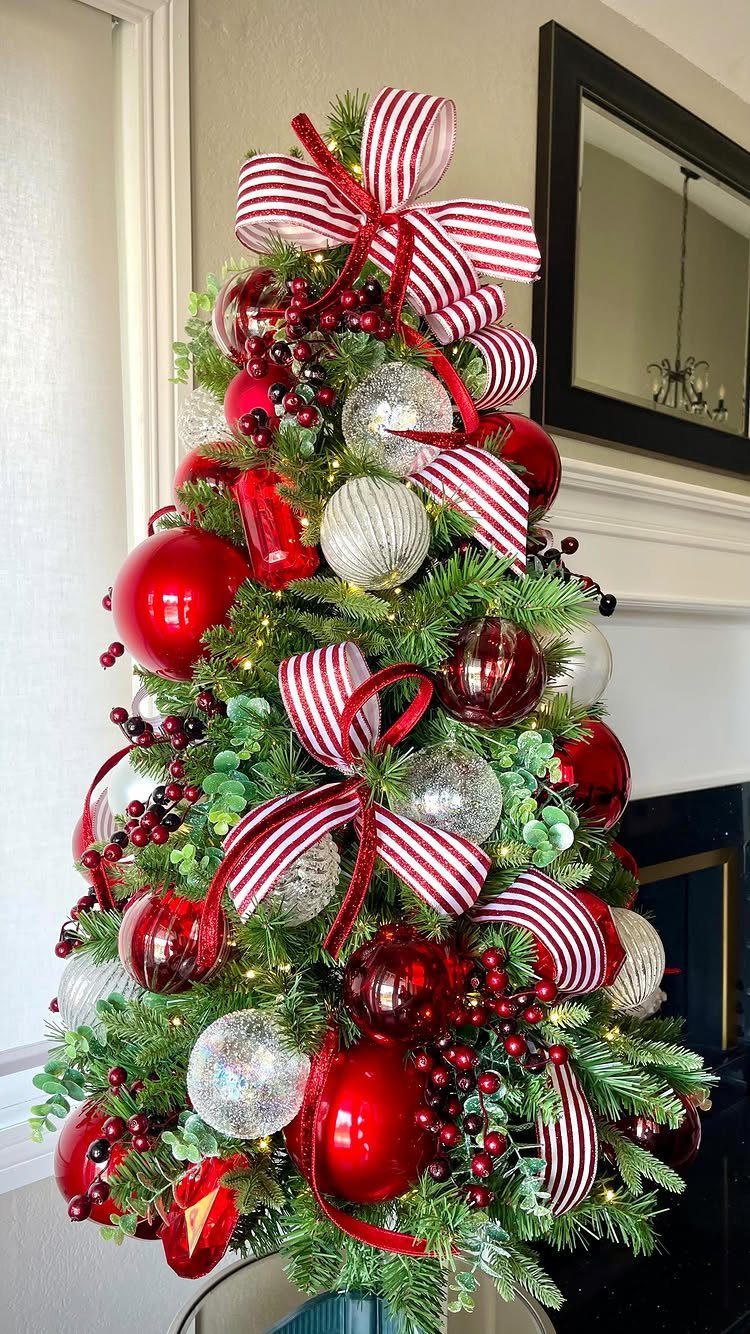
Candy cane stripe ribbon ties a tree into a red-and-white Christmas palette without ornaments that match perfectly. The stripe gives you both colors in one material, so even mismatched ornaments look intentional.
Weave the ribbon through the tree in a loose spiral, angling it so the stripe stays visible rather than getting lost in the branches.
The stripe pattern shows better on wider ribbon. If your ornaments are mostly one color, the stripe keeps the tree from reading as monochrome.
11. Balance and Randomness
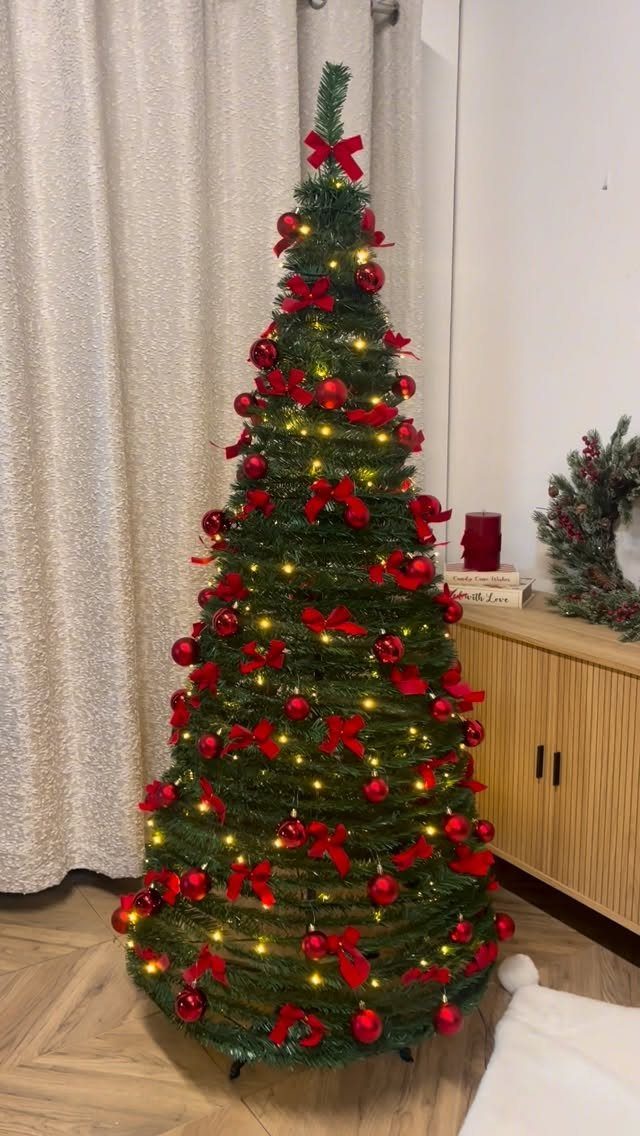
Spacing bows and ribbon unevenly across the tree keeps it from looking too symmetrical, but you still want roughly the same amount of ribbon in each quadrant when you step back.
Walk around the tree after placing each piece to check that one side is not loaded up while another looks bare.
The randomness comes from varying the height and depth where you place things, not from clustering everything on one side. Tuck some ribbons deep into the branches and let others sit closer to the tips.
How to Put Ribbon on a Tree
On a real tree, pull each branch down slightly and then release it so the needles spread. On an artificial tree, bend the branch tips in different directions until the gaps between layers close up.
I cut lengths from the spool before I start rather than draping straight from the roll. Six-foot lengths are easier to control than trying to wrestle 20 yards through the branches at once.
Work from the top down so you can see where the gaps are as you go.
Choosing the Right Ribbon
Hold a length of ribbon against the tree and step back 6 feet before you commit.
If the color disappears into the branches or the width looks too thin from across the room, it will not read any better once the tree is fully decorated.
Go narrower on a tabletop tree where you are viewing it up close.
Sheer ribbon and dark colors need more width to show up. A 4-inch sheer gold reads about the same as a 2-inch satin in the same shade because the transparency cuts the visual weight in half.
Frequently Asked Questions
What is the best ribbon to decorate a Christmas tree?
Wired ribbon holds its shape better than ribbon without wire, so bows and loops stay where you put them instead of drooping.
That internal wire along each edge means you can shape loops and folds that stay put from December straight through to January.
Wired ribbon also makes it easier to fluff out bows and keep them from flattening against the branches when you hang ornaments nearby.
Do you put ribbon on a Christmas tree before or after the ornaments?
Put the ribbon on first, before the ornaments go up. You can reach farther into the branches and spot the bare patches more easily when ornaments aren’t blocking your view.
Once the ribbon is in place, you can use ornaments to cover any spots where the ribbon ends or starts, and the whole tree looks more intentional.






