The ideas here range from dining tables near windows and sculptural seating to pendant lights, marble finishes, and Art Deco accents.
Your choice depends on whether you’re filling an open floor plan that needs a rug to anchor the table or working with a window wall that floods the space with natural light.
Pendant lights centered above the table cast patterns even when they’re off, while marble paired with warm wood and brass spreads richness across three materials instead of concentrating it in one.
1. Dining Tables Near Windows
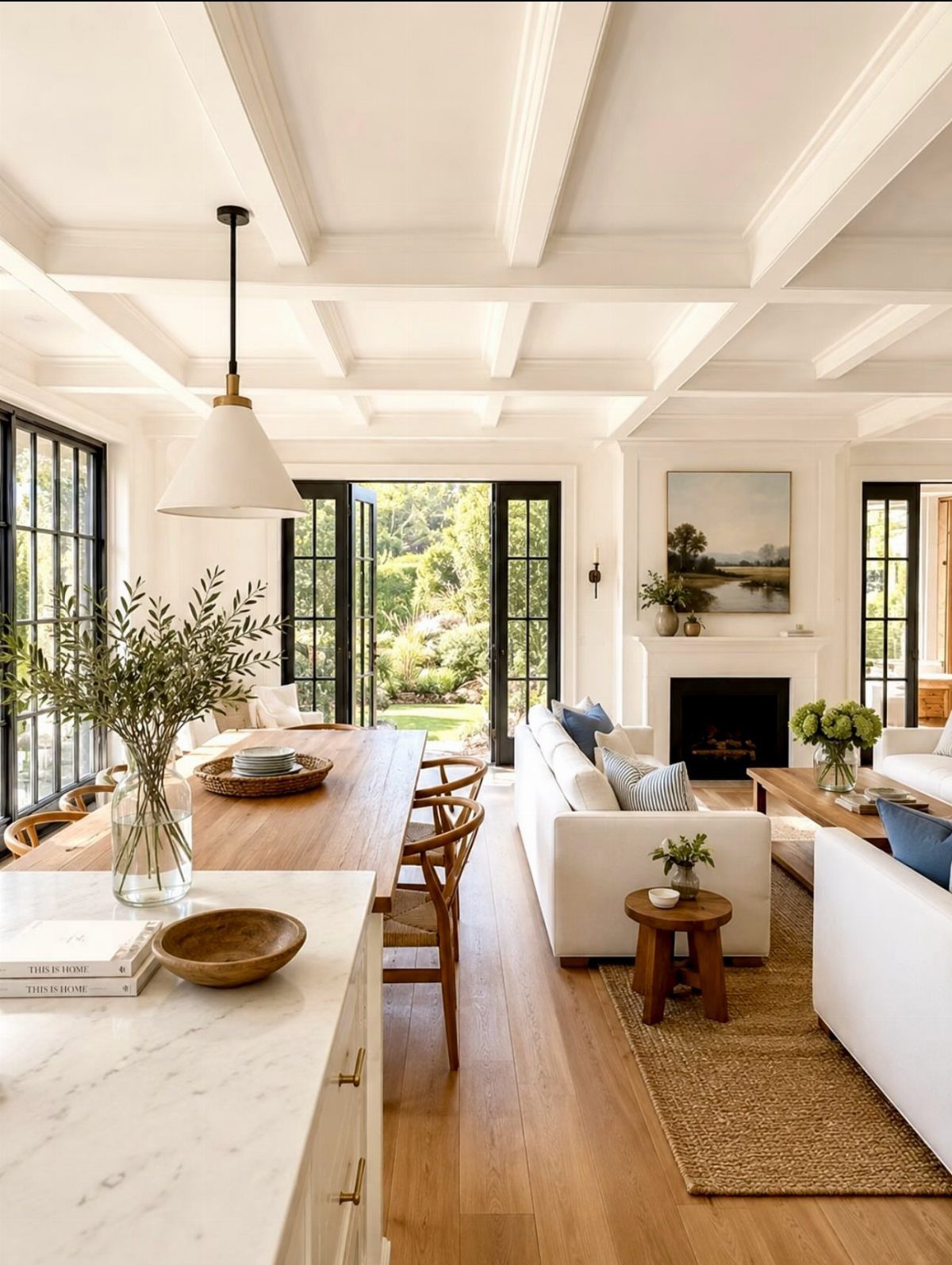
Position the table right next to the windows, where natural light can flood the surface during the day.
This setup makes the dining area feel larger and more open, and the light shows off whatever finish you’ve chosen for the table.
Black-framed windows anchor the look and keep the focus on the clean geometry of the room rather than dissolving into the view.
The contrast between the dark frames and bright walls reads as modern without needing much else in the way of decoration.
2. Rug to Anchor the Dining Space
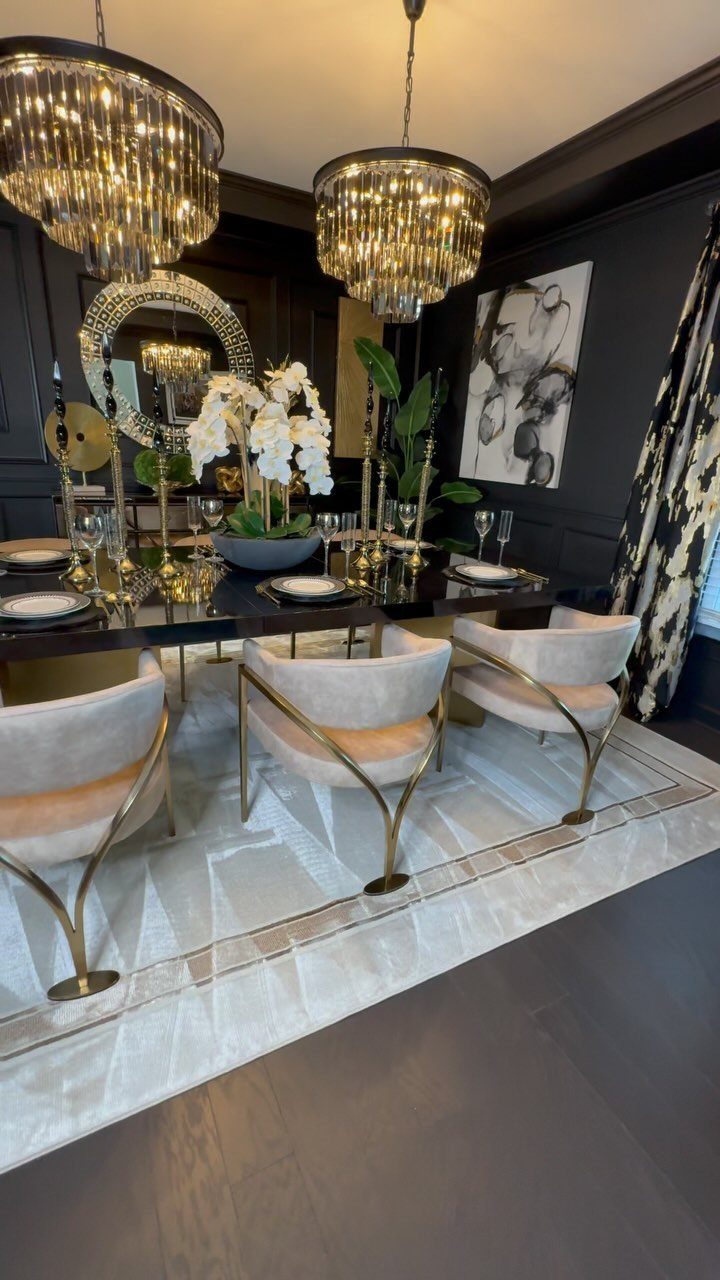
A rug defines the dining zone, especially in an open floor plan where the table might otherwise float without any boundary. Size it so the chairs stay on the rug even when pulled out.
Pattern adds visual interest without crowding the furniture.
Geometric designs in neutral tones work well here, and the texture softens the hard surfaces of the table and chairs. Skip the rug if your floor is already a statement material like wide-plank oak or polished concrete.
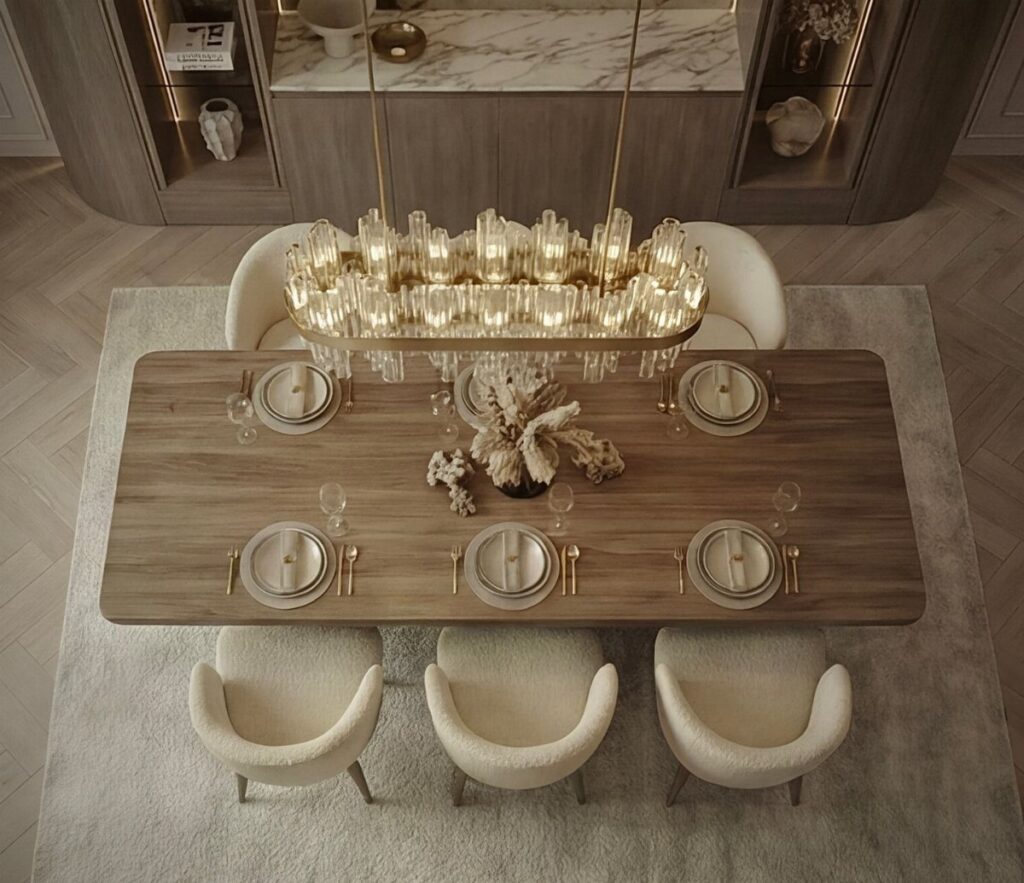
3. Rectangular Table with Sculpted Seating
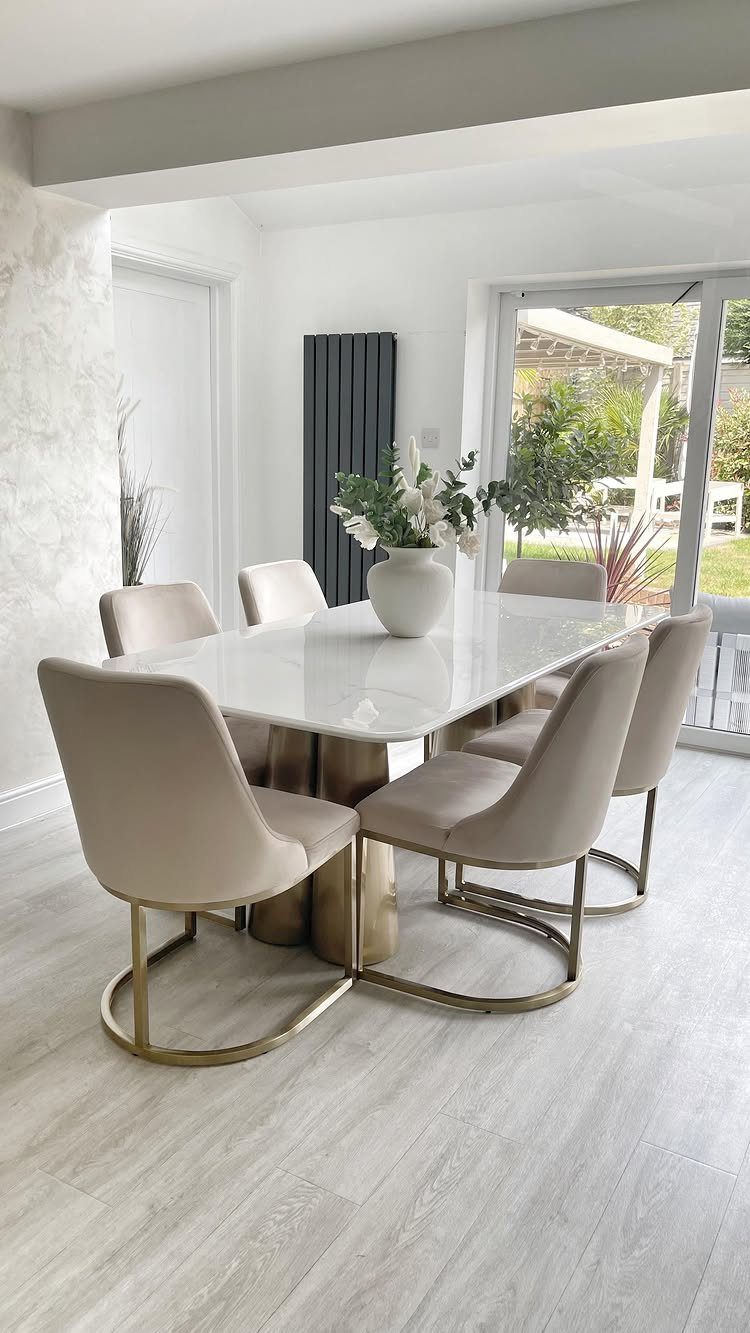
A rectangular table with sculpted seating brings in organic curves against the straight lines of the tabletop.
The chairs here have rounded backs and soft edges, and the contrast between the sculptural form and the angular table legs keeps the room from feeling too rigid.
Gold or brass accents on the chair bases tie into other metal finishes in the space. Beige or neutral upholstery keeps the focus on the shape rather than the color, and the chairs read as furniture rather than just seating.
4. Pendant Lights
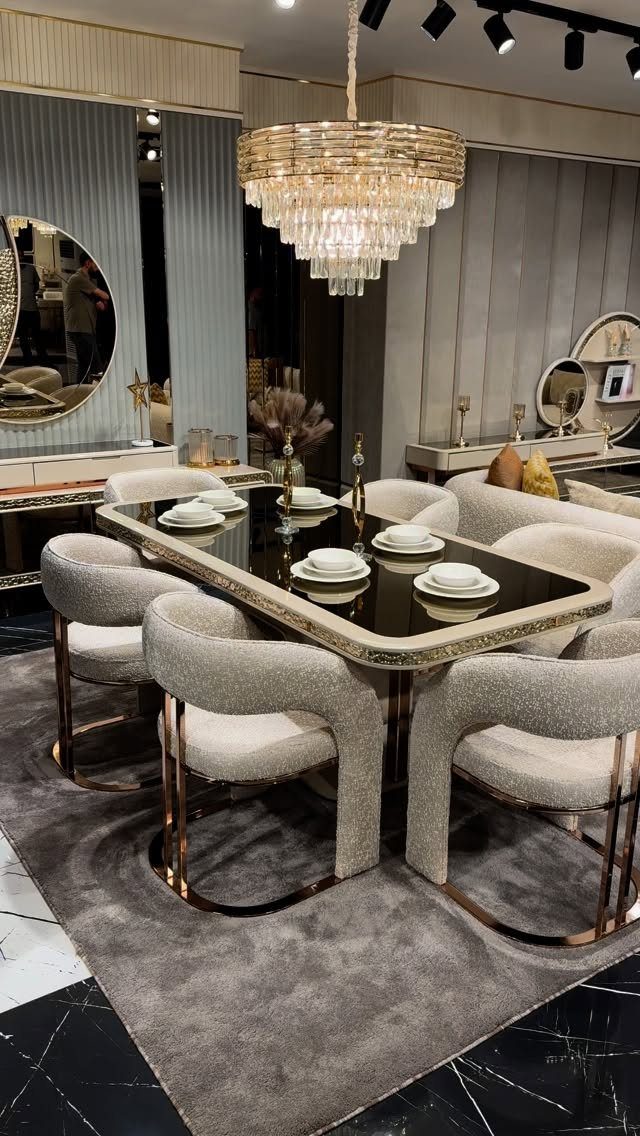
A tiered crystal chandelier layers light at different heights and catches it in the facets, so the fixture becomes a focal point even when it’s off.
Hang it centered over the table, with the bottom tier sitting above the surface at a height that clears heads but still feels close.
The light bounces through the crystal and casts soft patterns on the table and walls. This works best with a dimmer, so you can adjust the intensity depending on whether you’re serving dinner or just passing through the room.
5. Linen Tablecloth
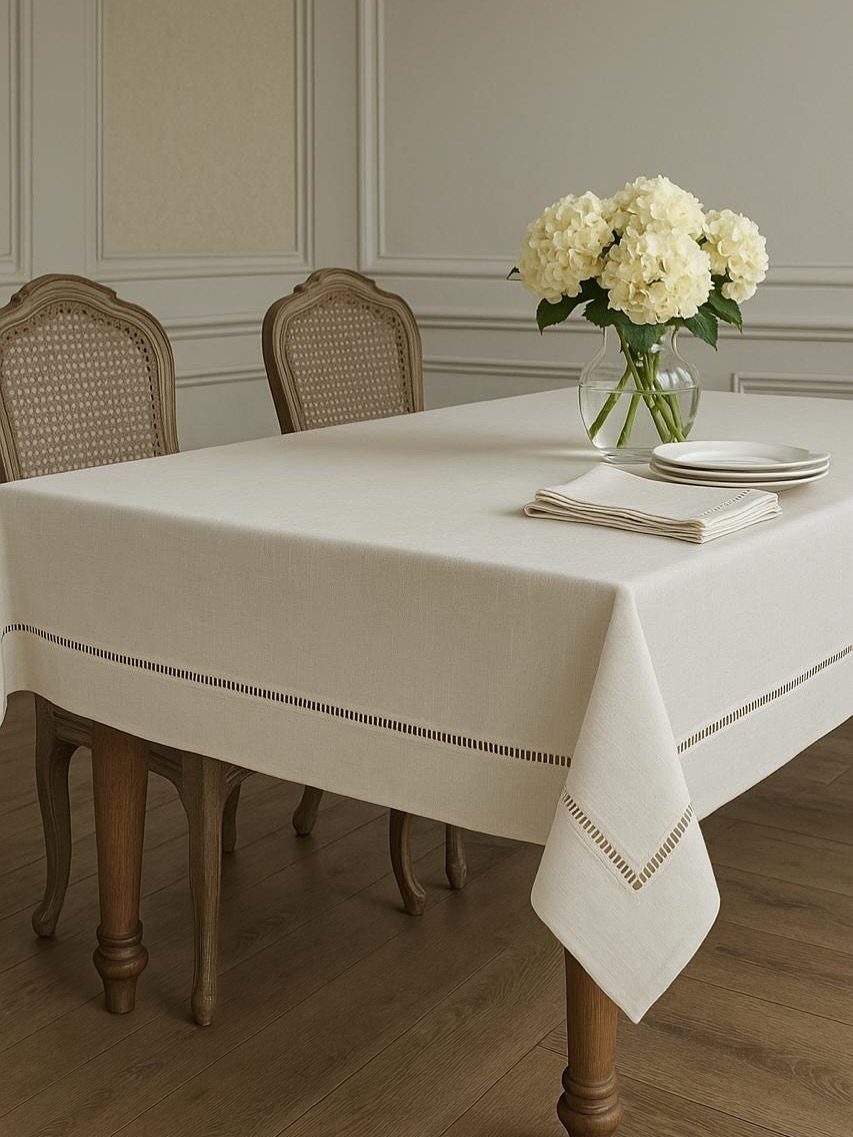
Linen brings in texture without adding pattern, and the slight wrinkles keep the table from looking overly formal. A decorative hem or border adds detail without requiring anything else on the table beyond simple dishes and a low centerpiece.
White or natural linen works with almost any chair style and keeps the focus on the material itself rather than the color.
Linen also softens the hard surface of wood or marble tables, and it’s easy to wash when you need to reset the table for the next meal.
6. Colorful Tableware
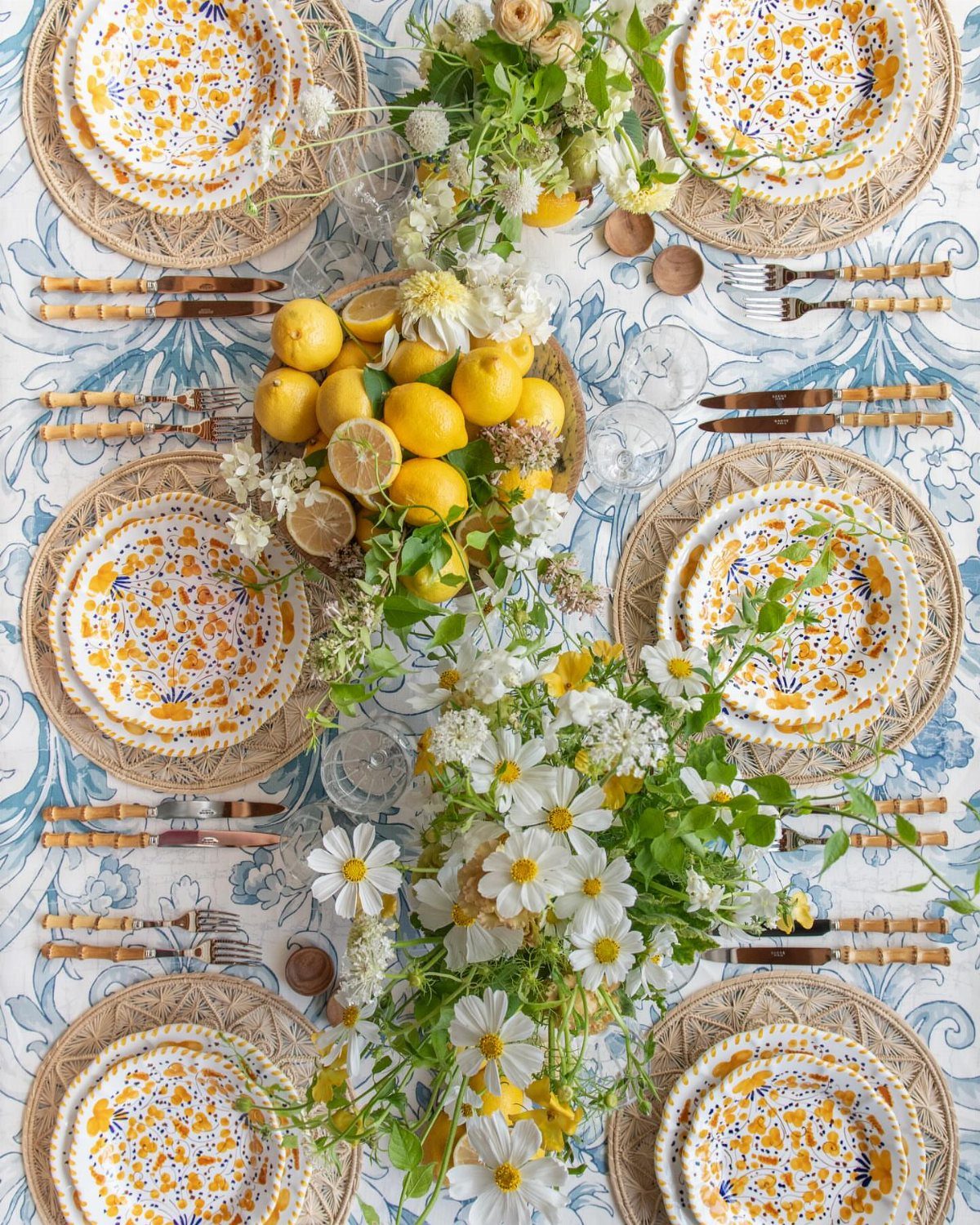
Bold plates and patterned tableware inject color into a space that might otherwise lean too neutral.
Layer patterns by mixing a patterned tablecloth with plates in a complementary color, and keep the shapes simple so the patterns don’t fight each other.
Yellow and blue is a classic pairing that feels both fresh and grounded, and the warm tone of the yellow balances the coolness of the blue.
Add fresh fruit or flowers in the same color family to tie the table together, and the whole setup reads as intentional rather than busy.
7. Table Decor with Wall Art
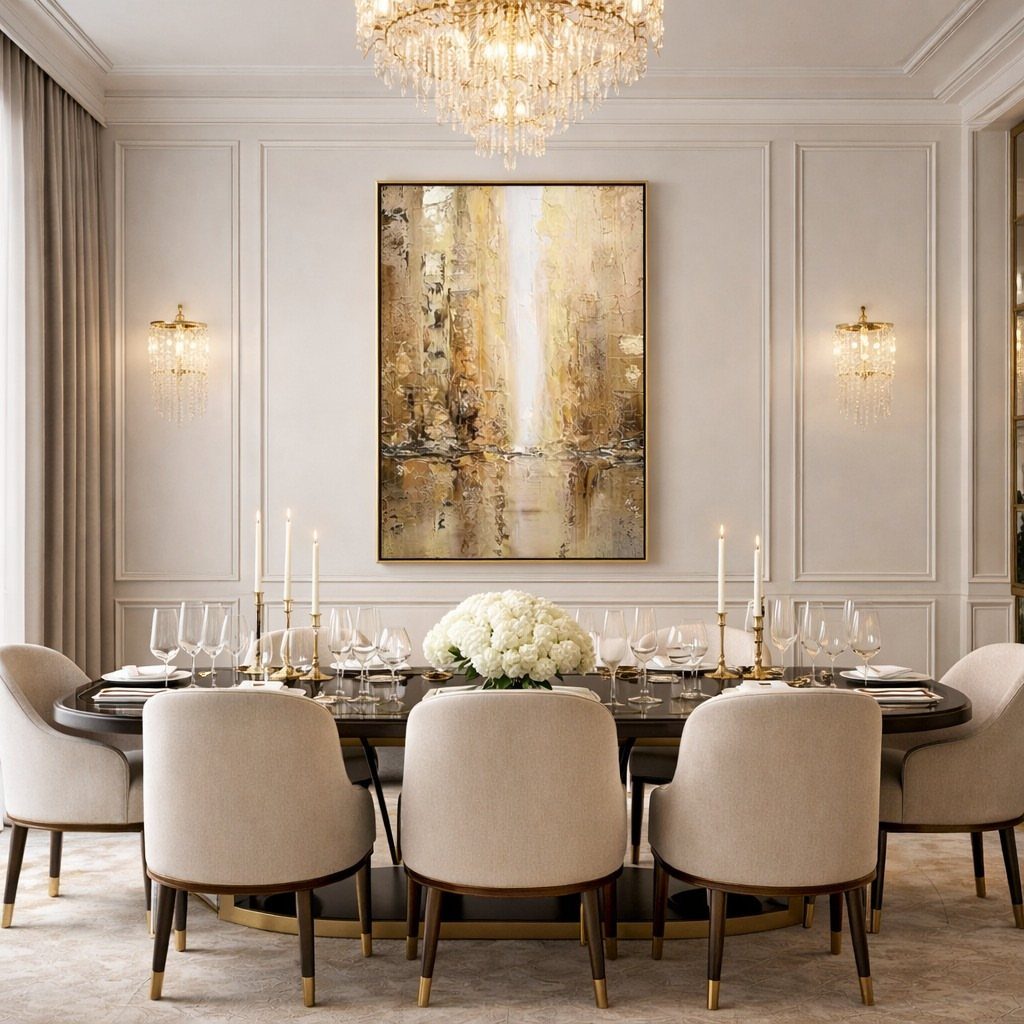
Pair table decor with wall art by repeating a color or shape from the painting in what sits on the table.
White flowers and candles that echo the light tones in an abstract piece above create a cohesive look through repetition rather than exact matching.
This approach works when the wall art is large enough to anchor the room.
Keep the table arrangement simple so it complements the art rather than competing with it, and choose a few pieces in similar tones instead of scattering color across the whole surface.
8. Plants for Dining Spaces
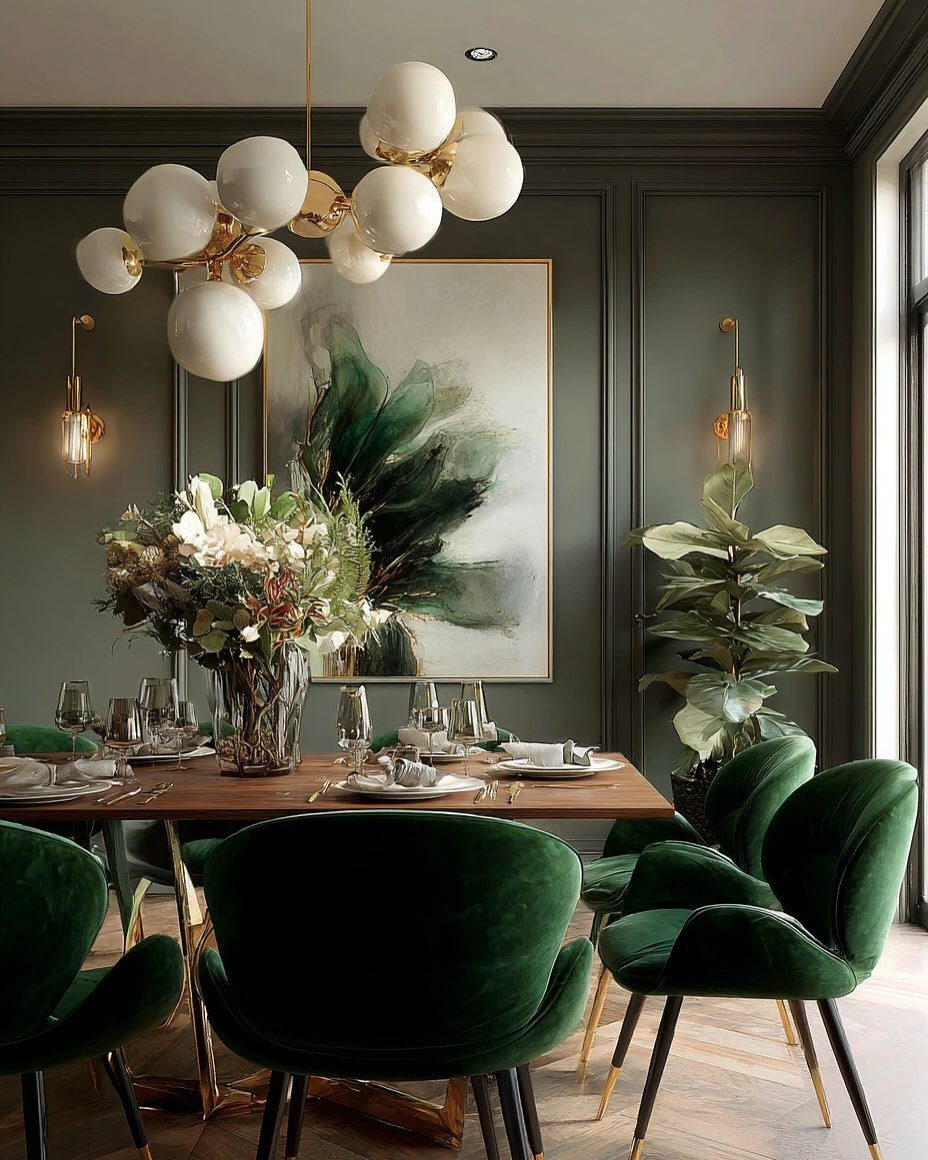
A large potted plant in the corner or along the wall brings life into the room and softens the hard edges of furniture and cabinetry.
Choose a plant with a tall, upright form if you want to fill vertical space, or a fuller shape if the corner feels bare.
A centerpiece with cut flowers or greenery layers in another organic element at table height. The combination makes the room feel lived-in without adding clutter, and the green tones balance out darker walls or bold upholstery colors.
9. Wood, Marble, and Polished Metals
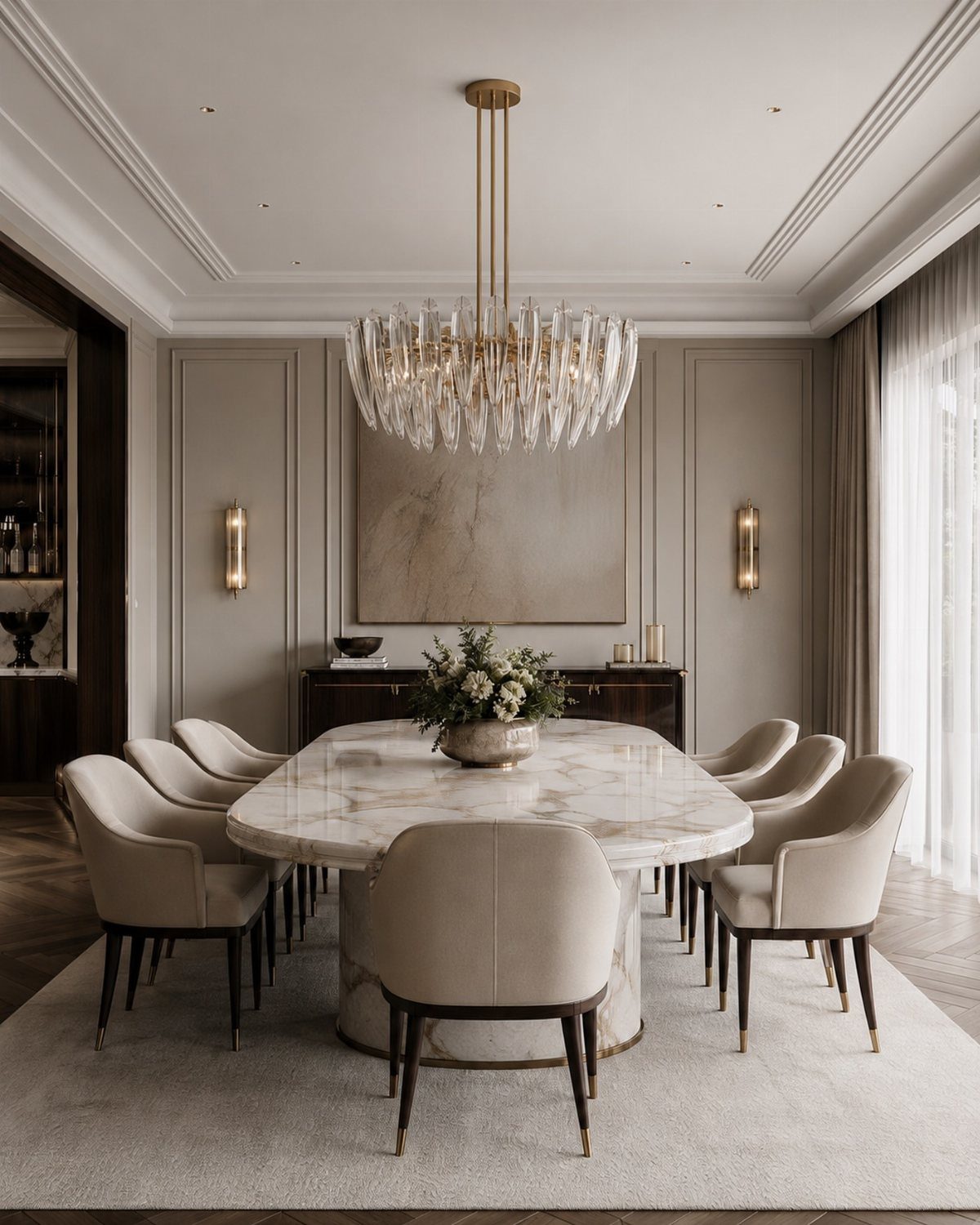
Marble reads as luxurious without needing much else, and pairing it with warm wood and polished metal spreads richness across the room instead of concentrating it in one piece.
A marble tabletop catches light, wood paneling or a sideboard adds warmth, and gold or brass lighting or hardware gives a third finish that ties the first two together.
This mix needs enough surface area in each material to make each one register. A small metal accent won’t carry the same weight as a full chandelier, and a thin wood trim won’t balance a large marble table.
10. Modern Glamor
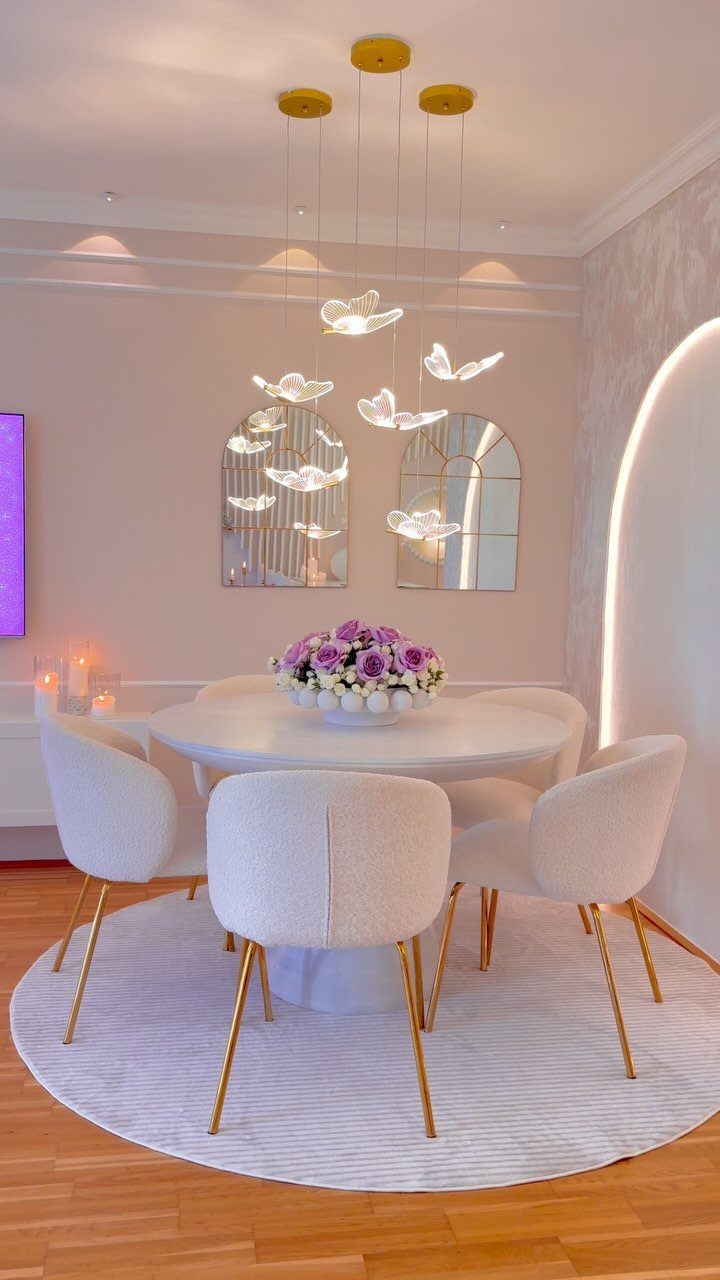
Modern glamor leans on high-gloss finishes and metallic accents but keeps the shapes simple and the palette restrained.
A round white table with textured chairs and sculptural gold lighting delivers the look without heavy ornamentation, and the clean lines keep it from tipping into traditional glam.
Gold legs or bases on the chairs add shimmer at a lower height, so the metal appears in 2 places and the room feels intentional. Keep the tabletop uncluttered and let the furniture and lighting do the work.
11. Mid-century Modern
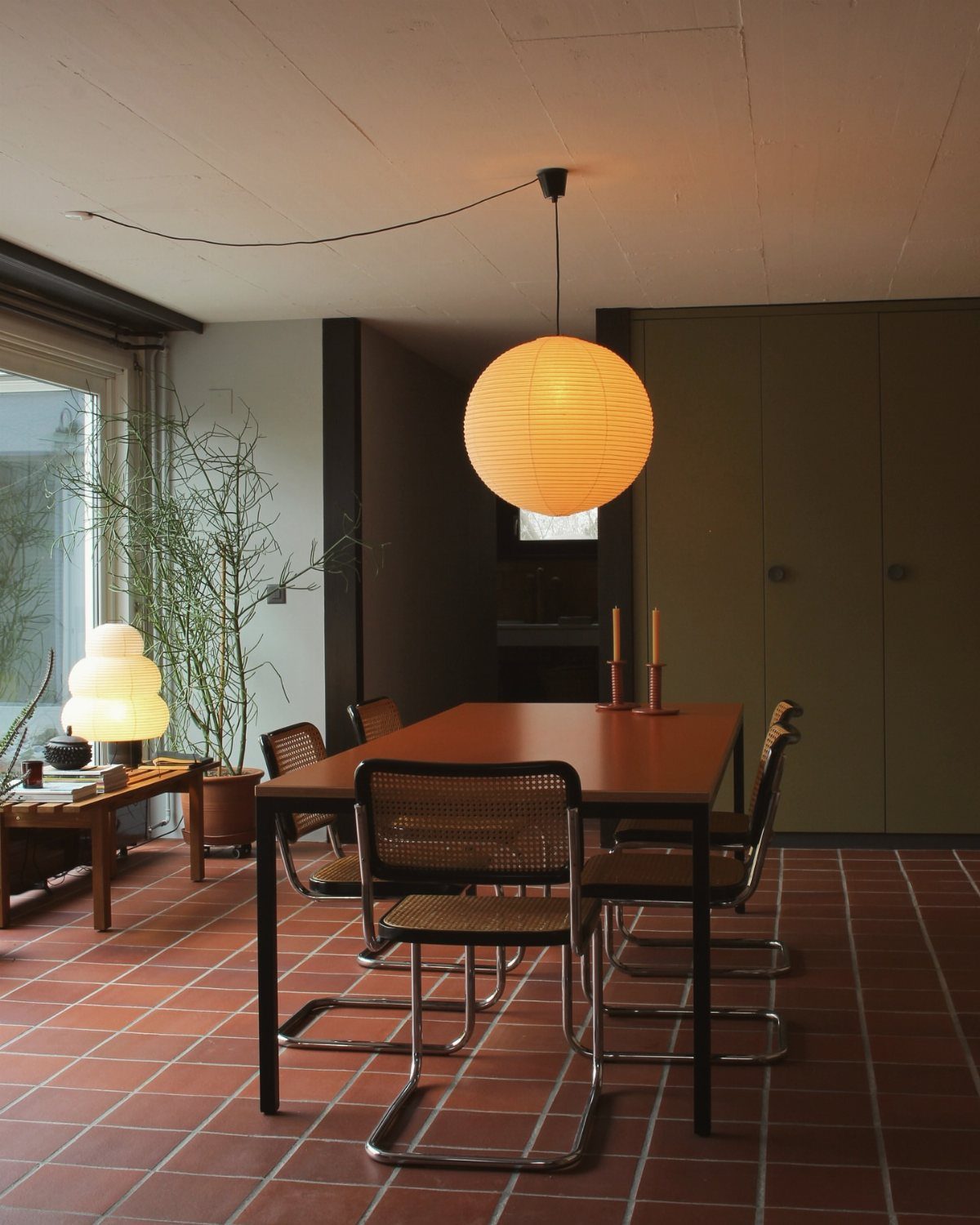
Mid-century modern pairs natural wood with simple, functional shapes.
Terracotta tile or warm-toned flooring grounds the furniture and keeps the palette cohesive.
A sideboard or credenza in a bold color like olive green or burnt orange gives you one statement piece and storage for dishes and serving pieces when they’re not in use.
12. Scandinavian Minimalism
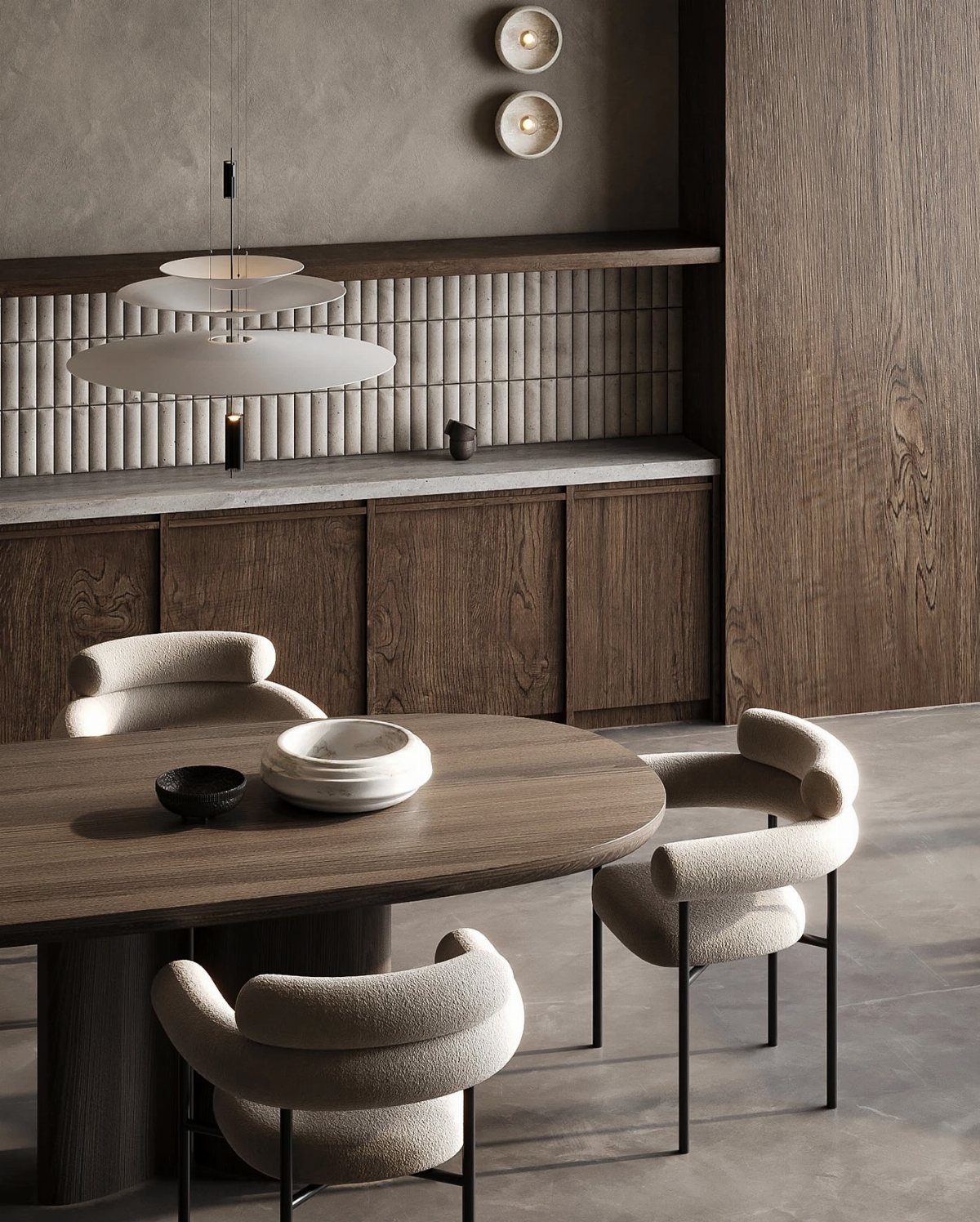
Scandinavian minimalism strips the room down to what’s needed and chooses quality over quantity.
Wood cabinetry in a dark stain or natural finish provides storage without adding visual weight, and the texture of the bouclé softens the hard surfaces.
Keep the color palette neutral so the materials stand out, and skip anything decorative that doesn’t serve a purpose.
13. Art Deco Revival
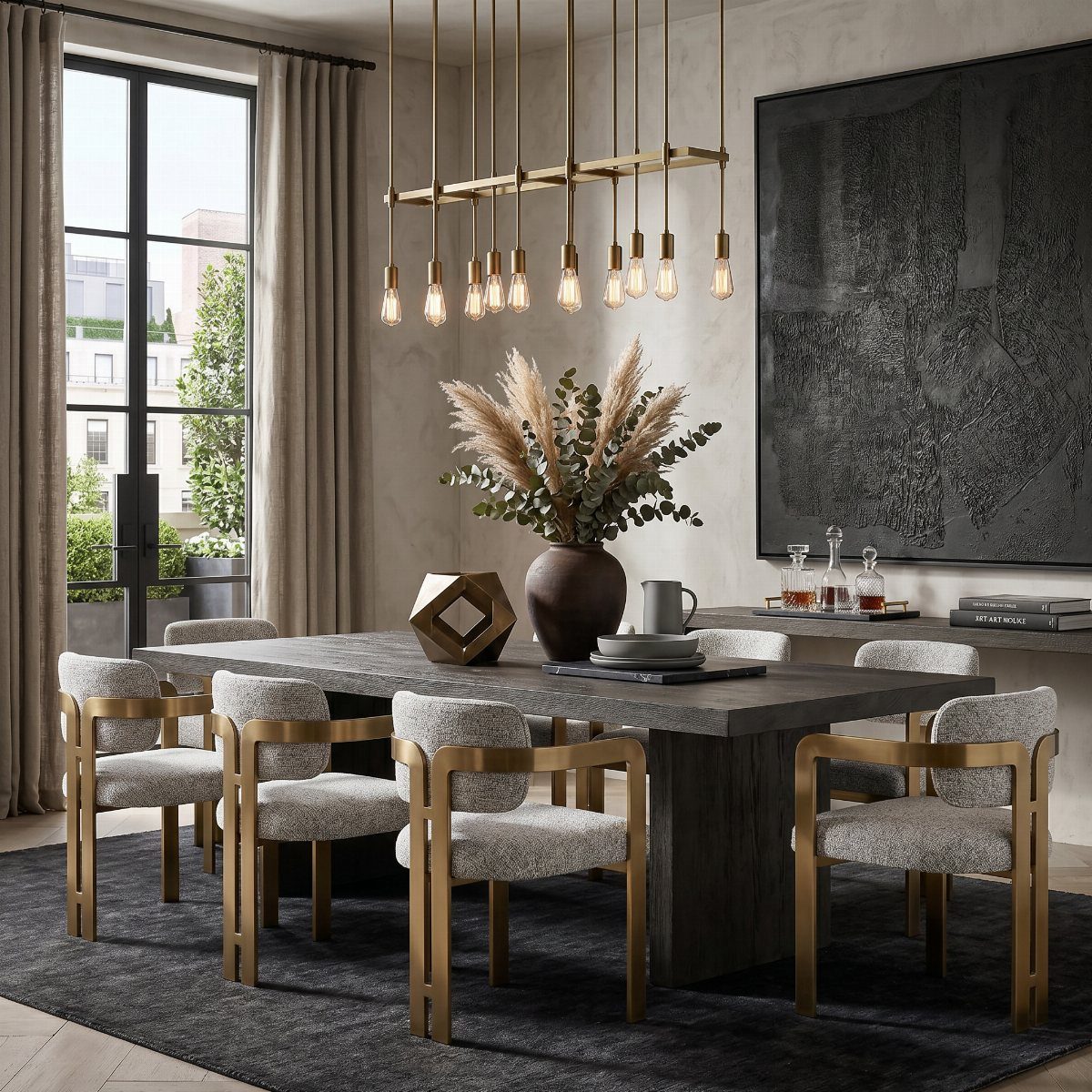
Geometric shapes define Art Deco, so look for furniture with angular frames and lighting with stepped or layered forms.
Gold finishes on chair legs and fixtures bring in the glamor side of the style, and repeating that finish across multiple pieces pulls the room together.
The contrast between warm metal and cool stone or deep wood gives you richness without tipping into too much shine, and a large abstract painting in dark tones balances the decorative geometry of the furniture and lighting.
Importance of Lighting
Lighting sets the mood before anyone sits down. A statement fixture draws the eye up and fills the vertical space above the table, which often goes ignored in rooms focused only on furniture.
Crystal and brass catch light differently throughout the day. Morning sun through the fixture scatters soft patterns on the surface below, while evening dimmed light adds warmth without glare.
The metallic finish ties into hardware and chair bases, so the fixture becomes part of the material palette rather than sitting apart from it.
Scale the fixture to the table, not the room.
A piece that’s too small disappears above a large rectangular table, and one that’s too big crowds the space when you stand up. The bottom should clear heads by enough margin that no one thinks about it.
Materials and Finishes
Marble on the tabletop or flooring gives you a cool, reflective surface that catches light.
Warm neutrals and jewel tones in the color palette add depth, letting the materials hold the visual lead.
Creating a Focal Point
The dining room earns its place as a focal point when the design pulls together furniture, lighting and color into one clear statement.
A bold dining table anchored by sculptural chairs and a statement light fixture gives visitors something to notice before they walk into the room.
Entryways, living spaces and kitchens get design attention by default, but the dining room often ends up as the least-used space in the home.
That changes when the table, chairs and lighting feel intentional rather than leftover. Contemporary furniture and elegant finishes turn the room into a place for entertaining and making memories, and the design itself becomes part of what guests remember.
Astonishing dining room ideas and luxury products that inspire conversations are all elements that make an alluring dining decor. From traditional design concepts to ones that turn every notion on its head, the goal is to create a beautiful dining area that feels organic.
Frequently Asked Questions
How to modernize a dining room?
Position the table near windows for natural light, add a statement pendant or chandelier, and choose furniture with clean lines and sculptural shapes.
Pair warm wood with marble or polished metals, and anchor the space with a geometric rug that keeps chairs on the surface when pulled out. Layer in texture through linen tablecloths or bouclé upholstery rather than heavy ornamentation.
What are the names of dining room furniture?
The main pieces are the dining table, chairs, and sideboard or credenza for storage.
A rug defines the zone, and lighting fixtures like chandeliers or pendants hang centered above the table. Sideboards hold dishes and serving pieces when not in use, and credenzas in bold colors can serve as statement pieces.