
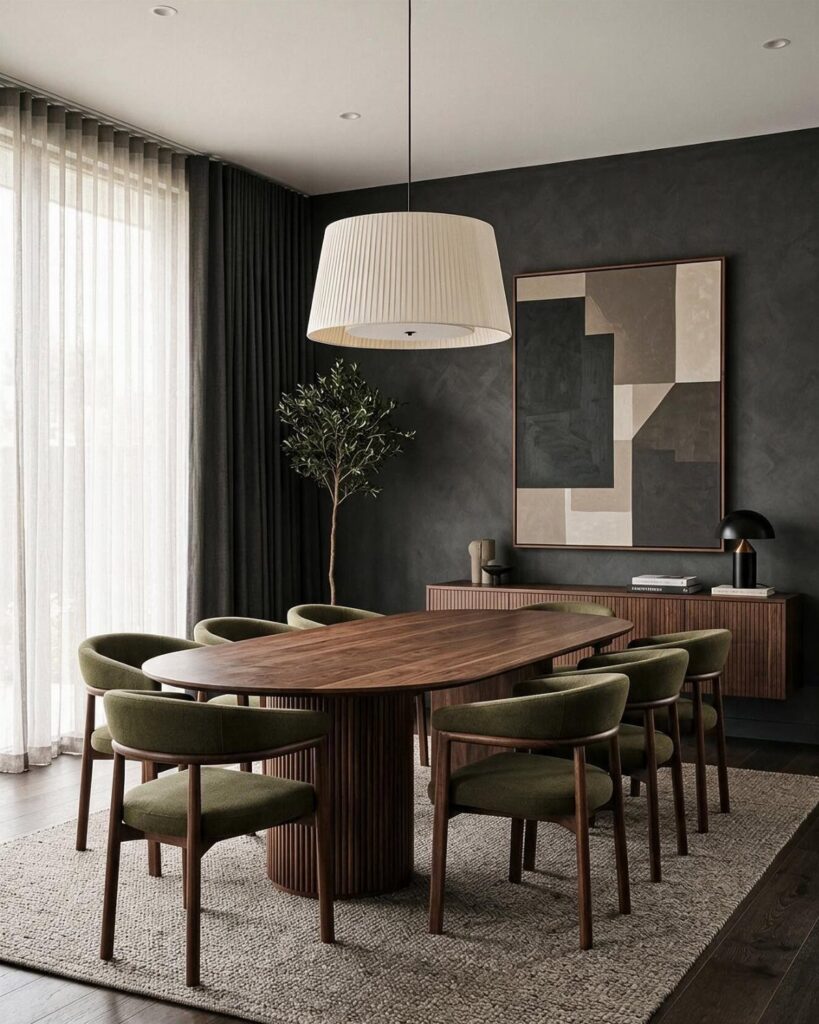
A dining table for dark wood floors works best when it sits a few shades lighter or darker than the floor itself, so the two don’t blur together.
Light wood tables in oak or ash create contrast without fighting the floor, while black tables add depth, and dark wood tables paired with light chairs or a contrasting rug keep the space from disappearing into itself.
1. Dark Wood Dining Table
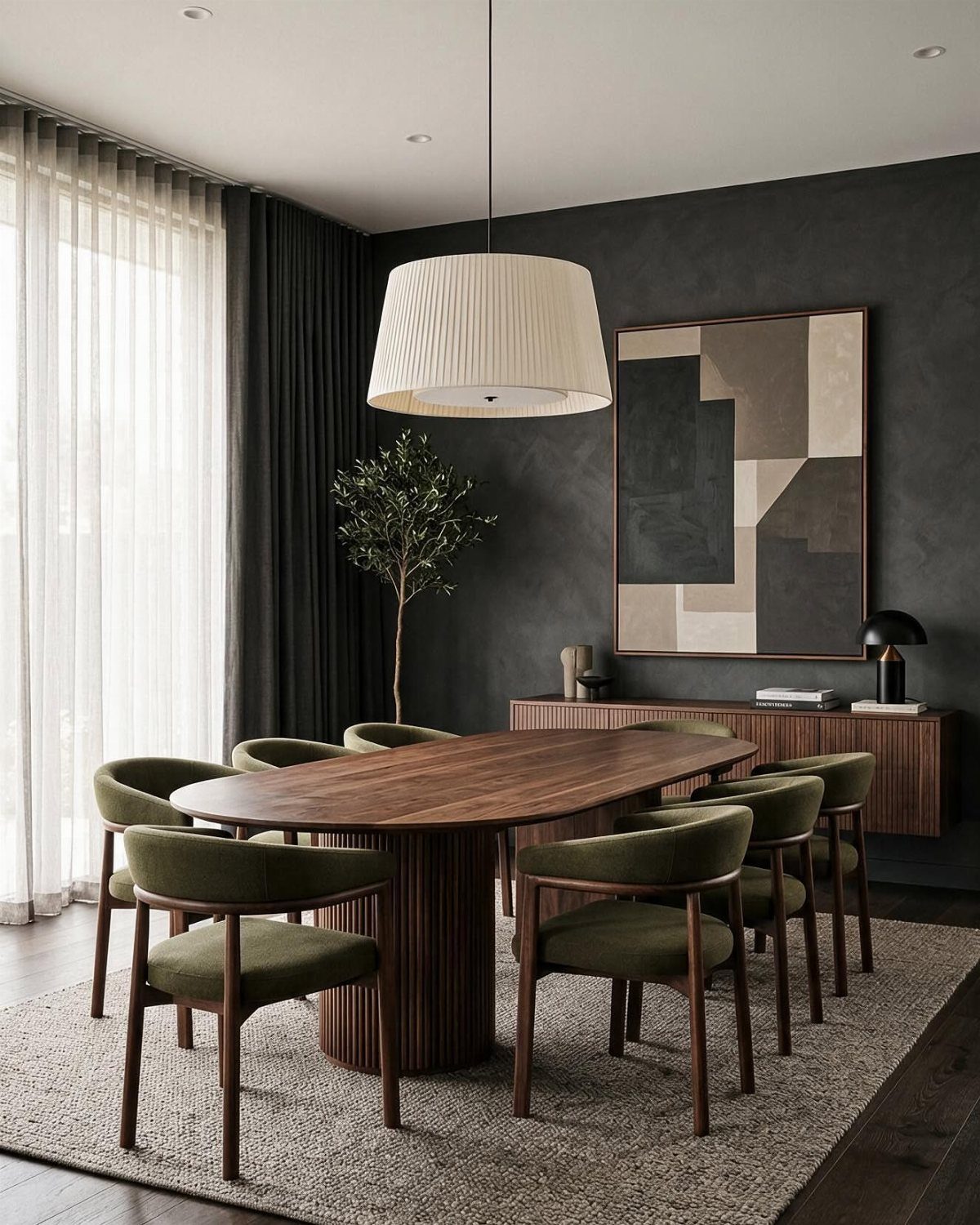
Matching the table to the floor creates a continuous look that makes the room feel larger. The oval shape here softens the space while keeping the dark tones grounded.
A rug underneath helps define the space and keeps the floor from blending too much with the table legs.
2. Area Rugs Between Table and Floor
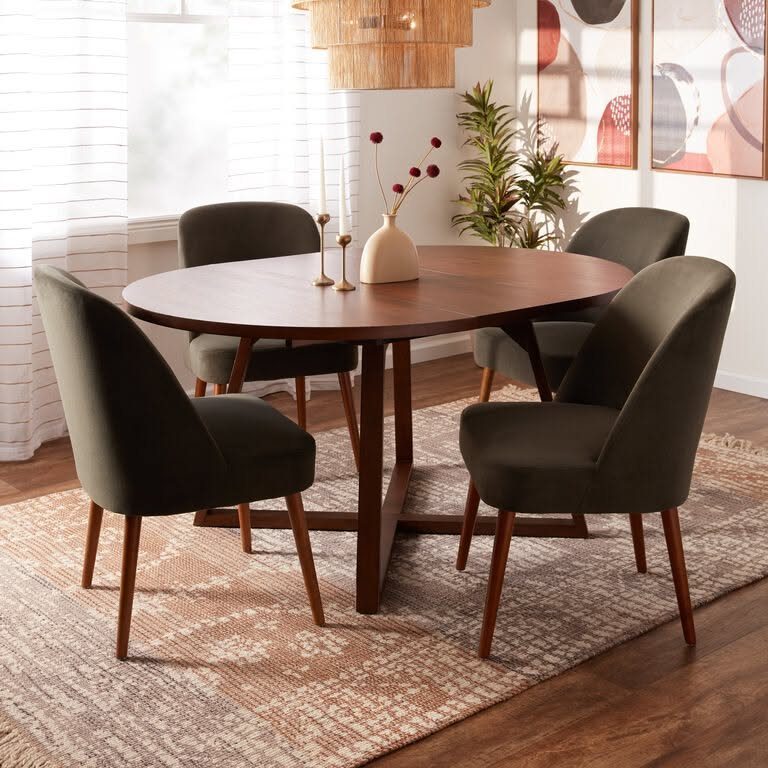
A rug interrupts the dark surface and gives the eye somewhere to rest between the table and the floor. It also protects the finish from chair scratches, which matters if you’re renting or want to preserve the wood.
Pick a rug that extends well beyond the table on all sides so chairs stay on it when pulled out.
Patterns work well here because they hide spills better than solid colors and add texture that sits comfortably with the dark wood.
3. Black Dining Tables
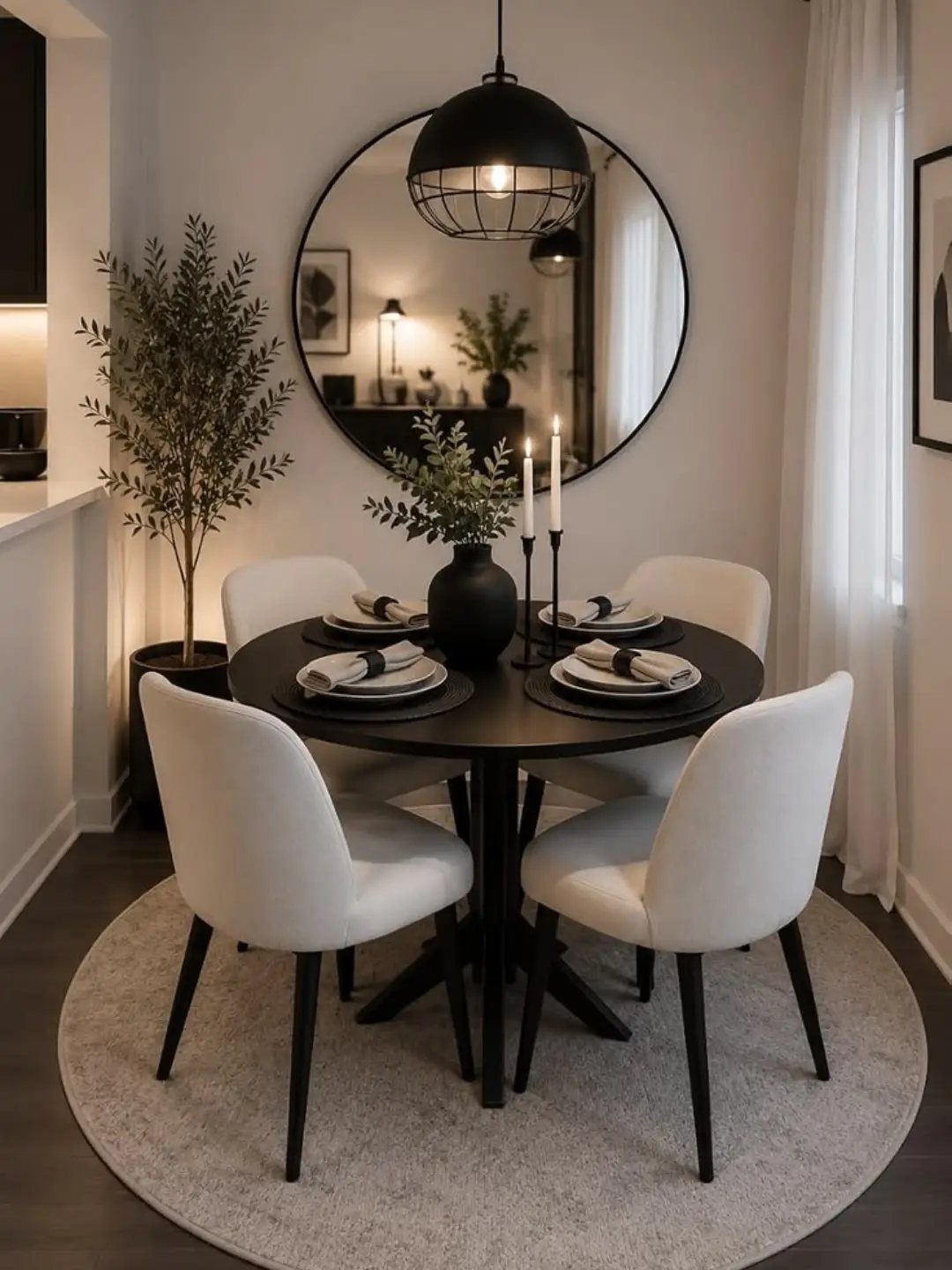
Black tables sit darker than most wood tones, which creates depth instead of blending in. The contrast between black and dark wood floors is subtle but enough to define the table as its own piece.
Pairing a black table with white or light gray chairs, like the upholstered ones here, balances the weight. A lighter rug helps too, especially if the floor is very dark and you want to avoid a cave effect.
4. Dark Tables with Light-colored Chairs
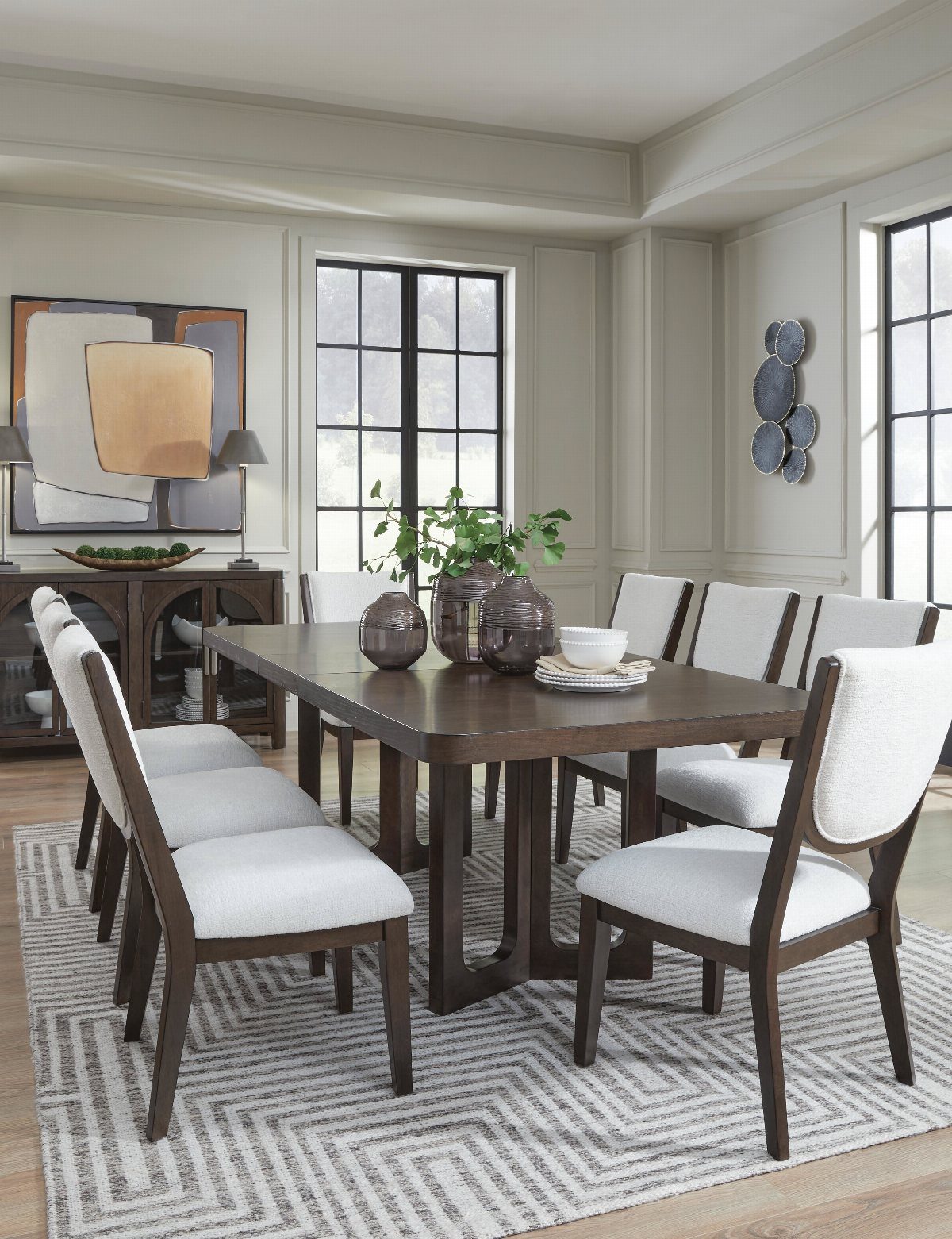
Light chairs pull attention up and away from the floor, which keeps a dark table from disappearing into dark wood. Cream, beige, or soft gray upholstery works, and white is the sharpest option if you want high contrast.
If you skip the rug, make sure the chairs have enough visual weight to hold the space on their own.
5. Dining Table with Upholstered Chairs
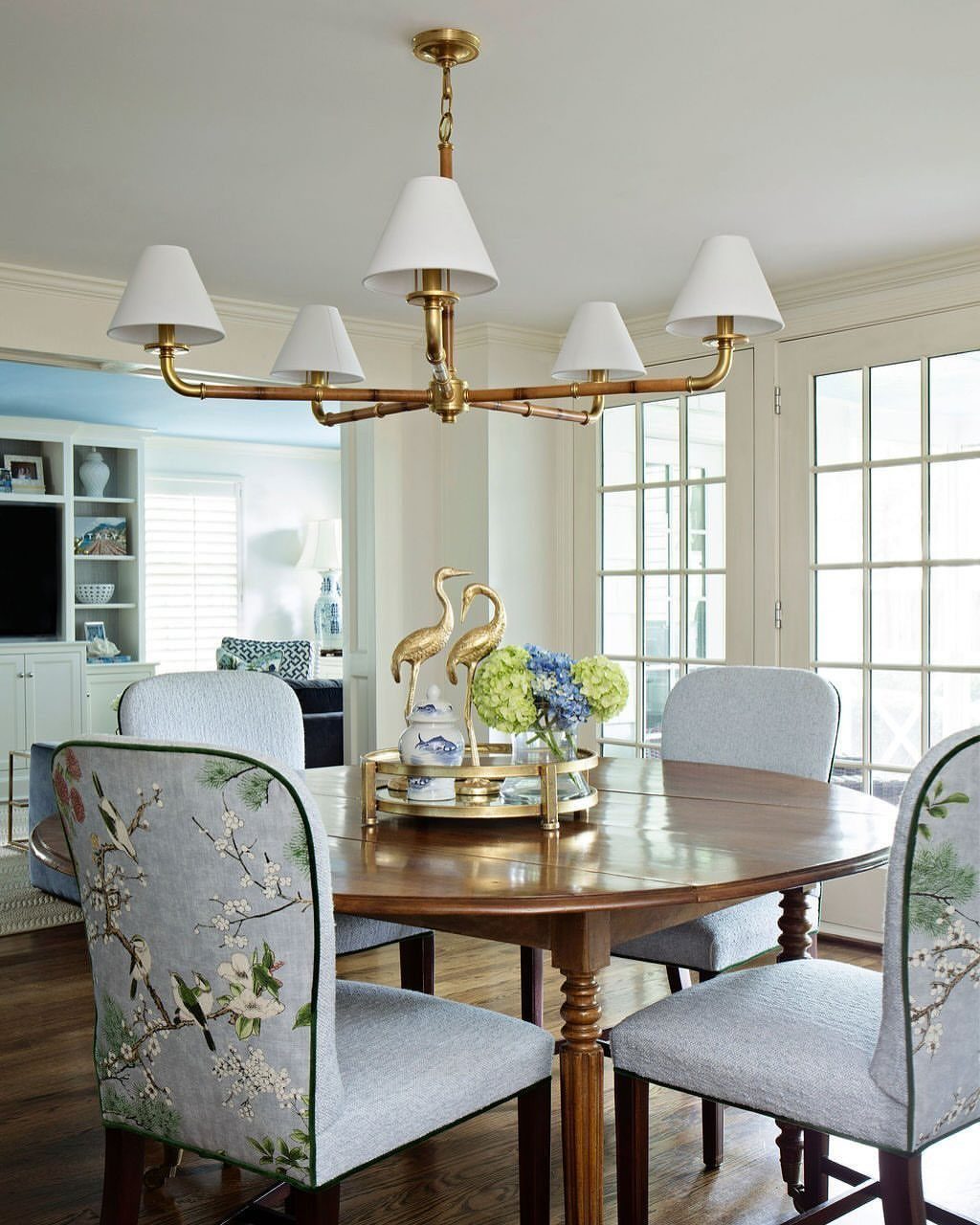
Upholstered chairs add softness to a hard dining setup and make long meals more comfortable. Fabric in a light color or a bold pattern, like floral, draws the eye up rather than down to the floor.
Round tables pair especially well with upholstered seating because there are no corners to navigate, so every seat feels equally open. If your floor is nearly black, choose fabric with some color to avoid washing out the whole room.
6. Round Dining Tables
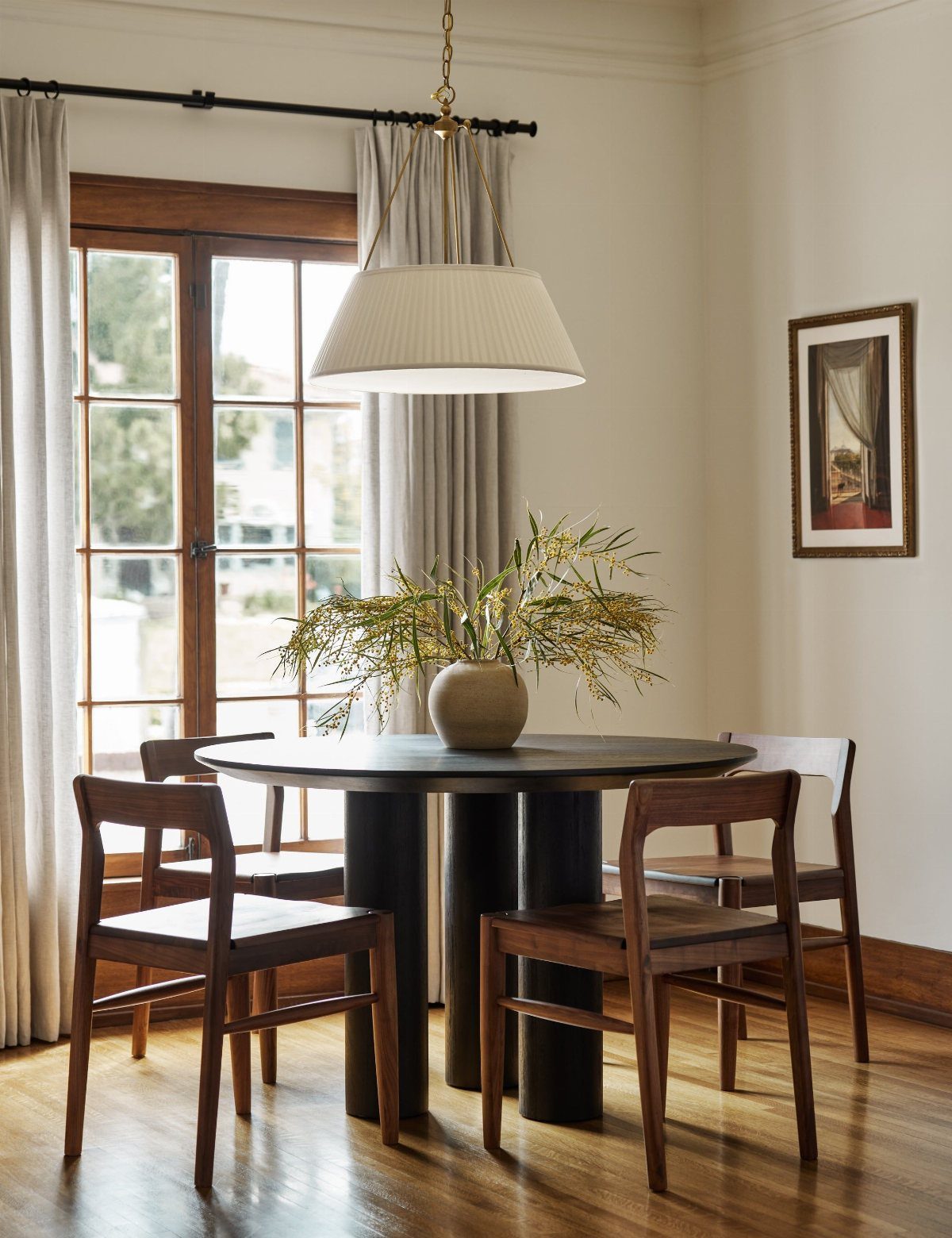
Round tables take up less visual space than rectangular ones, which can lighten the feel of a room with dark floors. They also eliminate the hard lines that compete with wood plank patterns.
If your floor has a matte finish, add a light fixture directly overhead or place the table near a window to bring in more brightness.
7. Natural Wood Tables
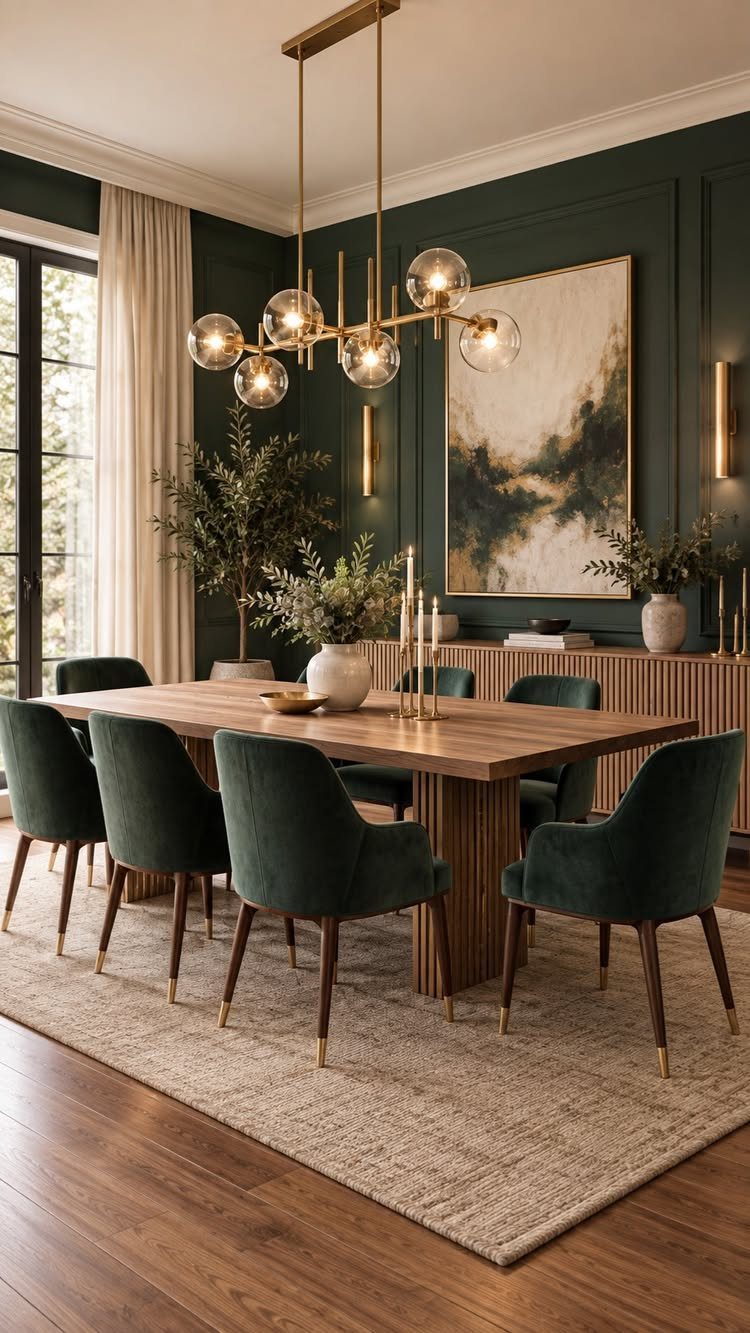
Natural wood tables in lighter finishes, like oak or ash, stand out against dark floors without fighting them. Unstained or lightly finished wood brings warmth without dragging the whole space into dark territory.
A light rug, like the beige one here, bridges the gap between the table and the floor. Green velvet chairs add color and let the wood grain speak for itself, and the soft texture offsets the hard surfaces.
If your floor is walnut or espresso-stained, go for a table with visible grain and a matte or satin finish rather than high gloss.
8. Dining Table with Dark Wood Cabinets
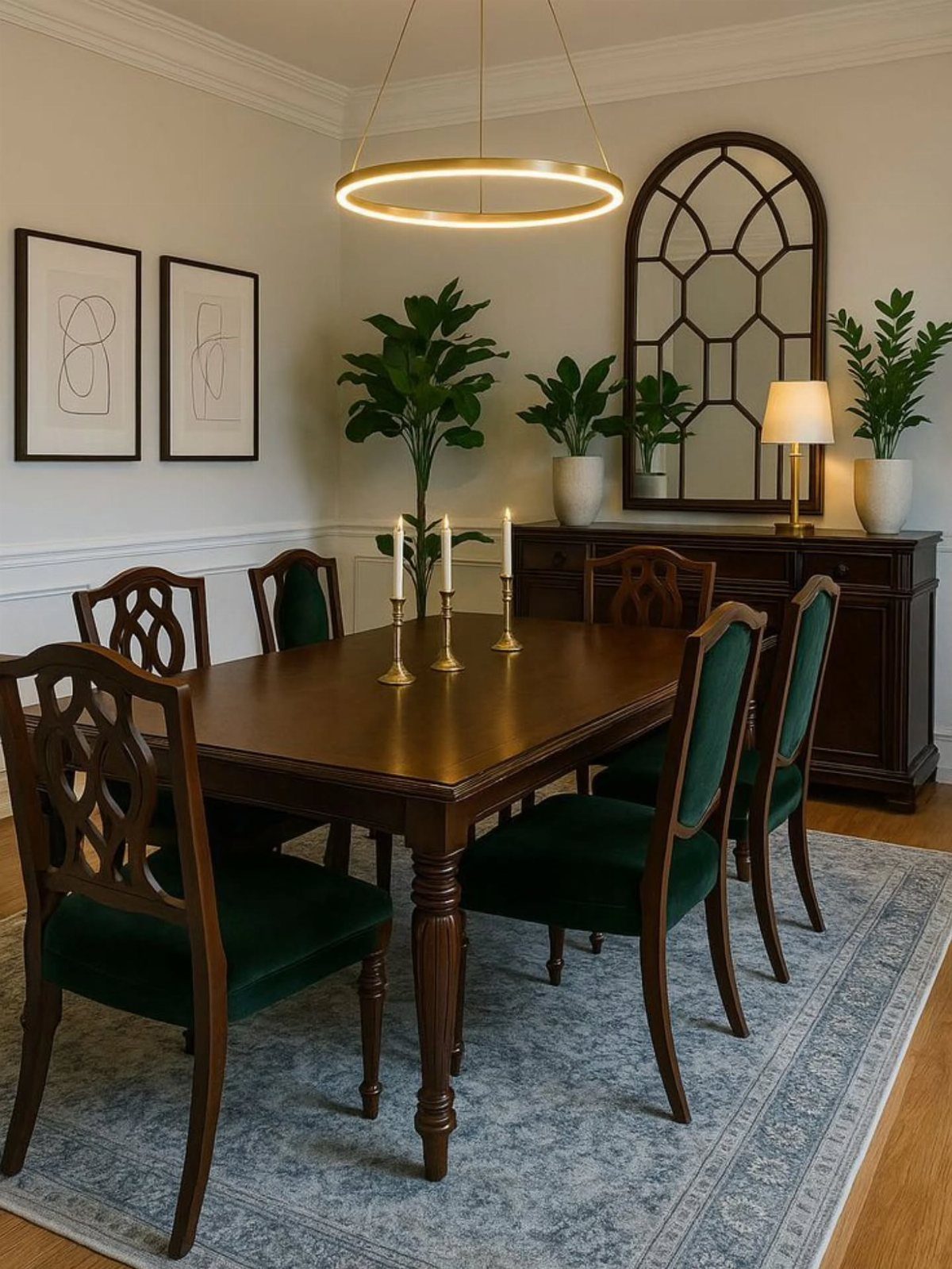
Matching the table and cabinets ties the room together and makes built-in storage feel like part of the plan, not an afterthought.
The dark wood creates a frame for everything else, so lighter elements like the rug and chandelier stand out more.
Green velvet chairs add a pop of color that balances the wood without clashing.
Good natural light or overhead fixtures that can brighten the darker tones make this approach work.
Choosing Table Colors
I go for a table that sits at least a few shades away from the floor, either lighter or darker, so the two don’t blur together.
Tables that sit too close in tone to the floor need help from other elements to define the boundary.
A contrasting rug or a set of light chairs can do that work, but starting with a table that’s visually distinct makes the room easier to furnish around.
If your floor has a warm undertone, a cool-toned table in charcoal or gray keeps the space from feeling too amber.
Frequently Asked Questions
How to style a black dining table?
Balance it with light-colored chairs and a soft rug to keep the space from feeling too heavy.
White or cream upholstery and a lighter area rug work especially well on dark wood floors. Patterned seat cushions or a printed table runner give the eye something to land on when black furniture meets a black floor.
What is a good color for a dining table?
Pick a table that sits a few shades lighter or darker than your floor so the 2 don’t blur together.
Light wood like oak or ash stands out against dark floors, while charcoal or gray adds contrast if your floor has warm undertones.
When the table and floor sit too close in value, a rug in a different tone or chairs several shades lighter give each surface its own edge.
What color furniture with dark hardwood floors?
Furniture that matches the floor too closely needs enough contrast in value to register as separate pieces. Lighter wood finishes add warmth and keep the room from reading as one continuous dark surface.






