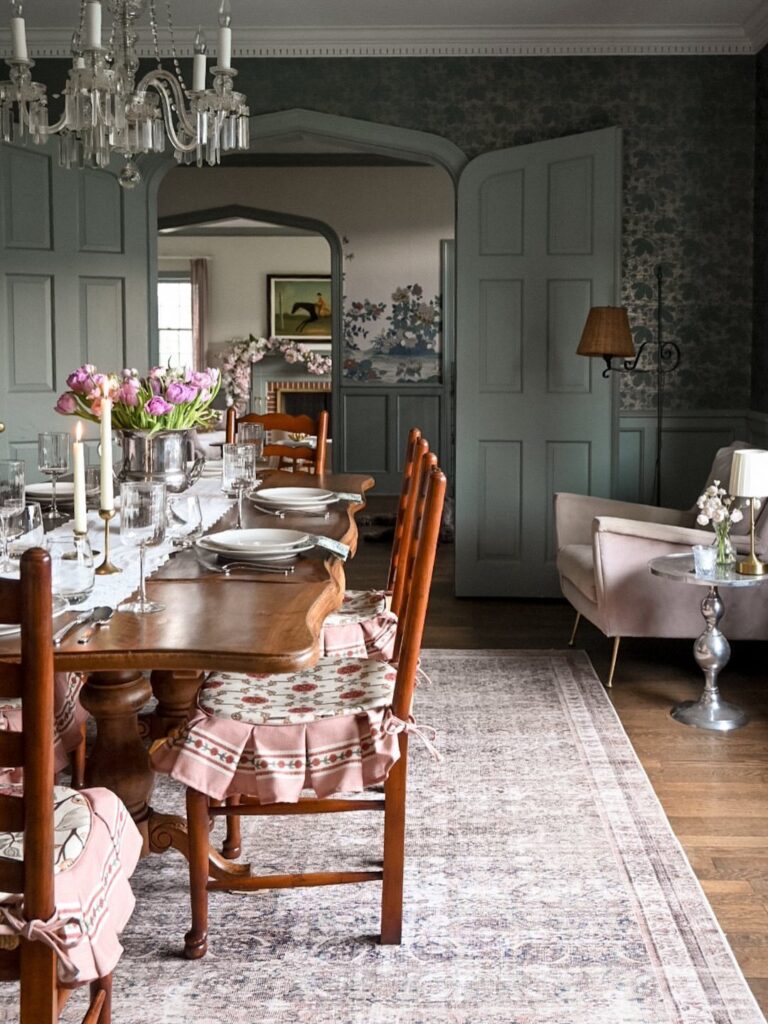
The ideas here range from a thrift store chandelier wrapped in torn linen to floor-to-ceiling bookshelves that take a weekend to install.
A dark wood table in walnut or mahogany anchors the room in a way lighter finishes cannot, and velvet dining chairs in emerald or burgundy bring texture that contrasts with the hard surfaces around them.
1. Dark Wood Tables
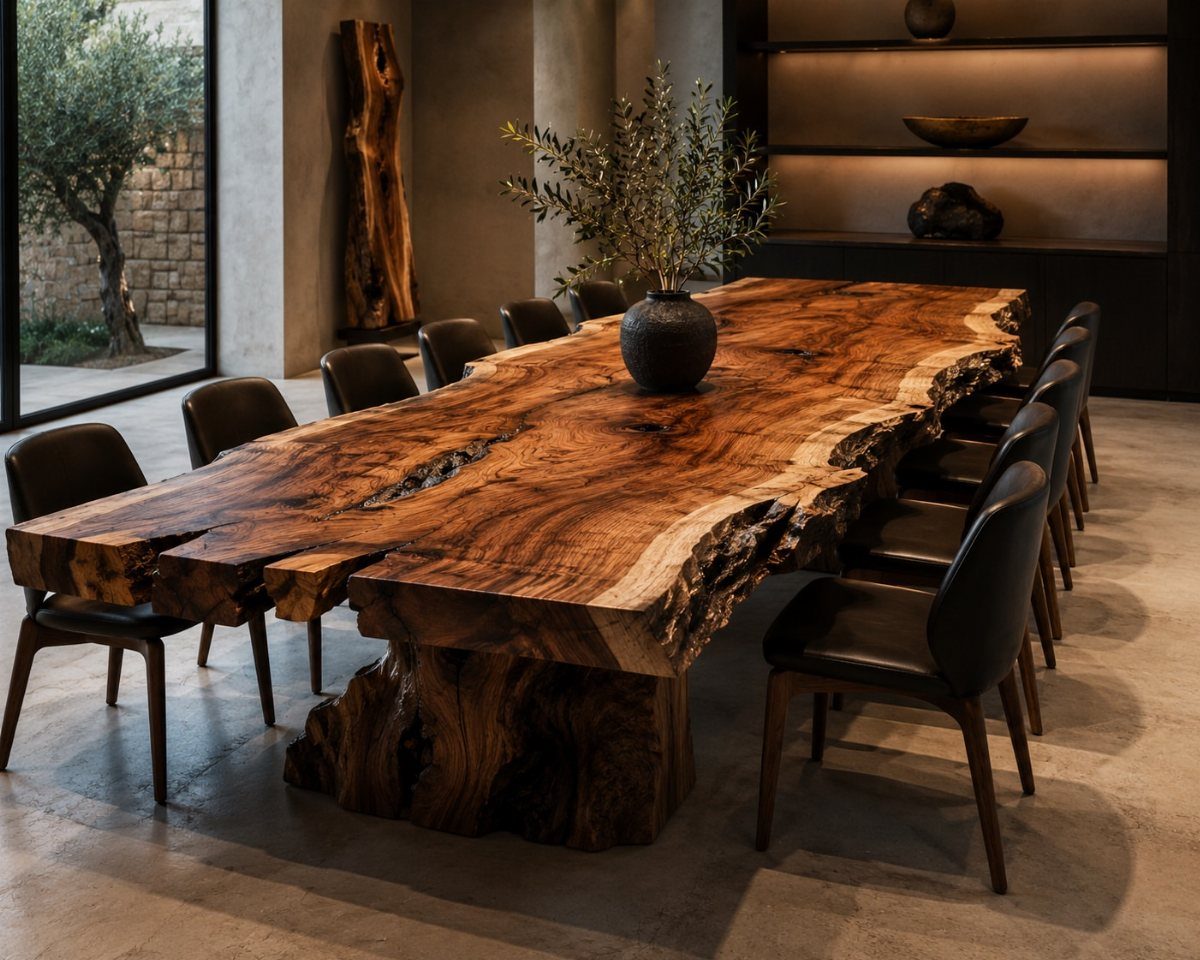
A dark wood table grounds the room in a material that feels both historic and permanent. The grain shows through a deep walnut or espresso finish, and the weight of solid wood reads as serious furniture rather than temporary staging.
Look for pieces in oak, walnut or mahogany.
A live-edge slab keeps the organic detail that contrasts with formal symmetry and polish. If the budget is tight, a refinished vintage table in a darker stain delivers the same effect for a fraction of the cost.
Modern dark academia inspired lounge by Decorilla designer, Kaitlyn B. To achieve the desired look, turn to dark interiors, wood furniture, vintage decor, and lots of books. The color palette is usually moody and muted, with shades of brown, black, deep green, and burgundy.
2. Potted Plants
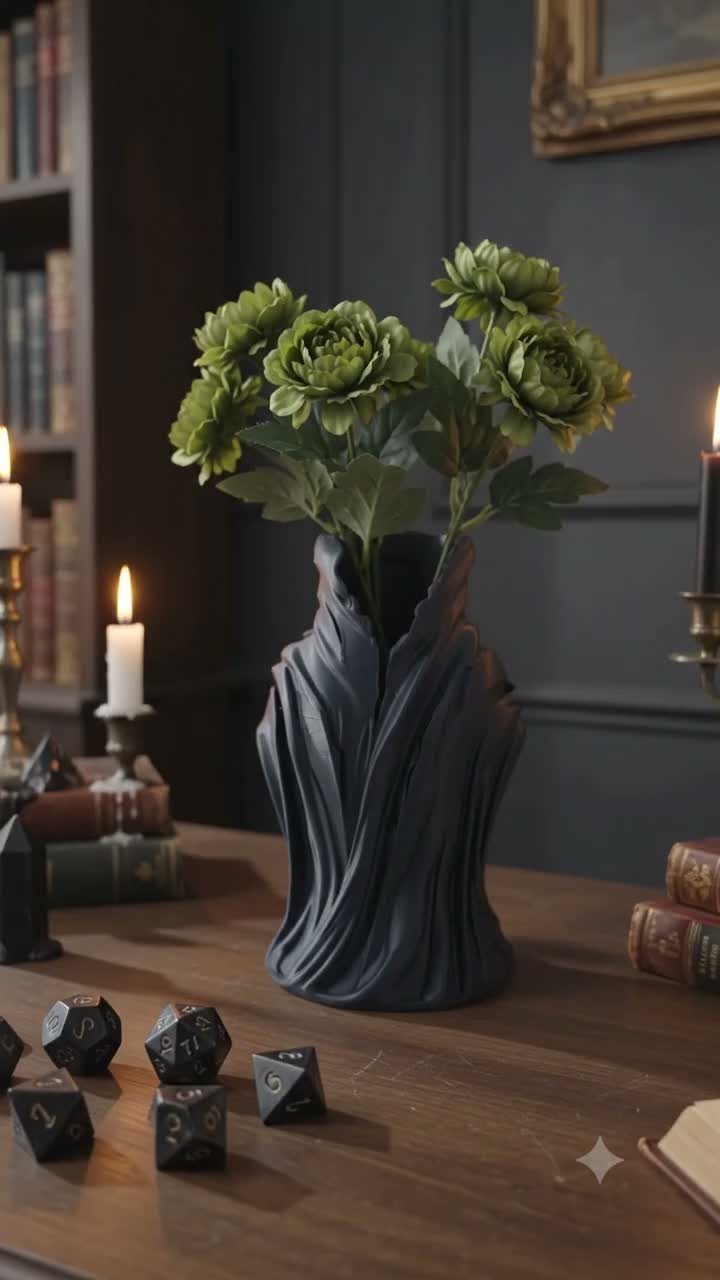
Plants soften the heavier pieces without pulling away from the academic mood. A tall vase filled with eucalyptus or dried grasses adds vertical interest, and the muted green tones work better here than bright florals.
I keep potted ferns or ivy on the table or a nearby shelf.
They thrive indoors with low light, which suits a darker room, and the texture adds life without needing constant swaps. A ceramic or cast-iron planter in black, bronze or dark green keeps the palette intact.
3. Bookshelves
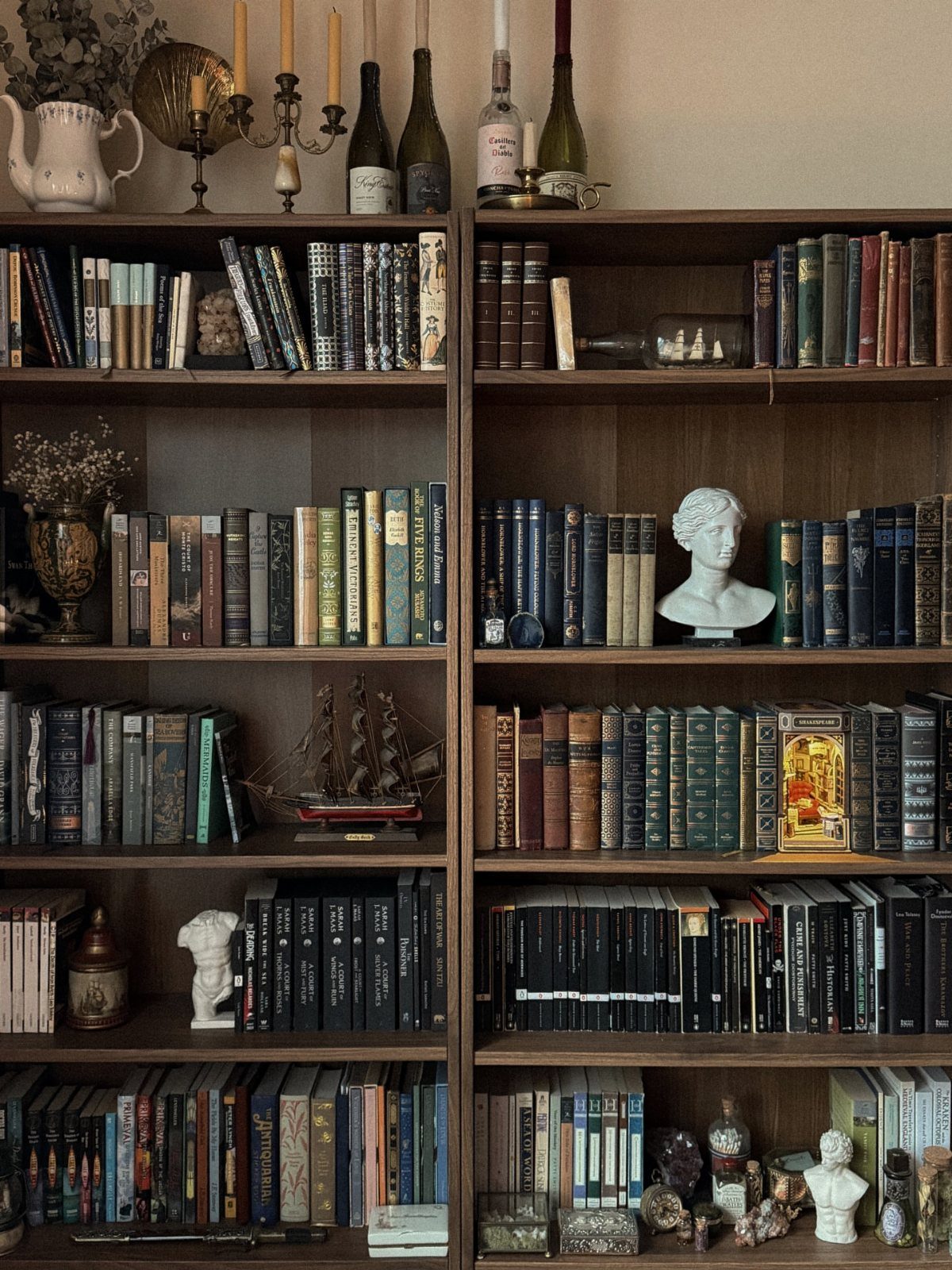
Floor-to-ceiling shelves filled with books turn the dining room into a library corner. The spines create texture and color variation, and the vertical lines make a small room feel taller.
Mix in a few sculptural objects between the books: a bust, a globe, a small framed print. These break up the repetition and give the eye somewhere to land.
Vintage books with cloth or leather covers carry more visual weight than bright paperbacks, and thrift stores and estate sales are reliable sources for filling shelves on a budget.
4. Framed Portraits
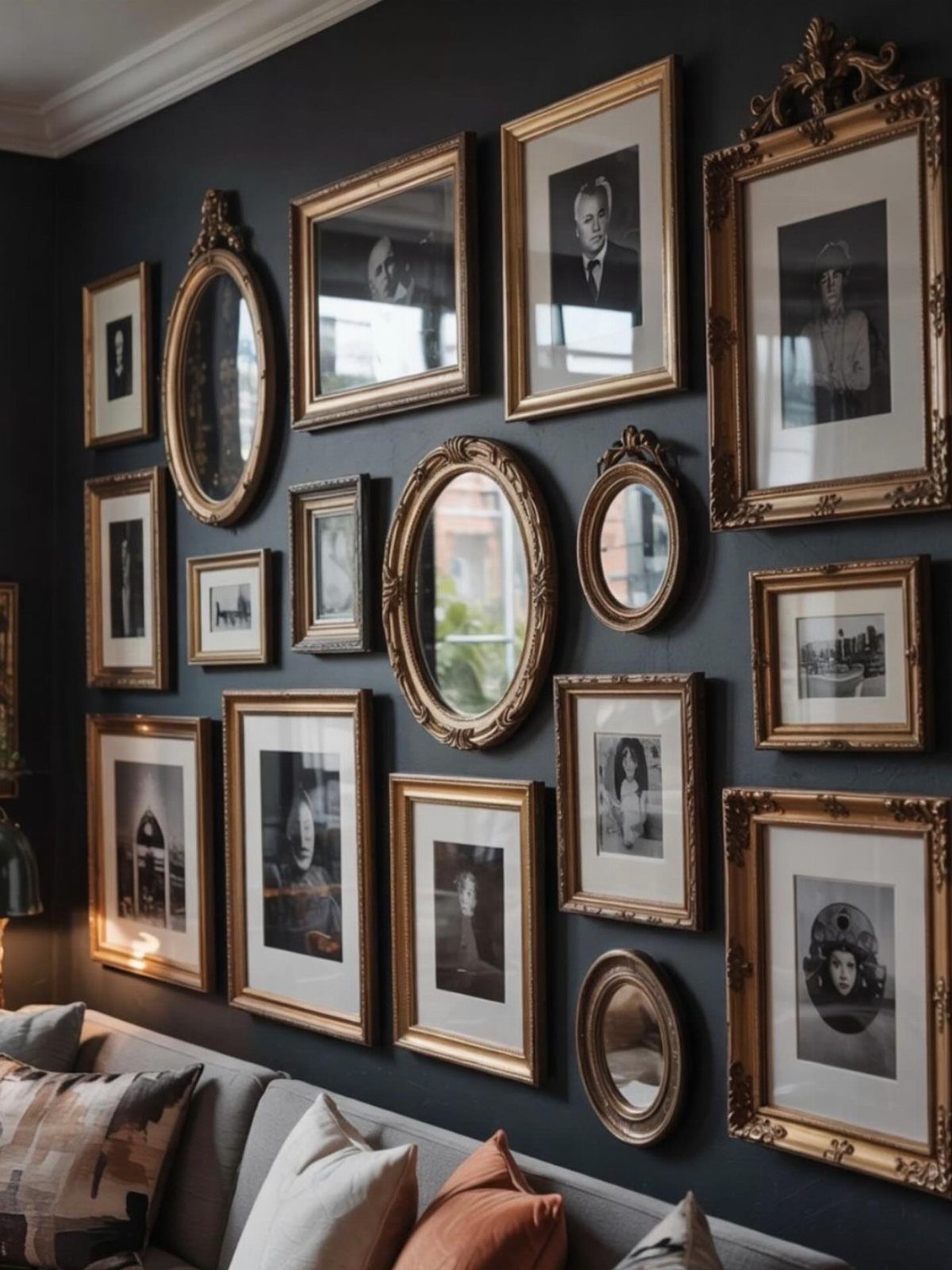
A gallery wall of framed portraits brings in the academic weight that a single piece cannot. Black and white prints in matching gold or black frames create a formal rhythm, and the repetition makes even a small collection feel intentional.
Thrift stores and flea markets are the most affordable sources for vintage frames.
Oval shapes and ornate detailing lean into the gothic side of the aesthetic. I mix in a few mirrors to reflect light back into the room, which keeps a dark wall from feeling too heavy.
5. Dining Table Centerpiece
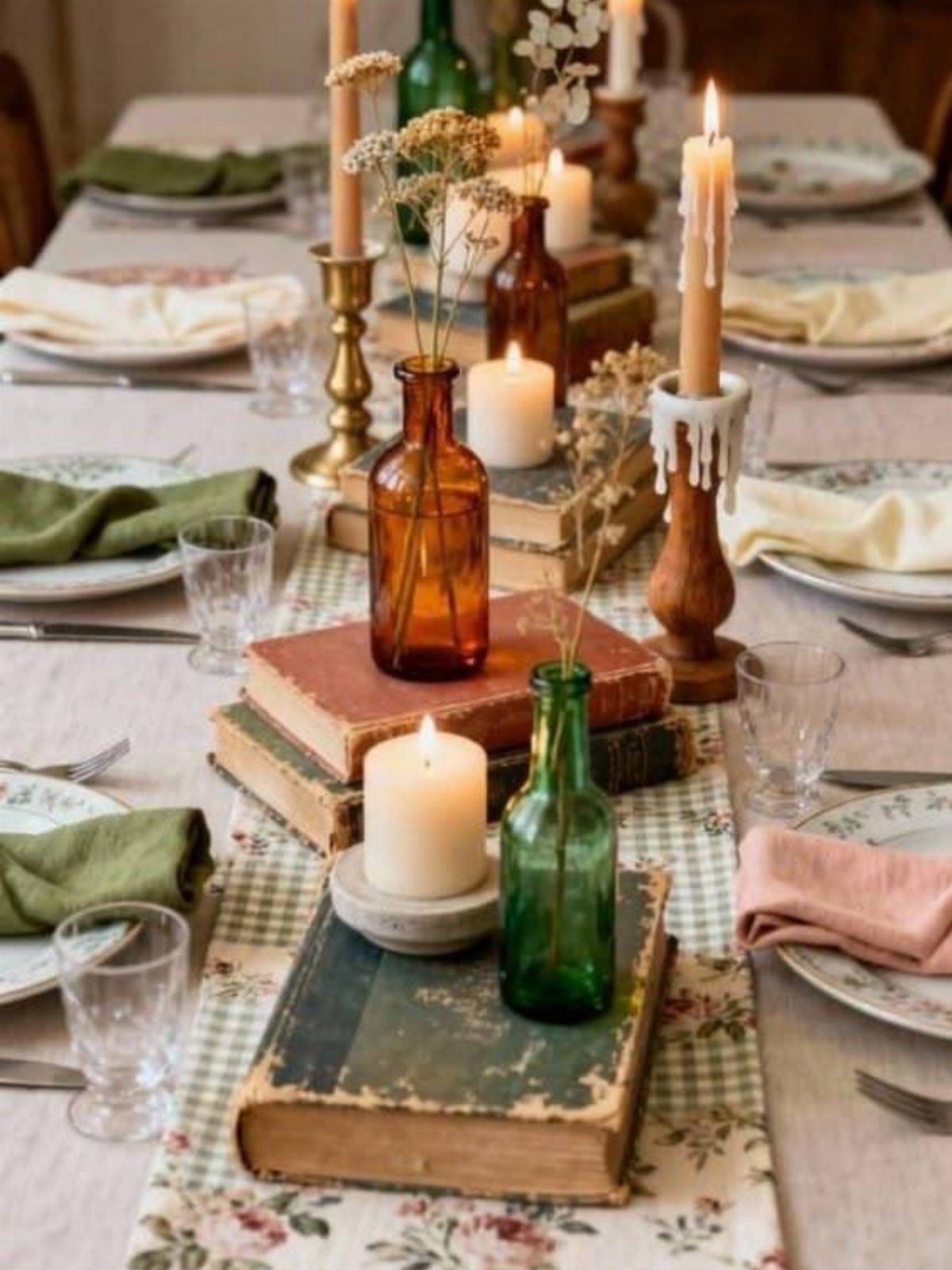
A centerpiece built from books, candles and small glass bottles gives the table a finished, layered look.
Stack 2 or 3 vintage books as a base, then add a taper candle in a brass or pewter holder and a few small vases with dried flowers or feathers.
Keep everything low enough that it does not block conversation across the table. A narrow table runner in linen or a muted floral print defines the centerpiece area and protects the table surface from wax drips.
6. Vintage Crystal Chandeliers
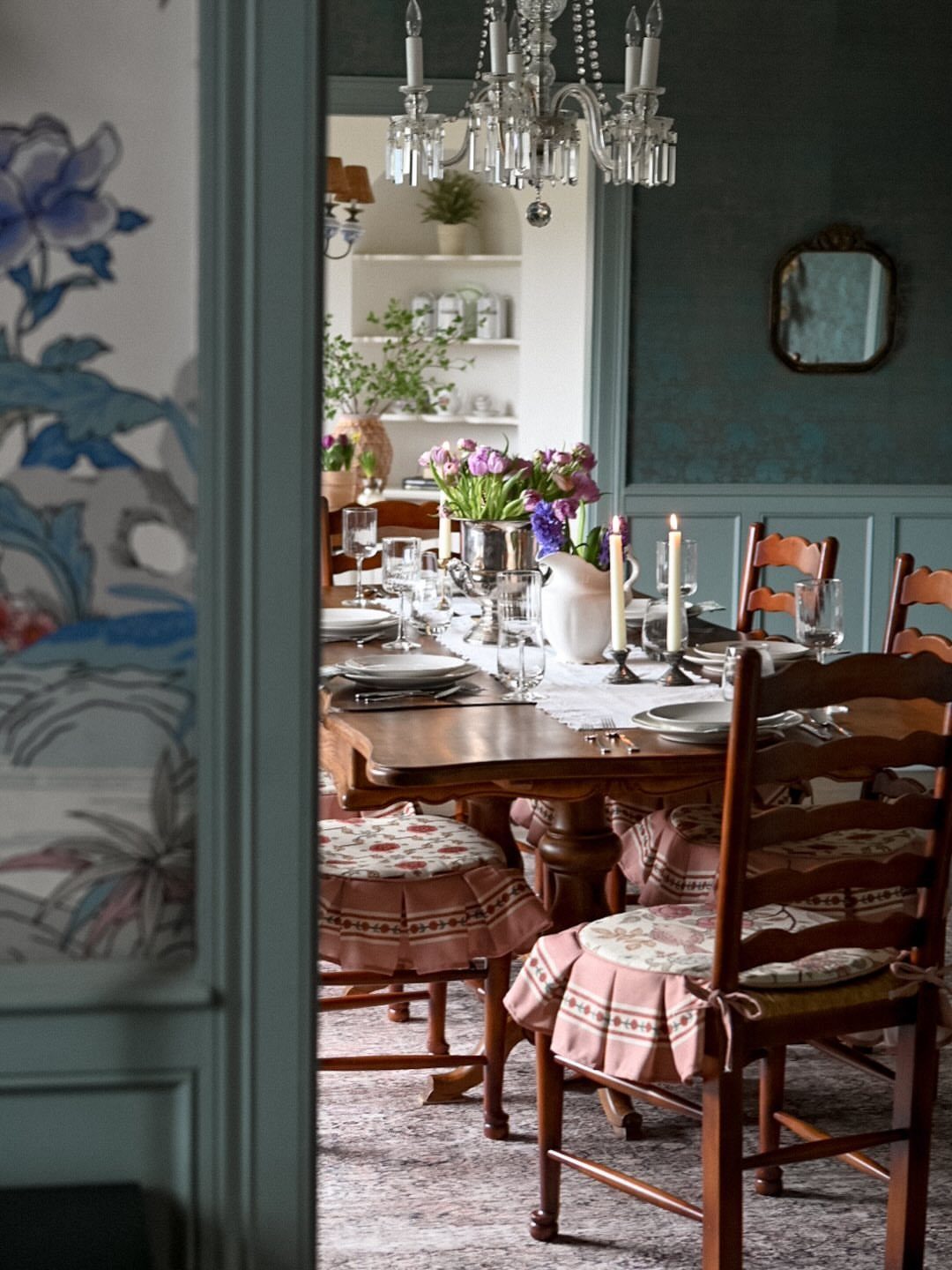
An ornate crystal chandelier adds formality and reflects light in a way that flatters a dark-walled room. The refracted light creates movement overhead, and the fixture itself becomes a sculptural focal point.
Look for vintage chandeliers at estate sales or architectural salvage shops.
They often need rewiring, which a licensed electrician can handle. If a full chandelier is out of reach, a single pendant with crystal drops delivers a similar effect at a lower cost and works well over a smaller table.
7. Rich Velvet Dining Chairs
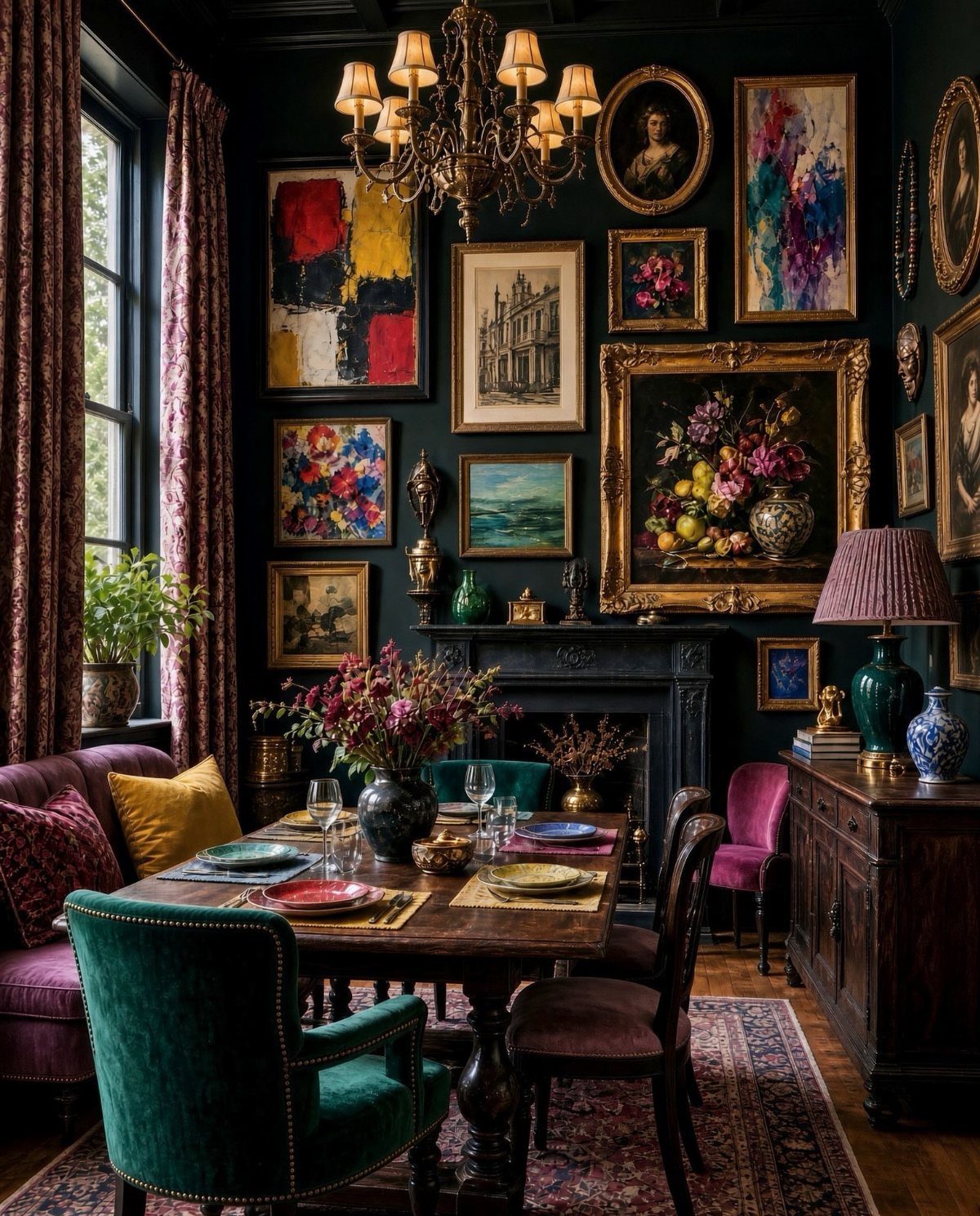
Upholstered chairs in velvet bring texture and softness that contrasts with hard wood and metal. The fabric catches light differently than leather or linen, and jewel tones like emerald, burgundy or navy fit the palette without reading too bright.
I look for vintage dining chairs with good frames and reupholster them in velvet yardage from a fabric store.
The process is straightforward if the seat lifts off. Mismatched frames work here: the uniform fabric pulls them together.
8. Gothic Display Hutch
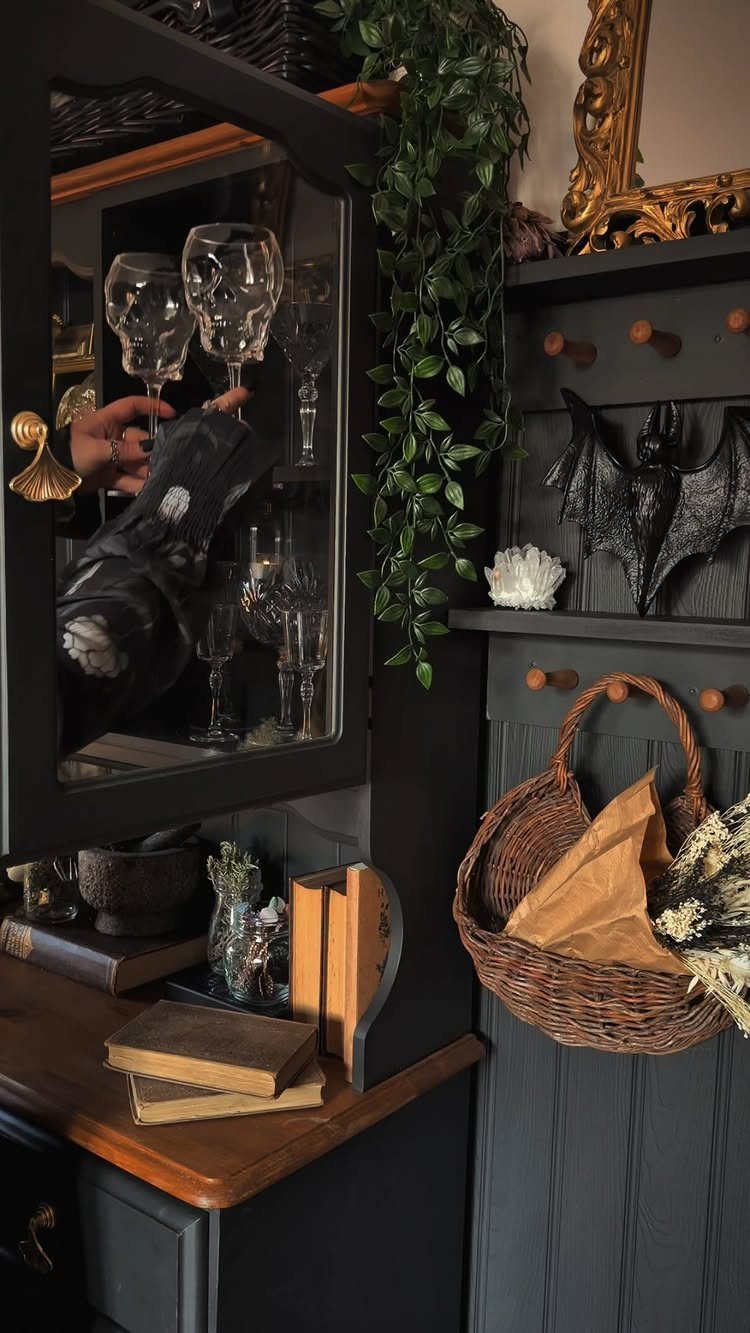
A hutch or china cabinet becomes storage for the objects that define the aesthetic. Instead of formal dishes, fill the shelves with stacked vintage books, small sculptures, apothecary bottles and curiosities that reference natural history or gothic fiction.
The cabinet itself can be dark wood or painted in a deep charcoal or forest green.
Glass doors keep dust off the objects while leaving them visible. I rotate smaller pieces seasonally to keep the display from feeling static, and a single shelf dedicated to glassware keeps the piece functional.
9. Tattered Fabric Chandelier
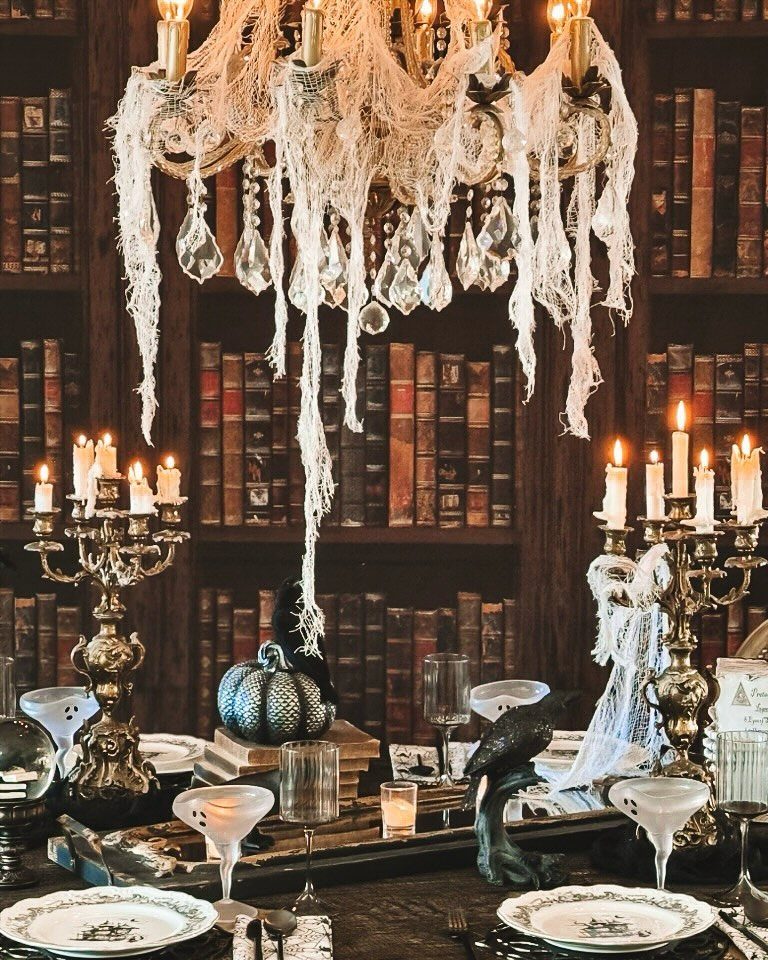
Fabric draped over a chandelier frame softens the light and adds an aged, theatrical quality. The material can be muslin, cheesecloth or linen torn into strips and layered until the fixture underneath is mostly obscured.
Start with a thrifted chandelier and remove any crystals or decorative elements that would compete with the fabric.
Wrap or tie the strips around the arms, leaving some ends loose for movement. The fabric will collect dust, so use it in a room reserved for special occasions rather than daily meals.
10. Exposed Wood Beams
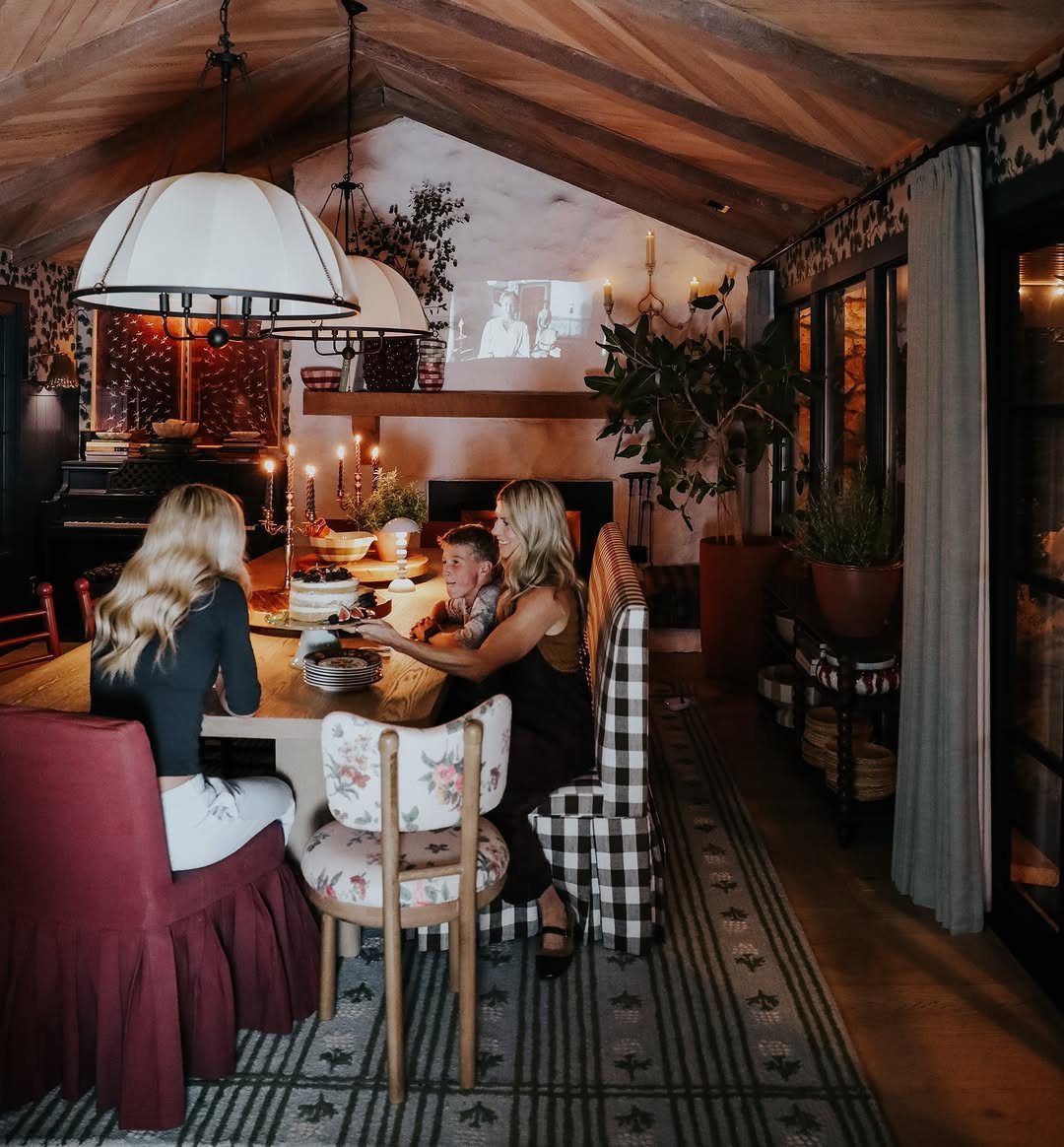
Ceiling beams in a dark stain or natural aged wood add architectural weight overhead.
If the room does not have structural beams, faux beams made from hollow wood boxes install with screws into ceiling joists and read as real from below.
The beams work best in a room with at least 9 feet of ceiling height, or they compress the space.
Stain them to match the table or other wood furniture, and run them parallel to the longest wall. A single beam over the table draws the eye without overwhelming a smaller room.
11. Vintage Floral Wallpaper
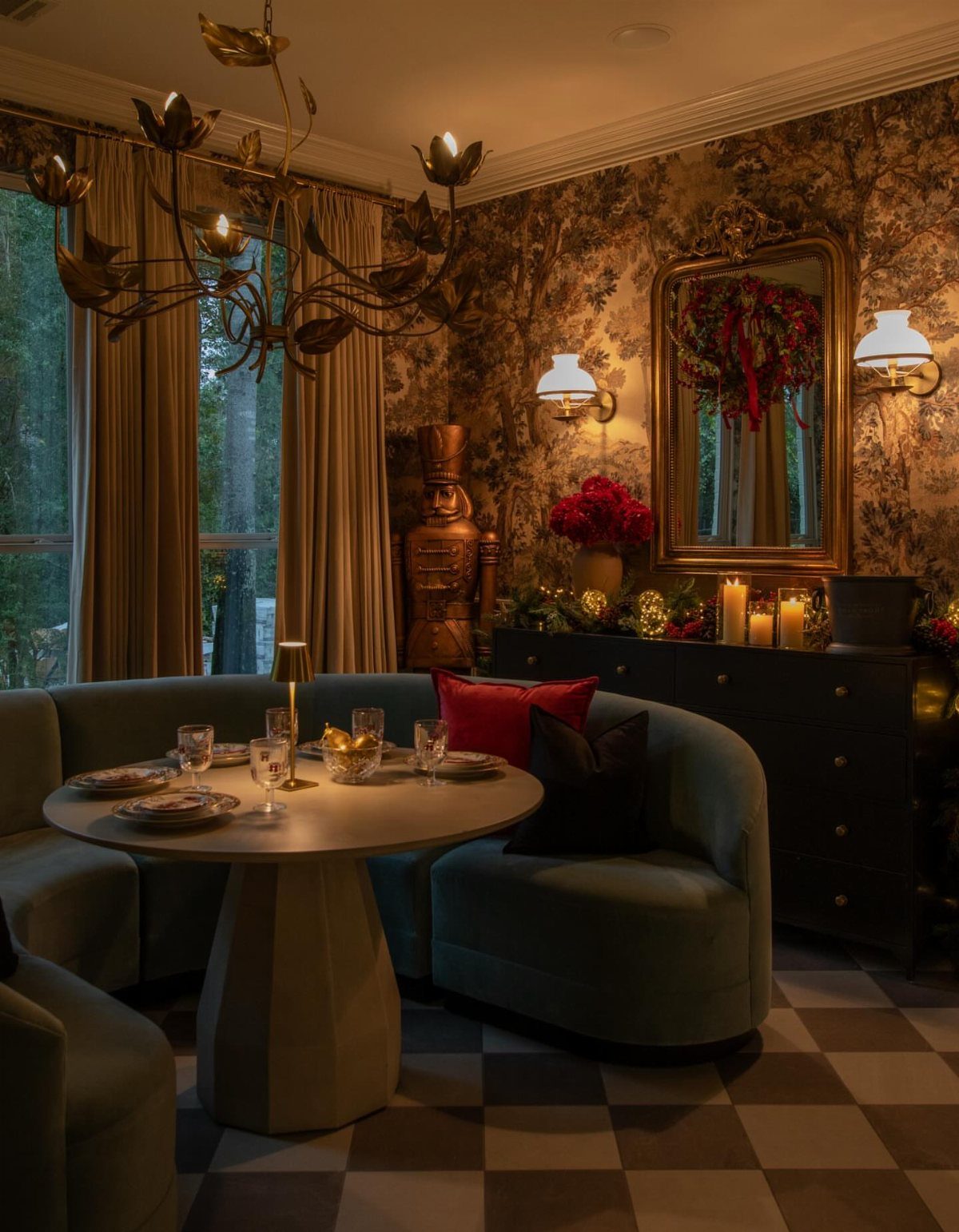
Wallpaper in a dark floral pattern covers more wall in less time than a gallery and creates an immediate backdrop. Look for designs with deep background colors and botanical motifs in muted tones rather than bright pastels.
Peel-and-stick versions simplify installation and work in rentals where permanent changes are off limits.
One accent wall behind a hutch or sideboard anchors the pattern without requiring a full room commitment, and the repetition fills space that would otherwise need multiple pieces of art.
Creating a Cozy Atmosphere
Heavy curtains in velvet or thick linen block drafts and soften hard surfaces. The fabric absorbs sound, which makes a room with wood floors and minimal upholstery feel less echoey during a meal.
Layering rugs over hardwood adds warmth underfoot and draws a boundary around the table in an open floor plan. A wool or jute rug under a smaller patterned runner creates visual interest without competing with wallpaper or a gallery wall.
Wainscot paneling or textured wallpaper adds depth to flat walls and carries the academic feeling into the architecture itself. Gothic patterns work well in small doses, particularly on a single accent wall.
Lighting should come from multiple sources at different heights. Table lamps and candle sconces cast a warmer glow than overhead fixtures alone, and the layered light makes a dark-walled room feel intentional rather than dim.
Incorporating Vintage Elements
Antique furniture brings the weight and detail that new pieces often lack.
A vintage armoire or sideboard stores linens and dishes while adding vertical mass to an empty wall. Look for ornate wood carving or turned legs that reference older furniture styles.
A single well-made vintage item often costs less than a new reproduction and carries more character.
Globes, maps and vintage clocks fill surfaces and shelves with objects that reference scholarship without requiring books. An old desk repurposed as a sideboard or bar cart keeps the academic tone while adding function.
Wrought iron chandeliers and candle sconces fit the period better than modern flush mounts, and the warm light from lower-wattage bulbs or candles reads as softer and more flattering.
Personalizing Your Space
The objects on open shelves and tabletops should reflect what you actually care about.
Stacks of books you have read, small sculptures or pottery you have collected, and plants you keep alive all signal a room someone actually uses rather than one staged for a photo.
Vases, antique statues and globes add sculptural weight to surfaces that would otherwise sit empty. These pieces work best when they vary in height and material, which keeps a sideboard or shelf from looking like a lineup.
A collection builds over time. Rotate smaller objects seasonally or when you bring something new home, and let the room change as your interests do.
Frequently Asked Questions
Is dark academia still a thing?
Yes, dark academia remains a widely used aesthetic in home design. The look pulls from Gothic architecture, old university reading rooms and the kind of deliberate, layered atmosphere that feels historic without trying to fake age.
It works particularly well in dining rooms where darker finishes and layered textures build a space that feels serious rather than staged.
What furniture style is dark academia?
Dark academia furniture centers on vintage and antique pieces in rich, dark finishes like walnut, mahogany or espresso-stained oak.
Dining rooms use solid wood tables, upholstered chairs in velvet or leather, and tall bookcases or hutches with carved details or ornate hardware. The pieces reference older furniture styles but remain functional rather than purely decorative.
What is the best color to use in a dark dining room?
Deep jewel tones like emerald, burgundy and navy work well in a dark dining room because they hold their color in low light without reading as flat or dim.
These shades layer well with dark wood furniture and brass or bronze fixtures, and they create a backdrop that feels finished rather than heavy when paired with multiple light sources at different heights.