
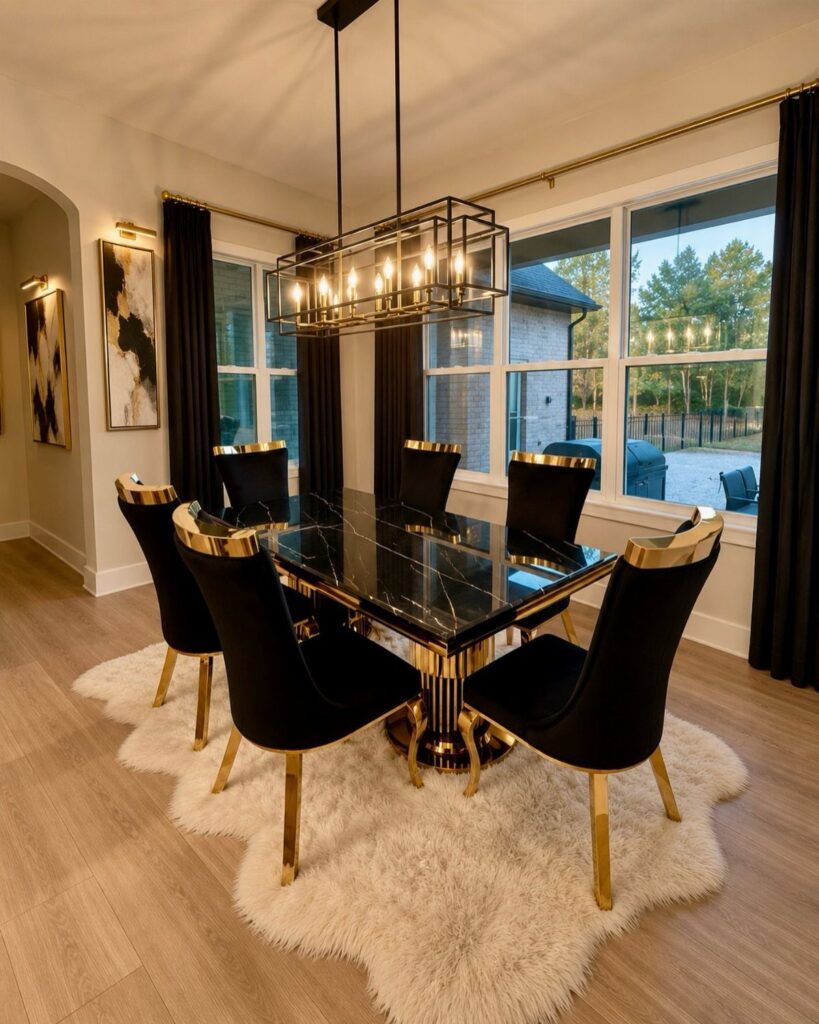
A statement chandelier filling vertical space sets a different mood than a linear suspension light spread along the table’s length, and the fixture that works depends on ceiling height, table shape and whether you can hardwire or need a plug-in option.
Ceiling height decides how low a pendant can hang: 33 to 39 inches above the table suits a 9-foot ceiling, while 36 to 42 inches fits a 10-foot ceiling.
Linear suspension lights spread illumination evenly over rectangular tables, trio pendants divide a long surface into zones, and recessed cove lighting adds ambient glow around the room’s perimeter without taking up any visual space.
1. Statement Chandeliers
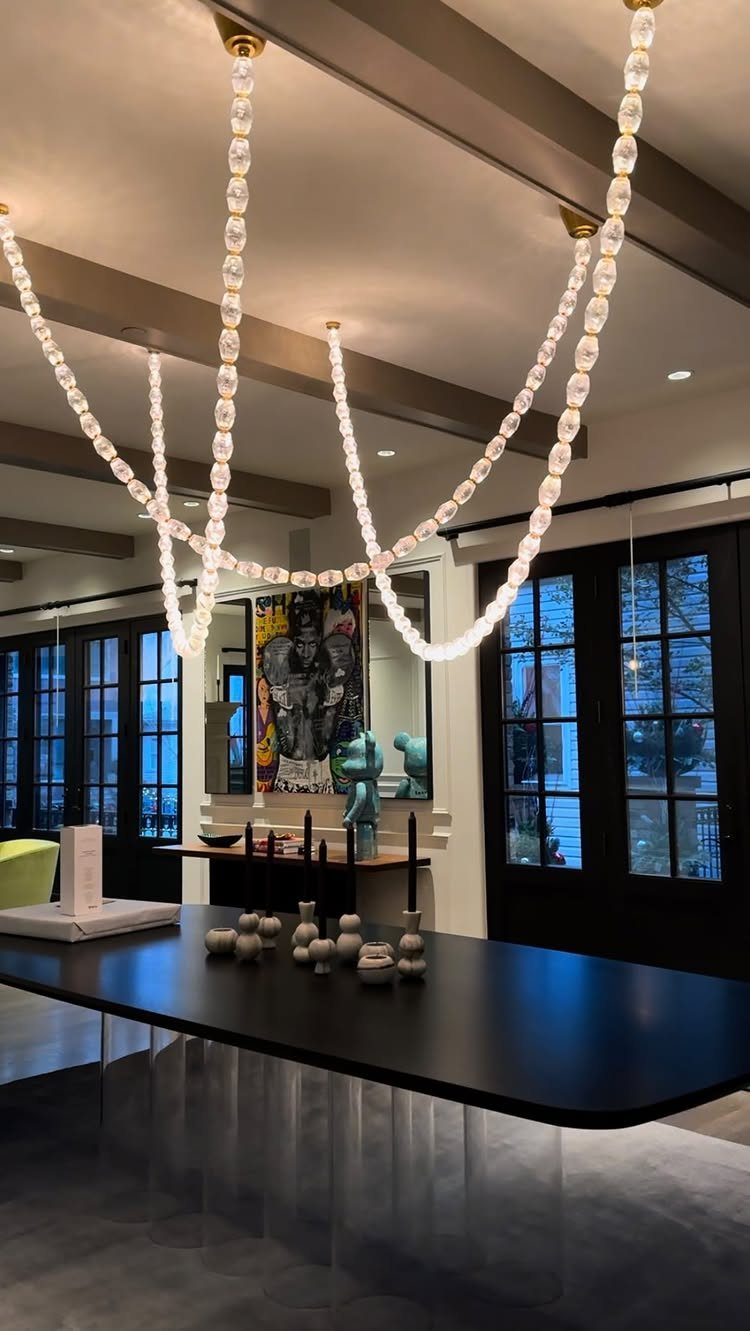
A chandelier with presence, the kind that fills vertical space and holds its own against a long table. The draping strands here catch light at every angle, enough movement to keep the fixture from reading flat.
Chandeliers work best when the table sits centered under them and when ceiling height gives the piece room to show its shape.
I look for a fixture that hangs low enough to light the table while people across from each other can still see faces clearly.
Scale matters more than style.
A fixture too small disappears, one too wide crowds the table. Aim for a diameter roughly half to two-thirds the width of the table.
Lighting can make or break a design scheme, so it’s worth aiming for a standout fixture, especially in a dining room. The perfect union of style and function, lighting never fails to set the mood.
2. Sculptural Light
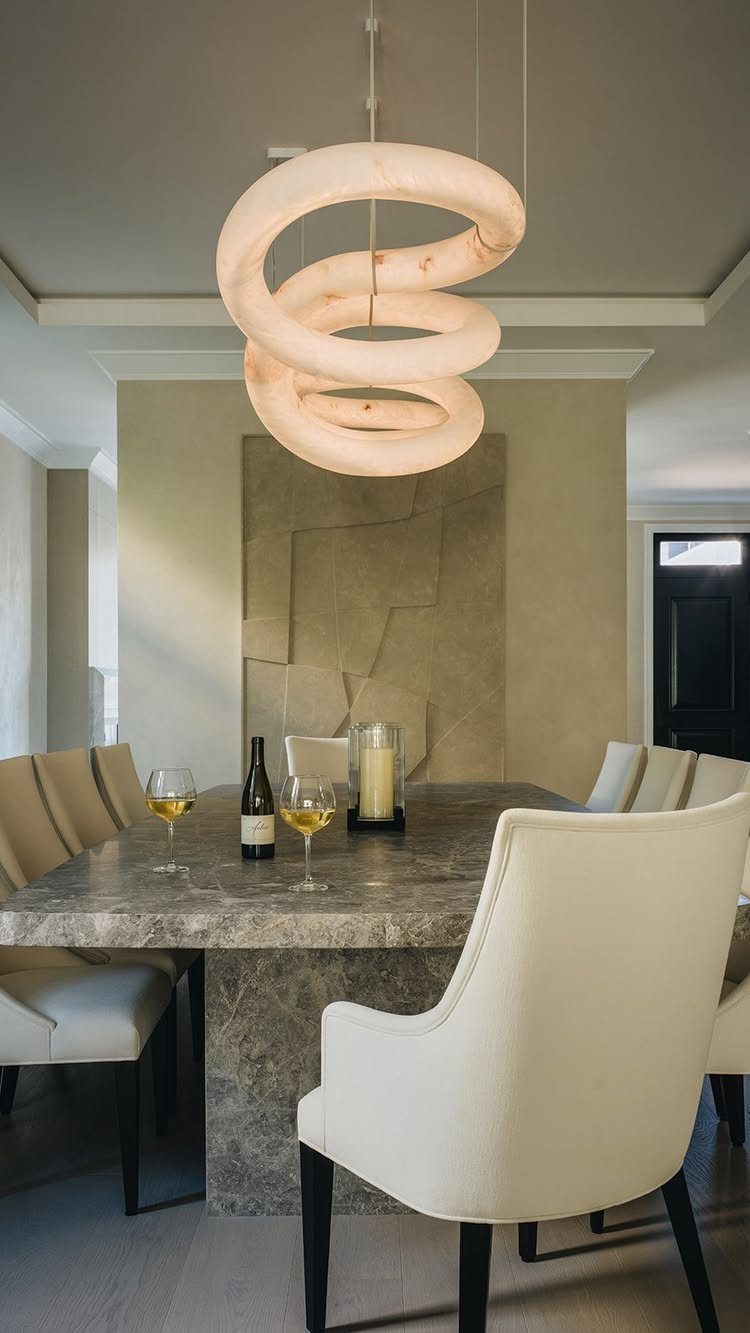
This one hangs like a piece of gallery sculpture, tall enough to read from across the room and detailed enough to hold your attention up close.
The spiral pulls your eye upward, which lengthens the room visually even when ceiling height is modest.
Sculptural fixtures suit open-plan spaces where dining, kitchen, and living zones share one room. The light becomes a room divider without adding walls.
Alabaster diffuses light softly, so the glow stays even and throws no harsh shadows. In rooms with standard ceilings, look for fixtures that stay compact instead.
3. Linear Suspension Lights
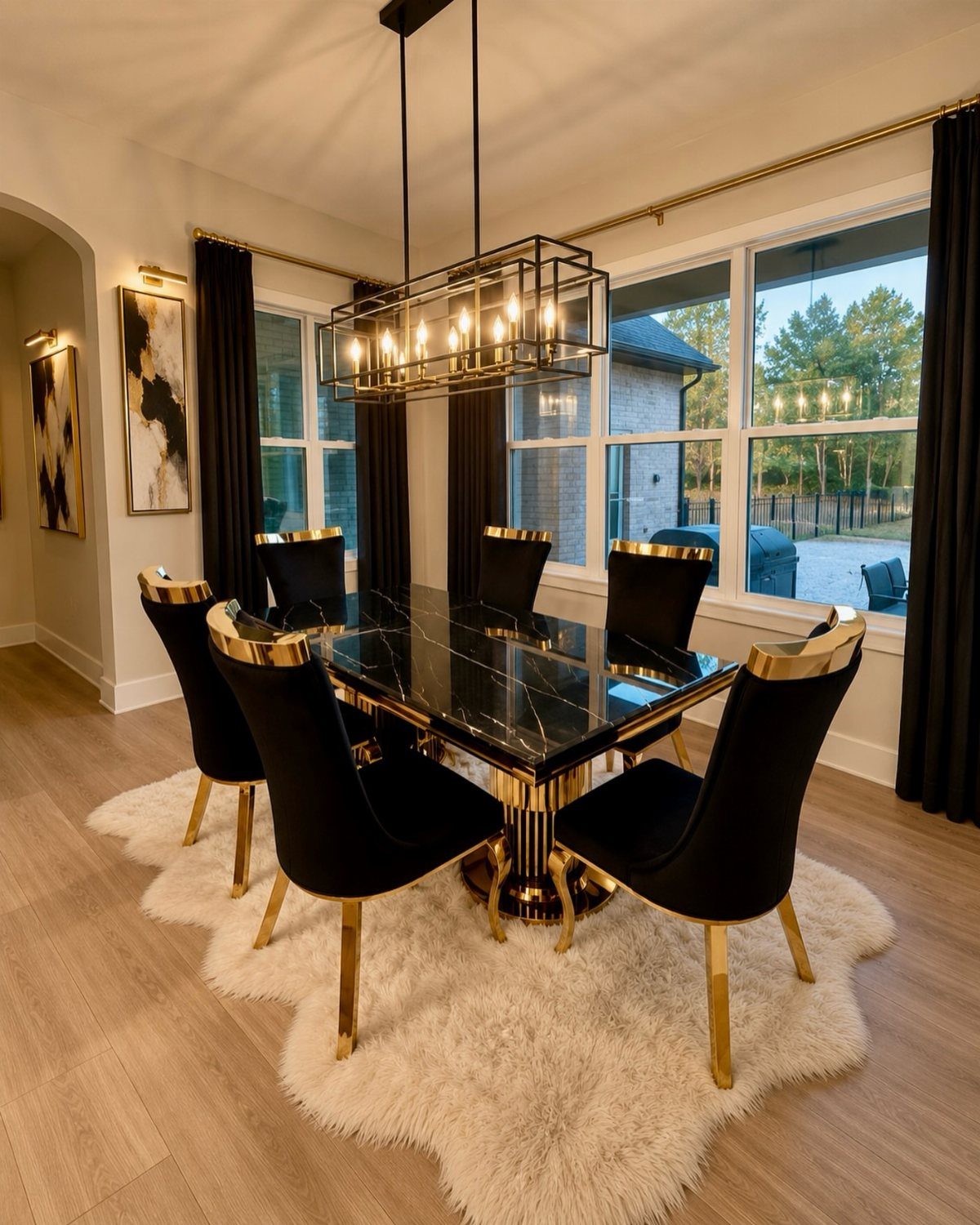
A long, low fixture follows the length of a rectangular table, spreading light evenly from end to end where a single pendant would leave the edges dim.
Linear lights hang best at a height that clears heads and still lights the surface well. The fixture length should run about two-thirds the length of the table, long enough to anchor the space without reaching past the edges.
Long tables need the spread of a linear fixture, since one centered pendant leaves the ends dim.
4. Trio of Glass Globe Pendants
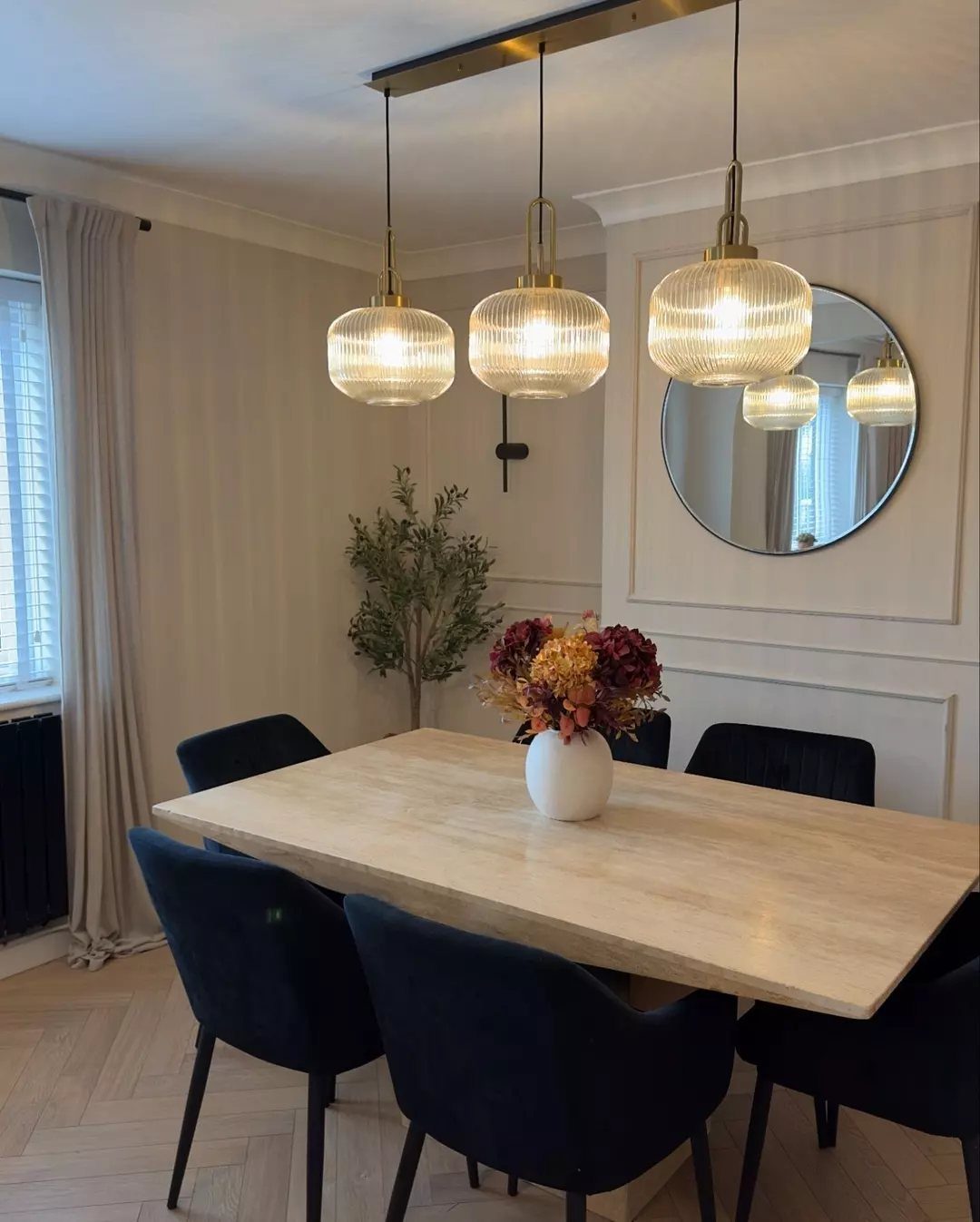
3 ribbed glass globes spaced in a row over a long table light the surface evenly while keeping the overhead plane from feeling cluttered. The brass hardware adds warmth without the weight of a solid metal fixture.
Spacing matters. I measure the table length, then divide by 4 to find the distance between globes and from each end globe to the table edge.
Over a long table, I space the globes evenly and bring the outer ones in from each end so light reaches the whole surface.
Ribbed glass softens the bulb glow and adds texture that catches light during the day when the fixture is off.
5. Single Round Pendant Light
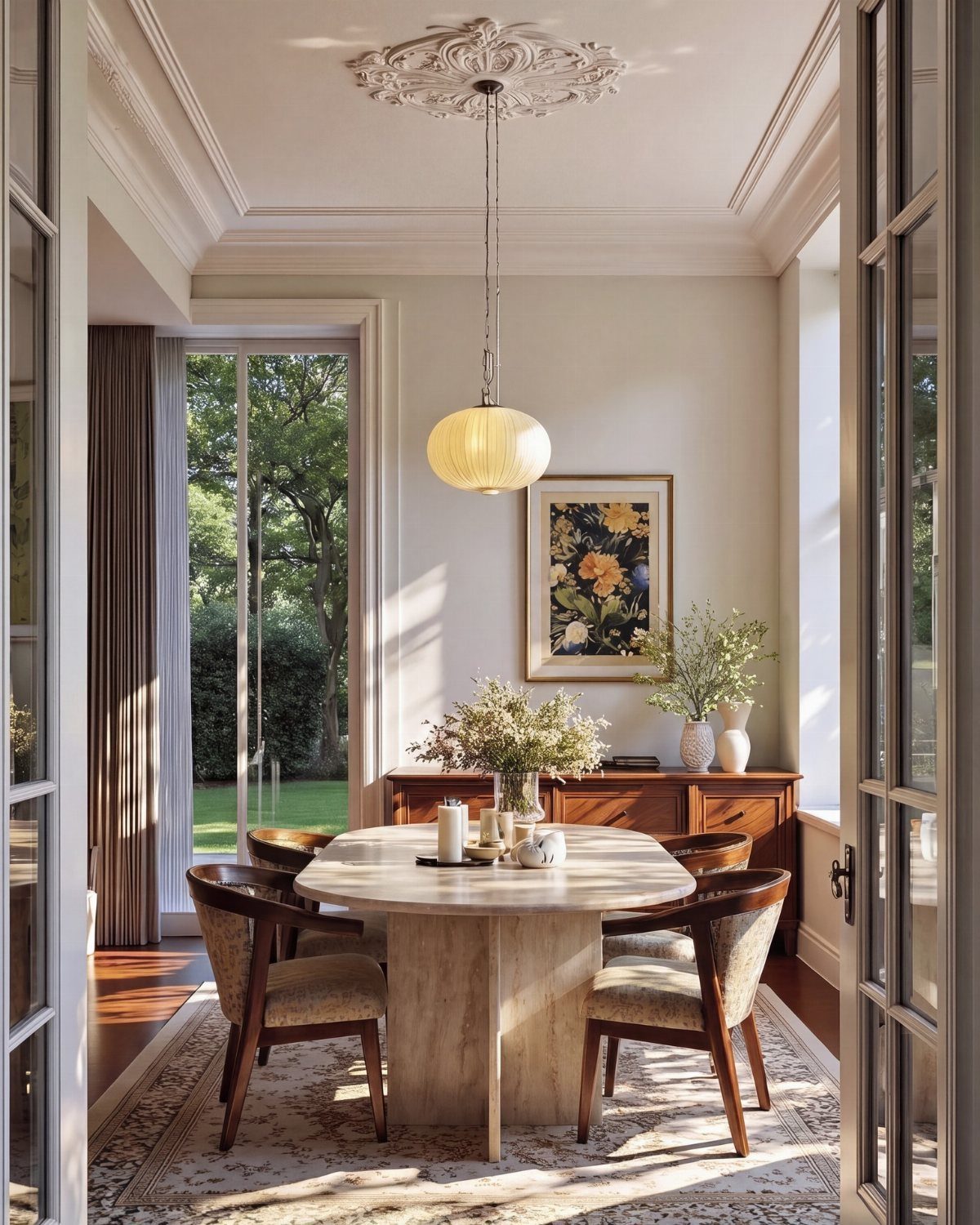
A single spherical pendant over a round table centers the light exactly where the table centers the room. The glow here is diffuse, which keeps the light soft across faces during a meal.
Round tables and round pendants share the same visual logic, so the pairing feels settled rather than matched by effort. I hang the fixture close enough to light plates and glasses but high enough that it stays out of conversation.
A single round pendant fits smaller dining rooms where a large chandelier takes over. The single pendant keeps the ceiling feeling open while still anchoring the table below.
6. Mid-Century Dome Pendant
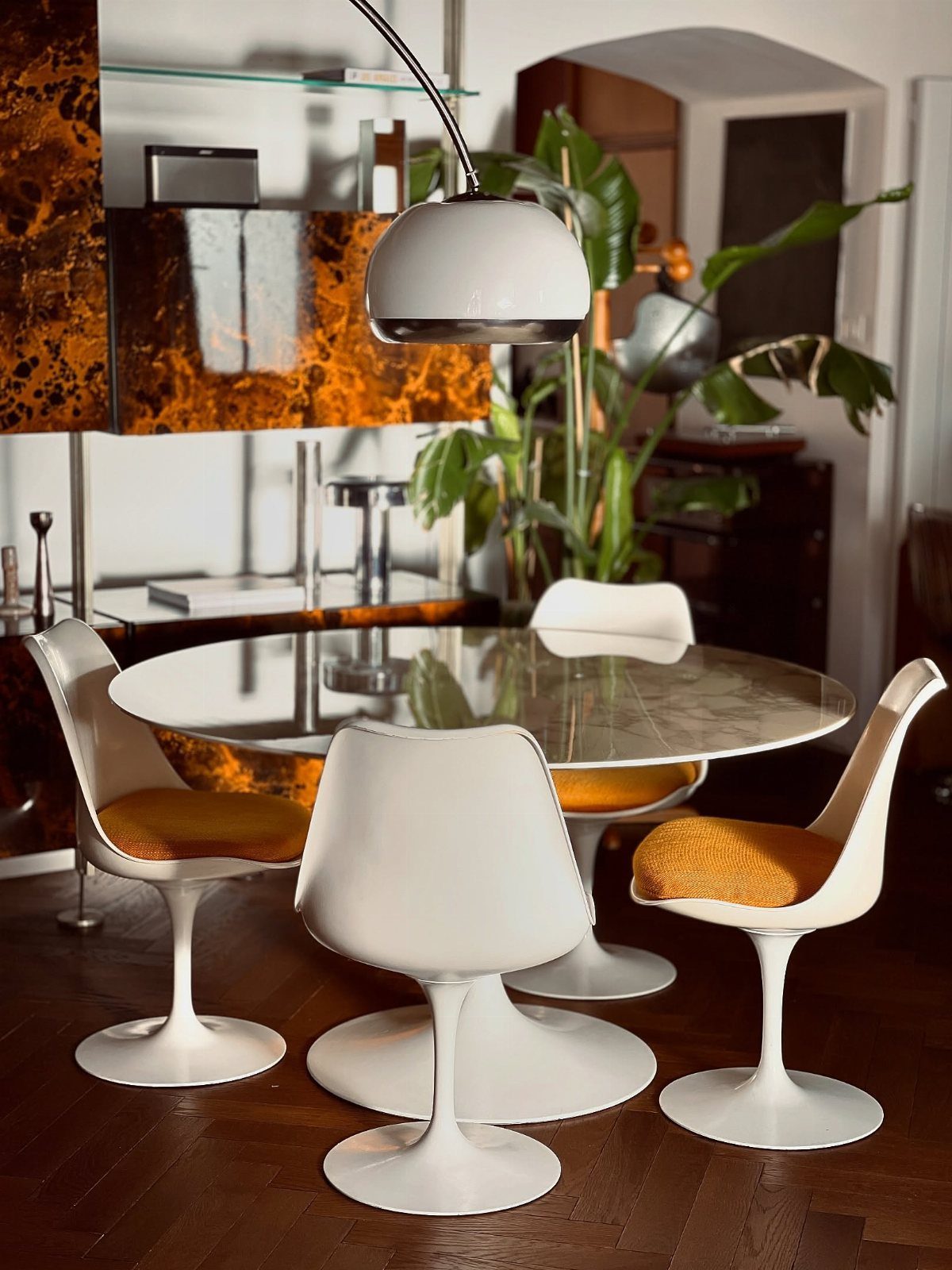
A low-hanging dome pendant pushes light down onto the table, which makes the dining surface bright while the room around it stays softer and more relaxed. The clean white shade here suits mid-century furniture without dating the room.
Dome pendants work best over round or square tables where the light spreads evenly from a centered point. Over a rectangular table, the ends fall into shadow unless you add a second pendant or switch to a linear fixture.
I hang this style lower than most fixtures because the downward-focused light loses strength quickly with distance.
7. Rustic Driftwood Branch Fixture
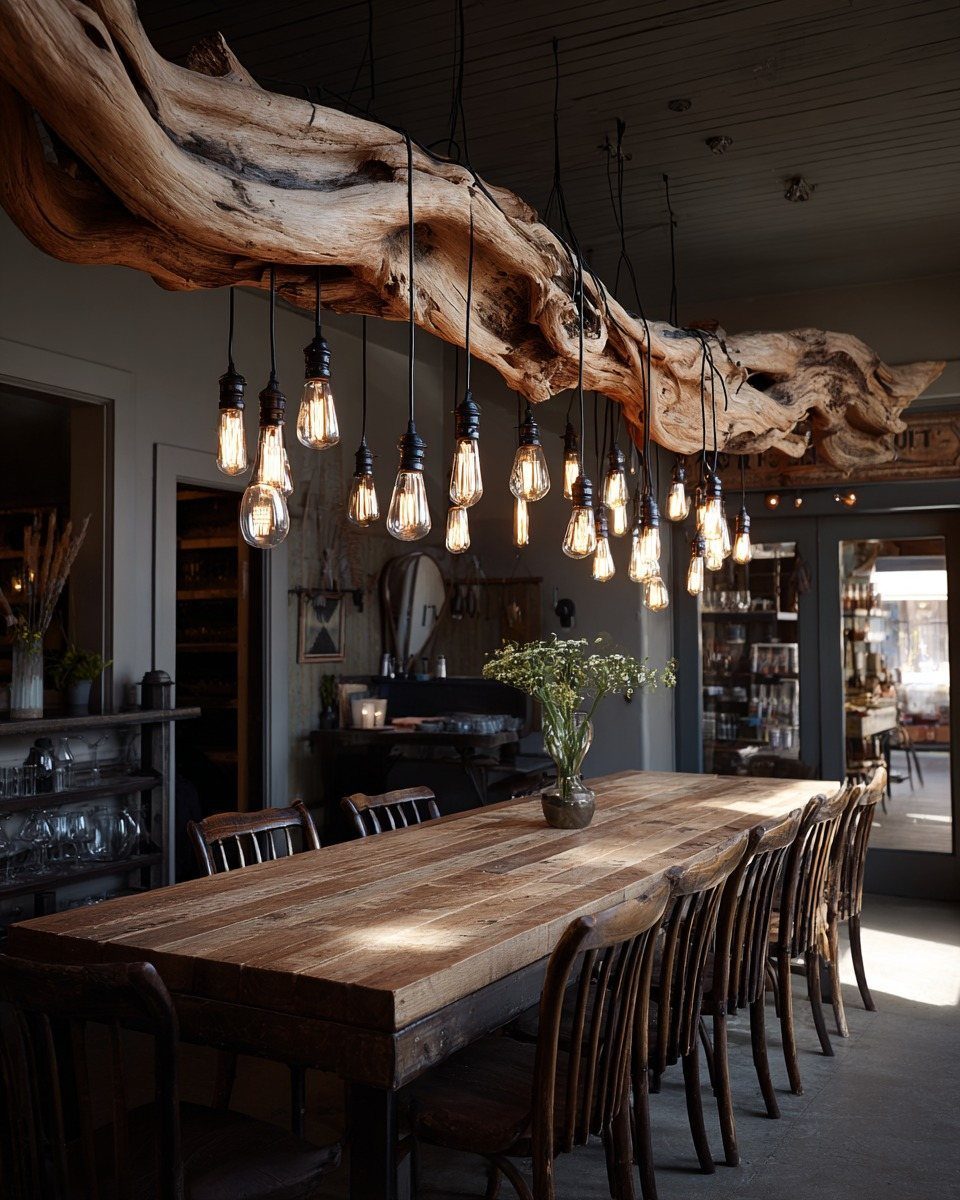
A thick driftwood branch suspended horizontally serves as both structure and style, with Edison bulbs dropping from cloth-covered cord at varying heights.
The rough wood and exposed filament bulbs suit farmhouse and coastal rooms where materials feel salvaged rather than polished.
The branch needs to span the full length of the table to balance visually.
I drill small pilot holes along the top surface, feed cord through, and wire the bulbs before suspending the whole piece from ceiling hooks with heavy-gauge cable.
Driftwood weighs less than it looks, but the assembled fixture still needs secure mounting into ceiling joists.
8. Teardrop Glass Pendants
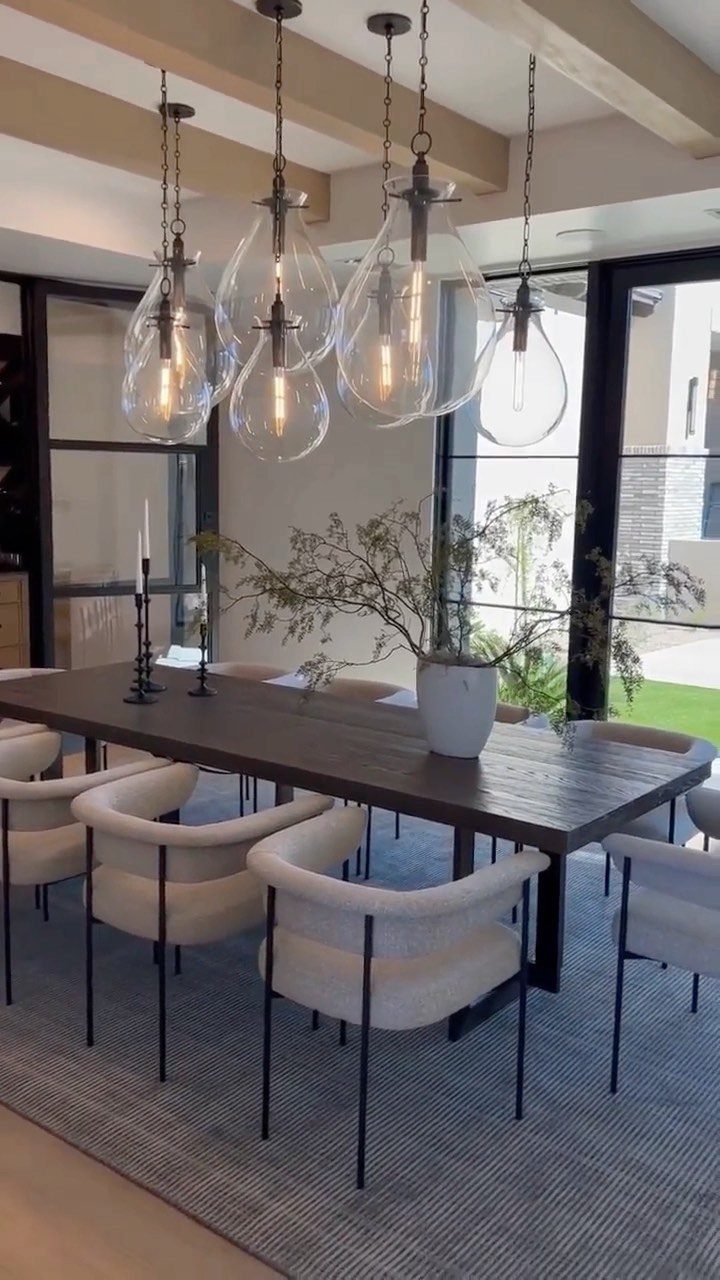
Clear teardrop pendants in a row follow the table length while staying visually light. The glass shape directs most of the light downward, putting brightness where you need it without flooding the whole room.
The exposed ceiling beams here give natural anchor points for each pendant cord. Without beams, I mount a ceiling plate long enough to hold all the pendants and space them evenly along the table.
Teardrop glass shows the bulb inside, so the bulb shape matters. I use clear globe or vintage-style filament bulbs that look intentional when lit or off.
9. Cloud Pendant Light
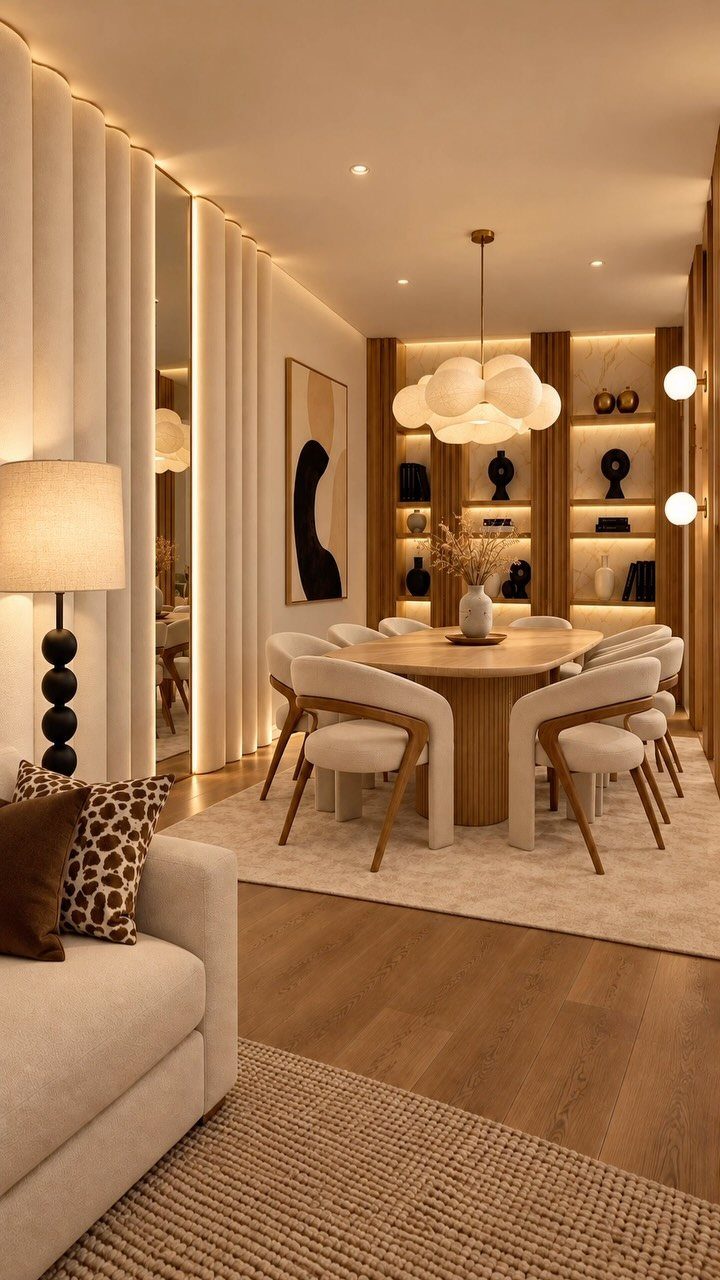
A sculptural white cloud pendant hangs like a soft form suspended in mid-air, giving diffuse light that spreads evenly across a round table. The irregular shape adds organic texture without the hard edges of metal or angular glass.
Cloud pendants suit round tables where the fixture can center directly above.
This style works in rooms where the fixture becomes a focal point on its own. The light output is softer than glass or metal pendants, which keeps the mood relaxed during meals.
10. Conical Pendant Light
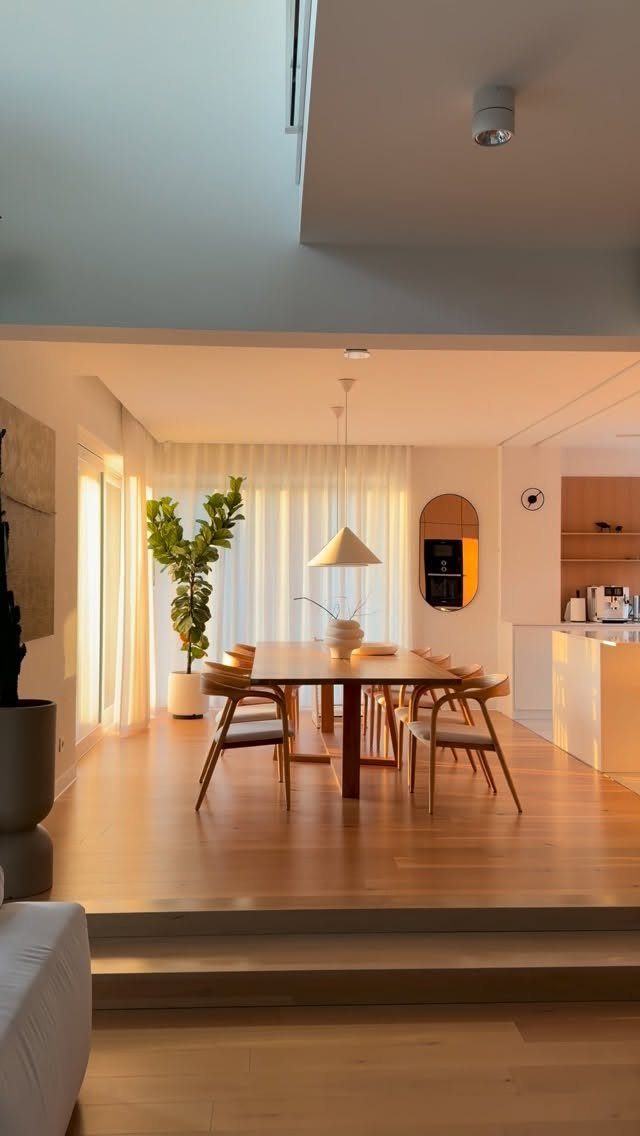
A clean white cone pendant flares wider toward the bottom, focusing light down onto the table surface in a tight pool. The geometric shape suits minimalist rooms where each piece stays simple and the lines stay sharp.
Conical fixtures work best hung low over the table, since the narrow opening concentrates light instead of spreading it wide. Over a rectangular table, I add a second cone to cover the full length without leaving the ends dim.
The white finish reflects light back into the room during the day, so the fixture stays visible without adding visual weight to the ceiling.
11. Recessed Ceiling Cove Lighting
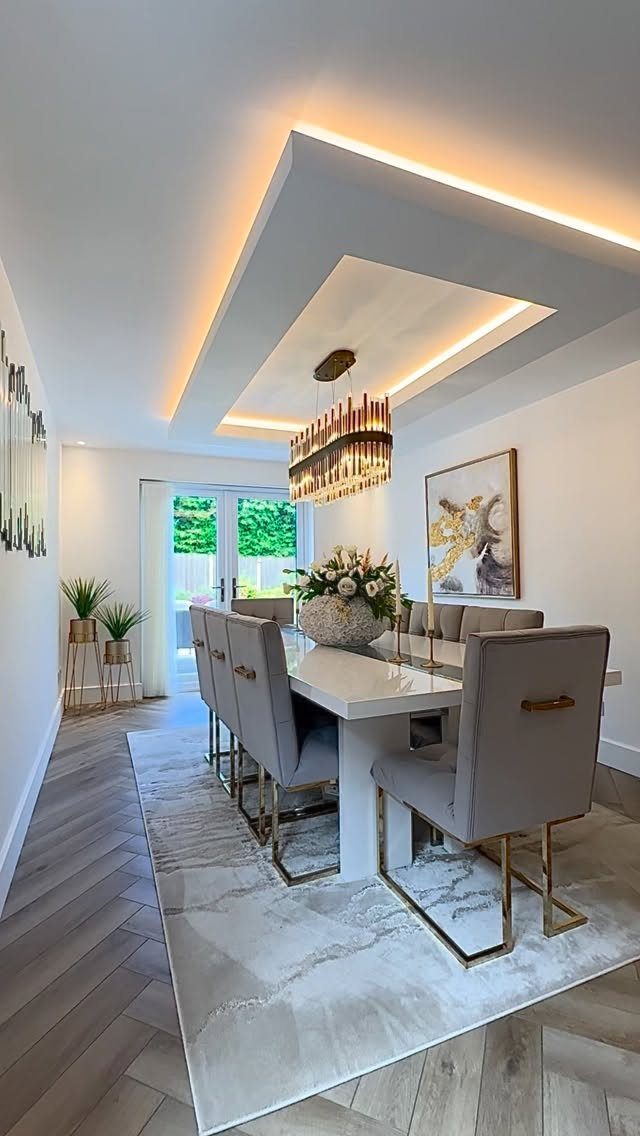
Perimeter LED strip lighting hidden in the ceiling tray recess washes the upper wall with soft indirect light, which lifts the ceiling visually and adds layer beyond the central chandelier.
The cove keeps the light source out of sight, so the glow reads as architectural rather than decorative.
Recessed cove lighting suits rooms where one central fixture leaves the edges too dark or where you want ambient light separate from task light over the table.
I wire the LEDs to a dimmer so the glow can drop low during meals and stay brighter when the room is in use for other tasks.
12. Drum Pendant Lights
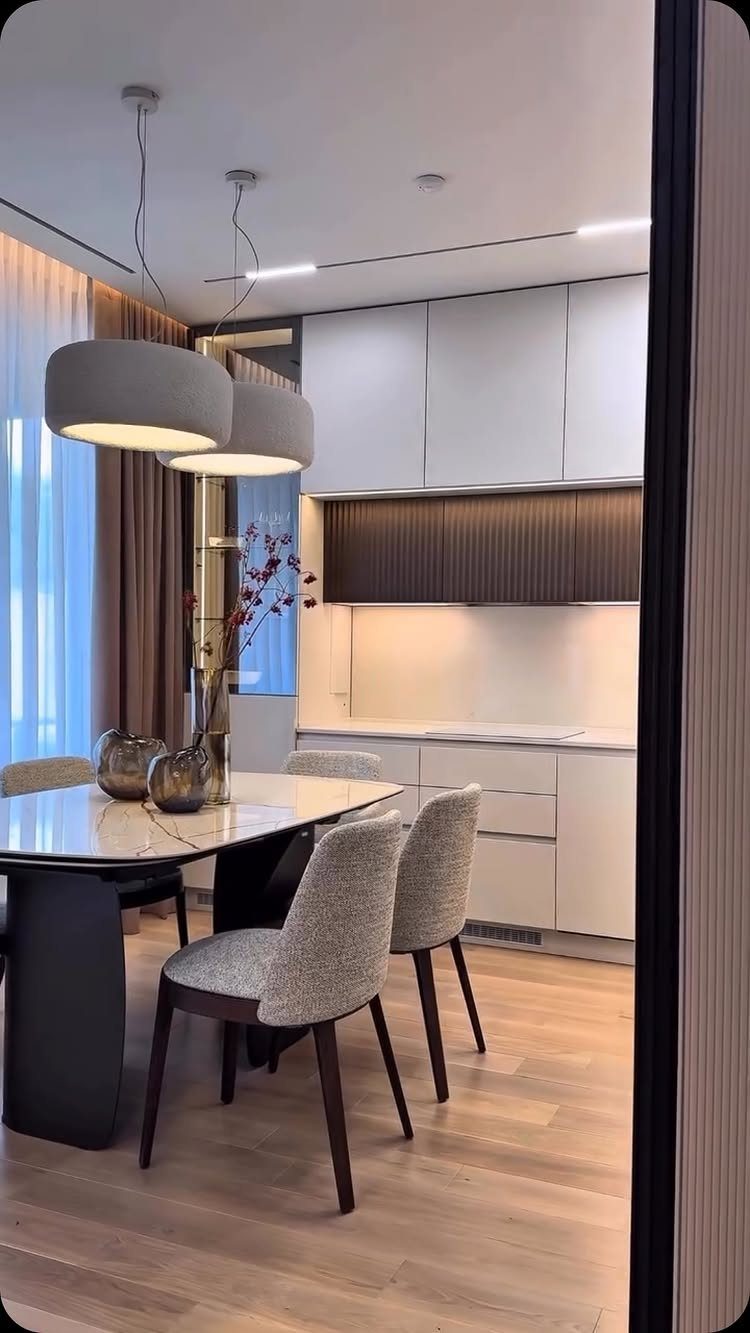
Two wide drum shades in matching grey fabric hang side by side over a long rectangular table, spreading light evenly across both halves. The fabric diffuses the bulb glow, which softens shadows and keeps the light comfortable during long meals.
Drum pendants suit contemporary rooms where the fixture should stay present without competing with bold furniture or strong color.
I space the two drums evenly along the table length, positioning each one over its half so the light reaches from center to edges.
Fabric drum shades add warmth where metal or glass fixtures feel too hard, and the neutral grey works with most wall colors.
13. Arched Floor Lamp
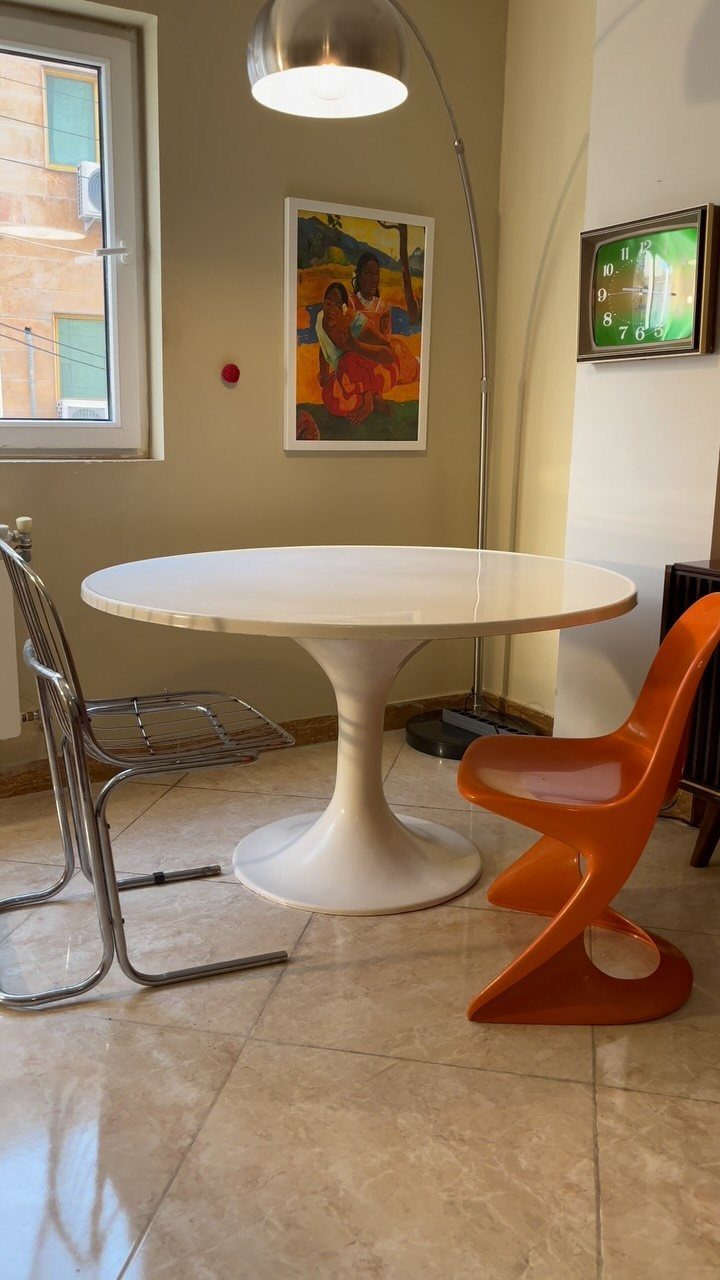
An arched floor lamp stands behind the table and reaches overhead, putting light exactly where a ceiling fixture would go without cutting into drywall or hiring an electrician.
The base tucks against the wall or behind a chair while the shade reaches over to center the light where you need it.
This setup suits rentals where hardwiring is off limits and small rooms where a large chandelier takes over visually. The lamp moves with you, so the dining zone can shift when the room needs to serve other uses.
Position the base close enough that the shade clears the table edge by a few inches. Dimmer bulbs work best here since the shade hangs lower than most ceiling fixtures.
Choosing the Right Size
I measure the table width and multiply by 0.5 to get the minimum fixture diameter, then by 0.75 for the maximum. Match the fixture width to the table: aim for somewhere between half and three-quarters the width of the table itself.
Hanging height depends on ceiling height.
A 9-foot ceiling calls for 33 to 39 inches, and a 10-foot ceiling needs 36 to 42 inches. In open-plan rooms with taller volumes, I stay within these ranges but size the fixture larger so it holds its own in the space.
Sit at the table and check sightlines. If you see a bare bulb at eye level across from you, raise the fixture or switch to diffused glass or shades.
Fixture Placement
Center the fixture over the table, not over the room. If the table sits off-center in the space, the light follows the table.
I use the same height guidelines as sizing: 30 to 36 inches above the table for an 8-foot ceiling, 33 to 39 inches for 9 feet, and 36 to 42 inches for 10 feet.
A bare bulb staring back at you means the fixture hangs too low or needs a shade.
When glare shows up, either lift the fixture or swap to frosted glass or fabric that spreads the light instead of beaming it straight out.
Combining Styles
Brushed brass pendants over the island pair with a brass chandelier over the table, but the silhouettes stay different.
Matte black, polished nickel, and clear or frosted glass work the same way. The finish ties the zones together while the shapes keep each area distinct.
In open-plan spaces, I keep the overall mood consistent but avoid identical fixtures. A linear suspension over a rectangular dining table sits next to drum pendants over the kitchen counter, both in the same metal finish but different forms.
Frequently Asked Questions
What works best with glass or marble tables?
Glass and globe fixtures suit reflective surfaces because they repeat the shine without fighting for attention.
Use diffused shades or globes instead of exposed bright bulbs to reduce glare on the surface. Dimming helps control reflection on glass and marble, so wire the fixture to a dimmer switch.
How bright should dining lighting be?
I treat the chandelier as focused light over the table and layer in floor or wall lamps to keep the rest of the room from feeling stark.
Small rooms under 120 square feet need 2,000 to 3,000 lumens total, medium rooms around 120 to 200 square feet need 3,000 to 5,000 lumens, and large rooms over 200 square feet need 5,000 to 8,000 lumens.
Wire the main fixture to a dimmer so you can shift from bright task light to soft hosting light.






