
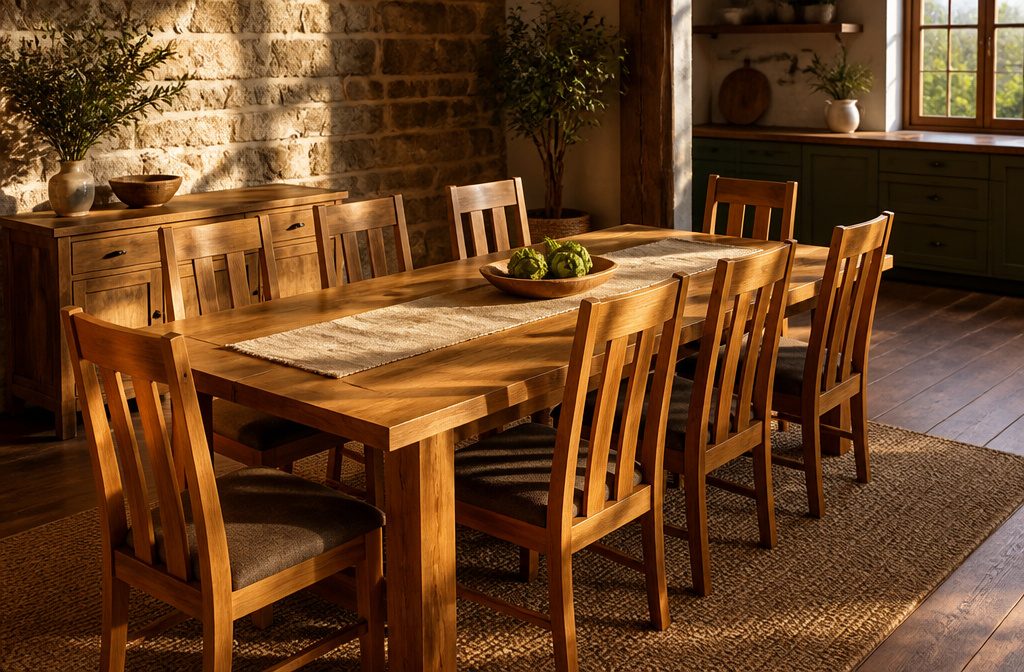
The wood species you pick sets both the price and how well the table survives daily use, with maple and oak running cheaper and taking hits better than walnut or cherry.
A solid eight-seater runs 96 inches long and 42 to 48 inches wide, which means you need at least 14 by 16 feet of floor space once you account for the 36 inches of clearance chairs need to pull out.
1. Standard Dimensions for an 8-Seater Table
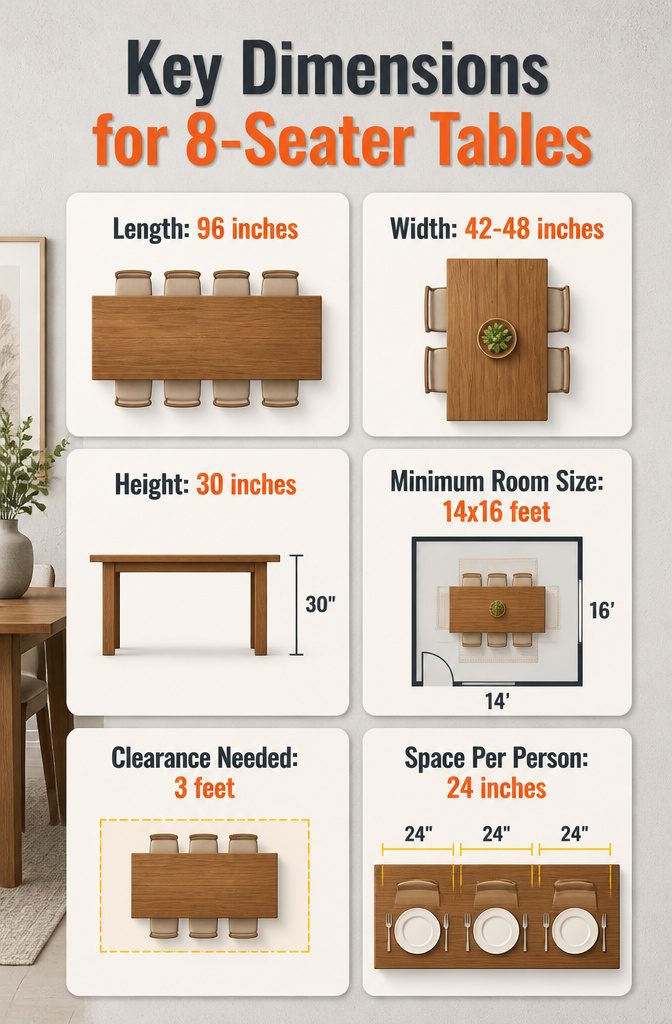
A solid wood 8 seater dining table runs 96 inches long, 42 to 48 inches wide, and 30 inches tall.
Those dimensions give each person enough elbow room without making conversation feel like shouting across a canyon, and they matter because squeezing eight people around a table that is too narrow or too short turns dinner into a game of elbows and apologies.
The 96-inch length breaks down to roughly 24 inches per person along each side, which leaves space for plates, serving bowls, and a centerpiece without anyone feeling pinned against their neighbor.
Width between 42 and 48 inches keeps the table from hogging the room while still letting you pass dishes across the middle without standing up. The 30-inch height is standard dining height, so it pairs with any chair you already own.
I check room dimensions first, because a table this size needs at least three feet of clearance on all sides for chairs to pull out and people to walk behind them.
That puts the minimum dining room size around 14 by 16 feet, though 15 by 18 feet feels less tight.
2. Wood Species You Can Choose
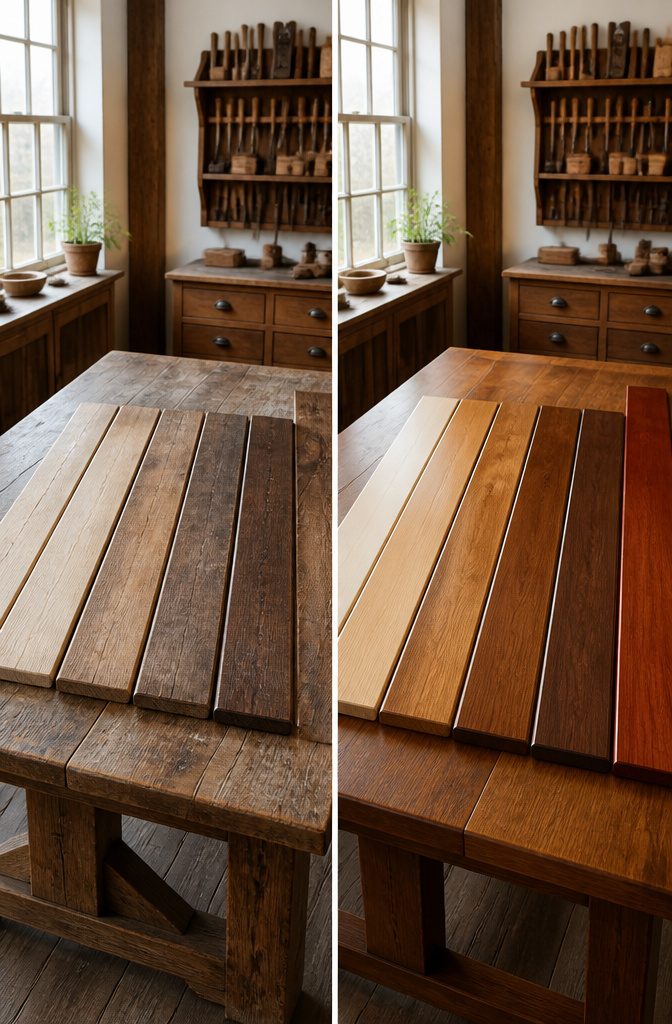
The wood species you choose affects how the table looks, how well it holds up, and what you pay.
Fargo Woodworks guides customers through species selection during the consultation phase, matching the grain and hardness to what the space needs and what the household puts a table through.
Premium sustainably sourced wood arrives in species that range from lighter maple and oak to deeper walnut and cherry. Maple and oak offer tight, even grain and take daily use without denting easily, making them practical choices for families.
Walnut and cherry bring richer color and more pronounced grain, though they cost more and show surface wear a bit sooner than harder species.
The finish you apply later plays a role, but the durability starts with the wood itself.
A softer species finished well still marks more easily than a hard one, so I lean toward oak or maple when the table will see regular use and walnut when the room calls for warmth and the budget allows for it.
3. Finish and Style Options
Finish and Style Options
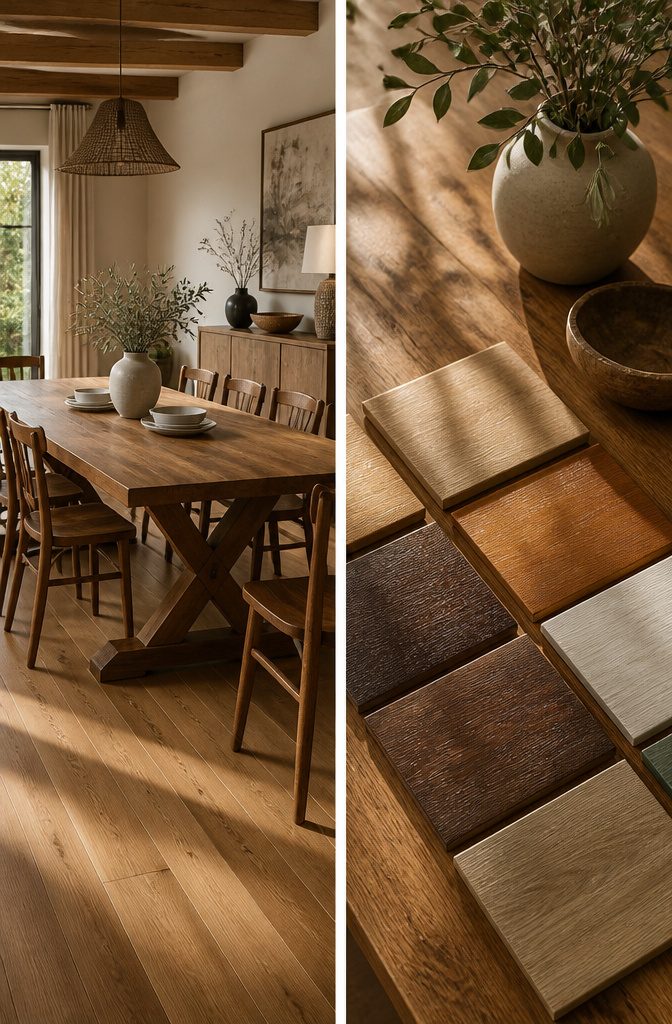
Most makers working in solid wood offer finishes that range from natural oil to stained and sealed, and the difference runs deeper than color.
A natural oil finish lets the grain show through and ages with the table, darkening slightly where hands rest most often.
Stained finishes give you control over tone without burying the wood figure, and a sealed topcoat adds protection against spills and heat marks if the table will see daily use rather than occasional dinners.
Style follows the same logic: the wood species and edge profile can shift the table toward farmhouse, modern, or traditional without changing its footprint.
A chamfered edge and lighter stain read farmhouse; square legs and a darker walnut tone pull modern; turned legs and a mid-tone finish land traditional.
I pick finish and style together rather than treating them as separate decisions, because the wrong pairing can make a beautiful table look like it wandered in from someone else’s house.
4. Handcrafted Quality and Traditional Techniques
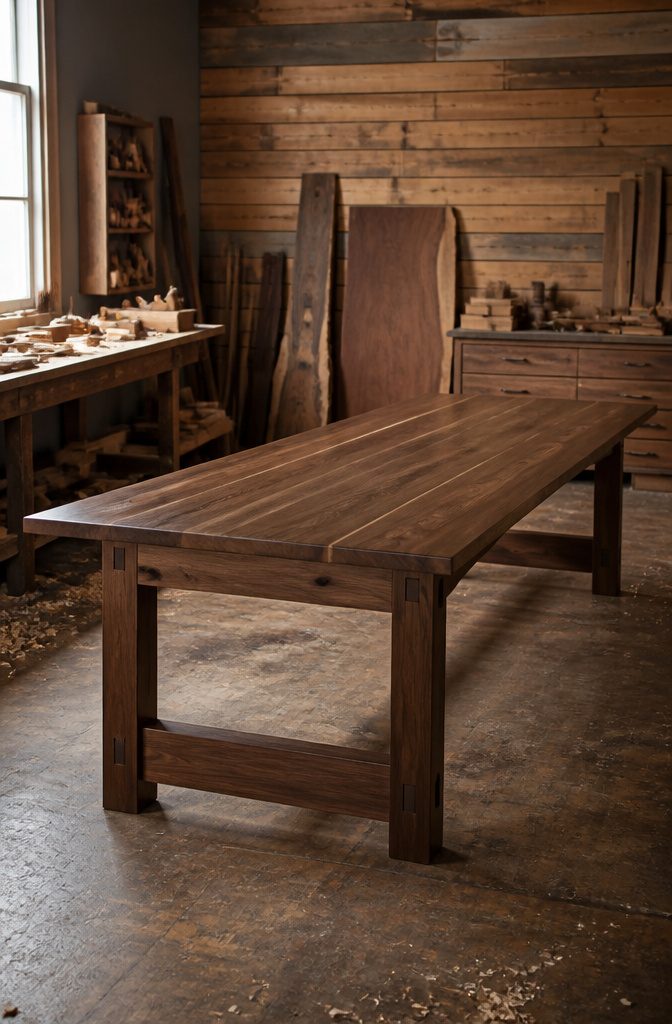
Handcrafted construction using traditional joinery paired with modern equipment delivers both strength and the visible proof of hand skill: tight mortise-and-tenon joints, flush grain alignment at the seams, and hand-rubbed finishes that track the wood’s natural contour rather than sitting on top of it.
I value this approach because it puts durability first without sacrificing the surface detail that catches light and gives character to a piece used daily.
Traditional methods mean dovetails or dowels instead of pocket screws, hand-planed edges instead of router passes, and finishes built in thin coats rather than sprayed thick.
The result is a table that holds square under years of use and shows joinery tight enough that you can run a finger across the joint and feel nothing.
Modern tools speed the rough work, but the final fit and finish still depend on hand work that adjusts to each board’s behavior.
5. Using the Table Beyond Family Dinners
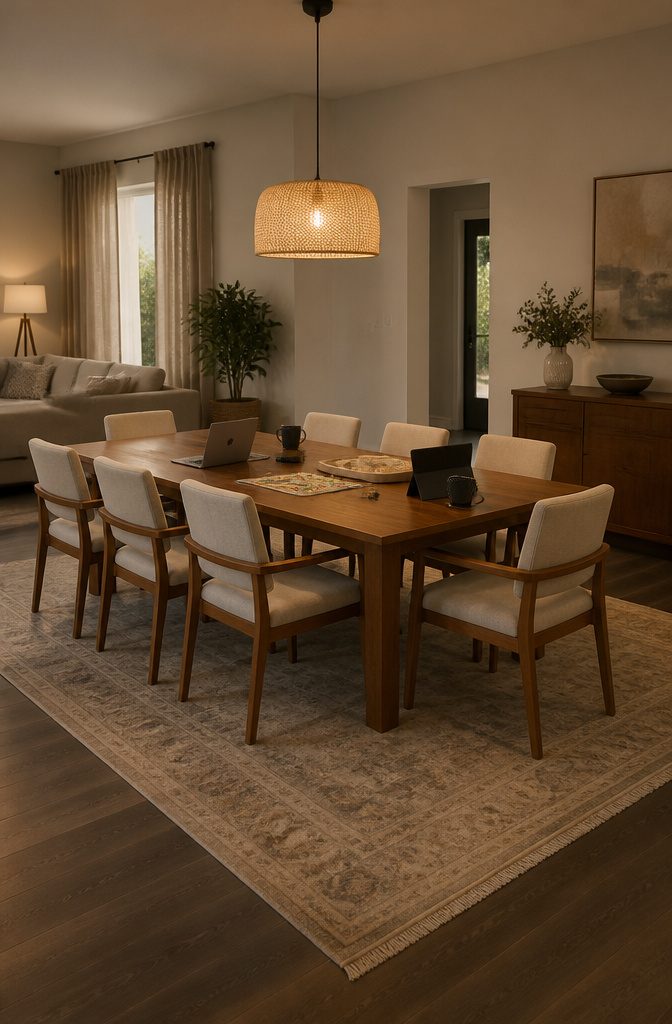
A solid wood 8 seater dining table earns its space by doing more than hosting Sunday dinner.
The 96-inch surface gives you enough room to spread out board games on a Friday night, set up a laptop and paperwork during the week, or seat ten people when a holiday meal pulls in extra chairs.
That width of 42 to 48 inches means two people can work across from each other without their elbows colliding, and when you clear the dishes after a dinner party, there’s still room for dessert plates and coffee without anyone needing to shift seats.
I’ve noticed that tables this size hold their value because they adapt.
A smaller four-seater gets crowded the moment you host, and a ten-seater sits mostly empty unless you entertain weekly. An eight-seater splits the difference, offering daily practicality with enough capacity for the times that matter.
How Expert Craftsmanship Shows
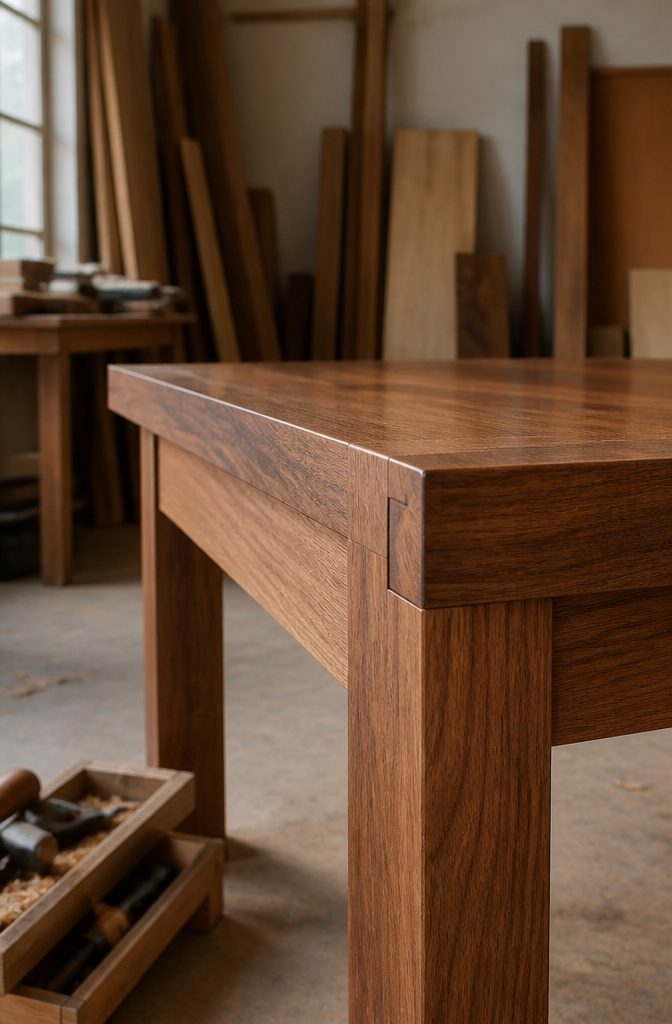
Joint construction separates furniture that lasts from furniture that wobbles in five years.
The best solid wood tables use mortise-and-tenon joinery, where one piece of wood fits into a carved pocket in another and gets secured with glue and sometimes a dowel.
That joint moves with the wood as humidity changes and holds tight under the weight of serving dishes and elbows.
Tables built with pocket screws or dowels alone tend to loosen over time, especially in an eight-seater where the span between legs puts more stress on every connection.
Wood selection matters as much as how it gets joined. Premium tables start with sustainably sourced hardwood that has been air-dried or kiln-dried to a stable moisture content, usually around 6–8 percent.
If the wood goes into construction too wet, it warps. If it is too dry, it cracks when the house gets humid again in summer.
The finishing process adds durability you can feel. A hand-rubbed oil finish soaks into the grain and can be touched up easily when the surface gets scratched.
Lacquer and polyurethane finishes sit on top of the wood and offer more protection against spills, but they are harder to repair without sanding the whole surface back.
Fitting the Table Into Your Dining Room
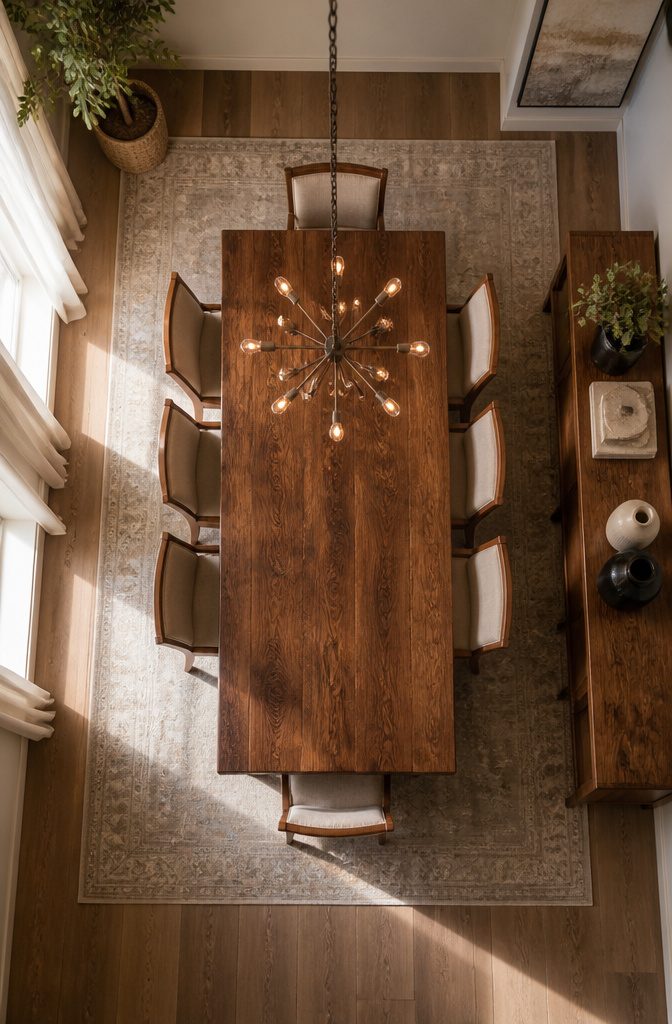
The table needs 36 inches of clearance on all sides for chairs to pull out and for anyone walking behind a seated guest to pass without turning sideways.
That figure holds whether the chairs have arms or not, and it means an 8-foot table at 96 inches long and 42 inches wide asks for a room at least 14 feet by 9 feet 6 inches once you account for the perimeter.
Tighter than that and someone is bumping the wall or the sideboard every time they stand up.
Proportion matters as much as fit. A table this size anchors a room, and in a space much larger than the minimum it can start to look adrift.
I find centering the table under a chandelier or pendant helps lock it in place visually, and keeping the light fixture roughly half to two-thirds the width of the table keeps the scale balanced.
If the room runs long, leaving a zone at one end for a console or bar cart gives the space purpose without crowding the dining area itself.
Centerpieces and Seating That Complete the Look
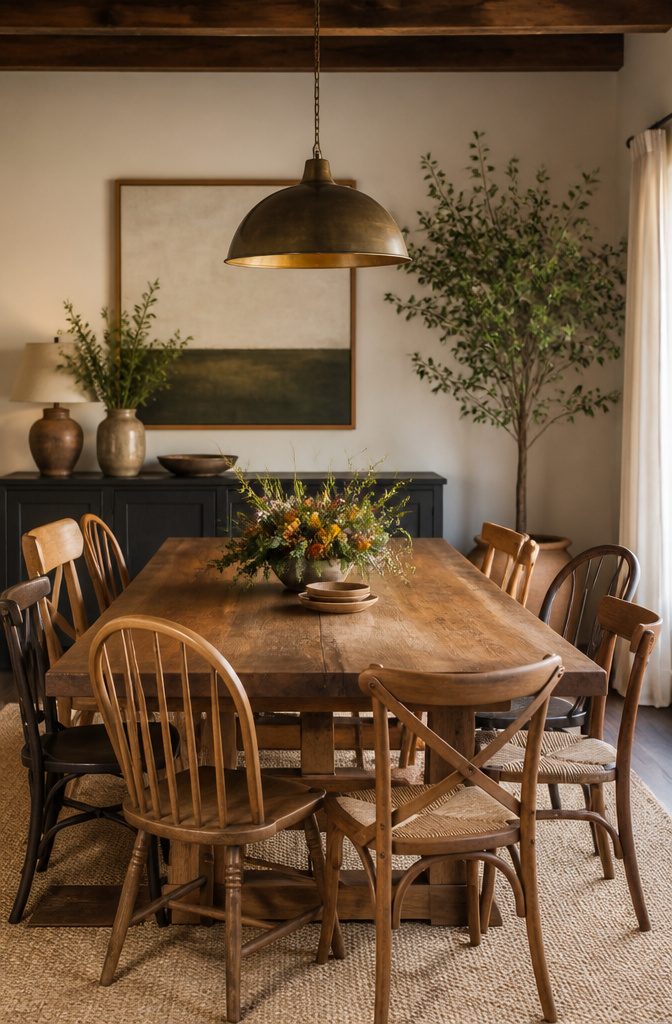
Centerpieces and Seating That Complete the Look
A 96-inch table surface gives you room to run a centerpiece down the center without crowding place settings. I like a low floral arrangement or a grouping of statement candle holders, anything that stays below eye line when guests sit.
For seating that balances comfort with style:
- Mix chair designs for an eclectic look. Matching sets read formal, but alternating styles or finishes keeps the room from feeling too stiff.
- Hang a chandelier or pendant light directly above the table. The fixture draws the eye and throws warm light exactly where you need it.
- Choose chairs with enough depth and back support for a two-hour dinner. You can sacrifice a little padding for clean lines, but skip anything that looks better than it sits.
The lighting matters more than most people think. A dramatic fixture above an eight-foot table pulls the whole room together and marks the table as the focal point.
Frequently Asked Questions
What are the standard dimensions of an 8-seater dining table?
An 8-seater table measures 96 inches long, 42 to 48 inches wide, and 30 inches tall. Those proportions give each person about 24 inches of linear space and keep serving dishes within easy reach across the width.
You’ll need at least 3 feet of clearance on all sides for chairs and circulation, putting the minimum room size around 14 by 16 feet.
How can I customize my 8-seater dining table?
You can select the wood species (maple, oak, walnut, or cherry), the finish (natural oil, stained, or sealed), and the style through edge profiles and leg design.
The species affects durability and grain character, while finish and style shift the look from farmhouse to modern or traditional. Customization decisions work best when you pick finish and style together rather than treating them as separate choices.
Is a solid wood dining table worth it?
Yes, if you value longevity and the ability to repair surface wear over time.
Solid wood tables built with mortise-and-tenon joinery hold up under decades of use and can be refinished when scratched, while cheaper construction loosens and wobbles within years.
The upfront cost is higher, but a well-built piece outlasts and outperforms alternatives that need replacing.
What is the best 8-person dining table?
The best table matches your room size, usage pattern, and aesthetic priorities. For daily family use, oak or maple with a sealed finish resists wear; for a warmer, more formal look, walnut with an oil finish offers richer color.
Look for mortise-and-tenon joinery, sustainably sourced hardwood, and hand-rubbed finishes that let you repair damage without refinishing the entire surface.






