
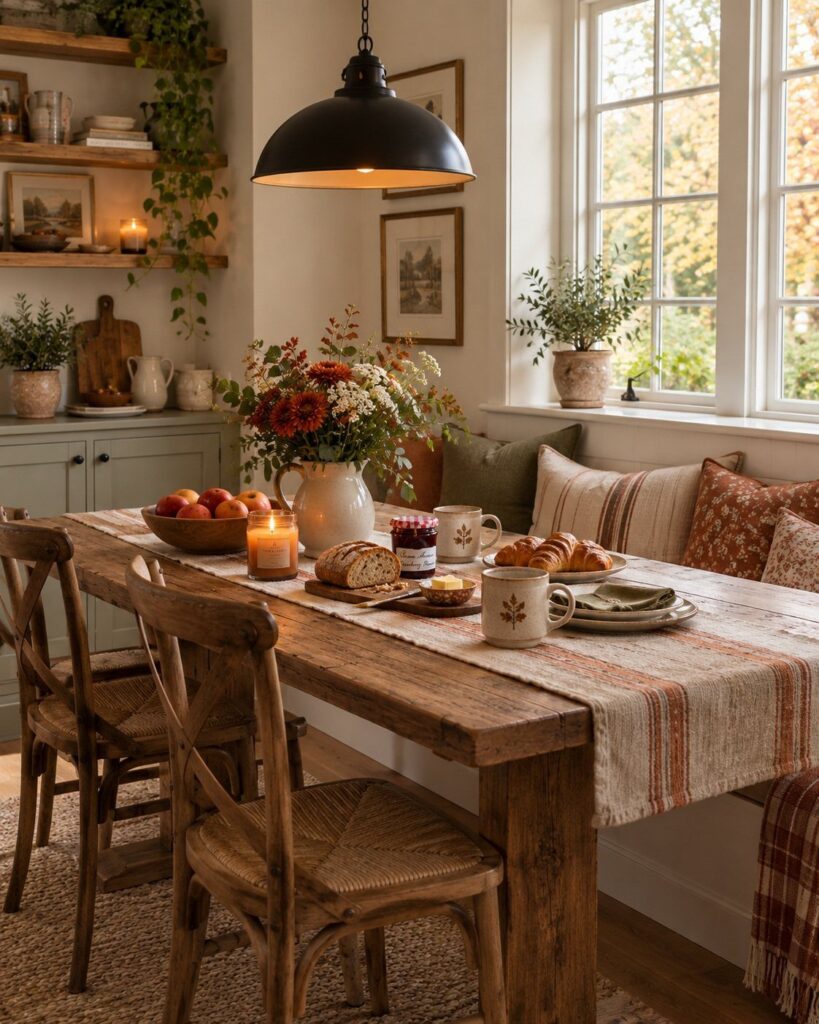
Vintage brass candlesticks, exposed beams, and floral textiles all pull a dining room toward that lived-in cottage feel, and the best starting point depends on what the room already has.
Mismatched chairs bring more personality than matched sets, and the right mix of textures and vintage finds sets the tone before the first course arrives.
1. Intimate Seating
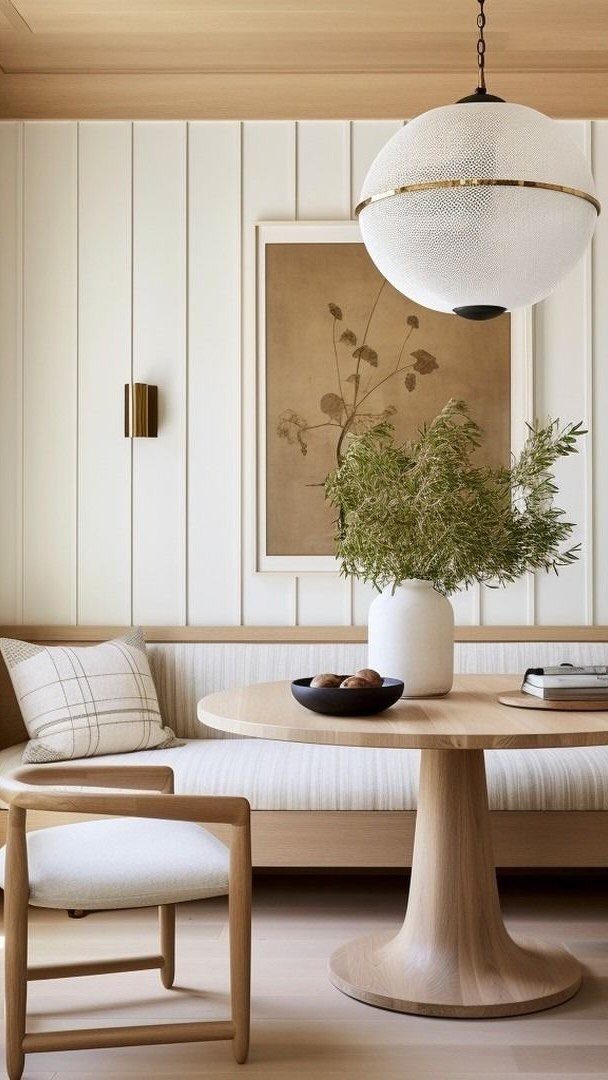
A round table and built-in banquette pull everyone closer, and that proximity makes the room feel warmer even before you add textiles or candles.
The round shape means no one sits at a corner, and the bench wraps at least two sides so you’re not looking at chair backs.
If you’re working with a breakfast nook or a corner that already has the bench framed in, a 36- to 42-inch round table fits without crowding the walkway.
The pendant overhead keeps the light soft and low, right where conversation happens.
2. Velvet, Wicker, and Wood
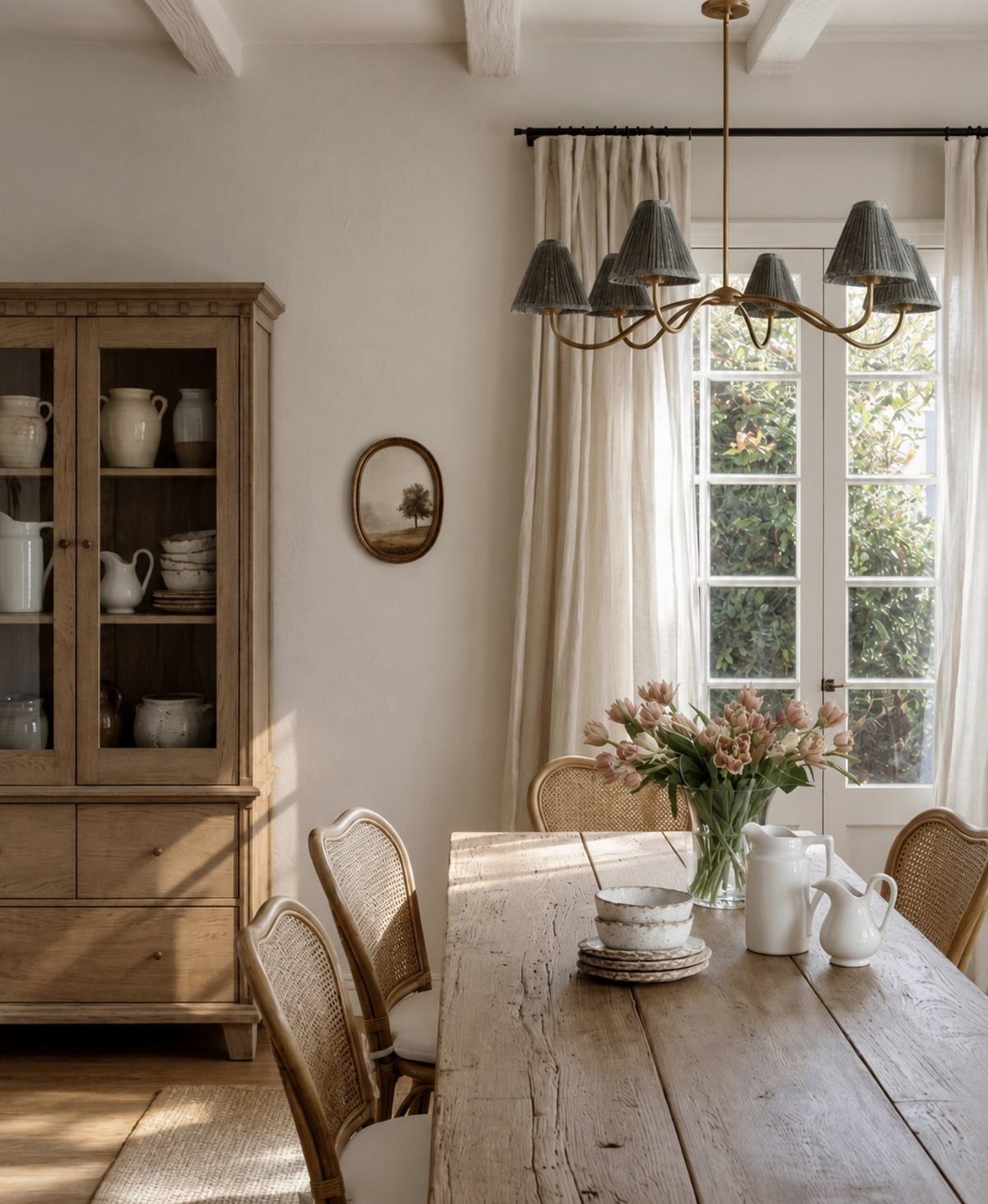
Wicker seats, raw wood, and velvet lampshades or cushions hit 3 textures that cottage spaces do well together. The wicker reads handmade and light, wood gives heft and age, and velvet softens the whole setup without looking formal.
I’d choose wicker for dining chairs only if the seats are reinforced or the frames are thick enough to hold up under daily use.
Thin strands loosen over time. Pair them with a solid wood table that shows grain and some wear, and add velvet where you want the eye to rest.
3. Dried Stems, Gourds, and Seasonal Foliage
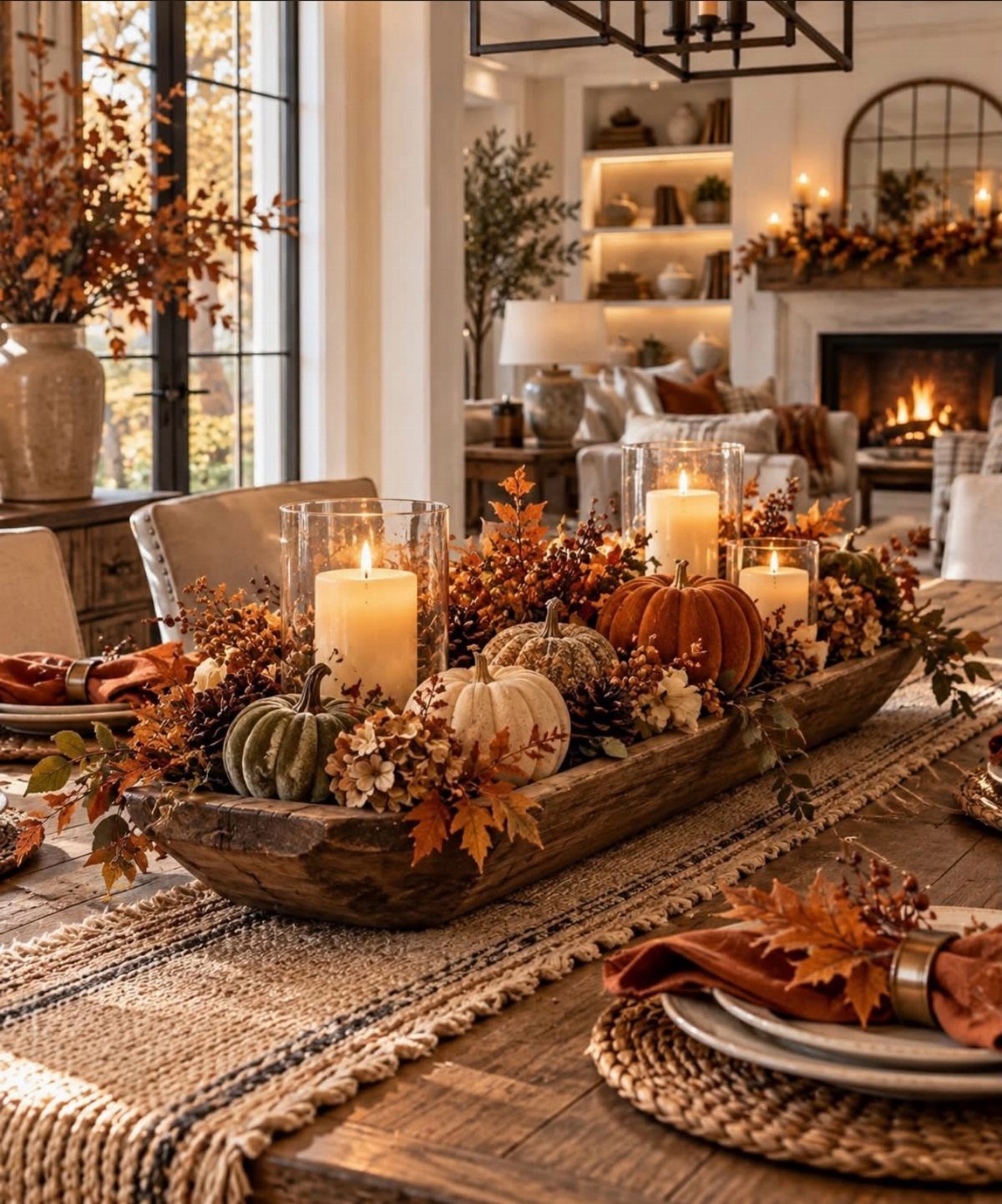
A wooden trough or low box filled with pumpkins, gourds, dried seed heads, and a few taper candles gives you a centerpiece that changes with the season and costs almost nothing if you gather the stems yourself.
I like this setup in fall because the materials are abundant and you can swap them out every few weeks as different things ripen or dry.
In winter, swap the gourds for pinecones and evergreen clippings. Keep the arrangement low so it doesn’t block sightlines across the table.
4. Eclectic Decor
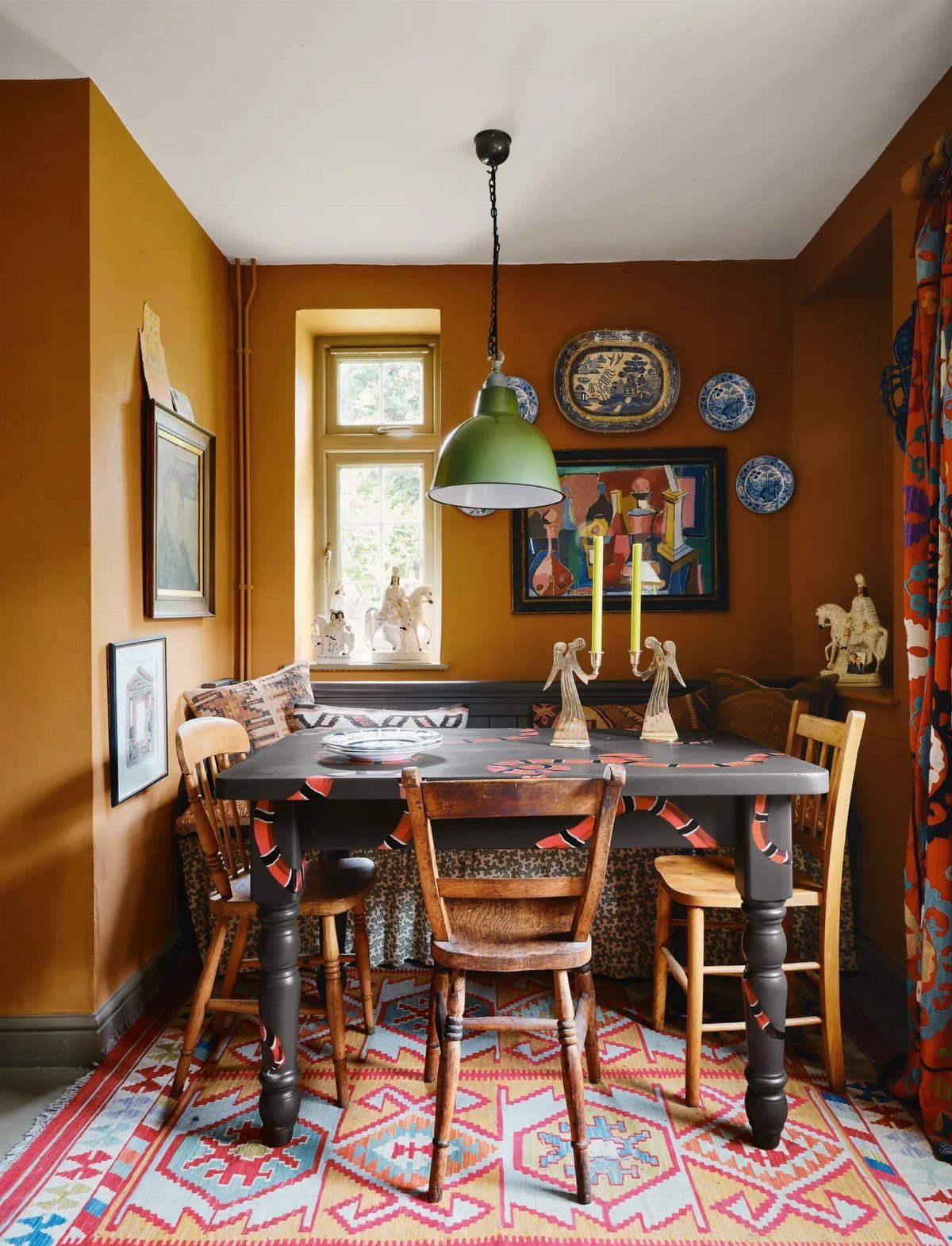
Mismatched chairs, a patterned rug, and a wall covered in plates and prints give the room personality that matched sets can’t. The ochre walls anchor the mix without competing for attention.
Start with one strong color on the walls, then bring in furniture from different decades or finishes.
The rug ties it together, so choose one with at least two colors that appear elsewhere in the room. This approach works best if you’re willing to collect pieces over time rather than buying everything at once.
5. Vintage Brass Candlesticks and Old Crockery
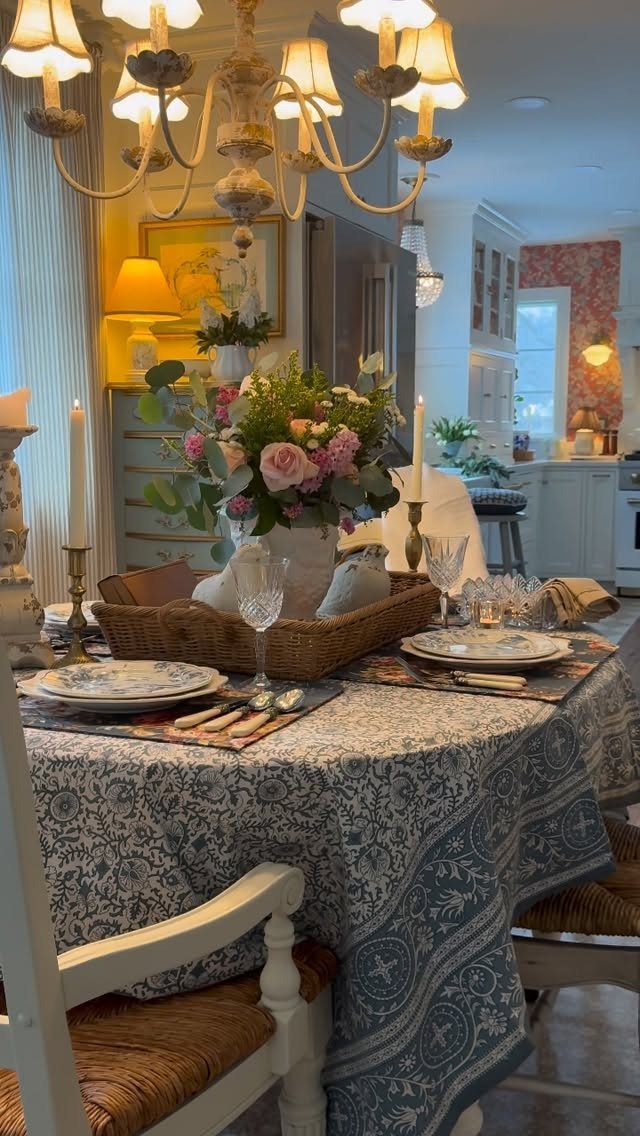
Brass candlesticks that have tarnished unevenly and crockery with crazing or worn edges bring age into the room without requiring actual antiques.
Flea markets and estate sales are the usual sources, and you can pick up individual pieces for a few dollars each.
I’d set the table this way for a dinner that feels considered but not precious.
The blue patterned cloth grounds the mix, and the floral centerpiece keeps the metal from reading too austere. Mismatched plates work better than a full set here.
6. Exposed Wooden Ceiling Beams
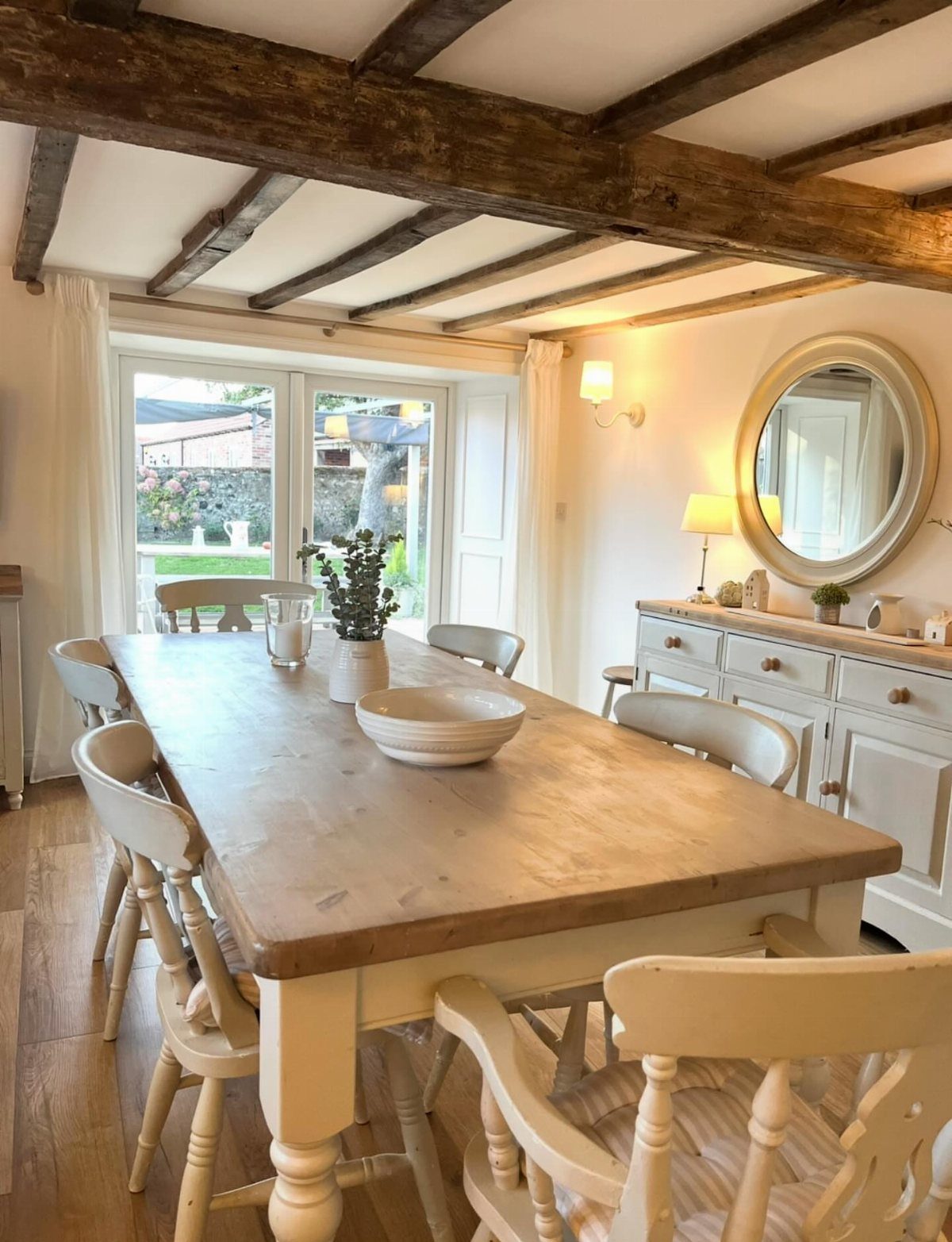
Exposed beams overhead give the ceiling texture and make the room feel grounded, especially when the wood shows age or irregularity.
If the beams are already there under drywall, uncovering them is worth the mess. If not, adding faux beams in a stained pine or reclaimed look gets you most of the effect.
Real beams need to be cleaned and sealed if they’ve been hidden for decades, but the structure is already doing its job.
Faux beams are lighter and mount with screws or adhesive, and they cost less than solid wood while giving you the same visual weight overhead.
7. Floral Textiles and Chandelier
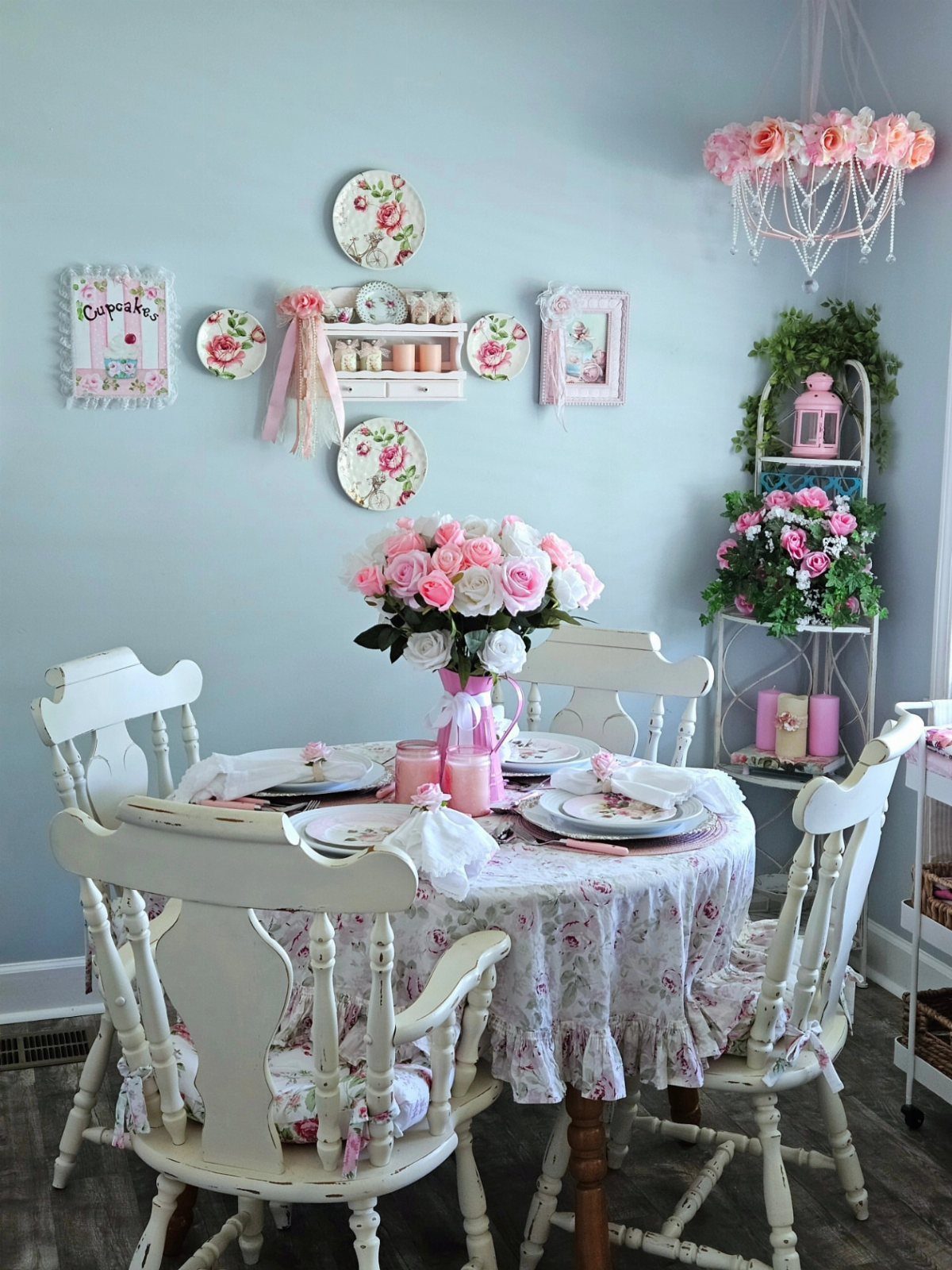
A floral tablecloth that picks up the wall color ties the table into the room instead of leaving it to float in the middle. When the chandelier carries the same pattern, the repetition reads as deliberate rather than accidental.
I’d use this approach in a small dining room where the walls are already painted a soft color.
The floral pulls the eye around the space, and the round table keeps the setup from feeling too busy. Choose a washable cotton tablecloth if you’re using it regularly.
Creating a Cozy Atmosphere
Soft lighting matters more than bright lighting in a cottage dining room.
I’d use candles, a dimmed pendant, or sconces on a rheostat rather than overhead floods. Layering the light sources means you can adjust the brightness to match the meal or the time of day.
Textiles soften hard surfaces and absorb sound, which makes the room feel smaller and quieter.
A cotton or linen runner, cloth napkins, and cushions on wooden chairs add that tactile quality without requiring upholstery. Natural materials like cotton, linen, and wool read as casual and age well.
Plants bring life into the space without taking up table surface.
A potted fern on a shelf or a trailing ivy on top of a cabinet fills vertical space and adds color year-round. If you’re short on floor space, hang a planter from a ceiling hook near the window.
Choosing the Right Furniture
A large table with room for 6 or more pulls everyone into the same conversation instead of splitting the group into separate exchanges.
I’d choose solid wood over veneer because it holds up better under daily use and minor damage can be sanded out. A table that seats 8 gives you flexibility for holidays without dominating a smaller weeknight dinner.
Comfortable seating means chairs with backs that support your lower spine and cushions thick enough that you’re not shifting around during dinner.
Vintage finds often need new foam or webbing if the seats have compressed. Materials that feel soft to the touch, like upholstered linen or padded leather, make guests stay longer at the table.
Incorporating Personal Touches
Vintage accessories like brass towel rods, ceramic handles, or old cutting boards with patina give the room a collected feel that new items can’t replicate.
Foliage adds color and texture without filling shelves.
A ribbed glass vase with greenery or dried stems fits on a sideboard or windowsill and changes with the season. Hanging dried herbs or foliage from a pot rack or hook serves double duty as storage and decoration.
Functional objects that also look good, like a rattan utensil caddy or open shelving with dishes on display, reduce clutter while adding charm.






