Small dining spaces call for built-in seating, wall-mounted storage, or furniture you can tuck away when the meal is done.
The choice depends on whether you have a corner to fill, a wall that needs seating, or an open floor plan where the dining table shares space with the kitchen.
1. Built-In Seating
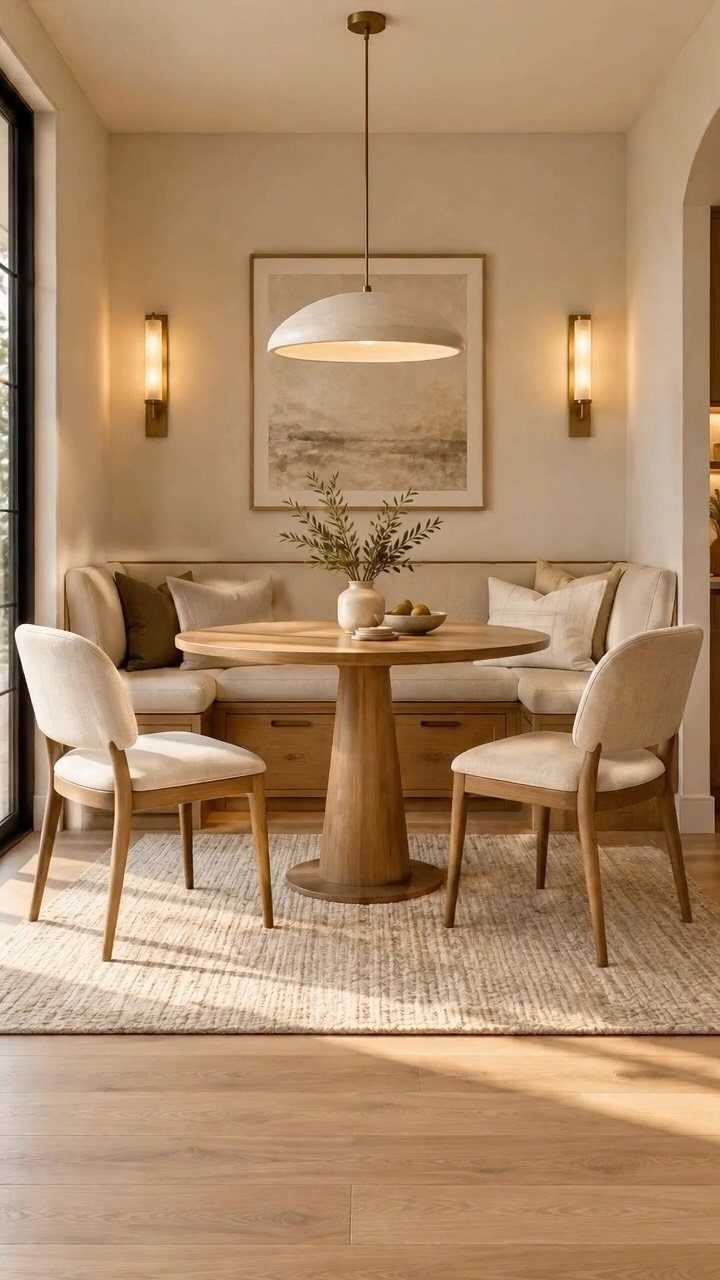
Built-in seating tucks a bench against the wall and leaves the open side of the table for chairs you can pull out only when you need them.
The space beneath the bench can hold drawers or lift-up storage for things you don’t reach for every day.
Measure the wall run first. A bench sits comfortably when the seat is deep enough to support your legs and high enough that your feet rest flat on the floor.
If you’re building it yourself, frame the box with 2x4s, add a plywood top, and finish with cushions cut to size.
2. Dining Along Windows
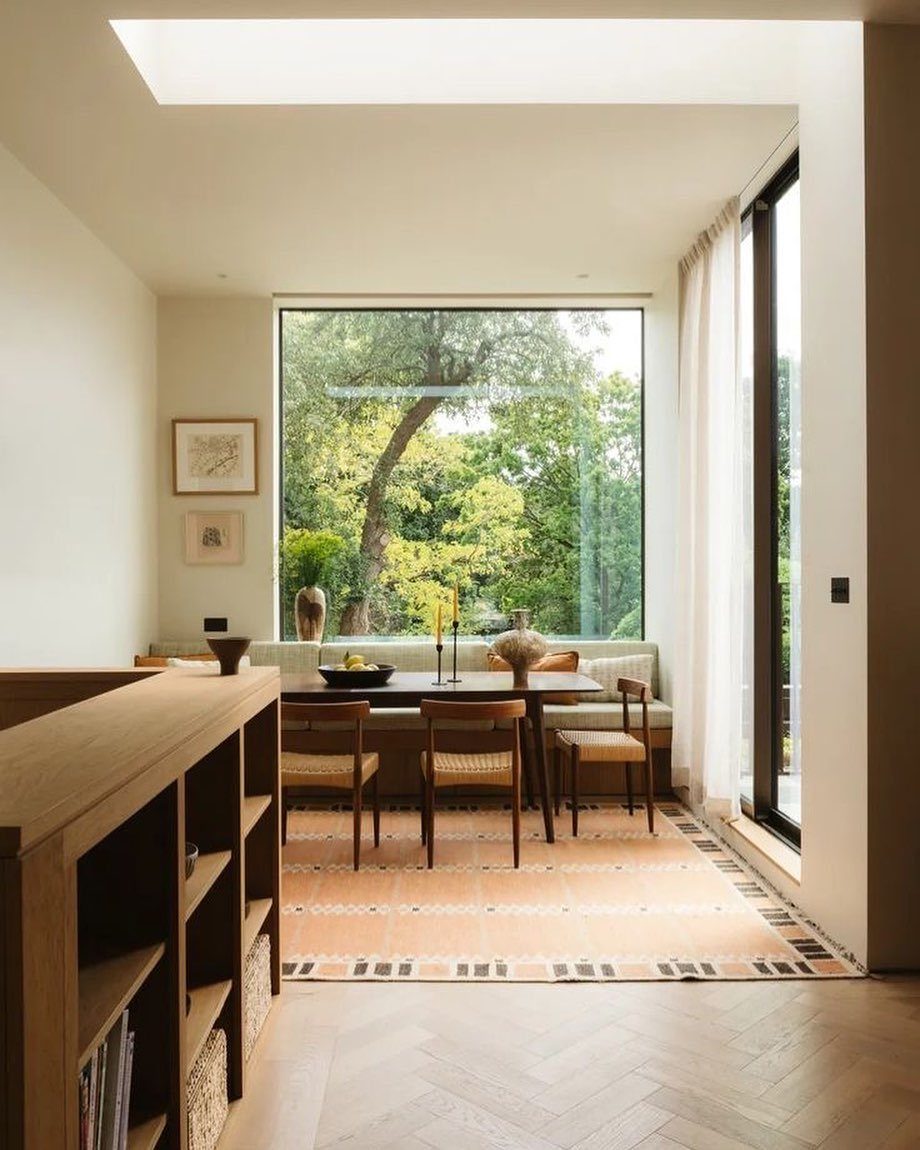
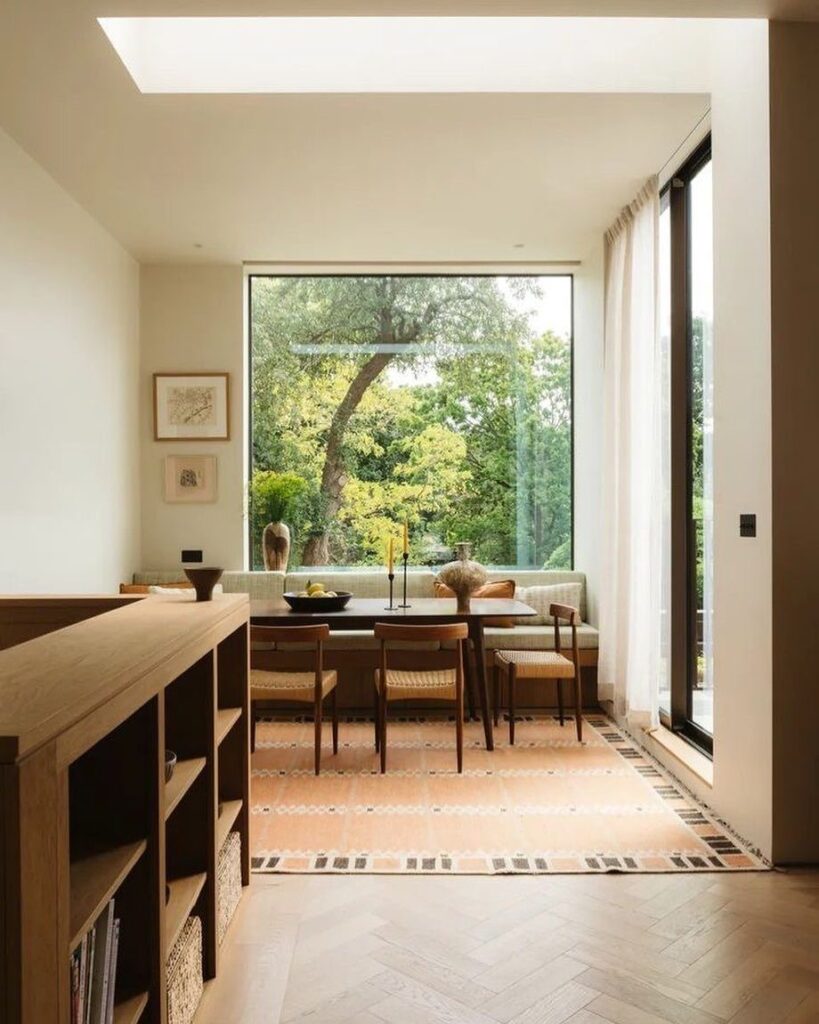
A table next to a window brings in daylight and gives you something to look at during meals. In a small space, that brightness opens things up more than overhead fixtures alone.
A built-in bench on the window side keeps furniture from blocking the light. Put chairs on the open side so you can push them in or move them completely out of the way between meals.
If the window is low, check that the bench height lines up so you’re not sitting below the sill or blocking the view.
3. Wall-Mounted Shelves
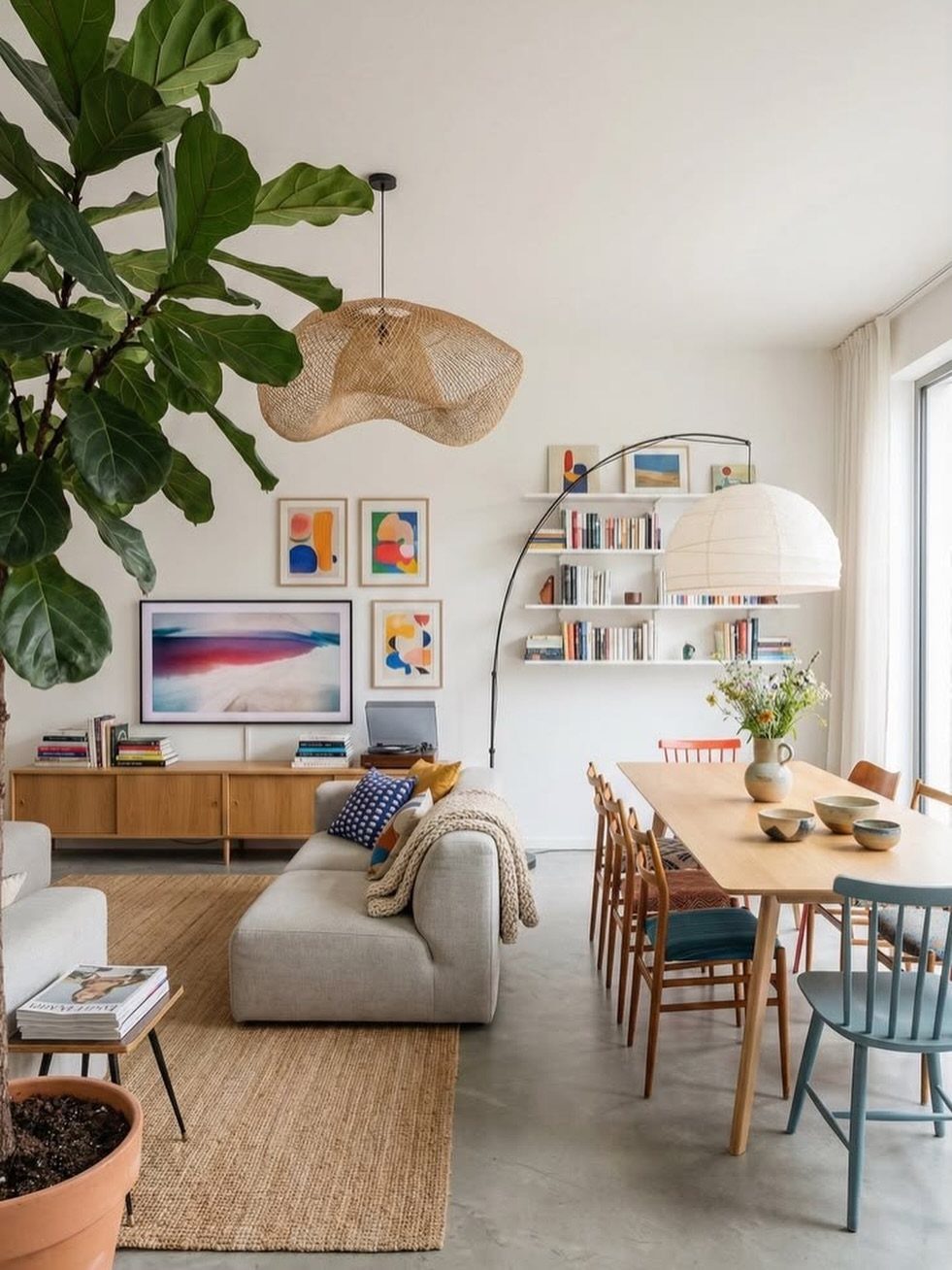
Wall-mounted shelves clear the floor and give you a place for books, dishes, or decor without taking up room a cabinet would. They pull the eye up, which makes a small dining area feel taller.
Install them 12 to 18 inches above the table or sideboard so you can reach what’s on them without leaning.
Floating brackets sit flush with the wall and keep the look clean. Shallow shelves hold what you need without eating up floor space when you walk past.
4. Use of Mirrors
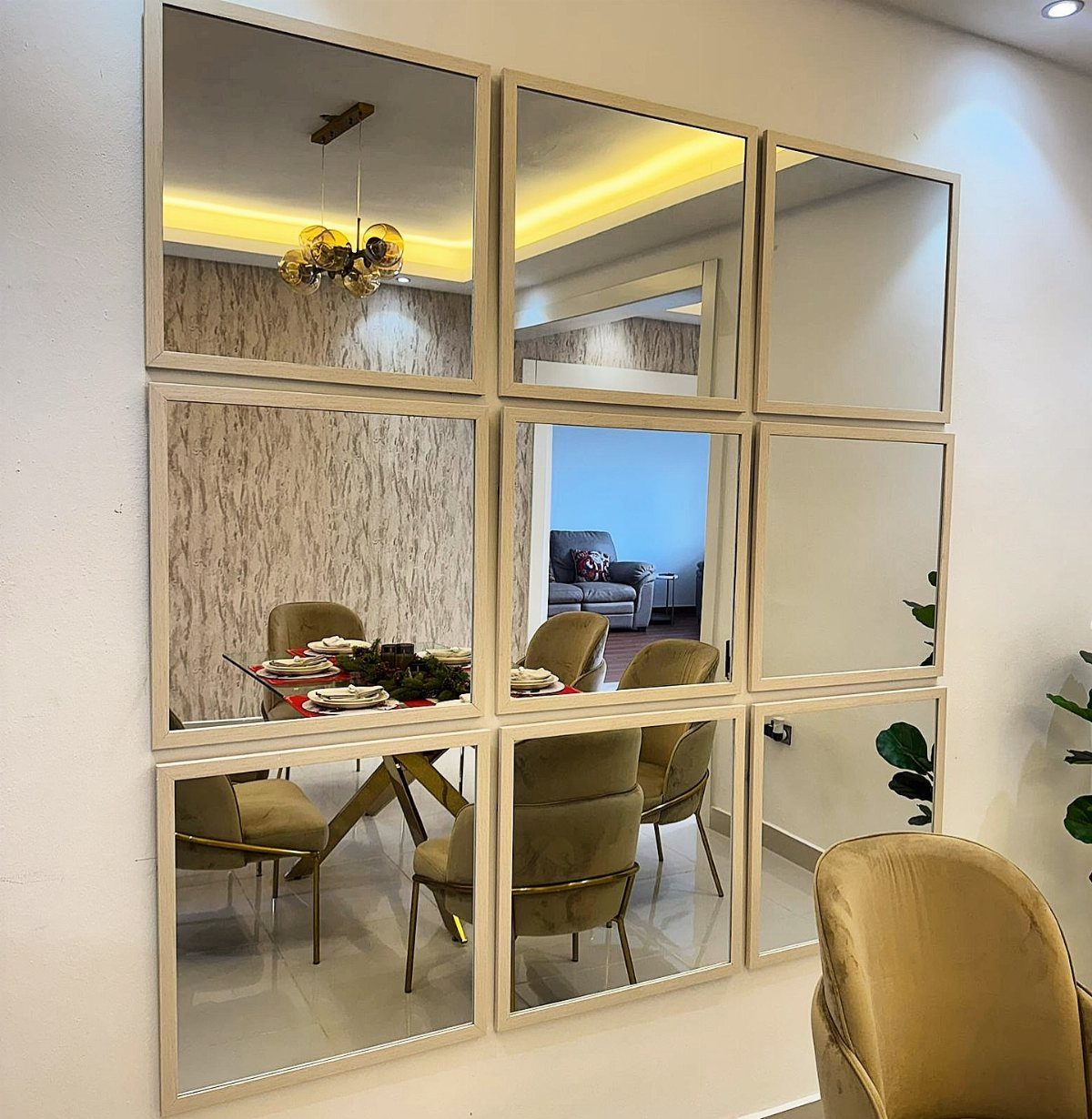
A grid of mirrors on one wall reflects light and makes the room feel twice as wide. The framed edges add structure, so the look stays clean instead of reading as one large mirror.
Hang the mirror where it reflects your sight line when you sit down, not when you stand.
Square mirrors in a grid of four or six work better in small spaces than one oversized piece because you can adjust the layout to fit the wall. Frames in a single finish keep the grouping cohesive.
5. Light and Neutral Colors
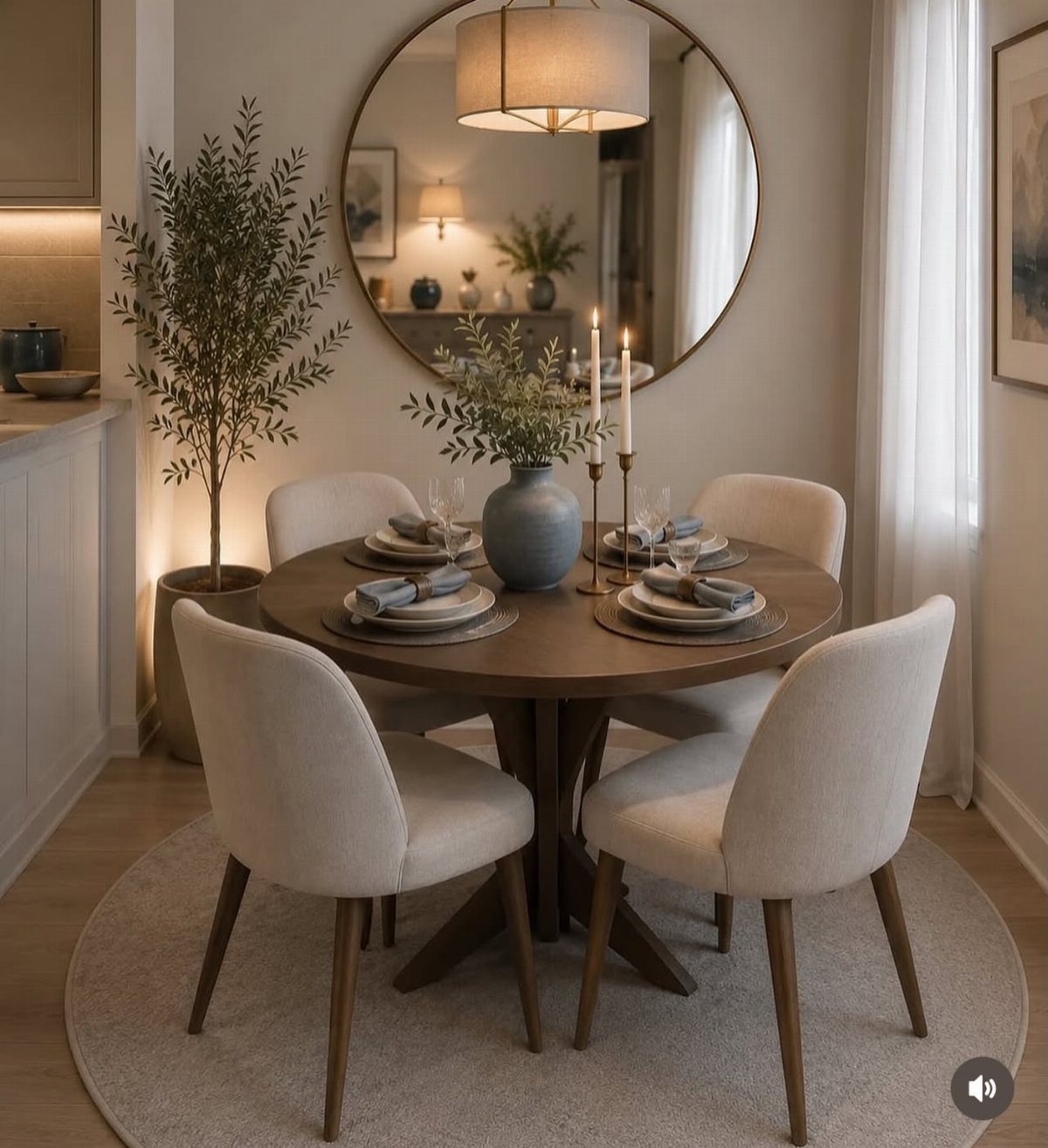
Light walls and neutral furniture reflect more natural light and make a small dining area feel less enclosed.
Beige, soft white, and pale gray all work, and they give you flexibility with the colors you bring in through textiles and tableware.
Keep the table and chairs in the same tonal range so the space reads as continuous. A round table in a warm wood tone softens the look and takes up less visual weight than a dark rectangular one.
If you want contrast, add it through a rug or artwork instead of the largest pieces in the room.
6. Oversized Art
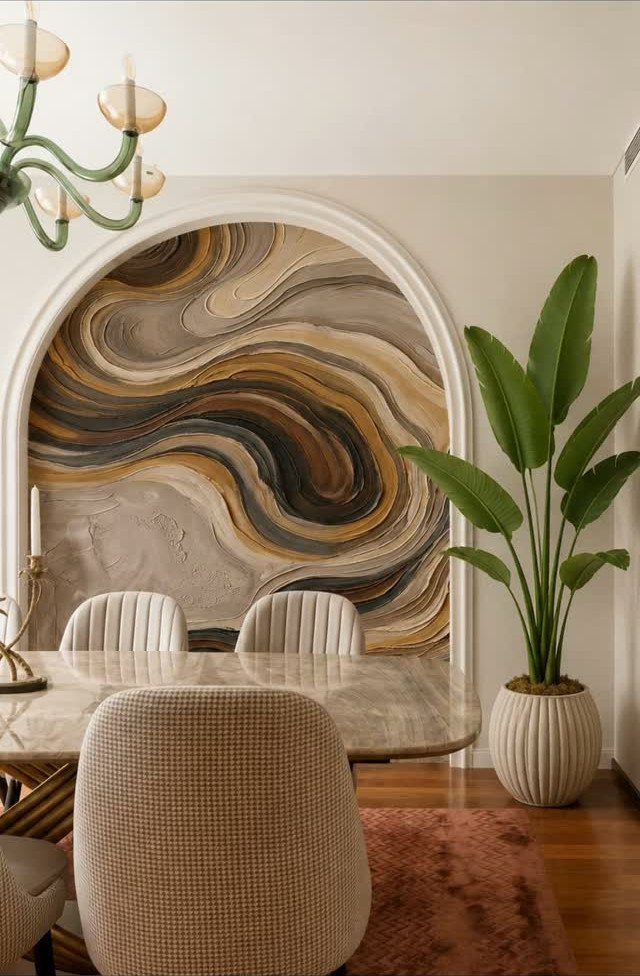
A single large piece of art on the wall behind the table draws attention up and away from the floor, which makes a small dining room feel less crowded.
Oversized doesn’t mean busy; abstract shapes in a limited palette keep the space calm.
Look for pieces built with texture, like palette knife work, so the surface changes with the light and adds dimension.
Frame it if the edges are rough, or leave it unframed if the canvas is finished. Center the piece where it meets your eye level from a chair, not from standing height.
7. Use of Rugs
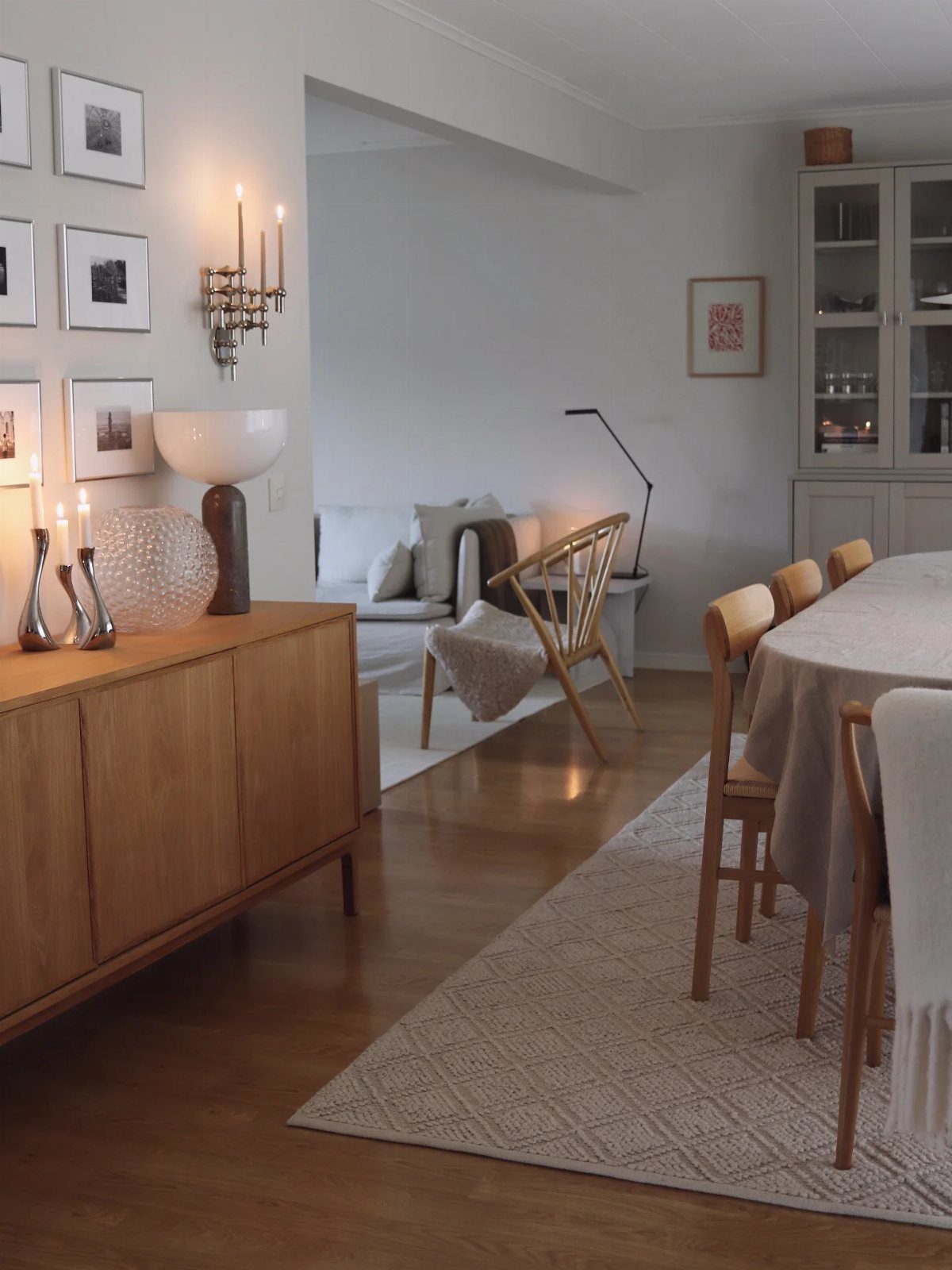
A rug under the table marks that zone as its own without adding a wall or a divider. In an open floor plan or a studio, that boundary keeps the room from reading as one undifferentiated space.
Choose a rug large enough that the chairs stay on it when you pull them out.
If the rug is too small, the chair legs catch on the edge every time someone sits down. A low pile or flatweave cleans easier under a table than something deep.
8. Vertical Stripes
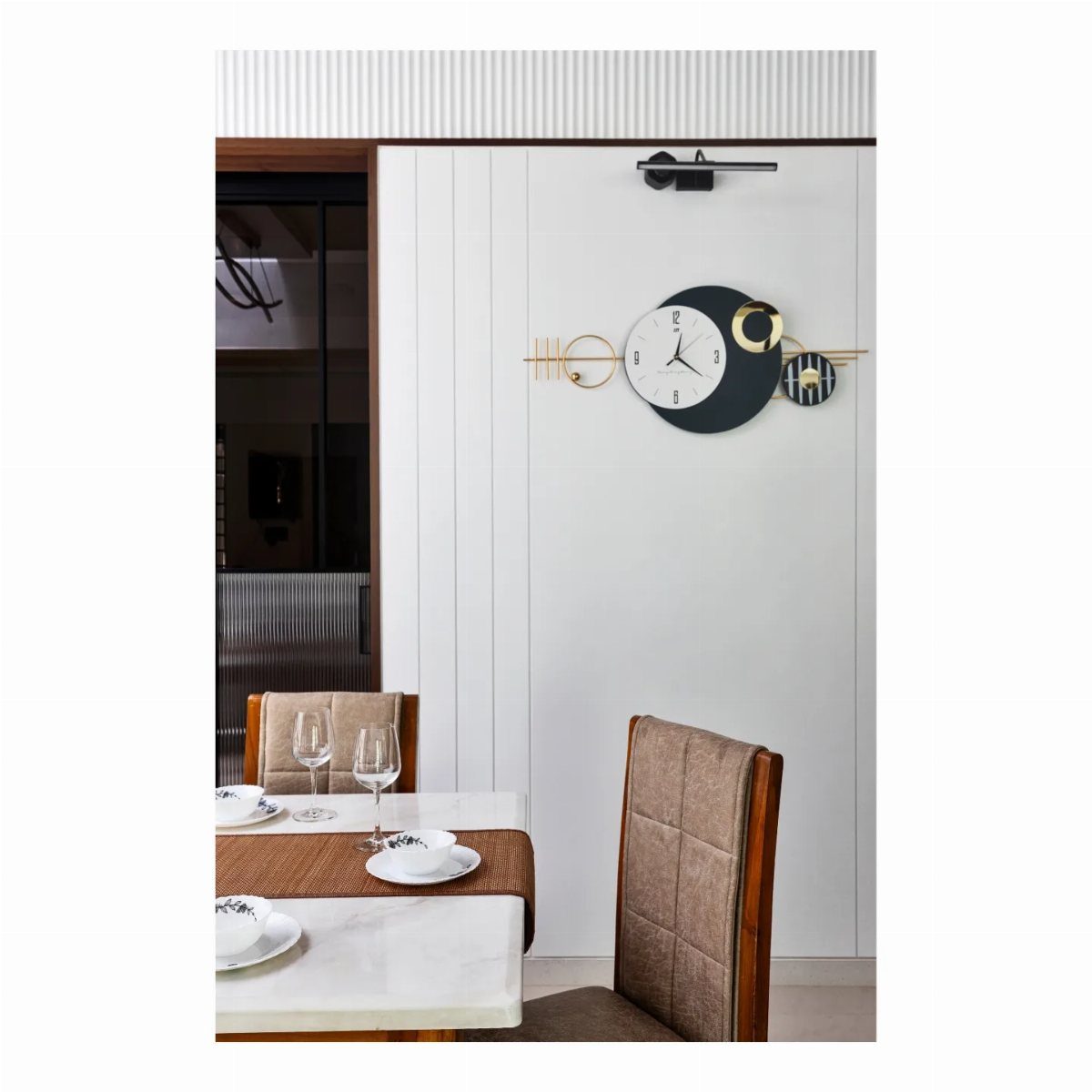
Vertical stripes on the wall pull the eye up and make the ceiling feel higher than it is. That lift matters in a small dining room where low ceilings can make the space feel closed in.
Narrow paneling works the same way as painted stripes and adds texture.
Space the lines evenly so the pattern reads as intentional. White or a single neutral tone keeps the look clean and doesn’t compete with the furniture.
9. Pedestal Tables
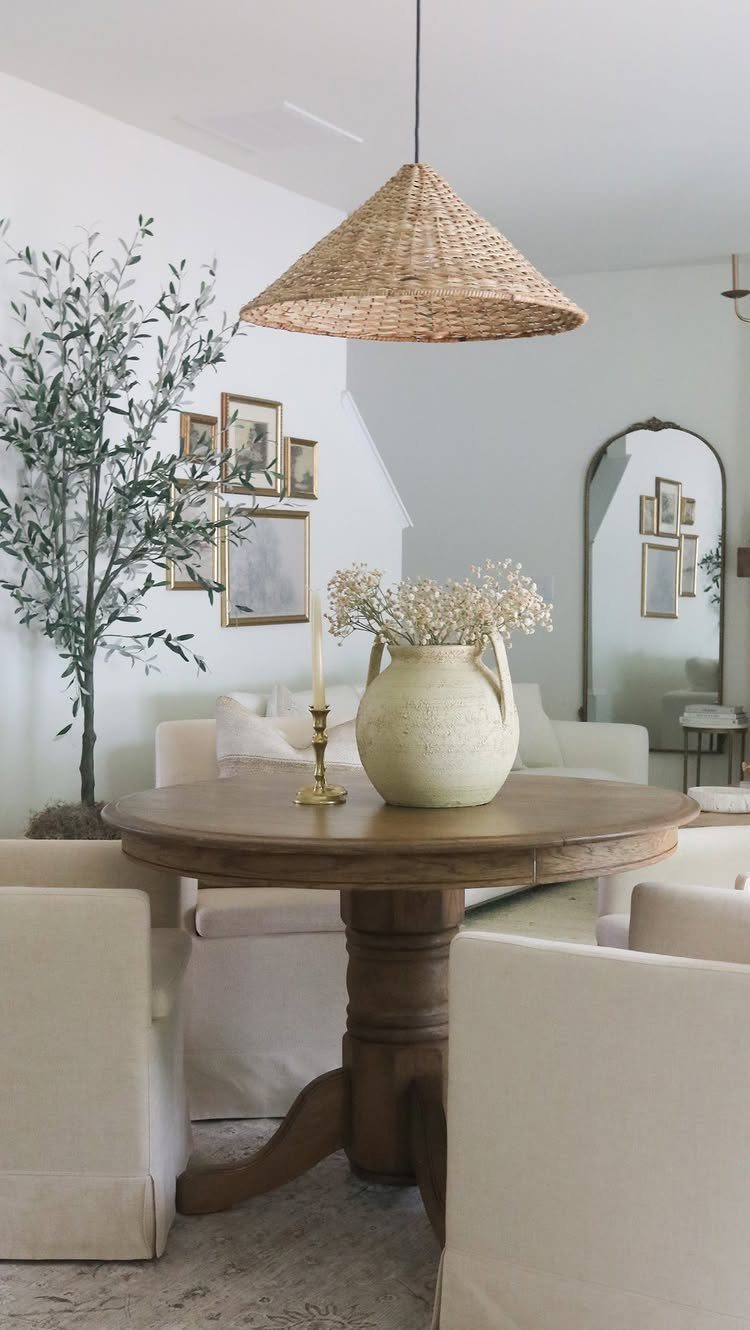
A pedestal table puts one central leg under the middle instead of four at the corners, so there’s nothing blocking your knees when you sit down. That extra legroom matters when you’re fitting more people around a small table.
Round pedestal tables work better in tight spaces than rectangular ones because there are no sharp corners to navigate. The single base also means no corner legs to navigate when you pull up an extra chair.
10. Colorful Seating
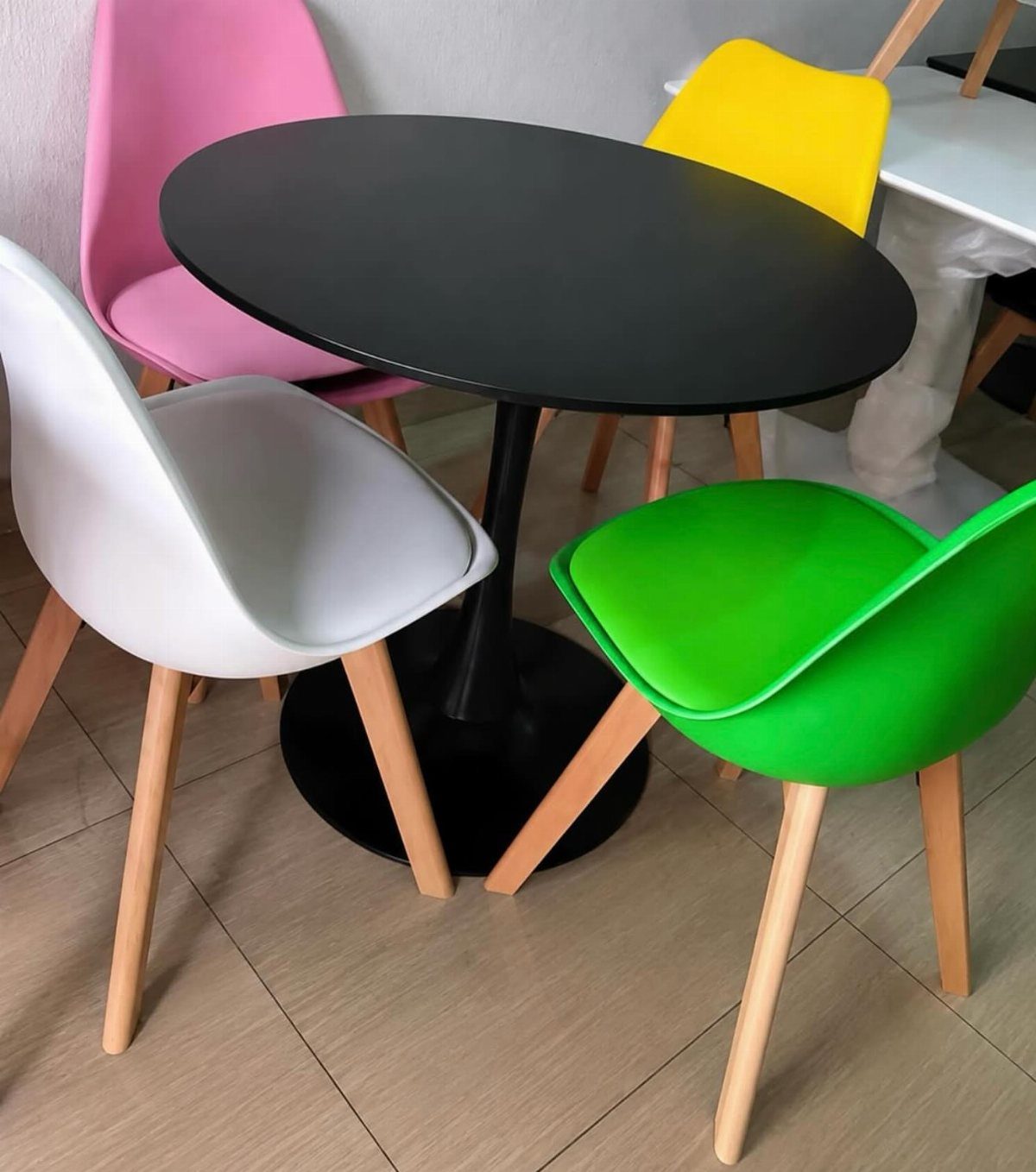
Chairs in different colors add personality without taking up extra space or budget. Mismatched seating reads as intentional when the chairs share the same style or leg finish.
Plastic or molded resin chairs come in dozens of colors and stack when you’re not using them.
If you’re working with wood chairs, painted seats in a few coordinating tones give you the same effect. Keep the table simple so the chairs stay the focus.
11. Layered Patterns
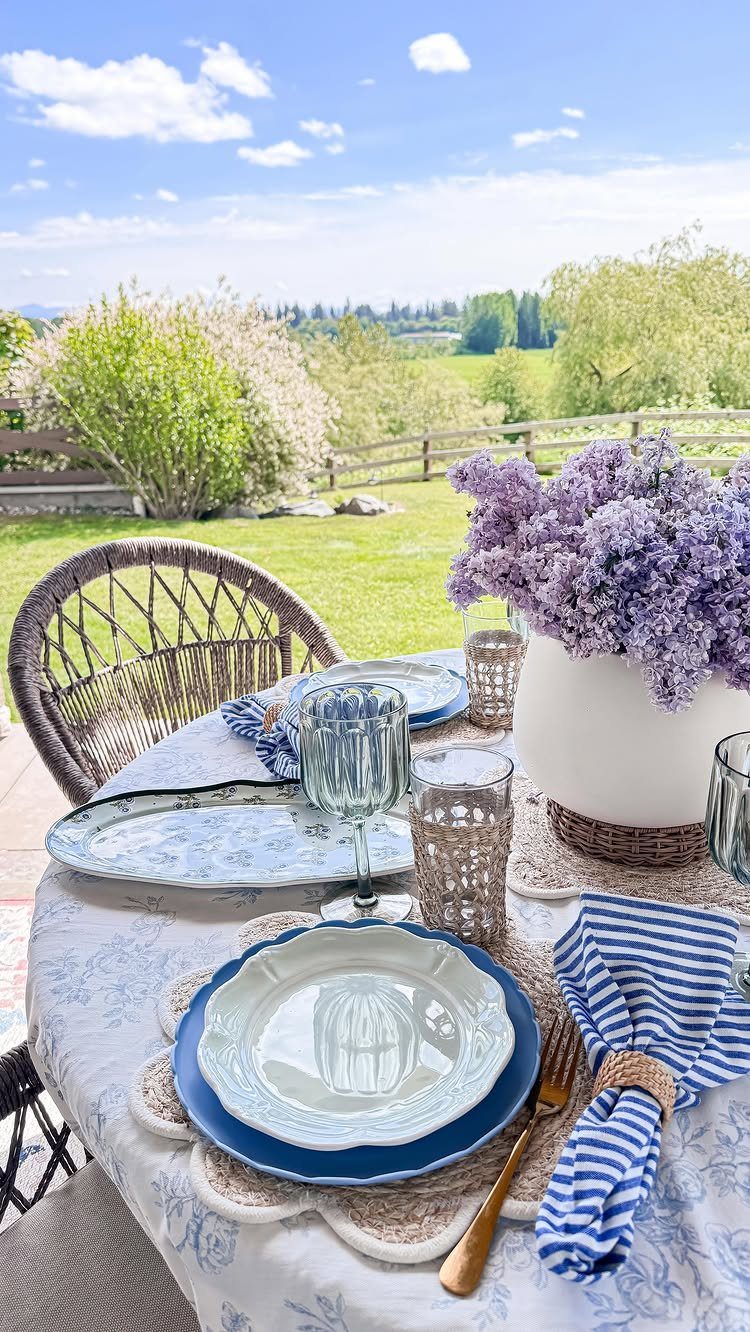
Patterns in different scales layered together give a dining table more visual interest than a single solid color.
Start with the largest pattern on the tablecloth or placemats, then add a smaller print on the napkins.
The dishes can carry a third pattern as long as the background color ties into the linens. If one pattern is busy, keep the others simpler so the table doesn’t feel chaotic.
12. Folding Chairs
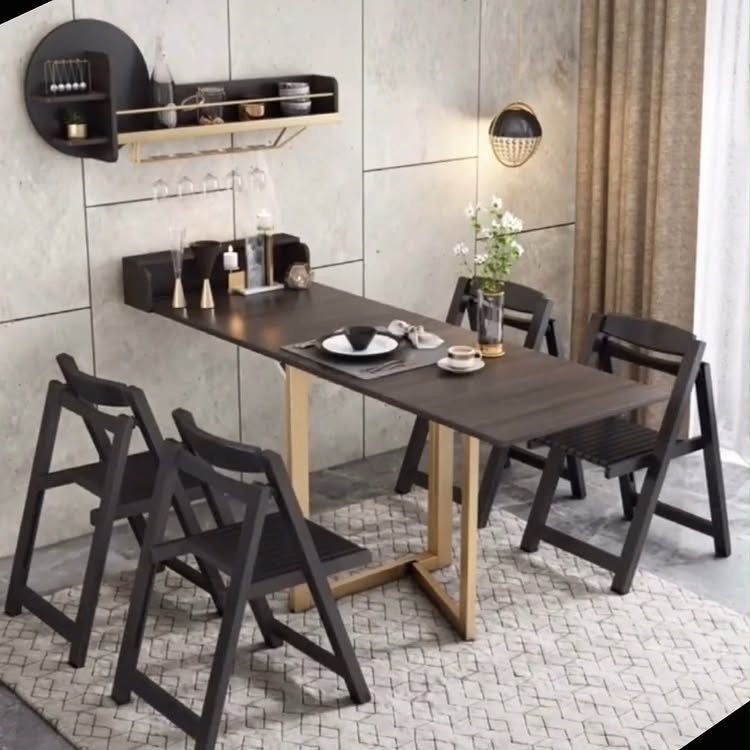
Folding chairs store flat against the wall or in a closet when you’re not using them, freeing up floor space in a small room. Bring them out only when you have guests, then put them away again.
Metal folding chairs hold up better than plastic and don’t wobble after a few uses.
Black or wood-tone finishes look less temporary than bright colors. If you’re keeping them out most of the time, padded seats make them comfortable enough for everyday use.
13. Dining Nook
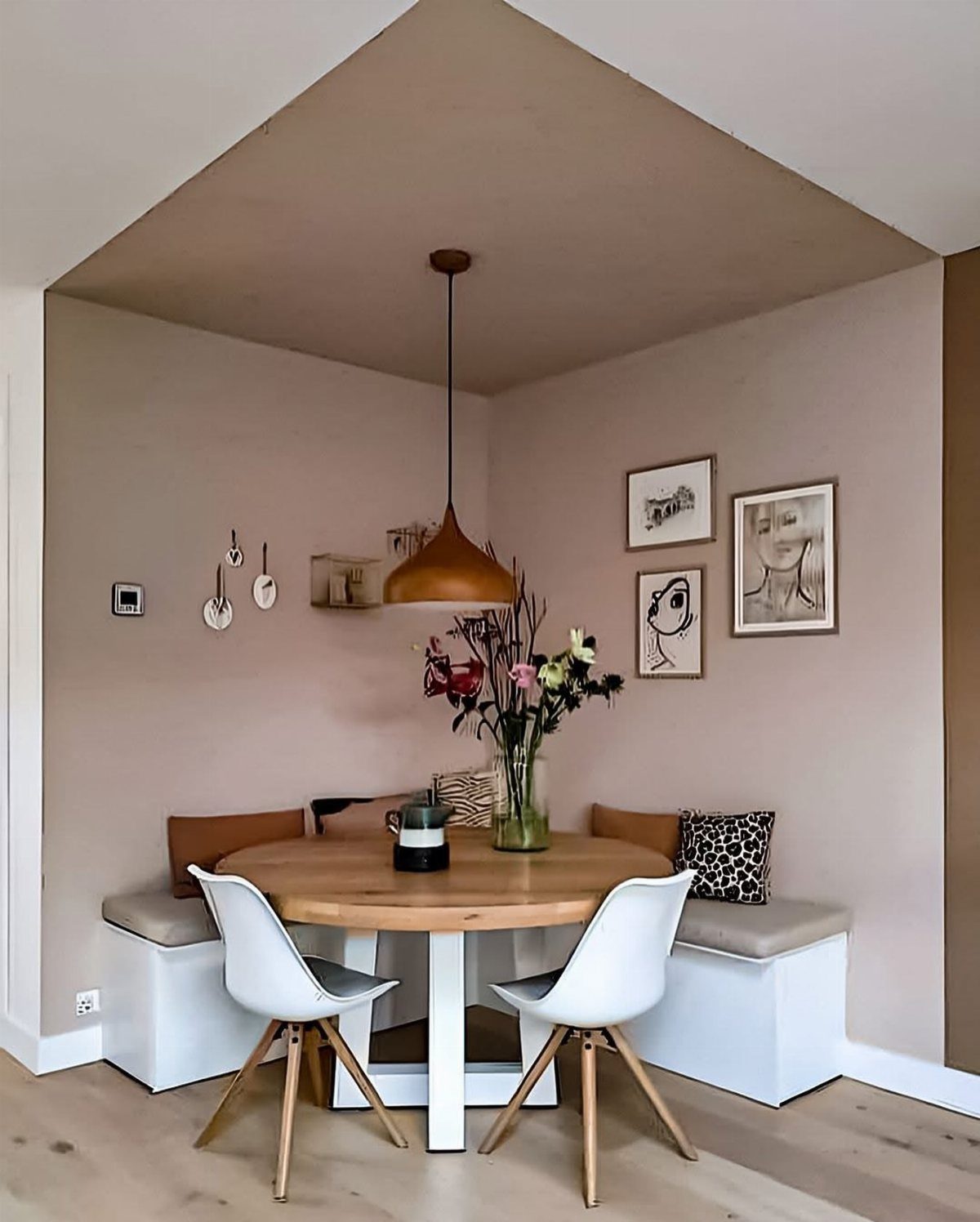
A corner nook turns unused floor space into a dining area without needing a separate room.
The bench against 2 walls seats more people than loose chairs would in the same footprint, and you can slide along the bench to make room.
A round table fits better in a corner than a rectangular one because there are no sharp edges pointing out into the room.
Keep the nook small enough that you can reach the table from either side of the bench without leaning.
If you don’t have the room for a traditional-sized table in your small dining room, don’t force one into your space. Try an unexpected surface like an outdoor bistro table or narrow desk that won’t overcrowd the room.
— Domino
14. Pendant Lights
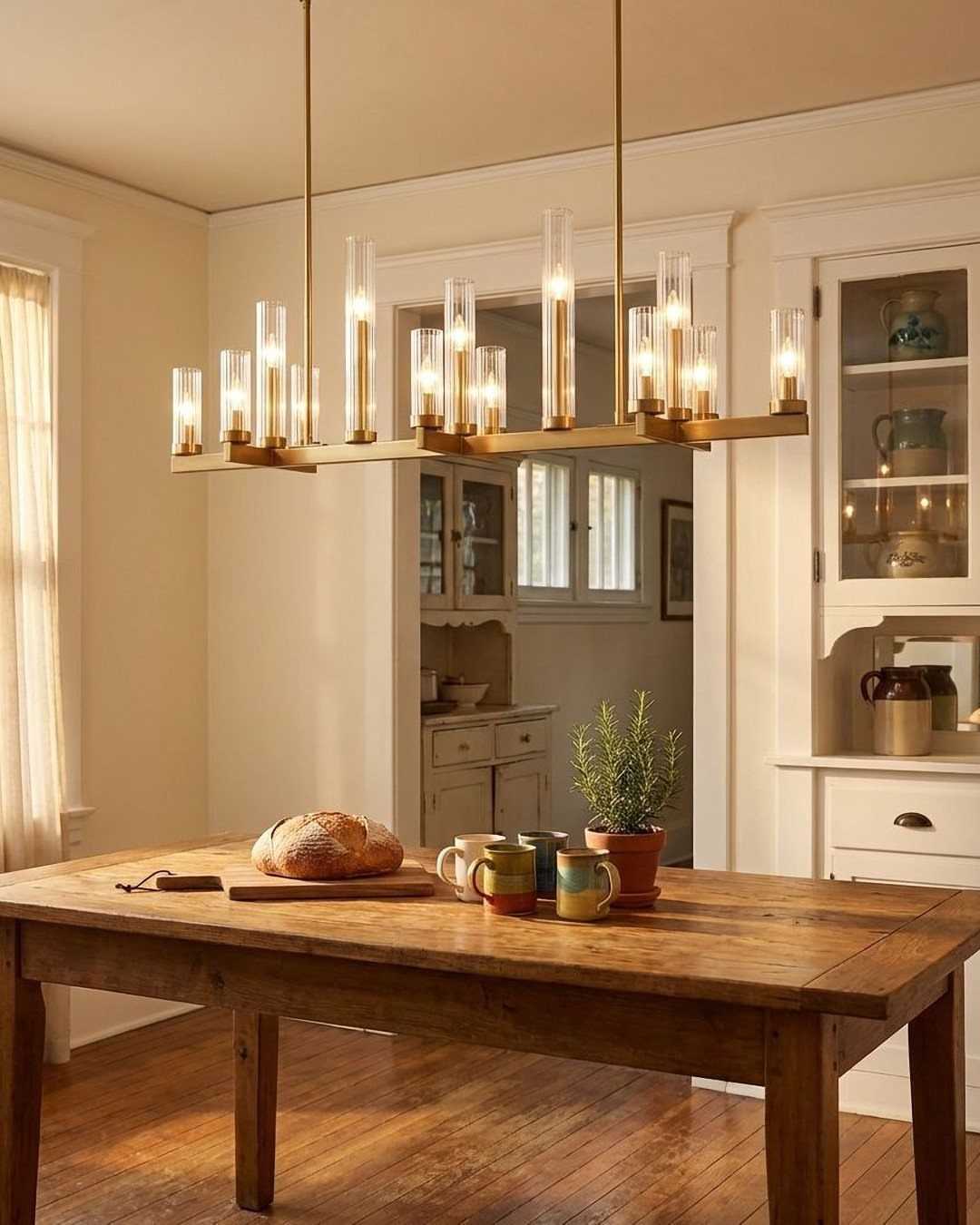
A pendant light over the table marks where you eat and puts the light exactly there, not spread across the whole room.
In a small space shared with the kitchen or living room, that focused light separates the zones without a wall.
Hang the fixture low enough to light the surface without blocking sight lines across the table. A single pendant works for round tables, while a linear fixture or a pair of smaller pendants suits a rectangular table better.
15. Dining Alongside Kitchen
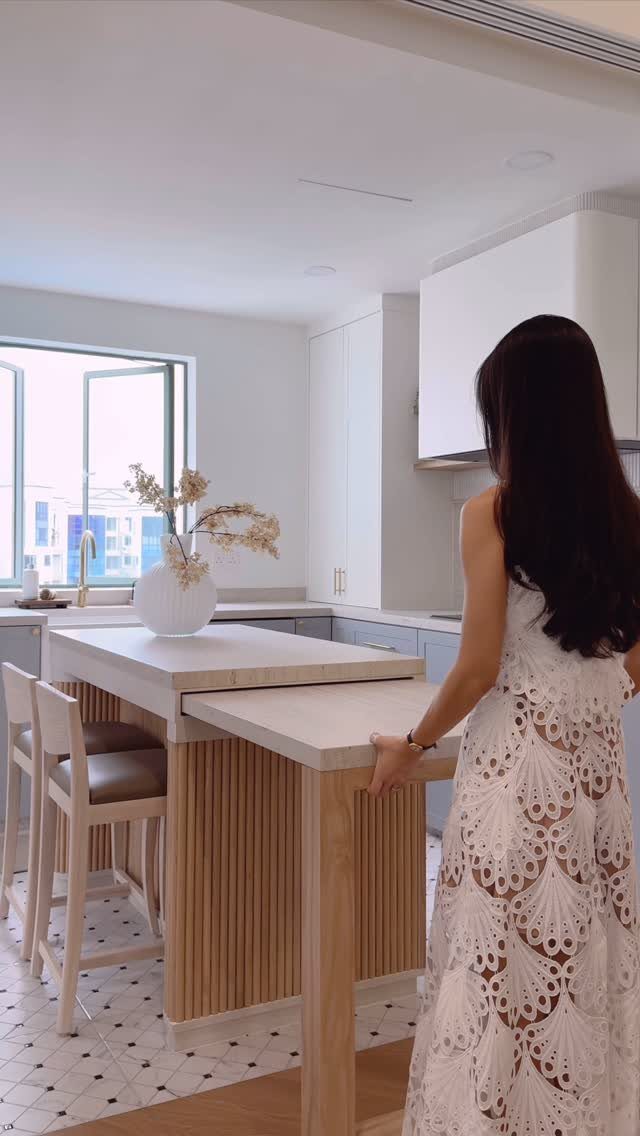
An island with an overhang on one side gives you counter space and a dining surface in one piece of furniture. Stools tuck under the overhang when you’re not using them, so the floor stays clear.
The overhang needs to be deep enough for knees to fit comfortably underneath. Counter-height stools work for standard counters, while bar-height stools match taller islands.
Lighting and Mirrors
A mirror placed across from a window catches incoming light and sends it back into the room, so the space reads brighter without adding fixtures. Position the mirror where it reflects the window itself rather than a blank wall.
Pendant lights over the table put illumination where you need it and leave the rest of the room in softer light.
A dimmer switch on the pendant gives you control over the mood without changing the fixture itself.
Decor and Color Scheme
Bright colors open up the space without adding square footage.
Accessories bring in color without the commitment of paint.
A set of napkins, a bowl, or a vase in a saturated tone adds personality and can be swapped out when you want a change. Keep the larger pieces in the room neutral so the pops of color stand out.
The amount of natural light in the room affects how a wall color reads.
A shade that looks airy in a south-facing room can feel flat in a space with less daylight, so test a sample on the wall before you commit.
Furniture Arrangement
Leave enough room between the table and the wall or other furniture so someone can walk past when all the chairs are pulled out.
That clearance keeps the space from feeling jammed and makes it easier to serve food or clear dishes.
Foldable tables and corner benches open up pathways because they take up less floor space than a full set of chairs around a freestanding table.
Arranging furniture to keep one side of the room clear lets light move through the space and makes the layout feel more open.
Frequently Asked Questions
How to arrange a small dining room?
Make sure there’s enough room to squeeze past the table when chairs are pulled out. Use folding chairs or a corner bench to free up floor space and keep one side of the room open so light can move through.
A round pedestal table takes up less room than a rectangular one and gives you better access because there are no corner legs blocking your knees.
How do I decorate a combined living and dining room?
A rug under the table marks the dining zone without adding a wall or divider, and a pendant light over the table puts focused light exactly where you eat instead of lighting the whole room.
Pale paint and light-toned furniture bounce more daylight around and open up the room. Hang a mirror opposite the window and it doubles the light hitting that wall.
What tables are best for small spaces?
Round pedestal bases let you slide chairs in from any angle and keep the center leg out of everyone’s way.
Folding or drop-leaf tables can be collapsed and stored when you’re not using them. Tuck a small round table into a corner banquette and you’ll seat four where two chairs would barely fit.