
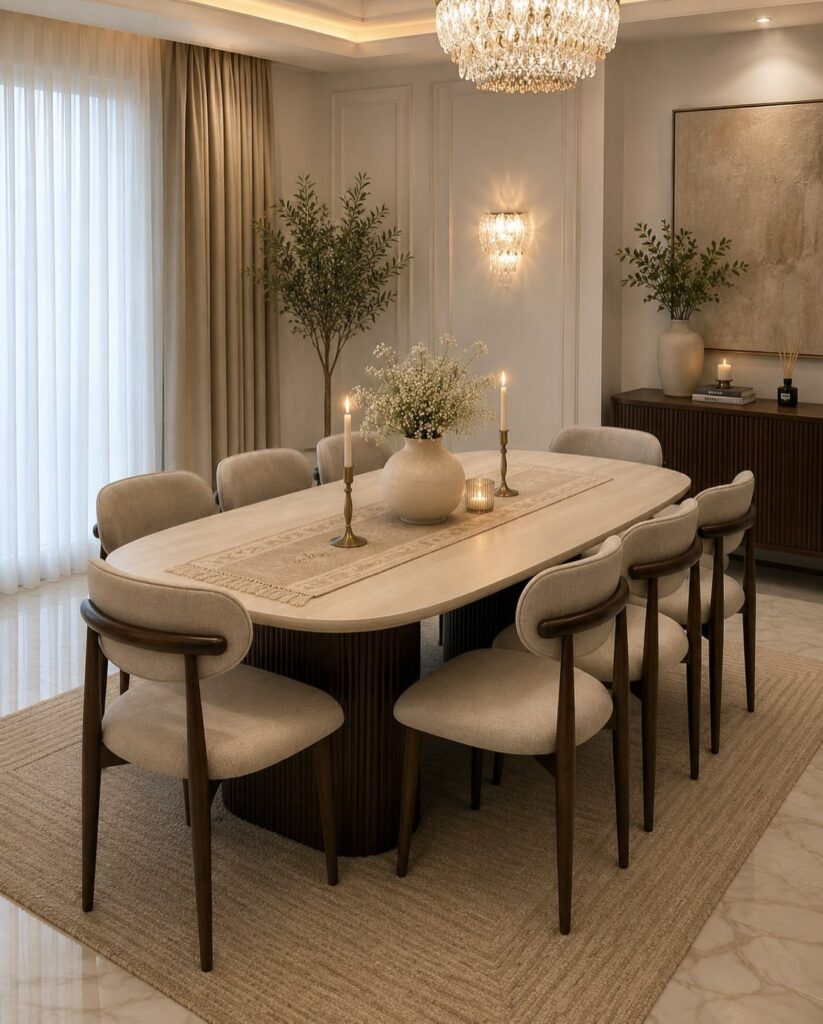
The dining table shape determines how many people you can seat and how easily traffic moves around it, while the right chair height lands between 45–48 cm from floor to seat to keep your forearms level with the table.
Upholstered chairs soften sound in a room full of hard surfaces, and a moody wall color gives the space a more formal feel that suits evening meals.
A bench along one side seats more people than chairs in the same space, and mixing chair styles lets you layer comfort with personality.
1. Dining Table Shape
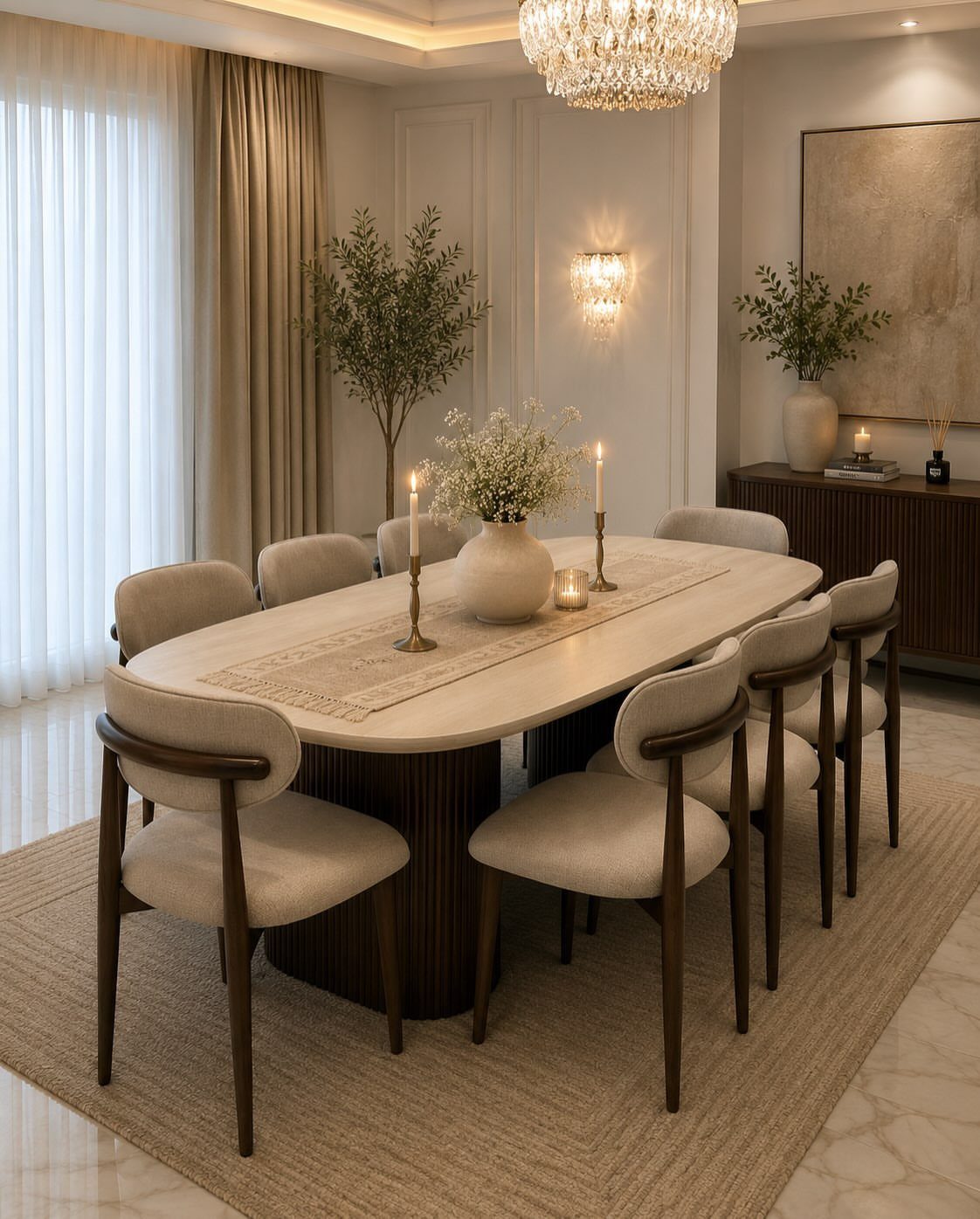
The shape of your dining table sets how many people fit and how traffic flows around it. Rectangular tables seat the most and work along a wall or in the center of a longer room.
Round tables make conversation easier and fit well in square spaces. Oval tables split the difference: they seat more than a round table without the sharp corners of a rectangle, and they soften a room with hard angles elsewhere.
Match the shape to how you use the room.
If you host large dinners, a rectangle or oval gives you the length. For everyday meals, a round table wastes less floor space.
2. Bench Seating
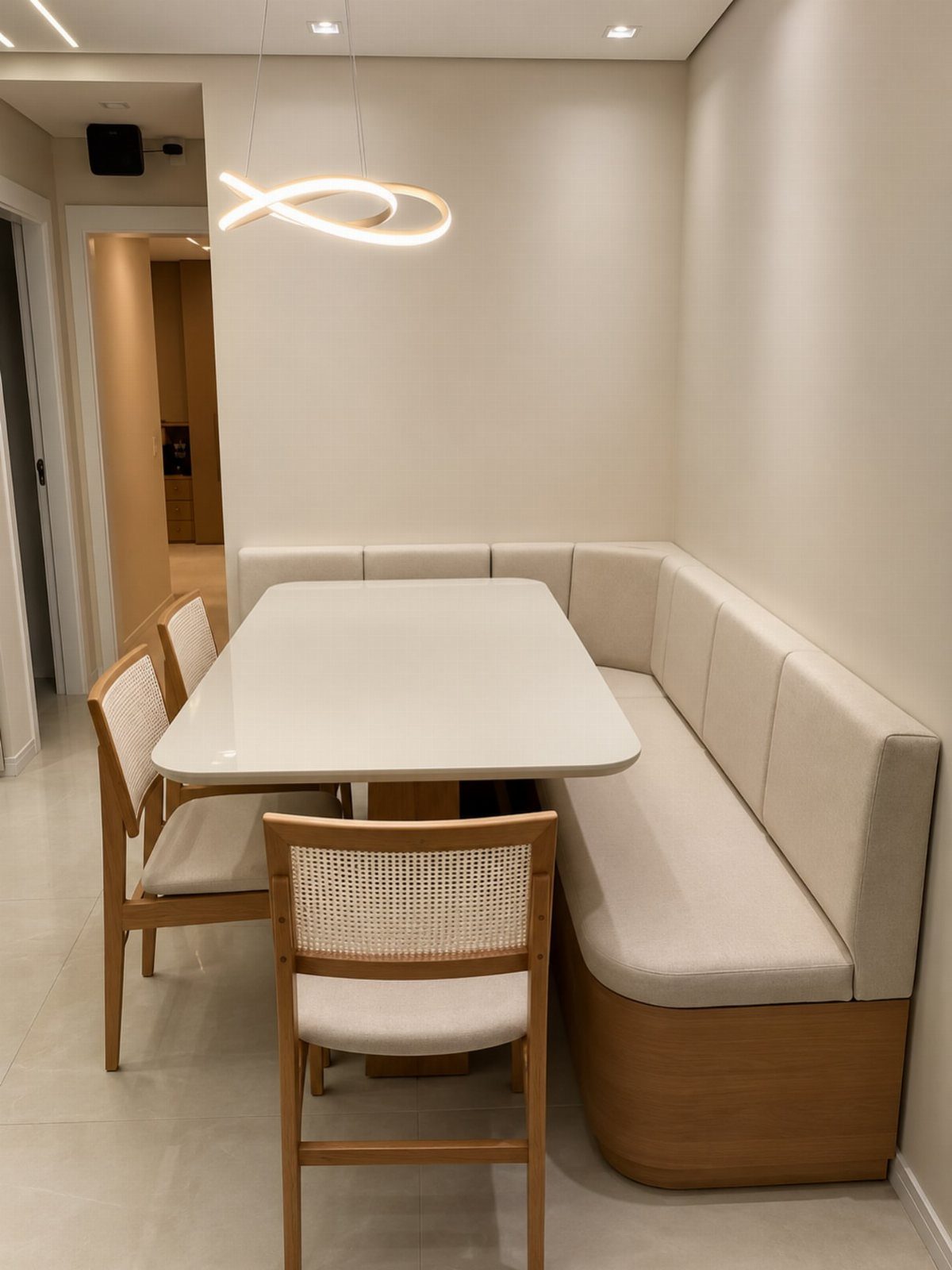
A bench along one side of the table fits more people in less space than individual chairs.
Built-in benches work especially well in corners or against a window, where pulling out a chair would be awkward. You gain seating without the clutter of extra chair backs, and the line stays clean when no one is sitting there.
Upholstered benches add comfort for longer meals.
Pair the bench with chairs on the opposite side so someone can slide in and out easily. If your dining room doubles as a hallway or connects to the kitchen, a bench keeps the path open.
3. Upholstered Dining Chairs
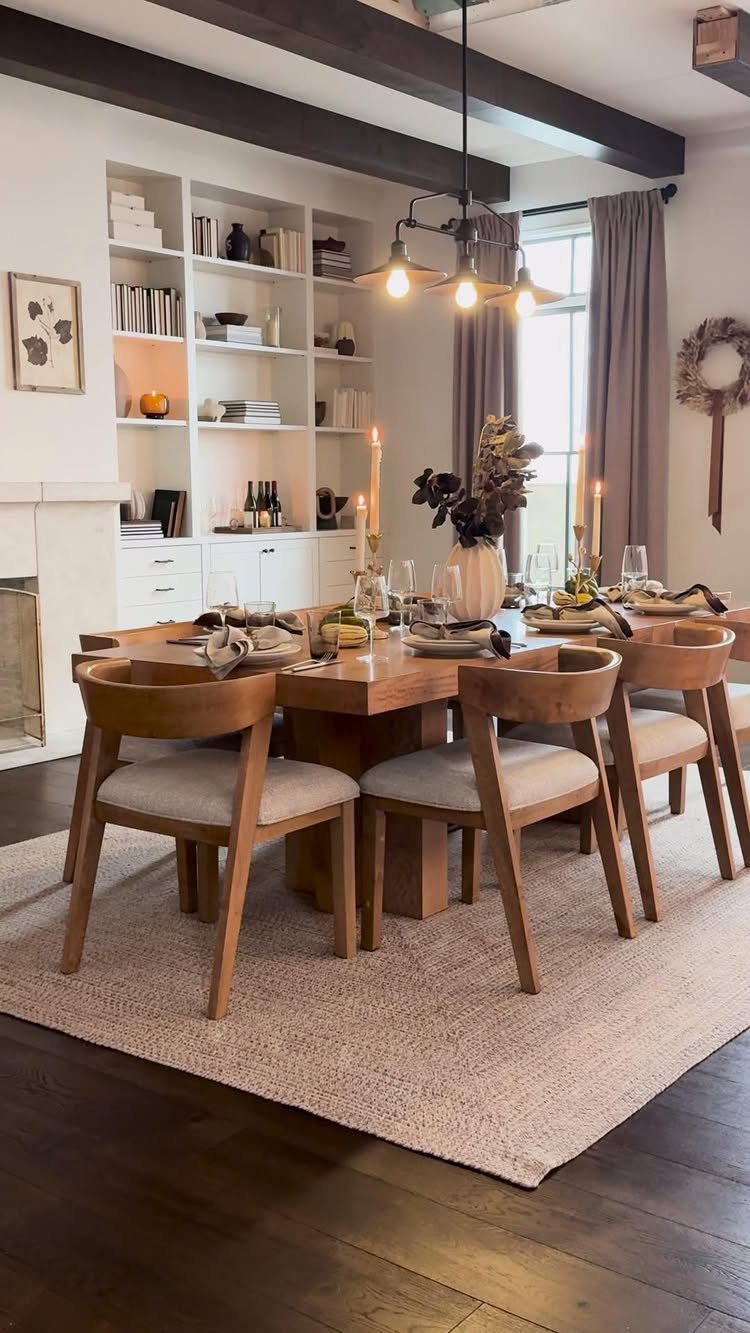
Upholstered chairs soften the sound in a dining room and make it comfortable to linger.
The fabric absorbs noise that would otherwise bounce off hard surfaces, so the room feels quieter. A rug under the table does the same thing, and curtains at the windows finish the layer.
Performance fabrics resist stains better than untreated linen or cotton, and they clean up with water and mild soap.
If you eat at the table every day, choose a tight weave or a vinyl-backed fabric. Velvet and bouclé look good but show wear faster in a high-use room.
4. Mix and Match Dining Chairs
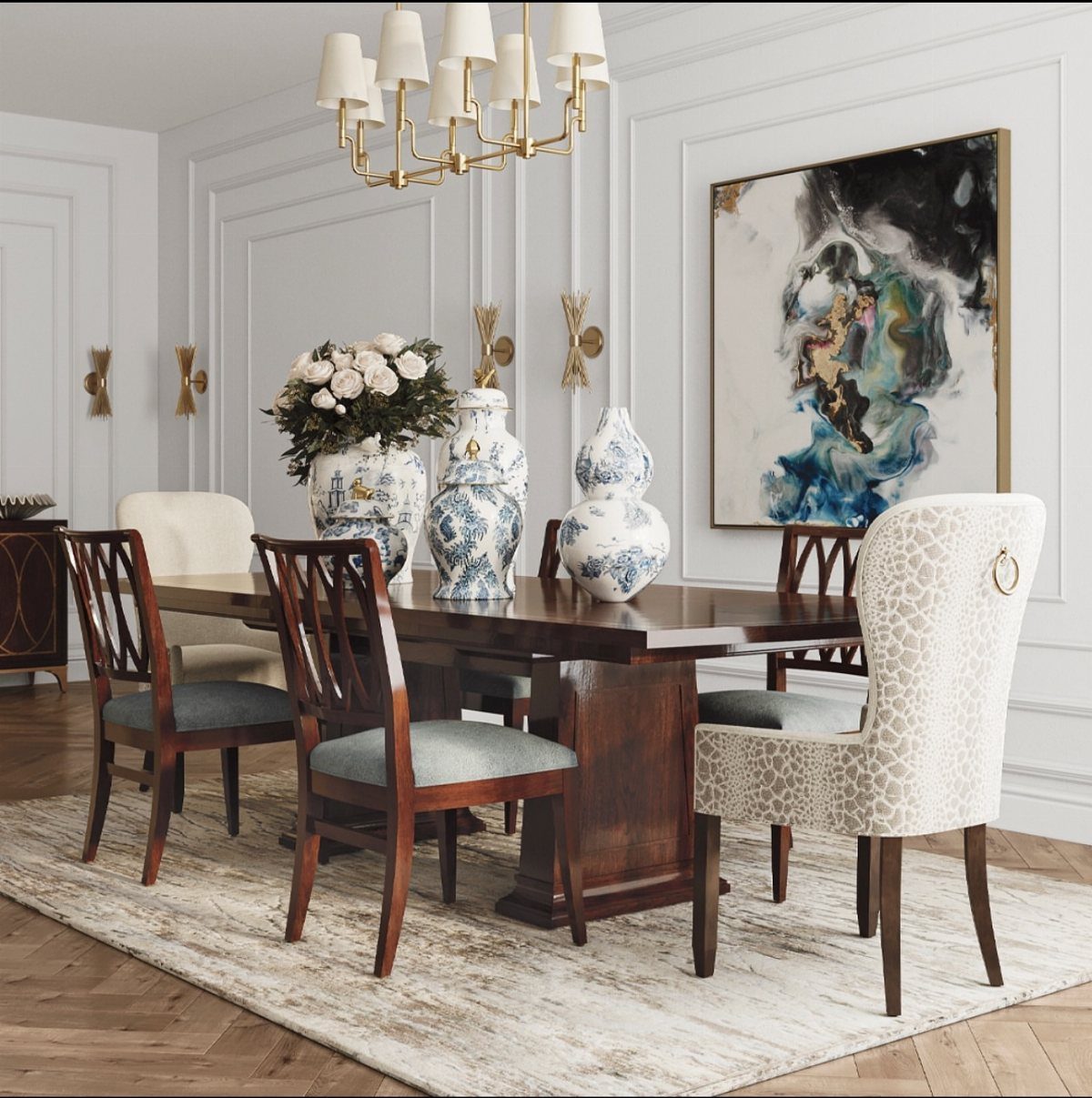
Mixing chair styles gives you flexibility in how the room looks and what you spend. You can pair 2 upholstered armchairs at the ends with simpler side chairs, or combine wood and metal finishes around the same table.
The chairs do not need to match as long as the seat heights are close, within an inch or two.
Start with one style and add a contrasting pair.
Wood chairs with cane backs sit well next to upholstered seats, and painted chairs mix easily with natural finishes. Keep the table as the anchor and let the chairs vary in material or silhouette.
5. Framed Mirrors
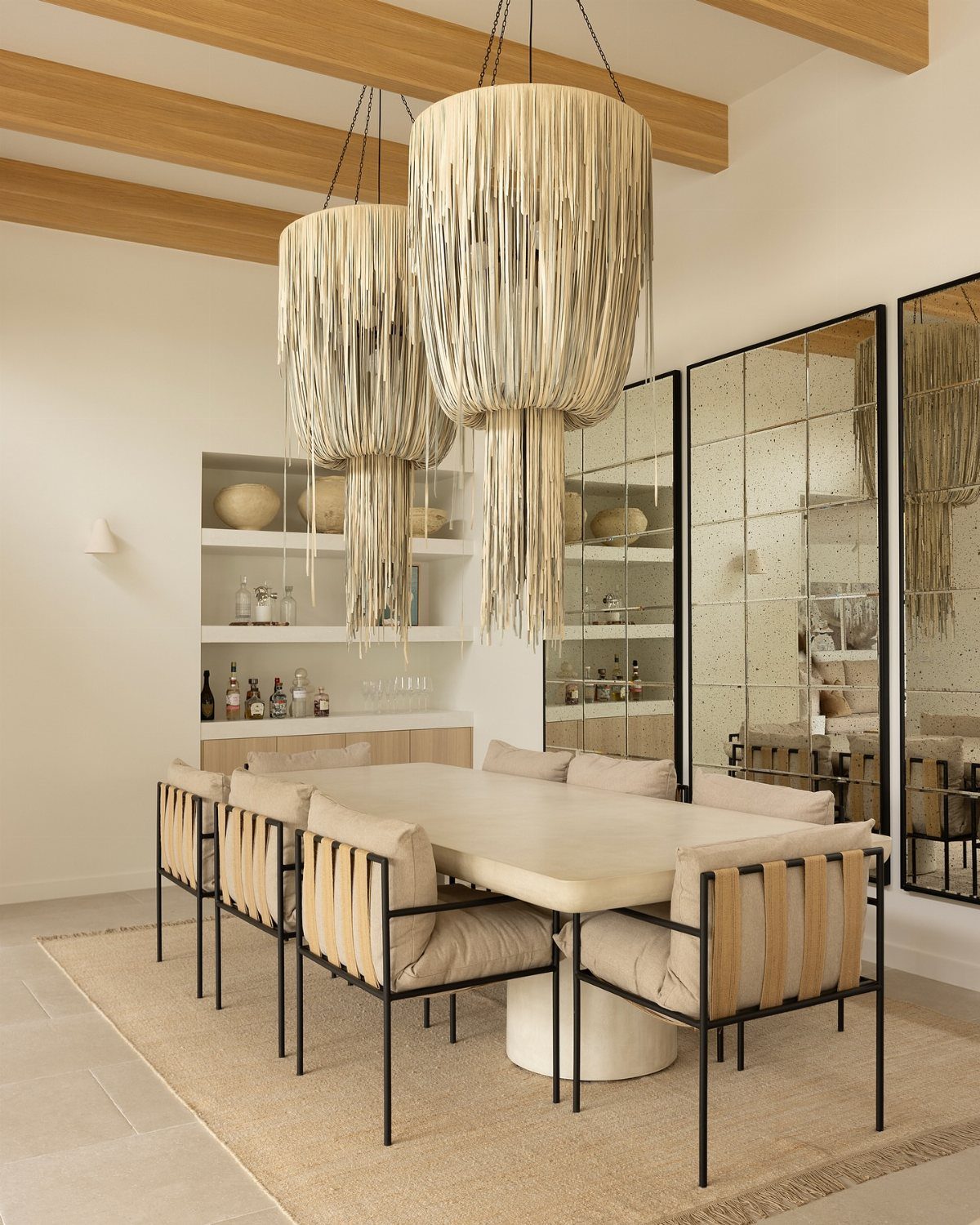
Mirrors bounce light back into the room and make the space feel larger than it is.
A wall of framed mirrors creates the illusion of depth, especially in a narrow dining room or one without windows. The reflection doubles the view, so whatever sits opposite the mirrors appears again.
Black frames add structure and keep the mirrors from looking too decorative.
Hang them in a grid for a clean, modern look, or stagger the sizes for something less formal. Mirrors work best on a wall that reflects something worth seeing: a window, a light fixture, or a well-styled sideboard.
6. Choose a Moody Hue
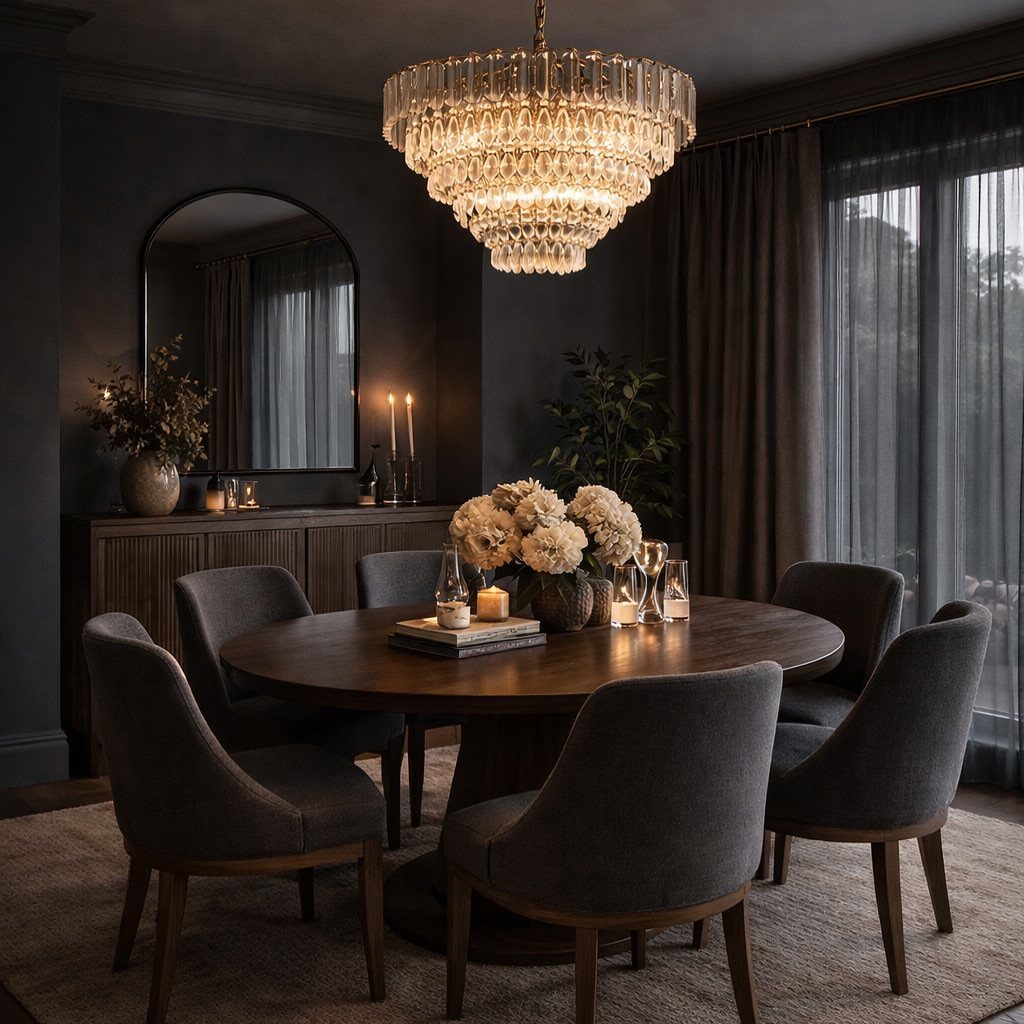
Dark walls make a dining room feel more enclosed and formal, which suits a space you use mostly at night. Charcoal, deep navy, and forest green absorb light instead of reflecting it, so the room feels smaller and more intimate.
That works well in a large dining room that otherwise feels too open, or when you want the focus on the table and the people around it.
Balance the dark color with lighter furniture and plenty of light sources.
A chandelier, wall sconces, or candles keep the room from feeling too heavy. Dark paint also hides scuffs and fingerprints better than white or pale gray.
Whether you’re enjoying your favorite takeout order or serving a three-course meal for your loved ones, a smartly designed small dining room will always make mealtime better.
7. Dining Room Furniture Layout
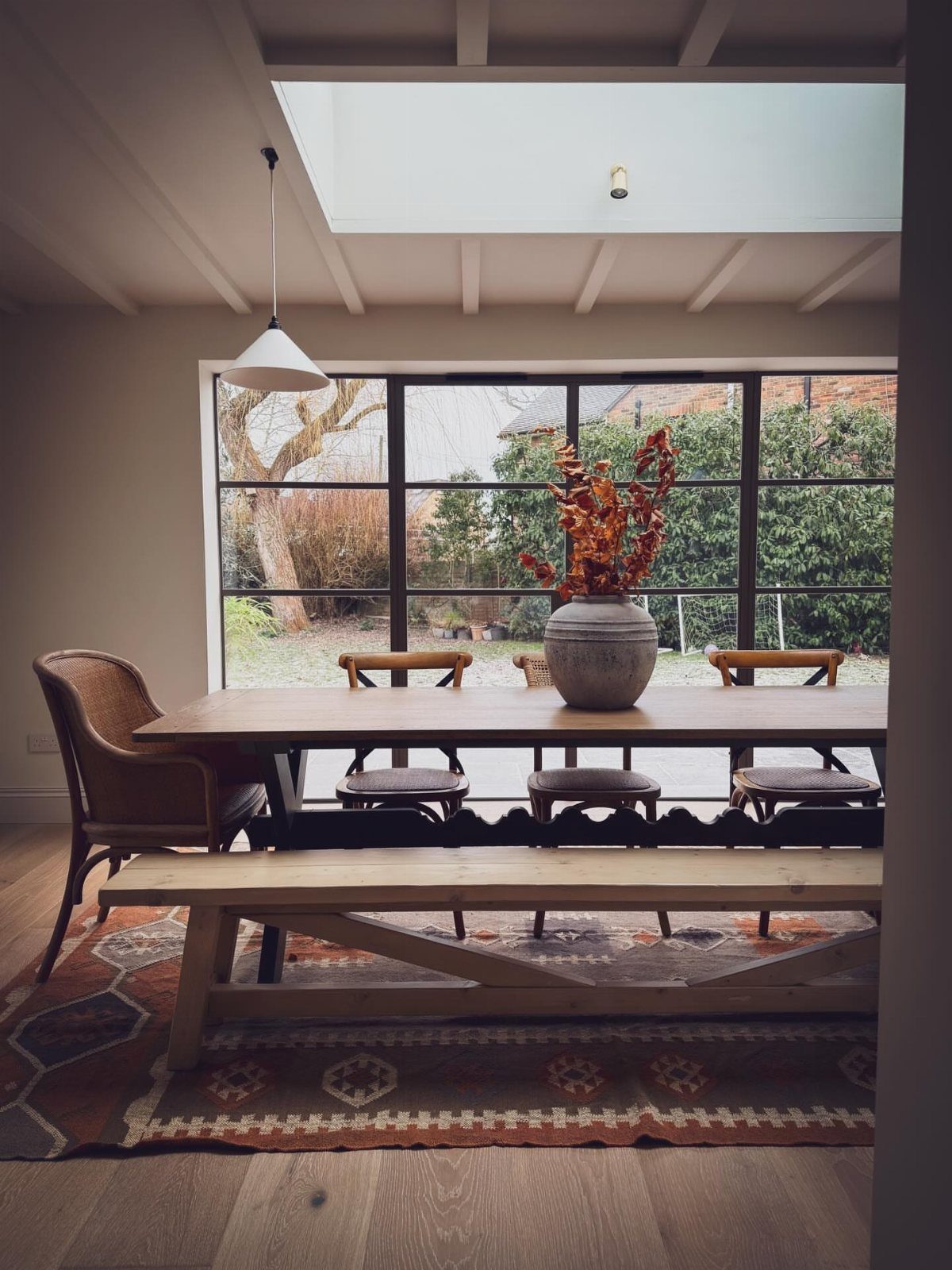
Position the table so you can walk around it without turning sideways. Leave enough room between the table edge and the wall or other furniture to pull out a chair and stand behind it comfortably.
In a narrow room, center the table and keep the ends clear rather than pushing one side against the wall.
A rug under the table should extend well past the chairs on all sides, so the chair legs stay on the rug when someone pulls out to sit. That keeps the chairs from catching on the edge.
8. Marble Dining Table
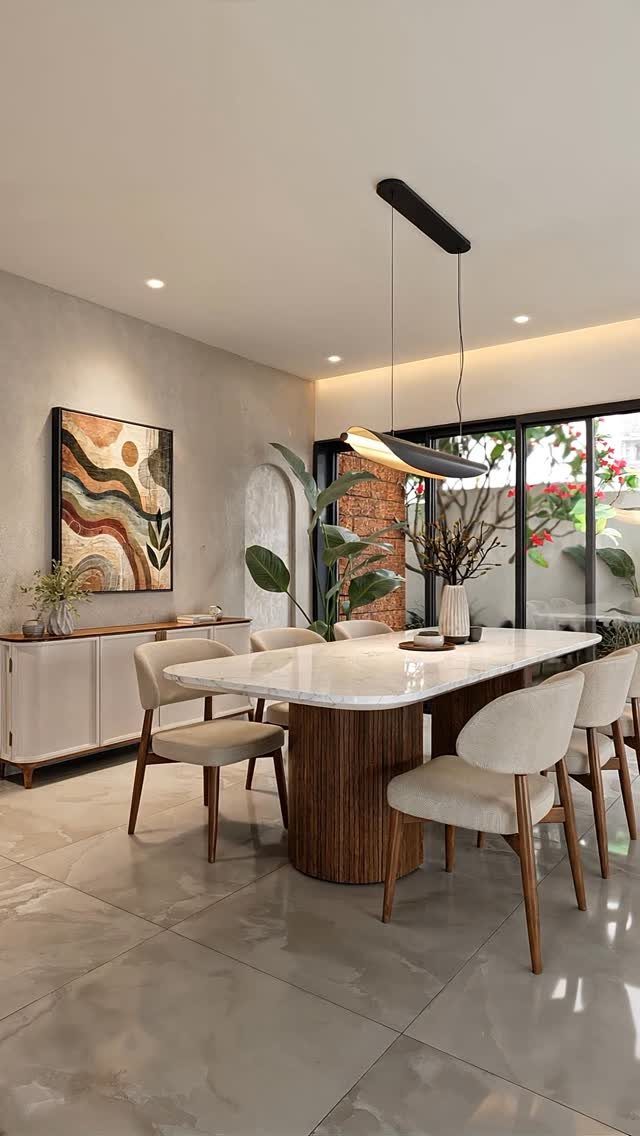
Marble shows veining and depth that laminate and solid surfaces do not, and the weight keeps the table stable without a wide base.
White marble with gray veining stays neutral enough to work with most chair styles, and the stone cleans easily as long as you seal it once a year.
A curved or sculptural base balances the flat expanse of the top and leaves more legroom than a base with legs at each corner.
The stone itself is cool to the touch, which matters less at a dining table than at a desk where your arms rest all day.
9. Eclectic Gallery Wall
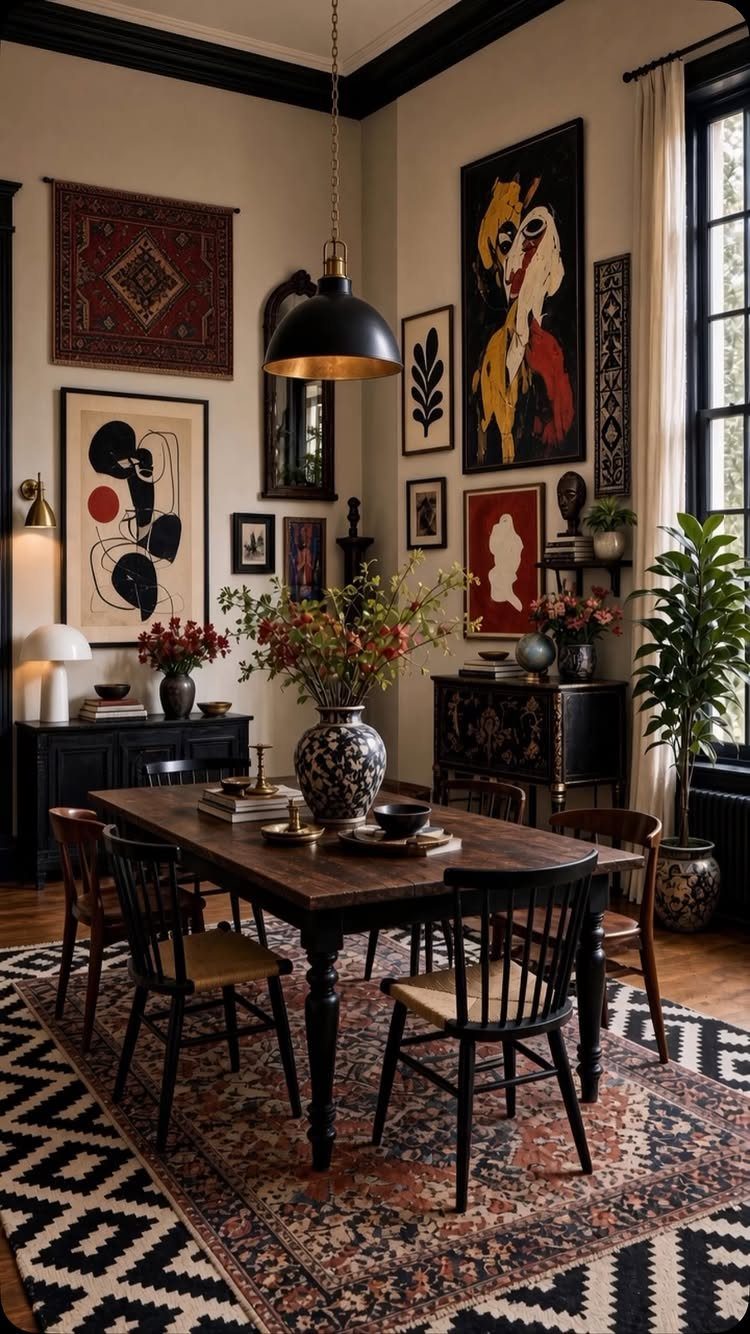
Grouping different sizes, frames, and subjects on one wall gives the room a collected look without waiting years to build it. Mix framed prints with textiles or woven pieces, and vary the orientation so some hang vertically and others horizontally.
The frames do not need to match: wood, black metal, and no frame at all sit together as long as the spacing stays consistent.
Start with the largest piece at eye level and build out from there. Keep some space between frames so each one stays distinct.
10. Sculptural Circular Wall Art
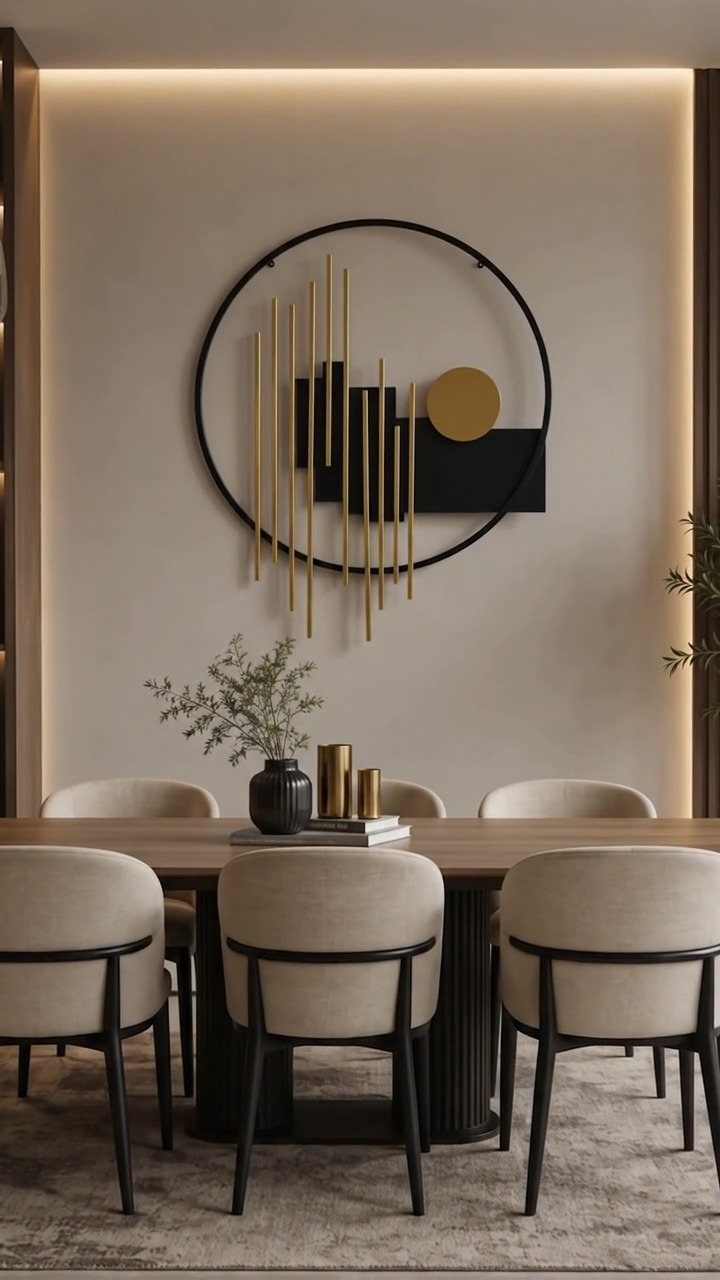
A single large piece on the wall behind the table draws attention without competing with the furniture.
Round or circular forms soften a room full of straight edges, and a three-dimensional sculpture adds texture that a flat print or canvas cannot.
Black and metallic finishes work in most dining rooms without clashing with wood tones or upholstery colors.
Hang it centered over the table or sideboard, at a height where the middle of the piece sits at eye level when you are standing.
11. Layered Lighting
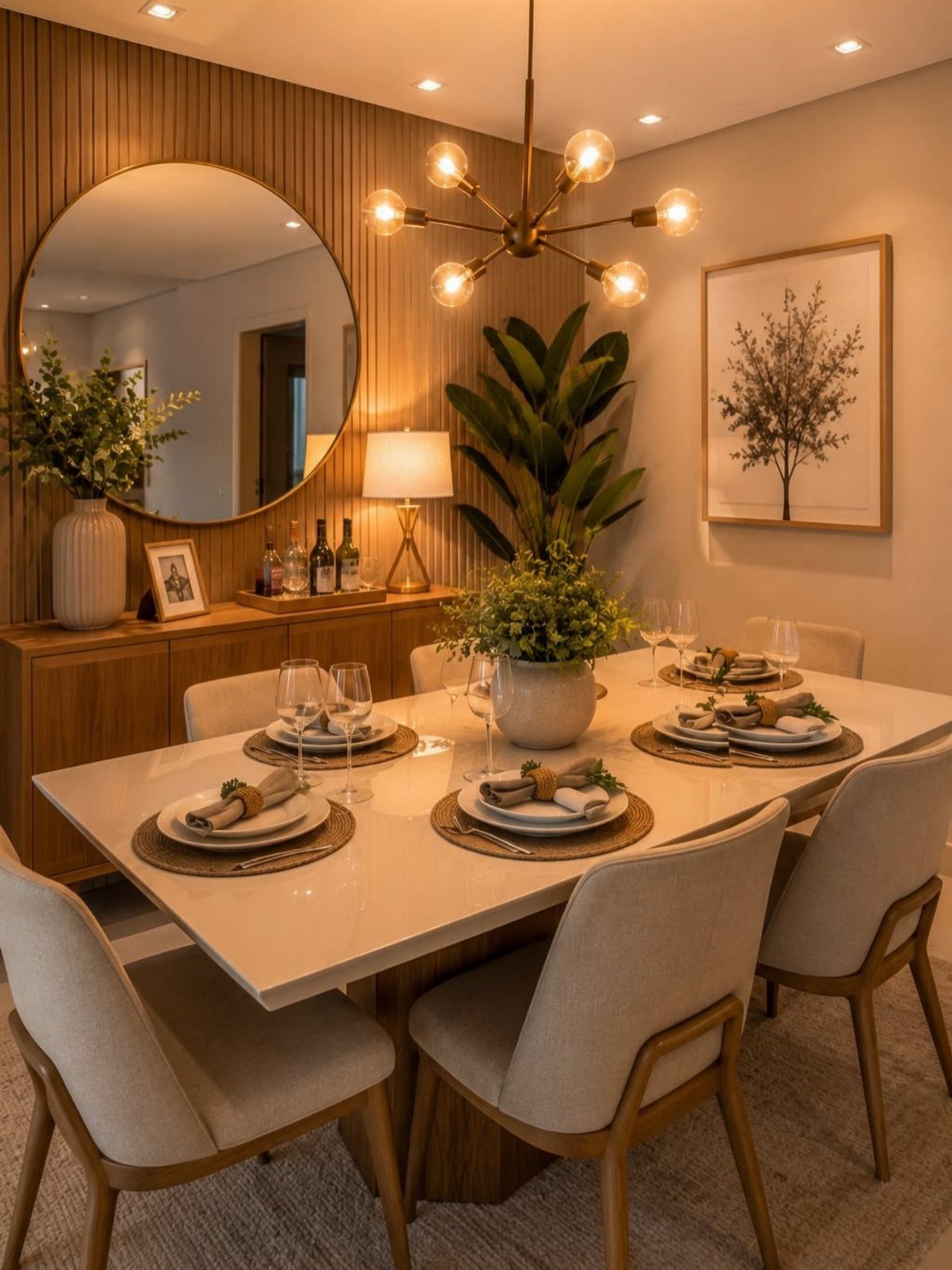
A chandelier over the table provides the main light, but adding a table lamp or sconces on the wall lets you adjust the brightness and the mood.
Multiple sources spread light more evenly and eliminate the harsh shadows that a single overhead fixture creates.
Hang the chandelier low enough to light the table surface without blocking sightlines across it.
A dimmer switch on the overhead light gives you control for different times of day, and a lamp on a sideboard or console fills in the corners.
12. Accent Walls
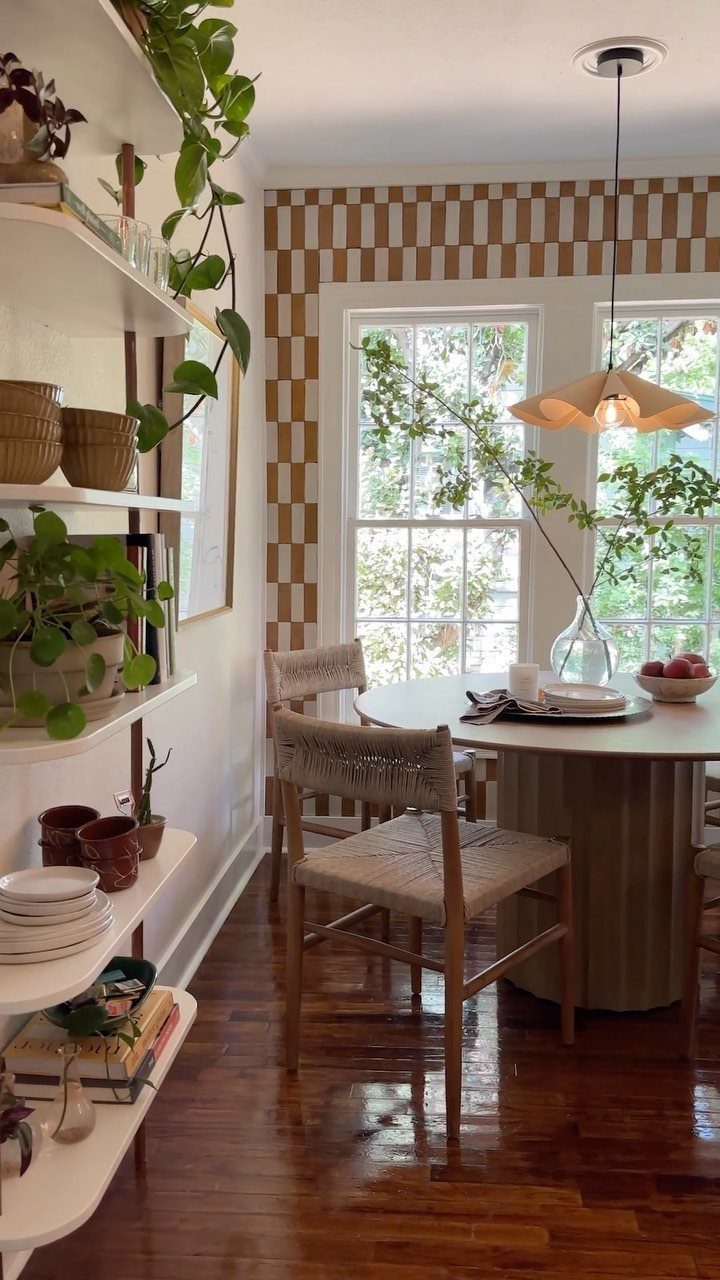
An accent wall breaks up a plain room and gives the eye somewhere to land.
Paint, wallpaper, or a pattern in tile or wood paneling all work, and the wall behind the table is the natural spot since that is where you look when you sit down.
Checkered or geometric patterns add energy without needing art or shelves to finish the wall.
Keep the other 3 walls simple so the pattern does not overwhelm the room. If you rent, peel-and-stick wallpaper goes up and comes down without damage.
13. Lazy Susan
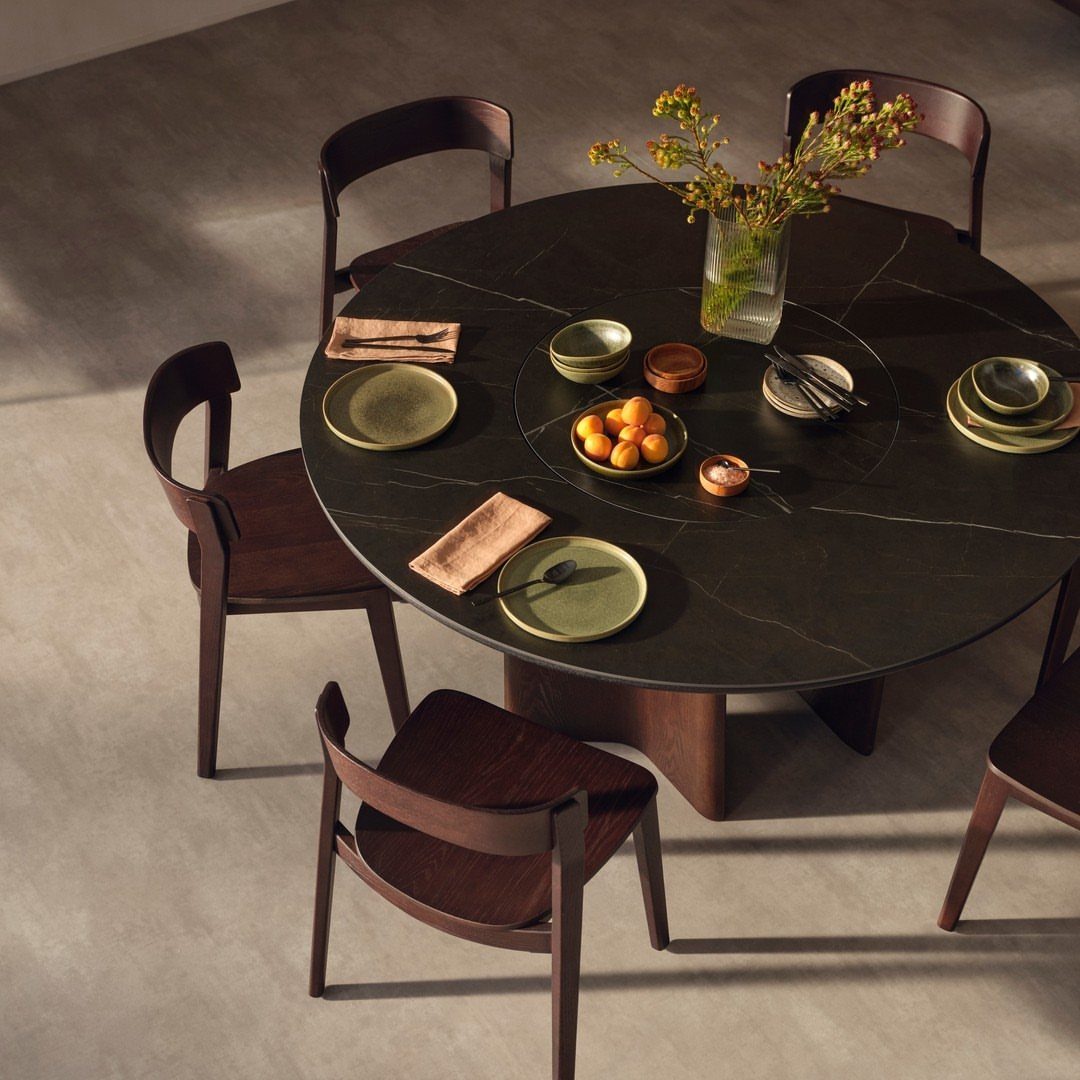
A built-in lazy susan at the center of the table lets everyone reach shared dishes without passing plates back and forth.
The turntable rotates so condiments, serving bowls, or a centerpiece move within arm’s reach, and nothing sits out of reach at the far end.
A round or square table puts every seat at the same distance from the center, which is what makes the arrangement succeed.
The rotating surface takes up room that might otherwise hold place settings, so it suits family-style meals more than plated dinners.
14. Table Runners and Napkins
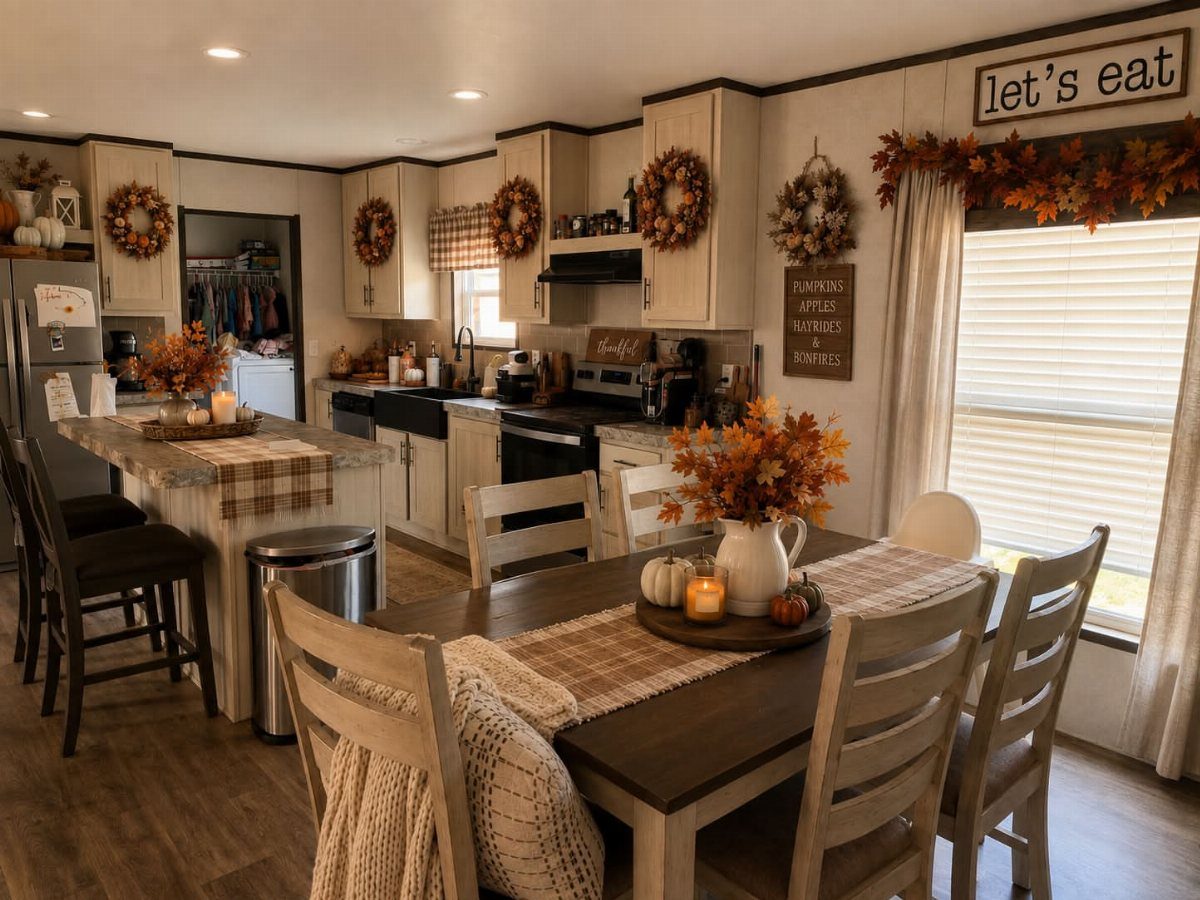
Swap the runner and napkins with the season instead of redecorating the whole room. A plaid runner in fall, linen in summer, and something darker in winter changes the table without moving furniture or repainting walls.
Fold the napkins and stack them on the table or tuck one at each place. Add a small seasonal piece in the center, pumpkins in October or branches in winter, and the table looks intentional without a full centerpiece.
Choosing the Right Lighting
Ambient lighting covers the whole room and sets the baseline. I aim for around 150–300 lux at the table, bright enough to see clearly without washing out faces or casting harsh shadows.
Dimmable LED panels or recessed lights let you adjust brightness for different uses: bright enough for homework or everyday meals, lower for dinner parties.
Layer in accent lighting to fill the gaps a single overhead fixture leaves.
A floor lamp in the corner or a pair of sconces on the wall softens the room and keeps it from feeling flat under a single overhead fixture.
A dimmer on the main fixture gives you control, so you can dial it down for intimate dinners and turn it up when the table doubles as a workspace.
Importance of Proportion and Ergonomics
Standard dining tables sit at 75 cm high, and chairs should land at 45–48 cm from floor to seat.
That spread keeps your thighs parallel to the floor and your forearms level with the table surface when you sit upright. The right proportion eliminates muscle tension during long meals and makes it comfortable to sit without shifting position.
Measure the seat height before you buy if you are mixing chair styles. A difference of more than an inch or 2 throws off posture, and shorter guests or children end up perched too low or too high.
If you already own the table, bring its height with you when you shop for chairs.
Creating a Cohesive Design
Consistent form, scale, and material across your dining furniture give the room a deliberate style and tie it to the rest of the house.
When the table, chairs, and sideboard share a wood tone or finish, the space reads as intentional rather than assembled from leftovers.
Mixing wood tones works as long as you stay within the same temperature family.
Walnut chairs paired with an oak table feel intentional when the tones stay in the same warm family, and a rug with a bit of pattern ties the two together.
Avoid pairing a cool ash table with warm cherry chairs unless a rug or other element unifies them.
Bulky furniture overwhelms a small space, and delicate chairs look lost around a heavy table.
Frequently Asked Questions
What is the best table shape for a small dining room?
A round top leaves you more room to walk past and nothing sharp to catch your hip on.
It works in a square room and puts everyone at an equal reach across the table. Oval tables also work if you need a bit more length without the corners of a rectangle.
How do I make my dining room feel cozy?
Lower the light with a dimmer or add lamps on a sideboard so the room feels less exposed under a single bright fixture.
Fabric on the chairs and a rug underfoot cut the echo, and drapes at the window layer in warmth. Dark walls also enclose the space and shift the focus to the table and the people around it.
Can I mix different dining chair styles?
Seat height matters more than style: keep them within an inch so no one ends up lower than the rest.
I like upholstered ends with simpler sides, or wood mixed with metal if the proportions match. The table holds the look together, so the chairs can shift in finish or shape without reading as random.






