
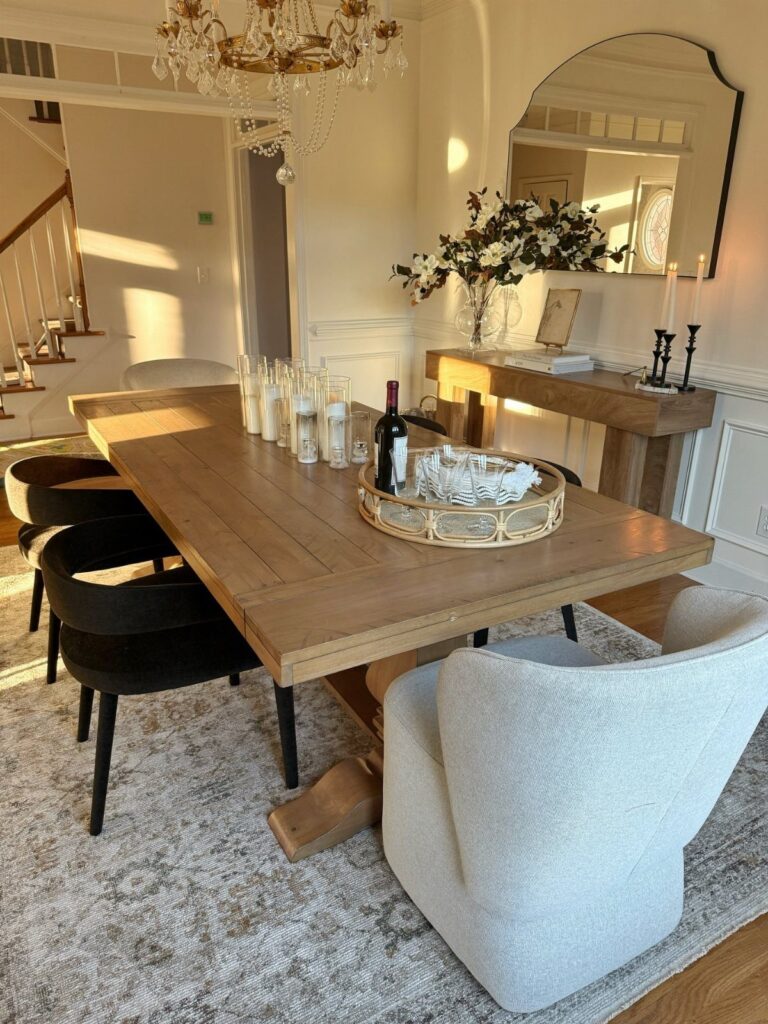
A rug in the dining room can define the space in an open floor plan, add texture to balance hard surfaces, or introduce color that ties the room together.
The right choice depends on how much visual weight you want underfoot and how forgiving the rug needs to be with spills.
Patterned and textured rugs hide stains better than solid colors, while minimalist options in beige or soft gray keep the focus on the furniture.
High-pile rugs feel softer but trap crumbs, so a flatweave or low-pile wool works better in homes with kids.
1. Defines Dining Area
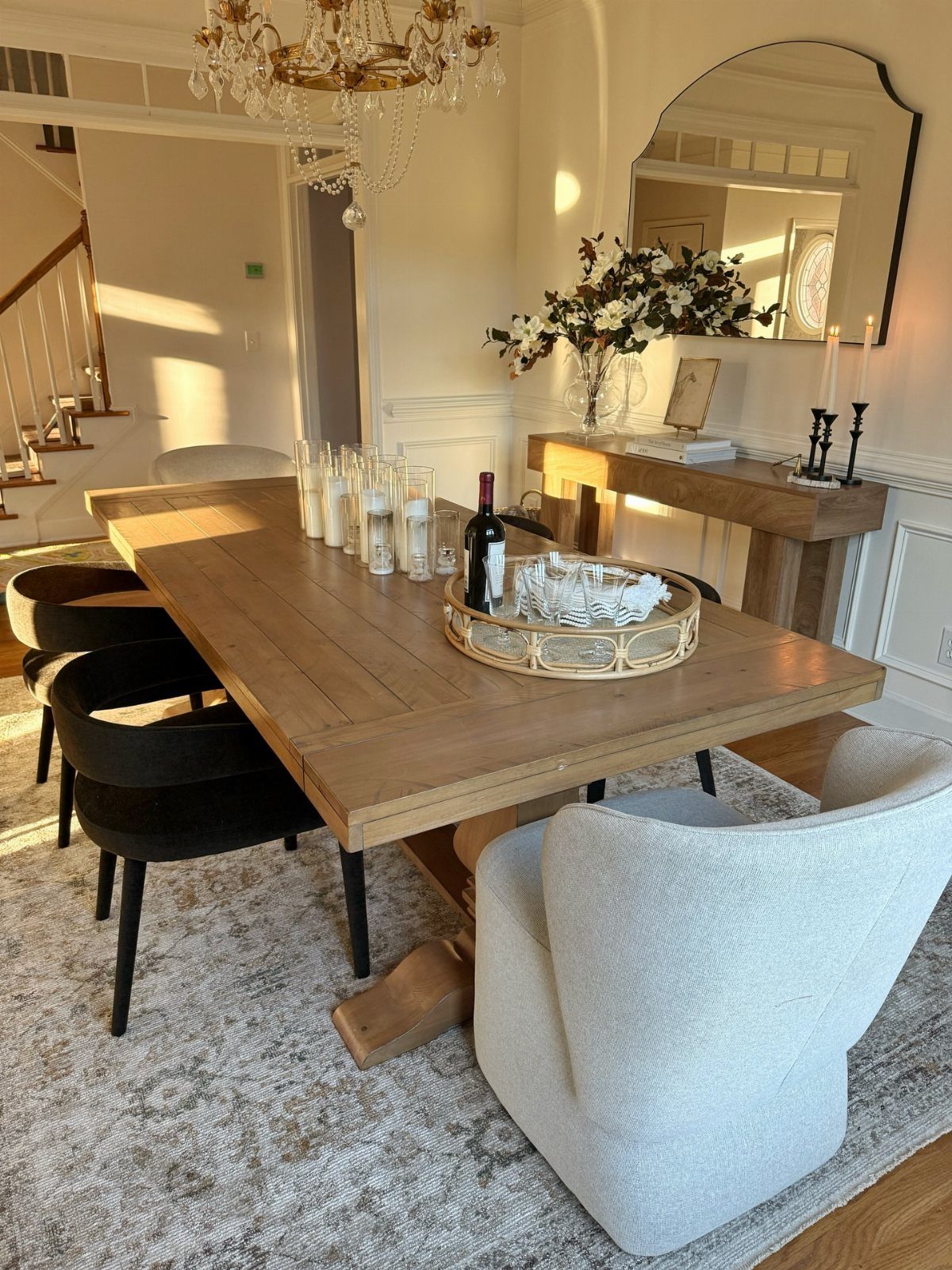
A rug under the table marks off the dining area from the rest of the room, especially when the floor plan is open.
This matters if your dining space shares the room with a living area or kitchen and you want each zone to feel distinct.
The rug needs to reach past the table far enough that chairs stay on it when someone pulls out to sit.
A patterned rug like this one hides spills better than solid colors.
2. Minimalist Rug
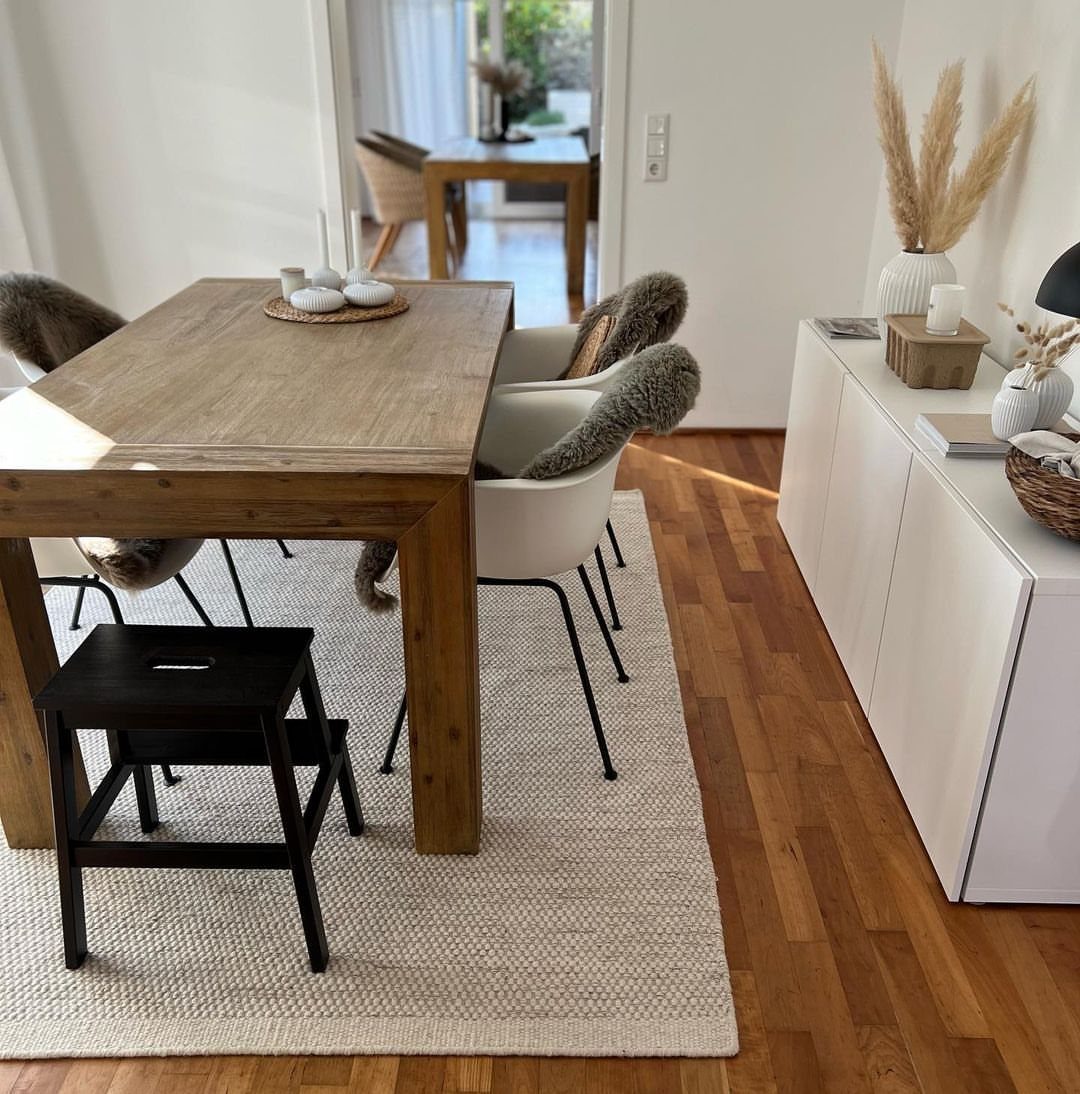
A minimalist rug in a neutral tone keeps the focus on the table and chairs without adding visual weight. This works well if your dining furniture already has strong lines or if you prefer a calm, uncluttered look.
Light beige, ivory, or soft gray rugs blend with most wood tones and floor finishes. The texture here adds subtle interest without pattern, so the rug grounds the space but stays quiet.
Jute or low-pile wool rugs in these tones are easy to find and durable enough for daily use.
3. Colorful Rug
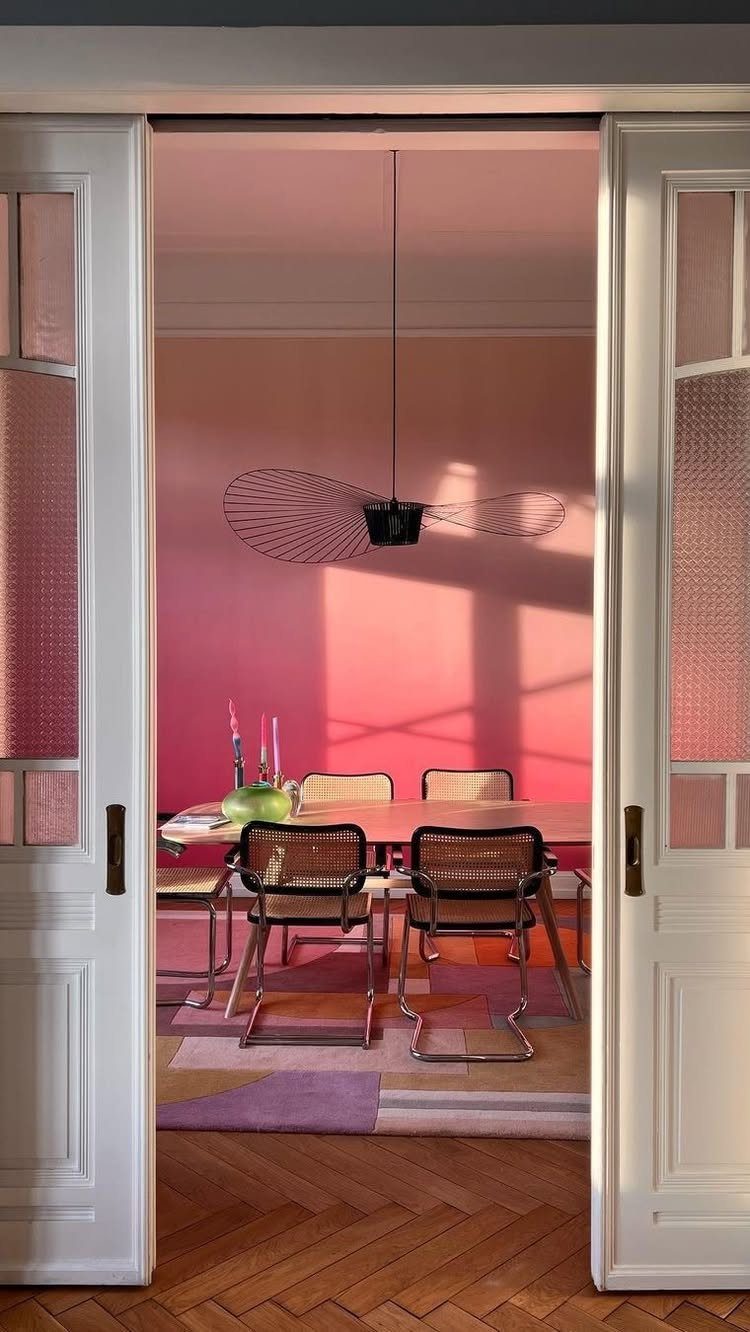
A colorful rug brings energy to the dining room and ties together bold wall colors or furniture finishes. This geometric rug picks up the pink walls and creates a cohesive look that feels intentional rather than scattered.
If the walls or furniture already carry color, pick a rug that pulls those same shades into the pattern. If the room is neutral, the rug can introduce the color on its own.
Bright rugs show stains more than darker or patterned ones, so this choice suits a dining room that sees lighter use or households without young kids.
4. Textured Rug
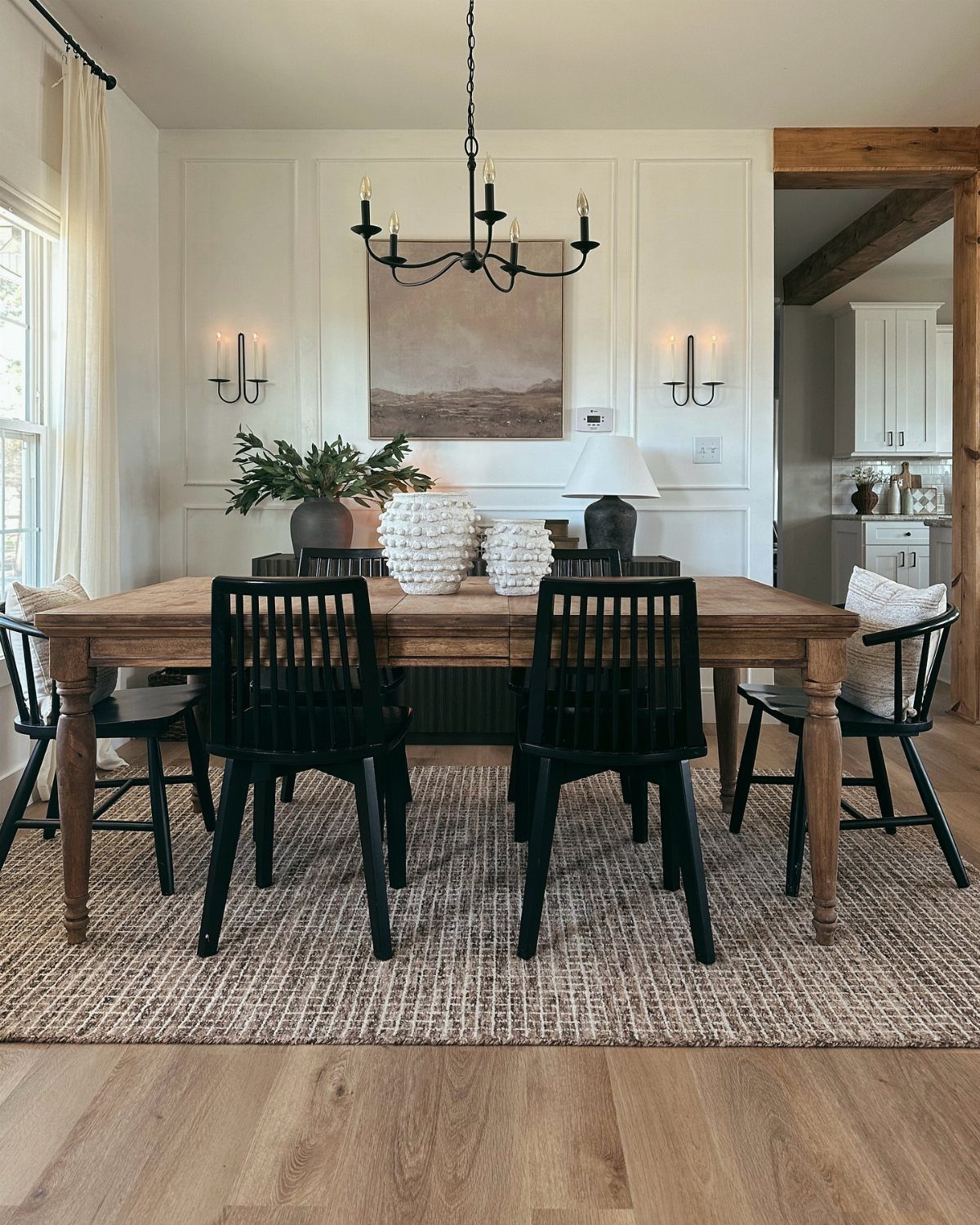
Texture in a rug softens the dining room and makes it feel more comfortable without adding pattern or color.
A high-pile or chunky weave like this one works well in a room with hard surfaces, wood floors, and metal or glass furniture.
The beige holds the room neutral, the texture keeps it from reading flat. This suits minimalist or modern spaces where you want coziness without busy patterns.
High-pile rugs trap crumbs and are harder to clean than flat weaves, so if you have kids or drop food often, a textured flatweave or low-pile wool is a better choice.
5. Patterned Rug
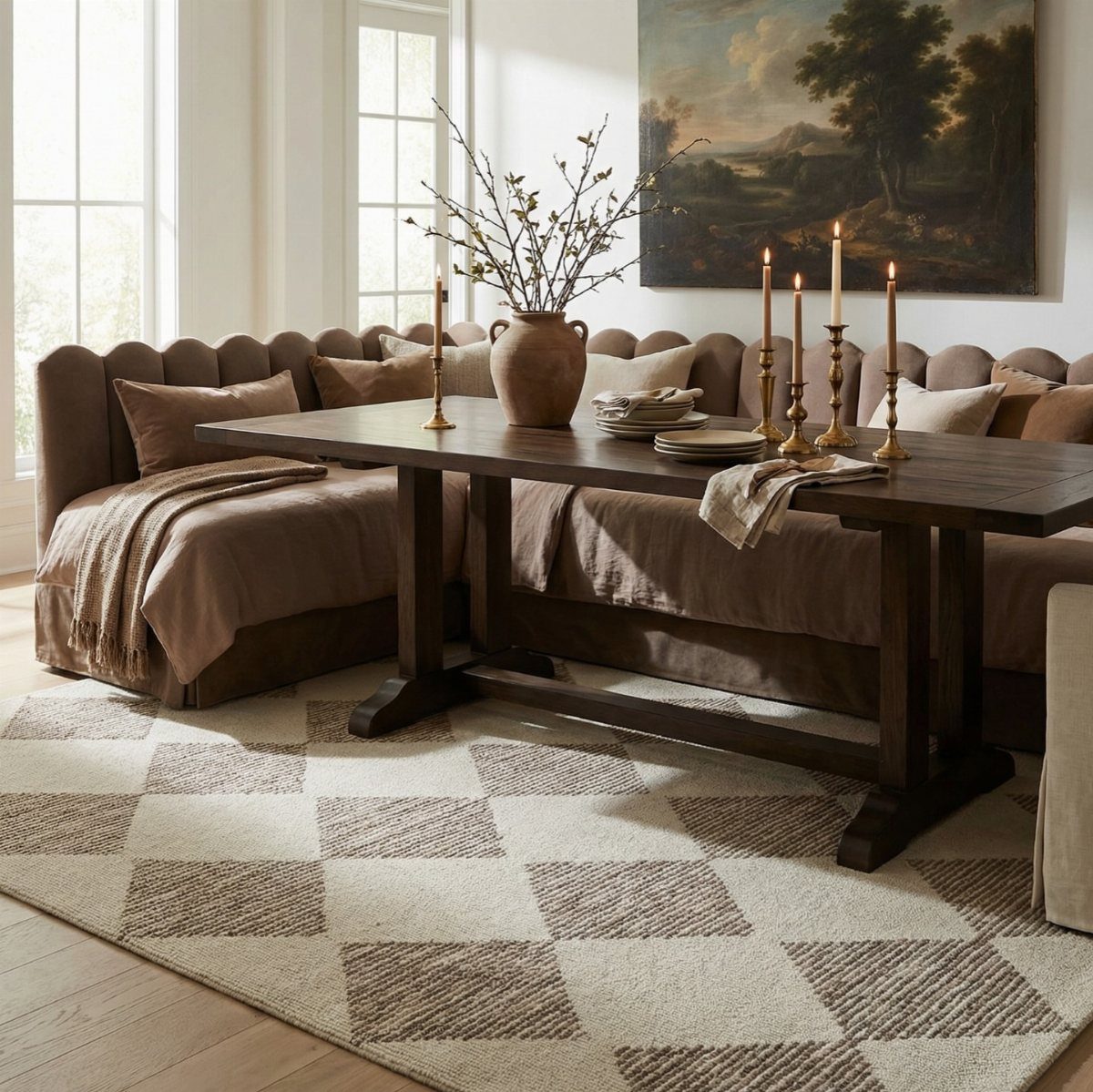
A patterned rug adds visual interest and breaks up a room that feels too plain or too matchy. The checkered pattern breaks up the dark wood and brings in a second tone without taking over the room.
Geometric patterns like checks, stripes, or grids suit modern and transitional dining rooms. Traditional spaces pair better with florals or medallion patterns.
Patterns hide stains and wear better than solid rugs, so this choice is practical for high-traffic dining rooms. The larger the pattern, the more forgiving it is with spills and dirt buildup.
Frequently Asked Questions
Is it okay to have carpet in a dining room?
A rug in the dining room is fine if you want one and skip it if you don’t.
It gives the space a finished look and defines the dining area, but it can be impractical with kids or pets who spill often.
Do you need a rug under the dining room table?
A rug under the table marks off the dining area and makes the room feel complete, though you can skip it. Rugs are harder to keep clean in homes with kids or pets.






