
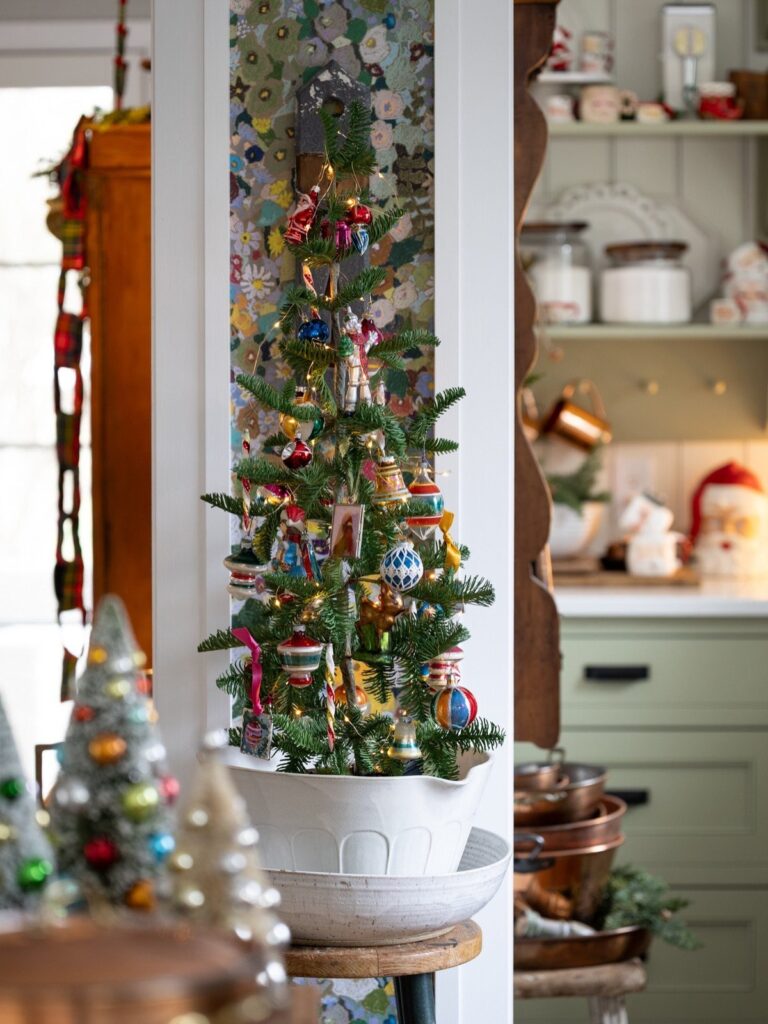
A Christmas tree in the kitchen ranges from a 3-foot tabletop version to a full-size corner tree, with placement and ornament ideas that suit the space.
The choice comes down to floor space: galley kitchens and apartments stay with counter-height trees, while kitchens with a spare corner or island can anchor a larger one.
1. Small Tabletop Trees
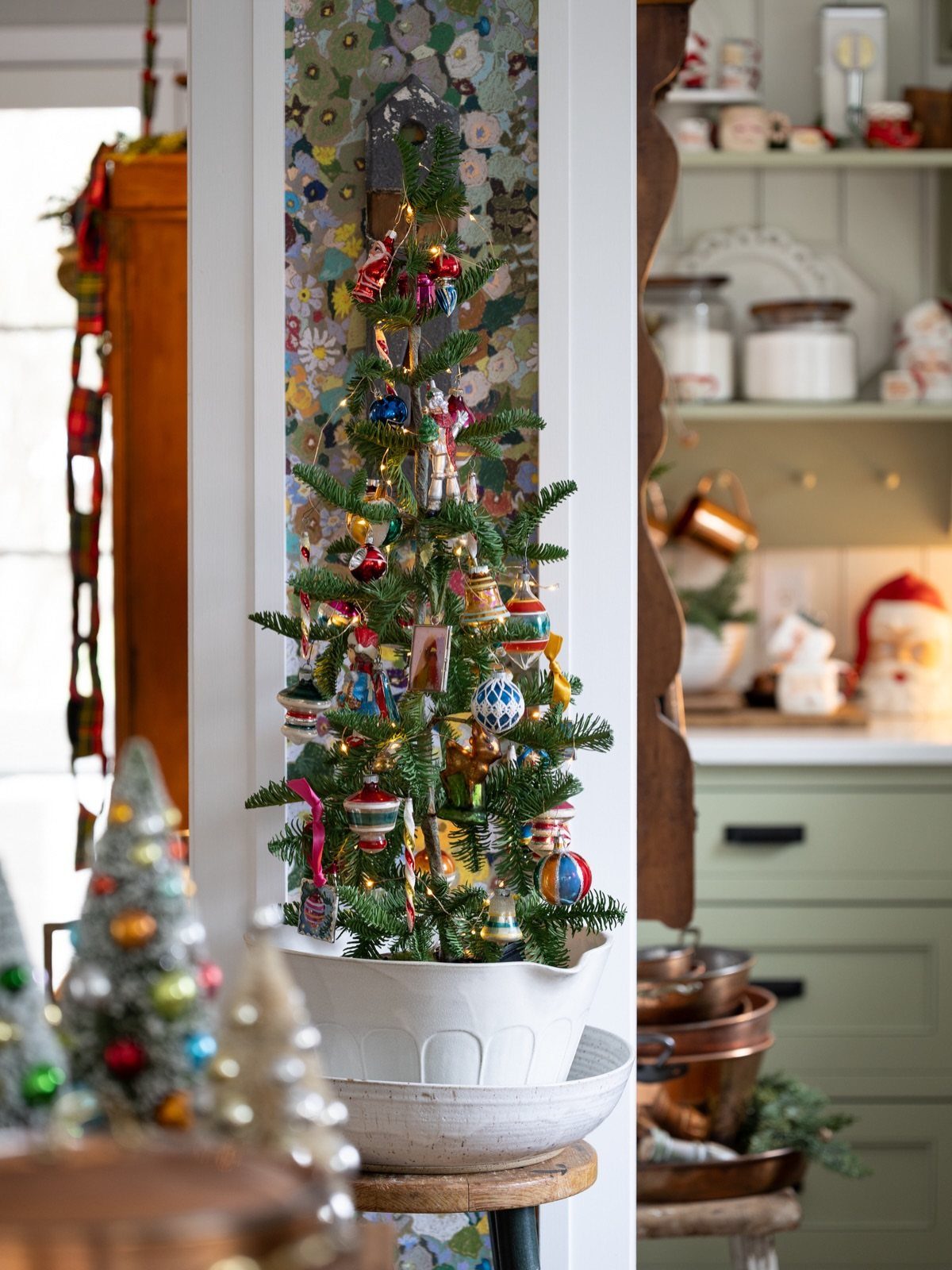
A small tree on a counter, table, or stool keeps Christmas in the kitchen without taking up floor space. This setup works in apartments and galley kitchens where a full-size tree would crowd the room.
Look for tabletop trees that fit your counter depth without crowding your work zone. Real mini spruces come potted and can be planted outside after the holidays, or you can pick up a pre-lit artificial version that stores flat.
Decorate with small ornaments and a simple garland so the branches don’t droop under the weight.
Place the tree where it catches natural light but stays out of the main prep zone.
2. Gingerbread-themed Ornaments
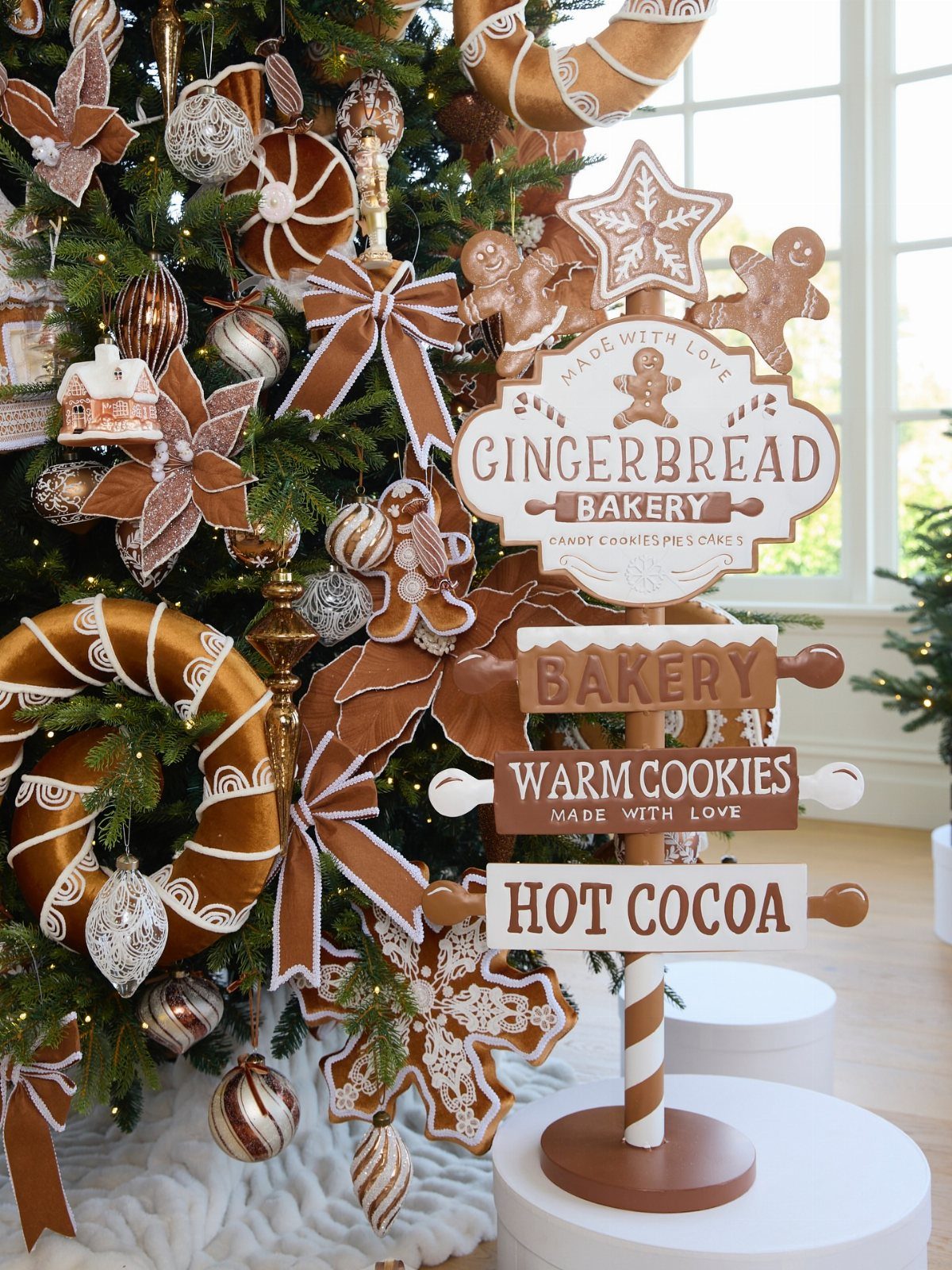
A gingerbread theme ties the tree into the kitchen’s purpose without feeling like you dragged a living room decoration in. Ornaments shaped like gingerbread men, rolling pins, candy canes, and miniature baked goods keep the look focused.
Most gingerbread ornaments are foam or felt, so they’re light enough for smaller branches.
You can also bake real gingerbread cookies with a hole punched at the top before baking, then thread ribbon through once they cool. Real cookies soften fast, so swap them out or plan to rebake.
Add a small sign with bakery or cocoa wording if you want the theme obvious at a glance.
3. Full-size Tree in Kitchen Corner
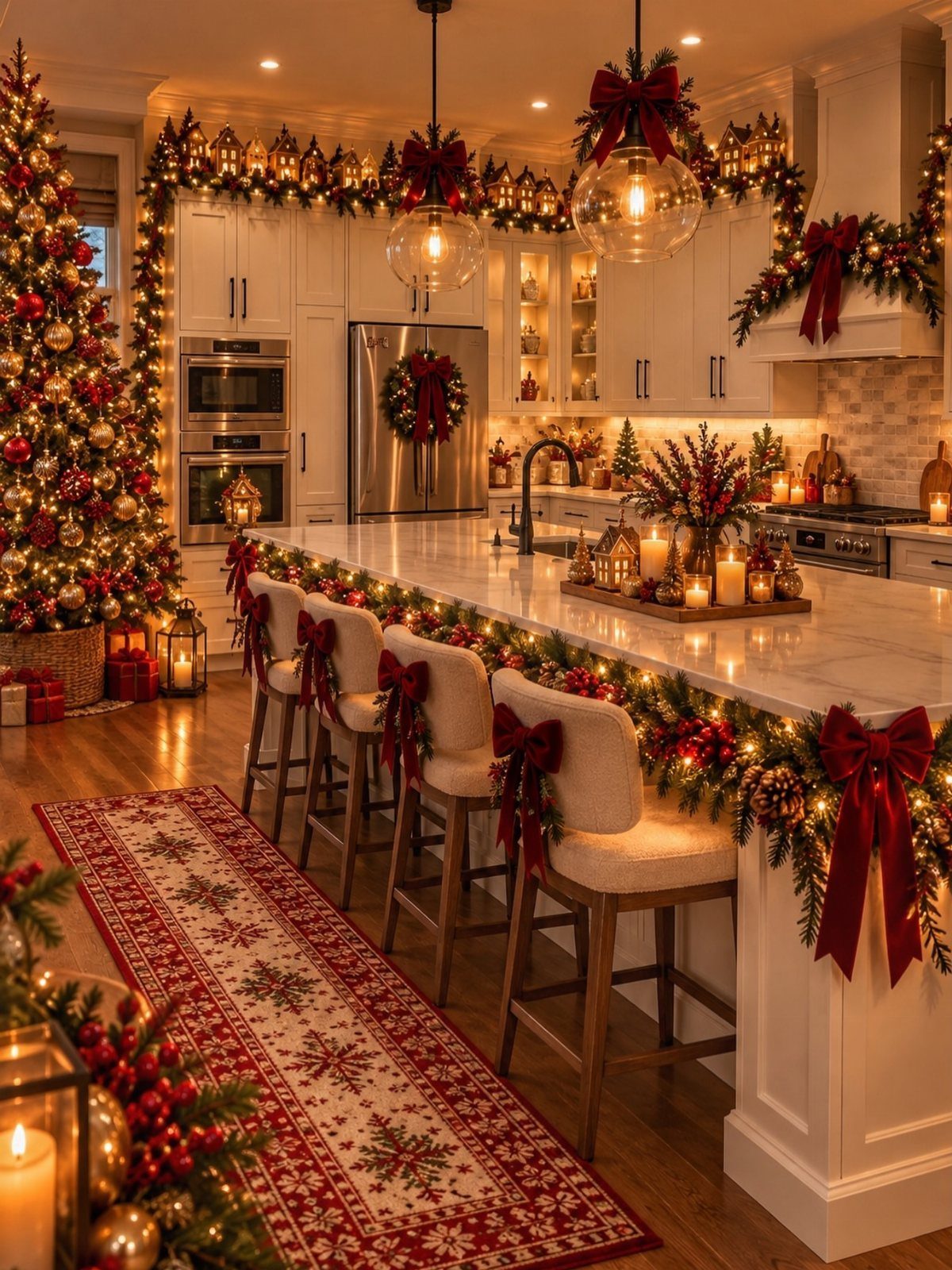
A full-size tree anchors a kitchen corner when you have the square footage to spare. Open-plan kitchens let the tree sit in view during gatherings without getting in the way when you’re prepping.
Match the tree’s garland and ornaments to the rest of the kitchen’s holiday decor so the room reads as one space. Red bows and greenery carry through from the tree to the island and counters.
If your kitchen opens to the dining or living area, this setup lets you skip a second tree in the next room.
“While most people traditionally place trees in living rooms or near windows, the kitchen offers a cozy setting for a holiday tree with a little creativity,” says Mercedes Fuller, the vice president of merchandising at Balsam Hill.
4. Multiple Trees in Festive Kitchen
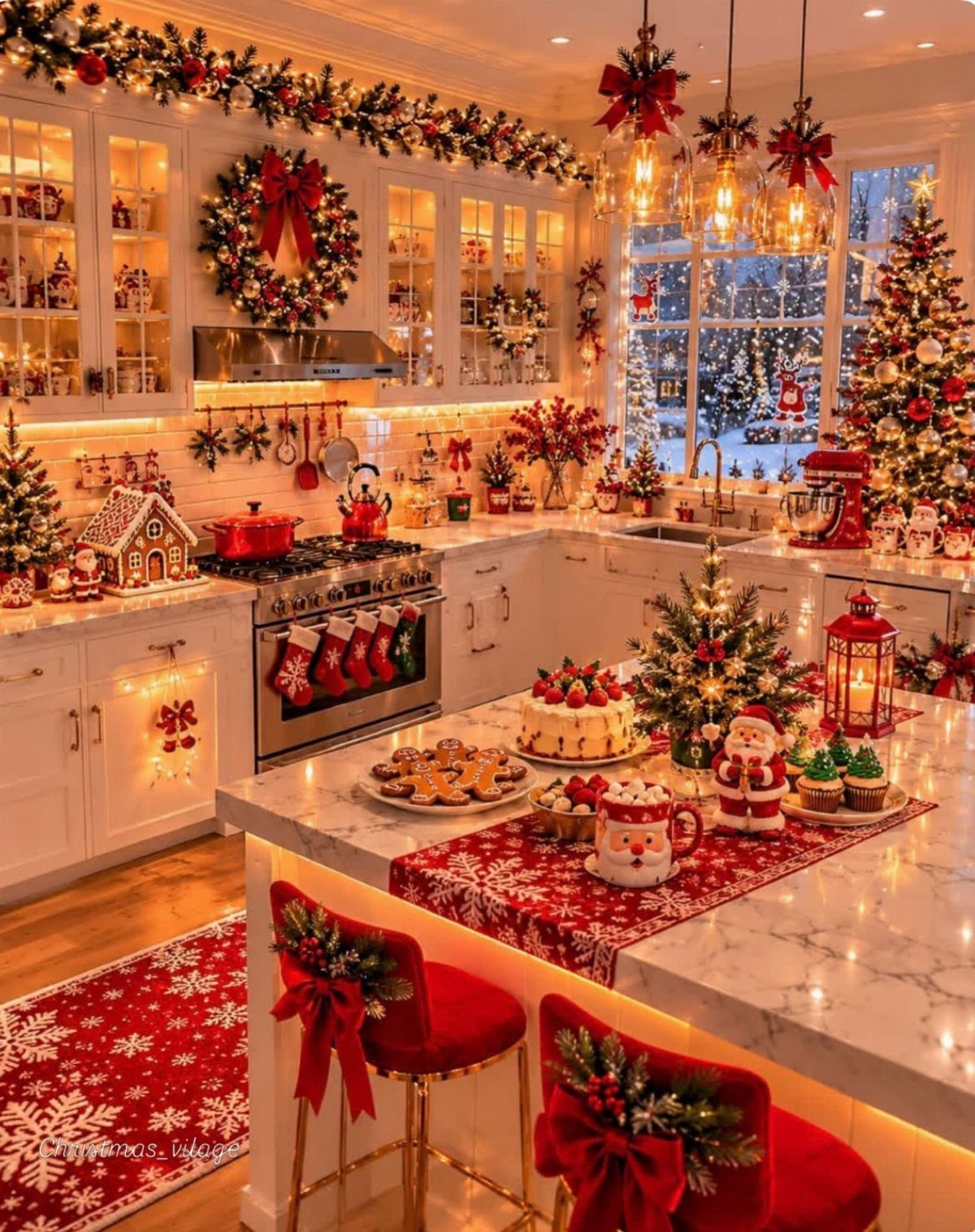
Multiple small trees spread the holiday through the kitchen instead of centering it in one spot. Multiple smaller trees fill the space when a single large one won’t fit.
Cluster trees on the island, counters, and open shelving.
Stick to one color palette so the look stays cohesive rather than busy. Red and white keeps it classic, and pairing the trees with a wreath, garland, and a gingerbread house ties everything together.
This setup takes more ornaments and lights than a single tree, but each tree can be smaller and simpler.
5. Tree on Kitchen Island
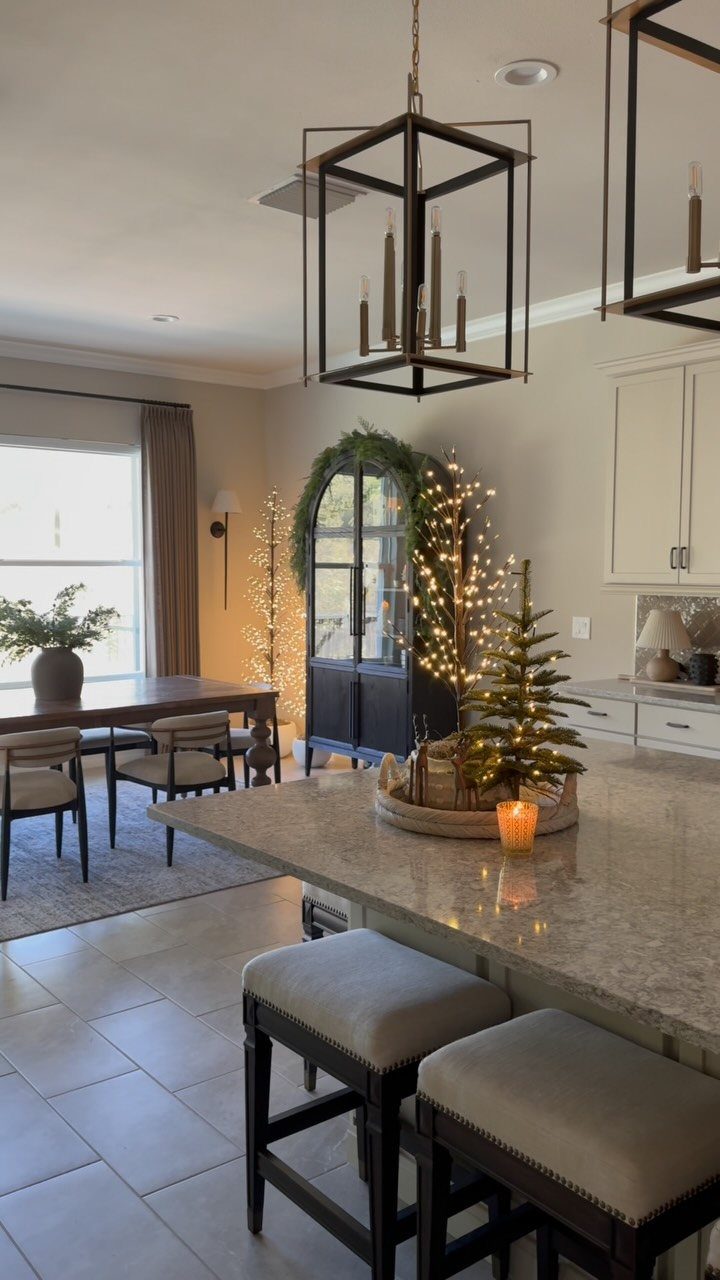
A lit tree on the island turns it into a centerpiece without covering your workspace.
This works when the island doubles as a gathering spot during parties or when you want a tree that’s visible from the dining or living area.
Keep the tree small enough that people can see over it when they’re standing across from each other.
A small tree leaves room for serving dishes and keeps sightlines open across the island. Battery-operated lights avoid running a cord across the floor.
Move the tree to a counter or side table when you need the full island for cooking.
Creative Ornament Ideas
Food-themed ornaments suit a kitchen tree better than traditional glass balls.
Quilted and embroidered ornaments bring a handmade folk look that fits the warmth of a kitchen. If you have ornaments from family members or pieces you made years ago, this is the room where they make sense.
Dried orange slices strung on twine work as garland.
Slice oranges thin, dry them in a low oven until they hold their shape, then string them on jute or ribbon. Pine cones collected outside add texture without cost, and they hold up through the season without wilting.
A kitchen tree gets more foot traffic and accidental bumps than one tucked in a corner of the living room.
Choosing the Right Tree Size
Trees under 4 feet fit most kitchens without blocking sightlines or crowding the work zone. A 3–4 foot Fraser fir gives you the classic dense needles and sturdy branches that hold ornaments without drooping, even at a smaller size.
Pine trees don’t develop the full shape you expect until they’re older, so they look sparse when cut small.
If you want an alternative to Fraser fir, a containerized Colorado blue spruce can go into the ground outside after the holidays.
Smaller trees dry out faster than full-size ones, so check the water daily and keep the tree away from the stove and oven.
LED lights run cooler than incandescent bulbs and reduce the fire risk on a tree that sits near heat sources.
Decorating Tips
Handmade ornaments from your own collection set a kitchen tree apart from the formal look of a living room tree.
Quilted shapes, embroidered pieces, and anything with visible stitching add the folk-inspired warmth that fits a room where people gather to cook and eat.
Dried citrus and pine cones layer in texture that holds up to kitchen humidity better than glass.
The oranges take a few hours in a low oven but last the full season, and pine cones cost nothing if you pick them up outside.
Miniature kitchen tools, baked goods, and mugs give the tree a theme that reads immediately without needing a sign.
Frequently Asked Questions
Can you put a Christmas tree in your kitchen?
Pick a size that clears your counters and the path to the sink.
Small tabletop trees work in tight kitchens, while full-size trees anchor corners in open-plan layouts. Wooden spoons, cookie cutters, and fabric ornaments read more naturally here than formal balls.
Where to put a Christmas tree when you have no room?
A tabletop tree on a counter, table, or stool brings in Christmas without taking up floor space.
Measure your counter depth and keep the tree under 4 feet so it clears your prep area. Battery lights cut the cord clutter, and you can shift the tree to a side surface when you need the workspace.
What is the Christmas tree trend for 2026?
Kitchens are leaning into ornaments that tie to cooking this season: gingerbread, mini rolling pins, fabric produce.
Tiny rolling pins, ceramic vegetables, and dried citrus wheels carry the theme without the fragility of glass. Stitched felt and cotton ornaments add folk warmth that suits a room where hands are working.
Can a Christmas tree be kept indoors?
A real tree holds up indoors if you top off the water stand every day and keep it away from the stove.
Compact trees lose moisture faster, so give yours distance from the oven and range. Switch to LEDs; they stay cooler than old incandescent strings and lower the risk near a heat source.






