
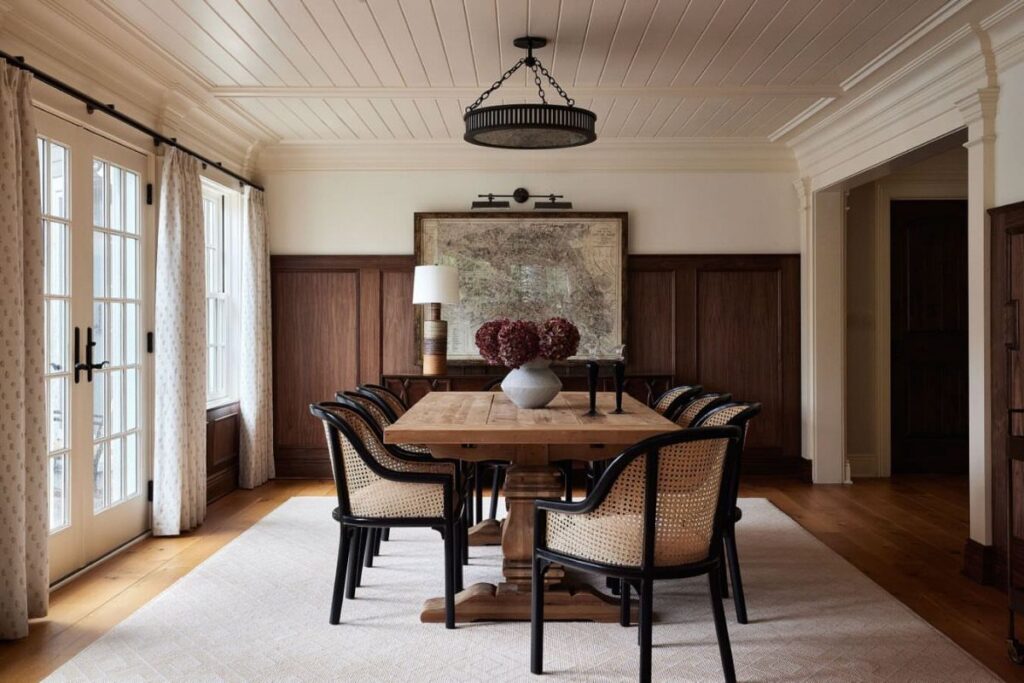
Wood paneling in a dining room ranges from wainscoting that stops partway up the wall to full floor-to-ceiling coverage, and you can layer it with other materials or use it alone.
If you want dimension without weight, vertical slats or beadboard add texture through repetition rather than solid coverage.
1. Classic Wainscoting Elegance
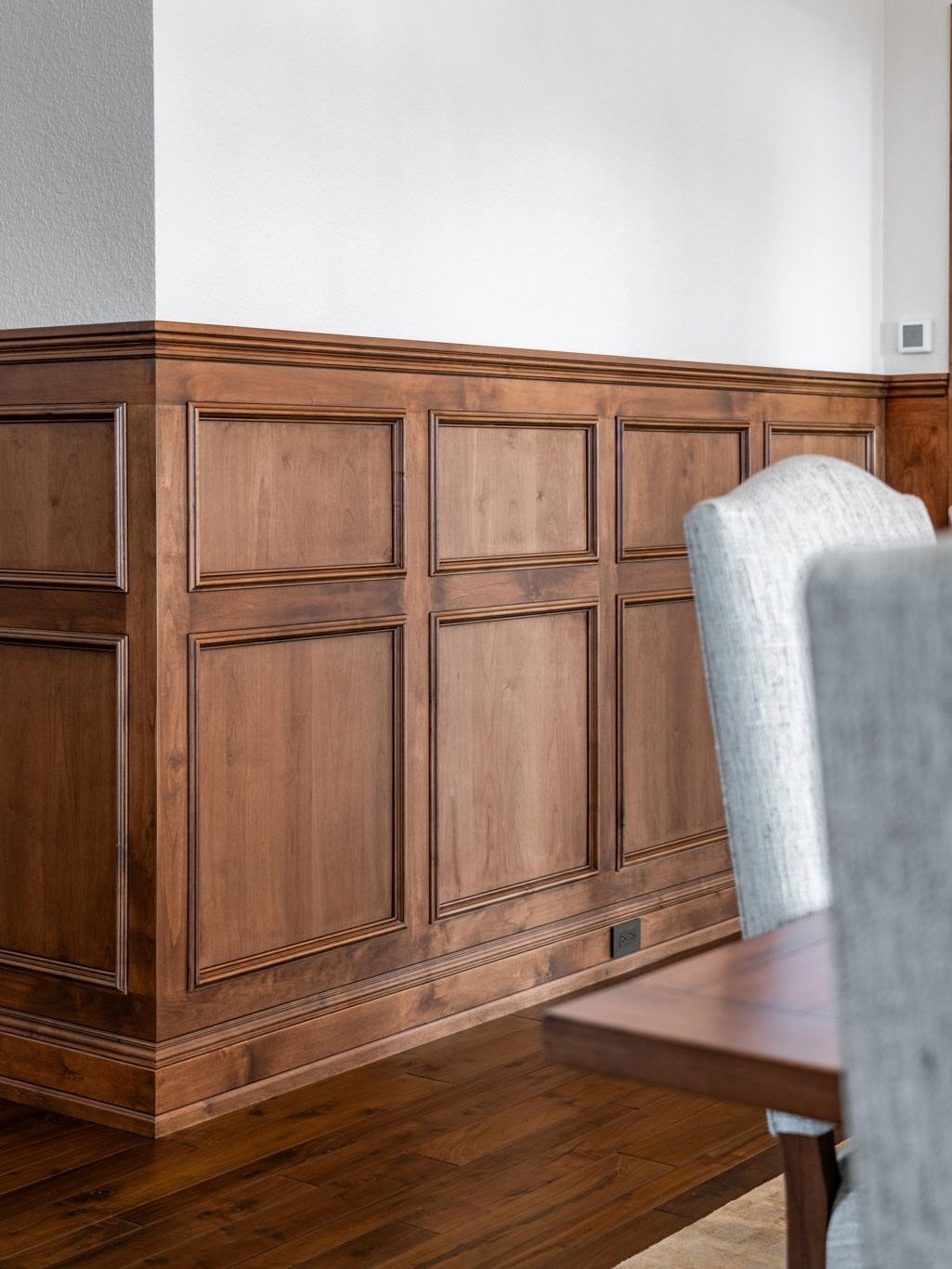
Wainscoting brings dimension to a flat wall without covering the whole room in wood.
The raised panels create shadow lines that shift through the day, and the horizontal break at chair height makes the ceiling feel taller in a space where you’re usually seated.
Wainscoting kits come in standard heights that work well under a chair rail.
If you’re building your own, I’d keep the panel width consistent and aim for an odd number of panels per wall. The raised profile reads best when the top rail sits level with the chair backs.
Paint it to match the trim or stain it a shade darker than the floor. Either way, it holds up better than drywall in the zone where chair backs hit.
2. Floor-to-Ceiling Wood Paneling
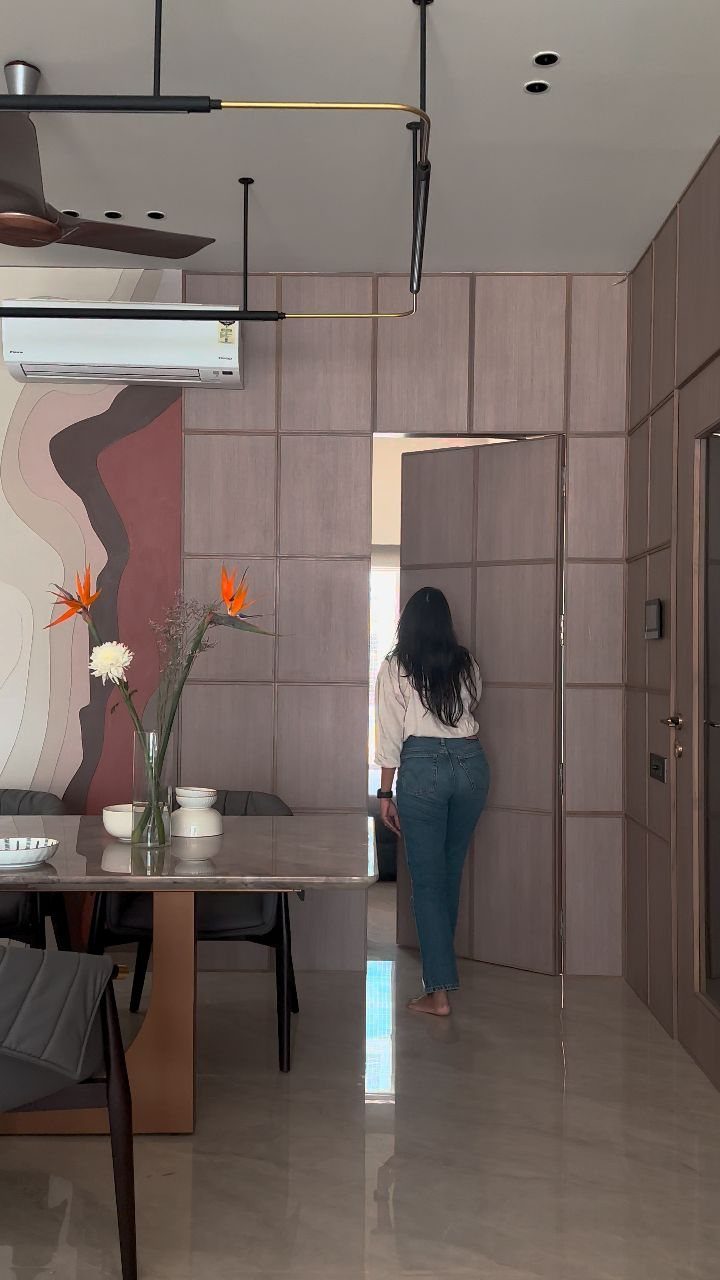
Taking wood panels all the way to the ceiling wraps the room in a single material and quiets the space in a way partial coverage can’t.
The continuous surface makes the boundaries softer, and if the panels hide a door, the effect is even more complete.
Square panels work well here because the grid scales up without feeling busy.
I’d keep the panel size consistent across all walls so the rhythm stays even. A softer color like mauve or greige keeps the room from feeling too heavy, especially if the ceiling is wood as well.
This approach suits a room where you want the walls to recede rather than stand out. The wood becomes the background, not the feature.
3. Vertical Slatted Wall Paneling
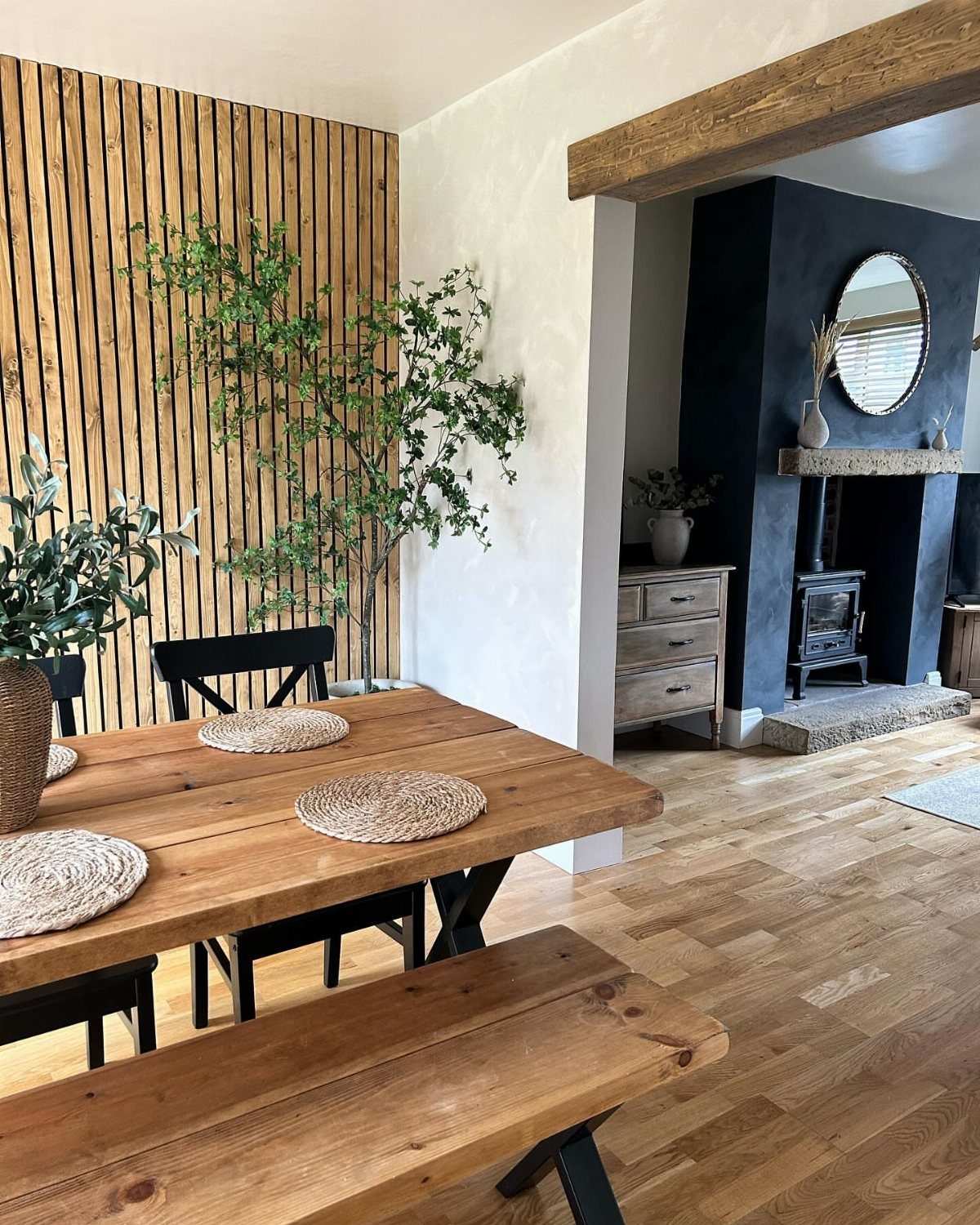
Vertical slats add rhythm without the weight of solid paneling. The narrow spacing creates a textured plane that catches light along each edge, and the repetition gives the wall a quiet precision.
Space the slats far enough apart that the wall stays readable without feeling cluttered.
I’d mount them over a painted backing so the gaps read as shadows rather than holes. Slats work especially well behind a bench or low seating where you want texture at eye level when seated.
This treatment suits a room where you want warmth without committing to full wood coverage. It’s also easier to wire through if you need to add outlets or lighting later.
4. Shiplap Paneling
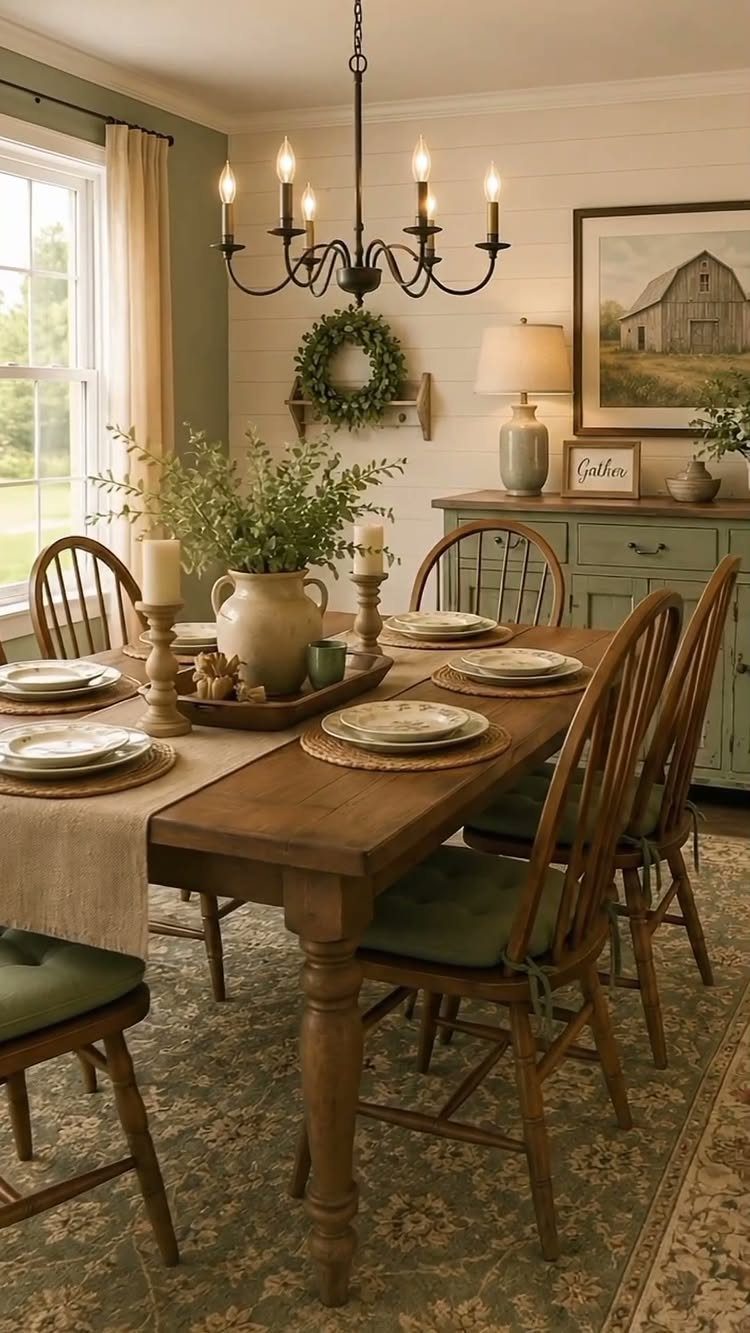
Horizontal shiplap adds texture through the seam lines rather than applied trim. The boards sit flush or nearly flush, so the surface stays flat but not featureless.
I’d paint shiplap rather than stain it if you want the lines to read without the grain competing.
White keeps the room bright, but any color works as long as you’re committed to repainting it all at once down the line.
Shiplap suits a room where you want subtle texture without the formality of raised panels. It reads more casual than wainscoting but more finished than plain drywall.
5. Beadboard Paneling Charm
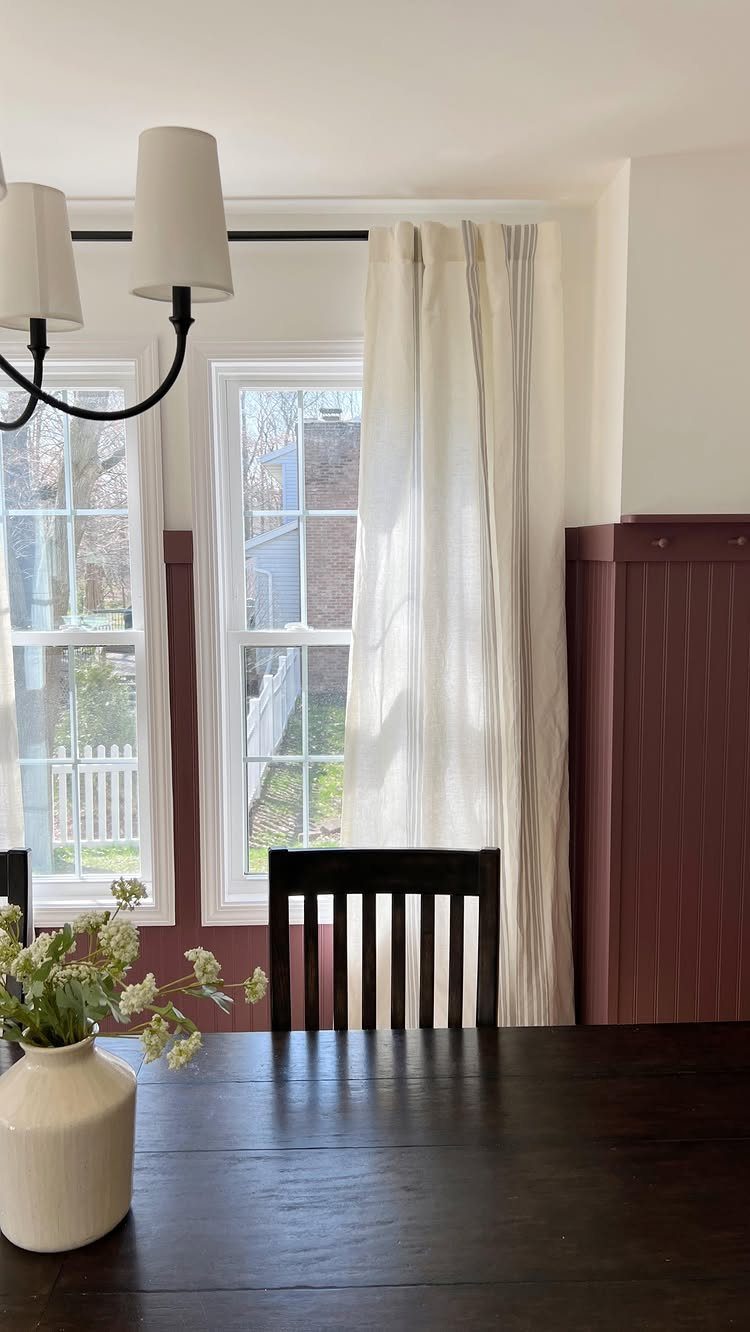
Beadboard introduces vertical texture at a smaller scale than paneling or shiplap.
The narrow grooves run close together, so the surface reads as detailed without being busy, and the repetition softens the wall in a way that suits a room where you eat.
Painting it a warm color like this reddish-brown grounds the lower half of the room and makes lighter chairs stand out. I’d keep the top edge level with the windowsill if one is nearby, so the horizontal lines align.
This works well in a room with tall ceilings where full-height paneling would feel too heavy. The texture stays low, and the upper wall can be a lighter color or wallpaper.
6. Raised Panel Detailing
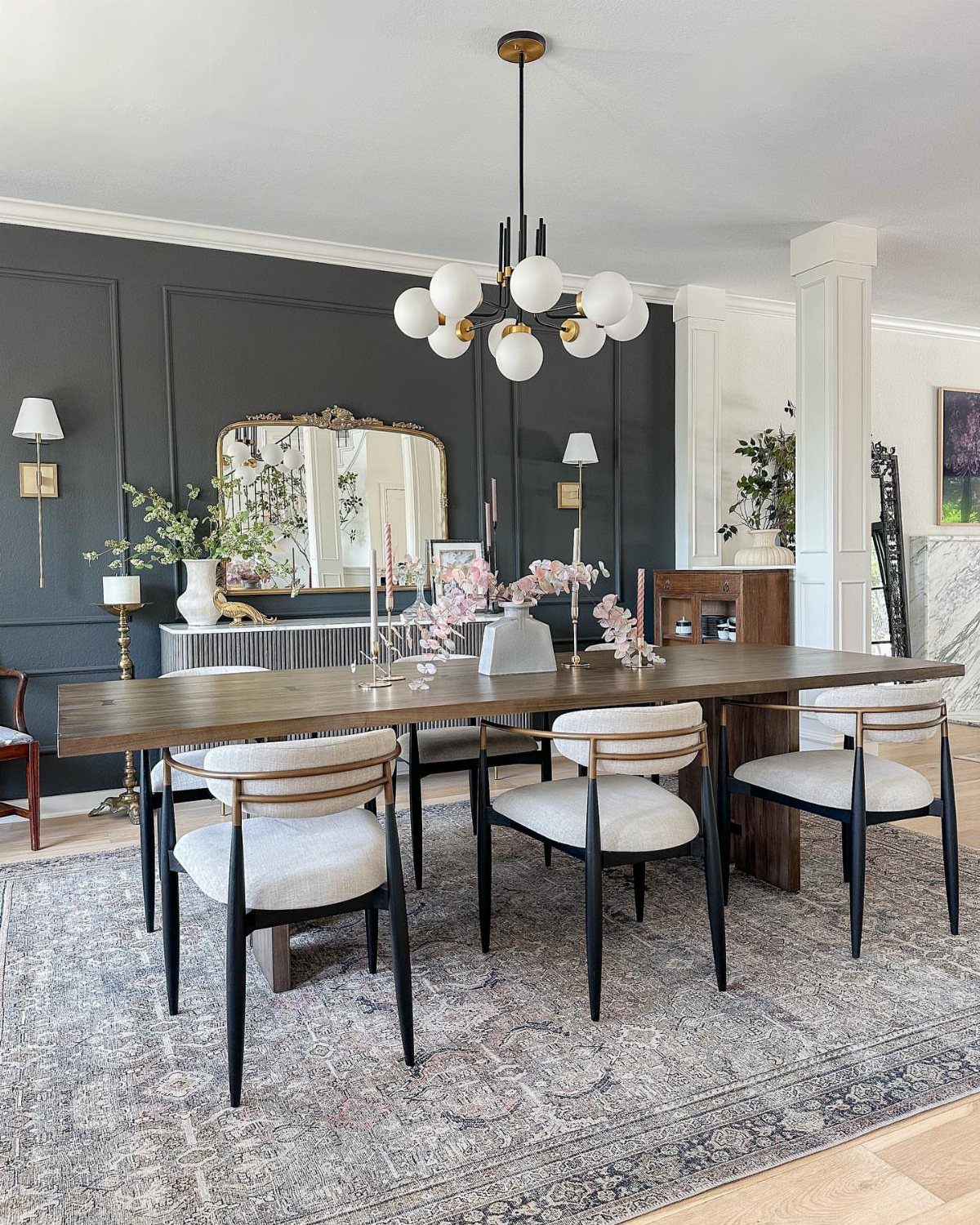
Raised panels add dimension through the frame-and-inset structure, where each rectangle sits proud of the wall plane. The shadows change with the light, so the wall reads differently at dinner than it does at midday.
Full-height raised panels suit a room with tall ceilings and formal furniture.
Dark gray like this anchors the space and makes lighter wood and metal finishes stand out. I’d keep the panel proportions consistent and align the horizontal seams with doorways or windows when possible.
This treatment takes more material and labor than flat paneling or shiplap, but the depth it adds is something paint alone can’t replicate.
7. Dark Wood Paneling with Wallpaper
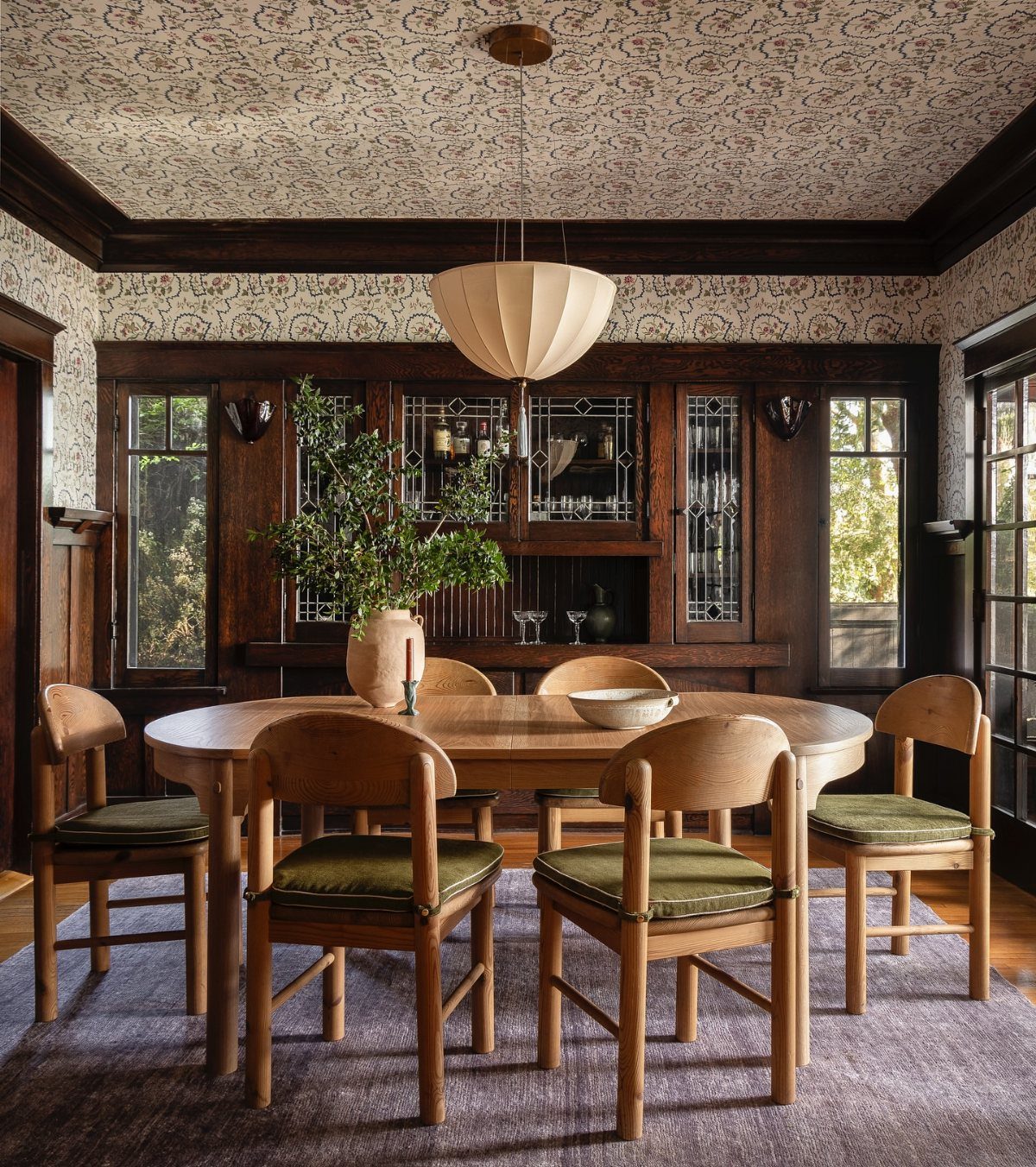
Dark wood on the lower walls keeps the room grounded while floral wallpaper overhead softens the ceiling plane.
The split keeps the wood from feeling heavy and lets pattern fill the upper volume where you’re less likely to bump it or mark it.
I’d match the wood tone to the table or chairs so the pieces feel deliberate rather than collected. The wallpaper can be bold since the wood below holds the room steady.
This works best in a room with good natural light. Dark paneling in a dim space reads as cave-like, but with enough daylight the contrast brings out both materials.
8. Light Green Painted Wood Paneling
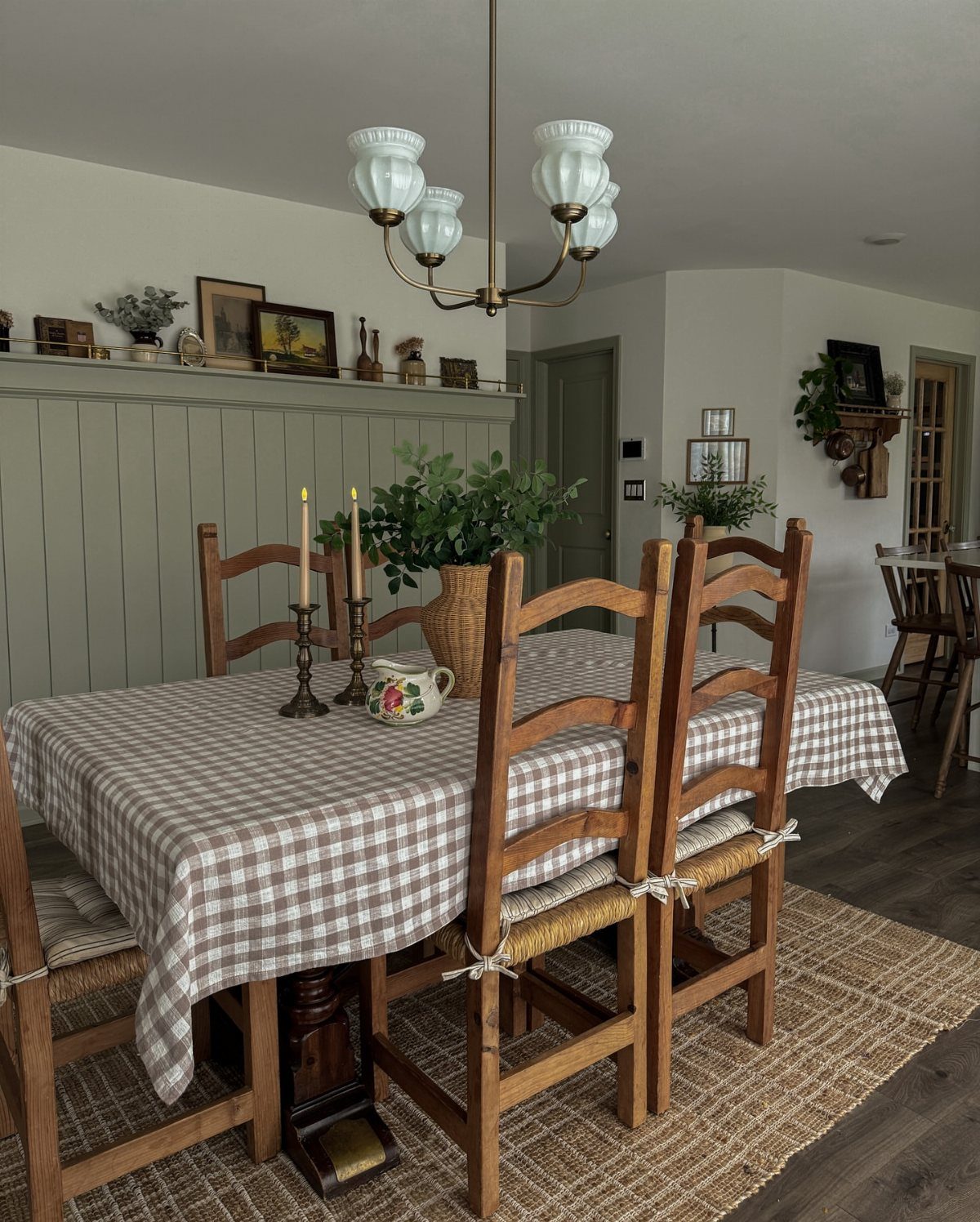
Painting vertical paneling a soft green warms the room without the weight of stained wood. The color sits between the walls and the furniture, tying natural textures together without competing for attention.
Light green works well with wood tones and linen, and it holds up better than white in a space where chairs scrape and hands touch the walls. I’d keep the finish matte or eggshell so the texture reads without glare.
This suits a room where you want color but don’t want to repaint often. Vertical panels hide seams better than drywall, and touch-ups blend easier than on a flat surface.
9. Backlit Wood Paneling
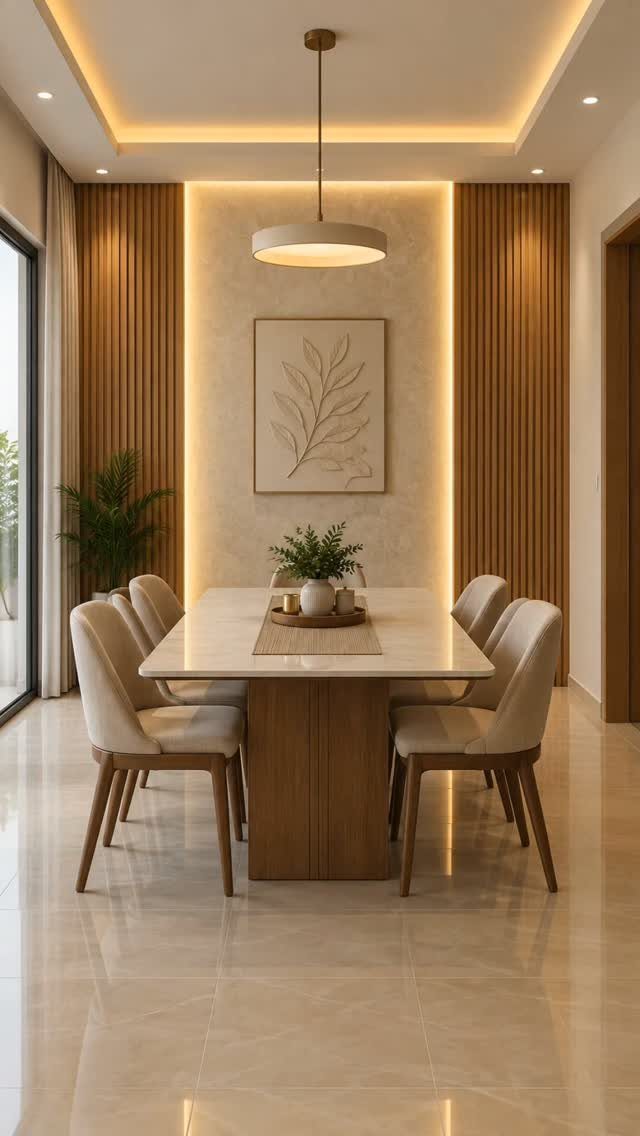
Recessing LED strips between vertical slats turns the paneling into a light source rather than just a surface. The warm glow softens the room at night and fills the gaps with even light that doesn’t cast hard shadows.
The strips mount in channels routed or built into the backing, so plan the spacing before you cut. I’d wire them to a dimmer so you can adjust the brightness depending on the meal.
This adds complexity and cost over plain slats, but it eliminates the need for sconces or uplights if you want diffuse background light.
Timeless Tradition of Wood Paneling
Wood paneling suits more than one style.
In a traditional dining room, wainscoting under a chair rail brings formality without filling the whole wall. In a coastal space, whitewashed shiplap keeps the room light and open.
Dark woods like oak or walnut warm a room quickly, and pairing them with lighter paint or trim brings out the contrast.
Whitewashed wood goes the other way, softening the space and working well where you want the room to feel airy rather than anchored.
The material itself is more flexible than its reputation suggests. Shiplap, wainscoting, and board-and-batten all count as wood paneling, and each reads differently depending on the finish and the height you take it to.
Newsflash: Wood paneling isn’t just for basements built in the 1970s. And, no, the secret to pulling off the look isn’t to paint over it.
Practical Benefits of Wood Paneling
Wood paneling insulates better than drywall alone, which can lower heating costs in a room with exterior walls.
It also absorbs sound, so conversations stay in the room rather than bouncing off hard surfaces. In a dining room where people sit close and talk over meals, that makes the space feel quieter without adding rugs or curtains.
The material lasts longer than paint in areas where chairs hit the wall. A damp cloth cleans most marks, and small scratches blend into the grain or texture better than they would on a flat painted surface.
Moisture is the main concern.
Wood panels work well in living rooms, bedrooms, and dining rooms, but not in spaces where humidity stays high. A moisture-resistant finish helps in rooms near kitchens or bathrooms.
Combining Paneling with Other Elements
Painted paneling lets you match the walls to your furniture and dishes without leaving the wood tone to do all the work.
A bold color makes the paneling the focus, while a soft pastel keeps it in the background. Either way, adding decorative molding at the top edge finishes the line where the paneling stops.
Light textiles balance darker wood tones.
Cream table linens, white curtains, or upholstered chairs keep a room with walnut or oak paneling from feeling too enclosed. Brass chandeliers or mirrored art reflect light back into the space and open it up.
Mixing paneling styles adds detail without repeating the same treatment on every wall.
I like pairing wainscoting below with geometric panels up top, or running flat panels beside vertical slats, as long as the stain or paint color matches across both treatments.
Frequently Asked Questions
What are the different styles of wood paneling?
The main styles are wainscoting, shiplap, beadboard, raised panels, and vertical slats.
Wainscoting runs partway up the wall with a horizontal break, while shiplap and beadboard cover walls with horizontal or narrow vertical lines. Raised panels add depth through framed rectangles, and slats create texture with spaced vertical boards.
How do I make a DIY wood panel wall?
Cut your wood to size and attach it to the wall, securing it into the studs for stability.
Paint the wall behind the slats first so the gaps stay clean and even, and use a spacer to keep each one the same distance apart.
Add construction adhesive behind each panel before you nail it in, and check level every few pieces instead of only at the start.






