
Victorian Christmas decor layers Christmas trees, edible ornaments, evergreen garlands, tinsel, candlelight, kissing balls, crackers, and natural wreaths into a holiday look built on tradition and craftsmanship.
If you’re working with a small budget, popcorn garlands and dried citrus cost almost nothing and still fill out a tree.
1. Christmas Tree
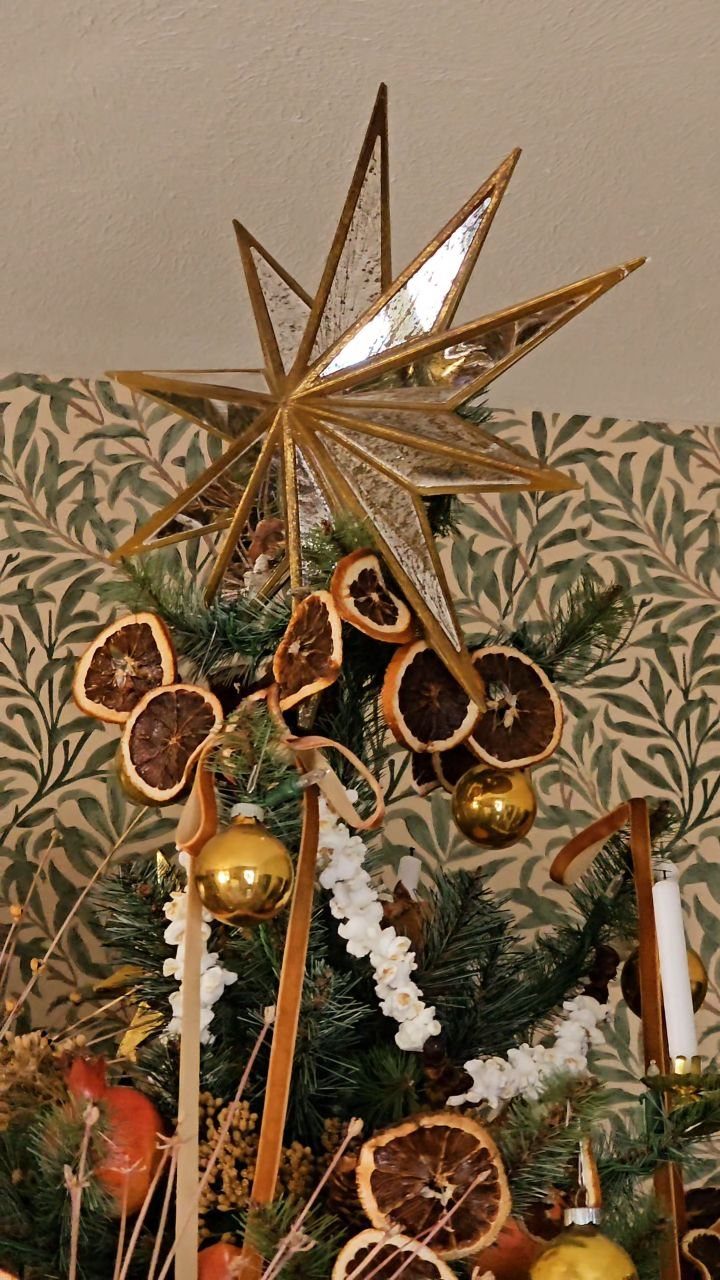
A Christmas tree decorated in Victorian style places natural materials front and center. Dried citrus slices, strung popcorn garlands, and simple gold ornaments layer texture without overwhelming the branches.
If you’re working with a smaller tree, scale down the topper so it doesn’t dominate.
Popcorn garlands take patience to string but cost almost nothing. Thread them the night before so the popcorn firms up and breaks less as you drape it around the tree.
2. Edible Decorations
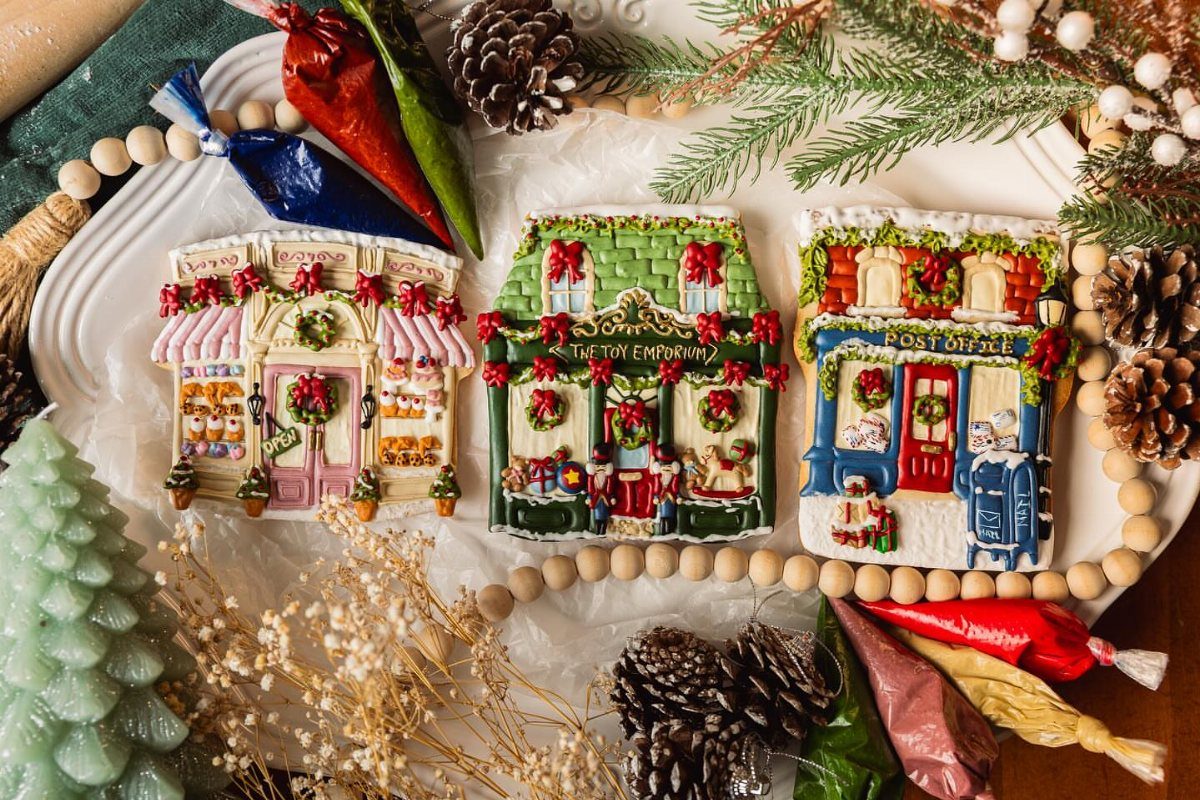
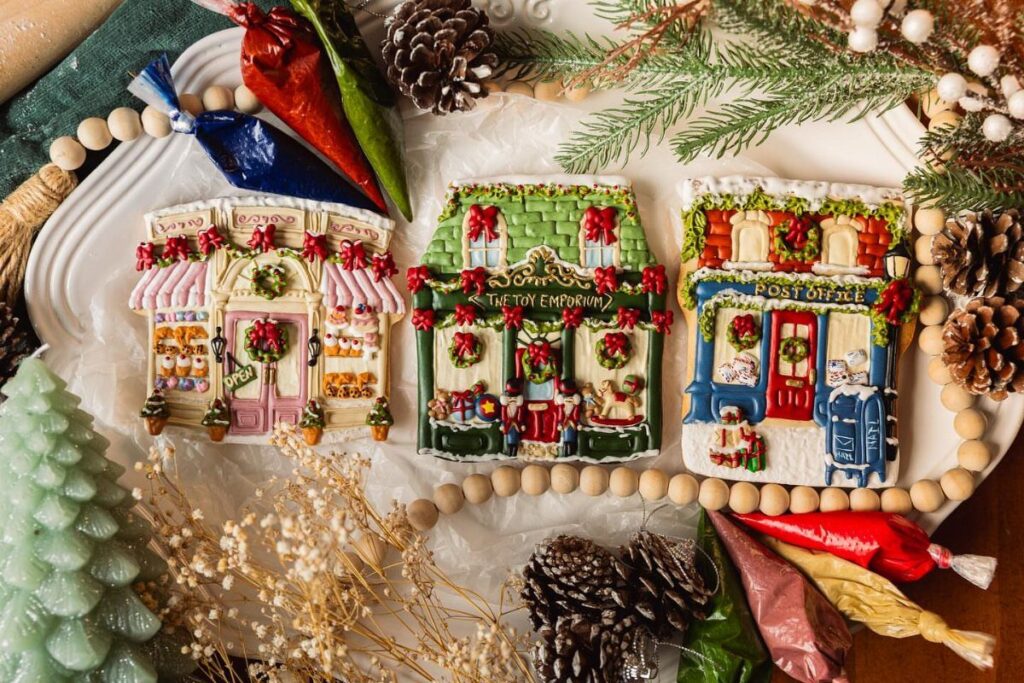
Edible decorations let you hang something festive that doubles as dessert. Iced cookies shaped like Victorian storefronts or gingerbread houses bring detail to a mantel or side table, and kids can help decorate them.
Royal icing works best for piping fine lines and text. Mix it stiff enough that it holds its shape, then thin a small batch for flooding larger areas like roofs or walls.
Arrange the cookies on a platter with pinecones and evergreen clippings so they read as decor, not just a snack plate waiting to be passed around.
3. Evergreen Garlands
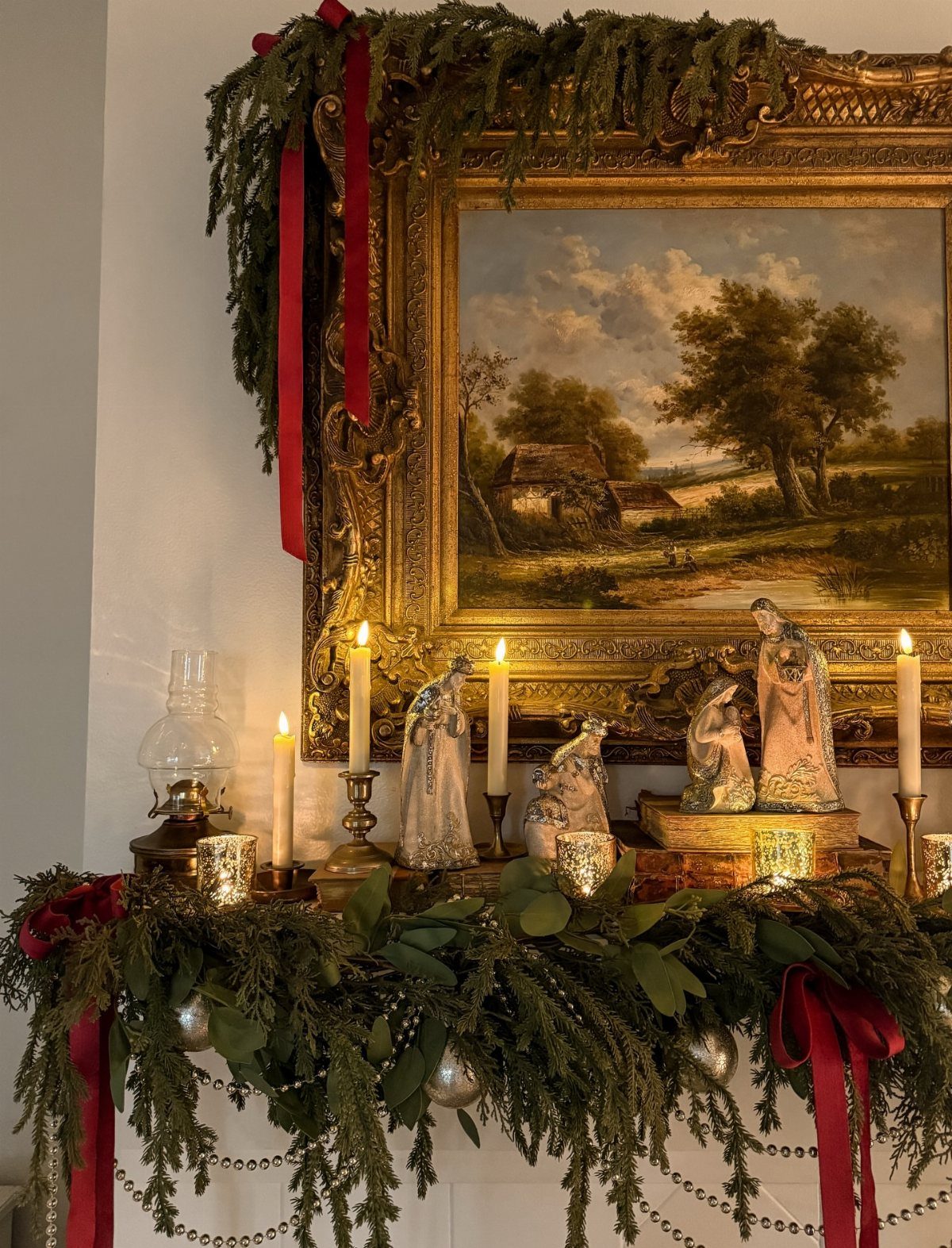
Evergreen garlands frame doorways, mantels, and artwork with fresh greenery that fills the room with scent. Draping them over a painting or mirror softens hard edges and pulls the eye up.
Red ribbon bows tie off the garland at intervals and add color without requiring many ornaments. Space them evenly or cluster them at the ends, depending on how formal you want the look.
Fresh garlands hold up well indoors when you mist them every few days. Mist them lightly every few days to keep the needles from drying out and dropping.
4. Tinsel
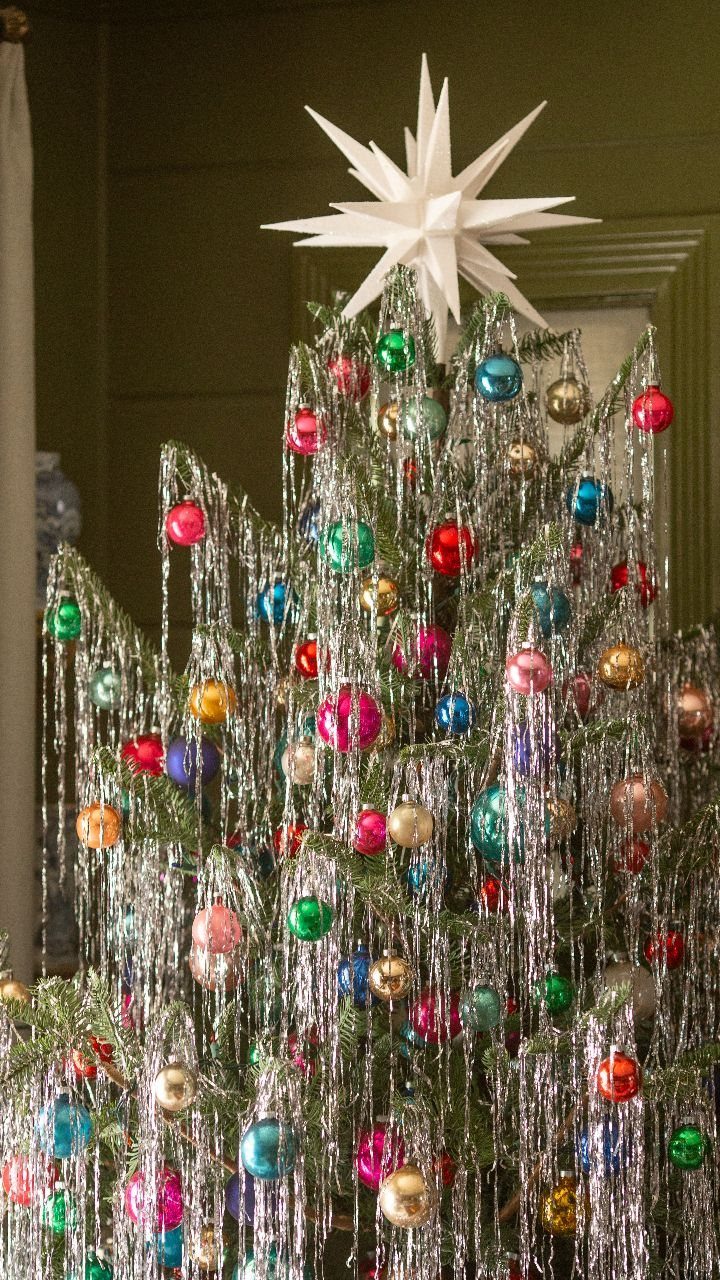
Tinsel adds shimmer to a tree without the weight or cost of extra ornaments. Long silver strands catch light from every angle, especially if you’re using candles or string lights nearby.
Drape tinsel vertically rather than wrapping it around the tree. This keeps the movement loose and lets each strand hang individually, which reflects more light.
The white star topper balances the metallic tinsel and keeps the tree from reading too busy. If your ornaments are already dense, use tinsel sparingly on the outer branches only.
5. Candlelight
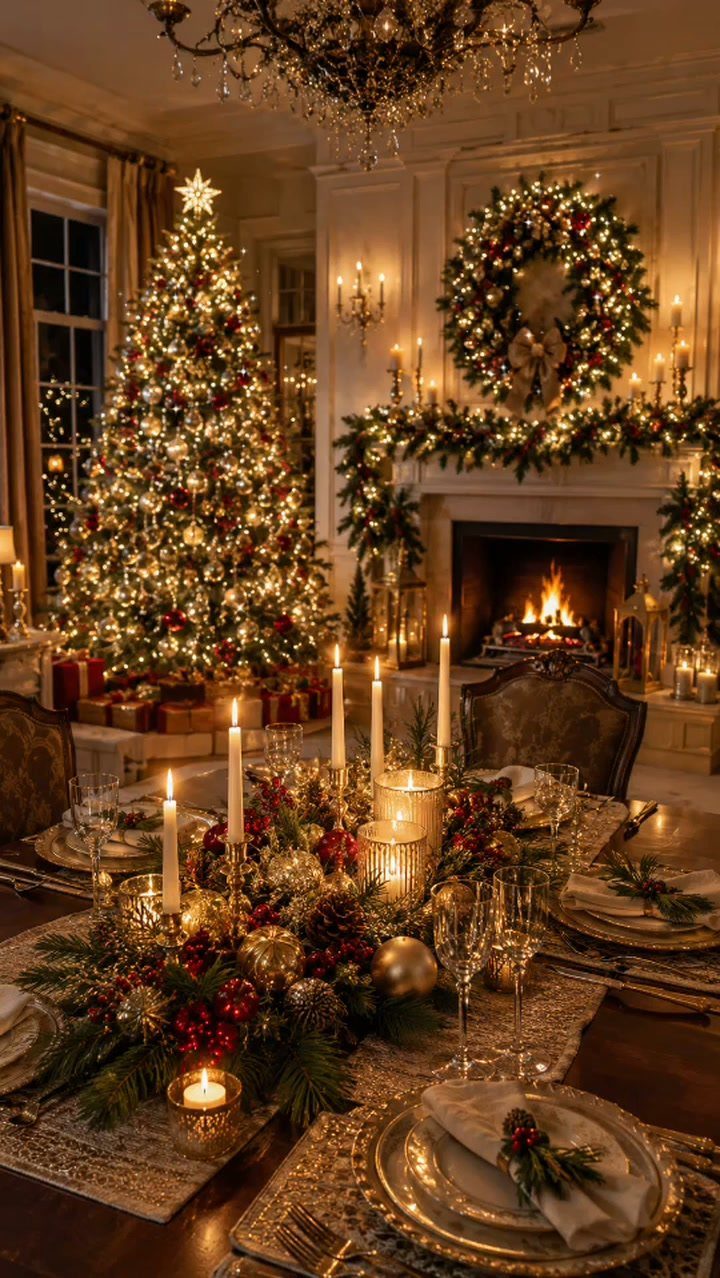
Candlelight brings warmth to a Victorian Christmas table without electricity. White taper candles grouped down the center of the table mix with greenery and gold ornaments for a layered look that feels formal but not stiff.
Use candlesticks in varying heights to fill vertical space. Taller candles draw the eye up, while shorter ones let guests see across the table.
Never leave candles burning unattended, especially near dry evergreen branches. Trim wicks to ¼ inch before lighting so they burn evenly and don’t drip wax onto the table.
6. Kissing Balls
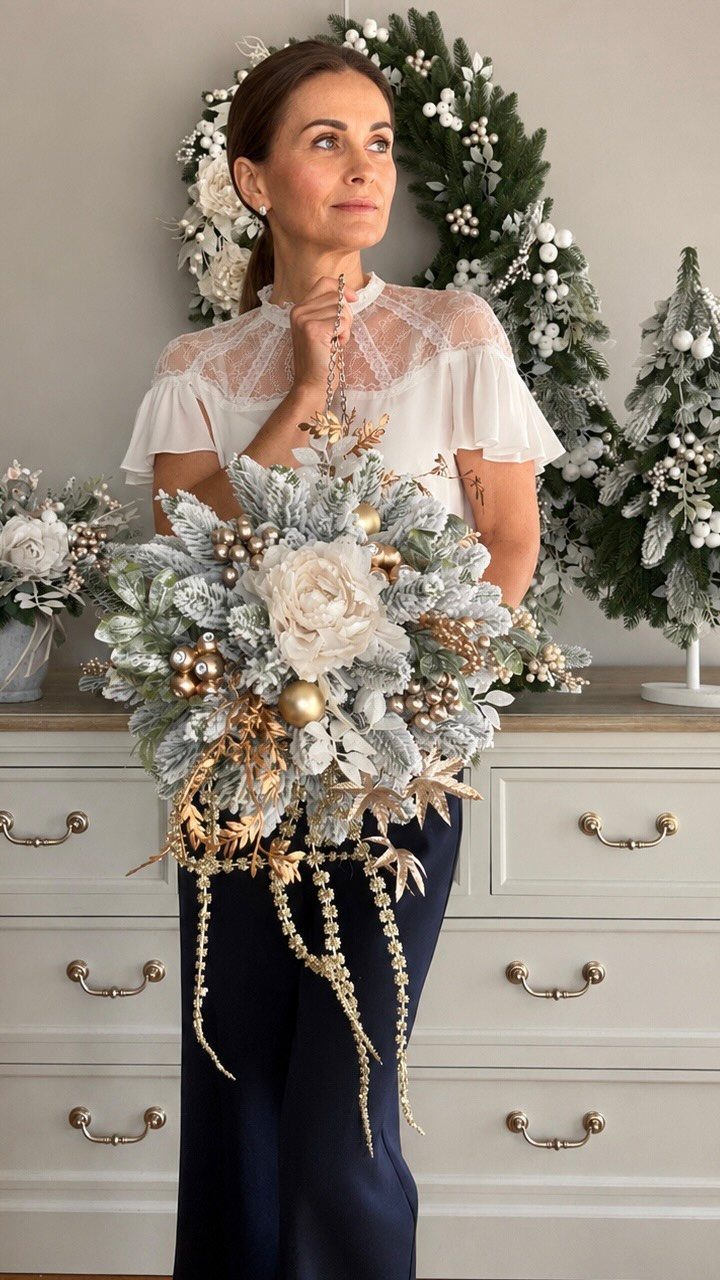
A kissing ball hangs mistletoe inside a globe of greenery, flowers, and ornaments. This one layers frosted branches, white blooms, and gold baubles into a statement piece large enough to anchor a doorway or the center of a room.
Hang it from a ribbon at standing height so guests notice it. The ball itself needs a foam or wire base that holds stems securely without glue.
If fresh mistletoe is hard to find, substitute with boxwood or eucalyptus and tie a sprig of faux mistletoe to the bottom with ribbon.
7. Christmas Crackers
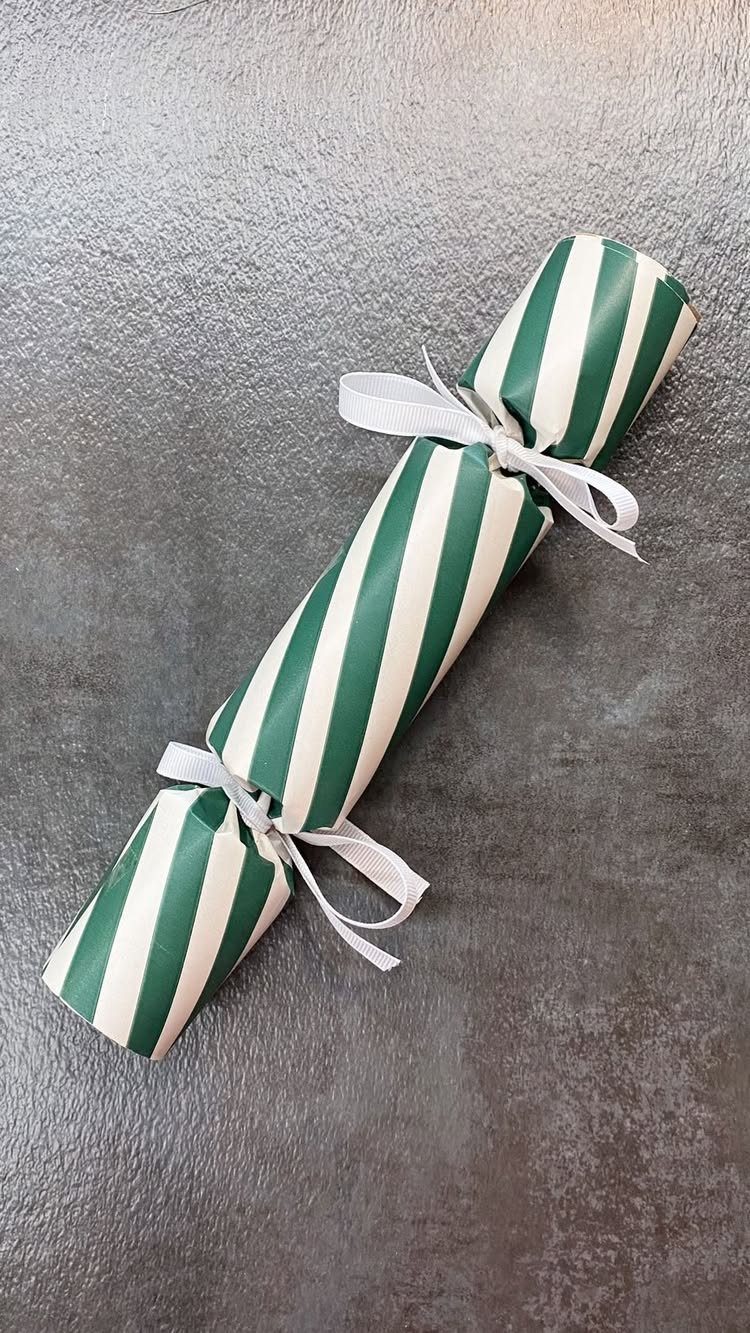
Christmas crackers sit at each place setting and snap open to reveal a small toy, paper crown, and printed joke. Guests pull both ends during dinner, and the pop adds a playful moment to the meal.
You can buy crackers ready-made or assemble them yourself with cardboard tubes and tissue paper to choose what goes inside.
Fill them with something small enough to fit: a charm, a chocolate, or a handwritten fortune. The snapping mechanism comes separately if you’re building your own.
8. Natural Wreaths
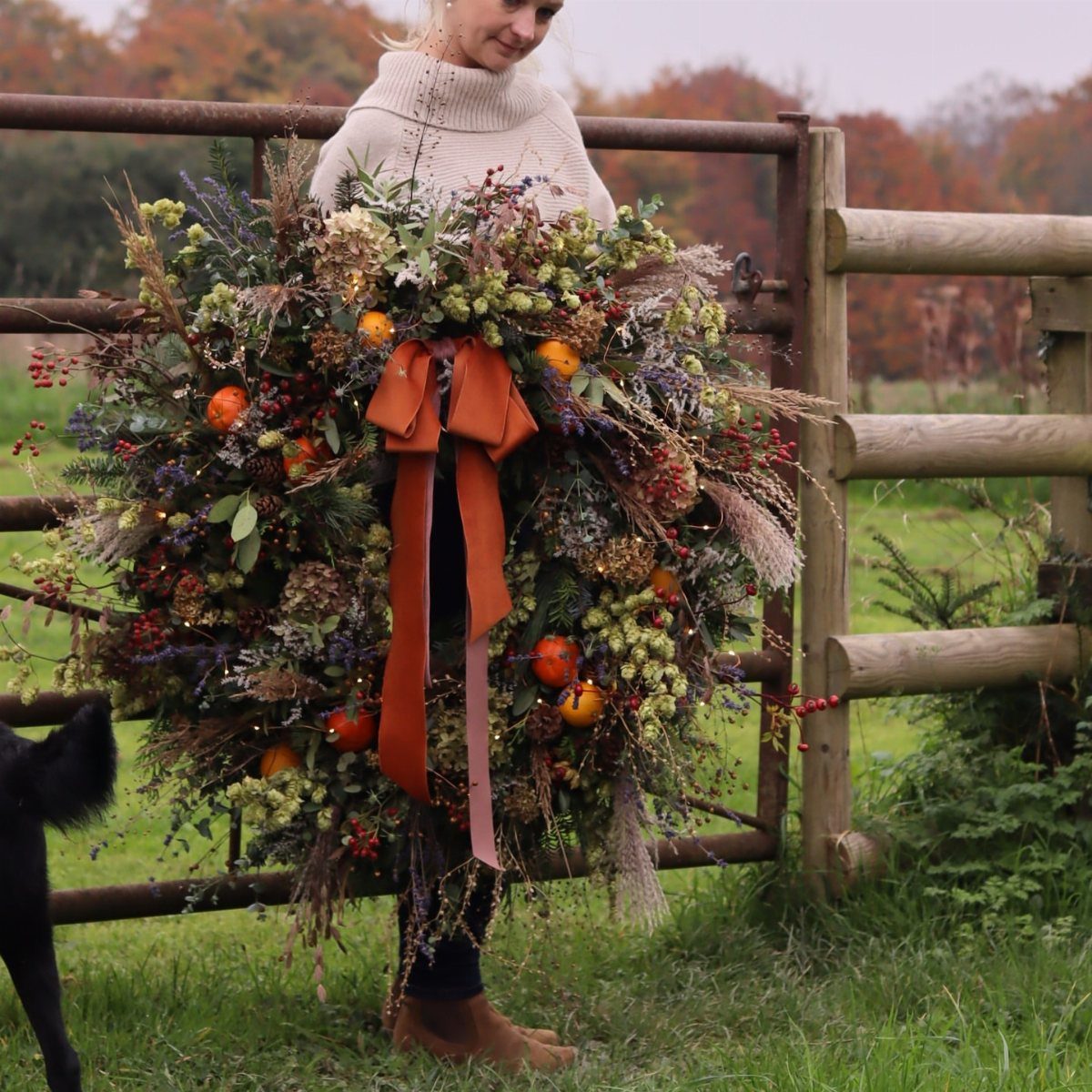
A wreath made from fresh greenery, berries, and citrus brings color and texture to a front door or mantel. This one layers evergreen branches with clusters of red berries and whole oranges, tied off with a brown velvet bow.
Wire the larger pieces to a grapevine or foam base first, then tuck smaller sprigs into gaps. Fresh materials last longer outdoors in cold weather than they do inside near heat vents.
Mist the greenery every few days if you’re hanging it indoors. The citrus dries out over time but stays decorative even after it shrinks.
Victorian Christmas History
Christmas in early 19th-century England passed quietly, barely marked. By century’s end it had grown into the year’s largest celebration, reshaped by industrial progress and infrastructure that let more people participate.
The Christmas tree arrived through German tradition in the 1830s but took hold only after Prince Albert introduced it to Queen Victoria in 1848.
When the Illustrated London News published a sketch of the royal family gathered around their tree that year, demand surged. By 1853, shops were advertising glass ornaments and tinsel in bright reds and golds, materials chosen to flicker under candle flame.
Mechanization made decorations affordable through mass production.
Victorians mixed purchased glass ornaments with homemade edibles and candles, building a layered look that combined craft with commerce. The tree itself served as display for gifts, with small toys and trinkets hung from branches on ribbons.
In 1848 the Illustrated London News published a drawing depicting Queen Victoria, Prince Albert, and their family gathered ‘round a decorated tree in celebration of Christmas—introducing traditions likely reminiscent of the Prince’s childhood in Germany.
Gift Giving
Factory production during the first Industrial Revolution brought toys within reach of middle-class families. Items once reserved for wealthy households dropped in price, and children who previously received only fruit in their stockings could expect a small toy.
Victorian women’s magazines published gift guides similar to modern lists.
A woman might open a pair of embroidery scissors, a bottle of rosewater, or a year’s subscription to a ladies’ magazine. Children unwrapped wax dolls, wooden toys, marbles, building bricks, or toy soldiers.
Small gifts hung directly on the Christmas tree with ribbon, turning the tree into both decoration and display.
Tin toys, pin cushions, and dolls dangled from branches alongside edible ornaments. For families who couldn’t afford manufactured toys, stockings held nuts, apples, and clementines, a tradition traced to 12th-century French nuns who left rare fruit for the poor.
Family Gatherings
Christmas became an official holiday in Victorian England and Wales, with December 25th and 26th designated as days off work. This shift gave middle-class workers who had moved to cities for factory jobs time to travel home.
New train lines made those trips faster and more affordable, letting families reunite even across long distances. Queen Victoria and Prince Albert viewed family life as central to well-being and supported policies that allowed citizens to spend Christmas together.
Boxing Day took its name from the custom of giving boxed food and clothing to servants and the poor on December 26th. Britain, Canada, and much of the Commonwealth still call December 26th Boxing Day.
Frequently Asked Questions
What decorations did the Victorians use for Christmas?
Victorians decorated with Christmas trees, tinsel, edible ornaments, and evergreen garlands.
Fresh materials like citrus slices, popcorn strings, and berry clusters mixed with manufactured glass ornaments and candles. Natural wreaths, kissing balls, and Christmas crackers also appeared on mantels and dinner tables.
What did Christmas decorations look like in the 1800s?
Decorations layered homemade and manufactured pieces.
Trees held popcorn garlands, dried citrus, simple gold ornaments, and silver tinsel under candle flame. Fresh greenery framed doorways, while tables featured white taper candles grouped with berries and evergreen clippings.






