
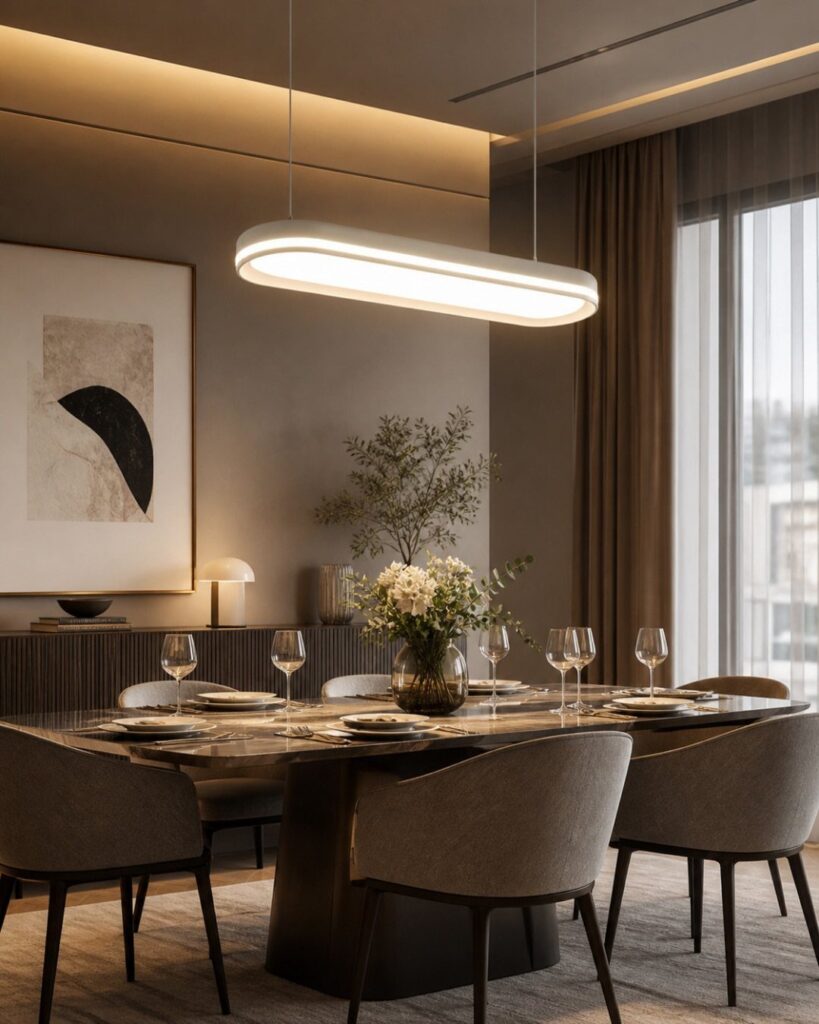
A minimalist dining room strips the space down to the table, the chairs, and the light, with nothing competing for attention once the meal is over.
Whites, grays, and beiges keep the palette neutral and reflect light evenly, but beige or grey upholstery will show less wear than white if you have kids or pets.
1. Minimalist Lighting
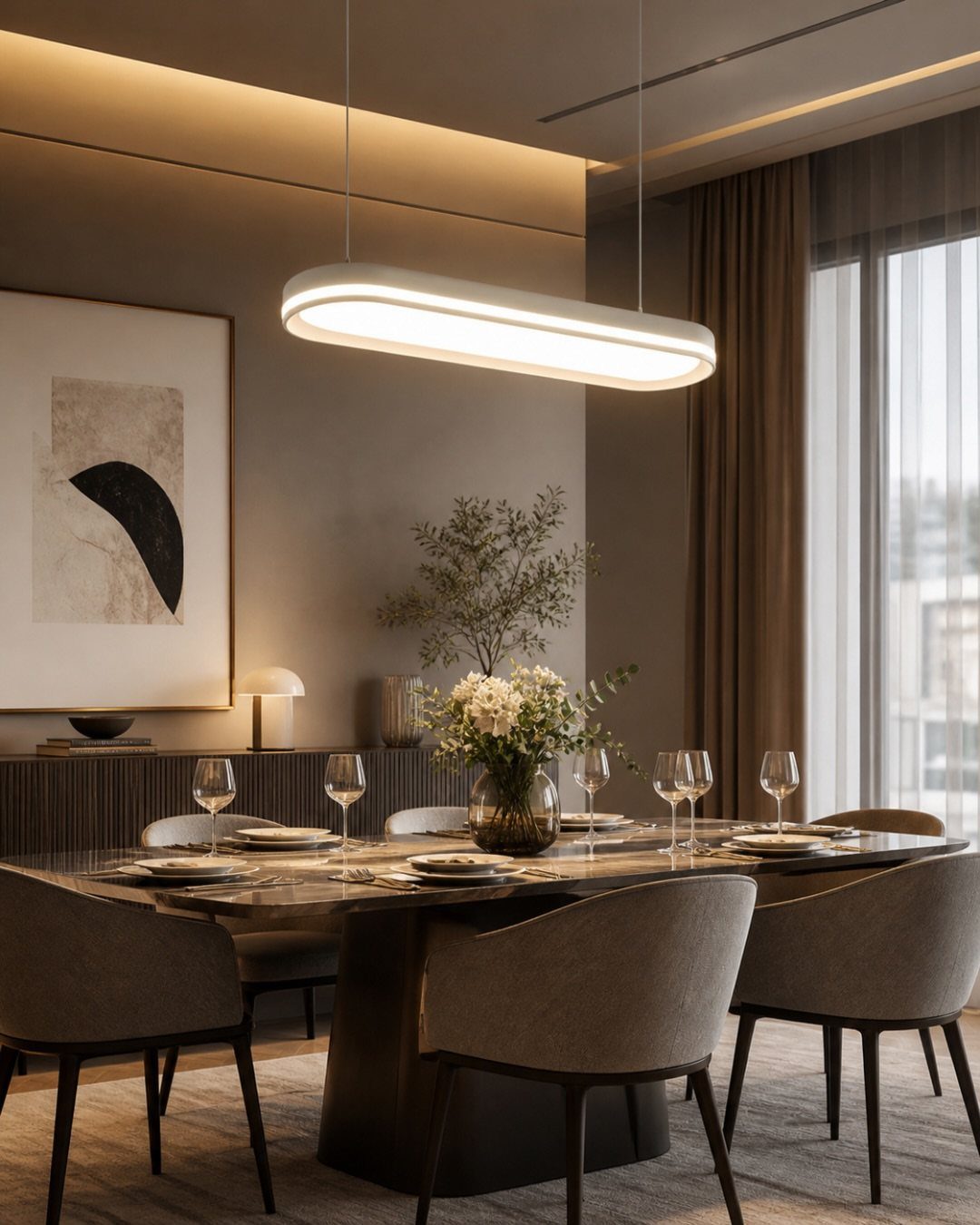
A single large fixture over the table does the job without competing for attention. The oval pendant here throws light straight down where you need it, and its smooth white surface keeps the ceiling line clean.
Pick a fixture with one clear shape, no scrollwork or visible hardware.
A dome, a cylinder, or a flat disc all work. The cord or stem should be thin, and if the fixture has an internal bulb, keep it out of sight.
This approach works best when the table sits in the center of the room.
If your dining spot is tucked into a corner or pushed against a wall, a flush mount or a low-profile track will read cleaner than a long drop.
2. Minimalist Dining Chairs
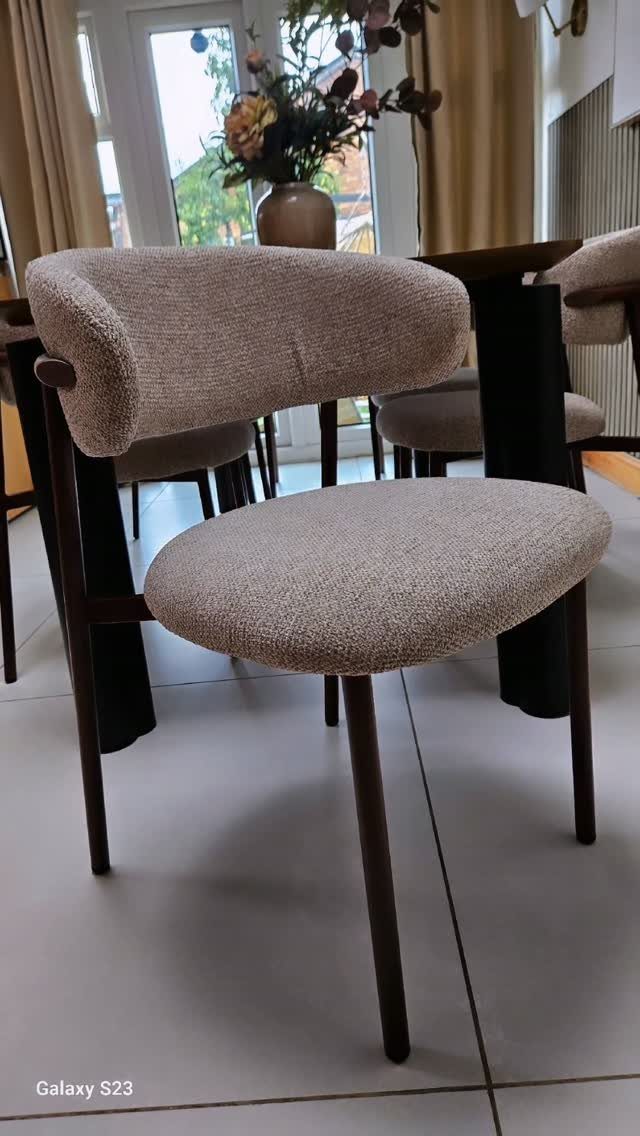
The chair does 2 things: holds you up and stays out of the way. This one keeps the frame thin and the upholstery flat, so the silhouette stays tight.
Look for legs that taper or stay square all the way down, no turned spindles.
The seat should wrap the cushion closely, and if there is a back, it can be low or tall as long as the shape stays simple.
Beige and grey fabrics hide everyday wear better than white, and a linen or cotton weave will soften what you see without adding pattern.
Matching chairs around a small table will feel more finished than a mix, but if you are filling a longer table, 2 different styles at the ends can break up the row.
3. Linen, Wool, and Wood
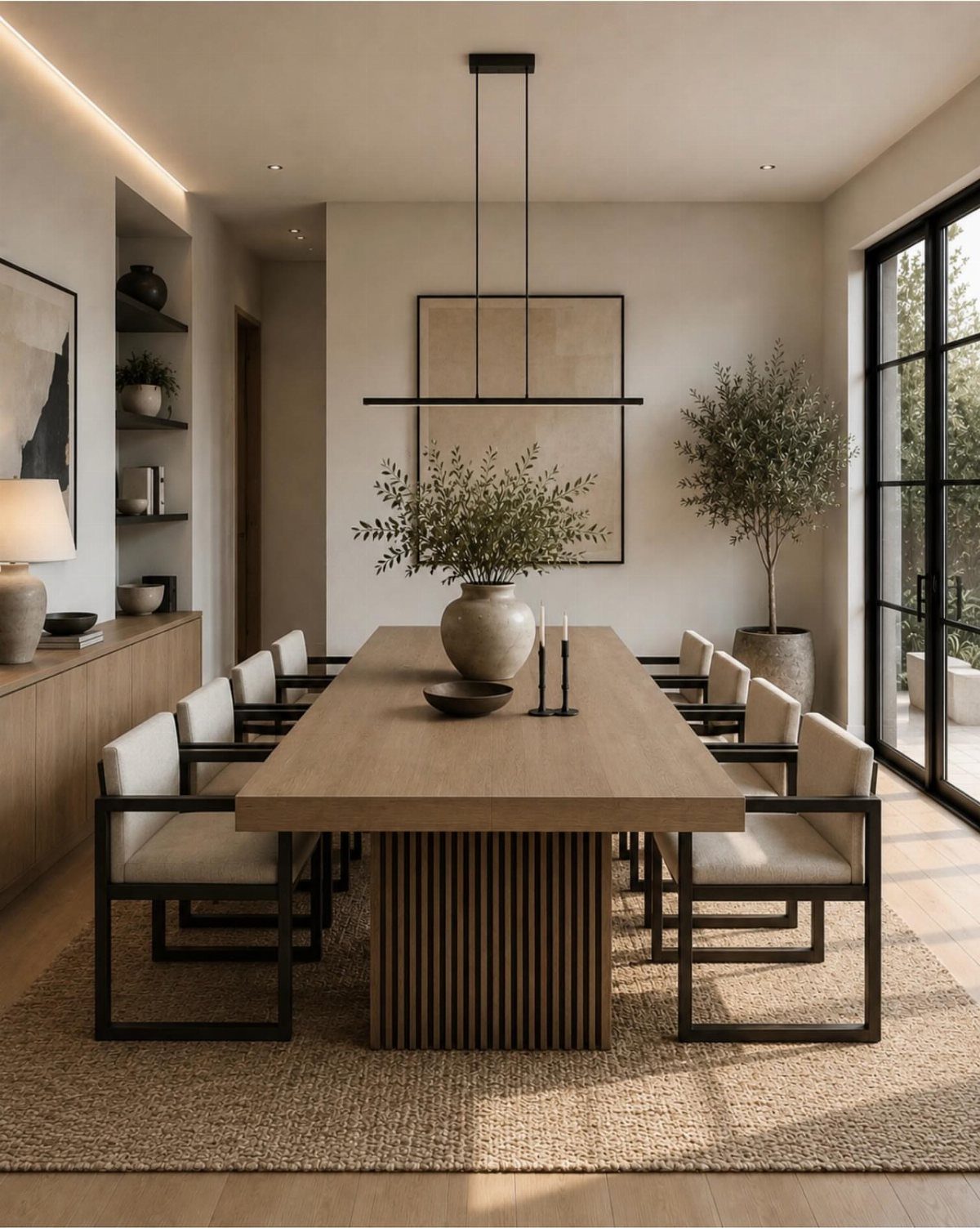
These 3 materials soften a room without bringing in color or pattern. The table is pale wood, the chairs are upholstered in linen, and the rug underneath is wool with a low, textured weave.
Wood keeps the warmth, linen adds a little give to the seat, and wool absorbs sound and defines the dining zone without a hard edge.
All three age visibly, so this combination suits a room where some wear is fine and you want the space to feel lived in.
If you prefer a cleaner look that holds up longer, swap the linen for leather and the wool for a flatweave cotton or jute.
4. Open Layouts
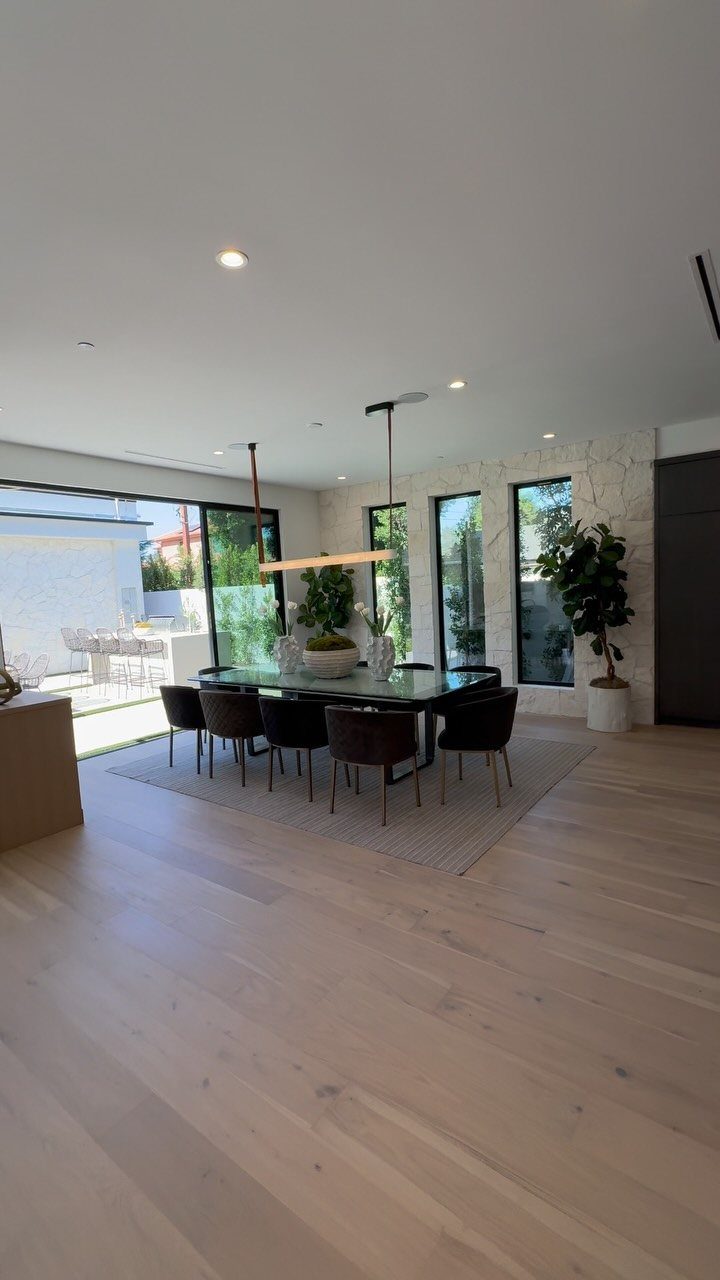
The dining table sits in the same room as the kitchen or the living area, no walls between them.
This layout lets you use the space flexibly and makes a small floor plan feel larger because you see straight through to the windows.
Keep the furniture low and the color consistent across both zones, so one room does not visually cut off the other.
A glass table helps here because it does not block the sightline, and if the floor runs continuous, the boundary between spaces will stay soft.
Open layouts work well if you cook often and want to stay in the conversation, but they do carry sound, so a rug under the table will cut some of the noise.
5. Furniture with Straight, Unembellished Lines
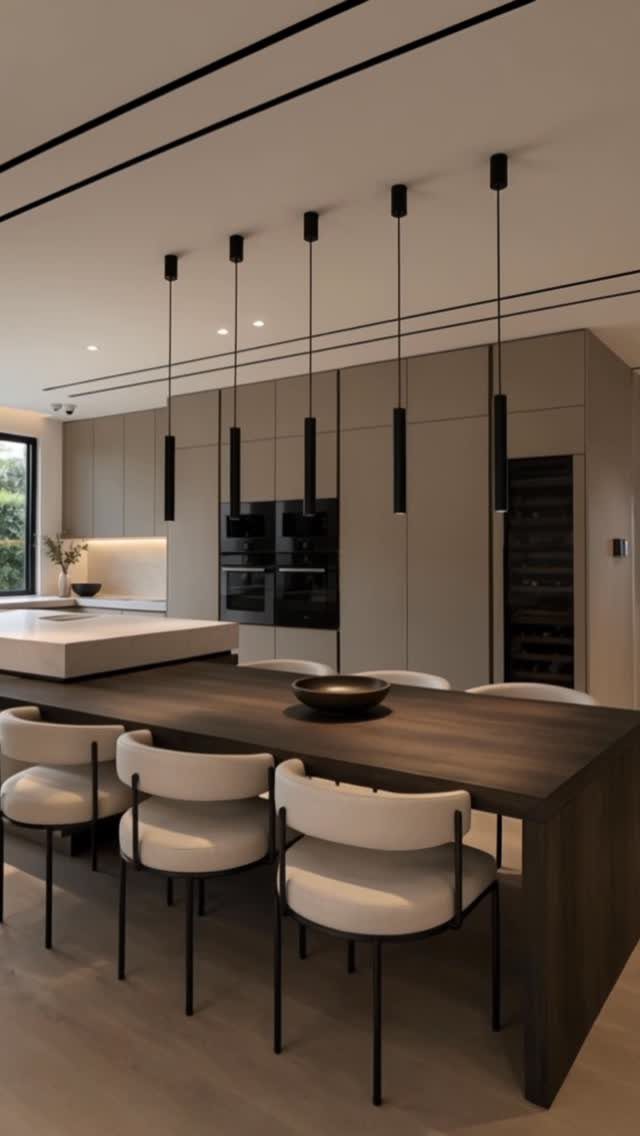
Furniture with straight edges and no decoration keeps the room from feeling busy.
Avoid anything with curves, carved details, or visible joinery.
The profile should stay flat or rectangular, and if there is a finish, it should be matte or low gloss. Metal legs can work if they are thin and powder-coated, but wood will usually feel warmer.
This style reads best in a room with some architectural detail, like tall ceilings or large windows, so the furniture does not have to do the visual work.
6. Whites, Grays, and Beiges
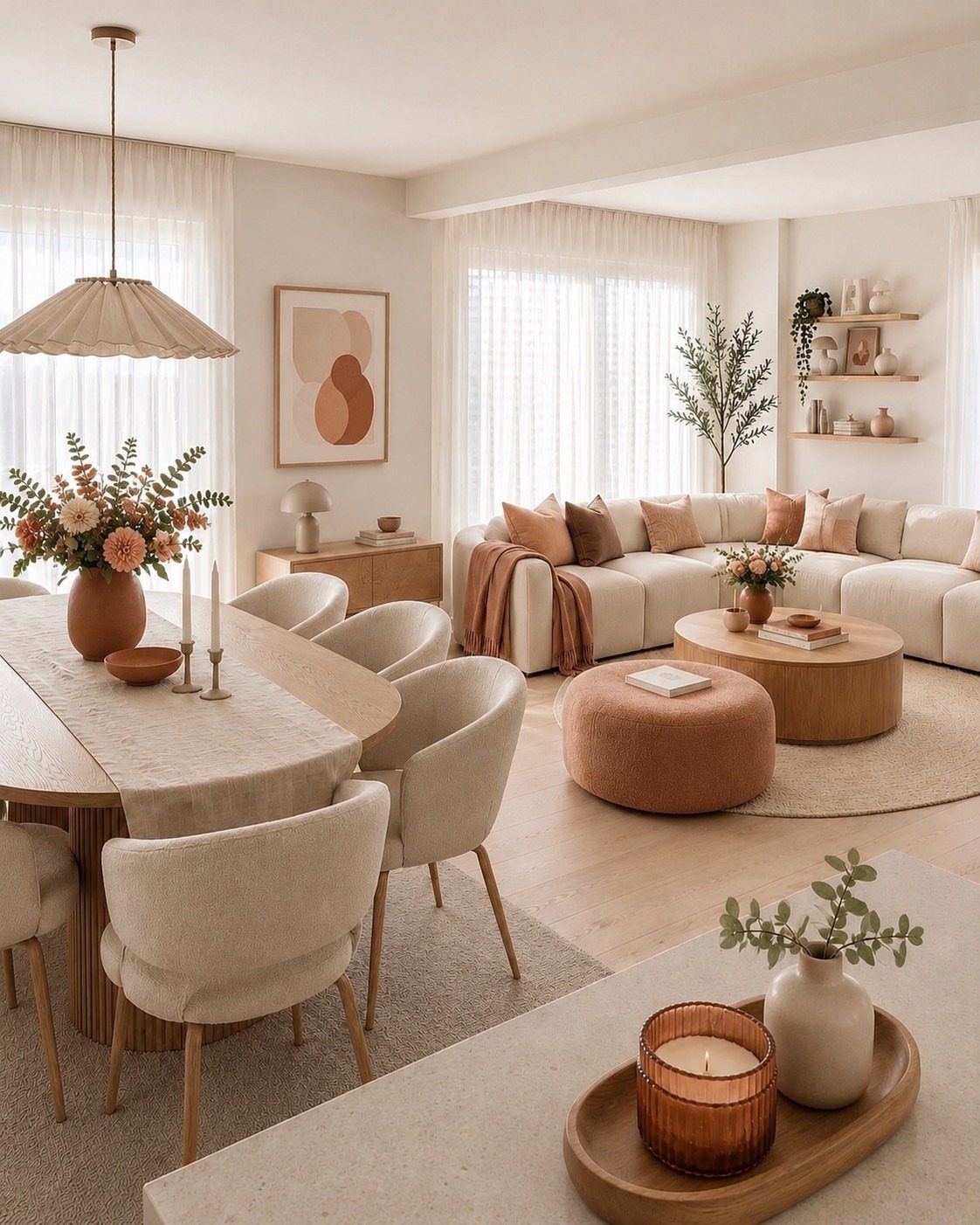
A palette of white, grey, and beige keeps the room neutral and quiet.
These colors reflect light evenly, so the room stays bright without relying on overhead fixtures. They also pair easily, which means you can change out one piece without repainting or replacing everything else.
If the room feels too flat, add contrast with black metal legs on the chairs or a dark wood table, but keep the upholstery and walls in the same neutral range.
This palette works in any size space, but it will show dust and scuffs on white upholstery, so beige or grey is a better choice if you have kids or pets.
7. A Single Plant
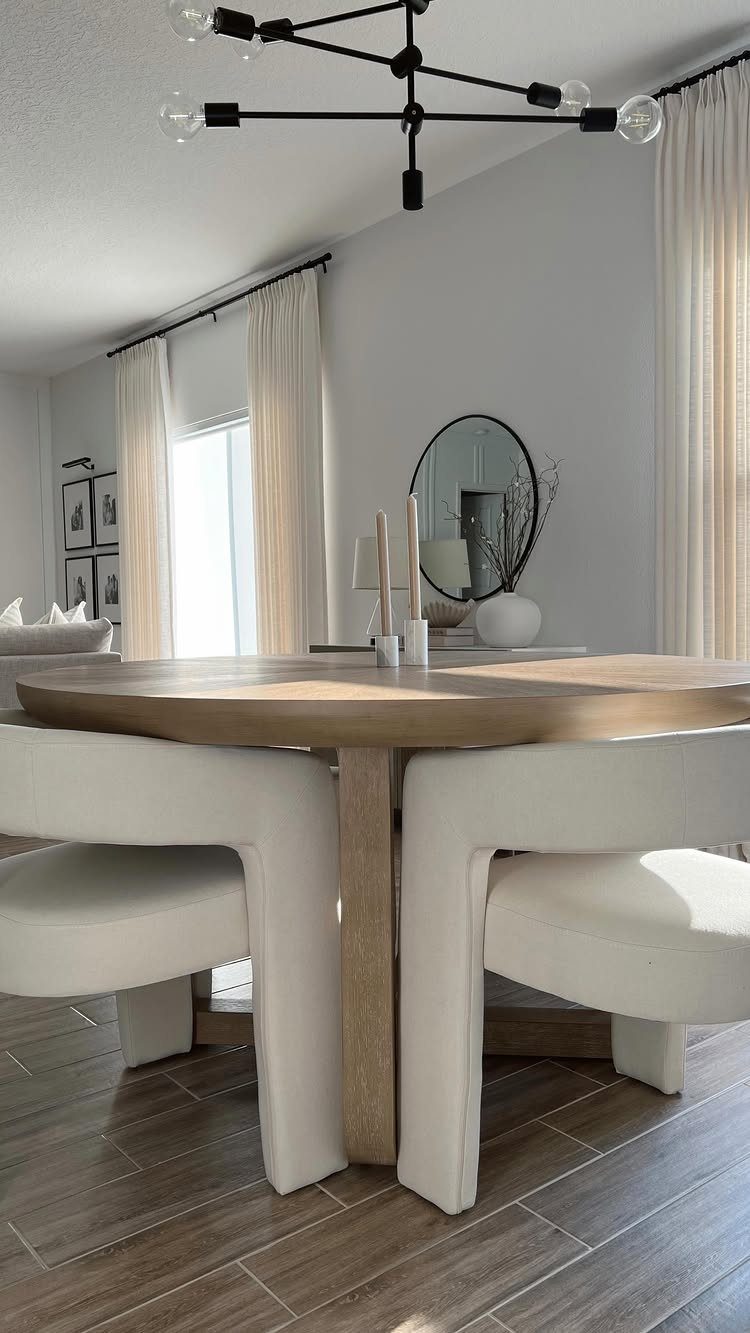
One plant in a simple container is enough to bring some life into the room without cluttering the table or the sideboard. A tall stem in a narrow vase or a single potted succulent will do it.
Keep the pot white, terracotta, or raw ceramic, and skip anything with pattern or texture. If the plant sits on the table, keep it low so it does not block anyone across from you.
8. Popular Minimalist Dining Table Designs
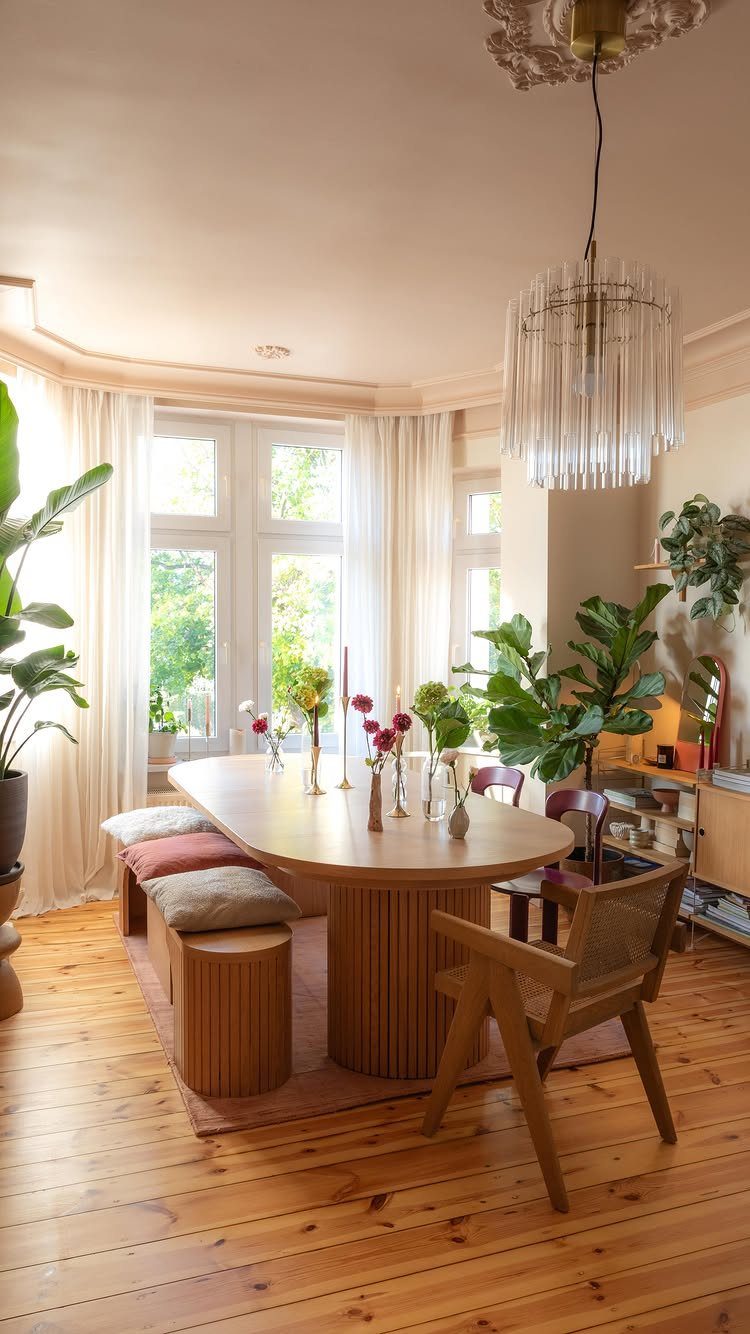
The table is the room’s anchor, so choose one with a shape you can see clearly and a finish that stays consistent.
An oval wood table or a rectangular slab with no apron holds its place without needing much around it.
What makes it feel calm is what you leave off: no decorative legs, no mixed materials, no visible hardware. The grain can show if the wood is light and the finish is flat.
9. Round Dining Tables
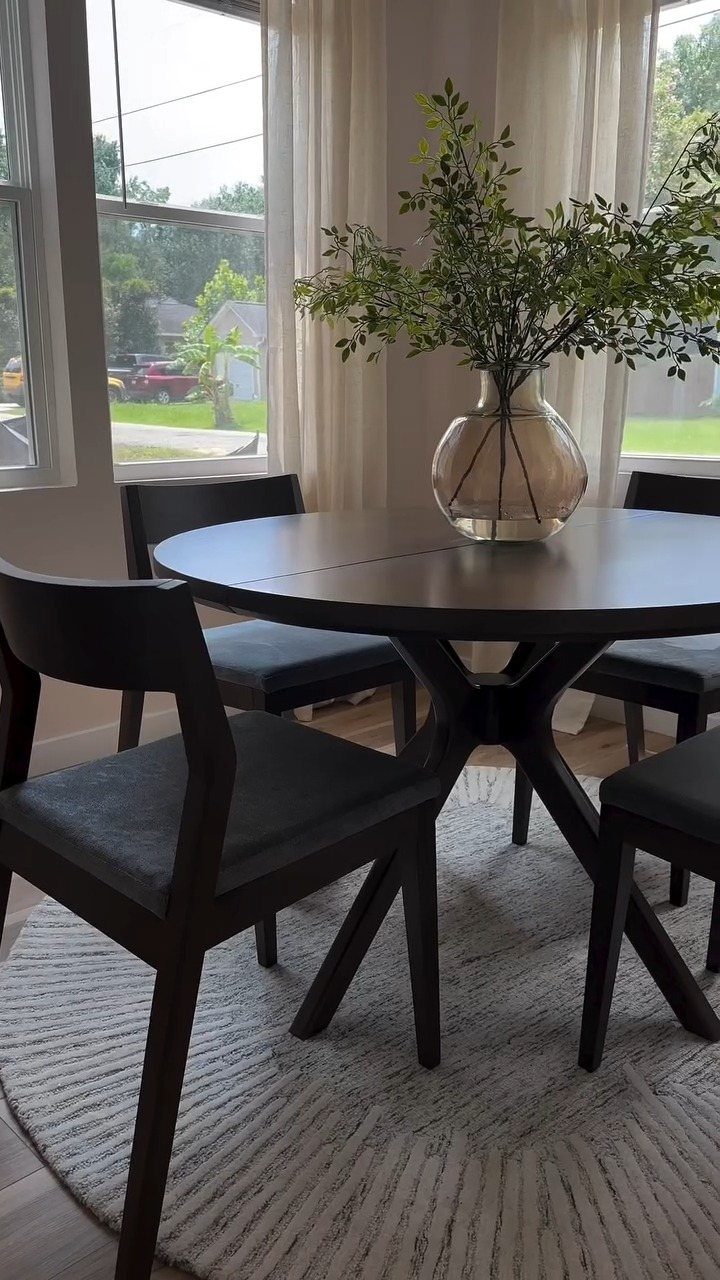
A round table fits into a corner or a narrow room better than a rectangle because you can pull chairs around it from any angle. Without sharp corners, the room reads a bit larger than it actually is.
This shape works best with 4 chairs or fewer. Once you add a fifth or sixth, the reach across the center gets awkward and the table starts to dominate the floor.
10. Rectangular Dining Tables
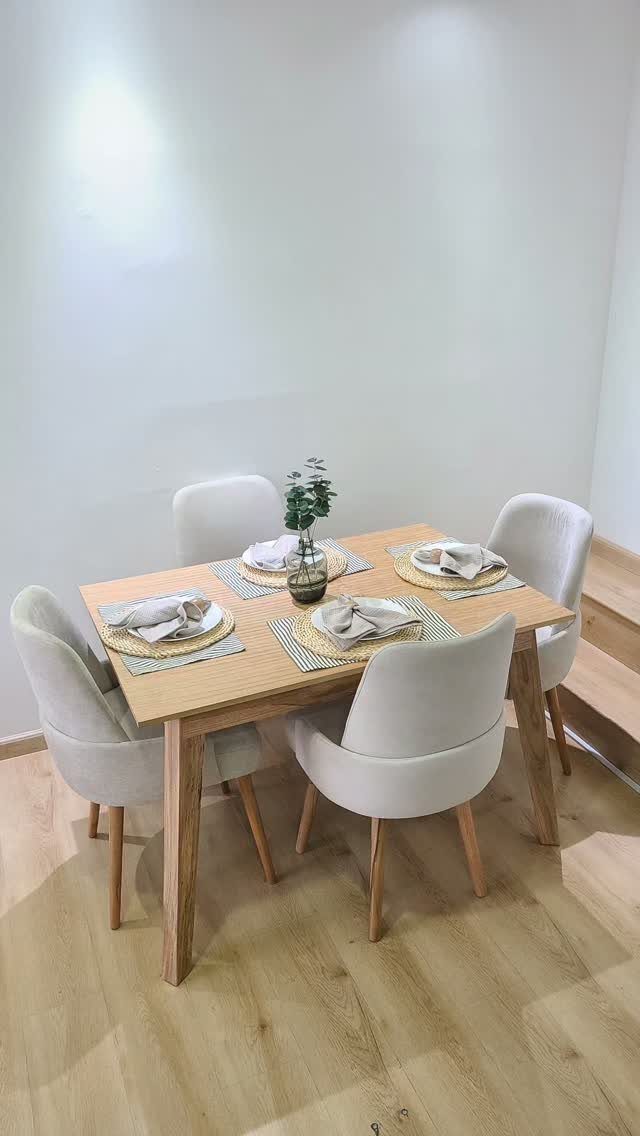
This shape gives you more surface length per square foot, so if you need to seat 6 or more, a rectangle is easier to live with than a round.
It also pairs cleanly with a bench on one side, which tucks under the table when you are not using it.
11. Simplicity
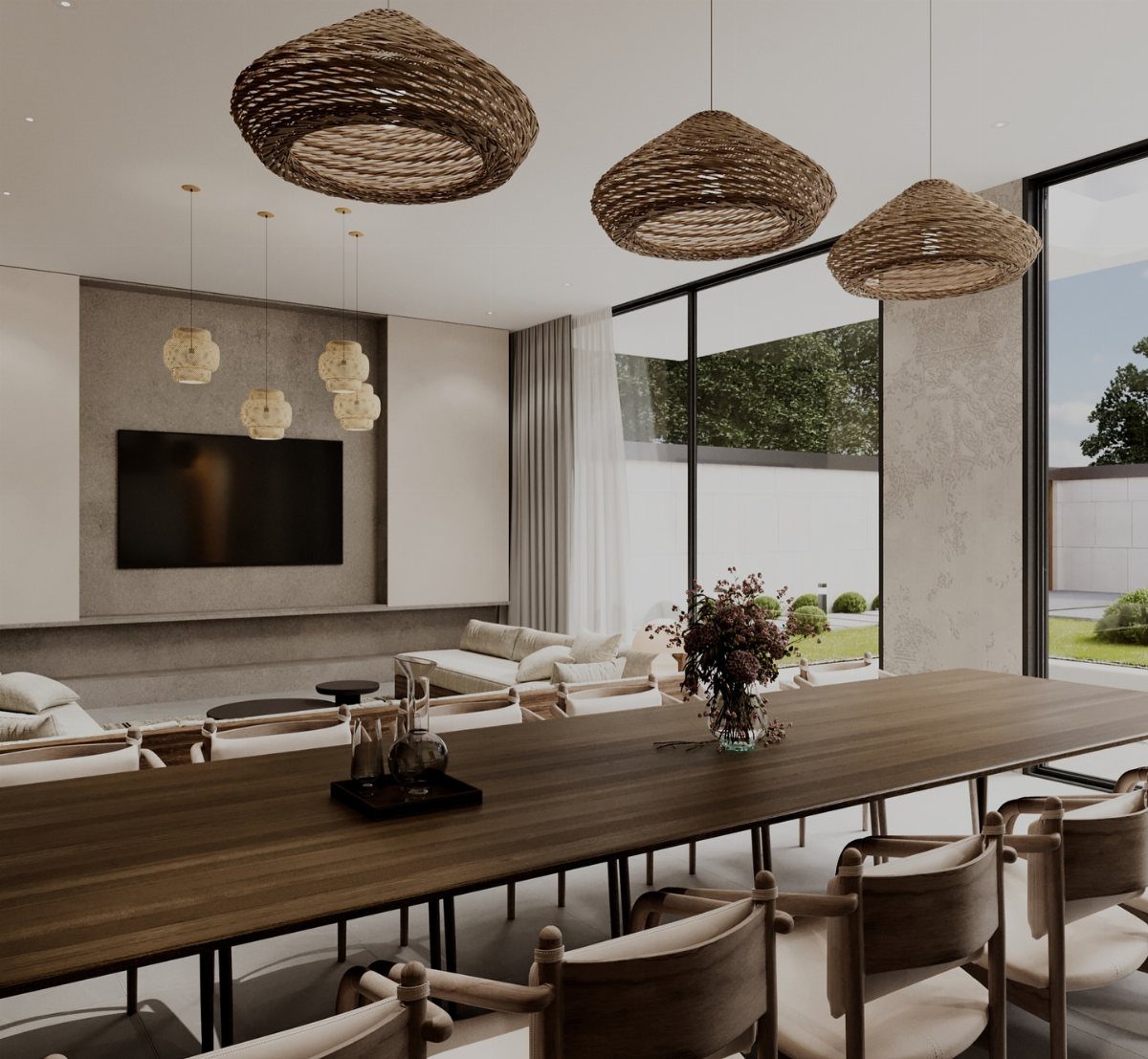
A room that holds only what it needs will feel larger and easier to maintain. The table, the chairs, the light, and nothing else competing for your attention.
This approach works if you like the way a space looks when it is empty and you do not mind putting things away after every meal.
If you prefer a little warmth or want the room to feel used, add a single object on the sideboard or a low bowl in the center of the table.
12. Minimalist Table Settings
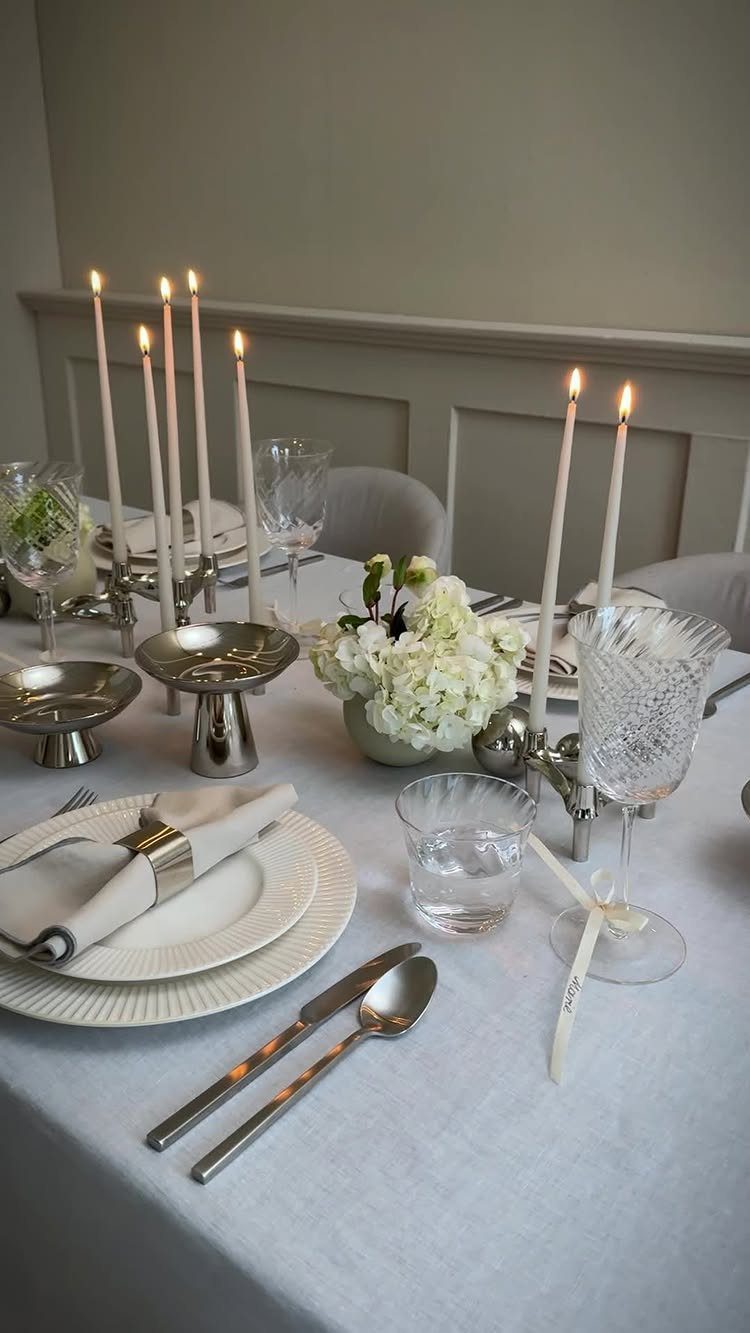
If you want texture, add linen napkins or a low arrangement of white flowers in a clear glass vase.
The setting here reads formal, so save it for a dinner where you want the room to feel finished. For everyday meals, pull the candles and the flowers and just set the plate and the fork.
Benefits of Minimalism
A room stripped down to what it needs gives you less to look at and less to clean. Dust settles on open surfaces, and when the table stays clear, you can wipe it in one pass.
Fewer objects also means fewer decisions about where things go or how they should look together.
The room holds its shape without constant adjusting, and meals feel calmer when the space around you is not pulling your attention in 6 directions.
This approach suits people who prefer order and who are willing to put things away after each use.
If you like seeing your belongings out or want the room to feel lived in, a strictly minimal setup will feel too bare.
Choosing the Right Table
Measure the room before you pick a table. A table that leaves enough clearance on all sides lets you pull out a chair and walk behind it without turning sideways.
Shape matters more in a small room.
Wood, metal, and glass each age differently.
Wood shows scratches and water rings, metal dents, and glass shows fingerprints. Pick the material that matches how you plan to use the table and how much daily wear you are willing to see.
Maintaining a Minimalist Aesthetic
Keep the table surface clear when you are not eating. A centerpiece or a stack of mail will pull the eye and make the space look busier than it is.
Store serving dishes and extra linens in a sideboard or a cabinet with doors, so they stay out of sight.
Open shelving works if you keep the items grouped by type and leave some of the space empty, but a closed cabinet is easier to maintain.
Every piece in the room should have a job you actually need it to do. If you are keeping something because it might be useful someday or because it fills a corner, it is probably clutter.
Frequently Asked Questions
What is minimalist design?
Minimalist design strips a space down to what it needs, using clean lines, simple shapes, and a limited color range to create a calm, uncluttered room.
It draws from Bauhaus, Scandinavian, and Japanese traditions, where every object has a purpose and nothing is purely decorative. The result is a room that feels more open and easier to maintain because there is less competing for your attention.
How do I create a minimalist dining room?
Start with a neutral palette of whites, greys, and beiges, then pick furniture with straight lines and no decoration. The table stays empty between meals, and closed storage keeps every spare item hidden.
Every piece in the room should serve a function you actually use, and the space should feel larger and quieter once you remove what does not belong.






