
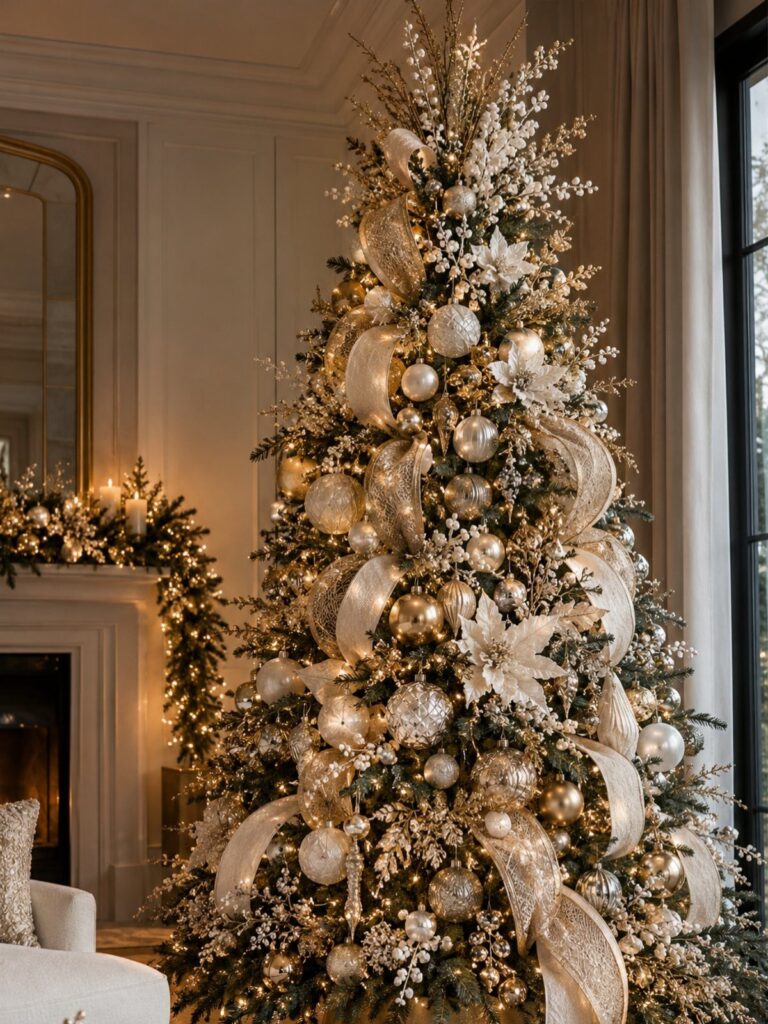
A Christmas tree theme can run from 2 colors and a strand of ribbon to a full palette built on flowers, disco balls, or stacked books.
The room’s existing palette tells you which themes will land: cool grays and whites take blue or silver without a fight, while wood furniture and warm paint pull toward plaid or rustic browns.
1. Blue Christmas Tree
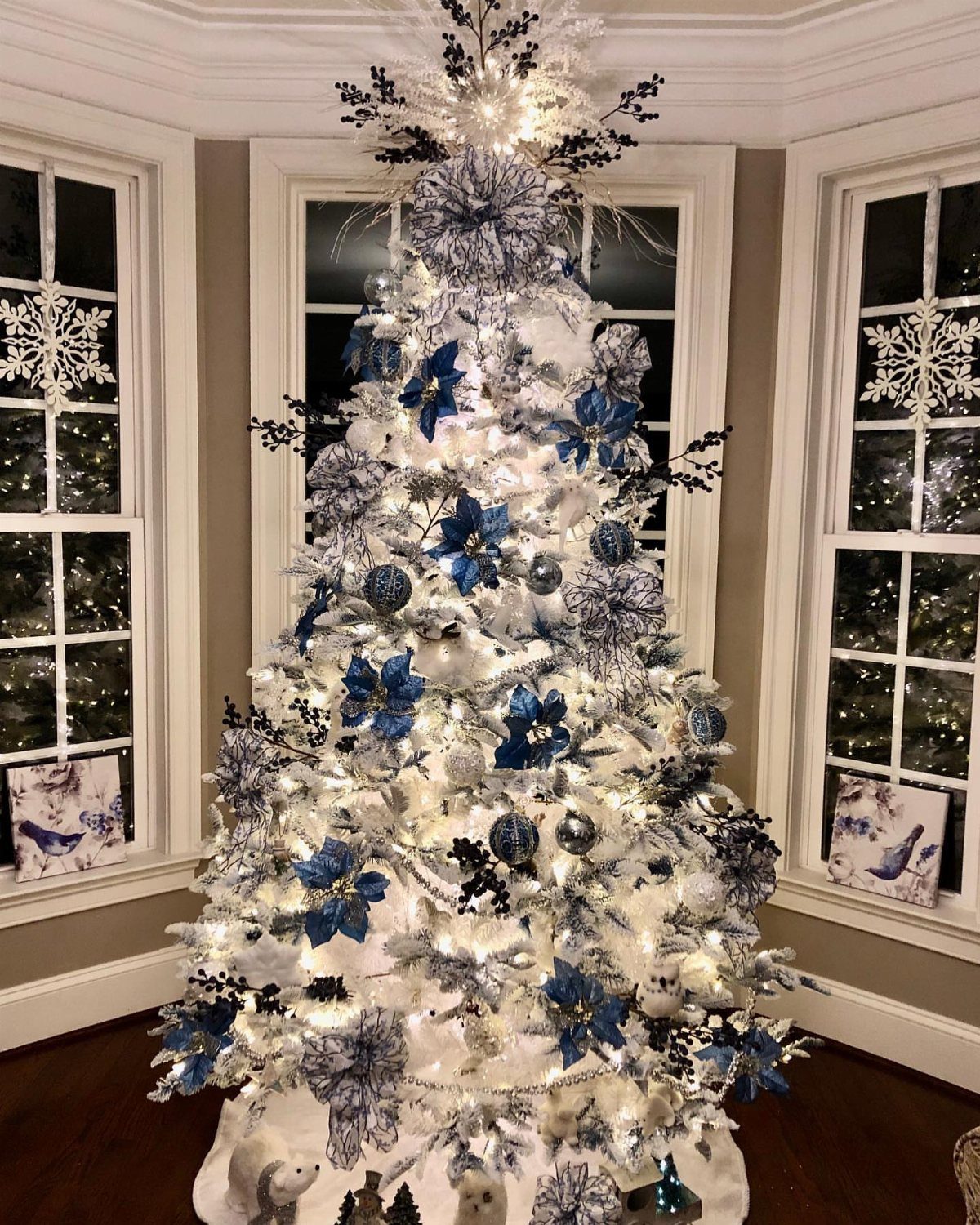
A blue and white palette softens the usual red and green without losing the festive weight.
The ribbons here add volume between ornaments, which matters if you’re working with fewer pieces than you’d like or trying to fill a taller tree on a tight budget.
Blue works with cool-toned rooms, and white lights keep it crisp. Swap in warm white if your walls lean warmer or if the blue starts reading too icy.
2. Red and White Christmas Tree
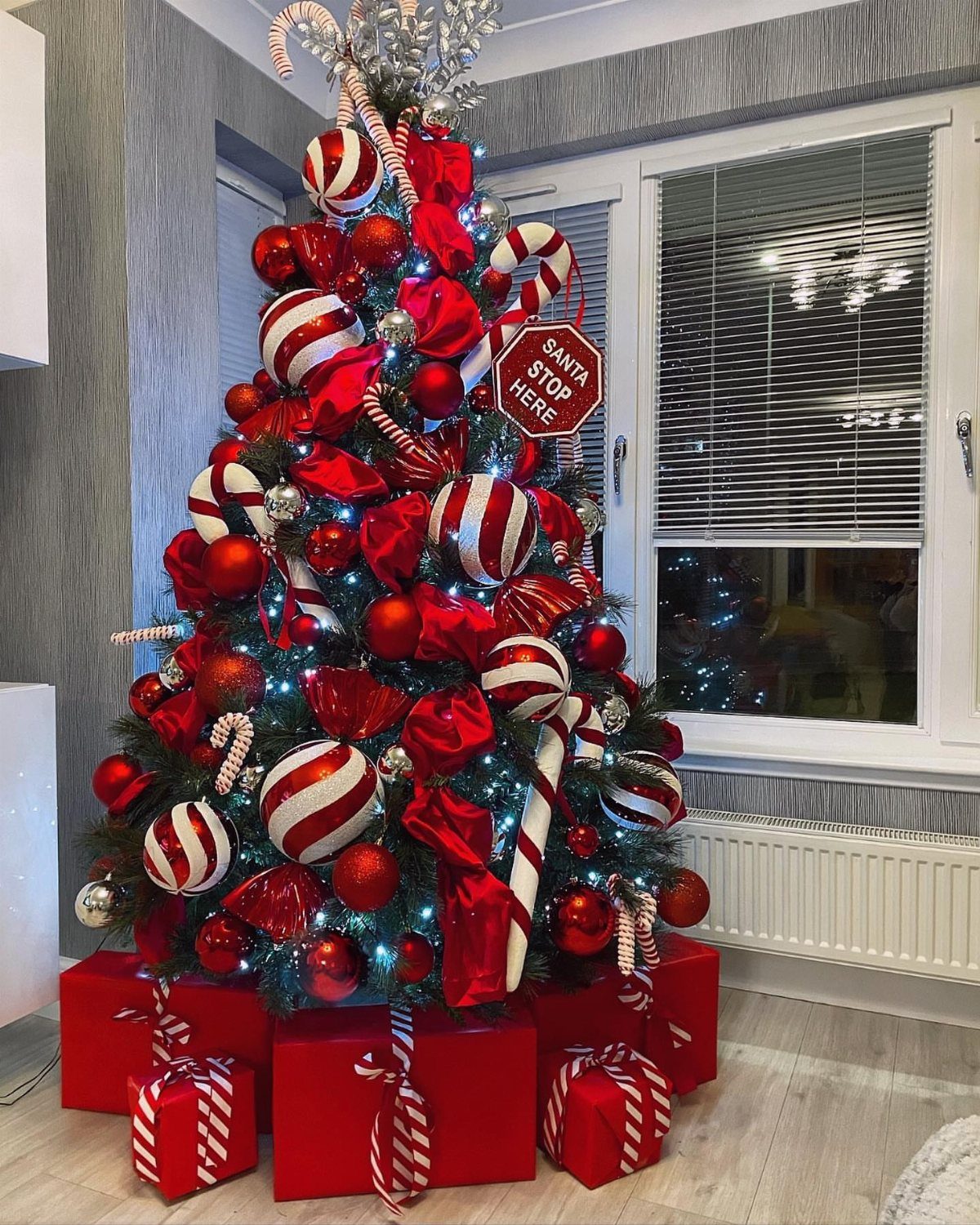
Red and white strips the tree down to 2 colors, and the repetition makes even a modest ornament collection look intentional.
Candy canes are the fastest filler: they cost next to nothing, hang on branches without hooks, and read as decor rather than leftover candy.
The striped ribbon here follows the same two-tone rule, which keeps the whole thing tight. If you want more variety, add different textures in the same colors rather than introducing a third shade.
3. Woodsy Christmas Tree
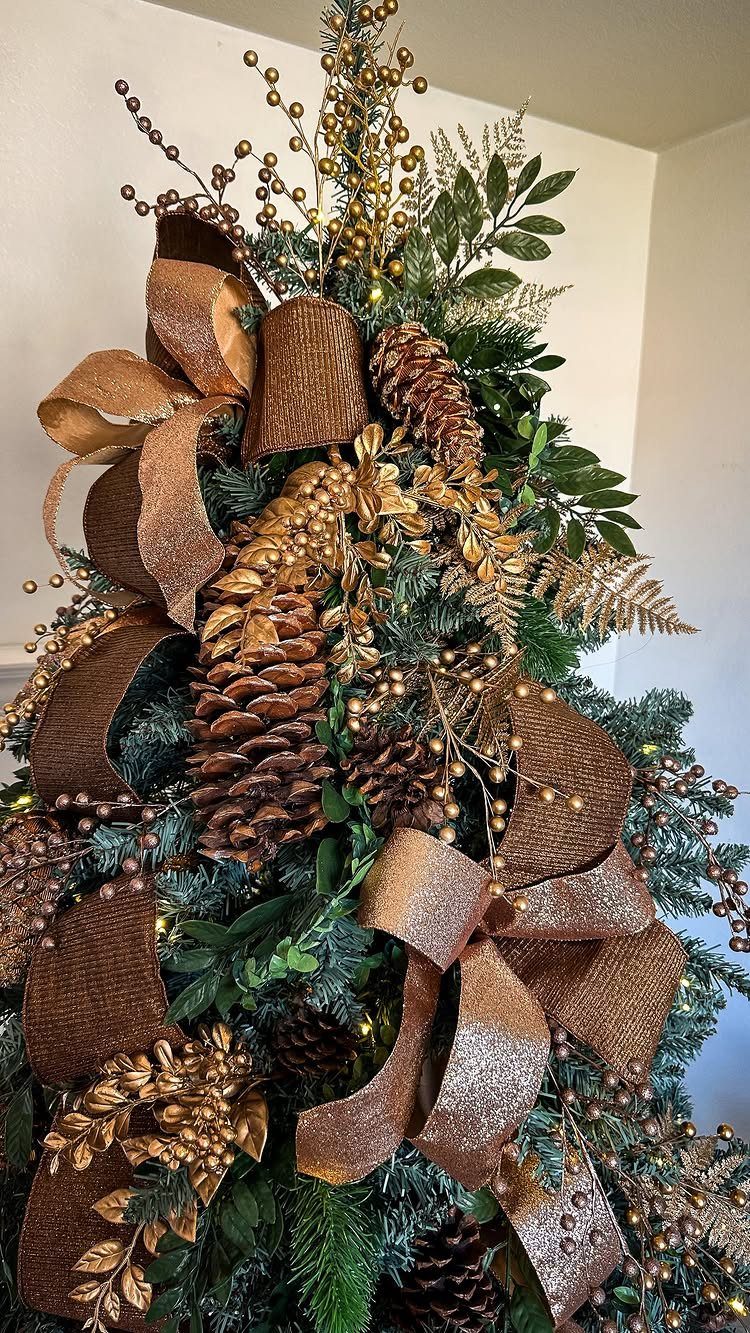
Pinecones, branches and brown ribbon pull the tree closer to something you’d find on a hike than in a mall. The gold berries here keep it from reading too rustic, which helps if your space leans more modern than cabin.
Collect pinecones outside or buy them in bulk; either way, wire them onto floral picks so they sit deeper in the tree instead of hanging at the tips.
The brown glitter ribbon fills the gaps without adding another natural element to source.
4. Gingerbread Christmas Tree
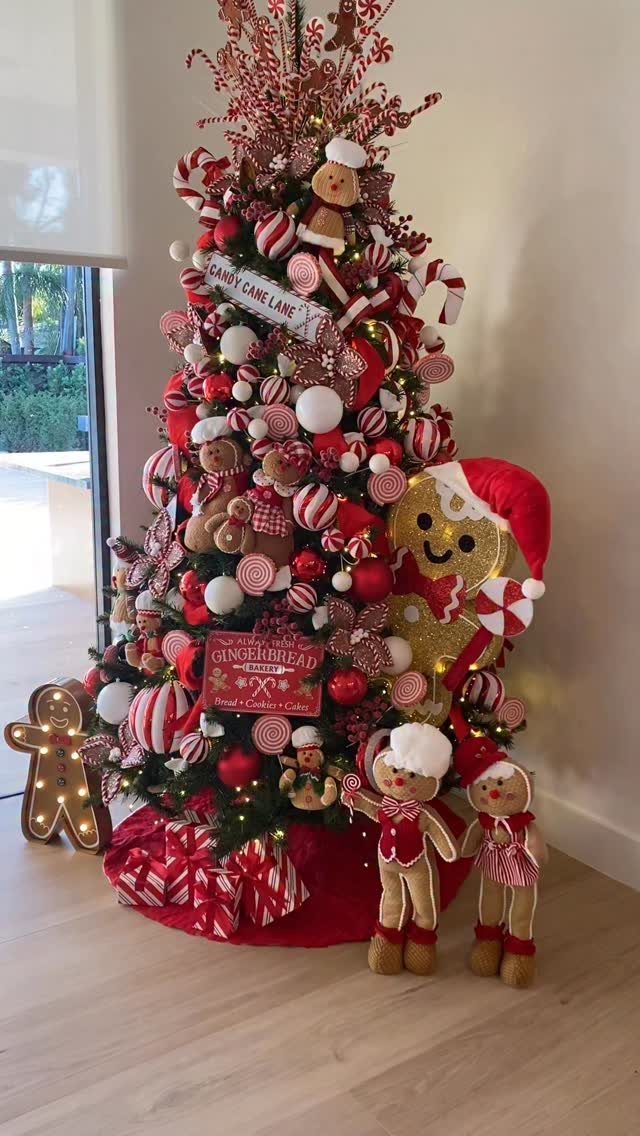
Gingerbread ornaments turn the tree into a bakery display, and the red and white ornaments give it structure so it doesn’t look like a craft fair exploded.
The signs here add a playful touch, but the idea works without them if you’d rather let the gingerbread men do the talking.
You can bake and decorate felt or wooden gingerbread ornaments yourself, or buy pre-made versions. Either way, hang them at varying depths so they don’t all flatten against the front of the tree.
5. Pastel Christmas Tree
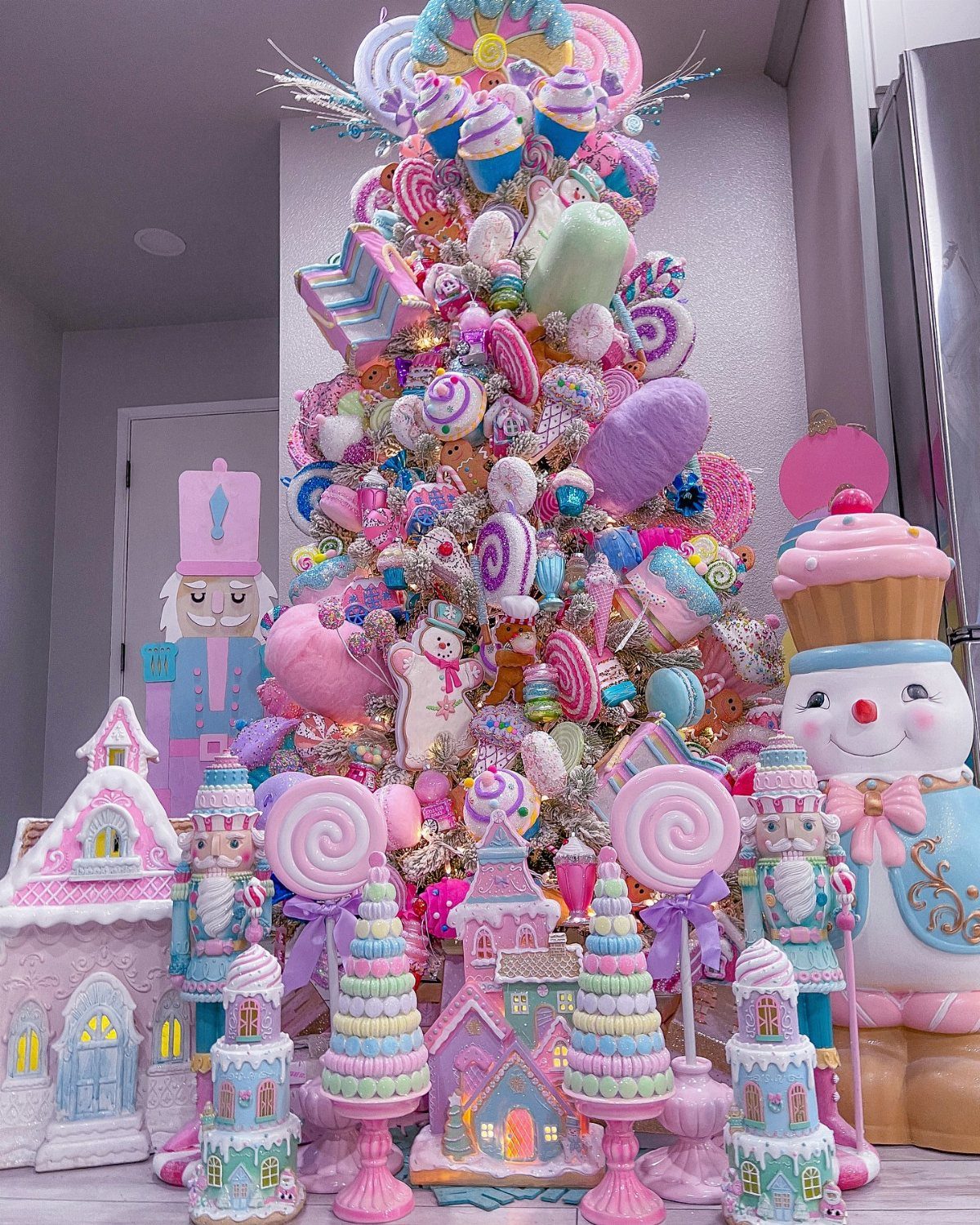
Pastels shift the holiday into something lighter and less traditional, which suits rooms that already lean soft or whimsical. The oversized candy and cupcake ornaments here are the anchor; smaller pastel balls fill in around them without competing.
This palette works best with a white or flocked tree.
A green tree pulls the pastels muddier, and you lose the lightness that makes the whole idea work. Keep the lights warm white; cool white pushes it too sterile.
6. Fragrant Flowers Christmas Tree
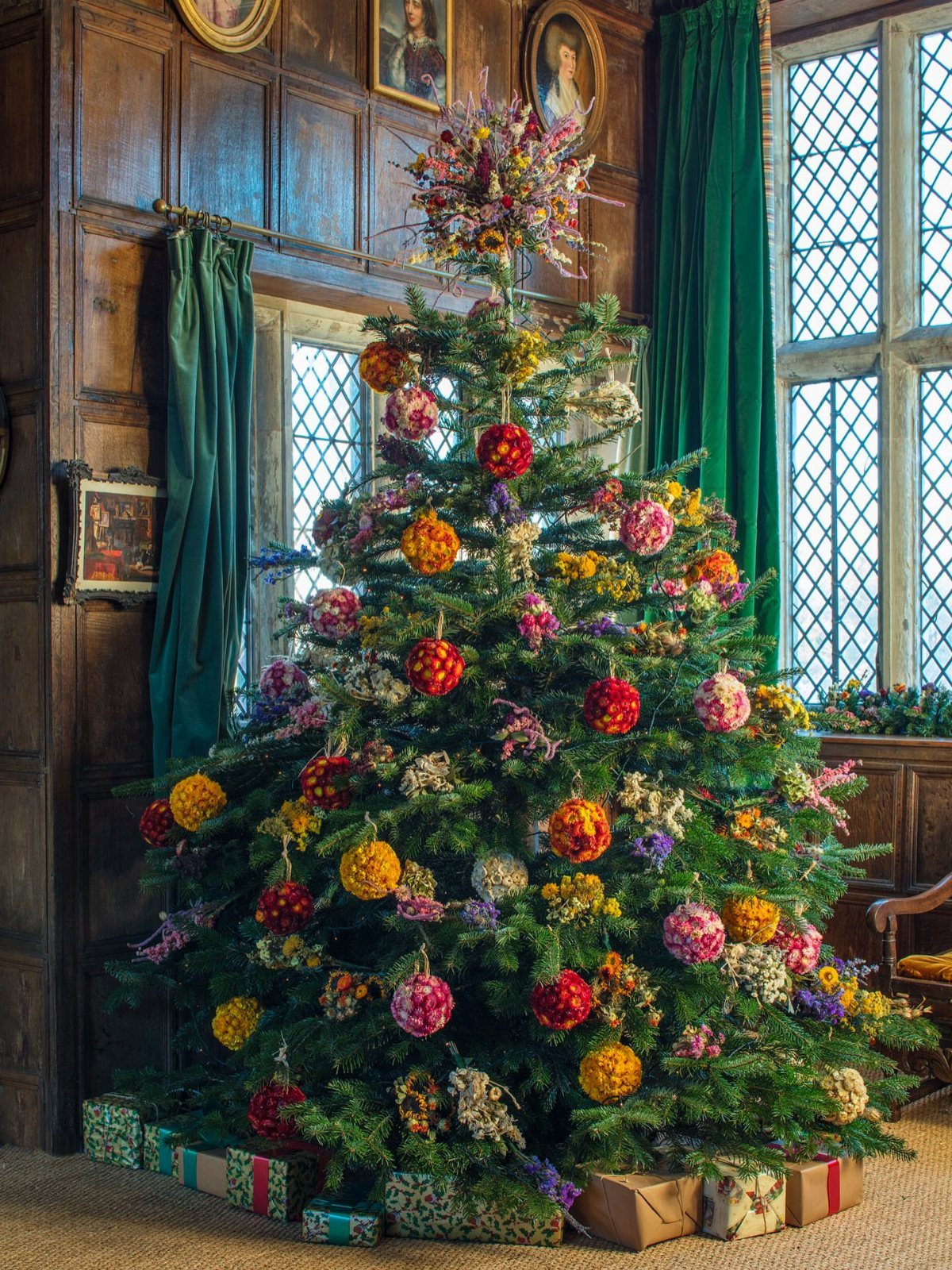
Flowers replace the usual ornaments entirely, and if you pick scented varieties, the tree smells like a garden instead of pine or plastic.
The floral spheres here are tight clusters wired onto stems, which keeps them from looking loose or accidental.
Use a mix of real and faux flowers if you want the scent without the upkeep.
Real blooms last about a week in floral foam, so plan to refresh them mid-season. Faux flowers hold their shape better and can be stored for next year.
7. Glam Christmas Tree
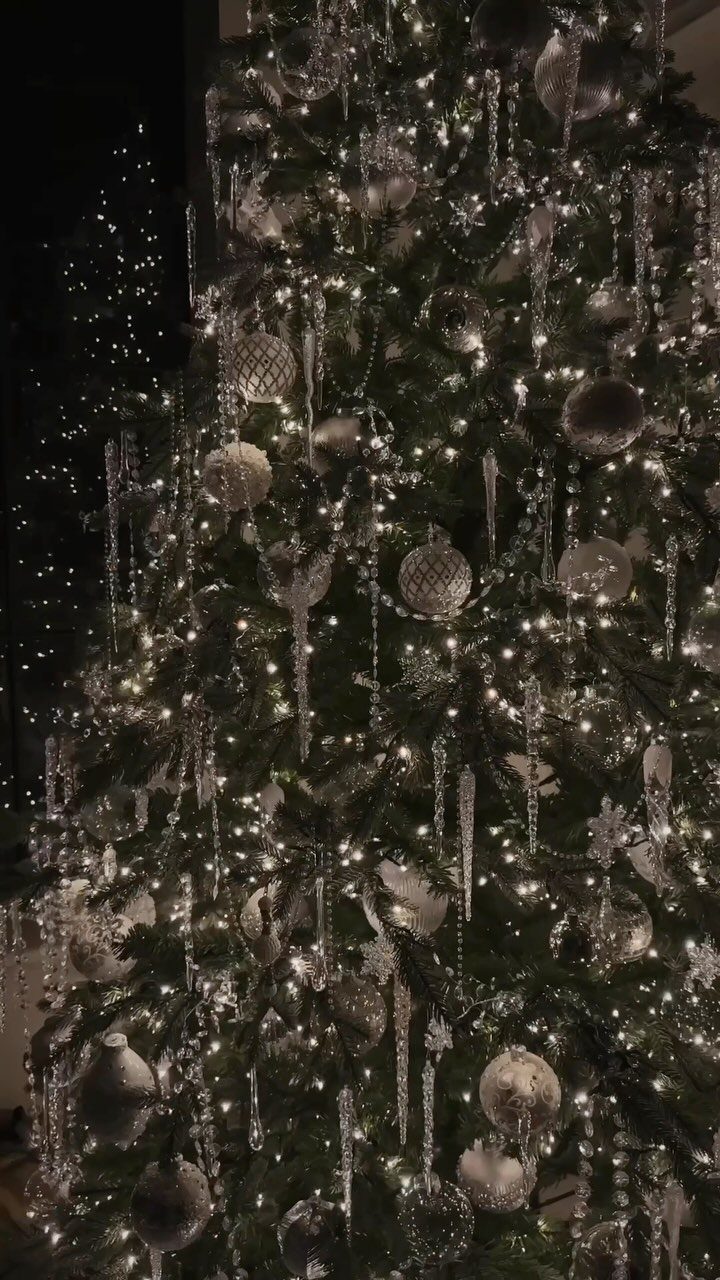
Silver and white turn the tree into something you’d see in a hotel lobby, and the icicle ornaments catch light at every angle. The look depends on repetition: enough silver to read as deliberate, not accidental.
Hang the icicles at different lengths so they don’t all stop at the same point.
8. Pink Christmas Tree
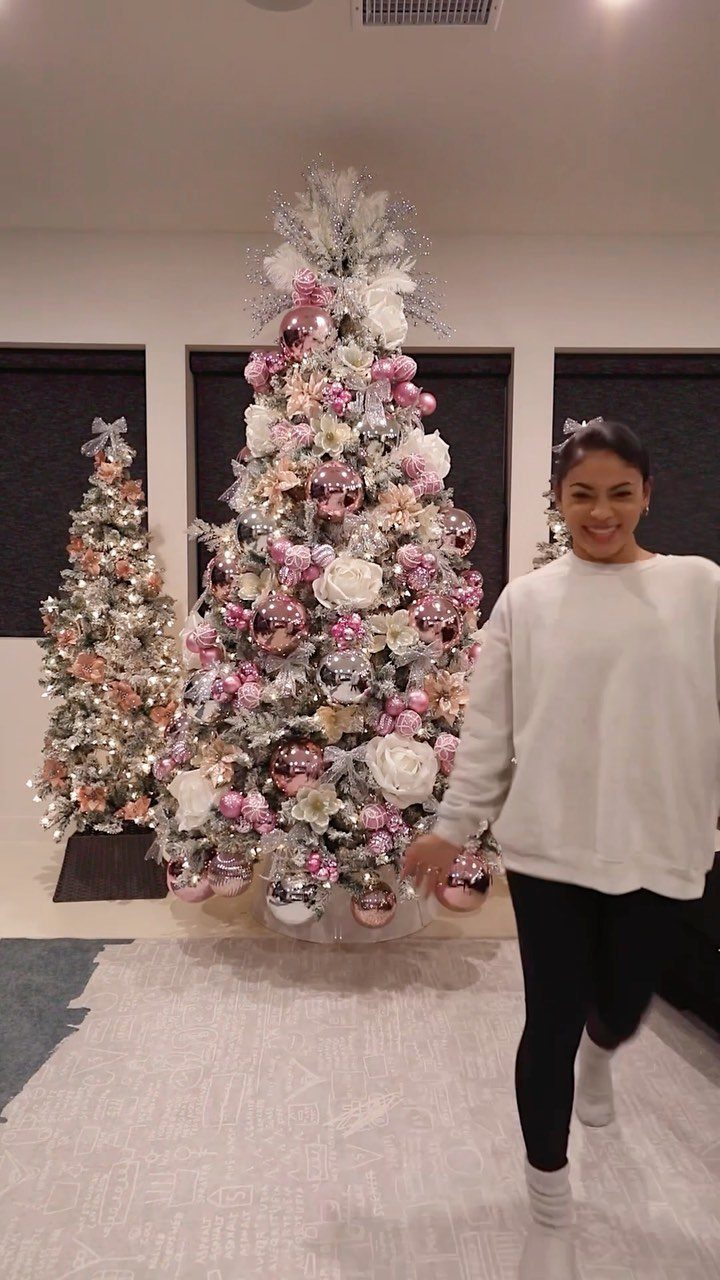
Pink skips the traditional palette entirely, and the silver keeps it from reading too juvenile. The flowers here add texture between the ornaments, which helps if you’re covering a tall tree with fewer pieces.
A flocked or white tree holds pink better than green does.
9. Minimalist Christmas Tree
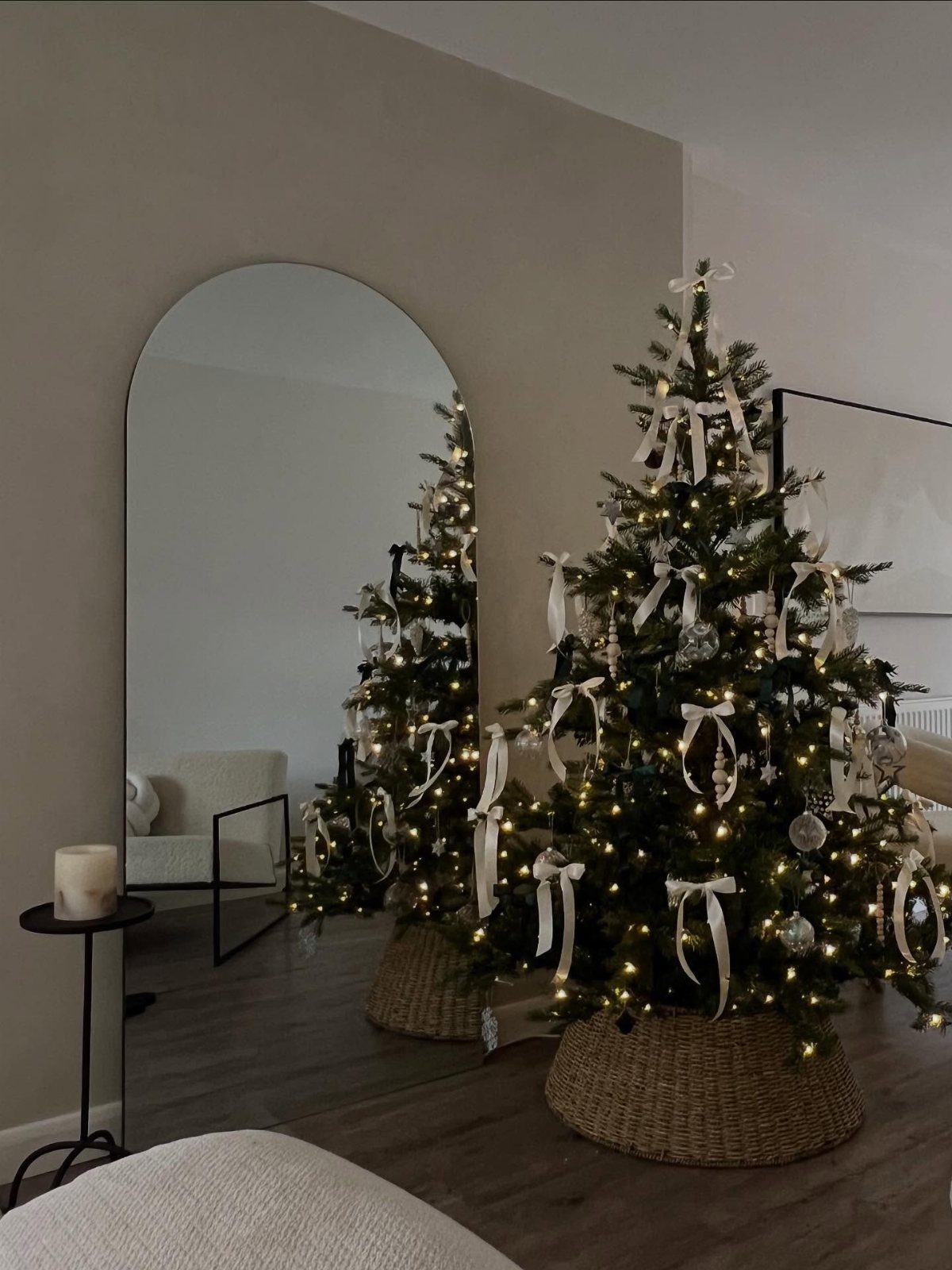
White ribbon and warm lights strip the tree down to 2 elements, and the woven basket base replaces a traditional skirt without adding clutter. The look works when you want the tree present but not loud.
Wind the ribbon in long vertical loops rather than spiraling it horizontally; this way it stays crisp and architectural. Skip ornaments entirely or add just a few in white or glass.
10. Chinoiserie Christmas Tree
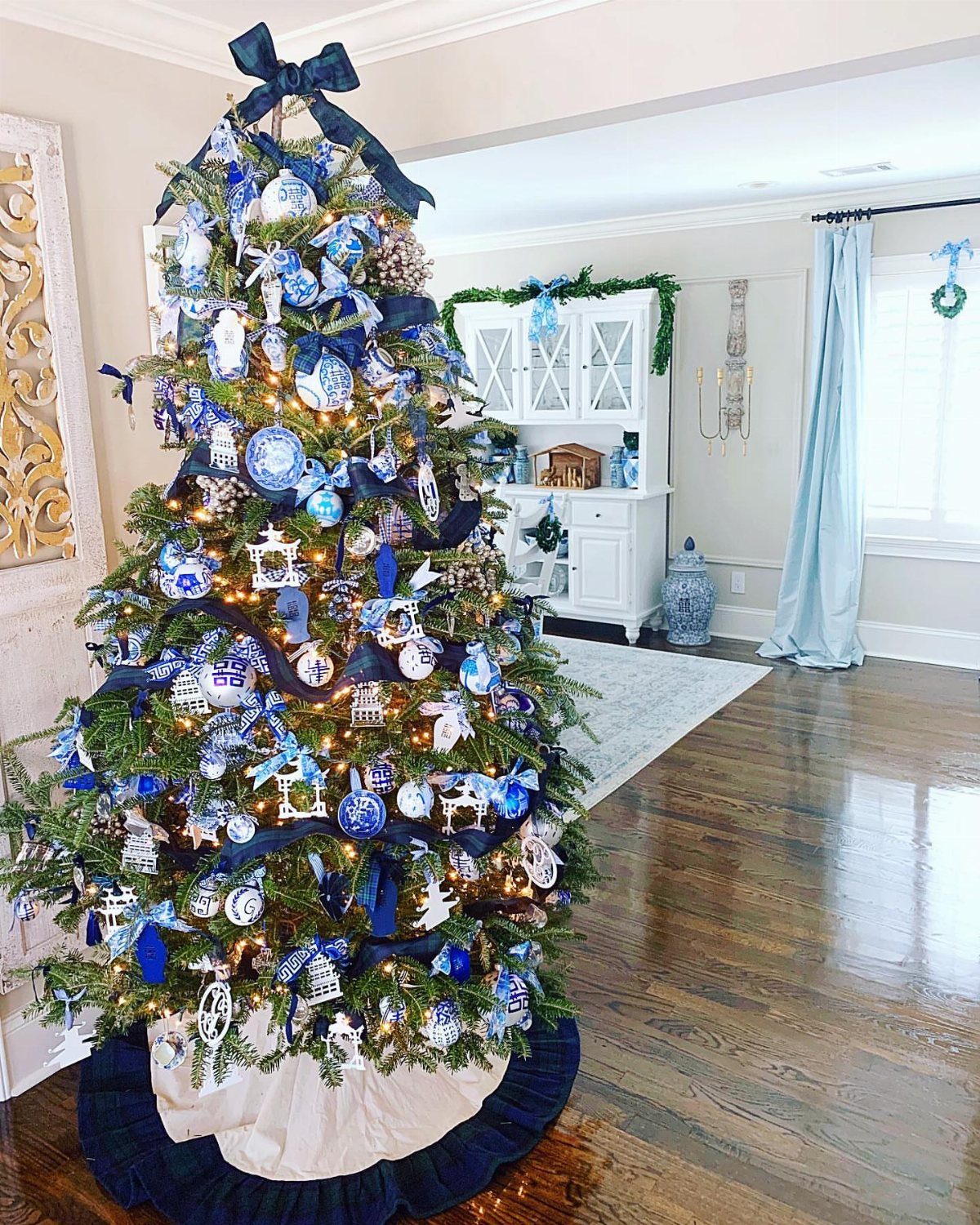
Blue and white porcelain patterns give the tree a collected look, like you pulled ornaments from a cabinet rather than a big box store. The navy ribbon here ties it together without introducing a third color.
Look for ornaments with ginger jar shapes or blue floral prints. Hang them clustered in groups of three rather than evenly spaced, which keeps it from reading too formal.
11. Cozy Cottage Style Tree
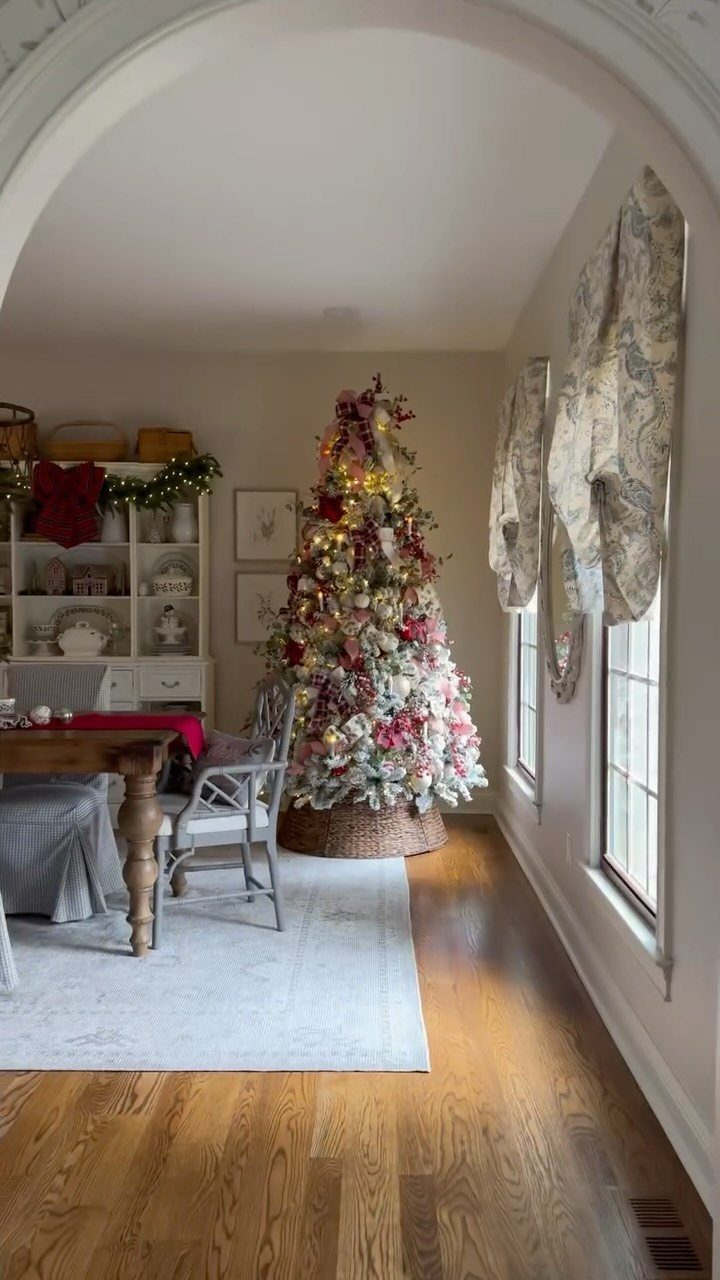
Red and pink soften the usual holiday red without losing warmth, and the mix reads more lived-in than a single-color tree. The wicker basket base here keeps it casual, which suits a room that already leans rustic.
Add a few plaid ribbons or wooden ornaments if you want more texture. Skip anything too shiny; matte finishes hold the cottage feel better than glitter or glass.
12. Fairy Lights Tree
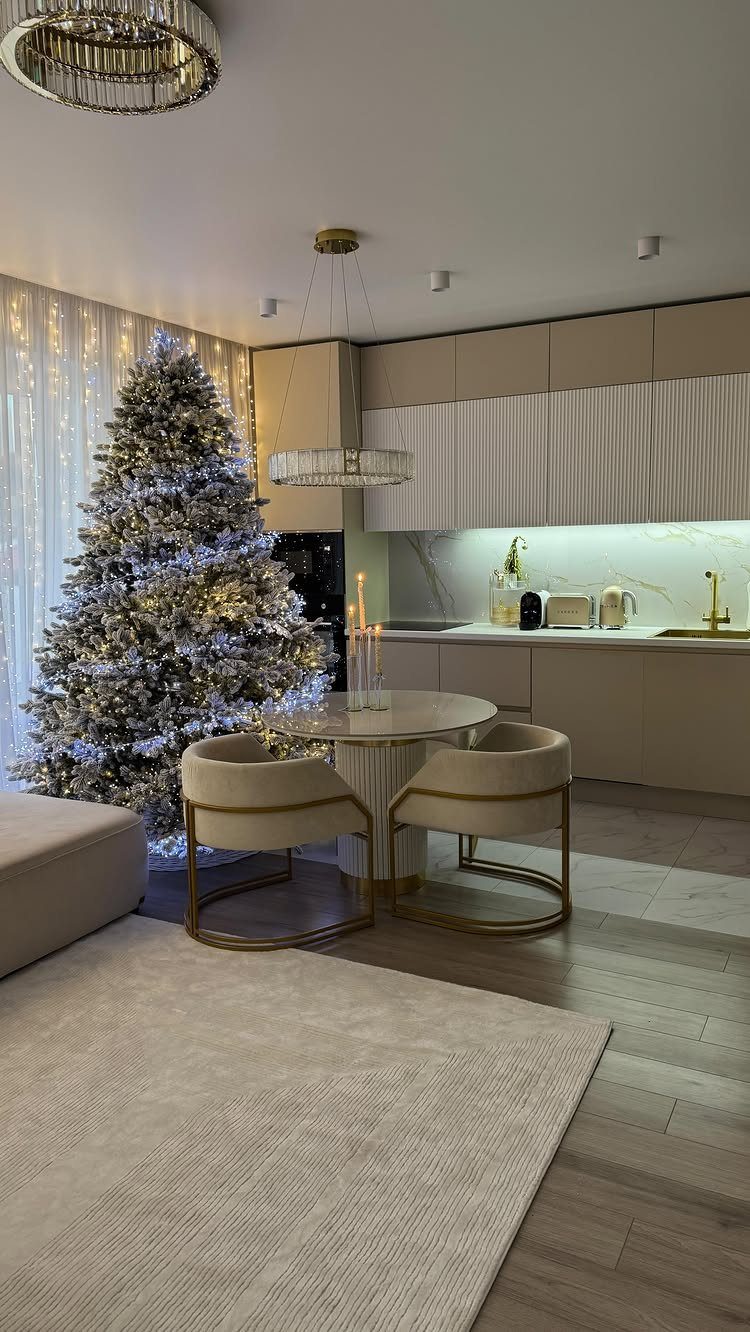
A frosted tree with just lights skips ornaments entirely, and the frost catches the light at every angle. This works when you want something festive that doesn’t compete with the rest of the room.
Wrap the lights tightly around each branch rather than draping them loosely. The frost reflects the bulbs, so you need fewer strands than you’d use on a green tree.
13. Gold Christmas Tree
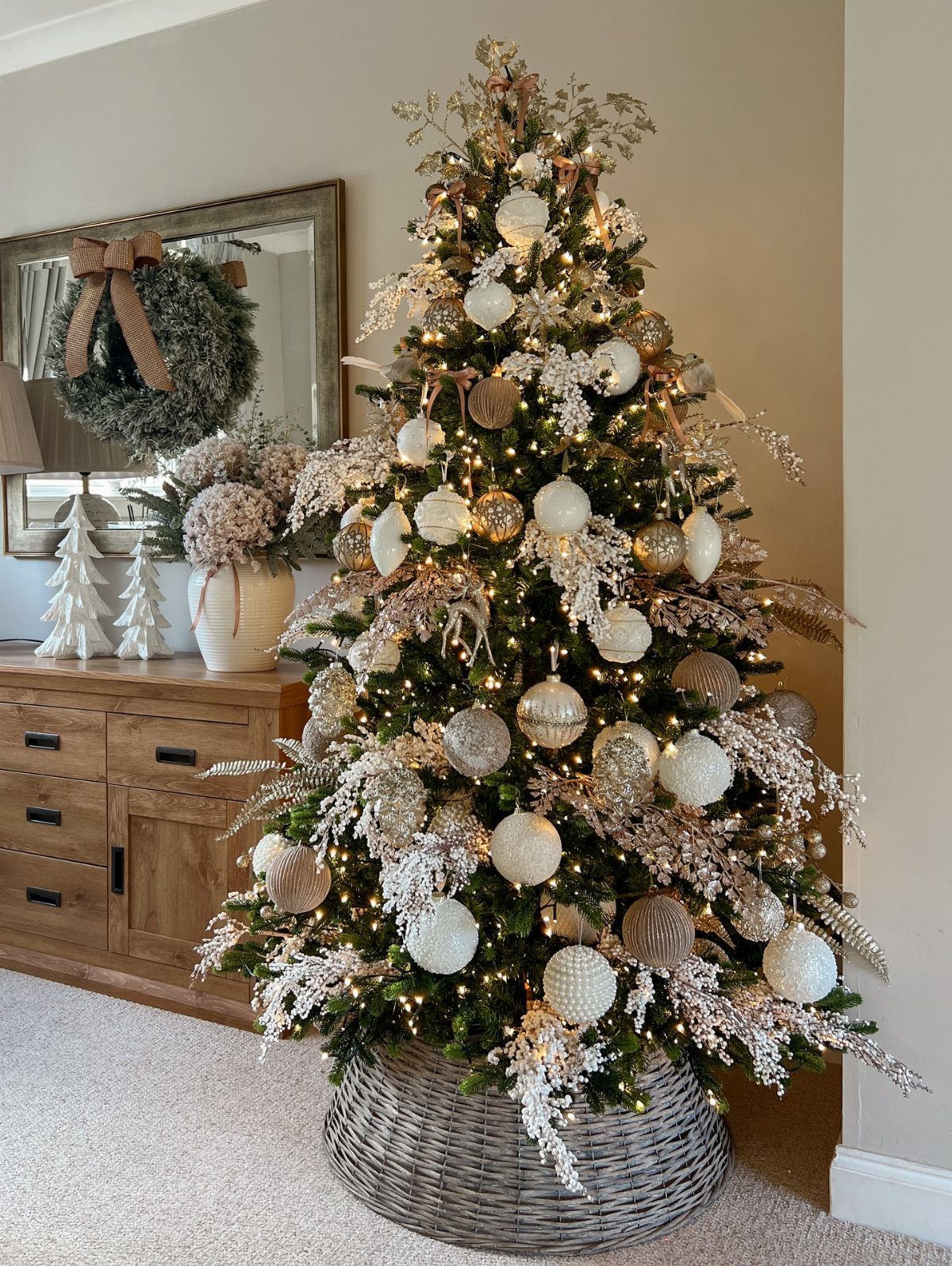
Gold ornaments and white accents turn the tree warm and reflective, and the frost on the branches softens what could otherwise read too shiny. The grey basket grounds it without pulling focus.
Stick to matte and glossy gold rather than mixing in glitter, which tends to shed.
Layer in white ribbon or frosted branches if the gold starts feeling too heavy. Warm white lights hold the glow better than cool white.
14. Traditional Christmas Tree
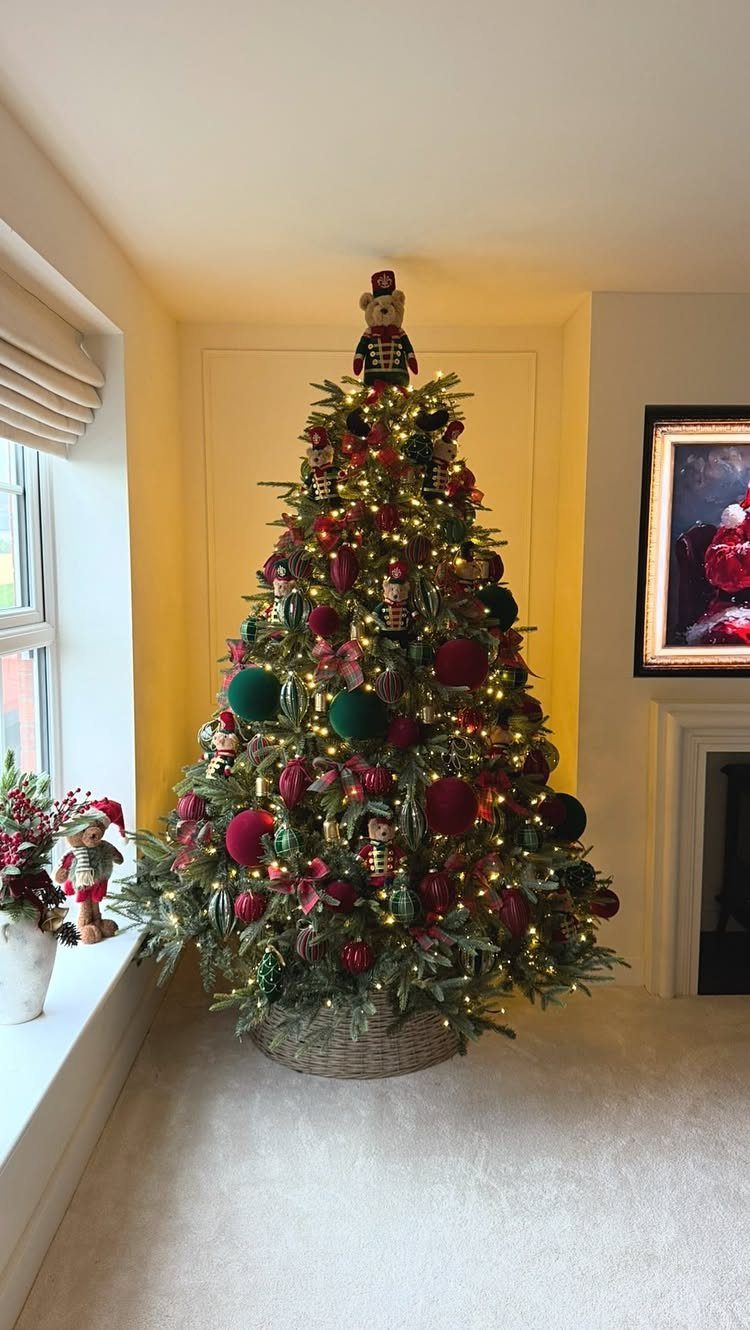
Red and green stay the easiest palette to shop for, and the teddy bear topper adds a softer touch than a star or angel.
The mix of ornament shapes here keeps it from looking too uniform, which happens when you buy everything in one trip.
Add a few handmade or older ornaments if you want it to feel more personal. The look works best when the tree feels collected over time rather than bought all at once.
15. Tartan Plaid Christmas Tree
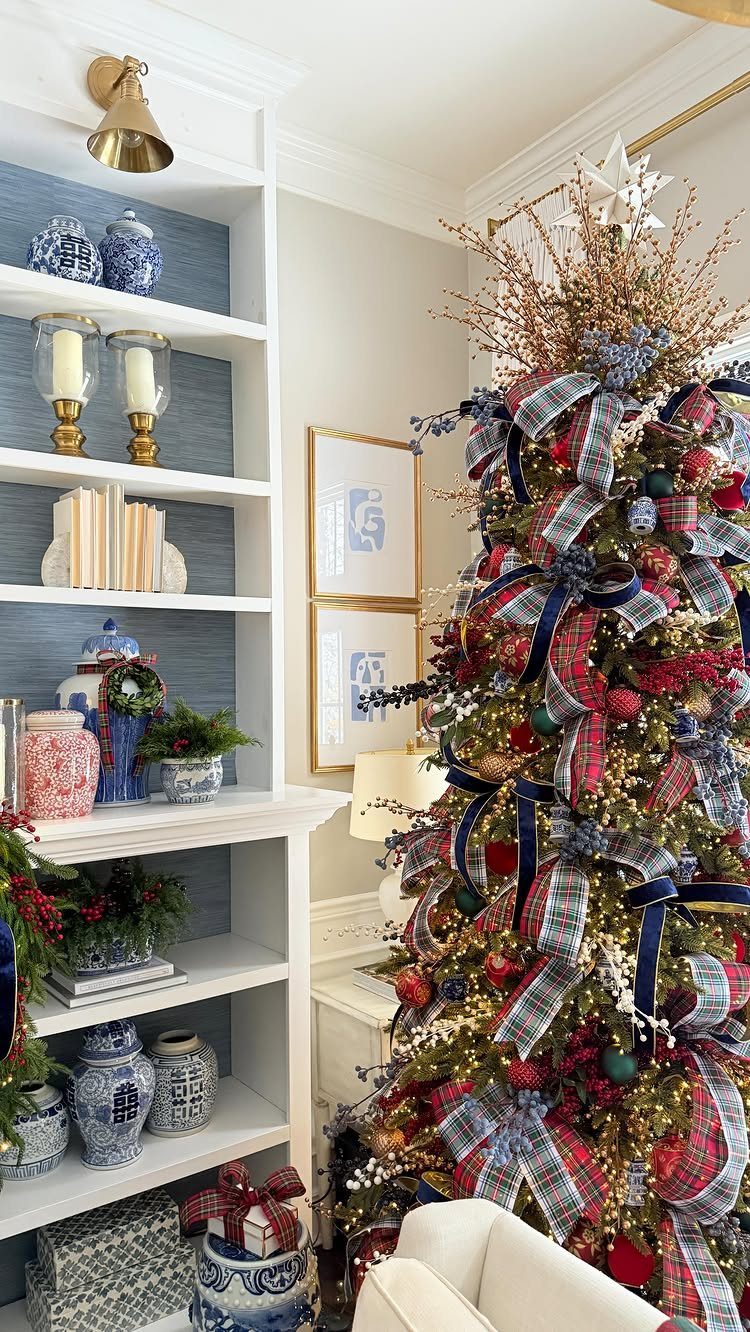
Red and blue plaid ribbons give the tree a Scottish edge, and the pattern fills space between ornaments without adding more to buy.
The white shelves and blue ceramics here tie the room together, which matters if the tree sits next to other decor.
Use wired ribbon so the loops hold their shape. Add a few solid red or blue ornaments if the plaid starts competing with itself.
16. Disney-Themed Christmas Tree
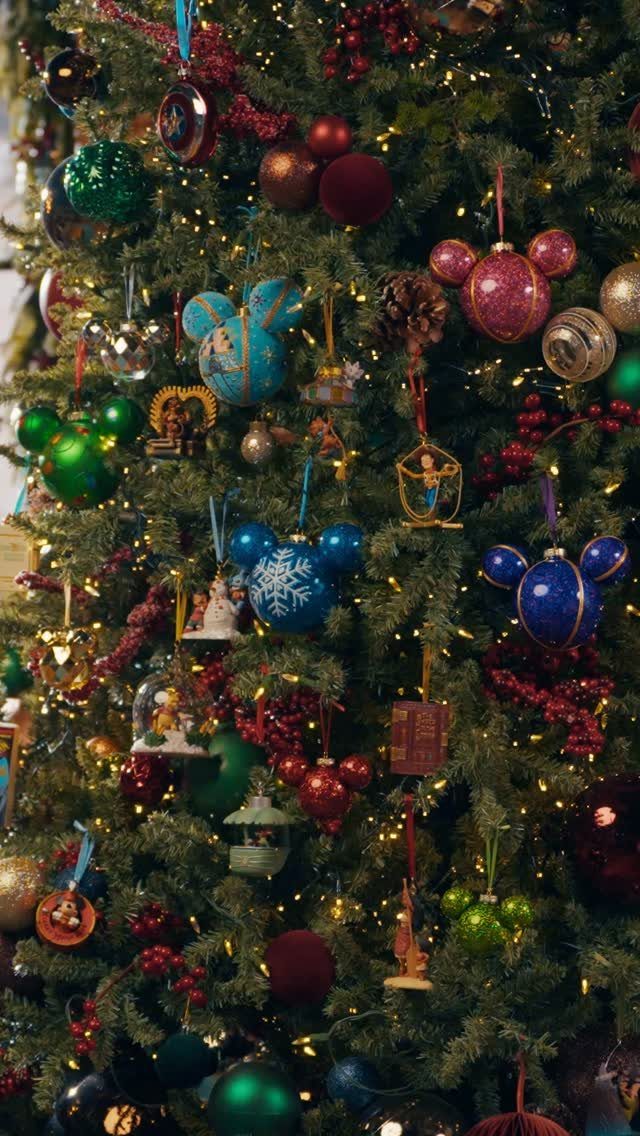
Mickey-shaped ornaments and character figurines turn the tree into something kids recognize immediately, and the red berries keep it from reading as all toys. The mix of shapes and sizes here adds depth without needing a formal plan.
Start with a few character ornaments and fill in with solid colors that match the Disney palette. Skip anything too detailed; simple shapes hold up better from across the room.
17. Dark and Moody Christmas Tree
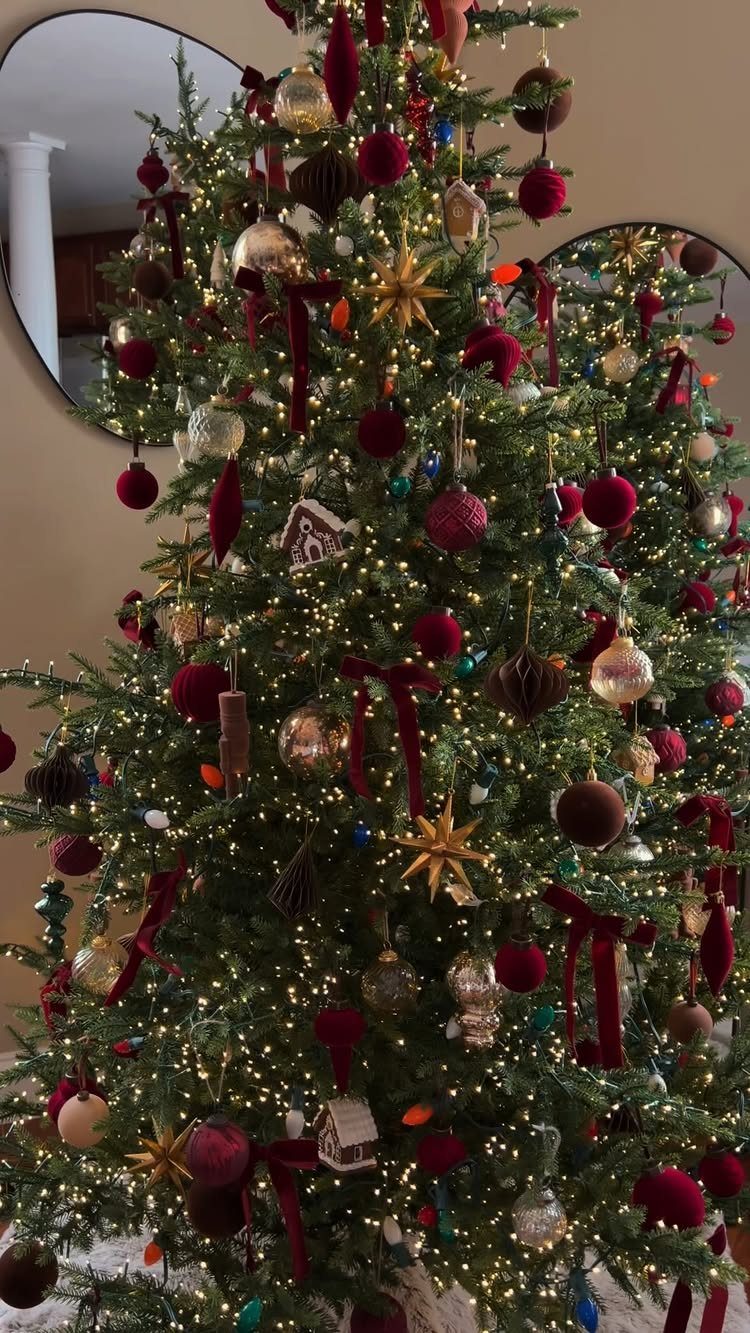
Deep red velvet ribbon and burgundy ornaments pull the tree darker and richer than the usual bright holiday palette, and the gold stars keep it from feeling too somber. The look suits rooms with darker walls or furniture.
Use matte or velvet finishes rather than shiny ones; the texture is what makes it moody. Add a few black or charcoal ornaments if you want to push it further, but keep the lights warm to hold the glow.
18. Candy Cane Themed Christmas Tree
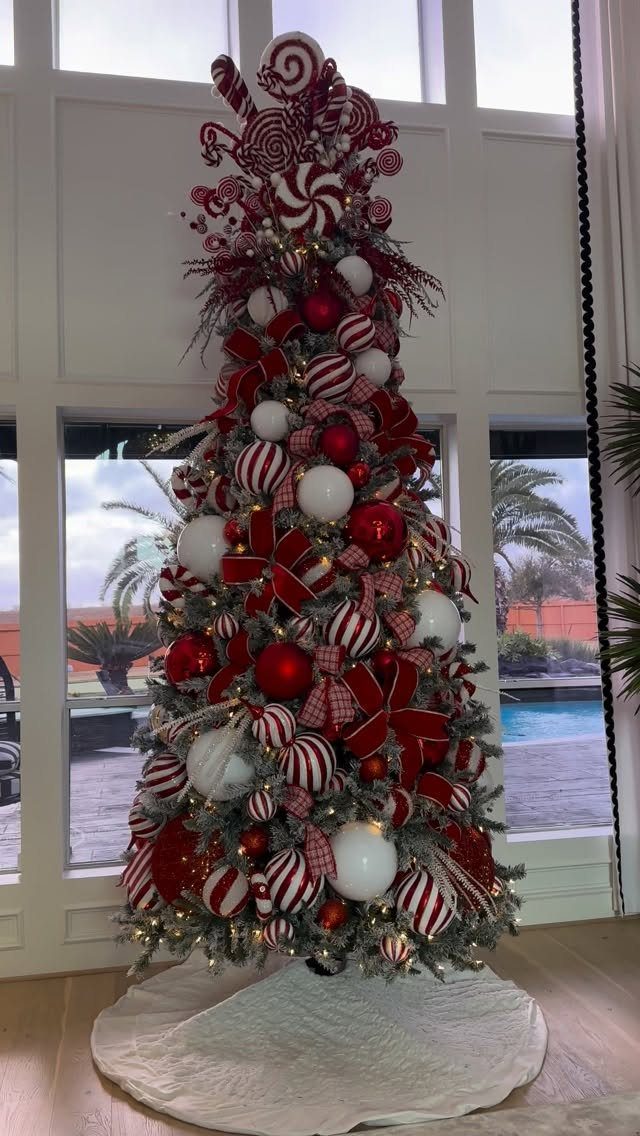
Peppermint swirl ornaments and striped ribbon give the tree that old-fashioned candy counter feel, and sticking to 2 colors makes a few ornaments go further. The white tree skirt keeps the base clean without adding another pattern.
Hang real candy canes if you want the peppermint smell, or stick with plastic versions if you have pets or kids who might pull them off. Add red and white ribbon in wide loops to fill the gaps between ornaments.
19. Rainbow Christmas Tree
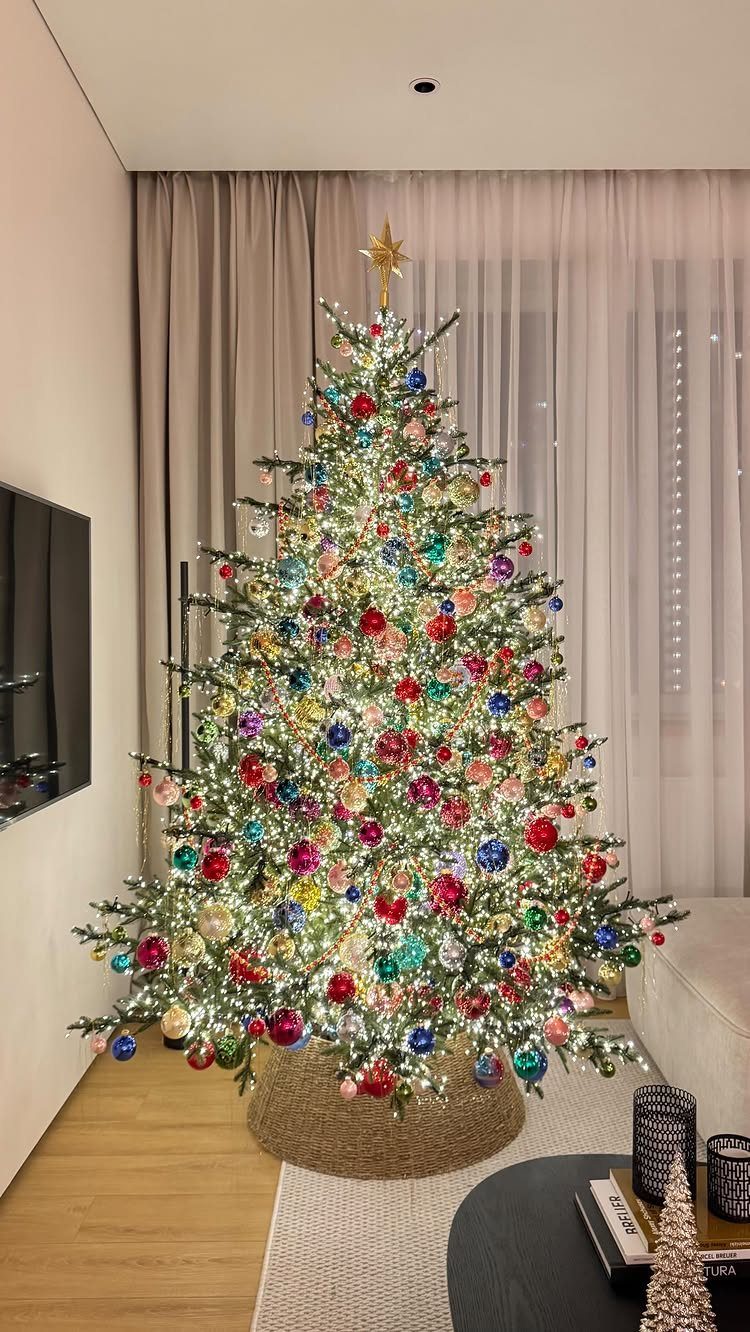
Ornaments in every color stack the tree with more energy than a single palette can hold, and the result reads playful without needing a formal plan. The gold star keeps it grounded.
Buy a rainbow pack of ball ornaments and fill in with what you already have. Spread the colors evenly around the tree rather than grouping them by shade, which keeps one side from reading heavier than the other.
20. Red and Green Christmas Tree
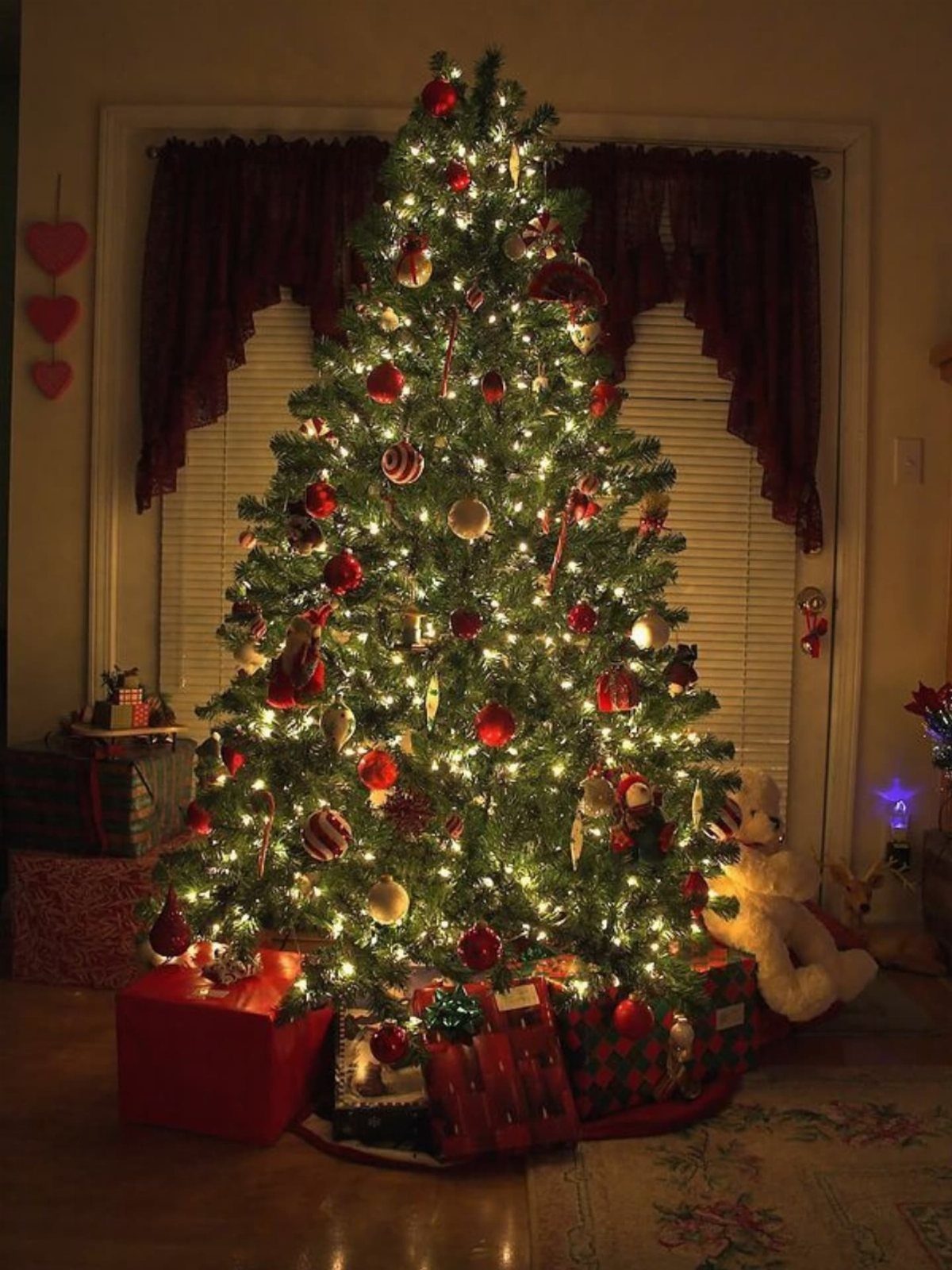
Red ornaments and green branches are the fastest combination to recognize as Christmas, and sticking to those 2 lets you shop anywhere without worrying about whether shades match. The white lights warm the red without washing it out.
Layer in different sizes of red ornaments if you want more depth. A few gold pieces fold in easily without breaking the classic look.
21. Disco Ball Tree
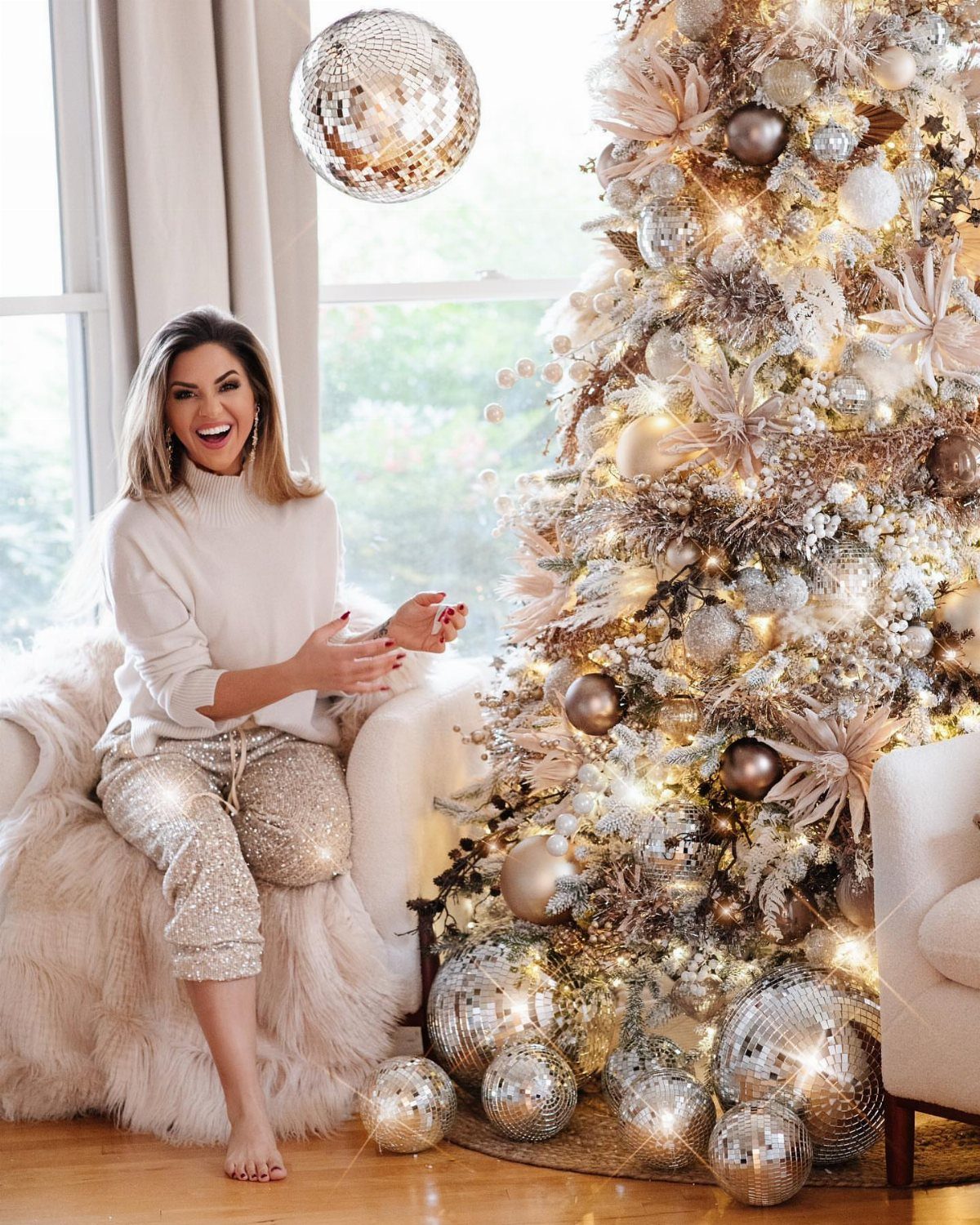
Disco balls catch and scatter light like nothing else, and covering a tree with them turns it into the centerpiece at a New Year’s party. The white tree keeps the focus on the reflective surfaces instead of competing with green.
Hang the balls at different heights and let them spin slightly if touched. Add a few gold or silver ribbon loops if you need to fill gaps, but keep the finish shiny so everything bounces light.
22. Under the Sea-Themed Tree
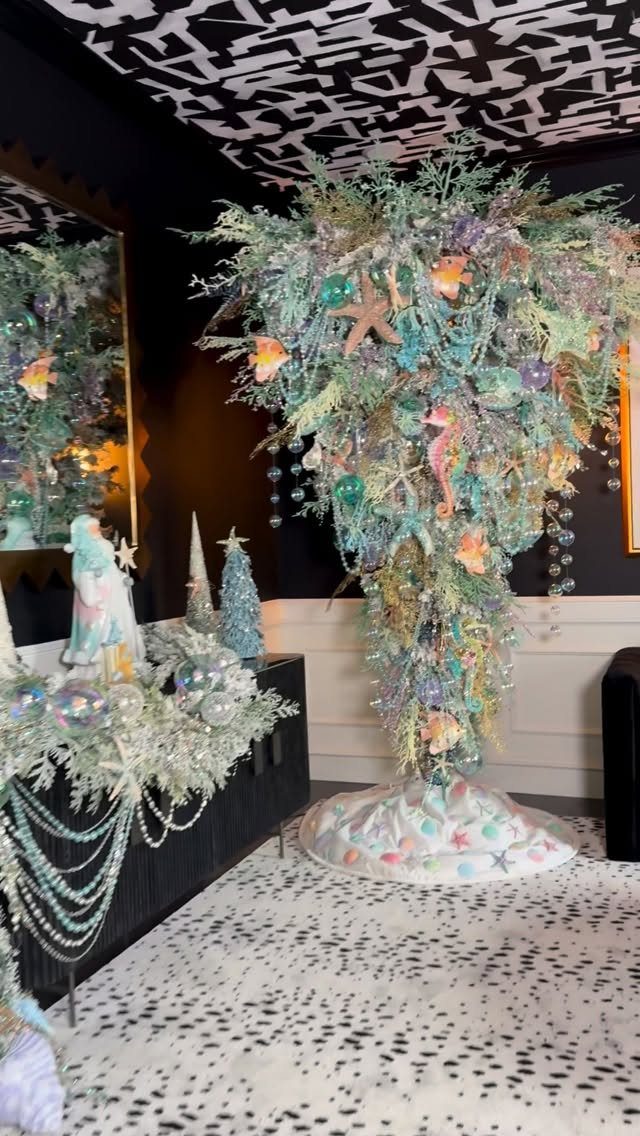
Starfish and shell ornaments pull the holiday palette into teal and seafoam, which works if you live near water or just prefer cooler tones to the usual reds.
The iridescent blue ornaments here shift color depending on the angle, which keeps the tree from reading flat.
Use a teal or blue tree if you can find one; green muddies the ocean theme.
23. Book Christmas Tree
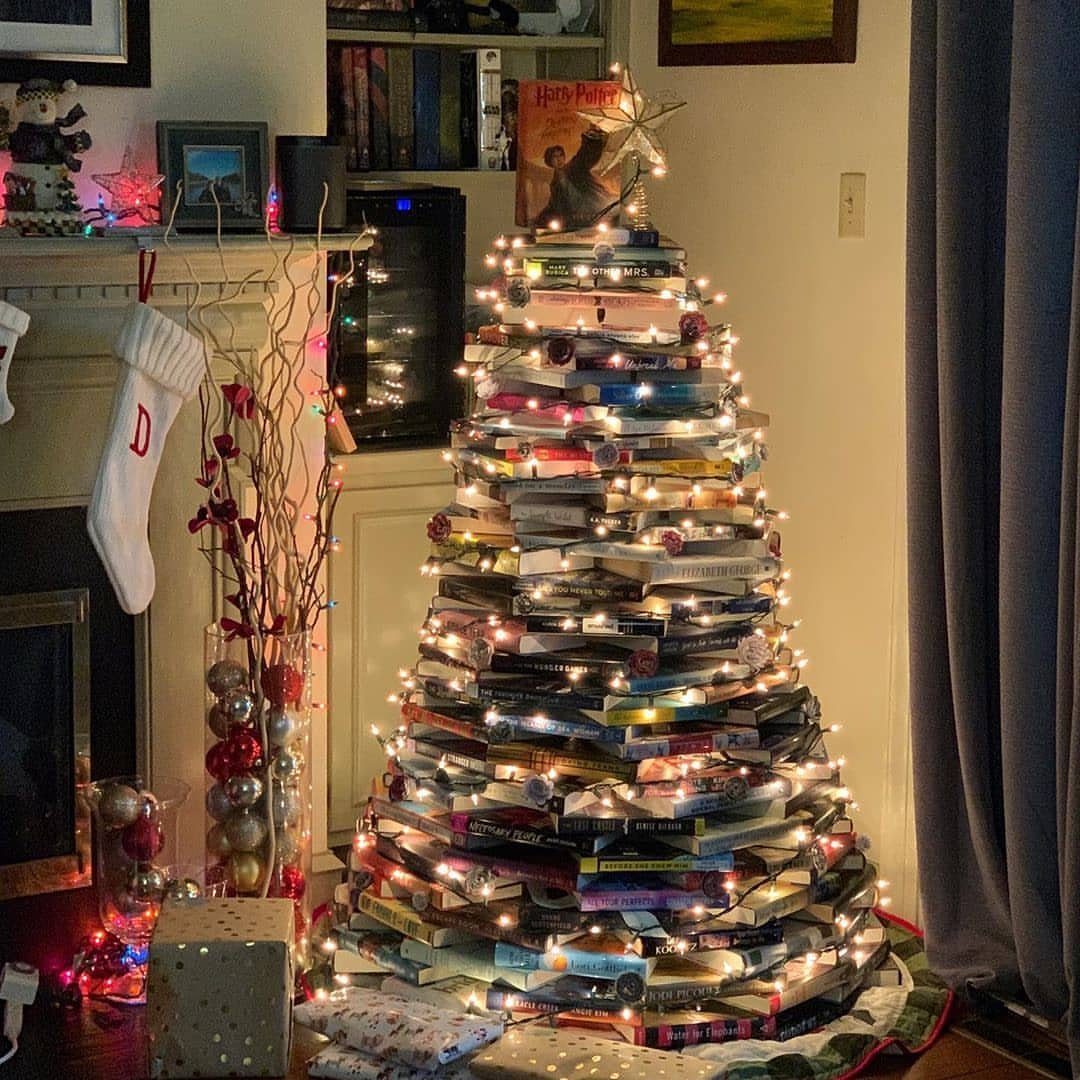
Stacking books into a tree shape skips the needles entirely, and the lights woven between the spines give it enough holiday weight to work in place of a real tree.
The gold star at the top keeps it from reading as just a pile.
Start with a wide base of large hardcovers and taper up with smaller books.
Wrap the lights around each layer as you build so the cord stays hidden. This works best with books you own and don’t mind leaving stacked for a few weeks.
Choosing a Christmas Theme
Start with the room the tree will sit in.
If your walls are cool-toned, blue or silver themes hold better than warm reds. If the furniture leans rustic, wood and plaid fit without fighting the rest of the space.
Pick one anchor: a color pair, a single pattern, or a type of ornament.
That anchor decides what you buy and what you skip, which keeps you from walking out of the store with 3 bags of things that don’t work together.
If you have ornaments on hand, sort them by color or style and see what you have enough of to build around.
You can always add to a collection you started, but starting from scratch costs more and takes longer than working with what’s already in the bin.
Read on for 50 designer-approved and outside-the-box Christmas tree theme ideas. And do heed Gardner’s advice: Decorating is “a long process best fueled by strong eggnog and Bing Crosby.”
Using Lights Effectively
Count on 100 lights per foot of tree height as a baseline.
Warm white lights lean amber and suit most traditional palettes and warmer rooms.
Cool white skews blue and works better with silver, icy blues, or modern schemes. Test a strand against your ornaments before you wrap the whole tree.
String the lights from the trunk outward along each branch, then back toward the center.
This method puts bulbs deeper in the tree rather than all sitting at the tips, which fills the gaps between ornaments and makes the whole thing glow instead of just the surface.
Incorporating Personal Elements
Fill in around them with whatever you bought this year, which lets the new pieces support the ones that matter rather than hiding them.
If a family ornament doesn’t match your theme, hang it anyway.
Arranging ornaments so each type gets its own spot keeps them visible and gives the eye somewhere to land instead of scanning past everything at once.
Frequently Asked Questions
What are some unique Christmas decorating themes?
Woodsy trees with pinecones and branches, pastel palettes on flocked trees, and chinoiserie patterns with blue and white porcelain ornaments all step away from the usual red and green.
Each works by committing to a specific mood rather than mixing traditional elements, which keeps them from reading generic.
What are some popular Christmas tree theme ideas for 2026?
Dark and moody trees with burgundy ornaments and velvet ribbon, fairy light trees that skip ornaments entirely, and minimalist designs with just white ribbon are gaining ground.
These trends lean toward fewer elements done deliberately rather than packing every inch with decor.






