
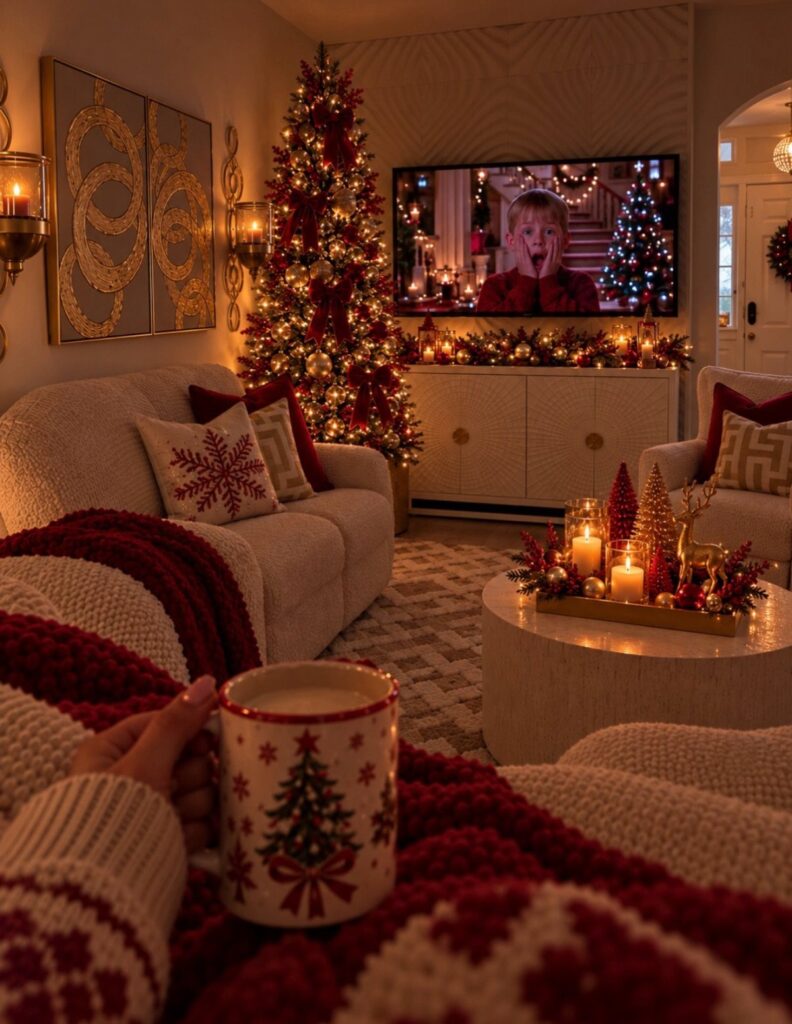
The ideas here range from a statement wreath hung above the mantel to garland framing a mirror, pastel pink replacing traditional red, and a bauble ornament converted to hold a taper candle.
1. Christmas Tree Decorations

A single color scheme holds the tree together and keeps it from looking busy. Red and gold work because they share warmth, and the combination reads as intentional rather than collected over time.
Pick 2 colors and stick to them across every ornament, ribbon, and light color.
Metallic finishes in one of those colors add depth without introducing a third shade. Space ornaments evenly by stepping back every few additions to check for gaps.
If the tree sits near a window, the light behind it during the day will make any bare spots more obvious, so fill those first.
2. Mini Trees
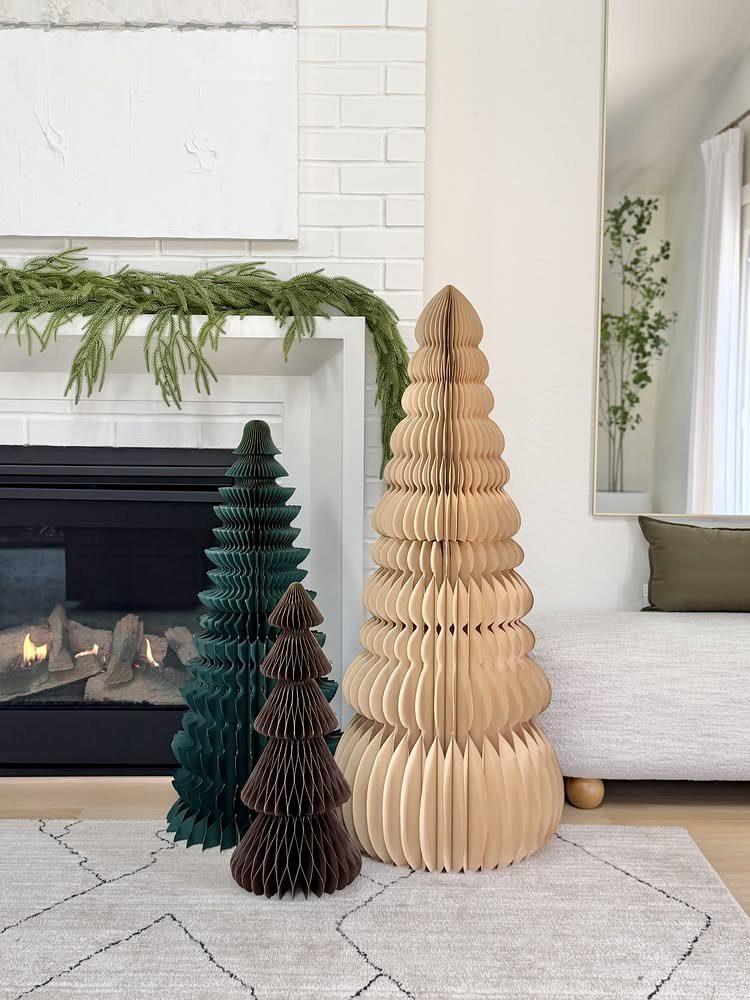
Small freestanding trees fill corners, side tables, and mantels where a full tree won’t fit. The accordion fold style visible here works because it packs flat for storage and sets up in seconds.
Look for pleated cardboard or paper trees in neutral tones if you want them to blend with furniture, or pick green for a traditional look.
Heights between 12 and 24 inches fit most tabletops. Group 3 in varying heights for balance, or use a single tree where space is tight.
These suit renters and small spaces especially well, since they skip the stand, the watering, and the needle cleanup.
3. Statement Wreath

Hang a wreath on a wall instead of the door to pull focus where you want it.
This moves the decoration inside where you see it more often, and it anchors a blank wall or the space above a console table.
Fresh or faux greenery both work. Add florals, berries, or cotton for texture, and finish with a bow at the top or bottom.
Mount it with a removable adhesive hook rated for the weight.
4. Festive Feature Wall
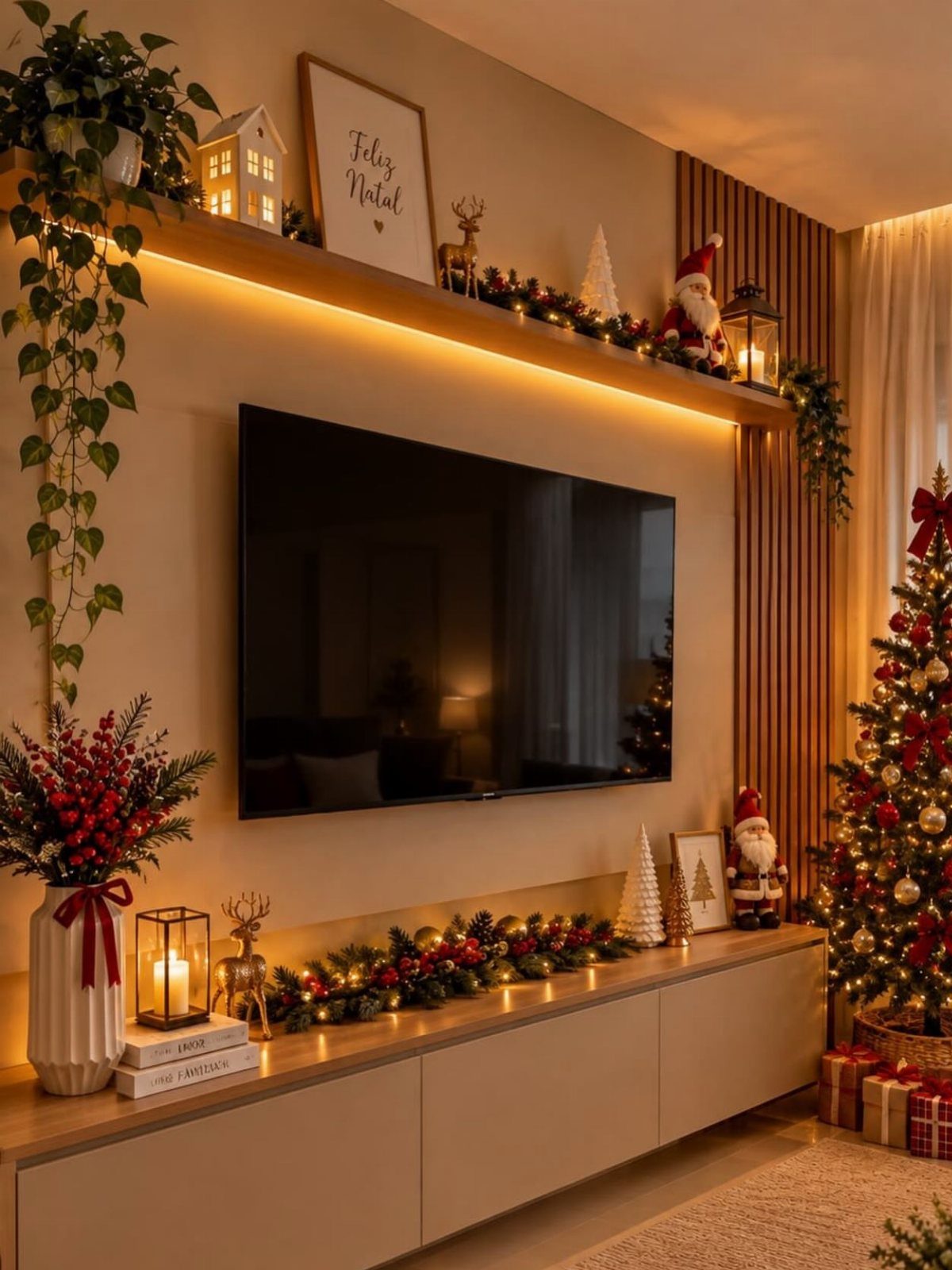
Built-in shelving or a media wall becomes a display by layering garland, lights, and small decorations across the surfaces. This keeps the TV functional while surrounding it with seasonal pieces.
Drape garland along the top edge of shelves and the console below, then tuck string lights into the branches.
Add figurines, small trees, or signs on open shelves and the surface in front of the TV. Keep decorations low enough that they don’t block the screen or remote sensor.
This setup works best in rooms where the TV wall already has depth from shelving or trim, since flat walls offer fewer places to anchor items.
5. Traditional Red and Green
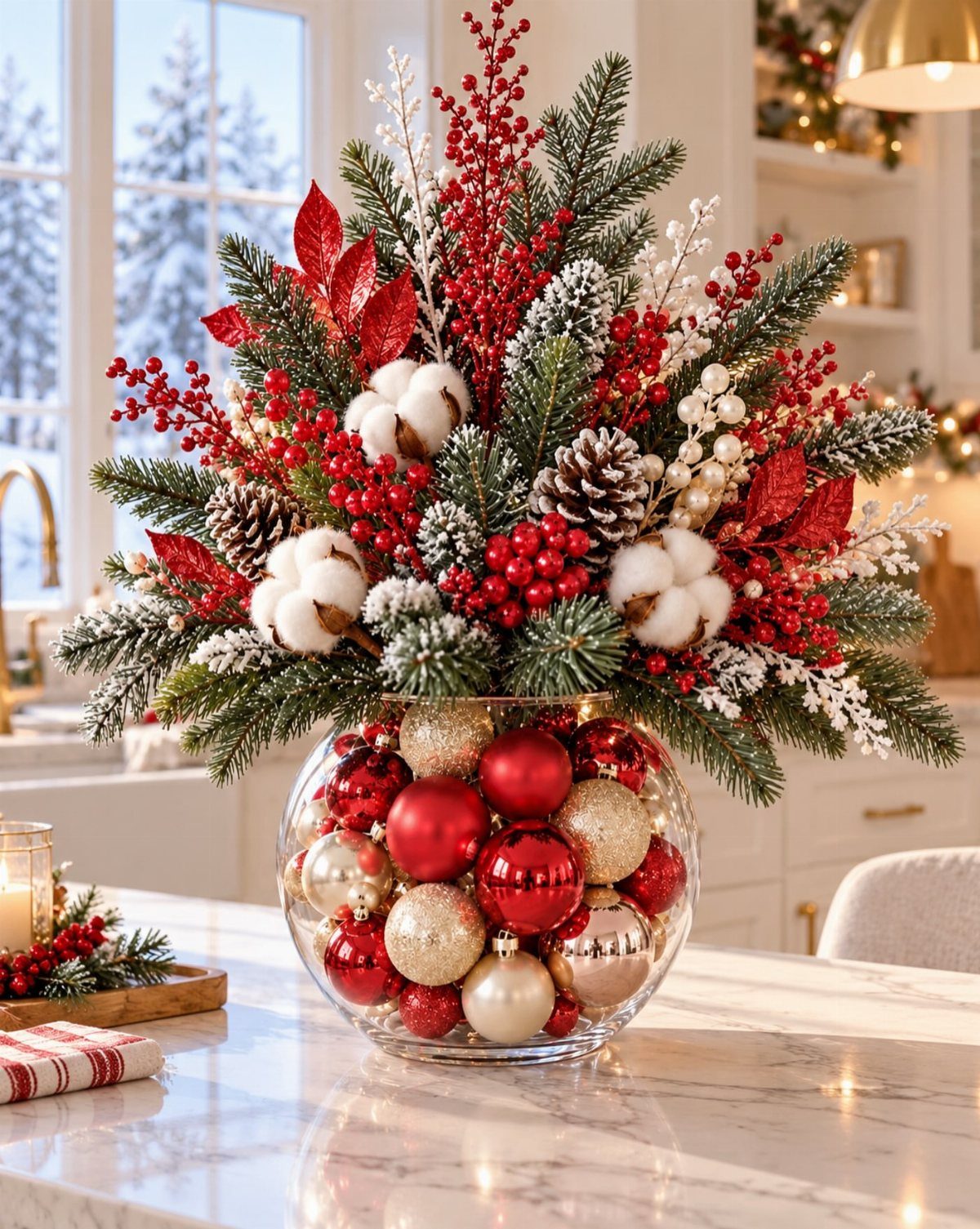
Red and green remain the most recognized Christmas palette, and using both together signals the season immediately. The combination works because the colors contrast enough to define each element without blending.
Fill a glass bowl or tray with ornaments in both colors, then add natural elements like pine branches, berries, or cotton to soften the shine.
Place it on a coffee table, kitchen island, or dining table where it sits at eye level.
Glass containers let the ornaments show from all sides. Use a shallow bowl if the table gets regular use, since taller arrangements can tip or block conversation.
6. Cozy Christmas Living Room
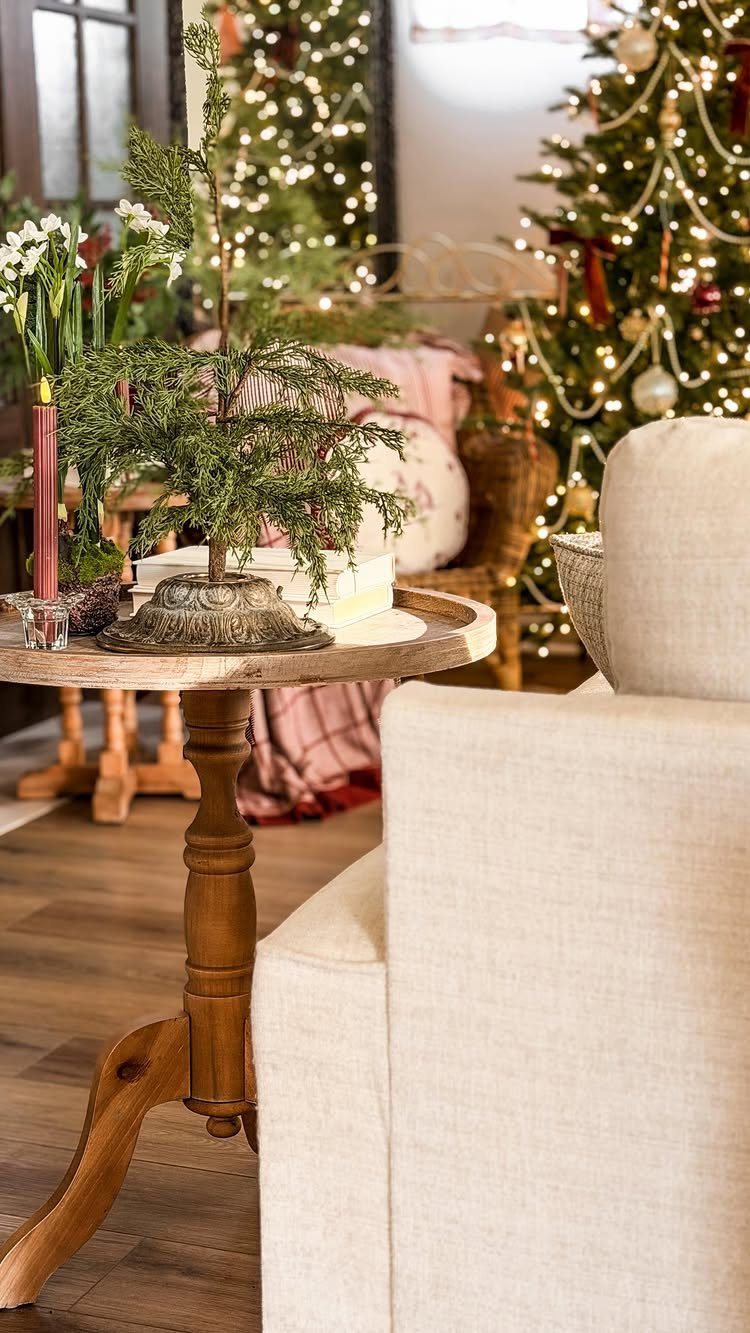
Layer small trees, candles, and books on side tables to make the room feel finished without covering every surface. This approach adds holiday detail while keeping the space usable.
A tabletop evergreen in a pot or basket anchors the setup.
Stack 2 or 3 books beside it, then place a pillar candle on top. The creator of this version notes the whole arrangement takes 5 minutes to put together, and that matches what I see: 3 items, no wiring, no fuss.
Keep the tree small if the table sits beside a chair, so it doesn’t crowd the armrest or block light from a nearby lamp.
7. Pastel Decorations
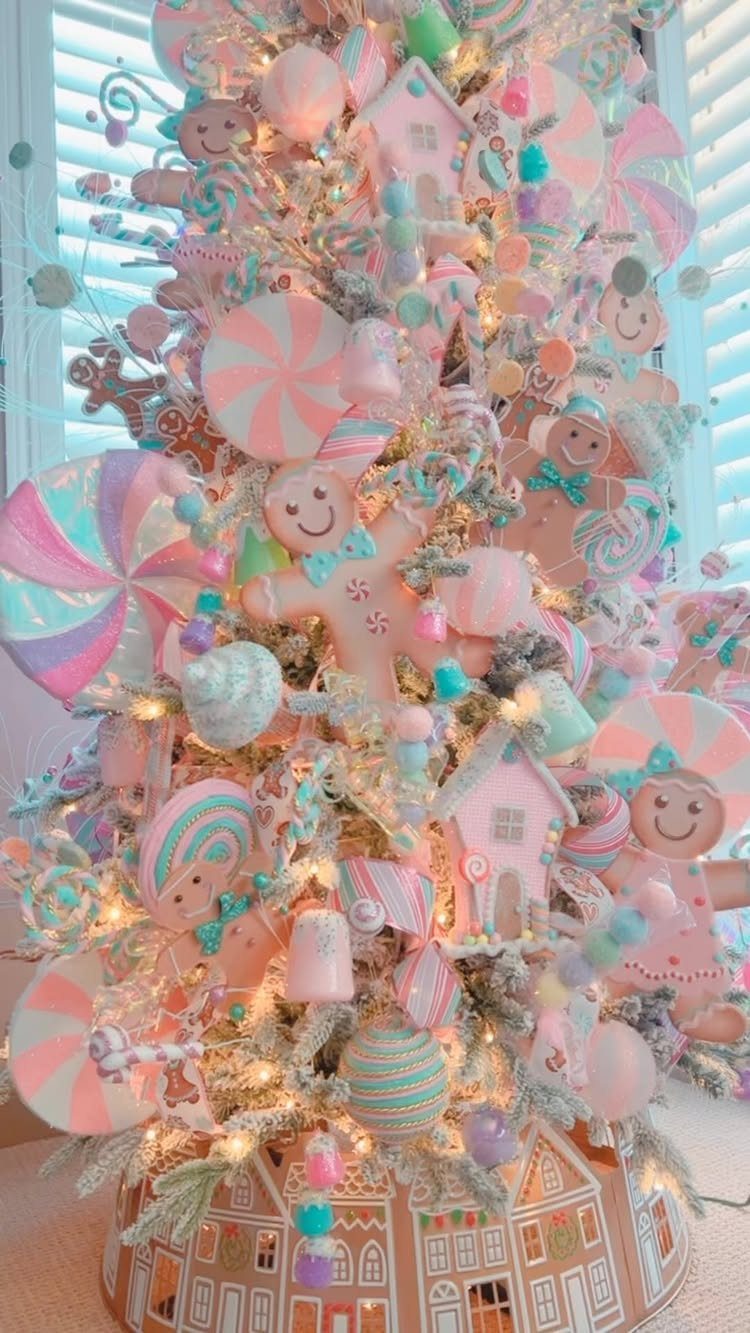
Pastel pink, mint, and baby blue replace traditional red and green for a softer seasonal palette. The lighter shades read as playful rather than formal, and the look suits rooms that already lean neutral or light in color.
Use pastel ornaments, ribbon, and garland across the tree and mantel.
Add gingerbread figures or candy-shaped decorations to tie the theme together. The creator of this version has 2 gingerbread trees in the same room, showing how repeating the palette across multiple spots strengthens the effect.
This works best in spaces where bold red would compete with existing furniture or wall color.
8. Candy Cane Wonderland

Red and white stripes turn the tree into a candy theme that children recognize immediately. The high contrast makes each ornament visible, and the repetition of one pattern keeps the tree from looking cluttered.
Hang candy cane ornaments, peppermint swirls, and red ribbon in alternating rows. Add a red bow at the top and place the tree on a white faux-fur rug to extend the theme to the floor.
This setup suits families with young children, since every decoration reinforces the same idea and nothing fragile needs to be within reach.
9. Minimalist Decor
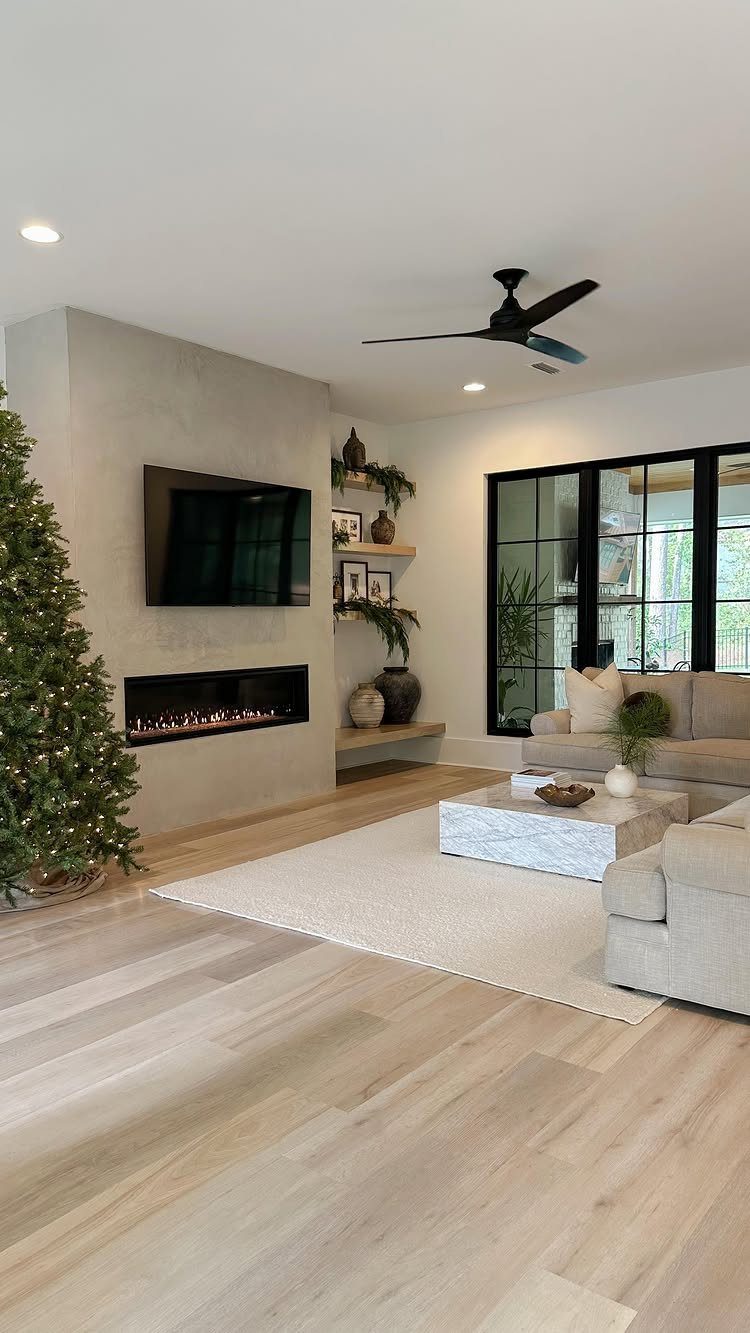
One decorated tree and no other visible ornaments keep the room functional and calm. It suits open-plan layouts where a crowd of ornaments would fight with the sofa arrangement or a fireplace accent wall.
Place the tree in a corner or beside the fireplace, then leave side tables, shelves, and mantels clear. White lights and simple ornaments in one or two colors keep the tree from pulling too much focus.
This suits renters and anyone who wants the season acknowledged without rearranging the room or adding storage needs after the holidays.
10. Fireplace Console and TV Decor
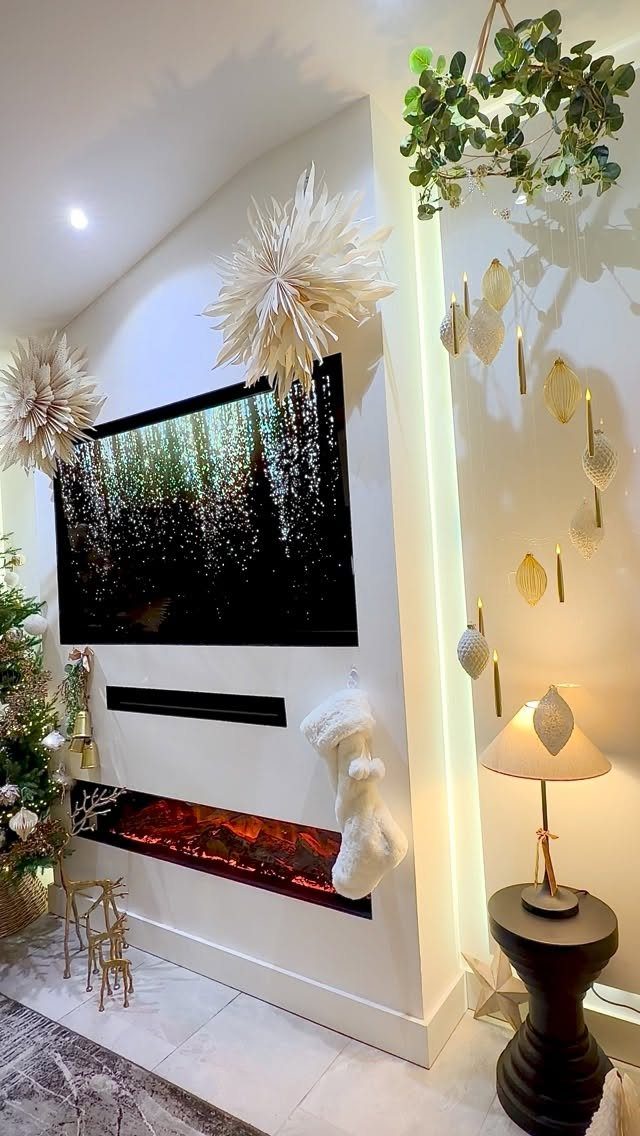
An electric fireplace and TV share the same wall without competing when decorations stay low and symmetrical. Garland sits below the TV, a stocking hangs beside the fireplace, and gold accents repeat across both sides to tie the setup together.
Position ornaments and garland below the TV to leave the screen clear and viewing uninterrupted. A small tree or figurine on the console adds height without crowding the remote or soundbar.
This suits modern living rooms where the TV and fireplace sit on the same feature wall and storage is built in rather than freestanding.
11. Ornament Candle Centerpiece

The ornament sits on a bed of pine needles or garland to anchor it and keep it from rolling.
Place it on a wooden tray or table where open flame is safe, and keep it away from paper or fabric.
This takes 3 items and 2 minutes to assemble, and it works as a dining table centerpiece or coffee table accent.
12. Gold and Silver Glam Decor
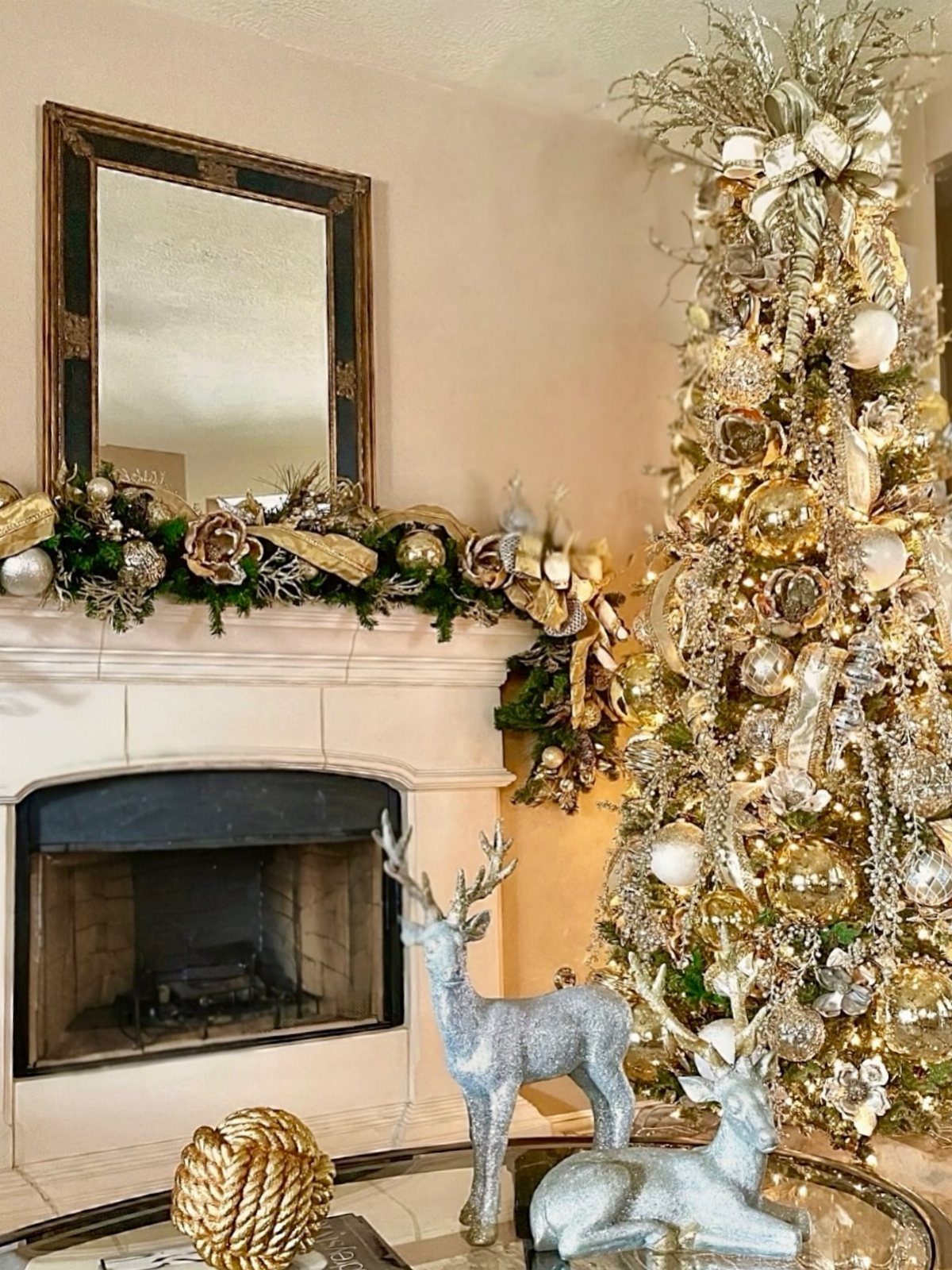
Metallic finishes in gold and silver catch light from the fireplace and tree, making the room feel brighter without adding more lamps. The combination reads as formal, and it suits homes where the living room hosts holiday guests.
Wrap green garland with gold ribbon along the mantel, then place a gold and silver tree beside the fireplace. Add silver reindeer or metallic figurines on the mantel to repeat the finish.
This setup takes more ornaments and garland than a single-color scheme, but the metallics work year after year without looking dated.
Designer Caitlin Wilson—the queen of all things pretty—cleverly converted her living room console table into its own mantel moment, complete with a wreath and coordinating stockings. Festive ribbons and vases of flowers add an additional pop of cheer.
13. Garland Framed Wall Mirror
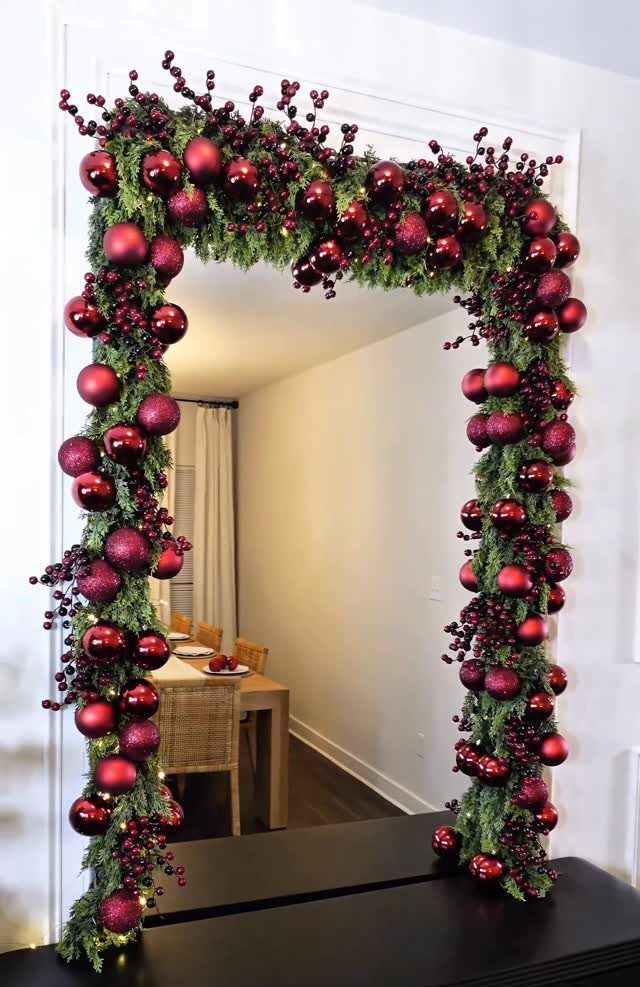
Garland frames a mirror by following its edge and turning it into a focal point. The greenery repeats the tree’s texture without adding another freestanding piece, and the red ornaments tie the mirror to the room’s other colors.
Drape fresh or faux garland along the top and sides of the mirror, securing it with removable hooks or clear fishing line. Tuck ornaments and berries into the branches, spacing them unevenly so the arrangement looks gathered rather than counted.
This works best on mirrors hung at eye level or above a console, where the reflection doubles the decoration’s presence in the room.
14. Staircase Garland and Bows
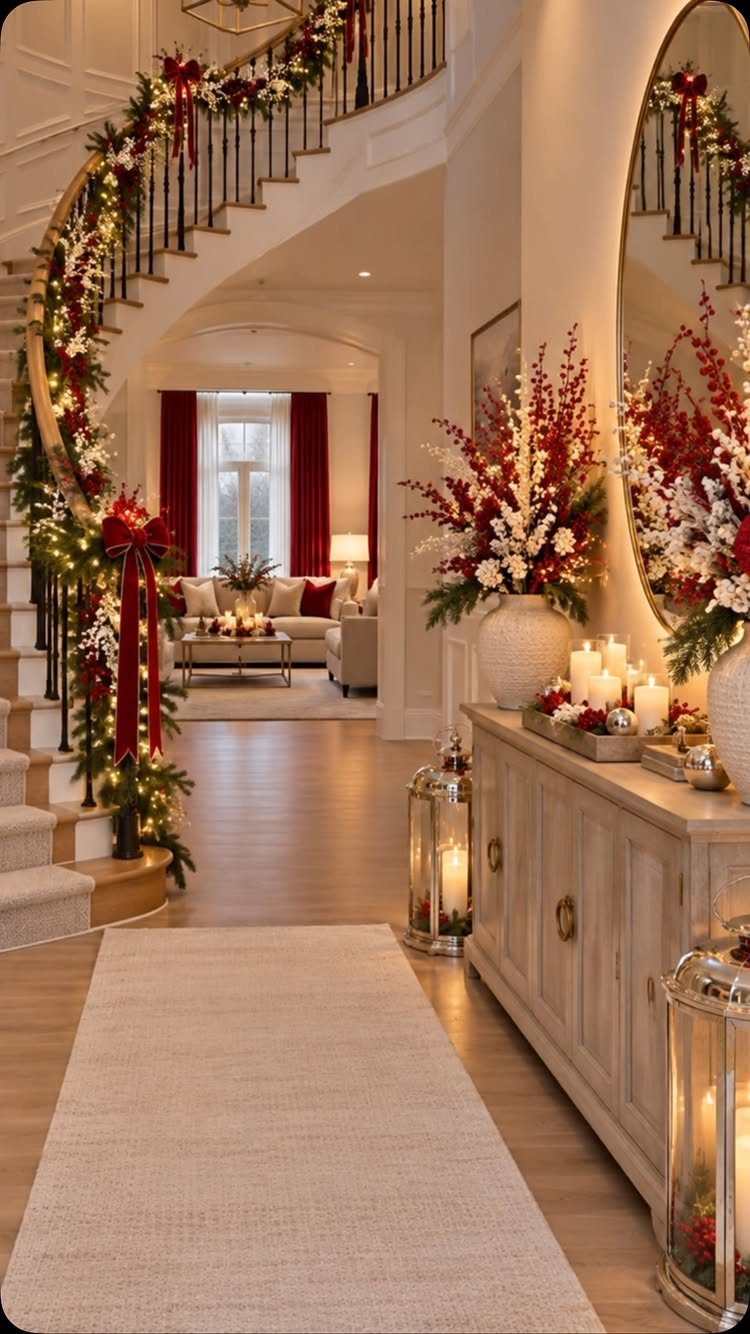
Draping garland along the staircase railing brings decoration into vertical space that otherwise stays empty. Red bows punctuate the greenery at regular intervals, and matching arrangements on the sideboard below connect the 2 levels.
Attach garland to the railing with zip ties or floral wire, wrapping it loosely so it drapes between posts.
Add bows at regular intervals, securing them with wire or ribbon ties. Battery-operated string lights tucked into the garland add glow without visible cords.
This suits homes where the staircase opens into the living room and becomes part of the view from the seating area.
Choosing a Color Scheme
A room with warm wood tones and cream upholstery takes red and gold without a clash, while gray furniture and white trim leave room for silver, blue, or even pastel pink.
Matching the existing palette keeps the decorations from feeling like an interruption. If your living room leans neutral year-round, metallics add shimmer without locking you into one shade.
If the space already carries color, repeating one of those tones in your Christmas scheme ties the holiday pieces to the furniture instead of fighting it.
Test the palette on a small area first. Hang a single garland strand or group a few ornaments on a side table before covering the tree or mantel, and check whether the colors read as cohesive or competing.
Incorporating Lighting
String lights on the tree provide the base layer, but candles and lamps fill in the rest.
Place battery-operated pillar candles on the mantel or coffee table where open flame would be risky, and leave table lamps on low in the evening to soften shadows.
Layer the light sources at different heights.
Tree lights sit high, candles land at mid-level on shelves or tables, and floor lamps or sconces add background fill. The variation keeps one bright spot from dominating the room and makes the whole space feel inhabited rather than staged.
Warm white bulbs read as cozy, while cool white feels cleaner and suits modern or minimalist schemes.
Frequently Asked Questions
What are some traditional Christmas decorations?
Red and green ornaments, fresh greenery, white lights, and gold accents form the core of traditional Christmas decor.
These colors work together because they contrast enough to define each piece without blending, and the combination signals the season immediately. Add berries, pine branches, or a wreath to bring in natural texture.
How do I decorate my house for a Christmas party?
Metallic finishes in gold and silver catch light and make the room feel brighter, creating a festive atmosphere for guests.
Use these finishes across the tree, garland, and mantel to repeat the effect throughout the space. Pastel schemes work too if you want a softer, playful look that stands out against neutral furniture.
What are the essentials for Christmas decor?
A decorated tree, garland, and lights cover the basics for a room that reads as festive.
Red, green, white, and gold provide a palette that works year after year, while fresh greenery and berries add texture. String lights and candles at different heights layer the lighting so the whole room feels finished.






