
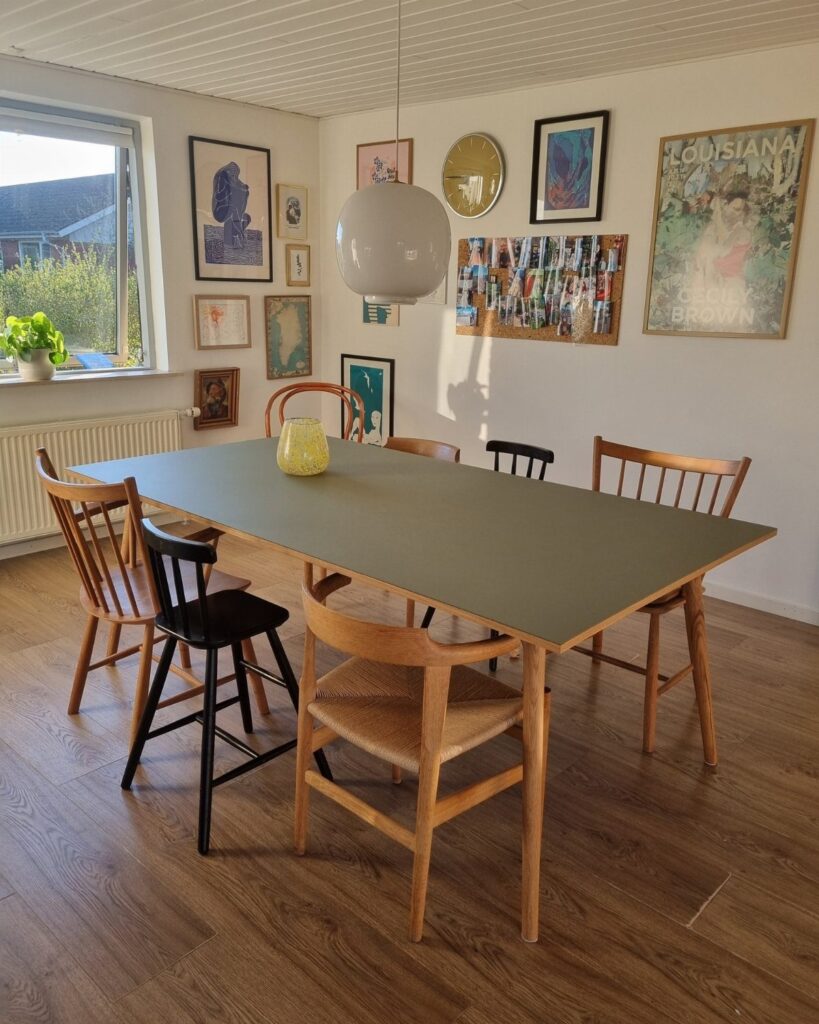
Mismatched chairs give you flexibility: you can add seats as you find them, mix finishes and frame styles, and make use of pieces you already have instead of buying a matched set.
The approach works when you pick one element to hold the look together: a shared color, a material like natural wood, or a similar chair height so everyone sits at the same level.
1. Chairs with a Consistent Color
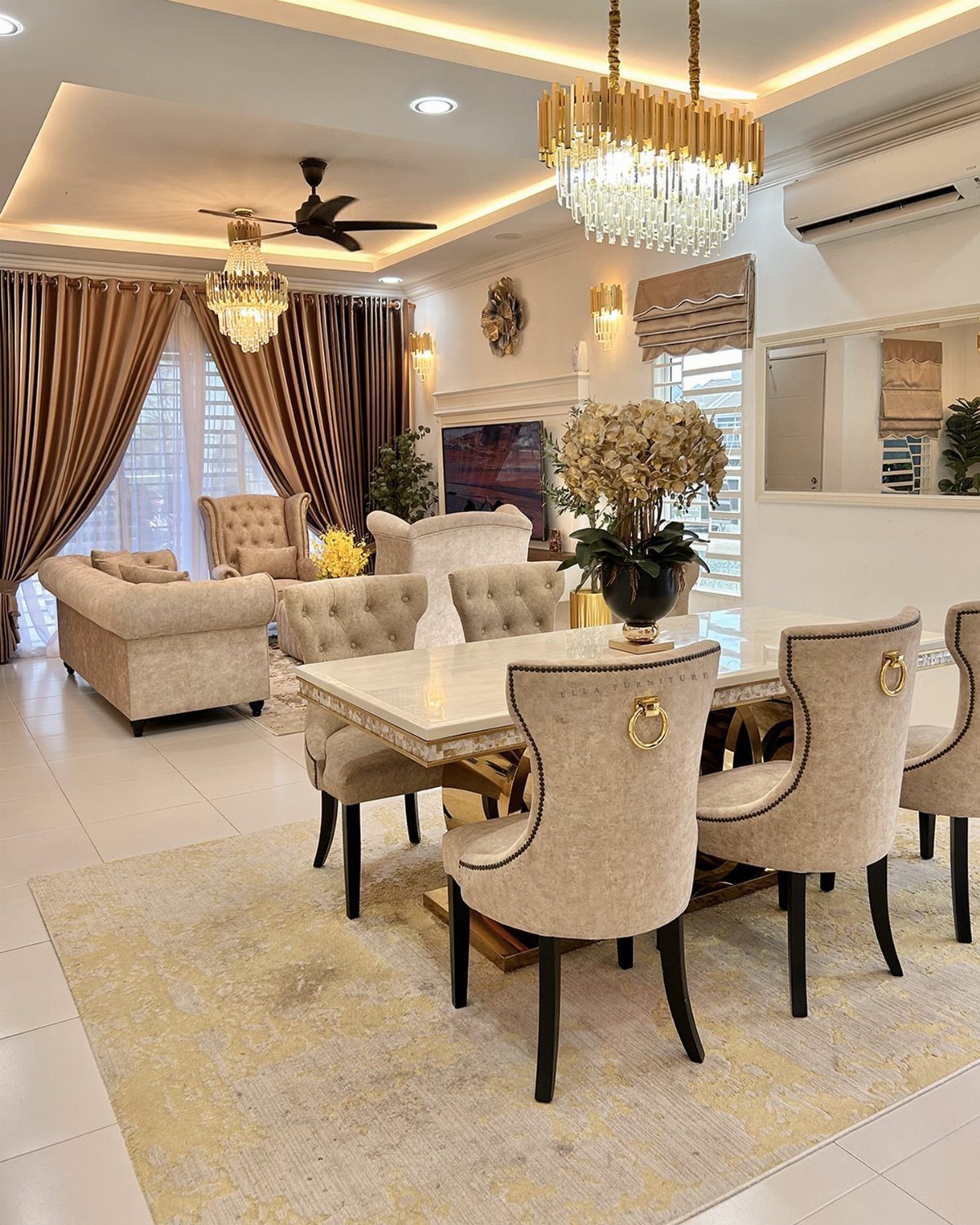
Keeping every chair in the same color family lets you mix different styles without the room feeling scattered. Beige upholstered chairs hold the look together even when the chair shapes vary.
I like this approach when you’re adding chairs over time or working with hand-me-downs.
You can find chairs at different price points and still end up with a cohesive set. Painting mismatched wooden chairs the same color works the same way, and slipcovers can bring fabric chairs into line when the frames differ.
2. Dining Bench
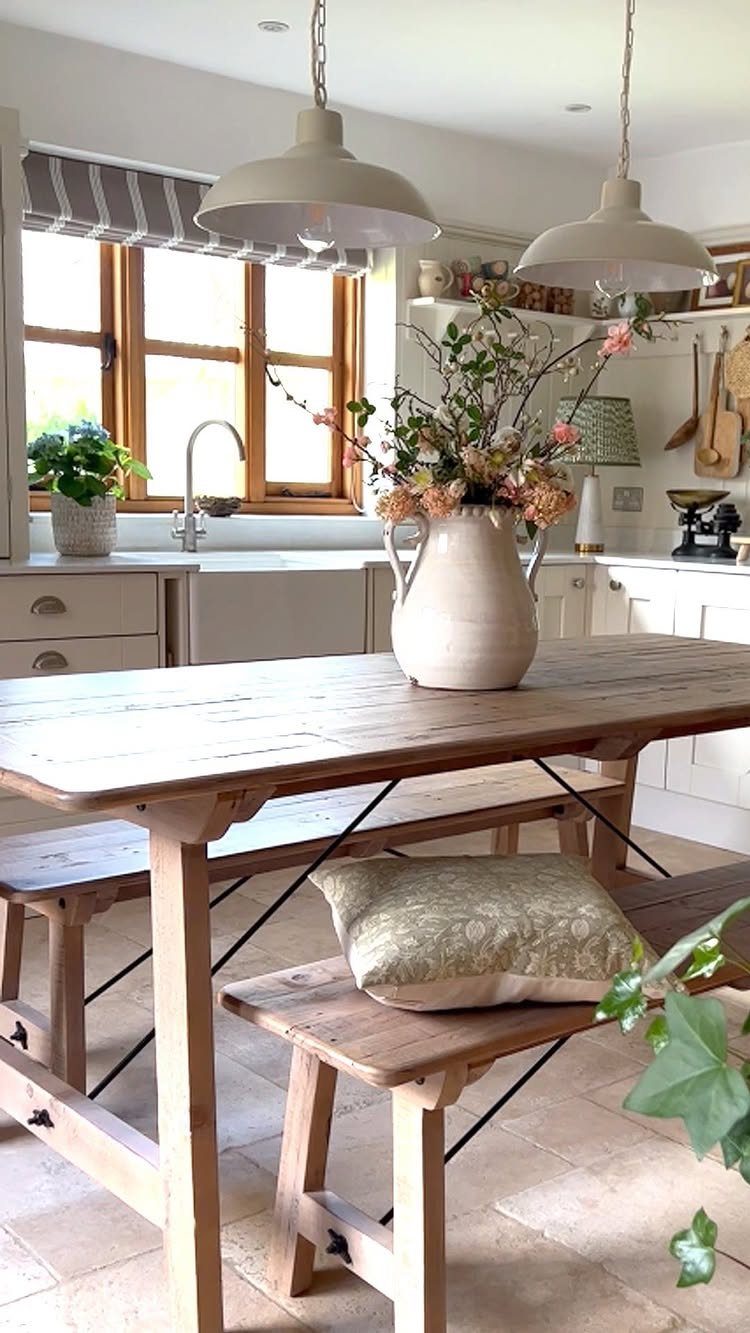
A bench on one side of the table seats more people in less floor space than individual chairs. You can tuck it under the table completely when you’re not using it, which helps in a tight dining area.
Benches work best when the table sits against a wall or in a corner. If your table is centered in the room, chairs on both sides give you easier access.
3. Black and Natural Wood Chairs
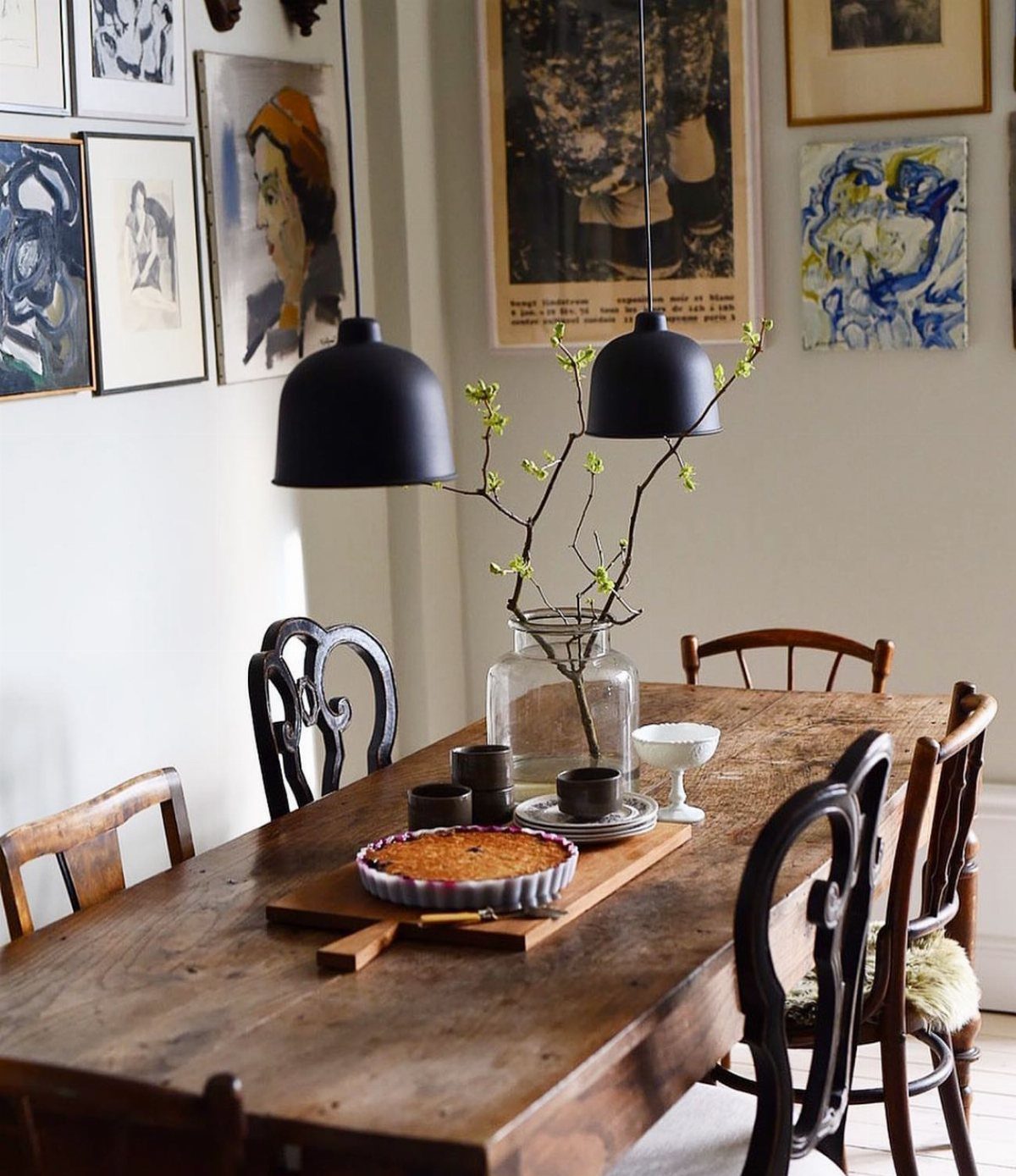
Pairing black painted chairs with natural wood ones gives you contrast without adding much pattern or texture. The black grounds the look, and the natural wood keeps it from feeling too heavy.
This combination works well when your table is wood.
The natural chairs tie into the table, and the black chairs add definition. I’d start with natural chairs and paint a few black rather than buying new, especially if you already have wooden chairs that don’t quite match.
4. Colorful Painted Wooden Chairs
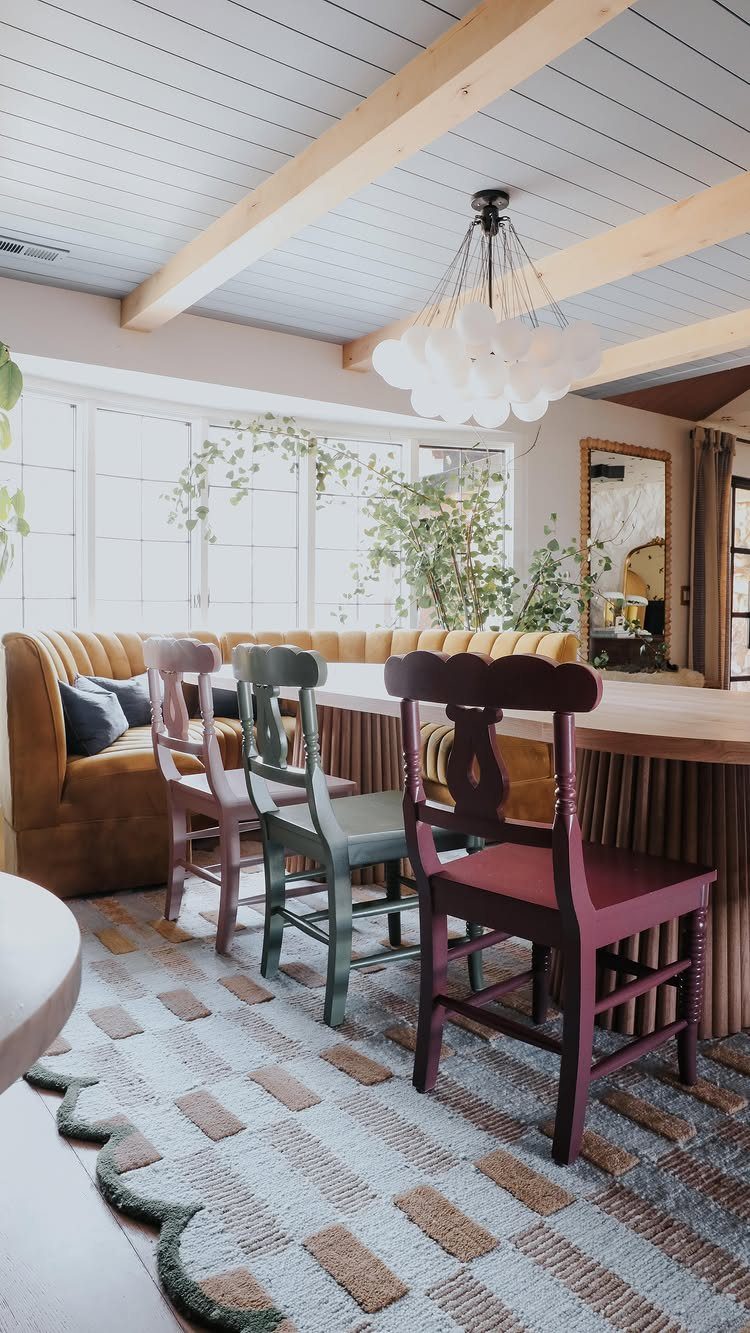
Painting each chair a different bold color turns mismatched chairs into a deliberate choice. The pink, green, and burgundy here sit on a patterned rug that pulls the colors together, which keeps the mix from feeling random.
The creator bought white secondhand chairs and painted them in 3 colors.
If you’re doing this, choose a finish that can handle daily use. Satin or semigloss holds up better than flat paint, and a clear topcoat adds durability.
Pick colors with similar intensity so no single chair dominates the table.
5. Mismatched Natural Wood Chairs
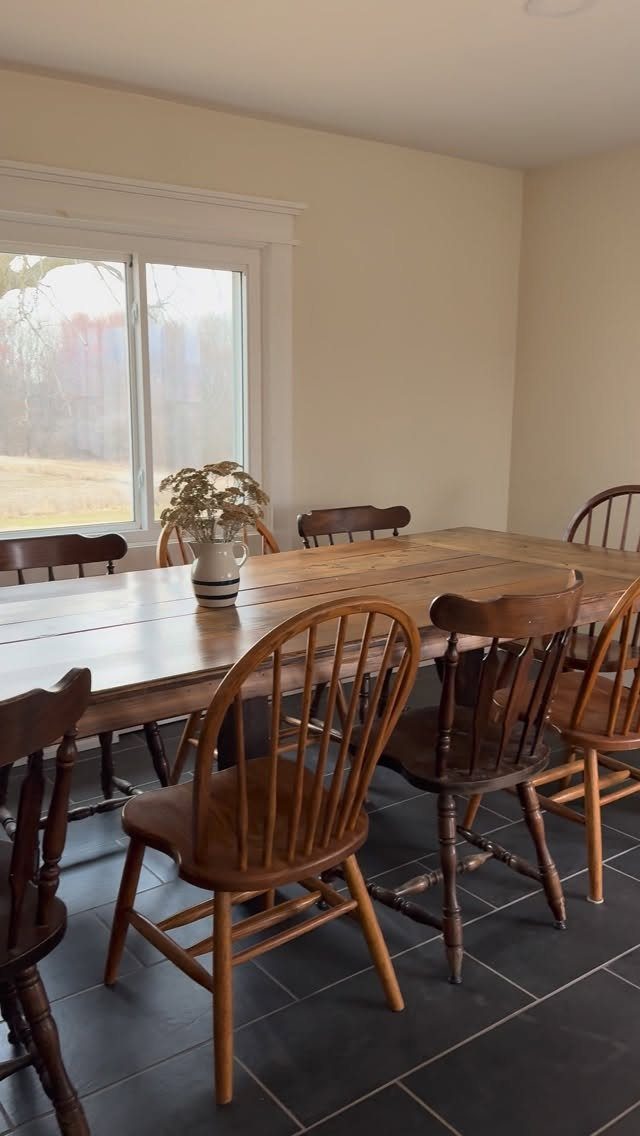
Mismatched wooden chairs in different natural finishes create a collected look without paint or upholstery. The varying wood tones here range from light oak to darker walnut, and the different chair styles keep the table from feeling too matched.
This approach works when you already own wooden chairs or can find them secondhand. The wood tones don’t need to match exactly, but staying within a range of warm or cool woods helps them feel intentional together.
6. Mixing Materials and Colors
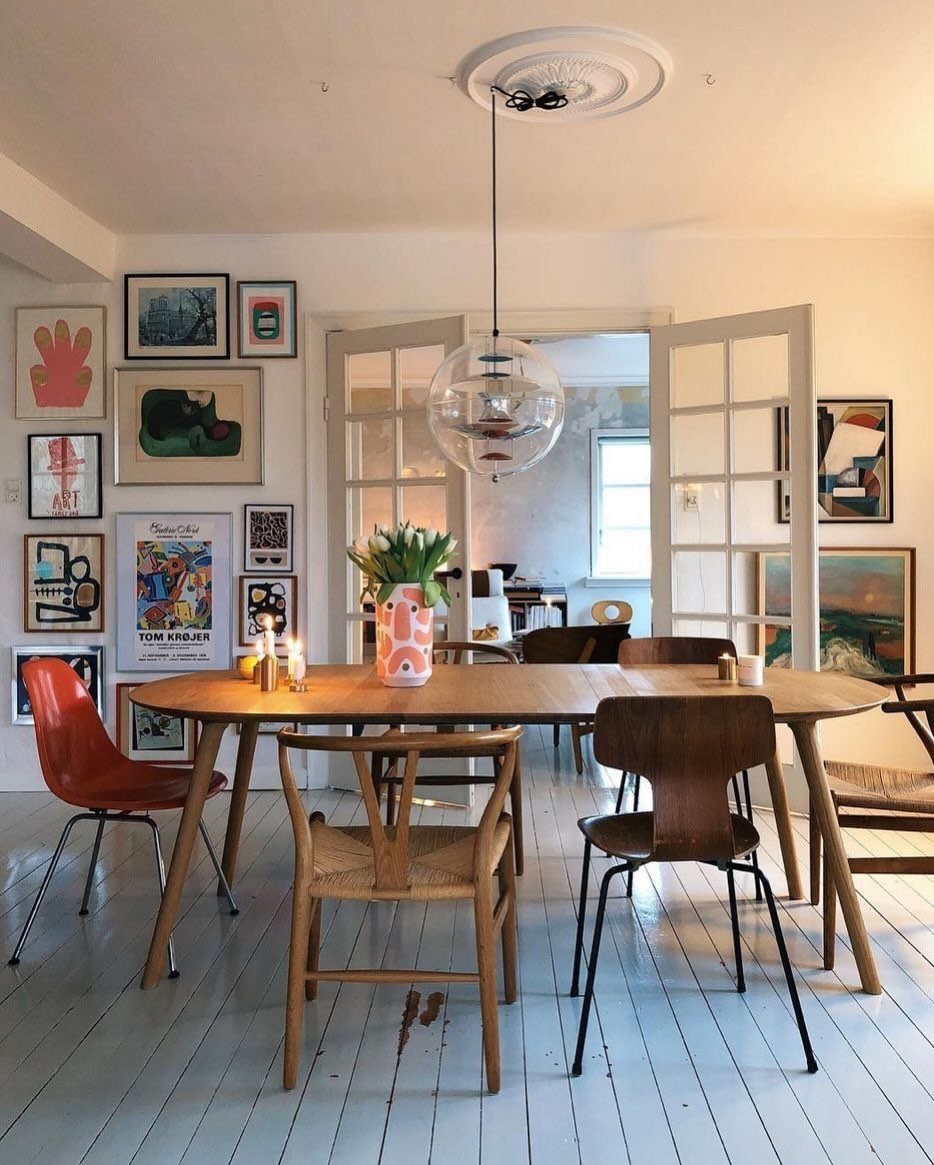
Combining plastic, cane, and wood chairs in different colors adds both material and shape variety to the table. Mixing materials like molded plastic, woven cane backs, and solid dark wood keeps each chair distinct.
This look works best when the table itself is simple.
A plain wooden table lets the chairs stand out, while a heavily detailed table can make the mix feel chaotic. I’d limit the palette to a few colors so the material variety takes center stage.
When a gathering of chairs in all varieties—from minimal to mid-century modern—graces the table, it introduces a fresh conversation to the room. That said, mixing and matching isn’t as straightforward as compiling a wild amalgamation of your favorite seats.
— Domino
7. White and Wood Dining Chairs
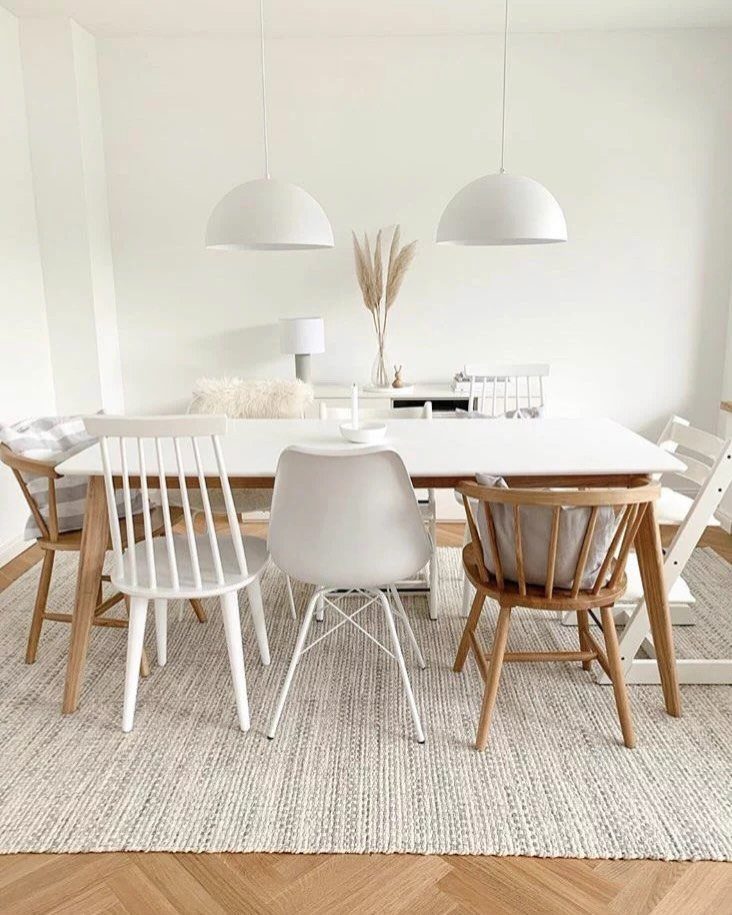
White and light wood chairs together keep the table feeling open without losing warmth. The light wood brings in natural texture, and the white brightens the space.
This mix works well in small dining areas where darker furniture can make the room feel tight. Both finishes reflect light, which helps in apartments or rooms without much natural light.
If you’re buying secondhand chairs, look for ones with similar leg styles so the shapes don’t clash too much. You can also paint existing wooden chairs white to fill out the set without replacing everything.
Mismatched Chairs Benefits
You get a way to test color or pattern in the room before you commit a wall to it.
A few different chair styles can carry enough visual weight to balance a room that only holds a table, chairs, and maybe a sideboard.
Seat heights should stay consistent so everyone sits at the same level, and placing larger chairs evenly around the table keeps one side from feeling heavier than the other.
Avoiding Overcrowding
Too many chairs crowded around the table makes the room feel smaller and busier, and mismatched styles can amplify that effect. Fewer chairs create more breathing room and let each one stand out.
If you need extra seating occasionally, a bench or wicker chair can sit elsewhere in the room until you actually need it at the table. This keeps the everyday setup from feeling cramped.
Chair size matters as much as quantity. Wide or heavily upholstered chairs take up more floor space and visual weight than slim ones, so check that the chairs you’re mixing aren’t too large for the table itself.
Dining Table and Chair Compatibility
The chairs can skip matching the table as long as they pick up a finish, a color, or a shape from somewhere else in the space.
When the table has a strong finish or distinctive shape, mismatched chairs can complement it without competing for attention.
You can start small: swap 2 chairs for a different color or style and keep the rest identical, or use matching side chairs with upholstered ones at the ends.






