A wabi-sabi dining room works when the wood shows visible grain and natural variation, the chairs don’t match, and the light stays soft enough that nothing feels overlit.
The choice between a live-edge slab and a simple rectangular top comes down to whether you want the organic edge front and center or prefer clean lines with exposed joinery.
Mismatched chairs, linen tablecloths with wrinkles left in, and paper lantern pendants all follow the same principle: let the material and its imperfections do the work.
Linen, handmade ceramics, and paper lanterns soften the look, and mismatched chairs or irregular shapes keep the room from feeling too careful.
1. Solid Wood Dining Table
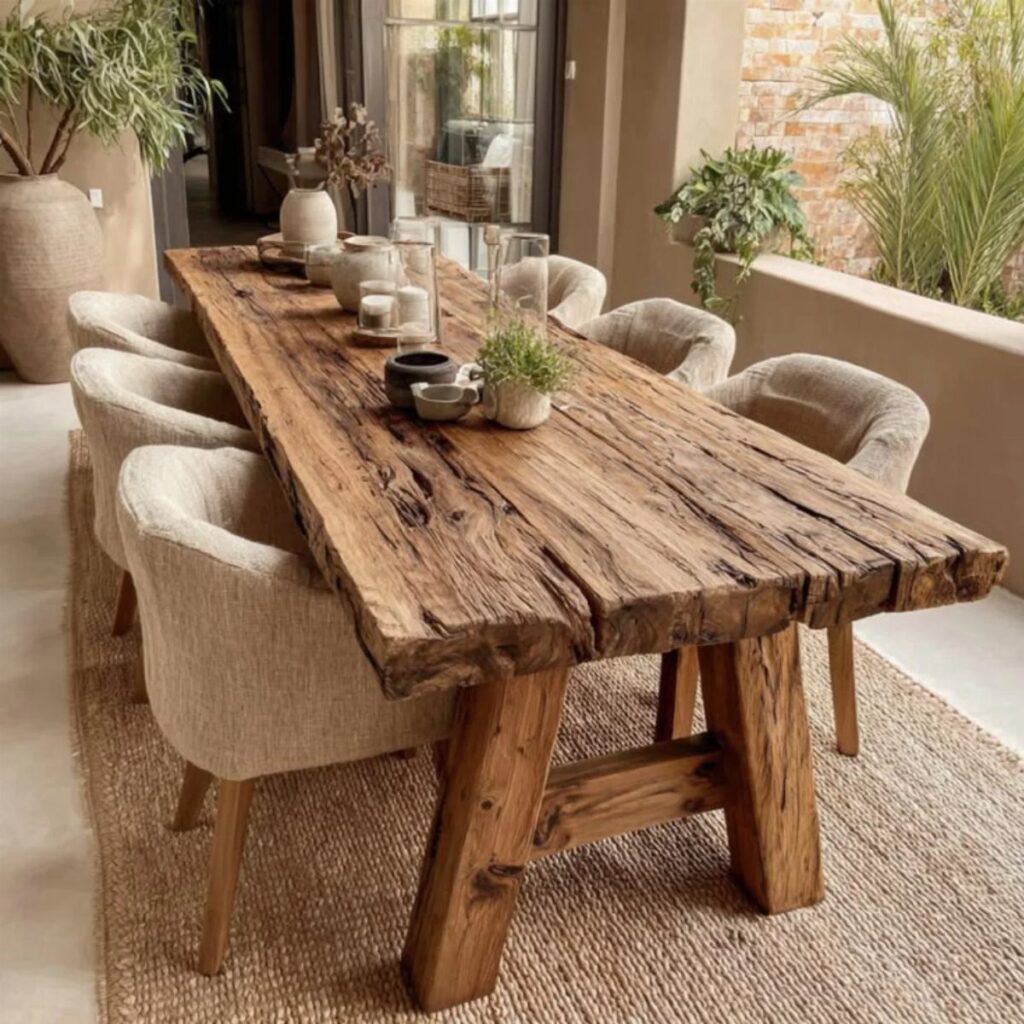
A solid wood table with visible grain and natural variation anchors a wabi-sabi dining room. The unfinished or lightly sealed surface shows the wood as it is, without trying to hide knots or color shifts.
Look for tables with a matte or oil finish rather than high gloss.
The wood should feel slightly textured under your hand, not slick. Live-edge slabs work well here, but a simple rectangular top with exposed joinery does the same job if you prefer clean lines.
Pair it with neutral walls and minimal decor so the table stays the focus.
2. Mismatched Dining Chairs
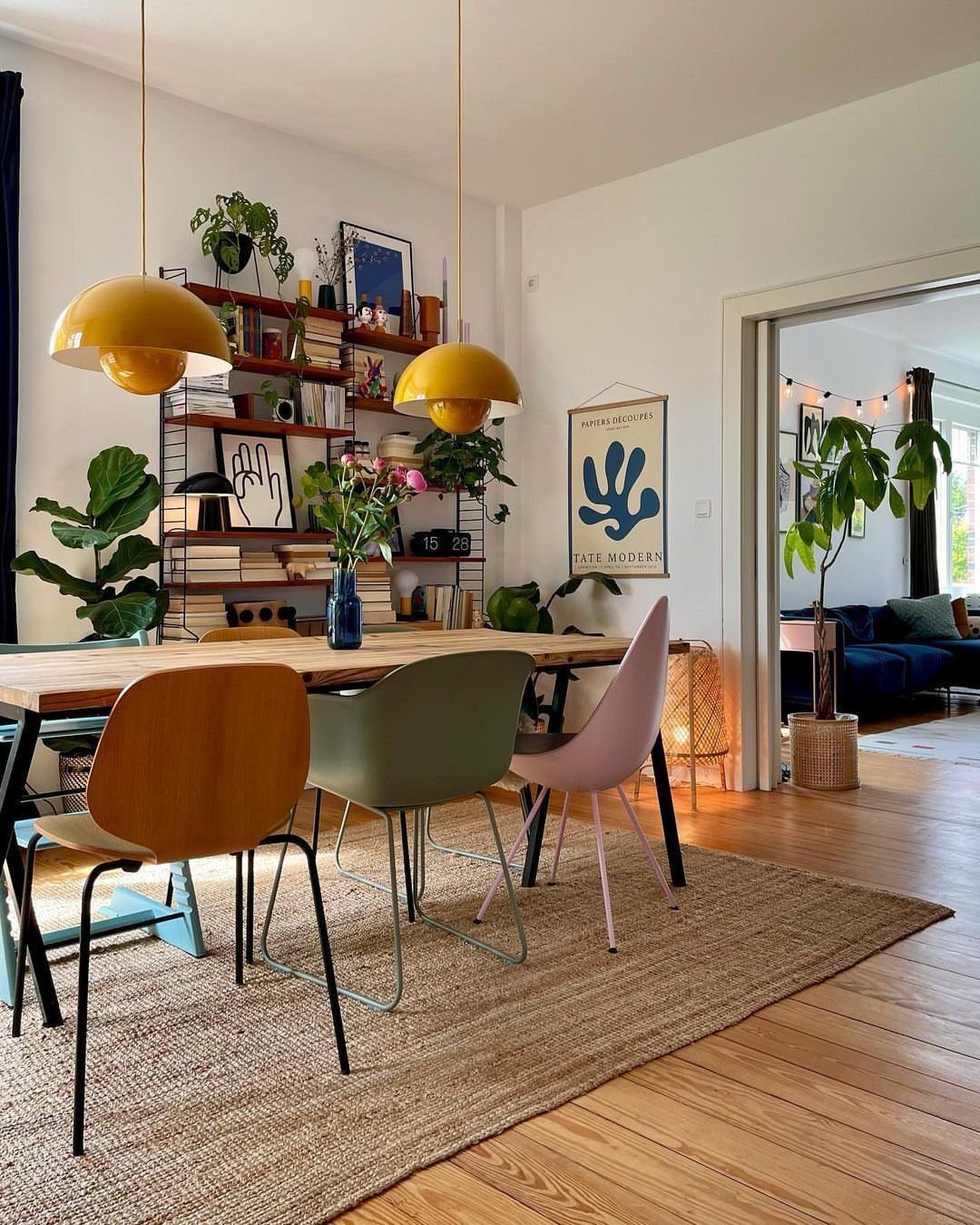
Chairs that don’t match give a dining room the collected-over-time feel that wabi-sabi relies on. Mixing wood tones and seat colors holds together when the chair heights and scales stay similar.
Start with chairs you already own, then add others that share a similar seat height so everyone sits comfortably at the same table.
Stick to natural materials like wood, cane, or linen upholstery. Avoid anything too shiny or plastic.
The jute rug helps tie the different chairs together without forcing them to match.
3. Soft Lighting and Candles
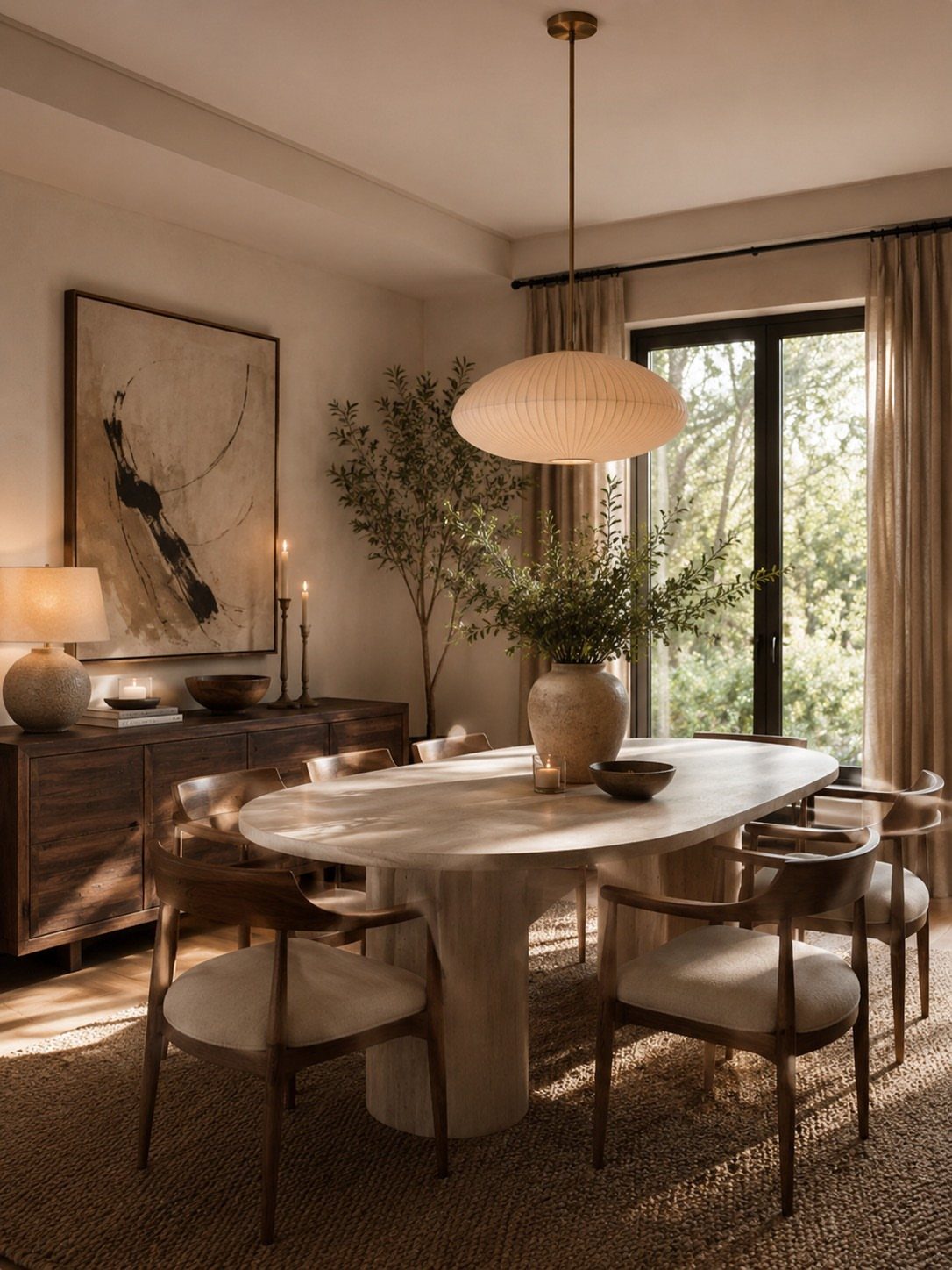
Wabi-sabi dining rooms rely on low, warm light rather than bright overhead fixtures.
Use dimmable bulbs in your overhead fixture or skip it entirely and light the room with a table lamp on a sideboard. Candles in unglazed clay holders or simple glass votives work better than tapers in formal candlesticks.
If you have an olive tree or another large potted plant, place it near the table to soften the room’s edges.
4. Furniture with Irregular Shapes
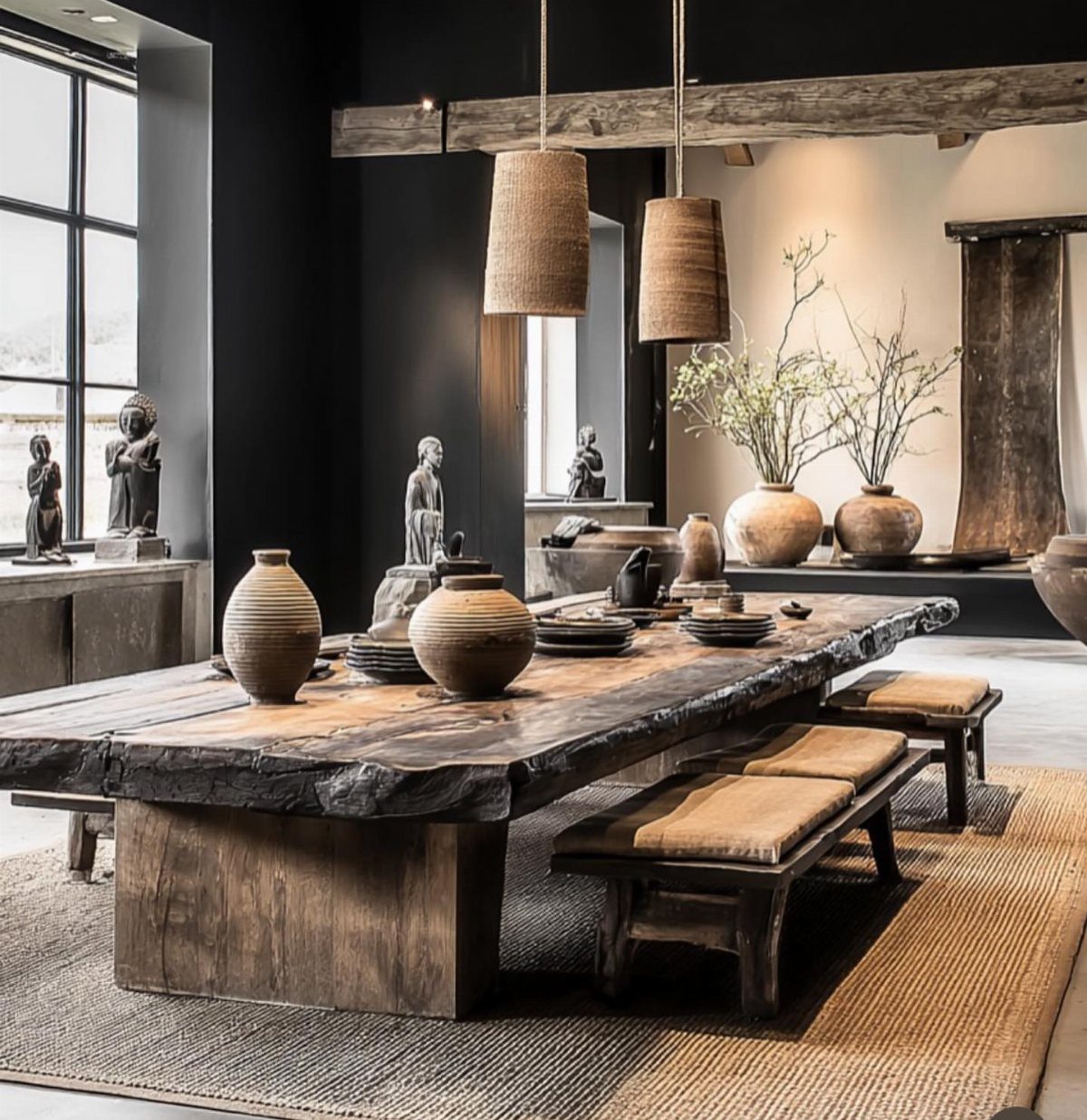
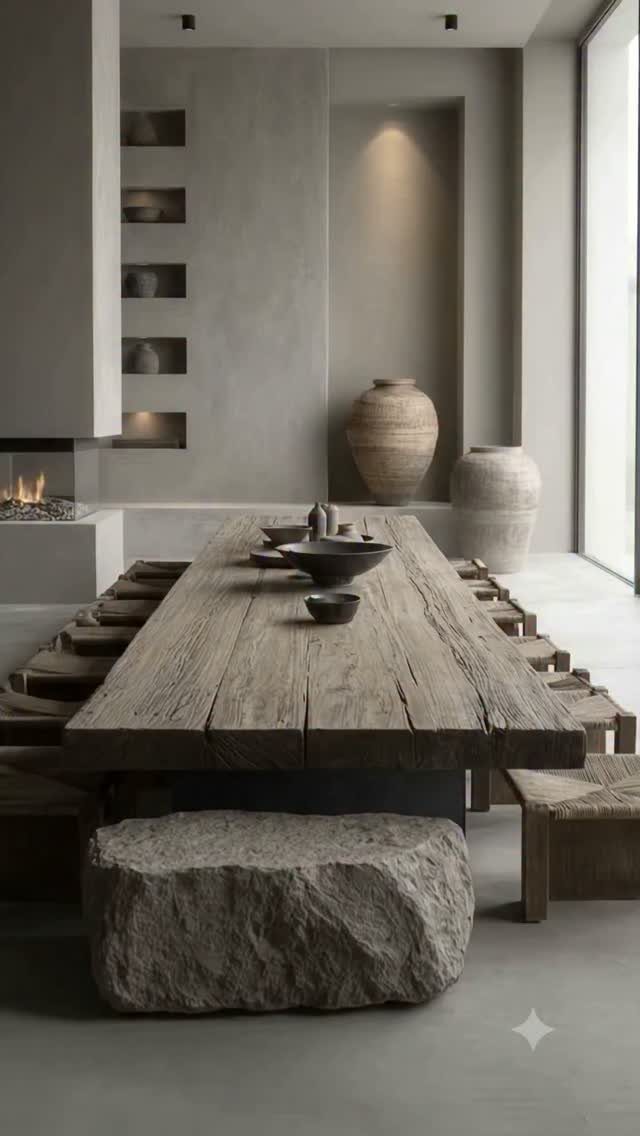
Tables and benches with irregular edges, thick tops, and rough-hewn surfaces bring the material itself to the center of the room. An uneven edge follows the natural shape of the wood, and the benches can do the same.
Look for furniture that shows chisel marks, uneven grain, or slight warping. A perfectly smooth, straight-edged table misses the point.
If you’re buying new, search for reclaimed wood or live-edge pieces. If you’re refinishing, leave the surface textured rather than sanding it flat.
Dark walls and simple pottery keep the focus on the wood’s shape and texture.
5. Linen Tablecloth with Rustic Accents
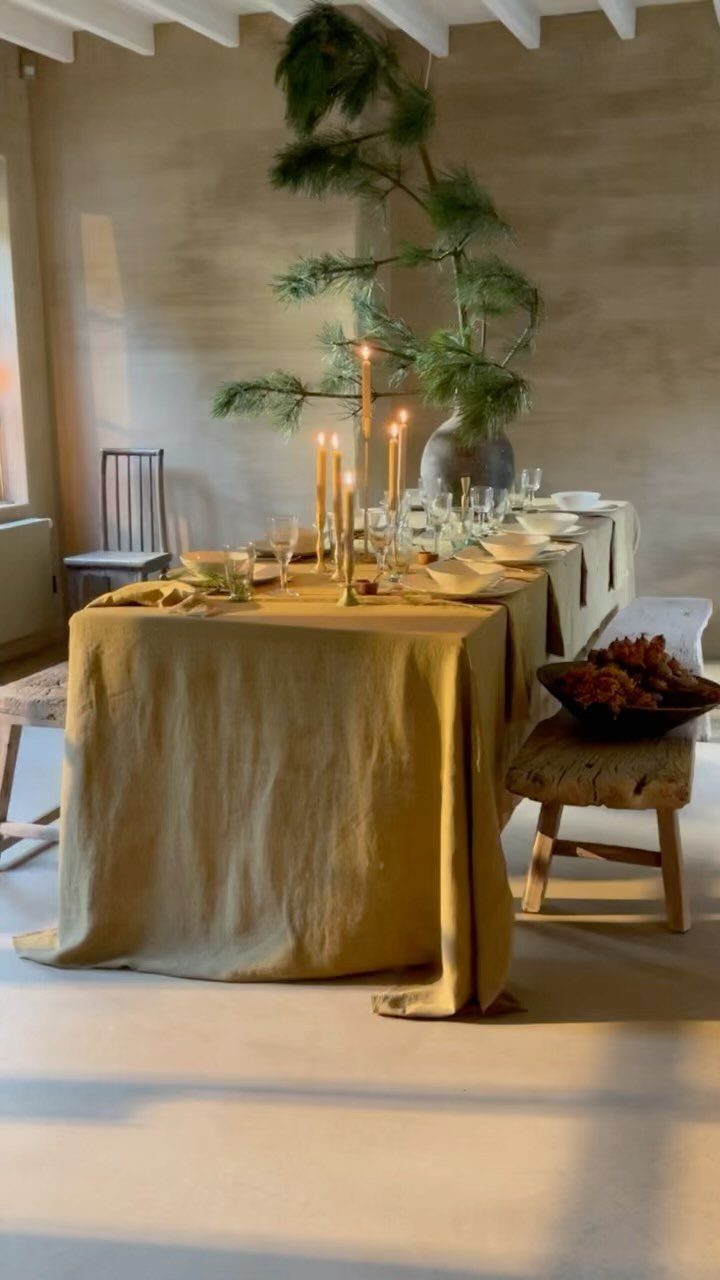
A linen tablecloth in a warm, earthy color softens a dining table without covering up its texture completely. A mustard-yellow cloth draped loosely, with visible wrinkles, suits the imperfect aesthetic.
Choose linen over cotton, it holds its shape better and ages well.
Let the cloth hang a few inches over the edge rather than tailoring it to fit. Add a few candles in neutral tones and simple glassware, nothing polished or formal.
The wooden stool nearby adds another organic shape without cluttering the table itself.
6. Paper Lantern Pendant Lighting
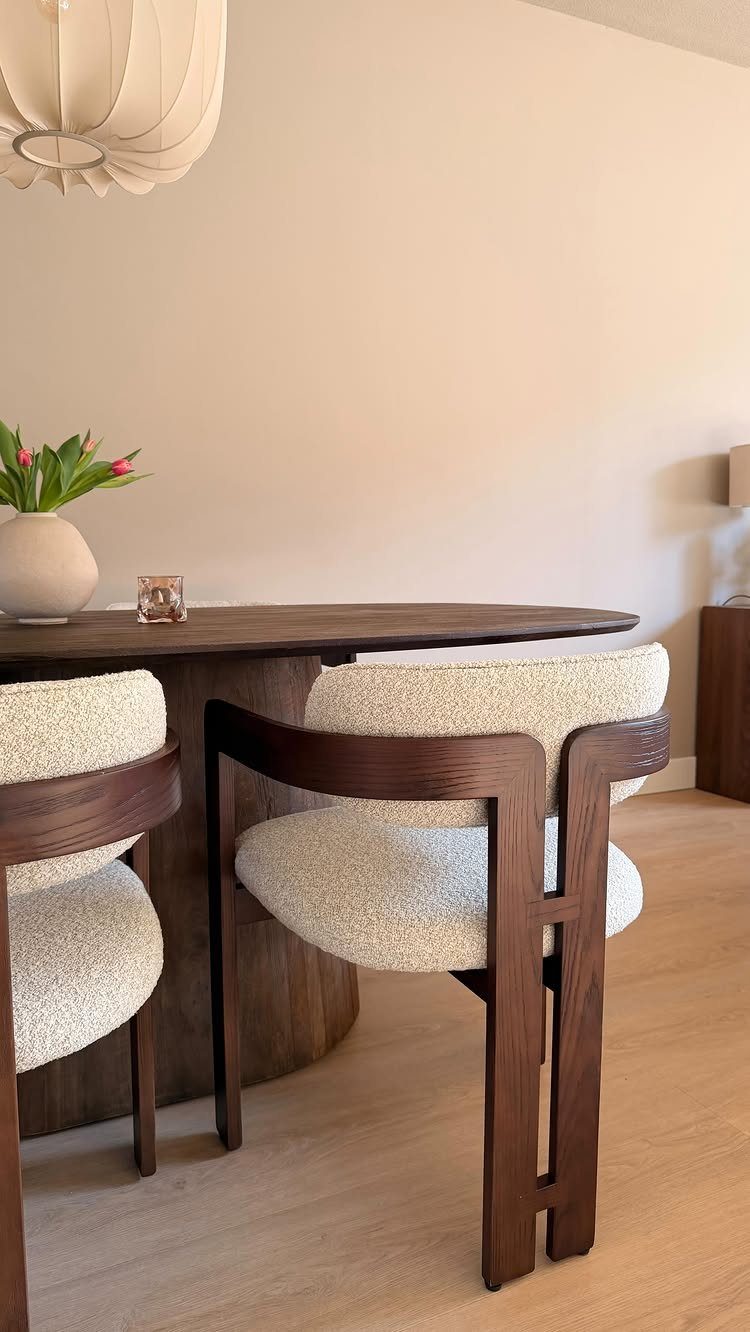
An oversized paper lantern softens the light and balances a heavy wood table without competing with it. A white sphere keeps the room bright while the textured surface diffuses the light evenly.
Hang the lantern low enough that it lights the table directly.
Choose a lantern with a visible ribbed or crinkled texture rather than a smooth one. The irregular surface creates subtle shadows that shift as the light moves.
Pair it with simple chairs in natural fabrics so the room stays uncluttered.
7. Minimalist Branch Centerpiece
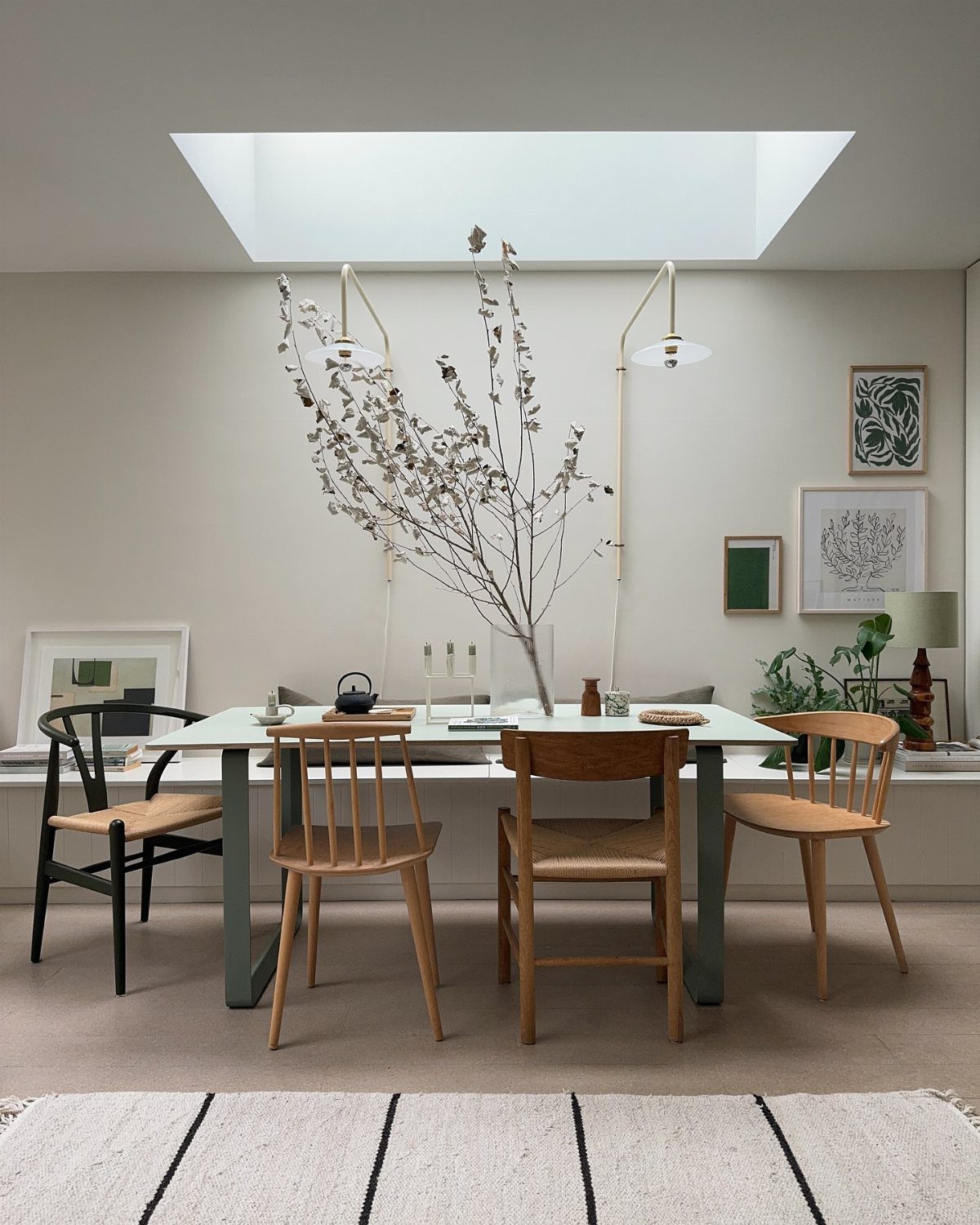
One branch standing alone in a plain vase holds the center and leaves the rest of the table open.
The branch should have visible texture or an interesting angle, not just a straight stick. Cherry, magnolia, or any pruned branch from your yard works if it has some character to its shape.
Choose a vase tall enough to support the branch without tipping.
Ceramic or stoneware in a neutral tone keeps the focus on the branch itself. Change it out seasonally or leave the same one until it dries completely.
8. Sculptural Stone Pendant Light
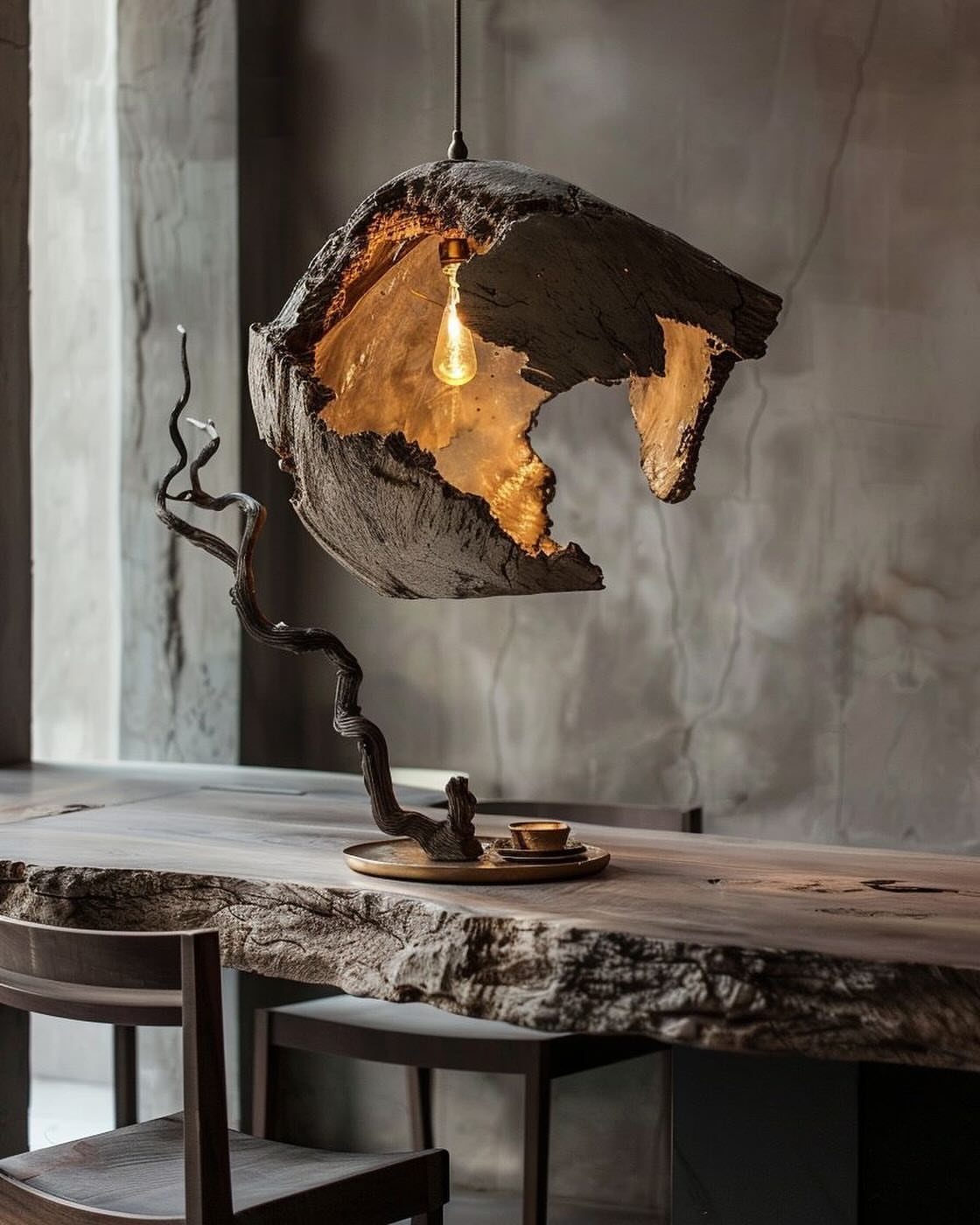
A stone pendant carved into an irregular shape brings weight and texture overhead without polishing away the natural surface. The hollow center frames the bulb while the uneven edges cast soft shadows across the table.
Look for pendants made from sandstone, limestone, or concrete rather than smooth marble.
The bulb should be visible and warm-toned, around 2700K. Hang it centered over the table, low enough that the light reaches the surface but high enough that tall diners don’t hit their heads.
The live-edge table and stone pendant share the same rough-finished material approach.
9. Handcrafted Ceramic Tableware
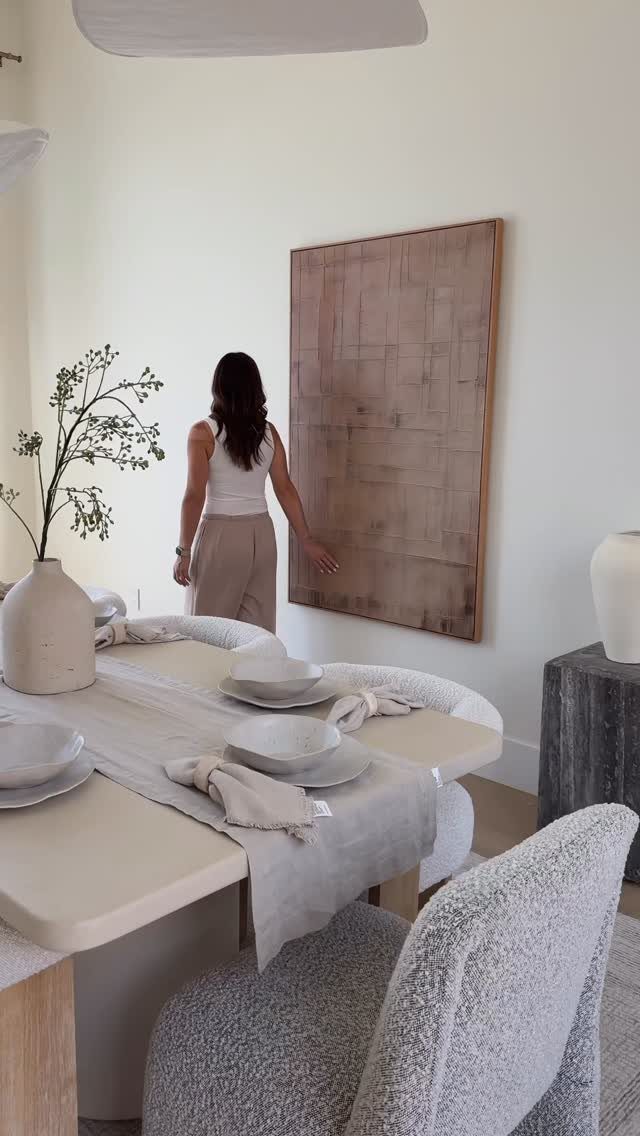
Handmade ceramic bowls and plates with visible throwing marks or uneven glazes bring the maker’s hand to the table.
Choose pieces in neutral tones like cream, sand, or soft gray that show slight color variation from one dish to the next.
Avoid perfectly matched sets.
Pick up pieces one or two at a time from potters nearby or small studios online, and the variations add up naturally. The unglazed base or rim should feel slightly rough, not polished smooth.
Pair them with a linen runner and keep the rest of the table simple.
Common Mistakes to Avoid
Matching dining sets flatten the room into a catalogue page.
A high-gloss finish on wood fights the whole idea. Go with matte oil or a hardwax oil treatment.
A crystal chandelier pulls the room toward formal traditional dining.
Layered place settings with chargers, multiple forks, and tall crystal glassware work against the aesthetic. Set the table with one bowl or plate per person, simple glassware, and a single centerpiece.
Use 2700K bulbs in every fixture and add candles on the table.
Wabi-Sabi Dining Room Layout
Leave enough room to walk around all sides without squeezing past chairs.
Skip strict symmetry.
Put a long bench on one side of the table and three or four mismatched chairs on the other rather than centering everything. The arrangement should feel gathered, not aligned.
Keep the table clear between meals.
One ceramic vessel, one branch, and two candles are enough. Place cards and stacked centerpieces push too hard.
Movement through the room should feel obvious, not forced. If a sideboard or credenza sits in the room, place it to one side rather than centering it on a wall.
Wabi-Sabi Dining Room Color Palette
A wabi-sabi color palette stays narrow and earthy.
Start with plaster in bone white, sand tones, and a table in weathered walnut. Add charcoal as the strict dark accent for candle holders or framed art.
Clay shows up in the pottery and bowls.
Linen and rugs pull in stone gray. Keep saturation low so every color reads as weathered or oxidized rather than bright.
Avoid bold colors and cool neutrals like pure gray or icy white. Stick to soft, grounded tones inspired by natural materials.