
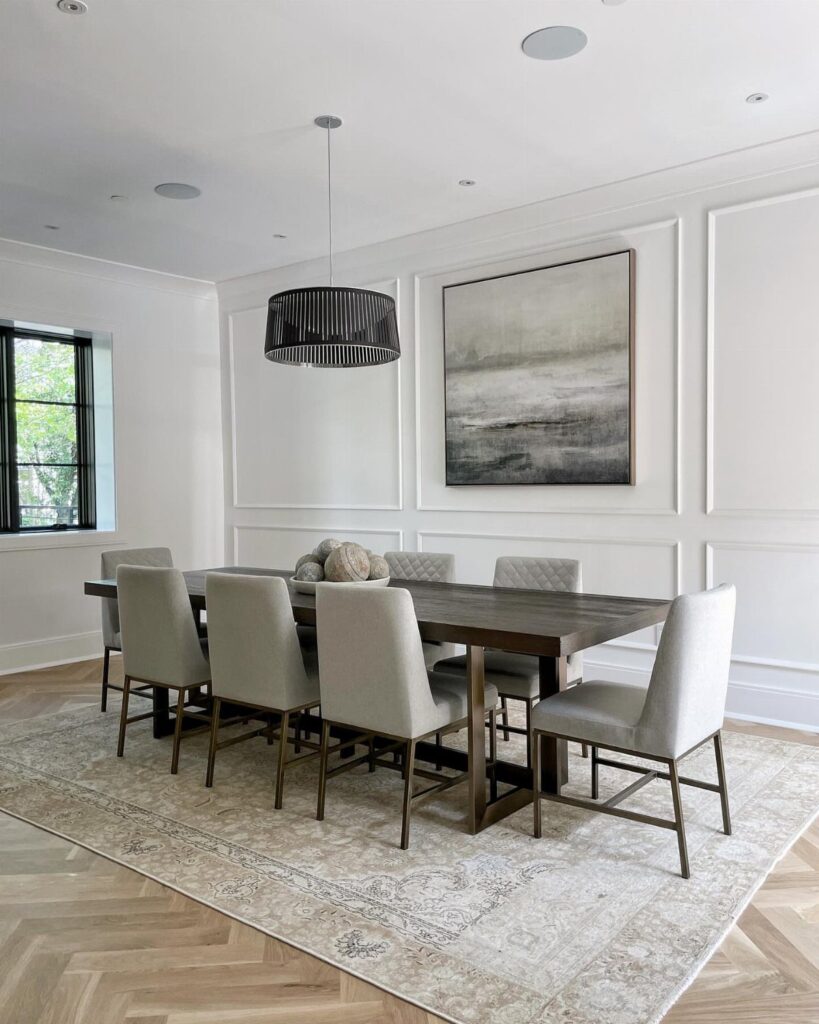
The ideas here run from washable cotton blends at around $100 to vintage wool pieces that cost more and need careful cleaning, with synthetic stain-resistant options in between for heavy use.
Pattern matters more than price if you eat at the table daily, since contrast and busy designs hide crumbs and spills that show immediately on solid light colors.
1. Size Considerations
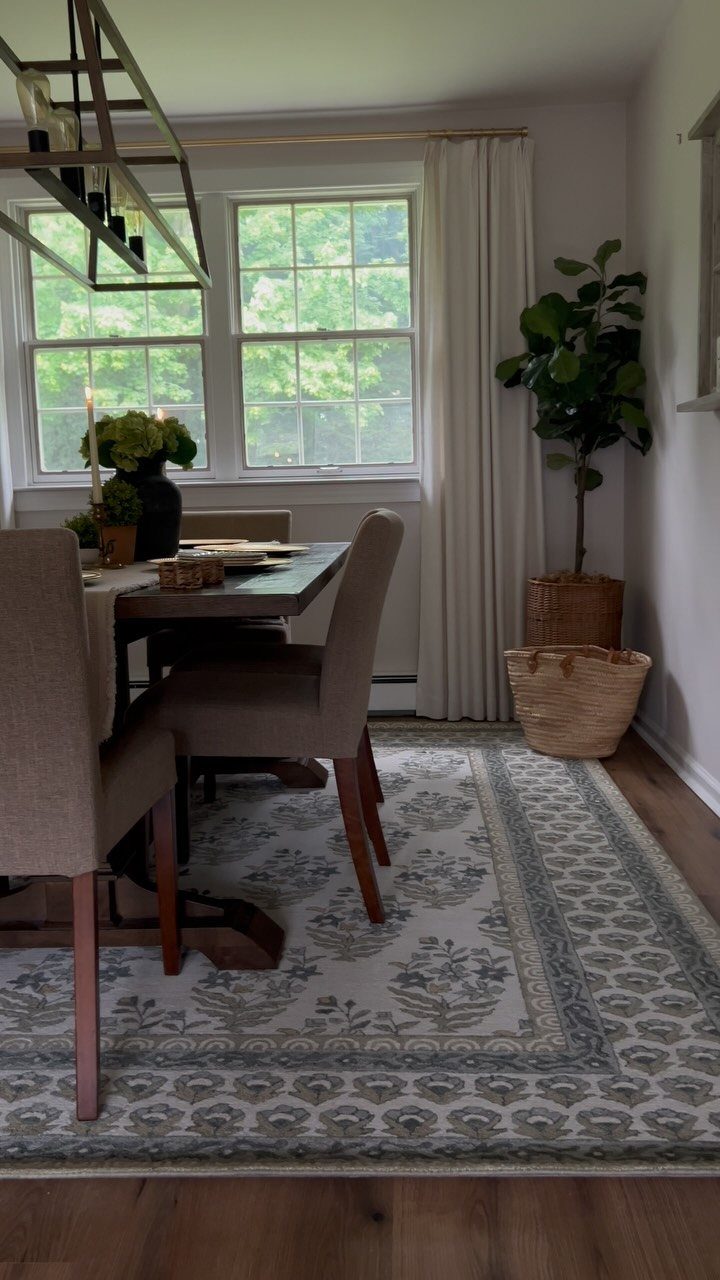
The rug should sit far enough beyond the table that chairs stay on it when someone pulls out to sit.
A 5×7 or 6×9 rug works under most compact rectangular tables. Too small and the chair legs catch the edge every time someone sits down, which wears the rug and makes the whole setup feel cramped.
2. Pattern and Color
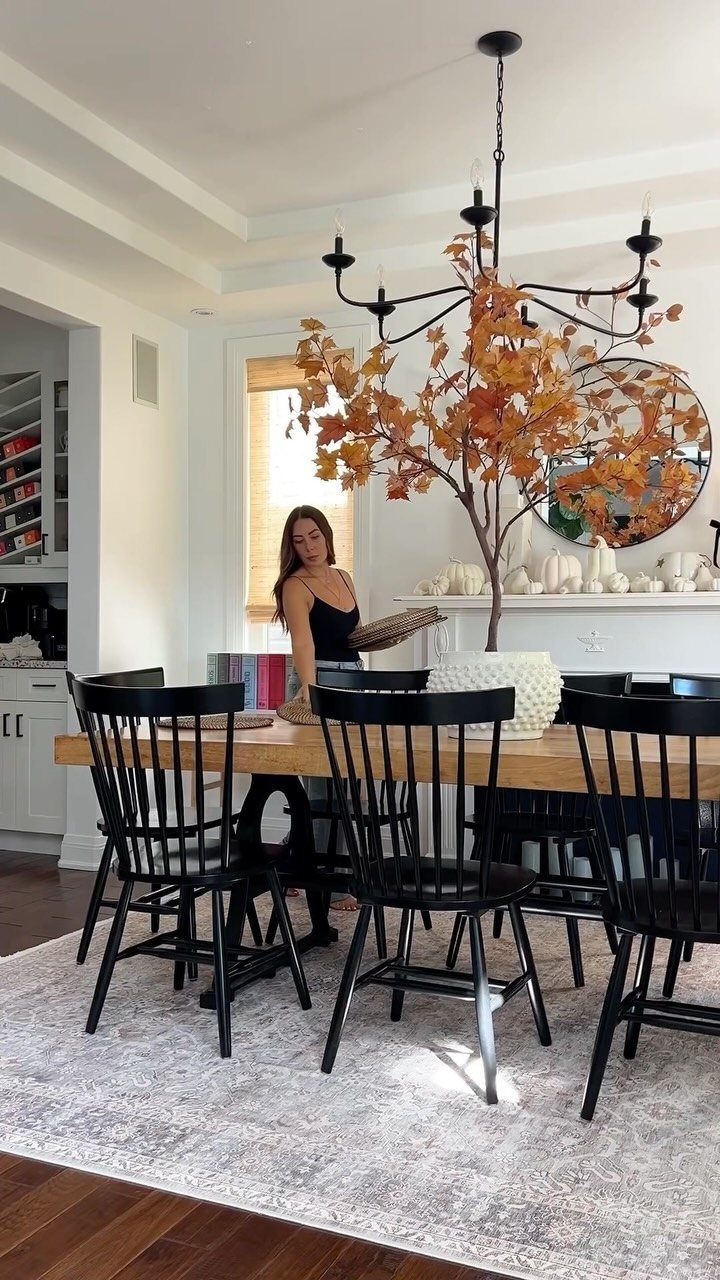
Patterns with contrast or a busy design hide crumbs and spills better than solid light colors.
The darker tones in this rug’s pattern camouflage stains that show immediately on cream or white, which matters when you’re eating over the surface several times a day.
Lighter rugs still work if you treat them for stains right away, but they need more frequent cleaning.
A pattern with warm browns, grays, or muted blues gives you more time between spot treatments and keeps the space looking pulled together without constant maintenance.
3. Shape Matching
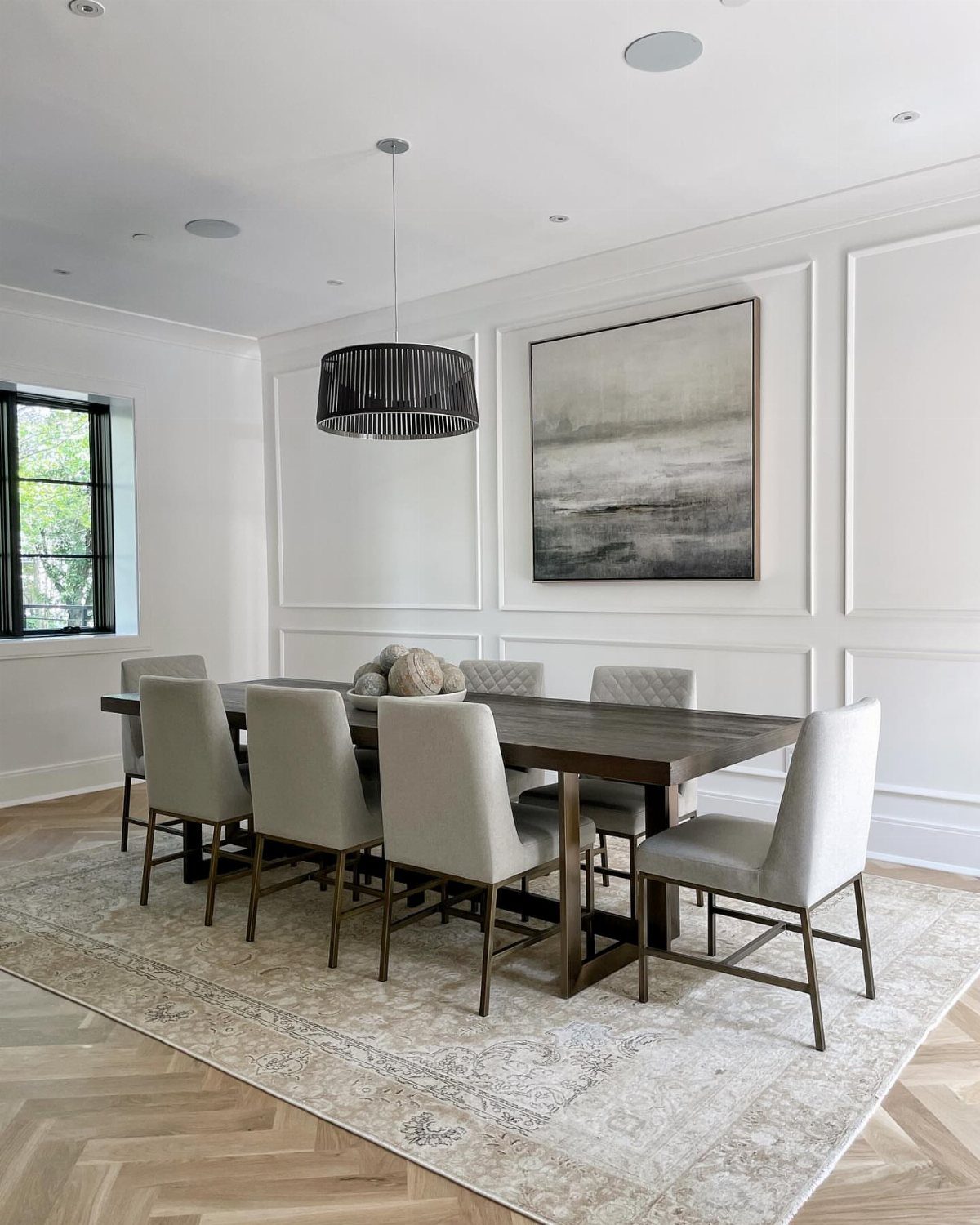
A rectangular table sits best on a rectangular rug because the proportions match and the overhang stays even on all sides.
The setup here keeps the visual weight balanced and makes it easier to size the rug correctly without ending up with awkward gaps or bunching at the corners.
Round and oval tables pair better with round rugs, while square tables work with square rugs.
Mixing shapes can work if the rug is much larger, but matching them gives you the cleanest look in a small dining room where every inch counts.
4. Vintage Rugs
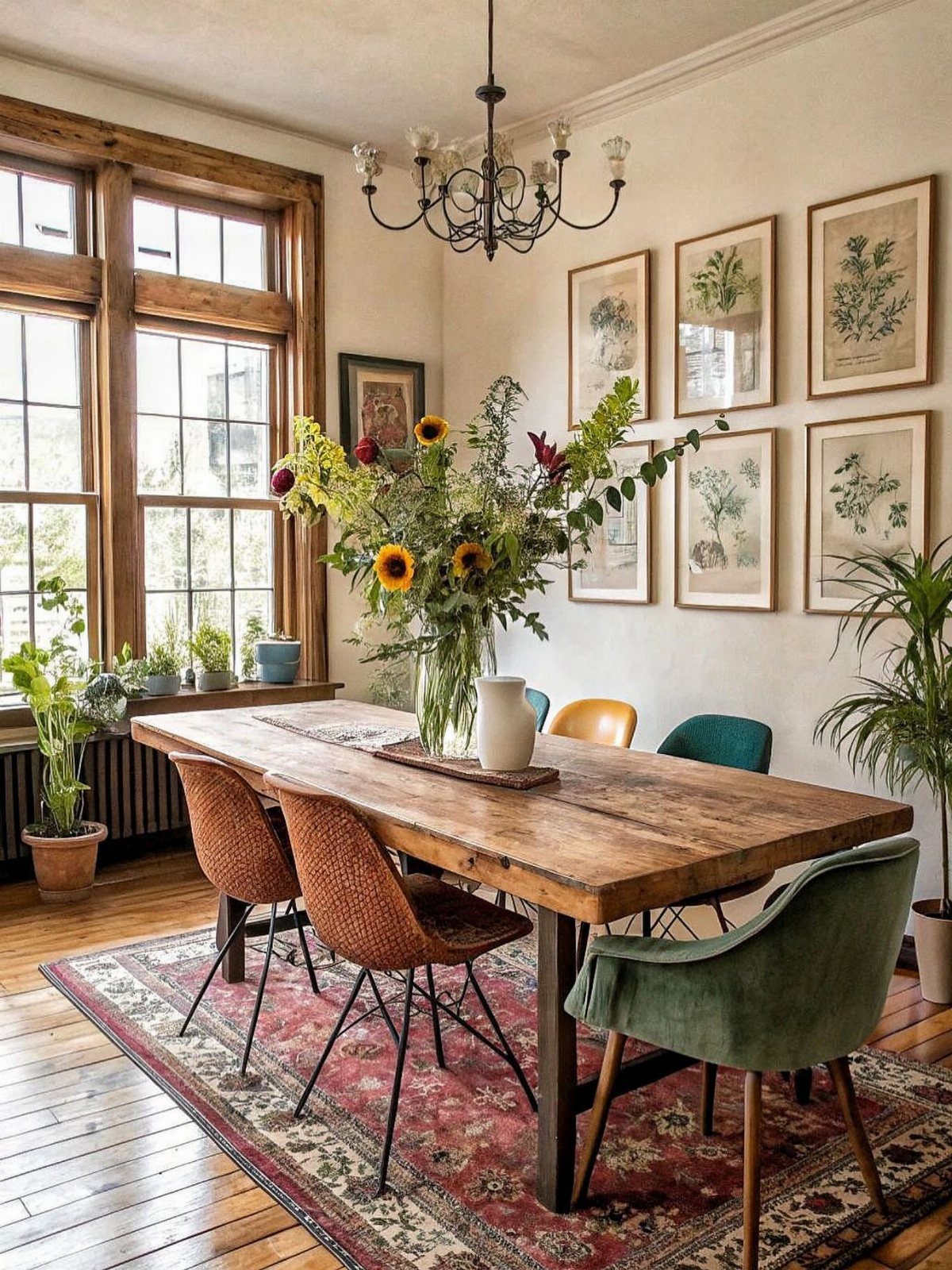
A vintage rug brings in color and texture that feels less predictable than a new rug bought to match.
The worn-in look also means existing wear blends with new use, so the rug doesn’t show every spill or chair drag as an obvious mark.
Look for Turkish, Persian, or older hooked rugs in smaller sizes, usually 4×6 to 6×9.
The patterns tend to be busier, which hides stains well, and the colors are often deeper reds, blues, or golds that anchor a small dining room without overwhelming it.
5. Round Woven Jute Rug
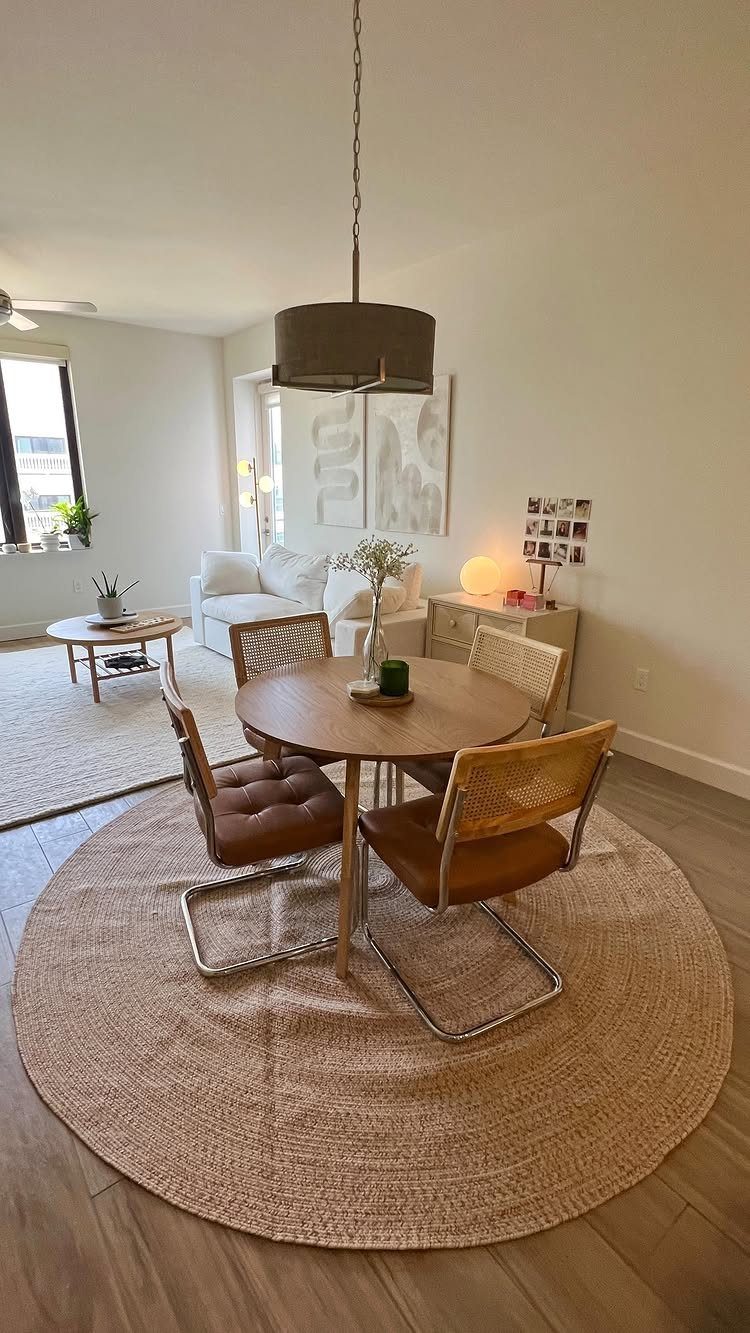
Jute rugs work well under round tables because the woven texture stays casual and the natural color doesn’t compete with wood tones.
The circular shape mirrors the table and gives the whole setup a softer outline than a rectangular rug would in the same space.
Jute sheds fiber and shows stains more than synthetic options, so it’s better suited to light use or dining rooms where spills get cleaned up right away.
If you eat messier meals at the table often, a jute blend or a rug with a tighter weave will hold up longer.
6. Blue Woven Dining Rug
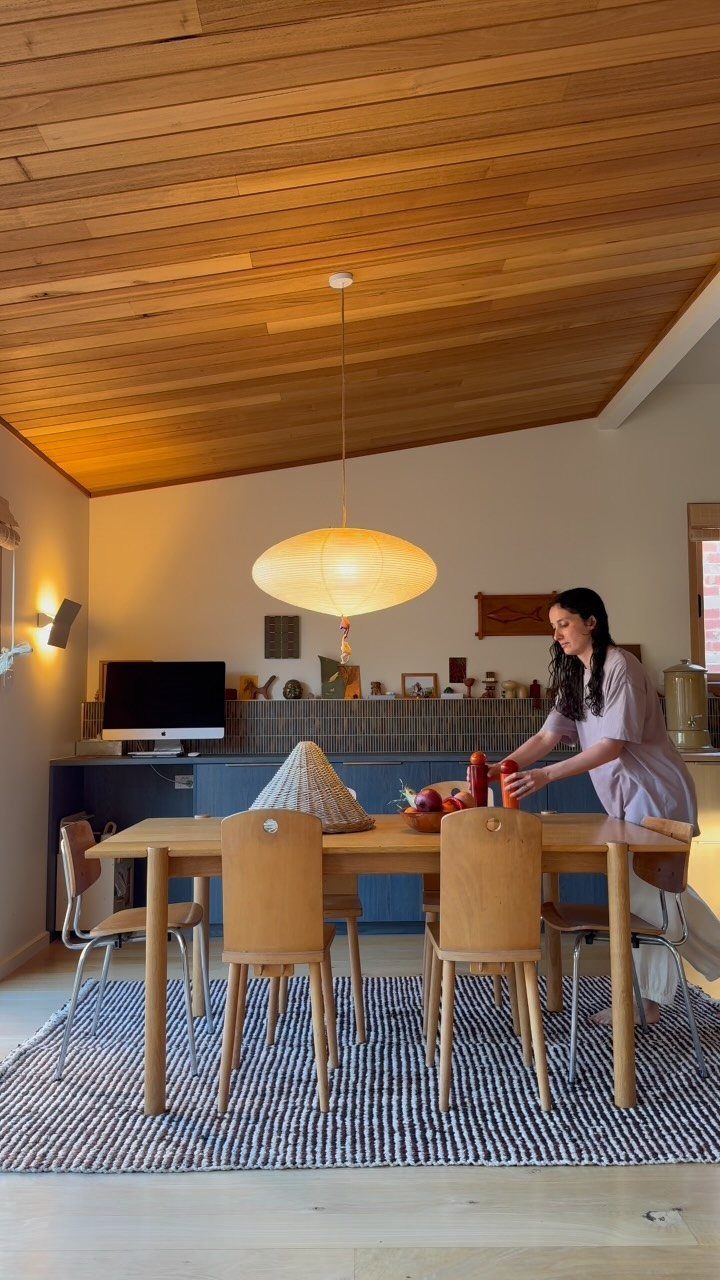
The blue and white woven pattern gives a small dining room more color without feeling heavy.
The contrast in the weave adds texture, and the cooler tones work well with light wood furniture and open ceilings where warmer colors might make the space feel closed in.
This style of rug is usually cotton or a cotton blend, which means it’s washable or easier to spot-clean than wool.
That makes it a good choice for a dining area where spills happen regularly and you don’t want to pay for professional cleaning every time something gets dropped.
7. Fringed Dining Area Rug
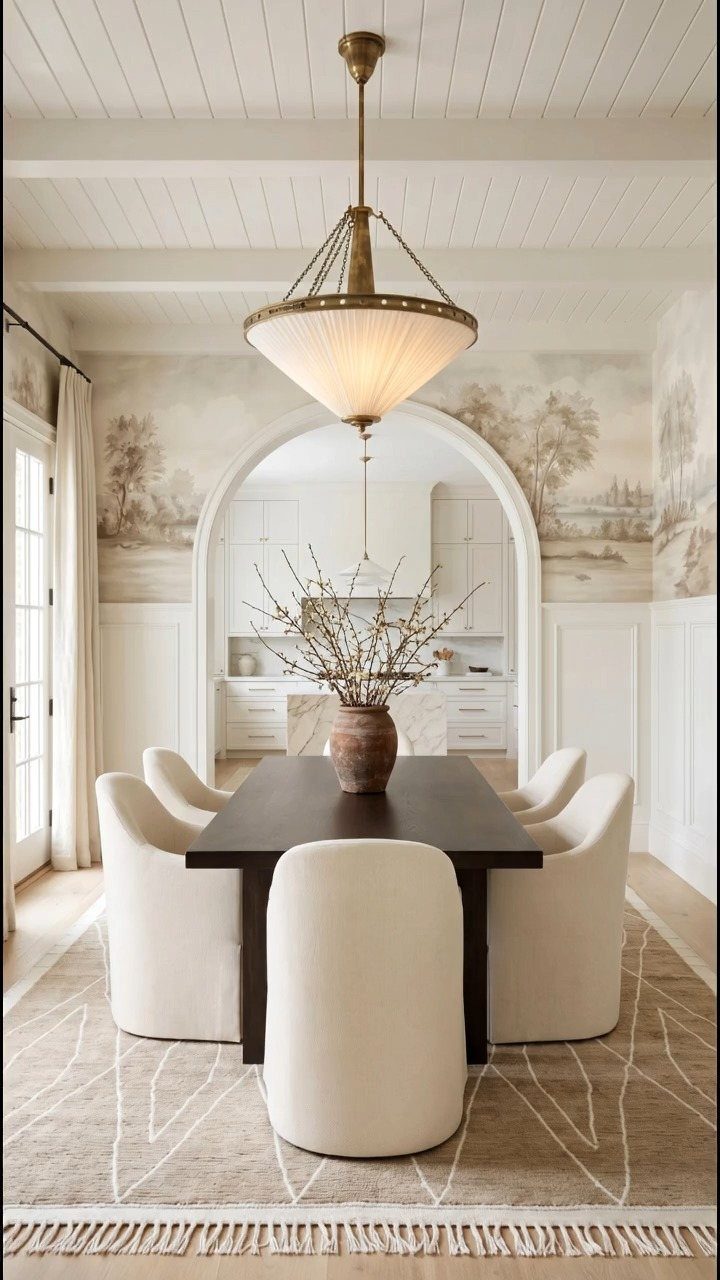
Fringe adds a softer edge to a light rug under a dark table, and the detail keeps the contrast from feeling too sharp.
The fringe also helps define the rug’s boundary when the color is close to the floor, so the space reads as its own zone without needing a bolder pattern.
Light rugs with fringe show dirt faster than darker options, so this works best in a dining room where you vacuum often or where meals stay fairly clean.
The fringe itself can tangle with chair legs if the rug is too small, so stick to the sizing in the first entry and leave enough clearance on all sides.
8. Chevron Low-pile Rug
A low-pile rug with a chevron pattern gives you direction without much texture, which makes it easier to slide chairs in and out.
The beige and white keeps the floor neutral while the zigzag adds movement, so the room doesn’t feel flat even when the furniture is simple.
Low pile also means less vacuuming effort and fewer crumbs trapped deep in the fibers.
Chevron hides stains better than stripes because the angled lines break up spills visually, and the lighter tones here work well in a small dining room where a dark rug might make the space feel smaller.
Maintenance Tips
Vacuum the rug at least once a week to pull out crumbs before they work deeper into the pile.
A handheld or stick vacuum makes it easy to hit the floor under your table between full cleanings, especially after meals where something dropped.
Blot spills immediately with a clean cloth instead of rubbing, which pushes liquid deeper and spreads the stain. For anything greasy or sticky, dab with a bit of dish soap diluted in water, then blot dry.
Rotate the rug every few months so the side facing traffic doesn’t wear faster than the rest.
If one end sits under the table permanently and the other gets walked on, swapping them keeps the wear even and the rug looking uniform longer.
Rug Placement Advice
Mark those dimensions on the floor with painter’s tape before you buy anything, so you can walk around the outline and see whether the rug will feel too large or too tight in the actual room.
If the tape outline looks too big for the space, drop to the next smaller standard rug size and check whether your chairs still clear the edge when pulled out.
A rug that’s slightly smaller than ideal beats one that crowds the walls or leaves the space feeling cramped.
Durability Considerations
Look for a stain-resistant finish if you have kids or pets.
Polypropylene rugs resist stains and clean up easily, which makes them a good choice for households where spills happen often and you need something that wipes down without special treatment.
Wool holds up to heavy use but costs more and needs more care when something spills.
If you want a natural fiber and can clean up messes right away, wool works. If spills sit for a while or happen daily, a synthetic rug saves time and money on maintenance.






