
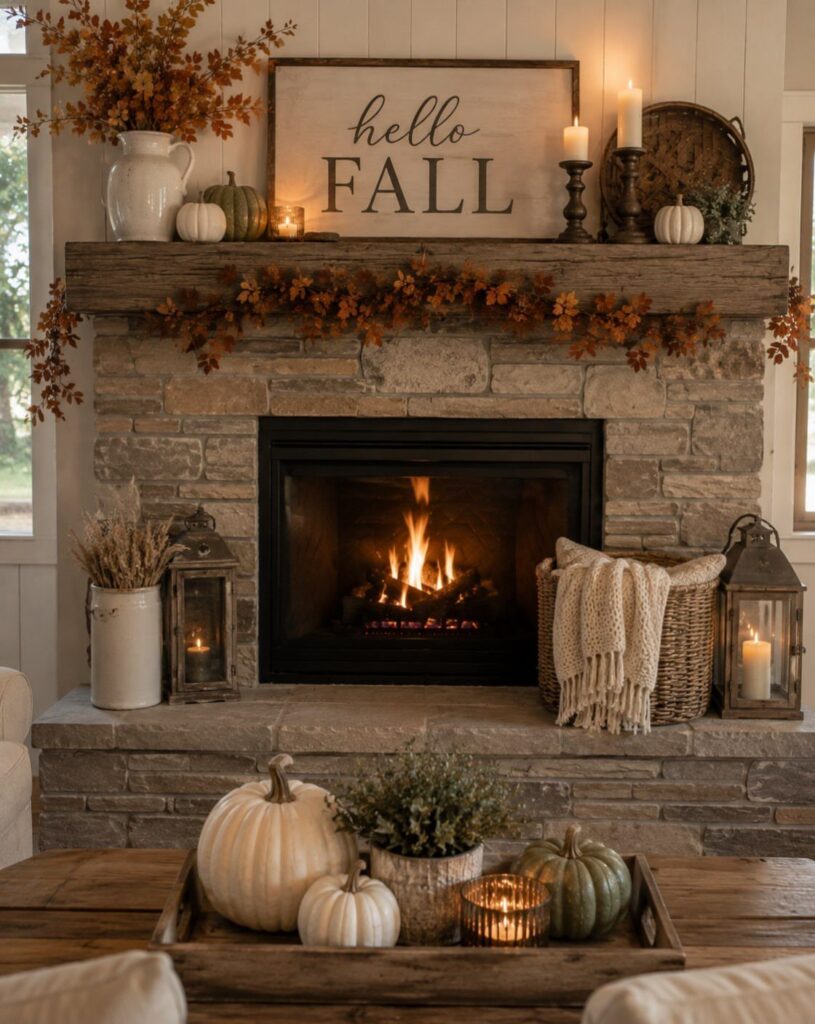
A fall fireplace mantel can run from a simple garland and a few pumpkins to layered setups with lanterns, dried flowers, and multiple light sources.
Battery-operated string lights tucked behind a pumpkin give you soft, layered light without running a cord across the wall, and faux garland stays put all season without dropping leaves on the hearth.
Some of these lean rustic with wood and natural elements, others keep it simple with a wreath or a single landscape piece, and a few bring in Halloween accents without losing the fall feel.
1. Rustic Farmhouse
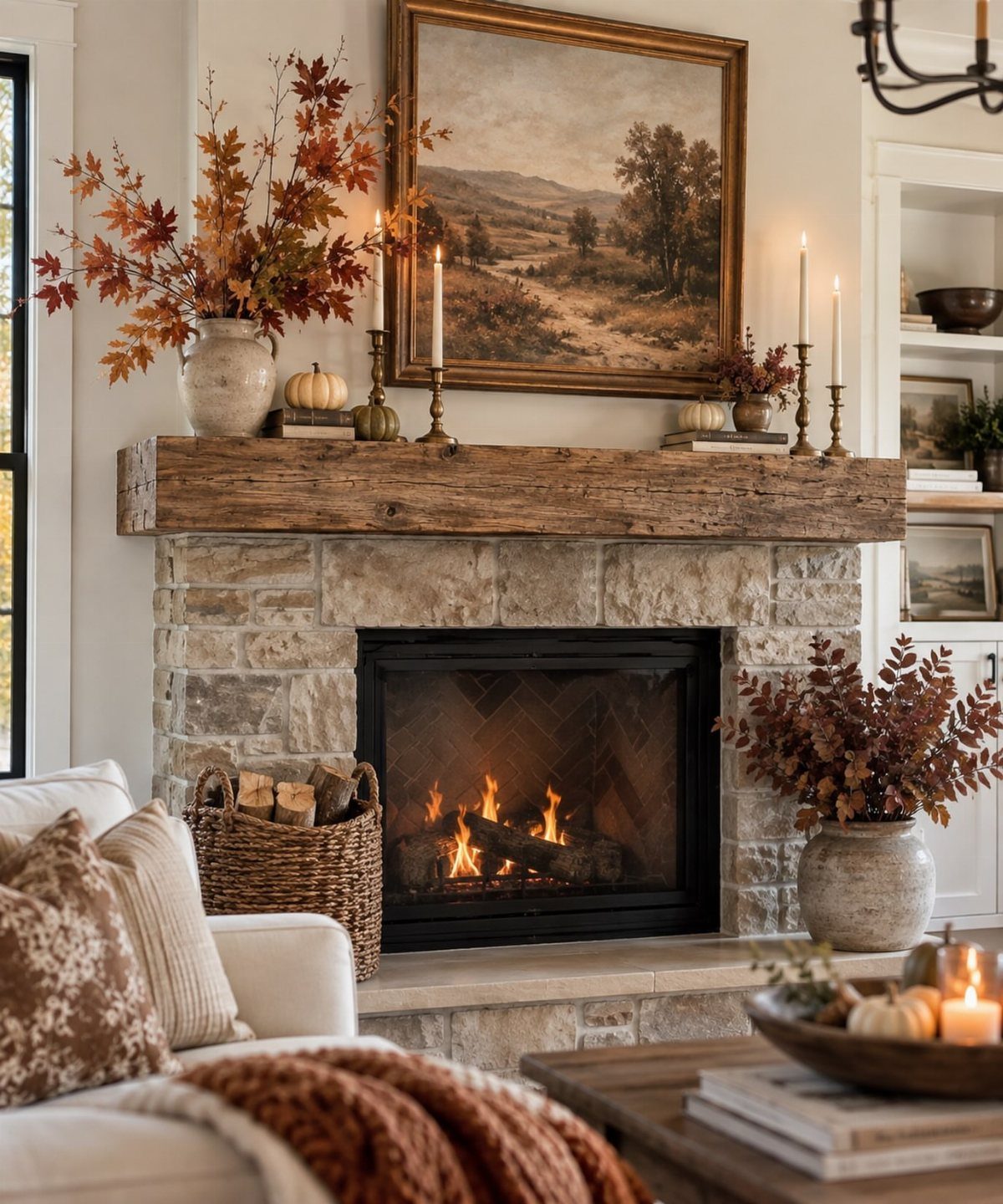
I like wood, stone, dried leaves, pumpkins in mixed sizes, and pillar candles in odd numbers. The mix gives you texture without needing much budget, since most of it can be gathered or bought inexpensively at a farm stand.
I like this approach when you want warmth but not a lot of fuss.
Stick with earthy tones and keep the arrangement loose rather than symmetrical. The stone fireplace helps here, but a brick or painted surround works just as well if you let the wood and foliage do the talking.
2. Fall Garland
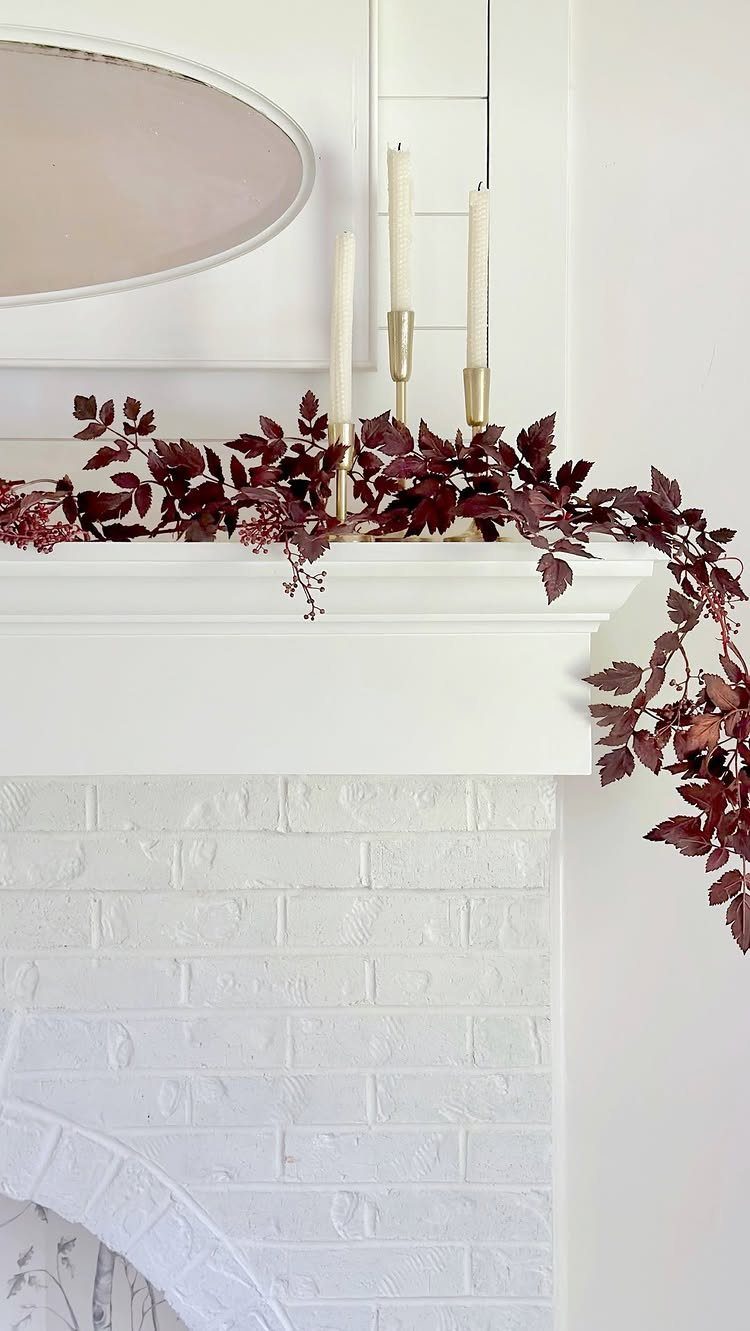
A single garland changes the whole mantel without covering it up. This one drapes in a loose swag, burgundy leaves spaced evenly along the length, with just enough weight to hold its shape.
Artificial garland stays put and doesn’t drop leaves on the hearth. Drape it from the center outward, letting it dip slightly between tack points.
Taper candles in simple holders give you height without fighting the garland for attention. If your mantel is shallow, pin the garland to the wall just above the shelf so it doesn’t slide forward.
3. Elegant Fall Mantel
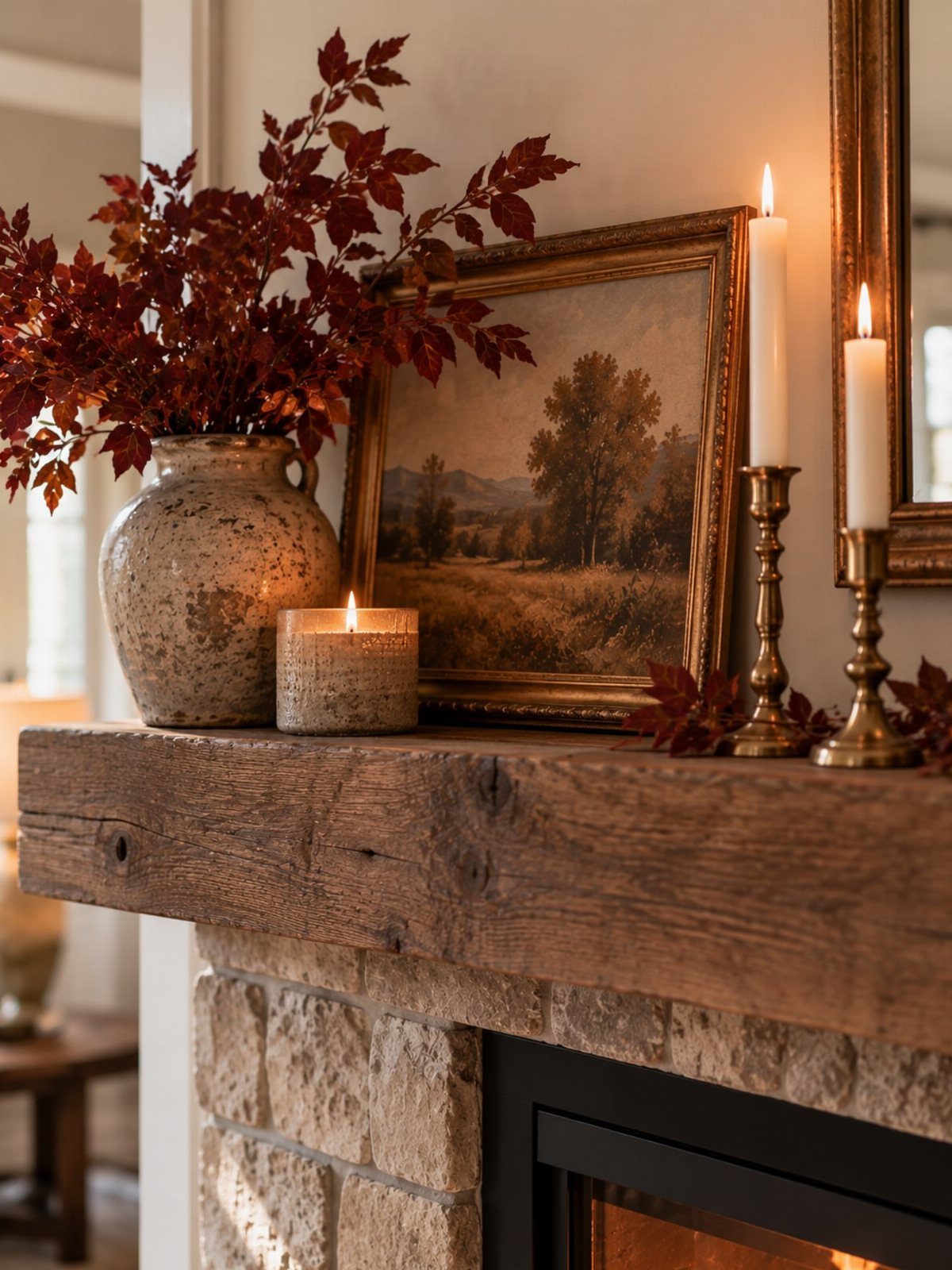
Fewer pieces, better materials. The restraint makes each piece register.
This works when your mantel is narrow or when you want the fireplace itself to stay visible.
I’d use real brass or aged metal rather than new finishes, and keep the candles white or cream so the flame stands out. The painting doesn’t need to be large, just framed well enough that it holds the wall.
4. Harvest Theme
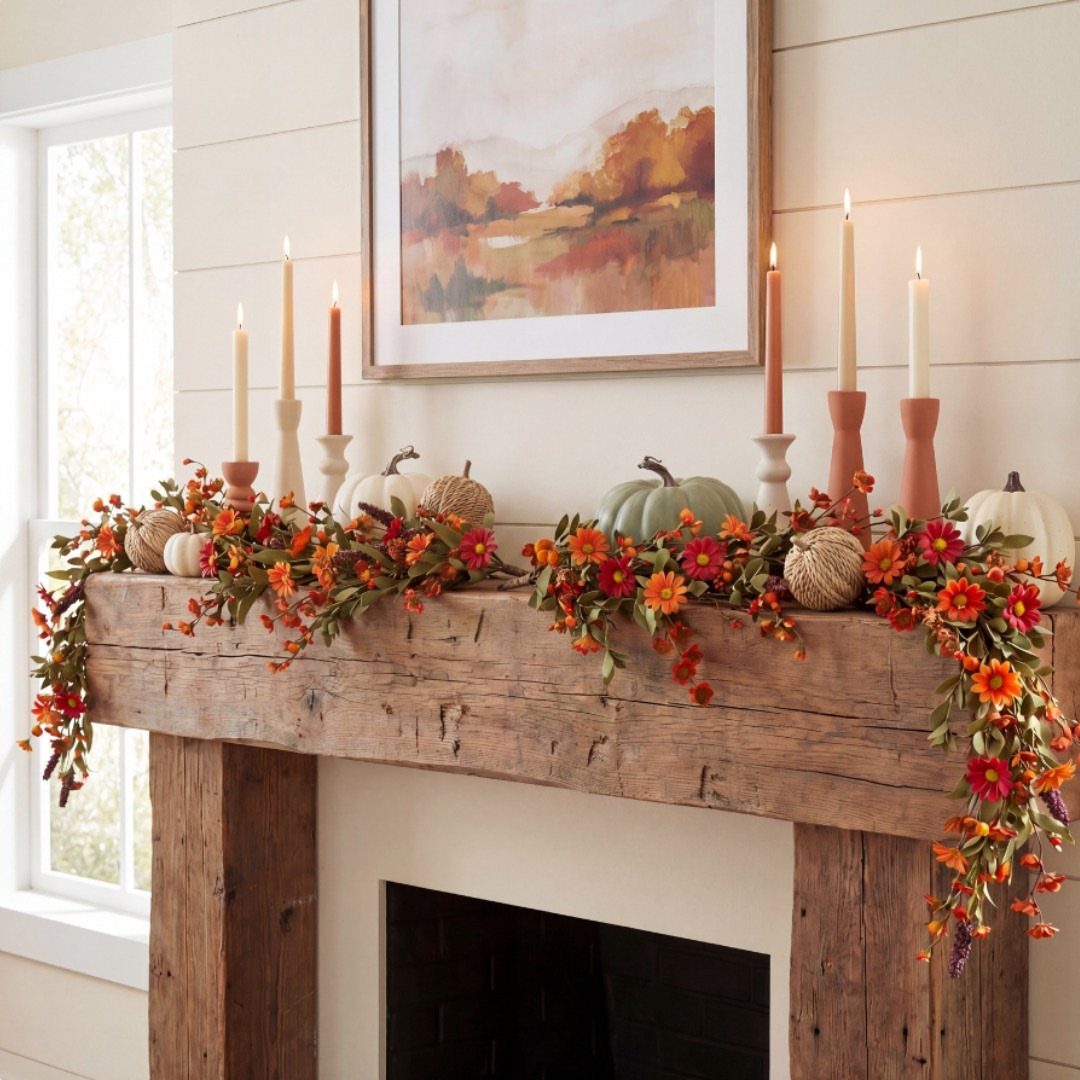
This mantel leans into the harvest: garland made from autumn flowers and foliage, pumpkins clustered at both ends, taper candles in brass holders, and a landscape painting anchoring the center.
The orange and rust tones repeat across every piece, so nothing feels added on.
Layer the garland first, then set the pumpkins where the garland ends.
Real gourds bring texture, but foam versions work if you want to keep them year to year. The candles add height without blocking the painting.
5. Cozy Corner
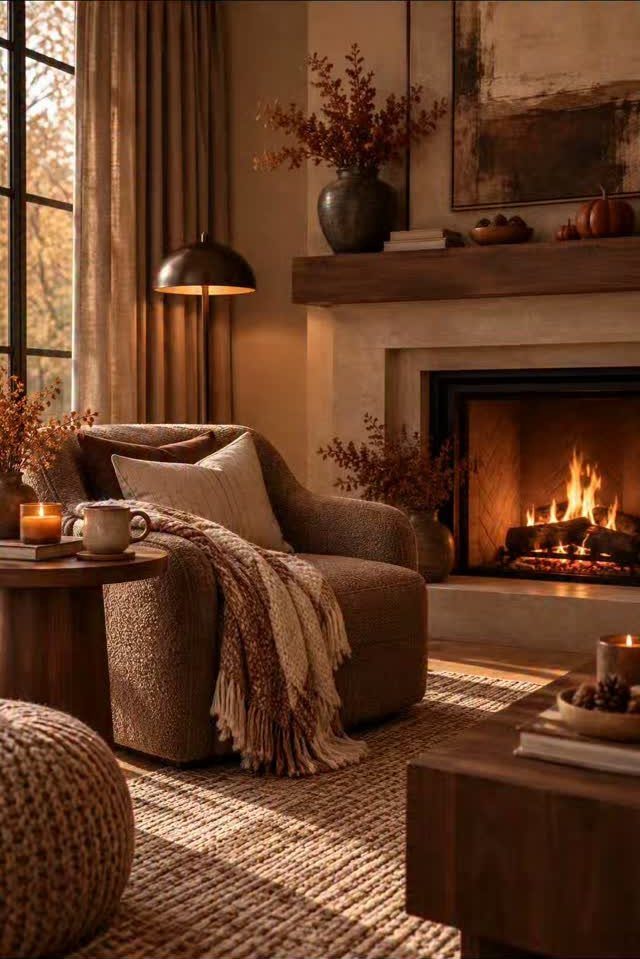
The mantel is part of a larger setup: an armchair pulled close, a throw draped over the arm, and the fire itself lit.
Pumpkins and branches sit on the mantel, but the idea is to make the whole corner feel like a place you’d actually sit.
This takes a few square feet of floor space, so it works better in a living room than a bedroom.
I’d add a side table within arm’s reach and keep the mantel decor simple so the fire stays the focus. If you don’t use the fireplace, a few candles inside the firebox give you the same glow.
6. Warm Lighting
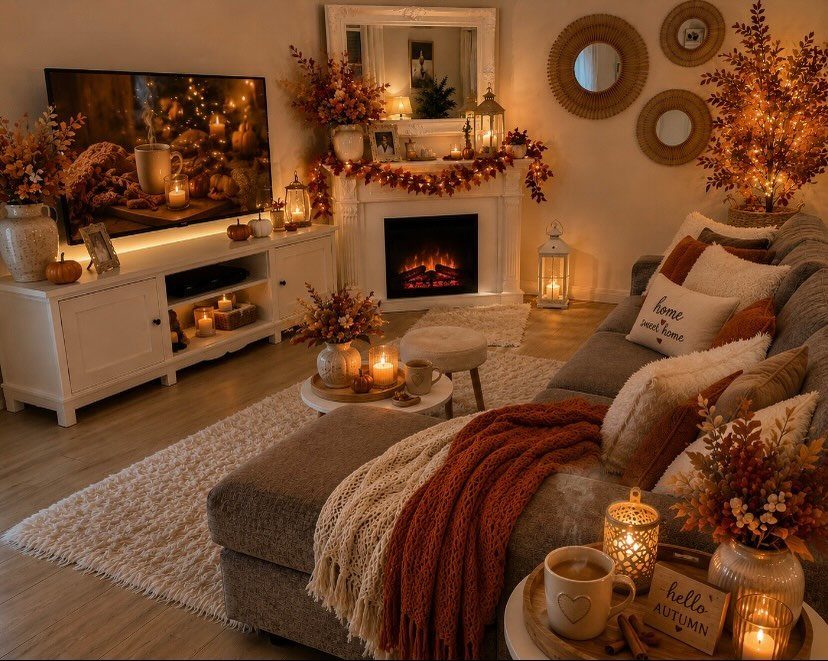
Warm lighting stacks up here: string lights hung along the mantel, candles in glass holders, and a lantern at one end. The combination gives you soft, layered light that doesn’t rely on overhead fixtures.
Battery-operated string lights stay cleaner than plug-in versions if your outlet is far from the mantel. Tuck the battery pack behind a pumpkin or a sign.
A mantel lit with candles and string lights works best in the evening when you can turn off the other lights and let the mantel be the brightest thing in the room.
7. Festive Banner
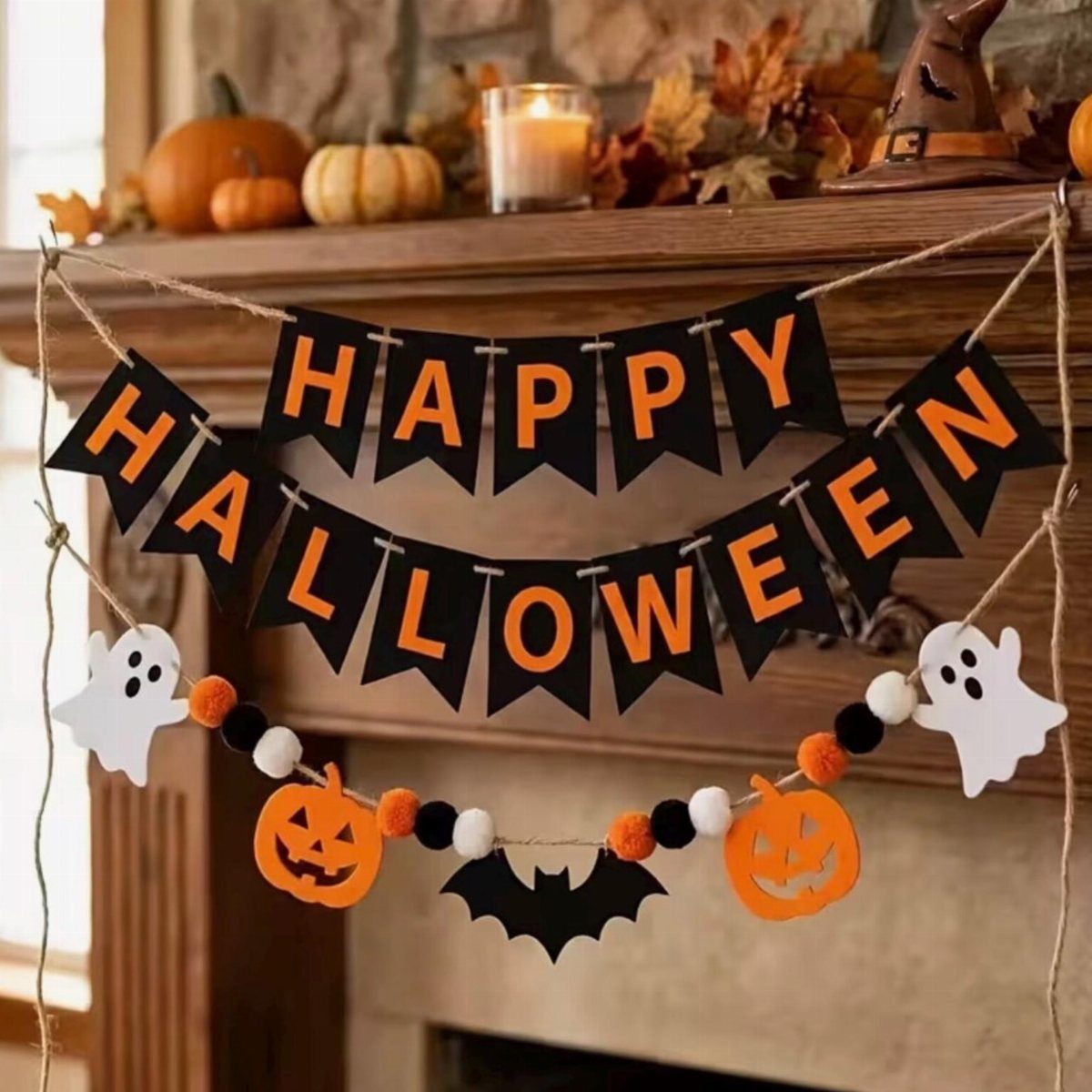
A banner adds personality and leaves the mantel surface clear. This one spells out the occasion and brings in illustration, which shifts the feel from rustic to festive in one move.
Look for banners with grommets or ribbon loops at each end so you can hang them from small nails or adhesive hooks.
Paper and felt banners both work; felt holds up better if you store it rolled rather than folded. Keep the rest of the mantel simple so the banner reads clearly.
8. Autumn Wreath
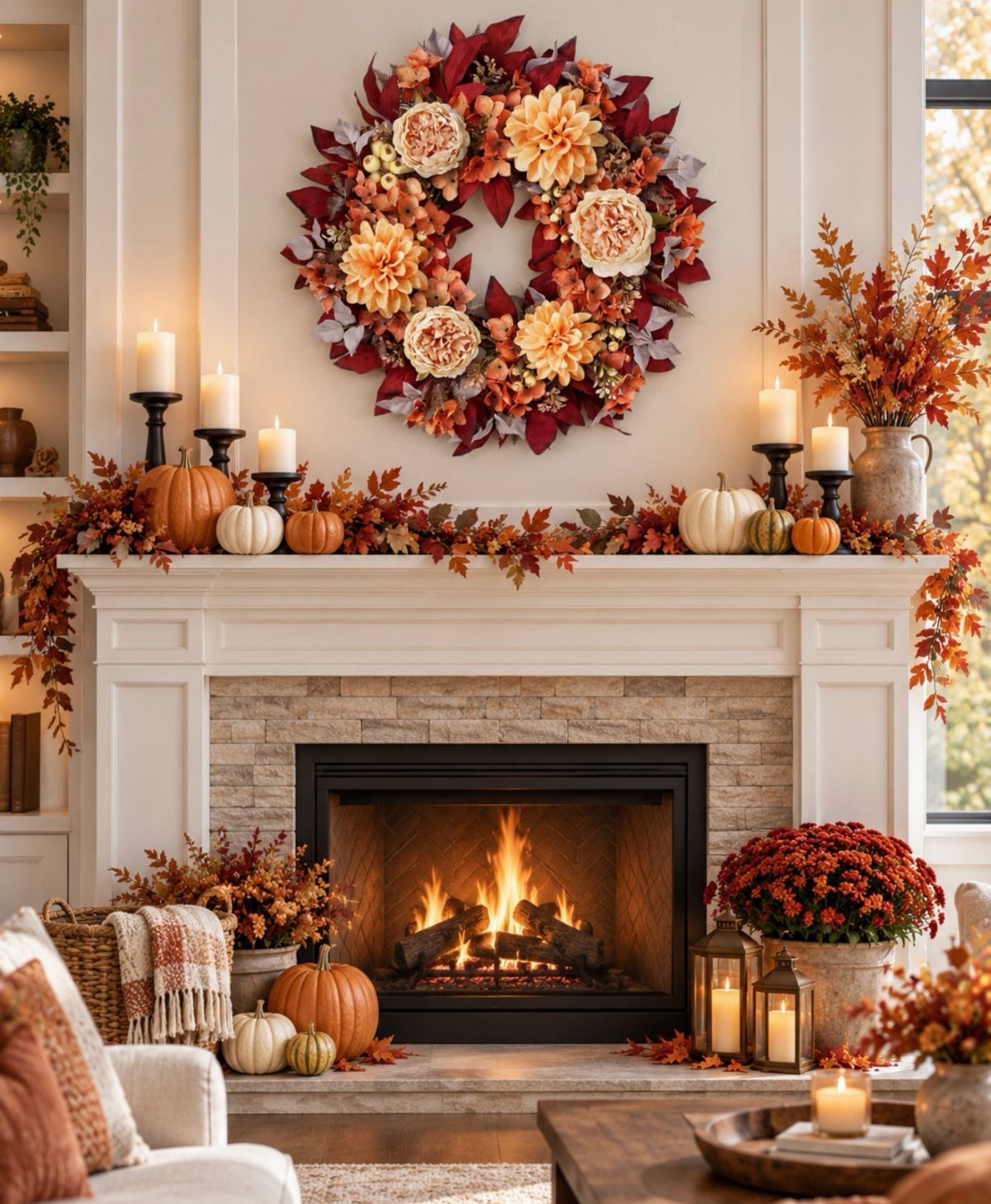
A wreath hung above the mantel pulls your eye up and fills the wall without adding clutter to the shelf. This one uses fall flowers and foliage in rust and gold, colors that repeat in the pumpkins and candles below.
Hang the wreath from a nail or picture hook placed high enough that it clears the mantel by a few inches.
Faux wreaths last all season and don’t drop petals. If your wreath is dense, a ribbon hanger shows; wire disappears.
9. Gourd-Themed Fall Mantel
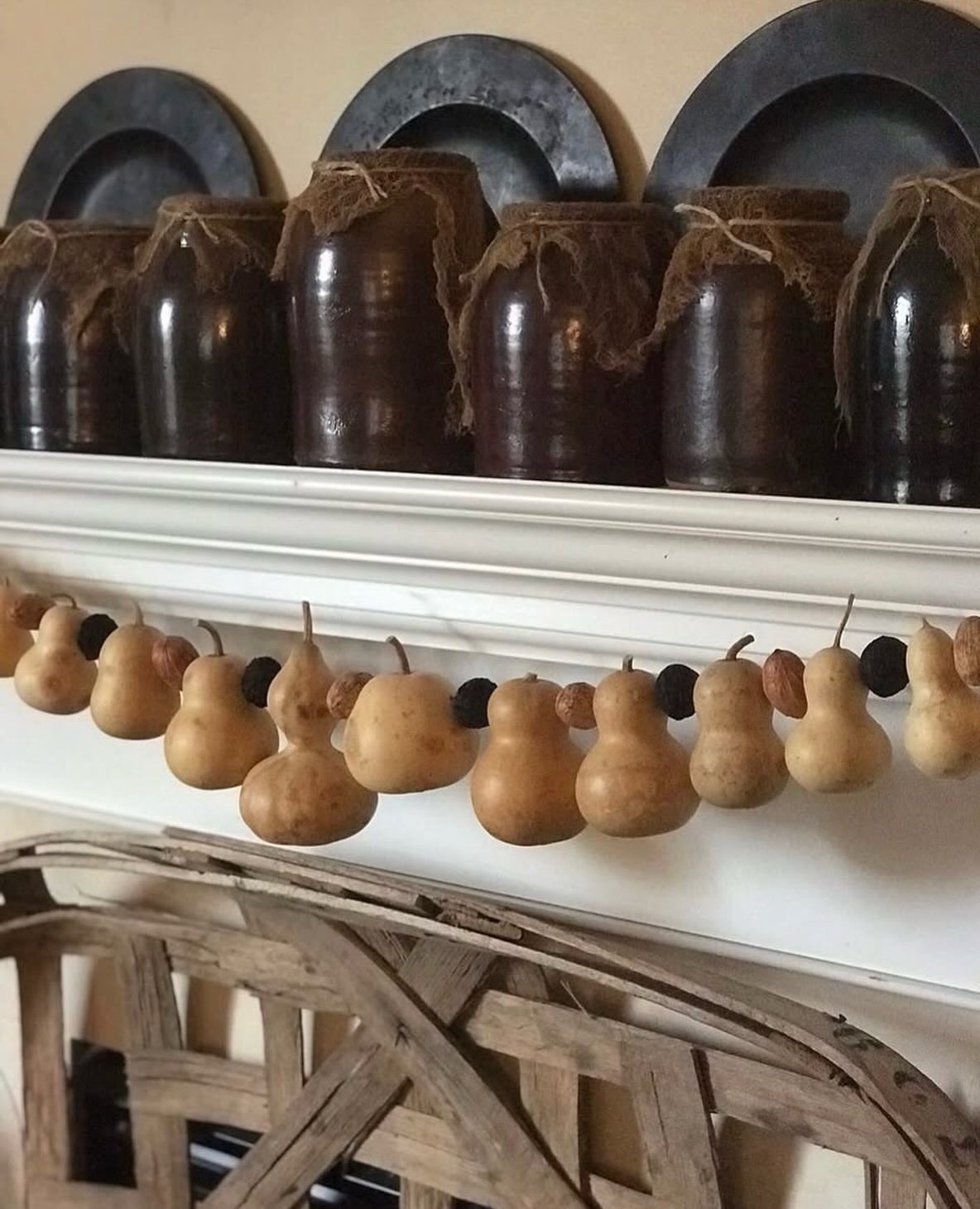
Stringing small gourds turns them into a garland. The odd shapes and mottled colors give you texture that plain garland doesn’t, and each gourd is different enough that the line stays interesting.
Real gourds are lightweight when dry and last several seasons if stored in a cool, dry spot.
Drill a small hole through the neck of each one and thread them on jute or wire, spacing them a few inches apart. The jars and plates here stay neutral so the gourds get the attention.
10. Orange Hues
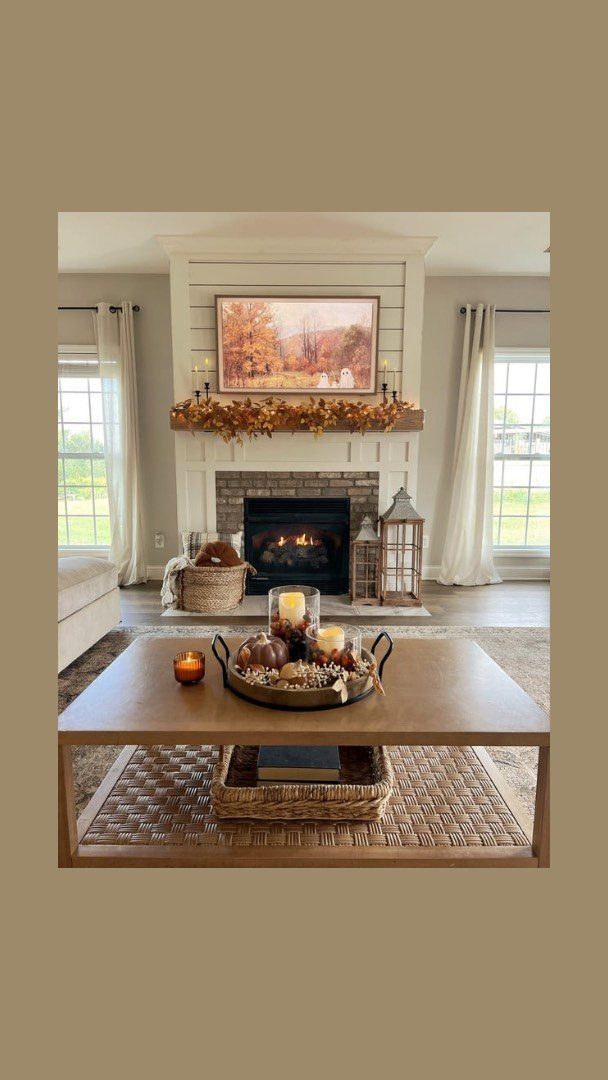
Orange repeated in the garland, the painting mat, and the pumpkins on the coffee table ties the room together without matching everything exactly. The amber tones warm up a neutral room fast.
A garland this full covers most of the mantel length, so a large piece of art works better than small objects that would get lost. Candles in clear or white holders let the orange stay the dominant color.
11. Pumpkin Bonanza
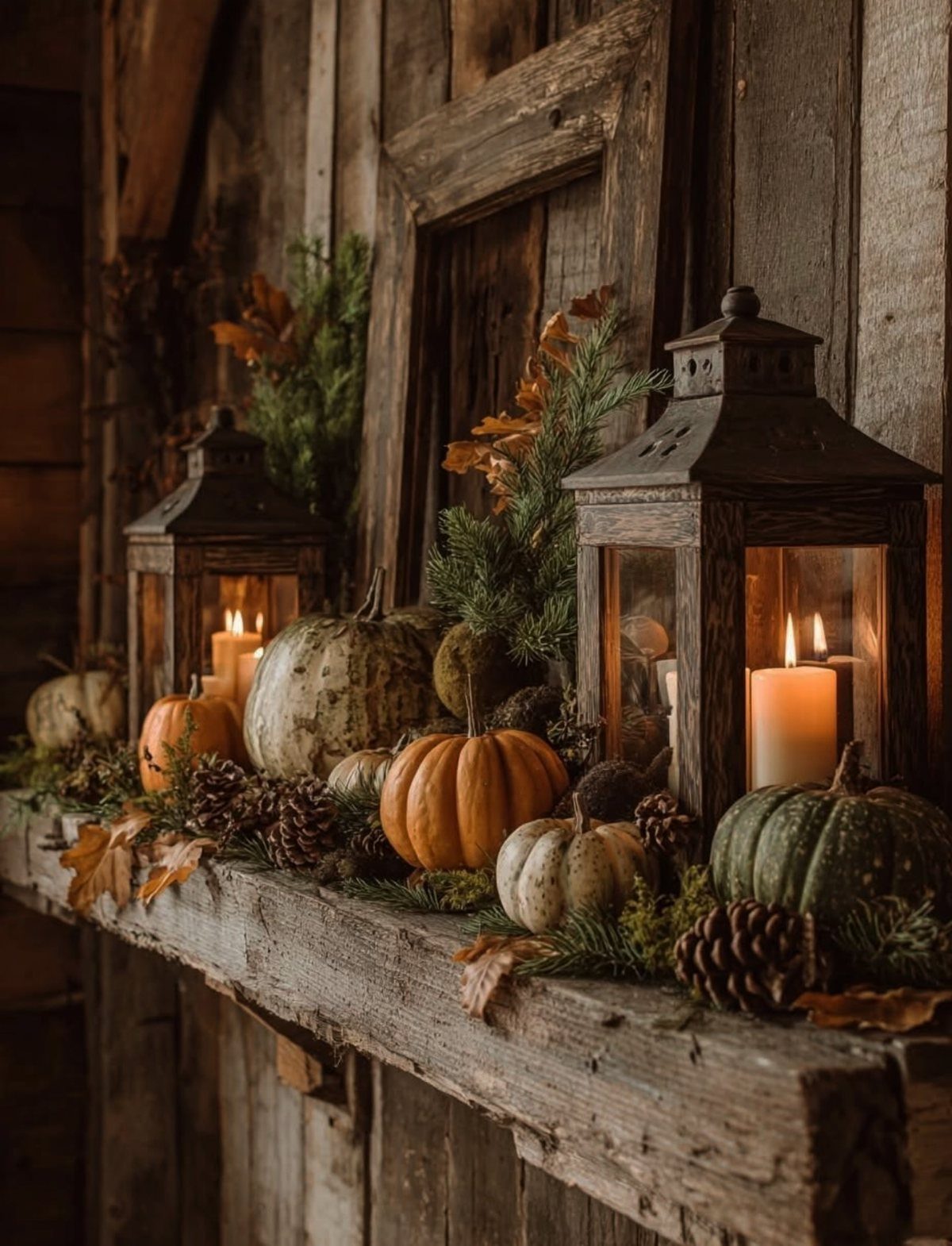
Pumpkins in different sizes create height and fill space without needing much else. This setup mixes white, orange, and green pumpkins with pinecones tucked in between, and the lanterns at each end add light.
Real pumpkins last longer indoors if you keep them cool and dry.
Start with the largest pumpkins at the back or ends, then fill in with smaller ones and pinecones. The wood wall helps, but this works on painted brick or drywall too.
12. Dried Flowers
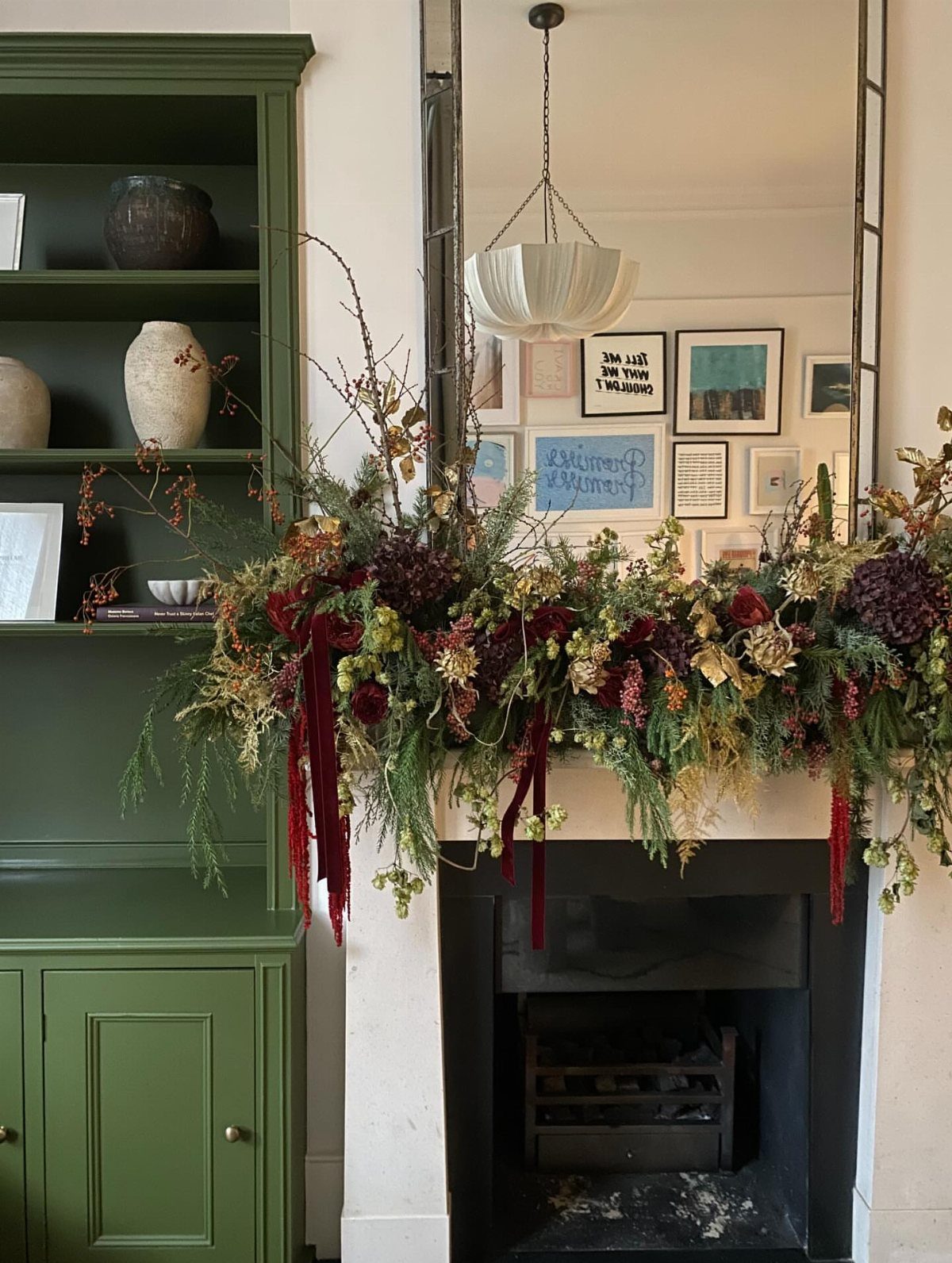
Dried flowers bring in burgundy, rust, and brown without needing water or daily care. This arrangement is large and dense, sitting directly on the mantel rather than in a low vase, so it has presence.
Dried florals last months indoors and don’t wilt under mantel heat.
Build the arrangement in a low bowl or directly on a tray, starting with the largest stems and filling in with smaller pieces. Pampas, wheat, roses, and berries all dry well and hold their shape.
13. Halloween-Themed Art and Accents
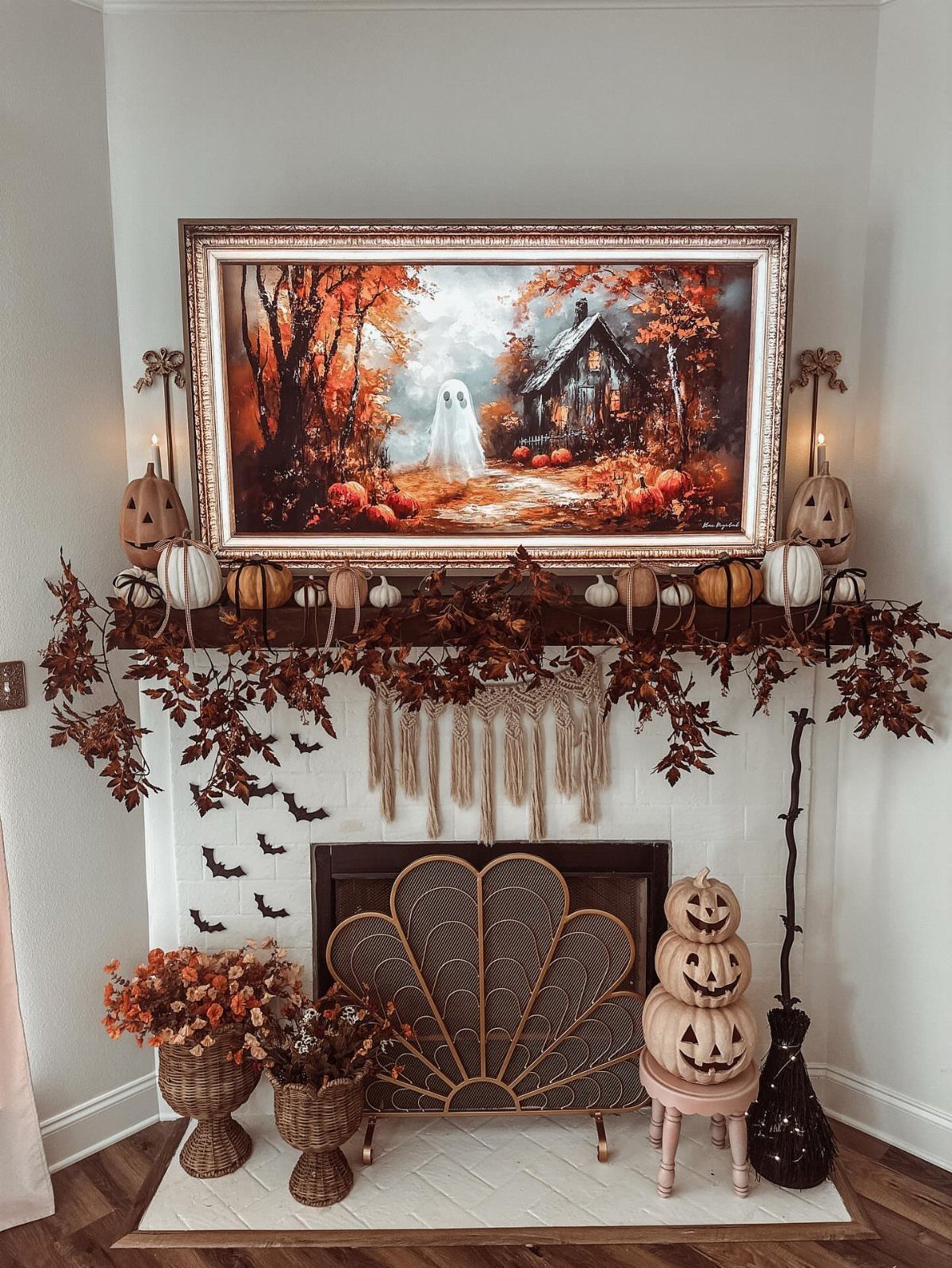
A ghost or haunted house painting shifts the mantel from general fall into October territory. Pair it with white and orange pumpkins, autumn leaves, and candles to keep the setup seasonal rather than purely spooky.
This works if you celebrate Halloween but still want the mantel to read as fall decor.
The painting does the Halloween work, so the rest can stay neutral. Hang the art at eye level or slightly higher, and let the pumpkins and foliage frame it rather than compete with it.
14. Fall Landscape Art Centerpiece
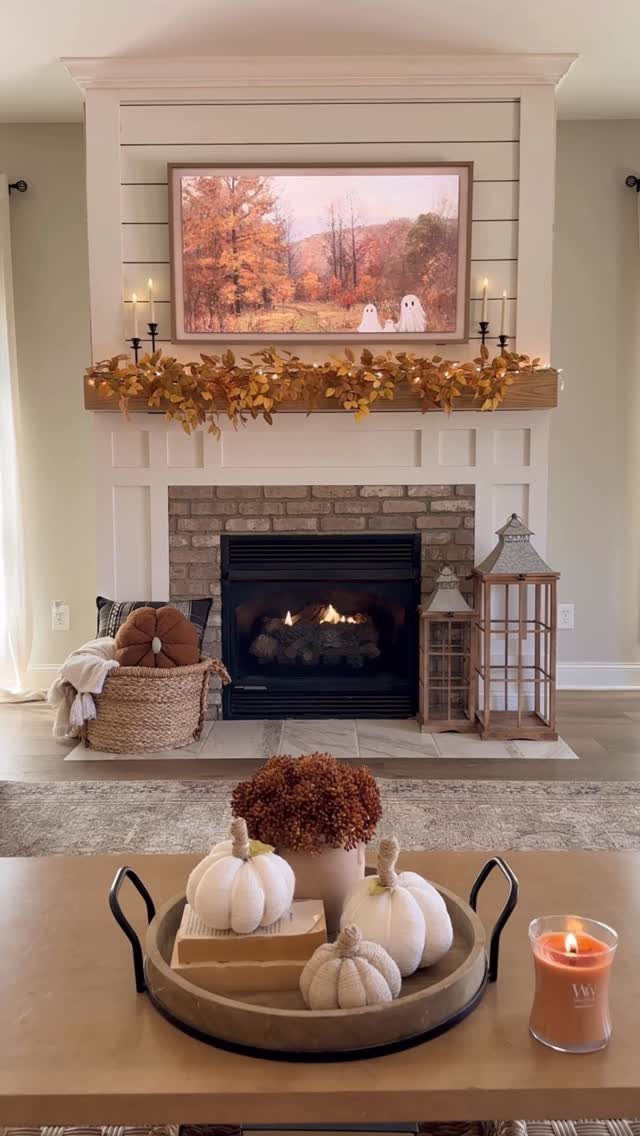
A landscape painting in fall colors anchors the mantel and gives you a focal point that doesn’t need rearranging. Flank it with orange leaf garland and candles in simple holders, and the painting holds everything together.
White pumpkins on the mantel or hearth keep the setup from skewing too orange.
The garland can drape or lie flat depending on how much space you have in front of the painting. This approach works well when your mantel is wide and needs something vertical to balance the horizontal span.
15. Lanterns and Ribbon Accents
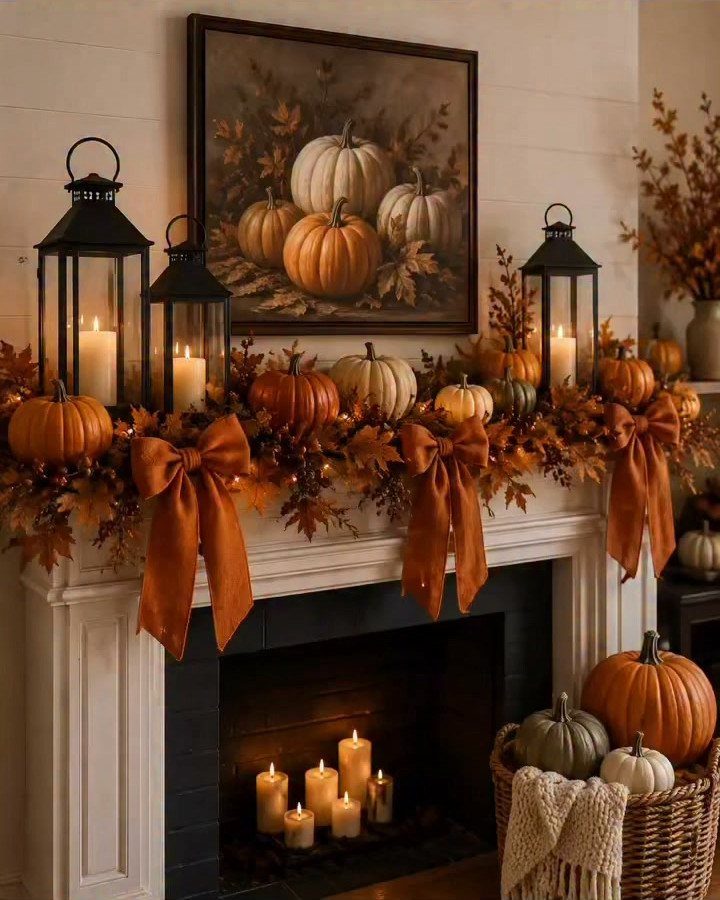
Black lanterns with candles inside bring structure and height without feeling delicate. Add orange ribbon bows tied to the lantern handles, pumpkins in white and orange, and autumn foliage between the pieces.
The black reads as grounding rather than spooky if the rest of the colors stay warm.
Extend pumpkins and candles down into the hearth if your mantel is shallow. Battery-operated candles inside the lanterns skip the soot and let you leave them on longer.
16. Fall Quote Signs
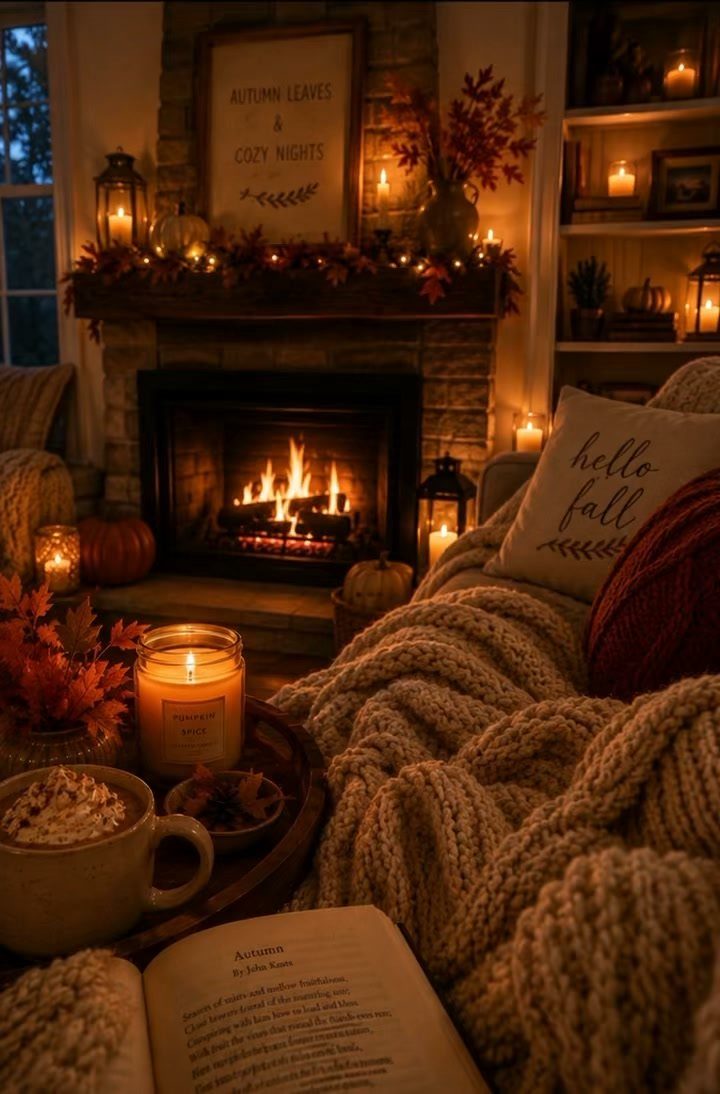
A sign with a fall saying brings in words without needing much else. This one sits on the mantel with autumn leaves, pumpkins, and candles around it, and the message gives the setup a reason.
Look for signs with simple fonts and colors that match your other decor.
Lean the sign against the wall rather than hanging it so you can move it around as needed. Everything else stays out of the way so the words land from any angle.
Layering Techniques
Start with something tall at one end or in the center, then work outward with pieces that step down in height.
A candlestick next to a wreath propped on an easel gives you two levels; add pumpkins or pinecones at the base and you have three.
Garland laid flat becomes the back layer. Set smaller objects in front of it rather than beside it so the garland shows through the gaps.
Varying the heights keeps your eye moving across the mantel instead of landing in one spot and stopping. Balance the tallest pieces on opposite ends or offset a tall grouping on one side with several shorter pieces on the other.
Color Schemes
Burnt orange, pumpkin, deep red, burgundy, rich brown, olive green, forest green, mustard yellow, and goldenrod all pull from the same seasonal palette.
Cream, ivory, taupe, tan, dark gray, and charcoal work as base colors that let the warmer tones stand out.
Bronze, copper, and gold add shine without taking over.
A brass candlestick or a copper lantern brings in metallic accent without needing much of it. Jewel tones and neutral palettes both work if you keep the shades varied enough to create depth.
Natural Elements
Real pumpkins, gourds, mini pumpkins, acorns, pinecones, fall leaves, branches, twigs, wheat stalks, corn husks, dried hydrangeas, eucalyptus stems, magnolia leaves, birch bark, and moss all bring texture and seasonal color without looking store-bought.
Mix real and faux pieces if you want some elements to last multiple seasons.
Faux pumpkins and high-quality artificial leaves hold up under heat and don’t wilt. Real leaves and branches bring in variation that artificial versions can’t match, but they dry out and need replacing after a few weeks.
Wheat bundles and oak leaves ground the arrangement in organic material. White pumpkins work across styles, from farmhouse to modern, and pair with nearly any other natural element.
Frequently Asked Questions
What is the best way to decorate a fireplace mantel?
Start with a focal point like a wreath, painting, or tall arrangement, then layer items at different heights around it.
How to decorate the house for autumn?
Incorporate warm colors like burnt orange, burgundy, and goldenrod along with natural materials such as pumpkins, dried leaves, branches, and wheat stalks.






