
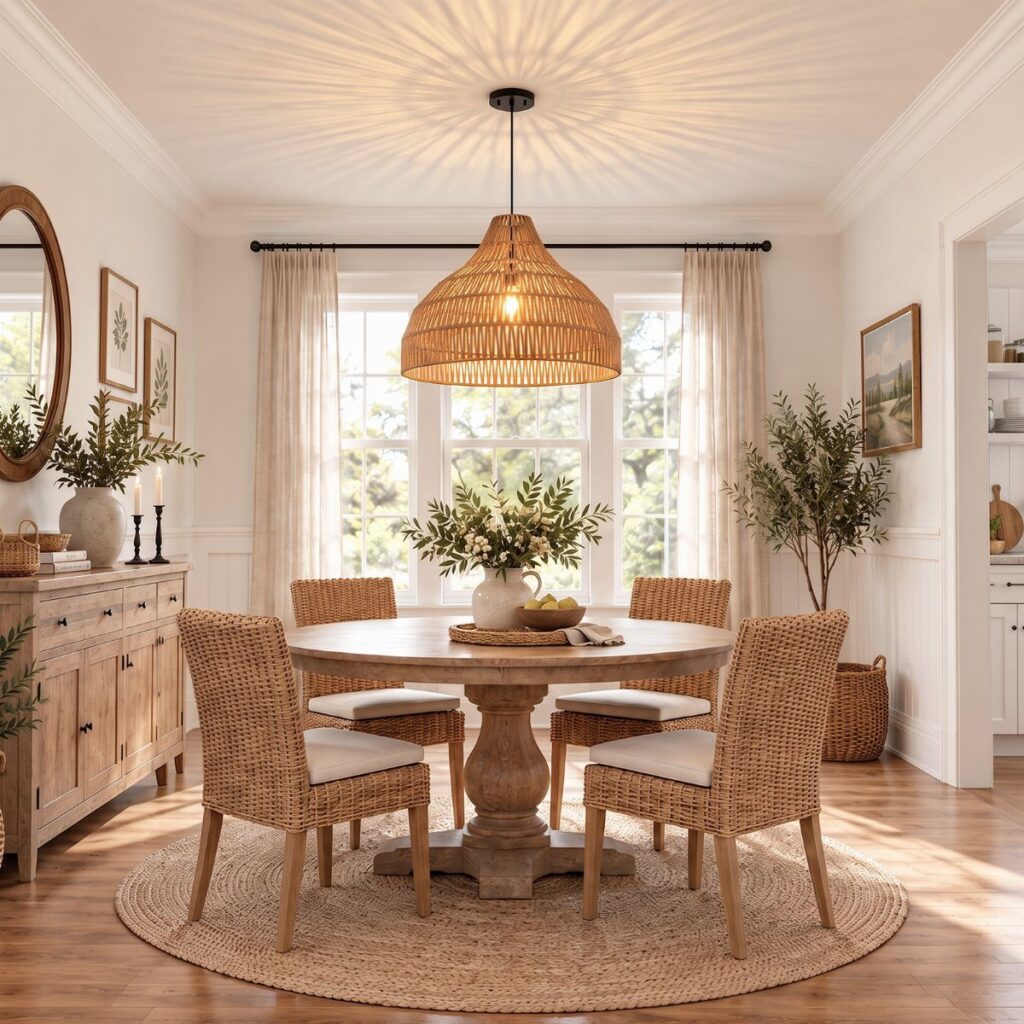
A farmhouse dining room anchors on wood: solid tables in oak, pine or reclaimed lumber with matte or satin finishes that let the grain show.
The choice between matching and mismatched seating comes down to how formal you want the space to feel.
Matching wood chairs keep the look traditional, while mixing upholstered host chairs or metal frames with wood seats gives the room a collected-over-time quality.
Sizing the table for 8 or more opens the space for gatherings, and built-in banquettes let you seat more people in tighter floor plans where freestanding chairs eat up clearance.
1. Mix and Match Dining Chairs
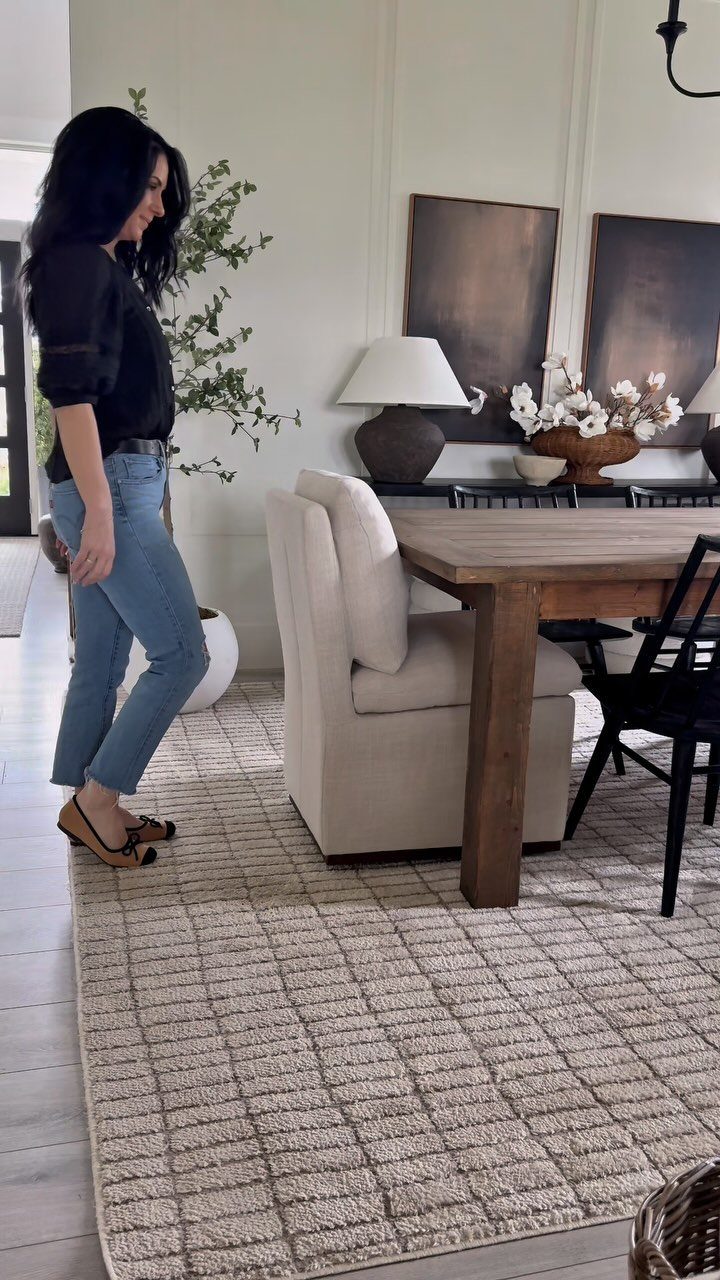
Pairing different chair styles around the same table gives a farmhouse dining room a collected-over-time feel that can be hard to get with a matching set. Match the chairs by one element: finish, seat height or frame material.
Black painted wood chairs anchor the sides while a cream upholstered host chair softens one end.
The contrast keeps the look from feeling too coordinated, and mixing in upholstery makes longer meals more comfortable without committing to cushions on every seat.
Choose chairs with seats low enough that diners can rest their forearms comfortably on the table. Paint secondhand wood chairs the same color, then add one or two upholstered pieces.
2. Wooden Tables and Chairs
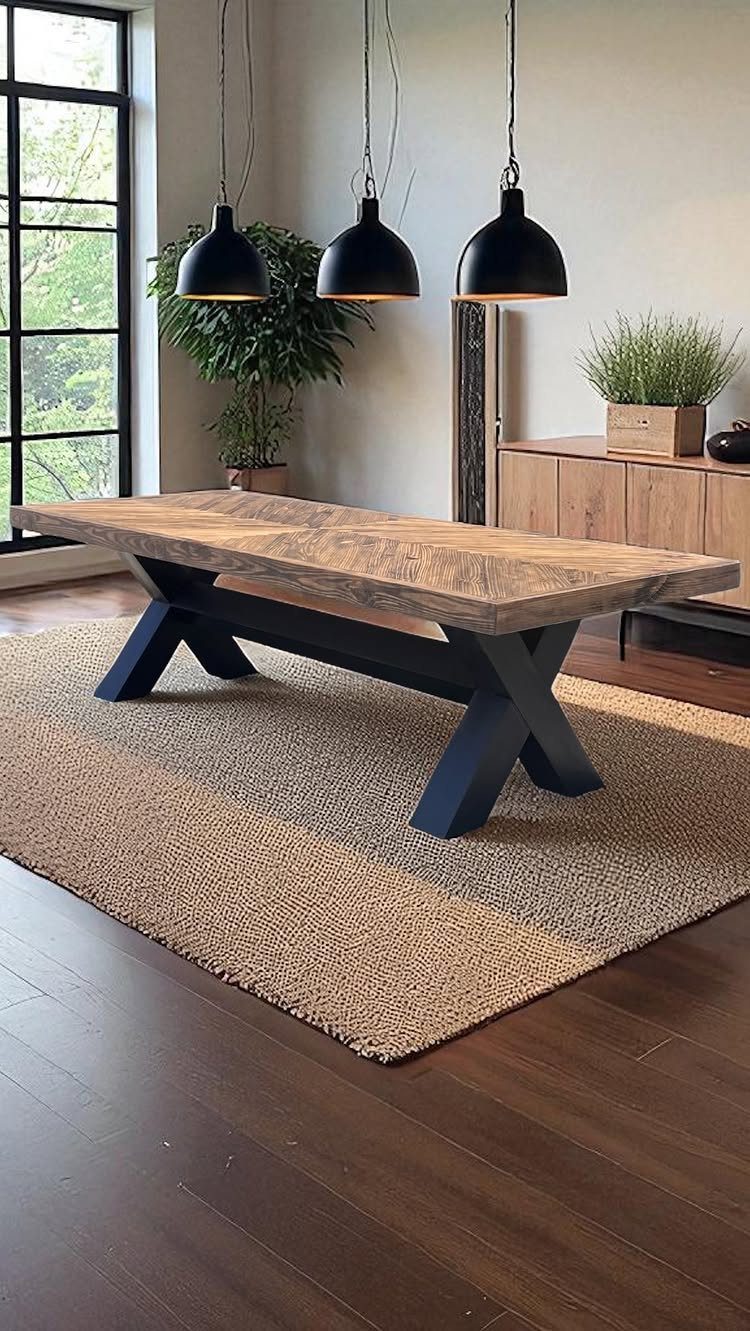
A solid wood table and chairs bring the material weight farmhouse style needs without requiring much else in the room. Wood reads as rustic when the grain shows and the finish stays matte or satin, not high gloss.
Black X-shaped metal legs keep the base from competing with the top and make the whole piece feel lighter than an all-wood trestle.
Black pendant lights and a wood sideboard repeat the palette, so the room holds together without adding pattern or color.
Look for tables in oak, pine or reclaimed wood with a natural or weathered finish. Chairs in the same wood family work, or you can mix in metal frames with wood seats to break up the look.
3. Install Statement Lighting
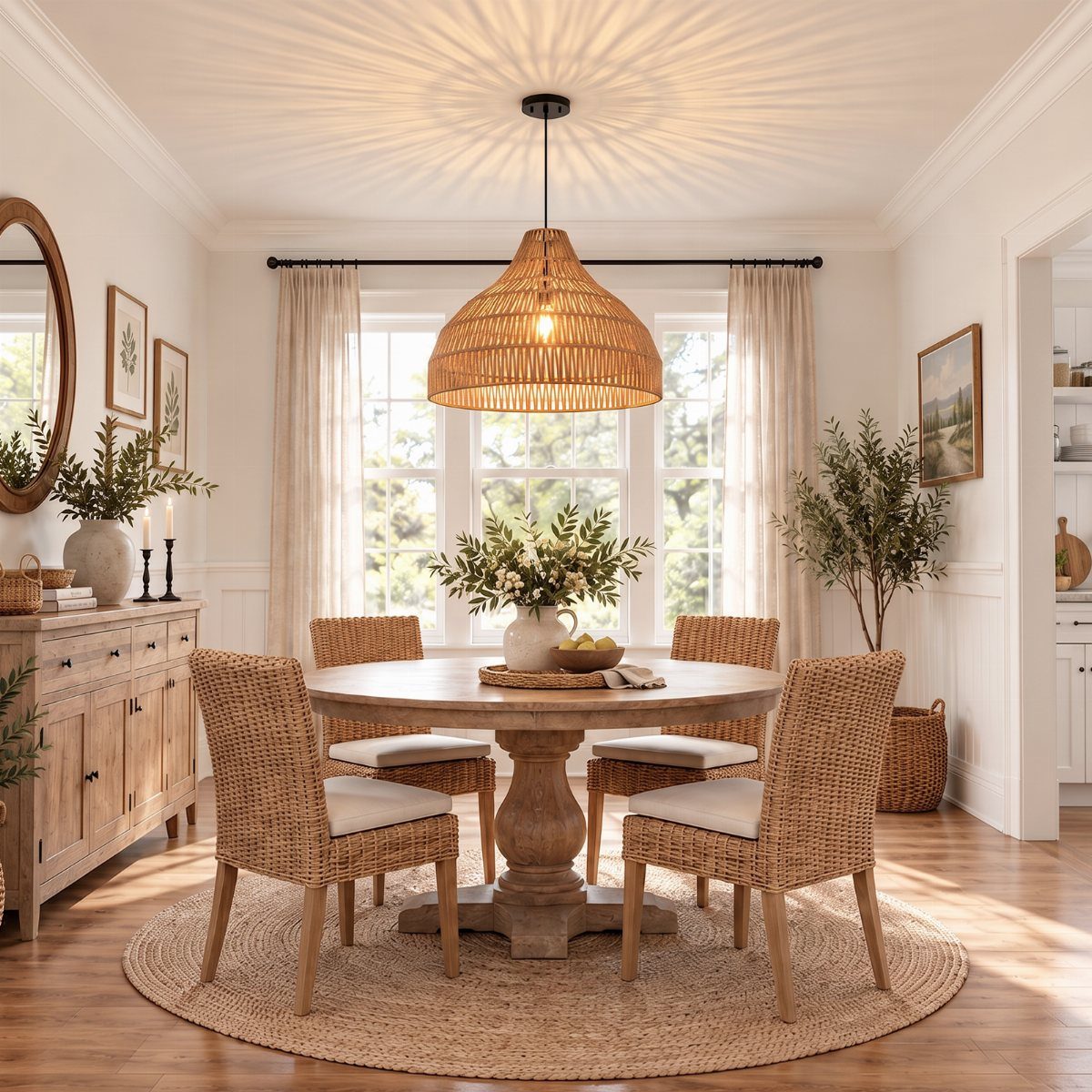
A large pendant light centered over the dining table anchors the room and sets the tone before anything else does.
In farmhouse spaces, woven or basket-style fixtures bring texture without color, which keeps the palette neutral and lets the material do the work.
The bell-shaped pendant is scaled to the round table beneath it, wide enough to define the dining zone but not so large that it crowds the sight lines.
Woven pendants diffuse light softly, which suits a dining room better than a bright downlight.
Hang the fixture low enough that it defines the table but high enough that seated diners can see across it. Pendants in rattan, jute or seagrass are widely available and the price rises with size and detail.
4. Incorporate Farmhouse-Inspired Decor
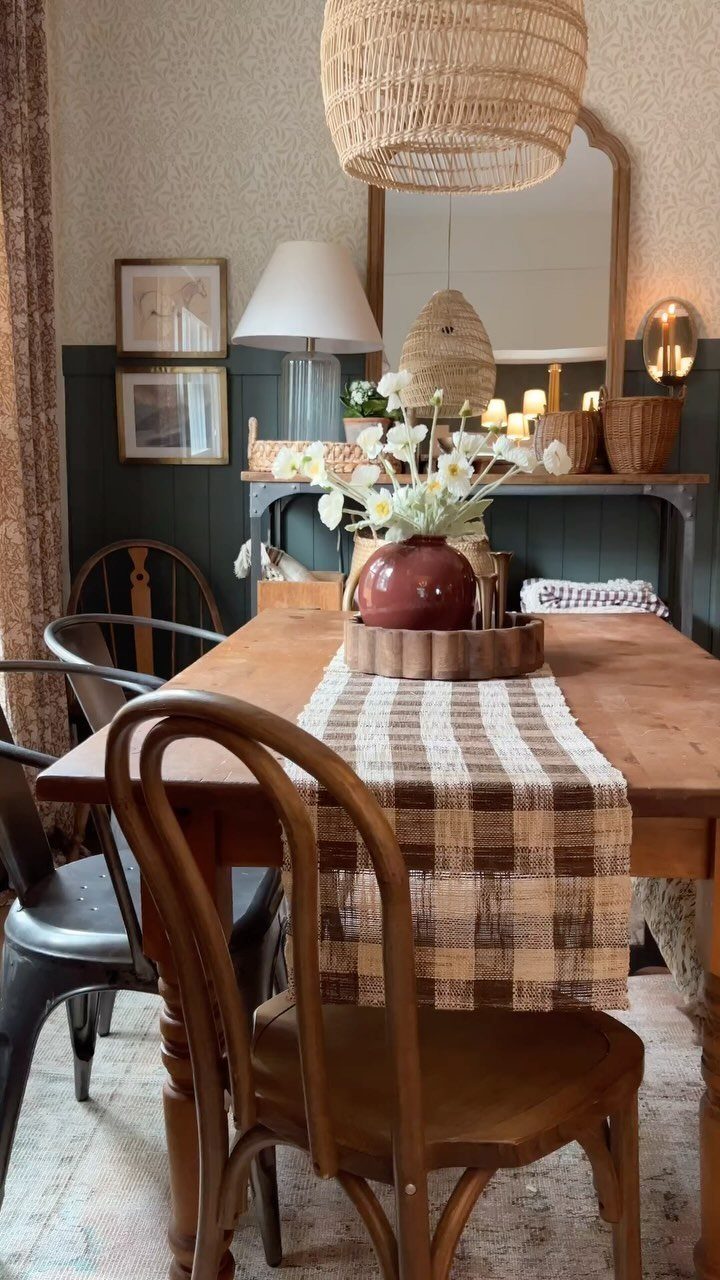
Farmhouse decor leans on natural materials and vintage-inspired accessories rather than bright color or sleek finishes. A plaid or gingham table runner, greenery in a ceramic pitcher, and wood or metal accents layer the look without tipping into theme territory.
A checkered runner serves as the base, with a loose floral centerpiece that keeps the setup casual.
Woven pendant lights and green wainscoting add texture and depth, while bentwood chairs bring a vintage silhouette that feels more collected than bought as a set.
Stick to 2 or 3 accent colors and let wood tones fill the rest. Thrift stores and farm supply shops often carry enamelware, galvanized metal and ceramic pieces that fit this style.
5. Create an Open and Airy Space
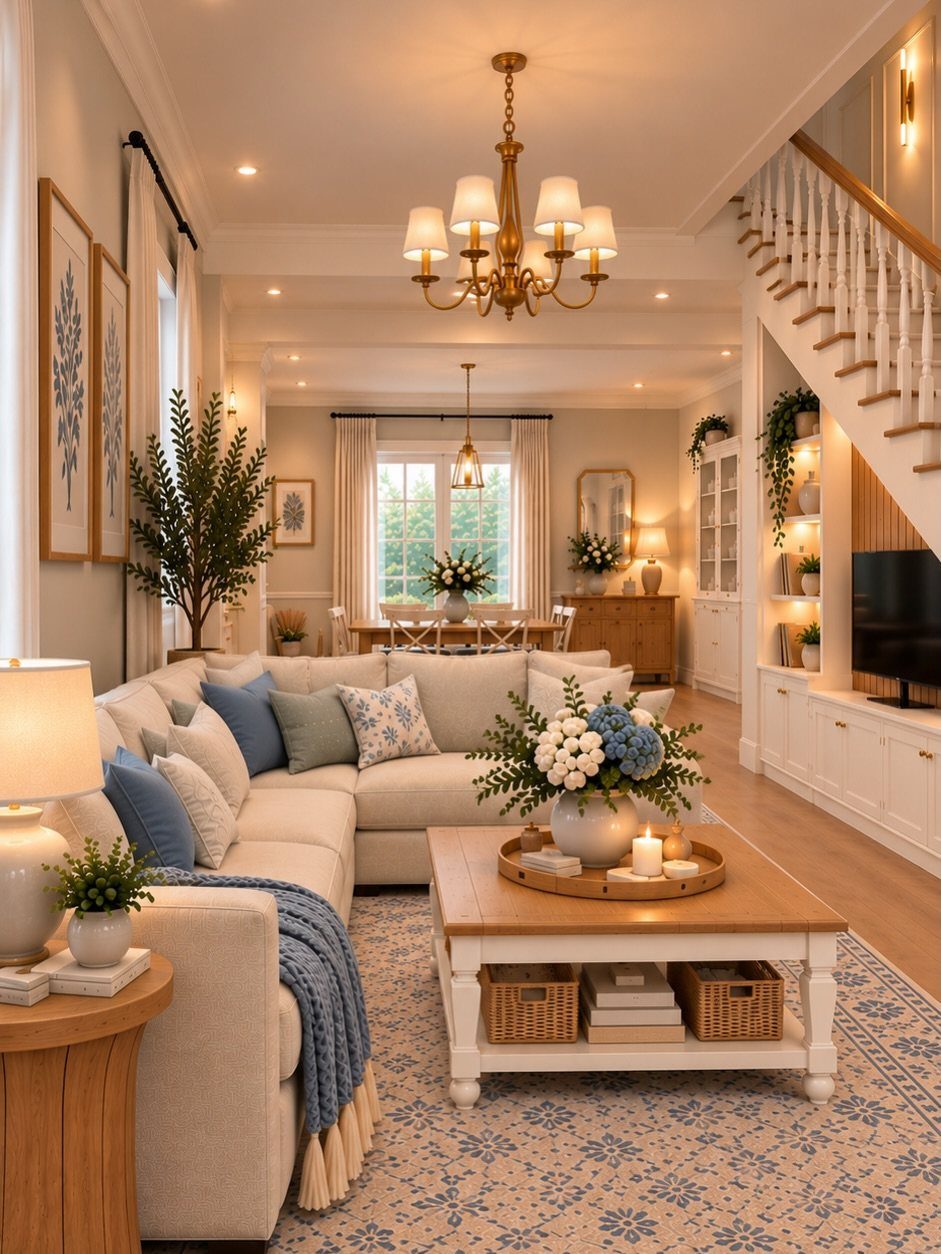
Farmhouse style works best when the dining room feels connected to the rest of the living space rather than closed off.
An open layout lets natural light reach every corner and makes the room feel larger, which matters in homes where the dining area shares square footage with the kitchen or living room.
The dining table sits with a living area in one continuous room, using neutral tones and wood furniture to tie the zones together.
The lack of walls or heavy partitions keeps sight lines clear, so the room reads as one cohesive space instead of separate pockets.
If you cannot remove walls, consider a wide doorway or pass-through window to borrow light and views from adjacent rooms.
While this space used to be quite formal, dining rooms now lean more charming and inviting rather than untouchable, which makes the farmhouse aesthetic perfect for inspiration. Farmhouse style embraces imperfection—it’s rustic, storied, and warm.
6. Oversized Dining Table
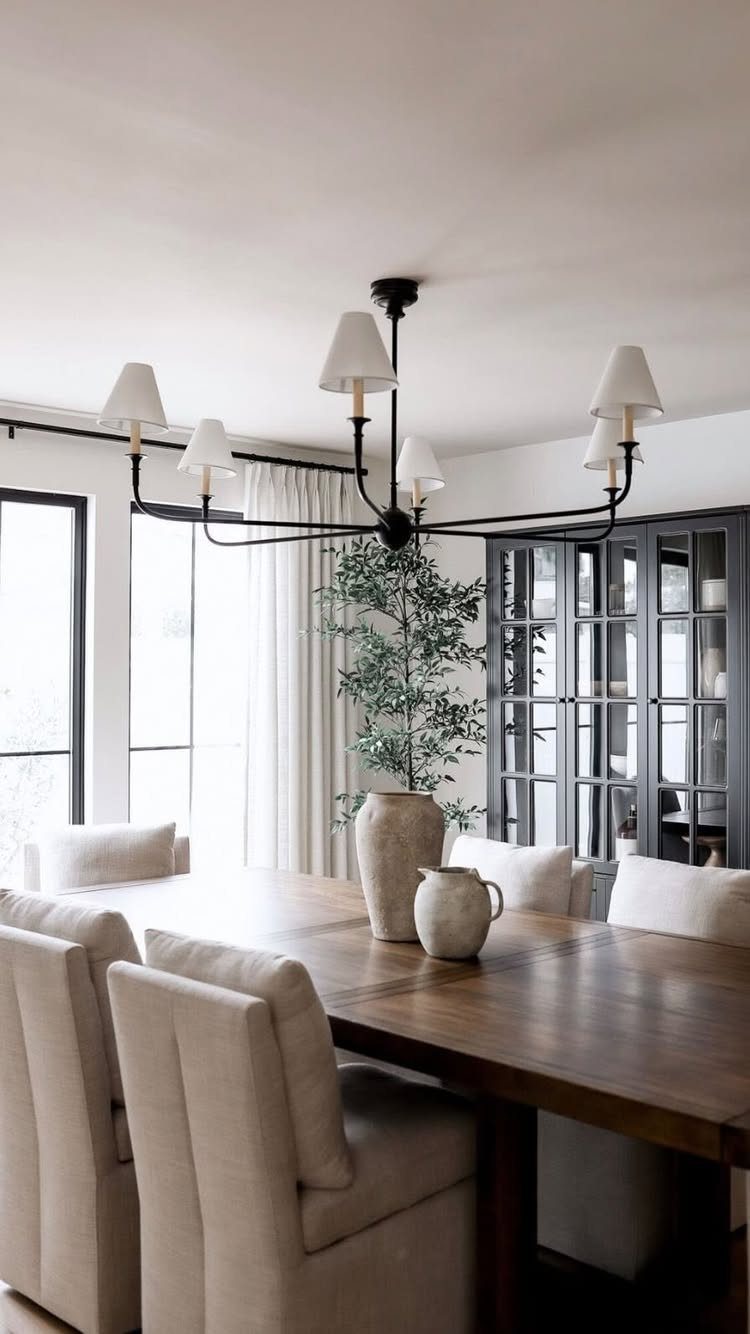
A dining table sized for 8 or more signals that the space is ready for gatherings, even on ordinary weeknights.
The extra length suits farmhouse style because it anchors the space and leaves room for serving pieces, centerpieces or projects alongside the place settings.
Upholstered chairs soften the look and make longer dinners more comfortable. A multi-arm black chandelier scaled to the table length keeps the proportions balanced, and the dark grey built-in cabinet adds storage without breaking up the sight lines.
Give each person enough table width to eat comfortably and leave clearance around the table for chair movement.
7. Built-In Banquette Dining Nook
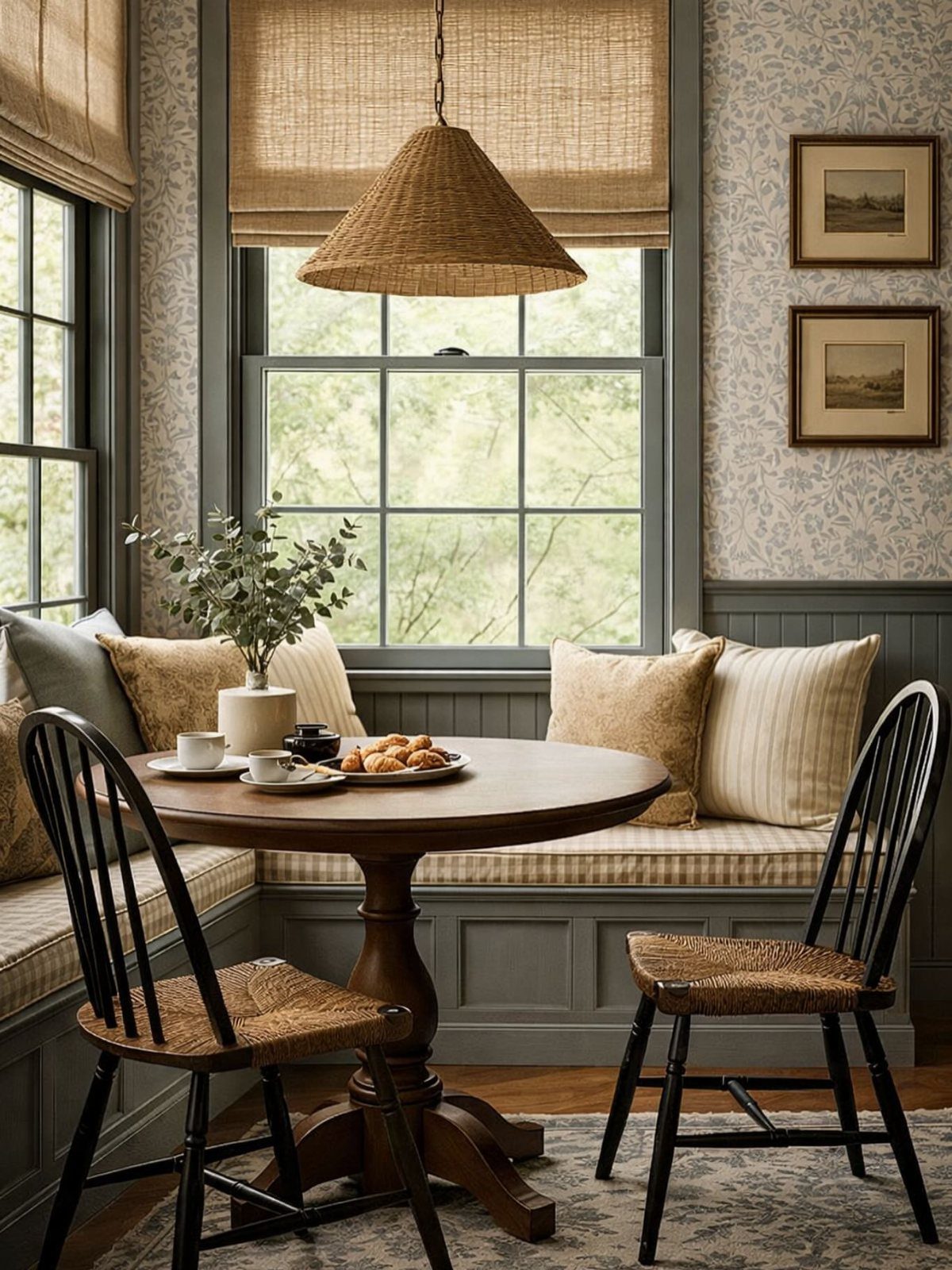
A built-in banquette along one wall lets you seat more people in less floor space than freestanding chairs, which matters in a dining room that shares a corner with the kitchen or hallway.
The fixed bench leaves room for a round pedestal table and a few movable chairs, so you can slide the table closer or farther from the wall as needed.
Built-in seating gives you storage underneath if you hinge the seat tops, though a simple plywood box frame with cushions on top works just as well.
Add a woven pendant light overhead to define the nook without lowering the ceiling line.
8. Checkered Tablecloth Tablescape
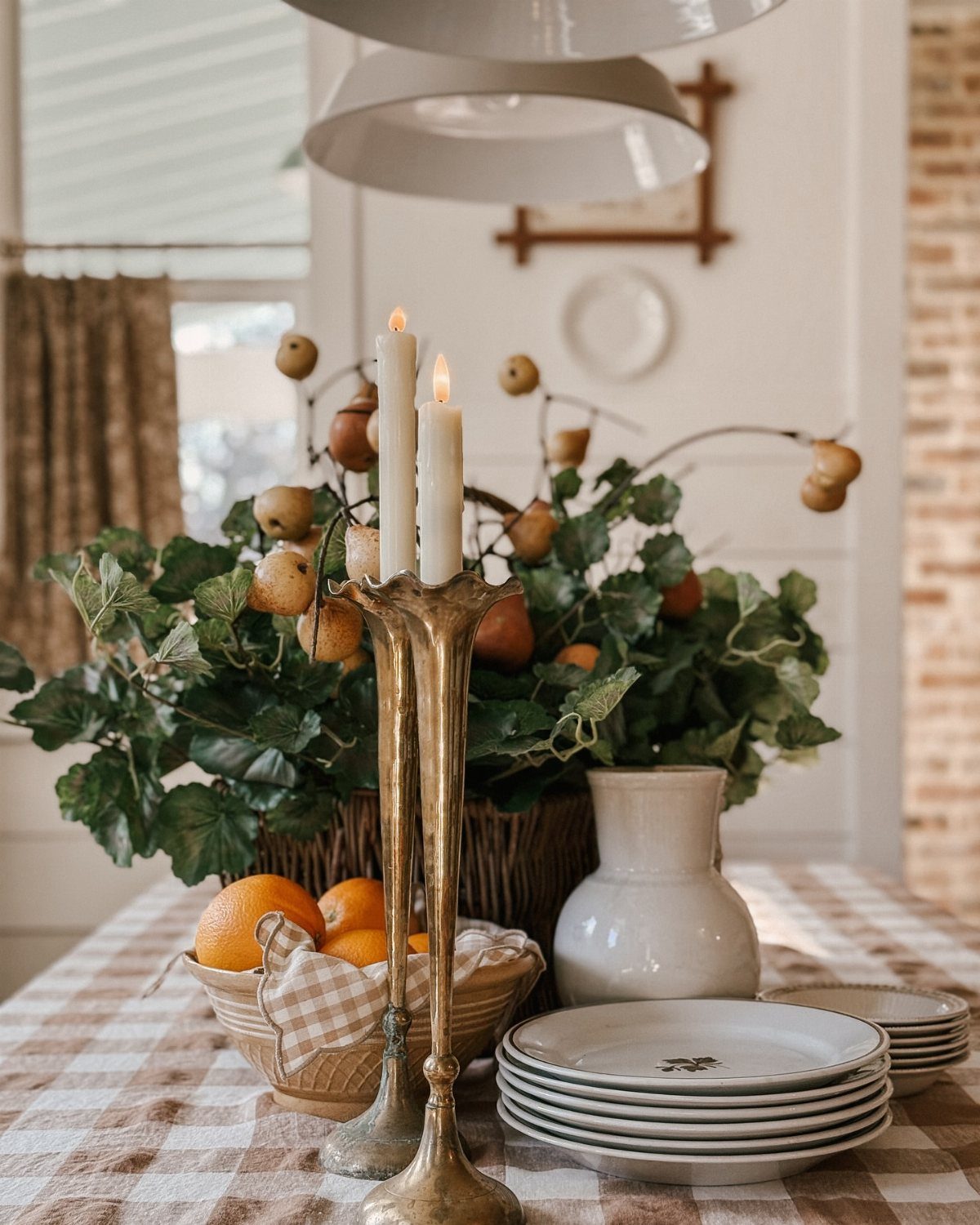
A checkered tablecloth in brown or gingham sets a farmhouse table faster than any other single piece.
The pattern reads as casual and country without requiring much else, so you can layer white plates, brass candlesticks and greenery on top and call it done.
The cloth protects the table and hides wear, which suits a table that gets daily use.
A basket of greenery or a bowl of fruit keeps the centerpiece simple, and brass or aged metal candlesticks add height without competing with the pattern.
Wash cotton or linen tablecloths on warm and pull them from the dryer while still slightly damp to minimize wrinkles.
9. Slipcovered Dining Chairs
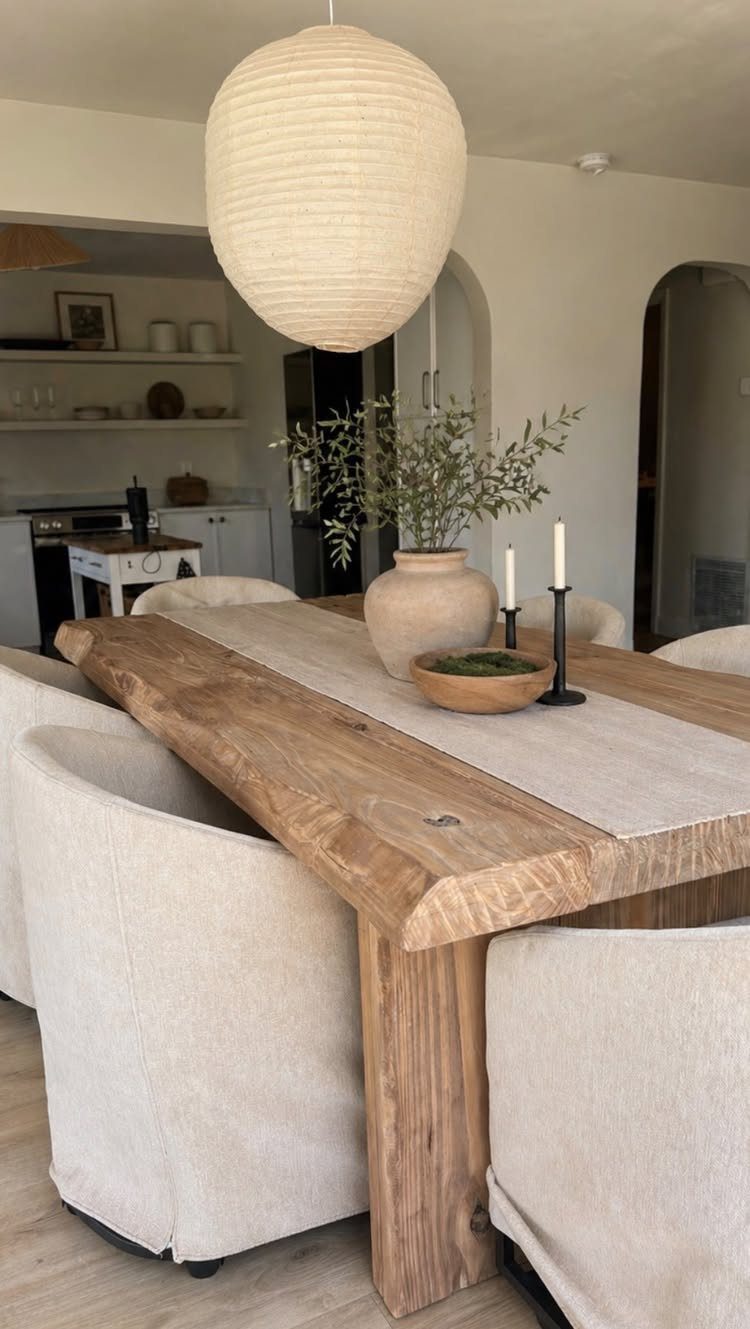
Slipcovered chairs soften a rustic wood table and give you a way to change the look or clean up spills without replacing the chairs themselves.
Cream or natural linen slipcovers lighten the room and work with almost any wood tone, from honey pine to dark walnut.
The loose fabric makes long dinners more comfortable than a hard wood seat, and you can pull the covers off to wash them when needed.
A paper globe pendant light diffuses overhead light evenly, so the table stays bright without a harsh downlight.
Buy slipcovers sized to your chair frame or have them made if your chairs have an unusual back height.
Farmhouse Style Characteristics
Distressed wood finishes and matte surfaces keep the look grounded, while clean lines prevent the room from feeling cluttered or too theme-heavy.
The balance between rustic and contemporary shows up in details: a wood table with metal legs, white painted chairs around a reclaimed top, or a single vintage piece in an otherwise minimal room.
Sturdy construction matters because the style implies daily use, not display.
A wood table with white legs, plain open-back chairs and one centerpiece can deliver the look without layering on pattern, texture or accessories.
Functionality in Design
A dining room designed for actual use needs space between furniture pieces so people can move around the table without turning sideways.
Contemporary design principles overlap with farmhouse style here: both favor uncluttered layouts, functional furniture and rooms that accommodate groups comfortably.
Decorative Elements
Handmade pottery, woven table runners and repurposed mason jars bring farmhouse character to a dining table without requiring permanent changes to the room.
Gingham placemats and fresh flowers in a simple vase reinforce the look, and all of it can be swapped out or put away when you want a different setup.
Wall decor adds personality where the table cannot.
Vintage farm tools, weathered window frames or a collection of woven baskets mounted on the wall introduce texture and history. A metal bucket filled with greenery works the same way, pairing rustic material with something living.
Choose wall accents that complement the wood tones and finishes already in the room rather than introducing new colors or competing with the furniture.
Frequently Asked Questions
What are some examples of farmhouse decor for a dining room?
Stoneware bowls, linen napkins and jars repurposed as vases keep a table grounded in farmhouse detail.
Checked fabric, a pitcher of stems from the yard and salvaged wood pieces on the wall layer in pattern and age. An enamel pail planted with herbs does the same thing: metal surface, green inside.
What are the dining room trends for 2026?
Oversized tables sized for 8 or more anchor the space and leave room for serving pieces alongside place settings. Mixed dining chairs paired by one element like finish or seat height give a collected-over-time feel without a matching set.
Rattan shades and seating tucked into a corner both answer the same pressure, fitting farmhouse texture and more chairs into tighter square footage.






